

Bloomberg

Air Taxis Keep Crashing, Bursting Into Flames in Testing Phase

(Bloomberg) — One prototype air taxi suffered a software glitch, lost control and nosed into a field. Another’s computer erroneously thought it was on the ground, shutting off power in flight and plunging it onto the pavement. Batteries on two more burst into flames.

The race to develop a new family of flying machines to whisk people and cargo across traffic-choked cities has drawn billions of dollars of investment and vast promise. But some of the biggest names in aviation have had accidents during testing, according to a Bloomberg review of reports dating back to 2018. They include Boeing Co. and its subsidiary, Aurora Flight Sciences Corp., Textron Inc.’s Bell helicopter division, billionaire Larry Page’s Kitty Hawk Corp., Joby Aviation Inc. and German air-taxi pioneer Lilium NV.

No one has died or been injured, and advocates say accidents are a healthy sign that the industry is pushing the envelope. But the new electric-powered, vertical-takeoff vehicles, or eVTOLs, use innovative technologies that haven’t been tested in routine service, and some safety experts say this means the road to government approval and public acceptance won’t be easy.

The US Federal Aviation Administration is preparing to certify a handful of the new aircraft to carry people as soon as 2024. Acting Administrator Billy Nolen said in a speech in June that the agency is on track to meet that goal, but the timing will be dictated by the safety of the new designs. 

“This is harder than people generally understand,” said John Hansman, a professor at the Massachusetts Institute of Technology who co-authored a paper on the challenges facing the new electric-powered, vertical-takeoff vehicles. “You’re pushing the state of the art in multiple dimensions at the same time.” Hansman is also an adviser to Electra.aero Inc., which is developing a hybrid-electric plane.

Learning Experiences

One of the most high-profile crashes occurred on Feb. 16 in a remote testing facility near Jolon, California. A physical component on Joby’s six-propeller craft broke in midair, three people familiar with the incident told Bloomberg. 

The crash may not threaten the company’s long-term plans because the aircraft was operating at speeds far higher than the maximum 200 miles (322 kilometers) per hour it will fly in service, two of the people said. A flight track by the website ADSBexchange.com LLC showed it was traveling at 273 miles per hour before it disappeared.

Joby declined to comment. The US National Transportation Safety Board, which hasn’t completed its investigation, has only said the aircraft suffered an unspecified component failure.  

Boeing suffered two crashes in 2019: Aurora’s prototype air taxi on June 4, and the company’s experimental, pilotless cargo aircraft on June 21. Aurora’s was caused by a computer’s erroneous command to shut engines and Boeing’s was due to gusty winds, the NTSB said.

“We gained valuable knowledge and experience that will benefit programs across the company,” Boeing said in an emailed statement. The company is continuing its development work in a partnership with Kitty Hawk known as Wisk Aero LLC. 

Managing Mishaps

The accidents shouldn’t be viewed as comparable to the rare mishaps during flight testing of traditional aircraft, said Walter Desrosier, vice president for engineering and maintenance at the General Aviation Manufacturers Association trade group. Significantly greater protections are taken in advance of test flights where pilots and engineers are going to be aboard, Desrosier said. 

“When we have the ability to test things without humans, you can do additional things because you can manage the risks,” he said. All but one of the nine accidents reviewed involved craft being flown remotely. 

Kitty Hawk’s Heaviside2 crashed in a field in California near Tres Pinos, California, on Oct. 17, 2019, after a software error led to control problems, according to an NTSB report. A remote pilot attempted to land the hybrid aircraft designed to carry one person, but it wasn’t capable of touching down in a field while moving forward and suffered substantial damage, the NTSB said. 

The company told investigators it was revising the software and also changing its procedures. Kitty Hawk didn’t respond to requests for comment. 

Similar failures of software or aircraft structures have occurred during development of human-carrying craft, but go unnoticed because they occur in a lab, not during a flight, Desrosier said. Unlike crashes, such failures mostly aren’t publicly reported.

Fire Hazards

The crashes and incidents involving these new-age aircraft have occurred for a variety of reasons, from failures in carbon-fiber structures to breakdowns in computer-human interactions. They highlight some of the design challenges with the technology. 

Century-old flight controls used by traditional aircraft are being replaced in some cases by computerized motors. And while some initial models will be guided by traditional pilots, the goal is to transition to robotic flight. 

Instead of liquid fuels, they will be powered by lithium-based batteries, creating new questions about fire hazards and ensuring an adequate charge.

A Jan. 22, 2020, fire destroyed a prototype of Eviation Aircraft Ltd.’s electric-powered, nine-passenger commuter plane in Prescott, Arizona. The fire started in a ground-based battery that isn’t part of the plane’s main power pack, the company said in an email.

“We learned a valuable lesson from the event,” the company said in an emailed statement, adding that it has taken multiple steps to protect the lithium-based batteries from overheating and fire.

Similarly, Lilium, which is designing an aircraft that uses electric-powered jet engines to take off vertically, said in an emailed statement that it had upgraded safety measures in its battery system after a fire on Feb. 27, 2020, at an airport near Munich. 

Future Bets

The accidents haven’t stopped established companies from clamoring to invest in air-taxi startups or to order still-uncertified aircraft. Package shipping kingpins FedEx Corp. and United Parcel Service Inc. both have linked up with eVTOL startups and major airlines — including American Airlines Group Inc. and United Airlines Holdings Inc. — also have placed bets on the industry.

But a May report by the Government Accountability Office on the prospects of electric-powered air taxis said one of the biggest challenges facing the industry and regulators is ensuring buy-in from the public. 

“Acceptance of large numbers operating in close proximity to people and buildings will require a concerted effort on the part of industry and government to show these aircraft’s safety by demonstrating safe, reliable operations,” the GAO report said. 

More stories like this are available on bloomberg.com

©2022 Bloomberg L.P.
FTC’s Khan Overruled Staff to Sue Meta Over Virtual Reality Deal

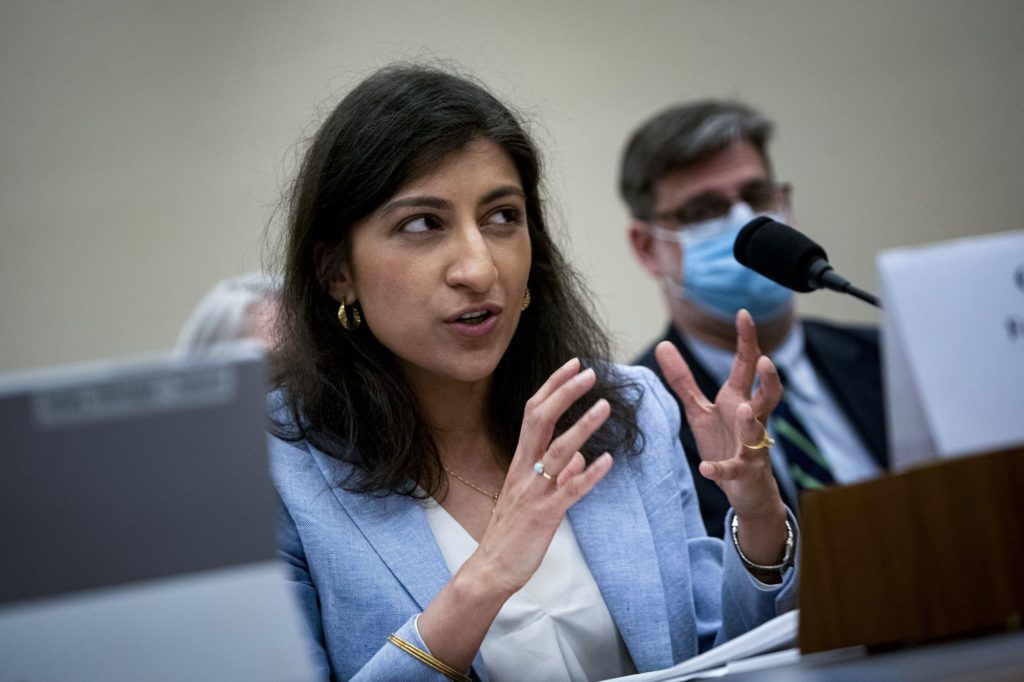
(Bloomberg) — Federal Trade Commission Chair Lina Khan led her fellow Democrats in the agency’s majority vote to sue Meta Platforms Inc. this week, despite the staff recommending against bringing a case to challenge the company’s acquisition of Within Unlimited Inc., according to three people with knowledge of the decision. 

The move demonstrates Khan’s new, more aggressive approach to antitrust enforcement compared with her predecessors — as well as the challenges she faces in bringing the agency along with her. 

Agency leadership has been reluctant in the past to counter a recommendation from staff lawyers and economists, whose job it is to provide a technical assessment of whether proposed deals are anticompetitive and whether the agency has the elements to build a winning case.

In public comments and writings, Khan has emphasized the need to rein in the biggest technology companies, particularly Facebook parent Meta, which she argues has used acquisitions as a form of “land grab” to conquer new markets and “neutralize competitive threats.”

In a 2021 report, the FTC found that the five tech giants — Alphabet Inc., Apple Inc., Amazon.com Inc., Microsoft Corp. and Meta — acquired hundreds of smaller firms over the previous decade, often using loopholes in the law to avoid notifying antitrust regulators about the takeovers.

In the lawsuit filed against Meta on Wednesday, the FTC alleged the deal would give the social networking company a leg up in dominating the burgeoning virtual reality market. The suit represents the first time the agency has preemptively challenged an acquisition by the social media giant, which has bought more than 100 smaller companies over the past decade, according to a 2020 House report.

The FTC has asked a federal court in California to bar Meta from closing the deal until after it has a chance to hear the suit challenging the merger. Meta said it would fight the complaint.

While critics are accusing Khan of overreach in seeking to block the deal, antitrust advocates have urged the agency to be more aggressive in stopping technology giants from acquiring startups that could eventually become rivals.

The FTC’s five commissioners split 3-2 on whether to file the complaint, with the two Republicans, Noah Phillips and Christine Wilson, voting against the suit. Each of the commissioners had the opportunity to test out Meta’s Oculus product, Within’s Supernatural and Meta’s Beat Saber, two of the people said.

The FTC declined to comment. 

The lawsuit follows the FTC’s 2020 monopolization case against Meta seeking to unwind its acquisitions of Instagram in 2012 and WhatsApp in 2014, after failing to challenge them at the time. Phillips and Wilson also opposed that case, which could go to trial in 2024 in federal court in Washington. The FTC alleges the acquisitions were part of an illegal scheme to monopolize the market for social networking. 

Meta has denied the allegations and is also contesting that case.

Alvaro Bedoya –- who joined the commission in May, giving Khan a Democratic majority –- had multiple meetings with FTC staff and Khan’s office about the Within deal to address his concerns about overruling the staff recommendation, two of the people said. Bedoya, through an FTC spokesman, declined to comment on his deliberations.

Before Bedoya joined the commission, it was deadlocked 2-2, allowing the two Republicans to stymie several of Khan’s more aggressive ideas to promote competitive markets. 

Meta announced last October its plan to acquire Within, the maker of the popular virtual reality fitness app Supernatural, for an undisclosed sum. The proposed deal followed Meta’s purchase of six other virtual or augmented reality app makers over the past three years, none of which were challenged by the FTC.

Formerly known as Facebook, Meta rebranded itself last year in an effort to better focus on the metaverse — a more immersive version of the internet, where people can populate an alternative virtual world to go shopping, go to work and see friends. The company is the world’s top VR headset maker with its Oculus product controlling about 80% of the market, according to research firm IDC.

Within’s Supernatural offers immersive VR workouts complete with music and fitness instructors. In its complaint, the FTC alleged that Within’s Supernatural app competes with Meta’s own Beat Saber, a VR rhythm game where users hit targets in time to music. Meta also has the financial resources and expertise to easily add features to Beat Saber or develop a separate dedicated fitness app that could more directly compete with Supernatural, the FTC said.

“The FTC’s case is based on ideology and speculation, not evidence,” Meta lawyer Nikhil Shanbhag said in a blog post about the case. “We are confident this transaction does not reduce competition in any way, will bring countless benefits to people and VR developers, and should therefore be allowed to proceed.”

During the nine-month inquiry, the FTC didn’t take any sworn interviews of company executives, which it often uses to help build a case, two of the people said, speaking anonymously to discuss the confidential probe. But a few weeks before the Within deal was set to close on July 31, Khan’s office sent the company additional questions and began drafting a legal challenge, the people said. 

More stories like this are available on bloomberg.com

©2022 Bloomberg L.P.
Biden Has a $5 Billion Plan to Eliminate America’s EV Charging Deserts

(Bloomberg) — Montana’s vast spaces and epic vistas, its mountains and boundless plains, seem made for a road trip. Just not in an electric car.

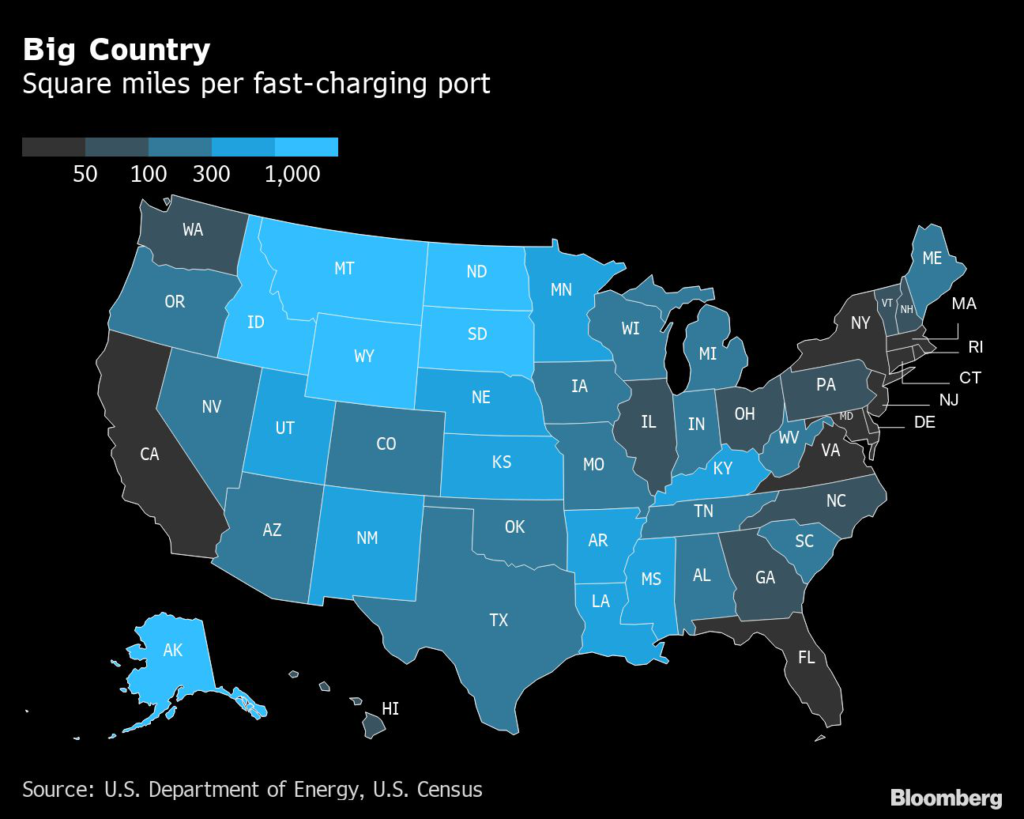
There’s almost no place in public to plug in. Across Montana’s 147,000 square miles, the state government recently counted 57 charging stations, most of them clustered in towns and cities rather than along the highway. Traveling the long stretches between communities requires careful planning, or leaving the EV at home.

“You have to get your map out,” said Bozeman resident Nick Shrauger. “It’s an adventure. It isn’t easy.”

Shrauger’s go-to car for errands is his 2017 Chevrolet Bolt, one of only 1,650 electric vehicles registered in the state. He’ll even use it to lug tanks of diesel fuel from the gas station to the tractors on his small, hay-growing ranch. But when he hits Montana’s wide-open roads, Shrauger often drives his gas-powered Toyota Highlander instead. Taking the Bolt means plotting a route around friends’ homes and RV campsites where he can plug in and sneak a few miles of range.

“I struggle to put 8,000 miles a year on it, because of the lack of charging,” said Shrauger, 86, a retired electrical engineering professor from Montana State University.

It’s exactly the problem US President Joe Biden wants to fix.

Eager to lure Americans from their gas-burning cars, Biden’s administration is planning a nationwide network of 500,000 charging stations linking urban and rural areas coast to coast. Last year’s infrastructure law set aside $5 billion to build it. Along interstate highways and other major roads, the feds want a station every 50 miles, with at least four charging ports apiece — ones that will add electrons relatively quickly. States, which will play a major role in deciding where those chargers go, face an Aug. 1 deadline to tell the federal government how they would like to spend the money. Each state’s share of the funding, slated for distribution starting this fall, will be equal to their portion of annual federal highway spending.

It’s hard to overstate how much Biden’s climate fight relies on EVs. The Supreme Court has limited the federal government’s ability to regulate greenhouse gases, and tax breaks to spur low-carbon technologies have been stalled in the Senate. Key senators said this week that they finally reached a deal on them, but passage by a deeply divided Congress is not guaranteed. The shift from internal combustion engines to electric cars is one of the biggest carbon-cutting options open to the president. But it requires convincing millions of drivers to take the plunge – something they won’t do if they’re worried about running out of power on the road. It’s a chicken-and-egg conundrum that has largely left rural America out of the electric-vehicle revolution.

“What does it take to tip people who are considering buying an EV into buying it?” said Jonathan Levy, chief commercial officer of charging company EVgo Inc. “The infrastructure, the visibility of it, and the existence of it will help.” 

This enormous undertaking carries risks. Ensuring drivers won’t get stranded in the middle of nowhere means planting some stations in remote locales where they’ll get little use for years. Montana’s own report on building out the network warns some stations could see fewer than 10 charging sessions per month. Those stations’ owners will lose money until EVs represent a sizable chunk of cars on the road, and those chargers will still need maintenance to make sure they keep working in all kinds of weather.

“You have high-powered, super high-tech, connected equipment out there exposed to the elements,” said Michael Farkas, chief executive officer of Blink Charging Co. “It’s not like a pay phone you can just put out there.”

That calculus is itself a reason for the government push. Companies such as Blink, EVgo, ChargePoint Holdings Inc. and Electrify America LLC have been deploying chargers for years, and are increasingly working with big automakers like General Motors Co. and Ford Motor Co. to accelerate the effort. But they’ve focused on the urban and suburban areas that were first to embrace EVs, and generally look for sites with the biggest profit potential, leaving many American highways uncovered.

“We believe it’s important to invest in some of those locations where we know we aren’t going to see private investment for quite some time,” said Kyla Maki, an energy resource professional with Montana’s Department of Environmental Quality. She points to a road that locals call the “Hi-Line” — US Highway 2, along the northern border — which is a remote but a key route for Canadian tourists. “Highway 2 is one of those corridors where it’s tough to see any private company coming in in five years, maybe not even in seven years,” she said.

The Biden administration’s effort is being overseen by two federal agencies — the departments of energy and transportation — as well as a joint office involving both. They declined to make officials in the program available for an interview. The infrastructure law also set aside $2.5 billion for more community-focused charging projects, with the money to be awarded to states on a competitive basis.

The federal government has tried rolling out chargers before, at a smaller scale and without great success. President Barack Obama made EV charging part of his economic recovery plan after the Great Recession, awarding $100 million in 2009 to Ecotality Inc. of San Francisco to deploy residential, commercial and public chargers in five metropolitan areas across the country and analyze their use.  The public fast-chargers were supposed to be installed every 10 miles along major roads, but so few people were buying EVs at the time that the government significantly scaled back the initiative. Ecotality filed for bankruptcy in 2013. 

In the years since, the US has fallen well behind Europe and China in building out its network. A BloombergNEF analysis counted 112,900 public chargers deployed across the US by the end of 2021, compared with 442,000 in Europe and 1.15 million in China. That gap is growing, with just 23,725 US chargers installed last year, versus 95,000 in Europe and 337,100 in China. China’s command-control economy makes the EV rollout there quite different, while Europe lacks the big rural spaces that Biden’s team must tackle. European drivers have also been quicker to buy electric vehicles, so there’s less risk of underused chargers.

“Europe is installing to keep up with the market — you’re trying to meet demand that already exists,” said Ryan Fisher, lead analyst of EV charging for BNEF. “In America, you’re trying to meet demand that doesn’t yet exist.”

Tesla Inc. proved that a US charging network can work, at least for its own cars. Some of the only fast-charging stations in Montana are Tesla’s, strung along interstates 90, 94 and 15. But for now, only Tesla drivers can use them (although the White House has suggested that may change, and Tesla has been experimenting with letting non-Tesla drivers use superchargers at select stations in Europe). Bozeman has four Tesla Superchargers at a Hilton hotel, but they are of no use to Bolt pilots like Shrauger. When they need to top off in public, they use the plugs at the local Audi dealership instead.

For the other charging companies, who will be bidding on the state contracts for EV stations, there isn’t a clear-cut model to follow. There’s wide agreement that fast-charging stations will be needed along rural highways, and the federal government has proposed requiring them for its $5 billion network. But some of the companies argue that slower and cheaper chargers can still play a role, particularly in more populated areas and among apartment dwellers without driveways and garages.

Local conditions will make a big difference. Putting a station at a suburban grocery store, for example, might appear to make sense, since there will be plenty of cars parked there on a regular basis. But most suburban drivers will have chargers at home and won’t actually need to plug in while shopping.

“To put a charging station in the middle of suburbia, where it’s not along a travel corridor and there’s single-family homes for miles in each direction, that is a money-loser,” Farkas said. “There are going to be a lot of white elephants out there.”

On the open highway, chargers will be deployed at gas stations, restaurants or other amenities just off the freeway, rather than standing alone in a roadside pull-off — the result of a decades-old federal law limiting commerce at interstate rest stops. Ideally, they will be where travelers already stop to stretch their legs, grab food and hit a restroom, said Pasquale Romano, chief executive officer of ChargePoint. “There’s reasonable security, there’s care and feeding of the equipment past when the funding runs out — there’s a business that cares,” he said. “For a long period of time, businesses are going to want to serve both electric and liquid fuel.”

That model is already emerging. This month, GM announced it would work with EVgo to install chargers at up to 500 Pilot and Flying J travel centers, which offer food and fuel. In Montana, local company Town Pump, which runs travel centers, hotels and casinos, is installing chargers in 14 locations with money the state received from Volkswagen for cheating on auto emissions tests.

Building from that base will take planning. Some rural areas may need to upgrade the local power grid — the transformers and substations feeding remote power lines — to accommodate multiple cars charging at the same time.

“To put four chargers there, that’s one thing, but as you grow and add chargers, that could be a problem for the grid,” said Rob Stapley, rail, transit and planning division administrator with the Montana Department of Transportation.

Then there’s the requirement that charging stations be no more than 50 miles apart. In heavily populated areas, that seems simple. In much of the Great Plains and the West, however, it doesn’t match local reality.

“We have stretches where it’s more than 50 miles between gas stations,” Stapley said. “So that does not seem reasonable.”

Wyoming, for example, is seeking an exception to that rule, in part because it is concerned federally subsidized stations will wipe out the profit of the few chargers it already has. The state also wants to use the money to buy portable charging equipment that can be fitted to a roadside emergency vehicle.

Montana’s plans for the network focus on first ensuring there’s a charger every 100 miles, then filling in from there. State officials want maximum flexibility from the federal government on that, as well as buy-America rules that they fear could block most charging equipment available today.

“We’ve been told that you cannot acquire a charger that meets the buy-American standard currently,” Stapley said. “That’s a big hurdle to overcome.”

The federal government will allow exceptions to the 50-mile requirement, but states have to apply for them on a case-by-case basis. And they need to show that meeting the rule will either be prohibitively expensive in some locales, would require major upgrades to the power grid, or that there aren’t sites with good access and amenities in the places in question. As for buying American-made equipment, the Department of Transportation says it’s taking feedback on the requirement and working to establish guidance.

Montana stands to get about $43 million of the federal infrastructure funds over the next five years. In year one, it plans to build 10 charging stations to shrink its largest electron deserts. One of the first is plotted for Columbus, 101 miles straight east of the Audi dealership in Bozeman. Shrauger, for one, is looking forward to it. “I saw a fuel truck at the gas station the other day,” he said, “and I was joking around with the driver, telling him ‘I might put you guys out of business.’”

— With assistance by Keith Laing


More stories like this are available on bloomberg.com

©2022 Bloomberg L.P.
Meta Repeats Why It May Be Forced to Pull Facebook From EU

(Bloomberg) — Meta Platforms Inc. reiterated its warning that it may have no choice but to pull its popular Facebook and Instagram services from the European Union if a new transatlantic data transfer pact doesn’t materialize. 

Meta could face an imminent data flow ban from Ireland’s data protection watchdog, which oversees a number of Silicon Valley tech giants based in the country, in a decision that risks impeding transatlantic data flows. The Irish Data Protection Commission could issue its decision on a possible ban of EU-US data transfers under so-called standard contractual clauses in the next three months, Meta said in a regulatory filing. 

The EU and US in March broke a deadlock to reach a tentative deal on a new data-transfer pact after a previous accord was struck down by the bloc’s top court over concerns US agencies could snoop on the information without adequate privacy safeguards. Negotiations on a new pact won’t likely conclude before next year, by which time the Irish might already have issued their ban on the SCCs.

“If a new transatlantic data transfer framework is not adopted and we are unable to continue to rely on SCCs or rely upon other alternative means of data transfers from the EU to the US, we will likely be unable to offer a number of our most significant products and services, including Facebook and Instagram, in Europe,” Meta said in a US regulatory filing. 

This “would materially and adversely affect our business, financial condition, and results of operations,” it added. 

Meta said in an emailed statement that it welcomes the EU-US political agreement “for a new legal framework that will allow the continued transfer of data across borders” and that it expects this “will allow us to keep families, communities and economies connected.”

“Like all listed companies, we are legally obliged to disclose material risks to our investors and have set out the latest developments around data transfers in all of our most recent earnings statements,” Meta said.

The controversy over data transfers dates back to 2013 when Edward Snowden exposed the extent of spying by the U.S. National Security Agency. A surprise 2020 ruling by the EU’s highest court toppled the so-called Privacy Shield, a trans-Atlantic transfer pact, over longstanding fears that citizens’ data wasn’t safe from American surveillance.

SCCs are an EU approved data transfer tool that include specific data protection protections for personal data and allow companies to ship data outside the bloc without violating the EU’s strict data protection rules. 

While the use of SCCs was upheld, the EU Court of Justice’s doubts about American data protection also made this a shaky alternative. The Irish data watchdog from the start cast doubt on the legality of this alternative tool. 

Meta, Google Face Data Doomsday as Key EU Decision Looms

The Irish authority in a preliminary decision in February said transfers to the US under SCCs “should be suspended” and this decision “has since been further refined” and sent it to the other 26 EU watchdogs for their input, Meta said in the regulatory filing.  

(Updates with Meta comment from sixth paragraph)

More stories like this are available on bloomberg.com

©2022 Bloomberg L.P.
Futures Climb as Earnings Temper Inflation Worries: Markets Wrap

(Bloomberg) — Stock futures advanced as solid results from megacaps Amazon.com Inc. and Apple Inc. tempered concern with data highlighting still uncomfortably high levels of inflation that should make the Federal Reserve keep its firm grip on monetary policy.

S&P 500 contracts pushed higher after briefly paring gains when economic figures showed showed US employment costs rose in the second quarter by more than forecast, while the personal consumption expenditures price index had the biggest annual advance in 40 years. The US benchmark equity gauge headed toward its best month since November 2020. Treasury two-year yields, which are more sensitive to imminent Fed moves, halted a two-day plunge. The dollar was little changed.

Fed Bank of Atlanta President Raphael Bostic said the US economy was “a ways” from entering a recession and the central bank had further to go in raising interest rates to get inflation under control. He’s the first central banker to speak publicly since the Fed delivered its most aggressive back-to-back hikes since the early 1980s to tackle rampant inflation.

Companies with strong balance sheets are back in favor as robust earnings from big tech reassure investors amid bets the Fed will soon be able to slow the pace of rate rate hikes.

“We believe companies with a strong balance sheet, strong cost controls, and that produce strong sales growth will do exceptionally well in this environment,” said Geir Lode, head of global equities at Federated Hermes, adding that the market will again favor growth over value stocks. 

Corporate Highlights:

  • Intel Corp., the biggest maker of computer processors, fell far short of analysts’ second-quarter sales and profit estimates and slashed forecasts for the year.
  • Roku Inc., the maker of streaming-TV devices, said advertisers are pulling back on spending due to economic concerns.
  • Exxon Mobil Corp. and Chevron Corp. posted their highest-ever profits, reaping the rewards from surging commodity prices amid supply disruptions.
  • Procter & Gamble Co.’s forecast for earnings and sales growth lagged analyst estimates and the company warned about another year of elevated costs.

Some of the main moves in markets:

Stocks

  • Futures on the S&P 500 rose 0.5% as of 8:54 a.m. New York time
  • Futures on the Nasdaq 100 rose 0.8%
  • Futures on the Dow Jones Industrial Average were little changed
  • The Stoxx Europe 600 rose 1%
  • The MSCI World index rose 0.2%

Currencies

  • The Bloomberg Dollar Spot Index was little changed
  • The euro fell 0.1% to $1.0186
  • The British pound fell 0.5% to $1.2121
  • The Japanese yen rose 0.2% to 133.98 per dollar

Bonds

  • The yield on 10-year Treasuries advanced two basis points to 2.70%
  • Germany’s 10-year yield advanced six basis points to 0.89%
  • Britain’s 10-year yield advanced eight basis points to 1.94%

Commodities

  • West Texas Intermediate crude rose 2.3% to $98.66 a barrel
  • Gold futures rose 0.3% to $1,774.20 an ounce

More stories like this are available on bloomberg.com

©2022 Bloomberg L.P.
Biden Loses Bragging Rights Against China With US Economy Fading

(Bloomberg) — Sign up for the New Economy Daily newsletter, follow us @economics and subscribe to our podcast.

It was a great talking point for President Joe Biden while it lasted: a forecast for the US economy to grow faster than China’s for the first time since 1976.

Biden highlighted it on a trip to Asia in May, and his national security adviser, Jake Sullivan, called it “a quite striking example of how countries in this region should be looking at the question of trends and trajectories.”

But a report Thursday showed US gross domestic product unexpectedly shrank at a 0.9% annual rate last quarter — making it now unlikely to surpass China’s expansion this year.

Bloomberg Economics as of mid-May projected China would expand 2% this year, against 2.8% for the US — the first undershoot since 1976. Reflecting a better-than-expected second quarter for China, and mounting evidence of a slump in the US, the team’s latest forecasts are 3.6% for China and 1.5% for the US.

“We don’t want to get wrapped up too much in any one month’s number, or one quarter’s number,” Heather Boushey, a member of the White House Council of Economic Advisers, said when asked about the relative countries’ growth outlooks.

US GDP shrank in both of the first two quarters of 2022. Measured on a quarter-on-quarter basis, China contracted last quarter, but a rebound in June data raised chances of a modest recovery headed into the second half.

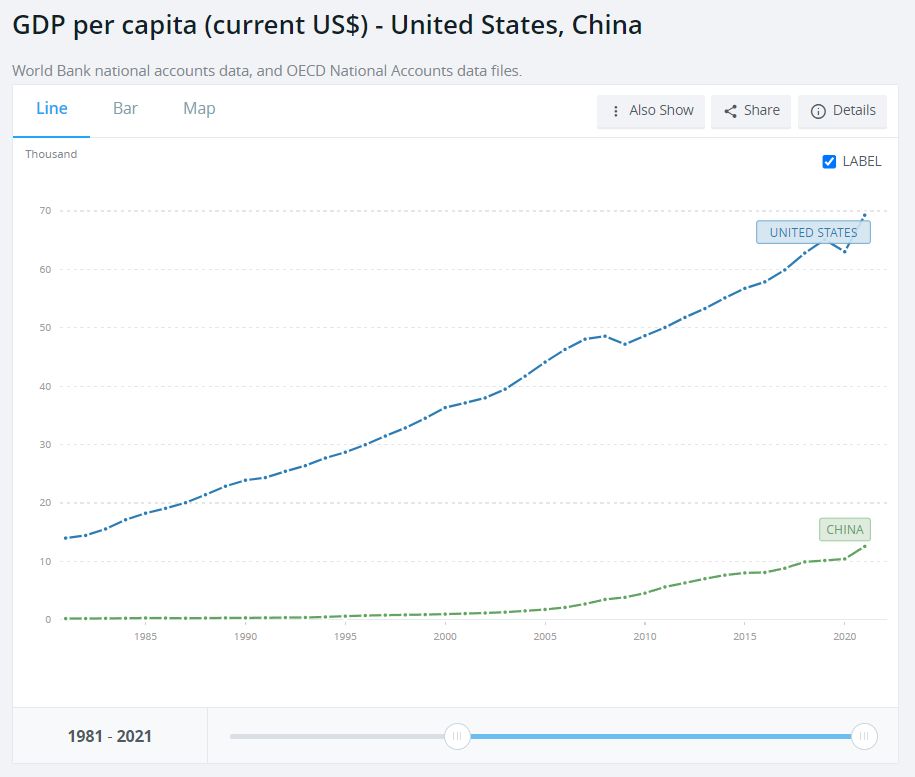
Beating China would have been remarkable, given that US GDP is, measured per capita, more than five times the size of its rival — leaving the Asian economy enormous scope to catch up. But just weeks ago, with a fresh wave of Covid lockdowns walloping spending and a property downturn deepening, it seemed possible.

Moving past the data, the Biden administration is now highlighting movement this week on two pieces of economic legislation that are key to the president’s broader campaign to “win the economic competition of the 21st century” with China, as he put it in his State of the Union speech earlier this year.

“We want to see the US economy deliver for the American people over the long haul,” Boushey said on Bloomberg Television’s Bloomberg Balance of Power With David Westin. “That is why we are so focused on the chips legislation and the Inflation Reduction Act. Both of these, especially together, are going to boost American competitiveness.”

The House on Thursday passed legislation marking the biggest expansion in support for US industry and research in years, with $52 billion in grants and incentives for domestic semiconductor manufacturing. That bill now goes to Biden for signature.

In the Senate, a new compromise Democrat-only bill emerged this week that would include a raft of investments in clean energy, stepping up US competitiveness in an area in which it has lagged behind.

President Xi Jinping and his colleagues, meantime, have begun to play down the target for growth of around 5.5% adopted by the government in March. The country should achieve “the best outcome” possible for growth this year while sticking to a strict Covid Zero policy, according to a statement after a meeting of the Politburo — the Communist Party’s top decision-making body.

“Telling officials to do the best that they can is a lot different from telling them they have to hit a certain target,” analysts at research firm Trivium China wrote in a note.

Xi and his US counterpart may have an opportunity to discuss their economies’ relative growth rates in person. They told aides to plan a meeting during a call on Thursday in what would be their first face-to-face conversation since Biden became president. 

(Updates with analyst comment in penultimate paragraph.)

More stories like this are available on bloomberg.com

©2022 Bloomberg L.P.
Virgin Media O2 Owners Form £4.5 Billion Fiber Expansion JV

(Bloomberg) — The owners of Virgin Media O2 have created a joint venture with infrastructure investor InfraVia Capital Partners to build between 5 million and 7 million new fiber connections across Britain.

The partners will invest £4.5 billion ($5.5 billion) in the new network, the companies said in a statement on Friday. It will be 50% owned by Liberty Global Plc and Telefonica SA, and 50% by InfraVia. The deal is expected to close by the end of the year.

It marks a major step up in the cable, mobile and TV group’s challenge to Britain’s biggest carrier, former state monopoly BT Group Plc. Infrastructure ventures like this are designed to access a lower cost of capital while sharing expensive, long-term rollouts. Liberty and Telefonica have done a number of similar deals in their other markets. The two telecom groups created London-based VMO2 in a merger last year to combine operations and sales of mobile, broadband and TV services.

The investment will include £3.3 billion in debt and £1.4 billion in equity, the companies said. The fiber optic connections will be built over the next four years, taking VMO2’s footprint to 80% of households in the country, up from about half today. A lot of that network is cable, but a year ago the company set out plans to overlay it with fiber optic lines.

BT shares fell 2% at 12:45 p.m. in London trading on Friday. Telefonica was little changed. Liberty Global fell 2.6% to $20.88 in New York trading on Thursday. 

Wholesale

In addition, Virgin Media O2 is in talks with potential wholesalers who could sell internet services over the new network as well as its existing footprint of 15.9 million premises, Chief Executive Officer Lutz Schueler said in an interview with Bloomberg. 

“Obviously it’s now highly attractive for possible wholesale partners, because if they enter in the deal with the fiber joint venture and Virgin Media O2, they get access to a minimum of 21 million fiber homes,” he said.

Reselling network access to wholesalers would mark a major shift for VMO2, which currently only sells its own Virgin Media broadband service. 

Read More: Virgin Media, O2 Combine to Create New Telecom Giant 

Chaired by billionaire “cable cowboy” John Malone, Liberty last year signed a similar fiber optic joint venture in Germany, also with InfraVia. Telefonica has done analogous deals in Germany, Brazil, Colombia and Chile, and this week announced a deal in Spain to roll out a network in under-served rural areas.

The deal structure means Liberty’s financing is “a very manageable £350 million phased over 4 to 5 years,” Jefferies analyst Ulrich Rathe said in a note to clients. 

Bloomberg reported Thursday that the companies had received binding offers for the project.

(Updates with CEO comments and further context throughout)

More stories like this are available on bloomberg.com

©2022 Bloomberg L.P.
Private Equity’s Top Lawyers Enjoy Prized Access to Buyout Funds

(Bloomberg) — Kirkland & Ellis became the world’s highest-grossing law firm in part by advising private-equity clients through an industry super-cycle. Its belief in the asset class didn’t stop there.

Partners have invested in a range of internal pooled investment funds that buy into private equity funds, according to regulatory filings and people familiar with the matter. In some instances, the vehicles have bought into specific deals where they are advising the buyside.

The Chicago-based law firm’s low-profile fund manager, called Randolph Street Investment Partners, enjoys access to some of the world’s most successful private equity firms, people familiar with the matter said, who asked not to be identified speaking about private arrangements. Such funds are typically the preserve of ultra-high net worth individuals or large institutional investors like pension funds and sovereign wealth funds.

In the past 12 years, Randolph Street has sought to raise more than $1 billion from Kirkland partners to invest in client funds and deals, a Bloomberg analysis of regulatory filings shows. The internal funds are among the largest in the legal profession, people familiar with the matter said. 

The scale of those funds has steadily expanded over the years as Kirkland has grown alongside the buyout industry. In 2010, for example, the fund sought to raise $20 million with a minimum investment from each participating partner of $10,000, a regulatory filing shows. For 2021, the firm was looking to raise $325 million from its top lawyers, across two different vehicles.

Kirkland’s investment entities have no management or other control rights over the funds they invest in, according to the firm’s conflicts of interest disclosures in court filings. Lawyers are allowed to participate in investment programs and longstanding legal ethics rules are in place to deal with potential conflicts of interest. 

Other US law firms have similar vehicles, people familiar with the matter say. Cooley’s affiliated investment fund — GC&H Investments LLC — has taken stock in startup clients, a regular practice among firms and lawyers that advise technology companies.

Some of the deals Kirkland has invested in alongside clients include taking stakes in Blackstone Inc.-backed benefits administrator Alight Solutions, Bain Capital-backed Aveanna Healthcare and GB Group, a software company previously backed by Audax Private Equity.

A spokesperson for Kirkland & Ellis declined to comment. Bain and Blackstone declined to comment. Cooley and Audax didn’t respond to requests for comment.

Significant Perk

The chance to share in the profits that the firms they advise make is a powerful tool for attracting top lawyers at a time when the competition for talent among elite law firms is fierce. Gaining access to leading buyout funds and their deals is a significant perk, particularly at a time when getting allocations to top managers is hard as investors have been pouring money into the asset class. 

It has also helped Kirkland cement its reputation as a trusted adviser to large buyout firms, as the firm is aligned alongside their clients, a person familiar with the matter said. The firm was the top legal adviser on private equity deals in 2021, advising on $278 billion of transactions, according to data compiled by Bloomberg.

Randolph Street’s investments are, in the case of one private equity fund, included in the ‘family and friends’ bucket through which private-equity executives invest in their own funds, another person said.

There is no suggestion of any wrongdoing in connection with the arrangement. Kirkland notes in court filings that — as is typical for limited partners in buyout funds — its employees don’t “manage or otherwise control” the funds they invest in and have no influence over decisions “to buy, sell, or vote any particular securities.”

But — as with other advisers that invest money alongside clients — Kirkland’s internal funds have drawn some scrutiny for potential conflicts of interest. 

“Ethics regulators have given guidance for decades,” on how such arrangements can be done ethically, said Abe Cable, a professor at the University of California’s Hastings law school. Still, investments in the private equity funds of clients could be difficult to monitor. “If the lawyer, or a different lawyer at the firm, then represents a portfolio company or an acquisition target, the potential conflict might be hard for the company to see or understand.”

Randolph Street

Randolph Street is the brainchild of Jack Levin, some of the people said, a senior lawyer at Kirkland who has overseen the firm’s growth from a niche Chicago player to a legal behemoth with offices across the globe and a client list of powerful investment firms.

Kirkland pioneered the arrangement in the 1980s at a time when private equity was still in its infancy, according to a 2016 court filing. The firm itself doesn’t invest in these funds and it is up to the discretion of each partner to participate, the filing said.

The pooled funds are managed by a handful of Kirkland partners who play a role in determining which private equity funds are invested in, regulatory filings show. They are Levin, Matthew Steinmetz, Bruce Ettelson and Ted Zook, a 2022 regulatory filing shows.

Steinmetz is a merger and acquisitions lawyer who has helped represent Bain Capital on multiple deals, according to Kirkland’s website. Ettelson is a funds lawyer who counts Thoma Bravo among his clients. Zook advises firms and their portfolio companies on nearly all aspects of their businesses.

Their connections to Randolph Street are less well advertised. The fund doesn’t have a website and none of the partners that help run it reference it in their corporate profiles.

More stories like this are available on bloomberg.com

©2022 Bloomberg L.P.

Amazon, Apple Poised to Add $220 Billion After Resilient Results

(Bloomberg) — Amazon.com Inc. and Apple Inc. are set to add about $220 billion in market value Friday after they joined technology peers Alphabet Inc. and Microsoft Corp. in assuaging investor concerns by reporting higher revenue even as consumers curb their spending amid rising inflation. 

Amazon jumped as much as 13% in US premarket trading, while Apple advanced 3%, before paring some of these gains. 

Amazon expanded both its e-commerce and cloud-computing businesses, with Bloomberg Intelligence analysts noting that the company’s performance proves that “it is better positioned to weather inflationary pressures and benefits from a more-affluent customer contrary to Walmart.”

Meanwhile, Apple beat analysts’ revenue expectations thanks in part to higher iPhone sales at a time when global smartphone shipments are falling globally. 

“Apple appears to be seeing no meaningful impact on its iPhone business in the current macro environment,” Piper Sandler analyst Harsh Kumar wrote in a research note. Also, restrictions on production in China eased at the end of the quarter, which “allowed some pent-up demand to be met,” he said.

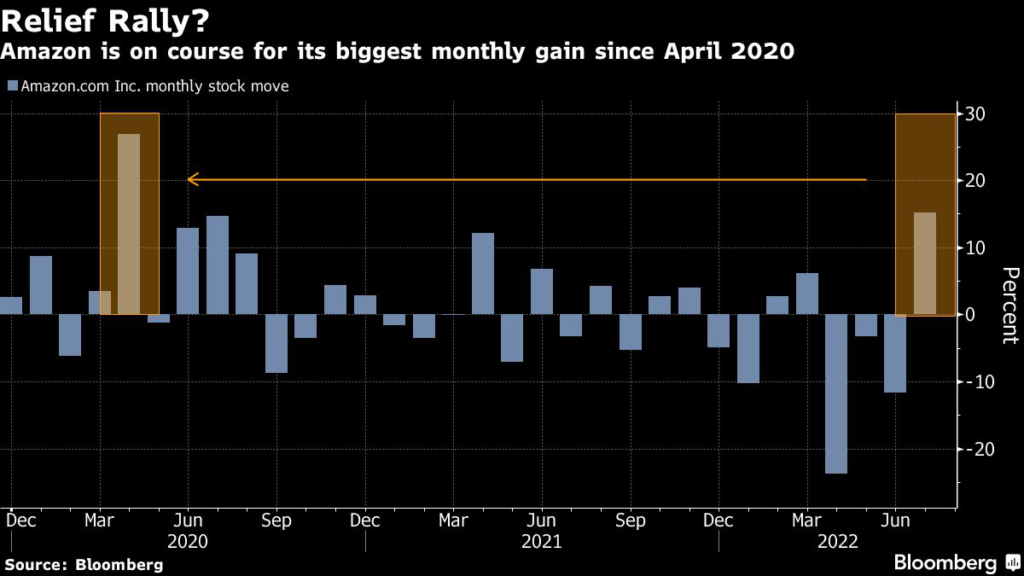
Through Thursday’s close, shares of both companies have risen 15% in July. Amazon is poised for it largest monthly advance since April 2020, while Apple is on course for its biggest monthly gain since August of that year.

Alphabet and Microsoft rose 0.5% and 0.6%, respectively, in premarket trading. 

(Updates stock moves throughout.)

More stories like this are available on bloomberg.com

©2022 Bloomberg L.P.

China Mulls Seizing Builders’ Idle Land to Fund Frozen Projects

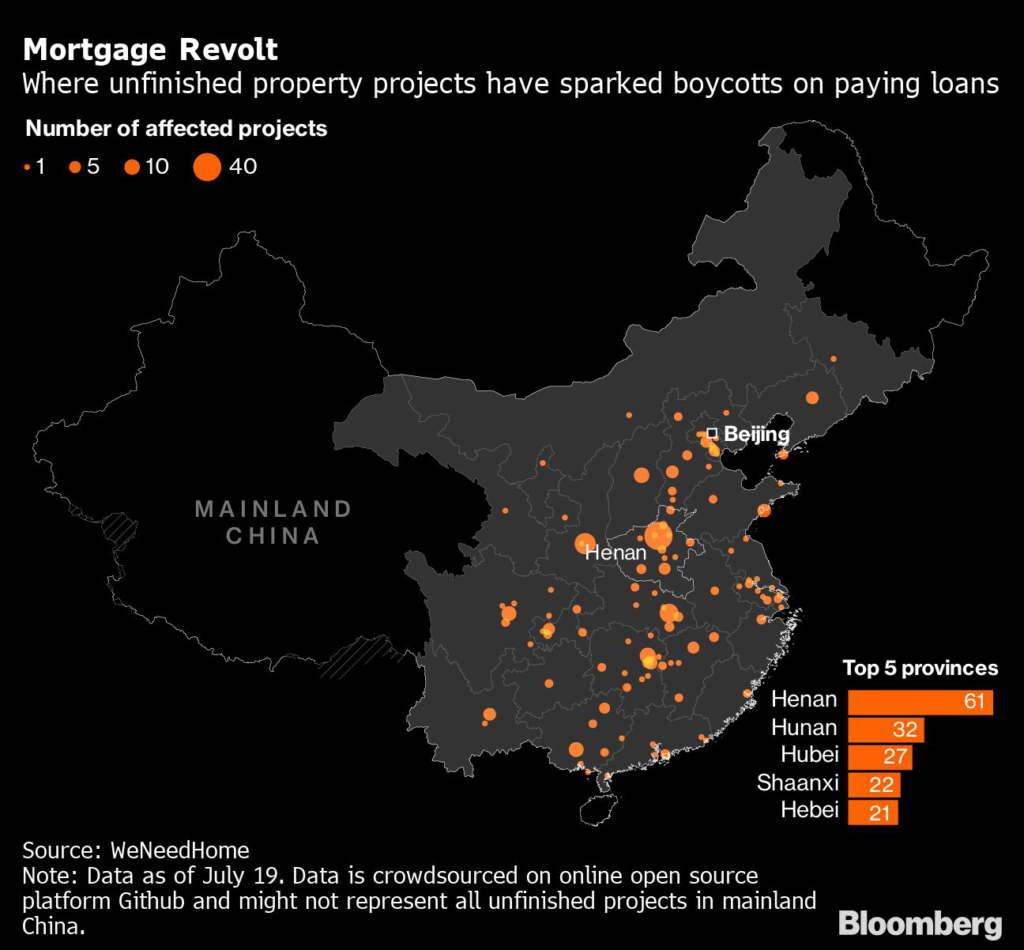
(Bloomberg) — China is considering a plan to seize undeveloped land from distressed real estate companies, using it to help finance the completion of stalled housing projects that have sparked mortgage boycotts across the country, according to people familiar with the matter.

The proposal, which is still under discussion and could change, would take advantage of Chinese laws allowing local governments to wrest back control of land sold to real estate companies if it remains undeveloped after two years, without compensation. That would give authorities more leeway to direct funds toward uncompleted homes, potentially to the detriment of creditors who would lose claims on some of developers’ most valuable assets.

While officials would have bandwidth to adjust the process to suit local conditions, a typical scenario would involve seizing land from a distressed developer and giving it to a healthier rival, which would in turn provide funding to complete the distressed developer’s stalled projects, the people said. The government could also rezone the seized land in some cases to increase its value, the people added, asking not to be named discussing private information. 

The proposal is one of several measures under consideration as Xi Jinping’s government tries to prevent turmoil in the housing market from fueling social unrest and derailing the broader economy. The focus on completing projects is the latest sign that policy makers are prioritizing homeowners over bondholders, who have been burned by a record number of defaults by real estate giants including China Evergrande Group.

The Ministry of Housing and Urban-Rural Development is discussing the proposal with other regulators and it’s unclear whether it will get a green light from senior Chinese leaders. The housing ministry and the ministry of natural resources didn’t immediately respond to faxed requests for comment.

China’s top 100 developers owned land parcels valued at 42.5 trillion yuan ($6.3 trillion) at the end of last year, according to China Real Estate Information Corp. Many of them borrowed heavily to buy the land, in hopes that prices would continue rising.

That bet is now souring after a multi-year government clampdown on real estate leverage that has weighed on home prices, land values and new residential property sales.

The result is that many distressed builders are sitting on land they’ve been unable or unwilling to develop. Just 37% of land parcels auctioned in the first batch of centralized land-bidding last year have started work as of March-end, according to a recent Caixin report. About 16% of the second batch were being developed, the newspaper said.

More stories like this are available on bloomberg.com

©2022 Bloomberg L.P.

Close Bitnami banner
Bitnami