Bloomberg

Flutterwave Says It’s Awaiting Kenya License After Bank Snub

(Bloomberg) — Flutterwave Inc. is waiting for a response from Kenya’s central bank for a Payment Service Provider license it applied for in 2019, after operating in East Africa’s biggest economy through partnerships with lenders and mobile network firms.

“We have been in constant engagement with the Central Bank of Kenya to ensure that we provide all the requirements, and we look forward to receiving our license,” the company said in an emailed response to questions on Friday. “We are committed to operating within the stipulated laws, regulations, and industry standards in Kenya.”  

Kenya’s central bank Governor Patrick Njoroge said financial technology companies Flutterwave and Chipper Cash are not licensed to operate as remittance or payments service providers in the country. “They are not licensed to operate and therefore they shouldn’t be operating, and Chipper Cash we could also say the same,” he said at a press briefing on Thursday.

Njoroge’s comments follow a Kenyan court order this month freezing for 90 days multi-currency bank accounts linked to transactions by Flutterwave Payment Technology Ltd. on suspicion of money laundering.

Olugbenga Agboola and Iyinoluwa Samuel Aboyeji are named as shareholders of the company that was registered in Kenya in February 2017, court documents show. 

The central bank didn’t immediately respond to questions about how the companies have been able to facilitate payments since registering as businesses in the country.

Chipper Cash, which has operations in seven African nations including Uganda and Nigeria, has raised a total of $305 million since its launch three years ago and is valued at $2 billion. The company didn’t immediately respond to requests for comment.

More stories like this are available on bloomberg.com

©2022 Bloomberg L.P.

China Probes Government, Bosses as Chip Race With US Heats Up

(Bloomberg) — China has begun a series of investigations into key figures responsible for shaping chip policy and investment, raising questions about the impact on Beijing’s blueprint for challenging US dominance of a $550 billion industry.

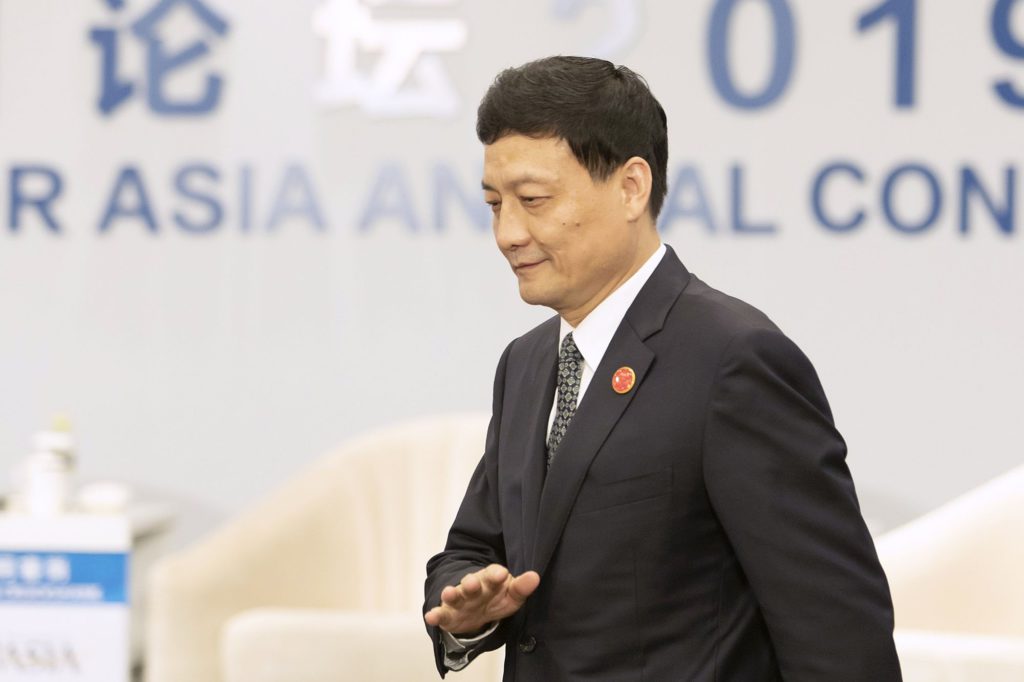
The top anti-graft agency this week launched an investigation into the minister who spearheads the country’s plan to build a world-class chip industry and wean itself off American silicon. Minister of Industry and Information Technology Xiao Yaqing, whose agency oversees giants from Huawei Technologies Co. to Xiaomi Corp., became the most senior sitting cabinet member to face a disciplinary probe in almost four years. The same day, Caixin reported that Ding Wenwu, head of a high-profile state-backed fund that invested tens of billions of dollars in the semiconductor industry, was unreachable after he became the target of a probe.

Beijing hasn’t linked the two cases nor specified allegations beyond legal and disciplinary violations. But they come on the heels of several cases since late 2021 that have unnerved an industry accorded priority status by Xi Jinping and long accustomed to government funding and support. 

Just days before Xiao’s probe was announced, Caixin reported that an investigation had also started against Zhao Weiguo, who had served as the chairman of Tsinghua Unigroup  before that company — once regarded as one of China’s national champions in semiconductors — collapsed under a mountain of debt. Zhao had publicly fought a $9 billion bailout of Tsinghua Unigroup, led by state-backed funds, before he was ousted from the group.

“The Chinese Communist Party is deadly serious about advancing China’s capacity and self reliance when it comes to the chip sector. This is vital to the party,” said Alex Capri, a research fellow at the Asia-based Hinrich Foundation. “These important figures take on positions highly instrumental for advancing China’s chip industry but it is not 100% clear whether they are completely toeing the party line. At the same time, the party is trying to control more and more of the tech sector.”

Read more: China Probes Tech, Industry Minister for Alleged Violations

The MIIT didn’t respond to faxed inquiries, while representatives for the IC fund weren’t available for comment. Ding and Zhao didn’t answer phone calls from Bloomberg News seeking comment.

Xiao’s ministry and Ding’s fund — the National Integrated Circuit Industry Investment Fund Co. — are instrumental in Beijing’s struggle with Washington for tech supremacy. They often act in concert to spur development of the semiconductors crucial to everything from phones to cars, as well as future applications in AI and robotics. The probe into Xiao raises questions about the effectiveness of a campaign that’s swallowed billions of dollars in funding, but has yet to produce technologies to truly challenge Silicon Valley. 

His plight caught many by surprise. One senior executive at a major electronics maker was still preparing to meet with the minister to discuss supply chain issues before the news emerged, according to a second person familiar with the arrangement, who asked not to be identified discussing a sensitive topic.

The minister also spearheads China’s efforts to build technologies from aviation to networking, and supports the nation’s most promising startups in areas from chipmaking to bio-tech. While Xiao’s agency also oversees automobiles and heavy industry, Ding’s National Integrated Circuit Industry Investment Fund Co. is the signature Beijing-controlled vehicle that drives government capital into the sector. Better known as the “Big Fund” in the industry, it’s made a series of high-profile investments including in Yangtze Memory, China’s biggest producer of memory, and top chipmaker Semiconductor Manufacturing International Corp.

Yangtze Memory, which Unigroup controlled before its bailout, is now seeking to oust Zhao from its board, according to a person familiar with the matter, who asked not to be identified discussing internal deliberations. A representative for the company declined to comment.

Xiao was the latest of several industry honchos caught up in investigations, with opaque allegations and uncertain outcomes. In November, authorities announced a probe into Gao Songtao, deputy of an investment firm that managed capital for Ding’s fund. Shortly after, the former head of the same firm was named in an official investigation.

Graftbusters have yet to publicly link any of the investigations into the chip industry figures. Xiao’s ministry is also the regulator for the country’s heavy industry, automobile, telecom and electronics sectors. Prior to his political career, Xiao mainly worked in the aluminum industry and was president of Aluminum Corp. of China when it bought a $14 billion stake in Rio Tinto Group with Alcoa Inc. in 2008.

The probes are unfolding weeks before the Communist Party’s 20th congress later this year, which is expected to reshuffle the country’s leadership. Xi, who’s expected to secure a third term in the shake-up, has consolidated power over the past decade in part due to an enduring corruption crackdown that brought down dozens of former top cadres.

But the series of official notices are bound to reverberate among the tightly knit semiconductor circle.

“I don’t think it paralyzes the chip industry, but it scares the living daylights out of whoever is the next person in line to run the big fund,” said Jordan Schneider, a senior analyst at Rhodium Group and host of the China Talk podcast. “It’s also likely that the investing will become more conservative because it’s easier to say that failure was because of corruption, than to own up to the fact that when you’re doing this sort of thing there inevitably is wasteful investment.”

Read more: The Global Fight Over Chips Is About to Get Even Worse

Critics of Beijing’s top-down policies have pointed out the enormous inefficiency that can result from freely doling out subsidies. Local media have reported about companies with scant experience winning incentives or grants for pursuing research, while others point to the persistent lack of genuine breakthroughs. Powerful local interests have chased government money by championing projects in hopes of securing subsidies and, at times, political prestige. About 15,700 new semiconductor companies registered from January to May 2021, three times the number from the same period the previous year, according to an analysis by the South China Morning Post.

Last week, Bloomberg News reported SMIC likely advanced its production technology by two generations, defying US sanctions. Yet experts said it still lags by far sector leaders Taiwan Semiconductor Manufacturing Co. and Samsung Electronics Co.

“Perhaps they’re looking for ‘fall men’ for an industrial policy, which hasn’t quite sort of borne the fruit that it was initially promised,” Rhodium’s Schneider said, referring to the recent probes.

More stories like this are available on bloomberg.com

©2022 Bloomberg L.P.

Renault to Move Ahead With Breakup Plan Even Without Nissan

(Bloomberg) — Renault SA will carry out a plan to carve out electric and combustion-engine businesses, even without its Japanese auto-making partners.

“They know that we have to do it, that we will do it and we’ve opened the door for them to each project,” Chief Executive Officer Luca de Meo said Friday in an interview on Bloomberg Television. “At the end it’s their decision if they want to jump in the boat, but the train is leaving the station.”

The CEO’s plan to split the struggling manufacturer’s operations is gaining traction after talks with French unions got underway and also discussions with top management of its alliance partners Nissan Motor Co. and Mitsubishi Motors Corp.

De Meo has pledged to reveal details of the transformative plan in the fall after “transparent” discussions with the Japanese companies. 

Hundreds of people are working on the projects that may go beyond spinning off an EV operation and could include other partners, he said in the interview.

“We’re talking to a lot of people,” he said, adding that these include potential partners from the automotive and tech industries. 

Relations between Renault and Nissan and Mitsubishi management are “very good,” de Meo said, pointing to upcoming initiatives for joint industrial projects.

The CEO was speaking after Renault raised its financial outlook for the year in a bid to draw a line under the company’s costly withdrawal from the Russian market.


More stories like this are available on bloomberg.com

©2022 Bloomberg L.P.

Giant Screen Falls on Pop Band Mirror’s Performance Shocks Hong Kong 

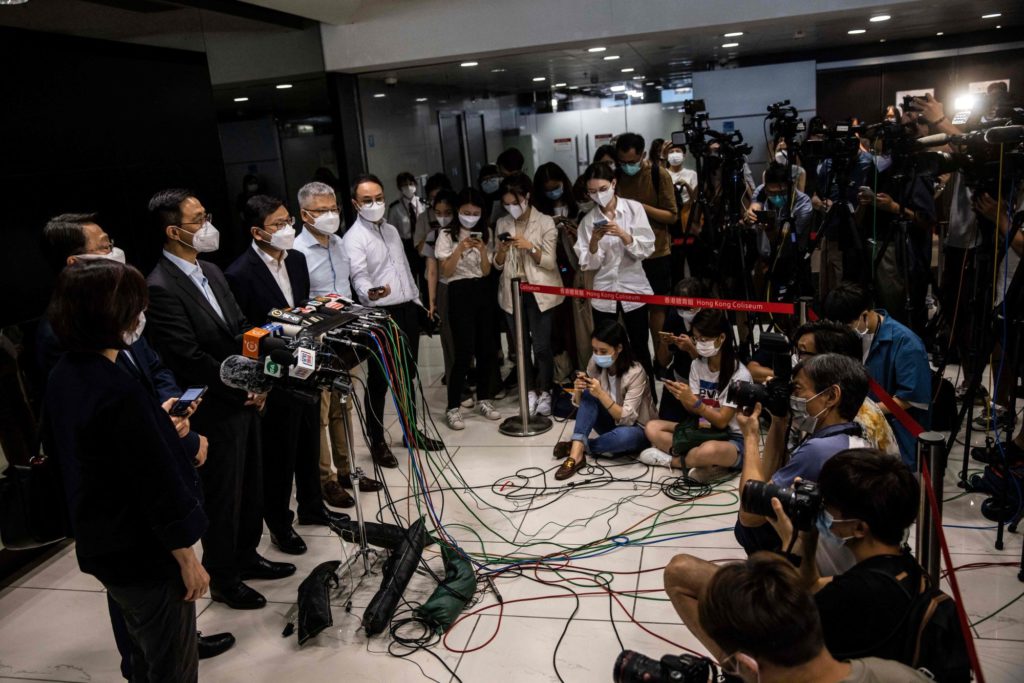
(Bloomberg) — A giant screen fell onto the stage during a performance by popular canto-pop band Mirror in Hong Kong on Thursday, injuring two backup dancers and prompting the city’s leader to order an investigation into the matter.

The injured performers were rushed to Queen Elizabeth Hospital on Thursday, and three audience members were treated for shock, a police spokesperson said Friday. One of the two dancers was in serious condition and was suspected of suffering a spinal cord injury, local media including Ming Pao reported. The other dancer was in a stable condition, according to the paper. 

Hong Kong Chief Executive John Lee expressed his sympathies for the injured and contacted his relevant departments to investigate the matter to ensure the safety of performers, staff and public. The gruesome incident was the top news on local media on Friday and the highest trending topic on China’s Twitter-like Weibo. Video clips of the event flooded social media platforms showing the giant screen breaking loose and collapsing on the performers. 

The 12-member Mirror boyband, which has shot to super stardom in Hong Kong in recent years, is managed by companies controlled by billionaire Richard Li, whose father Li Ka-shing is among Hong Kong’s richest men. The concert, held at the Hong Kong Coliseum in Kowloon, was organized by MakerVille. The company is controlled by PCCW Ltd., which is part of the junior Li’s business empire.

Li, who’s chairman of PCCW, extended his condolences to the injured and their families, a representative for the tycoon said. The company will bear the cost of medical expenses for the injured and follow up on the incident with due care and attention, according to the representative.

Separately, Hong Kong’s education bureau urged the public to stop circulating videos about the incident and advised parents to arrange counseling for kids who may be disturbed by the event. The Hong Kong Red Cross started a hotline for affected people to call in for help. 

(Updates with comment from Richard Li representative in penultimate paragraph, statements from education bureau and Red Cross in final paragraph.)

More stories like this are available on bloomberg.com

©2022 Bloomberg L.P.
Women’s Football Emerges a Winner as Euros Draw Record Bets

(Bloomberg) — Whoever ends up taking the UEFA Women’s Euro 2022 title on Sunday, female soccer is emerging victorious.

As of July 28, Entain Plc had registered a record 1.5 million online bets on the tournament across its sports betting brands, the gambling firm said in a statement on Friday. UK punters placed the most, measuring 46% of the total, followed by bettors in Germany at 22% and Brazil at 16%. In the UK, Entain has seen a sixfold increase in bets placed by women, compared with the previous tournament in 2017.

Interest in women’s soccer has surged this year as television channels across Europe broadcast the contest during peak viewing hours. The England side, dubbed The Lionesses, blasted through the group stages and beat Spain and Sweden in the quarter- and semi-finals to seal their place in the final against Germany at Wembley Stadium in London. So far, 72% of bets placed with Entain’s brand Ladbrokes Digital UK back England to claim the trophy within 90 minutes of play.

Women’s Euro 2022 is expected to reach a global live audience of more than 250 million, up from 178 million in 2017, Entain said. The rising popularity of female soccer “has also been reflected in betting activity on women’s football matches, which has grown at similarly seismic rates – particularly amongst female customers,” said Julie Doleman, Entain’s managing director for UK & Ireland Digital.

More stories like this are available on bloomberg.com

©2022 Bloomberg L.P.

Vodafone Agrees to Sell Stake in Ghana Operations to Telecel

(Bloomberg) — Vodafone Plc has agreed a sale of its operations in Ghana to Telecel Group, as the British telecommunications giant looks to refocus on key markets. 

The London-listed company will sell its majority stake in Vodafone Ghana to Africa-focused Telecel, subject to certain conditions, a spokesperson for Vodafone said in an emailed statement 

Vodafone entered Ghana in 2008 when it paid the west African county’s government $900 million for 70% of Ghana Telecommunications Co. The government retains a 30% holding in the business.

Telecel plans to help fund the acquisition by later offloading the Ghana business’s mobile towers, according to people familiar with the matter, who asked not to be identified discussing confidential information. 

A representative for Telecel confirmed the talks with Vodafone, but declined to comment further.

Nick Read, Vodafone’s chief executive officer, has been focusing the group on Europe and Africa as he streamlines a sprawling operation that once extended from its Newbury, England headquarters all the way to New Zealand. 

In Africa, Vodafone has been steadily consolidating interests under its sub-Saharan subsidiary Vodacom Group Ltd., of which it owns 60.5%. Vodafone explored a sale of its Ghanaian business to Vodacom in early 2021 and, while that deal did not materialize, transfered a 55% holding in its Egyptian operations to the group later in the year. 

Founded in 1986, Telecel operates in more than 30 countries and employs over 700 staff, according to its website. The company has a history of growth through acquisitions, having struck deals in Gibraltar, Liberia and Mauritania in recent years. 

More stories like this are available on bloomberg.com

©2022 Bloomberg L.P.
Taiwan Joins Global Slowdown With Weakest Growth Since 2020

(Bloomberg) — Taiwan lowered its unofficial economic outlook for the year as waning global demand for electronics and rising inflation slowed growth to the slowest pace in two years.  

Gross domestic product rose 3.08% in the second quarter from a year earlier, down from 3.1% in the prior three months, official data showed Friday. That was lower than the 3.15% forecast in a Bloomberg survey of economists and the weakest since the second quarter of 2020. 

Officials said full-year growth is likely to hit 3.85%, assuming previous estimates for the following quarters remain unchanged, falling short of the most recent formal estimate of 3.91%.

“Momentum is slowing,” said Ho Woei Chen, an economist with United Overseas Bank Ltd. in Singapore. “Growth contribution came mainly from gross capital formation, private consumption and government consumption. Net exports were negative to headline GDP.”

The slowdown comes after mounting warning signals from China and the US, Taiwan’s two largest export markets, which combined account for just over half of the island’s overseas shipments. An economic slowdown in the US has sparked recession talk as officials struggle to rein in the highest inflation in 40 years without cratering the economy. 

The Chinese economy, meanwhile, has been weighed down by ongoing Covid outbreaks and resulting lockdowns, leading economists to downgrade their forecasts for growth in 2022 to 3.9% in a recent Bloomberg survey. 

A string of poor results among major technology companies in the last few days added to the bearish outlook for Taiwan’s technology-reliant economy. Profits at Intel Corp. and Sony Group Corp. both missed estimates in the most recent quarter, with the companies downgrading future guidance. 

Samsung Electronics Co. also warned of rising uncertainties in its outlook after reporting profit that missed estimates as cooling demand for consumer gadgets hit its chip division.

Factory data in Taiwan underscore the concerns about the broader economy. Manufacturing output grew just 0.51% in June, according to the Ministry of Economic Affairs, the weakest growth since January 2020.

The surging cost of imports also likely weighed on GDP. Taiwan’s trade balance fell to $11.9 billion in the second quarter, according to Finance Ministry data earlier this month, its lowest in over two years, as the rising costs of oil imports, exacerbated by a weakening currency, offset robust exports. 

(Updated with additional details on outlook in third paragraph and chart.)

More stories like this are available on bloomberg.com

©2022 Bloomberg L.P.

British Fashion Brands Targeted in UK Greenwashing Probe

(Bloomberg) —

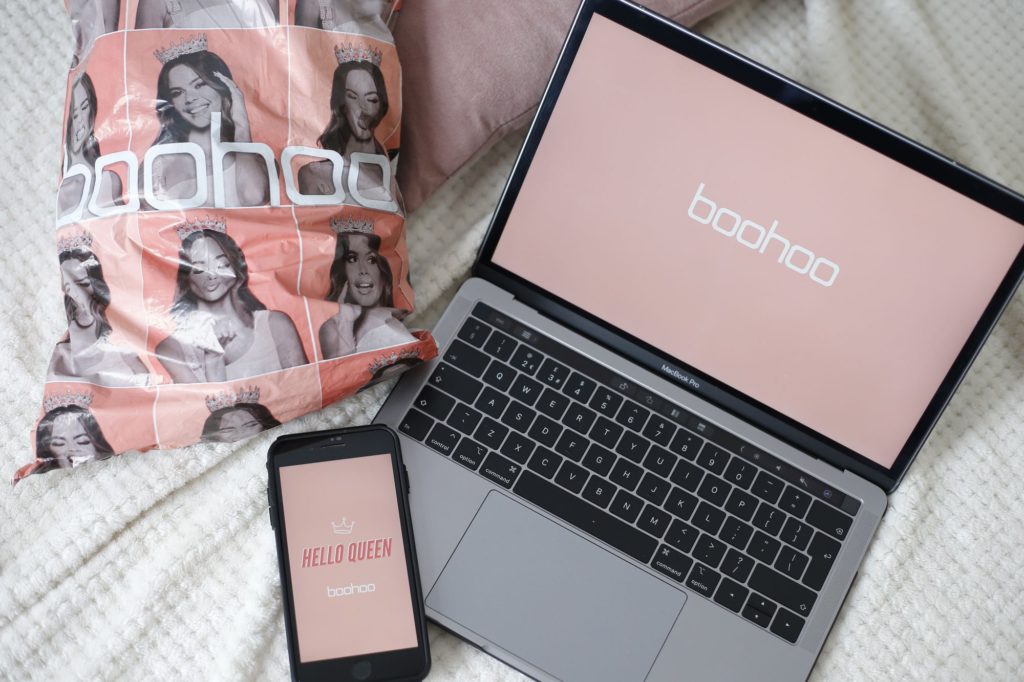
The U.K.’s competition watchdog started a probe into potentially misleading environmental claims made by fashion brands Asos Plc, Boohoo Group Plc and George at Asda, over greenwashing concerns.

The Competition and Markets Authority said it opened an investigation into the three fashion brands “to scrutinize their ‘green’ claims,” saying it’s concerned that clothes, footwear and accessories are being marketed as eco-friendly with language that seems too vague and misleading. 

The CMA has been investigating claims across the British fashion sector including around recycled materials and ranges of clothing being branded as sustainable. The fashion sector was targeted first because the CMA found it to be the biggest cause for concern after initial research. Other sectors including travel and consumer goods will be investigated, with the possibility of more action to come.

The CMA said it “has not reached a view as to whether there have been any breaches of consumer protection law,” in its fashion probe.

“Asos will co-operate with the investigation and is committed to playing its part in making fashion more sustainable, including providing clear and accurate information about its products,” the online retailer said in a statement. 

Boohoo said it will work “collaboratively” with the watchdog. 

Asda said it’s “ready and willing to answer any questions the CMA” have about its George for Good range.

“We know how important it is that our customers can trust the claims we make about our products, which is why we ensure the statements we make can be supported by industry accreditations,” Asda said in a statement. 

(Updates with Asda comment in last two paragraphs)

More stories like this are available on bloomberg.com

©2022 Bloomberg L.P.

Stocks Set for Best Month Since 2020; Dollar Falls: Markets Wrap

(Bloomberg) — Stocks in Europe and the US are set for their biggest monthly advance since November 2020 on positive earnings and expectations of shallower Federal Reserve monetary tightening. 

The banking sector outperformed in Europe after a slate of better-than-expected results from Banco Bilbao Vizcaya Argentaria SA, Standard Chartered Plc and BNP Paribas SA. Hermes International rose more than 7% after joining LVMH and Kering SA in posting strong results, showing the luxury consumer is resilient so far to high inflation and worries over a potential economic downturn.

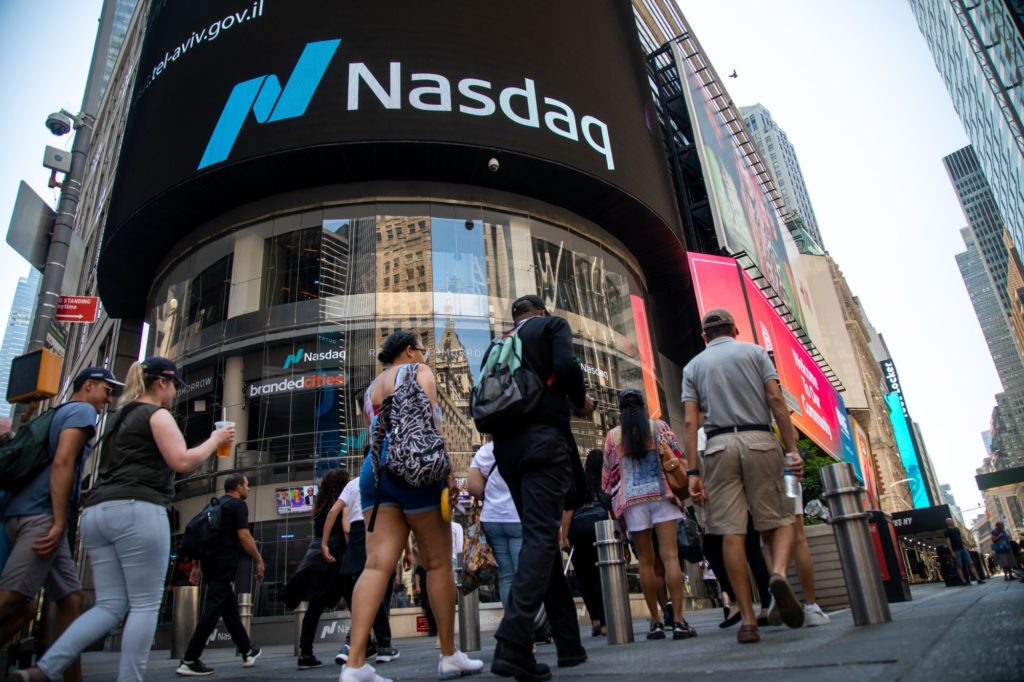
Nasdaq 100 futures added 1% after the US stock market hit a seven-week high Thursday. Amazon.com Inc. and Apple Inc. rose in premarket trading after both companies beat revenues estimates.

The tone was more somber in Asia, hampered by a tumble in Chinese tech shares that dragged Hong Kong toward a correction of more than 10% from a June high. US-listed Chinese stocks fell in premarket trading, following a downbeat economic growth assessment from China’s top leaders and a lack of new stimulus policies.

The yen strengthened as the dollar retreated. Treasuries yields rose with oil and gold. Data showing a second straight quarterly US economic contraction supported arguments that inflation will cool and that the Fed will become less aggressive.

Meanwhile, the euro-zone economy expanded by more than three times the amount economists expected, putting it on a firmer footing as surging inflation and a possible Russian energy cutoff threaten to tip it into a recession. Inflation in the region climbed to another all-time high, supporting calls for the European Central Bank to follow up its first interest-rate hike since 2011 with another big move.

Global shares are set for a second weekly advance, paring this year’s rout to about 16%. The risk is that the recent bout of optimism eventually gets a reality check if inflation stays stubbornly elevated, leaving interest rates higher than investors would like amid an economic downturn.

“At some point, the Fed will pivot policy and that should be better for risk markets, but in the meantime, they’re so bent on quelling inflation that we prefer not to buy the dip here,” Thomas Taw, head of APAC iShares Investment Strategy at BlackRock Inc., said on Bloomberg Radio.

Second-quarter US gross domestic product fell an annualized 0.9% after a 1.6% drop in the first three months of the year. Back-to-back quarters of decline define a recession in most parts of the world, but in the US it’s not official until economists at the National Bureau of Economic Research deem it so.

Swaps tied to Fed meeting dates anticipate a peak in the fed funds rate of about 3.25% around year-end, less than a percentage point above its current level, followed by reductions next year to shore up growth. Such pricing is a major bone of contention for market participants.

“Market pricing is overdone and the terminal rate should move closer to 3.5%-3.75%” as inflation remains too high amid strong labor and wage trends, wrote Priya Misra and Gennadiy Goldberg, strategists at TD Securities.

Elsewhere, a call between US President Joe Biden and China’s Xi Jinping underlined bilateral tension even as the leaders sought an in-person meeting.

Here are some key events to watch this week:

  • Euro-area CPI, Friday
  • US PCE deflator, personal income, University of Michigan consumer sentiment, Friday

Musk, Tesla and Twitter are this week’s theme of the MLIV Pulse survey. Also share your views on the S&P 500’s biggest stocks. Click here to get involved anonymously.

Some of the main moves in markets:

Stocks

  • The Stoxx Europe 600 rose 0.8% as of 10:05 a.m. London time
  • Futures on the S&P 500 rose 0.6%
  • Futures on the Nasdaq 100 rose 1%
  • Futures on the Dow Jones Industrial Average rose 0.2%
  • The MSCI Asia Pacific Index rose 1.2%
  • The MSCI Emerging Markets Index rose 0.8%

Currencies

  • The Bloomberg Dollar Spot Index fell 0.3%
  • The euro rose 0.2% to $1.0215
  • The Japanese yen rose 0.9% to 133.12 per dollar
  • The offshore yuan was little changed at 6.7391 per dollar
  • The British pound fell 0.2% to $1.2160

Bonds

  • The yield on 10-year Treasuries advanced three basis points to 2.70%
  • Germany’s 10-year yield advanced eight basis points to 0.90%
  • Britain’s 10-year yield advanced seven basis points to 1.94%

Commodities

  • Brent crude rose 2% to $109.27 a barrel
  • Spot gold rose 0.4% to $1,763.01 an ounce

More stories like this are available on bloomberg.com

©2022 Bloomberg L.P.

Alibaba Slumps as Traders Assess Earnings Risk, Ant Report

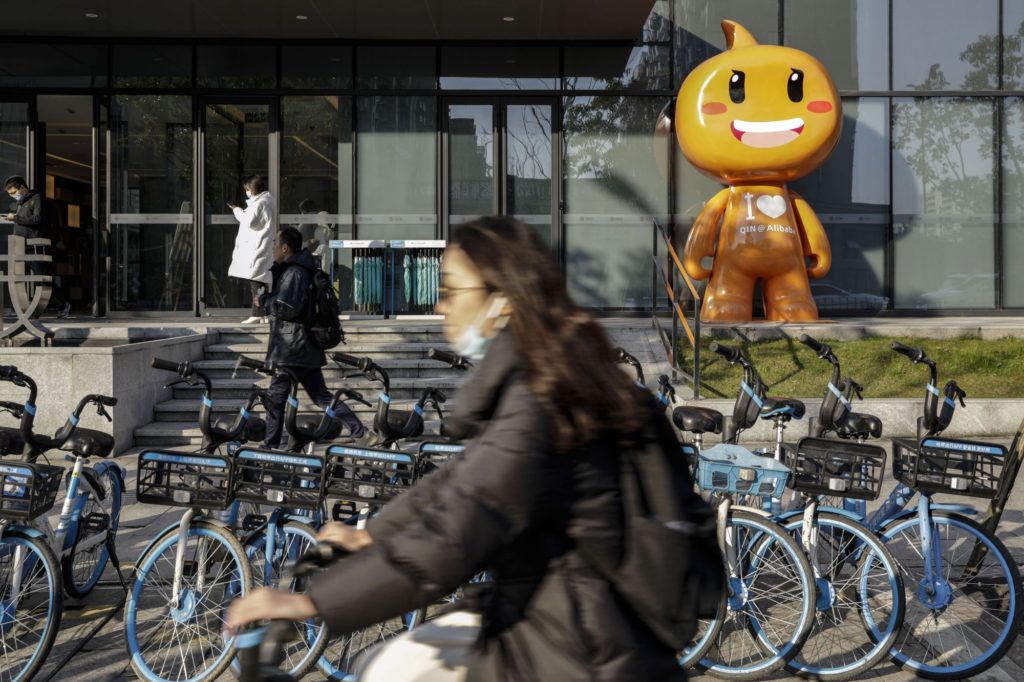
(Bloomberg) — Alibaba Group Holding Ltd. fell for a third straight day as investors assessed the impact of Jack Ma reportedly ceding control of his fintech arm, and as worries over its earnings dragged. 

Shares closed down 6.1% in Hong Kong on Friday, among the biggest decliners on the Hang Seng Tech Index. The tech giant is expected to report its first-ever negative quarterly revenue growth next week. 

Selloff continued as traders debated the implications of a report that Ma may give up his reign over Ant Group Co., a third of which is owned by Alibaba. While the move can clear some regulatory headwinds for both entities, a change in leadership may delay the initial public offering of Ant.

“On top of earnings concern, there are some worries that the listing timetable for Ant might be delayed by Jack Ma’s decision,” said Kenny Wen, head of investment strategy at KGI Asia in Hong Kong. “It’s hard for A-share companies to obtain approval if there is a change in key shareholding structure within three years.”

Read: Ma Ceding Ant Grip to Ease Risks, Caution Remains: Street Wrap

KGI Asia’s Wen also cited Hangzhou city’s market regulator warning online food delivery platforms including Ele.me, which is controlled by Alibaba, over a price war as negative for the stock. 

Alibaba is now 11% below its Tuesday close, when its plan to shift its Hong Kong listing to primary buoyed optimism over mainland capital inflow. 

The Hang Seng Tech Index slid 4.9% to trade below its 50-day moving average. Other big decliners included JD Health International Inc. and Kuaishou Technology. 

(Updates trading prices.)

More stories like this are available on bloomberg.com

©2022 Bloomberg L.P.
Close Bitnami banner
Bitnami