

Bloomberg

Ford Crushes Profit Estimates Ahead of Cuts to Fund EV Shift

(Bloomberg) — Ford Motor Co., preparing to slash thousands of staffers to help fund its electric-vehicle future, reported second-quarter earnings that beat Wall Street estimates, as sales grew and car prices increased. Its shares rose 3.8% in early trading Thursday.

Adjusted earnings rose to 68 cents a share, more than the 45 cents analysts predicted on average, Ford said Wednesday. Adjusted earnings before interest and taxes more than tripled to $3.7 billion, well above the $2.37 billion analysts expected. That performance also compared favorably with Detroit-based rival General Motors Co.’s second-quarter adjusted profit of $2.34 billion. 

Both carmakers are racing to catch up with EV market leader Tesla Inc. by launching a slew of battery-powered models. Ford attributed its gains in part to high demand for its electric Mustang Mach-E crossover SUV, F-150 Lightning pickup and E-Transit commercial van. 

Ford also reiterated its 2022 earnings guidance of $11.5 billion to $12.5 billion before interest and taxes. That would represent a gain of 15% to 25% over 2021’s profit. In another sign of confidence, the company raised its quarterly dividend by 50% to 15 cents a share. 

Ford shares pared a gain on Thursday of as much as 6.8% to trade up 3.8% to $13.69 as of 9:46 a.m. in New York. The stock is down about 34% this year.

Belt-Tightening

Ford also signaled belt-tightening is underway to keep costs in check as it spends billions on EV battery and vehicle factories. Ford Chief Financial Officer John Lawler said Ford has begun streamlining efforts as part of a “sweeping change” in strategy to make the transition to electric vehicles. He declined to comment on specifics about headcount reductions.

“We’re focused on our costs and our cost reductions for transforming the company and those will have benefits if we do head into a potential recession,” Lawler said on a call with reporters. “We’re looking at simplifying the business, transforming the business, growing in some areas, cutting in other areas.”

Chief Executive Officer Jim Farley is engineering a wrenching transformation by spending $50 billion through 2026 to pump out 2 million electric vehicles annually, up from just over 27,000 last year. To finance those ambitions, Farley aims to lift profit from Ford’s traditional gas-burners, like the Bronco sport-utility vehicle, by cutting $3 billion in costs and eliminating as many as 8,000 jobs, according to people familiar with the plans.

Read more: Ford CEO Farley Says Automaker ‘Absolutely Has Too Many People’

During the second quarter, the automaker bucked an industrywide decline by nudging up US sales by 1.8%. Ford’s automotive revenue in the period soared to $37.9 billion, beating the $34.5 billion analysts expected, as vehicle prices increased.


Ford attributed its robust revenue to increased sales volume as well as “favorable pricing and vehicle mix,” a reference to higher sticker prices on its fattest profit-margin SUVs and trucks. In the April to June period, the average price consumers paid for Ford models rose 10% to $51,995, boosting profit even as dealers’ inventory remained tight due to the chip shortage, according to researcher Cox Automotive.

Those lofty prices may not last as a bottleneck on semiconductor supplies eases and inventories recover. Lawler said Ford expects to see a “moderation in pricing” as vehicle availability increases from the current paltry 14-day supply.  

Home Market Strength

Ford’s home market operations in North America continued to drive performance, with earnings before interest and taxes of $3.27 billion, a huge gain from the $192 million last year. The company said nearly all of its 2022 model-year vehicles were sold out and that customer traffic in its showrooms is brisk. 

“Ford is having success on the product side,” David Whiston, an analyst with Morningstar Inc. who rates the company a buy, said before the results were announced. “They just need to do a better job on cost, including warranty cost and making the company more fit. It sounds like those plans will be executed fairly soon.”

In China, the world’s largest auto market, Ford has yet to gain much traction. The company posted a $121 million loss before interest and taxes, nearly unchanged compared from the $123 million loss last year. Ford’s sales in China plunged 22% during the quarter to about 120,000 vehicles as pandemic-related restrictions and lockdowns disrupted business.

But the automaker swung to a $10 million profit before interest and taxes in the second quarter in the European market, compared with a $284 million loss a year earlier. It cited strength in its commercial vehicle business for the turnaround.

(Updates with opening shares in fifth paragraph.)

More stories like this are available on bloomberg.com

©2022 Bloomberg L.P.

Nokia, AST SpaceMobile Join Forces for Broadband from Space

(Bloomberg) — Nokia Oyj will provide equipment to connect AST SpaceMobile Inc. satellites to the global telecommunications network, creating a crucial link in a planned space-based broadband network designed to work with standard mobile phones, the companies said in a statement Thursday.

In addition to AirScale base stations, Espoo, Finland-based Nokia will provide its NetAct network management systems and technical support, the companies said. Terms of the five-year deal with Austin, Texas-based AST SpaceMobile weren’t disclosed.

AST’s BlueWalker 3 test satellite, an array of antennas that measures 693 square feet (64 square meters), is planned for launch in early to mid-September. Eventually the network will consist of 168 satellites, the company told investors in a March 31 filing.

With BlueWalker 3 aloft, AST plans to conduct testing on five continents in coordination with mobile network operators such as Vodafone Group Plc, Rakuten Mobile and Orange SA.

AST and Nokia said the network is intended to offer connections to people and places without digital services.

“Connectivity should be considered an essential service like water, electricity or gas,” said Tommi Uitto, Nokia’s president of mobile services. “Everyone should be able to have access to universal broadband services that will ensure that no one is left behind.”

AST SpaceMobile is among a group of companies vying to offer broadband from near space, a cohort that includes Elon Musk’s SpaceX, Inmarsat Group Holdings Ltd, and OneWeb Ltd., which recently agreed to combine with Eutelsat Communications SA.

“The key differentiator,” AST SpaceMobile said in its annual filing March 31, “is that we intend to connect our SpaceMobile service to standard, unmodified cellular phones without the requirement of special software, ground terminals or hardware.”

More stories like this are available on bloomberg.com

©2022 Bloomberg L.P.

Robinhood’s CEO Keeps Faith in Face of Stock’s 77% Wipeout

(Bloomberg) — A relaxed vibe envelops Robinhood Markets Inc.’s California headquarters, where employees stroll in pairs around a lush courtyard of cacti, towering conifers and a squat grapefruit tree.

The Zen-like mood extends to the C-suite of the app-based brokerage, where co-founder and Chief Executive Officer Vlad Tenev, wearing white sneakers and a charcoal button-down, sprawls out on a blue sofa during an interview.

It’s not exactly the kind of atmosphere one might expect for a company that has lost more than $4 billion in the past five quarters and seen its stock plunge 77% since last July’s initial public offering. The challenges have only mounted in recent months, as stagnating user growth and a broad decline in trading coincided with a round of job cuts, not to mention a potential regulatory overhaul that could threaten a key source of revenue.

If Tenev, 35, is rattled, he doesn’t show it.

“You can’t run a business, or really live your life, with your emotions being driven by how the stock market is doing,” he said in an interview ahead of the first anniversary of the IPO.

Still, investors will be looking for signs that Tenev is making progress on a turnaround when Robinhood reports second-quarter results Wednesday. He plans to do that by catering to the firm’s most active customers, a pivot from the company’s previous strategy of amassing as many users as possible, regardless of how often they trade or how little money they hold in their accounts.

Having a large number of small-dollar investors hasn’t exactly been a boon for Robinhood’s bottom line. The median account size was about $240 in February 2021, Tenev told the House Financial Services Committee that month. His testimony addressed the meme-stock frenzy weeks earlier, when shares of GameStop Corp. and others skyrocketed, prompting Robinhood to restrict some stock purchases. A recent investigation by committee staff revealed how seriously the episode threatened Robinhood’s business. 

Read more: A Year After GameStop Fiasco, Robinhood Grapples With Fresh Woes

“This year, we’ve shifted a little bit to focusing on the people we already had,” Tenev said of the roughly 23 million customers who’ve deposited funds in a Robinhood account. But the most active users are those experimenting with other  offerings, such as its cash card and recurring investments, he said.

Monthly active users hit 24 million about two months before the IPO and have dropped steadily since, to 14.6 million at the end of May. Crypto trading volume was hit especially hard, plummeting 94% in that same span as Bitcoin prices tumbled and the Terra stablecoin ecosystem collapsed. 

Robinhood, which Tenev founded in 2013 along with Stanford University roommate Baiju Bhatt, says “democratizing finance” is its mission. But prioritizing active users may come at a cost: One former manager, who asked not to be identified, said senior executives devoted more attention to super-users than to studying how they might improve customers’ financial well-being, missing an opportunity to help them build lasting wealth with the platform.

Tenev countered that critique, saying that addressing any frustrations that the most active users encounter will help make the platform better for everyone.  

“Improving the quality of service for them, that trickles down to the less active customers,” he said. 

Excessive trading on Robinhood’s platform could hurt young investors in the long run, said Catherine Valega, a wealth consultant at Green Bee Advisory, adding that the recent market swoon could be a moment to reassess. 

“Hopefully with the bubble burst, people will take a breath and we’ll get back to reality again,” she said. 

Job Cuts

Reining in expenses is another pillar of Tenev’s turnaround plan. Robinhood cut 9% of its workforce in April — an abrupt about-face after it bought a recruiting firm and spent several months hiring and opening offices across the US, including in New York, Seattle and Charlotte, North Carolina. 

“We’re always looking at ways to become more efficient — headcount, obviously, is one of the levers,” Tenev said. The firm is looking to cut costs in other ways, including getting all leaders “to do more with less.” 

Software and web hosting are also potential targets for expense reductions, notable given Robinhood’s rocky track record of service disruptions. In March 2020, as the pandemic fueled a boom in online trading and expanded the firm’s user base, its platform went dark for an entire trading day. Lawsuits followed the outage, which left customers angry about missing a massive rally.

Read more: Robinhood Trading Site Seizes Up, Customers Miss Stock Rally 

The sharp decline in Robinhood shares — they closed Wednesday at $8.90 apiece, a year after debuting at $38 — has fueled speculation that it could be primed for a takeover.

Billionaire Sam Bankman-Fried, the CEO of crypto exchange FTX, acquired a 7.6% stake in Robinhood in May, about a year after an investor in both firms introduced him to Tenev. FTX has held internal discussions about the possibility of a deal, Bloomberg reported in June. Robinhood hadn’t received a formal takeover approach at the time.

Tenev, meanwhile, said deal talks aren’t a priority and that Robinhood is focused on building new products.

“We can do that really, really well as a stand-alone, public, independent company,” he said.

Regulatory changes still loom. The Securities and Exchange Commission is weighing modifications to how brokers handle retail trades, threatening one of Robinhood’s main revenue streams. The agency also expressed concern about “gamification” practices that encourage more trading.

See also: Bankman-Fried’s FTX Said to Seek Path for Robinhood Deal

The pressure for Robinhood to turn things around isn’t coming just from early backers. At the IPO, the firm made an unusually large percentage of shares available to everyday investors. One of them, accountant Mark Swearingen, said he invested about $2,000 in Robinhood shares in the company’s first days on the market. He sold his remaining position earlier this month.

“Even with good news, it seems like they’re always dropping,” said Swearingen, 34, of Pennsylvania. 

Tenev still seemed relaxed as he discussed the way forward for Robinhood. Sitting outside a room called “Warm Milk” — conference rooms at the firm’s Menlo Park headquarters are named by popular opinion — he rattled off some of the problems that had previously dogged the company and how it worked to resolve them.

“You’re not hearing much about Robinhood being unavailable to customers or our customer support not being helpful,” he said. “We’ve made incredible improvements in some of those core things. We’ve gone beyond that to actually improving the product systematically and rolling out new products. There’s a lot more to come.”

More stories like this are available on bloomberg.com

©2022 Bloomberg L.P.
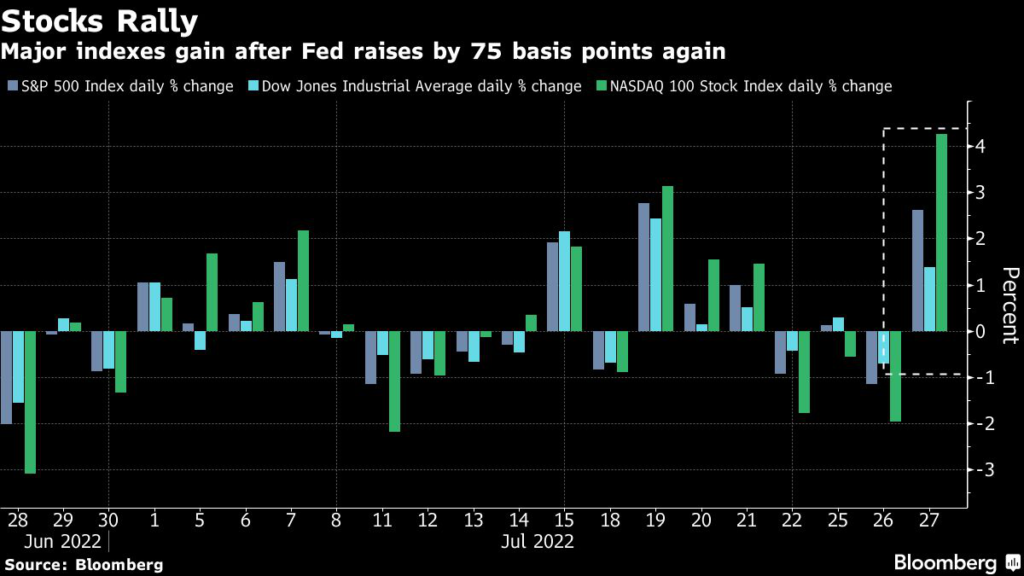
Futures Waver After GDP; Earnings in Focus: Markets Wrap

(Bloomberg) — Stocks fluctuated after data showed the US economy unexpectedly contracted, with traders turning their attention to the busiest day of the earnings season.

The S&P 500 was little changed, while the tech-heavy Nasdaq 100 underperformed after Meta Platforms Inc. reported its first-ever quarterly sales decline. Big Tech will be in focus with results from Amazon.com Inc. and Apple Inc. The two-year Treasury yield, among those more closely linked to policy, at one point fell close to 12 basis points to 2.88%. Swaps now show traders expect the fed funds rate to peak around 3.25% before the end of this year. 

US and European firms worth more than $9.4 trillion will report their results on Thursday. That comes on the heels of the Fed raising rates by 75 basis points for a second month, saying such a move is possible but that the pace of hikes will slow at some point. Chair Jerome Powell said policy will be set meeting-by-meeting as he tries to control rising prices amid signs of an economic slowdown. 

“As the tug-of-war between inflation and recession fears plays out in the second half of the year, we expect to see highly volatile markets,” Richard Flynn, UK Managing Director at Charles Schwab, wrote in a note.

Meanwhile, Spirit Airlines Inc. rose on a deal with JetBlue Airways Corp.

Separately, renewable energy companies soared in Europe and premarket trading following a deal by US senators to advance a bill that will spend hundreds of billions of dollars on energy security and climate change. Shares in the world’s biggest wind turbine maker Vestas Wind Systems A/S rose 19%. Oil also rose.

As Europe edges toward a full-blown energy crisis and recession, its manufacturing giants are raking in the cash. Luxury-car leader Mercedes-Benz joined Europe’s biggest chemicals maker BASF, Swiss building-materials producer Holcim, shipping company Hapag-Lloyd and others to report a jump in profit and raise earnings forecasts for the year. 

The results offer a stark contrast to the wave of grim economic news sweeping across Europe. Confidence in the euro-area fell to the weakest in almost 1 1/2 years as fears of energy shortages haunt consumers and businesses, and the European Central Bank’s first interest-rate increase in a more than decade feeds concerns that a recession is nearing. German inflation unexpectedly resumed its climb.

The knee-jerk relief in markets on possible crumbs of comfort from the Fed outlook echoes a pattern seen after earlier hikes. Those bouts of optimism stumbled on recession risks from a global wave of monetary tightening, Europe’s energy woes and China’s property sector and Covid challenges.

China’s top leadership gave a downbeat assessment of economic growth but didn’t announce new stimulus policies at a key meeting.

Elsewhere, traders are awaiting a phone call between President Joe Biden and China’s Xi Jinping, which could touch on US tariffs and other points of tension.

Here are some key events to watch this week:

  • Apple, Amazon earnings, Thursday
  • US GDP, Thursday
  • Euro-area CPI, Friday
  • US PCE deflator, personal income, University of Michigan consumer sentiment, Friday

Musk, Tesla and Twitter are this week’s theme of the MLIV Pulse survey. Also share your views on the S&P 500’s biggest stocks. Click here to get involved anonymously.

Some of the main moves in markets:

Stocks

  • Futures on the S&P 500 were little changed as of 8:48 a.m. New York time
  • Futures on the Nasdaq 100 were little changed
  • Futures on the Dow Jones Industrial Average were little changed
  • The Stoxx Europe 600 rose 0.6%
  • The MSCI World index rose 0.4%

Currencies

  • The Bloomberg Dollar Spot Index was little changed
  • The euro fell 0.4% to $1.0163
  • The British pound fell 0.1% to $1.2145
  • The Japanese yen rose 1.3% to 134.80 per dollar

Bonds

  • The yield on 10-year Treasuries declined six basis points to 2.72%
  • Germany’s 10-year yield declined seven basis points to 0.88%
  • Britain’s 10-year yield declined three basis points to 1.93%

Commodities

  • West Texas Intermediate crude rose 2% to $99.18 a barrel
  • Gold futures rose 1.6% to $1,764.80 an ounce

More stories like this are available on bloomberg.com

©2022 Bloomberg L.P.

VW Sees Paying More to Restock Materials as Factories Crank Up

(Bloomberg) — Volkswagen AG is bracing to pay higher prices for commodities as improving supply of semiconductors allows the carmaker to crank up factories and start delivering cars to waiting customers.

Sales have already ticked up “noticeably” in recent weeks as more chips have become available, Europe’s biggest carmaker said Thursday. With stockpiles of more cheaply-sourced materials dwindling, restocking warehouses will be more expensive under current market conditions, Chief Financial Officer Arno Antlitz said in an interview.

“We expect to have more chips and therefore capacity utilization will improve,” Antlitz said. “The raw material prices will hit the industry even harder than in the first half, so we have to prepare for that.”

With the supply crisis now in its third year, manufacturers are looking at wait lists as long as a year for some models with many buyers in the wings to finally purchase a new car. 

Commodity prices have hit record highs this year, before retreating from their peaks as the global economic outlook has softened. Copper, important to make combustion-engine as well as electric cars, has slumped 28% since a March high while steel has declined by more than a fifth. 

Automakers have weathered the supply-chain crisis on chips by swinging production to their most lucrative models such as the Audi Q7 SUV. As car dealerships ran out of cars, prices have ballooned for new and used vehicles to deliver stellar returns to manufacturers. 

As factories return to more normal working conditions, carmakers expect sticker prices to soften. 

“We have to prepare for competition,” said Antlitz. “We have to be competitive on pricing and renew our focus on fixed cost and productivity.”

More stories like this are available on bloomberg.com

©2022 Bloomberg L.P.
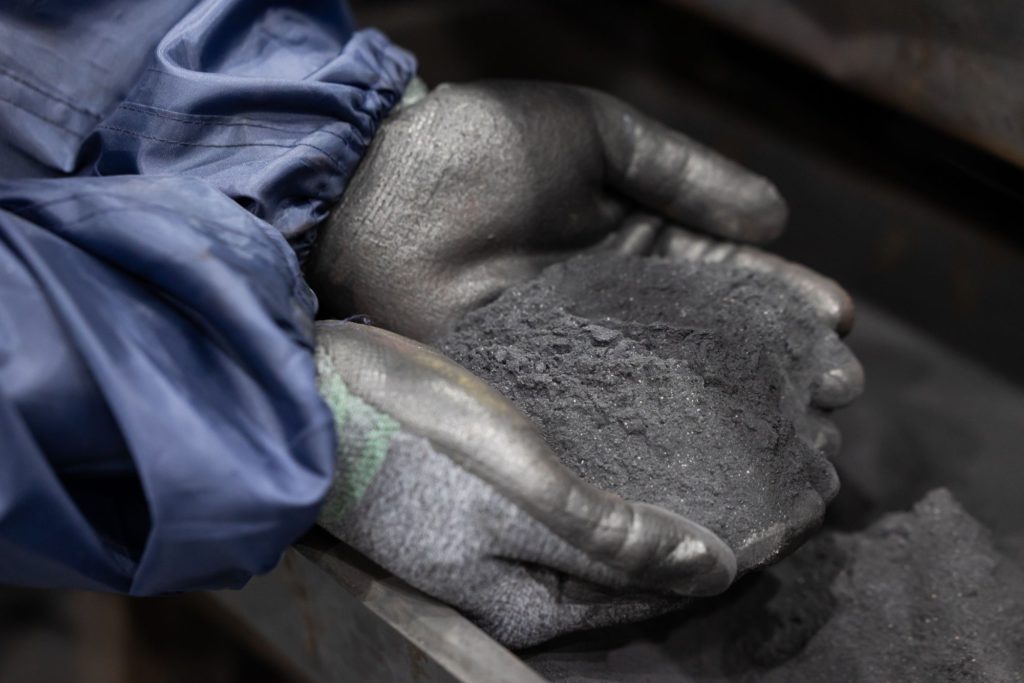
India Wants to Open Up For Lithium Mining in Batteries Quest

(Bloomberg) — India is seeking to change laws to allow private miners to extract lithium, the key ingredient for batteries used for electric vehicles and energy storage, as the nation aims to be more self-sufficient in green technologies. 

Prime Minister Narendra Modi’s government wants lawmakers’ approval for amendments to existing policies in the current session of parliament, according to people familiar with the plans. Eight minerals, including lithium, beryllium and zirconium will be removed from a restricted list that currently prohibits production by private companies.

The changes would allow the government to auction permits to exploit lithium reserves, the people said, asking not to be named as the matter is not yet public. They are also aimed at reducing India’s dependence on imports for some key minerals, and to put the country in a better position to compete in the lucrative battery supply chain, according to the people.

A mines ministry spokesperson didn’t immediately respond to a request for comment.

India wants to add local manufacturing of a swathe of zero-emissions technologies as it chases a target of becoming carbon neutral by 2070 and to capture opportunities from the global transition to cleaner energy. The nation has pledged to build 500 gigawatts of clean power capacity by 2030, and the deployment of huge volumes of battery storage is seen as vital to enable round-the-clock use of renewables.

Government agencies have been exploring for lithium and discovered a small resource at a site in southern Karnataka state, according to the mines ministry. Still, to produce lithium at any meaningful scale and reduce reliance on imports, India would need to find and develop further deposits. 

Australia and Chile currently dominate raw materials output, while China is the world’s largest refiner.

India’s imports of lithium-ion batteries jumped 54% from a year earlier to $1.83 billion in the year ended March, trade ministry data show. Almost 87% of the purchases came from China and Hong Kong, despite India’s efforts to shun imports from its northern neighbor

Besides effort to boost local output, the country is also scouting for lithium and cobalt assets overseas. A joint venture has been formed with three state companies —  National Aluminium Co., Hindustan Copper Ltd. and Mineral Exploration Corp. — to acquire mines overseas.

“This policy change is intended to reduce the import dependence, though other than some recent small discoveries in Karnataka, India doesn’t have known reserves of lithium” said Debasish Mishra, a Mumbai-based partner at Deloitte Touche Tohmatsu, adding the aim is also to boost exploration and mining activities by attracting private participation. “This is a welcome step but this would also require more promotion and incentives from the government.”


(Updates with analyst’s comment in last paragraph)

More stories like this are available on bloomberg.com

©2022 Bloomberg L.P.

Hong Kong Dismisses Report of Security Flaw in Covid Tracing App

(Bloomberg) — Hong Kong’s government has rejected a cybersecurity firm’s claim that flaws in the city’s Covid-19 tracing app could expose sensitive user information, saying there have been no incidents of data leakage.

The city’s government was responding to a security audit of the LeaveHomeSafe app published by Polish cybersecurity firm 7ASecurity, which said it detected vulnerabilities in the software that could allow hackers to access ID numbers, visit records or vaccination and testing information.

The audit, conducted in April and May through reverse engineering, found “significant flaws” in the software security, including three that were designated critical or severe, the firm said in a report published Wednesday. In response, the government said there had never been security or privacy incidents related to the LeaveHomeSafe app, which has undergone third-party assessments. 

Facial recognition capabilities identified in the report had already been removed from the app, it added. The government “regrets and firmly opposes the inaccurate report and unfair allegations,” the city’s chief information office said in an online statement.

Researchers from 7ASecurity said they shared their work, funded by the US non-profit Open Technology Fund, in June with the app’s developer, Hong Kong-based Cherrypicks, a subsidiary of Netdragon Websoft Holdings Ltd. Cherrypicks didn’t respond to a request for comment.

Constant Challenge

Mistrust around the contact tracing app has become a persistent challenge for the Hong Kong government since its rollout in 2020. That has only increased after LeaveHomeSafe became a necessity for checking into most venues, as the primary way to prove users’ vaccination status. 

While officials maintain that visit and vaccination records on the app are encrypted and stored only on the user’s device, many remain unconvinced. The city has grappled with low levels of public trust in the wake of the 2019 pro-democracy protests and harsh Covid containment measures.

Health secretary Lo Chung-mau indicated this month that the app may soon require real-name registration, akin to the equivalent app in mainland China. Other officials later walked back those comments.

Privacy advocates have called on the government to publish the source code for the app to assuage privacy concerns, said Edmon Chung, who serves on the board of directors for the non-profit Internet Society of Hong Kong. 

“Without it being an open-source app, we can’t see,” he said. “While there are no immediate breaches of privacy, it remains a potential of breach both through abuse by the government as well as security compromise.”

More stories like this are available on bloomberg.com

©2022 Bloomberg L.P.

London Home Projects Face Delays to 2035 on Electricity Capacity

(Bloomberg) — London’s housing shortage may be about to get worse. 

Home projects in the west of the city face long delays because developers are being told that they can not be connected to the electricity grid until 2035, according to a letter sent to developers by the Greater London Authority and obtained by Bloomberg.

Demand from data centers being constructed adjacent to fiber optic cables have absorbed the remaining capacity in the area, which is supplied by Scottish and Southern Electricity Networks. Boroughs including Hillingdon, Ealing and Hounslow are affected, according to the letter, which was first reported by the Financial Times.

Listen: Housing Slowdown Could Become a Real Estate Meltdown (Podcast)

Power demand from data centers in the key markets of the U.K., Norway, Germany, the Netherlands and Ireland are expected to jump about 80% to almost 48 terrawatt-hours by 2030, BloombergNEF said in October. Each data center uses electricity equivalent to a small city — powering servers and ensuring service remains resilient — putting pressure on existing infrastructure.

The GLA has been informed that new applicants will have to wait several years for connections, affecting plans for everything from commercial premises to industrial activities. Housing projects with fewer than 25 units can still proceed. 

The GLA, which did not immediately respond to a request for comment, have been coordinating with SSEN and the National Grid to better understand the extent of the constraints faced and to set out potential solutions, the note says. 

“Our collective aim is to help find innovative solutions to mitigate the immediate constraints, unblocking developments that may otherwise be delayed or stopped in their entirety, whilst ensuring that economic development is not adversely affected,” the document states.

More stories like this are available on bloomberg.com

©2022 Bloomberg L.P.

China Probes Tech, Industry Minister for Alleged Violations

(Bloomberg) — Chinese authorities are investigating the Minister of Industry and Information Technology Xiao Yaqing on suspicion of disciplinary violations, making him the most senior sitting cabinet official to be ensnared in a disciplinary probe in almost four years.

The case was a “violation of discipline and law,” the country’s top anti-graft agency said in a statement Thursday, avoiding the common phrasing “serious violation of discipline and law.” The regulators didn’t offer further details on the alleged crimes by Xiao, whose ministry spearheads China’s efforts to build technologies from semiconductors to aviation, and supports the nation’s most promising startups in areas from chipmaking to bio-tech.

The probe against the 62-year-old official is unfolding weeks before the Communist Party’s 20th congress later this year, which is expected to reshuffle the country’s leadership. President Xi Jinping, who’s expected to secure a third term in the shake-up, has consolidated power over the past decade in part due to an enduring corruption crackdown that brought down dozens of former top cadres.

The announcement coincided with a monthly meeting of the Communist Party’s Politburo, which vowed to strive for the “best outcome” for economic growth this year, as concerns mount over the risks of a property crisis spreading to the broader financial system.

READ: China Looks for ‘Best Outcome’ as Economic Challenges Mount 

Xiao’s ministry is the regulator for the country’s heavy industry, automobile, telecom and electronics sectors, overseeing companies from Huawei Technologies Co. to Xiaomi Corp. He has held the rank of cabinet minister since 2016, earlier leading government agencies including the country’s top state-owned assets watchdog. He attracted public attention earlier on Thursday as he was not included in a list of central government officials slated to attend the upcoming Party Congress.

Prior to his political career, Xiao mainly worked in the aluminum industry and was president of Aluminum Corp. of China when it bought a $14 billion stake in Rio Tinto Group with Alcoa Inc. in 2008. That derailed BHP Billiton Ltd.’s hostile bid for the world’s third-largest mining company and marked one of the biggest Chinese outbound investments.

Former Vice Public Security Minister Meng Hongwei, who was placed under investigation in October 2018, was the last official of such a senior rank to fall. 

(Updates with details, background of Xiao)

More stories like this are available on bloomberg.com

©2022 Bloomberg L.P.

Nissan Earnings Beat Estimates on More-Profitable Car Sales

(Bloomberg) — Nissan Motor Co. first-quarter earnings beat estimates as the Japanese automaker dealt with supply-chain snarls and surging raw material costs by focusing sales on more profitable models. 

Operating profit was 64.9 billion yen ($479 million) in the three months ended June 30, the Yokohama-based company said in a statement Thursday. That topped analyst estimates of 48.9 billion yen, according to data compiled by Bloomberg. Sales rose to 2.14 trillion yen, compared with estimates of 2.02 trillion yen.  

For more detail on the earnings, click here

“The business environment remained more challenging than expected,” Chief Executive Officer Makoto Uchida said in the statement. Production was constrained by Shanghai’s Covid lockdown and semiconductor shortages, while soaring materials prices also impacted earnings. However, it increased revenue per unit by focusing on quality of sales.  

The maker of Pathfinder SUVs and Altima sedans maintained its forecast for operating profit of 250 billion yen this fiscal year, up slightly from the 247 billion yen operating profit posted in the year ended March 31. Chief Operating Officer Ashwani Gupta said on a call that the company is confident of meeting its targets.   

Gupta said Nissan is seeking to mitigate rising raw material costs by reducing its use of precious metals. One way to do that is by developing cobalt-free batteries, he said. The company is also exploring direct sourcing for raw materials in the long term and is developing chips to counter the semiconductor shortage, he said.

The results give a “positive impression,” Bloomberg Intelligence analyst Tatsuo Yoshida said. “The effect of the company’s structural reform is gradually coming out,” he said. Barring any surprises, Nissan will likely raise its full-year guidance when it announces second-quarter earnings, he added. 

Nissan said it has received 23,000 orders for the Sakura, a mini electric vehicle that is only available in Japan, and more than half the buyers are new customers.

Nissan shares rose 3.7% in Tokyo trading Thursday before the results were released, paring this year’s decline to 5%. 

(Adds comments from chief operating officer and analyst.)

More stories like this are available on bloomberg.com

©2022 Bloomberg L.P.

Close Bitnami banner
Bitnami
