Bloomberg

Deutsche Bank’s Long List of Rising Cost Threatens Key Goal

(Bloomberg) — When Christian Sewing took over at Deutsche Bank AG four years ago, he vowed to keep a tight lid on expenses to turn around a lender reeling from years of shrinking revenue. 

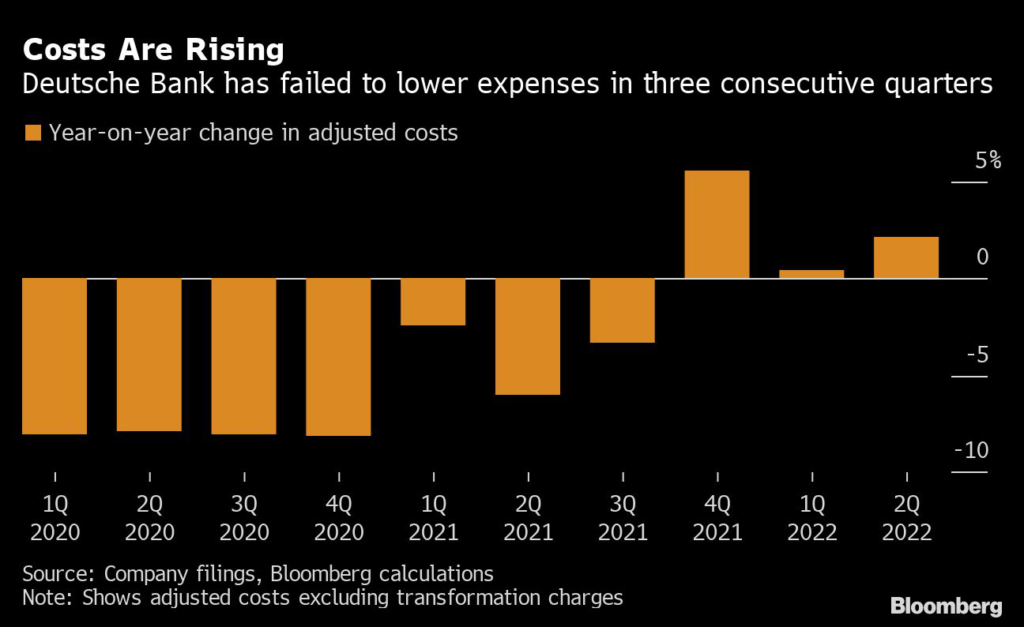
As the chief executive approaches the end of his restructuring, his traders keep gaining market share and revenue is surging even in businesses that struggled for years. But expenses, the one thing under his control in 2018, are threatening to derail his main financial target, an 8% return on tangible equity.

The CEO said on a call Wednesday that his “laser-focus” on costs hasn’t changed and won’t change, while also saying that he made a conscious decision to keep investing. The bank is working on new cuts to offset the unexpected expenses, he said.

Here’s a rundown of some of the things driving up costs at Germany’s largest bank:

Sewing initially pledged to cut Deutsche Bank’s workforce to 74,000 by the end of this year, but headcount stopped declining last year and has been hovering at around 83,000 ever since. 

Now, with inflation fueling wage gains across the economy, compensation expenses have been rising of late, increasing by 3% in the first six months of 2022. 

Rising bonuses in the investment bank have contributed, too, as Deutsche Bank vowed to pay successful traders. Compensation costs in the investment bank were up 5% in 2021 and rose another 13% between January and June. 

In fact, the lender said it’s made higher bonus accruals in the first half of 2022 than last year, even though Chief Financial Officer James von Moltke said pay will reflect market conditions and remains a “lever” to manage costs. 

Costs tied to legal and regulatory issues, another area Sewing had successfully focused in his first years as CEO, are also creeping up again. Deutsche Bank has been criticized by regulators for being to slow in improving controls. Starting last year, it stepped up how much it’s spending on those issues.

The firm also had to set aside money for a probe by US regulators into staff use of unapproved personal devices. Several US banks have disclosed they’re expecting to pay about $200 million euros each to settle the matter.


Then there’s a probe of allegations that its investment arm DWS Group overstated its sustainability capabilities, forcing the firm to twice hire external parties to vet the accusations. DWS on Tuesday said it booked costs of about 13 million euros on the matter in the first half, partly resulting from legal fees.

Deutsche Bank has also highlighted higher contributions to the European bank resolution fund and legal risks relating to a portfolio of Polish mortgages. 

Streamlining computer systems, a long-running issue at the bank, is adding to expenses. Deutsche Bank is facing new obstacles as it integrates the systems of its retail subsidiary Postbank and recently disclosed another three-month delay, meaning some 150 million euros of additional expenses in the first quarter of next year. 

The delays follow several hundred million euros in software writedowns the bank had to take last year after signing a cloud computing contract with Google. It hasn’t yet disclosed if it reaped any cost savings from the Google project.

Russia’s invasion of Ukraine has been another drag, contributing to a substantial increase in the amount Deutsche Bank has to set aside for souring loans. Provisions hit 525 million euros in the first half of 2022, compared with 144 million euros in the same period last year. The bank has warned a gas cutoff to Germany could have even worse consequences. 

In addition, Deutsche Bank’s decision to phase out operations in Russia has meant it’s winding down its large technology center there, forcing it to spend about 50 million euros on relocating staff to an expanded unit in Berlin, according to people familiar with the matter. It’s also incurred higher costs from implementing the complex sanctions against Russia. 

Finally, the return of business travel on the back of easing pandemic restrictions has also contributed to higher costs, with von Moltke saying the associated expenses have increased substantially this year. 

(Adds CEO comment in third paragraph, travel expenses in last.)

More stories like this are available on bloomberg.com

©2022 Bloomberg L.P.

JLR Owner Sees Wider-Than-Expected Loss as Chip Woes Drag On

(Bloomberg) — Jaguar Land Rover’s Indian parent posted a higher-than-expected quarterly loss as a prolonged semiconductor shortage was worsened by surging commodity prices and a slow ramp up of its high margin Range Rover model. 

Tata Motors Ltd. reported a loss of 50 billion rupees ($625.8 million) for the three months ended June 30, the Mumbai-based carmaker said in an exchange filing Wednesday. That was worse than the average analyst estimate of a 13.05 billion rupees loss, according to data compiled by Bloomberg. 

The group’s revenue came in at 719.3 billion rupees, slightly higher than analyst forecasts. Total costs rose 12% to 777.8 billion rupees.

JLR reported a quarterly loss before tax of £524 million ($632 million), compared with a shortfall of £110 million a year earlier, Tata Motors said. JLR’s quarterly revenue fell 11% from a year earlier, mainly due to a weaker model mix, inflation and adverse currency movements, the company said. 

Automakers globally are struggling to mitigate the impact of semiconductor chip shortages on sales. Earlier on Wednesday, Mercedes-Benz AG flagged concerns about high inflation, supply-chain problems and a worsening energy supply crisis in Europe. 

“Although headwinds from the global semiconductor supply and Covid lockdowns in China have impacted our business performance this quarter, I am pleased to confirm that we have a completely reinforced organization setup to respond to the semiconductor crisis,” Thierry Bollore, JLR’s chief executive officer, said in the statement. 

Tata Motors also said that it was ramping up production of the Range Rover and Range Rover Sport. It continues to target a 5% margin on earnings before interest and taxes and £1 billion in free cash flow in the year through March 2023.

‘Progressively Improve’

“We expect supply side, including that of critical electronic components to progressively improve,” Shailesh Chandra, managing director for Tata Motors’ Passenger Vehicles segment, said in the filing. 

Sales of JLR vehicles slumped 37% to 78,825 units for the June quarter due to chip shortfalls and lockdowns in China, parent Tata Motors said earlier this month. Sales in China slipped by as much as 5%. 

However, demand for JLR vehicles is strong with orders for popular models like the new Range Rover, Range Rover Sport and Defender at 62,000, 20,000 and 46,000 respectively, the company said. 

Tata Motors raised prices by 0.55% across its passenger vehicles earlier this month, following a price hike of 1.5%-2.5% in commercial vehicles in June to combat the “steep” rise in costs.

(Updates with details throughout.)

More stories like this are available on bloomberg.com

©2022 Bloomberg L.P.

Rockstar Games Cleaned Up Its Frat-Boy Culture – and Grand Theft Auto, Too

(Bloomberg) — In the summer of 2020, after a police officer killed George Floyd, Rockstar Games quietly shelved a mode of play it had planned to release for its Grand Theft Auto Online game.

Called Cops ‘n’ Crooks, the mode was a twist on the children’s game where players organize into teams of good guys and bad guys, but seemed especially tone-deaf during the global reckoning over police violence. Senior executives at the company, concerned about how the narrative might be interpreted during a time of heightened skepticism and mistrust of American police, put it aside. They still haven’t made plans to bring it back, according to people familiar with development. 

This was one of several politically sensitive actions Rockstar, a division of Take-Two Interactive Software Inc., has taken in recent years. The company removed transphobic jokes from the most recent console release of Grand Theft Auto V and significantly narrowed its gender pay gap. Rockstar’s next game, Grand Theft Auto VI, will include a playable female protagonist for the first time, according to people familiar with the game. The woman, who is Latina, will be one of a pair of leading characters in a story influenced by the bank robbers Bonnie and Clyde, the people said. Developers are also being cautious not to “punch down” by making jokes about marginalized groups, the people said, in contrast to previous games.

Moves like these once seemed unthinkable for a company whose best-selling franchise is a satirical depiction of America that involves playing gangsters who kill civilians and where women are mostly depicted as sex objects. Grand Theft Auto V was a nihilistic parody that threw insults at everything, from right-wing radio hosts to liberal politicians. Inside the company, the tone wasn’t much different. Rockstar employees described a workplace culture full of drinking, brawling and excursions to strip clubs. The company was an early symbol of an industry-wide problem of long hours at the office, known as crunch, in which staff were expected to be at their desks many nights and weekends in order to keep a game on schedule.

That strategy was financially successful and turned Grand Theft Auto V into the second-best selling game of all time, with 165 million copies sold. It also led to burnout, attrition and a public controversy in 2018 that prompted hundreds of Rockstar employees to speak out about the difficult work environment.

Since that outcry, Rockstar has attempted to reinvent itself as a more progressive and compassionate workplace, according to interviews with more than 20 people who work there or left recently, all of whom requested anonymity because they weren’t authorized to speak publicly. One employee described it as “a boys’ club transformed into a real company.” A spokesman for Rockstar declined to comment.

Can a kinder, gentler Rockstar still produce the chart-topping caliber of game the studio has become known for? Some employees aren’t sure. Morale across the company is higher than it’s ever been, according to many staffers. But the development of Grand Theft Auto VI has been slower than impatient fans and even longtime employees have expected.

Much of that has to do with the pandemic, but the delay is also due to some of the changes that the company implemented in an effort to improve working conditions, such as a restructuring of the design department and a pledge to keep overtime under control. Some workers say they’re still trying to figure out how to make games at this new iteration of Rockstar and wonder even what a Grand Theft Auto game looks like in today’s environment. Besides, several Rockstar employees pointed out that you can’t really satirize today’s America — it’s already a satire of itself. 

Between the company’s new mandate and the 2019 departure of Dan Houser, who led creative direction on many previous Rockstar games, all signs suggest Grand Theft Auto VI will feel very different than its predecessor.

​​​​​Rockstar Games was founded in 1998 by a handful of British game-makers as a subsidiary of Take-Two. With 2001’s Grand Theft Auto III and its sequels, the company revolutionized open-world video games and grew to employ thousands of people, with offices in California, New York, across the UK and beyond. Grand Theft Auto products accounted for 31% of Take-Two’s $3.5 billion in total revenue in fiscal 2022, according to company filings. 

The studio was built on a culture of seven-day work weeks, said Jamie King, a founder who left after eight years. But, he said, that sort of culture is “unsustainable.” Games like Red Dead Redemption and Max Payne 3 required what some employees referred to as “death marches”—months of mandatory 14-hour days and weekends that took a toll on employees’ lives, mental health and sometimes marriages. 

In October 2018, shortly before the release of Red Dead Redemption 2, Houser, one of Rockstar’s founders, said his team had been working “100-hour weeks” to finish the game. The comments, which Houser later walked back, were the tipping point for many employees.

Similar complaints have rippled through the industry in recent years. Game developers working at Activision Blizzard Inc., Riot Games and Ubisoft Entertainment SA have all criticized their employers for issues ranging from sexual discrimination to overwork. Activision Blizzard is being sued by the state of California over allegations of sexual harassment and discrimination. While those companies have acknowledged their issues and vowed to change, none has done as much in response to a worker revolt as Rockstar, according to people across the company.

The transformation of Rockstar includes changes to scheduling, converting contractors to full-time employees and the ouster of several managers that employees saw as abusive or difficult to work with. When the pandemic started, workers received care packages, cloth masks and surprise bonuses. During the protests over the death of George Floyd, a Black man who was murdered by police officers, the company said it would match donations to Black Lives Matter charities. Employees have been given new mental health and leave benefits. A new policy called “flexitime” allows staff to immediately take time off for every extra hour they work. And for the past four years, management has promised that excessive overtime won’t be required for Grand Theft Auto VI, one of the most-highly anticipated games by fans and investors on the planet. 

Sticking to that pledge has already prompted changes to the game. Original plans for the title, which is code-named Project Americas, were for it to be more vast than any Grand Theft Auto game to date. Early designs called for the inclusion of territories modeled after large swaths of North and South America, according to people familiar with the plans. But the company reeled in those ambitions and cut the main map down to a fictional version of Miami and its surrounding areas.

Rockstar’s plan is now to continually update the game over time, adding new missions and cities on a regular basis, which the leadership hopes will lead to less crunch during the game’s final months. Still, the game’s world remains large, with more interior locations than previous Grand Theft Auto games, impacting the timeline.

To help avoid overtime, Rockstar has also added more producers to keep track of schedules, a move that’s mostly been positive, developers said, but one that has also caused bottlenecks. Some employees said they found themselves waiting around to communicate through middlemen or that it felt like multiple people were in charge, leaving them unsure of who should make the final call. Rockstar put in place a new management structure following the departure of former design director Imran Sarwar, who was accused by several employees of bullying and verbal abuse. His position was filled by three other directors, creating what several people described as a “too many cooks” situation where design decisions are frequently left in flux or contradict one another. Some core aspects of the game, such as combat, were still going through changes even as developers expected them to be locked down, employees said. Sarwar didn’t respond to a request for comment.

Industry analysts anticipate that the next Grand Theft Auto will be out sometime in Take-Two’s 2024 fiscal year, which runs from April 2023 through March 2024, but developers are skeptical. The game has been in development in some form since 2014. Although there are loose schedules in place, people interviewed for this article said they didn’t know of any firm release date and that they expect the game to be at least two years away. Earlier this year, a group of designers quit Rockstar’s Edinburgh office, telling colleagues they were sick of the lack of progress. 

Many others, however, say they’re content to work at a company where there’s little pressure to get a new game out the door. Grand Theft Auto V, which came out in 2013, is the most profitable entertainment property of all time thanks to its multiplayer component, Grand Theft Auto Online. That unprecedented financial success has given Rockstar leeway to make sweeping changes and to take its time on the next project. And, as one staff member pointed out, overhauling Rockstar’s culture could help with retention and recruitment as well as lead to games that are “better for everyone working on them,” and presumably the people playing them, too. 

More stories like this are available on bloomberg.com

©2022 Bloomberg L.P.

Rockstar Games Cleaned Up Its Frat-Boy Culture — and Grand Theft Auto, Too

(Bloomberg) — In the summer of 2020, after a police officer killed George Floyd, Rockstar Games quietly shelved a mode of play it had planned to release for its Grand Theft Auto Online game.

Called Cops ‘n’ Crooks, the mode was a twist on the children’s game where players organize into teams of good guys and bad guys, but seemed especially tone-deaf during the global reckoning over police violence. Senior executives at the company, concerned about how the narrative might be interpreted during a time of heightened skepticism and mistrust of American police, put it aside. They still haven’t made plans to bring it back, according to people familiar with development. 

This was one of several politically sensitive actions Rockstar, a division of Take-Two Interactive Software Inc., has taken in recent years. The company removed transphobic jokes from the most recent console release of Grand Theft Auto V and significantly narrowed its gender pay gap. Rockstar’s next game, Grand Theft Auto VI, will include a playable female protagonist for the first time, according to people familiar with the game. The woman, who is Latina, will be one of a pair of leading characters in a story influenced by the bank robbers Bonnie and Clyde, the people said. Developers are also being cautious not to “punch down” by making jokes about marginalized groups, the people said, in contrast to previous games.

Read More: Everything we know about the next installment of Grand Theft Auto.

Moves like these once seemed unthinkable for a company whose best-selling franchise is a satirical depiction of America that involves playing gangsters who kill civilians and where women are mostly depicted as sex objects. Grand Theft Auto V was a nihilistic parody that threw insults at everything, from right-wing radio hosts to liberal politicians. Inside the company, the tone wasn’t much different. Rockstar employees described a workplace culture full of drinking, brawling and excursions to strip clubs. The company was an early symbol of an industry-wide problem of long hours at the office, known as crunch, in which staff were expected to be at their desks many nights and weekends in order to keep a game on schedule.

That strategy was financially successful and turned Grand Theft Auto V into the second-best selling game of all time, with 165 million copies sold. It also led to burnout, attrition and a public controversy in 2018 that prompted hundreds of Rockstar employees to speak out about the difficult work environment.

Since that outcry, Rockstar has attempted to reinvent itself as a more progressive and compassionate workplace, according to interviews with more than 20 people who work there or left recently, all of whom requested anonymity because they weren’t authorized to speak publicly. One employee described it as “a boys’ club transformed into a real company.” A spokesman for Rockstar declined to comment.

Can a kinder, gentler Rockstar still produce the chart-topping caliber of game the studio has become known for? Some employees aren’t sure. Morale across the company is higher than it’s ever been, according to many staffers. But the development of Grand Theft Auto VI has been slower than impatient fans and even longtime employees have expected.

Much of that has to do with the pandemic, but the delay is also due to some of the changes that the company implemented in an effort to improve working conditions, such as a restructuring of the design department and a pledge to keep overtime under control. Some workers say they’re still trying to figure out how to make games at this new iteration of Rockstar and wonder even what a Grand Theft Auto game looks like in today’s environment. Besides, several Rockstar employees pointed out that you can’t really satirize today’s America — it’s already a satire of itself. 

Between the company’s new mandate and the 2019 departure of Dan Houser, who led creative direction on many previous Rockstar games, all signs suggest Grand Theft Auto VI will feel very different than its predecessor.

​​​​​Rockstar Games was founded in 1998 by a handful of British game-makers as a subsidiary of Take-Two. With 2001’s Grand Theft Auto III and its sequels, the company revolutionized open-world video games and grew to employ thousands of people, with offices in California, New York, across the UK and beyond. Grand Theft Auto products accounted for 31% of Take-Two’s $3.5 billion in total revenue in fiscal 2022, according to company filings. 

The studio was built on a culture of seven-day work weeks, said Jamie King, a founder who left after eight years. But, he said, that sort of culture is “unsustainable.” Games like Red Dead Redemption and Max Payne 3 required what some employees referred to as “death marches”—months of mandatory 14-hour days and weekends that took a toll on employees’ lives, mental health and sometimes marriages. 

In October 2018, shortly before the release of Red Dead Redemption 2, Houser, one of Rockstar’s founders, said his team had been working “100-hour weeks” to finish the game. The comments, which Houser later walked back, were the tipping point for many employees.

Similar complaints have rippled through the industry in recent years. Game developers working at Activision Blizzard Inc., Riot Games and Ubisoft Entertainment SA have all criticized their employers for issues ranging from sexual discrimination to overwork. Activision Blizzard is being sued by the state of California over allegations of sexual harassment and discrimination. While those companies have acknowledged their issues and vowed to change, none has done as much in response to a worker revolt as Rockstar, according to people across the company.

The transformation of Rockstar includes changes to scheduling, converting contractors to full-time employees and the ouster of several managers that employees saw as abusive or difficult to work with. When the pandemic started, workers received care packages, cloth masks and surprise bonuses. During the protests over the death of George Floyd, a Black man who was murdered by police officers, the company said it would match donations to Black Lives Matter charities. Employees have been given new mental health and leave benefits. A new policy called “flexitime” allows staff to immediately take time off for every extra hour they work. And for the past four years, management has promised that excessive overtime won’t be required for Grand Theft Auto VI, one of the most-highly anticipated games by fans and investors on the planet. 

Sticking to that pledge has already prompted changes to the game. Original plans for the title, which is code-named Project Americas, were for it to be more vast than any Grand Theft Auto game to date. Early designs called for the inclusion of territories modeled after large swaths of North and South America, according to people familiar with the plans. But the company reeled in those ambitions and cut the main map down to a fictional version of Miami and its surrounding areas.

Rockstar’s plan is now to continually update the game over time, adding new missions and cities on a regular basis, which the leadership hopes will lead to less crunch during the game’s final months. Still, the game’s world remains large, with more interior locations than previous Grand Theft Auto games, impacting the timeline.

To help avoid overtime, Rockstar has also added more producers to keep track of schedules, a move that’s mostly been positive, developers said, but one that has also caused bottlenecks. Some employees said they found themselves waiting around to communicate through middlemen or that it felt like multiple people were in charge, leaving them unsure of who should make the final call. Rockstar put in place a new management structure following the departure of former design director Imran Sarwar, who was accused by several employees of bullying and verbal abuse. His position was filled by three other directors, creating what several people described as a “too many cooks” situation where design decisions are frequently left in flux or contradict one another. Some core aspects of the game, such as combat, were still going through changes even as developers expected them to be locked down, employees said. Sarwar didn’t respond to a request for comment.

Industry analysts anticipate that the next Grand Theft Auto will be out sometime in Take-Two’s 2024 fiscal year, which runs from April 2023 through March 2024, but developers are skeptical. The game has been in development in some form since 2014. Although there are loose schedules in place, people interviewed for this article said they didn’t know of any firm release date and that they expect the game to be at least two years away. Earlier this year, a group of designers quit Rockstar’s Edinburgh office, telling colleagues they were sick of the lack of progress. 

Many others, however, say they’re content to work at a company where there’s little pressure to get a new game out the door. Grand Theft Auto V, which came out in 2013, is the most profitable entertainment property of all time thanks to its multiplayer component, Grand Theft Auto Online. That unprecedented financial success has given Rockstar leeway to make sweeping changes and to take its time on the next project. And, as one staff member pointed out, overhauling Rockstar’s culture could help with retention and recruitment as well as lead to games that are “better for everyone working on them,” and presumably the people playing them, too. 

More stories like this are available on bloomberg.com

©2022 Bloomberg L.P.
A $9.4 Trillion Results Day Looms in a Test for Stock Market

(Bloomberg) — For analysts, the last Thursday of July is always one of the busiest dates in the calendar. This year, it’s likely to be even more of a stretch.

Firms in the US and Europe worth more than $9.4 trillion will report their latest figures tomorrow at a time when concern over the impact of rampant inflation on corporate profitability is at fever pitch. And coming right on the back of a crucial Federal Reserve meeting and on the same day as a slew of major macro-economic data, there will be a huge amount for market watchers to digest.

“No doubt it’s going to be very busy, but we love a busy markets week,” said Victoria Scholar, head of investment at Interactive Investor in London. She would normally write the firm’s morning markets round-up email by herself, but on Thursday will be mobilizing a team of analysts to help cope with the rush.

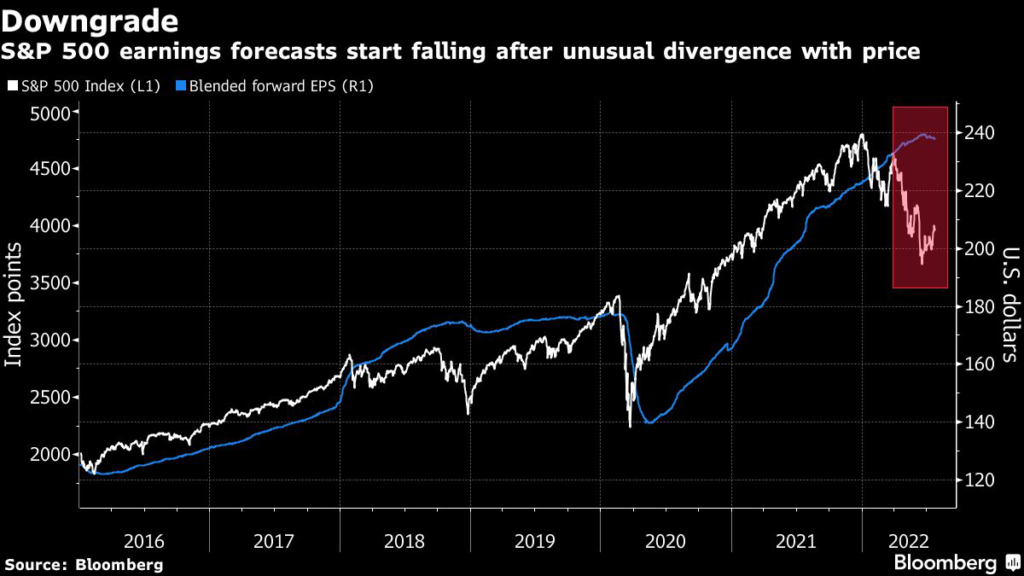
In a year that the S&P 500 and other major indexes have slumped into bear market territory, the day will have a lot riding on it. Particularly after a recent rally in equities, which appear to have already priced in a disappointing earnings season to date, sending the Stoxx Europe 600 Index up 4.7% in July.

“The stakes are high for stocks on Thursday with regards to earnings since the rally of the past week means valuations are now higher, slightly dropping the bar for disappointment,” said James Athey, investment director at Abrdn Plc.

The load is heavy on both sides of the Atlantic. In the US, S&P 500 members with a combined market value of $6.8 trillion will report on Thursday, in total spanning 55 companies if constituents of the Nasdaq 100 are also included. Big Tech will be a particular focus with results from Amazon.com Inc., Apple Inc. and Intel Corp.

For Europe, the count is even bigger, with more than 80 Stoxx 600 firms expected to report in what is set to be one of the busiest earnings days in at least a decade. They have a combined market capitalization of $2.6 trillion and include the likes of Nestle SA, Anheuser-Busch InBev NV, Shell Plc and Banco Santander SA.

On Wednesday, Adidas AG fell after issuing a profit warning after its sales were hit by lockdowns and consumer boycotts in China. Reckitt Benckiser Group Plc climbed after raising its sales forecast as the company weathered soaring inflation and benefited from an infant formula shortage in the US. 

Nasdaq 100 futures advanced after Microsoft Corp. gave an upbeat sales forecast. Spotify Technology SA rallied in US premarket after paid subscriber forecast for the current quarter exceeded analysts’ estimates. 

As usual, traders, investors and brokers are drawing up plans to make sure they can stay on top of things. “I’ve bought in an industrial sized box of Yorkshire Tea to keep the brain caffeinated and the cake tin has been stocked with sugar laden treats,” said Danni Hewson, financial analyst at AJ Bell Plc.

The key for equity analysts will be to provide quick reactions for investors, according to Georgios Ierodiaconou, who covers telecommunications for Citigroup Inc. Those reporting on his watch Thursday are Telefonica SA, Inwit SpA, Cellnex Telecom SA, Orange SA and BT Plc, which have a total market value of $109 billion.

“There isn’t much time to go into details as you would normally do, or have ongoing discussions with people about specific results,” Ierodiaconou said by phone. “You just work like a robot in a way and go through the process.”

Given the high volume of newsflow, plenty of volatility is likely on the day, with options markets implying more than 5% moves for stocks including ArcelorMittal SA, AB InBev, Weir Group Plc, Repsol SA, VeriSign Inc., VF Corp., Amazon.com, Intel and Royal Caribbean Cruises Ltd., according to Cowen’s London trading desk.

“With almost 15% of the European market reporting that morning in theory it’s the most significant micro day of the season,” said Carl Dooley, Cowen’s head of trading for the Europe, Middle East and Africa region.

Market participants will already have plenty on their plate even before the first earnings release crosses the tape. A 75 basis-point Fed rate hike is fully expected on Wednesday, and with financial markets starting to anticipate a peak in the central bank’s hawkishness, its commentary will be closely scrutinized.

And as if that wasn’t enough, US second-quarter gross domestic product and weekly jobs data, as well as German inflation numbers will add to analysts’ load.

Fed to Inflict More Pain on Economy as It Readies Big Rate Hike

According to Laura Cooper, senior investment strategist for iShares EMEA at BlackRock International, this earnings season warrants more caution than in the past given the flurry of macroeconomic challenges. “We’re in this heightened macro uncertain environment, and we are starting to see demand pressures seep into earnings and that could escalate through the back half of the year,” she said.

AJ Bell’s Hewson will spend Thursday working from her kitchen table, meaning her time will be “all about juggling” between media requests and the demands of two teenagers. Of her supplies of tea and cake, “I can’t guarantee what might be left by the time Apple and Amazon dish up their offering,” she said.

(Updates with latest earnings from eighth paragraph)

More stories like this are available on bloomberg.com

©2022 Bloomberg L.P.

Cathie Wood Dumps Coinbase Shares for First Time This Year

(Bloomberg) — Funds controlled by Cathie Wood dumped Coinbase Global Inc.’s stock for the first time this year as the the largest US crypto exchange faces a probe.

Three Ark Investment Management LLC funds sold slightly over 1.41 million shares, which were worth about $75 million as of Tuesday’s close, according to Ark’s daily trading data compiled by Bloomberg. The firm’s flagship Ark Innovation ETF sold 1.13 million shares.

Read More: Coinbase Faces SEC Probe on Crypto Listings; Shares Tumble 

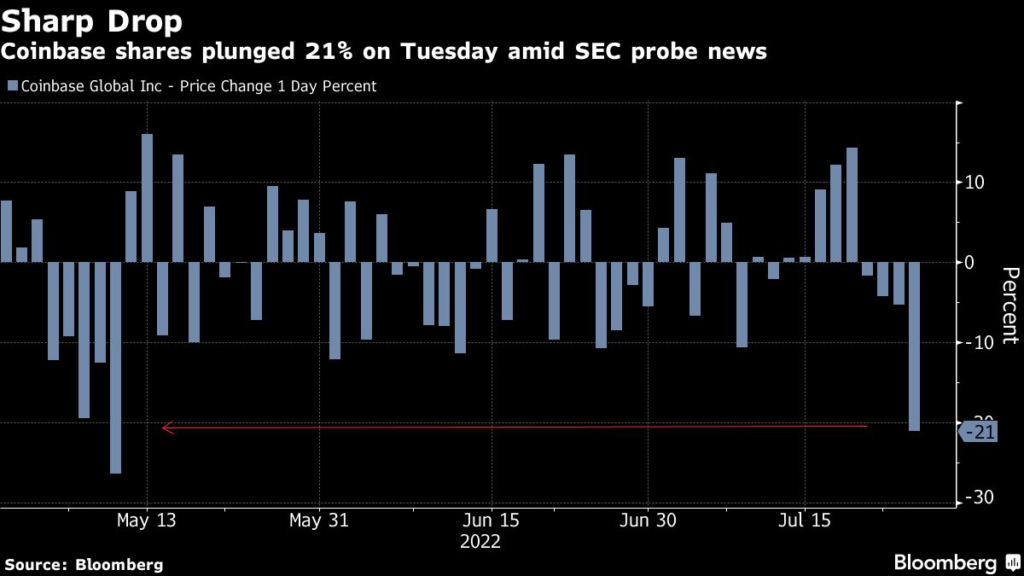
Shares of Coinbase Global lost about a fifth of their value Tuesday. They rose about 4% in pre-market trading Wednesday, and are down about 79% this year.  

Coinbase is facing a US probe into whether it improperly let Americans trade digital assets that should have been registered as securities, according to people familiar with the matter. 

Coinbase’s Chief Legal Officer Paul Grewal said on Twitter “we are confident that our rigorous diligence process — a process the SEC has already reviewed — keeps securities off our platform, and we look forward to engaging with the SEC on the matter.” The SEC declined to comment.

Ark was the third-biggest shareholder of the company, holding about 8.95 million shares, as of June-end, according to Bloomberg-compiled data. It has largely been buying shares of the platform since its debut in 2021.

Ark Investment Management has lost almost half of its assets under management since December, and its flagship Ark Innovation ETF has plunged 54% in 2022 amid concerns that global monetary tightening will cap growth stock valuations and tip the economy into a recession. Wood is now closing one of her exchange-traded funds for the first time ever. 

(Updates to include pre-market trading in the third paragraph.)

More stories like this are available on bloomberg.com

©2022 Bloomberg L.P.
Crypto Trades Drive Naira to New Low in Unauthorized Market

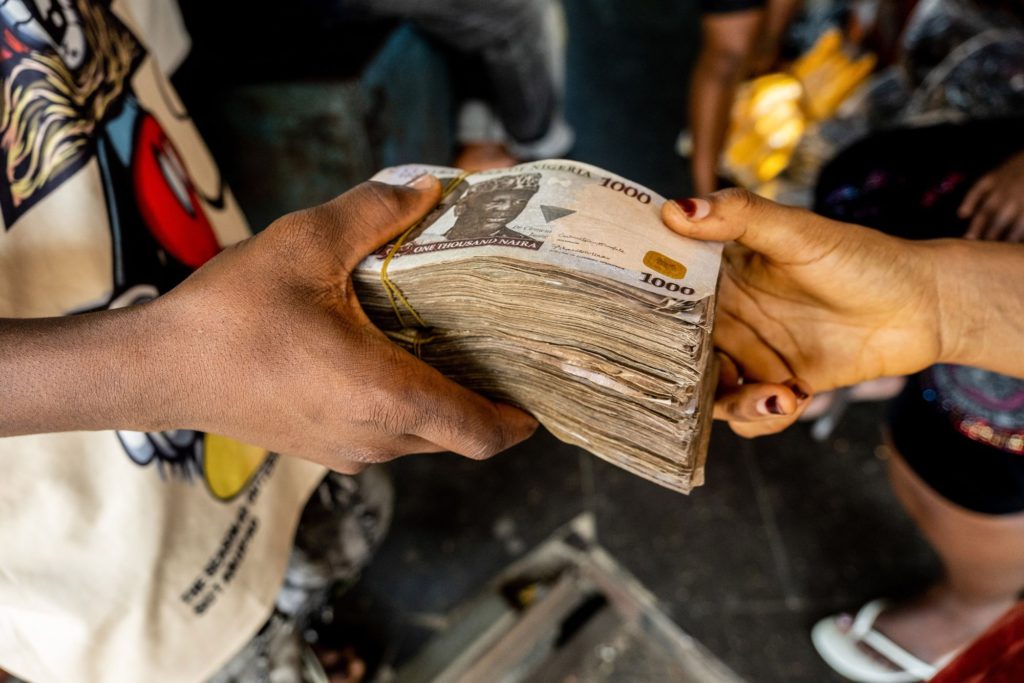
(Bloomberg) — Nigerians accumulating cryptocurrencies to shield assets against a weakening naira have contributed to a slump in the fiat currency to a record low in the unauthorized market. 

The naira weakened to 670 per dollar on Wednesday said Abubakar Mohammed, an operator of a bureau de change that tracks the data in Lagos, the nation’s commercial hub. This compares with 424.34 naira at the official spot market as of 9.22 a.m. local time, 58% cheaper than the rate in the black market, where the greenback is freely traded. 

Africa’s largest economy operates a multiple exchange rate system dominated by an official rate, which is tightly managed by the Central Bank of Nigeria. There’s also an unauthorized black market, where the rates are largely determined by supply and demand, making it a fairer reflection naira’s value. A third, the crypto exchange rate, has emerged as Nigerians increasingly accumulate the digital asset due to scarcity of the local currency from official sources compounded by three devaluations since 2020. 

More people are buying cryptocurrencies because they are losing confidence in the naira, Aminu Gwadabe, president of the Association of Bureau de Change Operators of Nigeria, said by phone. “The USD rate on the crypto floor is used in determining the value of the local currency,” Gwadabe said. 

While financial institutions are banned by the central bank from facilitating cryptocurrency trades in Africa’s largest economy, many Nigerians still exchange the digital currency in in the peer-to-peer market where transactions are priced in dollars. 

The greenback was quoted at 687.6 naira on Wednesday for peer-to-peer transactions, according to live data on the website of Binance Holdings Ltd., the world’s biggest crypto exchange, an indication the naira could weaken further in the unauthorized market. 

People are buying dollars to purchase digital assets, Gwadabe said. “The USD buy rate on the crypto floor is moving at the same time with local rate,” he said. 

The Binance platform shows Nigerians had conducted $103,691 of trades in digital currencies in the 24 hours to 10.36 a.m. local time in Lagos on Wednesday. Nigerians traded $185 million of Bitcoin on the platform in the first three months of the year, accounting for a quarter of transactions in the period on Paxful, a crypto trading platform.  

Read: Naira Falls to Record Tracking Central Bank’s Latest Dollar Sale

A spokesman for the central bank didn’t respond to WhatsApp and text messages for comment while telephone call didn’t connect.

More stories like this are available on bloomberg.com

©2022 Bloomberg L.P.
Shopify Extends Drop After Posting Loss and Weaker Outlook

(Bloomberg) — Shopify Inc. slumped in premarket trading after the company kicked off earnings season for e-commerce firms with a result that missed analysts’ estimates. It also said the outlook is getting worse. 

The stock fell 7% to $29.34 as of 7:38 a.m. in New York. Shopify said in a statement it now expects 2022 to be “more of a transition year, in which e-commerce has largely reset to the pre-Covid trend line and is now pressured by persistent high inflation.”

The Ottawa-based company posted a loss of 3 cents per share on an adjusted basis in the second quarter, falling short of estimates for a profit of 3 cents, according to data compiled by Bloomberg. Revenue rose 16% to $1.3 billion from a year earlier, broadly in line with expectations of $1.33 billion.

The worse-than-expected results came one day after Shopify said it was cutting its workforce by 10% amid a softening in online sales — amounting to roughly 1,000 jobs.

The shares dropped 14% Tuesday as Chief Executive Officer Tobi Lutke acknowledged that the company’s rapid expansion during the pandemic was unsustainable. Shopify has plunged 77% this year as of Tuesday’s close. 

Gross merchandise volume — the value of merchant sales flowing through Shopify’s platform — grew 11% to $46.9 billion during the quarter, missing estimates of $48.6 billion.

The shift out of pandemic lockdowns, elevated inflation and the threat of a recession have shifted consumer habits. Retail stocks fell earlier this week after Walmart Inc. made a surprise cut to its profit outlook as surging prices cause consumers to spurn bigger-ticket purchases.

Amazon.com Inc. is set to release results on Thursday, with other e-commerce stocks including Wayfair Inc., Ebay Inc. and Etsy Inc. reporting this week and next.

(Updates with details on outlook in fifth graph.)

More stories like this are available on bloomberg.com

©2022 Bloomberg L.P.
Rogers Beats Estimates, Extends Shaw Deal Deadline to December

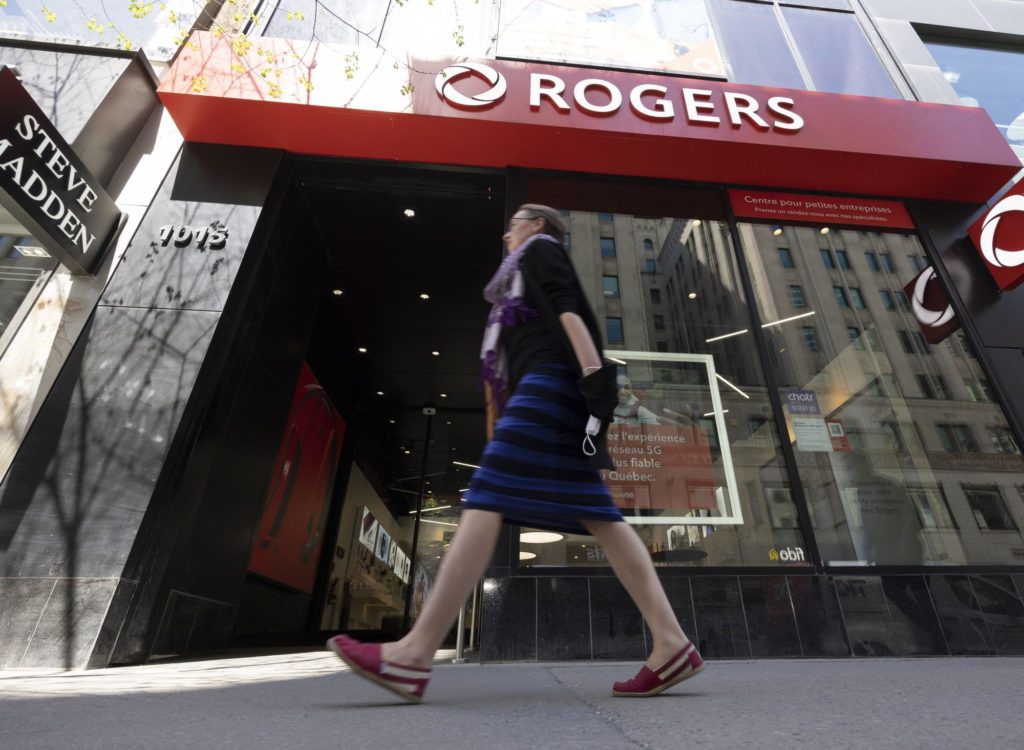
(Bloomberg) — Rogers Communications Inc. reiterated its forecast for at least 6% growth in service revenue this year and extended the deadline for its proposed acquisition of Shaw Communications Inc. to the end of December. 

Toronto-based Rogers beat sales and profit estimates for the second quarter. Canada’s largest wireless and cable operator earned C$463 million ($318 million) or 86 Canadian cents per share, beating the average analyst estimate of 85 cents. 

The company has come under intense political pressure after its suffered a massive network failure on July 8, knocking 12 million customers offline and disrupting emergency services and businesses. 

“In the coming quarters, we will continue to focus on delivering additional improvements as we build on these results, while also working hard to regain the trust of our customers following our recent network outage,” Chief Executive Officer Tony Staffieri said in a statement on Wednesday. 

Staffieri said Monday at a Canadian parliamentary committee hearing that the company would spend at least C$250 million to split its wireless and wireline networks, hoping to avoid a repeat of the July incident. He said the company “failed to deliver” on a promise of reliable service.

Read More: Rogers CEO Says Firm ‘Failed,’ Will Spend Heavily to Fix Network

Rogers expects capital expenditures of about C$3 billion this year, and more of that will be dedicated to network improvements than in the past, Staffieri said this week. The company will also give customers a five-day billing credit that’s expected to cost about C$175 million in the third quarter. 

The network incident has heaped more scrutiny on Rogers as it tries to gain approval from Ottawa to take over Shaw in a C$20 billion deal. But the company has defended the merger as a way to free up capital to improve its systems. 

Read More: Rogers Faces Probe of Network Failure as Shaw Investors Shaken

More stories like this are available on bloomberg.com

©2022 Bloomberg L.P.
Top India Carmaker’s Profit Disappoints as High Costs Bite

(Bloomberg) — Maruti Suzuki India Ltd., India’s biggest carmaker, reported a lower-than-expected quarterly profit as rising input costs and supply chain constraints hurt earnings.

Net income was 10.1 billion rupees ($126 million) in the three months ended June 30, compared with a profit of 4.4 billion rupees a year earlier, the unit of Japan’s Suzuki Motor Corp. said in a statement Wednesday. That fell short of the average analyst estimate of 15.7 billion rupees, according to data compiled by Bloomberg. 

Revenue climbed to 265 billion rupees, which was higher than estimates. Total costs surged 43% to 252.7 billion rupees from the same period last year. Raw material costs jumped by a similar level. 

Higher commodity prices “adversely impacted the operating profit,” Maruti said in the filing. “The company was forced to increase prices of vehicles to partially offset this impact.”

Automakers globally are grappling with a serious supply chain crunch, which has aggravated soaring prices of raw materials, hurting their margins. The increase in expenses has forced automakers including Maruti, Tata Motors Ltd. and Mahindra & Mahindra Ltd. to raise vehicle prices in the Indian market, which is dominated by cheap cars, potentially denting demand. 

The company sold 398,494 vehicles domestically during the quarter compared with 308,095 units previous year. About 51,000 vehicles could not be produced due to a shortage of electronic components, Maruti Suzuki said in the filing. 

The automaker “continued to work on cost reduction efforts to minimize the impact on customers,” it said. The company also had a backlog of customer orders for about 280,000 vehicles by the end of the June quarter.

White Spaces

“Production levels for the company are improving month-on-month as the chip issue is largely resolved,” Mansi Lall, research associate at Prabhudas Lilladher, said in a note Wednesday. Maruti has “addressed white spaces in its portfolio through the launch of Brezza and Grand Vitara.”

Gaining market share is crucial for Maruti as competition is intensifying in the utility vehicle space, Lall said, adding that the demand for entry-level cars would gain momentum ahead of the local festive season.

Maruti Suzuki increased prices by an average of 1.3% across its models in April, following a previous hike of 1.7% in January. However, higher cost of cars didn’t impact Maruti’s local sales in June, which rose 1.3% to 132,024 units.

Chairman R.C. Bhargava has said Maruti will have to shift its focus to bigger cars because the demand for entry-level passenger vehicles — its main source of income — is waning as they become more expensive due to commodity inflation. 

New Plant

It’s considering expanding the capacity of a new plant in the northern Indian state of Haryana to 1 million vehicles a year, he said in May. Investment of more than $1.4 billion will go into the development of the first-phase of the plant.

Maruti is also betting on cars powered by hybrid technology, natural gas and biofuels over electric vehicles as India still generates about 75% of its electricity from dirty coal. 

Shares of Maruti advanced 1.6% in Mumbai on Wednesday, taking this year’s climb to almost 17%. 

(Updates with analyst comment in the eighth paragraph.)

More stories like this are available on bloomberg.com

©2022 Bloomberg L.P.
Close Bitnami banner
Bitnami