Bloomberg

Dish Is Offering $25-a-Month Mobile Service for the Rest of Your Life 

(Bloomberg) — Dish Network Corp. has started a trial of its anticipated Boost Infinite mobile phone plan with a $25-a-month lifetime price guarantee designed to lure customers away from the dominant wireless carriers.

The company launched the beta version early Wednesday and plans a full nationwide rollout in the first three months of 2023.

The unusually low price could be a “lightning rod” that jolts the industry toward lower rates, Stephen Stokols, Dish’s executive vice president of retail wireless, said in an interview. Boost Infinite is the Englewood, Colorado-based company’s first postpaid mobile offering and was built to take on larger rivals AT&T Inc., Verizon Communications Inc. and T-Mobile US Inc. 

“Customers are price sensitive and looking for areas to cut recurring expenses like wireless bills,” Stokols said. “This is a significant savings.”

The $25 price doesn’t include fees and taxes or any streaming service perks, and speeds will be slowed after a 30-gigabyte cap. Customers must sign up online with a credit card or electronic payment. There will be a “soft check” of the customer’s credit quality as opposed to a lengthy credit application.

Dish is using network-sharing agreements with AT&T and T-Mobile to give Boost Infinite customers nationwide service on almost any mobile phone. It is relying on those competitors while it builds out its own 5G network, which for now can only be accessed with a $900 Motorola Edge+ phone. Additional compatible devices will be available in the first quarter.

Dish said in 2018 it would spend at least $10 billion to build a cloud-based, wireless network. The plans accelerated when the company bought Boost from T-Mobile two years ago. However, the transition to 5G wireless company from satellite-TV provider has been challenging, and it’s faced delays.

The company began rolling out 5G this year to prepaid customers in more than 120 cities, including Las Vegas and Albuquerque, New Mexico.

(Updates with more information about Boost Infinite’s network in the sixth paragraph.)

More stories like this are available on bloomberg.com

©2022 Bloomberg L.P.

Amazon Sued by District of Columbia for ‘Stealing’ Delivery Driver Tips

(Bloomberg) — Washington DC’s attorney general is suing Amazon.com Inc., seeking civil penalties for allegedly misleading consumers who thought they were tipping delivery drivers but had the money diverted to cover the couriers’ base pay. 

The case, filed in Washington DC Superior Court, cites a 2021 settlement between the company and the Federal Trade Commission, in which the agency found that Amazon withheld tips meant for its gig-economy drivers for more than two years. 

The company had pledged that drivers would receive 100% of the value of tips, but Amazon instead used a portion of the gratuities to pay the base rate for its drivers, the FTC said. The Seattle-based company agreed to pay $61.7 million to settle the matter, which was earmarked for drivers. Amazon spokespeople at the time said the company disagreed that its prior pay practices were unclear. 

“My office is suing Amazon for stealing tips from delivery drivers through a deceptive, illegal scheme that made consumers think they were increasing drivers’ pay when Amazon was actually diverting tips to reduce its own labor costs and increase profits,” Washington DC attorney general Karl Racine said in a post on Twitter. 

“Nothing is more important to us than customer trust,” Amazon spokesperson Maria Boschetti said in an emailed statement. “This lawsuit involves a practice we changed three years ago and is without merit. All of the customer tips at issue were already paid to drivers as part of a settlement last year with the FTC.”

Racine seeks restitution, a finding that Amazon’s actions violated consumer protection statutes and civil penalties. Racine’s office had sued Amazon last year, alleging that the company engaged in anticompetitive practices that drove up prices for consumers. A judge dismissed the case, saying there wasn’t enough evidence to support the claims. Racine subsequently sought to revive it. 

(Updated with Amazon statement in fifth paragraph.)

More stories like this are available on bloomberg.com

©2022 Bloomberg L.P.

Galaxy Digital Gets Celsius Assets at 60% Discount After Crypto Lender’s Bankruptcy 

(Bloomberg) — Galaxy Digital is paying $44.1 million to buy Celsius Network’s GK8 business — more than 60% lower than what the bankrupt crypto lender paid to acquire the self-custody platform just last year.

The deal for GK8 was agreed at a purchase price of $44 million in cash plus $100,000 in assumed liabilities, according to a court filing. Celsius had previously acquired GK8 for $115 million in November 2021. 

The acquisition, which was announced on Dec. 2 and is subject to court approvals, would add a team of nearly 40 staffers to Galaxy’s workforce. 

Ryan Kielty, a partner at restructuring group Centerview Partners which was hired to oversee the auction of the assets, said in the filing that selling GK8 was a reasonable move by the debtors, given “the steep decline” in crypto prices after Celsius initially bought the platform, among other things.

GK8’s marked-down price tag is reflective of soured crypto prices more broadly, which have taken a tumble since the business’s last valuation. Bitcoin reached its all-time peak at almost $69,000 last November, yet the token presently trades around 75% lower at about $16,800.

Six firms had submitted initial bids at the start of the auction process, Kielty said, but only Galaxy submitted a final bid and deposit by the agreed deadline. Its terms included the requirement that GK8 co-founders Lior Lamesh and Shahar Shamai stay with the company.

–With assistance from Rick Green.

More stories like this are available on bloomberg.com

©2022 Bloomberg L.P.

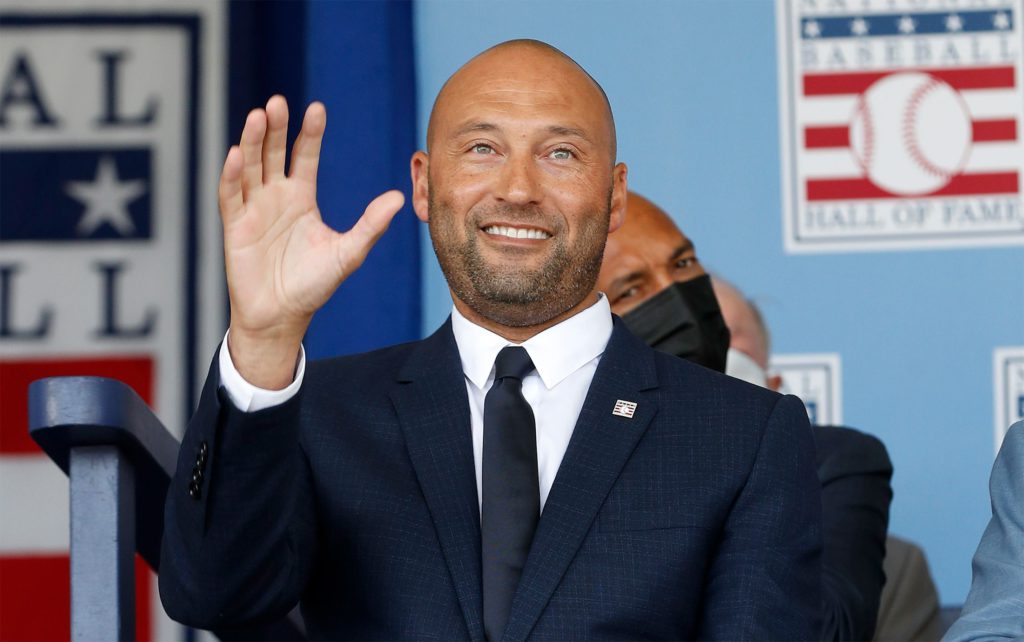
Derek Jeter’s Trading-Card Business Raises Funds for Expansion

(Bloomberg) — Arena Club, the trading-card venture of New York Yankees icon Derek Jeter, has raised fresh funds as it looks to expand.

The $10 million round was led by M13 Ventures Management, with Defy.vc, Elysian Park Ventures, Lightspeed Ventures and BAM Ventures also participating. Arena Club’s total funding has climbed to about $20 million.

The company, which provides an online forum to display and grade sports cards, was started earlier this year by Jeter and Brian Lee, the former chief executive officer of Honest Co. Members can create virtual showrooms to buy, sell and trade their cards. Items are graded and kept at a central vault, with users receiving digital proof of ownership.

Management plans to spend the new capital to hire more staff and improve the website. They will also begin promoting the brand on the card-show circuit and online.

Interest in sports collectibles has spiked in recent years, with investors pumping cash into new ventures even as prices fluctuate. Lee said a recent lull in the market has sifted out many speculators looking to make a quick buck, but long-term collectors and hobbyists remain heavily involved.

“The true collectors are here to stay,” Lee said. “It leads to a much healthier industry and a healthier hobby.”

Arena Club is Jeter’s latest focus since hanging up his cleats in 2014. He has actively invested in companies ranging from video-conferencing to spirits, while selling a sports-media venture, the Players’ Tribune, in 2019. Trading cards didn’t start as a full-time hobby for him — he used to buy packs just for the gum, he said, but his interest grew over time.

“It was almost a secret society,” Jeter said of his experience with cards back in the Yankees locker room. “You’d have to whisper to someone like, oh, OK, you’re a collector too? Now it’s just become more mainstream.”

Jeter stepped down as CEO of the Miami Marlins and sold his stake in the franchise earlier this year. He said he has no immediate plans to return to baseball and will likely rule out another run as a team owner altogether, though he’d like to be involved in the sport in some way.

The Hall of Fame shortstop said he’s slowed down a lot since leaving baseball, getting pedicures with his kids and picking them up from school. He said he started thinking about life after baseball long before retirement.

“You have a long life to live afterwards,” Jeter said. “More and more today, athletes are understanding it.”

–With assistance from Jason Kelly.

More stories like this are available on bloomberg.com

©2022 Bloomberg L.P.

NFT Sales Drop to 16-Month Low in FTX Collapse Aftermath

(Bloomberg) — Almost a year after the nonfungible token (NFT) frenzy crested, demand for the digital certificates of ownership has evaporated. Sales have dropped to the lowest level since July 2021 — back when OpenSea was the only trading venue among the top five to have opened. One bright spot: Magic Eden, the only one among five marketplaces tracked by DappRadar to record an increase in sales volumes from the prior month. 

More stories like this are available on bloomberg.com

©2022 Bloomberg L.P.

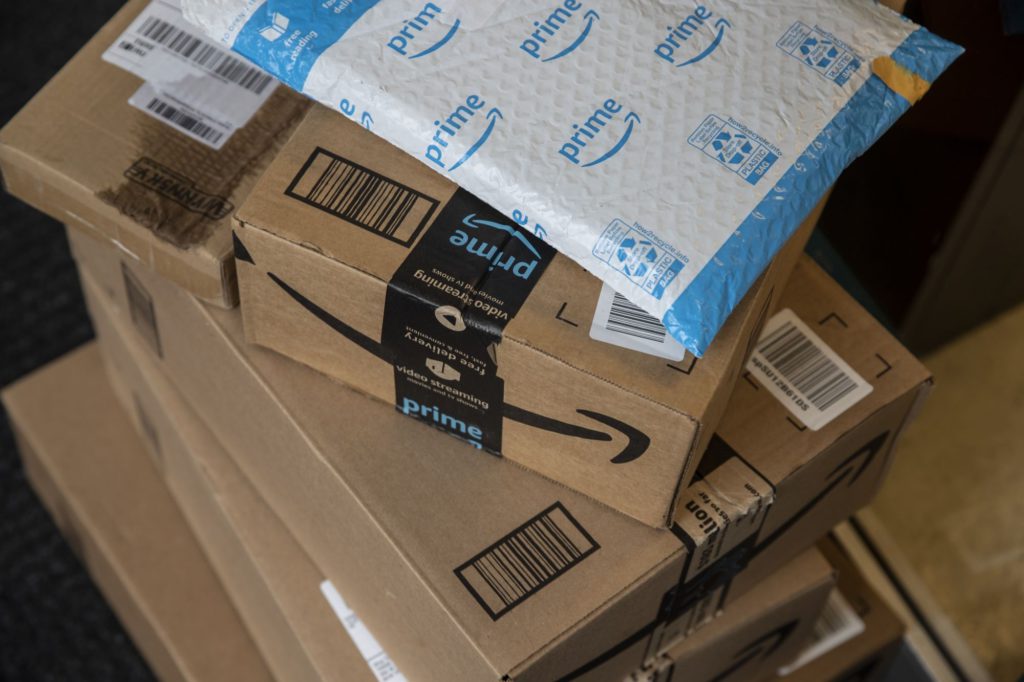
Amazon Buyers Beware: Scammers Are Targeting the Best-Seller Badge

(Bloomberg) — Most Amazon.com Inc. shoppers are familiar with the “#1 Best Seller” badge that pops up for many products. Along with reviews and ratings, it’s a way to gauge whether an item is worth buying.

But sometimes the product isn’t actually a best-seller. 

Unscrupulous merchants are putting some popular items in slow-selling product categories to trick Amazon algorithms into thinking it’s a hotter seller than it really is. The scam Bloomberg uncovered mostly focuses on smartphone mounts for car dashboards, phone cases and USB drives. For example, one mount recently showed up in the “replacement axle shafts” category. The item rocketed to best-seller status because many more people are shopping for phone mounts than car axles.

It’s not clear how many other kinds of product are being targeted, but affected merchants say they’re losing hundreds of thousands of dollars in some cases and that Amazon needs to crack down before the scheme becomes more widespread. With US shoppers expected to spend $120 billion online this holiday season, scammers have plenty of incentive to game the system. 

The product categories, created by Amazon but selected by merchants, appear right next to the best-seller badge. But people often don’t notice the trickery because they’re shopping quickly—an estimated 28% of Amazon purchases are completed within three minutes—and because most customers use mobile devices, where the fine print is easily overlooked. 

“Customers are less inclined to look closely at details, since they are using a smaller screen and probably shopping and buying faster compared to purchasing on a desktop or laptop computer,” said Michael Levin, a partner with Consumer Intelligence Research Partners in Chicago.

Bloomberg recently identified more than 25 examples of smartphone mounts, all sold by China-based merchants, with best-seller badges that had been slotted into incorrect categories. A magnetic mount sold by LISEN Direct in China was the best-seller in a category for replacement windshield wiper hoses.

The perpetrators win by boosting their own sales, which can jump by as much as 50% with the best-seller imprimatur, according to Lesley Hensell, a co-founder of Riverbend Consulting, which advises Amazon sellers. Consumers get played but may not even notice unless the product turns out to be junk. The big losers are Amazon sellers who play by the rules; their products are artificially pushed down in search results, making it unlikely shoppers will see them.

An Amazon spokesperson said the company uses machine learning to detect products placed in incorrect categories, as well as manual reviews by product classification experts when needed. Sellers who place products in the wrong categories usually receive a warning, and repeat offenders can be suspended from selling on the platform, she said. Amazon’s best-seller rankings are updated hourly based on overall sales on the site, according to the spokesperson.

“We work hard to create a trustworthy shopping experience by protecting customers, selling partners and Amazon from fraud and abuse, and we have systems in place to detect suspicious behavior,” she said by email. “There is no place for fraud at Amazon, and we will continue to pursue all measures to protect our store and hold bad actors accountable.”

One phone accessories merchant, who said the scam caused monthly sales to plunge 50% during the holiday season, has filed hundreds of reports with Amazon over the past month with mixed results. Sometimes the company removes a product from an incorrect category only for it to reappear in another category a few days later. Or Amazon responds to the complaint by saying nothing is wrong at all, said the seller, who requested anonymity for fear of retribution.

In response to one report that a phone mount received the best-seller badge in the “sunroof” product category, Amazon sent a message saying “we cannot take action on the report as no violation has been identified.” The merchant equated his efforts to stop the scam to “fighting a wall.”

Amazon has long been criticized for not doing enough to police its online marketplace, where almost 2 million merchants compete to sell hundreds of millions of products. The site relies heavily on automation so merchants can run their businesses with little input from Amazon employees. Automation keeps costs down for the company, but also exposes the site to manipulation when sellers find cracks in the code.

Other scams previously reported by Bloomberg include “sniping,” when a seller buys a competitor’s products only to leave critical reviews and discourage shoppers from buying them. Fake positive reviews are another long-standing challenge, and Amazon has filed lawsuits targeting rings that sell favorable product reviews. Last year, the e-commerce giant was among more than 700 companies warned by the Federal Trade Commission that fake reviews and other “deceptive endorsements” could face penalties exceeding $40,000 per violation.This isn’t the first time Amazon merchants have miss-categorized products to fool the algorithms. During the pandemic, some merchants put packs of face masks in the book and video game categories to circumvent Amazon’s product-safety rules regarding the coronavirus, said Juozas Kaziukenas, founder and CEO of Marketplace Pulse, which monitors online sales.

The phone mount sellers are likely tricking Amazon’s algorithms because the products are technically car accessories and don’t trigger an alarm when placed in unrelated car-part categories, said Martin Heubel, a former Amazon product category manager who now advises merchants. Sellers can move products from one category to another, and an algorithm makes an initial determination if the switch seems legit, he said. If the machine sees something amiss, it gets flagged for manual review, which isn’t happening for the phone mounts, he said.

“This is a popular tactic because even if you are deliberately manipulating the rankings, Amazon might see it as a mistake and let you off with a warning,” Heubel said.

Hensell, the consultant, said she helped two clients regain the best-selling badge after losing it to sellers who put their products in the wrong category. “It’s very harmful to the legitimate seller whose product in that category gets crowded out,” she said. “You’re supposed to earn the best-seller badge with a great product and good customer reviews. It’s extremely valuable, which is why this needs to stop.”

More stories like this are available on bloomberg.com

©2022 Bloomberg L.P.

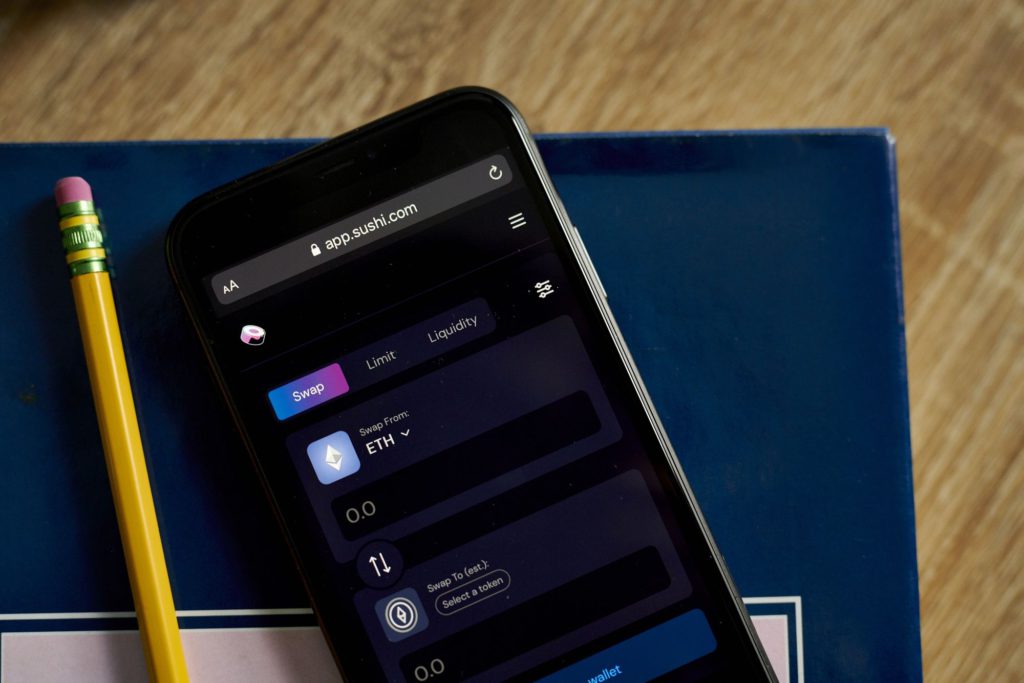
SushiSwap’s Token Slumps as DeFi Exchange Faces Cash Crunch

(Bloomberg) — The price of Sushi, the native cryptocurrency of decentralized exchange SushiSwap, plunged on Wednesday after the platform’s chief executive warned the project could run out of funds within 18 months. 

SushiSwap’s treasury is “facing a significant deficit” which “threatens Sushi’s operational viability, requiring an immediate remedy,” its head chef — or CEO — Jared Grey said in a proposal for changes updated on Tuesday.

SushiSwap, which makes money by charging fees on transactions, has suffered from a protracted slump in cryptocurrency prices and trading. The platform was built in 2020 on the code of Uniswap, another popular decentralized exchange.

SushiSwap’s token dropped more than 13% to $1.19 following Grey’s post, according to CoinGecko, taking declines to 88% since the start of the year. Most major tokens were down on Wednesday, with Bitcoin falling as much as 1.7% to $16,701 and Ether down as much as 2.9% to $1,219. 

Decentralized finance platforms, where investors borrow, lend and trade cryptocurrencies through computer algorithms, have so far largely faced a less severe fallout from crypto’s downturn. The year-long rout has led to defaults, layoffs and bankruptcies across crypto companies of all stripes, culminating in the implosion of exchange FTX last month. 

But Sushi’s troubles indicate that no corner of the digital-assets industry is immune to the crypto winter.

Market Share Drop

Decentralized exchanges built using Ethereum saw volumes fall 45% last month from a year earlier, according to Kunal Goel, a research analyst at Messari. SushiSwap’s share of volumes among these platforms has fallen to just 2% from 12% over that time frame, he added.

Data from Dune Analytics also shows that SushiSwap’s monthly volumes on Ethereum fell 95% to $1.2 billion in November from its all-time high of $25 billion in May 2021, while  Uniswap’s monthly volumes are down 50% to $43 billion from record levels.

SushiSwap is a decentralized exchange that uses algorithms to create trading markets for any given pair of crypto tokens. Its treasury hold funds in crypto assets to pay developers, finance project maintenance and infrastructure costs along with other expenses.

Grey, who took up the top position on SushiSwap in October, said developers running the platform had slashed annual operational costs to $5 million from $9 million, but that the cuts would not be enough. As a temporary remedy, Grey proposed diverting all rewards given out to Sushi stakers to its treasury for a year or until a new economic model is finalised for the token.

“Bear market environments present multiple challenges for projects and teams, and recently, we’ve seen many notable projects lay off substantial personnel or go bankrupt,” Grey wrote. “It makes little sense for Sushi to follow a similar path when it has an opportunity to capture its singular significant source of revenue and direct it back to the Treasury for the benefit of all.”

Read more: SushiSwap Infighting Shows Pitfalls of Decentralized Crypto

More stories like this are available on bloomberg.com

©2022 Bloomberg L.P.
Harvard Fencing Coach Demanded $7.5 Million for Admissions Help, Witness Says

(Bloomberg) — A Harvard University fencing coach demanded $7.5 million to help a Chinese telecommunications tycoon get his sons admitted to the prestigious US school, according to a fencing instructor who told a federal jury he was the middleman for the alleged bribery scheme.

Alexander Ryjik, a Virginia fencing instructor, testified he was originally supposed to funnel $1 million that Jie “Jack” Zhao had donated to Ryjik’s fencing charity into a new foundation created by Peter Brand, the coach of Harvard’s fencing program. But Brand raised his price in October of 2013 to $7.5 million, Ryjik claimed.

“I just want to confirm that the contributions total $7.5 million as we discussed this initially to make sure all of this is worth my while,” Brand said in a message to Ryjik shown to the jury on Tuesday.  

Ryjik, 54, who is testifying under a grant of immunity, said he was shocked by Brand’s message. “I was scared,” the instructor told jurors. “He was getting very demanding, and he could blow up the whole deal and expose me to the board of directors.”

Ryjik is the government’s first witness in the bribery conspiracy trial of Zhao, 63, and Brand, 69, in Boston. The men are accused of defrauding Harvard by violating federal programs bribery laws in a case with echoes of the “Varsity Blues” scandal. 

Brand and Zhao, chief executive officer of iTalk Global Communications Inc., claim they did nothing wrong and insist Zhao’s sons earned admission to Harvard on their own academic and athletic merits. Zhao’s lawyers also contend he has a history of being generous lending money to friends and say he didn’t befriend the coach until after his eldest son was already admitted.

Read More: College Scandal Parents Say ‘VIP List’ Proves Admissions a Game

Brand’s demand for $7.5 million was a familiar figure, according to Ryjik, who emigrated from the Soviet Union in 1990 and had trained Zhao’s sons since they were boys. Ryjik said Zhao once told him a Chinese friend donated that amount to the University of Pennsylvania’s fencing program and his children were admitted even though they were not top fencers.

Ryjik’s charity never sent Brand the $1 million and his long relationship with Brand faded quickly, he said.

Both of Zhao’s sons ultimately fenced and graduated from Harvard. Brand was fired for violating the university’s conflict of interest policies following a series of Boston Globe stories in 2019 detailing Zhao’s purchase of Brand’s home for hundreds of thousands over its assessed value.

The government claims Zhao ultimately paid Brand $1.5 million through a series of payments benefiting him, including the home purchase, a down payment on a condo, renovations, a Chevy Camaro, and Brand’s son’s tuition at Penn State.

Worldwide Travels

Prosecutors have shown the jury text messages and emails involving the three men as well as photos of their worldwide travels together with all their sons, including trips to Moscow and the Olympics in Rio de Janeiro. All were paid for by Zhao, Ryjik said.

Ryjik said he almost signed an escrow agreement in 2013 with Zhao that would have paid out $1 million once the sons received letters of acceptance from Harvard. A friend who is an attorney told him he shouldn’t sign it, he said.

Defense attorneys contend Zhao’s sons were admitted based on their own merit as stellar scholars and athletes. Unlike some other elite colleges where coaches’ recruits are automatically admitted, an admissions committee at Harvard of about 40 ultimately decides who gets in.

The defense accuses Ryjik of lying to save himself following an FBI raid on his home. They say Ryjik initially denied knowing about a bribery scheme, but changed his story after investigators found he had used money from the National Fencing Foundation for his own expenses, including thousands in tuition payments to Harvard for his own son, who was a fencer.

Sparring with Zhao’s attorney on Wednesday, Ryjik repeatedly denied he stole from the foundation. He said he “misused” the funds and was paying the money back. He also said he gave incorrect information on an application for government loans and must pay back $150,000.

Charity Funds

Ryjik’s charity eventually agreed to give $100,000 to help the Peter Brand Foundation get off the ground. The Brand Foundation’s planning papers said Brand’s wife would get $67,000 as president and his son would be paid $8,580 as secretary.

Zhao sought return of his donation to Ryjik’s charity, according to Ryjik. Ryjik did not return the money.

Neither Brand nor Zhao have any connection to the sprawling case dubbed “Operation Varsity Blues” by federal prosecutors in Boston, though that also involved wealthy parents allegedly paying to gain their children admission to elite colleges. That scheme, orchestrated by college counselor William “Rick” Singer, ensnared dozens of wealthy and celebrity parents — including actors Felicity Huffman and Lori Loughlin — who either paid conspirators to cheat on admissions tests or recruit their kids as athletes in sports they sometimes didn’t even play.

The case is US v. Brand, 20-cr-10306, US District Court, District of Massachusetts (Boston).

More stories like this are available on bloomberg.com

©2022 Bloomberg L.P.

Plaid Cuts 260 Staffers as Fintech Customers See Slower Growth

(Bloomberg) — Plaid Inc. said it cut 260 staffers Wednesday after changing macroeconomic conditions forced it to rein in costs. 

The San Francisco-based company, which provides connections between popular financial-technology apps and consumers’ bank accounts, will provide 16 weeks of separation pay and accelerate equity grants for some employees, Chief Executive Officer Zach Perret said in a memo to staffers. 

“The simple reality is that due to these macroeconomic changes, our pace of cost growth outstripped our pace of revenue growth,” Perret said. “I made the decision to hire and invest ahead of revenue growth, and the current economic slowdown has meant that this revenue growth did not materialize as quickly as expected.”


More stories like this are available on bloomberg.com

©2022 Bloomberg L.P.

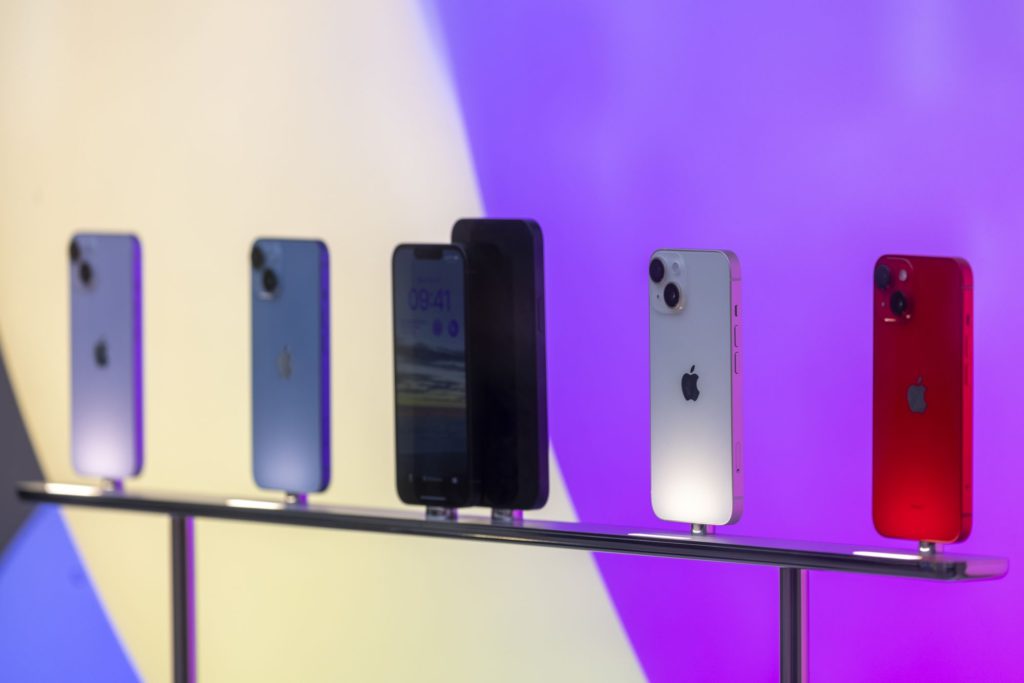
Key iPhone Supplier Expects Orders to Drop on Weak Tech Demand

(Bloomberg) — Mobile industry bellwether Murata Manufacturing Co. expects Apple Inc. to reduce iPhone 14 production plans further in the coming months because of weak demand, which would force the supplier to again cut its outlook for its handset-component business.

“Judging by handset availability in stores, I see a downward revision happening,” Murata President Norio Nakajima said in an interview. “I hope that it won’t be too deep.”

Apple has trimmed iPhone output on softening demand and may slash production further, Bloomberg reported last month. Nakajima’s comments add to the evidence of slowing spending by consumers hit by rising interest rates, elevated inflation and sputtering economic growth.

Apple shares fell 0.5% at 9:40 a.m. in New York.

Nakajima didn’t identify Apple by name — common practice for suppliers to the infamously secretive company. Yet Apple is his key US customer and he didn’t deny that his references were to the iPhone giant.

Murata has already cut its global smartphone production forecast for this fiscal year a few times. The company initially anticipated in April that handset makers would produce 1.37 billion units, a slight increase from 1.36 billion in the previous fiscal year. It lowered its prediction to less than 1.2 billion in October, then 1.09 billion two weeks later — both because of weaker demand for lower-end phones in China. Nakajima said the latest estimate is 1.08 billion, a slight downward revision because of slower sales of handsets by Chinese manufacturers.

“If our forecast was to fall further, that would be because of the US customer,” he said.

Apple no longer discloses iPhone sales, but Bloomberg News reported it had initially targeted production of 90 million units in the current quarter, which the company cut to 87 million due to slumping demand a month ago. UBS this month said the entire iPhone 14 generation may fall short of earlier expectations by 16 million units.

The Kyoto, Japan-based manufacturer is a linchpin of the smartphone industry, providing electronic modules and components for Apple’s iPhones, Samsung Electronics Co.’s Android smartphones and China’s leading device makers.

Bloomberg last week reported that Apple faces a deficit of 6 million iPhone Pro units this year because of turmoil at a China manufacturing hub. Still, Murata isn’t worried about supply-side problems because production can be recouped in January and February, said Nakajima, 61. Demand-side weakness is a concern, he said.

“I went shopping with my son last Sunday to buy a handset by our main customer for him, and the store had every model and every color in stock,” he said. “I wouldn’t be surprised if, down the road, the customer even further revises down its forecast.”

The global smartphone market is set to keep deteriorating next quarter, even as some Chinese handset makers are planning to release new models during the period, Nakajima said. The manufacturers are confident that the new phones will sell well, but Nakajima said he has his doubts as the incoming models don’t have enough enticing new features.

The phone market will start recovering “at a gradual pace” in the fiscal year starting in April, he said.

Despite the recent weakness in China, the world’s second-largest economy will remain an important market for the electronics industry, Nakajima said. Some of Murata’s customers are shifting production to Vietnam, India and other Asian regions, but a complete pullout from China is unlikely, at least during the next five years or so, he said.

Nakajima is running a long-term project to build a production chain for Murata that operates completely in China, using local parts. The move is aimed at addressing a potential deterioration in US-China relations — for instance Beijing mandating that all products sold in the country rely on local components.

Information security is a concern though, and Murata is seeking to ensure that its proprietary knowhow related to manufacturing technologies isn’t compromised, Nakajima said. The company may make mature products such as multilayer ceramic capacitors in China, but won’t move production of some newer components to the country, he said. Murata makes 65% of its products in Japan.

“China is a market that will grow further, and thus we must be ready to seize the opportunity,” he said. Still, “we can’t move the production of some products, including high-frequency devices and communication modules that we make solely in Japan, because protecting confidential information is a priority.”

(Updates with Apple shares in fourth paragraph.)

More stories like this are available on bloomberg.com

©2022 Bloomberg L.P.
Close Bitnami banner
Bitnami