
Bloomberg

Schwarzman Says BREIT Concerns Are ‘Baffling’: Goldman Update

(Bloomberg) — Blackstone Inc. Chief Executive Officer Steve Schwarzman said he found recent concerns about the firm’s mammoth real estate fund for wealthy individuals “baffling.” 

The Blackstone Real Estate Income Trust has outperformed other publicly traded real estate investment trusts, Schwarzman said Wednesday at the second day of an investor conference in New York hosted by Goldman Sachs Group Inc. The fund has seen accelerating redemptions in recent months, a sign that a major growth engine for the firm is losing steam and a retail boom that supercharged private equity is slowing. 

Last week, Blackstone said it will limit redemption requests for the fund known as BREIT.

Read more: Blackstone’s $69 Billion Real Estate Fund Hits Redemption Limit

“The idea that there is something going wrong with this product because some people are redeeming is conflating completely incorrect assumptions,” Schwarzman said. 

The CEO attributed the bulk of exits to Asian investors seeking cash as home markets tanked. He said that when confidence comes back into the market, investors will put more money into products like BREIT. 

“This is just a pause,” he said.

Cboe Sees Opportunity to Fill Gap Left by FTX (12:41 p.m. ET)

Despite the crypto marketplace’s host of problems, Cboe Global Markets Inc. is seeing an opportunity to fill the gap left by FTX with its spiral into bankruptcy.

The Chicago-based company, which operates Cboe Digital, is building its business to avoid potential conflicts of interest that ultimately contributed to FTX’s collapse, executives said Wednesday at the conference.

“We favored the traditional model where customers are represented by their agents, and those brokers or agents are part of the exchange,” CEO Ed Tilly said. “There is a lot of trust in that.”

Cboe got back into cryptocurrencies this year with the acquisition of Eris Digital Holdings LLC, which gave the firm access to a spot market, regulated futures exchange and clearinghouse. The firm will continue to look for opportunities to expand and serve clients who are interested in trading digital assets, but with the “same model of transparency and trust that we run in all of our markets,” Tilly said.

He also indicated that expenses at Cboe will continue to increase as inflation, including higher wages, hits the firm, similar to what other companies are experiencing. Still, there are no plans to raise prices on products, with customers also “feeling the pressure on the supply chain and cost side,” Tilly said. Keeping pricing steady “is appreciated.”

Citi Trading Revenue to Increase 10% in Quarter (11:41 a.m. NY)

Citigroup Inc.’s trading revenue is likely to jump 10% in the fourth quarter from a year earlier as volatile markets continue to spur client activity across Wall Street. 

CEO Jane Fraser said the bank’s trading desks should help the firm deliver the “low-single-digit” revenue growth it promised for this year. This quarter, the improved trading revenue is likely to counter a 60% drop in investment-banking revenue, she said.

“October and November were good months in terms of trading activity,” Fraser said at the Goldman conference. The caveat for the guidance, she said, is that “December is always an interesting month in the markets.” 

Citigroup’s guidance is similar to that provided by rival JPMorgan Chase & Co. on Tuesday, when it said it expects trading revenue to rise about 10% this quarter from a year ago on continued strong performance in macro products.

U.S. Bancorp Sees ‘Inflection Point’ in Economy (11:40 a.m. NY)

The American consumer remains healthy, but the economy is approaching an “inflection point” ahead of a slowdown, U.S. Bancorp CEO Andy Cecere said. 

“Things are good today,” with U.S. Bancorp’s customers able to rely on funds stockpiled through the pandemic, Cecere said at the Goldman conference. “However, that cash balance and that cushion, so to speak, is going to start to dissipate.”

Allstate CEO Expects Price Increases to Continue (10:34 a.m. NY)

Increases in Allstate Corp.’s insurance prices are likely to continue until the company hits its target combined ratio, given the current crush of inflation, CEO Tom Wilson said.

“We’re not willing to say that inflation is going to level out, or even that used car prices are down,” Wilson said at the Goldman conference. “We may end up overshooting a little bit, don’t know.”

While the goal isn’t to overshoot in pricing, inflation is still having an acute impact, Wilson said. “First it’s used car prices, now it’s parts and labor, severe accidents,” he said.

Apollo CEO Sees Opportunity in Liquidity Crunch (9:58 a.m. NY)

Apollo Global Management Inc. expects to have a strong year in 2023 as volatile markets and the prospect of a recession present opportunities for the credit-focused firm, according to CEO Marc Rowan.

Macroeconomic uncertainty has created a liquidity crunch, curtailing the amount of capital available for financing, Rowan said Wednesday at the second day of an investor conference in New York hosted by Goldman Sachs Group Inc.

“We’ve been taking advantage of mispriced risk as a result,” Rowan said, noting that Apollo finds India and the Middle East among areas attractive for investment.

Apollo, with $523 billion of assets under management as of Sept. 30, is expanding its credit offerings to take advantage of opportunities stemming from rising interest rates, geopolitical upheaval and a deep freeze in the US leveraged-loan market. The firm also is focusing on originating investment-grade debt, in which its Athene unit and other insurers can invest, providing safe yield to support their liabilities.

Lazard CEO Sees Chance to Hire Talented Bankers (9:17 a.m. NY)

As market tumult takes its toll on Wall Street, the best recruitment strategy is retention, but it’s also becoming easier — and less expensive — to hire good employees, said Lazard Ltd. CEO Ken Jacobs.

“That’s your most important recruitment tool, is not having to replace people who are leaving,” Jacobs said at the Goldman conference. “We have a long and very successful track record of growing our own people and turning them from analysts into partners.”

Jacobs’s comments echo those made Tuesday by executives at boutique investment banks Moelis & Co. and Perella Weinberg Partners, who said said that weakness in Wall Street compensation will help them add high-quality employees. “If we see the right talent, we will pull the trigger and we will invest,” Ken Moelis, founder and CEO of Moelis, said at the conference.

Jacobs said that after the last financial crisis, there was a migration of talented employees from European investment banks to smaller firms. But turning to those companies now for employees isn’t fruitful, he said.

“There just isn’t the same talent at those firms that existed before,” he said. Players like Lazard are once again competing against entities such as Goldman Sachs, Morgan Stanley and JPMorgan, which also are known for cultivating great employees. “The challenge is just making sure you’re picking up quality talent.”

–With assistance from Max Reyes, Paige Smith, Allison McNeely and Peter Eichenbaum.

More stories like this are available on bloomberg.com

©2022 Bloomberg L.P.
Binance.US Cuts Fees as Crypto Exchanges Battle for Assets After FTX’s Implosion

(Bloomberg) — Binance.US, the US partner of the world’s largest digital-asset exchange, is cutting trading fees as it battles for customer cash following the collapse of FTX.

The exchange will now offer zero-fee trading on four of the most commonly-traded Ethereum market pairs, following a similar move with Bitcoin in June. It also announced a 25% fee markdown across all trading pairs when platform token Binance Coin is used to pay for the charges, as well as volume-based discounts, according to a statement on the company’s website.

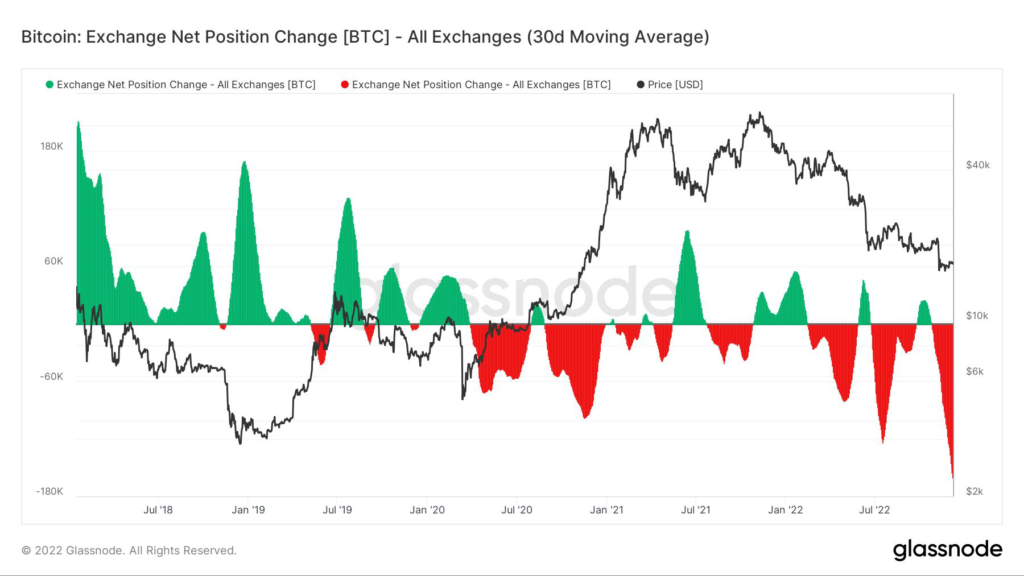
The move comes as crypto exchanges battle for customer assets after FTX’s implosion. A record amount of Bitcoin has been moved off exchanges over the last 30 days, according to data from Glassnode, as the risk of further contagion in the industry fuels angst among users with money in online platforms. Analysts estimate that some of the outflows are due to investors deciding to self-custody their tokens.  

Binance Coin, or BNB, is primarily used to pay transaction fees on the Binance exchange. Crypto trading platforms tend to issue such coins to raise capital and boost trading volume with fee discounts for payments using the tokens.

–With assistance from Yueqi Yang.

More stories like this are available on bloomberg.com

©2022 Bloomberg L.P.

Crypto Broker Genesis Needs Weeks, Not Days, to Find a Path for Lending Unit

(Bloomberg) — Crypto broker Genesis told clients that it could take weeks, not days, for it to find a path forward for its troubled lending unit, which was hobbled by the implosion of Sam Bankman-Fried’s FTX. 

“These are extraordinary times in our industry, and, while we are working urgently, this is a comprehensive process that we expect will take some time,” Derar Islim, Genesis’s interim CEO wrote in a letter seen by Bloomberg News. “We anticipate that it will take additional weeks rather than days for us to arrive at a path forward,” he said, adding that the company will update clients on timing as it makes progress. A Genesis spokesperson declined to comment.

The sudden collapse of FTX, one of the world’s largest crypto exchanges, roiled the digital-asset market and triggered a liquidity crunch at Genesis. The company has been trying to raise at least $1 billion in fresh cash for its lending unit, though some investors approached for the lifeline have balked at the interconnectedness between Genesis and other related entities that are part of Barry Silbert’s Digital Currency Group. 

Read more: Genesis Balance Sheet Reveals Web of Loans Across Silbert Empire

Genesis, which warned potential investors that it may need to file for bankruptcy if its fundraising efforts fail, halted redemptions at the lending unit shortly after revealing on Nov. 10 that it had $175 million locked in an FTX trading account. Creditors to the embattled crypto brokerage — including the Winklevoss twins’ Gemini, whose yield product depended on Genesis as a key partner — have since organized with restructuring lawyers to coordinate efforts on options. 

Islim said in the letter seen by Bloomberg that “all other Genesis entities remain fully operational” and that the company is continuing to support its clients for spot and derivatives trading and custody services. 

“Working in consultation with highly experienced advisors and in close collaboration with our owner, DCG, we are evaluating the most effective path to preserve client assets, strengthen our liquidity, and ultimately move our business forward,” Islim said. “We are also engaged in productive discussions with representatives of several client groups that have recently coalesced.”

Genesis has $2.8 billion in outstanding loans on its balance sheet, with about 30% made to related parties including its parent company DCG, Bloomberg reported last month. 

More stories like this are available on bloomberg.com

©2022 Bloomberg L.P.
Musk Says Twitter Executive Was ‘Exited’ From Company

(Bloomberg) — Jim Baker, Twitter Inc.’s deputy general counsel, was pushed out of the company over his handling of information, Elon Musk said in a tweet. 

“In light of concerns about Baker’s possible role in suppression of information important to the public dialogue, he was exited from Twitter today,” Musk said. 

Musk’s comment appeared to be in reference to Baker’s involvement with the so-called Twitter Files. The documents, which included communications surrounding the decision to block access to a New York Post story about Hunter Biden’s laptop, were publicized by journalist Matt Taibbi last week. 

In a tweet Tuesday, Taibbi suggested that Baker’s firing stemmed from “vetting the first batch of ‘Twitter Files’ — without knowledge of new management,” apparently a reference to Musk. 

Baker, who was formerly the general counsel of the Federal Bureau of Investigation, didn’t immediately respond to a request for comment. 

After acquiring Twitter for $44 billion in October, Musk has sought to show that the social network is taking a less restrictive approach to speech. That’s included criticizing the company’s policies under previous management.

The Hunter Biden incident unfolded in the lead-up to the 2020 presidential election. Twitter initially claimed it blocked access to the New York Post story under its “hacked materials” policy. In one of the internal communications published by Taibbi, which is undated, Baker urged caution regarding the story. “I support the conclusion that we need more facts to assess whether the materials were hacked,” Baker wrote.  

Baker’s firing comes at a time when Twitter is coming under increased scrutiny from regulators around the world. Last month, Musk lawyer Alex Spiro attempted to calm staff by telling them they would not go to jail if the company is found in violation of a Federal Trade Commission consent decree. 

(Corrects spelling of Taibbi’s name in second-to-last paragraph.)

More stories like this are available on bloomberg.com

©2022 Bloomberg L.P.

Apple to Begin Encrypting Cloud Backups in Data Security Revamp

(Bloomberg) — Apple Inc. is upgrading security protections on its devices, adding the ability to encrypt iCloud data backups for the first time alongside new safeguards for iMessage and account logins. 

The most significant new feature, Advanced Data Protection for iCloud, will end-to-end encrypt the storage of iCloud backups — a nearly full copy of the data on a user’s iPhone and iPad — in addition to notes, photos, files, voice memos and messages. Previously, only some features, such as health data, passwords and payment information, were end-to-end encrypted.

End-to-end encryption means that the encryption keys are stored only on a user’s devices instead of in data centers. That means that a hacker can’t get the decryption key by breaching a server and then accessing a user’s data.

The changes help fulfill longstanding customer requests and bolster an iCloud services business that has been a growth area for Apple in recent years. The iCloud offerings helped contribute to more than $78 billion in services sales for the company in the last fiscal year, up 14% from 2021.

While Apple’s physical devices — like iPhones, iPads and Macs — already offer high-end encryption and advanced security tools, cloud storage has long been seen as more vulnerable. The latest moves aim to close that gap. Still, the end-to-end encryption won’t support iCloud email, contacts and calendars. The company said that’s because those features rely on legacy technologies and are used within third-party apps. 

In the Messages app, Apple is adding Contact Key Verification. This feature, which is also offered by encrypted messaging apps like Signal, will let users verify who they are messaging with. The mechanism shows both texters the same code, which they can use to ensure their identities. The Messages app will notify users if a contact’s code changes so they can verify it is indeed still the same person.

“Conversations between users who have enabled iMessage Contact Key Verification receive automatic alerts if an exceptionally advanced adversary, such as a state-sponsored attacker, were ever to succeed breaching cloud servers and inserting their own device to eavesdrop on these encrypted communications,” Apple said in a statement. 

In some cases, there are trade-offs to using the enhancements. The extra security in iCloud means that Apple can’t restore a user’s account because it no longer holds the encryption key. Instead, a user would need to use a recovery contact or save a recovery key. Another compromise: Access to iCloud data via the web needs to be manually enabled.

Apple is also joining companies such as Alphabet Inc.’s Google in offering support for physical security keys for logging into accounts. This feature will allow users worried about online threats to have a physical key inserted into their devices — in addition to using their Apple account password — before they can log in. This would replace a notification or text message with a code, the most common form of two-factor authentication for online accounts.

Both the new iCloud and iMessage features are launching for all US users this month and will begin rolling out globally next year, Apple said. The physical security key feature is also coming next year. The first two features will come as part of iOS 16.2, iPadOS 16.2 and macOS Ventura 13.1. New beta versions with support for the enhancements were released Wednesday. 

More stories like this are available on bloomberg.com

©2022 Bloomberg L.P.

Gorillas Facing Valuation, Staff Cuts as Part of Getir Deal

(Bloomberg) — Gorillas Technologies GmbH will likely be valued at about $1.7 billion if a deal to be acquired by Istanbul-based delivery startup Getir goes through, and could face another round of job cuts, people familiar with the matter said. 

Getir is currently in advanced talks to buy German rival Gorillas in a deal consisting of equity and $100 million in cash, the people said. Bloomberg previously reported on the negotiations in October. Gorillas, which quickly attracted capital after it was founded in 2020, has had to slash staff and pull back from some of its markets after rapidly burning through capital by offering money-losing services, such as grocery delivery within minutes. 

Last year, Gorillas raised funds valuing the company at about $3 billion but has been exploring its options after investors became more cautious over the industry’s path to profitability. 

The scale of the layoffs are unclear, and no final decisions have been made, the people added, asking not to be named because the information is not public. Gorillas reduced its office staff by half in a drastic scale-back in May. 

Representatives for Getir declined to comment Gorillas didn’t respond to a request for comment.  

Read more about Gorillas exploring its options, including deals with delivery rivals. 

Thousands of tech jobs have been eliminated globally in the last few months, with some of the largest companies including Meta Platforms Inc. and Amazon.com Inc. announcing significant cuts to their workforces in anticipation of spiraling inflation and slowing consumer spending. Delivery companies like Gorillas have been hit particularly hard after the surge in popularity that they enjoyed during the Covid-19 lockdowns fell off and growth slowed. 

Read more about instant grocery delivery darling Gopuff and its struggles on the pat to profits.

The combination with Gorillas would give Getir, which is backed by Mubadala Investment Co. and Sequoia Capital, scale in key European markets including the UK and Germany. 

Gorillas had previously held talks with a number of competitors about the prospects for a merger or sale of its business, people familiar with the matter said previously. The industry is consolidating as companies emphasize a shift to profitability. Getir agreed to buy UK startup Weezy in late 2021, while Gorillas acquired France’s Frichti earlier this year. 

–With assistance from Agatha Cantrill.

More stories like this are available on bloomberg.com

©2022 Bloomberg L.P.
Coinbase CEO Sees Revenue Falling 50% or More on Crypto Rout

(Bloomberg) — Coinbase Global Inc. Chief Executive Officer Brian Armstrong said the cryptocurrency exchange’s revenue is set to be cut by half or more this year as declining prices and the collapse of rival FTX rattle investors’ confidence. 

The rapid downfall of FTX capped what was already a brutal year for the cryptocurrency industry, with speculators in retreat as prices of some of the most frequently traded tokens tumbled. Coinbase’s shares have fallen more than 80% in 2022 and the company’s third-quarter revenue was about one-fourth of what it was during the last three months of 2021, when the price of Bitcoin peaked.

“Last year in 2021, we did about $7 billion of revenue and about $4 billion of positive EBITDA, and this year with everything coming down, it’s looking, you know, about roughly half that or less,” Armstrong said in a wide-ranging interview on Bloomberg’s “David Rubenstein Show: Peer-to-Peer Conversations,” when asked about the company’s revenue. In additional comments provided after the interview, a Coinbase spokesperson further clarified that they expect 2022 revenue to be less than half of 2021 revenue.

Coinbase has previously indicated it may see a 2022 loss of no more than $500 million based on adjusted EBITDA, a measure of earnings that excludes certain costs like interest and depreciation. The company didn’t previously provide a full-year outlook for overall revenue, but Armstrong’s estimate is in line with the approximately $3.2 billion expected by analysts, according to data compiled by Bloomberg. 

The turmoil surrounding FTX deepened the pall hovering over the industry, with confidence already battered by the previous bankruptcy of lender Celsius Network. Another lender, BlockFi Inc., went bankrupt last month, citing issues tied to FTX’s collapse. 

Armstrong said the demise of Sam Bankman-Fried’s FTX appears to have been the result of a “massive fraud” rather than mismanagement or accounting mistakes, as Bankman-Fried has conveyed in interviews since the bankruptcy. Bankman-Fried has not been charged with any wrongdoing.

“It appears that they took customer funds from their exchange and actually commingled them or moved them into their hedge fund and then ended up in a very underwater position,” Armstrong said. “And that was, I believe, against their terms of service and against the law.” 

Prior to his downfall, Bankman-Fried advocated for crypto-friendly policies during his frequent visits to Washington, D.C. and was a major donor to Congressional races.

“I think there’s some really serious questions to be asked now about should some of that money be clawed back because it appears that it was stolen from customers,” Armstrong said. 

Despite the fallout from FTX, Armstrong said he plans to continue advocating for the industry on Capitol Hill and predicted that crypto-specific legislation could still get enacted over the next year. Regulations around stablecoins, centralized exchanges and custodians, as well as clarity on the definition of commodities and securities, should be among top focus, he said. 

“There’s still probably 20%, I would say, of Congress where they’re either just very hostile to it, or are just ignorant of it, but it’s not the majority view at this point,” he said of cryptocurrencies. “We can hopefully get something there in the US and then go for the rest of the G20 as well.”

For more details from Coinbase CEO Brian Armstrong, watch “The David Rubenstein Show: Peer-to-Peer Conversations” to be aired Jan. 11th at 9pm NY on Bloomberg Television.

More stories like this are available on bloomberg.com

©2022 Bloomberg L.P.

Meta’s VR Headsets Return to German Shelves After Probe Resolved

(Bloomberg) — Meta Platforms Inc.’s virtual reality headsets are returning to German shelves for the first time in more than two years after the company addressed concerns from the nation’s antitrust watchdog. 

Meta will sell the Meta Quest 2 headsets in Germany “just in time for Christmas,” the company said in a blog post on Wednesday, after removing a requirement for users to have a Facebook account. 

Read More: Meta’s German Oculus Blockade Has Startups Facing Harsh Reality

Germany’s Federal Cartel Office said Meta was allowed to sell the headsets again in an announcement last month, after the company agreed to let users sign up with a separate account. The company had removed its headsets from the German market in 2020 after the country’s top court confirmed an allegation that Facebook was abusing its dominant position.

“Meta has responded to our concerns and has offered to give users of Quest glasses the option to create a separate Meta account as a solution to the problem,” Federal Cartel Office President Andreas Mundt said in a statement at the time. 

Still, the watchdog also said in the November announcement that it is also scrutinizing “whether and how data is processed in the context of different Meta services.”

More stories like this are available on bloomberg.com

©2022 Bloomberg L.P.

Pain Due for Managers Clinging to Tech, BofA’s Subramanian Says

(Bloomberg) — Early in 2022 when technology shares sold off and energy rallied, Savita Subramanian thought professional investors at least by December would have ditched their long-held affection for growth stocks and embraced the inflation trade. 

Not so. The reality is money managers largely still prefer internet and software companies over oil and gas producers. 

“The lesson is that investors have muscle memory of making money in tech stocks for 10 plus years and that needs to go away,” the head of US equity and quantitative strategy at Bank of America Corp. said on Bloomberg TV. “Cycles take a lot longer to play through than everybody expects.” 

Subramanian called tech shares “value traps” despite a 27% drop in the S&P 500 sub-index tracking the sector. A major reason that the rotation into energy has further room to run, she says, is that the industry faces a shortage of supply. By contrast, tech companies suffer an overcapacity due to the buildup during the pandemic-induced demand and now have to lay off workers. 

“We need a full washout and we haven’t seen that,” said Subramanian, ranked by third-best quant strategist in this year’s Institutional Investor survey. 

The trajectory of consumer prices and the Federal Reserve’s tightening policy have become almost the only thing that matters for investors this year. For some trend-following investors riding the inflation trade — shorting technology stocks and Treasury bonds while going long on commodities and dollar — there were huge gains in the first 10 months. But now with signs of inflation cooling, the trade has since stumbled, sparking debate whether it’s time to play the old gridlock scenario when growth stocks shine. 

While recent data have pointed to a softening, pricing pressures will likely remain stuck at elevated levels, Subramanian says, particularly when China reopens its economy after prolonged Covid restrictions. In her view, investors should stay invested in stocks despite growing warnings that the S&P 500 may sink to new lows in the first half of next year.

“Not having exposure to stocks and sticking all your money in bonds and cash is a mistake at this point,” she said. “I do think that we are going to go down and then up. The problem is, that is an increasingly consensus view. So I think the bigger risk heading into the first half is actually not being invested in equities.”

More stories like this are available on bloomberg.com

©2022 Bloomberg L.P.

Musk Spars With San Francisco Over Probe of Bedrooms at Twitter

(Bloomberg) — Elon Musk is sparring with Twitter Inc.’s hometown of San Francisco after turning some space at the company’s headquarters into makeshift bedrooms, a possible violation of city building codes.

Twitter in recent weeks has turned several conference rooms at the office into sleeping areas, complete with furniture like bedside tables and armchairs, according to people familiar with the matter. It no longer needs as many meeting spaces now that thousands of employees have either been laid off or fired after the billionaire’s $44 billion purchase of the company in late October.

The city’s Department of Building Inspection is looking into the matter after receiving a complaint, the San Francisco Chronicle reported Tuesday. Musk lashed out at Mayor London Breed for the investigation, saying the company is providing beds for tired employees. In a tweet, he attached a link to a recent Chronicle report about a baby’s near death after allegedly accidentally ingesting fentanyl at a city playground. 

“Our Department of Building Inspection is required to investigate complaints when they are filed and determine if there are any violations that have occurred,” Jeff Cretan, a spokesman for Breed, said in an emailed statement Wednesday. “It’s a basic government responsibility.”

He declined to comment on Musk’s tweet, saying Breed is “focused on running the city, which includes delivering basic city services, like ensuring departments are responding to official complaints, and confronting our very real challenges, like addressing the crisis caused by deadly fentanyl on our streets.”

San Francisco has struggled with rising crime and the perception it is increasingly unsafe, with District Attorney Brooke Jenkins saying in an interview with Bloomberg last week there is “lawlessness” in the city. After the reported incident of the child with fentanyl, Breed tweeted “it’s important to keep public spaces safe” and said those who sell the drug must be held accountable. 

Before his Twitter purchase closed, Musk floated the idea of turning the social media company’s office building into a homeless shelter, saying that employees weren’t turning up due to its now discontinued work-from-home policies. Since acquiring the company and firing around 3,700 employees, nearly half of its workforce, he issued an ultimatum to remaining staff to commit to “hardcore” Twitter.

See also: Twitter Janitors on Strike at San Francisco Headquarters

Not only does Musk expect employees to work long hours and even sleep at the office when necessary, but he has also asked many of his employees at Tesla Inc. and the Boring Co. to assist him at Twitter during the transition period. The rooms are also believed to be for those workers, some of whom travel to San Francisco for work meetings, the people with knowledge of the matter said.

More stories like this are available on bloomberg.com

©2022 Bloomberg L.P.

Close Bitnami banner
Bitnami
