Bloomberg

Germany Plans 30 Billion Euro Fund to Support Homegrown Startups

(Bloomberg) — Germany is planning a 30 billion euro ($30.4 billion) fund to support technology-oriented startups. 

The fund was approved by the German cabinet on Wednesday as part of a broader strategy to make the country a more attractive location for startups and innovation. 

The government will work with private investors and tap into 10 billion euros of public money from the state-owned lender KfW to raise the “Future Fund,” it said. It will prioritize companies investing in deep tech and climate solutions including artificial intelligence, hydrogen technology, quantum technology and sustainable mobility. 

While venture capital investment is rising in Germany, Europe’s largest economy is still lagging international peers, the government said. Most of Europe’s largest “growth companies” are financed by U.S. investors, which lure many of the most successful startups to relocate, it said. The strategy aims to encourage them to remain in the EU long term.

The government is also looking to lower hurdles for foreigners seeking work in the country’s tech sector, as well increasing the tax-exempt amount for employee stock options. It will review issues around remote work, including taxation and labor law, so that companies can hire talent overseas without requiring relocation. 

Anna Christmann, the government’s special envoy on startups, said Wednesday in a video call with reporters that the new strategy gives “a clear signal that venture capital can also be an interesting investment for public funds and that already a small share could have a big influence on the venture capital market.”

Germany’s Startup Association praised the strategy for highlighting the importance of startups to Germany’s long-term competitiveness, but said that it fell short on the issue of taxation.

“A strategy is only as good as its implementation,” said Chairman Christian Miele in a statement. “The German government must not hide behind commitments to review things. To make Germany the world market leader for startups, we need more courage and determination.”

More stories like this are available on bloomberg.com

©2022 Bloomberg L.P.

Top India Carmaker Misses Profit Estimate as Supply Crunch Bites

(Bloomberg) — Maruti Suzuki India Ltd., India’s biggest carmaker, reported a lower-than-expected quarterly profit as rising input costs and supply chain constraints hurt earnings.

Net income was 10.1 billion rupees ($126 million) in the three months ended June 30, compared with a profit of 4.4 billion rupees a year earlier, the unit of Japan’s Suzuki Motor Corp. said in a statement Wednesday. That fell short of the average analyst estimate of 15.7 billion rupees, according to data compiled by Bloomberg. 

Revenue climbed to 265 billion rupees, which was higher than estimates. Total costs surged 43% to 252.7 billion rupees from the same period last year. Raw material costs jumped by a similar level. 

Higher commodity prices “adversely impacted the operating profit,” Maruti said in the filing. “The company was forced to increase prices of vehicles to partially offset this impact.”

Automakers globally are grappling with a serious supply chain crunch, which has aggravated soaring prices of raw materials, hurting their margins. The increase in expenses has forced automakers including Maruti, Tata Motors Ltd. and Mahindra & Mahindra Ltd. to raise vehicle prices in the Indian market, which is dominated by cheap cars, potentially denting demand. 

The company sold 398,494 vehicles domestically during the quarter compared with 308,095 units previous year. About 51,000 vehicles could not be produced due to a shortage of electronic components, Maruti Suzuki said in the filing. 

It also had a backlog of customer orders for about 280,000 vehicles by the end of the June quarter. The automaker “continued to work on cost reduction efforts to minimize the impact on customers,” it said.

Price Hikes

Maruti Suzuki increased prices by an average of 1.3% across its models in April, following a previous hike of 1.7% in January. However, higher cost of cars didn’t impact Maruti’s local sales in June, which rose 1.3% to 132,024 units.

Chairman R.C. Bhargava has said Maruti will have to shift its focus to bigger cars because the demand for entry-level passenger vehicles — its main source of income — is waning as they become more expensive due to commodity inflation. 

It’s considering expanding the capacity of a new plant in the northern Indian state of Haryana to 1 million vehicles a year, he said in May. Investment of more than $1.4 billion will go into the development of the first-phase of the plant.

Maruti is also betting on cars powered by hybrid technology, natural gas and biofuels over electric vehicles as India still generates about 75% of its electricity from dirty coal. 

(Updates with details throughout.)

More stories like this are available on bloomberg.com

©2022 Bloomberg L.P.

North Korea’s Economy Fails to Rebound Before ‘Fever’ Surge

(Bloomberg) — North Korea’s economy failed to rebound last year as the impact of pandemic measures on trade continued to weigh, with the prospects for growth this year clouded by a surge in virus cases that was finally recognized publicly by Kim Jong Un’s regime.

Gross domestic product in North Korea contracted 0.1% in the 12 months through December, according to South Korea’s central bank Wednesday. North Korea’s economy already shrank 4.5% in 2020 as the pandemic prompted the official closure of its border with China, triggering its worst slump in decades.

The figures hint at the continued blow to the North’s economy from the fallout of Covid-19 even before Kim acknowledged rocketing cases of “fever” in May. Recognition of the outbreak likely meant virus infections had mushroomed beyond a scale that could be ignored.

“The economy may have contracted last year more than reported because border closures pummeled the trade that served as a lifeline for underground markets,” said Cho Han-bum, a research fellow at the Korea Institute for National Unification. “Unless it reopens borders at least partly, the situation will get worse.”

The Bank of Korea’s figures are among the very few regular estimates of North Korea’s economy. The North’s economic performance is extremely difficult to gauge given the lack of official data and a lack of clarity over how successfully Pyongyang is evading sanctions and how much money it may be generating from activities such as alleged online fraud and cryptocurrency theft.

North Korea has also repeatedly shown that it puts its military objectives ahead of any goals for wider economic development for its population at large. That makes its GDP performance, however accurate it may be, a poor indicator of how Kim will conduct policy.

North Korea’s trade fell 17.3% in 2021 to $710 million, the BOK said. Exports, almost all of which are destined for China, the country’s biggest ally, slid 8.2%.

The fever outbreaks have emerged as the largest threat this year to North Korea’s economy. Kim has called the spread the biggest turmoil since the nation’s founding, invoking the nightmare of the 1990s famine estimated to have killed as many as millions of people.

While Pyongyang says it had the flareup under control by the end of May after a lockdown for most of the month, the impact will likely have slowed any recovery in the economy this year. Daily infections reportedly peaked at just under the 400,000 mark earlier that month. 

There has been no outside verification of the numbers provided by North Korea. KINU’s Cho said North Korea may be reporting fewer cases than actual because it wants to provide the pretext for an economic reopening after saying it has controlled the situation.

Even the spread of milder strains of the virus may have caused a higher incidence of serious illnesses and deaths among North Korea’s unvaccinated population than they caused in other countries where most people had been given multiple shots to protect them.

The country also lacks basic equipment and materials such as respirators and oxygen to deal with serious virus cases. Pyongyang has also spurned offers from other countries to provide medical supplies and personnel.

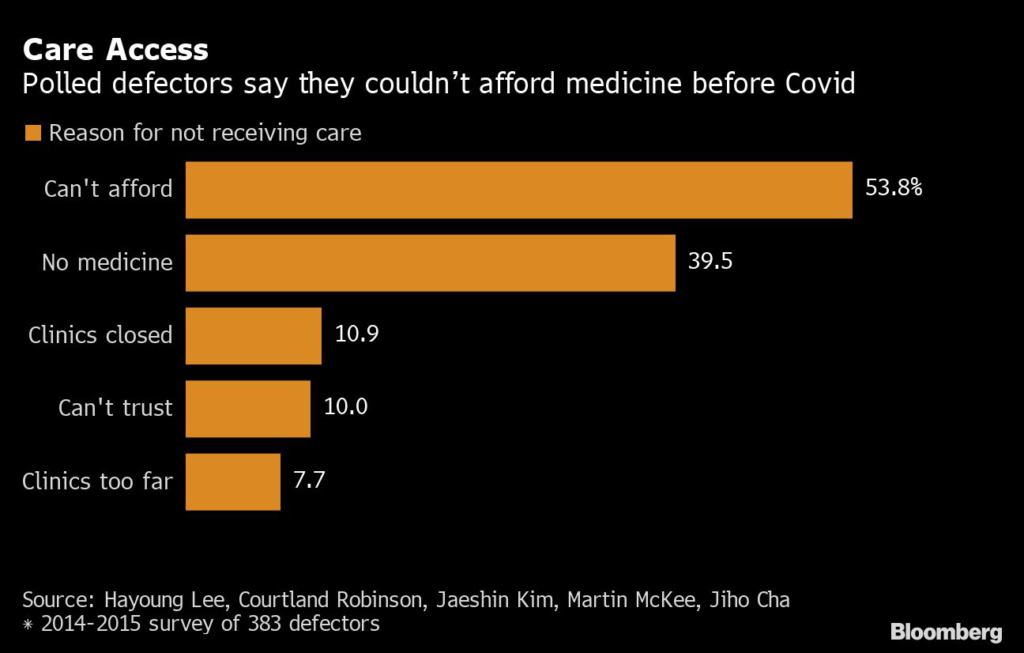
A large portion of North Korea’s population also struggles to gain adequate medical care. A 2020 study shows most North Koreans can’t afford medical help and, even if they did, supplies are lacking.

Still, North Korea says its fatality rate from the outbreak is far lower than that in South Korea. That has raised questions about the veracity of the claims.

Nevertheless, the country’s ability to mobilize its military to help enforce some of the world’s toughest controls on civilian travel between cities, likely made it easier to stem the transmission of the virus. But more restrictions also likely meant more constraints on the flow of goods essential to the economy and the livelihood of its people.

Still, the role that black markets play should not be underestimated in a country where business activities often go unreported and smuggling is common, said Lee Ji-sue, a North Korea analyst at Seoul’s Myongji University.

“The real economy in North Korea is an underground one,” he said. “Risks for businessmen have likely grown amid Covid disruptions, but their rewards may have grown bigger, too.”

Below are further details from the BOK, which bases its calculations on data obtained from a range of South Korean agencies:

  • Per capita income in North Korea was estimated at 1.42 million won ($1,083) in 2021, or about 3.5% that of South Korea, the BOK said.
  • The agricultural and fisheries industry grew 6.2% last year.
  • Mining — a key source of income until sanctions started to sap demand for its iron ore, minerals and other resources — contracted 11.7%
  • Manufacturing industry shrank 3.3%, while the services industry contracted 0.4%.
  • Gas, water works and electricity industries grew 6%.

(Adds comment from analyst)

More stories like this are available on bloomberg.com

©2022 Bloomberg L.P.

The Democratic Nature of DeFi: Real or Imagined?

  • Listen to Bloomberg Crypto on the iHeartRadio App
  • Listen to Bloomberg Crypto on Apple Podcasts
  • Listen to Bloomberg Crypto on Spotify  

(Bloomberg) — There’s a tension in crypto that Stacy-Marie is fascinated by. On the one hand, there’s this prevailing belief in the necessity, indeed the superiority, of decentralization. On the other hand there’s reality: when things hit the fan, folks respond by seeking a bailout, by demanding someone – perhaps even a regulator! – hold fraudsters accountable, and by consolidating around the strongest and biggest players in the market. In an industry so prone to spectacular scams and expensive hacks, this tension is ever-present. Can you simultaneously reject all forms of centralized control and then demand help from centralized authorities in times of trouble?  Bloomberg Reporter Emily Nicolle joins this episode for more on this.

Follow us on Twitter @crypto, and subscribe to the Bloomberg Crypto Newsletter at https://bloom.bg/cryptonewsletter


More stories like this are available on bloomberg.com

©2022 Bloomberg L.P.
Mercedes Sees Car Demand Continuing to Outrun Supply

(Bloomberg) — Mercedes-Benz AG raised its outlook, expecting more new models will keep it racing to meet demand during the rest of the year.

The automaker pointed to “solid” orders and “healthy and high-quality” demand for vehicles like the flagship electric EQS while reporting better-than-expected second-quarter earnings Wednesday. A new SUV version of the model will join the lineup later this year and help bring in more buyers.

“We see healthy demand across all main markets,” Chief Executive Officer Ola Kallenius said on a call with analysts. “Maybe it’s a result of being in the third year of artificial constraint from the semiconductor shortage.”

The world’s biggest luxury-car maker now expects group profit to be slightly higher than last year, rather than unchanged, while returns from carmaking are seen at between 12% to 14%, slightly higher than before.


The shares rose 2.2% at 10:40 a.m. in Frankfurt trading, trimming losses so far this year to 18%.

While outlining a solid few months ahead, Mercedes chimed with other major manufacturers with concerns about high inflation, supply-chain problems and a worsening energy supply crisis in Europe. Carmakers continue to battle a dearth of chips that has led to widespread production halts. Most manufacturers are seeing signs of the logjam easing, though they’re still far from assured to procure enough of the high-tech components. 

At Mercedes, deliveries fell 7% during the second quarter because of a lack of chips as well as other logistical challenges. 

What Bloomberg Intelligence Says:

Mercedes has raised 2022 guidance following a 2Q beat — aided by production exceeding deliveries — with 2H set to benefit from supply constraints easing, pent-up demand and inventory rebuild, though the outlook for 2023 remains our concern on recession fears and gas rationing. Cars reported a 14% 2Q Ebit margin, albeit down from 16.5% in 1Q, allowing margin guidance to be raised to 12-14% (from 11.5-13%) with consensus already at the top end.

— Michael Dean, BI automotive analyst

Empty dealer lots have allowed carmakers to do away with typical heavy discounts and prices for used vehicles have also ballooned. Mercedes, like other automakers, has prioritized production of their most lucrative models, a strategy that is also in line with the company’s shift to more high-end cars to rival electric leader Tesla Inc.

Mercedes also has taken further steps to keep its operations running due to the threat of gas rationing in Germany after Russia’s decision to cut supplies through a key Baltic sea pipeline have raised fears of an abrupt halt of deliveries during winter. The Sindelfingen plant, where the company makes the high-end S-Class and Maybach, can now function without natural gas, a fuel typically used in automaker’s paint operations. 

“We can, in some circumstances, replace gas with oil, and also we’re looking at a bundle of efficiency measures,” Kallenius said in an interview with Bloomberg Television. “We’re preparing ourselves for some uncertainty, for scenarios, and trying to make our operations more resilient.”

Should gas become scarce, the company will be able to continue full operations with half of its usual supply if German authorities allow it to pool the fuel between plants in the country. That would entail giving the company credit for reducing gas usage at its Stuttgart plants, for example, and not ordering a cut in consumption at its Bremen factory, even though there’s no physical sharing of gas supplies among the facilities.

(Adds CEO comment in penultimate paragraph)

More stories like this are available on bloomberg.com

©2022 Bloomberg L.P.

Alibaba Primary Listing May Lure Billions of Dollars From China

(Bloomberg) — Alibaba Group Holding Ltd. may attract at least $16 billion of Chinese money by shifting to a primary listing in Hong Kong, strategists say, getting a much-needed boost as its stock struggles to bottom out. 

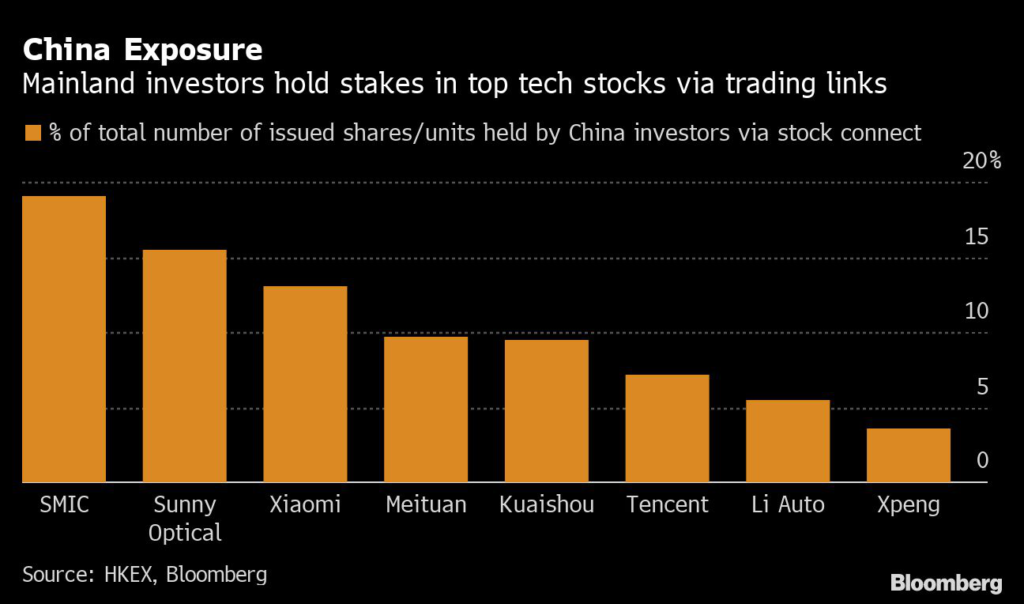
The move paves the way for the e-commerce giant to be included in the city’s trading links with mainland bourses, allowing an influx of new capital. Chinese investors hold around 7% stake of firms included in the links, suggesting an inflow of $16 billion into Alibaba over the next few years, according to Goldman Sachs Group Inc. Sanford C. Bernstein estimates $21 billion. 

Such hopes are timely for Alibaba, whose stock is still down more than 60% from an October 2020 peak as brief bouts of recovery this year have failed to last amid regulatory fears. Elevating its listing status from secondary will also help the firm reduce reliance on investors in the US and prepare for an eventual delisting there as an auditing standoff between Washington and Beijing continues. 

Read: Why a Primary Listing in Hong Kong Matters for Alibaba, BiliBili

“It opens up an efficient portfolio flow channel for Hong Kong-listed companies to expand their investor base and tap into the deep onshore equity liquidity pool,” Goldman Sachs strategists including Kinger Lau wrote in a note on Wednesday. 

Mainland funds tend to be contrarian investors, loading up on shares of the nation’s tech giants even as foreigners sell. Tencent Holdings Ltd. has been the most purchased Hong Kong-listed stock via the trading links since the tech rout deepened from February 2021, while Meituan and Xiaomi Corp. also rank among the top of their shopping list, Bloomberg-compiled data as of end-May show. 

“There are still some in the mainland who hold on to belief in the power of the internet economy,” said He Qi, fund manager at Huatai Pinebridge Fund Management. “Being able to buy Alibaba shares with yuan will be good for its valuation. I think that a valuation increase of 50% from current levels is reasonable.”   

The listing move can also boost Alibaba’s trading turnover in Hong Kong. Although more than a half of its shares have been registered in the city’s clearing system, the stock’s turnover has remained at just one fifth of that of American Depositary Receipts in the first six months of 2022. 

“I will regard this as a preparatory and proactive measure for the potential involuntary delisting from the US due to accounting records issue faced by Chinese issuers,” said Billy Au, partner of Mayer Brown. 

To be sure, doubts remain on how much of a game changer the listing shift will be for Alibaba’s shares. 

While Li Auto Inc. has gained about 26% since its primary listing allowed the Chinese electric-vehicle maker to join the Stock Connect program in March, its peer XPeng Inc. has slumped more than 30% after being added in February. Both companies are also listed in the U.S.   

After a nearly 5% jump Tuesday in Hong Kong, Alibaba fell 3.3% on Wednesday as focus shifted to next week’s earning results. Alibaba is expected to report its first-ever negative quarterly revenue growth amid a slowdown in Chinese economy and fierce competition. 

“The internet dividend has evaporated, and its potential inclusion in the Connect, for me, would not be a sufficient reason to load up on Alibaba shares in the short term,” said Zhang Hao, chief investment officer at Granford (Beijing) Capital Management Co.  

But still, many see this as another sign that the regulatory headwind that’s been capping tech’s rebound is clearing.  

“This may signify that Baba’s regulatory overhang might be near the end as management is unlikely to approach this primary listing if there are still major potential regulatory issues to be resolved,” said Zhikai Chen, head of Asian and Global Emerging Market Equities at BNP Paribas Asset Management. 

(Updates trading prices, adds comment from Mayer Brown)

More stories like this are available on bloomberg.com

©2022 Bloomberg L.P.
Synopsys-Backed China Chip Firm Accused of Poaching TSMC Talent

(Bloomberg) — Taiwan is investigating whether a Chinese chip firm backed by US-based Synopsys Inc. is illegally poaching engineers from local giants including Taiwan Semiconductor Manufacturing Co., underscoring growing concern about Beijing’s economic ambitions.

Agents raided the local offices of Advanced Manufacturing EDA Co. in March, acting on allegations that the Chinese chip design software firm was actively hiring away people from TSMC, the island’s Ministry of Justice Investigation Bureau said in a statement to Bloomberg News. District prosecutors in Hsinchu have decided to defer prosecution of two Taiwanese individuals associated with the firm known as Amedac, though that could change upon review, a spokesman for the prosecutorial office said.

Concerns are growing in Washington about whether American investments in China have been helping Beijing supercharge its semiconductor ambitions. The U.S. Department of Commerce is also probing Synopsys for possibly passing key technology to banned Chinese companies including Huawei Technologies Co.’s secretive HiSilicon unit, Bloomberg News has reported. 

At the same time, Taipei sees the outflow of silicon engineers to Chinese companies as a key national security issue, and this year began to enforce regulations prohibiting Chinese firms from hiring away top-flight talent in sensitive sectors such as chips.

Representatives for Synopsys said it has a small stake in Amedac, adding that the company maintains a distributor relationship and hasn’t sold or transferred any technology to the Chinese firm. They declined to comment on the Taiwanese investigation. Amedac didn’t respond to calls placed to its main number and an email sent to a publicly listed address.

Read more: Synopsys Probed on Allegations It Gave Tech to Huawei, SMIC

Amedac is a 100 million yuan ($14.8 million) joint venture backed by Synopsys, according to its website. Its other backers include SummitView Capital, CEC Huada Electronic Design Co. and the Institute of Microelectronics of the Chinese Academy of Sciences, the government’s semiconductor research center. It is based in Hefei, the capital of the eastern Chinese province of Anhui, with offices in Shanghai and Beijing, according to the website. 

Synopsys owns about 20% of the company, according to people familiar with the relationship and official registration data. The Chinese firm hasn’t yet registered its Taiwanese office with the local government, and regulations also ban Chinese companies from hiring in Taiwan without official approval, the bureau said in its statement. 

The field of chip design software, dominated by Synopsys and Cadence Design Systems Inc., has been identified as a choke point for China when it comes to the development of domestic technologies. 

In addition to building chip design tools, Amedac is also developing optical proximity correction software to help lithography machines sold by ASML Holding NV accurately print tiny circuits on chips, according to one of the people, who asked to remain anonymous because they’re not authorized to speak publicly.

Earlier this year, ASML accused a Beijing-based firm, regarded by Chinese officials as one of the country’s most promising tech ventures, of potentially stealing its trade secrets related to OPC.

Read more: Synopsys Says It Is Cooperating with US on China Sanction Probe

More stories like this are available on bloomberg.com

©2022 Bloomberg L.P.

Elliott Builds PayPal Stake Seeking to Speed Cost Cuts

(Bloomberg) — Elliott Investment Management is building a stake in PayPal Holdings Inc., the payments giant that has been firing staff and closing offices to cut expenses. 

Elliott plans to push for PayPal to speed those cost-reduction efforts, according to people familiar with the matter. The activist investor may ultimately become one of the company’s five-largest shareholders, the people said, asking not to be identified discussing confidential information.

Representatives for Elliott and PayPal declined to comment.

PayPal surged as much as 6.5% in premarket trading before exchanges opened in New York on Wednesday. The shares had plummeted 75% in the past year as spending growth on its many platforms has slowed. The shares fell 5.7% to $77.04 Tuesday, giving the company a market value of $89 billion.

The company is facing supply chain disruptions and once-in-a-generation levels of inflation that have hindered e-commerce, while more consumers have been returning to in-store shopping. All the while, EBay Inc., PayPal’s former parent company, has been rapidly moving payments away from its platform.

That’s forced Chief Executive Officer Dan Schulman to rejigger plans for the year as he seeks to improve operating leverage — or the ability to grow revenue faster than expenses.

PayPal has warned it will incur an additional $100 million in restructuring charges this year, though job cuts will ultimately help the firm save about $260 million a year in employee-related costs. 

Elliott’s stake was reported earlier by the Wall Street Journal. Florida-based Elliott, led by billionaire Paul Singer, has agitated some of the world’s largest companies.

(Updates with premarket trading in fourth paragraph. A spelling of PayPal was corrected in an earlier version of this story.)

More stories like this are available on bloomberg.com

©2022 Bloomberg L.P.

Alphabet, Microsoft Spur Hope Tech Can Handle Slow Economy

(Bloomberg) — Alphabet Inc., Microsoft Corp. and Texas Instruments Inc. posted double-digit quarterly revenue growth on Tuesday and expressed optimism about the coming months, reassuring investors who had been fretting that the technology industry was poised for a dour second half.

All three companies jumped in early trading on Wednesday. Alphabet shares rose 4%, Microsoft was up 3.8% and Texas Instruments gained about 4.5% in trading before markets opened in New York. 

The earnings reports from the trio of industry giants set the tone for a week that will include results from heavy hitters like Meta Platforms Inc., Qualcomm Inc., Apple Inc., Amazon.com Inc. and Intel Corp. 

Microsoft gave an encouraging sales forecast for the current fiscal year, soothing fears that the strong US dollar and a weakening economy would ravage sales. Chip manufacturer Texas Instruments also offered a bullish forecast, indicating that sales and profit this quarter would likely exceed Wall Street estimates. And Alphabet, the parent company of search giant Google, managed to post advertising revenue that surpassed analysts’ expectations.

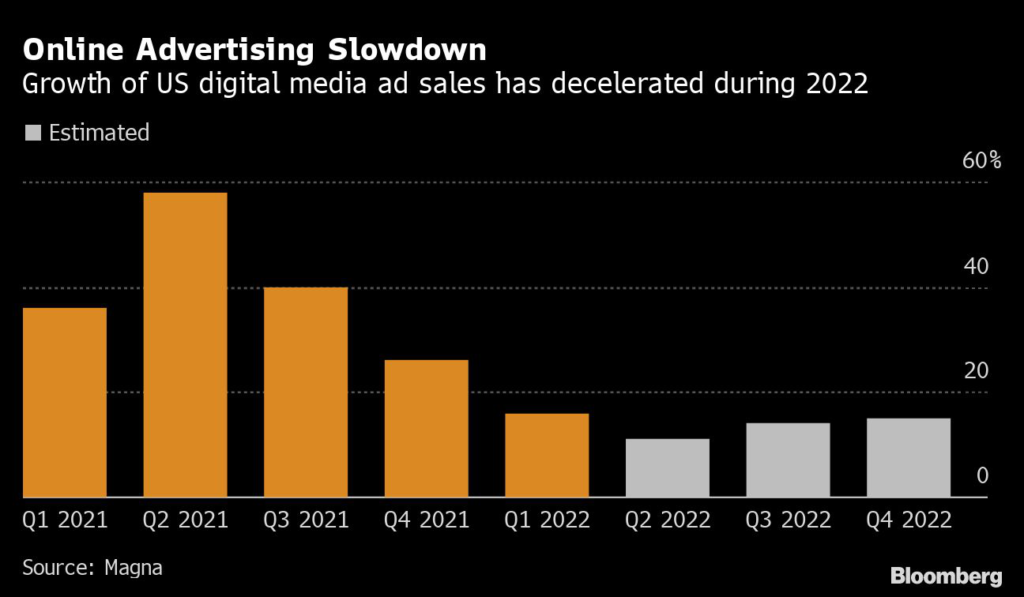
An online advertising slowdown had been a particular concern of investors, who dragged down shares of Snap Inc. and Twitter Inc. following their earnings reports last week.

“I would construe this report as a sigh of relief,” Dan Morgan, a senior portfolio manager at Synovus Trust Co., said of Alphabet’s results. “You’re looking at an environment where the overall ad spend rates are definitely slowing down, yet Google still was able to deliver above and beyond.”

The three reports reflected underlying resilience, if not outright strength, in four of the industry’s main pillars: digital advertising, cloud computing, information-technology spending and chips. Still, it wasn’t all good news. The surging US dollar, which reduces the value of foreign sales, is eroding revenue — especially at Microsoft. And Texas Instruments saw weaker demand for chips in consumer products.

Alphabet missed analysts’ estimates for its YouTube and its cloud businesses. The company’s earnings also came in light: Profit was $1.21 a share, compared with an estimate of $1.32.

The companies also pointed to growth roadblocks looming in the coming months. Advertisers have begun to pull back on spending, exercising caution in an uncertain economic environment. Alphabet Chief Financial Officer Ruth Porat used the term “ad pullback” several times on a conference call with analysts. “It’s clear Google has its work cut out for it in the back half of the year,” said analyst Evelyn Mitchell of Insider Intelligence.

Even so, investors were cheered by the overall tone of Google’s remarks. The market for search advertising is more resilient than that of ads on social media, insulating Google’s business relative to competitors like Snap and Facebook.

At Microsoft, the company signed a record number of Azure cloud contracts worth more than $100 million and $1 billion, CFO Amy Hood said in an interview. Commercial bookings, a measure of future sales to corporate customers, were “significantly” better than the company expected, rising by 25%, an indication corporate demand for Microsoft software remained strong in the quarter, Hood added.

Texas Instruments, one of the world’s biggest chipmakers, said demand for semiconductors used in industrial machinery and vehicles was strong. It also saw a rebound in China after that country began lifting Covid-related lockdowns in the country, which had shuttered factories.

South Korean chipmaker SK Hynix Inc. delivered strong results as well, helped by the flip side of a strong US dollar. The weaker Korean won — along with resilient demand — contributed to a 56% gain in profit last quarter. Still, the company was circumspect about the future, saying it would “carefully” review its 2023 investment plan.

Investors will get deeper insight into the underlying health of digital advertising, chips and IT spending Wednesday, when Meta and Qualcomm and ServiceNow Inc. release their latest numbers.

(Updates with early trading in second paragraph)

More stories like this are available on bloomberg.com

©2022 Bloomberg L.P.
South Korea Probes $3.4 Billion of Crypto-linked FX Transactions

(Bloomberg) — South Korea’s Financial Supervisory Service is probing $3.4 billion worth of “abnormal” foreign-exchange transactions at two of the country’s largest commercial banks for possible links to illegal crypto-related activities. 

Unusual transactions totaling 1.6 trillion won ($1.3 billion) took place at five branches of Woori Bank between May 3, 2021 and June 9, 2022, the regulator said in a statement Wednesday. Similar transactions worth 2.5 trillion won were detected at 11 branches of Shinhan Bank between February 23, 2021 and July 4, 2022, it said. 

Yonhap reported last week that the two banks were involved in unusual transactions worth 1.8 trillion won. Financial regulators have been looking into whether the transactions had links to money laundering or currency speculation using crypto assets. Some of the transactions involved crypto exchanges, a senior FSS official said last week.

Both banks banks declined to comment on the FSS investigation.

The FSS on July 1 required all banks to conduct an internal review on all sizable overseas transfers as well as any suspicious transactions related to cryptocurrencies that occurred in 2021 and the first half of this year, the statement said. The banks will need to submit a report by end of July.

The information will be shared with the nation’s tax office and the prosecutors office, the FSS said.

(Updates fourth paragraph with comments from the banks)

More stories like this are available on bloomberg.com

©2022 Bloomberg L.P.

Close Bitnami banner
Bitnami