Bloomberg

Futures Drop Before Fed; Energy Up as EU Cuts Deal: Markets Wrap

(Bloomberg) — US futures fell on Tuesday amid caution in global markets ahead of the Federal Reserve interest-rate hike.

Contracts on the S&P 500 and Nasdaq 100 slid, as Walmart Inc. tumbled about 9% in premarket trading after its surprise warning. European retailers and banks also fell on disappointing reports, while energy and mining stocks rallied as European Union countries reached a political agreement to cut their gas use. UBS Group AG dropped more than 7% after reporting weaker-than-expected profit.

Traders are braced for a widely expected 75 basis point Fed rate rise on Wednesday, part of campaign to tackle inflation, as well as corporate reports from the likes of Apple Inc. and Alphabet Inc. EU countries agreed on Tuesday to cut their gas use by 15% through next winter as the prospect of a full cut-off from Russian supplies grows increasingly likely. 

Commodities prices have surged on signs of tightness, with European natural gas rising to the highest level in more than four months, while crude and copper also jumped. Treasury yields fell and a dollar gauge rose. 

For Katerina Simonetti, an adviser at Morgan Stanley Private Wealth Management, the litany of risks exposes the vulnerability of the 6% rebound in global shares from June lows.

“This is most likely a bear market rally and there are significant risks still facing this market,” she said on Bloomberg Television. “We’re probably going to be seeing a lot of choppiness and potentially some further declines in the market before the year end.”

Musk, Tesla and Twitter are this week’s theme of the MLIV Pulse survey. Also share your views on the S&P 500’s biggest stocks. Click here to get involved anonymously.

Here are some key events to watch this week:

  • Alphabet, Apple, Amazon, Microsoft, Meta earnings due this week
  • US new home sales, Conf. Board consumer confidence, Tuesday
  • IMF’s world economic outlook update, Tuesday
  • EU energy ministers emergency meeting, Tuesday
  • Fed policy decision, briefing, Wednesday
  • Australia CPI, Wednesday
  • US GDP, Thursday
  • Euro-area CPI, Friday
  • US PCE deflator, personal income, University of Michigan consumer sentiment, Friday

Some of the main moves in markets:

Stocks

  • Futures on the S&P 500 fell 0.4% as of 8:23 a.m. New York time
  • Futures on the Nasdaq 100 fell 0.5%
  • Futures on the Dow Jones Industrial Average fell 0.4%
  • The Stoxx Europe 600 rose 0.1%
  • The MSCI World index was little changed

Currencies

  • The Bloomberg Dollar Spot Index rose 0.5%
  • The euro fell 1% to $1.0122
  • The British pound fell 0.6% to $1.1967
  • The Japanese yen was little changed at 136.67 per dollar

Bonds

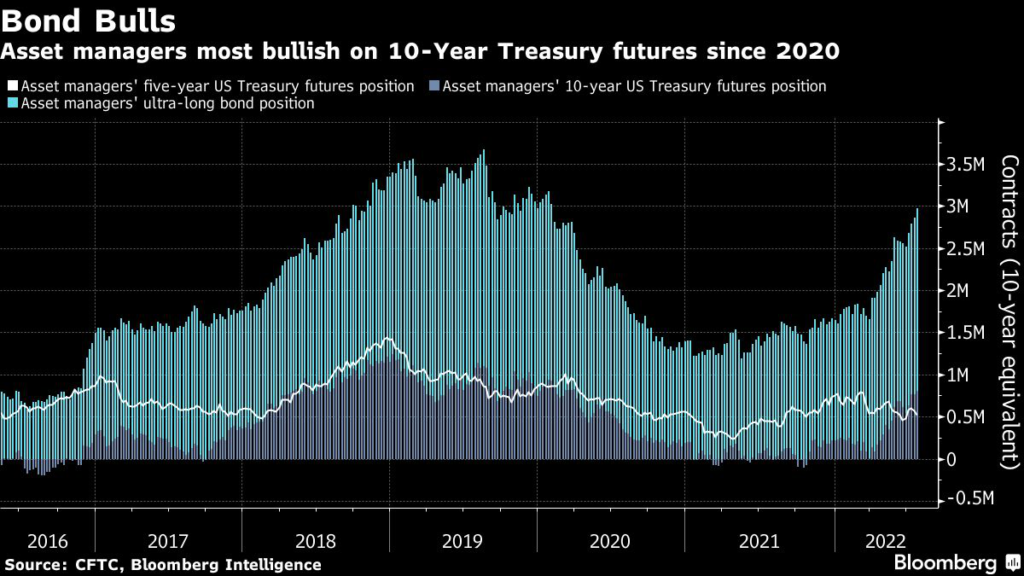
  • The yield on 10-year Treasuries declined five basis points to 2.74%
  • Germany’s 10-year yield declined 10 basis points to 0.92%
  • Britain’s 10-year yield declined four basis points to 1.89%

Commodities

  • West Texas Intermediate crude rose 1.9% to $98.58 a barrel
  • Gold futures were little changed

More stories like this are available on bloomberg.com

©2022 Bloomberg L.P.

Meta Wants Oversight Board to Review Covid Policies After Millions of Posts Removed

(Bloomberg) — Facebook parent company Meta Platforms Inc. has asked its Oversight Board to review the company’s Covid-19 misinformation policies to see if they should remain in place. 

Nick Clegg, Meta’s president of global affairs, wrote Tuesday that Meta’s policies were created during “extraordinary circumstances” and that the rules meant Meta removed Covid-related misinformation “on an unprecedented scale.” 

Covid misinformation posed a risk of “imminent physical harm,” leading the company to remove more than 25 million posts, videos and comments about the virus since the start of the pandemic, Meta said. Hundreds of millions of other posts were labeled with warnings by fact checkers.

“Resolving the inherent tensions between free expression and safety isn’t easy, especially when confronted with unprecedented and fast-moving challenges, as we have been in the pandemic,” Clegg wrote. “That’s why we are seeking the advice of the Oversight Board in this case. Its guidance will also help us respond to future public health emergencies.”

The pandemic has not receded. In the US, there are more than 120,000 new cases per day on average, according to the Centers for Disease Control and Prevention.

Meta said it is still “committed to combating Covid-19 misinformation” and is asking the board if there are better ways to counteract it, like labeling or demoting content in users’ feeds. Advice from public health officials is more readily available now, Clegg acknowledged. “The world has changed considerably since 2020,” he said.

More stories like this are available on bloomberg.com

©2022 Bloomberg L.P.

3M to Spin Off Health Business Seen Valued at $45 Billion

(Bloomberg) — 3M Co. plans to spin off its multibillion-dollar health-care operations, a move that could leave the manufacturer flush with cash as it copes with shifting economic currents that have sapped its profits.

The company will retain a stake of 19.9% in the medical-supplies business initially and sell off the holding over time, 3M said Tuesday in a statement. The portfolio move will dramatically reshape a company known for diverse product lines, from electronic components to dental adhesives to Post-it notes. 

3M, based in St. Paul, Minnesota, has underperformed in recent years amid supply-chain challenges, currency fluctuations and rising costs. A spinoff could boost 3M’s sagging value, bolster its capital allocation strategy and give it “a liquidity war chest,” according to a note from Bloomberg Intelligence analysts Monday. The independent health business could be worth as much as $45 billion, they said.

3M’s shares jumped 6.1% as of 7:45 a.m. before regular trading in New York. The stock had tumbled 24% this year through Monday, worse than the decline in the S&P 500 Index.

With about $8.6 billion in sales last year, health-care accounted for almost one-quarter of 3M’s total revenue. The unit makes products across markets, including surgical supplies, bandages and biopharmaceuticals.

While not a wholesale breakup, 3M’s spinoff reflects a trend among industrial companies to split their operations to bring more focus. General Electric Co. is separating its power and health-care businesses, while United Technologies recently hived off its elevator and air-conditioner operations before merging with Raytheon.

3M’s tax-free transaction is expected to be completed by the end of 2023, subject to final approval from the board and regulators.

The spinoff was revealed along with other significant announcements Tuesday, including second-quarter earnings results. The company cut its full-year sales and profit forecasts as the surging value of the US dollar added to pressures from snarled supply chains, inflation and softening demand in some of its key markets.

In a separate statement, 3M said it is taking steps to resolve litigation related to its Combat Arms Earplugs, with its Aearo Technologies business voluntarily initiating Chapter 11 proceedings. 3M said it’s committing $1 billion to fund a trust to resolve claims related to the earplugs worn by military personnel.

(Updates with additional details throughout)

More stories like this are available on bloomberg.com

©2022 Bloomberg L.P.

Liz Truss Tax Cuts May Push Rates Closer to UK’s Pain Threshold

(Bloomberg) —

If you listen to Liz Truss’s allies on economic policy, Britain may be about to end the era of cheap money, delivering significant pain for millions of families.

The UK foreign secretary, who is competing with Rishi Sunak to replace Boris Johnson as prime minister, plans immediate tax cuts in a move her own supporters acknowledge would force interest rates higher than investors anticipate.

A key adviser to Truss, the economist Patrick Minford, last week raised the prospect that interest rates could rise as high as 7%, a suggestion he has since reined in. 

Many mainstream economists say the proposed stimulus could still see borrowing costs hit 3.25%, closer to the threshold that the Bank of England has identified as troublesome for a number of mortgage payers. It would lift the cost of money back to levels British borrowers haven’t paid since before the financial crisis.

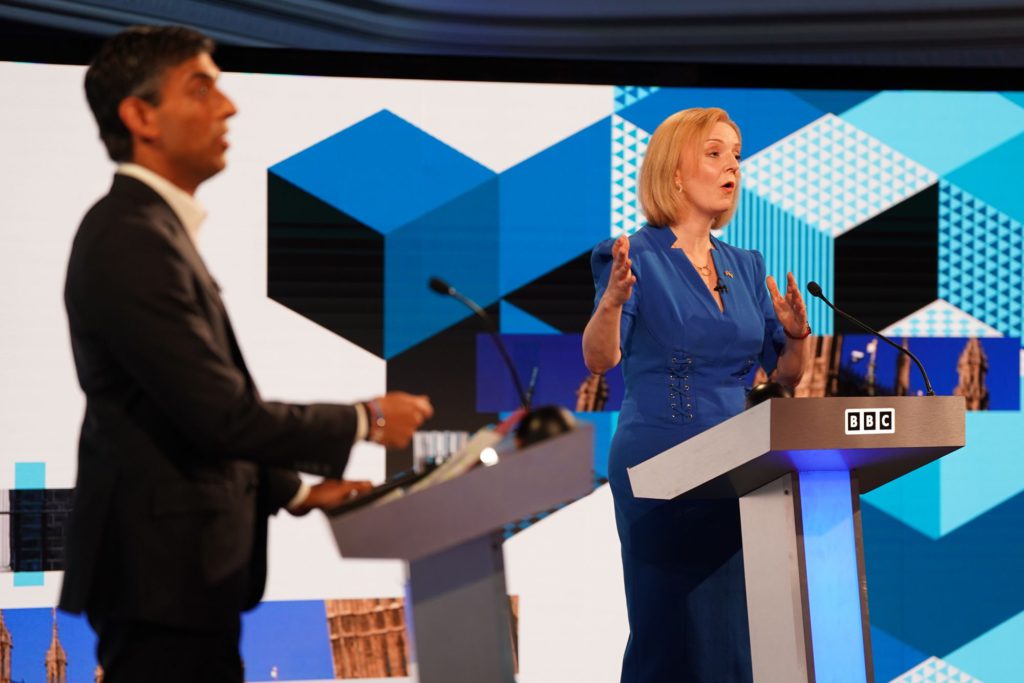
Sunak drew attention to the views on Truss’s advisers during a debate broadcast by the BBC on Monday. It represented a new angle of attack by the former chancellor on Truss, who is favored in polls and by bookmakers in the race that concludes on Sept. 5.

For now, newspapers and commentators focused on the growing acrimony of the leadership debate, which some said verged into rudeness by Sunak. A snap poll by Opinium after the appearance showed Truss and Sunak in a statistical dead heat.

At issue is the desire of Truss and her advisers to deliver a lift to the UK economy through immediate tax cuts — and to pivot sharply away from the historically low level of interest rates prevailing for more than a decade.

Minford, who is helping Truss’s campaign and advised Margaret Thatcher when she was leader in the 1980s, argues that lowering income taxes will draw people into work by letting them keep more of their earnings. By increasing labor supply, domestic wage pressures would ease. 

He also acknowledged in a Times interview last week the inflationary effect of that policy could boost rates to “a normal level” that he defined as 5%-7%, compared with the current 1.25%. In subsequent comments, he suggested a figure of 4% or less. 

Even so, the consensus of mainstream economists is that tax cuts would stimulate the economy and inflation, and for that reason the policy would lead to higher interest rates. Truss’s policies could force the BOE to raise its benchmark interest rate to 3.25% in the next year, according to Dan Hanson at Bloomberg Economics. That’s 50 basis points above his current forecast of 2.75%.

His analysis doesn’t envision rates nearing 7%, and BOE Governor Andrew Bailey has said rates aren’t headed to levels in previous cycles. But each tick up in rates reduces the affordability of borrowing, and the BOE has said 5% is the level where homeowneers will tip into distress.

What Bloomberg Economics Says …

“Truss — the favorite — is aiming for big tax cuts. Using SHOK, our model of the UK economy, we calculate how her plans could add 0.6% to 2023 GDP and 0.4 percentage point to CPI inflation by the start of 2024. Sunak is the economy’s continuity candidate — fiscal prudence will remain paramount as inflation soars.”

–Dan Hanson, Bloomberg Economics. Click for the ANALYSIS.

Sunak, echoing economists, focused on the inflationary impact of cutting taxes now and the danger of much higher rates on the economy.

“Can you imagine what that’s going to do for everyone here and everyone watching?” Sunak said in the debate. “It’s going to tip millions of people into misery and it’s going to mean we have absolutely no chance of winning the next election.”

Truss didn’t answer Sunak’s charge on interest rates directly, noting instead the damaging impact the chancellor delivered when he boosted taxes to the highest level since World War II.

“This chancellor has raised taxes to the highest rate in 70 years, and we’re now predicted a recession,” Truss said. 

For Minford, higher rates “are badly needed” to reward savers after years of near zero returns. Tory party members who vote for the next leader have an average age of 57 and are likely to have built up savings.

“One of the great things about being an independent country with your own independent central bank and treasury is that you can borrow to smooth out the bumps in the budget,” Minford said in an interview broadcast Tuesday on BBC Radio 4’s “Today” program. “It isn’t a license to just spend, spend, spend. A lot of economists agree that you shouldn’t put up taxes because they’ll damage growth, and the Bank of England should tighten money to control inflation.”

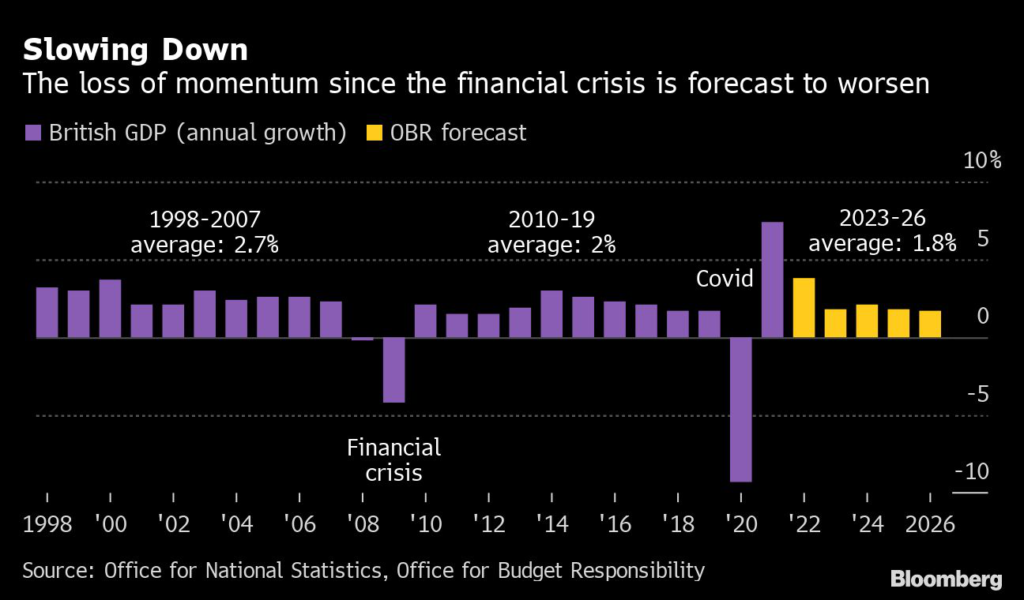
Rates have drifted down from more than 7% in the 25 years since the BOE won authority from the Treasury to set monetary policy. That reflects declining inflation and then rapid cuts to borrowing costs following the financial crisis in 2008 and then the pandemic that started in 2020.

Cheap money helped the UK housing market touch new records through coronavirus lockdowns. 

Seven UK economists wrote the Telegraph newspaper last week supporting Truss’s plan, saying tax cuts are needed and won’t spur inflation. They include Graeme Leach, chief economist at Macronomics; Gerard Lyons, senior fellow at Policy Exchange; and the independent economist Julian Jessop.

Mainstream economists criticize the Truss plan, saying it will fan the inflationary pressures that both the Treasury and BOE are struggling to control. Citigroup Inc.’s Chief UK Economist Ben Nabarro said she “poses the greatest risk from an economic perspective with an unseemly combination of pro-cyclical tax cuts and institutional disruption.”

Former Brexit secretary David Davis stepped up the attack on Truss’s tax cuts, which “means mortgage rates, commercial rates of eight, nine, 10% — four times as high as they are now. I’ve got children who have mortgages. I worry about what and how they’ll get by.”

Read more:

  • UK Economy at Heart of Debate as Truss and Sunak Trade Blows
  • UK’s Outsider Economists Question Radicalism of Trussonomics
  • Truss Plan Risks Inflation That Outlasts Growth Lift, Says Model
  • UK Economists See Faster Interest Rate Increases Under Liz Truss

More stories like this are available on bloomberg.com

©2022 Bloomberg L.P.

GM Misses Profit Estimates as Chip Shortage Crimps Output

(Bloomberg) — General Motors Co. reported weaker second quarter profit than analysts’ estimates as semiconductor shortages kept production volumes in check. The automaker also warned it is bracing for tougher times ahead.

Noting “concerns about economic conditions,” Chief Executive Officer Mary Barra said in a shareholder letter Tuesday that GM is taking measures to guard cash flows and rein in costs by cutting discretionary spending and placing limits on hiring. 

“We have also modeled many downturn scenarios and we are prepared to take deliberate action when and if necessary,” the CEO said.

GM kept intact its full-year earnings guidance, reflecting robust demand for its highest-priced vehicles and signaling optimism it can procure sufficient quantities of chips.  

Shares of the Detroit-based carmaker fell 1.3% in premarket trading to $34.07 as of 6:55 a.m. in New York. The stock had declined about 41% this year as of Monday’s close. 

Production Constraints

GM’s profit in the latest quarter totaled $1.14 a share, less than the $1.31 consensus estimate of analysts compiled by Bloomberg and also below the $1.97 a share it earned a year ago. 

While production volumes remain constrained, the company benefitted from higher sticker prices on the SUVs and trucks it could manufacture. Sales came to $35.76 billion, above analysts’ estimates for $34.81 billion.

The automaker sees 2022 adjusted earnings before interest and taxes of $13 billion to $15 billion, unchanged from its previous projection. It also expects adjusted profit of $6.50 to $7.50 a share. 

“This confidence comes from our expectation that GM global production and wholesale deliveries will be up sharply in the second half,” Barra said.

GM’s North American business came to $2.3 billion in adjusted earnings before interest and taxes, a drop from $2.9 billion a year ago. The company said it remains on track to cut down its inventory of partially completed vehicles, which totaled about 95,000 as of June 30.

While industrywide sales in the US are on pace to fall 17% this year to 14.4 million — the lowest level in a decade — GM has kept profits growing by raising prices.  The company’s average vehicle sold for more than $50,000 leading into the quarter.

In China, where a wave of Covid-19 cases has led to shutdown of factories and kept consumers home, GM swung to a loss of $87 million from its joint venture, compared with a $276 million profit this time last year. 

(Updates with additional CEO comments from seventh paragraph.)

More stories like this are available on bloomberg.com

©2022 Bloomberg L.P.
Truss Says UK Should Crack Down on Chinese Firms Like TikTok

(Bloomberg) — Foreign Secretary Liz Truss pledged to crack down on Chinese-owned companies such as social-media giant TikTok Inc. as she traded blows with Rishi Sunak in their first head-to-head debate of the race to succeed Boris Johnson as UK prime minister.

“We absolutely should be cracking down on those types of companies,” Truss said Monday during the debate on BBC TV, when asked specifically about TikTok. “We should be limiting the amount of technology exports we do to authoritarian regimes.”

Truss’s comments on TikTok, the popular video-sharing app owned by Chinese tech company ByteDance Ltd, builds on Sunday’s back-and-forth between the two contenders on how to deal with China, with both politicians criticizing each other for their past approaches. 

The pair are locked in a six-week runoff to replace Johnson as Conservative Party leader, and spent Monday attacking each other’s policy pledges. The Tory grassroots membership is set to select a winner, with the result due to be announced on Sept. 5.

The debate also touched on the economy, how to “level up” poorer regions in the UK and what role if any Johnson will serve in the next government.

Sunak, who previously served as chancellor, earlier described China as the “biggest long-term threat to Britain and the world’s economic and national security,” and promised to limit its influence in the UK.

Beijing Denounces Truss Vow to Crack Down on China Firms in UK

On Tuesday, Chinese Foreign Ministry spokesman Zhao Lijian criticized Truss’s remarks. He told a regular news briefing Tuesday in Beijing that China firmly opposes both Sunak and Truss’s comments related to the nation and said “I want to make it clear to certain British politicians that making irresponsible remarks about China, including hyping up the so-called China threat, cannot solve one’s own problems.” 

Truss said Monday that as recently as a month ago, Sunak was pushing for closer trade relationships with China while serving as chancellor. She said the tougher stance was actually driven by her Foreign Office.

“I’m delighted that you’ve come round to my way of thinking,” Truss said. “Whether it’s taking the alternative to the Chinese Belt and Road with our G-7 colleagues, whether it’s being clear that Taiwan should be able to defend itself in the face of Chinese aggression — we have led on that, and frankly, what we’ve heard from the Treasury is a desire for closer economic relations with China.”

Sunak countered, pointing to a time when Truss talked about having a “golden era” of relationships with China, with a desire for deeper collaboration on issues like food security and technology. He cited his work on the National Security and Investment Act, a law which came into force this year and enables the UK government to unpick or block deals deemed to be a national security risk.

But the former chancellor also said he and Truss share more views in common than disagreements, and on China it was clear that whoever becomes the next leader will temper the UK’s previous enthusiasm for links with the world’s most populous nation.

(Updates with China spokesman comments in seventh paragraph)

More stories like this are available on bloomberg.com

©2022 Bloomberg L.P.

Getting Around After the Pandemic Will Be a Shared Exercise

(Bloomberg) —

The transition to electric cars continues apace, with sales forecast to more than triple by 2025, even as customers pay a premium for battery-powered vehicles. But what about prospects for moving drivers into shared vehicles, rather than owning their own cars, as the decade progresses?

The shift is happening fast, according to a recent study by the Oliver Wyman Forum and the Institute of Transportation studies at the University of California, Berkeley. The report is bullish even after public transportation — the most-efficient way to a achieve a greener future — has been badly affected by the pandemic, which prompted people to ditch trains and buses in favor of private vehicles.

Mobility services including car, bike and scooter sharing, vehicle subscriptions and ride-hailing could grow 10% a year for the rest of the decade, compared with 5% for the broader transport sector, the study found. Revenue from these services, which also include charging and navigation apps, could grow to $660 billion in 2030, a massive jump from $260 billion in 2020.

“By the end of the decade, more apps, shared services and electrification will significantly expand mobility’s scope and modes,” authors of the report wrote.

The shifts are being driven by both regulation and consumer demand. Cities are leading the surge by restricting usage of older vehicles, which is progressing in some regions to an outright ban on cars powered by gasoline and diesel engines. And consumers are more open to digital, on-demand and cheaper services. More than half of respondents in the Oliver Wyman study said affordability was a key factor in their transportation mode selection.

The trend also differs from region to region, depending on the availability of mass transit, traditional ways of getting around and population density. In North America, where cars are typically preferred due to spread-out cities and lack of public transport, there’s natural demand for ride-hailing services.

Mass transit in Europe, on the other hand, is highly developed. The pandemic severely strained mobility in the region, with car-sharing replacing public transport for some people, the study found.

In Asia, car renting and sharing is expected to grow rapidly, with industrialization and urbanization in developing countries stimulating auto demand. India and Malaysia are the largest markets in the region for car subscription. But two major markets — China and Japan — may be restricted in their growth due to the social status attached to car ownership, and insurance costs.

The report concludes that consumers’ mobility demands are evolving in seemingly contradictory ways. On one hand, people want inexpensive options, but on the other, the pandemic accelerated a shift away from mass transit, which is the cheapest service available.

Ultimately, consumers want agile, on‑demand, and affordable transportation, which creates challenges that are difficult to reconcile. In that environment, new players will struggle to make money as they try to fulfill these demands.

More stories like this are available on bloomberg.com

©2022 Bloomberg L.P.
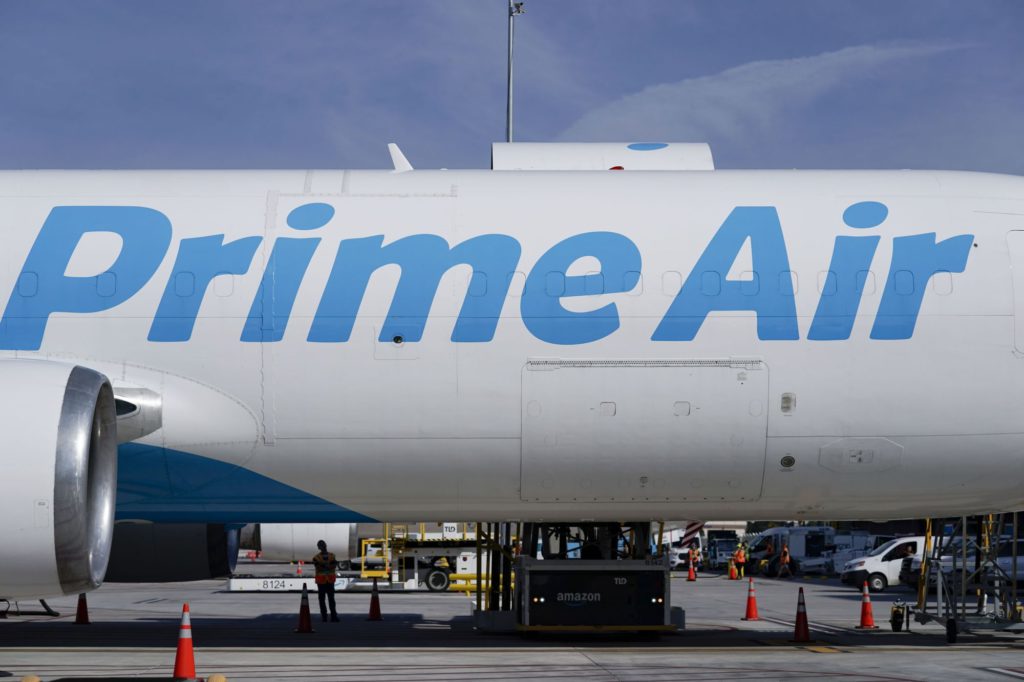
Amazon Prime Plans Inflation-Busting 31% Price Hikes in Europe

(Bloomberg) — Amazon.com Inc. said it’s increasing the cost of its Prime subscription in the UK, Germany, France, Spain and Italy as a result of inflation and associated operating costs.

The annual price of the free-shipping service will increase to £95 ($114.06) from £79 in the UK starting from Sept. 15, the company said in a statement on Tuesday. Prices will jump by 31% on average across the affected European countries and follows similar hikes in the US announced in February.

“From what we have seen in the United States, there has been no opt-out phenomenon because more and more services are being provided via Prime and this service still allows consumers to make extremely significant savings,” an Amazon spokesperson said by phone.

In April, Amazon told investors a pandemic-fueled hiring and warehouse-building binge was catching up to it as e-commerce sales growth inevitably slowed from the torrid pace of the coronavirus outbreak. Fuel and labor costs were already biting, and soaring inflation has only continued since. 

The company isn’t alone in raising its prices, however. Companies including Netflix Inc. increased the cost of its packages this year, sandwich chain Pret A Manger hiked the cost of its subscription, and Britain’s phone companies are rolling out their biggest price increases in years.

Amazon’s annual Prime subscriptions will jump from 69 euros ($70.121) to 89.90 euros in Germany, from 49 euros to 69.90 euros in France, and from 36 euros to 49.90 euros in Spain and Italy, the company said. 


More stories like this are available on bloomberg.com

©2022 Bloomberg L.P.

‘Cryptojacking’ Attacks on Financial Firms Surge, Report Says

(Bloomberg) —

Hackers are increasingly targeting financial firms such as banks and trading houses with attacks designed to use their computer systems to mine cryptocurrencies, according to cybersecurity firm SonicWall. 

The number of so-called cryptojacking attacks on financial companies more than tripled in the first half from a year earlier, SonicWall said in a report published Tuesday. The overall number of such events rose 30% to 66.7 million, the report found. 

In cryptojacking attacks, criminals use malware to gain access to computer networks, then use that computing power to mine cryptocurrencies like Bitcoin — a process that typically requires investing in costly state-of-the-art equipment and consumes vast amounts of electricity. The victim is often unaware of the intrusion.  

Read more: Bitcoin Miners’ Power Drops the Most Since China Ban Due to Heat

The financial industry suffered five times as many cryptojacking attacks as retail, the second-most targeted sector, according to SonicWall. As more finance firms move their applications to cloud-based systems, hackers are distributing malware across corporate servers and other devices, or hijacking Wi-Fi networks to gain access. 

Part of the overall increase in cryptojacking is due to the fact that governments are cracking down on so-called ransomware attacks, causing some cybercriminals to switch methods, according to the report. 

“Unlike ransomware, which announces its presence and relies heavily on communication with victims, cryptojacking can succeed without the victim ever being aware of it,” the report said. “And for some cybercriminals feeling the heat, the lower risk is worth sacrificing a potentially higher payday.”

SonicWall did note some encouraging signs. The second quarter saw the number of cryptojacking attacks drop by more than 50% from the previous three months, to 21.6 million. However, that trend follows a typical seasonal pattern where attacks slow down in the second and third quarters, only to pick up in the final three months of the year, according to the report. 

More stories like this are available on bloomberg.com

©2022 Bloomberg L.P.
Mexico’s ‘Super Peso’ Shocks Traders Who Were Betting on Wipeout

(Bloomberg) — Amid the carnage in emerging-market currencies this year, there’s been a surprisingly resilient outlier: the Mexican peso.

It’s held up as almost every peer succumbed to the dollar’s relentless push higher, an outperformance so stark that a few analysts have taken to calling it the “super peso.” 

Some of the strength stems from fairly typical drivers — a tight fiscal policy and interest-rates increases that have lifted the carry trade. But another key factor is expectations for a sea change in global trade in coming years that could bring a surge in foreign direct investment.

Mexico is luring factories from China as higher wages and a jump in transportation costs undermine what had been its competitive advantages. A Covid-induced aversion to far-flung supply chains is also pushing companies to move operations from Asia to nearer the US — the world’s biggest market — a shift known as “nearshoring.” Adding to those logistics concerns are the strict shutdowns as part of China’s Covid Zero policy and concerns that China could make a move against Taiwan that would spur sanctions from Western countries.

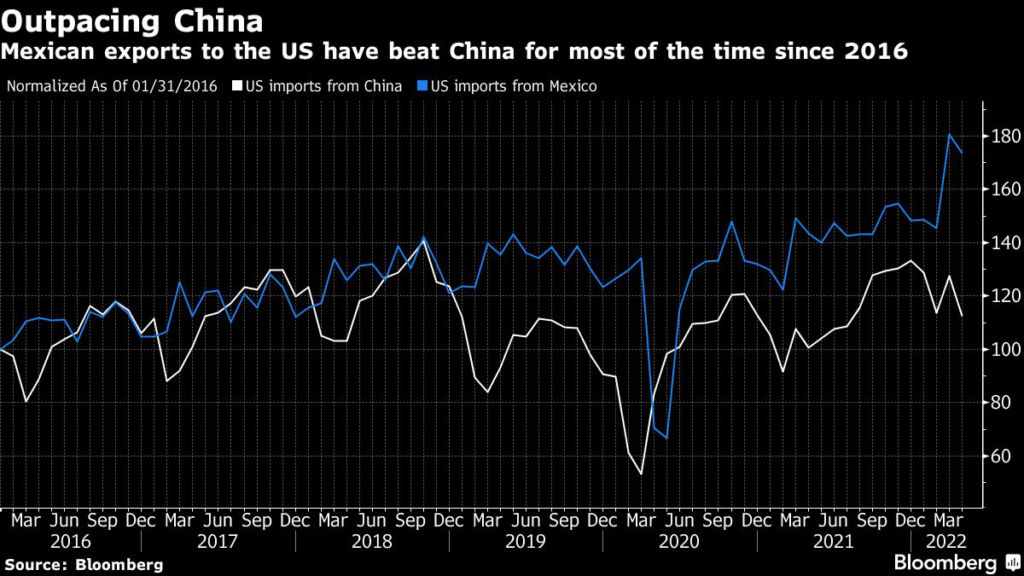
It’s the beginning of a turnaround from two decades ago, when China joined the World Trade Organization and quickly displaced Mexico as the top manufacturing hub for US companies. Now, Mexico’s exports to the US are narrowing the gap with China, and the currency market is being roiled, shocking investors who at the end of last year were forecasting the peso would be one of the world’s biggest losers in 2022.

“Mexico is beginning to reclaim the competitive advantages it lost decades ago,” said Hari Hariharan, the chief executive officer of New York-based hedge fund NWI Management. “This is going to be a decade of an ascent of Mexico at the expense of China.”

The shift can also be seen in the Mexican peso’s performance against China’s yuan. Since the height of the pandemic selloff in March 2020, the peso has rallied about 15% versus its Chinese counterpart, one of the best performances among major currencies. Nearshoring will accelerate this trend in the coming decade, according to Hariharan.

The boom can be seen across Mexico’s industrial north. From Tijuana on the West Coast to Matamoros at the southern tip of Texas, bulldozers and excavators are everywhere. At least six suppliers for Tesla Inc. — Taiwanese companies EnFlex Corp. and Quanta Computer, French firm Faurecia SE, Germany’s ZF Friedrichshafen AG and APG Mexico — have set up in the state of Nuevo Leon since 2021. 

Meanwhile, China’s Contemporary Amperex Technology Co., the world’s biggest maker of batteries for electric vehicles, is considering locations in Mexico for a plant to supply automakers, Bloomberg reported this month.

In a year during which the dollar has climbed to a record in its best annual run since 2015, the peso has gained less than 1% to about 20.5 per dollar, marking the second-best performance among major currencies behind Brazil’s real.

Still, some skeptics doubt the shift to Mexican production will be significant enough to form the basis for long-term gains for the currency.

The dollar value of Mexico’s exports to the US still trail China’s by a large margin, even as the gap grows ever narrower. And there have been times in the past when analysts thought Mexico was poised for a breakout that didn’t come to fruition. Most notably, the predictions surfaced in 2007 and 2008 as surging oil prices raised transportation costs, then again when US President Donald Trump rattled trade relations with China during his tenure in office.

More recently, Mexican President Andres Manuel Lopez Obrador’s nationalist energy policies and skirmishes with companies have been seen as a deterrent to investment. Last week, the US said Mexico’s energy policies violated North America’s free-trade deal, though there was little fallout in the peso market. 

In the first quarter of this year, Mexico reported a record inflow of $19.4 billion in foreign direct investment, up 5.8% from the same period of last year after excluding one-off mergers. Vacancy rates at industrial parks in Juarez, Reynosa and Monterrey hit record lows in the first quarter on nearshoring demand, Credit Suisse analysts said in a June report. During his trip to Washington this month, Lopez Obrador forecast US investment in the country would reach $40 billion between now and 2024. 

Mexico’s exports to the US have been growing faster than its Asian rival’s for most of the time since 2016. The Inter-American Development Bank in June 2022 estimated nearshoring could add up to $35.3 billion a year more in annual exports from Mexico.

Mexico exported $422 billion to the US in the past 12 months, $121 billion less than China. That gap was almost $200 billion four years ago. 

The transformation of supply chains will take time but the snarls caused by China’s zero-Covid policy will push companies to diversify operations on a “just-in-case basis,” said John Paul Lech, a portfolio manager at Matthews International Capital Management in San Francisco. 

“Mexico is in a good position,” Lech said. “Nearshoring could be a theme that impacts Mexico over longer durations of time.”

Peso Undervalued

The peso’s relatively cheap valuation is an additional lure for foreign investors. On a trade-weighted basis, the currency has been on the weaker side of its 10- and 20-year averages since 2015, according to data compiled by Bank for International Settlements. China’s trade-weighted exchange rate, on the other hand, now hovers near seven-year highs.

“We see the issue of nearshoring as a medium- to long-term positive factor for the MXN,” HSBC FX strategists Joseph Incalcaterra and Clyde Wardle wrote in a July 14 note. 

While US recession risks may weigh on the peso in the short term, resilient balance of payment flows should allow the currency to outperform regional peers, they wrote. The bank sees the peso gaining about 6% to 19.25 per dollar by the end of next year, they wrote.

More stories like this are available on bloomberg.com

©2022 Bloomberg L.P.
Close Bitnami banner
Bitnami