Bloomberg

THG Shares Dip After SoftBank Investment Option Is Ditched

(Bloomberg) — THG Plc shares fell after the British online shopping emporium said it had ended a deal with SoftBank Group Corp. due to “global macroeconomic conditions.”

SoftBank, which became a major investor in THG last year, had the right to exercise an option to buy a 20% stake in  the UK company’s Ingenuity business, which helps third party businesses sell goods online. THG said the option arrangement was terminated by mutual agreement, according to a statement Tuesday.

THG shares fell as much as 6% before paring back slightly. 

Speculation has been mounting for months that SoftBank, one of the world’s largest strategic investors, would not exercise the option.

When SoftBank first invested in THG and was granted the right to take a near 20% stake in Ingenuity it helped bolster the e-commerce group’s once lofty valuation which has since been plummeting as concerns over its business model and governance controls mount.

Founded in 2004 by Matthew Moulding and John Gallemore, THG, formerly known as The Hut Group, started out selling CDs but today operates hundreds of websites selling beauty, skincare and health-food products as well as helping rivals sell online via Ingenuity.

Moulding has kept a tight grip on THG as a major shareholder, landlord and chief executive and only recently relinquished the role of chairman. He has pledged to give up his golden share, which allows him to veto a takeover, smoothing the way for THG to move its listing to the premium segment of London’s Stock Exchange. 

Takeover speculation has swirled around THG since November when Moulding said he regretted floating the company and hinted he may take the business private again. The company has already rebuffed two separate takeover approaches from entrepreneur Nick Candy and a consortium of Belerion Capital and hedge fund King Street Capital Management. 

THG Finds Out What Happens to Instagram Fame in a Market Crash (1)

One of the conditions for SoftBank to exercise its option was for THG to carve out Ingenuity from the rest of its business. 

THG said Tuesday it had separated its key trading divisions which will simplify the corporate structure and “provide flexibility to enter into future partnerships.” 

The company provided no further information on why the agreement with SoftBank had been terminated. 


(Updates with additional information throughout)

More stories like this are available on bloomberg.com

©2022 Bloomberg L.P.

Stocks, Futures Mixed Ahead of Earnings, Fed: Markets Wrap

(Bloomberg) — Stocks and US futures were mixed on Tuesday amid caution in global markets ahead of the Federal Reserve interest-rate hike.

European energy and mining stocks rallied with oil and metals, while retailers and banks fell. UBS Group AG dropped more than 5% after reporting weaker-than-expected profit, while Walmart Inc. tumbled in US premarket trading on its surprise warning and Alibaba Group Holding Ltd. jumped amid plans to seek a primary listing in Hong Kong. 

Traders are braced for a widely expected 75 basis points Fed rate rise on Wednesday, part of campaign to tackle inflation, as well as corporate reports from the likes of Apple Inc. and Alphabet Inc. They’re also assessing risks including ongoing disruptions to European gas supplies from Russia and China’s Covid curbs and property woes. 

Commodities prices are surging as signs of tightness outweigh economic concerns. European natural gas rose to the highest level in more than four months, while crude and copper jumped. Energy ministers from the European Union’s 27 member states are meeting in Brussels to wrangle over backing a proposal from the European Commission to regulate consumption.  

Treasury yields and a dollar gauge were little changed. 

For Katerina Simonetti, an adviser at Morgan Stanley Private Wealth Management, the litany of risks exposes the vulnerability of the 6% rebound in global shares from June lows.

“This is most likely a bear market rally and there are significant risks still facing this market,” she said on Bloomberg Television. “We’re probably going to be seeing a lot of choppiness and potentially some further declines in the market before the year end.”

Musk, Tesla and Twitter are this week’s theme of the MLIV Pulse survey. Also share your views on the S&P 500’s biggest stocks. Click here to get involved anonymously.

Here are some key events to watch this week:

  • Alphabet, Apple, Amazon, Microsoft, Meta earnings due this week
  • US new home sales, Conf. Board consumer confidence, Tuesday
  • IMF’s world economic outlook update, Tuesday
  • EU energy ministers emergency meeting, Tuesday
  • Fed policy decision, briefing, Wednesday
  • Australia CPI, Wednesday
  • US GDP, Thursday
  • Euro-area CPI, Friday
  • US PCE deflator, personal income, University of Michigan consumer sentiment, Friday

Some of the main moves in markets:

Stocks

  • The Stoxx Europe 600 was little changed as of 10:40 a.m. London time
  • Futures on the S&P 500 fell 0.3%
  • Futures on the Nasdaq 100 fell 0.3%
  • Futures on the Dow Jones Industrial Average fell 0.4%
  • The MSCI Asia Pacific Index fell 0.6%
  • The MSCI Emerging Markets Index fell 0.3%

Currencies

  • The Bloomberg Dollar Spot Index rose 0.2%
  • The euro fell 0.4% to $1.0178
  • The Japanese yen was little changed at 136.58 per dollar
  • The offshore yuan fell 0.1% to 6.7622 per dollar
  • The British pound fell 0.2% to $1.2014

Bonds

  • The yield on 10-year Treasuries declined two basis points to 2.77%
  • Germany’s 10-year yield declined five basis points to 0.97%
  • Britain’s 10-year yield declined two basis points to 1.92%

Commodities

  • Brent crude rose 1.4% to $106.65 a barrel
  • Spot gold was little changed

More stories like this are available on bloomberg.com

©2022 Bloomberg L.P.

JD, Baidu Among Firms That May Follow Alibaba’s Listing Move

(Bloomberg) — JD.com Inc. and Baidu Inc. are among Chinese firms that may follow Alibaba Group Holding Ltd. in applying for a Hong Kong primary listing, as they seek to attract mainland investors and hedge against the risk of being kicked off US exchanges.

Over the past year, Chinese companies from Li Auto Inc. to XPeng Inc. have increasingly opted for a dual-primary listing in both the US and Hong Kong. While this is more costly, the elevated status allows their stocks to be included into the city’s trading links with Shenzhen and Shanghai bourses, giving direct access to a legion of mainland investors.

That’s a huge benefit to tech shares struggling to lure global investors as regulatory risks still loom large. Stock benchmarks of Chinese tech firms traded in Hong Kong and the US have fallen more than 55% from their 2021 peaks.

Chinese companies “are likely using the Hong Kong listing as a relief valve,” Brian Freitas, an analyst for independent research platform Smartkarma, wrote in a note. Firms with secondary listings in the city “could look to convert that to a dual-primary listing before they are forced to do so.”

Of the 24 Chinese firms listed on both New York and Hong Kong exchanges, eleven have either a primary status in the Asian city or are taking steps toward that goal, based on data compiled by Goldman Sachs Group Inc. The rest have opted for secondary.

Among the most recent convert was Zai Lab Ltd. in June, which was subsequently included in stock connect schemes in July. Bilibili Inc. plans to switch status in October.  

Alibaba Seeks Primary Hong Kong Listing to Woo Chinese Money

The clock is ticking for some 200 Chinese firms to avoid a congressionally imposed 2024 deadline for kicking businesses off the New York Stock Exchange and Nasdaq Stock Market unless American regulators get full access to inspect their audit work papers. 

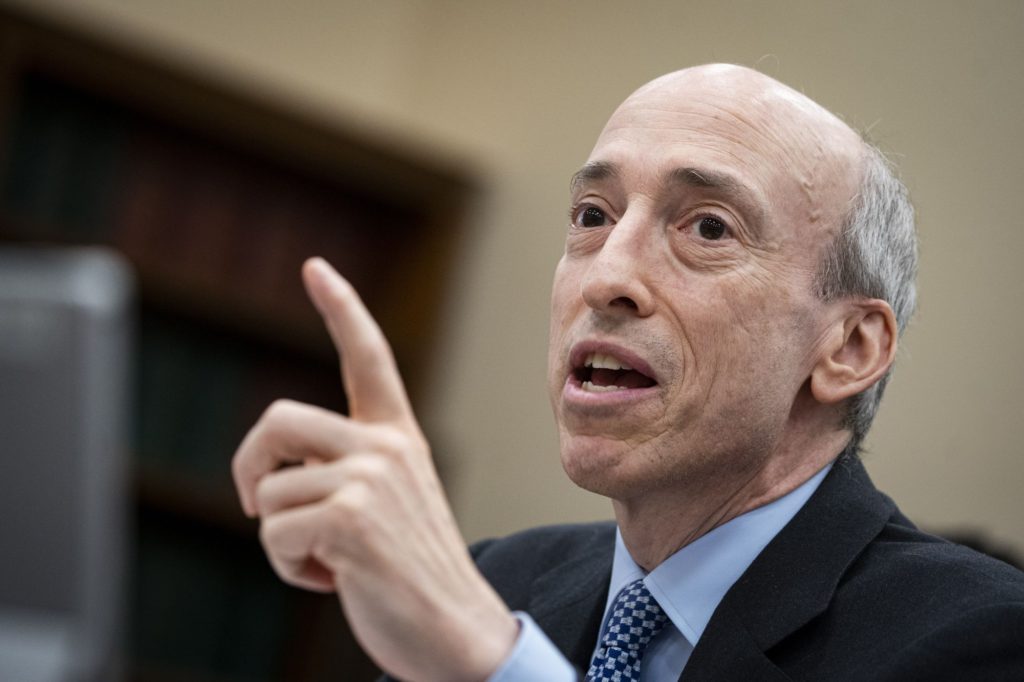
Securities and Exchange Commission Chair Gary Gensler said last week it’s unclear if American and Chinese authorities will reach a deal on the matter but added that talks between the two sides had been “constructive.”

While Beijing is reportedly exploring a new way to sort its US-listed firms to help them meet American regulatory requirements, a so-called homecoming listing to Hong Kong or potentially mainland China remains a straightforward backup option for the companies and authorities. 

Given rising tensions with Washington, Beijing may also find it easier to help grow and manage the nation’s influential tech firms by moving their main listing venue to Hong Kong, especially as it further tightens its grip on the city. 

“I think it hopefully shows that the very strong regulations on the tech sector are starting to soften a little bit,” said George Sun, head of global markets for Greater China at BNP Paribas China Ltd., in a Bloomberg TV interview. “It allows some of these companies that were in the headlines to get back into business and be re-centered here in Asia.”

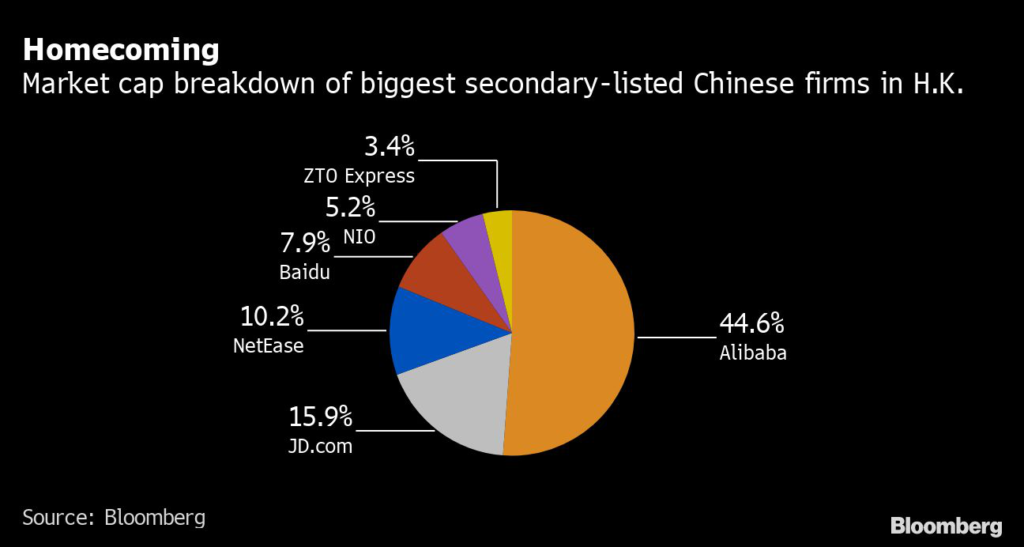
Here’s a list of US-traded Chinese firms that currently have secondary listings in Hong Kong, ranked by their market capitalization:

(Updates with analyst comments and a new chart)

More stories like this are available on bloomberg.com

©2022 Bloomberg L.P.

Kirkland & Ellis Is the Go-To Law Firm for Crypto Bankruptcies

  • Listen to Bloomberg Crypto on the iHeartRadio App
  • Listen to Bloomberg Crypto on Apple Podcasts
  • Listen to Bloomberg Crypto on Spotify  

(Bloomberg) — There’s an old joke in finance: when companies fight, lawyers win. And right now in crypto, lots of companies are fighting – many for their corporate lives. Kirkland & Ellis, one of the biggest law firms in the world by revenue, has emerged as a major player in crypto. Earlier this month, the firm signed on to work on the bankruptcy filings for both Celsius Network and Voyager Digital. There’s relatively little case law that addresses how crypto assets – and their holders – should be treated in bankruptcy. That means that any legal precedents set now could have wide-ranging implications for an industry notorious for its boom-and-bust cycles. 

Joining this episode is Bloomberg reporter Jeremy Hill to discuss how Kirkland & Ellis is tackling crypto bankruptcies. 

Follow us on Twitter @crypto, and subscribe to the Bloomberg Crypto Newsletter at https://bloom.bg/cryptonewsletter


More stories like this are available on bloomberg.com

©2022 Bloomberg L.P.

Porsche IPO, Software Fix: What Awaits VW’s New CEO

(Bloomberg) — As much of Volkswagen AG takes a summer break the next few weeks, Oliver Blume, the carmaker’s designated chief executive officer, will be staring down an extensive to-do list.

A diverse set of pressing issues await the 54-year-old ascending to the job Herbert Diess has been ousted from. Lead among them will be listing Porsche AG — VW’s most prized asset — amid the worst climate for initial public offerings in years, and fixing protracted problems at the software division postponing new electric Porsches and Audis.

Diess’s aggressive strategies for EVs, software and new-mobility offerings set VW on a path the company’s billionaire owners praised even as they pushed him out of the CEO role. It’s now up to Blume to follow through in transforming the world’s second-biggest carmaker to better contend with up-and-coming Tesla Inc. and incumbents Toyota Motor Corp. and Stellantis NV.

Here are some of the challenges awaiting Blume:

Taking Porsche Public

The industrial logic behind listing a minority stake in VW group’s most profitable major brand is sound. The IPO, which could be Europe’s largest ever, must succeed to finally boost VW’s languishing valuation.

But in addition to governance concerns, there’s growing fear that recession risks, surging energy costs and geopolitical tension ultimately will drag on Porsche’s valuation. In 2019, VW’s listing of its truck unit Traton SE was a disappointment.

Harnessing Software

VW’s efforts to build its own software operation has been a bruising experience of strategy shifts, executive purges and product delays.

Tesla is way ahead in regularly deploying over-the-air updates that add capabilities and improve the performance of its EVs after they leave the showroom, and attempts by traditional rivals like Toyota to replicate this have been less messy. Seizing the opportunities software brings, including new forms of revenue, will be the industry’s next frontier.

Keeping US Growth Going

VW has finally stopped losing money in America, but the company remains a long way from closing the gap to Toyota, General Motors Co. or Ford Motor Co. To better compete with those market leaders and upstarts like Rivian Automotive Inc., the automaker is reviving the off-road brand Scout that will offer an electric pickup and rugged SUV.

As for the luxury segment, Audi has long sought to take on Mercedes-Benz AG and BMW AG on a global scale, but has no production footprint in the US.

Turning China Around

VW has been losing share in its biggest market due to poor handling of the chip shortage and a dearth of digital features that China’s tech-savvy drivers have increasingly come to expect.

Tesla’s new Shanghai factory isn’t the only thorn in VW’s side, as local manufacturers’ products also are catching on. VW can’t afford dwindling profits from the Chinese ventures it’s counting on to finance its EV ambitions.

Challenging Tesla

Whereas VW has flailed during the chip crisis and struggled to keep production lines running, the US electric-car maker has maintained steady growth through the supply-chain turmoil. 

After quickly turning the Shanghai plant into its most productive globally, CEO Elon Musk has added factories in Austin, Texas, and near Berlin this year. Tesla’s aggressive expansion is making VW’s electric-car project Trinity, which includes a 2 billion-euro ($2 billion) German factory, look all the more critical.

Containing Controversy

Within days of being named the new CEO, Blume apologized for comments he made during an internal event last month about Christian Lindner, Germany’s finance minister.

Blume boasted that he had been constantly exchanging messages with Lindner months ago when the government was negotiating a coalition agreement allowing for new vehicles in the coming years to be powered by synthetic fuels, which aren’t as clean as EVs. Blume apologized over the weekend, saying he oversimplified the exchange and hadn’t sought to influence Lindner.

(Corrects Blume’s age in the second paragraph.)

More stories like this are available on bloomberg.com

©2022 Bloomberg L.P.

Coinbase Faces SEC Investigation on Cryptocurrency Listings

(Bloomberg) — Coinbase Global Inc. is facing a US probe into whether it improperly let Americans trade digital assets that should have been registered as securities, according to three people familiar with the matter. 

The US Securities and Exchange Commission’s scrutiny of Coinbase has increased since the platform expanded the number of tokens in which it offers trading, said two of the people, who asked not to be named because the inquiry hasn’t been disclosed publicly. The probe by the SEC’s enforcement unit predates the agency’s investigation into an alleged insider trading scheme that led the regulator last week to sue a former Coinbase manager and two other people. 

“We are confident that our rigorous diligence process — a process the SEC has already reviewed — keeps securities off our platform, and we look forward to engaging with the SEC on the matter,” Chief Legal Officer Paul Grewal said on Twitter. The SEC declined to comment.

The drumbeat in Washington for US regulators to do more to oversee crypto has grown louder as digital currencies have tumbled from all-time highs, erasing hundreds of billions of dollars in market value. SEC Chair Gary Gensler has homed in on trading platforms and argued that they should do more to protect retail investors.

Coinbase shares fell as much as 4.8% in premarket trading on Tuesday. The stock has lost almost three-quarters of its value this year. 

As the largest US trading platform, Coinbase lets Americans trade more than 150 tokens. If those products were deemed securities, the firm could need to register as an exchange with the SEC.

Coinbase has repeatedly sparred with the agency over how it oversees the industry, and the firm last week called on the SEC to propose clearer rules. Meanwhile, after taking a relatively cautious approach for years, Coinbase has boosted its token offerings. 

Tensions bubbled up further July 21 when the SEC accused one of the company’s former employees of violating its insider-trading rules by leaking information to help his brother and a friend buy tokens just before they were listed on the platform. While the agency didn’t allege wrongdoing by Coinbase, the SEC said it had determined that nine of the dozens of digital tokens the men traded were securities — including seven the exchange says it lists. 

Federal prosecutors in Manhattan also charged the three men with wire fraud conspiracy and wire fraud. 

In response, Coinbase put out an entry on its blog titled: “Coinbase does not list securities. End of story.” Grewal pointed out that the Justice Department chose not to file securities fraud charges, despite reviewing the same facts as the SEC. He also said before listing tokens Coinbase analyzes whether an asset could be considered a security and “also considers regulatory compliance and information security aspects of the asset.”

Investigations by the SEC’s enforcement unit can lead to the regulator suing companies or individuals. 

Coinbase, which went public last year, previously acknowledged that it has faced scrutiny from the regulator. In its first-quarter earnings report, the firm said it had “received investigative subpoenas from the SEC for documents and information about certain customer programs, operations, and intended future products, including the company’s stablecoin and yield-generating products.”

To decide if a digital asset is a security, the SEC applies a legal test, which comes from a 1946 US Supreme Court decision. Under that framework, the agency considers a token generally to be under SEC purview when it involves investors kicking in money to fund a company with the intention of profiting from the efforts of the organization’s leadership. 

Gensler has long argued that many cryptocurrencies fall under the regulator’s jurisdiction and that firms offering them should register with his agency. 

However, the SEC mostly hasn’t said specifically which coins are securities, and exchanges decide whether to list an asset. Platform operators are seeking to avoid offering those deemed securities because doing so could trigger investor-protection rules, some of which crypto enthusiasts say are incompatible with digital assets. 

(Updates with share reaction in fifth paragraph.)

More stories like this are available on bloomberg.com

©2022 Bloomberg L.P.

Alibaba Seeks Primary Hong Kong Listing as US Expulsion Looms

(Bloomberg) — Alibaba Group Holding Ltd. will seek a primary listing in Hong Kong, entrenching the financial hub’s status as an alternative to US markets ahead of a potential exodus of Chinese companies from New York.

The switch could provide a template for the roughly 200 US-traded Chinese companies from JD.com Inc. to Baidu Inc. that face delisting should Washington and Beijing fail to agree on allowing US regulators to review their financial audits. It also paves the way for investors in China to directly buy shares of the country’s most prominent e-commerce company for the first time. 

A primary listing would allow Alibaba to seek inclusion in the Stock Connect link with the Shanghai and Shenzhen exchanges. That could expand the $285 billion giant’s investor base after a year-long selloff triggered by China’s economic slowdown and Beijing’s crackdown on its most powerful internet firms.

The move, expected by year-end, will grant hundreds of millions of investors in mainland China direct access to one of the country’s most storied names, which in 2014 made waves when it debuted in New York as the largest-ever initial public offering. Alibaba’s action could encourage peers to follow suit, helping cement Hong Kong as an alternative venue now that American regulators are threatening to toss Chinese companies off US bourses unless they comply with auditing rules.


Alibaba rose as much as 6.5% in Hong Kong on Tuesday, while its US stock jumped 5.1% in pre-market trading in New York. Bourse operator Hong Kong Exchanges and Clearing Ltd. climbed more than 3.9%. SoftBank Group Corp., Alibaba’s largest shareholder, rose more than 3% in Tokyo.

“The timing may be right for investor interest as it aligns with the fading of the tech regulatory crackdown,” said Marvin Chen, a strategist at Bloomberg Intelligence. “More broadly, Alibaba is paving a path for US ADRs to move away from US exchanges, introduce domestic capital, and to be less reliant on global foreign investors.”

The US and China have been at odds for two decades over a legal requirement that American regulators get full access to inspect audit work papers. That measure is meant to protect investors from accounting fraud and other malfeasance. Securities and Exchange Commission Chair Gary Gensler said this month it’s unclear if American and Chinese authorities will reach a deal to avoid a congressionally imposed 2024 deadline for kicking businesses off the New York Stock Exchange and Nasdaq.

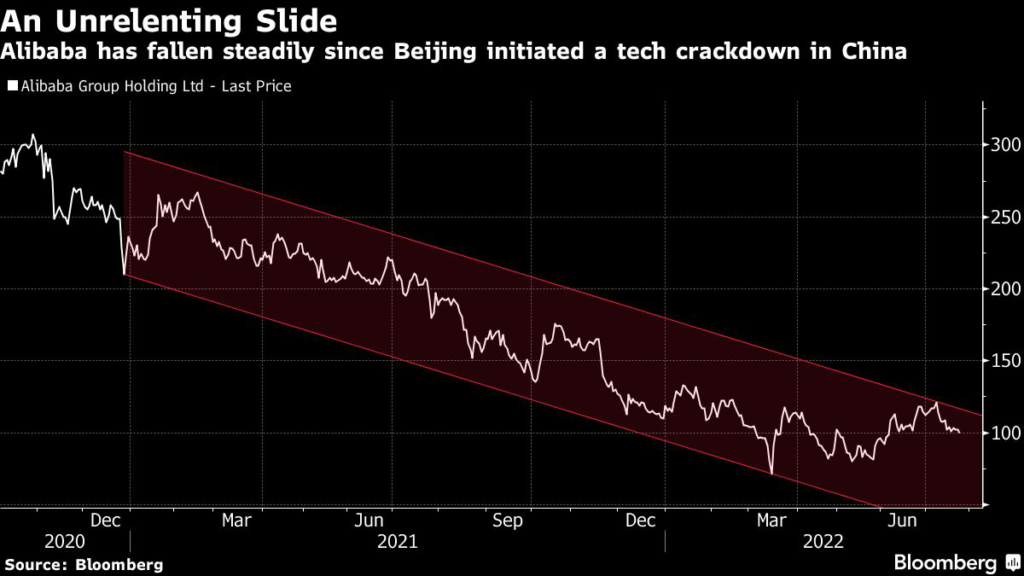
The threat of losing direct access to US investors has weighed on Chinese stocks. Alibaba itself has shed some two-thirds of its value since a 2020 peak, pummeled by a regulatory crackdown that sought to rein in anti-competitive behavior across the internet sector. It currently has a secondary listing on the Hong Kong bourse, but has seen a rise in public float and transaction volume on the exchange there, it said in a statement on Tuesday. Its average daily trading volume in Hong Kong was about $700 million, compared to about $3.2 billion in the US.

“Alibaba’s move might point to internet companies preparing for a fall-back position, in case they have to delist from the US,” said Redmond Wong, market strategist at Saxo Capital Markets.

HKEX Chief Executive Officer Nicolas Aguzin has said more companies with secondary shares in Hong Kong are considering primary listings, while others may be forced to do so by market rules as more of their volume migrates to the city. 

The prospect of Stock Connect inclusion for companies like Alibaba has been a subject of intense speculation among traders in Hong Kong, which currently excludes companies with both secondary listings and weighted voting rights from its mainland trading links. It highlights the urgency to seek new investors ahead of possible delistings from American exchanges.

What Bloomberg Intelligence Says

Alibaba’s proposed primary listing in Hong Kong would facilitate stock purchases by mainland Chinese via a Stock Connect program, and over time could lead to a significant rise in mainland money in the stock vs. levels with its current secondary listing. Management will therefore showcase the firm’s growth engines and developments on the mainland more actively, we believe; this could help allay concern about Alibaba’s longer-term outlook amid uncertainty over the Chinese economy and regulation.

– Catherine Lim, analyst

Click here for the research.

While some market participants had hoped the exchange would relax rules that bar such companies, a primary listing is emerging as an alternative path. Bilibili Inc. in July won shareholder approval to convert its secondary Hong Kong listing status to dual-primary, while Zai Lab Ltd. completed the procedure in June before joining the Stock Connect scheme in July.

A dual-primary listing on the Hong Kong Exchange is often more costly and requires stricter reporting rules than a secondary listing. Companies need to provide to the exchange an expected date when they will fulfill requirements, and a detailed plan for and arrangements on how it will comply with the rules.

Unlike companies with a primary listing, firms with a secondary listing in the city are exempted from certain rules and don’t have to disclose things such as financial guarantees provided to affiliates and stock pledges made by the controlling shareholder.

Other Chinese companies have opted to list directly in Hong Kong under dual-primary status. That was the case for electric vehicle makers XPeng Inc. and Li Auto Inc., which began trading in the Asian financial hub over the past year.

“This is a massive move for Alibaba, given it is the biggest secondary listing in Hong Kong,” said Willer Chen, an analyst at Forsyth Barr Asia Ltd. Inclusion in the Stock Connect “can lead to a more diversified investor base for Alibaba.”

(Updates with ADR trading in the fifth paragraph)

More stories like this are available on bloomberg.com

©2022 Bloomberg L.P.

Eutelsat, OneWeb Agree $3.4 Billion Deal to Rival SpaceX

(Bloomberg) — Eutelsat Communications SA and OneWeb Ltd. are set to combine in an all-share deal valuing the UK satellite operator at $3.4 billion, a step toward creating a European champion to rival the likes of Elon Musk’s SpaceX.

OneWeb shareholders will hold 50% of Eutelsat, which will continue to be listed in Paris and will ask to be listed on the London Stock Exchange, the companies announced in a statement Tuesday. The announcement confirms talks made official on Monday and first reported by Bloomberg last week.

The deal is the latest merger in what has become a race by corporations and governments to offer rapid connectivity via low-orbit satellites. Both the UK and French governments have stakes in OneWeb and Eutelsat respectively, and the UK will continue to own a special share, giving it certain veto rights over strategic decisions such as the location of the firm’s headquarters.

Although shareholders will split the company, the deal bears the hallmarks of a takeover by Eutelsat. OneWeb will keep its own branding and operate the low-orbit business of the combined group, which will have a primary listing in Paris. Eutelsat chairman Dominique D’Hinnin is set to be chairman of the combined entity, with his OneWeb counterpart Sunil Bharti Mittal as co-chair and vice president. Eutelsat Chief Executive Officer Eva Berneke will run the new group. 

The UK government has agreed a range of national security rights, and for OneWeb to prefer procurement for manufacturing from businesses in the UK, according to a statement from the UK government. Both the UK and France will have board representation. 

Founded in 2012, OneWeb collapsed in 2020 when lead investors pulled their money at the height of the coronavirus pandemic. The UK government put forward about $500 million as part of a $1 billion partnership with Bharti Global, in a deal pushed by Dominic Cummings, a former adviser to Prime Minster Boris Johnson, under the guise of protecting a potentially vital tech asset following Brexit. 

The deal will give Eutelsat a “unique position” on the market and has the potential to generate 1.5 billion euros ($1.53 billion) in increased revenue as well as investments and cost synergies, the companies said. 

How Musk Sparked a Race to Send Satellites into ‘LEO’: QuickTake

Investor reaction to the deal was negative on Monday, with Eutelsat shares dropping 18% after announcing deal talks. Shares remained flat on Tuesday. Eutelsat will also suspend its dividend for two years after this year, to help pay for the next generation of OneWeb’s satellite launches. 

The merger presents concerns around short-term cash burn and government contracts, Deutsche Bank analyst Roshan Ranjit said in a research note. 

Eutelsat and OneWeb have also contrasting relationships with Russia. OneWeb said in March that it will use SpaceX to launch satellites after Russia blocked deployments planned with French rocket company Arianespace SA.

Eutelsat has continued to provide select satellite services to Russia, even after pressure from European regulators. It reaches 50% of homes across the Russian and surrounding region, according to its website.

“Eutelsat has a policy of neutrality,” said Berneke on a call with reporters on Tuesday. “We comply with all sanctions. We reduced the number of channels we broadcast.”

Eutelsat, which originally agreed to pay $550 million in cash for a 24% stake in OneWeb in April 2020, operates satellites for clients like government and TV broadcasters from higher geostationary orbit. These spacecraft do offer the same quick connection speeds as those from low-orbit satellites.

The new company will combine Eutelsat’s geostationary earth orbit satellites and OneWeb’s low orbit satellites. Berneke said Eutelsat’s “initial investment in OneWeb was underpinned by our strong belief that the future growth in Connectivity will be driven by both GEO and LEO capacity.”

OneWeb shareholders would receive 230 million newly issued Eutelsat shares representing 50% of the enlarged share capital. The combined entity is set to have a 1.2 billion euros revenue and 0.7 billion euros EBITDA for fiscal 2022-2023. On Tuesday, Eutelsat published results showing 1.15 billion euros full year revenue, declining by 6.7%, in line with estimates.

(Updated with additional context, shares, analyst note.)

More stories like this are available on bloomberg.com

©2022 Bloomberg L.P.

UK ‘Love Affair’ With Music Streaming Delivers for Britons: CMA

(Bloomberg) — The music streaming market dominated by a handful of major players is giving consumers a fair shake, the UK’s antitrust watchdog said in a much anticipated report, as it pulled back from a deeper investigation into the likes of Spotify Technology SA and Apple Inc. 

“The concentrated” nature of the market dominated by just a handful of players is not “currently causing consumers harm,” and “labels nor streaming services appear to be making sustained excess profits,” the Competition and Markets Authority said in a statement on Tuesday. 

“On balance, the CMA’s initial analysis indicates that the market is delivering good outcomes for consumers,” it said. The initial review will be a relief for record labels and streamers who have long come under fire from artists for not paying them enough.

The UK’s “love affair” with music was said to be the reason the agency opened the probe earlier this year, investigating whether the sector was working for British audiences. The sweeping review looked at the roles played by both record labels and music streaming services including Spotify and those provided by Amazon.com Inc., Apple and Alphabet Inc.

Still, Sarah Cardell, interim chief executive of the CMA, said even if consumers were being treated fairly, there were still concerns about what artists got out of streaming music.

“For many artists it is just as tough as it has always been, and many feel that they are not getting a fair deal,” she said. “Our initial analysis shows that the outcomes for artists are not driven by issues to do with competition, such as sustained excessive profits.”

The CMA’s study is still live and will continue accepting feedback up until Aug. 19

More stories like this are available on bloomberg.com

©2022 Bloomberg L.P.
Philippine Tycoon’s Empire Debt in Focus After Default Scare

(Bloomberg) — A dispute over a mere $4 million debt payment involving a Philippine conglomerate is flagging broader concerns about the group’s rapid borrowing in recent years, just as growing threats to the global economy prompt rising risks of nonpayment.

Dennis Uy, an oil trader from the southern city of Davao who counts former president Rodrigo Duterte as a family friend, built a business empire spanning oil, shipping, casinos and telecommunications. That rapid expansion was financed by borrowing that’s now in the spotlight.

A unit of his holding company Udenna Corp. got served with a default notice last week from banks as a $4 million liability was due to the airport authority in Clark, northwest of Manila. The authority owns land that Uy is developing as a business district under a long-term lease. 

While Udenna said Monday that the matter had been settled, warning lights are flashing and highlight broader risks in the country. The Philippines remains one of Asia’s fastest growing economies, but the quickest inflation since 2018, rising interest rates and a weaker currency are threatening its pandemic recovery. 

A measure of bankruptcy risk, known as the Altman-Z score, for three companies owned by the businessman shows greater risks than the average for the MSCI Philippines Index, which is already the worst in Southeast Asia, according to data compiled by Bloomberg. 

Telecommunications company Dito CME Holdings Corp. has a -0.94 reading, compared with the average of 2.15 for companies in the MSCI Philippine Index. A score of 1.8 or below indicates bankruptcy risk and a number above 3 suggests sound footing. Shipping firm Chelsea Logistics & Infrastructure Holdings Corp. is at -0.52 and casino venture PH Resorts Group Holdings Inc. at -0.35. Phoenix Petroleum Philippines Inc. is the strongest at 1.87.

“While it’s good to know that the matter of the default notice has been resolved, it is too early to say that Uy’s already over the hump,” Astro del Castillo, managing director at First Grade Finance Inc. “The question over his debt will put off some investors as it will take time to be resolved and it’s getting addressed at a time of economic uncertainty. There could be others in the same boat since the business environment has turned sour but for now he’s at the center.”

Uy hails from Davao del Sur, the same province in the southern island of Mindanao as the former president, and was a donor to the leader’s campaign. He kicked off a deal spree following Duterte’s election in 2016, buying a stake in logistics company 2GO Group Inc. and consolidating his shipping business into Chelsea Logistics.

Uy said in an interview with Bloomberg in 2017 that “we’re aggressive in expanding our businesses because we believe in the president’s economic agenda,” as Duterte embarked on a large-scale infrastructure plan.  

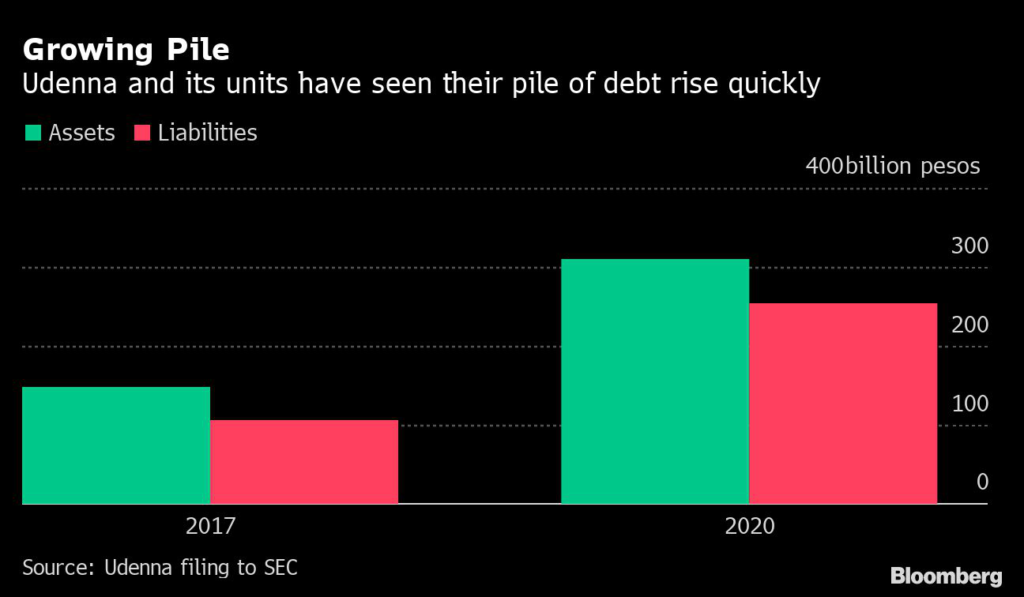
With that rapid growth came a mushrooming of debt. Udenna and its units saw their liabilities more than double over a three-year period and amounted to 254 billion pesos ($4.6 billion) at the end of 2020, according to the latest available filings. There are numerous corporate groups in the Philippines with bigger debt loads, with the figure putting Udenna only within the top 20 of listed firms’ liabilities that year. But the pace of expansion in obligations in Uy’s empire has stirred concerns.

Calls to Udenna spokesman Leo Venezuela went unanswered and there was no immediate reply to emailed questions about the group’s financial situation. A call to Udenna President Marty Escalona went unanswered and there was no immediate reply to a message.

In the default notice that Udenna received on July 22 against its affiliate, Clark Global City Corp., banks led by BDO Unibank Inc., the Philippines’ biggest lender, said the firm had failed to pay $4 million in debt related to the airport lease agreement.

In its statement on Monday, Udenna said that the matter was settled “to the satisfaction of the majority lender and the consortium banks.”

Creditors to Udenna and its units have included BDO, China Banking Corp., Philippine National Bank and Bank of China, as well as state lenders Land Bank of the Philippines and Development Bank of the Philippines, according to annual reports from Uy’s companies.

The Philippine banking system is “quite strong whatever happens,” central bank Governor Felipe Medalla said on Tuesday when asked about the Udenna default notice. “There are many creditors. The point is, there are rules and those rules are best followed by everyone.”

More stories like this are available on bloomberg.com

©2022 Bloomberg L.P.
Close Bitnami banner
Bitnami