
Bloomberg

Whirlpool Cuts Full-Year Forecast Less Than Feared; Shares Gain

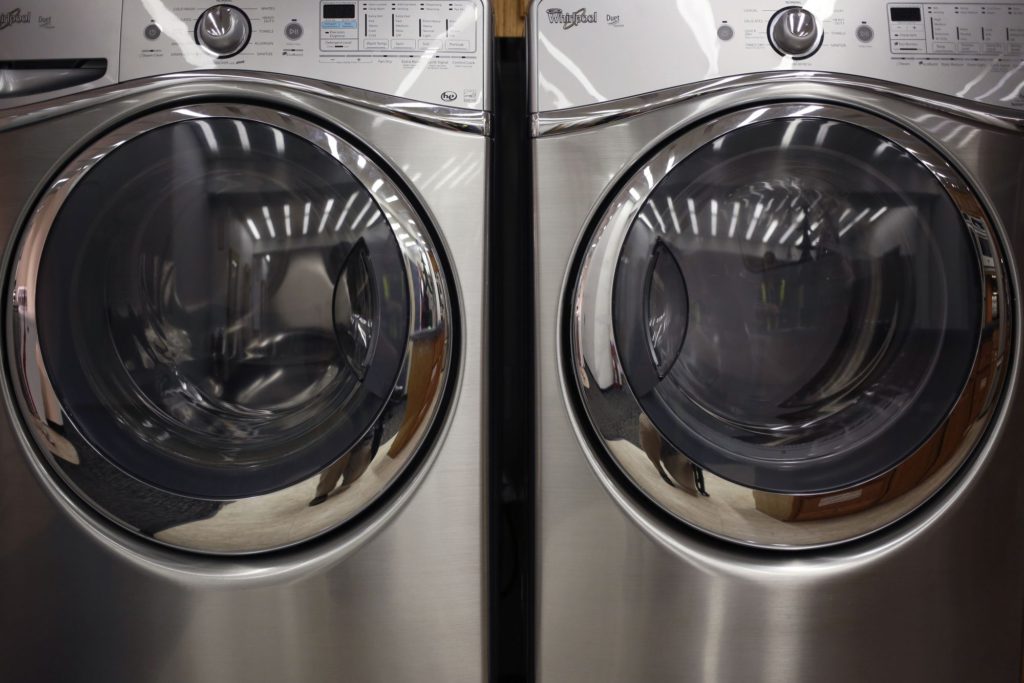
(Bloomberg) — Whirlpool Corp. cut its full-year earnings forecast less than feared, sending shares up in late trading.

The KitchenAid owner now expects ongoing earnings per share, excluding some items, to be between $22 and $24 for the current year, which is $2 lower than the previous range. Analysts had forecast $23.91 for the year, according to estimates compiled by Bloomberg. Revenue is seen falling 6% in 2022, compared with prior guidance for growth of as much as 3%. 

Appetite for appliances has dipped as decades-high inflation crimps consumers’ budgets and the US housing market softens. Supply-chain issues have abated somewhat, Chief Operating Officer Joe Liotine said, but getting components such as electronics remains a challenge. 

The slowdown in consumer interest “was probably a little bit more abrupt or sudden than we had expected,” Whirlpool Chief Financial Officer Jim Peters said in an interview. Demand will likely remain suppressed through 2022, he said. But Whirlpool says key drivers, such as consumers’ need to replace aging appliances, bode well for the medium to long term.

Whirlpool’s second-quarter sales were $5.1 billion — shy of the $5.2 billion average of analyst estimates compiled by Bloomberg and down 4.3% from a year earlier. Supply-chain issues and a slowdown in demand drove the decline, the company said, with higher prices acting as an offset. Revenue for North America, the company’s largest market, was just under $3 billion, missing expectations. 

Sales in Europe, the Middle East and Africa took a hit from the war in Ukraine, the company said. Whirlpool, which is based in Benton Harbor, Michigan, is undergoing a review of its business in the region as it seeks to focus on segments with high growth and margin potential. It announced the sale of its Russian operations in late June. 

Second-quarter ongoing earnings per share were $5.97, ahead of the $5.24 average analyst estimate.

The appliance manufacturer maintained its full-year outlook for materials inflation at $1.5 billion to $1.75 billion, primarily driven by higher costs for steels and resins. The peak in the cost increases could come by the third quarter, Peters said.

Whirlpool shares rose 3.1% in extended trading at 4:15 p.m. New York time. The stock fell 25% in the 12 months through Monday’s close, more than double decline for the S&P 500 Index during that period.

More stories like this are available on bloomberg.com

©2022 Bloomberg L.P.
Biden Team’s Take on ‘Technical Recession’: It’s Not Real

(Bloomberg) — President Joe Biden’s administration is downplaying data due this week that could show the US economy contracted for a second straight quarter — a development that would match one standard definition of a recession.

The administration’s message: what’s often called a “technical recession” isn’t necessarily a real one. At stake is winning a political-messaging battle with Republicans over how effective Biden’s policies have been in spurring a post-pandemic recovery.

Biden’s aides, including Treasury Secretary Janet Yellen, have fanned out in recent days in preparation for Thursday’s quarterly gross domestic product data, explaining that the formal definition of a recession is complex and runs deeper than simply two quarters of negative growth.

The president himself said, “We’re not going to be in a recession, in my view,” speaking to reporters Monday. He commented after a virtual meeting with corporate leaders to discuss a continuing shortage of semiconductors.

“My hope is we go from this rapid growth to steady growth,” Biden said, while noting that the US unemployment rate of 3.6% is historically low.

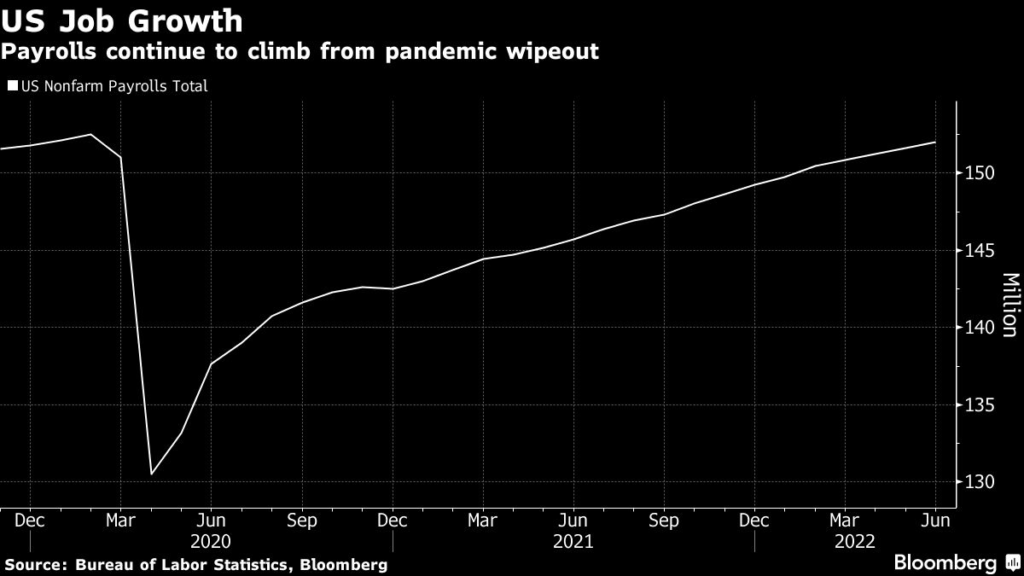
Administration officials argue that the current economic picture is complicated, with global supply shocks and fluctuating commodity prices offset by a robust labor market. The US added more than a million jobs in the second quarter, National Economic Council Director Brian Deese highlighted Monday. There’s never been a US recession where the economy didn’t lose jobs, he said.

“We face an economy with very significant global challenges,” Deese said in an interview. “Our focus is on what we can do on policy to try to address those challenges — and how to then try to increase the prospects that we can move through the process, this period of uncertainty, to a period of more stable, steady growth.” 

The median forecast for second-quarter GDP is for a 0.4% annualized gain, following a 1.6% contraction in the first three months of the year. But 20 of the 63 economists surveyed by Bloomberg currently expect a drop — helping fuel the recession debate.

“With growth tracking very low this quarter, there is elevated risk that second-quarter 2022 GDP is negative and marks a technical recession in first-half 2022,” Morgan Stanley economists led by Ellen Zentner wrote in a July 22 note.

Biden’s team is drawing a distinction, including in a blog post, between what’s officially regarded as a recession and what’s generally referred to as a “technical recession.”

The colloquial definition is a sort of short-hand: two consecutive quarters of negative growth. But the formal definition in the US context comes from the National Bureau of Economic Research, which defines a recession as a “significant decline in economic activity that is spread across the economy and that lasts more than a few months.” A dedicated NBER panel bases the determination on criteria including the depth, diffusion and duration.

Read more: No US Recession Until Obscure Panel of ‘Eggheads’ Says It Is So

Deese took issue with the characterization of two quarters of GDP declines as a “technical” recession — terminology that’s used widely by economists and investors alike. 

“The technical definition is not two negative quarters,” Deese said. “Technically, the definition is the NBER’s definition.” 

Yellen said Sunday that she’d be amazed if the NBER calls this a recession, given the state of the labor market. “When you’re creating almost 400,000 jobs a month, that is not a recession,” she said Sunday on NBC’s “Meet The Press.”

Fed Action

The first-quarter drop in GDP was largely due to a widening trade deficit that was spurred by a wave of imports, and consumer spending continued alongside job growth in that period.

“It is entirely possible that we see a negative GDP print, marking a technical recession (GDP also fell in the first quarter), even as the US economy is still showing underlying strength and inflation is accelerating,” Wells Fargo strategist Erik Nelson wrote in a research note on Friday.

If a “technical recession” doesn’t immediately mean a formal one, the data could still soon turn sour. The Federal Reserve is poised to once again hike rates by an historically large 75 basis points this week, putting fresh pressure on growth in a bid to stem price increases.

“You don’t see any of the signs now. A recession is a broad-based contraction that affects many sectors of the economy. We just don’t have that,” Yellen said Sunday. “But inflation is way too high. And, you know, the Fed is charged with putting in place policies that will bring inflation down. And I expect them to be successful.”

(Updates with Biden comments beginning in fourth paragraph)

More stories like this are available on bloomberg.com

©2022 Bloomberg L.P.
Meta Weighs Buying Eye-Tracking Glasses Startup AdHawk

(Bloomberg) — Meta Platforms Inc. is considering whether to acquire AdHawk Microsystems Inc., a Canadian developer of eye-tracking technology for augmented and virtual reality headsets, according to people familiar with the matter.

AdHawk has been working with investment bank Moelis & Co. as it fields interest from Meta and other suitors, said the people, who asked not to be identified because the matter is private. Meta, the owner of Facebook, Instagram and WhatsApp, is considering making a formal offer in the next few weeks, one of the people said. 

The potential takeover would further Meta’s ambitions in virtual and augmented reality. The company is already the leading seller of VR headsets, technology that is key to its plans to build the metaverse — a collection of interconnected online worlds. 

There’s no guarantee that Meta will end up bidding, and the Waterloo, Ontario-based startup could decide to stay independent. It also remains in talks to receive additional funding, and at least four other companies are looking at the asset, according to the people.

Representatives of AdHawk, Meta and Moelis declined to comment. 

AdHawk has developed what it calls MindLink, smart glasses that can track users’ eye movements to understand their behavior and neurological health. The $10,000 glasses are designed for research purposes rather than consumers. But the underlying technology could be useful to Meta and other companies looking to add tantalizing new capabilities to augmented reality glasses. 

AdHawk says its technology differs from competing offerings because it’s able to track eye movements using a compact and power-efficient system rather than cameras. It also says its approach is more accurate for use in the field and can capture hundreds of high-quality data points per second.

The technology could allow augmented reality app developers to improve their software by anticipating where a user may look next and reacting more quickly, according to the company. AdHawk says the approach may have applications for health, gaming and day-to-day device operation. 

Meta plans to integrate eye-tracking functions into a high-end mixed-reality headset dubbed the Meta Quest Pro, but that technology will likely rely on cameras. The device will combine virtual reality with augmented reality, which overlays data and digital images on top of real-life views.

Meta, Apple Inc. and Alphabet Inc.’s Google are also all working on stand-alone AR glasses — everyday devices that users could wear more like regular frames. Meta has already confirmed plans to launch such glasses within a few years, while Google recently announced a public testing process for a future product.

Apple, meanwhile, is planning to launch a high-end mixed-reality headset next year, but it’s also hoping to have AR glasses ready within a few years, Bloomberg News has reported. Existing systems are too large and power-hungry to fit into future stand-alone AR glasses, which is why that technology is further out.

AdHawk, whose investors include the venture capital arms of Samsung Electronics Co., HP Inc. and Intel Corp., has raised nearly $17 million in funding, according to Crunchbase.

More stories like this are available on bloomberg.com

©2022 Bloomberg L.P.
Mark Zuckerberg Sells San Francisco Home for a Record $31 Million

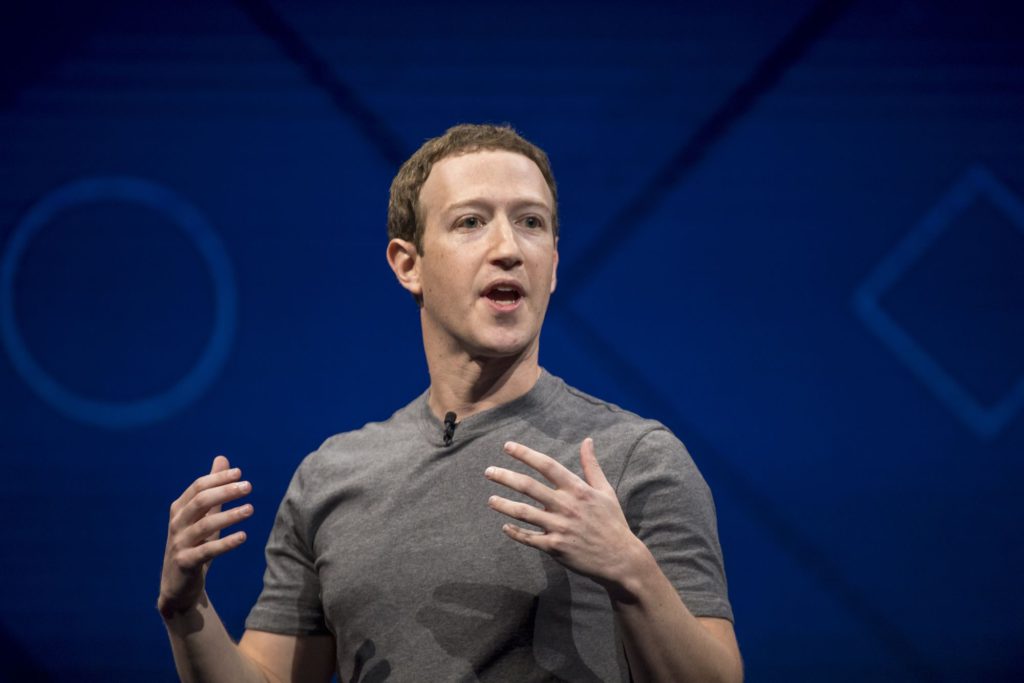
(Bloomberg) — Facebook co-founder Mark Zuckerberg has sold his San Francisco house for $31 million, the most expensive home sale in the city this year, according to The Real Deal.

The Meta Platforms CEO paid about $10 million for the house in November 2012, according to Redfin. Located in the secluded Liberty Hill neighborhood off Dolores Park, the more than 7,000 square foot house is close to the Mission District and the Zuckerberg San Francisco General Hospital and Trauma Center. The home was built in 1928 and sits on a quarter-acre lot, the listing says.

Bloomberg Billionaires Index Profile: Mark Zuckerberg

Zuckerberg bought the home months after Facebook went public. In 2013, he and his wife, Priscilla Chan, undertook a multi-million dollar renovation project, with additions including a laundry room, wine room, wet bar and greenhouse, along with other upgrades, according to SFGate.

The tech billionaire owns several other properties in Silicon Valley, Lake Tahoe and Hawaii, according to Insider. 

More stories like this are available on bloomberg.com

©2022 Bloomberg L.P.

Big Tech Weighs on Stocks in Busy Earnings Week: Markets Wrap

(Bloomberg) — Stocks pushed lower as traders braced for earnings from several technology bellwethers amid the threats of a hawkish Federal Reserve, scorching inflation and a looming economic recession.

The S&P 500 lost ground after last week’s rally, while the tech-heavy Nasdaq 100 underperformed, with giants like Apple Inc. and Google’s parent Alphabet Inc. set to report results this week. Treasury 10-year yields climbed back above 2.8%, following a two-day plunge of almost 30 basis points.

After raising rates by the most since 1994, Fed officials are expected to approve another 75-basis-point hike Wednesday and signal their intention to keep moving higher in the months ahead. The economy is already feeling the pinch from repeated rate increases, with the housing market softening, unemployment claims edging up and technology firms curbing hiring.

The question for traders is how much of that slowdown is already reflected in stock prices. For Nicholas Colas, co-founder of DataTrek Research, this week will be something of a “make-or-break” period for investors’ confidence in the power of Corporate America. Analysts expect revenue and earnings growth in the big-tech space to improve going forward from what will be at best “mediocre” second-quarter results, he added.

Growth has indeed sputtered across the tech world, with investors expecting mostly bad news from megacaps. Amazon.com Inc.’s revenue is expected to grow at its slowest rate in decades. Chipmakers are lurching from boom times to a potential glut. Gig-economy companies such as Uber Technologies Inc. and DoorDash Inc. could be victims of consumer budget cutting. And the pullback in online advertising is set to weigh on results from Facebook owner Meta Platforms Inc.

“For the recent rally to continue, markets need to feel that monetary policy and corporate earnings power are incrementally more predictable than six weeks ago,” Colas wrote in a note to clients. “Our bias is to lighten up here, but even long-term investors should understand that this week is critical to market psychology.”

Goldman Sachs Group Inc.’s David Kostin sees revenues under pressure of a stronger dollar, while Bank of America Corp. strategists note that corporate sentiment during earnings calls is deep in recession territory Meantime, Citigroup Inc. and UBS Global Wealth Management strategists say the earnings season is turning out to be better than feared as consumer spending remains resilient, while stocks have already priced in much of the bad news.

Read: Morgan Stanley Sees More Fed Hikes While JPMorgan Expects Pivot

Investors are skeptical that the Fed can tame the worst inflation in four decades without driving the economy into a recession. Over 60% of 1,343 respondents in the latest MLIV Pulse survey said there’s a low or zero probability that the US central bank can rein in consumer-price pressures without causing an economic contraction.

A hallmark of recession is a drop in investment, often driven by a slowdown in inventory building or outright destocking. Inventories and durable goods orders — due Wednesday — will help clarify whether a recession is at hand, according to Anna Wong, chief U.S. economist for Bloomberg Economics. She estimates that both have weighed on second-quarter gross domestic product. The Fed’s preferred inflation gauge — PCE deflator — comes out Friday.

“Naturally, during times of market stress, every week seems pivotal,” wrote Strategas’ Jason De Sena Trennert and Ryan Grabinski. “Still, the next five days will be chock-a-block with earnings, economic releases, and economic events that are likely to set the tone for the market.”

The strategists added that they are still cautious as “earnings estimates have not yet begun to discount what would seem to be some obvious pressures on profit margins.”

For Ed Yardeni, president of Yardeni Research, the S&P 500 will continue trading range-bound until better economic growth boosts forward S&P 500 earnings estimates, which could be a few months away.

In corporate news, Apple announced a rare retail promotion in China, offering four days of discounts on its top-tier iPhones and related accessories in advance of the launch of its next-generation devices. Intel Corp. has secured one of the biggest customers to date for its year-old contract chipmaking arm. Regulators are directing US operators of Boeing Co. 777 widebody jets to repair aircraft to address concerns about potential fuel-tank explosions, according to a filing Monday.

Here are some key events to watch this week:

  • Alphabet, Apple, Amazon, Microsoft, Meta earnings due this week
  • Bank of Japan releases minutes from its June meeting, Tuesday
  • US new home sales, Conf. Board consumer confidence, Tuesday
  • IMF’s world economic outlook update, Tuesday
  • EU energy ministers emergency meeting, Tuesday
  • Fed policy decision, briefing, Wednesday
  • Australia CPI, Wednesday
  • US GDP, Thursday
  • Euro-area CPI, Friday
  • US PCE deflator, personal income, University of Michigan consumer sentiment, Friday

Some of the main moves in markets:

Stocks

  • The S&P 500 was little changed as of 2:42 p.m. New York time
  • The Nasdaq 100 fell 0.8%
  • The Dow Jones Industrial Average was little changed
  • The MSCI World index fell 0.1%

Currencies

  • The Bloomberg Dollar Spot Index fell 0.2%
  • The euro rose 0.1% to $1.0227
  • The British pound rose 0.5% to $1.2058
  • The Japanese yen fell 0.4% to 136.68 per dollar

Bonds

  • The yield on 10-year Treasuries advanced seven basis points to 2.82%
  • Germany’s 10-year yield declined one basis point to 1.02%
  • Britain’s 10-year yield was little changed at 1.94%

Commodities

  • West Texas Intermediate crude rose 2.2% to $96.77 a barrel
  • Gold futures fell 0.6% to $1,734.60 an ounce

More stories like this are available on bloomberg.com

©2022 Bloomberg L.P.
Snap Loses Fan Base on Wall Street With ‘Cash Bonfire’ Raging On

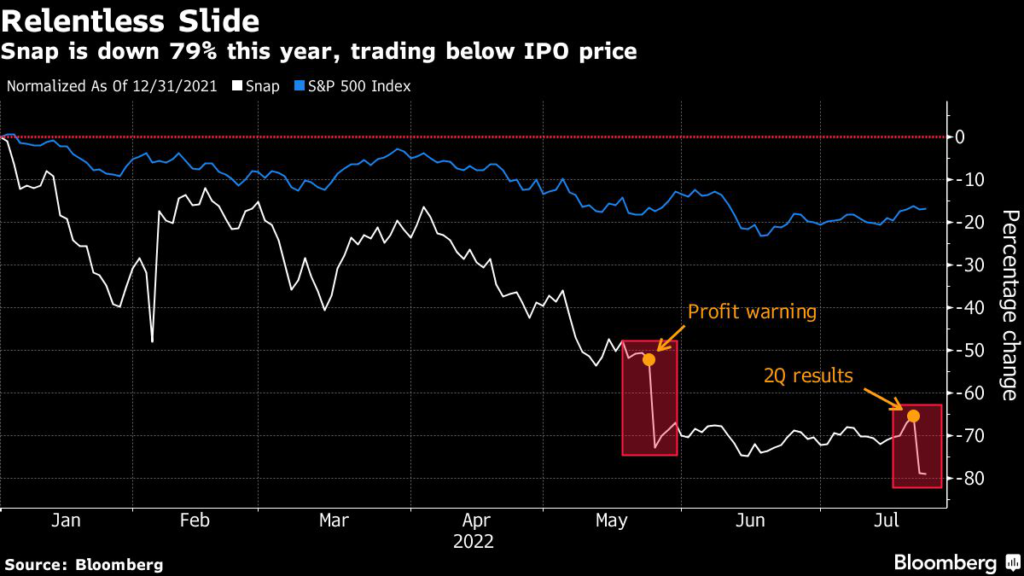
(Bloomberg) — Snap Inc. finds itself increasingly abandoned by Wall Street, with more than a dozen brokerages downgrading the social media company’s stock in the wake of disappointing sales figures that sent shares into a tailspin. 

At least 14 brokerages and investment banks including Evercore ISI, KeyBanc and Oppenheimer, downgraded their recommendations and price targets since late Thursday, when Snap reported second-quarter revenue that missed estimates and held back guidance for the third quarter. Morgan Stanley on Monday went as far as slapping the stock with a double downgrade, adding fuel to a selloff that has seen shares fall nearly 80% so far this year. 

Snap and other social-media shares including Meta Platforms Inc. and Pinterest Inc. are under pressure as advertising spending by businesses, among their biggest revenue drivers, cools amid fears of a global recession and as competition from the likes of TikTok increases. The downturn may be even more severe for Snap as its ad business is less developed, analysts said. Brian Nowak at Morgan Stanley, cut the stock’s price target to $8 from $17 citing TikTok’s threat to the company’s ad revenue as higher than previously anticipated.

“The cash bonfire at Snap shows no signs of abating,” said David Trainer, chief executive officer of New Constructs, an investment research firm based in Tennessee. “Snap’s year-over-year user growth has consistently slowed in recent quarters, much as we’ve seen with other companies single-mindedly focused on user growth, such as Netflix and Pinterest.” 

Snap representatives declined to comment on the downgrades.

JPMorgan’s Doug Anmuth, who cut his rating to underweight from overweight, also cited TikTok as an overhang for Snap’s shares. “TikTok’s strong engagement and rapid monetization growth are having an outsized impact on Snap’s business,” he said. 

The downgrades and price cuts brought Snap’s consensus rating — a proxy for its ratio of buy, hold, and sell ratings — to about 3.6 out of five, the lowest for the Snapchat parent since late 2019 and below that of Meta Platforms. 

Snap shares were trading at about $10 in New York, below the 2017 IPO price of $17, bringing total losses in market value so far this year to about $60 billion. 

“We had expected soft SNAP results, but the magnitude of the weakness still surprised us,” Evercore ISI analysts led by Mark Mahaney said in a downgrade report last week. “When fundamentals change this dramatically, it’s hard for us not to change our investment opinion.”

More stories like this are available on bloomberg.com

©2022 Bloomberg L.P.

Rogers CEO Says Firm ‘Failed,’ Will Spend Heavily to Fix Network

(Bloomberg) — Rogers Communications Inc.’s top executive said the company “failed to deliver” on a promise of reliable service and will spend at least C$250 million ($194 million) to separate its wireless and wireline networks as a result. 

Rogers Chief Executive Officer Tony Staffieri faced questions from a Canadian parliamentary committee about a July 8 network collapse that shut down wireless and internet services for 12 million people for nearly 24 hours. The outage affected emergency services, financial payment systems, government offices and businesses — some of which were forced to do cash-only sales. 

Separating the networks will help make them sturdier, Staffieri told lawmakers. Industry Minister Francois-Philippe Champagne has ordered Canadian telecom companies to devise an upgraded system so that if one provider suffers a major network problem, 911 calls and other critical services will still work. 

The network incident has heaped more pressure on Staffieri as Toronto-based Rogers tries to gain approval from Ottawa to take over rival Shaw Communications Inc. in a C$20 billion ($15.6 billion) deal. Rogers is also facing a legal challenge from the Competition Bureau of the proposed acquisition. 

The House committee is seeking answers about the cause of the network failure, its impact and future plans to avoid such problems from officials at Rogers and the country’s telecom regulator.

Staffieri said in a letter this weekend that Rogers will invest C$10 billion over the next three years, including “more oversight, more testing and greater use of artificial intelligence” to improve network reliability.

“Network investment this year will be double what it was two years ago,” Staffieri told the House committee, without giving a specific figure. Rogers expects capital expenditures of about C$3 billion this year and more of that will be dedicated to network improvements than in the past, he said. 

Staffieri was criticized for not informing government officials quickly when the network went down. It began to fail before 5 a.m. Ottawa time on July 8; Rogers didn’t tell Champagne’s office until shortly before 12 p.m. that day, the CEO told lawmakers. 

Read more: Rogers CEO Goes on Apology Tour With 13 Days to Close Shaw Deal

“This was the failure of one company. This was the failure of Rogers,” Champagne said in separate testimony to the committee. 

The cable and wireless firm has repeatedly apologized and Staffieri again defended the Rogers-Shaw merger as a way to free up capital to improve the communications system. Last week, Rogers replaced its chief technology officer. 

JPMorgan analyst Sebastiano Petti cut his target price on Rogers shares Monday to C$80 from C$90, saying the company’s decision to give customers a five-day billing credit will cost C$175 million in the third quarter and it could see an uptick in customer churn.

Rogers shares were little changed at C$60.30 as of 1:13 p.m. Toronto time.

(Updates throughout)

More stories like this are available on bloomberg.com

©2022 Bloomberg L.P.

Sono’s Solar Car Will Stay Close to $26,000 Despite Inflation

(Bloomberg) — Sono Group NV said the price of its unfinished solar electric car will stay around $26,000 before taxes even as inflation bites.

The Sion — a boxy hatchback covered in solar cells for charging on the go — has been revamped with features including new lights, door handles and a more spacious interior, the German startup said Monday.

While Sono is closely monitoring the increase in materials prices, it doesn’t currently plan to further hike the model’s net price of 25,126 euros ($25,654), Chief Executive Officer Laurin Hahn told reporters.

Sono, which had difficulty securing financing before its New York listing last year, plans to start production of the Sion next year in Finland. Sono expects the car to offer as much as 305 kilometers (190 miles) of range, with the cells capable of adding an average of 112 kilometers of juice to the battery per week. The firm has raised the price of the Sion some 17% since late 2018.

Sono also introduced a kit to outfit combustion-engine buses with solar panels to save diesel fuel. The company didn’t release details on pricing but said customers will be able to amortize purchases over three to four years.

Sono more than doubled in its first day of trading last November as it got a boost from heightened investor demand for EV stocks. The shares have lost more than 90% since.

More stories like this are available on bloomberg.com

©2022 Bloomberg L.P.

Italy’s Tax Agency May Be Under Cyberattack, Ansa Reports

(Bloomberg) — Italy’s postal police is investigating whether hackers obtained data from the country’s tax agency, news agency Ansa reports.

Some 78 gigabytes of data may have been stolen in the attack, which was carried out by the LockBit group, according to Pierguido Iezzi, Chief Executive Officer of Swascan, a unit of Tinexta SpA, as cited by the Il Sole 24 Ore newspaper.

The group allegedly published news of the hack on the dark web and asked for a ransom in five days, threatening to make the data public if the request won’t be fulfilled, Il Sole 24 Ore reported. In May, a group of pro-Russia hackers allegedly targeted the websites of several Italian public entities, Ansa has reported.

Sogei SpA, the state company managing the tax agency’s IT infrastructure, said in a statement late Monday that after initial checks no signs of cyberattacks or of data breach were found.

(Updates with Sogei statement in fourth paragraph.)

More stories like this are available on bloomberg.com

©2022 Bloomberg L.P.
Meta to Start Music Revenue Sharing on Facebook Videos

(Bloomberg) — Meta Platforms Inc. is introducing music revenue sharing on Facebook to help creators make money from videos that use licensed music, in an effort to better compete with rival TikTok.

A new tool called Rights Manager, developed by Meta through partnerships across the music industry, will also help content owners protect their rights. 

Video creators will receive 20% of revenue on eligible videos, with a separate share going to music rights holders and to Meta, the company said in a statement on Monday. Videos must be at least 60 seconds long and there must be a visual component as well. The licensed music itself can’t be the primary purpose.

The feature will start rolling out Monday to video creators globally. Eligible videos will earn money with in-stream ads delivered in the US initially, and that will expand to the rest of the world where music is available on Facebook in the coming months.

More stories like this are available on bloomberg.com

©2022 Bloomberg L.P.

Close Bitnami banner
Bitnami
