Bloomberg

US, Japan to Agree on Improving Chip Supply Chain 

(Bloomberg) — The US and Japan plans to agree on strengthening their collaboration in procuring components for cutting-edge semiconductor chips when ministers meet in Washington on Friday, the Yomiuri newspaper reported.

Japanese Foreign Minister Yoshimasa Hayashi and Economy Minister Koichi Hagiuda will travel to the US to meet their counterparts for the 2+2 meeting, the paper said. They are expected to mainly discuss boosting supply chains while preventing technology outflows to undesirable entities and countries, the paper reported, citing an agenda of the meeting.

The two countries will also talk about price surges in energy, materials and food stemming from Russia’s invasion of Ukraine, the paper said.

More stories like this are available on bloomberg.com

©2022 Bloomberg L.P.

Google Fires Software Engineer Who Says He Talked to Sentient AI

(Bloomberg) — Google has fired a software engineer who worked on the company’s artificial intelligence development team over his public contention that he had conversations with a bot that had become “sentient.”

Google confirmed the firing in a statement saying the claims from the engineer, Blake Lemoine, were “wholly unfounded” and that he had shared confidential company information to third parties.

Lemoine made his claim in an interview with the Washington Post in June, saying that LaMDA, the AI bot he interacted with, was a person. Not long after, Google placed him on paid leave.

The company ultimately fired him after he “still chose to persistently violate clear employment and data security policies that include the need to safeguard product information,” according to the statement.  

The firing was first reported on Friday by Big Technology.

Google says it has looked into the matter extensively, including 11 reviews of LaMDA. 

NOTE: Google Suspends AI Engineer Who Made Sentient Bot Claims

More stories like this are available on bloomberg.com

©2022 Bloomberg L.P.

VW Taps Porsche’s Team-Playing Blume to Amp Up Tesla Chase

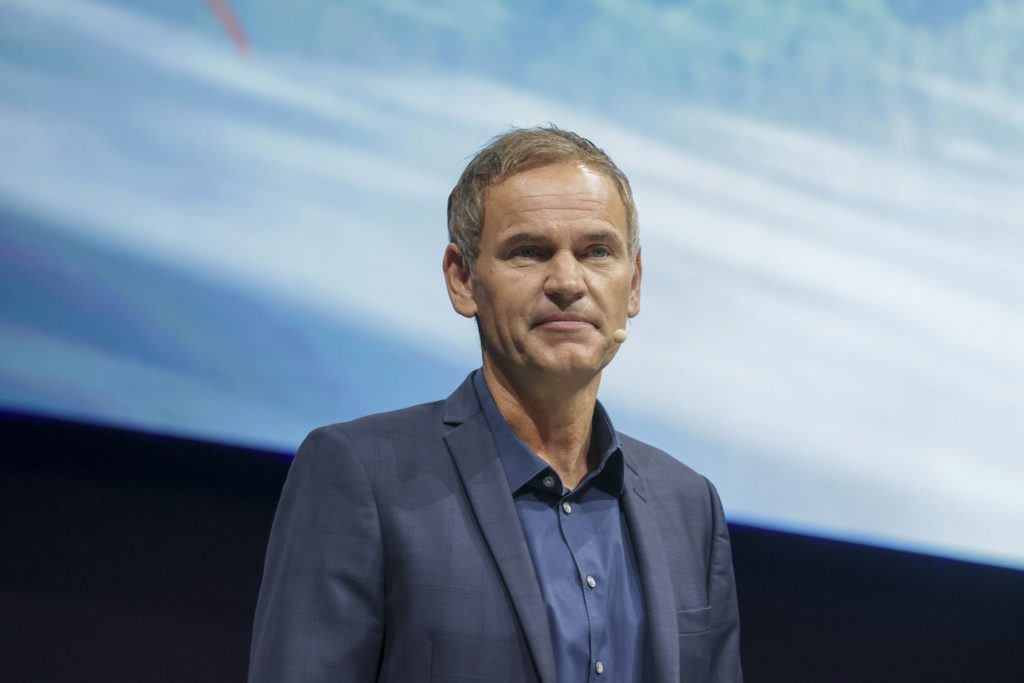
(Bloomberg) — Volkswagen AG has turned to an insider adept at rallying teams on the factory floor and the soccer field to try to salve wounds that festered under the turbulent leadership of Herbert Diess.

For Oliver Blume, the Porsche boss who’s taking over from Diess as VW chief executive officer, smoothing over relations with labor unions and other key stakeholders is crucial for the company’s push into electric vehicles and other new technology.

The management changeover at the world’s second-largest automaker, announced on Friday night, marks a departure from Diess’s combative style. Although the departing CEO has been credited with strategic and analytical excellence, he created enemies among VW’s multiple power centers. Repeated clashes with unions and poor execution on electric models and software eventually diminished support for the former BMW AG manager. 

While Diess lamented VW’s “old, encrusted structures” standing in the way of change, Blume, a keen soccer player, is known for asking questions and ensuring the backing of VW’s hodgepodge of vested interests before forging ahead.

“His management skills have been very good,” said Philippe Houchois, an analyst at Jefferies. “Your job as group CEO is to make people work together. And that’s where Diess failed, sadly.”

Investment plan

Building consensus will be crucial as VW seeks to deliver on an industry-leading 89 billion-euro ($90.9 billion) investment plan on software and EVs. Many workers fear that the changes will result in further job losses or factory dislocations.

A Porsche executive might seem like an unlikely choice to lead VW’s push into new technologies and propulsion methods. The brand, to many, remains synonymous with growling internal combustion engines.

Yet Blume, a former Audi trainee who has headed Porsche since 2015, was behind the risky decision to champion the Taycan, the sports-car brand’s first all-electric car that now outsells the iconic combustion-powered 911.

Blume is targeting nearly half of Porsche’s sales to be electric by 2025. That fuels confidence that the new chief could lead a similar transformation for other parts of VW’s portfolio, which includes brands like Seat and Skoda as well as the namesake and Audi marques. 

Volkswagen’s management change “is squarely aimed at accelerating the push to overtake Tesla as electric-vehicle leader,” Bloomberg Intelligence analyst Michael Dean said in a note, calling Blume “a rising star within VW.”

Blume has also made his name as a safe pair of hands when dealing with the VW group’s heart and soul — its global production network of 130 plants.

Operational Roles

Born in Braunschweig, near VW’s headquarters in Wolfsburg, Blume studied mechanical engineering in his hometown before joining the company. He gained a doctorate in vehicle engineering in Shanghai before more operational positions within Audi and later Seat. That shielded him from the turmoil that tarnished many executives connected to engine developers after the 2015 scandal over diesel engines that were rigged to meet emissions standards. 

Traditionally, Porsche has maintained more autonomy within VW than other brands, helped by its superior financial performance, including solo runs on high-performance battery development and hydrogen-based e-fuels.

This year, Zuffenhausen-based Porsche also broke away from the complex Artemis electric vehicle project, led by Audi, in a show of confidence for the sports-car brand’s own initiatives. 

That move followed concerns over delays to other VW EV projects as part of Artemis, including models to be built in Hanover with VW’s commercial vehicle operations. Porsche executives didn’t want to make sports cars on the same production line that puts together vans. 

Strong Profits

While Blume has been credited with a string of successes modernizing Porsche, the luxury brand arguably has more room to maneuver, given its deep-pocketed clientele and its hefty profit margins — the highest among VW’s major brands.

Achieving comparable success across the whole company will be more complex, and Blume will have his hands full. Not only is he taking over as CEO, he’s retaining his role as Porsche’s leader. 

The sports-car brand is planning an initial public offering for the fourth quarter. Success is crucial to help raise funds for the group to get ahead in the transformation. Blume’s dual role has raised concerns that his agenda may be overloaded.

“We do not think this is a good idea, as both organizations will need clear and present leadership in upcoming months,” Bernstein analyst Daniel Roeska said in a note.

(Updates with analyst comment)

More stories like this are available on bloomberg.com

©2022 Bloomberg L.P.

UK Satellite Operator OneWeb Said Near Merger With Eutelsat

(Bloomberg) —

British satellite firm OneWeb is nearing a deal to combine with France’s Eutelsat Communications SA in a transaction that would create a pan-European operator that could better compete with Elon Musk’s Starlink project, according to people familiar with the matter. 

OneWeb and Eutelsat could reach an agreement as soon as next week, the people said, asking not to be identified because the discussions are private. OneWeb, in which the UK government has a minority stake, would be valued at about $3 billion or more, the people said.

Paris-listed Eutelsat, with a market value of about 2.4 billion euros ($2.5 billion), is backed by French state investment firm BPIFrance SA and is also a minority investor in OneWeb.

As part of the proposed transaction, existing investors in OneWeb would continue to hold minority stakes, the people said. Those investors include the UK government and Bharti Airtel Ltd., run by telecommunications tycoon Sunil Mittal. 

The combined company would be listed in the Euronext bourse in Paris, though the firm could also seek a London listing in future, the people said. 

While discussions are advanced, a final agreement hasn’t been reached and talks could still end without one, the people said.

A spokesman for OneWeb and a representative for the UK government declined to comment. A spokesperson for Eutelsat wasn’t immediately available for comment outside business hours in France.

Musk’s Starlink fleet of more than 1,500 satellites launched in the past three years by SpaceX has created an unprecedented challenge for rivals, leading to a wave of consolidation in the sector.

Last year, Viasat Inc. agreed to purchase Inmarsat Group Holdings Ltd. for $4 billion, creating the world’s biggest geostationary satellite company. Eutelsat itself rejected a takeover bid from billionaire Patrick Drahi that valued it at 2.8 billion euros. 

OneWeb emerged from bankruptcy in 2020 in bailout by the UK with the help of Mittal, signaling a more interventionist industrial strategy by the government after Brexit. A deal with Eutelsat would be a rare example of a UK and a French company merging, and one that involves two state-backed companies shows how much the two governments are getting involved in the telecommunications industry.

The company was established in 2012 to build a constellation of small satellites in low-earth orbit, beaming internet connections to isolated places. OneWeb raised $3.4 billion from SoftBank Group Corp., Airbus SE and other big names before collapsing when lead investors pulled their money at the height of the coronavirus pandemic.

(Adds no comment from OneWeb, UK government in seventh paragraph)

More stories like this are available on bloomberg.com

©2022 Bloomberg L.P.

Orange, Masmovil Sign Deal to Forge $19 Billion Telecom Unit

(Bloomberg) —

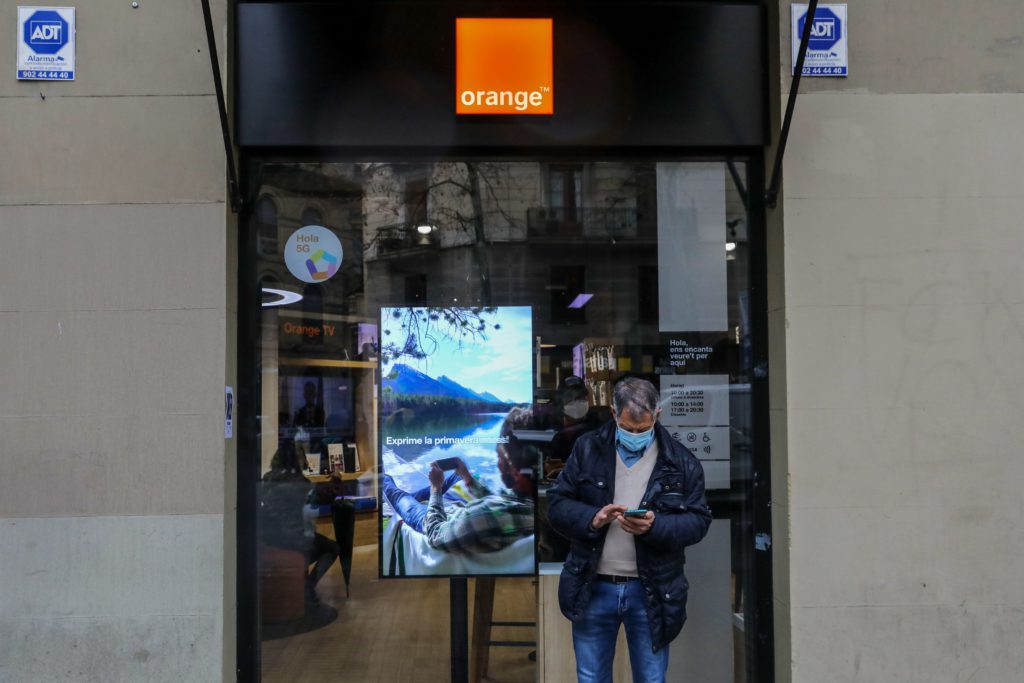
Orange SA and Masmovil Ibercom SA reached a binding agreement to combine their Spanish businesses to create the country’s biggest telecommunications company by clients after exclusive merger talks announced in March.

The transaction is based on an enterprise value of 18.6 billion euros ($19 billion), according to a statement Saturday. In March, the companies said the venture would have a combined enterprise valuation of 19.6 billion euros. 

The new company will take the form of a 50-50 joint venture, co-controlled by Orange and Masmovil. The transaction is subject to approval from antitrust authorities and is expected to close by the second half of 2023.

The deal will test the willingness of European Union regulators to allow consolidation in telecommunications markets. Spain is currently one of Europe’s most competitive markets, with scores of different brands engaging into price wars. Large firms, such as Orange, Masmovil and Vodafone have previously warned that returns on capital are unsustainable at current levels.

The agreement includes a right to trigger an initial public offering under certain conditions for both parties after a defined period and also an option for Orange to take control of the combined entity at the IPO price, according to the statement.

The new combined company would be able to accelerate investments in fiber connection and 5G, the companies said, with total synergies expected to reach at least 450 million euros annually by the fourth year after closing the deal.

A deal between Masmovil and Orange is a blow to Vodafone, which was long touted as the most likely candidate to combine with Masmovil. But while Orange has the country’s second-largest fiber optic network, most of Vodafone’s broadband is offered through cable, making synergies more difficult.

The French carrier is second to Telefonica SA in Spain’s telecom market, with Vodafone as the third-largest operator. Masmovil, the fourth player, was delisted two years ago after a leveraged buyout by three private equity funds — Cinven Ltd, KKR & Co, and Providence Equity Partners LLC.

Since the buyout, Masmovil acquired another Spanish telecom firm, Euskaltel, and has been growing its presence in Portugal. It is already a major wholesale client for Orange, both in fiber and mobile networks.

The deal will be supported by a 6.6-billion-euro debt package that will finance a 5.85-billion-euro payment to Orange and Masmovil shareholders in favor of Orange’s to reflect different levels of indebtedness, according to the release. This debt package is mainly comprised of bank debt, provided by a large pool of banks, and Masmovil’s existing debt will remain in place. 

(Updates with details on the deal and the Spanish telecom market.)

More stories like this are available on bloomberg.com

©2022 Bloomberg L.P.

Bank of England Seeks to Preserve Role of Cash in Transactions

(Bloomberg) —

The Bank of England is seeking to preserve the role of traditional banknotes and coins in everyday transactions, keeping it an option for consumers as electronic forms of payment grow in popularity.

Sarah John, the UK central bank’s chief cashier, said it will be “a long time” before society is ready to go cash free, and in the meantime authorities need to keep notes and coins circulating widely.

“It’s important that people have a choice of payment methods and they can choose what works best for them,” John said in an interview.

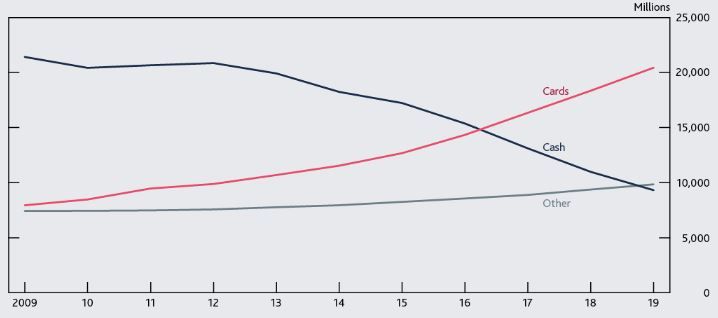
Between 2017 and 2019, the number of people using cash only once a month or less in the UK more than doubled to 7.4 million, a trend accelerated by the Covid-19 pandemic, according to BOE data. Credit and debit cards and other forms of money backed by private companies and not the BOE are gaining ground.

Cards are now the most frequently used form of consumer payment

Maintaining cash is part of a broader effort by the BOE to keep the UK’s payment systems up-to-date with technology and in step with consumer demands. Officials are also considering a “central bank digital currency” that would smooth online payments and give people security they can’t get with cryptocurrencies.

Maintaining the relevance of cash and coins is also a priority. The BOE started issuing new polymer £20 notes in 2020 while phasing out paper £20 and £50 notes. The new notes are more durable and harder to counterfeit. 

The old ones will be withdrawn as legal tender from Sept. 30. After that date, people will have to exchange the paper notes in person at the BOE’s London headquarters in Threadneedle Street or through the post. The BOE estimates £14.5 billion of the soon-to-be-worthless paper notes remain in circulation. 

More stories like this are available on bloomberg.com

©2022 Bloomberg L.P.

Twitter Gets a Win Over Musk With Trial Fast-Tracked for October

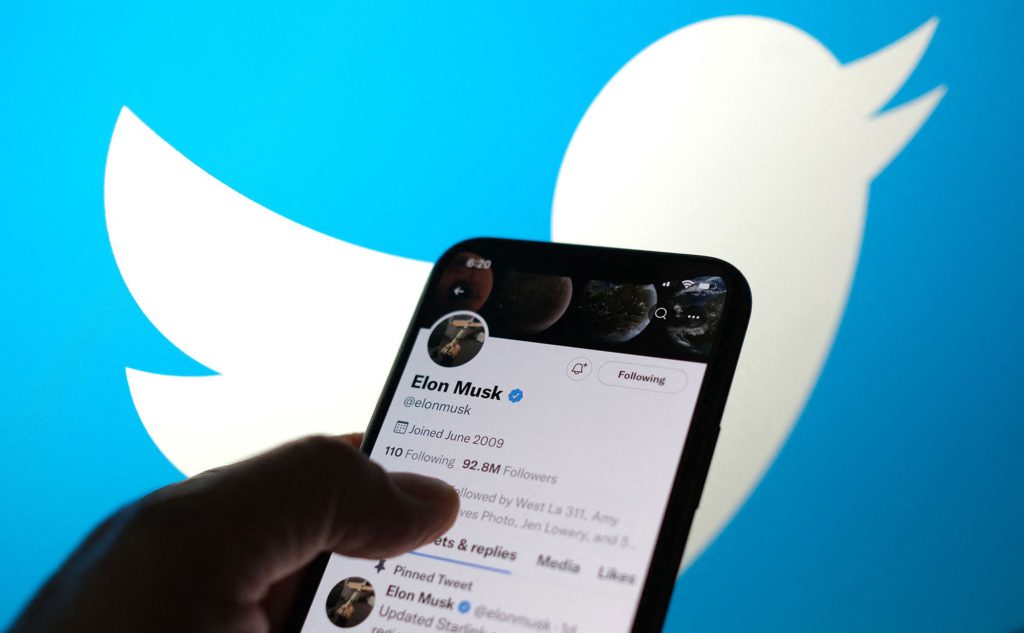
(Bloomberg) — Twitter Inc. scored an early win against Elon Musk in its fight to make him complete his $44 billion buyout, as a Delaware judge agreed to fast-track the case with an October trial date.

Chancery Court Chief Judge Kathaleen St. J. McCormick on Tuesday scheduled the trial for five days in the fall, instead of two weeks in February as the billionaire requested. Twitter argued it was suffering under the Tesla Inc. founder’s withdrawal from the deal and disparagement of the social media company.

The ruling marks the first victory for Twitter in a case in which many legal experts say Musk will be the underdog.

In a hearing in Wilmington, the judge made clear she saw little merit in Musk’s scheduling arguments, saying his lawyers “underestimate the ability of this court to quickly process” complex disputes in merger-and-acquisition cases.

Read More: Twitter-Musk Case Assigned to Delaware Chief Judge McCormick 

McCormick found that the battle over the teetering transaction was “creating a cloud of uncertainty” over Twitter. “The reality is, continued delays threaten imminent harm” to the company, she said.

The judge had no questions for Twitter’s lawyer after his argument but did stop Musk’s attorney when he called the Sept. 19 trial start Twitter proposed “preposterous.” She cited a past case that moved to trial within three months and rejected the Musk lawyer’s argument that she herself took a year to get another case to trial, noting the constraints of the pandemic at the time.

McCormick told the parties to propose specific October dates for the non-jury trial and wrapped up the hearing — held remotely to accommodate her own case of Covid — in just over an hour and a half.

Twitter Jumps

Twitter shares jumped as much as 5.4% after the ruling. They were trading at $39.32, up 2.4%, at 3:16 p.m. in New York. From the day Musk tweeted that the deal was “on hold” in mid-May, the stock had fallen as much as 22%. It hasn’t traded near the deal price of $54.20 a share since the first two weeks after the acquisition was announced.

Lawyers for San Francisco-based Twitter had said they needed only four days to prove the world’s richest person must honor his agreement. Twitter filed suit last week to force Musk to consummate the transaction.  

In Tuesday’s hearing, a lawyer for Twitter argued that Musk was “contractually obligated to use his best efforts to close deal.” Instead, he is “doing the exact opposite,” attorney William Savitt told the judge. “He’s engaging in sabotage.” 

Read More: Twitter Hits Back at Musk, Suing to Force $44 Billion Buyout 

Under the buyout agreement, Musk is obligated to finalize the deal within two days of all the closing conditions being met, Savitt said. Those conditions will be met in early September, he said. 

“Mr. Musk has no intention of keeping any of his promises,” the lawyer said.

‘Warp Speed’

Musk’s legal team has said Twitter was unfairly pushing for a “warp speed” trial. Musk said Twitter violated the terms of the buyout deal by not turning over detailed information about so-called spam bot accounts within its system. The case requires a “forensic review and analysis of large swaths of data” about the bots along with other legal issues, Musk’s lawyers said in the filing. 

Andrew Rossman, a lawyer for Musk, argued at the hearing that there was no need to rush a trial to meet an October deadline specified in the deal. The important date is when the financing commitments for the purchase expire, near the end of April of next year, he told the judge. A February trial would give the court enough time to decide the case and leave room for an appeal, Rossman said.

Read More: Musk Says Twitter Dragged Feet on Deal and Now Rushing Trial 

“The idea of running this case in 60 days” was “extraordinary,” he said of Twitter’s proposed schedule. “It’s a preposterous time frame.”

Rossman dismissed Twitter’s assertion that Musk is trying to run out the clock so the financing commitments lapse. His client “continued to use his best efforts to do the deal” by lining up financing and having his lawyers stay in communication with Twitter on the details right up to the day the company filed suit, he said.

“Mr. Musk has no motivation to harm Twitter,” given that he’s its second-largest shareholder, Rossman said.

Fast Court

In the end, he failed to persuade McCormick to deny Twitter an expedited schedule.

In interrupting his argument, the judge pointed to a 2001 merger fight between chicken processors Tyson Foods Inc. and IBP Inc. that went to trial within three months. The Chancery judge in that case ordered Tyson to proceed with the $4.7 billion buyout of its rival after it sought to cancel the deal.

McCormick rejected Rossman’s citation of a case she presided over herself — private equity firm Kohlberg’s effort to walk away from a $550 million acquisition of cake supplier DecoPac Holdings from Snow Phipps Group LLC — that took a year to get to trial. Questions arose about the buyout just as the pandemic was gaining traction, she noted. In what could be an ominous foreshadowing for Musk, McCormick ordered Kohlberg to close the deal.

QuickTake: The Delaware Court Where Musk, Twitter Will Face Off

Chancery judges in Delaware, the corporate home to more than half of U.S. public companies, are known for being able to parse legal thickets of complex merger-and-acquisition disputes more quickly than many other US courts. Unlike in some states where it can take several years to get a case to trial, Delaware Chancery Court generally moves quicker, with cases often argued within five or six months of being filed. 

The case is Twitter v. Musk, 22-0613, Delaware Chancery Court (Wilmington). 

(Corrects that Kohlberg tried to walk away from deal in 20th paragraph)

More stories like this are available on bloomberg.com

©2022 Bloomberg L.P.

Musk’s Go Private Tweet Suit Heads to a Settlement Conference

(Bloomberg) — Tesla Inc. will go to a settlement conference to negotiate a possible end to the securities fraud case over Elon Musk’s 2018 tweets about taking the company private.

The meeting, to take place in October, comes as investors suing Tesla and Musk have made steady progress in the case which is set to go to trial in January.

Two months ago US District Judge Edward Chen concluded that Musk was misleading in his Twitter posts. It was the most recent big win for investors seeking to recover billions of dollars in losses they blame on gyrations in Tesla’s share price four years ago when Musk’s tweets roiled the market.

A settlement conference set for Oct. 3 by Zoom was described in a court filing late Friday. Both sides were ordered to exchange confidential settlement letters and statements 10 days beforehand.

Musk’s lawyer Alex Spiro didn’t immediately respond to an email and phone call after business hours Friday.

October may prove busy for Musk. Earlier this week a Delaware Chancery Court judge ruled a trial over his cancelled $44 billion Twitter buyout will start that month.

Musk has insisted for years that his short-lived plan to take Tesla private with “funding secured” was solid based on discussions he had with Saudi Arabia’s Public Investment Fund.

The case is In re Tesla Inc. Securities Litigation, 18-cv-04865, U.S. District Court, Northern District of California (San Francisco).

More stories like this are available on bloomberg.com

©2022 Bloomberg L.P.

About 18 Million People Tuned In to Finale of Jan. 6 Hearings

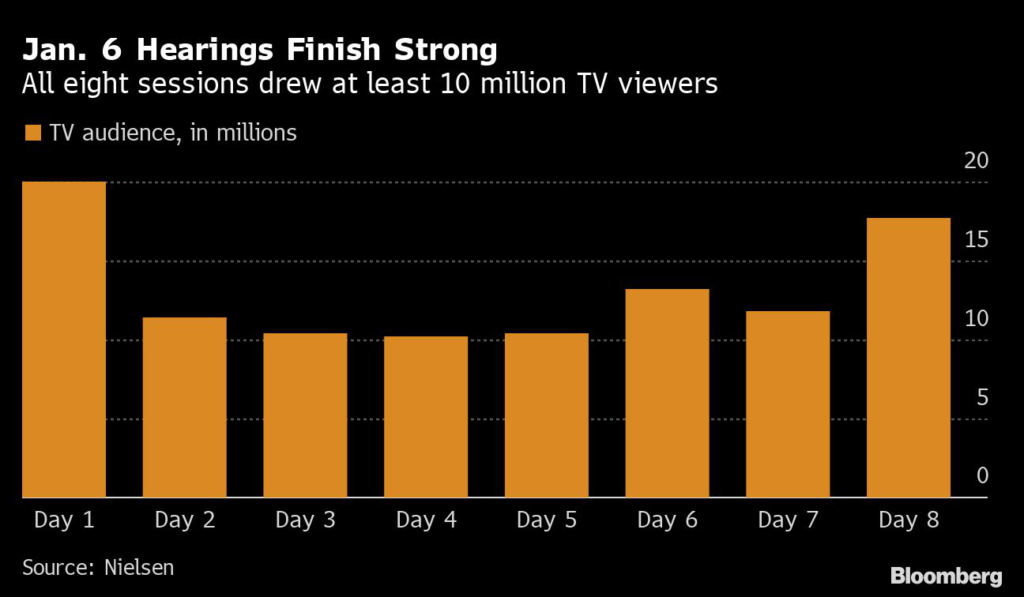
(Bloomberg) — Nearly 18 million people watched the final Congressional hearing into the Jan. 6. attack on the US Capitol, according to Nielsen data.

The strong viewership underscores how the House committee investigating the riot managed to keep much of its audience despite drawing out the hearings over eight days spanning six weeks.

In Thursday’s session, President Donald Trump was depicted as urging his followers to the Capitol and then spending more than three hours watching the attack on TV from the White House while aides, lawmakers and family members urged him to call off the mob.

The eight hearings averaged 13 million viewers. The first one, which also occurred in prime time, drew about 20 million viewers. The Nielsen data only include the audience on TV. Total viewership would be higher when factoring in people who watched the sessions online.

Nearly all the major news channels pre-empted regular prime-time programming to air Thursday’s hearing. Like the first session, Fox Corp. chose to air the event on its less-popular Fox Business channel, while Fox News stuck with its regular prime-time lineup of opinion hosts like Tucker Carlson, Laura Ingraham and Sean Hannity.

More stories like this are available on bloomberg.com

©2022 Bloomberg L.P.
Bankman-Fried’s FTX Makes Proposal for Bankrupt Voyager With Eye on Customers

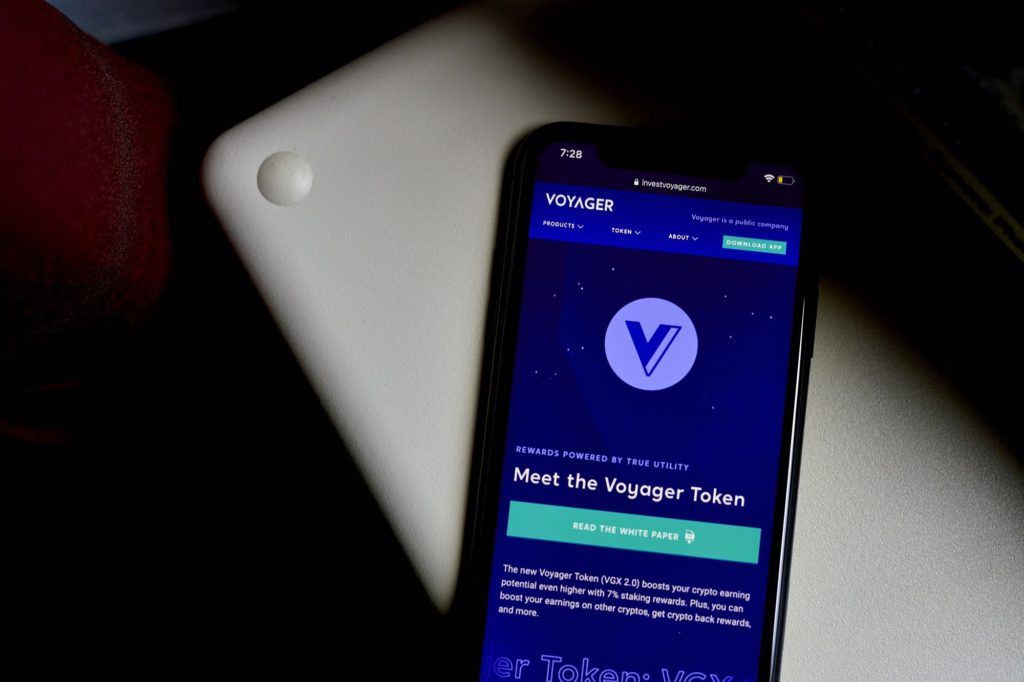
(Bloomberg) — Crypto billionaire Sam Bankman-Fried is proposing a restructuring deal to Voyager Digital LLC with the goal of attracting customers from the bankrupt digital-asset platform. 

Under a two-way proposal announced Friday, Alameda, Bankman-Fried’s trading firm, would buy all Voyager digital assets and digital asset loans, other than loans to Three Arrows Capital, in cash at market value. Meanwhile, FTX, his crypto exchange, will offer customers of Voyager an option to receive their share of claims by opening a new account at FTX. 

The offer is currently non-binding and has not been accepted by Voyager. A spokesperson for Voyager declined to comment. 

“Voyager’s customers did not choose to be bankruptcy investors holding unsecured claims,” said Bankman-Fried, chief executive of FTX. “The goal of our joint proposal is to help establish a better way to resolve an insolvent crypto business — a way that allows customers to obtain early liquidity and reclaim a portion of their assets without forcing them to speculate on bankruptcy outcomes and take one-sided risks.”

Any customer that does not wish to sign up with FTX would continue to retain all of their rights and claims in the bankruptcy proceedings, but would not receive early access to a distribution on their claim via FTX, according to the proposal. 

Earlier this month, Voyager filed for Chapter 11 bankruptcy protection, weeks after getting a credit line from Alameda Research. As part of the proposal, Alameda will write off its own $75 million loan claim. 

In a letter to Voyager, FTX emphasized that “time is of the essence” and that the company’s goodwill with its clients “continues to erode.” FTX stated that it stands to benefit “from the opportunity to build new relationships with new customers” if the deal goes through.

The proposal is “a good move” that could help FTX increase its market share, according to Dan Matuszewski, co-founder of CMS Holdings, which has invested in FTX.

“All of the Voyager customers are in kind of this gray area right now,” he said in an interview. “The ability to give those people liquidity or at least the option for it is huge.” 

He noted that the proposal could also help FTX expand its own brand. “It feels like they’re looking to make more steps toward potentially rolling Voyager into FTX entirely,” Matuszewski said.

Bankman-Fried has steadily increased the power and influence of both FTX and Alameda within the crypto industry through a series of acquisitions and bailouts executed during crypto winter. The company is in talks to purchase Bithumb, a South Korean crypto exchange and is looking to raise new funding. 

Some industry watchers have criticized the growing control Bankman-Fried has over a sector that some think should be decentralized. But Bankman-Fried said Friday in an interview with CNBC that he’s still interested in striking deals that could help support the crypto space.

“We could certainly see ourselves spending some number of hundreds of millions beyond what we have thus far, and in some cases more than that,” he said. 

(Adds investor comment starting in the eighth paragraph.)

More stories like this are available on bloomberg.com

©2022 Bloomberg L.P.
Close Bitnami banner
Bitnami