Bloomberg

Ships That Hauled Iranian Oil Are Switching to Russian Crude

(Bloomberg) — Oil tankers that previously carried Iranian oil are switching to haul Russian crude, according to shipping analytics company Vortexa.

Eleven of the tracked ships that previously carried Iranian crude have loaded Russian oil and products since April, accounting for 16 loadings in that period, according to a note dated July 21. Most of the vessels are smaller aframaxes, which can typically haul 730,000 barrels, the analytics company said.

“As more companies scale back from carrying Russian crude and products, those familiar with the sanctioned crude trade will continue using their tankers to assist Russia in exporting oil East of Suez,” Armen Azizian, a crude market analyst at Vortexa, said in the note.

Russian shipments climbed to 250,000 barrels a day in the first half of July, an increase of 170,000 barrels a day from April, Vortexa said. Vessels also include very-large crude carriers, which can haul about 2 million barrels, it added.

There’s a growing number of oil tankers turning off their satellite transponders and carrying out ship-to-ship transfers of Russian Urals in the Atlantic, Vortexa said. Known as going dark, the method is often used to mask the loading or unloading of cargoes. Of the 14 VLCCs and aframaxes that have gone dark in recent weeks, five of them have previously moved Iranian crude.

As more shippers and insurers turn away from handling Russian oil after its invasion of Ukraine, the remaining tankers still willing to handle such sensitive deals are able to charge higher prices.

More stories like this are available on bloomberg.com

©2022 Bloomberg L.P.

UK Used-Car Prices Ease After Covid Surge as Fuel Costs Spike

(Bloomberg) — Used cars, which pushed up UK inflation during the pandemic, are now getting cheaper as Britons offload their vehicles in response to soaring fuel costs and a broader squeeze on household budgets.

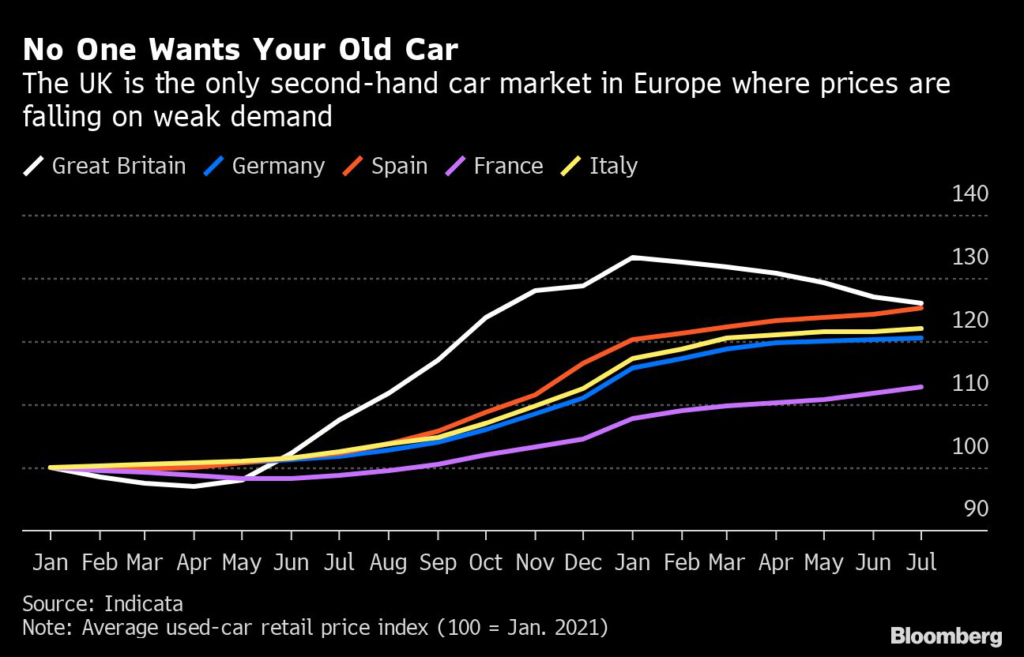
Inflation hit a 40-year high in June, driven by products ranging from motor fuel to eggs, but prices for second-hand cars fell 2.5%, according to Office of National Statistics data. That marked a fifth consecutive monthly drop and the longest losing streak since 2017.

Prices took off in 2020 when consumers flush with lockdown cash sought used cars as an alternative to public transport. At the same time, semiconductor shortages and snarled supply chains made new vehicles more scarce. Now, with wages rising at a slower pace than inflation and fuel costs surging, second-hand cars are becoming a luxury.

“People seem to be looking more at the cost of living,” said Jason Barlow, director at car dealer St Leonards Motors, which sells more than 4,200 used vehicles a year across 12 locations in England. “They’re making that conscious decision of ‘do we really need a car anymore?’”

The market for used cars serves as another indicator that falling real incomes are squeezing households and hurting consumer confidence, just as the Bank of England is walking a thin line between taming inflation and triggering a recession.

Going Electric 

Sales of used vehicles fell 13% in June from a year earlier, according to Indicata, a data and analytics firm. It’s not just that people stopped buying cars, some are also selling the ones in their garages and switching back to public transport. Others are ditching petrol or diesel cars for electric vehicles.

Those who are buying a second-hand car are favoring lower-priced models, for which demand has been relatively resilient, according to Barlow. 

The decline in prices also marks a return to pre-Covid trends. Used car values spiked in Britain last year more than in other European countries, in part because right-side driving in the UK prevented cross-border inflows from left-side driving neighbors, said Andy Shields, business unit director at Indicata.

Last year’s supply-chain constraints are also starting to ease, which should help increase supply, according to Urvish Patel, associate economist at the National Institute of Economic and Social Research. Still, some of the issues that drove up used-vehicle prices, like chip shortages and production lags, remain.  

“What surprises me is actually how difficult it is still to get hold of a used vehicle,” Barlow said. “Whilst we’ve seen a decline in values, we still find it difficult to source cars now.”

More stories like this are available on bloomberg.com

©2022 Bloomberg L.P.

US Dependence on Taiwan Chips Is ‘Untenable,’ Raimondo Says

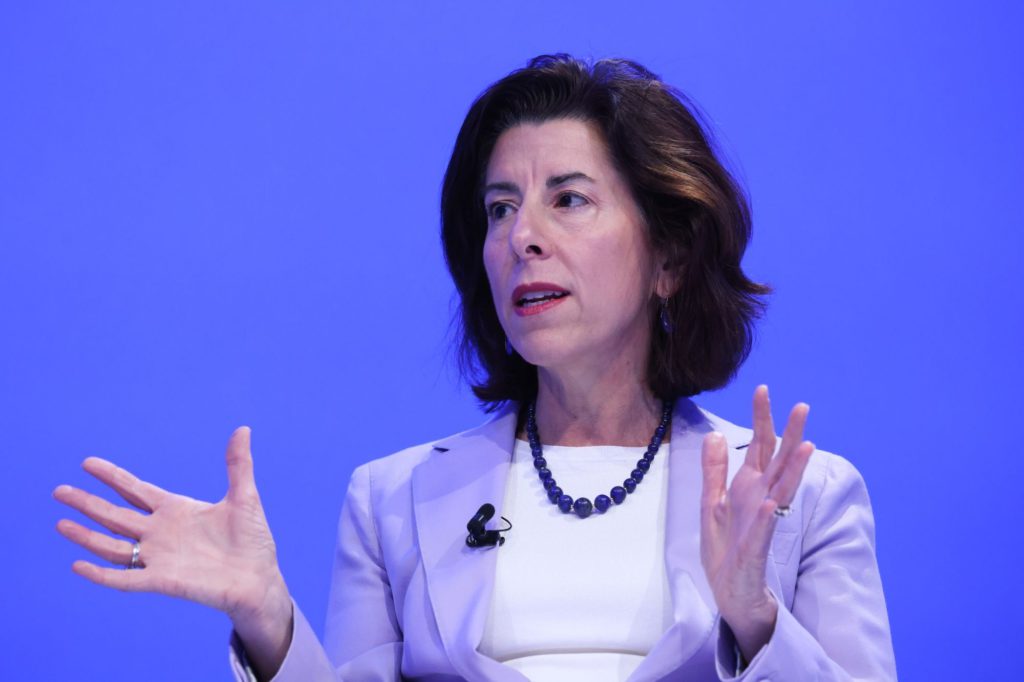
(Bloomberg) — The US can’t keep relying on Taiwan for semiconductors and needs to pass legislation to support the domestic production of high-end computer chips, Commerce Secretary Gina Raimondo said.

“Our dependence on Taiwan for chips is untenable and unsafe,” Raimondo told a crowd at the annual Aspen Security Forum in Colorado, a gathering of White House officials, diplomats and executives. She appeared via video conference from Washington, DC.

“This is a Sputnik moment for America,” Raimondo said, referring to the Chips Act, a more than $50 billion package intended to increase the manufacturing of American-made semiconductors. “I mean that very sincerely. And this is a project we’re working on.”

Congress has been discussing legislation to strengthen the nation’s technology sector for more than a year, but the centerpiece of that plan is still up in the air amid House and Senate disagreements over the substance of the package. Senate Minority Leader Mitch McConnell also said last month that no bill would go forward so long as Democrats were pursuing a $1 trillion tax measure to fund climate change spending and other measures.

A bipartisan version of the bill on track for votes next week in the House and Senate was estimated to increase US budget deficits by $79 billion over a decade if enacted, according to the Congressional Budget Office.

Read More: Senate’s Bipartisan Chips Bill Would Add $79 Billion to Deficit

Speaking on a later panel at the Aspen event, economist and former US Treasury Secretary Lawrence Summers stressed that the US needed to pass the legislation for geopolitical reasons. He compared US reliance on Taiwan to European reliance on Russian gas imports, which have given Moscow leverage following its invasion of Ukraine.

“People look at Germany and they go, ‘How could they have been so reliant on Russian natural gas?’” Summers asked the crowd. “They’re going to look at us and they’re saying, ‘How could we have been so reliant on Taiwanese semiconductors?’”

China Competition

Raimondo also discussed the Biden administration’s economic strategy toward China, saying the US needed to boost investment at home while also trying to reduce China’s edge. 

She said the US needs to protect American intellectual property and defend US companies from “unfair practices” — including Chinese dumping of cheap steel and aluminum into the US — while also trying to level the playing field for US companies and help them better access the Chinese market.

“There’s only so much we can do to slow down China, and we need to do that,” she said. “We need to be clear minded about our export controls, deny China technology from the US that will allow them an edge, and enforce that, and we are doing that.”

Appearing alongside Summers on the later panel, Robert Zoellick — the former US Trade Representative and World Bank president — referred to Raimondo’s comments and warned that US policy on China has been “schizophrenic” as it veers between punishing China and opening up to the world’s second-largest economy. 

“In her words, we want to slow them down, we want to disconnect from them, while at the same time to open markets — that’s a difficult trick to pull off,” he said. “In a sense, we haven’t decided as a country. Do we really want to open markets in China, and do more business? Or do we want to try to contain and isolate them, which will be very costly.”

More stories like this are available on bloomberg.com

©2022 Bloomberg L.P.

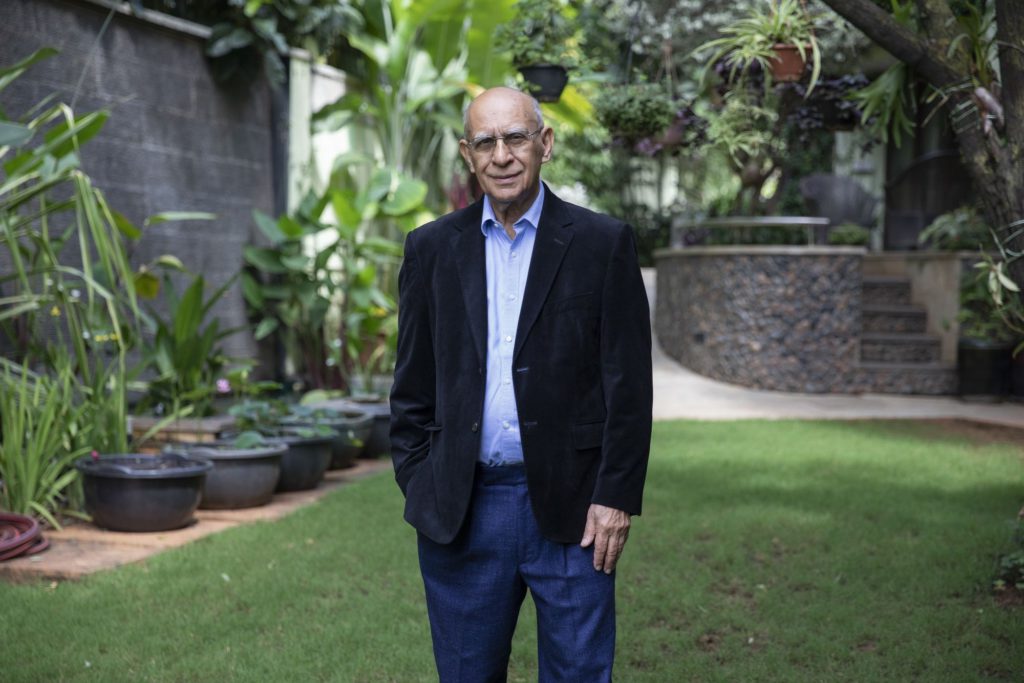
A 79-Year-Old Tech Pioneer Aims for His Third Startup IPO

(Bloomberg) — Ashok Soota has spent four decades in India’s technology industry, headed three prominent IT companies and taken two of them public. Now, the 79-year-old is getting his newest venture off the ground with a goal to take it to IPO in five years.

When Soota turns 80 in November, Happiest Health will be a rare Indian technology startup with an octogenarian founder. He is basing the startup on his holistic view on health and wellbeing, while drawing inspiration from Berkshire Hathaway Inc.’s Warren Buffett and Charlie Munger — who are plowing ahead in their nineties.

“They embody the canon that work is exercise for the mind,” Soota said in an interview this week on the roof garden of his sweeping Bangalore home, seated amid flowering orchids and a large aquarium full of fish.

Located in the viridescent Koramangala neighborhood, the residence isn’t far from where India’s IT outsourcing businesses first set up decades ago. Soota played key roles in building what’s become a $227 billion industry.

He was brought in to steer Wipro Ltd. in 1984 and went on to make a success of its outsourcing business while largely staying in the shadow of its charismatic chairman, billionaire Azim Premji. Soota quit in 1999 to co-found rival IT services company Mindtree Ltd., bringing it to an initial public offering in 2007.

He then did a repeat by founding digital services-focused outsourcer Happiest Minds Technologies Ltd. in 2011. As executive chairman, he led it to a public debut in 2020 amid the pandemic, entering billionaire ranks when its market value surpassed $2.5 billion last year.

Soota-founded ventures have recently faced headwinds along with the broader tech sector. Happiest Minds, of which Soota owns about 53%, has lost a quarter of its value this year for a current market capitalization of $1.8 billion. Mindtree is down about a third.

On the surface, Soota isn’t perturbed. His latest startup, Happiest Health, aspires to be a Google-meets-WebMD-meets-Mayo Clinic venture that helps people navigate mental and physical health. It lets customers access health information that has thus far been hard to find, particularly on treatments and therapies melding Western and Eastern practices.

Happiest Health aims to eventually combine modern medicine and research with gentler therapies like Ayurveda, naturopathy, yoga and meditation via short videos, newsletters, webinars and paid-for events.

Bootstrapped by Soota, the company has 90 employees, including doctors, scientists and writers. Soota is building the business based on his background in overseeing hundreds of thousands of employees and his experiences with their wellbeing, work-life balance and relationship issues.

“For decades, Ashok Soota spotted IT services trends and figured out how to stay ahead,” said Thomas George, president of researcher CyberMedia Research. “He’s now chasing a new challenge.”

Soota walks about five miles every morning followed by 30 minutes of laps in his pool. He also practices yoga a couple of times a week.

The serial entrepreneur hinted he may still have a startup idea or two up his sleeve. “The median age of India’s technology workforce is 26 or 27 years,” said Soota. “Being around them keeps me young and full of plans.”

More stories like this are available on bloomberg.com

©2022 Bloomberg L.P.

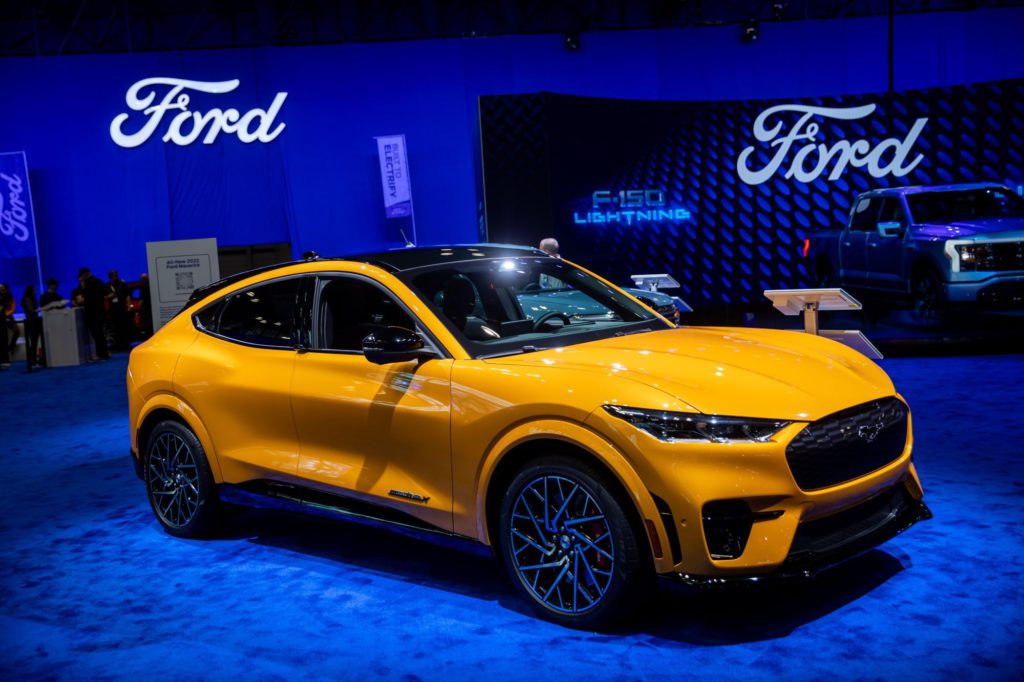
Ford Secures Batteries to Build 600,000 EVs a Year by 2023

(Bloomberg) — Ford Motor Co. says it has secured enough battery supply to build more than half a million electric vehicles annually by late next year, a quantum leap above the 27,140 battery-powered cars it sold in the US last year.

The automaker has signed contracts with suppliers representing 60 gigawatt hours of annual battery capacity, enough to build 600,000 EVs a year, it said in a statement Thursday. Those suppliers include China’s Contemporary Amperex Technology Co. Ltd., or CATL, as Bloomberg previously reported.

Ford also said it has secured 70% of the battery capacity it needs to build more than 2 million EVs annually starting in 2026, which helps meet a goal Chief Executive Officer Jim Farley set in March.

Securing enough batteries to build millions of plug-in models has become a key competitive battleground in the emerging EV market. General Motors Co. has established a partnership with South Korea’s LG Chem Ltd. to build battery plants in the US. Ford already has a joint venture with South Korea’s SK Innovation Co. to spend $11.4 billion on three battery factories and an EV assembly plant in Tennessee and Kentucky.

Read more: Ford’s Flurry of Supply Deals Gives Iron a Starring Role in EVs

The Dearborn, Michigan-based automaker said it sees EV demand worldwide growing by more than 90% annually through 2026, more than double current industry forecasts.

“We are putting the industrial system in place to scale quickly,” Farley said in the statement. “Our Model e team has moved with speed, focus and creativity to secure the battery capacity and raw materials we need.”

Ford will begin using less expensive lithium iron phosphate battery packs from CATL on its Mustang Mach-E models next year and F-150 Lightning pickups in early 2024, which will boost output of those popular vehicles. Ford said it has a plan to source 40 gigawatt hours of those batteries annually in North America in 2026, but will initially import them from China.

CATL said it will spend as much as 14 billion yuan ($2.1 billion) building a battery plant in Jining, in China’s Shandong province. The company last month raised 45 billion yuan in the world’s second-biggest stock offering this year to help fund its expansion. 

Read more: CATL Eyes Factory Sites in Mexico to Supply Tesla, Ford

President Joe Biden is pouring billions into building an EV supply chain in the US to reduce dependence on China as geopolitical tensions between the two countries rise. Ford contends that to meet mushrooming demand for EVs, it must import batteries from the Chinese battery giant.

“We need to scale EVs quickly in the US and that is one of the aspirations in the administration,” Lisa Drake, Ford’s vice president of EV industrialization, said in a call with analysts and reporters Thursday. “There is not enough battery cell capacity to meet the demand. So what we’re doing is importing some battery cell capacity to help meet that demand.”

Chasing Tesla

Farley is racing to catch EV leader Tesla Inc. as the automaker pours $50 billion into its EV expansion strategy through 2026. Ford also is preparing to cut as many as 8,000 jobs in the coming weeks to boost profits and help fund its EV ambitions, according to people familiar with the plan, Bloomberg reported Wednesday.

“To move fast in this space, smaller is better. A smaller team can move faster than a larger team,” Drake said when asked about the job cuts. “This team moves fast and it’s because we cut out a lot of big bureaucracy.”

Ford said that by late next year, it expects to be building 270,000 Mustang Mach-Es annually, 150,000 F-150 Lightning models, 150,000 Transit EV commercial vans and 30,000 units of a new electric SUV for Europe that will “significantly ramp” in 2024.

Lithium iron phosphate battery packs, or LFPs, are widely used in China, but are seen as less powerful than the nickel cobalt manganese batteries, or NCM, that now provide juice to the Mach-E and F-150 Lightning.

Drake declined to reveal the horsepower on those models with LFP batteries. The longer-range versions of the Mach-E and F-150 Lightning will continue to use NCM batteries, Ford said.

“I’d love to get into this today but we really just want to focus on the capacities we’ve installed,” Drake said when asked for power specifications on the Mach-E and Lightning with LFP batteries. “You’re going to hear a lot more about this, so be a bit patient with us.”

Ford’s shift to LFP chemistry reflects an industry push to expand EV capacity while putting a lid on soaring battery and EV costs. Tesla announced a similar move last October.

The change means “you don’t have to pay as much on those cheaper models to get the battery,” said Corey Cantor, EV analyst at BloombergNEF. “It frees up materials for the higher end premium or longer-range versions.”

(Adds CATL battery plans in eighth paragraph.)

More stories like this are available on bloomberg.com

©2022 Bloomberg L.P.

Ex-Coinbase Manager Arrested in US Crypto Insider-Trading Case

(Bloomberg) — Federal prosecutors in Manhattan brought their first ever case for insider-trading in digital coins, charging a former Coinbase Global Inc. product manager with leaking information to help his brother and a friend buy tokens just before they were listed on the exchange. 

The Thursday arrest of Ishan Wahi, who helped oversee listings for a Coinbase unit focused on investment products, follows a sweeping probe involving the Southern District of New York and the Securities and Exchange Commission. The SEC also alleged Wahi violated the agency’s anti-fraud rules. 

“Today’s charges are a further reminder that Web3 is not a law-free zone,” Manhattan US Attorney Damian Williams said in a statement. “Our message with these charges is clear: fraud is fraud is fraud, whether it occurs on the blockchain or on Wall Street.” He added that Coinbase had cooperated with the probe.

Coinbase lets Americans trade more than 150 tokens, including many that have been added in recent months. Because of the platform’s status as the US’s largest crypto exchange, coins can often see a rush of interest — and a surge in price — immediately after being included. 

Wahi tipped off his brother, Nikhil Wahi, and friend Sameer Ramani when tokens were about to be listed by the exchange, according to charges filed on Thursday in New York. Nikhil Wahi and Ramani allegedly used that information to trade dozens of tokens from at least June 2021 until April 2022 for a profit of more than $1 million, the government said.

Prosecutors charged the three men with wire fraud conspiracy and wire fraud and the SEC accused them of insider trading. 

Andrew St. Laurent, an attorney for Ishan Wahi, 32, declined to comment. Ramani, 33, remains at large, according to the US Attorney’s office. 

Priya Chaudhry, a lawyer for Nikhil Wahi, 26, who was also arrested, said in a statement that her client didn’t do anything wrong. “These prosecutors are trying to criminalize innocent behavior because they are looking for a scapegoat because so many people have lost money in cryptocurrency recently,” Chaudhry said. “The government is embarrassed and arresting Nikhil Wahi is a knee-jerk reaction to save face.”

“Any illicit behavior is something we take super seriously. We have zero tolerance for it,” said Paul Grewal, Coinbase’s chief legal officer. He said Coinbase immediately conducted an investigation after learning of a potential insider trading issue and put Wahi on unpaid administrative leave. Wahi was officially fired on July 15, Grewal said.  

Indictment

Manhattan prosecutors launched their investigation in April, after complaints surfaced on social media about unusually well-timed investments in tokens that were listed on Coinbase. The probe gained steam in mid-May, when authorities prevented Wahi from leaving the country.

According to prosecutors, Coinbase arranged an interview for May 16 with Wahi in Seattle as part of its internal investigation into the suspicious trading activity. The night before, Wahi bought a one-way ticket for a flight to New Delhi scheduled to leave in 11 hours. 

The next day, about 35 minutes before the interview was scheduled to begin, Wahi emailed Coinbase’s director of security operations to say that he “had to fly back home” but that the meeting could be rescheduled, according to the indictment. In the 11-hour period, Wahi called and texted his brother and Ramani, sending them images of the messages he had received from Coinbase’s internal security director.

Law enforcement agents showed up at the airport before Wahi could board his flight. Despite his apparent willingness to reschedule the meeting for later in the week or the following week, he brought to the airport an “extensive array of belongings, including, among other items, three large suitcases, seven electronic devices, two passports, multiple other forms of identification, hundreds of dollars in US currency” and other personal effects, according to the filing.

The government isn’t seeking detention ahead of Ishan Wahi’s trial, agreeing to remote monitoring as part of a $1 million bail package secured by his Robinhood account, prosecutors said at an initial court appearance in Seattle Thursday afternoon.

SEC Complaint

The SEC’s complaint, filed Thursday in federal court in Seattle, alleges that Ishan Wahi violated securities laws by repeatedly providing material, non-public information to his brother and friend by text and phone calls using a foreign phone. The agency said its case against the Wahi brothers and Ramani was its first for crypto insider trading. 

Nikhil Wahi and Ramani repeatedly traded on that information and recklessly or “consciously avoided knowing” that Ishan was breaching his duty of care to Coinbase in providing the information, according to the complaint. The markets regulator asked the court to order them to pay civil penalties and disgorgement of unspecified amounts.

The SEC said that it was deeming nine of the digital tokens the men traded in to be “securities”– an important designation for the agency as it continues to exert its authority over the volatile digital asset market.

“We are not concerned with labels, but rather the economic realities of an offering,” SEC Enforcement Director Gurbir Grewal said in a statement. “In this case, those realities affirm that a number of the crypto assets at issue were securities, and, as alleged, the defendants engaged in typical insider trading ahead of their listing on Coinbase,” he said.

Coinbase had policies in place to restrict employees trading or tipping off others based on confidential information, according to the SEC.

In April, Coinbase Chief Executive Officer Brian Armstrong said in a blog posting that the company had “received reports of people appearing to buy certain assets right before we announced they’d be listed.” Without providing specific examples, Armstrong added that there’s a chance that someone at the firm could leak information to outsiders and that it would hunt for misconduct and make referrals to authorities for possible prosecution if anything was found. 

American officials have been stepping up their oversight of an industry they say often operates in legal gray areas. Insider trading is seen as a particular problem.

Read more: Ex-NFT Marketplace Employee Charged with Insider Trading

After years of taking a relatively cautious approach to listing tokens, Coinbase made the decision last year to significantly increase that number to take back some of the market share it had lost to competitors including rival Binance Holdings Ltd. 

While Coinbase wasn’t charged, the cases could lead to additional scrutiny for the platform. In a press release, the US Attorney credited the company for cooperation in the investigation.

SEC Chair Gary Gensler has long argued that many cryptocurrencies fall under the regulator’s jurisdiction. He’s also said that digital-asset exchanges should register with the agency because they offer trading in those products. Coinbase and other crypto platforms haven’t done so thus far.  

(Updates with comment from defendant’s lawyer in eighth paragraph. Previous versions corrected the spelling of defendants’ names.)

More stories like this are available on bloomberg.com

©2022 Bloomberg L.P.

Korean Hedge Fund Buys Tech Stocks Betting Worst Over for Market

(Bloomberg) — South Korean hedge fund J&J Investments Co. is increasing its position in Naver Corp. and other tech shares on expectations the nation’s equity market will stage a recovery from a brutal first half. 

Choi Kwangwook, the chief investment officer at the Seoul-based firm, which manages 3.5 trillion won ($2.7 billion), said the rally will begin this quarter now that fears of a global economic recession and accelerating inflation have been priced in. The Kospi lost more than a fifth of its value during the first half, making it one of Asia’s worst-performing stock benchmarks.

“Stock markets have priced in extreme fears and have reached oversold territory,” Choi said on Tuesday. “From now, there’s no need to worry.” 

His optimism is based on two assumptions: that stocks have factored in lower corporate earnings, and that higher production costs are starting to correct.

J&J Investments suffered losses in line with the Kospi’s slump during the first half, Choi said. The fund has been overweight domestic technology and internet stocks that were hit hard as foreign funds pulled money out. 

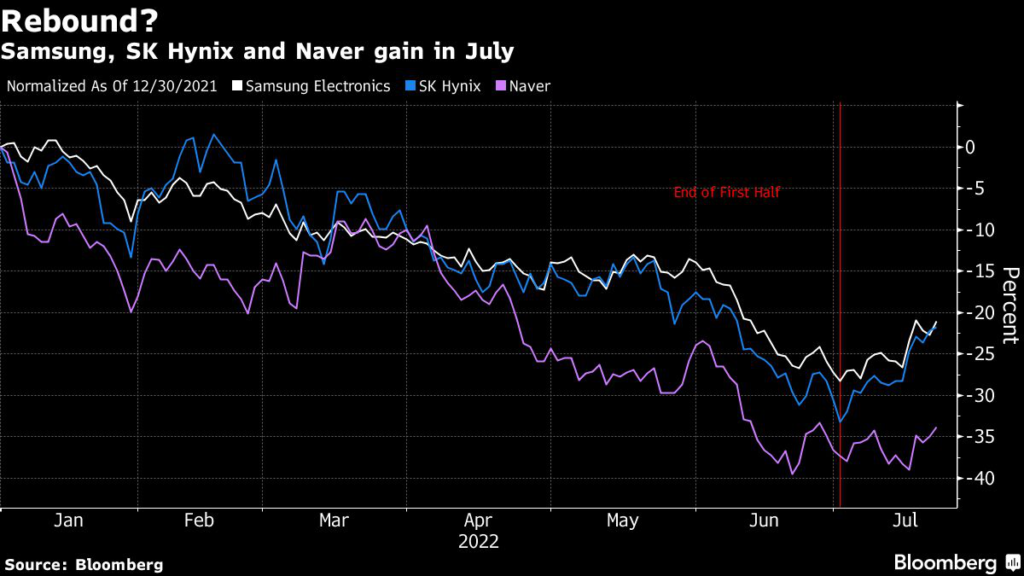
During that period, shares of Samsung Electronics Co. lost more than a quarter of their value as net selling by foreigners exceeded $6 billion. SK Hynix Inc. sank 31%, outpacing the Kospi’s 22% loss. 

The fund’s heavy exposure to South Korean tech stocks is now starting to pay off, Choi said. Both Samsung and SK Hynix gained at least 8% so far this month, while the benchmark stock index added more than 3%. 

Internet giant Naver is attractive because of its cheap valuations, according to Choi. The stock, which has climbed more than 4% since plunging 37% in the first half, has a price-to-earnings ratio of 26, hovering near the lowest level since late 2021.  

“With the current valuation, Naver’s price has lost all the premiums as a platform company,” Choi said. “They will be an important momentum for improving our profitability during the second half.” 

More stories like this are available on bloomberg.com

©2022 Bloomberg L.P.

Seagate Drops After ‘Economic Conditions’ Blamed for Weak Forecast

(Bloomberg) — Seagate Technology Holdings Plc, the biggest maker of computer hard drives, gave a weak forecast for the current period citing “weakening global economic conditions,” sending the stock down more than 10%.

Revenue in the current period will be as low as $2.35 billion, Seagate said in a statement Thursday. That compares with an average analyst projection of $3 billion. Excluding certain items, profit will be about $1.40 a share, well short of the average estimate of $2.27.

The company also said it’s reducing its production plans to avoid a glut, joining other component makers such as Micron Technology Inc. in scaling back plans. Seagate is one of the first computer hardware makers to announce results in the current earnings season, but investors have already been bracing for a grim picture. 

“Right now, the consumers of the world have decided they’re spending money on other things,” Seagate Chief Executive Officer Dave Mosley said on a call with analysts. Mosley predicted that demand would begin to improve again in about two quarters. 

Under Mosley’s leadership, the company has concentrated on winning orders from companies that offer storage over the internet — so-called cloud service providers. Such buyers use high-capacity drives that carry bigger profit margins, Seagate executives said. 

That effort is continuing to pay benefits. Demand for online storage is still growing, and capital spending by owners of huge data centers remains strong, Mosley said. He doesn’t expect that market to undergo a drop-off in purchasing, he said. 

But spending on consumer products, such as thumb drives, has fallen off rapidly. Seagate now has almost no presence in the laptop and personal-computer market in general, Mosley said.

Seagate shares, which were down 26% this year at the close in New York, fell about 11% in extended trading.

(Updates with executive comments starting in fourth paragraph.)

More stories like this are available on bloomberg.com

©2022 Bloomberg L.P.
Tesla’s Rally Creates $1 Billion Headache for Its Army of Shorts

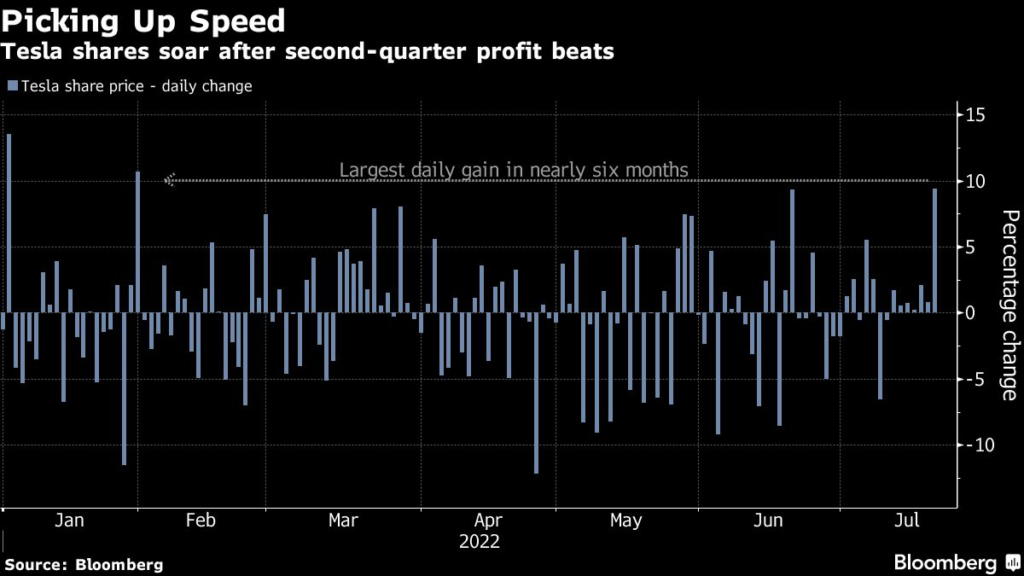
(Bloomberg) — The 10% surge in Tesla Inc. shares Thursday after the electric-vehicle maker reported strong earnings is creating one notable group of losers: The pile of traders betting against the stock. 

Tesla is the most shorted stock in the world, with almost 3% of its float held in short-selling positions. S3 Partners estimates that these investors are taking in more than $1 billion in mark-to-market losses just on Thursday’s surge. That drives their losses this month to $2.67 billion, according to S3.

“Tesla short sellers were actively trimming their exposure ahead of the earnings release, covering 2.09 million shares, worth $1.55 billion, over the last 30 days,” S3’s managing director of predictive analytics Ihor Dusaniwsky wrote in a note. Short sellers could continue to get squeezed out of their positions due to such “large and sudden losses,” he wrote.

Shares of the Elon Musk-led company wrapped up a seven-day winning streak to close at $815.12 in New York, the highest level since May 6.

Of course, none of this diminishes the strong year Tesla shorts have enjoyed so far, racking up $6.34 billion in mark-to-market profits in 2022. 

The reason is no surprise. Tesla is in the midst of a troubled year as the company battles supply-chain troubles and soaring raw-material costs. It was forced to tackle production disruptions in China due to Covid-related lockdowns. Then there’s Musk’s ill-fated pursuit of social-media company Twitter Inc., which weighed further on investor sentiment.  

However, Tesla’s second-quarter results after the market closed on Wednesday helped allay many of those concerns. The company stood by its production outlook for the year and said demand was not a problem. 

(Updates to close prices in)

More stories like this are available on bloomberg.com

©2022 Bloomberg L.P.
Stocks Notch Their Best Three-Day Rally Since May: Markets Wrap

(Bloomberg) — Stocks rose amid a rally in megacaps as strength in the corporate sector buoyed investor sentiment. Treasuries gained as data pointed to weakness in the US economy. 

The S&P 500 posted its biggest three-day gain since May 27, led by tech and consumer discretionary stocks on Thursday. Tesla Inc. topped the leaderboard after its quarterly results beat estimates, with Apple Inc. and Amazon.com Inc. also pushing higher ahead of earnings due next week. Stocks briefly hit session lows in morning trading on news of US President Joe Biden testing positive for Covid. 

In post-market trading, Snap Inc. plunged more than 20% after the company reported revenue that missed estimates, citing a slowdown in the ad industry. That weighed on social-media peers Meta Platforms Inc. and Pinterest Inc.

Treasury yields dropped, with the 10-year rate sinking 14 basis points to 2.88% after a knee-jerk move higher following the European Central Bank’s greater-than-expected rate hike. Data showing a rise in jobless claims suggested softening in the labor market, while the Philadelphia-area manufacturers’ outlook for business conditions slumped to the lowest since 1979 and the Conference Board’s leading economic index fell more than estimated.

Markets were buffeted in early trading after the ECB hiked rates by 50 basis points, the first increase in 11 years and biggest since 2000. It comes as a brewing political crisis in Italy ramps up the pressure on the ECB to shield the most vulnerable eurozone members from market speculation through a new crisis management tool. The euro initially climbed on the decision before paring those gains against the dollar.


“There’s enough circuit breakers in the market, particularly when you think about the strength of the consumer, the strength of the corporate sector and how well telegraphed this potential recession has been,” Stephen Parker, head of advisory solutions at JPMorgan Private Bank, said on Bloomberg TV. “Because of that, a lot of that pain has already been felt by markets.”

The S&P 500 has climbed about 9% from a multi-year trough in mid-June amid earnings optimism and speculation the Federal Reserve will take a more measured approach to tightening policy. Whether the market has bottomed remains open to debate, but over the past month yields have fallen and rates markets have discarded bets for a full percentage point hike when the Fed meets next week.

Still, sentiment remains fragile amid accelerating inflation and the prospect of a steep downturn in global economies as well as the geopolitical risks, notably in Europe. The resumption of Russian gas exports to the region through Nord Stream could provide some relief for the continent that’s racing to store the fuel before the winter. 

More market commentary

  • “This is where we are, this is the world we live in, where there is going to be daily volatility like this,” Megan Horneman, CIO at Verdence Capital Advisors, said by phone. “The market is still trying to figure out where to go. We don’t know, from an inflation standpoint, we don’t know how far the Fed is going to have to go, the ECB is now getting quite aggressive.”
  • “The ECB did what’s needed, but let’s be clear – they have no good options,’ said James Athey, investment director at Abrdn. “The stagflation trade-off they face is horrible, the worst error they could make is to allow inflation to become unhinged. But dealing with inflation clearly hurts growth. Either way, equities aren’t a great investment.”

Some of the main moves in markets:

Stocks

  • The S&P 500 rose 1% as of 4 p.m. New York time
  • The Nasdaq 100 rose 1.4%
  • The Dow Jones Industrial Average rose 0.5%
  • The MSCI World index rose 0.8%

Currencies

  • The Bloomberg Dollar Spot Index fell 0.2%
  • The euro rose 0.3% to $1.0211
  • The British pound was little changed at $1.1979
  • The Japanese yen rose 0.5% to 137.55 per dollar

Bonds

  • The yield on 10-year Treasuries declined 12 basis points to 2.90%
  • Germany’s 10-year yield declined three basis points to 1.22%
  • Britain’s 10-year yield declined nine basis points to 2.05%

Commodities

  • West Texas Intermediate crude fell 3.5% to $96.36 a barrel
  • Gold futures rose 1% to $1,734.60 an ounce

More stories like this are available on bloomberg.com

©2022 Bloomberg L.P.
Close Bitnami banner
Bitnami