
Bloomberg

Chip Stocks Roar Back as Market Darlings After Mauling by Bears

(Bloomberg) — Battered in the June selloff that sent American equities into a bear market, chipmaker stocks are staging a stunning rebound this month.

Bolstered by evidence that supply-chain issues are easing and demand is growing, the Philadelphia Stock Exchange Semiconductor Index has surged 19% since July 1 handily outpacing the broader market rebound after the group’s valuation sank to the lowest level in three years. It continued its run Thursday, gaining 1.5%. 

Earlier this month, Taiwan Semiconductor Manufacturing Co. announced better-than-expected quarterly results, while Samsung Electronics Co. reported a 21% jump in revenue. On Wednesday, data for mobile phone shipments from China showed a jump of 9.2% in June, with overseas vendors like Apple Inc. leading demand. Meanwhile, the US Senate is advancing a $52 billion bill that would provide subsidies for the semiconductor industry.

Investors had previously soured on companies such as Marvell Technology Inc., Micron Technology Inc. and Advanced Micro Devices Inc. after the Federal Reserve’s restrictive policies threatened to plunge the economy into recession, which could dampen demand for many of the products that employ chips from phones to cars. But US consumer spending remains strong, and shopping interest appears to be increasing following the lifting of Covid lockdowns in major hubs such as Shanghai and Beijing. 

“These stocks have all fallen quite a bit, and their P/Es are near the low end of their typical range,” said Shaker Investments analyst Ray Rund. “I think the drop we’ve already seen suggests a lot of fears are priced in.”

Popular chips stocks have rallied recently as some dip buyers found their lower valuations attractive, Rund said. Advanced Micro Devices and Nvidia Corp. are on track to climb for seven straight sessions. “Better-than-feared” earnings from tech companies could be driving the optimism, according to Richard Bernstein’s Dan Suzuki. Firms including Qualcomm Inc. and Intel Corp. are set to report earnings next week. 

“As investors look to investing in the market in these tough times, they are looking for areas which are still providing opportunity,” Fiona Cincotta, senior financial markets analyst at City Index Ltd. “Businesses will be looking to update operations for cloud computing and AI, and that I think will help drive the chip manufacturers and demand for those stocks higher.” 

But while chip stocks carry some defensive qualities as supply constraints ease, traders should be mindful that chip investment is a long-term process, said Max Gokhman, chief investment officer for AlphaTrAI Funds.

“They are defensive in the sense that they’re manufacturing a good that’s seeing secular acceleration in demand amid constrained supply,” Gokhman said. “You need to spend billions and years to build more plants to increase global production capacity, so it’s not as simple as just pumping more oil for instance.”

(Updates price chart for Thursday close)

More stories like this are available on bloomberg.com

©2022 Bloomberg L.P.

WorldRemit Parent Zepz Names Bill.com Executive Lenhard Next CEO

(Bloomberg) — Financial technology startup Zepz has named Bill.com Holdings Inc.’s Chief Operating Officer Mark Lenhard as its next chief executive officer, people familiar with the matter said.

He will take over leadership of the London-based startup from Breon Corcoran, who announced his departure from Zepz in June, the people said, asking not to be identified because the move hasn’t been publicly announced. 

A representative for Zepz said that the board had appointed a new CEO, and that the company will make a formal announcement in September, declining to comment further. Lenhard didn’t immediately respond to a message on LinkedIn requesting comment. 

Lenhard is joining as the company prepares for an initial public offering that was being planned for as soon as this year, Bloomberg News has reported. Zepz, which is the parent company of money transfer business WorldRemit, was last valued at $5 billion in a fundraising round last year. 

Read more: UK’s $5 Billion Fintech Zepz Struggled With Accounting, Churn

The transition coincides with a round of layoffs and cost cutting at Zepz. Corcoran outlined plans in February to cut roughly 5% of WorldRemit’s workforce, freeze pay for most employees, downsize the London office and slash the marketing budget by $40 million. 

Bloomberg reported last week that Zepz has also struggled with its accounts and turnover in its senior ranks. Zepz called allegations about accounting issues “speculative and factually incorrect,” and added that the company hadn’t announced a timeline for an IPO.

Lenhard has also been a managing director at JPMorgan Chase & Co. and a vice president at Adobe Inc. 

More stories like this are available on bloomberg.com

©2022 Bloomberg L.P.

Musk Lieutenant Scrutinized in Internal Tesla Purchasing Probe

(Bloomberg) — Omead Afshar, one of Elon Musk’s top lieutenants and the executive running Tesla Inc.’s Texas factory, is under scrutiny in an internal investigation for his role in a plan to purchase hard-to-get construction materials, according to people familiar with the matter.

Tesla has already fired some employees in relation to the probe, and the electric-vehicle maker plans to part ways with Afshar, likely through a leave of absence initially, the people said, asking not to be identified discussing private information. Terms of his exit are still being worked out. 

Afshar declined to comment. Tesla and Musk didn’t respond to requests for comment. 

The internal investigation, led by Tesla Acting Head of Legal David Searle, started after a purchase order for construction material was identified as suspicious, the people said. 

The order, for a special kind of glass, was flagged to Tesla’s finance and internal audit groups earlier this year, the people said. Investigators are trying to determine whether the glass was for Tesla Chief Executive Officer Musk’s personal use, people with knowledge of the matter said. 

Global supply chain disruptions have made the glass difficult to secure, but Tesla’s status as a global manufacturing powerhouse makes it easier for the company to acquire materials in high demand. 

Afshar had requested the purchase order be created and told the workers involved it was for a secret project, the people said.

Afshar has continued to work at the Austin, Texas, plant this week, but is likely to take a leave of absence as the investigation continues, the people said. 

As one of Musk’s top executives at Tesla, Afshar has been in charge of overseeing the construction and then production at the plant in Austin, Texas. A member of the office of the CEO since 2017, his most recent job title was listed on his LinkedIn page as a cowboy hat emoji.

Inside Tesla, Afshar was seen as Musk’s fixer, dispatched to smooth out kinks in the operation. In a 2019 interview at the University of California at Irvine, his alma mater, Afshar said he’d performed many roles at Tesla over the years.

“I focus on where there’s a problem, so a lot of firefighting. If there’s an issue, that’s where I am,” he said. “Usually when people see me they’re not always happy, because it means there’s a problem.” 

Afshar graduated from UC Irvine in 2009 with a degree in biomedical engineering and a season’s experience as a ski instructor at California’s Mammoth Mountain, according to his LinkedIn profile. He worked for more than six years at St. Jude Medical Inc. and its acquirer, Abbott Laboratories, in product engineering and managing roles before joining Tesla, part of a cohort of young, ambitious executives handpicked by Musk to carry out orders.

He’s been a jack of all trades ever since. In early 2021, as the US was in the beginning stages of a Covid-19 vaccine rollout, Afshar wrote to California’s lead epidemiologist to convey a Tesla board member’s request to assist with distribution of the shot. By this year, Afshar was in Austin, providing tours to potential recruits from the nearby University of Texas. He briefly appeared on stage at Tesla’s Cyber Rodeo event in April, receiving a personal thank-you from Musk himself.

More stories like this are available on bloomberg.com

©2022 Bloomberg L.P.

Amazon to Use Rivian Vans as EV Maker Works Toward Delivery Goal

(Bloomberg) — Amazon.com Inc. is starting delivery of packages to US customers using the first of as many as 100,000 electric vans built by Rivian Automotive Inc., which aims to hand over thousands of the vehicles this year.

  • Vehicle roll-out starts Thursday in Chicago, Dallas, Kansas City, Phoenix, San Diego, Seattle and St. Louis
  • Amazon expects to have Rivian vans deployed across more than 100 cities by year-end
  • Amazon has delivered 430,000 packages and driven 90,000 miles using Rivian pre-production battery-powered vans since 2021
  • Rivian CEO RJ Scaringe tells Bloomberg Television his company is working “as hard we can” to hit initial delivery target of 10,000 vans to Amazon by year-end
    • “We’ll certainly have many thousands of vehicles on the road by the end of this year, but not providing a specific number,” Scaringe says in interview to air Thursday
  • Scaringe says forthcoming layoffs to help company “more efficiently structure parts of the team”
    • Rivian is “trying to be as intentional and thoughtful in terms of what that means for the business, what that means for the individuals, as we work through that process”
    • NOTE: July 11, Rivian Plans Hundreds of Job Cuts Following Surge in Staffing
  • Rivian has made “remarkable progress” since partnership between with Amazon was announced in 2019, Udit Madan, a transportation executive with Amazon, says in Bloomberg Television interview
  • Rivian shares pared an early gain of as much as 6.1% to trade up 3.3% at 3:11 p.m. in New York
  • NOTE: Oct. 6, Amazon Shapes Rivian’s Future and Hopes for $80 Billion IPO

More stories like this are available on bloomberg.com

©2022 Bloomberg L.P.
Bitcoin Miners Cut Power the Most Since China Ban Amid Heat Wave

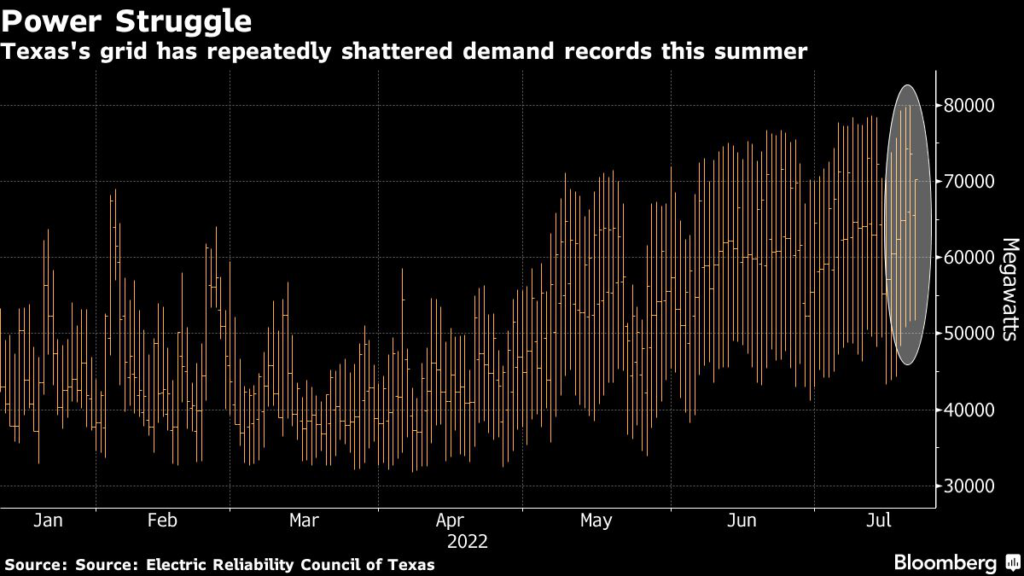
(Bloomberg) — Bitcoin miners saw the biggest drop in computing power since China banned crypto mining last May due to a record heatwave in Texas.

A leading indicator of closures, Bitcoin mining difficulty, has plunged 5% — the largest drop over a two-week period since Chinese operators were forced to unplug millions of machines due to a sweeping mining ban by the central government. Bitcoin mining difficulty measures how hard a miner has to work to mint a limited supply of coins. In May 2021, Bitcoin mining difficulty fell nearly 16% and remained down for two straight months. 

The Lone Star state has dethroned China as one of the largest Bitcoin mining hubs thanks to its low energy prices and liberal regulation on crypto mining. However, the extreme heat in Texas this summer has wreaked havoc on mining operations. A sudden change in ambient temperature could significantly accelerate mining machines’ depreciation rate by damaging their chips. 

Nearly all industrial-scale mining operations were shut down due to a heatwave-induced power crunch last week. Most miners in Texas turned off their machines upon the request of the state’s power operator, Electric Reliability Council of Texas. While some miners may have taken a loss, others could compensate part of that loss or even make a profit from turning off the depending on their power purchase agreements, BTIG analyst Gregory Lewis wrote in a research note. Some can sell power back to the grid for a higher price, the note said.  

Bitcoin mining, which secures the Bitcoin blockchain network with energy-intensive computers and earn rewards in the token, has become a multi-billion dollar industry as the digital currency saw a historic bull run last year. It stumbled as Bitcoin prices have fallen more than 50% this year. 

Extreme weather has become one of the biggest challenges for US-based Bitcoin miners since most of their operations are in the crypto-friendly Southern states. States like Georgia, which is also facing a heatwave, are seeing rapid growth in mining operations. 

Mining companies continue to deploy tens of thousands of machines across the US. Crypto mining giant Marathon Digital Holdings expects to install about 66,000 rigs with a 90-megawatt facility in Texas and a 110-megawatt mining farm in North Dakota. The company has another 68,000 rigs waiting to be energized in West Texas. Meanwhile, Riot Blockchain is building out its one-gigawatt site after putting a 750-megawatt facility in operation in Texas. 

More stories like this are available on bloomberg.com

©2022 Bloomberg L.P.
Union Goes on Strike at Mexico’s Biggest Telecom Company

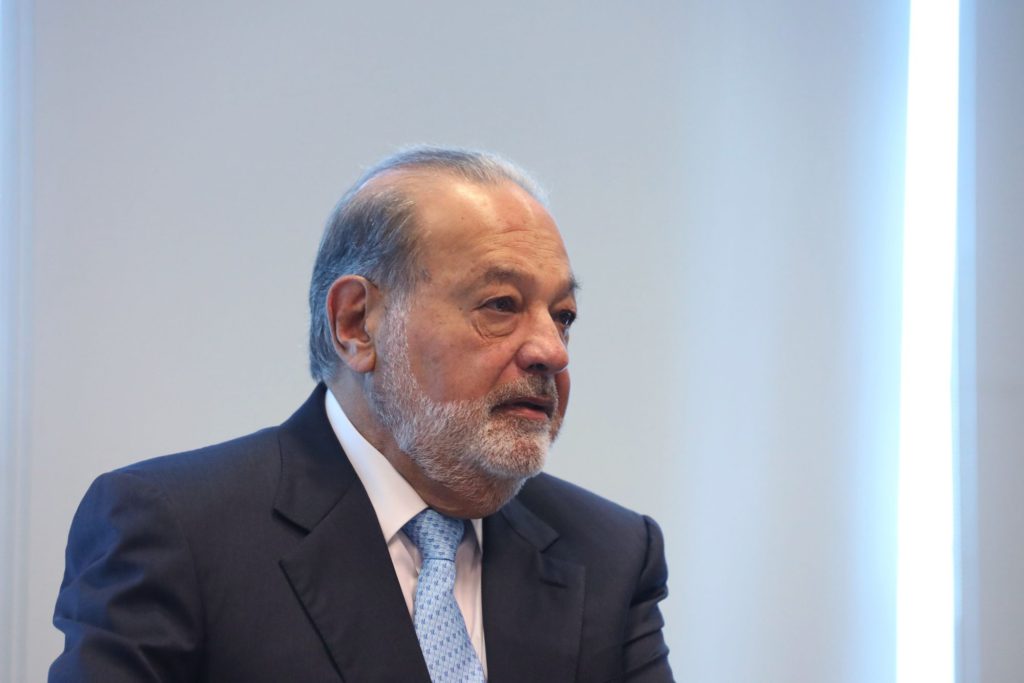
(Bloomberg) — Unionized workers at billionaire Carlos Slim’s Telmex, a unit of America Movil SAB, are striking after they were unable to reach a deal with the company on wage increases amid rising inflation.

Approximately 28,000 workers across the country went on strike at midday on Thursday, a union representative said. It marked the first time Telmex’s unionized workers have walked out since 1985. Slim took control of Telmex in a 1990 privatization. 

The union is asking for a 7.5% wage increase for both its active and retired workers, plus a 2.9% increase in their benefits package, according to a Wednesday night statement. The company is offering a 4.4% increase in wages and 1.1% increase in benefits, the union said, but is offering a smaller increase for the retired workers.

America Movil confirmed the strike and said it was unable to reach a deal that would allow for the company’s “economic viability,” according to a statement. “Telmex guarantees the quality and continuity of all its telecommunication services thanks to its latest generation technology,” it said, adding negotiations are ongoing.

Workers are also asking the company fill 2,000 vacant spots that Telmex said it would fill months ago. 

Mexico’s inflation in June accelerated to the fastest pace since early 2001 to 7.99%.

More stories like this are available on bloomberg.com

©2022 Bloomberg L.P.

YouTube to Remove Abortion Falsehoods, Direct Users to Facts

(Bloomberg) — YouTube will begin taking down content that promotes dangerous abortion methods or falsehoods about the safety of the procedure, responding to concerns from advocates about the spread of misinformation as abortion access declines in the US.

The hugely popular video site, which is part of Alphabet Inc.’s Google, said Thursday that it would follow guidelines from health authorities in implementing the policy, with enforcement “ramping up over the next few weeks.” Examples of content that would be removed under the policy include at-home abortion instructions that deviate from guidelines from health authorities and false claims that abortion often results in infertility or cancer, YouTube said.

Medical professionals have reported seeing an uptick in unsafe abortion-related content on social media, including viral videos about the use of toxic herbs to stop a pregnancy, since the US Supreme Court overturned Roe v. Wade, a ruling that provided federal protection for abortion rights for five decades. 

“We believe it’s important to connect people to content from authoritative sources regarding health topics, and we continuously review our policies and products as real world events unfold,” a YouTube spokesperson said in a statement.

Melissa Fowler, the chief program officer at the National Abortion Federation, said the new policy by YouTube was a good step.

“We should be holding platforms accountable and making sure that people who are searching for information about abortion are not subjected to any type of medical misinformation or misleading content,” she said in an interview. “People should be able to trust that they are being directed to places where they can get accurate information about abortion and their options.”

YouTube said it would also begin showing information from health authorities alongside videos and search results regarding abortion. The company provides similar information alongside searches related to Covid-19 and elections.

YouTube has tightened its medical rules several times since the pandemic began. In 2020, YouTube banned inaccurate information about Covid-19, although critics say the company’s enforcement of the rules has fallen short. 

After Covid-19 vaccines were introduced, YouTube barred videos casting doubt on the science behind treatments before deciding, last fall, to extend the ban to cover any vaccines.

More stories like this are available on bloomberg.com

©2022 Bloomberg L.P.

Coinbase Petitions SEC to Propose Rules for Trading

(Bloomberg) — Coinbase Global Inc., the largest US cryptocurrency platform, is calling on the Securities and Exchange Commission to propose clear rules for the trading of digital assets.

In a petition submitted on Thursday, the exchange — which has clashed with the SEC in the past — asks the regulator to clarify which digital assets it considers to be securities. The company also stresses the importance of establishing guardrails, given the market meltdown that has wiped out trillions of dollars and bankrupted several companies.

“The U.S. does not currently have a functioning market in digital asset securities due to the lack of a clear and workable regulatory regime,” read Coinbase’s petition.

Under Chair Gary Gensler, the SEC holds the view that most digital assets are securities and requires exchanges to register with the agency. The regulator has generally pushed back, though, on the notion that it needs to go through and identify each token that fits the securities definition, saying it doesn’t do that for any other markets.

It did, however, label nine tokens as securities in a complaint filed Thursday that accused a former Coinbase employee and two other individuals of engaging in insider trading. Of the nine tokens identified, the largest is an Ethereum-based token called Amp that was created by Flexa Network Inc. The coin has a market value of about $700 million, according to CoinGecko.

Still, Coinbase asserts that the tokens it lists — just under 200 in the US — aren’t securities. 

“We vet them quite carefully to make sure that they are as far away from being securities as possible,” said Faryar Shirzad, chief policy offer at Coinbase. 

On top of the classification issue, Coinbase also presented a list of questions that the SEC should consider and seek public feedback on — a process that should not be rushed, Shirzad said.

“What we really want is an open, transparent process,” he said. “And that will take the time it takes.”

(Clarifies reference to tokens identified in the SEC complaint in the fifth paragraph.)

More stories like this are available on bloomberg.com

©2022 Bloomberg L.P.

China’s Top Chipmaker Achieves Breakthrough Despite US Curbs

(Bloomberg) — Semiconductor Manufacturing International Corp. has likely advanced its production technology by two generations, defying US sanctions intended to halt the rise of China’s largest chipmaker.

The Shanghai-based manufacturer is shipping Bitcoin-mining semiconductors built using 7-nanometer technology, industry watcher TechInsights wrote in a blog post on Tuesday. That’s well ahead of SMIC’s established 14nm technology, a measure of fabrication complexity in which narrower transistor widths help produce faster and more efficient chips. Since late 2020, the US has barred the unlicensed sale to the Chinese firm of equipment that can be used to fabricate semiconductors of 10nm and beyond, infuriating Beijing.

A person familiar with the developments confirmed the report, asking not to be named as they were not authorized to discuss it publicly. SMIC climbed as much as 1.9% in Hong Kong, while Chinese chip and chip gear stocks including Shanghai Fudan Microelectronics Group Co., Naura Technology Group Co. and Advanced Micro-Fabrication Equipment Inc. gained more than 5%.

SMIC’s surprising progress raises questions about how effective export controls have been and whether Washington can indeed thwart China’s ambition to foster a world-class chip industry at home and reduce reliance on foreign technologies. It also comes at a time American lawmakers have urged Washington to close loopholes in its Chinese-oriented curbs and ensure Beijing isn’t supplying crucial technology to Russia.

The restrictions effectively derailed Huawei Technologies Co.’s smartphone business by cutting it off from the tools to compete at the cutting edge — but that company is now quietly staffing up a renewed effort to develop its in-house chipmaking acumen.

Previously, SMIC has said that its core capabilities stand at 14nm, two generations behind 7nm, which in turn is roughly four years behind the most advanced technology available now from Taiwan Semiconductor Manufacturing Co. and Samsung Electronics Co. The company has worked with clients on technologies more advanced than 14nm as early as 2020, it said on an earnings call that year.

China-based MinerVa Semiconductor Corp., which is named as SMIC’s customer in the TechInsights report, showcases a 7nm chip on its website and said mass production began in July 2021, without specifying the manufacturer. Dylan Patel, chief analyst at SemiAnalysis, was first to note the report.

Representatives of SMIC and MinerVa didn’t immediately respond to requests for comment.

The labels attached to generations of chip production technology have become increasingly controversial as they no longer represent dimensions of the microscopic transistors that give chips their electronic function. Companies have accused each other of mislabeling their products to make them appear more advanced than they actually are.

And while the ability to produce a small number of chips using the next level of production technique signals that a company is making technological progress, what determines economic viability — under normal circumstances — is yield, or the percentage of every production run that’s successful. Intel Corp, once the leader in production technology, stalled on one type of production for five years because it couldn’t get enough viable chips to make it profitable to introduce that node into mainstream production.

SMIC is not operating under standard business conditions however. It is critical to China’s ability to produce chips domestically as the US tries to undercut the country’s tech advancements. Beijing may be willing to subsidize losses at domestic competitors like SMIC — out of fear its companies won’t have access to key components.

The Trump administration blacklisted SMIC about two years ago on national security concerns, citing the company’s ties with the Chinese military, an allegation the chipmaker has denied. Following Washington’s move, American equipment suppliers have been banned from providing the Chinese company with gear “uniquely required” to produce 10nm or more advanced chips without licenses, although it is not clear exactly what the US Department of Commerce has allowed domestic firms to sell to SMIC since.

Huawei and SMIC Scored Billions in US Licenses, Lawmakers Say

US Senator Marco Rubio and US Congressman Michael McCaul have repeatedly urged the department to tighten export control restrictions pertaining to SMIC to strengthen US security and ensure China is not transferring technology to Russia and helping Moscow evade sanctions.

“The Biden Administration will continue working to grow and strengthen our cooperation with allies and partners to ensure effective controls on semiconductor production so that we remain generations ahead of competitors in advanced semiconductor technology,” a spokesperson for the Commerce Department said. The National Security Council did not immediately respond to a request seeking comment.

SMIC has said that its blacklist status hurts its ability to develop sophisticated technologies. The company’s capability is severely curbed by its lack of access to ASML Holding NV’s extreme ultraviolet lithography (EUV) systems, which are required to make the most advanced chips that include 5nm and 3nm geometries. The Dutch firm has not shipped a single EUV machine to mainland China because of US pressure on the Dutch government.

US Pushes for ASML to Stop Selling Chipmaking Gear to China

The administration of President Joe Biden at one point considered tightening restrictions around SMIC but ruled out any unilateral action to allow for more time to negotiate with other trading partners. Those talks have not borne fruit so far. Washington is, however, pushing ASML to stop selling even less advanced gear to China.

SMIC told analysts in mid-2020 that a large share of the equipment it has for 14nm chips can be used to make more advanced chips and it is seeking to develop more sophisticated technology to improve its profitability.

(Updates with background on labelling of chip technology from eigth paragraph.)

More stories like this are available on bloomberg.com

©2022 Bloomberg L.P.

Crypto Altcoins Outperform as Tesla Sales Weigh on Bitcoin

(Bloomberg) — Smaller cryptocurrencies such as Ether and Avalanche were outperforming Bitcoin as Tesla Inc.’s discloser of recent sales weighed on the market bellwether. 

Bitcoin was mostly little changed after dropping as much 3.9% to $22,348 earlier Thursday. Ether, the second largest digital currency by market value, gained as much as 3.2% to $1,569. Avalanche climbed as much as 6.4% to $25.43.

The broader crypto sector continues to benefit from an increase in risk appetite, with technology shares leading gains among US equities. Bitcoin had been correlated with the tech shares amid much of the recent drop in prices.       

Tesla said Wednesday that it sold about 75% of Bitcoin during the second quarter because of concern about overall liquidity of the company given the Covid shutdowns in China. Tesla CEO Elon Musk, who has been as a major influencer in cryptocurrency, said the sales shouldn’t “be taken as some verdict on Bitcoin.”

Read: Tesla Sells Majority of Bitcoin After Turbulent Crypto Foray

Musk has expressed interest in Bitcoin and Dogecoin and at one point allowed customers to buy Tesla’s electric cars with the token. The company later suspended the Bitcoin payment option citing environmental concerns about cryptocurrency mining.

Tesla isn’t the only company that has adopted a Bitcoin strategy. Other companies to watch out for with significant Bitcoin holdings are MicroStrategy Inc. and Block Inc, lead by cryptocurrency advocates Michael Saylor and Jack Dorsey, respectively. MicroStrategy’s earnings will release Aug. 2, and Block on Aug. 4.

Bitcoin’s 50-day moving average which recently been a negative indicator for investors, despite a positive historical trend, has turned around, according to a July 21 note from Bespoke Investment Group, other similar moves have lead to large gains for Bitcoin, with notable exceptions.

“While short-term returns are generally good, a resumed long-term crypto bull market is hardly guaranteed based on the historical analogues,” the note read.    

More stories like this are available on bloomberg.com

©2022 Bloomberg L.P.

Close Bitnami banner
Bitnami
