Bloomberg

Tesla Sells Majority of Bitcoin After Turbulent Crypto Foray

(Bloomberg) — Tesla Inc. sold a significant chunk of its stake in Bitcoin, an investment that helped legitimize the world’s largest electronic currency.

“As of the end of Q2, we have converted approximately 75% of our Bitcoin purchases into fiat currency,” Tesla said in a shareholder letter Wednesday as part of the company’s earnings report. “Conversions in Q2 added $936M of cash to our balance sheet.”

The electric-car manufacturer disclosed in February 2021 that it had invested $1.5 billion in Bitcoin, and subsequently sold 10% of its stake that April. Tesla said Wednesday its digital assets have shrunk to $218 million, and that a Bitcoin impairment hurt second-quarter profitability.

Tesla Chief Executive Officer Elon Musk said on the earnings conference call that the company sold the Bitcoin to maximize its cash position because of uncertainty related to the Covid shutdowns. He noted that the sale should not be seen as “some verdict on Bitcoin.”

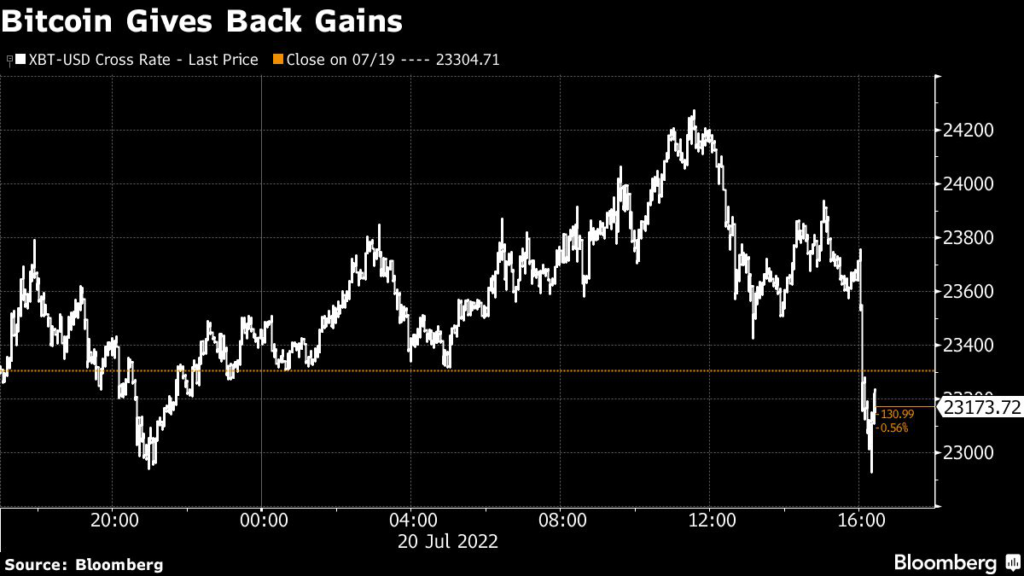
The cryptocurrency has retreated from a record high of almost $69,000 in November. The largest cryptocurrency by market value erased gains after the sales were disclosed, falling as much as $1.6% to $22,928.


Read More: Bitcoin Jumps to Highest Since the Aftermath of Celsius Meltdown

Musk has become a huge influencer in cryptocurrency. He has tweeted favorably about Dogecoin as an alternative and posted photos of his dog Floki, which like the Dogecoin mascot is a Shiba Inu. When Tesla held a massive party for its new Austin factory in April, a drone show featured a Dogecoin image. 

Musk’s embrace of Bitcoin had helped serve as a catalyst for the digital currency after Tesla briefly accepted the token for purchases, but it later suspended the payment option citing environmental concerns about its mining processes. The further pullback marks a hawkish move from one of the crypto sector’s most prominent bulls during what has been termed as a “crypto winter.’

Still, Musk has positioned himself as pro-crypto, hinting in recent weeks that his other company, SpaceX, may join Tesla in accepting Dogecoin for merchandise purchases in future.

Shares in MicroStrategy Inc., another major corporate buyer of Bitcoin, were down around 4% in post-market trading. At the end of the second quarter, the software firm’s own Bitcoin pile was worth around $3.4 billion less than in the previous one.

Josh Olszewicz, head of research at crypto fund manager Valkyrie Investments, said rough estimates would place Tesla’s Bitcoin sales at around the $30,000 price level, with $218 million in remaining digital assets on its balance sheet.

“Strongly bearish market conditions since the beginning of the year as well as the need for cash on the balance sheet likely contributed to this decision. From a treasury management perspective, downside volatility may have been too unattractive to ignore in the near term,” Olszewicz said.  

(Adds comment from Musk in the fourth paragraph.)

More stories like this are available on bloomberg.com

©2022 Bloomberg L.P.

Stocks Regain Surer Footing in a Choppy Session: Markets Wrap

(Bloomberg) — US stocks rose in a volatile session as investors parsed the latest corporate news and the potential for geopolitical risks in Europe. The dollar gained, while the euro fell as Italy’s government looked set to collapse. 

The S&P 500 posted its first back-to-back gain in almost two weeks, with advances in tech and consumer discretionary stocks offsetting declines in defensive sectors, utilities and health care. While tech stocks briefly pared their advance after Google said it will pause hiring for two weeks, gains in Netflix Inc. on better-than-feared earnings underpinned rallies in streaming peers as well as confidence in consumers’ resilience. 

After the bell, Tesla Inc. reported earnings that beat Wall Street estimates, reflecting progress in getting production back on track. The shares initially jumped on the news before trading little changed. Alcoa Corp. climbed after earnings topped estimates and the aluminum producer announced an additional $500 million share buyback. 

Stocks advanced for third day in four amid optimism over the earnings season and growing speculation markets may have bottomed out. While that debate continues, with Sanford C. Bernstein strategists saying markets have yet to see full capitulation, rates markets have discarded bets the Federal Reserve will hike rates by a full percentage point next week, bolstering optimism the central bank will take a more measured approach to policy tightening.

“The fact that companies are showing a certain resilience to the current environment is reassuring market operators who have now started betting on a less aggressive monetary tightening than initially expected,” said Pierre Veyret, a technical analyst at ActivTrades. “Even if we’re not out of the woods yet, more and more traders now tend to believe the worst is behind for equity markets this year.”

The euro tumbled as Italy’s Prime Minister Mario Draghi appeared set to fall in a confidence vote after three key parties announced they wouldn’t support him.

Risk sentiment also took a hit earlier on news the European Union is preparing for a scenario where Russia halts gas exports to retaliate against sanctions over its invasion of Ukraine. Russian President Vladimir Putin signaled Europe will start getting gas, but warned that unless a spat over sanctioned parts is resolved, flows will be tightly curbed.

Read more: EU Proposes 15% Cut in Gas Consumpticrude oilon on Russian Supply Concern

Oil edged lower as growing stockpiles of crude and gasoline tempered fears of a tight market. Bitcoin gained for a third straight day, rising above $24,000 for the first time in more than a month.

More market commentary

  • “While I hope markets have bottomed, and I hope extreme pessimism can result in capitulation, it’s my job to point out the underlying factors behind market moves, and the bottom line is neither the economy nor corporate earnings have felt the full brunt of Fed tightening,” Tom Essaye, a former Merrill Lynch trader who founded The Sevens Report newsletter, said in a note.
  • “Netflix earnings can be interpreted that the US consumer can be doing a little bit better than anticipated,” said Ellen Hazen, chief market strategist and portfolio manager at F.L.Putnam Investment Management.
  • “Without Fed support from the corner, selling pressure has been severe and finally reached the washed-out level readings we have been watching for since the S&P 500 first broke down from its head and shoulders top formation,” Craig Johnson, chief market technician at Piper Sandler, said in a note.

How far will the Fed go in this hiking cycle? It takes one minute to participate in the confidential MLIV Pulse survey, so please click here to get involved. 

Key events to watch this week:

  • Earnings this week include Tesla
  • Bank of Japan, European Central Bank rate decisions. Thursday
  • Nord Stream 1 pipeline scheduled to reopen following maintenance. Thursday

Some of the main moves in markets:

Stocks

  • The S&P 500 rose 0.6% as of 4 p.m. New York time
  • The Nasdaq 100 rose 1.6%
  • The Dow Jones Industrial Average rose 0.2%
  • The MSCI World index rose 0.5%

Currencies

  • The Bloomberg Dollar Spot Index rose 0.2%
  • The euro fell 0.5% to $1.0177
  • The British pound fell 0.2% to $1.1975
  • The Japanese yen was little changed at 138.22 per dollar

Bonds

  • The yield on 10-year Treasuries was little changed at 3.03%
  • Germany’s 10-year yield declined two basis points to 1.26%
  • Britain’s 10-year yield declined four basis points to 2.14%

Commodities

  • West Texas Intermediate crude fell 1.9% to $102.26 a barrel
  • Gold futures fell 0.9% to $1,713.30 an ounce

More stories like this are available on bloomberg.com

©2022 Bloomberg L.P.

Crypto Exchange Zipmex Halts Withdrawals, Citing ‘Partners’

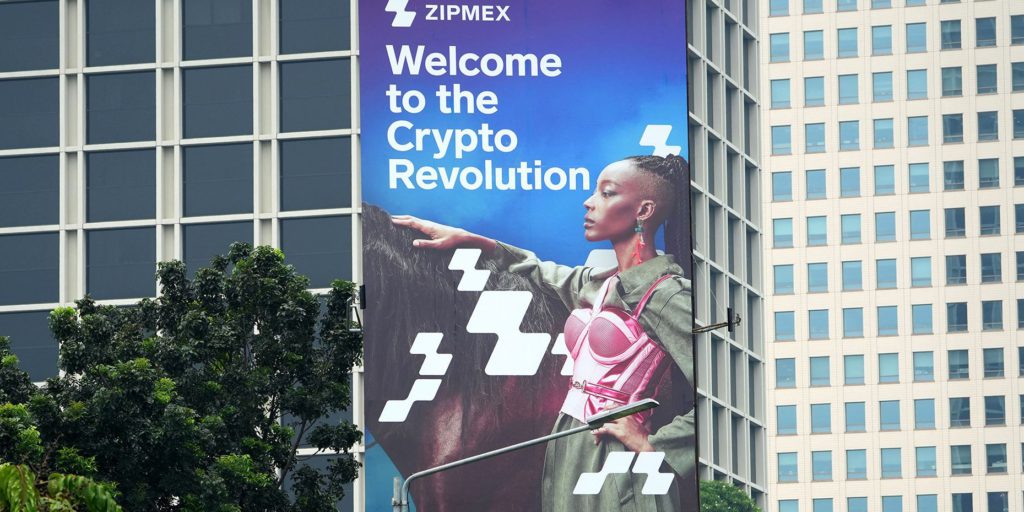
(Bloomberg) — Zipmex, a cryptocurrency exchange operating in markets like Singapore and Thailand, said it halted withdrawals as a series of defaults continues to haunt the digital-assets industry. 

In a tweet Wednesday, the company cited “volatile market conditions, and the resulting financial difficulties of our key business partners” as reasons for its decision. A person with direct knowledge of the matter said Zipmex’s pause stemmed from the platform’s exposure to troubled crypto lender Babel Finance. The person declined to be identified discussing confidential  matters. A spokesperson at Babel did not respond to a request for comment.

Zipmex joins crypto firms from Celsius Network Ltd. to Vauld in suspending withdrawals, leaving depositors in the lurch and underscoring the perils of leveraged bets permeating the industry. Vauld, a crypto lending and trading platform based in Singapore, is trying to stave off collapse by seeking relief from courts and selling itself to a rival. 

Zipmex has a license for digital asset trading from the Securities and Exchange Commission of Thailand, according to its website. In Singapore, the exchange holds an exempted payment service provider permit, rather than a full license under the central bank’s new regime for cryptoasset firms.

Sam Bankman-Fried Expands Crypto Empire During $2 Trillion Rout

The exchange was launched in September 2019 and is based in Singapore and Thailand, according to its website. The company’s native ZMT token has tumbled about 90% from its all-time high, CoinGecko data shows. 

Among its products is ZipUp+, an account that pays yields as high as 10% on deposits of tokens like Bitcoin, Ether and Litecoin. However, Zipmex warns on its website that prospective users aren’t protected, as the company isn’t licensed by the Monetary Authority of Singapore. 

“This means that you will not be able to recover all the money or DPTs you paid to Zipmex if Zipmex’s business fails,” a notice on the website says, referring to digital payment tokens.

(Adds exposure to Babel.)

More stories like this are available on bloomberg.com

©2022 Bloomberg L.P.

FaZe Clan’s Market Debut Disappoints Investors Who Don’t Buy the Hype

(Bloomberg) — The frat house of the video game industry is flinging open its doors and letting the public in. 

FaZe Clan, a bombastic organization of gaming celebrities and esports pros that helped pioneered the influencer marketing industry, began trading on the Nasdaq Wednesday after merging with a special purpose acquisition company. It became the first publicly traded Gen-Z influencer company and one of only a handful of esports companies on the market. But FaZe’s business is built on hype and Wall Street wasn’t buying it.When FaZe agreed to merge with B. Riley Principal 150 Merger Corp. last October, it was given a valuation of close to $1 billion. But much has changed since then, including a broader stock market downturn, investors’ lost interest in SPACs and FaZe’s own revised financial statements. The stock of the new FaZe Holdings Inc. fell 24% in New York to $9.88. Based on 72.5 million shares outstanding, including warrants and other holdings, according to FaZe, that gives the company a fully diluted value of about $716 million.

The Los Angeles-based organization was formed in 2010 by a group of teens who met playing Xbox online. They began posting clips of themselves performing trick shots in Call of Duty on YouTube, which attracted large audiences of young, primarily male gamers. 

FaZe Clan soon became associated with the cool, older teen who could earn thousands of dollars a day playing games such as Fortnite on streaming site Twitch in lieu of attending college or who might flash a diamond studded watch in a video about pranking his friends. The group is defined by “stunt” culture—from its founders pulling off eyebrow-raising sniper shots in Call of Duty, to the YouTube video by member Brian “FaZe Rug” Awadis called “I Filled my Swimming Pool with GIANT SNAKES!! **scary**” which has been viewed more than 19 million times. 

FaZe Clan has parlayed its popularity into lucrative brand tie-ins with companies like General Mills Inc. and McDonald’s Corp., and lines up content deals and collaborations like one with Japanese artist Takashi Murakami that clocked more than $1 million in sales on the first day. FaZe Clan became the first esports organization to land on the cover of Sports Illustrated and has its own Batman comic book. It also earns revenue through branded streetwear, ads on YouTube and Twitch videos, and wins some money through esports competitions. 

FaZe’s name is its most valuable asset. Members attach “Faze” to their gamer nicknames and are “immensely more famous the day after,” Chief Executive Officer Lee Trink said in an interview with Wired in 2020.  However, FaZe’s reliance on public perception and sponsorships, which make up half its revenue, clashes with its ethos as an edgy, often controversial organization.

“It’s very experimental,” says Joost van Dreunen, a New York University Stern School of Business lecturer who wrote “One Up: Creativity, Competition, and the Global Business of Video Games.” “They’re a pioneer of digital lifestyle branding and post-pandemic entertainment. Basically, a bunch of cool people trying to sell merch by acting cool, and making people want to be cool like them.” 

FaZe Clan now counts more than 500 million global followers on social media. Its 93 “influential personalities” include a mix of talent who go beyond the world of gaming, such as National Basketball Association star Anthony Davis, Lebron “FaZe Bronny” James Jr. and Snoop Dogg aka “FaZe Snoop,” who wore a gold chain that read “FaZe Clan” at the 2022 Super Bowl half-time show. Until last year, seven FaZe Clan members lived and filmed videos inside a $30 million Los Angeles mansion.

B. Riley’s Chief Investment Officer, Daniel Shribman, saw in FaZe “a brand that speaks to today’s youth culture like Nike spoke to yesterday’s.” But FaZe Clan is coming to market amid an economic downturn that could put pressure on budgets of sponsors, whose ranks include McDonald’s, Nissan Motor Co. and Doordash Inc. The stock market has been in a downward spiral for much of the year, and FaZe’s blank-check merger closes just weeks after a wave of similar SPAC deals were called off.  

When the plan was announced last October, the group was projecting $50 million in revenue in 2021 and a loss before interest, tax, depreciation and amortization of $19 million. But in April, FaZe reported an Ebitda loss in 2021 that was greater than its forecast by $9.7 million, widening to a loss of $28.7 million. The company also said it expects results for 2022 and 2023 to “differ materially” from its last forecast. 

FaZe is steeped in highly volatile industries: esports, branded sponsorships and, recently web3, a new idea for the next iteration of the web that incorporates concepts such as blockchain and cryptocurrencies. The organization relys on the hype factor to draw in revenue.

“Gen Z is the tip of the spear driving culture,” said Trink. “We have an understanding of the changes Gen Z wants to see in commerce and we have the position to capitalize.” Trink, a former music industry executive credited with managing Kid Rock’s career, has compared FaZe to MTV. 

FaZe is considered a world-class influencer organization, with all of the associated controversy. FaZe and its stable of rowdy teen boys — there’s only one woman among the current roster of influencers —  have been embroiled in controversies surrounding a racist slur, a sexist joke about women esports pros, and a “pump and dump” cryptocurrency scam called “SaveTheKids.” And that was all in the last year. In 2020, FaZe co-owner Ricky Banks advertised a site for gambling with video game cosmetics without disclosing that he owned it, and in 2021, was generously compensated to fly to Mexico to promote an offshore crypto gambling website. 

Two former FaZe superstars — Turner “Tfue” Tenney and Dennis “Cloak” Lepore, who have a combined 13 million YouTube subscribers — have had public blow-ups around their contracts.

The company shuns firm job titles and old-school professionalism, which, combined with FaZe’s big personalities, has contributed to internal volatility, according to people familiar with the organization. FaZe now has an interim chief financial officer, after his predecessor left after just one year. Several of FaZe’s Gen Z influencers, including Banks, have played a large part in the company’s business dealings. One former employee says kids with no experience in business or branding are calling the shots, and described the organization as a “shit-show.” “We’ve been preparing for over a year to become a public company,” Lee said. “In the time that we’ve announced our merger, we’ve put together a stellar management team and a world class board of directors to oversee the company. FaZe Clan has a professional management team and a public company board to run the business, but as a brand at the forefront of youth culture, it’s critical to include the perspectives of Gen Z and our people who have an innate knowledge of the internet community and the brand.”

Shribman believes FaZe’s brand will weather the scandals. “It’s edgy, deep-in-youth-culture, deep-in-gaming-culture. That’s what makes it what it is. If there were no controversies, that would be pretty boring.” 

FaZe may have pioneered a way to monetize gaming’s swagger, but holding its lead could be a challenge. It already faces competition from other esports teams that have pivoted into lifestyle brands such as 100 Thieves. And esports itself has proven difficult to make money in, with fickle sponsorships and tournament winnings barely buoying even the most well-respected organizations.

FaZe’s next steps are in web3. The company plans to spend some of its listing funds on acquisitions, Trink said. It’s also pursuing partnerships with several companies involved in the metaverse, an immersive version of the internet where users will interact through digital avatars. He is  “unquestionably” pushing forward into web3 despite crypto’s $2 trillion free fall.

“Gen Z is such an entrepreneurial generation,” Trink said. “And there have never been more tools to be entrepreneurial.”

(Updates with closing share trading. A previous version of this story removed an incorrect reference to the company’s market cap.)

More stories like this are available on bloomberg.com

©2022 Bloomberg L.P.

Celsius Bankruptcy Stings Caisse After $150 Million Investment

(Bloomberg) — Quebec’s pension manager broke its silence about its investment in Celsius Network LLC, saying it will “take time” to resolve claims around the bankrupt cryptocurrency lender but admitting the investment didn’t pan out. 

Caisse de Depot et Placement du Quebec invested $150 million in Celsius in October as part of a $400 million funding round co-led by WestCap Investment Partners LLC. 

Equity holders are likely to be wiped out after Celsius filed for Chapter 11 bankruptcy protection in a US court, a casualty of a meltdown in cryptocurrency prices that has wiped out a number of digital-asset lenders and platforms. Celsius disclosed last week that it has a $1.19 billion deficit on its balance sheet, with $5.5 billion of liabilities against $4.3 billion of assets. 

“We understand that our investment in Celsius raises a number of questions,” Caisse de Depot spokesperson Maxime Chagnon said in an emailed statement. “This is something that we take very seriously and we will provide further comment at the appropriate moment. Celsius is currently engaged in a complex process that will take time to resolve.”

The financing gave Celsius a valuation of more than $3 billion, the Quebec investment firm said at the time. Changon said the Caisse is “making every effort to preserve our rights” but did not elaborate. 

‘Not Performing’

“A very small portion of our overall portfolio is invested in new technologies, which feature innovative, high-growth companies in riskier sectors that offer the potential for superior returns — and have provided outstanding returns to our clients over a number of years,” said the Caisse statement. “However, some of our investments, such as the one in Celsius, are not performing as expected.”

Read more: Celsius Crypto FOMO Lured Finance Pros Too

Caisse, a C$420 billion ($326 billion) investment manager for pensions and other government funds in Quebec, will report mid-year investment results in August. 

The outcome of the transaction raises questions about the due diligence on the deal by the Montreal-based institution. At the time of the investment, Caisse Chief Technology Officer Alexandre Synnett said Celsius was “the world’s leading crypto lender with a strong management team that puts transparency and customer protection at the core of their operations.” 

More stories like this are available on bloomberg.com

©2022 Bloomberg L.P.
Bitcoin Erases Gains After Tesla Discloses Second-Quarter Sales

(Bloomberg) — Bitcoin fell for the first time in three sessions, erasing an earlier gain after Tesla Inc. disclosed that it sold about 75% of holdings of the cryptocurrency during the second quarter. 

Tesla said a Bitcoin impairment affected its second-quarter earnings and that it has converted about 75% of its Bitcoin purchases into fiat currency.

The conversions added $936 million of cash to the balance sheet, Tesla said in its earnings statement Wednesday. The automaker didn’t specify the size of the impairment. Bloomberg Intelligence said July 15 that the quarterly results could include a Bitcoin-related charge of about $740 million.

Tesla CEO Elon Musk has expressed interest in Bitcoin and Dogecoin and at one point allowed customers to buy the company’s electric cars with Bitcoin. It later suspended the Bitcoin payment option citing environmental concerns about Bitcoin mining.

Bitcoin had gained around 4.2% in trades earlier on Wednesday, but dropped as much as 1.6% into the red following Tesla’s announcement.

More stories like this are available on bloomberg.com

©2022 Bloomberg L.P.
Netflix Faces Tough Road Ahead Even After Subscriber Beat

(Bloomberg) — Netflix Inc. may have calmed investors’ worst fears with a second-quarter subscriber loss that was better than expected, but a closer look at the streaming giant’s results indicate it still faces significant hurdles. 

Wall Street cheered Tuesday’s subscriber numbers, which were only half as bad as the company forecast. Netflix also projected a return to subscriber growth in the current quarter. The shares rose 7.4% on Wednesday and the positive sentiment lifted other media stocks, including Walt Disney Co. and Paramount Global. 

But Netflix still lost 970,000 subscribers globally in the quarter and is seeing increased competition from rivals. To generate more revenue, it’s cracking down on password sharing and launching a new lower-priced tier featuring advertising, moves that are departures from how it operated in the past.

“Netflix may be better-than-feared, but it’s still not good,” market commentator Adam Crisafulli wrote in a post on his site Vital Knowledge.

Netflix has shed subscribers in the US and Canada, and is also shrinking in Europe, the Middle East and Africa, its two largest regions. It’s seen subscriber growth in Asia, but that’s not without price decreases in India. The company’s forecast for 1 million new subscribers in the current quarter is below analysts’ projections. And that forecast may be “overly optimistic, given an uncertain economic backdrop,” according to the research firm Third Bridge.

The competition is certainly not letting up. HBO Max has an August release date for “House of the Dragon,” a prequel to one of its top-performing shows “Game of Thrones.” Amazon Prime’s new series “The Lord of the Rings: The Rings of Power,” debuts in September. The fourth season of Netflix’s hit series “Stranger Things” offered renewed interest in the service, but analysts are still unsure whether the company can continue to splurge on new shows the way it has in the past.

“As Netflix pivots into a new era of slowing top-line growth, the company will now need to slow down content spend in an intensely competitive market with deep-pocketed entrants,” MoffettNathanson senior analyst Michael Nathanson said in a research note. 

Netflix said the roll-out of its ad-supported tier would likely come in early 2023. Some analysts question the strategy. Pivotal Research Group said the new option may not increase subscriber growth in core markets and could even push down the company’s average revenue per user.

Executives tried to reassure investors on the earnings call Tuesday that initiatives such as advertising, the introduction of video games, as well a move to charge customers extra for accounts at second homes and with related subscribers will reignite the one-time high flier.

“While we remain skeptical, the company is clearly confident that it can someday return to hyper revenue growth in the future,” Wedbush Securities analysts wrote in a research note.


More stories like this are available on bloomberg.com

©2022 Bloomberg L.P.
Tesla Sold About 75% of Its Bitcoin to Add $936 Million to Balance Sheet

(Bloomberg) — Tesla Inc. said a Bitcoin impairment affected its second-quarter earnings and that it has converted about 75% of its Bitcoin purchases into fiat currency.

The conversions added $936 million of cash to the balance sheet, Tesla said in its earnings statement Wednesday. The automaker didn’t specify the size of the impairment. Bloomberg Intelligence said July 15 that the quarterly results could include a Bitcoin-related charge of about $740 million.

Tesla CEO Elon Musk has expressed interest in Bitcoin and Dogecoin and at one point allowed customers to buy the company’s electric cars with Bitcoin. It later suspended the Bitcoin payment option citing environmental concerns about Bitcoin mining.


More stories like this are available on bloomberg.com

©2022 Bloomberg L.P.

Stocks Regain Surer Footing, Dollar Pares Gain: Markets Wrap

(Bloomberg) — US stocks pushed higher in a volatile session as investors parsed the latest corporate news and the potential for geopolitical risks in Europe. While the dollar pared gains, the euro fell as Italy’s government looked set to collapse. 

The S&P 500 rose 0.7% after trading little changed, with gains in tech and consumer discretionary stocks offsetting declines in defensive sectors, utilities and health care. While tech stocks briefly pared their advance after Google said it will pause hiring for two weeks, gains in Netflix Inc. on better-than-feared earnings underpinned rallies in streaming peers as well as confidence in consumers’ resilience. Tesla Inc. rose ahead of its earnings set for release later Wednesday.

Stocks are gaining for third day in four amid optimism over the earnings season and growing speculation markets may have bottomed out. While that debate continues, with Sanford C. Bernstein strategists saying markets have yet to see full capitulation, rates markets have discarded bets the Federal Reserve will hike rates by a full percentage point next week, bolstering optimism the central bank will take a more measured approach to policy tightening.

“The fact that companies are showing a certain resilience to the current environment is reassuring market operators who have now started betting on a less aggressive monetary tightening than initially expected,” said Pierre Veyret, a technical analyst at ActivTrades. “Even if we’re not out of the woods yet, more and more traders now tend to believe the worst is behind for equity markets this year.”

The euro tumbled as Italy’s Prime Minister Mario Draghi appeared set to fall in a confidence vote after three key parties announced they wouldn’t support him.

Risk sentiment also took a hit earlier on news the European Union is preparing for a scenario where Russia halts gas exports to retaliate against sanctions over its invasion of Ukraine. Russian President Vladimir Putin signaled Europe will start getting gas, but warned that unless a spat over sanctioned parts is resolved, flows will be tightly curbed.

Read more: EU Proposes 15% Cut in Gas Consumpticrude oilon on Russian Supply Concern

West Texas Intermediate crude oil pared losses to trade near $102 a barrel. Bitcoin gained for a third straight day, rising above $24,000 for the first time in more than a month.

More market commentary

  • “While I hope markets have bottomed, and I hope extreme pessimism can result in capitulation, it’s my job to point out the underlying factors behind market moves, and the bottom line is neither the economy nor corporate earnings have felt the full brunt of Fed tightening,” Tom Essaye, a former Merrill Lynch trader who founded The Sevens Report newsletter, said in a note.
  • “Netflix earnings can be interpreted that the US consumer can be doing a little bit better than anticipated,” said Ellen Hazen, chief market strategist and portfolio manager at F.L.Putnam Investment Management.
  • “Without Fed support from the corner, selling pressure has been severe and finally reached the washed-out level readings we have been watching for since the S&P 500 first broke down from its head and shoulders top formation,” Craig Johnson, chief market technician at Piper Sandler, said in a note.

How far will the Fed go in this hiking cycle? It takes one minute to participate in the confidential MLIV Pulse survey, so please click here to get involved. 

Key events to watch this week:

  • Earnings this week include Tesla
  • Bank of Japan, European Central Bank rate decisions. Thursday
  • Nord Stream 1 pipeline scheduled to reopen following maintenance. Thursday

Some of the main moves in markets:

Stocks

  • The S&P 500 rose 0.7% as of 3:42 p.m. New York time
  • The Nasdaq 100 rose 1.6%
  • The Dow Jones Industrial Average rose 0.2%
  • The MSCI World index rose 0.6%

Currencies

  • The Bloomberg Dollar Spot Index rose 0.2%
  • The euro fell 0.5% to $1.0180
  • The British pound fell 0.2% to $1.1975
  • The Japanese yen was little changed at 138.24 per dollar

Bonds

  • The yield on 10-year Treasuries was little changed at 3.03%
  • Germany’s 10-year yield declined two basis points to 1.26%
  • Britain’s 10-year yield declined four basis points to 2.14%

Commodities

  • West Texas Intermediate crude fell 1.9% to $102.26 a barrel
  • Gold futures fell 0.7% to $1,715.30 an ounce

More stories like this are available on bloomberg.com

©2022 Bloomberg L.P.

Ford Plans Up to 8,000 Job Cuts to Help Fund EV Investment

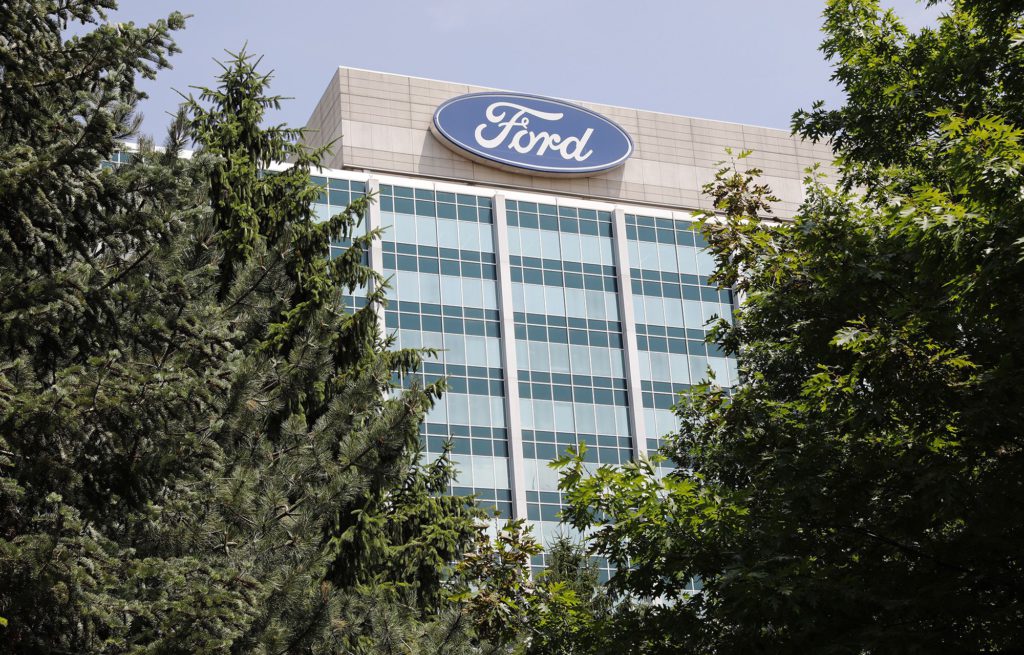
(Bloomberg) — Ford Motor Co. is preparing to cut as many as 8,000 jobs in the coming weeks as the automaker tries to boost profits to fund its push into the electric-vehicle market, according to people familiar with the plan.

The eliminations will come in the newly created Ford Blue unit responsible for producing internal combustion engine vehicles, as well as other salaried operations throughout the company, said the people, who asked not to be identified revealing internal discussions. The plan has not yet been finalized and details could still change.

The move would mark a significant step in Chief Executive Officer Jim Farley’s plan to cut $3 billion of costs by 2026. He has said he wants to transform Ford Blue into “the profit and cash engine for the entire enterprise.” In March, Farley radically restructured Ford, cleaving its carmaking in two by creating the “Model e” unit to scale up EV offerings and “Ford Blue” to focus on traditional gas burners like the Bronco sport-utility vehicle.

The job cuts are expected to come among Ford’s salaried ranks in a variety of operational functions, according to the people familiar. They may come in phases, but are likely to begin this summer, the people said. Ford employs about 31,000 salaried workers in the US, where the bulk of the cuts are expected.

Ford declined to comment on possible job cuts, saying that it’s focused on reshaping the organization to capitalize on the growth of electric vehicles. “As part of this, we have laid out clear targets to lower our cost structure to ensure we are lean and fully competitive with the best in the industry,” Chief Communications Officer Mark Truby said in a statement.

See also: Renowned Ford vehicle developer Thai-Tang to step down

Farley has said cutting staff is a key to boosting profits, which have evaporated on its electric Mustang Mach-E and other plug-in models amid rising commodity and warranty costs.

“We have too many people,” Farley said at a Wolfe Research auto conference in February. “This management team firmly believes that our ICE and BEV portfolios are under-earning.”

Ford’s shares tumbled 39% this year through Tuesday, worse than the broader market, amid inflation fears and supply-chain snarls roiling the automotive industry.

In March, Farley boosted spending on EVs to $50 billion and set a plan to build 2 million battery-electric vehicles annually by 2026, after selling just 27,140 in the US last year. Last month, Ford’s EV sales rose 76.6% from a year earlier as it rolled out the hot new electric F-150 Lightning pickup.

To finance Ford’s electric ambitions, Farley has said he needs the company’s traditional gas-fueled models to make more money.

“The funding for that $50 billion, it’s all based on our core automotive operations,” Farley said in a March interview with Bloomberg Television. “That’s why we created a separate group called Ford Blue, because we need them to be more profitable to fund this.”

(Updates with Ford comment in fifth paragraph)

More stories like this are available on bloomberg.com

©2022 Bloomberg L.P.

Close Bitnami banner
Bitnami