

Bloomberg

Apple, Google, Amazon: Tracking Tech Companies That Are Slowing Hiring

(Bloomberg) — With recession fears mounting—and inflation, the war in Ukraine and the lingering pandemic taking a toll—many tech companies are rethinking their staffing needs, with some of them instituting hiring freezes, rescinding offers and even starting layoffs.

Google and Lyft Inc. are some of the latest companies to pull back. The internet search giant is pausing hiring for the next two weeks, while the ride-hailing business is shutting down a division and trimming jobs. 

Here’s a look at the dozens of companies that are tapping the brakes.

Alphabet Inc., Google’s parent company, has been decelerating its recruiting efforts. Chief Executive Officer Sundar Pichai told employees this month that—although the business added 10,000 Googlers in the second quarter—it will be slowing the pace of hiring for the rest of the year and prioritizing engineering and technical talent. “Like all companies, we’re not immune to economic headwinds,” he said. The hiring pause announced Wednesday is part of that slowdown, Google said, “to enable teams to prioritize their roles and hiring plans for the rest of the year.” It had nearly 164,000 employees at the end of March.

Amazon.com Inc. said in April that it was overstaffed after ramping up during the pandemic and needed to cut back. “As the variant subsided in the second half of the quarter and employees returned from leave, we quickly transitioned from being understaffed to being overstaffed, resulting in lower productivity,” Chief Financial Officer Brian Olsavsky said. Amazon is subleasing some warehouse space and has paused development of facilities meant for office workers, saying it needs more time to figure out how much space employees will require for hybrid work. The company had 1.6 million workers as of March, making it the biggest employer in the tech world.

Apple Inc. is planning to slow hiring and spending at some divisions next year to cope with a potential economic slump, according to people familiar with the matter. But it’s not a companywide policy, and the iPhone maker is still moving forward with an aggressive product-release schedule. Apple had 154,000 employees in September, when its last fiscal year ended.

Carvana Co., an online used car retailer, laid off 2,500 people in May, about 12% of its workforce. In an unusual move, the executive team will forego salaries for the rest of the year to pay severance to those who were let go, according to a filing with the Securities and Exchange Commission. The company had more than 21,000 full-time and part-time employees at the end of last year.

Coinbase Global Inc., a cryptocurrency exchange, told employees it was cutting 18% of staff in June to prepare for an economic downturn. It also rescinded job offers. “We appear to be entering a recession after a 10+ year economic boom,” CEO Brian Armstrong said in a blog post. “While it’s hard to predict the economy or the markets, we always plan for the worst so we can operate the business through any environment,” he said. The company ended the quarter with about 5,000 employees. 

Compass Inc., a real estate brokerage platform, is eliminating 450 positions, about 10% of its staff, according to a filing last month. The company had nearly 5,000 employees at the end of 2021.

Gemini Trust Co., a cryptocurrency exchange founded by Bitcoin billionaires Cameron and Tyler Winklevoss, announced a 10% staff reduction in June. 

GoPuff, a grocery delivery app, is laying off 10% of its workforce and closing dozens of warehouses. The cuts will affect about 1,500 staff members—a mix of corporate and warehouse employees.

Lyft told employees it was reining in hiring in May after its stock dropped precipitously. The company went further this week, announcing plans to shutter its car-rental business and cut about 60 jobs. Lyft had about 4,500 employees in 2021. Archrival Uber Technologies Inc., meanwhile, has been more upbeat. CEO Dara Khosrowshahi told Bloomberg in June that his company was “recession resistant” and had no plans for layoffs.

Meta Platforms Inc., the parent of Facebook, slashed plans to hire engineers by at least 30%. CEO Mark Zuckerberg told employees that he’s anticipating one of the worst downturns in recent history. The company had more than 77,800 employees at the end of March.

Microsoft Corp. told workers in May that it was slowing down hiring in the Windows, Office and Teams groups as it braces for economic volatility. The company had 181,000 employees in 2021. More recently, the software maker  cut some jobs—less than 1% of its total—as part of a reorganization.

Netflix Inc., the streaming giant, has had several rounds of highly publicized layoffs since it reported the loss of 200,000 subscribers in the first quarter. In April, it began scaling back some marketing initiatives, then cut 150 employees in May and 300 in June. Last quarter, it reported $70 million in expenses from severance and shed an additional 970,000 subscribers. Netflix had 11,300 employees in 2021.

Niantic Inc., maker of the Pokemon Go video game, fired 8% of its team in June. It was an effort to streamline operations and position the company to weather economic storms, CEO John Hanke told staff in an email. Niantic had around 800 employees at the end of last year.

Peloton Interactive Inc. announced plans to cut about 2,800 jobs globally, roughly 20% of its corporate roles, as part of a surprise shake-up in February that saw its CEO John Foley and several executive team members step down. In 2021, the company reported having nearly 9,000 employees.

Redfin Corp., another real estate brokerage, cut 8% of its staff in June. “We don’t have enough work for our agents and support staff,” CEO Glenn Kelman wrote in a blog post, saying that May demand was 17% below projections and that he expected the company to grow more slowly during a housing downturn. Redfin had about 6,500 employees at the end of last year.

Robinhood Markets Inc., the online brokerage, terminated 9% of its workforce in April. It had about 3,800 employees at the end of last year and racked up more than $2 billion of losses since going public last July.

Rivian Automotive Inc. is planning to cut hundreds of non-manufacturing jobs and teams with duplicate functions. The Southern California electric-vehicle maker, which has more than 14,000 employees, could make an overall reduction of around 5%. In a memo to employees, CEO RJ Scaringe said, “We will always be focused on growth; however, Rivian is not immune to the current economic circumstances and we need to make sure we can grow sustainably.” 

Salesforce Inc., the cloud computing platform, has been slowing hiring and reducing travel expenses, according to a leaked memo reported in May by Insider.

Spotify Technology SA, the audio service, is cutting employee growth by about 25% to adjust for macroeconomic factors, CEO Daniel Ek said in a note to staff in June. The company has more than 6,500 employees, according to its website.

Stitch Fix, an online personalized styling service, said in June that it was pursuing a 15% reduction in salaried positions—about 4% of its workforce—with the majority coming from non-technology corporate jobs and styling leadership roles. It’s coping with higher expenses and weaker demand. According to its website, the company has 8,900 employees.

Tesla Inc., the electric-vehicle maker, cut 200 autopilot workers as it closed a facility in San Mateo, California, in June. CEO Elon Musk said earlier that layoffs would be necessary in an increasingly shaky economic environment. In an interview with Bloomberg, he said that about 10% of salaried employees would lose their jobs over the next three months, though the overall headcount could be higher in a year. The company had 100,000 employees globally at the end of last year.

Twitter Inc. initiated a hiring freeze and began rescinding job offers in May, amid uncertainty surrounding Elon Musk’s acquisition of the company, according to an internal memo obtained by Bloomberg. The company had 7,500 employees in 2021.

Unity Software Inc., which makes a video-game engine, surprised employees in June when it sent pink slips to 200 of its 5,900 workers, amounting to 4% of its workforce. Its CEO had assured staff there would be no layoffs, according to Kotaku.

Wayfair Inc., the online furniture retailer, initiated a 90-day hiring freeze in May. The company had 18,000 employees as of March.

(Updates with latest on Google and Lyft in second paragraph.)

More stories like this are available on bloomberg.com

©2022 Bloomberg L.P.
TikTok Owner ByteDance’s Valuation Drops Below $300 Billion

(Bloomberg) — ByteDance Ltd. has traded in recent weeks at valuations well below $300 billion, down at least 25% from last year after investors cashed out of the social media giant with its IPO now on ice.

Investors have been buying shares in China’s biggest startup at valuations as low as $275 billion, people with knowledge of the deals said. In one case, a prospective buyer negotiated the seller down to $280 billion before eventually pulling the plug, one of the people said. Some investors have offered as low as $250 billion though there’s still a wide gap between many potential buyers and sellers, they said, asking not to be identified describing undisclosed transactions. 

That drop came after Tiger Global Management bought additional shares in the firm last year at a blended valuation of $460 billion, according to an investor document seen by Bloomberg News. ByteDance is the parent of hit video app TikTok, as well as several successful apps in China.

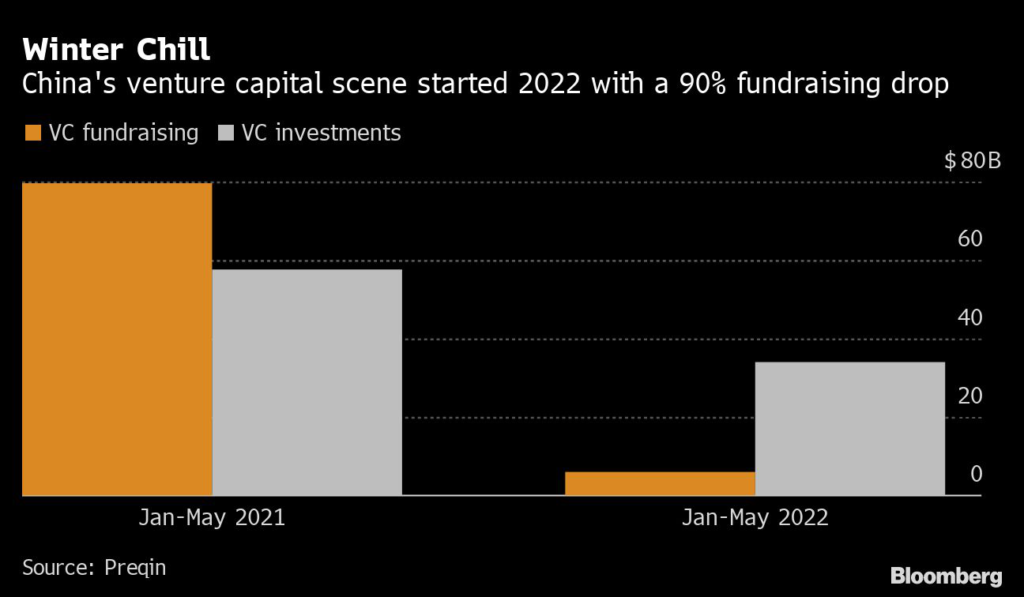
The plunge in valuation underscores worsening sentiment around China’s tech giants, which are grappling with a souring of sentiment on tech assets worldwide as well as a domestic government crackdown that’s spooked investors. Venture funding in China has plummeted, while shares in Tencent Holdings Ltd. and Alibaba Group Holding Ltd. are down about 24% and 13%, respectively, since the start of the year. ByteDance’s IPO, once one of the most hotly anticipated debuts from of Chinese tech, is unlikely to proceed in the near term till global markets stabilize.

ByteDance has, like many of its rivals, been forced to curtail some of its riskier expansion projects under Beijing’s intensified scrutiny. In June, it shuttered a key game development studio and let more than 100 staffers go, backing off erstwhile aspirations to take on Tencent on its own turf. And this month, Louis Yang, a co-founder of Musical.ly — the app acquired by ByteDance in 2017 and merged with TikTok — quit after ByteDance called off an expensive foray into education gadgets.

Many funds have pushed into private technology investments in the last several years, betting they could benefit from soaring valuations for hot startups and a booming IPO market. Now they’re grappling with a much tougher environment, as equity markets around the globe rack up declines and investors turn away from riskier growth plays. 

Representatives for ByteDance didn’t respond to requests for comment. A spokeswoman for Tiger declined to comment.

Read more: TikTok Turns Cash Machine With Revenue Tripling to $12 Billion

On the face of it, China’s $1 trillion internet industry is finally emerging from a brutal reckoning. Jack Ma’s embattled Ant Group Co. is expecting the central bank to soon agree to review its bid for a key financial holding license, people familiar with the matter have said. Scores of new video games were recently greenlit for app stores. And after a sweeping data security probe, Beijing may soon let ride-sharing company Didi Global Inc. off with a mere fine.

ByteDance remains among the most global of the country’s tech firms: TikTok alone is expected to generate $12 billion of revenue this year — more than Snap Inc. and Twitter Inc. combined. Its local equivalent Douyin and domestic services such as Toutiao continue to lead their respective spheres, gaining market share from the likes of Tencent and Alibaba. 

But startups like ByteDance labor under complex new regulations that are chilling investment activity. The rules govern everything from the platform economy to what kinds of entertainment are permissible on social media. Scrutiny over practically every facet of the industry has led to a chilling effect. US money, which vanished during the clampdown, shows no sign of returning. JPMorgan was among the Wall Street institutions that — for a time — called China “uninvestable.”

Read more: China’s Traumatized Tech Insiders Signal Danger for Market Rally

Tiger Global began investing in Bytedance in 2018, when it first bought in at a $35 billion blended valuation, the document seen by Bloomberg News showed. The stake is among the top ten winners across its private funds, with more than $1.5 billion in realized and unrealized gains, according to a person familiar with the matter.

The stake also sits within Tiger Global’s hedge fund, which has sunk 50% this year through June. Other notable ByteDance investors include KKR & Co. and Sequoia Capital, which both led the company’s 2020 funding round with a valuation of $180 billion, according to PitchBook data.

More stories like this are available on bloomberg.com

©2022 Bloomberg L.P.
Stablecoins Face US Scrutiny as House Lawmakers Craft Rules

(Bloomberg) — US lawmakers’ efforts to police stablecoins are gaining steam, with a key House committee preparing to consider a plan for imposing new rules as soon as next week.

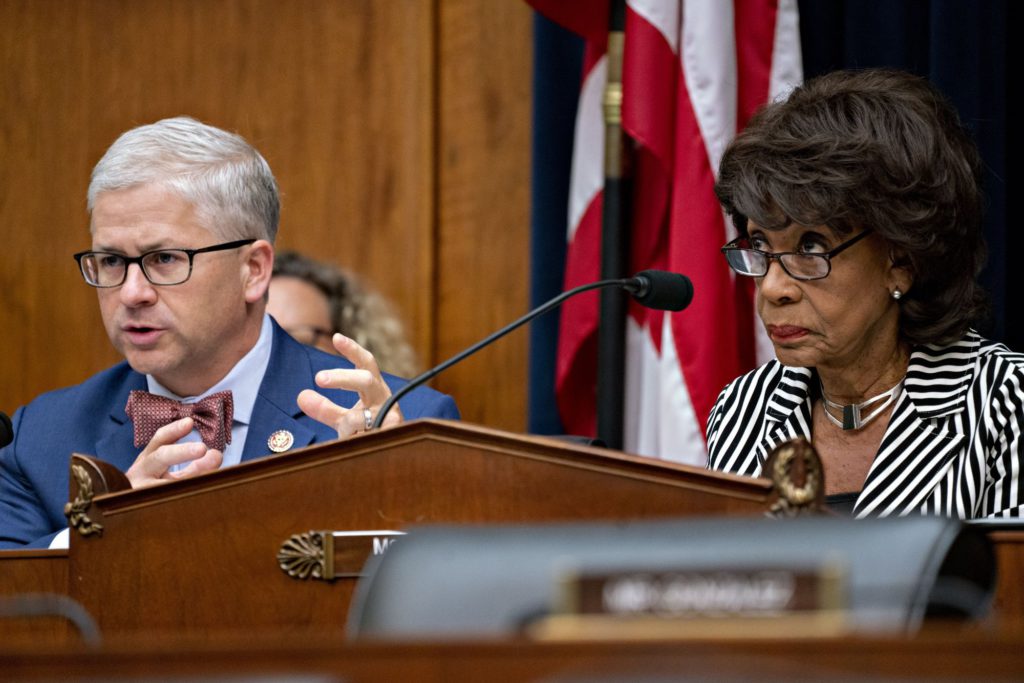
Leaders of the House Financial Services Committee are eyeing July 27 to advance a bipartisan bill focused on the digital tokens, according to three people with knowledge of the proposal who asked not to be named discussing the panel’s plans. Maxine Waters, a California Democrat, and Patrick McHenry, a Republican from North Carolina, have said they’re working together to create guardrails for stablecoins, crypto assets that are typically designed to be pegged to the US dollar or other traditional currencies.

The current draft of the bill would mandate that stablecoin issuers maintain 100% reserves and bar them from lending stablecoins to customers, according to multiple people with knowledge of the bill text. Stablecoins would be known as “payment stablecoins” under the legislation, and bank and non-bank issuers would operate under the same regulations. The Federal Reserve would license any non-bank stablecoin issuers and would be responsible for monitoring those firms’ financial health, according to the people. 

There would also be strict rules on the types of assets that can back stablecoins and a prohibition on commercial companies such as Walmart Inc. and Home Depot Inc., being issuers, one of the people said. 

Policymakers have been increasingly focused on stablecoins, especially given the current turmoil in the crypto markets — most notably the collapse of the popular token TerraUSD in May. That coin, also known as UST, was supposed to maintain a 1-to-1 peg to the dollar through an algorithm and trading in a related token called Luna. The model was different from other stablecoins that purport to be backed by cash and similar assets. 

While the lawmakers’ offices are nearing a deal, talks are continuing and changes to provisions and timing are still possible. 

The staff of Democrats on the House Financial Services Committee was briefed on the stablecoin plans Tuesday, several people familiar with the matter said. The Democratic members themselves are expected to be briefed on Wednesday and Republican members will receive an overview on July 22, just days before the planned July 27 markup. 

Rep. Andy Barr, a senior member of the panel, said it’s “totally an open question” whether he and his fellow Republicans will support the bill. 

If the legislation does get through the Financial Services Committee and eventually passes the House, that would likely put pressure on the Senate to act as well. 

Waters’ and McHenry’s offices didn’t return requests for comment. 

The Treasury Department has been working with lawmakers to help them craft legislation to address potential risks, including runs on stablecoin issuers, that were laid out in a report last year. 

“We’ve been engaged with Congress quite a bit,” Nellie Liang, the department’s undersecretary for domestic finance, said Monday at an event in Washington, DC. 

(Adds additional bill details and comment from Republican lawmaker beginning in fourth paragraph.)

More stories like this are available on bloomberg.com

©2022 Bloomberg L.P.
BofA-Led Banks Hold Back on $15 Billion Citrix Buyout Debt Sale

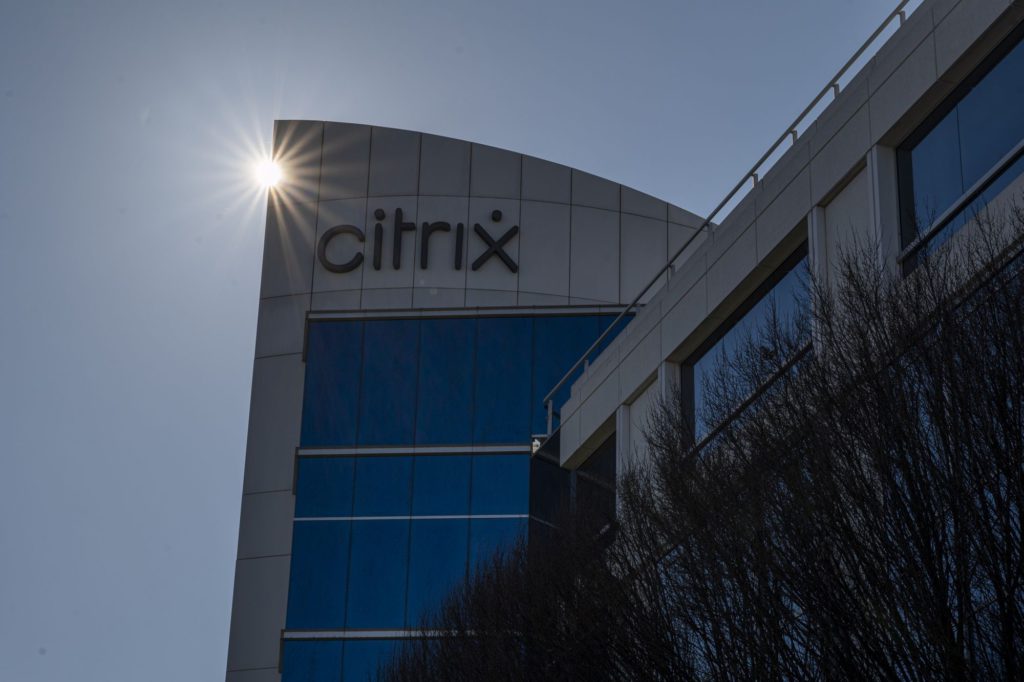
(Bloomberg) — The banks backing the $15 billion debt sale for the buyout of Citrix Systems Inc. have decided to wait to launch the leveraged loan and high-yield bond offerings until after the US Labor Day holiday due to volatile markets as recession fears curb appetite for riskier assets.

The lenders, led by Bank of America Corp., hope September will provide a more positive backdrop to sell the debt to investors, according to people with knowledge of the matter, who asked not to be identified discussing a private transaction.

The window to bring such a large deal may have closed, given that American debt markets typically see a slowdown in August as investors and bankers go on vacation. Deals generally start heating up again after the holiday, which is on Sept. 5 this year.

Banks committed to the financing in January, but since then, the cost of borrowing has increased significantly above the maximum yields they promised on the debt, leaving them on the hook for about $1 billion in losses. Issuance of new debt has slowed to a trickle, and almost all deals that are getting done are pricing at steep discounts to par. 

Bank of America began reaching out to investors this month to gauge their interest in the Citrix debt package, Bloomberg reported. 

If all regulatory approvals are received earlier than expected, there is a slight chance the deal could launch before Labor Day, one of the people added.

Vista Equity Partners and Elliott Investment Management agreed to take Citrix private for about $16.5 billion in January, including debt, when credit markets were still going strong. But now, with the economy tipping closer to a contraction, investors are turning more cautious. 

Representatives for Bank of America, Credit Suisse Group AG and Goldman Sachs Group Inc., which are respectively leading the loan, secured bond and unsecured bond, declined to comment. Representatives for Vista and Elliott also declined to comment, and representatives for Citrix did not respond to requests for comment.

The leveraged buyout of Citrix is expected to close in the third quarter, pending final regulatory approval, the company said in a statement this month. The deal was initially expected to close by mid-year, according to a Jan. 31 statement.

Citrix’s debt offering is expected to consist of a $7.05 billion loan, $4 billion of secured bonds, and $3.95 billion of unsecured bonds, according to an earlier filing. 

More stories like this are available on bloomberg.com

©2022 Bloomberg L.P.

Visa in Talks to Invest in Fintech Startup Airwallex

(Bloomberg) — Payments giant Visa Inc. is in talks to join an extension of the fintech startup Airwallex’s latest funding round, according to people familiar with the matter.

The Tencent Holdings Ltd.-backed startup is seeking to raise $100 million to $150 million in an extension to its series E round, the people said. Some of the startup’s existing shareholders could also participate, said the people, who asked not to be identified because the information is private. 

Discussions are ongoing, and Airwallex and Visa haven’t reached any agreement yet, the people said. 

Airwallex has been looking to raise as much as $150 million in the extension, Bloomberg News reported in April. It previously raised $100 million from investors including Lone Pine Capital and Sequoia Capital China in November, taking total fundraising in the series E round to about $300 million, according to a press release. The November round valued Airwallex at about $5.5 billion.

The extension round will value the startup at the same level, the people said. No final decisions have been made and details could still change, they added. Representatives for Airwallex and Visa declined to comment.

Founded in 2015 by the owners of a Melbourne coffee shop, Airwallex provides services including cross-border end-to-end payments and collection solutions for customers. It has more than 1,000 employees in 19 offices in countries including China, Australia, Japan, the US and the UK, according to its website.

The startup has raised about $800 million so far and counts DST Global and Mastercard Inc. among its backers, its website shows. The company is considering an initial public offering as soon as 2024, people familiar with the matter have said.

More stories like this are available on bloomberg.com

©2022 Bloomberg L.P.
Boeing Commercial Chief Gives Peek Into Work on Next Plane

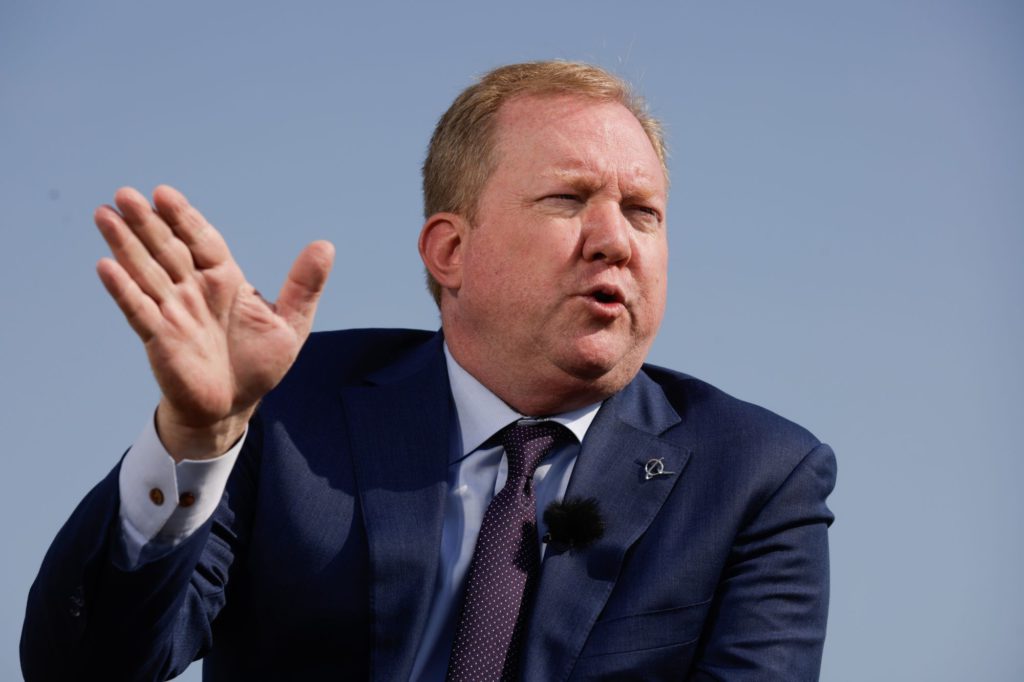
(Bloomberg) — While Boeing Co. may not be saying much publicly about the new airplane it’s planning, behind-the-scenes engineering work is progressing, Stan Deal, the company’s commercial airplane chief, said.

The US planemaker has assigned about 1,000 engineers to its product development group, which is spearheading design work on the airplane concept and running computer simulations of the manufacturing system that would build it. The unit is involved in other projects, from Boeing’s efforts to certify the tardy 777X jetliner to its work to wring greater range and payload out of two 787 Dreamliner models, Deal said.

“We don’t advertise this a lot, but all through the downturn we continued to invest — we didn’t shut the hot water off,” Deal said in an interview at the Farnborough International Airshow, aviation’s first major trade expo since the pandemic flattened air travel in early 2020.

The jetliner in its infancy doesn’t have an acronym like MOM or NMA — the internal nicknames for the midrange jet family that Boeing scrapped in 2020 as Covid and the 737 Max grounding hit its finances. Deal says he refers to the project as the “Next Airplane.”

Boeing has shared little of how or when it plans to address the gap between its largest narrowbody 737 Max and smallest widebody 787 Dreamliner. Rival Airbus SE meanwhile has been racking up sales for its A321neo models, which targets the same market for midrange aircraft.

With the lucrative narrow-body market tilting toward Airbus, some analysts have questioned why the US planemaker isn’t moving more urgently. Boeing Chief Executive Officer Dave Calhoun recently estimated it would take at least another couple of years to test and mature the digital tool set that it intends to use to streamline manufacturing and boost quality on its new airplane program. 

“That frees Airbus to grab 70% of the market, since everyone wants an A321neo,” analyst Richard Aboulafia of AeroDynamic Advisory wrote last month. “Also, since it will have been 20 years since Boeing launched an all-new jetliner, it isn’t clear whether they’ll have the talent needed to start a program in two years anyway.”

Trust Issues

Convincing suppliers to share data so that an aerospace manufacturer can digitally track manufacturing capacity and quality is another another obstacle, said Torsten Welte, a global vice president for SAP SE. “There are big issues around intellectual property and trust,” especially for sub-contractors that have been squeezed by demands for discounts over the past decade, he said.

Boeing has tested some of the digital tools it intends to employ on the next airplane with military aircraft like the new T-7 trainer jet. But applying them to a commercial jetliner is a far more complicated undertaking given the higher volume of parts on a commercial jet and the complexity of tailoring each to customer demands for cabin layout and equipment, Deal said.

The planemaker has seen the power of digital tools and big data as it’s worked on a new flight management system, Deal said. “We’ve done over a million hours of digital testing, running through every fault scenario you can think about to see if the system is stress-tested before we ever put it on an airplane.”

Deal’s division will take a similar approach to the Next Airplane and its production system. Boeing will lock in the architecture, then test and work on it at a large scale before engineers start on the drawings. “If we do that right on the next airplane, then the next one and next one after that will be advantaged,” Deal said.

More stories like this are available on bloomberg.com

©2022 Bloomberg L.P.

Amazon’s Alexa Apps Are Hard to Find. Perhaps Ads Will Help

(Bloomberg) — Amazon.com Inc., determined to turn Alexa into a money-maker, is inviting developers to advertise their apps on the voice-powered platform.

The ads could generate a new revenue stream, but the company’s main goal is to keep developers engaged by giving them a new way to lure users. 

Eight years after its debut, Amazon’s Alexa ecosystem remains a fraction the size of Apple’s and Google’s smartphone app empires, which each command audiences of more than a billion users. As a result, everyone from banks to video-game makers put their emphasis on apps for those platforms. 

While Amazon says the company and its partners have sold “hundreds of millions” of Echo smart speakers and other Alexa-capable devices, surveys show most people use them for relatively basic things such as setting a timer and looking up trivia. Many buyers also lose interest once the novelty wears off. That’s why many companies treat Alexa apps as experimental. 

Exacerbating Amazon’s challenge, people struggle to find Alexa apps. Smartphone users looking for a weather app can quickly thumb through dozens of options. Asking Alexa to read the same menu is an exercise in tedium.

Enter the new ads, which will appear as popups on the screens of Echo Show devices. Amazon’s best seller is the screenless, hockey puck-shaped Echo Dot, but the company is increasingly prioritizing models that come with screens, including a 15-inch device pitched as a family hub and released last year. 

Paid promotions are “something that developers have asked us for,” said Aaron Rubenson, an Amazon vice president who leads teams working on developer tools. “There are times when developers really want to drive outsized attention to their skill,” he added, using Amazon’s name for Alexa apps. 

Amazon says there are about 130,000 Alexa skills, compared with about 2 million iPhone apps.

The company is trying to boost that number by offering developers a greater share of revenue. Developers who make less than $1 million will soon reap 80% of the sales generated from in-app purchases or subscriptions, up from 70%. They’ll also be eligible to receive an additional 10%. For now, that’s a cash rebate, but eventually it could include credits for ads or other goodies, Rubenson said. Amazon also plans to boost payouts to developers whose products are well built or find a lot of users, but don’t directly generate revenue. 

With the introduction of the Echo and Alexa in 2014, Amazon staked a claim in the nascent market for voice-controlled smart-home devices. The company says there are now more than 300 million light bulbs, thermostats, smart locks and other web-connected home devices linked to Alexa, up from 200 million in September. 

Still, Alexa isn’t a major profit engine for Amazon, and the company has struggled to create the voice shopping service it originally envisioned.

More stories like this are available on bloomberg.com

©2022 Bloomberg L.P.
Bitcoin Tops $24,000 for First Time in a Month; Ether Rallies

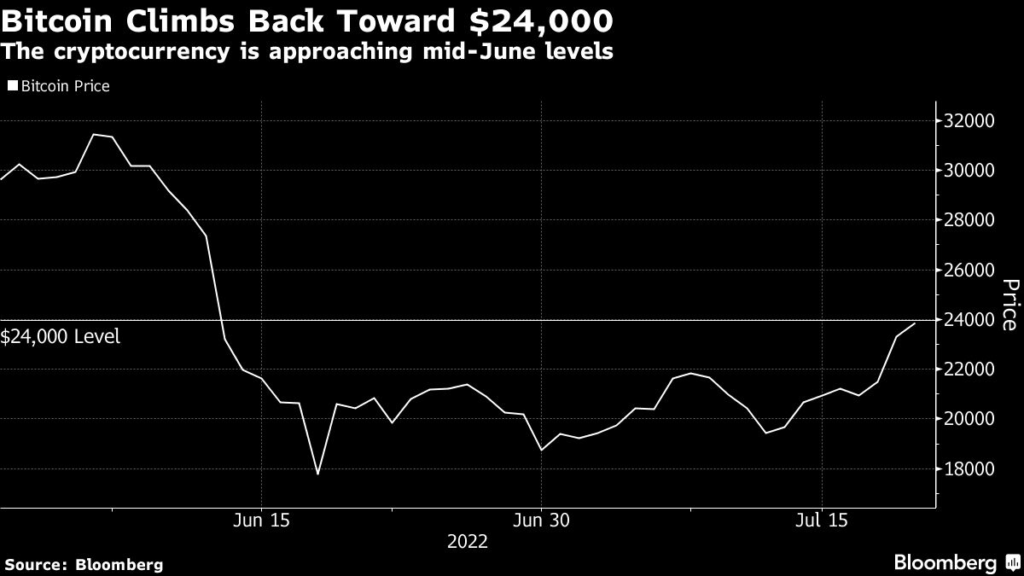
(Bloomberg) — Bitcoin is gaining for the third straight day amid a broader rally in risk assets, with the digital currency rising above $24,000 for the first time in more than a month.

The world’s largest digital token rose as much as 4.2% Wednesday to $24,275, the highest level since mid-June. It’s on pace to advance for the seventh session out of eight, adding more than 20% over the past week. And other cryptocurrencies are also rallying, with Ether catching attention with a greater-than 50% surge since July 12.

“The forced digital asset selling associated with various crypto lenders and entities appears to have abated for the time being,” said Josh Olszewicz, head of research at crypto fund-manager Valkyrie Investments. He’s watching the $25,000 level for Bitcoin next.

The crypto rally is happening as US stocks have come off recent lows. Crypto and stocks — and tech firms in particular — have been trading in tandem all year.

The development is heartening for many crypto fans who had been watching prices sink all year. Billionaire crypto investor Mike Novogratz said the “worst is over” in the crypto industry and that while the current issues may have increased distrust among retail investors, the argument for Bitcoin is still strong, particularly as central banks around the world fight inflation. While the price action has calmed some crypto-trader nerves, the fall from November’s high still looms large. Bitcoin is back up to levels last seen mid-June, well below the near-$69,000 peak.

“The rally is strong,” wrote Katie Stockton, co-founder of Fairlead Strategies, pointing out that Bitcoin crossed above its 50-day moving average this week for the first time since April. Still, she said it might be premature to call this latest leg higher the start of a meaningful reversal. Among other things, Stockton said she’s watching for a break above $25,000 for signs it’s sustainable, as well as a weekly “buy” signal from an indicator called MACD, a momentum gauge.

And there are still plenty of worrying headlines. The recent gains in Bitcoin appear as cryptocurrency exchange ZipMex halted withdrawals due to volatile market conditions and financial difficulties of counterparties. Other crypto firms, including Vauld and CoinFlex, have already suspended withdrawals as the contagion continues to travel throughout the industry. Market changes have allowed for players including FTX’s Sam Bankman-Fried to perform a substantial industry consolidation, including with BlockFi and Voyager.

More stories like this are available on bloomberg.com

©2022 Bloomberg L.P.
Tech Surge Lifts Stocks Back Into the Green: Markets Wrap

(Bloomberg) — US stocks rose as a rally in tech shares gathered strength and the latest corporate results helped shore up investor confidence. 

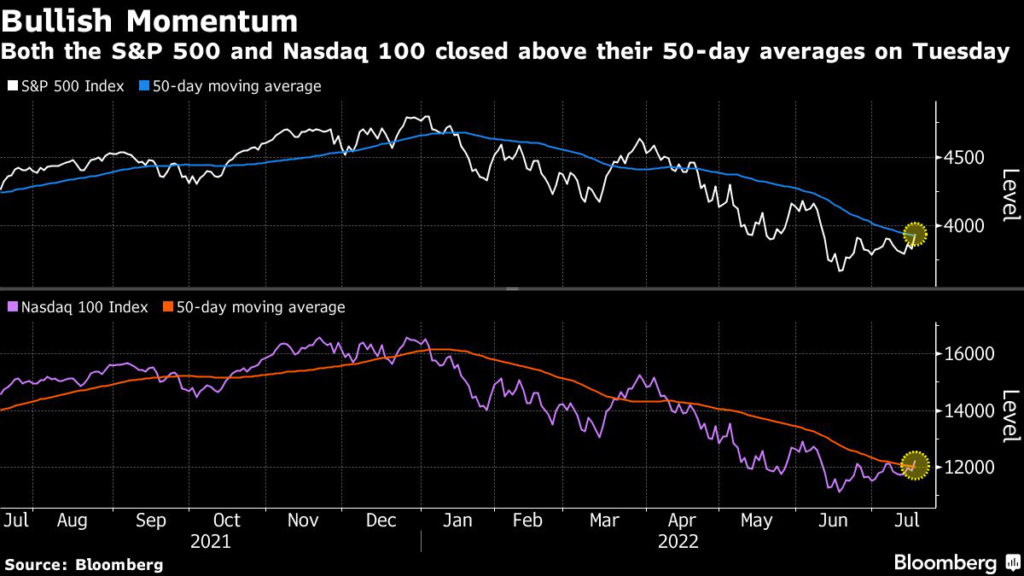
The S&P 500 rose 0.7%, reversing losses of as much as 0.4%. The tech-heavy Nasdaq 100 extended gains above 1% as megacaps Amazon.com Inc. and Microsoft Corp. rose. Netflix Inc. jumped after it reported better-than-feared earnings, underpinning rallies in streaming peers Walt Disney Co. and Paramount Global.  

Stocks are advancing for a third day in four amid optimism over the earnings season and growing speculation markets may have bottomed out. While that debate continues, with Sanford C. Bernstein strategists saying markets have yet to see full capitulation, rates markets have discarded bets the Federal Reserve will hike rates by a full percentage point next week, bolstering optimism the central bank will take a more measured approach to policy tightening.

“The fact that companies are showing a certain resilience to the current environment is reassuring market operators who have now started betting on a less aggressive monetary tightening than initially expected,” said Pierre Veyret, a technical analyst at ActivTrades. “Even if we’re not out of the woods yet, more and more traders now tend to believe the worst is behind for equity markets this year.”

Treasuries advanced as growing concern that Europe may lose access to Russian gas added to recession fears. Risk sentiment took a hit on news the European Union is preparing for a scenario where Russia halts gas exports to retaliate against sanctions over its invasion of Ukraine. 

The EU proposed that the bloc cut its natural gas consumption by 15% over the next eight months to ensure that any full Russian cutoff of natural gas supplies won’t disrupt industries over the winter.

Read more: EU Proposes 15% Cut in Gas Consumption on Russian Supply Concern

West Texas Intermediate crude oil slipped back to $103 a barrel. Bitcoin hovered above $23,000 after climbing out of a one-month-old trading range.

How far will the Fed go in this hiking cycle? It takes one minute to participate in the confidential MLIV Pulse survey, so please click here to get involved. 

Key events to watch this week:

  • Earnings this week include Tesla
  • Bank of Japan, European Central Bank rate decisions. Thursday
  • Nord Stream 1 pipeline scheduled to reopen following maintenance. Thursday

Some of the main moves in markets:

Stocks

  • The S&P 500 rose 0.8% as of 11:52 a.m. New York time
  • The Nasdaq 100 rose 1.8%
  • The Dow Jones Industrial Average rose 0.2%
  • The Stoxx Europe 600 fell 0.2%
  • The MSCI World index rose 0.7%

Currencies

  • The Bloomberg Dollar Spot Index was little changed
  • The euro fell 0.2% to $1.0208
  • The British pound was little changed at $1.1986
  • The Japanese yen was little changed at 138.15 per dollar

Bonds

  • The yield on 10-year Treasuries was little changed at 3.02%
  • Germany’s 10-year yield declined two basis points to 1.25%
  • Britain’s 10-year yield declined four basis points to 2.14%

Commodities

  • West Texas Intermediate crude fell 0.7% to $103.50 a barrel
  • Gold futures fell 0.3% to $1,722.90 an ounce

More stories like this are available on bloomberg.com

©2022 Bloomberg L.P.
Bitcoin Short-Seller Profits Jump by 50% in June Amid Meltdown

(Bloomberg) — A dramatic fall in the world’s largest Bitcoin trust has been a godsend for its haters.

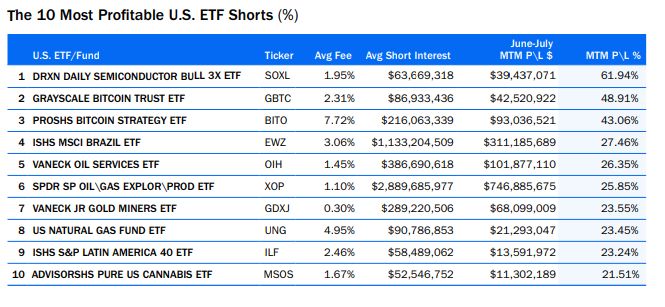
Those betting against Grayscale Investments’s Bitcoin Trust, or GBTC, have seen a nearly 50% return from the start of June to mid-July, the second-best showing for any exchange-traded fund over that stretch, according to Ihor Dusaniwsky, head of predictive analytics at S3 Partners. The average short interest on the trust is $87 million. Its rank on a list of most profitable US ETF shorts clocks in behind only a leveraged semiconductor product. (GBTC technically isn’t an ETF but has been lumped into the list as a point of comparison, and because many treat it as if it were one, said Dusaniwsky.)

“It was a solid short play,” he said in an interview. “Bitcoin went down a ton and the price of the security went down.” 

Short sellers have had crypto-centric stocks and funds in their sights amid a historic drawdown for the sector. Digital assets are having a terrible year as the Federal Reserve and other central banks raise interest rates in their fight against inflation, creating a damaging environment for risky assets. Bitcoin is down roughly 50% this year, with some other cryptocurrencies seeing even greater declines. 

Another crypto fund, the ProShares Bitcoin Strategy ETF (BITO), has returned more than 40% for short sellers since the beginning of June, with more than $216 million shorted, according to S3. It follows GBTC on S3’s list of most profitable ETF shorts.

Meanwhile, the ProShares Short Bitcoin Strategy ETF (BITI), which tracks the inverse performance of Bitcoin futures, has accumulated roughly $69 million in assets since launching in mid-June despite stumbling 17%. 

GBTC has been in the spotlight recently after Grayscale tried to convert the trust into an ETF, a move that was quashed by the US Securities and Exchange Commission. Flipping GBTC into an ETF would have solved a persistent issue for Grayscale: the trust’s deep discount to its underlying holdings. Unlike an ETF, GBTC shares can’t be created and redeemed to keep pace with shifting demand. That’s effectively turned GBTC into a closed-end fund, with GBTC’s price trading 29% below its net-asset value. 

More stories like this are available on bloomberg.com

©2022 Bloomberg L.P.

Close Bitnami banner
Bitnami
