Bloomberg

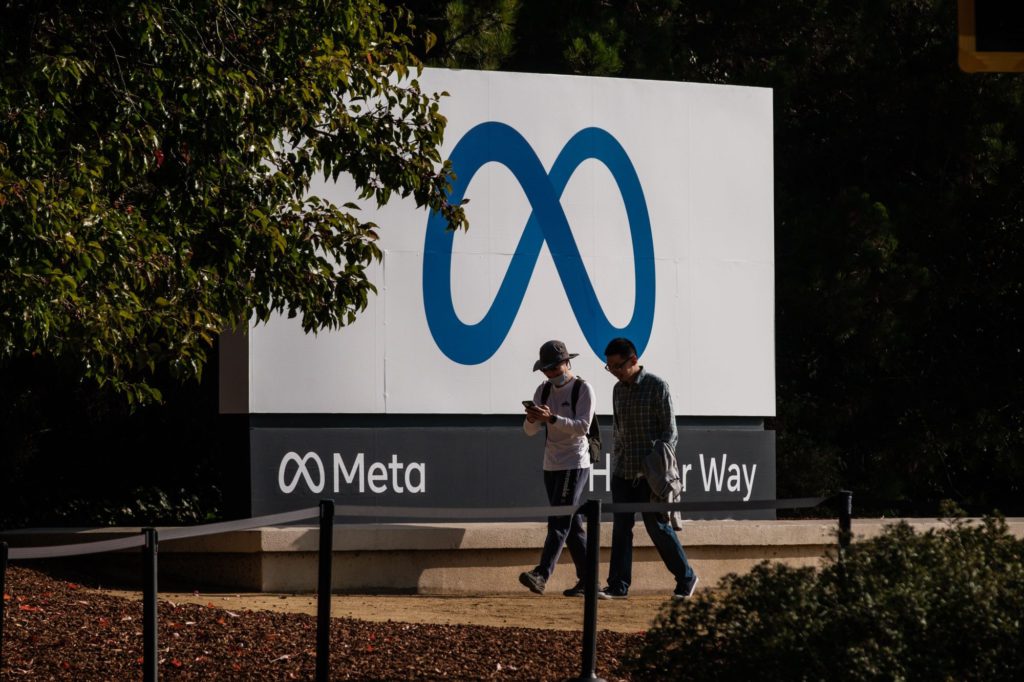
Meta Warns of Slowing Progress in Diversifying Company

(Bloomberg) — After hiring more women and minorities in recent years, Meta Platforms Inc. warned that its ongoing efforts to cut costs and revamp products could make further inroads more difficult. 

The company, which owns Facebook, Instagram and WhatsApp, issued a generally upbeat progress report on Tuesday showing that it has increased the diversity of its US workforce in the past year. That includes putting more women and underrepresented minorities in leadership and technical roles. A year ago, Meta reported that the number of women at the company had declined slightly.

In some cases, Meta surpassed five-year goals that it established just three years ago. In 2019, the company set out to double the number of women on staff globally by 2024. It also sought to double the number of Black and Hispanic workers in the US over that same time period. It has done both ahead of schedule.

But with the company in the middle of a shake-up, future hiring plans are less clear. That’s why Meta won’t be issuing new diversity targets for now, said Chief Diversity Officer Maxine Williams. The company has slowed hiring — including for some senior level positions — and has been overhauling its product plans, she noted. Both of those play a role in shaping the company’s diversity goals, Williams said.

“The challenge is maintaining” these numbers, rather than achieving new targets, Williams said. 

Even with the recent headway, Meta is still a ways off from matching the diversity of the broader US population. Black employees make up 4.9% of Meta’s US workforce, up from 4.4% one year ago. But the US total is around 13%.

Hispanic employees account for 6.7% of the US employee base, up from 6.5%. That figure is roughly 18% for the country as a whole.

Female workers, meanwhile, make up 37.1% of Meta’s global workforce and 36.7% of company leadership. Those numbers were 36.7% and 35.5%, respectively, one year ago.

Asians are the most represented ethnic group in Meta’s US workforce, accounting for almost 47%. White employees made up just under 38%, about half the overall US rate.

In the past, Williams had a near-unlimited budget and it was easy to get headcount to pursue goals, she said. Now the company — and its teams focused on diversity — are trying to be more lean and focused, she added.

A hiring slowdown means Meta needs to find new leaders internally. The company’s shifting product road map may have an impact as well. With employees getting shuffled internally, workers reassigned to new projects may not want to stick around. Meta has moved large portions of its workforce to projects like the metaverse and its short-form video product, Reels. 

“Anytime you are in an environment where variables are changing, it makes it hard to know if you’re going to hit your target,” Williams said. 

Meta offered remote-work flexibility and other perks during the pandemic, helping prevent a big wave of employee departures. But that could still come, Williams added. “There are so many unknowns.”

More stories like this are available on bloomberg.com

©2022 Bloomberg L.P.

Yellen Touts ‘Friend-Shoring’ as Global Supply Chain Fix

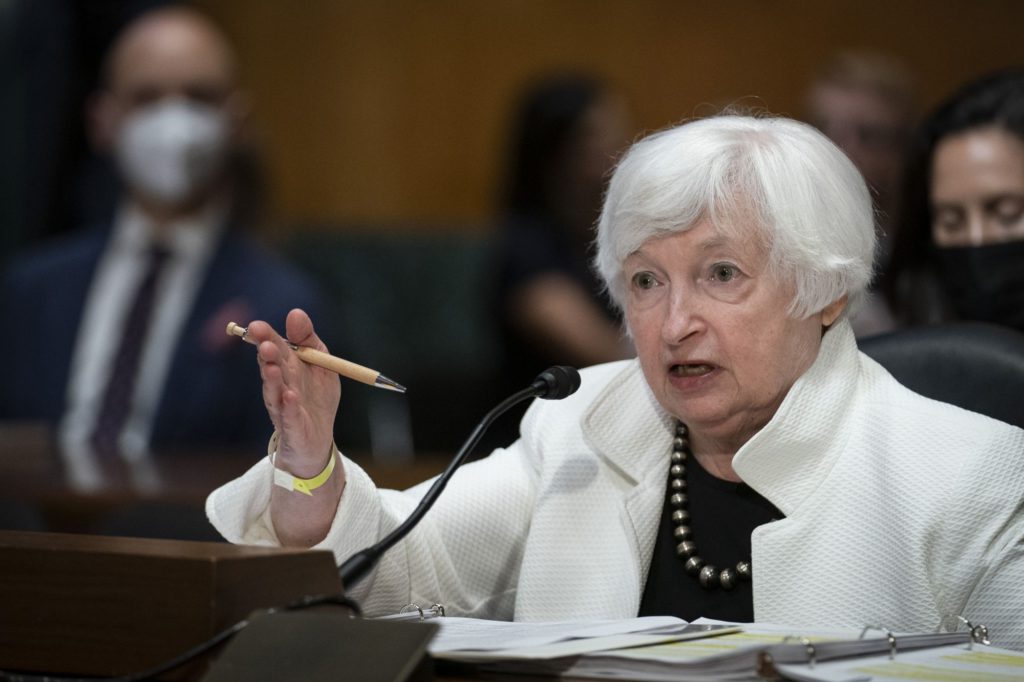
(Bloomberg) — US Treasury Secretary Janet Yellen called on “trusted” US allies to strengthen trade relationships to shore up global supply chains disrupted by the pandemic, worsened by Russia’s war in Ukraine and threatened longer term by a reliance on China.

In her longest public address during a three-stop tour of East Asia, Yellen touted her “friend-shoring” concept as a way to reduce the vulnerabilities of a supply system badly strained over the past two years, and as a mechanism for reducing inflation in the US and elsewhere.

“Friend-shoring is about deepening relationships and diversifying our supply chains with a greater number of trusted partners to lower risks for our economy and theirs,” Yellen said, in a speech delivered Tuesday at a research-and-development facility in Seoul run by South Korean conglomerate LG. 

“In so doing, we can help to insulate both American and Korean households from the price increases and disruptions caused by geopolitical and economic risks,” she said.

Talks over supply chains come as South Korea’s relations with China become increasingly competitive in global commerce. China has the strongest correlation with South Korea in Asia when it comes to the similarity of their products sold abroad. 

That’s because the world’s second biggest economy is growing more technologically independent while becoming less reliant on supplies from its neighbor, the Korea Trade-Investment Promotion Agency said in a report earlier this month.

LG Energy Solution and LG Chem already has plans to invest at least $11 billion in the US by 2025, said Shin Hak-Cheol, chief executive at LG Chem, at the joint press conference with Yellen.

Globally, including in the US, LG Chem will spend $4.5 billion on developing diverse materials used for batteries, such as cathode-active materials, separators and carbon nanotubes, Shin added. 

Chips Bill Gains Steam in Senate Despite Last-Minute Lobbying

The Treasury chief singled out China, which has come in for increasing criticism from the Biden administration over a number of issues, as a country on which the US and others should be less reliant.

“We cannot allow countries like China to use their market positions in key raw materials, technologies or products to disrupt our economy or exercise unwanted geopolitical leverage,” she said.

While in Tokyo last week, she also castigated Beijing for failing to coordinate with other major creditors to help heavily indebted countries, like Sri Lanka, that are struggling with a slowing global economy, high inflation and a strengthening dollar.

Yellen also met Tuesday with South Korean President Yoon Suk Yeol, Finance Minister Choo Kyung-ho and Rhee Chang-yong, governor of the Bank of Korea. Yoon said Yellen’s visit demonstrates expanding economic alliance with the US, while Choo said that the global economic situation that the two countries are facing is becoming increasingly grave.

The Treasury Secretary also met a group of female entrepreneurs to discuss expanding opportunities for women in the Korean economy.

Yellen traveled to Seoul after attending a gathering of finance ministers from the Group of 20 leading economies. She began her 10-day journey, her first to Asia as head of the Treasury, with a stop in Tokyo.

(Updates with more background, details of Yellen’s meetings in Seoul)

More stories like this are available on bloomberg.com

©2022 Bloomberg L.P.

Bonds Fall as ECB Said to Assess Half-Point Hike: Markets Wrap

(Bloomberg) — Stocks fell with bonds Tuesday as concerns about a slowing global economy, hawkish central banks and slumping earnings estimates continued to weigh on sentiment. 

The Stoxx Europe 600 fell as a deepening energy crisis cut the outlook for growth. Technology and miners led losses, while energy and utilities rose, the latter boosted by gains in Electricite de France SA as trading resumed after a weeklong suspension. 

Government bonds flipped to losses from gains after Bloomberg News reported the European Central Bank may consider raising interest rates on Thursday by double the quarter-point outlined previously to counter worsening inflation.

US futures fluctuated in the wake of another reversal for the S&P 500 on Monday. The index erased a 1% gain and ended lower on Apple Inc.’s plans to slow hiring.  

Corporate updates such as Apple’s are helping markets to calibrate the risk of recession. Signs that high inflation and monetary tightening are squeezing consumers and employment could feed into worries that an equity revival since mid-June is merely brief respite in a bruising bear market.

“We’re in a period over the next couple of weeks where corporate headlines are really going to drive market activity,” Anthony Saglimbene, global market strategist at Ameriprise Financial Inc., said on Bloomberg Television. The focus is on how labor and input costs and demand are shaping the outlook, he said.

In Europe, concerns are intensifying about gas supplies from Russia amid a standoff over its invasion of Ukraine. The European Union is preparing to tell members to cut gas consumption “immediately” to preserve supplies for winter, according to a report. 

A halt of Russian gas supplies to the EU could potentially reduce the region’s gross domestic product by as much as 1.5%, according to new estimates from the bloc.

Crude held above $100 a barrel and will likely stay there for the rest of the year, according to Iraq’s energy minister. Ether was among the leaders of a cryptocurrency rally. 

Overall global market volatility is a sign of the struggle “to gauge whether we are seeing, one, peak inflation and two, peak interest rates,” Lale Akoner, strategist at BNY Mellon Investment Management, said on Bloomberg Television. She expects the US dollar to remain higher for the next six months.

How high will the Fed go in this hiking cycle? Will it use the balance sheet and will it avoid tipping the US economy into a recession? It takes one minute to participate in the MLIV Pulse survey, so please click here to get involved anonymously.

Key events to watch this week:

  • Earnings this week include Netflix, Tesla
  • US Treasury Secretary Janet Yellen visits South Korea. Tuesday
  • Reserve Bank of Australia releases July minutes. Tuesday
  • UK Chancellor Nadhim Zahawi and Bank of England Governor Andrew Bailey speak at event. Tuesday
  • Bloomberg Crypto Summit in New York. Tuesday
  • Bank of Japan, European Central Bank rate decisions. Thursday
  • Nord Stream 1 pipeline scheduled to reopen following maintenance. Thursday

Some of the main moves in markets:


More stories like this are available on bloomberg.com

©2022 Bloomberg L.P.

Singapore Plans to Broaden Crypto Regulations After Shakeout

(Bloomberg) — Singapore will broaden cryptocurrency regulations to cover more activities, joining a worldwide push to clamp down on risks after a series of business failures rocked the industry.

The Monetary Authority of Singapore plans to consult on proposed steps in September or October, Managing Director Ravi Menon said in response to questions after releasing the central bank’s annual report Tuesday. The revised rules may include further tightening retail-investor access to crypto, he added without providing details. 

“Going forward, in line with international regulators, we’re also going to be broadening the scope of regulations to cover more activities,” Menon said. “So, players who are doing some of these activities but are currently not caught may well be caught.”

This year’s market meltdown has exposed the cracks in global crypto regulation, with billions of dollars locked up with bankrupt digital-asset lenders and creditors trying to claw back money from collapsed hedge fund Three Arrows Capital. The upheaval gathered pace in early May, when the TerraUSD stablecoin crumbled from its intended dollar peg. 

Many of the companies that imploded operated outside the scope of existing regulations, and their failures highlighted risky business practices as well as the web of debts that connected many of the industry’s top players. Regulators from the US to Singapore are now racing to patch those holes, while acknowledging that the effort will require more global coordination.  

Singapore’s System

TerraForm Labs and Luna Foundation Guard, the entities behind TerraUSD, list Singapore as their base. Three Arrows was a registered fund management company in the city-state until earlier this year. Vauld, a crypto lender trying to stave off collapse by selling itself, is also headquartered in Singapore. 

Menon pushed back against the notion that those companies are under Singapore’s regulatory purview. None of them held permits under its licensing system for virtual-asset service providers, he said. Singapore employs a strict process for vetting applications for such licenses, approving just 14 out of almost 200 companies that sought permits so far. 

Some strained crypto players reported as based there have “little to do with crypto-related regulation in Singapore,” Menon said in a speech to reporters. 

Three Arrows — formerly a poster child for unbridled optimism about virtual assets — was reprimanded by MAS for providing false information and exceeding the limit on its assets under management. The crypto hedge fund had informed the regulator its intent to cease fund management activity from May 6, just before TerraUSD collapsed.

The MAS reprimand was announced just after Three Arrows was ordered into liquidation by a British Virgin Islands court.   

Wary Embrace 

Vauld has suspended token withdrawals, one of a number of crypto outfits globally that hit trouble as leveraged bets imploded. Its parent company has applied with Singapore courts for a moratorium to avoid a forced wind-down as it negotiates a sale to rival Nexo. 

Singapore’s authorities have long maintained a wary embrace of the crypto industry, with Menon praising the underlying blockchain technology’s potential for innovation while stressing that retail investors should steer clear of digital assets.  

The city-state has been tightening rules around crypto investments, including clamping down on marketing and requiring virtual-asset providers to be licensed locally even if they only do business overseas. 

MAS will hold a seminar next month to shed more light on its position on crypto regulation, Menon said.

“We will set out how our developmental and regulatory approaches will work in harmony to achieve the vision of Singapore as an innovative and responsible digital asset hub,” he said.

(Updates with comment from Menon in third paragraph)

More stories like this are available on bloomberg.com

©2022 Bloomberg L.P.

Executives Seek Cyber Safety in Turbulent Times: The London Rush

(Bloomberg) — Here’s the key business news from London-listed companies this morning.

Darktrace Plc: Demand for the cyber security company’s products is strong as companies seek to protect themselves against growing cyber threats.

  • That momentum is expected to continue into next year against a “turbulent geopolitical background”

Wise Plc: The average cost of transfering money with the fintech company was flat quarter on quarter, with costs from greater risk and uncertainty in the macroeconomic environment offsetting reduced fees in some areas. 

  • For the first time, half of the company’s cross-border money transfers were completed instantly

Informa Plc: The business intelligence and academic publishing company has bought Industry Dive for an initial cash consideration of $389 million.

  • Industry Dive provides specialist “B2B” content across industries like BioPharma, Construction and Cybersecurity

Jobs Data:  British workers rejoined the labor market at the fastest pace since before the pandemic as the cost of living crisis drew more people into jobs, according to data released this morning

Outside The City

Tory MPs will vote for a fourth time today in the contest to elect Boris Johnson’s successor after the latest ballot left Sunak looking almost certain to make the top two. The battle for second is less certain.

Meanwhile, chancellor Nadhim Zahawi will pledge a “coherent and agile approach to financial regulation” in a major speech today, as the UK continues to develop its post-Brexit plans for the City.

In Case You Missed It 

SoftBank Group Corp. has temporarily paused talks about listing shares of its chips division, Arm Ltd., in London because of turmoil in the UK government, while it continues to pursue an initial public offering for the business in New York, people familiar with the matter told Bloomberg.

And temperatures in the UK are set to hit a record today, most likely exceeding 40 degrees Celsius across eastern England, breaking the previous record of 38.7°C set at the Cambridge Botanic Garden in 2019, according to the Met Office. 

Looking Ahead

Royal Mail Plc is set to publish results tomorrow as the postal service faces a possible strike by managers across the UK over job and pay cuts. Miner Antofagasta Plc is also on Wednesday’s earnings calendar, with an expected update on production numbers. 

More stories like this are available on bloomberg.com

©2022 Bloomberg L.P.

Japanese Game Maker Nippon Ichi Is Overlooked Winner of Weak Yen

(Bloomberg) — Nippon Ichi Software Inc. — a 213-person video game developer based in central Japan — is an unnoticed winner of the yen’s recent plunge.

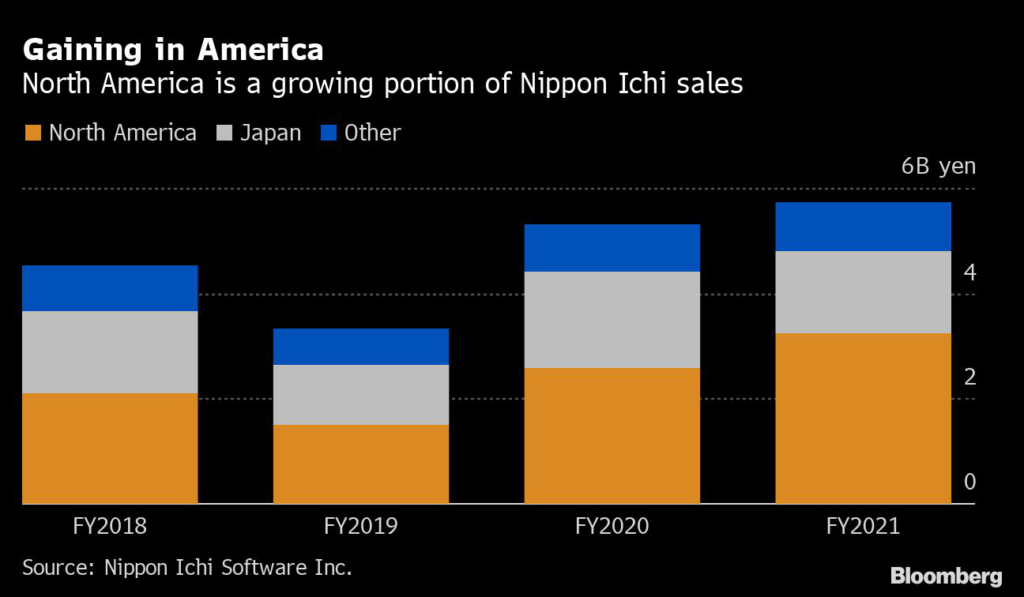
The role-playing game maker is based in Gifu, a mountainous and predominantly rural prefecture, where average wages are 20% lower than in Tokyo, all paid out in yen. But more than half of the company’s sales are in dollars, and that proportion will likely grow further thanks to a Japanese anime boom among US gamers, Nippon Ichi President Sohei Niikawa told Bloomberg News in an interview. 

“The ongoing yen’s slide is bringing in huge exchange gains,” he said, adding that North America now accounts for 60% of the company’s group revenue. 

The creator of the Disgaea series declined to disclose its assumed yen-per-dollar exchange rate, but the Japanese currency has already fallen roughly 20% against the greenback this year to hit its lowest level in 24 years. The company has stayed pat on its outlook, announced in May, for an annual profit fall. 

Shares in Nippon Ichi rose 8.3% after the report on Tuesday, marking the company’s biggest surge in eight months. Shares are still down 20% from the start of the year.

Read more: Yen Edges Toward Closely-Watched 140 Level as Dollar Strengthens

The weak yen’s boost for Japanese hardware manufacturers has dimmed in recent years, because of a shift to build more factories overseas. Game content creators like Nippon Ichi are the rare beneficiaries, with most of their production at home.

Given the surge in the dollar, the company is likely to raise its earnings forecast, said Hideki Yasuda, an analyst at Toyo Securities. “Outlook could rise by at least 7%, if the dollar trends at 135 yen, and 9% if at 140 yen,” based on an assumed rate of 120 yen to the dollar, he said.

Nippon Ichi’s stock is traded at less than 5 times its earnings, which is lower than its peers. The low price is due to a lack of name recognition, Yasuda said. Square Enix Holdings Co. is at 14 times, Bandai Namco Holdings Inc. is at 23 times and Koei Tecmo Holdings Co. is at 22 times.

The company’s low profile stems from its failure to establish a popular franchise beyond Disgaea. More than half of the company’s revenue in the US is from games borrowed from Nihon Falcom Corp. Nippon Ichi is beefing up its budget for young creators to develop new games, thanks to the extra revenue from dollar sales every quarter, Niikawa said.

The company also remains cautious about game subscription services, through which an increasing number of players now access games. Nippon Ichi provided content to Sony Group Corp.’s PlayStation Now and Microsoft Corp.’s Xbox Game Pass membership services, but Niikawa said the model is “dangerous” for software providers.

“The subscription model is good for users and platform owners, but for us, it is difficult to make the business sustainable, especially when the whole catalog has grown too large for players to find our games,” Niikawa said. “I fear cash that would otherwise be ours is flying away from us.”

(Updates with share price in fifth paragraph)

More stories like this are available on bloomberg.com

©2022 Bloomberg L.P.

Dubai’s Metaverse Plan Targets 40,000 Virtual Jobs in Five Years

(Bloomberg) — Dubai is seeking to break into the world’s top 10 metaverse economies under a new strategy that envisions the sector supporting as many as 40,000 additional virtual jobs and adding $4 billion to the city’s GDP in five years. 

The government aims to develop global standards in building safe and secure platforms for users and develop infrastructure and regulations to accelerate the adoption of these technologies, state-run WAM news agency said.  

The plan, launched by Dubai Crown Prince Sheikh Hamdan bin Mohammed, aims to support the government’s goal of increasing the number of blockchain companies by five times in five years. Dubai is already home to over 1,000 companies in the metaverse and blockchain sector, which contributes $500 million to the national economy, Sheikh Hamdan said.

“The strategy emphasizes fostering talent and investing in future capabilities by providing the necessary support in metaverse education aimed at developers, content creators and users of digital platforms in the metaverse community,” WAM said.  

The city’s biggest companies are already stepping into the metaverse. Emirates has said it will expand use of the technology, while Damac Group plans to build digital cities. Healthcare firm Thumbay will roll out the a hospital in the metaverse for virtual consultations over the next few months, Khaleej Times reported. 

Meanwhile, Dubai has already been trying to attract cryptocurrency companies from around the world. Some of the world’s biggest crypto and fintech firms including Binance and FTX have been granted licenses in the city. 

More stories like this are available on bloomberg.com

©2022 Bloomberg L.P.

Formula E Washout in NYC Raises Questions About Future in US

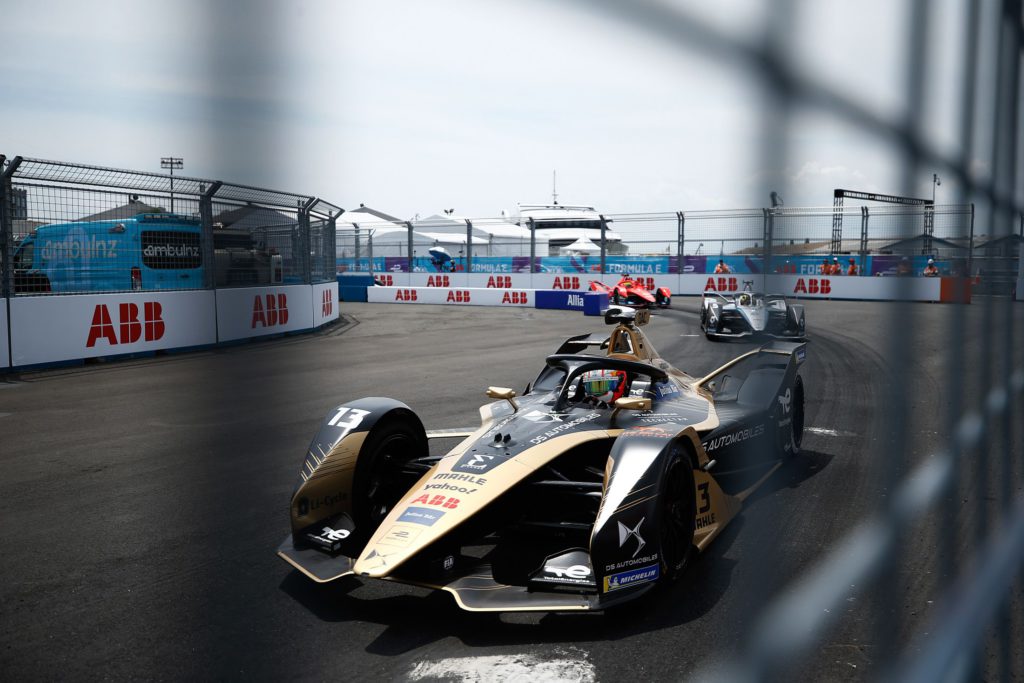
(Bloomberg) — It’s not a good sign for Formula E that the car buffs at a Brooklyn “cars and coffee” meetup the morning of the New York City E-Prix had no idea the race was happening, just a few miles away in the same borough. 

Several thousand fans who did attend Day 1 of the two-day New York City E-Prix on July 16 cheered as the electric version of Formula One cars whizzed past them. But, perhaps in part because of the oppressively muggy weather, the racing generated less excitement than the high-stakes cycling criteriums often held at the same cruise terminal. A DJ with a thick Long Island accent worked hard on the PA to amp the crowd. “Come on New Yawk, I caaaan’t hehr youuuuuu!”

The anticlimactic vibe peaked when organizers abruptly decided to end the July 16 race after a summer shower triggered a pile-up and rain delay with 10 minutes to go before the end. Fans had already started leaving the stadium, anyway. Final results were taken from the lap prior to the stoppage, giving Nick Cassidy of Envision Racing his first win. Lucas di Grassi and Robin Frijns, of Rokit Venturi Racing and Envision Racing, respectively, placed second and third.

On day two of the event on July 17, Antonio Felix da Costa won for his team, DS Techeetah. Stoffel Vandoorne (Mercedes EQ Formula E Team) took second and Mitch Evans (Jaguar TCS Racing) took third. Twenty-two drivers are running the 2021/2022 Formula E season, driving for 11 teams with names like Avalanche Andretti Formula E; Dragon/Penske Autosport; Nio 333 Formula E Team; and Tag Heuer Porsche Formula E Team, among others. 

Don’t feel bad if your eyes glazed over reading that list or if some of those names are unfamiliar to you. Eight years into its existence, Formula E is still struggling to gain a foothold with audiences in the US. And at this point, America seems rather beside the point.

“We are happy to be racing all over the world,” Michael Andretti told a handful of journalists who attended a panel hosted by Bloomberg Green on July 15. Andretti, son of Formula One, IndyCar, and Nascar champion Mario Andretti, is chief executive officer and chairman of Andretti Autosport, which is running a team in Formula E this year using a powertrain provided by BMW. “Do we have to have a race here [in the US] for us to be a part of it?” he asked. “No.”

Team Rotation

It’s not like the series, which sees battery-powered cars that look like they’re straight out of a video game compete in 45-minute races on tracks from Montreal to Monaco to Mexico City, hasn’t seen growth. In January, Maserati confirmed it would join the series; in May, McLaren and German outfit ABT Sportsline did, too. Jaguar remains committed to next year as well, as do Nissan, Nio, Porsche, and Mahindra. The series provides a valuable arena for testing and promoting electric technology, proponents say. 

“We are seeing a seismic shift in electrification in the motor industry, and Formula E is playing a big role in allowing automakers the freedom to test that tech out on the track,” Ian James, team principal of the Mercedes-EQ Formula E Team, said on the Bloomberg panel.

“Formula E is a microcosm of what we see in the marketplace,” said Asaf Nagler, vice president of external affairs at ABB for e-Mobility North America. “The interplay is clear.” 

In 2021, Formula E television audiences rose to 316 million total viewers for the season, according to organizers. The biggest gain was in Germany, where TV audiences rose 338% over the previous season; in Brazil, the audience grew 286%; in England, it rose 156%.

In America, where the New York E-Prix and other races were broadcast on CBS, audiences grew just 25% year-over-year. A representative from CBS was unable to provide audience numbers by the time of this story’s publication, but even the highest growth represents a fraction of the 1 million-plus viewers Formula One draws every Sunday during the season in the US alone.   

Ticket sales are another matter. Actual ticket sales for the 2022 race in Brooklyn reached 7,500, according to Formula E CEO Jamie Reigle, a number he characterized as “sold out.” In a follow-up email, a Formula E spokesperson said the series saw 14,000 “attendees” across two days of racing this year in Red Hook, including guests with free passes. That’s down from 20,000 during the inaugural event in 2017. (By comparison, more than 240,000 tickets were sold at the F1 Miami Grand Prix.) The spokesperson was unable to provide a specific average number of ticket sales per race anywhere in the world. Formula E turned a profit for the first time in 2019, but did not clear that hurdle in 2020. A Formula E spokesperson was unable to specify whether or not the series had been profitable since 2019. 

The numbers haven’t done much to convince the world’s most cutting-edge automakers to stay involved. In 2020, Audi announced it would not be returning. Later that year, BMW quit, too. In August 2021, Mercedes announced it would leave after the current season. With the rise of new rules in Formula One welcoming more electric technology implemented in the engines and F1’s burgeoning audiences, the smaller series had lost its usefulness.

“Formula E has been a good driver for proving our expertise and establishing our Mercedes-EQ brand, but in the future we will keep pushing technological progress—especially on the electric drive side—focusing on Formula One,” Markus Schäfer, member of the board of management of Daimler AG and Mercedes-Benz AG, said in the 2021 press statement about the departure. F1 was developed for automakers to test new engineering and technologies they would eventually use in customer vehicles; the same holds true today, with developments like paddle shifting, hybrid technologies, carbon fiber components, adaptive suspensions, and even control buttons located on the steering wheel directly descended from F1 cars. “F1 offers rich potential for technology transfer,” Schäfer said.

Porsche has remained tight-lipped about its longer-term plans for Formula E involvement, even though it currently fields a team with partner Tag Heuer and for the next two years will provide vehicles for Andretti’s team. But recent announcements that it will participate in Formula One and other prestigious races—and will re-assign to other series at least one driver currently racing in Formula E—indicate its attention to the all-electric series may be waning. 

“Specific driver roles [have] not been finalized,” Tom Moore, Porsche’s consultant for Motorsport PR, said in an email. “More will be known as 2023 race schedules for all series come out…in early December.” 

Reigle described the loss of interest from some automakers as a “very significant blow.”

Identity Crises

Uncertainty about just what Formula E should be in the US has undoubtedly stymied efforts for growth stateside.

“Is it a sport, or is it an event, entertainment?” asked Mercedes racing’s James. 

Dirk Kesselgruber, president of GKN Automotive, which provides software for Jaguar TCS Racing, described Formula E as more an exercise in technology and engineering than a sport. 

“We are geeks,” he said over breakfast on July 15, noting that he is not, in general, a motorsport fan. “For us, it’s about developing technology. The race is kind of besides the point.”

In the meantime the future of the New York race is in limbo. When Formula E released the schedule for the 2023 season, the city was not listed. It doesn’t help appearances that seemingly little effort went into promoting the New York event; almost no signage from title sponsors like DHL and ABB was anywhere to be seen in nearby neighborhoods from Williamsburg and Greenpoint to Carroll Gardens and Red Hook. Let alone anywhere in Manhattan. A representative from DHL said the company is proud of the partnership with Formula E and stands firmly behind it. “We would typically not run advertising in every host city ahead of a race, because this is handled by Formula E themselves and/or a local promoter,” Daniel McGrath, a DHL spokesperson, said in an email. “We did, however, promote our support for the race on our dedicated social channels—we have a dedicated DHL Motor Sports channel on Twitter, for example—including a competition to win a ticket to the race.”

Several dates for next season were left with “TBD” for locations, but Reigle didn’t seem especially optimistic about a race in Red Hook. In a conversation at the track on July 15, he cited ongoing constriction in Brooklyn that constricts logistics for the race. He also cited the expense. 

“New York is expensive; it’s expensive to do things here,” he said. “We will see what the future brings.”

More stories like this are available on bloomberg.com

©2022 Bloomberg L.P.

Top Chipmaker Sells Bond In Defiance of Murky Sector Outlook

(Bloomberg) — Taiwan Semiconductor Manufacturing Co. is selling its second dollar bond since April, a deal that may offer clues about investor appetite at a time of growing uncertainties about the chip industry’s outlook. 

The world’s largest contract chipmaker is marketing a two-part offering, with initial price guidance set at 150 basis points above US Treasuries for the five-year tranche and 200 bps for the 10-year portion, according to people familiar with the deal who requested anonymity discussing a private matter.

The sale is attracting attention after the firm’s major client Apple Inc. announced plans to slow hiring and spending growth next year to cope with a potential economic downturn. TSMC also warned last week about delaying capital expenditure, adding that costs for planned construction of overseas plants have proven very high.

The offering also breathes some life back into a sleepy Asian credit market, following a series of Federal Reserve interest rate hikes that have pushed up borrowing costs significantly.  

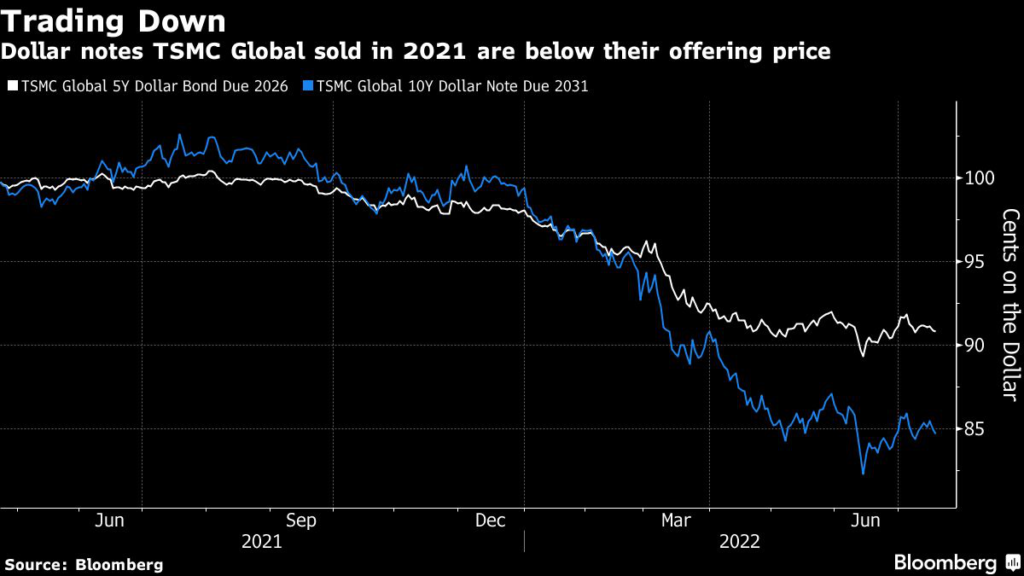
The initial price guidance on the upcoming bond, which follows the firm’s $3.5 billion four-part note in April, translates into yields at least 50 bps above those implied on TSMC’s comparable existing dollar notes, according to Bloomberg-compiled data. 

The chipmaker’s Aa3 credit rating is constrained by the capital-intensive and cyclical nature of the semiconductor industry, Moody’s Investors Service said in a report. TSMC has to incur significant capital expenditure to fund continuous technological development and meet rising demand from existing and new customers, it added. 

TSMC has said an envisioned $12 billion plant in Arizona may cost more than originally anticipated. In addition, chipmakers around the world are grappling with soaring costs for raw materials and shipping because of the war in Ukraine and lingering bottlenecks in global supply chains.

The chip industry continues to enjoy fast growth, although it would be very volatile as it’s extremely cyclical, according to Ting Meng, senior Asia credit strategist at Australia & New Zealand Banking Group Ltd. “TSMC can better weather the industry cycle given its dominant position and it continues to enlarge market share,” Meng wrote in a note.

(Updates with chart and analyst comment)

More stories like this are available on bloomberg.com

©2022 Bloomberg L.P.
Singapore Plans a Further Strengthening of Crypto Regulations

(Bloomberg) — Singapore intends to broaden the scope of cryptocurrency regulations and pushed back against claims that some recently collapsed digital-asset outfits were regulated in the city state.

The Monetary Authority of Singapore plans to consult on proposed steps in the next few months, its managing director Ravi Menon said in a speech after releasing the central bank’s annual report Tuesday. 

In responses to questions, he said the revised rules may include further tightening retail-investor access to crypto and widening the ambit of regulations to cover more activities.

Menon said some strained crypto players reported as based in the city state have “little to do with crypto-related regulation in Singapore.” He cited TerraForm Labs and Luna Foundation Guard — which were behind the collapsed TerraUSD stablecoin — hedge fund Three Arrows Capital and lender Vauld.

Some crypto firms with links to Singapore imploded or came under severe pressure this year as a global wave of monetary tightening sparked a meltdown that wiped more than $1 trillion off the value of digital tokens.

Three Arrows

Three Arrows Capital — formerly a poster child for unbridled optimism about virtual assets — declared bankruptcy this month. Previously, it was reprimanded by MAS for providing false information and exceeding the limit on its assets under management. 

The fund was not regulated under the Payment Services Act and had ceased to manage funds in Singapore prior to the problems leading to its bankruptcy, Menon said.

TerraForm Labs and Luna Foundation Guard aren’t licensed or regulated by MAS, nor have they applied for any license or sought exemption from holding any license, he added. Crypto lender Vauld doesn’t hold a license from MAS, according to Menon.

Vauld has suspended token withdrawals, one of a number of crypto outfits globally that hit trouble as leveraged bets imploded.

Wary Embrace

Singapore’s authorities have long maintained a wary embrace of the crypto industry, handing just 14 firms the regulatory nod to provide digital-token payment services locally, a fraction of almost 200 applicants. 

The city state is tightening rules around crypto investments, including clamping down on marketing and requiring virtual-asset providers to be licensed locally even if they only do business overseas. 

Next month the central bank will hold a seminar to shed more light on its position on crypto regulation, Menon said.

“We will set out how our developmental and regulatory approaches will work in harmony to achieve the vision of Singapore as an innovative and responsible digital asset hub,” he said.

More stories like this are available on bloomberg.com

©2022 Bloomberg L.P.
Close Bitnami banner
Bitnami