Bloomberg

Twitter Calls Musk’s Bots Complaints ‘Irrelevant Sideshow’

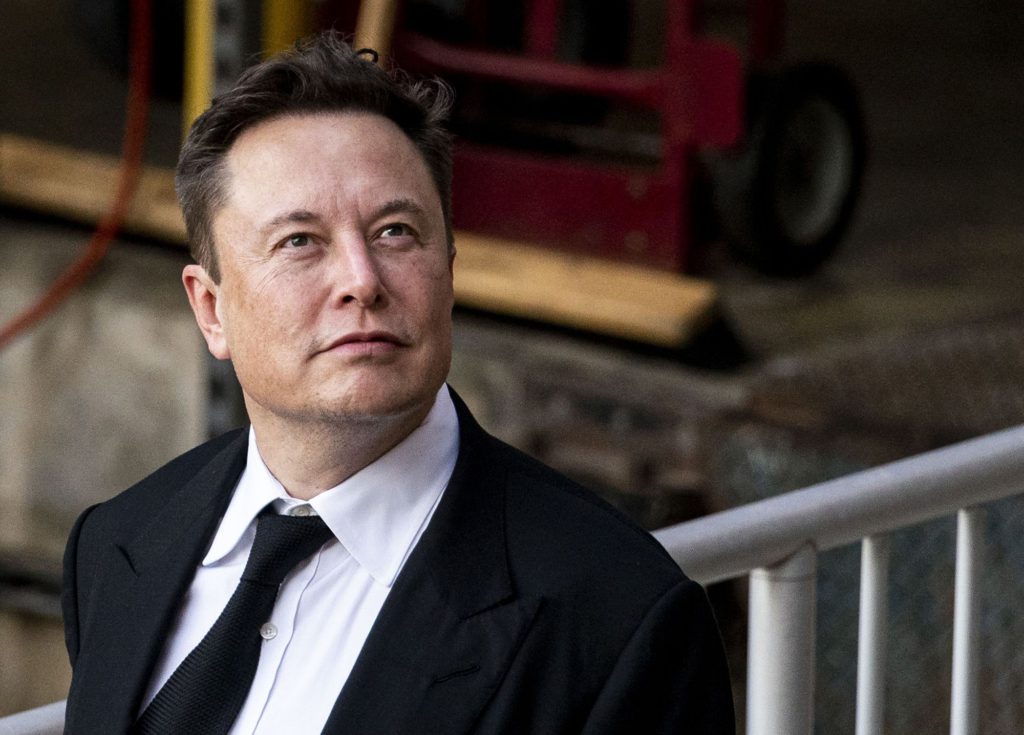
(Bloomberg) — Twitter Inc. dismissed Elon Musk’s complaints that he doesn’t have enough information about spam and robot accounts an “irrelevant sideshow” and urged a judge to hold a trial as soon as possible over his cancellation of a $44 billion buyout of the company.

“The earliest possible trial date is imperative,” Twitter’s attorneys said in the nine-page filing Monday, responding to Musk’s request for a delay. “This very public dispute harms Twitter with each passing day.”

Musk, the world’s richest man, backed out of the deal to buy the platform on July 8, accusing the company of not complying with the contract by providing information to assess how prevalent the bots are on the social media platform. He says it will take months to conduct a forensic review and asked for a February trial.

Musk was fully aware of the bot issue when he signed the deal to buy the company, Twitter’s lawyers said in a filing Monday.

“Musk is using his consent rights to straight-jacket the company’s operations, and the overhang of his breach jeopardizes Twitter’s relationships with employees and customers,” according to the filing. “Millions of Twitter shares trade daily under a cloud of Musk-created doubt. No public company of this size and scale has ever had to bear these uncertainties.”

Judge Kathaleen St. J. McCormick, who’s set to try the case, said that a Tuesday hearing in Delaware on Twitter’s request to fast track the case will be held on Zoom instead of in-person because she has Covid. She added her symptoms are not severe.

Twitter sued last week seeking to force Musk to complete the deal, and requested a Sept. 19 start for the non-jury trial. Lawyers for San Francisco-based Twitter said they need only four days to prove Musk should honor his agreement to pay $54.20 a share for the social-media platform. Twitter shares rose 67 cents to $38.41 on Monday.

The case is Twitter v. Musk, 22-0613, Delaware Chancery Court (Wilmington). 

How Musk’s Twitter Deal Foundered Over ‘Spam Bots’: QuickTake

(Updates with details from filing)

More stories like this are available on bloomberg.com

©2022 Bloomberg L.P.

Judge in Twitter Lawsuit Over Musk’s Canceled Deal Has Covid

(Bloomberg) — The judge overseeing Twitter Inc.’s lawsuit against Elon Musk has tested positive for Covid-19. 

Judge Kathaleen St. J. McCormick said that a Tuesday hearing in Delaware on Twitter’s motion to fast track its case will be moved to Zoom instead of in-person because she needs to be “isolating this week pursuant to CDC guidelines,” according to a letter Monday. She added her symptoms were not severe.

Twitter filed suit last week seeking to force Musk to complete the deal, and requesting a Sept. 19 start for the non-jury trial. Lawyers for San Francisco-based Twitter are arguing they need only four days to prove the world’s richest person should honor his agreement to pay $54.20 a share for the social-media platform.

Musk’s legal team responded that Twitter’s attorneys are unfairly pushing for a “warp speed” trial. The billionaire says Twitter violated the terms of the buyout deal by not turning over detailed information about so-called spam bot accounts within its system. The case requires a “forensic review and analysis of large swaths of data” about the bots along with other legal issues, Musk’s lawyers said in a July 15 filing, seeking a February trial date. 

The case is Twitter v. Musk, 22-0613, Delaware Chancery Court (Wilmington). 

More stories like this are available on bloomberg.com

©2022 Bloomberg L.P.

Biden Wants Chipmakers Getting US Aid to Curb China Investments

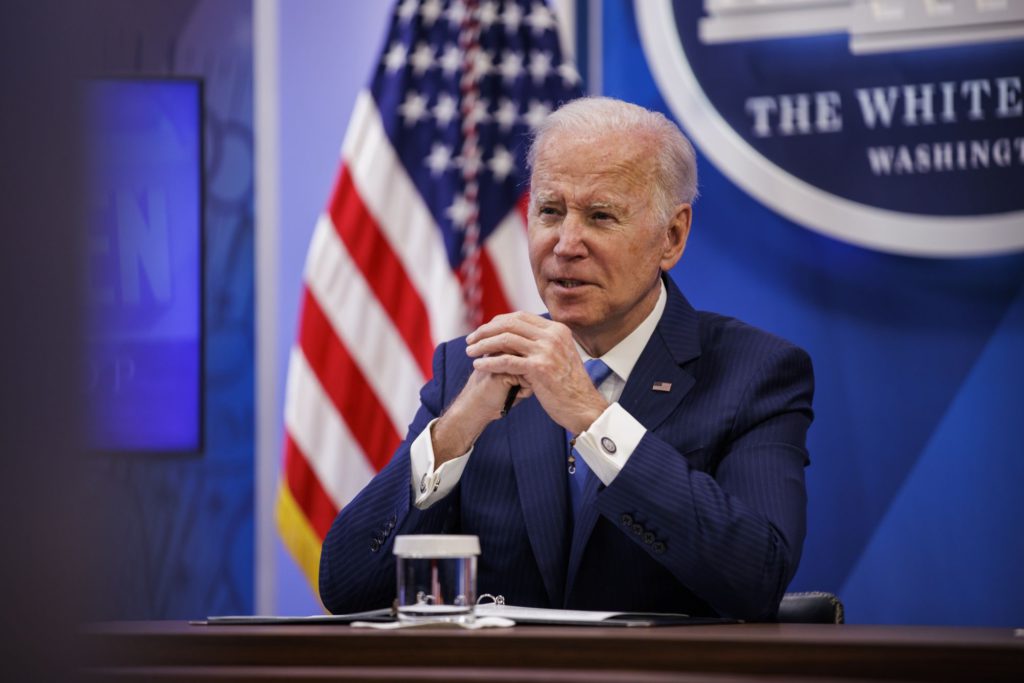
(Bloomberg) — The White House supports prohibiting semiconductor companies from expanding certain investment in China if they take new subsidies to build plants in the US under legislation the Senate’s set to begin debating Tuesday.

“We continue to support strong guardrails” in the legislation, White House Press Secretary Karine Jean-Pierre said Monday, referring to a provision of the bill that would limit China investments for companies that take some of the $52 billion the measure would dedicate toward US semiconductor manufacturing.

The incentives are intended to “generate more semiconductor investment here in the US, not in China,” Jean-Pierre said. “And guardrails help slow the growth of investment in China. That is why it’s such an important part of the bill. We believe in strong guardrails.”

The China investment restrictions are still under negotiation and are a target of heavy lobbying by the semiconductor industry. Intel Corp. and the industry’s main trade association, the Semiconductor Industry Association, have been lobbying against the restrictions as currently written, Politico reported earlier Monday.

Currently, the legislation would prohibit companies from expanding their semiconductor manufacturing in China for 10 years after they take a grant to build a US plant. Companies could continue to invest in “legacy” chip manufacturing in China, but the definition of that term is unresolved.

Senate Majority Leader Chuck Schumer is set to tee up a procedural vote to start debate on the bill Tuesday.

Why China Has U.S. Congress Focused on Computer Chips: QuickTake

More stories like this are available on bloomberg.com

©2022 Bloomberg L.P.

Celsius May Offer Creditors a Loss Now, or a Long Crypto Bet

(Bloomberg) — Cryptocurrency lender Celsius Network LLC may use its bankruptcy case to give creditors a choice between taking less than they are owed in cash, or making a bet on the long-term value of the cryptocurrencies at the heart of the company’s failure.

The company opened its first Chapter 11 court hearing Monday with a promise not to force its customers to accept any repayment they may be owed in US dollars or any other so-called fiat currency. 

“This is not a liquidation,” Patrick Nash, a bankruptcy lawyer for Celsius, told the judge overseeing the bankruptcy case in Manhattan. “All is not lost. We intend for this be a reorganization.”

In a slide presentation posted on the company’s bankruptcy website, Celsius said it may give customers “the option, at the customers’ election, to recover either cash at a discount or remain ‘long’ crypto.”

Celsius filed for court protection last week in a case involving billions of dollars of customer assets that are tied up on the platform, but with little agreement among experts on how cryptocurrencies should be treated under the US bankruptcy code. 

A committee of creditors will give customers an official voice in the case once the panel is appointed by the Office of the US Trustee, which is the arm of the US Department of Justice that oversees corporate bankruptcy cases. The filing has angered some customers, Nash said. Some have written letters to the judge overseeing the case asking about their accounts. 

Employees have received death threats, Celsius lawyers said during the hearing, while the company’s chief executive, Alex Mashinsky, watched over Zoom with his camera turned on. About 200 people participated in the video-based hearing.

The company expects some users may want to receive cash recoveries but that a “substantial majority” will wish to ride out the crypto winter by remaining “long crypto,” said Nash. 

According to Celsius’s terms of service, its users’ digital assets are “unsettled” and “not guaranteed” in the event of insolvency, which could mean that users may be treated as unsecured creditors.

Celsius’s case will force US Bankruptcy Judge Martin Glenn to grapple with several fundamental questions about how to treat a company that bills itself as a lender, but which has none of the traditional protections enjoyed by regulated banks.

Those include whether Celsius owns the crypto assets in its possession and whether the company can claw back any crypto that may have been taken out by customers just before the bankruptcy case began.

Glenn gave the company permission to pay routine bills and continue some operations, including an expansion of its cryptocurrency mining operations in Texas.

Under US law, traditional banks are not allowed to go bankrupt; instead they are taken over by regulators and customer deposits are protected. Bank holding companies, however, which do not hold any deposits, will sometimes use Chapter 11 to reorganize themselves and pay off creditors. 

For example, in 2008, the operating unit of Washington Mutual Inc. was taken over by federal regulators and all of its customer accounts were transferred to another bank, while the parent wound down operations under a $7 billion plan.

The bankruptcy case is Celsius Network LLC 22-10964, US Bankruptcy Court for the Southern District of New York (Manhattan).

(Adds proposed creditor committee with customer representatives in sixth paragraph.)

More stories like this are available on bloomberg.com

©2022 Bloomberg L.P.

Apple Sued Over Apple Pay, Accused of Antitrust Violations

(Bloomberg) — Apple Inc. was hit with an antitrust lawsuit over Apple Pay, accused of using its market power in the mobile device industry to fend off competition from rival payment apps and charging card issuers fees to boost its bottom line.

The proposed class-action complaint by Affinity Credit Union marks the latest antitrust battle for the iPhone maker, after facing increased scrutiny in recent years over its App Store policies from government regulators. European regulators, after a nearly two-year investigation, also found on a preliminary basis that Apple abused its dominant position with Apple Pay in the market for tap-to-pay apps or mobile wallets.

IPhone users must use Apple Pay if they want to buy something by tapping the phone against a terminal in a store. Other iPhone payment services such as PayPal and Square  — as well as financial institutions like Chase, Citi and American Express — can’t launch tap-to-pay iPhone apps with their own features and interface.

By excluding competition, Apple can charge “payment card issuers fees that no other mobile wallet ventures to impose,” Affinity Credit Union, the Des Moines, Iowa-based payment card credit union that issues payment cards, said in the lawsuit, filed Monday in federal court in San Jose, California.

Apple charges issuers 0.15% on credit card transactions and 0.05% on debit cards. Google Pay and Samsung Pay, operating on the Android system, don’t charge card issuers any fees. The Apple Pay fees “generated a reported $1 billion for Apple in 2019, and this revenue stream — earned from card issuers — is predicted to quadruple by 2023,” Affinity Credit Union said in the lawsuit.

“If Apple faced competition, it could not sustain these substantial fees,” Affinity Credit Union said.

The credit union claims Apple is violating the Sherman Act — designed to protect competition — by tying its mobile devices and mobile wallet together and by exclusing all competitors.

Read more: Apple Keeps Its Tap-to-Pay Feature to Itself to Protect Revenue

Apple didn’t immediately respond to a request for comment.

But in discussing the European Union’s probe of Apple’s mobile payment policies in May, the region’s Digital Chief Margrethe Vestager said Apple claimed it can’t provide access to NFC for security reasons.

“Our investigation to date did not reveal any evidence that would point to such a higher security risk,” Vestager said, according to prepared remarks posted on the EU’s website. “On the contrary, evidence on our file indicates that Apple’s conduct cannot be justified by security concerns.”

Affinity Credit Union is represented in the California lawsuit by Hagens Berman, a frequent class action lawsuit opponent of Apple. The law firm helped plaintiffs reach a $400 million settlement in 2016 over eBooks price fixing, a $100 million deal in 2021 for small App Store developers, and a $95 million settlement this year over product warranties.

The suit is Affinity Credit Union v. Apple Inc.,3:22-cv-04174, in the Northern District of California (San Jose).

(Adds details about plaintiff’s law firm, EU investigation)

More stories like this are available on bloomberg.com

©2022 Bloomberg L.P.

SoftBank Halts Work on London IPO of Chip Designer Arm, FT Says

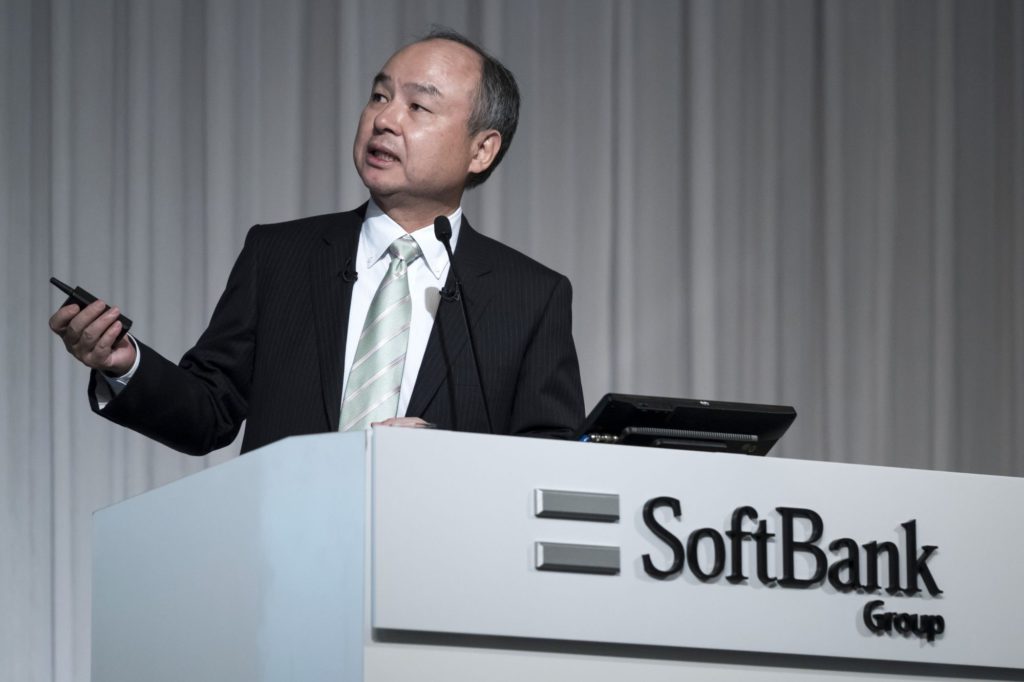
(Bloomberg) — SoftBank Group Corp. has put plans for a London initial public offering of chip designer Arm Ltd. on hold because of political turmoil in the UK government, the Financial Times reported, citing people briefed on talks between the UK government and the Japanese tech investor.

Investment minister Gerry Grimstone and digital minister Chris Philp resigned as Boris Johnson’s government collapsed under pressure from his own party. The two had been playing leading roles in talks with SoftBank to list the division in Britain.

Johnson had been personally lobbying SoftBank’s billionaire founder, Masayoshi Son, to at least partially list the company in the UK, the paper reported. Son had said as recently as June that he hadn’t made a final decision on where to list, and a dual listing in both Britain and the US was under consideration. 

SoftBank and Arm declined to comment to the newspaper. The UK government did not immediately respond to the FT’s request for comment.

Arm, which SoftBank acquired in 2016, is based in Cambridge, England. Arm was one of the UK’s most important technology companies before the purchase and still has the majority of its operations there. An IPO that would list only in the US would be a blow to the UK government and capital markets. 

More stories like this are available on bloomberg.com

©2022 Bloomberg L.P.

Stock Optimism Evaporates With Apple Hiring Plans: Markets Wrap

(Bloomberg) — US stocks turned sharply lower after Apple Inc.’s plans to slow hiring added to investor worries that the Federal Reserve’s campaign against inflation will drop the economy into a recession.

The S&P 500 extended losses in the last hour of trading, after coughing up a gain that had surpassed 1%. Tech and health-care shares led the drop, with Apple sliding more than 2% in its worst day in almost three weeks. The iPhone maker plans to slow hiring and spending growth next year in some divisions to cope with a potential economic downturn, people with knowledge of the matter said. The news follows a similar move by Alphabet Inc. last week. 

Netflix Inc. will kick off second-quarter earnings for major tech and communication companies when it reports Tuesday evening. Profit growth for the sector is expected to slow sharply. Earlier, Goldman Sachs Group Inc. reported better-than-expected results, sending its shares higher.

Stocks had been rebounding from their June low on expectations that the Fed is starting to gain ground in its efforts to slow price gains. Treasuries slumped Monday, with 10-year yields below 3% — still lower than the 2-year rate, leaving the curve inverted in what is generally a recession warning.

“What’s been holding us up of course is jobs, so now as we start to get these announcements jobs aren’t maybe as stable, now you’re seeing the impetus toward recession,” said Dana D’Auria, co-CIO at Envestnet Solutions, on Bloomberg Television.

After the bell, International Business Machines Corp. reported sales that beat estimates, a sign that demand for mainframe computers, consulting and cloud services remained strong. The shares were little changed in extended trading.

Another pressure point for markets remains gas supply to Europe amid a standoff with Russia over its invasion of Ukraine, with the Nord Stream 1 pipeline scheduled to reopen Thursday following maintenance. Gazprom PJSC declared force majeure on several European natural-gas buyers, a move that may signal it intends to keep supplies capped.

Read more: Russian Gas Supply Halt Risks 1.5% Cut to EU’s GDP in Worst Case

The S&P 500 is up more than 5% from June’s closing low following Friday’s strong rally on renewed hopes that inflation — and Fed rate hikes — may be close to peaking. Data last week showing a greater decline in US consumers’ long-term inflation expectations helped squash talk of a 100 basis-point hike in July, while strong retail sales underscored a resilient economy.

Read more: Trader Behind Huge Fed Funds Wager Bags $14 Million in First Day

“You have to be very careful in how you’re allocating assets and allocating dollars in this market — but you had a couple of really good numbers this morning from Goldman and Bank of America, on the back of good retail sales,” said Chuck Cumello, president and chief executive officer of Essex Financial Services. “And the key thing in the US economy is the consumer” and, he said, “people are out spending.”

Elsewhere in markets Monday, West Texas Intermediate crude climbed above $100 a barrel after the Saudis declined to make any promises regarding future output increases, and copper extended its recovery from last week’s slump. Bitcoin rallied, trading above $22,000 for the first time since early June.

More market commentary

  • “The key for the markets continues to be the overall direction of the economy,” wrote Paul Nolte, portfolio manager at Kingsview Investment Management. “If the recession that is heading our way is mild, then much of the decline has already occurred, and this is a good time to accumulate shares. If the recession is deeper/longer, then there is a risk of another 15% decline in stocks from here.”
  • “Our call remains that the economy will slow aggressively over the next 6-12 months and bond yields are headed lower, but a recession is not imminent,” wrote Dennis DeBusschere, the founder of 22V Research. “That backdrop has implications for factors and markets near term, especially as disinflationary forces continue to strengthen.”
  • “The possibility that Russia stops, or severely reduces, their gas exports to Europe should keep markets on edge in the near-term,” Mizuho International Plc strategists Peter McCallum and Evelyne Gomez-Liechti wrote in a note to clients.

Key events to watch this week:

  • Earnings this week include Tesla
  • US Treasury Secretary Janet Yellen visits South Korea. Tuesday
  • Reserve Bank of Australia releases July minutes. Tuesday
  • UK Chancellor Nadhim Zahawi and Bank of England Governor Andrew Bailey speak at event. Tuesday
  • Bloomberg Crypto Summit in New York. Tuesday
  • Bank of Japan, European Central Bank rate decisions. Thursday
  • Nord Stream 1 pipeline scheduled to reopen following maintenance. Thursday

Some of the main moves in markets:

Stocks

  • The S&P 500 fell 0.8% as of 4 p.m. New York time
  • The Nasdaq 100 fell 0.9%
  • The Dow Jones Industrial Average fell 0.7%
  • The MSCI World index was little changed

Currencies

  • The Bloomberg Dollar Spot Index fell 0.4%
  • The euro rose 0.6% to $1.0145
  • The British pound rose 0.8% to $1.1955
  • The Japanese yen rose 0.4% to 138.07 per dollar

Bonds

  • The yield on 10-year Treasuries advanced five basis points to 2.97%
  • Germany’s 10-year yield advanced eight basis points to 1.22%
  • Britain’s 10-year yield advanced seven basis points to 2.16%

Commodities

  • West Texas Intermediate crude rose 4.8% to $102.29 a barrel
  • Gold futures were little changed

More stories like this are available on bloomberg.com

©2022 Bloomberg L.P.

Apple to Slow Hiring and Spending for Some Teams Next Year

(Bloomberg) — Apple Inc. plans to slow hiring and spending growth next year in some divisions to cope with a potential economic downturn, according to people with knowledge of the matter.

The decision stems from a move to be more careful during uncertain times, though it isn’t a companywide policy, said the people, who asked not to be identified because the deliberations are private. The changes won’t affect all teams, and Apple is still planning an aggressive product launch schedule in 2023 that includes a mixed-reality headset, its first major new category since 2015.

Still, the more cautious tone is notable for Apple, a company that has generally beat Wall Street predictions during the Covid-19 pandemic and has weathered past economic turmoil better than many peers.

Apple shares fell 2.1% to $147.07 after Bloomberg reported on the slowdown, marking the biggest one-day decline in almost three weeks. The stock has slipped about 17% so far this year, on par with the broader market. Shares of other tech companies also declined on the news Monday. 

Alphabet Inc., Amazon.com Inc., Meta Platforms Inc., Snap Inc. and other tech companies have taken their own steps in recent weeks to rein in budgets and decelerate hiring. Microsoft Corp., Tesla Inc. and Meta have gone as far as to cut jobs — something Apple hasn’t historically done.

Apple, based in Cupertino, California, allocates a certain amount of money to each major division annually for spending on research and development, resources and hiring. For 2023, it’s giving select teams a lower-than-expected budget.

For some groups, the company won’t increase headcount in 2023, whereas it might normally hire 5% to 10% more employees in a given year. It also plans to not fill roles of departing employees for some groups.

A spokesperson for the technology giant declined to comment. 

Over the last few years, Apple has invested heavily in research and development, hired aggressively from its competition and launched several new products. But it’s also confronted supply-chain challenges, including the shutdown of production in China in recent months. Apple warned in April that the problems would cost it as much as $8 billion in the latest quarter.

Analysts expect Apple to report third-quarter revenue of about $83 billion, slightly above the year-earlier period, when it releases results on July 28. 

During the last earnings call, Chief Executive Officer Tim Cook said Apple was “seeing inflation” and that the impact was evident in its gross margin and operating expenses. The company also cited a continued negative impact from Covid-19 and rising freight costs. It declined to provide specific revenue guidance.

While the spending slowdown is rare, Apple has taken similar steps before. In early 2019, before the pandemic, the company cut back on hiring after iPhone sales missed expectations in China and other parts of the world. In April, it also slowed hiring of some Apple retail store positions.

Even as it prepares to rein in spending in some areas, Apple plans to boost its companywide compensation budget this year to cope with a tighter labor market. The company also is contending with efforts to unionize its stores across the US. Apple recently increased pay for many hourly retail and technical support workers, with employees saying the raises are coming in between 5% and 15%. 

At the same time, Apple is preparing a flood of new products. Later this year, the company expects to introduce four iPhone models, three Apple Watch variations, new Mac desktops and laptops, and an updated Apple TV set-top box. It’s also planning a new HomePod speaker, a larger iPad and several new Macs for next year. 

Apple dedicated about $22 billion to R&D in fiscal 2021, up 17% from the prior year. At the end of that year, the company had about 154,000 employees.

In 2021, Apple’s capital expenditures topped $11 billion, a 52% increase from 2020, while overall operating expenses — which includes marketing spending, payroll and equipment costs — rose 13% last year to about $44 billion. 

The company has been spending billions of dollars annually on a troubled electric car effort, new content for its Apple TV+ streaming service and its mixed-reality headset. It’s also working on developing its own components, such as cellular modem chips, in addition to products like foldable devices and augmented reality glasses.

(Updates shares in fourth paragraph.)

More stories like this are available on bloomberg.com

©2022 Bloomberg L.P.

Instacart Valuation Cut to $14.7 Billion by Investor Capital Group

(Bloomberg) — Instacart Inc. investor Capital Group Cos. cut its valuation to $14.7 billion, far below the online grocery-delivery firm’s own calculation of $24 billion.  

Capital Group marked Instacart shares at $45.84 apiece at the end of June, the asset manager said in a report on the website of its New Economy Fund. That makes it the second major investor in recent weeks to say that Instacart’s own estimate is now obsolete. 

In late June, Fidelity Investments lowered its estimate for the closely held firm, which filed confidentially in May for an initial public offering. Representatives for Instacart, Fidelity and Capital Group declined to comment. 

The market for pandemic darlings like Instacart has soured amid slowing growth, surging inflation and higher interest rates. The firm, which was valued at $39 billion through a March 2021 funding round, slashed its internal calculation by about 40% a year later.  

Read more: Instacart Slashes Its Valuation by Almost 40% to $24 Billion 

That markdown positioned San Francisco-based Instacart to issue shares to future and existing employees at the reduced price, providing a potential boost to recruiting and retention efforts. In April, Instacart listed the issuance of 16.6 million employee shares or options at $75 each with a total value of almost $1.25 billion, according to a filing with California regulators.  

Fidelity, Capital Group and T. Rowe Price Group Inc. are among mutual fund providers that bought Instacart shares through the company’s private offerings in recent years, along with investment firms such as Tiger Global Management and D1 Capital Partners. 

Fidelity has repeatedly marked down Instacart since the year began. Most recently, the Fidelity Blue Chip Growth fund valued its Instacart shares at $48.43 apiece as of May 31, down from $64.85 a month earlier. Boston-based Fidelity also cut its valuation of Instacart rival GoPuff by 50% from March to May, documents show.

Capital Group’s latest valuation for Instacart is down 62% from its last peg of $119.96 a share at the end of March. T. Rowe has yet to provide an update of its March 31 valuation of $96 a share.

More stories like this are available on bloomberg.com

©2022 Bloomberg L.P.

Three Arrows Owes Biggest Creditor Digital Currency Group $1.2 Billion

(Bloomberg) — A creditor list of bankrupt crypto hedge fund Three Arrows Capital puts the interconnected nature of the industry on display, with lenders ranging from some of the biggest digital-asset firms to the wife of co-founder Kyle Davies.

At the top is Digital Currency Group Inc., the parent company of crypto brokerage Genesis, which filed a $1.2 billion claim against Three Arrows, according to people familiar with the matter who reviewed a court filing. Chen Kaili Kelly, the wife of Davies, also filed a claim of about $66 million, the filing shows. And co-founder Zhu Su himself submitted a $5 million claim. It’s not immediately clear how Three Arrows was structured to allow Zhu to be a creditor.

The full extent of the impact of Three Arrows’s implosion on the industry is starting to emerge as it undergoes a liquidation process ordered by a British Virgin Islands court. Celsius Network and Voyager Digital, which both filed for bankruptcy in recent weeks, are among other creditors taking a hit from Three Arrows. Deribit, a crypto derivatives exchange, has a $80 million claim filed under the entity name DRB Panama Inc. 

Three Arrows has become emblematic of the industry’s excesses during last year’s bull run, when firms built up leverage that hobbled them as the market turned. Its downfall has rippled through the digital asset industry, leading to some, such as BlockFi Inc, seeking rescue finding, while others filed for bankruptcy protections. The whereabouts of co-founders Su and Davies are still unknown, liquidators have said. Davies told the Wall Street Journal earlier that the fund had roughly $3 billion in assets under management in April before crypto markets crashed.

Genesis had earlier disclosed that it was exposed to Three Arrows, and a July 9 filing in Singapore high court lists a $2.36 billion loan to the fund from Genesis Asia Pacific Pte Ltd. Genesis sold collateral and hedged its downside once Three Arrows failed to meet a margin call, Michael Moro, chief executive officer of Genesis, said in a series of tweets this month, without specifying the hedging strategy it employed. The loans to Three Arrows had a weighted-average margin requirement of over 80%, he said, without disclosing the total loan amount or the economic loss. Digital Currency Group has since assumed some of these liabilities.  

“Both the DCG and Genesis balance sheets remain strong. With no remaining exposure to Three Arrows Capital, Genesis continues to be well-capitalized and its operations are business as usual,” a spokesperson for DCG said in an emailed statement. 

More stories like this are available on bloomberg.com

©2022 Bloomberg L.P.
Close Bitnami banner
Bitnami