Bloomberg

It’s Finally Miller Time: Molson Coors Gets a Chance at a Super Bowl Ad

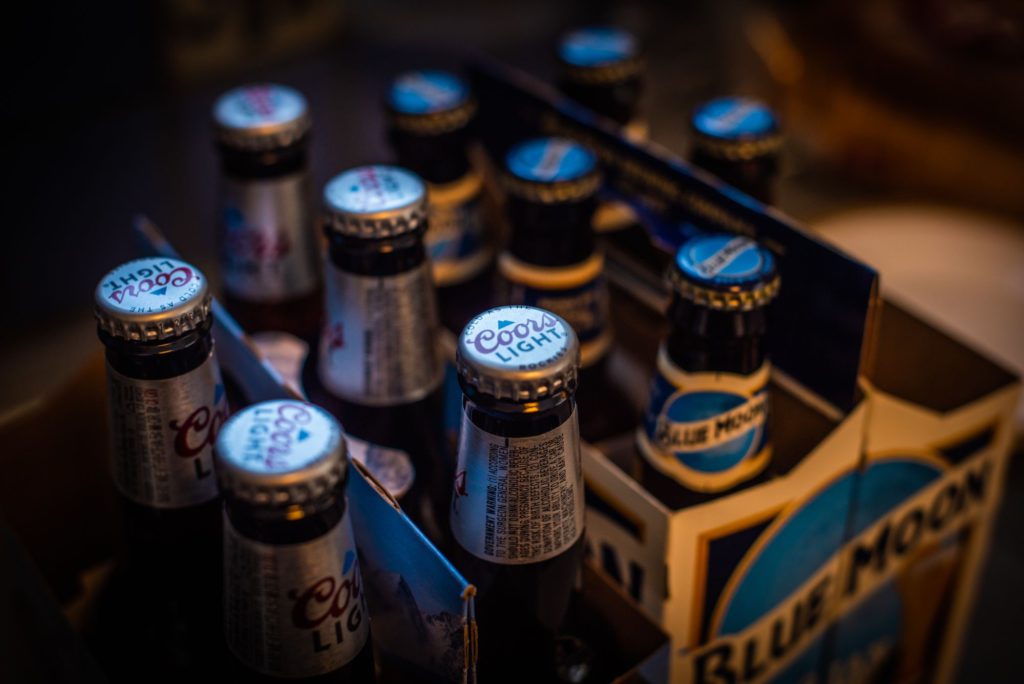
(Bloomberg) — Molson Coors Beverage Co., maker of Coors Light and Miller Lite beer, bought a 30-second spot to air nationally on Fox during the Super Bowl next year, becoming the first new beer sponsor on America’s most-watched sporting event in more than three decades, the company said Thursday.

Molson got the chance after rival Anheuser-Busch InBev said in June it would end its exclusive deal with the game, a position it’s held since 1989. 

“It’s been no fun with one major brewer monopolizing the Super Bowl for 30 years,” said Michelle St. Jacques, chief marketing officer at Molson. Although she declined to comment on the price paid for the ad, St. Jacques told Bloomberg News that she’s looking to incorporate some technical innovation into her spots to break through the clutter.

The company also likes to use humor. In this ad featuring Patrick Mahomes, it has the Kansas City Chiefs Quarterback promoting a Coors flashlight to get around NFL rules restricting players from endorsing beer.

The last time Molson Coors had a national in-game ad was in the early 1980s. The company has had to find workarounds since. Last year, it released the Coors Big Game Commercial of Your Dreams on YouTube to protest being shut out of the game. That ad was seen more than 3 million times. This year, it hosted a virtual bar in the Decentraland metaverse. 

Anheuser-Busch, Budweiser’s parent, ran 4 minutes of in-game ads during the national broadcast this year. The company said it still intends to be an advertiser in next year’s game.

(Add Patrick Mahomes ad in fourth paragraph.)

More stories like this are available on bloomberg.com

©2022 Bloomberg L.P.

It’s Miller Time Again: Molson Coors Returns To The Super Bowl After More Than 30 Years

(Bloomberg) — Molson Coors Beverage Co., maker of Coors Light and Miller Lite beer, bought a 30-second spot to air nationally on Fox during the Super Bowl next year, becoming the first new beer sponsor on America’s most-watched sporting event in more than three decades, the company said Thursday.

Molson got the chance after rival Anheuser-Busch InBev said in June it would end its exclusive deal with the game, a position it’s held since 1989. 

“It’s been no fun with one major brewer monopolizing the Super Bowl for 30 years,” said Michelle St. Jacques, chief marketing officer at Molson. Although she declined to comment on the price paid for the ad, St. Jacques told Bloomberg News that she’s looking to incorporate some technical innovation into her spots to break through the clutter.

The company also likes to use humor. In this ad featuring Patrick Mahomes, it has the Kansas City Chiefs quarterback promoting a Coors flashlight to get around NFL rules restricting players from endorsing beer.

The last time Molson Coors had a national in-game ad was in the early 1980s. The company has had to find workarounds since. Last year, it released the Coors Big Game Commercial of Your Dreams on YouTube to protest being shut out of the game. That ad was seen more than 3 million times. This year, it hosted a virtual bar in the Decentraland metaverse. 

Anheuser-Busch, Budweiser’s parent, ran 4 minutes of in-game ads during the national broadcast this year. The company said it still intends to be an advertiser in next year’s game.

(Add Patrick Mahomes ad in fourth paragraph.)

More stories like this are available on bloomberg.com

©2022 Bloomberg L.P.

Qatar Investment Authority’s TMT Head Pande Exits for New Role

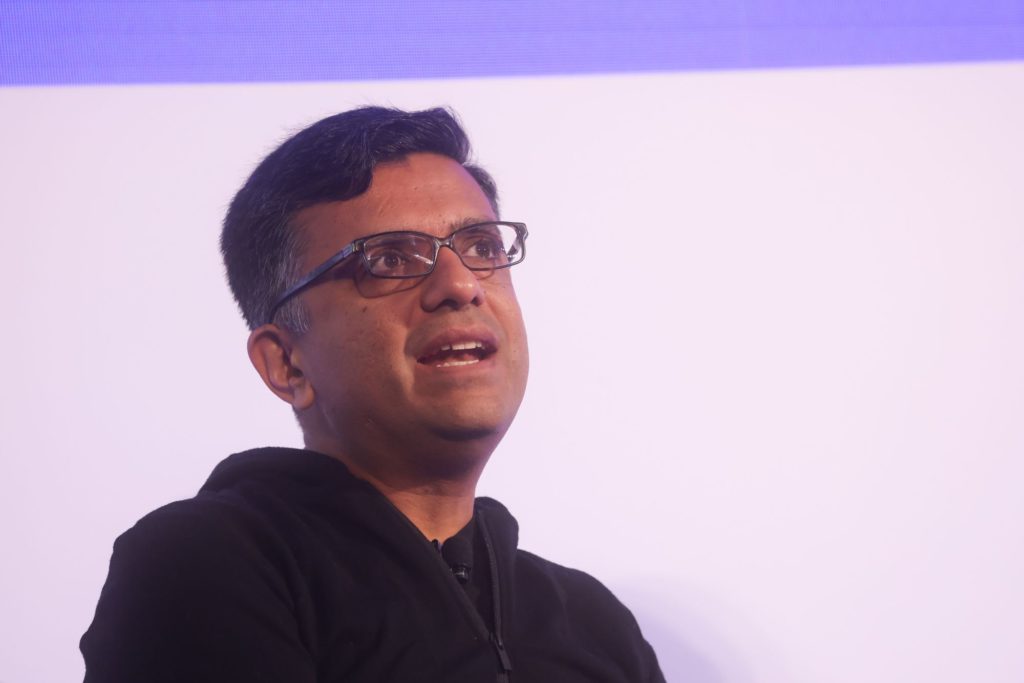
(Bloomberg) — Qatar Investment Authority’s head of technology, media and telecommunications investing has left the sovereign wealth fund, according to a person with knowledge of the matter. 

New York-based Sumit Pande resigned to pursue another opportunity, said the person, who requested anonymity discussing the move as it’s not yet public.

A QIA representative didn’t immediately respond to a request for comment. Pande declined to comment. 

Pande joined QIA in 2017 after over a decade at Morgan Stanley, his LinkedIn profile shows. He led QIA’s investments in companies including Palantir Technologies Inc., Gigamon, Byju’s, VerSe Innovation, Impact.com, Coveo, Checkout.com and Universal Music Group. Pande was also involved in the sovereign wealth fund’s $375 million commitment to back Elon Musk’s takeover of Twitter Inc., which the billionaire is being sued to complete. 

Other US-based technology-focused sovereign wealth fund executives have stepped away from their posts in the past year. The former global head of TMT at Temasek, Mukul Chawla, left to join KKR & Co. and the former head of GIC’s technology investment group, Jeremy Kranz, left to start a new fund.

More stories like this are available on bloomberg.com

©2022 Bloomberg L.P.

What If Musk Is Ordered to Do Twitter Deal and He Just Says No?

(Bloomberg) — Imagine: Elon Musk, known for his delight in defying authority, is ordered to move ahead with his $44 billion purchase of Twitter Inc. — and refuses.

It’s an unusual scenario, but one in which the court would have tools to enforce its orders. It could slap an epic fine on Musk, appoint receivers to get the deal done or even enable the seizure of his assets. Twitter sued Musk on Tuesday to force him to consummate the acquisition after he pulled out.

Musk doesn’t shrink from a fight. He has tangled with everyone from the US Securities and Exchange Commission over his provocative tweets, to a British cave expert in a defamation case, to Donald Trump. In Delaware Chancery Court last summer in the SolarCity trial, the Tesla Inc. chief executive officer openly mocked the lawyer examining him, saying he had “great respect for the court” but not for the attorney, a “bad human being.”

Musk’s respect for that very court may now be tested, if it imposes a remedy to the Twitter mess that the world’s richest person doesn’t like.

Read More: Twitter-Musk Case Assigned to Delaware Chief Judge McCormick 

“We’ve never had a situation like that in Delaware that I can recall,” said Larry Hamermesh, a University of Pennsylvania law professor who specializes in Delaware corporate law disputes. “It would be pretty extreme.”

Musk’s lawyers didn’t respond to emails seeking comment on the case.

A Whopping Fine

Lawyers for Twitter, of San Francisco, said in their lawsuit that they will need only four days in court to show that Musk should be forced to honor his agreement and pay $54.20 a share for the social media company. 

If they prevail and the court enters a judgment holding Musk liable, it could invoke Delaware’s civil contempt laws if he didn’t pay up, said Brian Quinn, a Boston College law professor who teaches about mergers-and-acquisitions law.  

“A judge could hold him in contempt and set a daily fine until he complies,” Quinn said. “For Musk, that would have to be a rather large number.”

Musk’s net worth is $217.1 billion, according to the Bloomberg Billionaires Index.

Read More: Twitter Sets Out How Making Musk M&A Stick Is a Compelling Case

That’s what former Chancery judge Andre Bouchard did in a case involving the court-ordered sale of transcription software maker Transperfect Global Inc. When Transperfect officials ignored an order, Bouchard imposed a $30,000 daily fine, and the company quickly complied. The Delaware Supreme Court later upheld the judge’s contempt powers against Transperfect but threw out sanctions against its owner.

Seizing Assets, Appointing Receiver

The court could let Twitter go after Musk’s assets, said Robert Miller, who holds a chair in corporate finance and law at the Iowa College of Law.

Chancery Court “is a court of equity, with broad powers to fashion remedies. Tesla is a Delaware corporation,” Miller said. The court, he said, “would have no problem reaching Musk’s Tesla stock.”

Miller cautioned that “nothing like this has ever happened before,” a scenario in which “someone is ordered by Chancery to close a deal and just ignores that order.” But legal deadbeats aren’t uncommon, he said, “and all states and all courts have procedures whereby the winning litigant can ‘execute’ a judgment by moving against the loser’s assets.”

Read More: Twitter Hits Back at Musk, Suing to Force $44 Billion Buyout 

A court judgment Musk refused to pay would become like any other debt, said Charles Elson, a retired University of Delaware finance professor and the former head of the school’s Weinberg Center for Corporate Governance. But seizing Tesla shares to collect that debt could be a long, tortuous legal road, he said.

“You’d need to undertake the effort to pierce the corporate veil” over the deal, because Musk established holding companies for the purpose of the acquisition, Elson said. 

If the shell companies ignored Chancery’s judgment, the court could appoint a receiver to take them over and “do the deal,” Quinn said. The companies would then contact the lenders for the financing and grapple with Musk  — suing him for the sum, if necessary.

A Stint in Jail

Under Delaware’s civil contempt procedure, a judge can send a scofflaw to jail to think it over. In 2014 the court issued an arrest warrant for a defendant flouting an order to surrender his passports. But it’s rare for a Chancery judge to send for the sheriff.

“In a contract dispute, they can’t hold a gun to your head,” Elson said. “There’s no such thing as a contract prison.”

Read More: Musk’s About-Face on Twitter Sends Takeover Saga to Delaware 

Still, the court could impose a large fine on Musk, or even order his arrest, Miller said. 

“There’s no way in the world Delaware is going to lose its franchise as the premier corporate law jurisdiction where contracts are enforced because Elon doesn’t feel like doing it,” he said.

Quinn agrees the court would have to respond forcefully. Delaware’s corporate statutes and its chancery court help bring companies to the state whose incorporation fees make up as much as a fourth of its annual $5 billion budget, by some estimates.

“That state lives and dies on its corporate laws,” Quinn said, and doesn’t want a reputation as one “where you can thumb your nose at a judge.”

The case is Twitter v. Musk, 22-0613, Delaware Chancery Court (Wilmington).

More stories like this are available on bloomberg.com

©2022 Bloomberg L.P.

Zara’s Billionaire Owner to Buy Luxury New York Apartment Building for $500 Million

(Bloomberg) — Amancio Ortega, the billionaire founder of the Zara clothing chain, has agreed to buy New York’s 19 Dutch apartment building.

Ortega’s holding firm Pontegadea has reached an accord to acquire the 64-floor luxury apartment complex for about $500 million, according to details published by trade publication The Real Deal and confirmed by a spokesperson for Ortega. The building was sold by Carmel Partners.

Pontegadea channels the dividends Ortega, 86, receives from his 59% stake in fast-fashion giant Inditex SA to a portfolio focused on premium commercial and residential real estate in cities from Seattle and Toronto to London and Barcelona. Inditex owns several brands, including Zara.

Earlier this year, Pontegadea bought an office building in Glasgow for about 200 million pounds ($237 million), as well as the Royal Bank Plaza in Toronto for C$1.2 billion ($916 million). 

The firm bought the iconic, gold-clad tower in Canada’s financial capital from Oxford Properties, the real estate arm of Ontario’s pension fund for municipal workers, and Canada Pension Plan Investment Board. 

While Ortega’s investments mostly focus on real estate, he’s also been diversifying in recent years into infrastructure. 

Pontegadea owns a stake in an undersea telecommunications cable firm with Telefonica SA and in power and gas transmission networks in Spain and Portugal.

Ortega’s firm has also invested in a renewable energy project with Repsol SA and last year bought a stake in Portuguese power and gas grid operator REN – Redes Energeticas Nacionais SGPS SA. He also owns stakes in Enagas SA and Spanish grid operator Red Electrica Corporacion SA.

Ortega is Spain’s wealthiest person and is the 23rd-richest person in the world with a $48.5 billion fortune, according to the Bloomberg Billionaires Index. His wealth has taken a $19 billion hit this year after Inditex’s share price tumbled 18%.

Marta Ortega took over as chairwoman of her father’s retail empire earlier this year after her predecessor Pablo Isla left the role. 

(Updates in final paragraph with details of Ortega’s daughter taking on chairwoman’s role. An earlier version of the story corrected the name of the building in the first paragraph.)

More stories like this are available on bloomberg.com

©2022 Bloomberg L.P.

China’s Troubled Property Market Has Global Investors On Edge

(Bloomberg) — Former UBS Group AG economist Jonathan Anderson once called it “the most important sector in the universe.”

More than a decade on, Chinese property is again grabbing the attention of global investors — this time for all the wrong reasons.

Mounting signs of stress this week in an industry that accounts for about a quarter of the world’s second-largest economy are roiling China’s credit markets, dragging down the nation’s bank stocks and pummeling commodities from iron ore to copper.

After a burst of optimism earlier this year that looser regulatory curbs might stem the industry’s debt crisis, investors are getting spooked by rolling Covid lockdowns and a rapidly escalating homebuyer boycott of mortgage payments on stalled projects. The bigger worry is that a widespread loss of confidence in real estate will put major strain on China’s economy and financial system, which is sitting on 46 trillion yuan ($6.8 trillion) of outstanding mortgages and still has 13 trillion yuan of loans to the country’s beleaguered developers.

“Property has been getting steadily worse the whole time; prices, sales, starts, all terrible,” said Craig Botham, chief China economist at Pantheon Macroeconomics in London. “The chronic deterioration has now taken another step. It was always going to hit the financial sector eventually, given the prevalence of collateral in loan books with large real estate portions.”

The turmoil this week has battered what was already one of the world’s most stressed industries. The average yield on Chinese junk dollar debt, which is dominated by developers, has surged to almost 26%. Panic has also spread to investment-grade builders, with a bond issued by China Vanke Co., the nation’s second-largest builder by sales, falling to a record-low of 81.6 cents on the dollar on Tuesday.

China’s Covid Zero policy is exacerbating the situation by damping demand for property and depressing economic activity. Lockdowns remain commonplace in China, which continues to stick to a policy of keeping out the virus with stringent curbs. A recent flareup in Shanghai has spurred concern the city could be heading for another city lockdown. 

How China’s Property Developers Got Into Such a Mess: QuickTake

Concern that mortgage boycotts will lead to a rise in souring loans sent a gauge of Chinese bank shares to its lowest level since March 2020. 

Chinese authorities held emergency meetings with major banks this week to discuss the mortgage boycotts on concern that more buyers may follow suit, according to people familiar with the matter. Some lenders plan to tighten their mortgage lending requirements in high-risk cities, two of the people said.

Homebuyers have stopped mortgage payments on at least 100 projects in more than 50 cities as of Wednesday, according to researcher China Real Estate Information Corp. That’s up from 58 projects on Tuesday and only 28 on Monday, according to Jefferies Financial Group Inc. analysts including Shujin Chen. 

“If more home buyers cease payment, the spreading trend will not only threaten the health of the financial system but also create social issues amid the current economic downturn,” Betty Wang, a senior economist at Australia & New Zealand Banking Group Ltd., wrote in a note Thursday.

Banks are rushing to reassure investors that risks from loans to homebuyers were controllable, with at least 10 firms issuing statements. State-owned Agricultural Bank of China Ltd. said it held 660 million yuan of overdue loans on unfinished homes, while smaller rival Industrial Bank Co. said 1.6 billion yuan of mortgages were impacted, of which 384 million yuan have become delinquent. 

Nomura Holdings Inc. said the refusal to pay mortgages stems from the widespread practice in China of selling homes before they’re built. Confidence that projects will be completed has weakened as developers’ cash woes intensified. 

Nomura economists led by Ting Lu estimate that Chinese developers have only delivered around 60% of homes they presold between 2013 and 2020, while in those years China’s mortgage loans rose by 26.3 trillion yuan. GF Securities Co. expects that as much as 2 trillion yuan of mortgages could be impacted by the boycott.

China’s Credit Market Is Plunging Into a New Phase of Distress

Housing in China has gone from being a sure bet over the past two decades to a growing risk. Home prices have fallen for nine straight months as the government cracked down on leverage in the real estate industry, helping drive up debt refinancing costs for developers and triggering a record wave of defaults. Home sales tumbled 41.7% in May from a year earlier, with investment dropping 7.8%. 

The real estate industry has an oversized impact on the economy. When related sectors like construction and property services are included, real estate accounts for more than a quarter of Chinese economic output, by some estimates. About 70% of household wealth is stored in property, along with 30-40% of bank loan books, while land sales account for 30-40% of local government revenues, according to Pantheon Macroeconomics’ Botham.

The worsening crisis will test authorities’ ability to minimize the fallout. Earlier this year, China was setting up a stability fund to provide support to troubled financial firms as risks to the economy grow. Handling such issues will be also key for President Xi Jinping ahead of a leadership confab widely expected to cement his rule for life.

Data Friday will likely show the economy’s performance in the second quarter was the weakest since an historic contraction in the first three months of 2020 when the pandemic first hit. Economists predict GDP likely grew 1.2% in the second quarter from a year ago, down from 4.8% in the first three months of the year. New home prices for June will also be released.

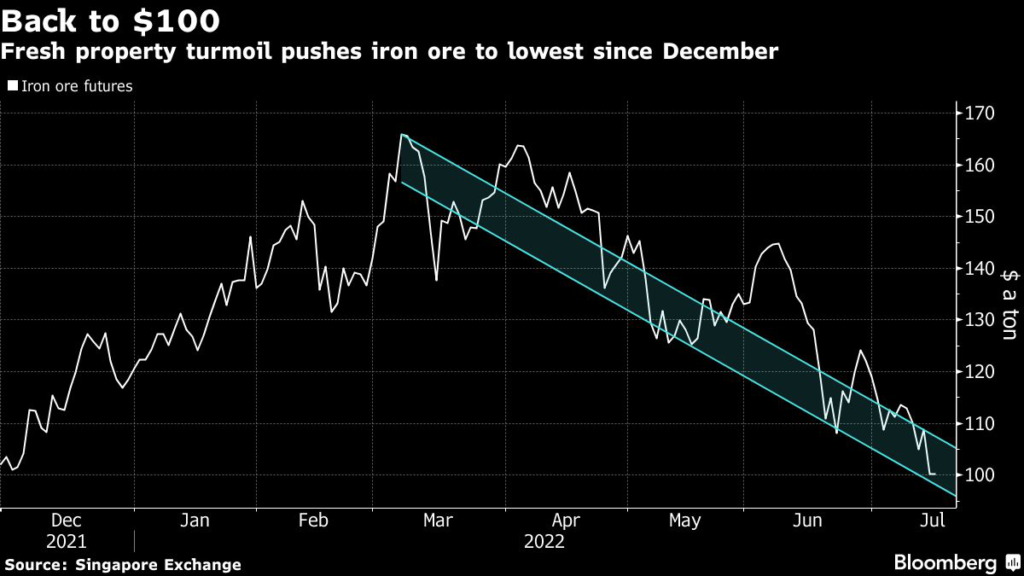
The slowdown in construction is also hurting demand for building materials. Iron ore slumped more than 8% on Thursday, falling below $100 a ton for the first time since December. A year ago, iron ore was trading comfortably above $200 a ton, with China’s wave of Covid-era stimulus feeding a boom for property and the steel market. Futures for steel rebar in construction collapsed in Shanghai to their weakest since 2020. Copper dropped for a fifth day.


More stories like this are available on bloomberg.com

©2022 Bloomberg L.P.
US Commerce Reviewing Chip Tech Export Restrictions on China

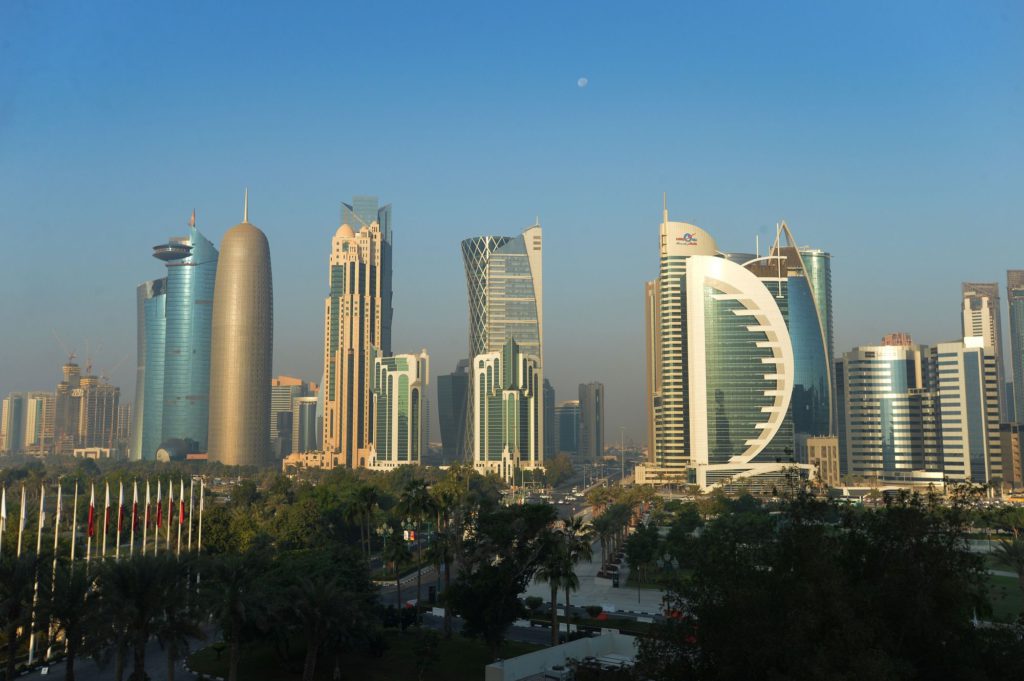
(Bloomberg) — The US Commerce Department’s office in charge of export controls is reviewing its policies around limiting sales of chip-making technology to China to strengthen national security.

“We do have some cutoff points at the most sensitive, highest-tech semiconductors, and the tooling that would make those semiconductors, being allowed to be exported to China,” said Alan Estevez, the Commerce Department’s undersecretary for industry and security. “I am conducting a complete review over those policies within BIS right now,” he said, referring to the name of his bureau.

Estevez, speaking at a Senate Banking Committee hearing on Thursday, didn’t specify whether the review would lean toward either tighening or loosening the US controls on what can be sold to China. But the Biden’s administration has sought to limit sales of chip-making technology to China while boosting support for domestic production, aiming to stifle China’s rise in that sector and strengthen US defenses against supply disruptions.

US efforts include pushing Netherlands-based ASML Holding NV — the top maker of lithography systems, which are crucial in the process of creating semiconductors — to stop selling more equipment to China. The Commerce Department is also mulling additional restrictions on chip-making tools to China’s Semiconductor Manufacturing International Corp., Reuters reported this month. 

ASML already cannot sell its most advanced extreme ultraviolet lithography machines to China, as the Dutch government has not renewed its export license. SMIC is also prevented from buying the most cutting-edge equipment from US suppliers like Applied Materials Inc. after it was blacklisted by the Trump administration.

Meanwhile, the Biden administration is pushing Congress to pass legislation that would funnel $52 billion to US chip manufacturing and spur research and development to stay ahead of China. Commerce Secretary Gina Raimondo earlier this week urged lawmakers to reach a deal before the August recess. 

Estevez, a former Defense Department official and Deloitte LLP consultant, was confirmed in March to oversee the Bureau of Industry and Security, which is key to enforcing controls on strategic exports. That includes sweeping restrictions earlier this year on technology to Russia in response to its invasion of Ukraine.

More stories like this are available on bloomberg.com

©2022 Bloomberg L.P.
SEC Weighs Waiving Some Rules to Regulate Crypto, Gensler Says

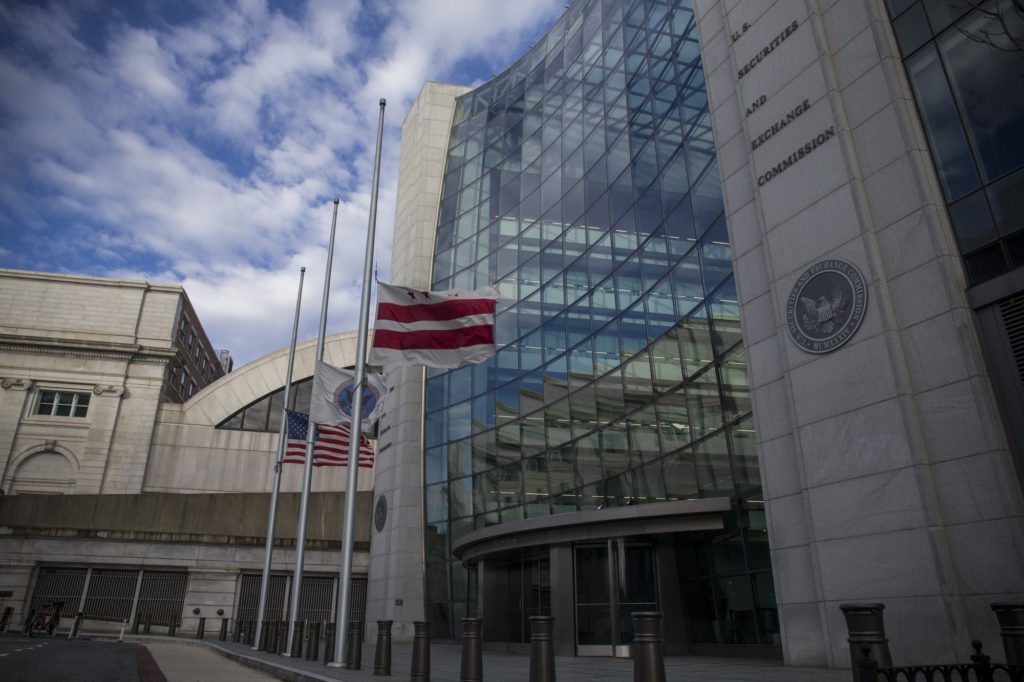
(Bloomberg) — Wall Street’s top regulator may use its authority to exempt crypto companies from certain securities laws to help the industry come into compliance, Securities and Exchange Commission Chair Gary Gensler said Thursday. 

“We do have robust authorities from Congress to use our exemptive authorities that we can tailor” for disclosure and investor protection, Gensler said during an interview with Yahoo! Finance.

The comments are among Gensler’s most pointed yet on how the agency might work with the digital asset community. He mentioned that such an approach is used for asset-backed securities and equity offerings.

Gensler repeated a warning that many crypto companies are “non-compliant” without naming any. Such companies are deemed to be offering unregistered securities.

“There’s a potential path forward,” Gensler said. “I’ve said to the industry, to the lending platforms, to the trading platforms: ‘Come in, talk to us.’”

The digital asset industry, however, has said that the SEC hasn’t provided a clear path to allow companies to register.

Crypto lending platforms have been among the most hard-hit during the recent liquidity crisis. Celsius Network Ltd. filed for Chapter 11 bankruptcy, while BlockFi, another hobbled crypto lender, received a capital injection from crypto exchange FTX US.

In February, BlockFi reached a settlement with the SEC over a product that paid customers high interest rates by lending out investors’ digital tokens. BlockFi said at the time it would pursue SEC registration of the product.

More stories like this are available on bloomberg.com

©2022 Bloomberg L.P.
Monzo Aims for Growth Over Quick Profit During Fintech Downturn

(Bloomberg) — The boss of UK digital bank Monzo Bank Ltd. said he’s targeting growth rather than immediate profit during a turbulent time for the fintech industry, after nearly doubling annual revenue while widening losses. 

Monzo is still hiring and aims to build out its buy now, pay later service while looking to expand in the US, Chief Executive Officer TS Anil said in an interview. The London-based firm reported revenue up 92% to £154.2 million in the year through February, while net losses before onetime charges such as last year’s staff stock options rose 2% to £119 million.

According to Anil, the bank is on track for being profitable and could move into the black quickly, but it would be a “disservice” to its long-term ambitions. “We’re building a responsibility, investing smartly, not trying to just burn large numbers of dollars on marketing, acquiring customers,” he added. 

Monzo has continued to grow since February, Anil said, even as the fallout from Russia’s war in Ukraine shook the financial industry and heralded job cuts along with a sharp decline in valuations at fintechs such as Klarna Bank AB. 

“I have seen many downturns before, and I think what’s common to downturns is that you separate great companies from the rest,” Anil said. 

Monzo, which was founded in 2015, is one of the UK’s largest digital banks with about 5.8 million customers after raising £450 million in December 2021. The CEO confirmed Monzo would not be seeking to raise further capital this year.  

The digital bank joined the buy now, pay later market in March with an option to spread the cost of purchases over three months interest-free, or over six to 12 months with interest. Monzo Flex currently has about 35,000 customers and 300,000 on the waiting list. 

The firm also increased its headcount by more than 40% last year to 2,300, according to its annual report. Monzo withdrew its application for a full US banking license in October 2021, though Anil said it was still committed to the market and was partnering with a sponsor bank to build the business. 

More stories like this are available on bloomberg.com

©2022 Bloomberg L.P.

DOJ Poised to Rebuff Google Concessions to Avoid Antitrust Suit

(Bloomberg) — The US Justice Department is likely to reject concessions offered by Alphabet Inc., clearing the way for an antitrust lawsuit over Google’s dominance of the online advertising market, according to people familiar with the matter.

While Google has made at least one settlement offer to the Justice Department’s antitrust division to address its concerns, the agency is poised to file a lawsuit in the coming weeks, two people said, speaking anonymously to discuss a confidential probe. 

The division has been investigating Google’s practices in the ad-tech market since 2019 and in 2020 sued the company over its search operations. The inquiry into the advertising market has accelerated in recent months under the supervision of the antitrust division’s No. 2 official, Doha Mekki, the people said. 

A Justice Department spokeswoman declined to comment on the Google ad-tech probe or any settlement offers from the tech giant.

Assistant Attorney General for Antitrust Jonathan Kanter declined to comment on the Google probe when asked about it at a conference Tuesday. But Kanter stressed the agency is committed to litigating antitrust cases in court, particularly when it comes to monopolization.

“We have to bring cases to court,” Kanter said, speaking virtually at an Aspen, Colorado conference hosted by Fortune. “We don’t have the kind of ground rules that existed when antitrust was enforced with regularity,” he said, referring to the lack of monopolization cases over the past few decades. “If we don’t use those muscles, they will start to weaken.”  

Kanter is potentially recused from the case because of his work for Microsoft Corp., News Corp., Yelp Inc. and other Google opponents in private practice, leaving his deputy Mekki in charge of the probe. In her own public comments, Mekki has stressed that the division will likely reject settlements more often.

“You’re going to see a lot more litigation from the antitrust division,” Mekki said at an event in April. “The division’s position is we are not planning to take settlements. Settlements suggest compromise.”

The Mountain View, California-based company owns major pieces of the online ad market, which generated $31.7 billion in gross revenue for the firm last year. It runs an ad-buying service for marketers and an ad-selling one for publishers, as well as a trading exchange where both sides complete transactions in lightning-fast auctions.

Google has proposed splitting part of its business that auctions and places ads on websites and apps into a separate company that would remain under the Alphabet umbrella, according to a person familiar with the matter, who declined to be named discussing confidential matters. That new unit could possibly be valued at tens of billions of dollars, depending on what assets it contained, the person said. The Wall Street Journal first reported the proposed settlement last week. 

“We have been engaging constructively with regulators to address their concerns,” said Peter Schottenfels, a Google spokesperson. “As we’ve said before, we have no plans to sell or exit this business, and we’re deeply committed to providing value to a wide array of publisher and advertiser partners in a highly competitive sector.”

Google’s advertising business is already the subject of an antitrust suit by state attorneys general, led by Republican Texas Attorney General Ken Paxton. That lawsuit, filed in December 2020, remains ongoing in New York federal court after the search giant successfully petitioned to have it moved from Texas and consolidated with private antitrust cases related to its advertising business.

Google didn’t make a settlement offer to the states, said two people familiar with that case, who asked not to be named discussing confidential matters. 

Restructuring the portions of the ad business as a separate unit under the Alphabet umbrella won’t assuage the industry’s concerns about Google’s role in the market, said Brian O’Kelley, who co-founded online advertising firm AppNexus.

“What makes us think that this is going to make any substantive difference to how they are operating? Google and Alphabet are the same thing,” said O’Kelley, who is now chief executive officer of Scope3, a software firm focused on emissions data in corporate supply chains.

Dina Srinivasan, a former ad agency executive, has compared Google to a financial exchange that owns both sell- and buy-side operations. In finance, these operations are often required to be run with a firewall of separation and distinct ownership. A Google proposal to place its unit under the same parent company, with the same CEO, without similar remedies wouldn’t eliminate any of its monopoly advantages, according to Srinivasan. “It’s an offer of nothing, basically,” she said.

Competitors and publishers have long complained that Google leverages parts of its vast network, like its ad exchange, to benefit other areas and kneecap rivals. 

Google disputes that it dominates the ad tech market, arguing that the space is crowded with major companies like Amazon.com Inc., Comcast Corp. and Meta Inc.’s Facebook competing for business. 

More stories like this are available on bloomberg.com

©2022 Bloomberg L.P.
Close Bitnami banner
Bitnami