Bloomberg

DOJ Poised to Rebuff Google Concessions, Clearing the Way for Antitrust Suit

(Bloomberg) — The US Justice Department is likely to reject concessions offered by Alphabet Inc., clearing the way for an antitrust lawsuit over Google’s dominance of the online advertising market, according to people familiar with the matter.

While Google has made at least one settlement offer to the Justice Department’s antitrust division to address its concerns, the agency is poised to file a lawsuit in the coming weeks, two people said, speaking anonymously to discuss a confidential probe. 

The division has been investigating Google’s practices in the ad-tech market since 2019 and in 2020 sued the company over its search operations. The inquiry into the advertising market has accelerated in recent months under the supervision of the antitrust division’s No. 2 official, Doha Mekki, the people said. 

A Justice Department spokeswoman declined to comment on the Google ad-tech probe or any settlement offers from the tech giant.

Assistant Attorney General for Antitrust Jonathan Kanter declined to comment on the Google probe when asked about it at a conference Tuesday. But Kanter stressed the agency is committed to litigating antitrust cases in court, particularly when it comes to monopolization.

“We have to bring cases to court,” Kanter said, speaking virtually at an Aspen, Colorado conference hosted by Fortune. “We don’t have the kind of ground rules that existed when antitrust was enforced with regularity,” he said, referring to the lack of monopolization cases over the past few decades. “If we don’t use those muscles, they will start to weaken.”  

Kanter is potentially recused from the case because of his work for Microsoft Corp., News Corp., Yelp Inc. and other Google opponents in private practice, leaving his deputy Mekki in charge of the probe. In her own public comments, Mekki has stressed that the division will likely reject settlements more often.

“You’re going to see a lot more litigation from the antitrust division,” Mekki said at an event in April. “The division’s position is we are not planning to take settlements. Settlements suggest compromise.”

The Mountain View, California-based company owns major pieces of the online ad market, which generated $31.7 billion in gross revenue for the firm last year. It runs an ad-buying service for marketers and an ad-selling one for publishers, as well as a trading exchange where both sides complete transactions in lightning-fast auctions.

Google has proposed splitting part of its business that auctions and places ads on websites and apps into a separate company that would remain under the Alphabet umbrella, according to a person familiar with the matter, who declined to be named discussing confidential matters. That new unit could possibly be valued at tens of billions of dollars, depending on what assets it contained, the person said. The Wall Street Journal first reported the proposed settlement last week. 

“We have been engaging constructively with regulators to address their concerns,” said Peter Schottenfels, a Google spokesperson. “As we’ve said before, we have no plans to sell or exit this business, and we’re deeply committed to providing value to a wide array of publisher and advertiser partners in a highly competitive sector.”

Google’s advertising business is already the subject of an antitrust suit by state attorneys general, led by Republican Texas Attorney General Ken Paxton. That lawsuit, filed in December 2020, remains ongoing in New York federal court after the search giant successfully petitioned to have it moved from Texas and consolidated with private antitrust cases related to its advertising business.

Google didn’t make a settlement offer to the states, said two people familiar with that case, who asked not to be named discussing confidential matters. 

Restructuring the portions of the ad business as a separate unit under the Alphabet umbrella won’t assuage the industry’s concerns about Google’s role in the market, said Brian O’Kelley, who co-founded online advertising firm AppNexus.

“What makes us think that this is going to make any substantive difference to how they are operating? Google and Alphabet are the same thing,” said O’Kelley, who is now chief executive officer of Scope3, a software firm focused on emissions data in corporate supply chains.

Dina Srinivasan, a former ad agency executive, has compared Google to a financial exchange that owns both sell- and buy-side operations. In finance, these operations are often required to be run with a firewall of separation and distinct ownership. A Google proposal to place its unit under the same parent company, with the same CEO, without similar remedies wouldn’t eliminate any of its monopoly advantages, according to Srinivasan. “It’s an offer of nothing, basically,” she said.

Competitors and publishers have long complained that Google leverages parts of its vast network, like its ad exchange, to benefit other areas and kneecap rivals. 

Google disputes that it dominates the ad tech market, arguing that the space is crowded with major companies like Amazon.com Inc., Comcast Corp. and Meta Inc.’s Facebook competing for business. 

More stories like this are available on bloomberg.com

©2022 Bloomberg L.P.

Elon Musk’s Tweets Drew More SEC Scrutiny as He Soured on Twitter Bid

(Bloomberg) — Elon Musk’s tweets are under the microscope with regulators again, this time over a missive in May that cast doubt on whether he’d go through with his $44 billion takeover bid for Twitter Inc.

The billionaire drew scrutiny from the US Securities and Exchange Commission over a May 17 tweet that said the “deal cannot move forward,” according to correspondence posted publicly on Thursday. In a June 2 letter, the agency asked why that statement wasn’t a “material” change that should have been disclosed to investors in a formal amendment to his previous SEC filing. Musk’s lawyers responded that he didn’t see the need.

“Mr. Musk does not believe, however, that the May 17, 2022 social media posts regarding spam and fake accounts on Twitter Inc.’s platform triggered any required amendment,” wrote Mike Ringler, an attorney with Skadden, Arps, Slate, Meagher & Flom, in a June 7 letter. “Despite Mr. Musk’s desire to obtain information to evaluate the potential spam and fake accounts, there was no material change to Mr. Musk’s plans and proposals regarding the proposed transaction at such time.”

Musk backed away from the Twitter purchase last week, spurring a lawsuit from the company to make him complete the deal. In the days leading up to the tweet in question from the SEC, the world’s richest person also said on the social media platform that the deal was “temporarily on hold.” 

Read more: Twitter Hits Back at Musk, Suing to Force $44 Billion Buyout  

The exchange is a sign that the SEC has continued asking questions about Musk’s online statements that touch on his business dealings with public companies. The agency began probing Musk’s regulatory filings about Twitter in early April after he filed the wrong form and missed a deadline to disclose his majority stake in the social media company.

It’s not Musk’s first run-in with Wall Street’s main watchdog over his social media musings. He dubbed the regulator the “Shortseller Enrichment Commission” just after settling securities fraud charges in 2018 related to tweets about taking private his electric car company, Tesla Inc.  

That settlement included appointing a “Twitter sitter” to approve Musk’s Tesla-related tweets. The South Africa-born tech founder in June appealed a court ruling that thwarted his effort to ditch his social media minder.

Read more: Elon Musk Appeals Ruling Upholding His ‘Twitter Sitter’ Deal  

The latest correspondence encapsulates some of the SEC’s own struggles in getting a response out of Musk and his lawyers related to his Twitter deal comments. 

The agency’s staff noted they didn’t hear from Musk’s counsel for more than two weeks after initially trying to get in touch by telephone, prompting the SEC letter. The regulators said they might decide to release publicly all of the correspondence, “including this letter, relating to the review of your filing.” 

Musk’s attorneys didn’t immediately respond to requests for comment. 

More stories like this are available on bloomberg.com

©2022 Bloomberg L.P.

Amazon Prime Day Pushed Web Sales Up 8.5% to $11.9 Billion

(Bloomberg) — Online spending in the US rose 8.5% to $11.9 billion during Amazon.com Inc.’s two-day Prime Day promotion, according to Adobe Inc., helping boost traffic on competing sites such as Walmart.com and Target.com that held their own sales.

Amazon sold more than 300 million items over two days, more than any previous Prime Day, the company said Thursday. Best-selling items included diapers, beauty products and Apple watches, according to Amazon.

Inflation-weary shoppers largely stocked up on household items. The Adobe estimate measures total online spending across multiple retailers, based on data from transactions involving more then 100 million products.

The spending uptick was at the higher end of expectations, according to Adobe analyst Vivek Pandya. “Consumers have been dealing with a lot of pricing pressures at the pump, with groceries and in travel,” he said. “They’re still willing to spend if they see discounts.”

The average Amazon order during the event was $55.26, up 16.8% from Prime Day in 2021 which was held in June, according to Numerator, which based its calculation on 58,934 orders from 21,306 households. Two-thirds of shoppers didn’t seek better prices on other websites and did all their shopping on Amazon, according to the retail consulting firm.

Rising costs prevented many brands and merchants from offering steep discounts. But shoppers showed up eager to spend anyway, seeing any discount as a hedge against inflation that rose 9.1% in June, more than expected. Spending on Amazon was expected to reach $7.76 billion in the US and $12.5 billion globally over the two-day event, each up about 17% from a year earlier, according to research firm EMarketer Inc., which said inflation would make shoppers hungry for deals.

Amazon launched Prime Day in 2015 to attract new subscribers who pay $139 a year for shipping discounts, video streaming and other perks. The event helps Amazon lock in shoppers before the holidays and deepen its relationship with existing customers by offering them deals on Amazon gadgets.

(Updated with analyst comment in fourth paragraph.)

More stories like this are available on bloomberg.com

©2022 Bloomberg L.P.

Upstart Amazon Union Pauses NYC Campaign as Momentum Fades

(Bloomberg) — After winning a historic victory at an Amazon.com Inc. warehouse in New York earlier this year, the fledgling Amazon Labor Union vowed to take the battle to three more company facilities nearby. Things haven’t gone according to plan. The group lost an election at a warehouse across the street from the first and has paused efforts to organize the other two. 

The retreat reflects the travails of a grassroots organization struggling to secure its gains against a legal onslaught from one the world’s richest and most powerful companies. Amazon has appealed the election and zeroed in on what it deems illegal ALU tactics—including handing out marijuana to workers—that could ultimately prompt US labor officials to order a do-over election. 

Growing pains are to be expected from a small startup union led by 30-somethings who had never before attempted a union drive. But former members of the organization worry the ALU risks squandering its position at the vanguard of an emerging movement to unionize workers at Amazon, America’s second-largest private employer.

Five people who have worked with the ALU say its leaders have been indecisive about strategic direction and individual campaign tactics as well as reluctant to delegate tasks or formalize processes beyond periodic meetings and text threads. Led by fired Amazon employee Chris Smalls, the ALU hasn’t expanded its leadership ranks outside of a close-knit group of insiders, these people say, leaving it short-staffed to organize the four facilities it had initially targeted, never mind aiding Amazon workers around the US who reached out seeking help unionizing their own workplaces.

“ALU is in a very difficult position,” said Patricia Campos-Medina, executive director of the Worker Institute at Cornell University. “They need coalitions, they need support from other unions to withstand the legal battle that comes next. I don’t think that they have the resources to be the one organizing everywhere. Now, they have to deliver a contract for their workers.”

To a degree, the ALU is a victim of outsized expectations. Its April victory at Amazon’s Staten Island JFK8 facility, which gave the union the authority to bargain on behalf of thousands of workers, was the biggest victory for US organized labor in a generation. It instantly made Smalls a folk hero and invited comparisons to the wave of union victories at Starbucks stores. (The association has always been a bit misleading: A coffee shop might employ two dozen people. Amazon facilities can employ thousands.) But three months later, workers from just two Amazon facilities—one in Kentucky and one in upstate New York—have agreed to organize under the ALU banner, and the union is struggling to expand its reach at home.

Since losing the second election by a wide margin and suspending organizing work at other Staten Island facilities, the ALU leaders and their lawyers have been spending much of their time defending their prior gains in labor board hearings, currently in their fifth week. With its appeal underway, Amazon has refused to start bargaining talks on an employment contract. The union alleges the company has started firing core supporters. Amazon has denied it retaliates against union members.

Few in the labor movement are comfortable publicly criticizing the ALU, not wishing to undermine a scrappy outfit that pulled off a once-unthinkable victory against a wily, deep-pocketed opponent. But some labor leaders and activists are beginning to worry that the union’s approach, built around Smalls’ star power and personal story, is ill-suited to expanding the union into an organization capable of weathering Amazon’s counterattacks and winning a contract for workers it represents.

“There was a prowess in manipulating the media ecosystem around their organizing, that both spoke to the public and at the same time reflected that back to the workers,”  said someone familiar with the ALU’s strategy, who asked for anonymity to protect relationships in the labor movement. “That’s not necessarily sufficient for building the rigorous, disciplined infrastructure to run and operate a union. One muscle was really built. And there was not a consideration of lifting weights on the other muscle.”

In interviews, Smalls and ALU Secretary-Treasurer Connor Spence rejected the criticism and asked for patience. “We are working as hard as we can,” Spence said. “People are naïve about what exactly goes into making a moment like this possible.” Spence, who helped persuade an initially reluctant Smalls to start the union, said the focus now is on consolidating the ALU’s gains and making improvements for workers at the facility, including representing workers in talks with managers.

“We’re going to prioritize JFK8,” he said. “If we fail at JFK8, then all of this is for nothing.” 

Back in April, after the ALU’s surprise victory at the Amazon fulfillment center, many supporters believed it was almost a foregone conclusion that the union would prevail at a second facility right across the street. But only a week after Smalls and his allies opened a celebratory bottle of champagne, organizers at the much smaller LDJ5 sortation center were worried that the worker support simply wasn’t there.

Maddie Wesley, who was leading the effort, called Smalls and said she needed him and other senior union leaders to show up more often and lend their newfound celebrity to the campaign. (Some of the call’s contents were reported earlier by the Washington Post.) Smalls declined her request, arguing that it wasn’t the best use of his time. He noted that Wesley had more financial resources than the team behind the JFK8 victory. Smalls added in the interview that he was concerned that Amazon would call the police if he approached the property, a risky proposition given his arrest for trespassing during the JFK8 campaign.

“Chris was being pulled to be on all these shows, which he felt like he had to do to speak to this big victory,” said Gene Bruskin, a labor veteran who advised the ALU during its elections. “I think it was just more than they could handle. They don’t have any staff.”

Smalls did return to the warehouse complex, including attending a rally with Senator Bernie Sanders and Representative Alexandra Ocasio-Cortez. But their presence didn’t resonate with the workers, who were being bombarded by Amazon’s fierce, 24/7 “vote no” campaign. A week later, the ALU lost resoundingly. The union subsequently stopped gathering union cards from the next two facilities and organizing at LDJ5, where the ALU is prohibited by federal rules from calling another election until 2023. 

Efforts to expand beyond New York haven’t fared much better. Dozens of Amazon workers around the country have sought the ALU’s help to organize their own workplaces, with some encountering what they deem disinterest and disorganization. Joseph Fink, who works at an Amazon Fresh grocery store in the company’s hometown of Seattle, was eager for union representation as the store’s employees struggled to get benefits they say they were entitled to. Having decided not to affiliate with the United Food and Commercial Workers and the International Brotherhood of Teamsters, Fink met with the ALU and mulled starting a branch focused on Amazon’s grocery stores. 

Then the ALU triumphed at JFK8 and stopped taking calls, Fink said. “The moment that election was over, they completely dropped us.” In the end, Fink decided to go it alone, having already started a group called Amazon Workers United that now claims members at company stores along the West Coast. (Spence says the ALU remains open to working with them and that an ALU-affiliated lawyer helped one of Fink’s co-workers fight termination.)

Matt Littrell, who wants to unionize a warehouse in Campbellsville, Kentucky, repeatedly reached out to the ALU through the contact form on the group’s website. Hearing nothing back for months, he started signing up workers for the International Association of Machinists and Aerospace Workers. Finally, Littrell was able to get Smalls’ phone number from an acquaintance who saw the union chief at an Arizona rally.

A few phone calls and Twitter direct messages later, Littrell, who is 22, went public last week with an effort to organize his warehouse under the ALU umbrella. “Chris is such a charismatic, cool person,” Littrell said. “We hit it off really well, got some brainstorming about further actions.” In the interview, Smalls said the ALU will provide whatever Littrell and other organizers need, including financial assistance. But Littrell says the ALU leader said nothing about money, just a pledge to send signature cards, T-shirts and, eventually, aid from volunteers. 

Former ALU member Mat Cusick said he tried to create a process to more effectively communicate with would-be allies. He compiled a list of Amazon workers across the country who had reached out and started preparing a welcome packet that included tips on organizing, contact numbers of union leaders, union stickers. “Just something cool to make you feel like you’re a part of the ALU,” he said.

But Cusick never got approval to mail the package out. This was typical, according to several ALU volunteers, who recall union leaders seeming to approve projects, only to shelve or abandon them. “They weren’t trying to actually organize those workers” at other facilities, said Cusick, who has clashed with Smalls and other ALU leaders and was ultimately expelled from the union. On his way out, Cusick published a blog post accusing the group of being secretive and anti-democratic.

Spence said the union has offered many organizers advice and hopes to be more helpful during a Zoom call for Amazon workers, originally planned for June but postponed until August.  The aim is to support workers who have already started organizing their facility, he says, rather than seed new branches with ALU volunteers. “We didn’t like that we couldn’t just immediately jump on these opportunities,” he said. “If these people are pro-union now, they’re still going to be pro-union in August.” 

Marcus Courtney, who helped organize Microsoft Corp. contractors in the 1990s and 2000s, empathizes with those challenges. “Of course you resist the idea of structure,” he said. “You didn’t win with structure. The only way they’re going to be able to build and grow is they need structure. But it’s going to take time to get there.”

Cusick and some other former ALU members reserve much of their criticism for Smalls, who they say relishes his celebrity more than running Amazon’s first homegrown union. Smalls has spent much of the time since the union’s win on an extended roadshow, including stops at the White House, the Labor Notes conference in Chicago and cities from Cleveland to Phoenix, where he has documented rallies and meetings on his Twitter account under the hashtag hotlaborsummer. Smalls, who is 34, is also writing an autobiography. Veteran organizers say Smalls’ travels can raise public pressure on Amazon to come to the bargaining table, one of the few tools in the union’s arsenal given relatively pro-management US labor laws. And Smalls has told associates that the media is to blame for turning him into a celebrity. But Dana Miller, a JFK8 employee and onetime ALU organizer who clashed with union leaders before being expelled last year, says the road-tripping has come at the expense of on-the-ground work. “We haven’t seen anyone here keeping up the campaign,” she said. 

Critics also say the ALU needs to professionalize its operations. Smalls and his executives have resisted calls for more financial transparency, according to seven people who worked with the ALU and Smalls’ predecessor group, The Congress of Essential Workers. During the union drive, leaders brushed aside recommendations to consult accountants or set up a legal entity to manage and track the hundreds of thousands of dollars raised through fundraising appeals. Unions are required to precisely track and report income and spending to the Department of Labor. Spence says the ALU will issue its first report sometime next year. The union retained an accountant after its victory, he said, and today works from set budgets. “We didn’t have any money to mismanage, because we didn’t have any money,” Spence said of the JFK8 campaign.

Dissent is inevitable inside a fledgling organization of youthful idealists. But four former ALU members say Smalls becomes confrontational when challenged. Miller recalls Smalls ranting at her during a dispute. And after leaving the union, Cusick says he ran into Smalls at the Labor Notes conference in Chicago. He says Smalls pushed and threatened to fight him, which Smalls denies. Days later, Smalls took to Twitter to call Cusick a clown and accuse him of stealing money from workers. Cusick denies that.

In the interview with Bloomberg, Smalls said his critics are making up lies to discredit the ALU and exaggerating their contributions to the union. “They didn’t do anything for the ALU, that’s the real story,” he said. “We’ve got a long way to go. We’ve got a plan. We’re going to go through with our plan.” 

More stories like this are available on bloomberg.com

©2022 Bloomberg L.P.

Tesla Autopilot Chief to Depart, Adding to Upheaval in Executive Ranks

(Bloomberg) — Tesla Inc.’s top artificial intelligence executive and a key figure behind its driver-assistance system Autopilot is leaving the electric-car maker after a months-long sabbatical.

Andrej Karpathy, who joined Tesla in 2017, announced his departure in a series of tweets Wednesday. He was senior director of AI and led the Autopilot computer-vision team that’s tried for years to render the company’s cars capable of driving autonomously.

“It’s been a great pleasure to help Tesla towards its goals over the last five years and a difficult decision to part ways,” Karpathy wrote. “In that time, Autopilot graduated from lane keeping to city streets and I look forward to seeing the exceptionally strong Autopilot team continue that momentum.”

Tesla shares dropped 1.8% to $698.57 as of 9:45 a.m. Thursday in New York. The stock has fallen 34% this year.

The departure adds to a long line of turnover atop the Autopilot group, which has struggled to realize Elon Musk’s autonomous ambitions. The chief executive officer raised billions of dollars in 2019 after telling Wall Street Tesla would have 1 million robotaxis on the road the following year. The shared network of driverless cars Musk described still doesn’t exist, and the systems Tesla markets as Autopilot and Full Self-Driving, or FSD, require fully attentive drivers to keep their hands on the wheel.

The departure of Karpathy, 35, may reflect challenges Tesla is having with FSD and robotaxis, according to Dan Levy, a Credit Suisse analyst with the equivalent of a buy rating on the shares.

“We continue to view Tesla efforts in AV/robotaxi as ‘show me,’” Levy wrote in a note to clients.

Read more: Tesla May Be Losing Faith in How Soon Self-Driving Will Arrive

Musk announced Karpathy was on a roughly four month sabbatical in March, and Karpathy tweeted at that time he was looking forward to returning to Tesla. After Karpathy wrote Wednesday he decided to leave the company, Musk replied with thanks and praise.

Karpathy said he had “no concrete plans” for his next act but would revisit “long-term passions around technical work in AI, open source and education.”

Autopilot has come under intensifying scrutiny from US regulators. Last month, the National Highway Traffic Safety Administration escalated one of its investigations into whether the system is defective and revealed it had reviewed almost 200 crashes involving vehicles using the technology. NHTSA’s other defect probe relates to vehicles equipped with Autopilot features suddenly braking at high speeds.

See: Tesla Autopilot Stirs US Alarm as ‘Disaster Waiting to Happen’

The change in Tesla’s executive ranks also follows a move to scale back part of the Autopilot group. Last month, Tesla laid off roughly 200 data-annotation workers and closed an office in San Mateo, California.

A year ago, Musk said responsibility for Autopilot was shared by Karpathy, Ashok Elluswamy and Milan Kovac, describing the group’s leadership as a “knights of the round table” structure.

(Updates with shares trading in the fourth paragraph.)

More stories like this are available on bloomberg.com

©2022 Bloomberg L.P.

Twitter Outage Hits Thousands, Downdetector Reports

(Bloomberg) — Twitter Inc. faced a brief outage on Thursday, leaving thousands of users without service for about an hour.

At the peak, at 8:20 a.m. in New York, 54,582 users reported problems on Downdetector.com, an outage tracking platform. Twitter’s website displayed an error message and prompted users to reload the page. It wasn’t immediately clear what caused the outage. 

A message on Twitter’s support account posted at 9:10 a.m. said: “Some of you are having issues accessing Twitter and we’re working to get it back up and running for everyone. Thanks for sticking with us.”

By 9:16 a.m., about 1,600 users reported they were still having trouble. 

The last time Twitter faced an outage was in February, when the site crashed due to a “technical bug” on the page. In its early days, Twitter was famous for crashing amid high traffic, leading to the iconic “fail whale” image that popped up when service was down.

Twitter is in the midst of a legal battle with Elon Musk, who is attempting to back out of an agreement to buy the social media site for $44 billion. Musk, a prolific tweeter with more than 100 million followers, claims Twitter hasn’t been forthcoming in providing information about the number of fake accounts on the site. The social media company has said it needs only four days in court to prove that the billionaire should be forced to honor his pledge.

Twitter shares were little changed at $36.58 at 9:43 a.m. in New York.

(Updates with Twitter response. A previous version of the story corrected the spelling of Downdetector in the headline)

More stories like this are available on bloomberg.com

©2022 Bloomberg L.P.
Twitter Outage Briefly Hits Thousands, Downdetector Reports

(Bloomberg) — Twitter Inc. faced a brief outage on Thursday, leaving thousands of users without service for about an hour.

At the peak, at 8:20 a.m. in New York, 54,582 users reported problems on Downdetector.com, an outage tracking platform. Twitter’s website displayed an error message and prompted users to reload the page. It wasn’t immediately clear what caused the outage. 

A message on Twitter’s support account posted at 9:10 a.m. said: “Some of you are having issues accessing Twitter and we’re working to get it back up and running for everyone. Thanks for sticking with us.”

By 9:16 a.m., about 1,600 users reported they were still having trouble. 

The last time Twitter faced an outage was in February, when the site crashed due to a “technical bug” on the page. In its early days, Twitter was famous for crashing amid high traffic, leading to the iconic “fail whale” image that popped up when service was down.

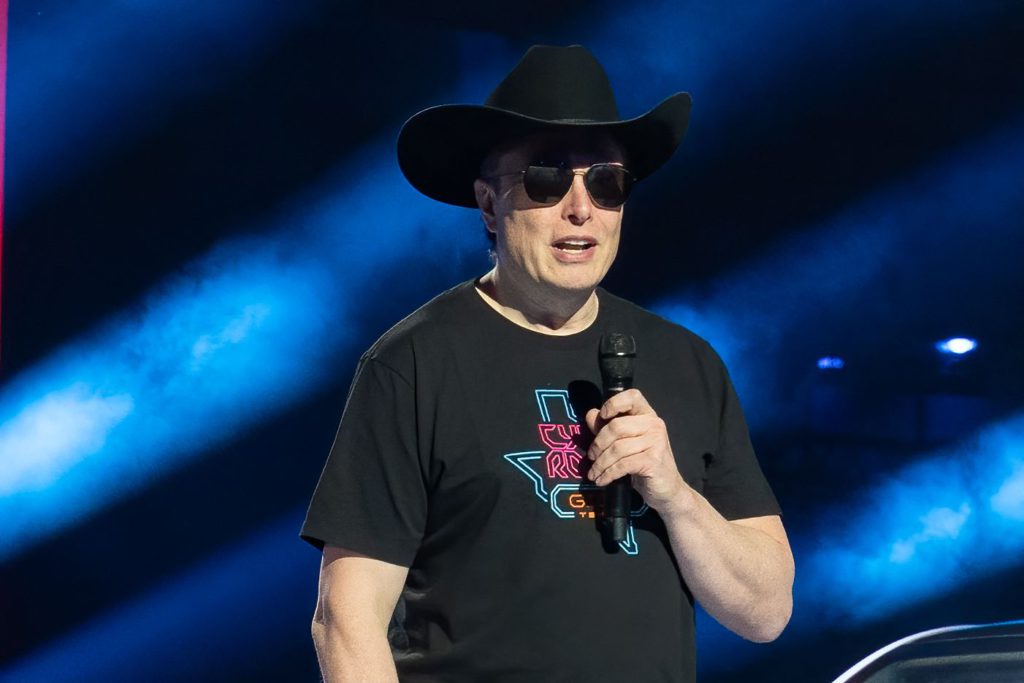
Twitter is in the midst of a legal battle with Elon Musk, who is attempting to back out of an agreement to buy the social media site for $44 billion. Musk, a prolific tweeter with more than 100 million followers, claims Twitter hasn’t been forthcoming in providing information about the number of fake accounts on the site. The social media company has said it needs only four days in court to prove that the billionaire should be forced to honor his pledge.

Twitter shares were little changed at $36.58 at 9:43 a.m. in New York.

(Updates with Twitter response. A previous version of the story corrected the spelling of Downdetector in the headline)

More stories like this are available on bloomberg.com

©2022 Bloomberg L.P.
Stock Losses Deepen on Bank Gloom; Dollar Surges: Markets Wrap

(Bloomberg) — Stocks slumped as disappointing results from two Wall Street heavyweights added to recession worries, while bets the Federal Reserve will intensify its fight against inflation pushed a dollar gauge to a record.

Traders got another reality check, with JPMorgan Chase & Co. temporarily halting buybacks as earnings fell short of estimates, and Morgan Stanley announcing a plunge in investment-banking revenues. Both shares sold off, dragging the S&P 500 to its fifth straight day of losses. Meantime, another hot inflation print bolstered wagers on a full-point Fed hike in July.

Read: Citi Now Sees a 100 Basis-Point Fed Rate Hike in July as Likely

The Bloomberg Dollar Spot Index, which tracks the greenback against a basket of developed- and emerging-market currencies, climbed to its highest since at least 2005. Short-dated Treasury yields jumped anew, widening the gap between the two- and 10-year benchmarks to the deepest since 2000. So-called inversions are seen as a potential harbinger of a recession.

“Given the Fed has made it SUPER CLEAR that inflation fighting is goal number 1 and they are willing to take recession risk to accomplish that goal, the more persistent inflation, the higher recession risk will go,” wrote Dennis DeBusschere, the founder of 22V Research. “So, yield curves are inverting or flattening aggressively.”

The three-month London interbank offered rate for dollars notched its biggest increase since 2008, soaring to the highest level in more than three years as traders anticipate larger hikes by the Fed.

Credit defaults are on track to rise in North America, Europe, Asia, and Australia, according to a survey by the International Association of Credit Portfolio Managers, as the risk of global recession mounts. The economic slump is likely to occur later this year or in 2023, according to the survey.

What to watch this week:

  • China GDP, Friday
  • US business inventories, industrial production, University of Michigan consumer sentiment, Empire manufacturing, retail sales, Friday
  • G-20 finance ministers, central bankers meet in Bali, from Friday
  • Atlanta Fed President Raphael Bostic speaks, Friday

Will the eurozone avoid a recession or a debt crisis? How will the euro and stocks perform in the next six months? Share your views and participate in the latest MLIV Pulse survey. It only takes a minute, so please click here anonymously.

Some of the main moves in markets:

Stocks

  • The S&P 500 fell 1.9% as of 9:43 a.m. New York time
  • The Nasdaq 100 fell 1.6%
  • The Dow Jones Industrial Average fell 2%
  • The Stoxx Europe 600 fell 1.6%
  • The MSCI World index fell 1.9%

Currencies

  • The Bloomberg Dollar Spot Index rose 1.1%
  • The euro fell 1.1% to $0.9953
  • The British pound fell 1.1% to $1.1761
  • The Japanese yen fell 1.4% to 139.28 per dollar

Bonds

  • The yield on 10-year Treasuries advanced six basis points to 3.00%
  • Germany’s 10-year yield advanced six basis points to 1.21%
  • Britain’s 10-year yield advanced five basis points to 2.11%

Commodities

  • West Texas Intermediate crude fell 5.3% to $91.24 a barrel
  • Gold futures fell 2.2% to $1,697.50 an ounce

More stories like this are available on bloomberg.com

©2022 Bloomberg L.P.

Amazon Prime Day Pushed Online Spending Up 8.5% to $11.9 Billion

(Bloomberg) — Online spending in the US rose 8.5% to $11.9 billion during Amazon.com Inc.’s two-day Prime Day promotion, according to Adobe Inc., helping boost traffic on competing sites such as Walmart.com and Target.com that held their own sales.

Amazon sold more than 300 million items over two days, more than any previous Prime Day, the company said Thursday. Best-selling items included diapers, beauty products and Apple watches, according to Amazon.

Inflation-weary shoppers largely stocked up on household items. The Adobe estimate measures total online spending across multiple retailers, based on data from transactions involving more then 100 million products.

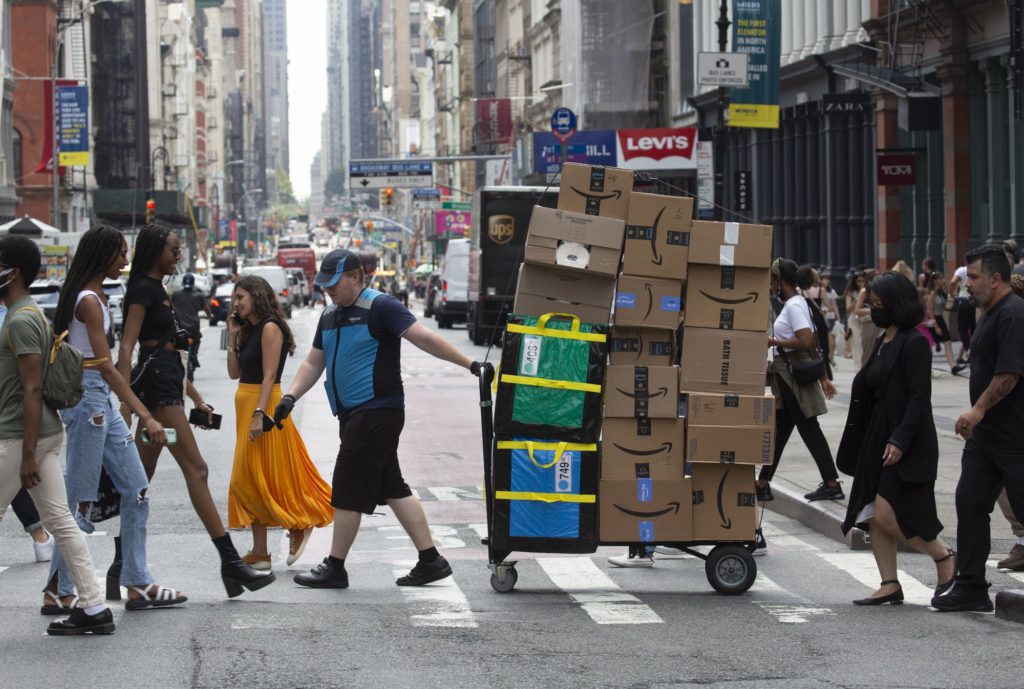
The average Amazon order during the event was $55.26, up 16.8% from Prime Day in 2021 which was held in June, according to Numerator, which based its calculation on 58,934 orders from 21,306 households. Two-thirds of shoppers didn’t seek better prices on other websites and did all their shopping on Amazon, according to the retail consulting firm.

Rising costs prevented many brands and merchants from offering steep discounts. But shoppers showed up eager to spend anyway, seeing any discount as a hedge against inflation that rose 9.1% in June, more than expected. Spending on Amazon was expected to reach $7.76 billion in the US and $12.5 billion globally over the two-day event, each up about 17% from a year earlier, according to research firm EMarketer Inc., which said inflation would make shoppers hungry for deals.

Amazon launched Prime Day in 2015 to attract new subscribers who pay $139 a year for shipping discounts, video streaming and other perks. The event helps Amazon lock in shoppers before the holidays and deepen its relationship with existing customers by offering them deals on Amazon gadgets.

More stories like this are available on bloomberg.com

©2022 Bloomberg L.P.
Emirates Clashes With Heathrow Over Demand to Slash Capacity

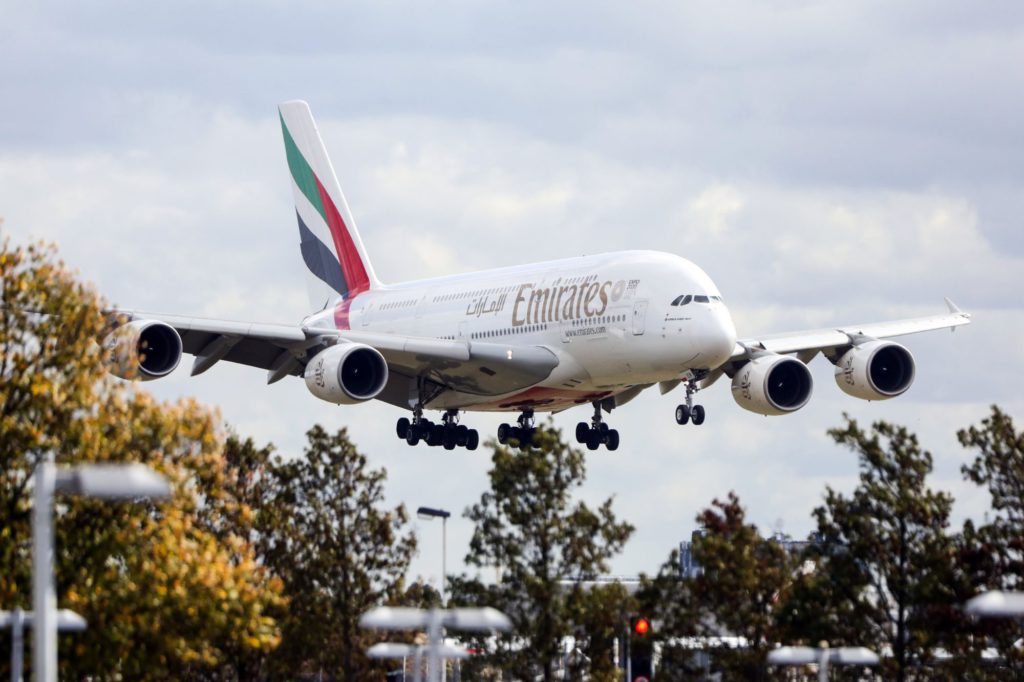
(Bloomberg) — Emirates rejected demands by London Heathrow airport to cut capacity and said it will operate flights as planned, days after the hub said it would ask airlines to stop selling tickets for the busy summer season and limit daily passenger numbers.

The carrier, which operates six daily Airbus SE A380 superjumbo jets to Heathrow from its base in Dubai, said the airport operator gave it just 36 hours notice to limit passenger capacity and it was impossible to rebook travelers onto other flights as its services were full. 

Heathrow imposed an unprecedented two-month cap on passenger traffic to contain flight chaos, asking carriers to limit departing people to 100,000 through Sept. 11. The hub said the curbs were needed because new recruits were not “up to full speed,” while some key functions, like ground handlers for baggage, remain significantly under-resourced. 

The move could equate to $550 million in lost revenue, according to aviation data firm OAG. 

Heathrow pushed back against Emirates’ rejection of the limits Thursday, saying the hub’s cap was “significantly higher” than the limits imposed by Amsterdam’s Schiphol airport.

‘Difficult Decision’ 

“We had no choice but to take the difficult decision to impose a capacity cap designed to give passengers a better, more reliable journey and to keep everyone working at the airport safe,” a Heathrow spokesman said. “It would be disappointing if instead of working together, any airline would want to put profit ahead a safe and reliable passenger journey.”

The stance by Emirates sets up a clash between Heathrow and one of its most important and loyal customers. The A380s landing daily in London constitute more than 3,000 passengers at full capacity. Emirates dismissed the argument, saying its ground handling and catering operations are run by one of its group companies and therefore not affected by the shortages.

Heathrow “chose not to act, not to plan, not to invest,” Emirates said in the statement. “Now faced with an “airmageddon” situation due to their incompetence and non-action, they are pushing the entire burden — of costs and the scramble to sort the mess — to airlines and travelers.”

British Airways, which had already announced a swathe of cancellations earlier this month, said that the limits imposed by Heathrow were “incredibly disappointing”. The carrier is giving passengers who are due to travel through July 25 an option to move their travel dates or take a voucher. 

(Updates with Heathrow comment in fifth paragraph.)

More stories like this are available on bloomberg.com

©2022 Bloomberg L.P.
Close Bitnami banner
Bitnami