Bloomberg

UAE to Invest $2 Billion to Set Up Food Parks in India

(Bloomberg) —

The United Arab Emirates will invest $2 billion to set up food parks across India as part of efforts by a US-led four-nation group to help tackle food insecurity in South Asia and the Middle East.

U.S. and Israeli private sectors will be roped in for technologies to “reduce food waste and spoilage, conserve fresh water, and employ renewable energy sources” at the food parks, according to a joint statement from the group.

The investment plan follows the first leaders’ meeting of the ‘I2U2’ Group, comprising the UAE, India, Israel and the US, on Thursday. US President Joe Biden is leading the meeting while on his tour of the Middle East.  

“There’s an enormous need around the world for infrastructure,” Biden said. “Right now there’s a vacuum.”

As part of the initiative, the ‘I2U2’ will also advance a hybrid renewable energy project in India’s Gujarat state with 300 megawatts of wind and solar capacity. 

  • The U.S. Trade and Development Agency funded a feasibility study for the $330 million project
  • UAE-based companies are exploring opportunities to serve as knowledge and investment partners
  • Israel and the US to work with the UAE and India for private sector opportunities

Read more: 

  • India, UAE Seal Deal To Deepen Trade and Investment Ties
  • Biden Should Welcome Mideast’s New Player — India: Mihir Sharma

(Updates with Biden quote in 4th paragraph)

More stories like this are available on bloomberg.com

©2022 Bloomberg L.P.

Molson Coors Is Finally Getting a Chance to Buy a Super Bowl Ad

(Bloomberg) — Molson Coors Beverage Co., maker of Coors Light and Miller Lite beer, bought a 30-second spot to air nationally on Fox during the Super Bowl next year, becoming the first new beer sponsor on America’s most-watched sporting event in more than three decades, the company said Thursday.

Molson got the chance after rival Anheuser-Busch InBev said in June it would end its exclusive deal with the game, a position it’s held since 1989. 

“It’s been no fun with one major brewer monopolizing the Super Bowl for 30 years,” said Michelle St. Jacques, chief marketing officer at Molson. Although she declined to comment on the price paid for the ad, St. Jacques told Bloomberg News that she’s looking to incorporate some technical innovation into her spots to break through the clutter, including possibly QR codes that viewers can scan to unlock more information about the sponsor. 

The last time Molson Coors had a national in-game ad was in the early 1980s. The company has had to find workarounds since. Last year, it released the Coors Big Game Commercial of Your Dreams on YouTube to protest being shut out of the game. That ad was seen more than 3 million times. This year, it hosted a virtual bar in the Decentraland metaverse. 

Anheuser-Busch, Budweiser’s parent, ran 4 minutes of in-game ads during the national broadcast this year. The company said it still intends to be a sponsor in next year’s game.

More stories like this are available on bloomberg.com

©2022 Bloomberg L.P.

Volkswagen Suffers EU Court Setback Over Software Seen as Defeat Device

(Bloomberg) — Volkswagen AG and other car markers risk violating European Union rules — and face more consumer claims — after the bloc’s top court said the use of IT meant to protect car components from damage at certain temperatures could be illegal.

In a dispute stemming from the aftermath of the diesel scandal that roiled the German car giant, the EU Court of Justice on Thursday said there was no exemption for the use of software that changes pollutant gas emissions in cars based on the outside temperature. The ruling opens the door to potential lawsuits for compensation over sales contracts for affected cars.

“Software in diesel vehicles which reduces the effectiveness of the emission control system at normal temperatures during most of the year constitutes a prohibited defeat device,” the EU court said. “Since such a vehicle default is not minor, rescission of the sale contract in respect of the vehicle is not, in principle, precluded.”

The EU’s top court in 2020 issued a key ruling in a dispute following from the diesel scandal that had engulfed VW, which said the use of so-called defeat devices — which helped the automaker bypass diesel engine pollution tests — can’t be justified under the bloc’s rules. The ruling raised questions for car makers more broadly about the use of other software, because engine functions known as thermal windows — that lower pollution controls when temperatures are low to protect components — are used across the industry.

‘Minor’ Effects

VW has insisted its use of thermal windows is in line with EU rules, given their goal is to shield the car’s engine from sudden and unpredictable damages. Despite Thursday’s ruling, it continues to argue that such software remains legal.

Following the criteria laid out by the EU court, “the thermal windows used in cars by VW remain permissible,” VW said in a statement. “The effects of the ruling on VW are therefore minor” and civil damages claims “will continue to be unsuccessful.”

VW argues that the exhaust gas recirculation in its EA189 vehicles is active “most of the year,” because it is only switched off if the outside temperature falls below 10 degrees Celsius. The court argued that the device at issue in its case switches off the cleaning mechanism at temperatures below 15 degrees Celsius, making it illegal because it doesn’t work “most of the year.”  

A number of consumer claims in Austria by people seeking to cancel their sales contracts led to three courts deciding to ask EU judges for more clarity on whether such software also qualified as a defeat device, or whether there were exceptions for its use. 

“This puts a stop to arguments by diesel producers and also the German authorities that these thermal windows serve to protect engines and are legal,” said Peter Kolba, chairman of Austrian consumer association VSV. The group will continue to encourage “risk-free claims for damages against the diesel manufacturers in German courts,” he said.

The Austrian association says it has some 600 lawsuits pending in Germany and has supported Austrian car owners to join a group action of the German consumer organization against Mercedes-Benz Group AG.

The cases are: Cases C‑128/20, C‑134/20 and C‑145/20, GSMB Invest GmbH & Co. KG v. Auto Krainer Gesellschaft mbH, IR v. Volkswagen AG, DS v. Porsche Inter Auto GmbH & Co. KG, Volkswagen AG.

(Updates with details from VW statement in seventh paragraph)

More stories like this are available on bloomberg.com

©2022 Bloomberg L.P.

Futures, Stocks Fall as Fed Rate-Hike Bets Harden: Markets Wrap

(Bloomberg) — US equity futures fell along with stocks in Europe and the dollar resumed its upward march Thursday after high US inflation hardened expectations for more aggressive Federal Reserve monetary tightening that could trigger a recession.

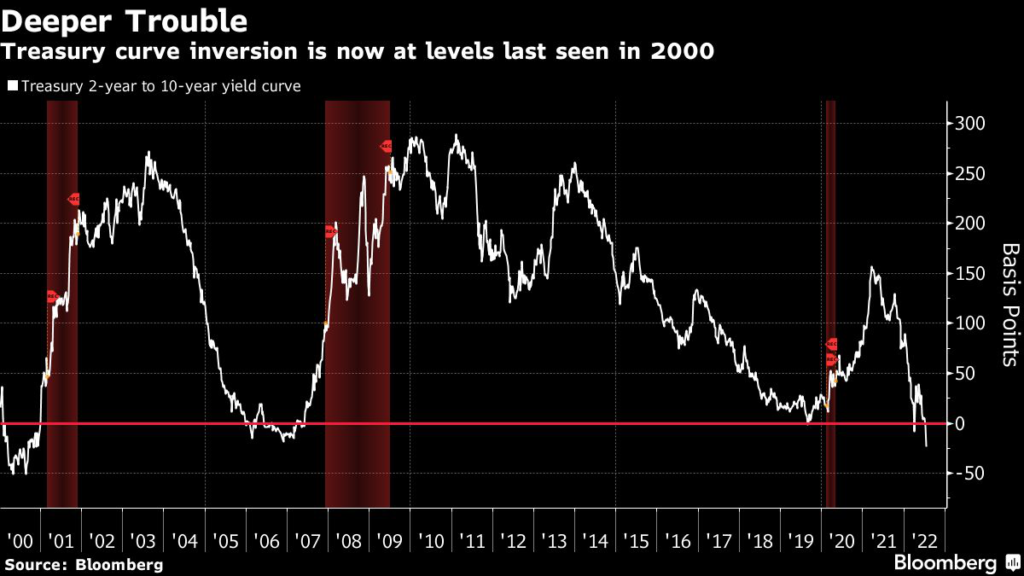
S&P 500 and Nasdaq 100 contracts retreated more than 1% each ahead of the US second-quarter earnings season, kicked off on Thursday by JPMorgan Chase & Co. and Morgan Stanley. The dollar pushed higher, hovering around the highest level in more than two years. Treasury yields climbed, led by two-year maturities that are more sensitive to imminent Fed moves. The inversion between two-year and 10-year yields — a potential recession indicator — is the deepest since 2000.

Traders have shifted toward expectations of an historic one percentage-point Fed interest-rate hike later this month after the US consumer-price gauge clocked a 9.1% annual climb. Fed Bank of Atlanta President Raphael Bostic said “everything is in play” to combat price pressures.

“It is clear that central banks around the world are laser-focused on fighting the entrenched inflation they helped to create, growth-be-damned,” said Jeffrey Halley, a senior market analyst at Oanda Asia Pacific Ltd. “US markets are pricing in faster Fed tightening, and a recession is on the way imminently.” 

The Stoxx Europe 600 index was dragged down by the telecom sector, where Ericsson AB plunged more than 10% after missing analysts’ quarterly profit estimates. Real-estate stocks slumped after Swedish property company Samhallsbyggnadsbolaget i Norden AB unexpectedly posted a loss, sending the shares down 18%.

An Asian share index dropped for the third time in four days as China’s developer rout spread to the banking sector. 

The euro fell back toward $1, after briefly dipping below it Wednesday, and European bonds plunged after Bloomberg reported that the European Commission had cut its growth forecast and lifted the inflation outlook for the common-currency area. Italy’s 10-year yield climbed more than 20 basis points and the country’s equity benchmark underperformed as Mario Draghi’s governing coalition appeared to be heading for a break-up.

The yen sank to a fresh 24-year low. Brent crude oil fell more than 2% to around $97 a barrel, near the lowest in four months. Bitcoin held below $20,000 as the bankruptcy filing of crypto lender Celsius Network weighed on sentiment.

Inflation Peak?

The big question for markets is whether the latest US inflation print marks the peak. Commodity prices, pushed up this year in part by supply disruptions related to Russia’s war in Ukraine, have moderated somewhat of late. US producer-inflation and jobs data later Thursday could give more clues on the outlook for prices and growth.

If higher costs prove to be persistent and come alongside a global economy buckling under rate hikes, that could be toxic for a range of assets already nursing heavy losses in 2022.

At this point, markets may be getting ahead of the Fed, according to Danielle DiMartino Booth, Quill Intelligence chief strategist. “We need to move the discussion onto how long is the recession going to be, how deep it’s going to be,” she said.

Fed Bank of Cleveland President Loretta Mester said in a Bloomberg Television interview the consumer-price report was uniformly bad and that the central bank will need to go well beyond the neutral level of rates. The figures don’t suggest a smaller hike than in June, she added.

Swaps referencing Fed meetings are priced for the policy rate to peak at about 3.7% this December, up from the current target range of 1.50%-1.75%. Traders then expect the Fed to start cutting rates to counter an economic slowdown.

What to watch this week:

  • Earnings due from JPMorgan, Morgan Stanley, Citigroup, Wells Fargo
  • US PPI, jobless claims, Thursday
  • China GDP, Friday
  • US business inventories, industrial production, University of Michigan consumer sentiment, Empire manufacturing, retail sales, Friday
  • G-20 finance ministers, central bankers meet in Bali, from Friday
  • Atlanta Fed President Raphael Bostic speaks, Friday

Will the eurozone avoid a recession or a debt crisis? How will the euro and stocks perform in the next six months? Share your views and participate in the latest MLIV Pulse survey. It only takes a minute, so please click here anonymously.

Some of the main moves in markets:

Stocks

  • Futures on the S&P 500 fell 1.3% as of 6:49 a.m. New York time
  • Futures on the Nasdaq 100 fell 1%
  • Futures on the Dow Jones Industrial Average fell 1.4%
  • The Stoxx Europe 600 fell 0.9%
  • The MSCI World index fell 0.4%

Currencies

  • The Bloomberg Dollar Spot Index rose 0.7%
  • The euro fell 0.4% to $1.0015
  • The British pound fell 0.5% to $1.1830
  • The Japanese yen fell 1.1% to 138.92 per dollar

Bonds

  • The yield on 10-year Treasuries advanced two basis points to 2.96%
  • Germany’s 10-year yield advanced nine basis points to 1.23%
  • Britain’s 10-year yield advanced five basis points to 2.11%

Commodities

  • West Texas Intermediate crude fell 2.3% to $94.08 a barrel
  • Gold futures fell 1.4% to $1,711.90 an ounce

More stories like this are available on bloomberg.com

©2022 Bloomberg L.P.

Deutsche Telekom Sells Towers to Brookfield, DigitalBridge

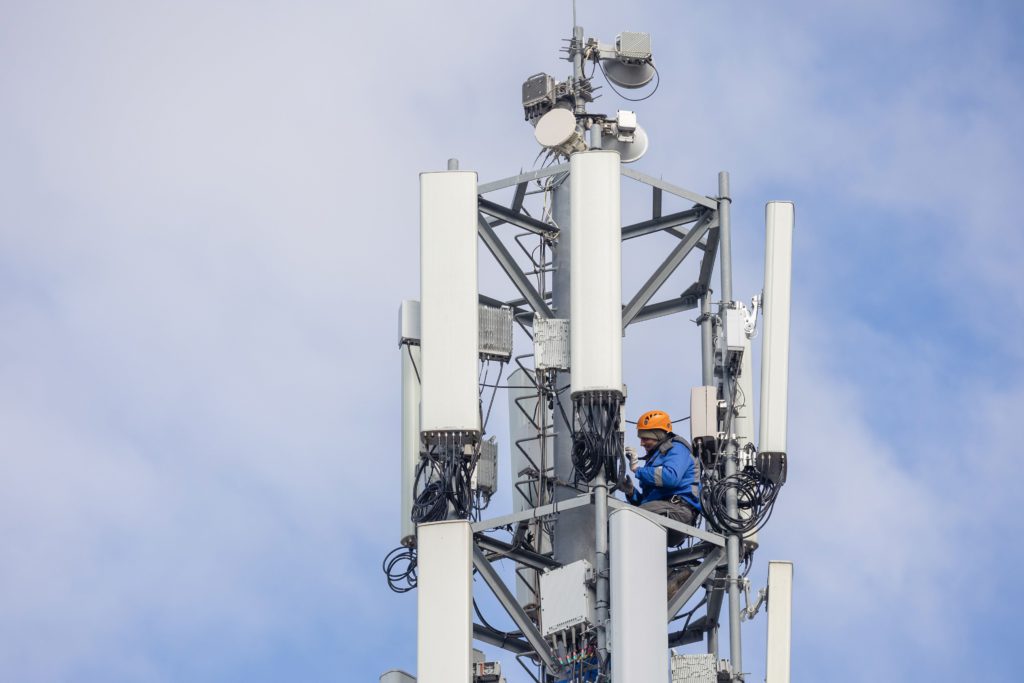
(Bloomberg) — Deutsche Telekom AG agreed to sell a majority stake in its towers unit in a deal that values the business at 17.5 billion euros ($17.5 billion), one of the largest digital infrastructure deals this year.

Investors Brookfield Asset Management Inc. and DigitalBridge Group Inc. acquired the 51% stake in Deutsche Telekom’s German and Austrian business, GD Towers, for 10.7 billion euros in cash, according to a statement on Thursday, confirming an earlier Bloomberg News report. 

The German telecom company will use the proceeds to lower debt levels and fund plans to gain majority control of T-Mobile US, a key growth driver for the company, it said. The sale of a stake in Deutsche Telekom’s tower business is set to rank as one of the largest European infrastructure deals this year, according to data compiled by Bloomberg. 

Brookfield, a Canadian investment firm, and US infrastructure-investor DigitalBridge teamed up in a last-minute bid for the stake in GD Towers, which operates more than 40,000 sites, emerging as the frontrunners and beating out a KKR & Co.-led consortium. Brookfield’s previous partner, Cellnex Telecom SA, had dropped out of the bidding.

Deutsche Telekom fell 1.6% at 11:43 a.m. in Frankfurt trading on Thursday. The shares have gained 16% this year. 

Deutsche Telekom will retain a 49% stake in the unit, and said it has the right to regain control and re-consolidate GD Towers in the future. The transaction is subject to regulatory approvals and is expected to close toward the end of the year, Deutsche Telekom said.

“I have always championed an industry solution,” though antitrust issues were a concern if the telecom had sold to a rival, said Thorsten Langheim, Deutsche Telekom’s head of USA and group development. “It wasn’t the right time, but we won’t discard this as an opportunity going forward.”

Vodafone Group Plc’s listed infrastructure arm, Vantage Towers AG, was among the suitors studying the business earlier, Bloomberg News has reported. 

Europe’s phone carriers — facing expensive investments into fiber optics and 5G network upgrades, combined with large debt piles and stagnant share prices — have started selling off infrastructure, such as masts and fixed networks. 

Specialist infrastructure funds and investors have grown out of this trend and are buying up towers and networks. Bonn-based Deutsche Telekom in December signed an agreement with Australian investment manager IFM Investors Pty Ltd. to share the cost of a fiber optic buildout in Germany.

Institutional investors have been drawn to wireless towers because of their ability to generate steady, long-term returns. KKR raised $17 billion for its latest global infrastructure fund earlier this year, while Global Infrastructure Partners is targeting $25 billion for what would be the world’s biggest pool of capital dedicated to infrastructure investments. 

DigitalBridge, which has a market value of about $3 billion, manages almost $47 billion of digital infrastructure assets, such as wireless towers, data centers, fiber networks and edge infrastructure, according to its website. 

(Updates with background throughout)

More stories like this are available on bloomberg.com

©2022 Bloomberg L.P.

Amazon Gets Closer to Settling EU Antitrust Probes With Remedies

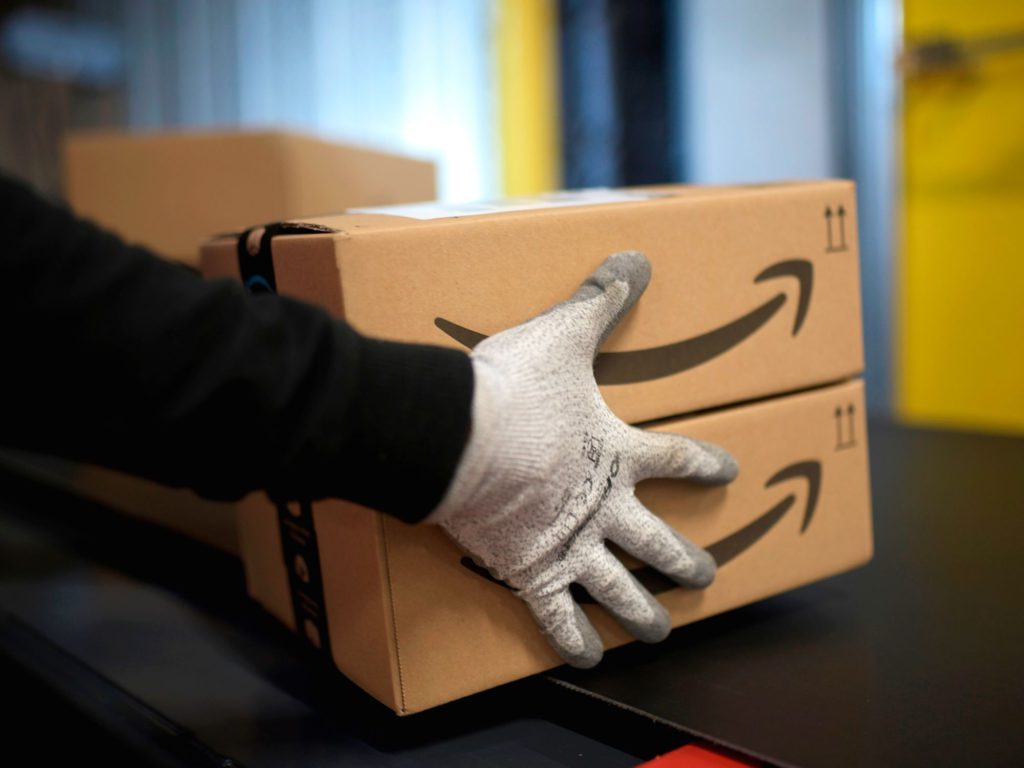
(Bloomberg) — Amazon.com Inc. moved a step closer to settling two European Union antitrust probes into how the U.S. ecommerce giant uses rivals’ sales data and whether it unfairly favors its own products, after it proposed remedies to appease EU concerns.

The European Commission said on Thursday that it’s asking rivals for their feedback on a proposed deal in two antitrust probes looking into its use of non-public data from sellers on its marketplace and “a possible bias” in granting sellers access to its Buy Box and its Prime program.

An EU agreement would take some of the heat off Amazon as national watchdogs in Europe start to ramp up their antitrust scrutiny of the US giant. Germany’s Federal Cartel Office this month said Amazon should be subject to tough new antitrust rules due to its market dominance and Britain’s competition regulator said it’s probing whether Amazon is abusing its dominance in its UK Marketplace. 

The offered commitments would cover all of Amazon’s “current and future marketplaces” in Europe, but exclude Italy for remedies concerning Buy Box and Prime following a decision by the competition authority there in November. 

The Brussels-based commission started probing Amazon in 2019 over concerns the firm’s position allowed it to spot best-selling products and start stocking the same thing itself. It laid out these concerns in more detail in a so-called statement of objections a year later. On the same day, the EU announced a second probe into how Amazon picks products for a prominent “buy box” that drives sales and may push retailers to use its own logistics and delivery services. 

“While we have serious concerns about the Digital Markets Act unfairly targeting Amazon and a few other U.S. companies, and disagree with several conclusions the European Commission made, we have engaged constructively with the Commission to address their concerns,” Amazon said in a statement.

The U.S. company has drawn scrutiny in recent years for the vast trove of data it has amassed on a range of customers and partners, including independent merchants who sell on its retail marketplace, users of its Alexa digital assistant, and shoppers whose browsing and purchase history inform what Amazon shows them on its website.

More stories like this are available on bloomberg.com

©2022 Bloomberg L.P.

TSMC Hikes Outlook Yet Delays Spending as Uncertainty Looms

(Bloomberg) — Taiwan Semiconductor Manufacturing Co. raised its 2022 revenue forecast while warning it will trim spending on expansion by as much as 9% from initial projections, reflecting uncertainty about electronics demand in the face of a potential global recession.

Chief Executive Officer C. C. Wei warned on Thursday it was too early to go into specifics about spending plans or the outlook for semiconductor demand in 2023 should customers delay purchases. But TSMC should still enjoy “a growth year,” the executive said.

The moves from Apple Inc.’s most important chipmaker reflect expectations that demand for everything from phones to cars may remain resilient in 2022, though mounting inflation and waning consumer sentiment may exert an as-yet uncertain impact going into 2023. TSMC’s role as the world’s predominant manufacturer of advanced semiconductors for iPhones and datacenters should likely cushion its profit margins, executives said. 

“We expect our customers will start to take action to decrease their inventory level. A few quarters, at least into the first half of 2023, they’ll continue to do an inventory correction,” Wei told analysts on a conference call. “Our customers’ demand continues to exceed our ability to supply. We expect our capacity to be tight through the end of 2022.”

Click here for a rundown of TSMC’s earnings call.

The world’s largest contract chipmaker is now projecting sales growth in the mid-30% range, up from about 30% previously. It also projected revenue of $19.8 billion to $20.6 billion for the September quarter, beating estimates for roughly $18.5 billion.

But it also plans to delay capital spending, an indicator of its expectations for longer-term demand. TSMC said its capital expenditure should come in at the lower end of a previously targeted range of $40 billion to $44 billion, citing longer times for equipment delivery. Asked how much of that cut will make it into 2023, executives said it was too early to tell. 

“Although TSMC’s sales growth outlook remain strong, it cannot disperse our worries that semiconductor or foundry industry growth may have already peaked,” Bloomberg Intelligence analyst Charles Shum said. “The company’s capex spending ‘push out’ plus downstream customers’ inventory correction actions are two strong signals.”

The Taiwanese giant stressed it will forge ahead with plans to build overseas plants, including an envisioned $12 billion Arizona base that the Trump administration hailed as a triumph in endeavors to bring advanced chipmaking back to America. But executives warned the costs had proven very high and TSMC needed to find ways to reduce that overhead, including through federal subsidies.

Lawmakers are currently debating a plan to infuse $52 billion of incentives for US chipmaking, an ambitious effort at enhancing research and development to counter China’s growing economic influence. 

Read more: Biden Team, Top Democrat See Slimmer Bill Key to Chips Funding

On Thursday, TSMC booked NT$237 billion ($7.9 billion) in net income for the quarter ended June, surpassing the average estimate of NT$219.8 billion. Revenue jumped 44% to NT$534.1 billion in the second quarter, as previously reported. Its gross margin of 59.1% was the highest in 26 years, based on data compiled by Bloomberg.

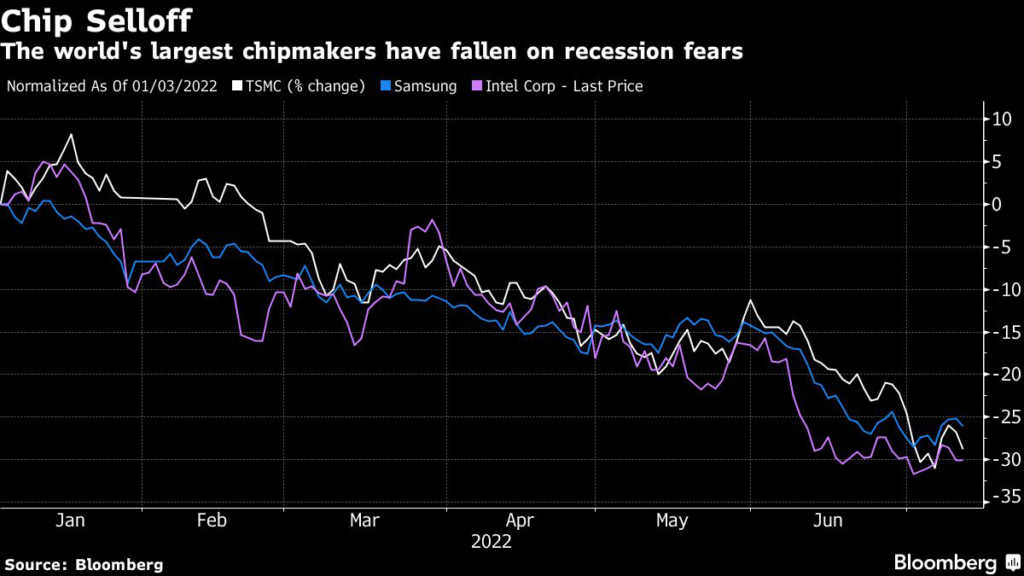
Concerns persist about rising inventories in the $550 billion semiconductor industry and the longer-term impact of a potential global recession. TSMC’s shares are down more than 20% this year alongside a sector-wide selloff. 

But Credit Suisse analysts including Randy Abrams said TSMC remained one of their top picks because of its market share gains and dominant position. 

It has also benefited from its most important customer. Much will depend on how consumers take to Apple’s latest iPhone, expected to hit shelves before the year-end holiday season. On Thursday, Wei said he’s unconcerned about potential inventory buildups of high-end smartphones.

The Taiwanese firm also continues to ride the auto industry’s growing demand for semiconductors as cars become more digitized.

Read more: TSMC Sales Soar 44% in Another Sign of Resilient Tech Demand

(Updates with analyst’s comment in the 7th paragraph)

More stories like this are available on bloomberg.com

©2022 Bloomberg L.P.

To See the Future of Disney, All Aboard Its Newest Cruise Ship

(Bloomberg) — On a three-day preview of Disney Cruise’s Line’s new 4,000-passenger Disney Wish, I was hoping for nostalgic reminders of classic characters and princesses. My 35-year-old tech exec son wanted Star Wars experiences. And my 5-year-old grandson was hoping for encounters with Marvel characters.

Despite our diverse Disney leanings, we found it all across the ship’s 15 decks, which look to appeal to everyone who likes anything in the company’s portfolio.

“Storylines,” as the the company calls them—promotional opportunities, to the rest of us—are around every corner, even in the (very comfortable) staterooms. Besides the fact that almost all of them have verandahs and large bathrooms with tubs, each room is themed. Mine had a gilded mural of a scene from The Princess and the Frog behind the bed; others may feature Cinderella or Frozen. Some categories add bunk beds, and my grandson George was thrilled to climb to an upper berth.

Wish is the first ship Walt Disney Co. has built in 10 years—during which time the onboard experience has evolved from grand floating hotel to an immersive, five-star product with immense nerd appeal. “From a story perspective, you’re seeing us leaning even heavier into our franchises. You see more contemporary franchises coming to life on the ship,” says Josh D’Amaro, chairman of Disney’s parks division, onboard the ship in Port Canaveral, near Orlando.

Bloomberg was hosted as part of the non-revenue christening preview cruise for invited guests. The first paying guests board on July 14.

By leaning on Marvel (acquired in 2009) and especially Star Wars (acquired in 2012), D’Amaro expects to lure enough of the new-to-cruising fan crowd to consistently fill the ship to capacity—along with two as-yet-unnamed sister ships scheduled to arrive in 2024 and 2025. As the fifth ship in the fleet, Disney Wish is also the first to run on LNG (liquified natural gas), which produces 20% fewer carbon emissions than traditional fuels do.

“It’s an obvious investment,” D’Amaro says, demurring on just how much money the company is spending to build the vessels. But at current shipbuilding rates, where it’s often more economic to cut a ship in half and add a new section than build a new one from scratch, the number is almost surely in the billions. Previous profitability would appear to justify a nine-figure spend, though, with Disney Chief Executive Officer Bob Chapek citing the earlier ships’ “double-digit” return on investment. 

Premium fares help boost the profits. Prices for a three-night cruise to Nassau and Disney’s private Bahamas island, Castaway Cay, in September start from about $3,900 for a cabin with verandah for a family of four.

A Disney Theme Park at Sea

Wish is built and run more like a theme park than any previous Disney ship. The first space you see when you board is a three-deck Grand Hall, a take on Cinderella’s Castle that’s sprinkled with “magic” (read: tons of twinkling fiber optics) and populated with “real-life” princes and princesses.

Various shipboard experiences come courtesy of Disney’s Imagineers, who most famously design theme park rides.

Take the multiday interactive game called Uncharted Adventure, which turns your smartphone into a “spyglass” that helps you join characters such as Nemo and Tiana as they search the ship for a missing wishing star. The gameplay unfolds across any of four distinct storylines and has 16 different choose-your-own-adventure-style permutations. To participate, you to set up your own avatar and follow clues to points of interest around the ship; finding them reveals a multidimensional treasure trove of digital games, secret (physical) spaces, and augmented reality animations. The app logs your play history so that nothing gets repeated; it’s Disney stepping into the metaverse.

Imagineers have also created what the company is calling “the first Disney attraction at sea.” The top-deck AquaMouse is a 760-foot, 2 ½-minute flume ride with more than 60 squirting devices, as well as twists and a dramatic drop. It features animated visuals that have Mickey and Minnie leading adventures under the sea and in the Swiss Alps.

Franchise Overload

But it’s Star Wars and Marvel that receive the most attention, as I came to understand the full meaning of D’Amaro’s comment during the preview.

Take the ship’s Star Wars: Hyperspace Lounge, which is adults-only at night. Though I’d hoped it would be a rowdy recreation of Mos Eisley Cantina, I still got a kick out of the upscale intergalactic bar, which you enter through a space door that makes an impressive “whoosh” sound. My drink of choice, the Chancellor, was a $20 concoction of Hennessy James and Calvados Menorval 1972; as it was set down in front of me, a server used a torch to make it smoke.

The lounge is plainly an advertisement for Disney’s Galactic Starcruiser hotel, with its similar emphasis on immersive storytelling. Behind the bar is a high-resolution jumbo screen—ahem, “space window”—that shows the “spaceship” jumping through hyperspace and arriving in various galaxies. Guests cheer as they watch (my son, Eli, seemed to lead the crowd one night) and role-playing servers bolster the narrative. Ours informed us she was from Tatooine, but had once vacationed on Earth.

Star Wars also has real estate in the Oceaneer Club, a staffed activities program for kids aged 3-12, accessible to them via a deck-long tube slide from the Grand Hall. In a room done up as a cargo bay, Disney nails Star Wars experiences as kids interact with such creatures as a dianoga in a jar and a porg in a cage. The attention to detail is just as thorough as you’d expect; if you look carefully, you’ll find pink porg poop on the ceiling.

For kids that aren’t yet indoctrinated into Star Wars lore, there are other club spaces á la Marvel and Frozen, a Mickey and Minnie-themed indoor playground, and a Toy Story water-play area on an upper deck. A nursery offers services for babies as young as six months.

Restaurants make use of the new franchises, too. My young grandson George, a collector of Marvel figurines, was most excited about an Avengers dining experience hosted, via screens around the room, by Ant-Man (Paul Rudd) and the Wasp (Evangeline Lilly) with special appearances on screen by Captain Marvel, Captain America, and Ms. Marvel, among others.

Each table is outfitted with a “Quantum Core,” and diners can press buttons to supposedly help the superheroes along their quests. It took George five minutes to realize they didn’t do anything, but he nonetheless bought into the storyline of bad guys attacking the ship and the Avengers saving the day—so much so that he was concerned the bad guys might return during the night.

If you need a break from the sci-fi and superhero action, a Frozen dinner theater experience features live songs from the movies, with characters visiting each table. (The princesses are played by humans; Olaf is mechanical.) There’s also a new, Broadway-style The Little Mermaid show with a big cast, puppets, and impressive special effects. And when only the classics will do, two movie theaters play a full slate of Disney movies, so you can see Peter Pan and Cinderella—as well as new releases that will debut at sea on the same day they launch in land-based theaters.

Wish Upon Five Stars

The ship has treats for big spenders that range from practical luxuries to extravagant stunts. In terms of the former, Disney doubled the number of suites on this ship to 76, including a two-story, almost 2,000-square-foot Moana-themed penthouse that’s built into the ship’s forward funnel. The cost comes to around $29,000 for three-night sailings in July 2023, based on two adults and two kids—and it’s mostly sold out until then.

As for the stunts, Disney bloggers have had a field day trying to reveal what’s in the Kaiburr Crystal, dubbed “the galaxy’s rarest and valuable cocktail” on the menu. The $5,000 tipple seems to be made with Camus cognac, and the price is rumored to include an invitation to Lucasfilm’s California sound design facility, Skywalker Ranch. Disney won’t confirm or deny anything, which only adds to the mystery. I didn’t dare order it.

One thing that’s worth the splurge is an adults-only date-night: dining at the Beauty and the Beast-themed Enchanté from chef Arnaud Lallement. (He’s the owner of the Michelin three-star L’Assiette Champenoise in France.) You can easily spend hundreds of dollars per couple if you skip the prix-fixe and go with a la carte and fine wine selections, such as squab fermiere with turnip relish ($50). Send the kids to the Oceaneer Club that night; Enchanté’s food and service is worth it.

Wish fulfillment is, after all, the mantra on Disney Wish. It was even christened by kids from the Make-A-Wish Foundation. Whether it fulfills Disney’s own ambitions as company leadership navigates choppy waters will be the ultimate test of the franchises in which it has so heavily invested.

More stories like this are available on bloomberg.com

©2022 Bloomberg L.P.

Who Owns All the Bitcoin? Those Who Got Into Crypto Early

  • Listen to Bloomberg Crypto on the iHeartRadio App
  • Listen to Bloomberg Crypto on Apple Podcasts
  • Listen to Bloomberg Crypto on Spotify 

(Bloomberg) — Since the founding document that led to the invention of Bitcoin first appeared in 2008, Bitcoin’s true believers have adopted a philosophy that resembles “one for all and all for one” (or at least, all who believe in Bitcoin). Bitcoin is often touted as a means of improving financial inclusion, an invention that allows people oppressed by their governments to maintain or reclaim a sense of freedom. In Bitcoin, everyone’s equal – or so the theory goes. But does the theory match the reality of the ecosystem?

On today’s episode, data scientist Alyssa Blackburn and Erez Lieberman Aiden, Associate Professor of Molecular and Human Genetics at Baylor College of Medicine, join us to discuss their research into who controlled Bitcoin from those early days. 

Follow us on Twitter @crypto, and subscribe to the Bloomberg Crypto Newsletter at https://bloom.bg/cryptonewsletter

More stories like this are available on bloomberg.com

©2022 Bloomberg L.P.

Amazon Secretly Funds New Coalition Opposing Tech Regulation

(Bloomberg) — A group fighting antitrust legislation targeting the biggest US tech companies presents itself as a grassroots advocate for American taxpayers, yet it hasn’t disclosed a significant source of funding from one of the industry’s giants: Amazon.com Inc. 

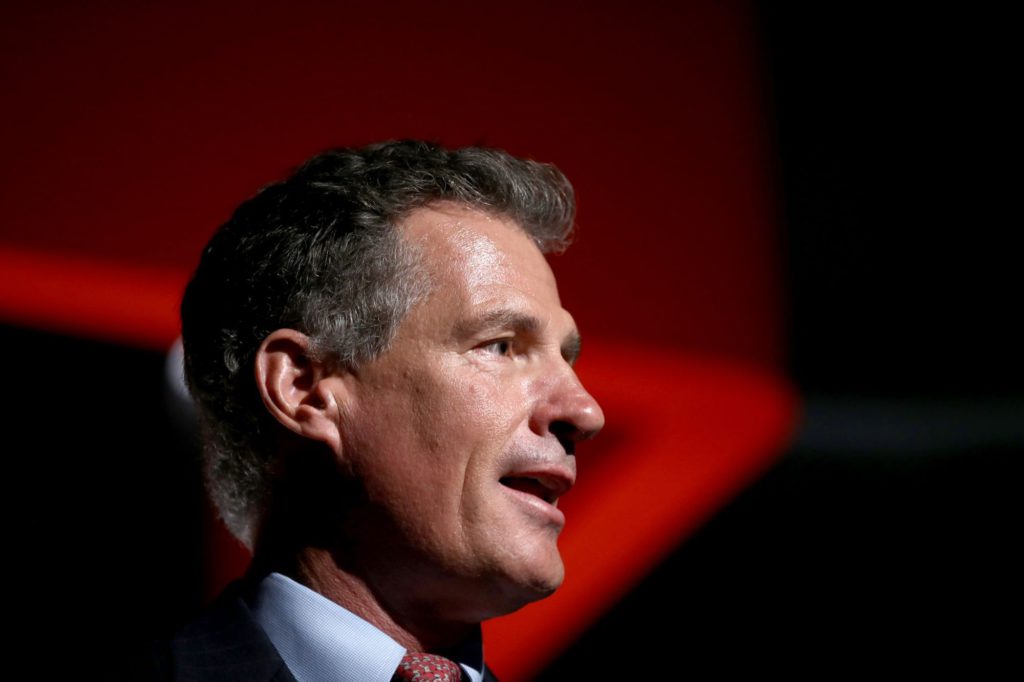
The Competitiveness Coalition, led by Scott Brown, a former Republican senator from Massachusetts, has received more than $1 million from Amazon, according to three people familiar with the organization’s funding. 

Founded in March as the bipartisan antitrust bill was gaining steam on Capitol Hill, the Competitiveness Coalition has held meetings with Republican lawmakers, run television ad campaigns and blasted out op-eds opposing the measure — all without revealing the backing from the e-commerce giant.   

“Take Action Write Your Senator — Oppose the Radical ‘American Innovation and Choice Online Act,’” reads the group’s homepage, referring to a signature proposal in a package of bills intended to curb the dominance of internet giants that could be voted on later this month. 

Amazon’s funding of the coalition is the latest example of how technology giants have been discreetly funneling money into affinity groups that back their agenda amid the largest and most expensive lobbying battle in the industry’s history. 

Alphabet Inc.’s Google, Meta Platforms Inc.’s Facebook, Apple Inc. and Amazon have doled out hundreds of millions of dollars as they seek to defeat the measures. 

Amazon didn’t respond to requests for comment and Brown, the group’s chair, declined to comment. 

The coalition was spawned by the National Taxpayers Union, a conservative advocacy organization, and counts more than a dozen right-leaning groups as members. NTU, one of the most prominent voices against regulation in Washington, has received money from Amazon and Google for years, according to public disclosures by the companies.

Under federal law, advocacy organizations aren’t required to disclose the names of their donors.

The taxpayer group “incubated the Competitiveness Coalition to oppose antitrust policies that do not work for consumers and taxpayers,” said NTU spokesman Kevin Glass. 

‘Astroturfing’

During the fight over the antitrust bills, the internet giants have leaned heavily on “astroturfing,” orchestrated public relations campaigns that create the illusion of public support. Over the past year alone, the companies have heaped money into groups claiming to represent Black and Hispanic communities, small businesses and national security officials, seeking to bolster their claims that the legislation would hurt everyday people — not just four of the world’s largest companies. 

This week, the Competitiveness Coalition staged a crescendo of actions: It urged Senate Majority Leader Chuck Schumer to dump the bills “in the garbage bin where they belong,” and held its first briefing with Capitol Hill staff, according to an invitation shared with Bloomberg News. The event was billed as an opportunity to “learn about the dangers of the current antitrust legislation and how it could harm America’s global competitiveness.” 

The group also urged lawmakers to reject the legislation in a letter Monday to House and Senate leadership. “Passing this measure as our economy teeters on the brink of a recession and while China continues to nip at our heels, is akin to lighting a match next to a gas leak,” the letter read.  

Left and Right

Amazon hired Mattie Duppler, the National Taxpayers Union’s senior fellow of fiscal policy, in November 2020 to coordinate with conservative third-party groups. Duppler was instrumental in helping to set up the Competitiveness Coalition, pulling from her NTU experience and close relationships with taxpayer groups across Washington, according to two of the people familiar with the process. 

Amazon’s public policy shop believed the Competitiveness Coalition could serve as a counterweight to the Chamber of Progress, a left-leaning tech association it also funds led by former Google executive Adam Kovacevich, according to the people. While the Chamber of Progress provides a pro-tech voice on the left, some Amazon public policy officials determined that they needed a similar group on the right.

More stories like this are available on bloomberg.com

©2022 Bloomberg L.P.

Close Bitnami banner
Bitnami