
Bloomberg

FTX’s Bahamas Empire Found a Home at the Local Margaritaville

(Bloomberg) — Sam Bankman-Fried’s crypto empire included offices in glamorous locales in multiple countries—from a luxe office building in Chicago to exclusive residences in the Bahamas. And then there was a more off-beat spot that was popular with his employees: the Margaritaville Beach Resort.

Since FTX and its related entities filed for bankruptcy in November, questions have swirled about the exchange’s lax accounting practices and profligate spending. While the names of FTX Trading Ltd’s largest creditors have not yet been publicly disclosed, the Nassau-based resort popped up among those listed by Alameda Research. 

Margaritaville Beach Resort’s unsecured claim of $55,319 ranks behind debts owed to Amazon Web Services ($4.7 million), law firm Herbert Smith Freehills ($120,000) and Bloomberg Finance LP ($80,000). 

Waitstaff on shift at the Jimmy Buffett-themed resort over two days in December said employees working with FTX entities stayed at the hotel for several months in 2022. Staffers described them as nice, friendly, and generally pleasant.

The staff who asked to remain unnamed as they didn’t have permission to speak to the media, said the people affiliated with FTX stayed in One Particular Harbour, a high-end building next to the main resort. 

Per the resort employees, workers stayed for weeks or months at a time in roughly 20 different suites booked under Alameda’s name. On weekdays, a shuttle picked them up from the hotel in the morning and dropped them back off at the end of the workday, generally in the late afternoon or early evening, according to two staff members.  

These long stays led to cordial relationships with resort staff. One, who asked to remain anonymous, said they almost cried when the last of the employees left the resort, which they said occurred about a month ago. 

The resort’s operators might have less fond associations. As unsecured creditors, the Margaritaville ranks low on the priority list to recover funds in the bankruptcy case. Managers for the resort declined to comment, and the resort did not respond to an email seeking additional comment about the debt.

Why FTX would establish roots at the local Margaritaville is unclear. The resort is nearly 10 miles away from a stalled FTX campus, a five-acre plot purchased for $4.5 million in cash and set to house 1,000 employees. Construction never began—leaving behind an empty, overgrown plot encased by flimsy fencing. 

The Margaritaville is also 15 miles—or a more than a 30 minute drive away—from Albany, private residences where Bankman-Fried and close associates lived and worked. That penthouse overlooks a marina filled with dozens of boats, many of them multi-tiered yachts. Just across the street from their luxury dwelling, there’s pristine beach—white sands and gently lapping ocean.

  • Read more: Inside Sam Bankman-Fried’s Bahamian Penthouse After FTX’s Fall

By contrast, the Margaritaville Beach Resort sits between downtown Nassau’s bustling cruise hub and Arawak Cay, a strip of restaurants serving fish dishes and vendors selling straw goods. 

Still, the themed hotel has its perks. The Vacation Café serves up rum-laden cocktails like the “Bahama Mama” and the “5 O’Clock Somewhere,” and the bar features live music. Staff members say that like any other hotel guest, the workers would hang out around the resort and sometimes explore the town a bit.

“They were cool,” one employee at the resort told Bloomberg. “I never had a problem with any of them.”

Another employee said that they even had plans to go out on the town with their crypto friends and explore Nassau. Based on recent events, they never quite got the chance. 

–With assistance from Katanga Johnson.

More stories like this are available on bloomberg.com

©2022 Bloomberg L.P.
Bitcoin Miners’ Capitulation Sparks Optimism for Market Bottom

(Bloomberg) — Bitcoin miners are sending a signal that suggests they’ve reached the point of capitulation, raising hope among beleaguered crypto enthusiasts that the digital-asset market collapse may be nearing a bottom. 

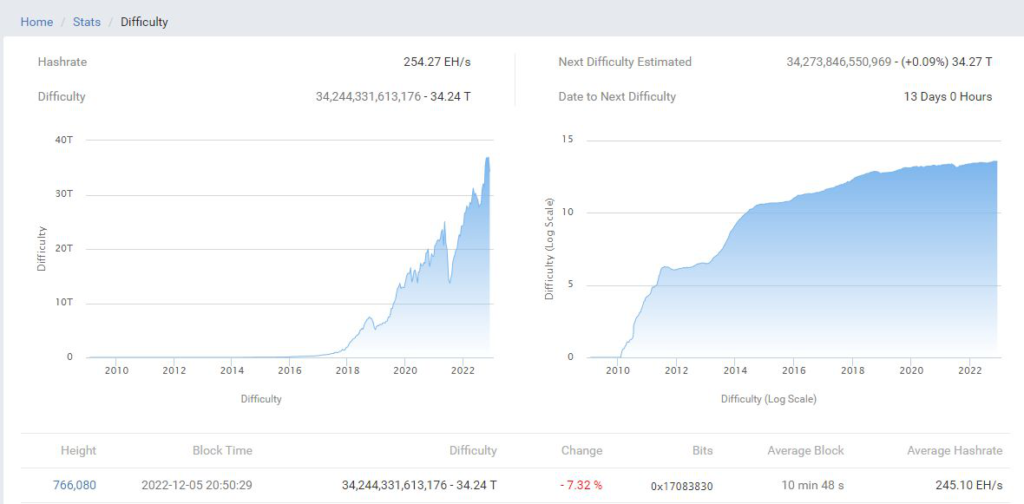
Mining difficulty, a measure of the total amount of computing power dedicated to minting the tokens, dropped by 7.3% over the most-recent two-week period ended Monday. That’s the biggest decline since July 2021, shortly after China banned the process, forcing operations in the nation to shut down computing facilities. 

That’s viewed as a sign by some analysts that miners are throwing in the towel. The rate had jumped in recent months as miners sought to win more market share to help offset the plunge in the price of Bitcoin. Halting operations suggests that miners have exhausted reserves and are struggling to raise cash to keep their rigs running. Bitcoin has tumbled about 75% from an all-time high of around $69,000 reached in November 2021.

“If you look at what is happening with miners giving up their hardware and the length of the bear market, this is the point in the last bear cycles where things started to turn around,” said Andy Long, chief executive at Bitcoin mining firm White Rock, who started mining in 2013. “It is always the darkest before the dawn.” 

While selling of the tokens by Bitcoin miners to raise cash to fund operations isn’t as large as it used to be since inventories are lower, that was still a significant factor in depressing prices recently, said Matthew Kimmell, digital asset analyst at CoinShares. Miners mint about 900 coins daily through the process where they compete to solve computational puzzles to unlock rewards in exchange for processing the transactions on the blockchain.

Major miners sold off the bulk of their Bitcoin holdings during the spring-time market crash, but continued to run rigs for a few months, as reflected in the recent rise in computing power. Some over-leveraged miners are finally running out of money and may sell off their mining assets at a discount, Long said. 

Besides the sharp declines in Bitcoin prices, energy costs have compressed miners’ profit margins as well. More computing power on the Bitcoin network means less rewards in the form of the token for miners.   

Miners are among the most adamant Bitcoin holders. Even if the selling pressure is not that important as a market signal, their Bitcoin sales can show you the market sentiment at some level, Kimmell said.   

More stories like this are available on bloomberg.com

©2022 Bloomberg L.P.

America Rolls the Dice with Online Gambling

(Bloomberg) — Only legal for four years, sports betting is already big business in America. With two companies dominating the industry, the risks for users may be far bigger than the rewards. 

On this episode of Bloomberg’s Business of Sports, we explore how the Wild West of online gambling has become a multibillion-dollar empire in which the federal government has left regulation to the states. The states meanwhile have largely left companies like DraftKings and FanDuel to police themselves. As the companies offer more and more ways for gamblers to bet, their solution for the risk of addiction is for users—not them—to take the first step. Read More: Britain Opened the Door to Online Gambling. Now It’s Living With the Consequences

More stories like this are available on bloomberg.com

©2022 Bloomberg L.P.
Tech Drives Stock Rout Amid Gloom From Bank CEOs: Markets Wrap

(Bloomberg) — Stocks slumped amid downbeat economic warnings from bank chiefs at a time when concerns about the impacts of Federal Reserve policy on growth and corporate earnings are running rampant.

A selloff in tech giants like Apple Inc. and Tesla Inc. weighed heavily on the market, with the S&P 500 falling for a fourth straight day. Meta Platforms Inc. sank 6% on a report the European Union is targeting the Facebook owner’s ad model. As traders sought safety, the dollar rose with Treasuries.

Goldman Sachs Group Inc.’s David Solomon warned about pay and job cuts, citing “some bumpy times ahead.” Bank of America Corp. is slowing hiring as fewer employees leave ahead of a possible economic contraction, chief Brian Moynihan said. Morgan Stanley will reduce its global workforce by about 2,000, while JPMorgan Chase & Co.’s Jamie Dimon told CNBC a “mild to hard recession” may hit next year.

“We have not yet seen the bottom on equity prices,” said Lauren Goodwin, portfolio strategist at New York Life Investments. “While this phase of equity market volatility is likely to end in the next few months, earnings have not yet adapted to a recessionary environment.”

Morgan Stanley Wealth Management’s Lisa Shalett said some of the biggest companies may see earnings hit far more than expected next year as economic growth slows and inflation erodes the purchasing power of consumers.

Read: JPMorgan Resumes Buying US CLOs After Pausing Earlier This Year

Read: Wall Street’s Appetite for M&A Debt Gets Rare $3.4 Billion Test

“A lot of corporate guidance is delusional,” Shalett told Bloomberg Television. “It’s going to be a rude awakening for a lot of folks.”

As shaky as markets look, one indicator looks solid: analysts’ view on the companies they cover. 

After slashing their share-price targets over the summer at a pace seen only a handful of other times in history, they’re rolling back their skepticism and reducing the number of decreases relative to increases to a level last seen at the onset of the rout in January, data compiled by Bloomberg show.

To Katie Nixon at Northern Trust Wealth Management, the potential lack of earnings growth in 2023 may be a limiting factor to market performance amid the already elevated valuation level.

“Markets have never bottomed before a recession has begun,” said David Bailin, chief investment officer at Citi Global Wealth. “If there is in fact going to be a recession next year, if we are going to see a period of unemployment rising in the country, then we would expect that markets would have to settle down from where they are today over the course of the next several months.”

Key events this week:

  • EIA crude oil inventory report, Wednesday
  • Euro zone GDP, Wednesday
  • US MBA mortgage applications, Wednesday
  • ECB President Christine Lagarde speaks, Thursday
  • US initial jobless claims, Thursday
  • US PPI, wholesale inventories, University of Michigan consumer sentiment, Friday

Some of the main moves in markets:

Stocks

  • The S&P 500 fell 1.6% as of 1:53 p.m. New York time
  • The Nasdaq 100 fell 1.9%
  • The Dow Jones Industrial Average fell 1.2%
  • The MSCI World index fell 1.4%

Currencies

  • The Bloomberg Dollar Spot Index rose 0.3%
  • The euro fell 0.2% to $1.0468
  • The British pound fell 0.3% to $1.2150
  • The Japanese yen fell 0.2% to 136.98 per dollar

Cryptocurrencies

  • Bitcoin was little changed at $16,972.68
  • Ether fell 0.7% to $1,250.59

Bonds

  • The yield on 10-year Treasuries declined two basis points to 3.56%
  • Germany’s 10-year yield declined eight basis points to 1.80%
  • Britain’s 10-year yield declined three basis points to 3.08%

Commodities

  • West Texas Intermediate crude fell 3.8% to $74.01 a barrel
  • Gold futures were little changed

This story was produced with the assistance of Bloomberg Automation.

–With assistance from Vildana Hajric, Isabelle Lee, Emily Graffeo, Elena Popina and Eva Szalay.

More stories like this are available on bloomberg.com

©2022 Bloomberg L.P.
DHS Funds Surveillance Technology in US Cities, Report Says

(Bloomberg) — Technology companies including Microsoft Corp., Motorola Solutions Inc. and Palantir Technologies Inc. have sold tens of millions of dollars in surveillance equipment to local authorities using Department of Homeland Security grants, according to a new report by a coalition of advocacy groups.

Much of the funding goes to products that hoover up data on citizens, such as social media monitoring software, as well as gunshot detection technology that utilizes microphones installed in urban areas. 

“This is a funding stream that supercharges surveillance and policing, and does it in a way that bypasses traditional oversight processes that we have,” said Aly Panjwani, a senior research analyst with the Action Center on Race and the Economy, a racial justice group in the coalition that released the report Tuesday. 

The DHS grants go to police departments across the country and are meant to finance homeland security efforts. The agency has said the technologies help law enforcement better protect domestic security. However, the technology tends to disproportionately collect data on minorities in cities, the report says.

It focuses on the Urban Area Security Initiative, a DHS grant program that provides $615 million to cities annually for homeland security activities. The program is managed by the Federal Emergency Management Agency, a DHS entity that handles disaster relief. Cities are required to spend 30% of the grant on law enforcement efforts. 

“Because of the way the grant funding is set up, it makes it hard for cities that want to reject the funding for surveillance and policing to do so, because the funding is going to other disaster relief as well,” said Alli Finn, a senior researcher with the Immigrant Defense Project, which also contributed to the report. 

The report’s backers also include digital rights group MediaJustice and research group LittleSis.  

DHS, Microsoft, Motorola and Palantir didn’t immediately respond to requests for comment on the report.

The report uses public records to build a detailed picture of DHS financing under the Urban Area Security Initiative, offering a glimpse into the enormous and complex web of federal grants used to buy technology across the country. For years, DHS has been criticized by activists who say its programs unfairly target Muslim-American and Black communities. 

The DHS budget has ballooned to almost $100 billion in 2023 from $19.5 billion in 2002, with a significant amount going to tech companies. 

In one example, Boston used the funding to pay for ShotSpotter Inc. contracts across the city. ShotSpotter, a gun detection technology, alerts police when a gunshot is detected through an array of microphones positioned throughout a city. But artificial intelligence ethicists have called the technology unreliable and say it’s led to false arrests in the predominantly Black areas where the microphones are often placed.  

ShotSpotter, in a statement, said “coverage areas are determined by police using objective, historical data on shootings and homicides to identify areas most impacted by gun violence.”

“All residents who live in communities experiencing persistent gunfire deserve a rapid police response, which gunshot detection enables regardless of race or geographic location,” the company said. 

Los Angeles used Urban Area Security Initiative funding to buy Palantir software, which brings together enormous amounts of data on individuals, often to identify crime “hot spots” to predict where crimes will occur. Critics say predictive policing software often disproportionately identifies Black neighborhoods for surveillance. 

DHS requires police departments to use Urban Area Security Initiative funding on a list of “authorized” equipment, which includes social media surveillance technology, drones, license plate readers, gunshot detection technology and more. Many of the companies, including ShotSpotter and Motorola, advertise their products as eligible for the initiative’s funding in public materials. 

More stories like this are available on bloomberg.com

©2022 Bloomberg L.P.
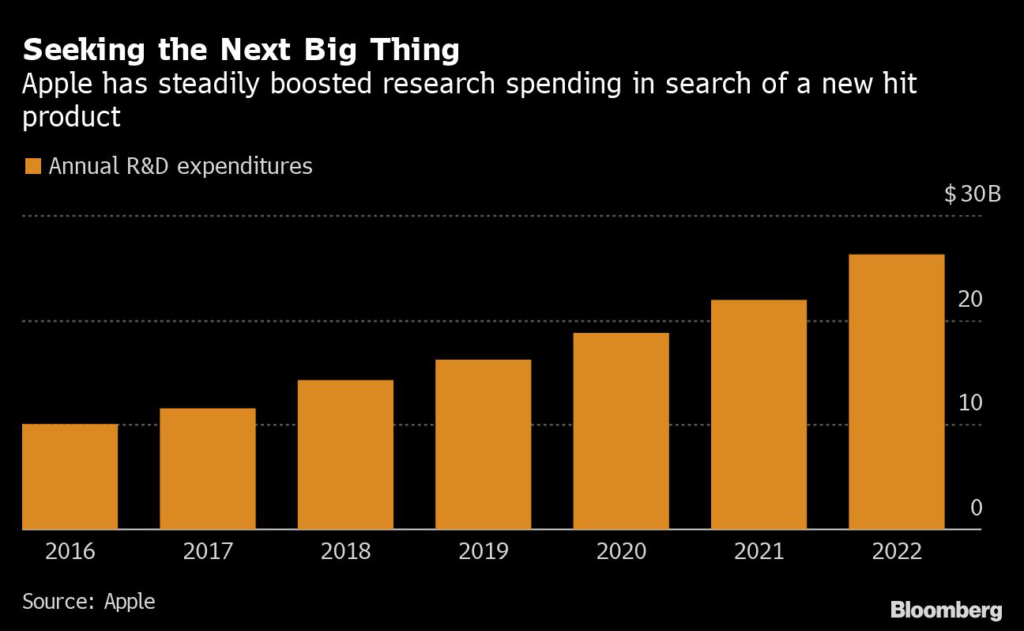
Apple Scales Back Self-Driving Car and Delays Debut Until 2026

(Bloomberg) — Apple Inc. has scaled back ambitious self-driving plans for its future electric vehicle and postponed the car’s target launch date by about a year to 2026, according to people with knowledge of the matter. 

The car project, dubbed Titan inside the company, has been in limbo for the past several months as Apple executives grappled with the reality that its vision for a fully autonomous vehicle — without a steering wheel or pedals — isn’t feasible with current technology.

In a significant shift for the project, the company is now planning a less-ambitious design that will include a steering wheel and pedals and only support full autonomous capabilities on highways, said the people, who asked not to be identified because the information is private.

The latest changes underscore the challenge Apple faces in pushing into an entirely new product category and taking on technological obstacles that have bedeviled some of the world’s biggest companies. The secretive project, underway for years, is meant to provide Apple with another major moneymaker, but it also could test the limits of the iPhone maker’s capabilities.

Apple currently plans to develop a vehicle that lets drivers conduct other tasks — say, watch a movie or play a game — on a freeway and be alerted with ample time to switch over to manual control if they reach city streets or encounter inclement weather. The company has discussed launching the feature in North America initially and then improving and expanding it over time.

A spokeswoman for Cupertino, California-based Apple declined to comment.

Apple shares, already down about 2% on Tuesday, dipped to a session low after Bloomberg News reported on the changes. They’ve declined 19% this year, though that’s a better performance than most stocks in the tech-heavy Nasdaq Composite Index. 

Apple’s previous vision for the car was to offer “Level 5” autonomy — the pinnacle of self-driving technology, which no automaker has attained. The current plan is considered below that because of its more limited scope.

It’s the latest strategy shift for the Apple car team, which has faced turnover in its executive ranks ever since its inception a decade ago. Current leader Kevin Lynch has aimed to bring more stability and a focus on practical goals after years of priority changes and even some layoffs.

Lynch, who also is in charge of the Apple Watch operating system and health software, took over at the end of 2021. He initially instructed the team working on the car, known as the Special Projects Group, to focus on a fully autonomous vehicle for a debut by 2025. Now he’s dialing back those expectations, but with the goal of ensuring that a product actually reaches the market.

The heart of Apple’s technology is a powerful onboard computer system — codenamed Denali after the tallest mountain peak in North America — and a custom array of sensors. The processor’s performance is equal to about four of Apple’s highest-end Mac chips combined and is being developed by the company’s silicon engineering group. The chip has reached an advanced state and is considered nearly production-ready, though Apple may scale it down before the car’s launch to lower costs. 

Having an onboard computer to handle automated tasks is similar to an approach used by other carmakers, including Tesla Inc. Apple, however, plans to differ from Tesla by using a combination of lidar and radar sensors, along with cameras. The setup helps the car determine its location, see driving lanes, and assess how far it is from other objects and people. Tesla relies on cameras, while Alphabet Inc.’s Waymo and others use a combination. 

In addition to the onboard hardware, the system has a cloud-based component for some artificial-intelligence processing. Apple is relying on Amazon Web Services for hosting, costing the iPhone maker about $125 million per year. But that’s just a sliver of the roughly $1 billion the company is spending on the car project annually.

Apple is exploring the idea of a remote command center to assist drivers and control cars from afar during emergencies. The company is also discussing offering its own insurance program to customers. 

Apple had expected each car to sell for more than $120,000, but the company is now aiming to offer the vehicle to consumers for less than $100,000, according to the people. That would put it in roughly the same price range as the entry-level version of the Model S from Tesla and the EQS from Mercedes-Benz. 

Apple hasn’t yet settled on a design for its car and the vehicle is considered to be in the “pre-prototype” stage. The company is aiming to ready the design by next year and have the features set by the end of 2024. It then plans to put the car through extensive testing in 2025.

Apple had previously discussed launching a car that looks similar to Canoo Inc.’s Lifestyle Vehicle. The idea was to have a limousine-like interior where passengers could face each other. Now the plan is to produce something more like a traditional car, with a driver’s seat.

The company has held discussions with a number of suppliers about obtaining an electric-vehicle platform, known in the industry as a “skateboard,” but it’s still seeking a partner. Apple earlier talked to several companies about licensing their platforms, but the only serious negotiations occurred with Volkswagen AG several years ago. EV platforms include the underlying base of the car, the wheel system and battery.

The design of the car is being led by Ulrich Kranz, the ex-chief executive officer of Canoo, as well as former managers from Tesla, Lamborghini and Porsche. The software side of the system is led by former Tesla manager Stuart Bowers, while safety engineering, testing and regulatory matters are handled by ex-Ford Motor Co. executive Desi Ujkashevic.

The Apple car organization, made up of about 1,000 employees, is split across campuses in Sunnyvale, California; Ottawa; Zurich; and Arizona. Much of the underlying engineering work, industrial design and software development is done in Sunnyvale, while parts of the car’s future operating system are developed in Ottawa, an area where the company poached workers from BlackBerry’s QNX, a longtime maker of car software, in 2016. 

The company’s team in Zurich is developing a tool known as “Rocket Score” that grades the vehicle’s autonomous system. That core team faced a setback earlier this year when Ian Goodfellow, a prominent developer of AI technology who helped lead the group, left Apple after complaining about its work-from-home policies. 

Much of the testing work for the car is done at a former Chrysler track outside of Phoenix. The testing area, codenamed “Sahara,” was purchased by a business representing Apple in 2021 for $125 million. The company also continues to test its driving system on Lexus SUVs deployed in several states. Those cars, known internally as “Baja” vehicles, get their onboard systems refreshed every 6 to 12 months.

In Silicon Valley, Apple is aiming to consolidate several of its car teams in a new campus by the San Jose airport known as Orchard Parkway. The property will have about half a million square feet of space and may also house other Apple teams. The company bought the campus around 2015 and kicked off construction last year.

(Updates with shares in seventh paragraph.)

More stories like this are available on bloomberg.com

©2022 Bloomberg L.P.
Crypto Firm Blockstream Seeks Funding at a Lower Valuation in Tight Market

(Bloomberg) — Crypto infrastructure company Blockstream Corp. is raising fresh funds at a lower valuation than at its most recent financing as the collapse of the FTX exchange exacerbates a challenging venture capital backdrop for digital-asset firms.

The valuation may be below $1 billion, people familiar with the matter said, asking not to be identified discussing private information. One of the people said the figure may change. The firm was valued at $3.2 billion when it raised $210 million in 2021 from investors including Baillie Gifford and iFinex. 

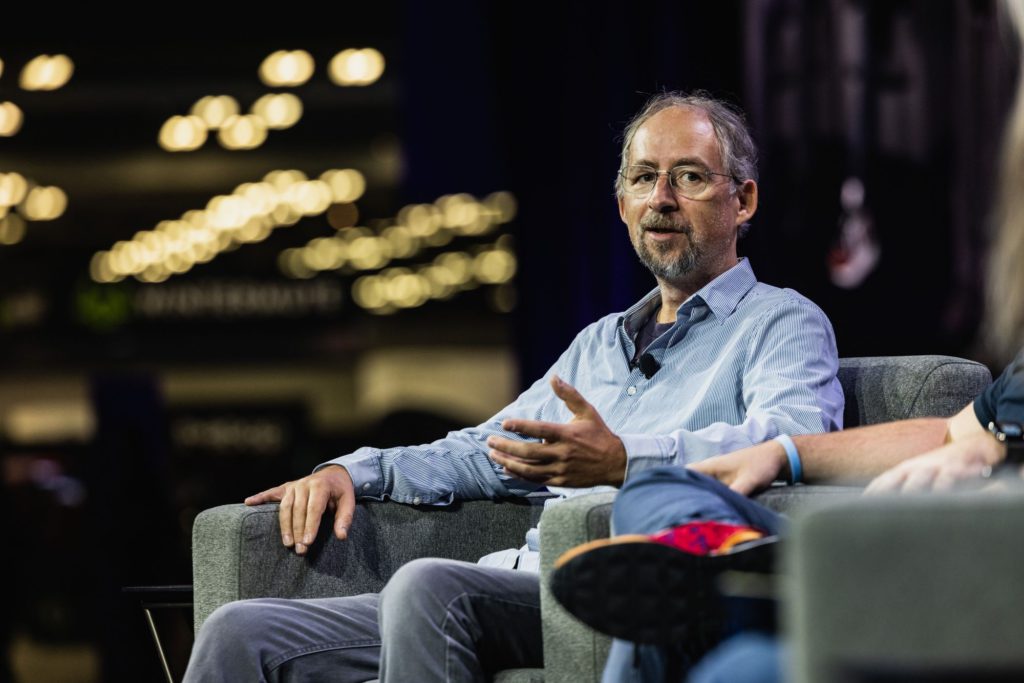
Blockstream’s Chief Executive Officer Adam Back declined to comment on the size of the funding round or valuation but said that the money would be used to expand capacity to host crypto miners.

“We rapidly sold out all of the capacity and have a big backlog of existing and new customers with miners seeking large-scale hosting with us,” Back said.

Montreal-based Blockstream was founded in 2014 and is working on a joint project with Jack Dorsey’s Block Inc. to build a solar-powered Bitcoin-mining facility. Blockstream has also received backing from LinkedIn co-founder Reid Hoffman.

But venture financing is harder to obtain in a crypto sector reeling from this year’s rout and plagued by fears of further contagion after FTX’s implosion. Companies such as Amber Group and Blockchain.com were contemplating flat or down funding rounds. An earlier record pace of investment into blockchain startups has given way to far frostier conditions in the crypto winter. 

Many crypto miners have been squeezed by the collapse in the price of Bitcoin and other tokens alongside a surge in electricity rates, leading to defaults on loans and the seizure of computer rigs.

“While Bitcoin price and mining profitability are down, hosting rates have risen over the last quarters and our mining services are a rapidly expanding, high-margin enterprise business for us,” Back said.

More stories like this are available on bloomberg.com

©2022 Bloomberg L.P.
Paramount CEO Hints at Showtime Changes, Warns of Ad Sales Drop

(Bloomberg) — The head of Paramount Global said it no longer makes sense to run its Showtime premium cable network as a standalone operation, citing the growing financial pressure on the TV industry.

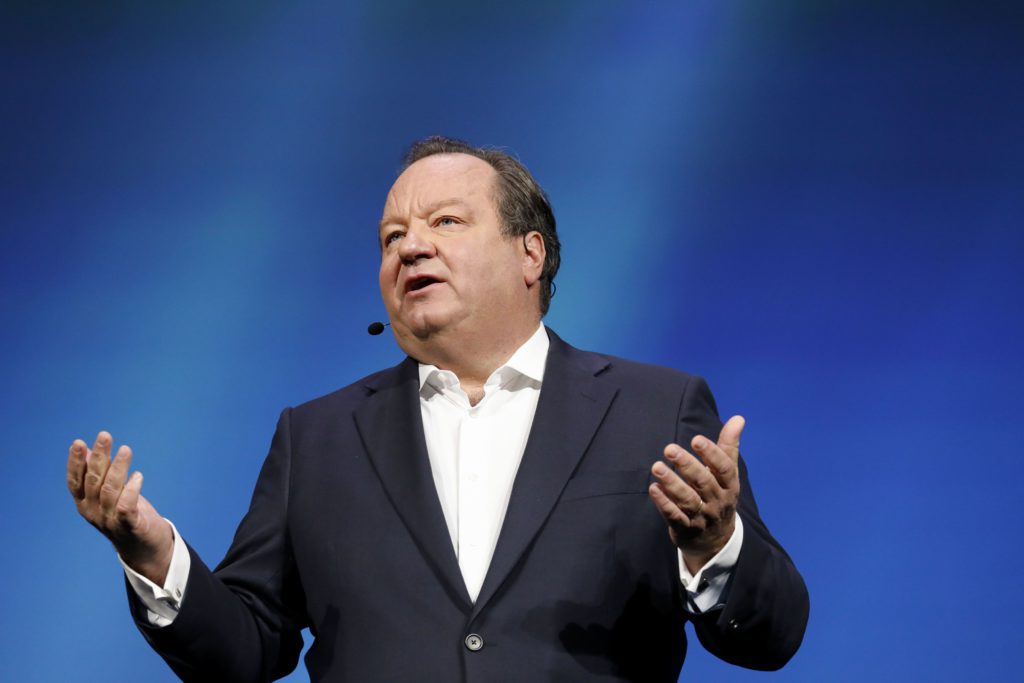
Chief Executive Officer Bob Bakish said at an investor conference Tuesday that Paramount is looking at “consolidation economics” at Showtime and how to “unlock synergies” between the channel and the company’s broader portfolio, including the newer Paramount+ streaming service.

Paramount already has plans to bring together the streaming infrastructure for Showtime and Paramount+, he said, adding that offering Showtime inside the Paramount+ app “really works well.”

“We’ll continue to look for a way to create value there,” Bakish said, adding that the Showtime brand still matters. “It’s transformation. It does affect people.” 

Shares of Paramount fell as much as 9.8% to $17.60 in New York. They’re down more than 40% this year, compared with a drop of 17% for the S&P 500 index. Warner Bros. Discovery Inc. and Walt Disney Co. were also lower.

Ad Sales

Paramount’s plans for Showtime are part of a series of cost-cutting initiatives at the company, accelerated by a decline in advertising and the continued loss of cable-TV subscribers. Other media companies are taking similar steps.

Paramount’s advertising sales this quarter will be a “bit below” the third quarter, Bakish said, calling the market “challenging.” His comments echo those made a day earlier by NBCUniversal Chief Executive Officer Jeff Shell, who said the market is “definitely getting worse.” NBC is owned by Comcast Corp.

A number media companies have announced layoffs and hiring freezes in recent days, including the digital media company BuzzFeed Inc., which announced plans Tuesday to eliminate 12% of its staff.

The cuts are the result of advertisers pulling back from spending in a weak economy and accelerating subscriber losses from cord cutting. The companies’ new streaming services, while growing, are losing money.

Last week, AMC Networks Inc. said it plans to fire 20% of its US staff, Warner Bros.’ CNN division laid off employees and NPR said it would “severely restrict” hiring after seeing a sharp drop in sponsorship revenue.

More stories like this are available on bloomberg.com

©2022 Bloomberg L.P.

Apple Overhauls App Store Pricing to Range From $0.29 to $10,000

(Bloomberg) — Apple Inc. is changing the pricing structure for the App Store to let developers charge a wider range of amounts, the latest effort to offer more flexibility and stave off criticism of the platform.

Prices can now start at just 29 cents — compared with a previous floor of 49 cents for subscriptions and 99 cents for apps — and range up to $10,000, the company said Tuesday. The highest price level had been $999.99. Developers also will have new options for setting prices across different countries and currencies.

The move is a major shake-up for the App Store, which Apple launched in 2008 with an emphasis on simplicity. The platform has faced greater criticism in recent years, with developers and regulators complaining that the company’s rules are too restrictive. Apple’s commission of as much as 30% on app purchases also has drawn outcry, including from Elon Musk. 

Apple settled a $100 million class action lawsuit with small developers in the US last year, and adding additional price points was part of the agreement. At the time, the company also made changes to App Store search and made it easier for developers to appeal app rejections.

But looming legislation could spur further changes by forcing Apple to allow apps to be side-loaded — or installed without the use of the App Store — on the company’s devices. The new options and tools could help keep the App Store an appealing venue for developers even if they have other options. Apple generated more than $78 billion in the past fiscal year from services, including the App Store.

In a statement, the company highlighted that the “App Store’s commerce and payments system offers developers an ever-expanding set of capabilities and tools to grow their businesses, from frictionless checkout and transparent invoicing for users to robust marketing tools, tax and fraud services, and refund management.” 

There are 700 new price points in all, though the 100 highest levels will require approval from Apple. The new structure kicks in immediately for automatically renewed subscriptions and will expand to standard apps and in-app purchases next spring. The company is adding rounded pricing as well, so an app could cost $1 or $10 instead of $0.99 or $9.99.

The iPhone maker will also allow developers to keep prices constant in the currency of their choice, even as rates fluctuate.

More stories like this are available on bloomberg.com

©2022 Bloomberg L.P.
India Holds Up Export of 27,000 Vivo Phones in Clash With China

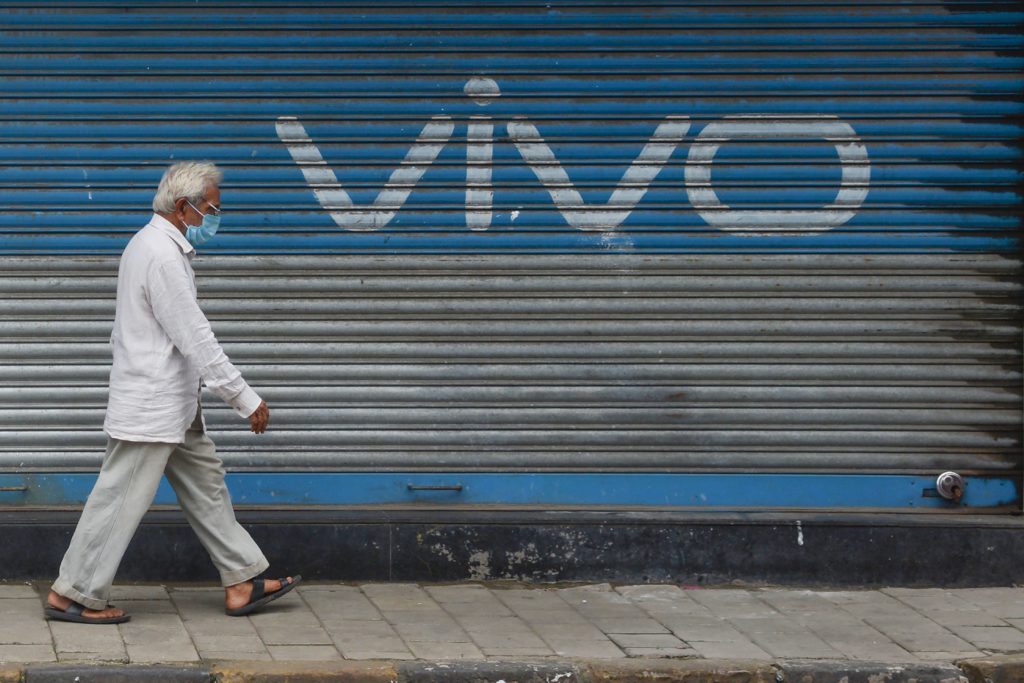
(Bloomberg) — Indian authorities have prevented Vivo from exporting some 27,000 smartphones for more than a week in a setback to the Chinese company’s plan to ship devices from India to neighboring markets.

The smartphones, manufactured by Vivo Communications Technology Co.’s India unit, are being held up at the New Delhi airport by India’s revenue intelligence unit, a branch of the Finance Ministry, over an alleged mis-declaration of the device models and their value, multiple people familiar with the matter said. The shipment is worth nearly $15 million, according to one of the people. The people declined to be named as the matter is not public.

The Finance Ministry and Vivo India didn’t respond to emails seeking comment.

An industry lobby group called the government agency’s actions “unilateral and preposterous.”

“We request your kind and urgent intervention to stop this unfortunate course of action,” Pankaj Mohindroo, the chairman of India Cellular and Electronics Association, wrote in a Dec. 2  letter to the top bureaucrat in India’s tech ministry, which was reviewed by Bloomberg News.

“Such unwarranted actions by enforcement agencies will diffuse the drive and motivation to encourage electronics manufacturing and exports from India.”

The political chasm between India and China widened after the two nuclear-armed nations clashed at a disputed Himalayan border in the summer of 2020. New Delhi has also intensified scrutiny of Chinese companies operating in India including SAIC Motor Corp Ltd’s MG Motor India Pvt Ltd, and the local units of Xiaomi Corp. and ZTE Corp.

The blockage of Vivo’s shipments at the airport is likely to unnerve other Chinese smartphone players in India where a nationalistic government, led by Prime Minister Narendra Modi, is pushing them to ramp up exports and build local supply chains. That could threaten India’s ambitious target of exporting electronics products worth $120 billion by the end of March 2026.

To be sure, Vivo exported its first batch of India-made smartphones in early November to markets such as Saudi Arabia and Thailand. But the latest snag could cloud Vivo’s future in the world’s second-biggest smartphone market, where the company is already under scrutiny for alleged money laundering, a claim that has yet to be proven in court.

More stories like this are available on bloomberg.com

©2022 Bloomberg L.P.

Close Bitnami banner
Bitnami
