
Bloomberg

Crypto Bank Silvergate Asked by US Senators to Explain FTX Ties

(Bloomberg) — Crypto bank Silvergate Capital Corp. was asked by three US Senators to release all records related to transfers of funds for the collapsed FTX empire of Sam Bankman-Fried. 

“Your bank’s involvement in the transfer of FTX customer funds to Alameda reveals what appears to be an egregious failure of your bank’s responsibility to monitor for and report suspicious financial activity carried out by its clients,” Senators Elizabeth Warren, Roger Marshall and John Kennedy wrote in a letter released Tuesday. “The public is owed a full accounting of the financial activities that may have led to the loss of billions in customer assets, and any role that Silvergate may have played in these losses.”

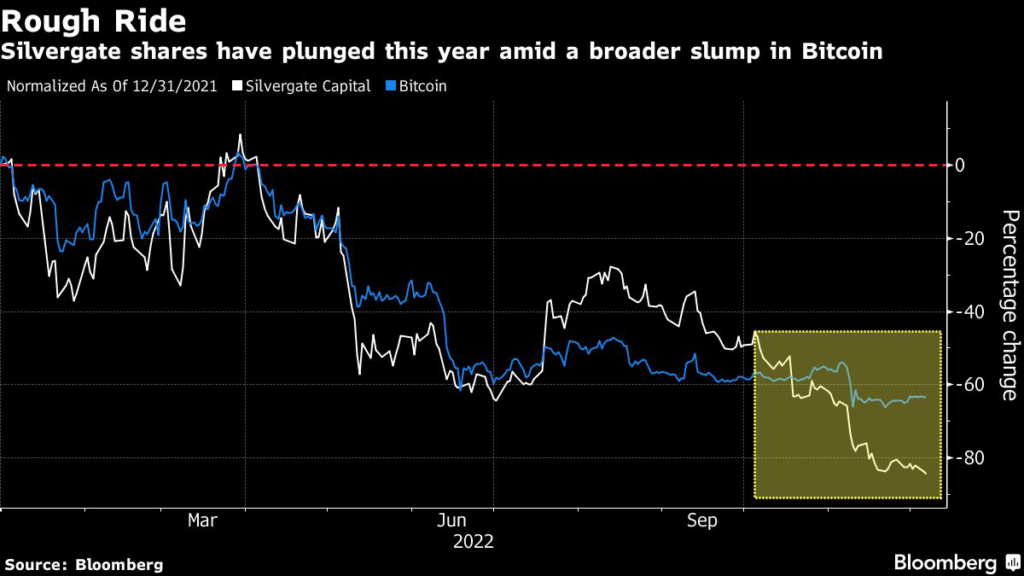
Shares of the La Jolla, California-based bank fell as much as 8%. The slide extends Silvergate’s losses on the year to more than 84% and has it trading at a fresh 52-week low.

The letter cites concerns about the banking services that Silvergate provided to both FTX as well as Bankman-Fried’s trading firm, Alameda Research. It says the arrangement between FTX and Alameda depended on Silvergate’s depository services and puts the bank “at the center of the improper transmission of FTX customer funds.”

“Silvergate’s failure to take adequate notice of this scheme suggests that it may have failed to implement or maintain an effective anti-money laundering program, as required under the Bank Secrecy Act,” the Senators said.

A representative for Silvergate Capital had no immediate comment.

‘Significant questions’

Prior to the letter’s release, Silvergate Chief Executive Alan Lane published his own letter in an attempt to quell growing investor concerns about the bank in the wake of what he called “speculation and misinformation” being circulated by short sellers. “While this has been a turbulent time in the digital asset industry, our customers’ deposits are, and have always been, safely held,” Lane said.

Lane once again also addressed the bank’s relationship with FTX and Alameda Research saying that they had “conducted significant due diligence” on both entities “both during the onboarding process and through ongoing monitoring.” Last month Lane told investors that FTX represented less than 10% of all digital asset deposits.

Still, the inquiry from lawmakers “raises some fairly significant questions regarding Silvergate’s compliance with the anti-money laundering laws, including the know your customer rules and the OFAC list, as well as the suspicious activity report rules,”  said Jerry Comizio, an adjunct law professor at American University.

Any issue with the bank may depend on “what Alameda told Silvergate the purpose of the account was and if those wires were in line with the bank’s expectations,” according to Alma Angotti, a former enforcer with the US Securities and Exchange Commission and US Treasury Department who now works as a partner at the consulting firm Guidehouse.

Silvergate shares have been under pressure for much of this year as prices of digital assets including Bitcoin have plunged but the collapse of FTX has ratcheted up the intensity in recent weeks. The stock has fallen nearly 60% since the end of October. It’s not alone either, with other crypto-exposed stocks including Coinbase Global Inc. and Marathon Digital Holdings Inc. falling at least 80% in 2022.

The recent selloff, however, has driven an influx of interest from short sellers. Short interest as a percentage of free float has surged to more than 28%, according the S3 Partners data compiled by Bloomberg, up from roughly 10% prior to FTX’s bankruptcy.

The turbulence is also starting to catch the attention of Wall Street. Morgan Stanley analyst Manan Gosalia downgraded the company on Monday, saying “ongoing stress in the crypto ecosystem drives a wide range of risks for Silvergate.”

Still, not everyone has soured on the stock. Cathie Wood’s Ark Investment Management has snapped up more than 200,000 Silvergate shares over the last month, worth about $5 million based on Tuesday’s trading price. Wood has long been a vocal supporter of the broader crypto space and last month reiterated her forecast that Bitcoin will reach $1 million by 2030. The virtual currency traded around $17,000 on Tuesday. 

–With assistance from Max Reyes and Yueqi Yang.

(Updates with no immediate comment from Silvergate in the sixth paragraphs and comments from Comizio and Angotti starting in the ninth paragraph.)

More stories like this are available on bloomberg.com

©2022 Bloomberg L.P.

UK Tones Down ‘Big Bang’ Finance Plan to Avoid Bruising Backlash

(Bloomberg) — The UK government will move away from talking about a “Big Bang 2” for the City of London, in part a recognition of the fact that changes will be gradual due to their complexity and opposition from critics.

Ministers are expected to stop using the phrase, a reference to dramatic reforms in the 1980s that made London a global financial center, according to a person familiar with the matter. The shift reflects a wish to build support among a broad range of stakeholders and to position growth in financial services as an opportunity for the wider country. 

There has also been a realization that the scope for speedy change is limited, several people involved in the discussions said. 

Andrew Griffith, the City Minister, will unveil a relatively muted package of post-Brexit reforms on Friday to boost the UK’s financial services industry. The changes include relaxing ring-fencing capital rules to lighten the burden on smaller banks. 

Jeremy Hunt, the chancellor, is also due to meet finance executives in Edinburgh to discuss opportunities for the sector. 

The government’s plans may include reversing the EU MiFID II ban on banks bundling the costs of company research with other fees, deregulation of trading rules to boost flexibility for investors and a watering down responsibilities for senior managers and firms over consumer protections, according to people who have been involved in the discussions.

They also said there may be a reference to corporate governance reforms to enhance London’s attractiveness for listings and investment by trying to improve relations between companies and their shareholders, reducing the influence of proxy voting agencies, and liberalizing guidance on non-executive pay. 

It’s a far-cry from the far-reaching changes mooted when Liz Truss was prime minister. Most of the reforms from that helter-skelter period have been shelved.

Risk Premium 

Griffith told an event at the Conservative Party conference this Autumn that he believes the principle of caveat emptor — buyer beware — should be restored in financial services to reduce the burden on firms and to encourage innovation. He also argued in a speech last week that there should be more “appropriate risk-taking” to generate opportunities.

However, the minister has run into opposition over his reforms, which he has been consulting on for weeks. He climbed down on a new intervention power over regulators after a high-profile campaign against it by the Bank of England. 

Crypto reforms could be another flash point as there are concerns among MPs and consumer groups about the risk of more people losing money if they believe the sector is fully regulated, according to two of the people.

The Treasury Select Committee is holding an inquiry into crypto assets. “As crypto becomes more widespread there will be increasing concern about financial stability and consumer protection that will be difficult to ignore,” said Anthony Browne, a Conservative lawmaker on the committee. 

MiFID Rules

As the UK played a leading role in designing much of the EU’s financial services regulations, there are only limited areas to be changed, many in the City have argued. 

There is skepticism among some at the Financial Conduct Authority and Treasury that deregulating rules on analyst research fees will have the desired outcome of boosting reports written on smaller companies and so stir interest among investors, according to the people close to the discussions. 

There is also a view inside big banks that the consumer duty, now in place, should not be dismantled, they said. Some of the ambivalence among finance executives toward Griffith’s ideas is because they think they might be abandoned if the Labour Party wins the next general election. 

Griffith is also constrained by a wish to avoid further conflict with regulators, some officials inside the Treasury and critics within the Conservative Party, according to two of the people.

“We are committed to delivering ambitious reform of the UK financial services sector,” a Treasury spokesperson said.

–With assistance from Alex Wickham.

More stories like this are available on bloomberg.com

©2022 Bloomberg L.P.
Xi’s Expected in Riyadh as the Middle East Looks Beyond America

(Bloomberg) — Two months after snubbing US President Joe Biden’s pleas for oil, Saudi Arabia is rolling out the red carpet for his Chinese counterpart, Xi Jinping.

Xi will visit Saudi Arabia from Dec. 7-9, when he will take part in a regional summit with Saudi Crown Prince Mohammed bin Salman and other Arab leaders, the kingdom’s SPA state news agency said Tuesday, promising agreements worth some $30 billion.  Energy and infrastructure deals will top the agenda, according to two people briefed on the plans.

China has yet to confirm: Foreign Ministry spokeswoman Mao Ning said at a regular press briefing in Beijing that she had no information about the trip.

While Xi has own problems that might explain any potential no-show, having faced recent protests against his Covid Zero policy and the death of former leader Jiang Zemin, Saudi expectations are of a summit that will showcase the Gulf’s deepening ties with Beijing. That fact alone underlines just how far US-Saudi relations have sunk.

“This visit is the culmination or crowning of a deep strengthening in relations over the last few years,” said Ali Shihabi, a Saudi commentator and advisory board member for the kingdom’s Neom megaproject. “The US is concerned about this but cannot slow this already strong relationship down.” 

A low point in US-Saudi ties came in October when Biden accused Riyadh of allying with Russia on oil production cuts, and vowed “consequences.” However, relations have been fraying for some time as the US shifts its global focus to the competition with China.

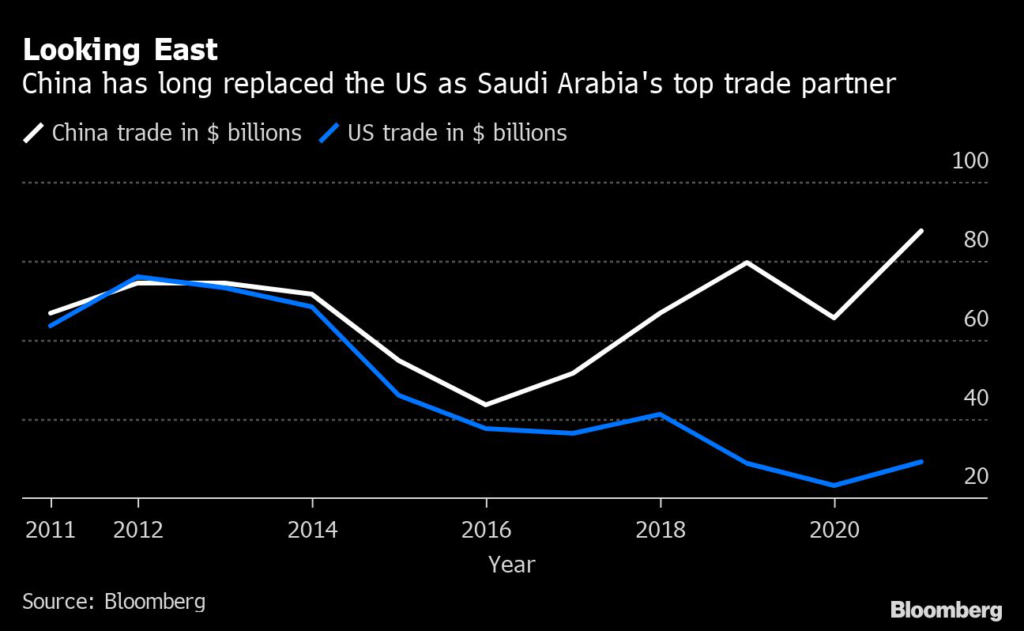
It’s a decade since the US was Riyadh’s biggest trading partner, and in that time not only has China leapfrogged America, but so too have India and Japan. Total US-Saudi trade shrank from some $76 billion in 2012 to $29 billion last year.

That’s in part because the US shale industry means it no longer imports much Middle East oil; China is Saudi Arabia’s top crude customer now —  and regional oil exporters will be keen for information on China’s plans for lifting Covid restrictions.

Read how China’s factories are struggling with the slow dismantling of Covid curbs

Yet Washington has also riled Saudis with its attempts — now all but dead — to return to the nuclear deal with Iran, a regional Saudi rival, while Riyadh’s powerful alliance with Russia and other oil exporters in OPEC+ is another point of friction.  

“For the Arab states, it’s about alternatives, in all possible ways”

“It’s high time we stopped seeing this as being purely about economic and commercial relations,” said Cinzia Bianco, a visiting fellow at the European Council on Foreign Relations, who focuses on the Gulf. “For the Arab states, it’s about alternatives, in all possible ways.”

Beijing has been picking up some of that economic and political slack.

In the past six months, Janes IntelTrak Belt & Road Monitor reported a surge of activity across the Middle East by US-blacklisted telecoms firm Huawei Technologies Co.; that State Grid Corporation of China was looking at investment opportunities in regional electricity transmission and distribution; and Saudi Arabia and China agreed to coordinate their investments in Belt and Road Initiative participating nations. 

Talks on a free trade agreement between China and the six-nation Gulf Cooperation Council are entering a “final stage,” China’s ambassador to the United Arab Emirates Zhang Mingyi said last month. Zhang even mentioned a memorandum on moon exploration signed with the UAE.

Gulf states view the US as an increasingly unreliable partner and “want to capitalize on a new global multipolar landscape that presents fresh opportunities,” said Elham Fakhro, a research fellow at Exeter University’s Centre for Gulf Studies. In doing so, they might “strengthen their own bargaining power with the United States,” she said.

Still, the US maintains a significant troop presence in Saudi Arabia and across the region, and there are limits to how far Gulf states will look elsewhere.

It’s seen as unlikely, for example, that Saudi Arabia will move forward with the idea of accepting yuan payments instead of the dollar for oil, the two people briefed on the preparations said, referring to reports earlier this year. Diplomats and analysts said at the time the reports should be seen as a political message to the US, rather than the kingdom’s plans.

Whereas Donald Trump chose Riyadh for his first overseas trip as president, Biden came to office pledging that he’d treat the crown price as a pariah for his part in the murder of columnist Jamal Khashoggi.

But faced with high inflation going into the midterm elections, he swallowed his pride and visited the kingdom in July seeking help to lower global oil prices. 

He appeared to make some headway, expressing optimism Riyadh would take steps to comply — only for Saudi Arabia and OPEC+ to then announce production cuts. A furious Biden said it was time for the US to rethink the relationship.

Buoyed by higher oil revenues spurred by Russia’s war, the Saudi crown prince has cast the kingdom as a growing power capable of standing up to US pressure.

China has cheered on from the sidelines: Foreign Minister Wang Yi praised the kingdom’s “independent energy policy” and efforts to stabilize the international energy market after meeting with his Saudi counterpart in October. Wang also thanked Riyadh for “long-term and firm support” on matters including Taiwan, Xinjiang, Hong Kong and human rights — all touchstone issues for the US.

China Praises Saudi Arabia’s ‘Independent’ Energy Policy

“There’s a real synergy to the relationship,” said Jonathan Fulton, a nonresident senior fellow at the Atlantic Council focused on China’s relations with the Gulf. 

Whereas “the US keeps talking about a great power game” and focusing on counterterrorism, China has been helping address domestic concerns. The upshot is it’s less about China trying to replace the US than the two countries playing completely different games when it comes to the Middle East, he said.  

Since China held its last biennial dialog with Arab states in July 2020, Saudi Aramco revived discussions to build a multi-billion dollar refining and petrochemicals complex in China.

Saudi Arabia started working with Huawei to develop artificial intelligence systems and the kingdom’s using Chinese expertise to make its own drones. It’s even been reported to be manufacturing ballistic missiles with China’s help, according to a U.S. intelligence assessment.

It’s not all one way, though. High oil prices hurt China as well as the US, and Beijing nurtures close relations with Iran, a key Saudi rival. China cannot just replicate US military support for the region. 

The US isn’t asking countries to choose between Washington and Beijing but asking them to be “mindful” of the relationships they’re developing, Derek Chollet, a counselor at the US State Department, told a briefing in Kuwait ahead of Xi’s visit. 

“Our assessment is that China, in its efforts to build relations in this region, does not have an interest in building mutually beneficial partnerships,” he said. 

–With assistance from Jing Li, Alfred Cang, Matthew Martin and Fiona MacDonald.

(Adds Saudi news agency on agreements, paragraph 2)

More stories like this are available on bloomberg.com

©2022 Bloomberg L.P.
NRG’s Vivint Deal Puts US Power Producer on Home-Automation Path

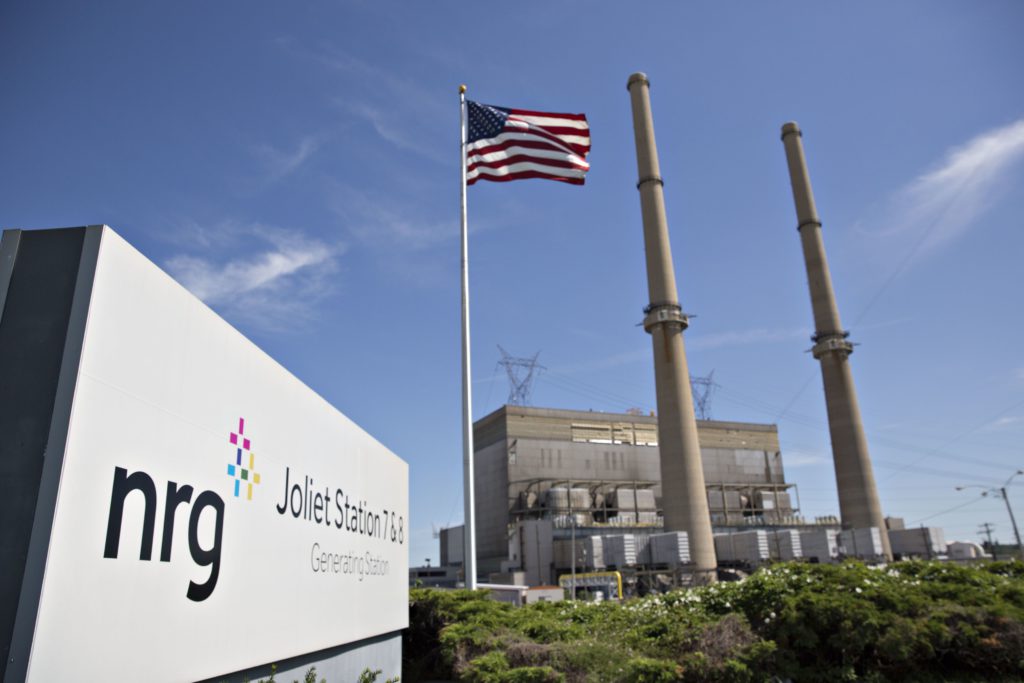
(Bloomberg) — NRG Energy Inc.’s $2.8 billion takeover of Vivint Smart Home Inc. underscores just how keen one of the largest US power generators is to glean business from inside American homes.

The Houston-based company will go deeper into households by offering Internet-driven technologies for thermostats, locks, lighting and other devices, moving beyond its traditional business of supplying electricity. The deal marks another example of how home automation and electrification are upending the power industry.

Managing residential power usage will be critical to keep US grids stable when demand is set to spike with greater adoption of electric vehicles amid a broader transition away from fossil fuels. Deploying technology within homes could help neighborhoods pool excess power to reduce stress on the grid and reward households with payouts. EV automaker Tesla Inc., for instance, has been pushing to tap rooftop solar systems and batteries to create such “virtual” power plants in Texas.

NRG made a pivot into the residential market last year after buying retail power giant Direct Energy LP for $3.6 billion. Home automation is the next step and represents a $165 billion industry with an even faster growth rate than the typical retail market, NRG Chief Executive Officer Mauricio Gutierrez said in a Tuesday analyst call on the deal. The Vivint takeover will add 1.9 million customers to NRG’s existing 5.5 million retail clients.


More stories like this are available on bloomberg.com

©2022 Bloomberg L.P.
Texas Offers Bitcoin Miners Tool to Avoid Breaking Power Grid

(Bloomberg) — The Texas grid operator is launching a program for Bitcoin miners to curtail their power usage during periods of high demand, a move intended to alleviate concerns that the crypto industry adds additional stress to a system vulnerable to extreme storms. 

This voluntary short-term measure designed to enroll the fast-growing crypto mining industry will be a way to curtail power consumption in exchange for payouts until long-term rules are established, Electric Reliability Council of Texas, the grid operator, said in a statement. Registration begins Tuesday and the program is expected to go live in January. 

“These customers are large power users but have the flexibility and willingness to reduce their energy use quickly, if needed,”  Woody Rickerson, Ercot’s vice president of system planning said in a statement. 

Read more: Texas’s crypto-mining boom is starting to look more like a bust

Crypto miners have always been able to join Ercot programs to get paid for curtailing their operations and providing other grid services, but those rules were seen as too rigid. The industry has been working with power companies to develop new guidelines through the Ercot stakeholder process. Crypto mining has the potential to be the largest group of power users in the state that can ramp up and down within seconds around the year. 

Critics have been concerned that the surge of power demand from miners and big swings in their output could create disruptions for a grid that experienced widespread blackouts during a deadly winter storm last year.

More stories like this are available on bloomberg.com

©2022 Bloomberg L.P.

Ethereum’s Energy Revamp Is No Guarantee of Global Climate Gains

(Bloomberg) — This year’s revamp of the Ethereum blockchain to curb its power use by an estimated 99% was hailed as a seminal step toward making the cryptocurrency sector greener but a new analysis indicates the reality is a little more complicated.

Overall power savings and climate gains are likely to be curbed if the electricity-hungry computers that previously helped to operate the network have been repurposed to mine other energy-intensive tokens, according to a paper published Tuesday in Cell Press journal Patterns by Alex De Vries, who runs the research platform Digiconomist.

Most of the processing power “used to mine Ethereum could be used on an even broader range of cryptoassets,” De Vries said in the paper. They could also be “repurposed for other energy-intensive operations involving cloud computing, artificial intelligence, or simply for gaming a few hours per day.”

The Ethereum Foundation didn’t immediately reply to a request for comment.

The vast amount of electricity consumed by crypto remains a bone of contention given that skyrocketing power costs are denuding household budgets from China to Europe. The White House said in September the environmental impact of producing cryptocurrencies like Bitcoin could impede US efforts to combat climate change, while the European Central Bank has signaled it may tighten oversight. 

Digital assets are also reeling from a prolonged rout and a string of blowups at crypto outfits, particularly Sam Bankman-Fried’s collapsed FTX exchange. A gauge of the largest 100 tokens has slumped more than 60% in the past year, far oustripping the decline in global stocks.

Ethereum’s transition in September to a proof-of-stake from a proof-of-work approach — a shift called the Merge — could have slashed its power demand by as much as the electricity requirement of Austria, according to the analysis from De Vries. He also emphasized that determining the exact power consumption of digital currencies is challenging because not all miners operate at the same efficiency.

Some large-scale miners of Ethereum’s native token Ether, such as HIVE Blockchain Technologies Ltd. and Hut 8 Mining Corp., said they planned to use their facilities for other purposes, such as high-performance computing, after the Merge.

Bitcoin, which has the biggest climate impact of all tokens, consumes 114.1 terawatts of energy on an annualized basis, according to Digiconomist, which is comparable to the power consumption of the Netherlands. That amount of electricity generates more than 63 million tons of carbon dioxide, which is on par with the carbon footprint of Serbia and Montenegro. 

Ethereum’s transition to a network with reduced energy needs — even if the ensuing climate gains fall short of some expectations — offers a roadmap for other cryptocurrencies to decarbonize, according to De Vries.

Crucially, Ethereum’s shift shows it’s possible to make the necessary changes to a live blockchain. The relative impact of moving Bitcoin away from the power-hungry proof-of-work approach could be greater because of the widespread use of Bitcoin-specific devices that can’t be repurposed, De Vries added. 

The Ethereum network is the most important blockchain commercially, facilitating an array of financial applications. Whether Bitcoin will ever follow in its footsteps by ditching proof-of-work, for instance at the behest of regulators, remains a hotly debated topic.

–With assistance from Joanna Ossinger.

More stories like this are available on bloomberg.com

©2022 Bloomberg L.P.

Tim Cook, Biden to Help TSMC Unveil $40 Billion US Chip Plan

(Bloomberg) — Apple Inc. Chief Executive Officer Tim Cook and Advanced Micro Devices Inc. CEO Lisa Su will join President Joe Biden on Tuesday at an Arizona event for Taiwan Semiconductor Manufacturing Co., where the chipmaker will announce plans to boost its investment in the state to $40 billion and construct a second production facility.

Cook, Su and Biden will be at the site of a $12 billion plant in Phoenix that TSMC is already building, a showcase of the administration’s efforts to encourage companies to bring more chip manufacturing to the US and prevent a repeat of the supply disruptions over the last two years that cost companies hundreds of billions in sales. 

TSMC ramped up its plans after major customers, including Apple, urged the Taiwanese chipmaker to build more advanced semiconductors in the US, Bloomberg News reported. Cook has told employees his company plans to source chips from the Arizona plant under construction.

Earlier: Apple Prepares to Get Made-in-US Chips in Pivot From Asia

TSMC’s expanded plans and Cook’s appearance, previously reported by Bloomberg, amount to a victory lap for Biden in a battleground state. Carrying Arizona helped him win the presidency in 2020 and Democrats there won narrow elections for governor and a US Senate seat in November’s midterm elections. 

The state is also dealing with the record number of migrant crossings. Republicans have pushed Biden to visit the US-Mexico border to see the situation firsthand. Asked why he wasn’t doing so during his trip, Biden told reporters Tuesday morning, “Because there’s more important things going on,” citing the TSMC event.

“They’re gonna invest billions of dollars in a new enterprise,” Biden said.

Biden in August signed into law the Chips and Science Act, offering $50 billion in incentives for companies to produce semiconductors in the US. TSMC is likely to receive billions in subsidies. The president has touted his efforts to boost US chip manufacturing in visits to facilities across the country. 

National Economic Council Director Brian Deese told reporters Monday that both Apple and AMD “will be sourcing significant chips from TSMC’s Arizona facility,” and that the second TSMC site will begin construction in the coming year with production slated to begin in 2026.

“We’re really seeing the success of this long-term strategy that both US companies and global companies are making the decision to invest and expand here,” said Deese.

Read more: TSMC Plans to Make More Advanced Chips in US at Urging of Apple

When the two plants are up and running, they will eventually produce more than 600,000 wafers annually. That volume is about 4% of TSMC’s total global output in 2021.

The president is expected to be joined at the event, intended to celebrate a key construction milestone at the Phoenix site, by Commerce Secretary Gina Raimondo and TSMC executives, including founder Morris Chang, Chairman Mark Liu and Chief Executive Officer C.C. Wei. Nvidia Corp. chief Jensen Huang is also slated to attend.

The plant will make advanced 4-nanometer chips when it comes online in 2024 and the second facility will make even more sophisticated 3-nanometer chips. However, when TSMC begins to make 3-nanometer chips in the US in 2026, its technology in Arizona will still lag at least one generation behind what’s available in Taiwan.

TSMC is the world’s go-to supplier for chips powering everything from smartphones to electric vehicles, and most of its production is still centered in Taiwan. 

China’s threats to Taiwan have raised concerns about the world’s heavy reliance on that region for supplies of semiconductors. 

TSMC’s customers have pressed the company to roll out its latest technologies simultaneously in the US and Taiwan, Bloomberg News reported, which would help fulfill a Biden administration goal of having the most cutting-edge chips in the world produced on US soil. But Taiwanese and company officials have said they intend to keep the latest technology at home.

In addition to the over 10,000 construction workers who helped with construction of the site, TSMC Arizona’s two fabrication plants are expected to create an additional 10,000 high-paying high-tech jobs, including 4,500 direct TSMC jobs.

–With assistance from Akayla Gardner.

(Updates with Biden quotes, new details in paragraphs 5-6)

More stories like this are available on bloomberg.com

©2022 Bloomberg L.P.
NRG to Buy Vivint for $2.8 Billion in Bet on Smart Home Tech

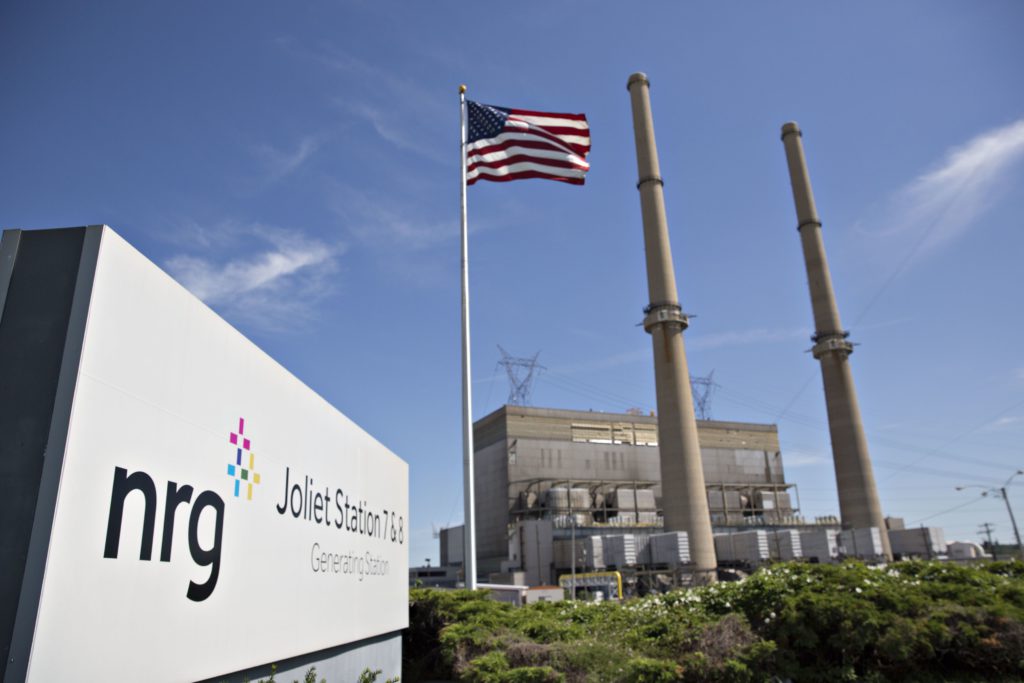
(Bloomberg) — NRG Energy Inc. agreed to buy Vivint Smart Home Inc. for $2.8 billion to accelerate the US power producer’s strategy of diversifying from its core electricity-generation business by focusing on retail consumers.

Vivint, based in Provo, Utah, sells smart thermostats, locks, lights and other household devices. NRG said Tuesday it will pay $12 a share in cash for Vivint, representing a premium of about 33% to the closing share price the day before.

Vivint shares rose 32% to $11.90 at 9:56 a.m. in New York, while NRG fell 10% in its biggest intraday decline in 13 months.

The deal will increase NRG’s customer base to about 7.4 million across North America. The Houston-based company expanded in the retail sector with its purchase of Centrica Plc’s Direct Energy unit for $3.6 billion, a deal it completed in 2021. NRG is one of the largest US independent power producers and operates a fleet of natural gas, coal and other generating plants totaling 18 gigawatts. It’s also one of the biggest retail electricity providers in Texas. 

“Last year at our investor day, we presented our strategic roadmap to becoming the leading provider of essential services for homes and businesses, informed by consumer trends and underpinned by disciplined execution,” NRG Chief Executive Officer Mauricio Gutierrez said in a statement. “The acquisition of Vivint is a transformational step in achieving our vision.”

The Vivint transaction is expected to close in the first quarter of 2023 and is subject to customary closing conditions. The enterprise value of the deal is $5.2 billion, including $2.4 billion of debt.

NRG said it plans to complete its current $1 billion share-buyback program, of which $360 million remained at the end of November. For next year, it expects to use excess free cash flow to fund the Vivint takeover, cut debt related to the acquisition and maintain dividend growth.

Credit rating agency S&P Global Ratings put NRG on “CreditWatch” with negative implications, reflecting the potential for a downgrade of no more than one notch. 

“We see the potential benefits of unlocking higher customer lifetime value,” S&P analysts wrote. “However, we also see execution risks amid a potentially recessionary environment.”

Goldman Sachs Group Inc. is NRG’s financial adviser on the deal and is providing financing. White & Case LLP is the company’s legal counsel. JPMorgan Chase & Co. is Vivint’s financial adviser and Simpson Thacher & Bartlett LLP is its legal counsel.

–With assistance from Josh Saul.

(Updates with share price and S&P note from third paragraph)

More stories like this are available on bloomberg.com

©2022 Bloomberg L.P.
Snap Investors Hope for Advertising Windfall as Brands Ditch Musk’s Twitter

(Bloomberg) — Investors in Snap Inc., one of the smaller social media networks, may be among the biggest beneficiaries of Twitter’s loss of advertisers. 

Twitter could lose almost a third of its ad revenue as brands pull back from the site, according to estimates from MKM Partners LLC. Meta Platforms Inc.’s Instagram and Facebook would win the biggest chunk of that business, though the incremental sales would be about 1% of Meta’s total revenue, MKM says.

However, that same revenue would make a big difference for the Snapchat parent’s much smaller operation, and possibly help revive the stock, which has lost more than three quarters of its value this year.

“What is bad for Twitter might actually be good for Snapchat,” said Dennis Dick, market structure analyst and head trader at Triple D Trading Inc. 

Companies including Volkswagen AG, General Mills Inc. and Pfizer Inc. have scaled back or stopped advertising on Twitter, concerned that new owner Elon Musk’s looser moderation policies will make the site less hospitable. General Motors CEO Mary Barra told CNBC in an interview on Tuesday that the automaker continues to evaluate advertising on Twitter following its suspension.

Musk has acknowledged that the defections led to a “massive drop” in revenue. He said over the weekend that Apple Inc., the largest advertiser on the platform, has “fully resumed” business with Twitter after mostly stopping a few days earlier.   

To be sure, any benefit that Snap enjoys from the pullback on Twitter advertising may be offset by the broader economic gloom. Dick said he’s concerned the overall digital ad pie might get smaller in 2023, and analysts agree that a weakening economy is prompting businesses to cut down on costs, including ad spending.

Snap could draw about 5% to 8% of the ad dollars that marketers would have spent on Twitter, said Rohit Kulkarni, who follows the stock for MKM. 

Even if Snap only draws 5% of brands’ ad dollars from Twitter, that should help the company handily beat fourth-quarter revenue estimates, said Bloomberg Intelligence analyst Mandeep Singh.

For social-media companies that have been swept along in this year’s bear market in technology stocks, any boost from Twitter’s woes would be welcome. While higher interest rates from the Federal Reserve have hurt the whole sector, Snap in particular has suffered from increased competition, difficulty in tracking users and the weakening ad market.

A second-half rebound in tech stocks hasn’t helped social media: Shares in Meta and Snap have slumped 24% and 23%, respectively, since June 30, while the Nasdaq 100 Index is up 2.5%.

Analysts have slashed estimates for Snap’s fourth-quarter revenue by 20% over the past six months, to $1.3 billion, according to Bloomberg data. 

If Snap ends up getting new advertisers on the platform, that’s a long-term positive as once advertisers shift their dollars to a platform, they are unlikely to abandon it in the near term, said Singh.

“Snap is an attractive alternative to Twitter advertisers, and any marginal share shift would be a clear needle-mover for Snap’s fundamentals,” Kulkarni said.

Tech Chart of the Day

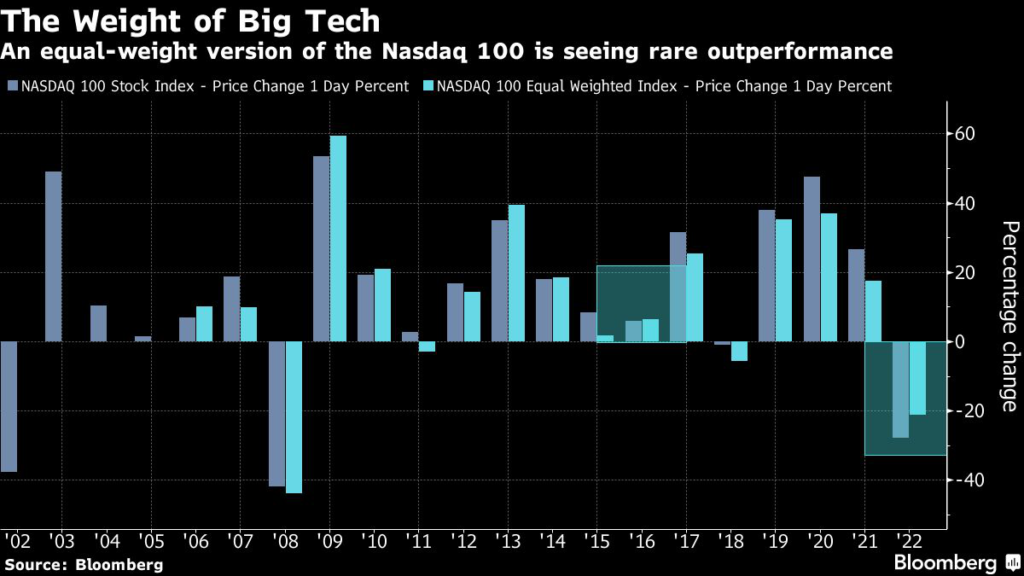
The Nasdaq 100 Index is down 28% this year, and in a measure of both the influence that big tech holds and the group’s year-to-date weakness, an equal—weight version of the index is down 21% over the same period. This has put 2022 on track to be the first year since 2016 where the equal-weight version of the index did better than the traditional version, which is weighted by the market value of its members. Among notable mega-cap laggards this year, Amazon.com Inc. is down 45% and Nvidia Corp. is down 44%.

Top Tech Stories

  • Apple Inc. was sued by two women who say its AirTag devices make it easy for stalkers to track and terrorize victims.
    • Apple retail employees pushed back on unionization efforts at a location in St. Louis, with staffers saying they don’t want to be represented by the International Association of Machinists & Aerospace Workers, a labor group that recently attempted to organize the store.
    • US labor board prosecutors have determined that Apple violated federal law by interrogating and coercing employees in Atlanta, the latest legal salvo over the company’s response to organizing efforts.
    • Apple will begin letting customers in eight European countries repair their own devices, expanding a program that rolled out in the US earlier this year.
  • Hon Hai Precision Industry Co. reported sales for November were down 11.4% from the prior year after some shipments were affected by a Covid outbreak in the Chinese city of Zhengzhou, where the company operates the world’s largest iPhone assembly complex.
  • Apple Chief Executive Officer Tim Cook and Advanced Micro Devices Inc. CEO Lisa Su will join President Joe Biden on Tuesday at an Arizona event for Taiwan Semiconductor Manufacturing Co., where the chipmaker will announce plans to bolster its investment in the state to $40 billion and build a second factory.
  • Twitter Inc. is facing new legal fallout from mass layoffs under Elon Musk’s management, including complaints from some workers that severance payments are less than promised and from other employees that the company retaliated against them for exercising protected labor rights.
  • Stewart Butterfield, chief executive officer of Salesforce Inc.’s Slack, is leaving after less than two years, another blow to the software giant that has been roiled by an executive exodus in recent weeks.
  • Musk’s brain implant company Neuralink Corp. is under federal investigation for allegedly violating the Animal Welfare Act amid staff complaints its animal testing is being rushed, Reuters reported.
  • Intel Corp. is hitting all the targets it has set on a path to regain leadership in semiconductor manufacturing, according to the executive responsible for the effort.

–With assistance from Ryan Vlastelica.

(Updates with GM comments in fifth paragraph.)

More stories like this are available on bloomberg.com

©2022 Bloomberg L.P.

HBO Max Returns to Amazon Prime in Bid to Lure Subscribers

(Bloomberg) — Warner Bros. Discovery Inc. will once again sell HBO Max through Amazon Prime in a bid to bring millions of new subscribers to its flagship streaming service. 

Amazon.com Inc. customers will be able to sign up for HBO Max through the retailer’s store for online video channels and watch its programs within Amazon’s main streaming service. The deal also covers Warner Bros. Discovery’s new streaming service that will combine HBO Max with Discovery’s other assets.

Warner Bros. Discovery Chief Executive Officer David Zaslav is reversing a move by the previous leaders of HBO Max, as Bloomberg News previously reported he was considering. HBO Max was available through Amazon for long enough to sign up about 5 million customers. But WarnerMedia CEO Jason Kilar yanked it from the service in September 2021 because he wanted HBO Max to have more control over the user interface and billing.

Bringing back those 5 million subscribers may result in as much as $600 million in annual revenue for Warner Bros. Discovery, Bloomberg Intelligence analyst Geetha Ranganathan said.

While streaming services such as Paramount+ and Starz have signed up millions of customers through Amazon, the largest streaming services, such as Netflix and Disney+, have eschewed doing so. When Amazon sells the channel, it collects some of the revenue and controls the relationship with customers.

Warner Bros. Discovery is cutting costs and looking for ways to boost revenue in order to pay down its billions of dollars in debt. The company had 94.9 million total streaming subscribers as of the end of September and plans to introduce a new streaming service in the first half of next year. 

“Warner Bros. Discovery is committed to making HBO Max available to as broad an audience as possible while also advancing our data-driven approach to understanding our customers and best serving their viewing interests,” Bruce Campbell, chief revenue and strategy officer at Warner Bros. Discovery, said in a statement.

Shares of Warner Bros. Discovery rose 1.6% to $11.33 at 9:30 a.m. in New York.


(Updates with analyst comment in fourth paragraph and adds share trading.)

More stories like this are available on bloomberg.com

©2022 Bloomberg L.P.

Close Bitnami banner
Bitnami
