
Bloomberg

Amazon Shoppers Ignore Meager Discounts to Swarm Prime Day Sale

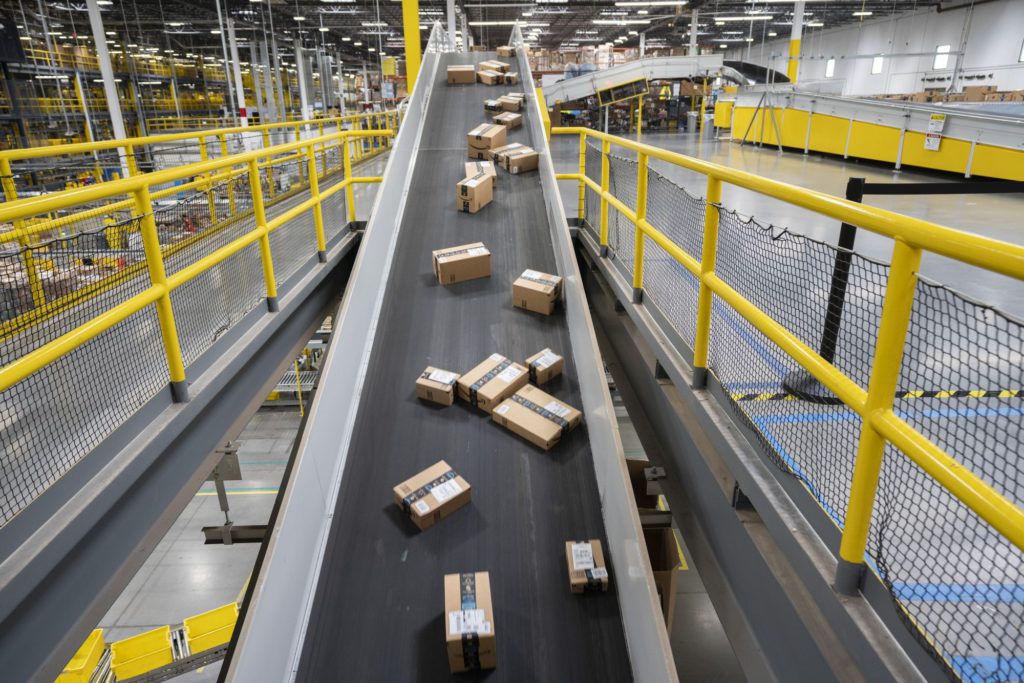
(Bloomberg) — Amazon.com Inc.’s Prime Day sale is luring bargain hunters looking to stock up on pantry items and cheap electronics despite a dearth of deals.

Typical household spending was $88.28 as of noon New York time, up 20% from the early hours of the previous sale last June, according to Numerator, which is tracking Prime Day spending from 973 households. Besides Amazon’s own branded electronics — which are offered at steep discounts — the best-seller in the early hours of Prime Day was a Frito-Lay variety pack of snack chips.

The annual sale, which runs Tuesday and Wednesday, provides a window into the spending habits of consumers reeling from rising prices and a slumping stock market. So far at least, shoppers are looking for utility products over indulgences and are spending more than anticipated even though many sellers are limiting the deals to protect their profits amid rapid inflation.

Branded, which generates $250 million in annual Amazon sales from a selection of about 40 products, reports that Prime Day sales have surged 30% — far outstripping its expectation of single-digit growth. Branded offered fewer discounts, but sales remain strong, Chief Executive Officer Pierre Poignant said. Top sellers are a $30 Fullstar vegetable chopper and a Acumobility back roller for $70.

“We pushed for profits this year, and sales are surprisingly strong,” he said.

Channel Key, an e-commerce consulting firm with 70 clients that generate more than $100 million in combined annual revenue, said sales rose about 12% in the first six hours of Prime Day compared with a year ago. Health and beauty products and supplements were among the top performers, indicating shoppers are looking for deals on items they use regularly, according to CEO Dan Brownsher.

“Early signs are really positive,” he said. “Usually there’s a big morning spike for Prime Day and then another big spike after dinner time.”

Amazon launched Prime Day in 2015 to attract new subscribers who pay $139 a year for shipping discounts, video streaming and other perks. The event helps Amazon lock in shoppers before the holidays and deepen its relationship with existing customers by offering them deals on Amazon gadgets. Spending on Amazon will reach $7.76 billion in the US and $12.5 billion globally over the two-day event, each up about 17% from a year earlier, according to research firm EMarketer Inc. 

Instead of dangling discounts, brands are spending heavily on Amazon ads to lure consumers. It’s a good deal for sellers because advertising on the site can cost half what it does on Google, Facebook and Instagram, says Alasdair McLean-Foreman, who runs Boston-based Teikametrics, which sells pricing and advertising software.

“The big takeaway is ads are paying off big-time this Prime Day,” he said. “Advertising on Amazon is like paying to be in the store aisle, which is performing better right now than a billboard campaign or Super Bowl ad.”

More stories like this are available on bloomberg.com

©2022 Bloomberg L.P.

Biden Poised to Tap Ramsey as Top San Francisco Prosecutor

(Bloomberg) — The Biden administration is vetting Ismail “Izzy” Ramsey to serve as the top federal prosecutor in San Francisco, an office that tackles high-profile crime in Silicon Valley and the Bay Area, according to people familiar with the matter.

Ramsey, a Harvard-trained former prosecutor turned criminal defense lawyer, is undergoing background checks ahead of his nomination as US Attorney for Northern California, said the people, who asked not to be identified discussing the choice ahead of a public announcement. The position also requires Senate approval.

The San Francisco office’s recent victories include the convictions of Theranos Inc. founder Elizabeth Holmes and former President Ramesh “Sunny” Balwani in separate fraud trials over the collapse of the startup.

Ramsey, who worked at the office from 1999 to 2003, was recommended to the post by US Senator Dianne Feinstein, a California Democrat. If approved, he would join other Black men who have held the post, including Cecil Poole in the 1960s and Billy Hunter in the 1970s.

Ramsey didn’t respond to messages seeking comment, nor did the White House. Feinstein’s office declined to comment.

While San Francisco is famous for technological innovation fueled by vast sums of venture capital, the office in recent years has generated relatively few high-level white-collar criminal cases, outside of Theranos. If confirmed, Ramsey will inherit prosecutions already under way against a Chinese chipmaker charged with corporate espionage and UK entrepreneur Michael Lynch, accused of accounting fraud in the $10.3 billion sale of his company to Hewlett-Packard Co.

Leadership Turnover

He would also take over an office that has seen a lot of turnover in leadership — 5 people have served as the US attorney there in the last seven years.

In his prior stint at the US Attorney’s Office, Ramsey handled white-collar cases and co-founded the computer hacking and intellectual property unit. For the past 16 years he has led a small criminal defense shop across the bay in Berkeley with Miles Ehrlich, who was also a prosecutor in the San Francisco office.

In one of the most colorful Big Tech cases of the last half decade, the pair defended Anthony Levandowski, the driverless car engineer who in 2020 pleaded guilty to stealing trade secrets from Google in his move to Uber Technologies Inc. Then-President Donald Trump pardoned the engineer in his final days in office. 

The son of a prominent California judge and legal scholar, he earned undergraduate and law degrees from Harvard University and a masters of business administration from the University of California at Berkeley.

Ramsey would replace Stephanie Hinds, who became the US Attorney after Trump’s pick for the post, David Anderson, returned to private practice.

(Updates with names of current and previous office holders. A previous version of the story corrected mistatement about number of Black men who have held post.)

More stories like this are available on bloomberg.com

©2022 Bloomberg L.P.

Google Countersues Dating App Match Group in Fight Over Play Store Policies

(Bloomberg) — Google has sued Match Group Inc., accusing the dating-app service of bad faith dealings and breach of contract in provoking a legal battle over Google Play policies.

The Google suit is in response to Match Group having sued the search giant in May, accusing it of having monopolistic billing policies. Google changed some of the policies, spurring the dating site to withdraw a request for a temporary restraining order.

But the Alphabet Inc. division fired back Monday, claiming Match Group, which runs dating services including Tinder and Our Time, now wants to pay nothing for using the Play Store, where Google charges a 15% fee on the first $1 million in annual revenue earned from the app store by US developers.

That would “place Match Group in an advantaged position relative to other app developers who honor their agreements and compensate Google in good faith for the benefits they receive,” Google said in the complaint.

Match Group said in an email statement that Google’s Play Store policies are anticompetitive and violate federal and state laws. The countersuit is an example of a monopoly using its power to scare developers, the company said.

“Google doesn’t want anyone else to sue them so their counterclaims are designed as a warning shot,” Match Group said. “We are confident that our suit, alongside other developers, the US Department of Justice and 37 state attorneys general making similar claims, will be resolved in our favor early next year.”

Google is seeking unspecified monetary damages from Match Group and a judgment that would allow it to kick the dating-app service out of the Play Store permanently.

The case is In Re Google Play Store Antitrust Litigation, 3:21-md-02981-JD, US District Court, Northern District of California (San Francisco).

(Updates with Match statement.)

More stories like this are available on bloomberg.com

©2022 Bloomberg L.P.

Crypto Firm Animoca Locks In More Funding Even After KKR Backs Off

(Bloomberg) — Animoca Brands, a crypto investor and game developer, completed another round of financing that left its mulitbillion-dollar valuation intact even after investment firm KKR decided not to take part.

The company said Tuesday that it raised about $75 million, adding on to a previously announced funding round in January. The funding implies a valuation of $5.9 billion for Animoca, about the same as the round at the beginning of the year. That’s notable at a time when the crypto market’s recent rout and series of crises have left other companies reeling. Animoca develops games such as The Sandbox and is an investor in more than 340 projects, including Axie Infinity, OpenSea and Dapper Labs.

KKR had been in discussions to invest in the funding round, but decided to withdraw in part because of market conditions, according to a person with knowledge of the matter who asked not to be identified because the matter hasn’t been made public. Digital assets as a whole have lost about $2 trillion in value since last fall and the market has been rocked by the implosion of the Terra blockchain and collapse of several businesses, including hedge fund Three Arrows Capital and crypto broker Voyager Digital.

The raise is an addition to the $359 million in funding at $5 billion valuation that was previously announced on Jan. 18. Investors in the new tranche included Liberty City Ventures, Kingsway Capital, Alpha Wave Ventures and 10T, Animoca said. The additional funding was finalized after the TerraUSD stablecoin collapse in May, and that event didn’t lead to a change in valuation or terms, Yat Siu, co-founder of Animoca, said in an email. Investors had a chance to back out if they wanted before the funding was closed, according to Animoca.

“It demonstrates that there is capital in the market and interest in the sector,” Siu said. “There are clearly deals to be made.” 

Animoca plans to use the capital for strategic acquisitions, investments and product development, among other things. Animoca was the most active investor in crypto in the first half of this year, with more than 50 investments, according to crypto mergers-and-acquisitions adviser Architect Partners.

More stories like this are available on bloomberg.com

©2022 Bloomberg L.P.
Abu Dhabi’s Mubadala Is in Talks to Buy Asset Manager Fortress From SoftBank

(Bloomberg) — Mubadala Investment Co. is in talks to acquire asset manager Fortress Investment Group from Japanese conglomerate SoftBank Group Corp., people with knowledge of the matter said. 

The Abu Dhabi sovereign wealth fund is discussing a deal that would value Fortress at more than $1 billion, one of the people said, asking not to be identified because the information is private. Mubadala has long been a SoftBank counterpart, and in 2017 said it would be among anchor investors in the firm’s debut Vision Fund.

While discussions with Mubadala are at an advanced stage, there’s no certainty they will reach an agreement and other potential buyers could emerge, the people said. Bloomberg News reported in November that SoftBank, which is led by billionaire Masayoshi Son, was exploring options for Fortress including a potential sale. 

Representatives for Mubadala, SoftBank and Fortress declined to comment. 

SoftBank acquired Fortress in 2017, intending to use the New York-based firm’s expertise to help manage its behemoth Vision Fund.

“This opportunity will immediately help expand our group capabilities, and, alongside our soon-to-be-established SoftBank Vision Fund platform, will accelerate our SoftBank 2.0 transformation strategy of bold, disciplined investment and world class execution to drive sustainable long-term growth,” SoftBank’s Son said in a 2017 statement. 

Son’s plans were foiled. To win approval from the Committee on Foreign Investment in the U.S., SoftBank agreed to cede day-to-day control of Fortress, which has been run independently since the acquisition.

The firm, led by co-chief executive officers Pete Briger and Wesley Edens, managed $53.3 billion as of Dec. 31, its website shows. 

(Adds Mubadala declines to comment in fourth paragraph.)

More stories like this are available on bloomberg.com

©2022 Bloomberg L.P.
Muni Bond Market Is Left Behind in Move to Electronic Trading

(Bloomberg) — Municipal bonds are being left behind as other fixed-income sectors move to electronic trading. 

Only about 11% of muni bond trading volume was executed electronically in May, a share that hasn’t moved in the past three years, according to an estimate last month from Coalition Greenwich, a financial services industry analytics firm. 

By contrast, investment-grade corporate bond e-trading has more than doubled since May 2018 to 41% and more than tripled for high-yield bonds to 28%. Two-thirds of the US Treasury market traded electronically in May 2022.

In large part, the structure of the $4 trillion muni market has hampered the adoption of e-bond trading, according to Kevin McPartland, head of research for market structure and technology at Coalition Greenwich and the report’s author.

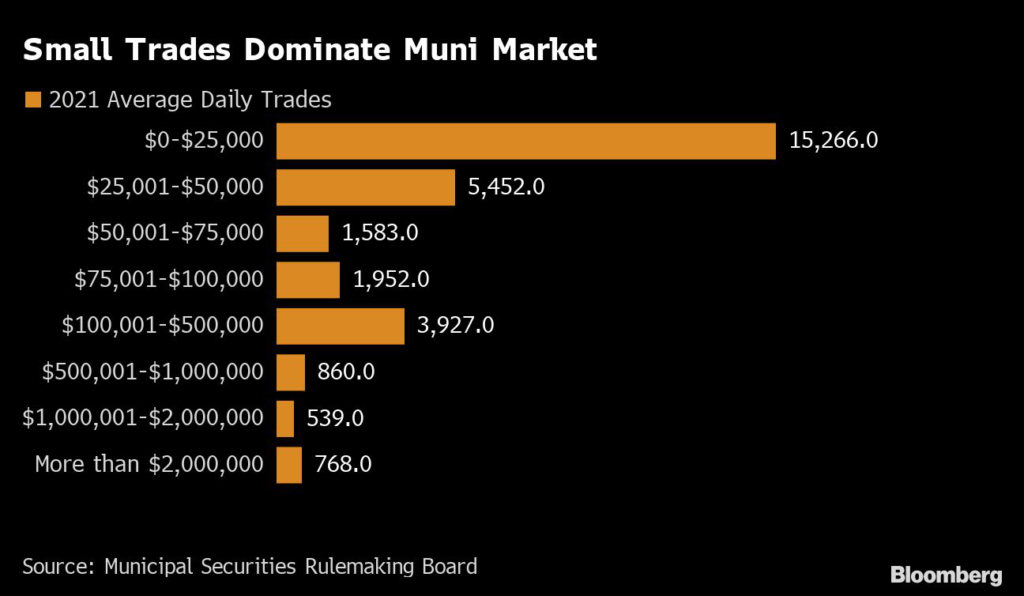
The over-the-counter market has about 950,000 separate securities issued by tens of thousands of state and local government entities, according to data compiled by Bloomberg. “Buy-and-hold” individual investors hold a big chunk of bonds, but in small sizes, with many never trading after they’re issued.  

The decentralized nature of the market also means that regional bond dealers often handle an outsized share of trading in certain states. 

“The market has such a long tail of participants that unlike in treasuries or corporate bonds, where the big names drive most of the volume, that’s less so the case in munis,” McPartland said in an interview. 

Electronic trading platforms typically post bonds for sale and help buyers sort them to identify potential purchases. Quantitative trading firms and institutional investors, using algorithms based on decades of trading data, can hook up to the platforms and respond to thousands of auctions.  

Two of the biggest platforms, Tradeweb Markets Inc. and MarketAxess Holdings Inc., each reported about $8 billion of muni trading volume in June. Together, that represents about 5.2% of the muni market’s $307 billion June trading volume. Coalition Greenwich also estimated volumes handled by ICE and Bloomberg LP, which don’t publicly report volumes. 

Bloomberg LP, the parent company of Bloomberg News, competes with MarketAxess, Tradeweb and ICE to offer fixed-income trading services.

Despite stagnant electronic trading levels, Coalition Greenwich says the muni market is ripe for electronic venues that match buyers and sellers. 

Investors want more liquidity — the ability to easily buy and sell blocks of bonds without causing big price changes — and price transparency.  

Dealers, meanwhile, are building or acquiring electronic trading capacity. Last year, TD Bank Group bought Headlands Tech Global Markets LLC, which delivers fully automated electronic market-making in municipal bonds. In March 2022, Raymond James bought SumRidge Partners LLC, an electronic bond trading firm.

On the buy-side, AllianceBernstein Holding LP, has invested heavily in technology enabling the firm to compete against dealers for bonds, rather than pay them a markup to buy securities. The firm uses computers to scan tens of thousands of bond offerings each day, determine whether a bond is priced attractively and fits into an individual investor’s account, and then bid on the security.

Electronic trading also allows AllianceBernstein to build individual portfolios faster — between five and 12 days, instead of a more typical 60 to 90 days — minimizing the amount of time an investor’s funds are held in cash, said Jim Switzer, the firm’s global head of fixed income trading and head of municipal bonds. 

AllianceBernstein’s municipal trading volume has jumped to 17,000 trades a month in 2022, from 17,000 a year in 2019, despite having two fewer human traders. 

“We can’t go back to a manual process,” Switzer said. 

Meanwhile, the growth of municipal bond exchange-traded funds could also spark more electronic trading, just as it has in the corporate market, according to McPartland.

Large corporate bond ETFs, such as the $33 billion iShares iBoxx Investment Grade Corporate Bond ETF, have drawn arbitrage traders seeking to earn a profit by exploiting the discrepancies between an ETF’s share price and the price of its underlying securities.

Because the arbitrage trade involves buying or selling baskets of the ETF’s underlying bonds, electronic market makers began trading the underlying securities, boosting liquidity, said McPartland.

Average daily muni ETF trading volume grew to $1 billion in the second quarter of 2022, from about $200 million per day in 2021, according to Jane Street Group LLC, a trading firm specializing in ETFs. The iShares National Muni Bond ETF, the biggest muni ETF, has $29 billion in assets.

More stories like this are available on bloomberg.com

©2022 Bloomberg L.P.

Stocks Bounce in Choppy Session as Bonds Rally: Markets Wrap

(Bloomberg) — Stocks posted mild gains in a volatile trading session, while the Treasury curve inversion deepened to levels last seen in 2007. Oil tumbled below $100 a barrel.

The S&P 500 erased losses, while the Dow Jones Industrial Average outperformed as Boeing Co. announced a jump in deliveries. The yield on the 10-year US note dropped as much as 12 basis points below the two-year rate, eclipsing the gap reached in early April. So-called inversions of the curve are regarded as a potential harbinger of an economic contraction.

Traders also kept a close eye on the dollar, which had a small decline after hitting the highest since the Covid-19 panic of March 2020. For now, a wall of derivatives bets is keeping the euro from reaching parity with the greenback for the first time in two decades.

For Peter Boockvar at Bleakley Financial Group, investors will be very much focused on the currency moves and their impact on corporate profits. PepsiCo Inc., one of the first major industry players to report second-quarter earnings, said demand remained robust despite inflation — though it expected dollar headwinds. 

“As recession odds in the U.S. and abroad have grown and cooling demand is now a top-of-mind concern for investors, what companies have to say about their business outlooks over the coming weeks should take on an added degree of significance,” said Anthony Saglimbene, global market strategist at Ameriprise.

In other corporate news, Peloton Interactive Inc. rallied on plans to cease in-house manufacturing to cut costs. American Airlines Group Inc. surged after sticking with its expectation for a jump in second-quarter sales. Bargain hunters are expected to find Amazon.com Inc.’s two-day Prime Day sale underwhelming, with many sellers minimizing profit-eating discounts in an era of soaring costs.

Economists say inflation continued to heat up in June, hitting a pandemic peak that will keep the Fed geared for another big rate hike later this month. The consumer price index due Wednesday probably rose 8.8% from a year earlier, marking the largest jump since 1981, according to the median forecast in a Bloomberg survey.

Sam Zell, the billionaire made famous by his real-estate deals, said that central bank actions to flood the market with money in recent years are coming back to bite the economy. He urged Fed Chair Jerome Powell to raise rates by as much as 75 basis points and “break the inflation mentality.”

Elsewhere, Bitcoin fell back below $20,000, following last week’s rally.

What to watch this week:

  • Earnings due from JPMorgan, Morgan Stanley, Citigroup, Wells Fargo
  • New Zealand rate decision, Wednesday
  • US CPI data, Wednesday
  • Federal Reserve Beige Book, Wednesday
  • US PPI, jobless claims, Thursday
  • China GDP, Friday
  • US business inventories, industrial production, University of Michigan consumer sentiment, Empire manufacturing, retail sales, Friday
  • G-20 finance ministers, central bankers meet in Bali, from Friday
  • Atlanta Fed President Raphael Bostic speaks, Friday

Will the eurozone avoid a recession or a debt crisis? How will the euro and stocks perform in the next six months? Share your views and participate in the latest MLIV Pulse survey. It only takes a minute, so please click here anonymously.

Some of the main moves in markets:

Stocks

  • The S&P 500 rose 0.2% as of 12:45 p.m. New York time
  • The Nasdaq 100 rose 0.2%
  • The Dow Jones Industrial Average rose 0.5%
  • The MSCI World index was little changed

Currencies

  • The Bloomberg Dollar Spot Index fell 0.2%
  • The euro rose 0.2% to $1.0064
  • The British pound rose 0.1% to $1.1909
  • The Japanese yen rose 0.5% to 136.70 per dollar

Bonds

  • The yield on 10-year Treasuries declined six basis points to 2.93%
  • Germany’s 10-year yield declined 11 basis points to 1.13%
  • Britain’s 10-year yield declined 10 basis points to 2.07%

Commodities

  • West Texas Intermediate crude fell 7.7% to $96.10 a barrel
  • Gold futures fell 0.2% to $1,728.30 an ounce

More stories like this are available on bloomberg.com

©2022 Bloomberg L.P.

Peloton to Stop In-House Bike Production as Part of Turnaround

(Bloomberg) — Peloton Interactive Inc. rallied as much as 6.8% on Tuesday after announcing plans to cease in-house manufacturing and rely solely on partners for production, marking one of the most dramatic steps yet to simplify its operations and reduce costs.

The move is an about-face from Peloton’s strategy over the past three years, when it split manufacturing between its own facilities and partners. The company built a portion of its standard Bike models and the higher-end Bike+ using facilities it acquired in 2019 as part of buying Tonic Fitness Technology. It also relied on Taiwan-based manufacturing partner Rexon Industrial Corp. to build bikes and its Tread treadmill.

Now, the company will cease operating its Tonic facilities and move all of its bike and treadmill manufacturing to Rexon, Chief Supply Chain Officer Andrew Rendich told Bloomberg News in an interview. “We are going back to nothing but partnered manufacturing,” he said. “It allows us to ramp up and ramp down based on capacity and demand.”

The news sent the stock on its biggest intraday gain since July 5. The shares were up 3.6% to $9.25 as of 12:04 p.m. in New York trading.

Peloton is making the change after several months of turmoil. In February, co-founder John Foley was replaced as chief executive officer by veteran media executive Barry McCarthy, and the company cut nearly 3,000 employees — including many members of its executive team. Rendich was appointed to his role in March. 

A stock market juggernaut in the early days of the pandemic, Peloton has seen its share price fall about 75% this year. As gyms and economies started to reopen last year, Peloton’s growth sputtered. The company had incorrectly predicted that its business would weather the reopenings, and it was left with a glut of equipment.

The company previously canceled a plan to build its equipment in Ohio, but now it’s walking away from in-house production altogether. As part of the new arrangement, Peloton is expanding its partnership with Rexon while also maintaining other outside partners and adding new ones.

Peloton plans to keep working with Quanta Computer Inc. to manufacture a key piece of its equipment: touch screens. It’s also adding Pegatron Corp., which like Quanta is a major Apple Inc. supply chain partner, to build its upcoming rowing machine. Rendich said that new product is on track for release in 2022.

What Bloomberg Intelligence Says:“Excess inventory has been a key issue, triggering about $2 billion in cash burn over the past 9-10 months, but this move may help Peloton hit its $800 million annual cost-savings target before fiscal 2024.”—Geetha Ranganathan, BI senior media industry analyst

The company declined to say how much shutting down its operations would cost, but said that it will cut about 570 employees in Taiwan who work at the Tonic facilities. It will retain 100 existing staffers in Taiwan to work with its outside partners. 

Read more: Peloton’s downfall and comeback plan

Rendich said that having dual supply chains — one internal and one external — required more resources to do well and that simplification is necessary to drive down costs and improve product quality. He said he currently manages two separate operations teams that will now combine into one. 

Outsourcing production is a common practice among many of the biggest consumer electronics giants, including Apple. The iPhone maker designs its products and then works with Hon Hai Precision Industry Co., also known as Foxconn, to manufacture the devices. 

Since replacing Foley, McCarthy has cut prices of Peloton hardware, raised its monthly content subscription fee and rolled out a leasing program that could lower the cost of ownership. Still, its equipment is seen as a premium-priced product with uncertain demand, and the company no longer has the confidence of Wall Street.

Peloton is banking on changes to its operations to help turn that around.

“One of the best simplifications we can do is go to partner manufacturing and getting out of the business of owned manufacturing,” Rendich said. “This allows us to do it even better than we have in the past.”

(Updates shares starting in first paragraph.)

More stories like this are available on bloomberg.com

©2022 Bloomberg L.P.
Crypto Startup Funding Falls to a One-Year Low

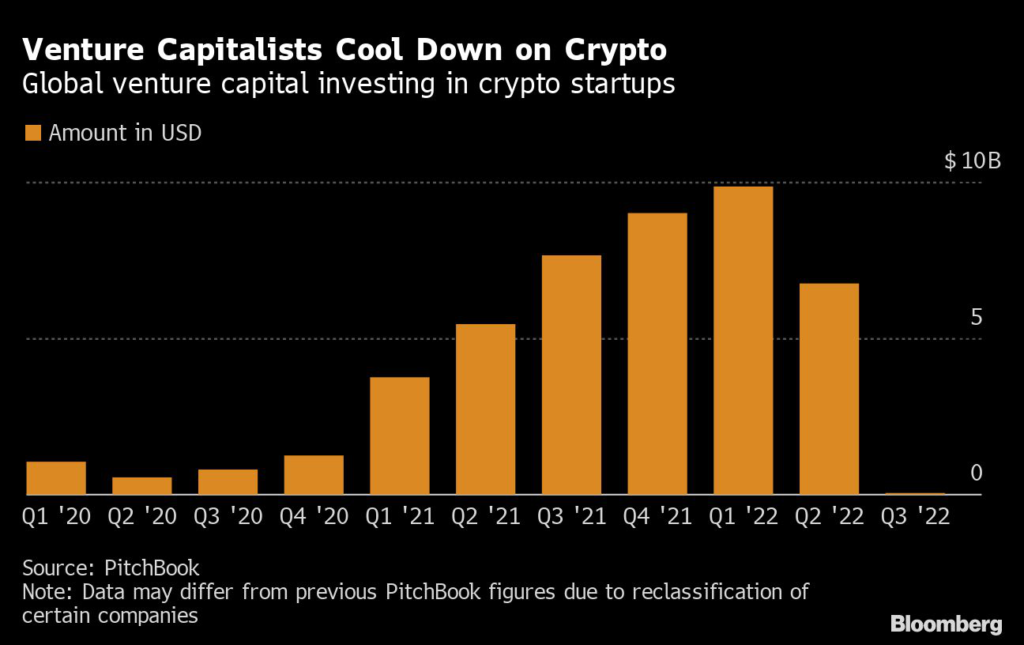
(Bloomberg) — Crypto startups finally felt the effects of an economic storm that has been cooling digital currencies, public stocks and venture capital all year. Funding to private crypto companies in the second quarter fell to its lowest level in a year, according to data from the research firm PitchBook.

The hype around crypto startups made the sector seem briefly immune to the economic turmoil. It set a record of $9.85 billion in venture funds raised in the first quarter. That was, it turns out, only a factor of how long it takes for venture capital deals to finalize. “Even though the crypto market started slowing down in November, December, those deals were already in discussion, so they closed in the first quarter,” said Robert Le, fintech analyst at PitchBook.

The second quarter gives a truer glimpse at the gloominess. Venture capitalists invested $6.76 billion into crypto companies in the period that ended in June, a 31% decline from the previous quarter, PitchBook said. The crypto industry now mirrors the sluggish activity among tech and venture capital investors. “Everyone is really hesitant on closing deals right now,” Le said.

There are many examples of trouble in the crypto industry. The collapse of the TerraUSD stablecoin, serious financial troubles  at crypto lenders like Celsius and Babel Finance and waves of layoffs at Coinbase Global Inc., Gemini Trust Co. and Crypto.com have all contributed to the uncertainty.

Among startups, deals have fallen apart, and investors have revoked written offers in recent weeks, said David Pakman, a managing partner at the crypto VC firm CoinFund. More layoffs are likely, and valuations will come down further—the troubled crypto lender BlockFi Inc. was already looking to raise money at a reduced valuation of $1 billion. “What you’re seeing now is seed valuations are down about 20%, Series A valuations are down about 50%, and then Series B and beyond are down about 70%,” Pakman said.

Pakman is advising companies he backs to retain enough cash on hand to endure two years’ worth of hardship. “This is going to be a long-term down market,” he said. “It’s not going to come ripping back in a month.”Despite the potential of a long crypto winter, some venture capitalists are still committed to the space. Crypto VC firm Multicoin Capital announced a new $430 million fund on Tuesday. On the same day, Lightspeed Venture Partners said it formed an independent team dedicated to blockchain investments called Lightspeed Faction.

More stories like this are available on bloomberg.com

©2022 Bloomberg L.P.
Three Arrows Liquidators Win Power to Subpoena Absent Founders

(Bloomberg) — Three Arrows Capital liquidators won permission to subpoena founders Kyle Davies and Zhu Su — whose whereabouts remain unknown — along with banks and digital asset exchanges tied to the cryptocurrency hedge fund.

A federal bankruptcy judge granted the emergency motion in a hearing Tuesday. Liquidators at advisory firm Teneo are seeking to investigate and preserve the assets of the bankrupt hedge fund, and plan to contact as many as 24 entities connected to Three Arrows for more information. 

Three Arrows, which Zhu and Davies founded after trading at Credit Suisse Group AG, succumbed to the widespread crypto selloff last month. Insolvency proceedings kicked off in the British Virgin Islands and were followed by a Chapter 15 bankruptcy filing in the US. 

“We don’t know where they’re located today,” Adam Goldberg of law firm Latham & Watkins said of Zhu and Davies. The pair have provided information about some of the fund’s assets, but “this is by no means a sufficient form of cooperation,” according to Goldberg, who is representing Teneo. 

The duo will continue to provide information about the firm’s assets on a “rolling basis,” Zhu posted from his verified Twitter account Tuesday. The founders are under intense pressure –including threats of physical violence and inquiries from Singapore regulators — and are displeased with the behavior of the liquidators, according to the post.

Advocatus Law, the Singapore-based law firm representing the founders, didn’t immediately respond to a request for comment outside of normal business hours on Tuesday.

“A key part of this motion is to put the world on notice that it is the liquidators that are controlling the debtor’s assets at this stage,” Goldberg said in the hearing. 

The liquidators are seeking information about banks accounts and digital wallets tied to Three Arrows, along with details of any transfers or fluctuations in the accounts in recent months, Goldberg said. They’d prefer counterparties provide the information voluntarily, but some institutions requested subpoenas to comply with company policies, he said.

Three Arrows’ downfall has rippled through the digital asset industry, helping drive at least one crypto platform that counted it as a counterparty into bankruptcy already. 

The case is Three Arrows Capital Ltd and Russell Crumpler, 22-10920, U.S. Bankruptcy Court for the Southern District of New York (Manhattan).

More stories like this are available on bloomberg.com

©2022 Bloomberg L.P.

Close Bitnami banner
Bitnami
