
Bloomberg

Bitcoin Drops for a Fourth Day; Falls Back Below $20,000 Level

(Bloomberg) — Bitcoin fell back below $20,000 on Tuesday after enjoying its strongest run in more than three months last week, as a surge in the greenback rippled through global markets.

The largest cryptocurrency dropped as much as 4.2% to $19,546, declining for a fourth straight session. It hit $22,472 on Friday as risk appetite returned to broader assets. Second-largest Ether slid as much as 7.4% to $1,053. The MVIS CryptoCompare Digital Assets 100 index dropped 4.2% at one point.

“Expect apathetic back-end vol and basis flows in another summer trading week with CPI likely to be the main event on July 13,” Genesis’s Noelle Acheson and Gordon Grant said in a note Monday. “Notwithstanding a modicum of fireworks around last Friday’s weekly options expiry that saw Bitcoin blow through $22,000 and touch the 200-week moving average, with Ether pushing toward $1,300 in sympathy, the weekend session saw a resumption of choppy, downwardly oriented price action that has characterized recent months.”

The dollar jumped on Monday ahead of the CPI, which could offer insight into the Federal Reserve’s potential rate-hike path. Bitcoin and other cryptocurrencies have struggled as the central bank works to combat high inflation readings, and have tended to trade along with risk assets for the past couple of years. 

Bitcoin has been trading range-bound since its steep drop in June, hovering just around $19,500, its 2017 peak. If the coin breaks below this level, $16,000 to $17,000 may act as the next level of support, the range Bitcoin saw as resistance during the relief rally in early 2018. Or it could move toward $14,000, the coin’s peak in 2019, according to Arcane Research.

If, however, Bitcoin breaks higher, $28,000 may serve as the nearest resistance area, which is the coin’s bottom in 2021, Arcane added.

Still, many investors watching the space aren’t feeling so bullish. Bitcoin is more likely to tumble to $10,000, cutting its value roughly in half, than it is to rally back to $30,000, according to 60% of the 950 investors who responded to a Bloomberg MLIV Pulse survey that ran July 5-8. Forty percent saw it going the other way.

“I’m not surprised to see prices going down with commodity prices and the overall sense of weakening growth — money being tighter and there’s less money to slosh into crypto,” Brian Nick, chief investment strategist at Nuveen, said in an interview. “That’s not a shock. There’s a lot of volatility.”

Meanwhile, there’s a sense of hodling — or holding onto investments even during tough times — among the crypto faithful. On-chain data suggests that such investors have been undeterred by recent market dynamics, according to Strahinja Savic at FRNT Financial. The percentage of Bitcoin that hasn’t moved for more than a year reached an all-time high of 66% in June, and has remained steady at around 65% now. 

“The ‘hodl’ mantra has been an important part of Bitcoin culture, and the data suggests that this dedication to the asset has remained intact, despite the asset being,” roughly 70% below its peak, he said. 

(Updates with fresh commentary and prices throughout.)

More stories like this are available on bloomberg.com

©2022 Bloomberg L.P.
‘Yellowstone’ Actress Charged With Workers’ Compensation Fraud

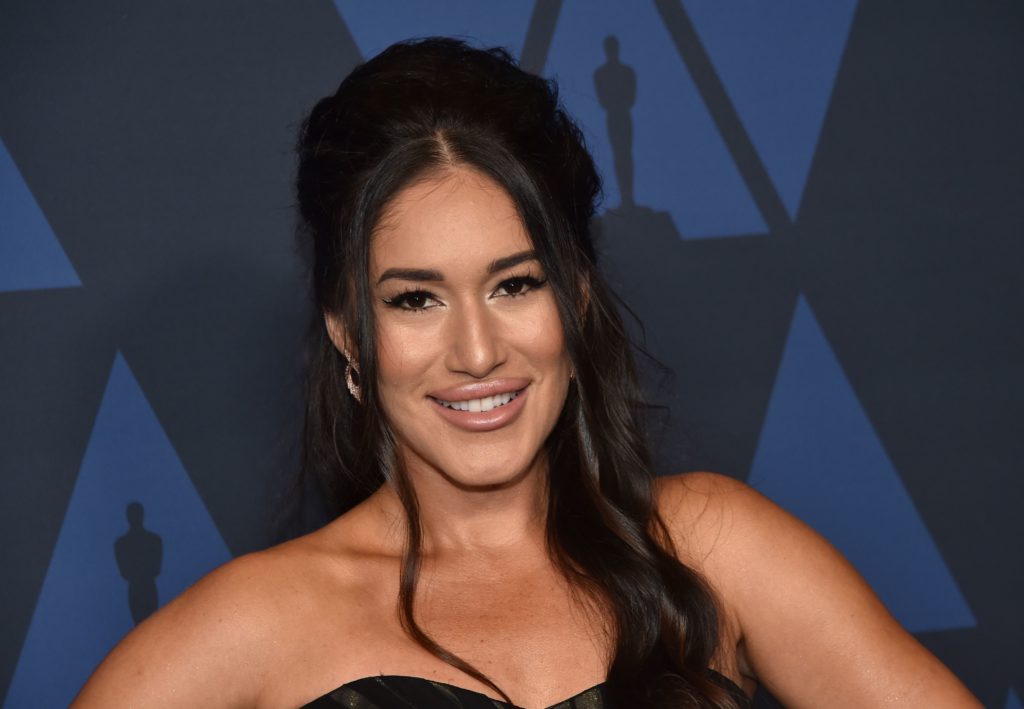
(Bloomberg) — “Yellowstone” actress Q’orianka Kilcher was charged with workers’ compensation insurance fraud after collecting over $90,000 in disability benefits, the California Department of Insurance said.

Kilcher, 32, sustained a neck and shoulder injury in 2018 on the set of the film “Dora and the Lost City of Gold,” according to a statement from the department. Though she claimed in October 2019 she had to turn down work due to her neck pain, she worked as an actress on the popular television show “Yellowstone” from July to October that year. Kilcher began receiving disability payments just five days after last working on “Yellowstone,” according to the release. 

From October 2019 to September 2021, Kilcher collected $96,838 in disability benefits. She is next set to appear in a Los Angeles court on August 7 after an arraignment in May. 

“When told about Kilcher’s recent employment history, the doctor on her claim stated if they had been aware of it they would have never granted her the disability payments,” the department said in the statement.

“Yellowstone,” a Paramount Network series, has been a big hit on cable TV and streaming since its debut in 2018. The Emmy-nominated show stars Kevin Costner as the patriarch of a ranching empire in Montana. 

Kilcher and her representatives did not immediately respond to requests for comment. In a statement to the Associated Press, Michael Becker, Kilcher’s lawyer, said the actress will “vigorously defend herself and asks that she be afforded the presumption of innocence both in and outside the courthouse.”

More stories like this are available on bloomberg.com

©2022 Bloomberg L.P.

Delivery Startup Gopuff Cuts 10% of Staff, Closes Warehouses to Preserve Cash

(Bloomberg) — Gopuff is slashing 10% of its global workforce and closing dozens of warehouses, reining in spending following signs the delivery company expanded too quickly during the pandemic.  

The job reductions will affect about 1,500 staff members, a mix of corporate and warehouse employees in the US, according to a memo to investors viewed by Bloomberg. It’s the second time in four months the embattled startup has eliminated positions. It cut about 3% of jobs in March and shelved plans to go public.

Gopuff also intends to shutter 76 warehouses, roughly 12% of its network, across the US to consolidate its footprint in some cities, according to the memo. The measures reflect a sharp reversal for the fast-growing startup which, for the past two years, prioritized expanding at breakneck speed. 

Gopuff was valued at $15 billion last July and generated just under $2 billion in revenue in 2021 with order volume jumping 70% compared with 2020. That increase, however, has come at a cost. A key contributor to Gopuff’s spending is establishing new warehouses. Each location costs an estimated $250,000 to launch, people familiar with the company’s plans said, and about half of Gopuff’s roughly 600 warehouses were launched in the last year. The efforts to streamline expenses represent an acknowledgment that the company, emboldened by the pandemic-fueled boom in delivery, expanded too much, too quickly. 

The Philadelphia-based startup’s retrenchment also underscores the dramatic shift in sentiment in the rapid delivery sector, into which investors poured $9.7 billion globally in 2021. With VCs moving away from the “growth-at-all-costs” model, proving that the economics of instant commerce can work in a post-pandemic world is a looming question for Gopuff and its competitors. German startup Gorillas Technologies GmbH is exploring options for the sale of its business or mergers with rivals as it struggles to raise capital, while Fridge No More and Buyk Corp. went out of business earlier this year. 

Through reduced spending, a culling of lower-performing warehouses, and a focus on higher-margin revenue streams like advertising, Gopuff is aiming to be profitable by 2024.

“These shifts are not only accelerating our timeline to profitability, they are taking us back to our roots of keeping profitability at the core of every decision,” Gopuff Co-Chief Executive Officers Yakir Gola and Rafael Ilishayev wrote in the letter.

Across its network of warehouses, Gopuff is generating 88 cents, on average, of earnings before interest, taxes, depreciation, and amortization, per order, with older locations making as much as $3, according to an internal investor presentation viewed by Bloomberg. A location generally becomes Ebitda positive after six months, according to Gopuff’s estimates, and begins to generate more than a dollar in earnings after 18 months. However, a wide swath of those warehouses are still less than a year old. Gopuff contends that by using freed-up cash on newer but high-performing warehouses, it can speed up the time it takes for them to generate a profit as orders are spread out over fewer facilities.

One market Gopuff expanded too quickly in was New York, Ilishayev said in an interview. “It’s the volume that you’re siphoning from building to building because you haven’t reached economies of scale. If you have one building instead of two, you can achieve profitability quicker,” he said. Gopuff will close five out of its 24 warehouses in New York.

In March, Gopuff’s cash position was $2 billion. At the end of this year the company estimates it will have enough capital to sustain operations for four years, according to the memo. Gopuff expects the reduction in overhead to save about $100 million each year over five years.

However, future growth prospects are also clouded by concerns that rising inflation and a slowing economy could weaken demand. Sales as of May are up 76% compared with last year but, given the economic environment, Gopuff leadership doesn’t expect this level of growth going forward, according to the people familiar with its operations. 

In Europe, Gopuff will also be “re-evaluating” its presence in France and Spain to double down on the U.K. as part of its plan to become profitable, according to the memo.

Like delivery peers Instacart Inc. and DoorDash Inc., Gopuff plans to tap advertising as a higher-margin revenue stream. The startup launched an ads business last year.

More stories like this are available on bloomberg.com

©2022 Bloomberg L.P.
Elon Musk’s Twitter Fight Points to M&A Experts’ Big Fear: Collapsing Deals

(Bloomberg) — A slowdown in mergers and acquisitions is coming this quarter as turmoil in the stock market pressures pending takeovers and raises the risks of more deals collapsing, like Elon Musk’s purchase of Twitter Inc.

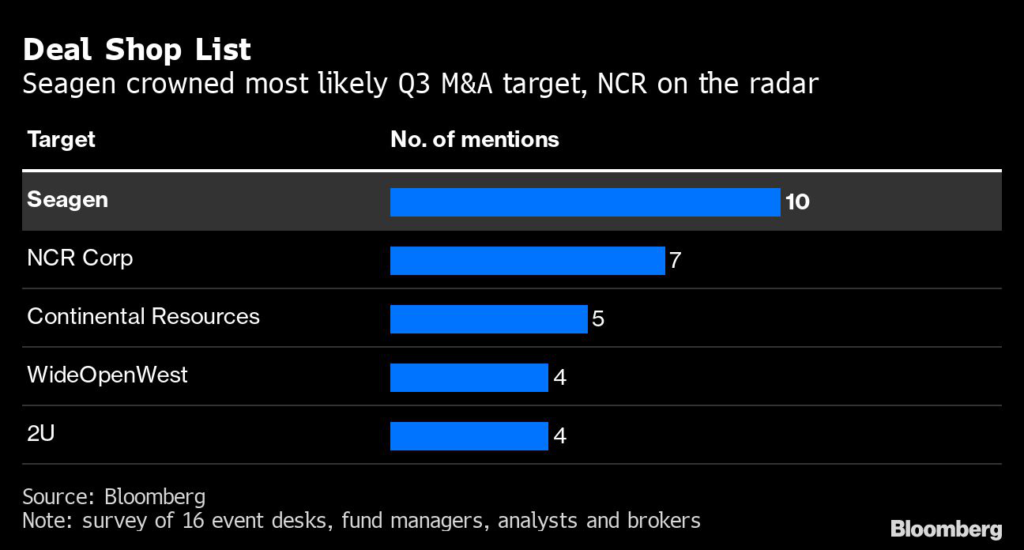
While the Musk-Twitter fight has the market transfixed, a bigger issue for the M&A industry is the generally challenging backdrop for deals. With volatility continuing and interest rates rising, a slowdown is expected in the third quarter with the possibility of more transactions being pulled, a Bloomberg News survey of 16 M&A trading desks, fund managers and analysts, found. They named Seagen Inc. as the most likely takeover candidate in the next three months.

“If buyers are unable to accurately forecast companies’ earnings or determine valuations, it’s going to be difficult for them to commit capital,” said Tyler Silver, a partner at New York-based investment firm Apex Capital. 

Read: Musk’s About-Face on Twitter Sends Takeover Saga to Delaware (1)

Deal flow is already hurting. During the second quarter, the total value of pending and completed transactions involving US targets reached roughly $347 billion, down 18% from the first quarter and 36% from the same period last year, according to data compiled by Bloomberg.

Distressed Spreads

Average annualized US merger arbitrage spreads spiked above 15% in May and June from roughly 10% at the beginning of the year, according to Frederic Boucher, a risk arbitrage analyst at Susquehanna International Group. That’s a similar to what the market saw in early 2020, when the pandemic derailed confidence in deals being completed, he said. Rising interest rates and lower downside assumptions caused by the stock market slump also drove spreads wider across the board.

Among the deals considered most at risk were Nielsen Holdings Plc, Citrix Systems Inc and Tenneco Inc, survey respondents said. They are in the most bruised corner of the tech sector and have private equity buyers, who tend to be more focused on financials than strategic buyers, who are more concerned about regulatory and antitrust issues. 

Wall Street Faces Billion-Dollar Losses on Sinking Buyout Debt

Those three deals once had some of the widest spreads among all takeovers, with shares trading at steep discounts to their offer prices, though that in Citrix and Tenneco tightened over the past few days amid closing updates. The spread in Nielsen’s proposed sale to a consortium including Elliott Investment Management and Brookfield Asset Management is still holding around 20% after touching 29% in mid-June — it was 3% in March, when the $16 billion buyout was announced. 

However, wide spreads and the threat of repricing doesn’t necessarily mean investors should expect a wave of cancellations. During the pandemic two years ago, five transactions were renegotiated but the deals ultimately got done, according to Julian Klymochko, founder and CEO of Accelerate Financial Technologies Inc. 

“The strength in definitive merger agreements is a testament to low termination rates,” he said. 

Since 2008, merger contracts have become fairly tight in terms of preventing a would-be acquirer from wriggling out if market conditions sour, Klymochko added.

Musk Effort to Void Twitter Buyout Sets Up Delaware Court Fight

Deal momentum

“I think some fears priced in the current market are irrational, and the spreads have widened out more than risks have increased,” said Roy Behren, co-chief investment officer at Westchester Capital Management. 

For Behren and some other survey respondents, private equity’s pile of money is a key driver for dealmaking in the second half of the year.

“Dry powder is looking for a home, particularly so the PE firms can begin earning their carry on it,” Behren said. “The cash on corporate balance sheets doesn’t have to be spent on transactions, but the whole point of a cash hoard for a PE investor is to use it to make an acquisition. There is no other purpose.”

More stories like this are available on bloomberg.com

©2022 Bloomberg L.P.

Rivian’s Job Cut Is Just the Latest in Gloomy-Looking Car Sector

(Bloomberg) —

Auto companies old and new have held up remarkably well amid the pandemic. Stark early warnings about an unprecedented shock to an industry that would maybe need another cash for clunkers-style shot in the arm look awfully alarmist a couple years later.

After positioning themselves as purveyors of the ultimate social distancing devices, several manufacturers are more profitable than ever. It hasn’t been entirely smooth — the chip shortage has kept companies from producing millions of cars consumers are buying right off delivery trucks. The conventional wisdom nonetheless has been that all sorts of pent-up demand awaits once various global supply chain crises ease.

A spate of job cuts and commentary the last few weeks suggest the sector is no longer so sure.

Rivian Automotive is the latest taking a hard look at headcount, Bloomberg reported first on Monday. Eight months after its massive initial public offering, the electric-truck maker may dismiss around 5% of its more than 14,000 employees, people familiar with the matter said.

Before this, Argo AI, the self-driving startup backed by Ford and Volkswagen, laid off 150 workers. Stellantis agreed to as many as 1,820 voluntary job cuts in Italy, two unions said. The Jeep maker also announced this month it will decommission an engine line in Michigan by year-end.

Ford itself warned of European job cuts in June, when it revealed plans to shut a factory in Germany and shrink its workforce at a site in Spain, which will need fewer staff to build EVs.

The company that kicked off the trend was, who else, Tesla. Chief Executive Officer Elon Musk said in mid-May the US was probably in recession, and started to act on his “super bad feeling” about the economy weeks later. He’s said about 3.5% of Tesla’s total workforce will be let go over three months.

It would be unwise to paint all these moves with the same brush.

Rivian has expanded staff much more rapidly than it’s ramped up assembly lines, some of which have run only 25 to 30 hours certain weeks as the company waited on more supply of semiconductors. While the chip bottleneck has started to improve and Rivian hopes to run two shifts by the end of the year, CEO RJ Scaringe isn’t taking the company’s more than $17 billion cash hoard for granted.

Argo AI similarly needs to be prudent in light of the less receptive environment for high-risk, high-reward companies that still have a lot to prove. Stellantis is highly exposed to an exceedingly weak European car market, and its engine line in Michigan will be far from the last to go down as the industry electrifies.

Ford CEO Jim Farley was frank in February when he said the company employed too many people. Tesla’s Musk has been much less clear about his abrupt dismissals at Tesla, but he’s provided a characteristically colorful hint of what’s behind it by calling the company’s two new plants in Germany and Texas “gigantic money furnaces.”

For all these unique circumstances, we may find out in the coming weeks that many of these companies have a lot in common. Quarterly earnings previews are grim reading, with UBS sounding the alarm about “potential first cracks” in results. Analysts there and at Jefferies are trimming projections for next year, while RBC Capital Markets has suggested upcoming reports may be “a clearing event” for suppliers that look poised to disappoint.

“In auto,” RBC analyst Joe Spak wrote in a report early this week, “if it’s not one thing, it’s another.”

More stories like this are available on bloomberg.com

©2022 Bloomberg L.P.

Stocks Drop, Bonds Rally Amid Recession Fears: Markets Wrap

(Bloomberg) — Stocks fell, while bonds rose amid fears that Federal Reserve rate hikes aimed at taming runaway inflation will sink the economy into a recession.

The S&P 500 wiped out its gains as a rally in technology giants fizzled out. Traders are bracing for the second-quarter earnings season, which may provide clues on how companies are weathering price pressures and intense currency volatility.

The dollar hovered around levels last seen at the height of the 2020 market panic over Covid and the yen strengthened, underlining investor caution. The euro-area’s common currency, meanwhile, came within a whisker of parity with the greenback.

Treasuries rose, taking the US 10-year yield near 2.9%. Bonds also rallied in Europe. German bonds surged, sending the benchmark 10-year yield to the lowest since May, after data showed investor confidence plunged to a 2011 low.

Much is riding on upcoming company profit filings and this week’s US inflation data. A brief equity rebound from this year’s rout is already fizzling ahead of the reports. Risk appetite may struggle to digest a darkening earnings outlook alongside stubborn price pressures that point to more monetary tightening.

Dollar strength will not only “affect this quarter’s earnings, but more likely it’s going to affect the revenue generation outlook for the next couple of quarters and that, I think, is a big problem,” Kimberly Forrest, founder and chief investment officer of Bokeh Capital Partners, said on Bloomberg Radio.

The Stoxx Europe 600 gauge slipped for a second day. Bank stocks were the worst performers as Spanish lenders slumped in Madrid after Prime Minister Pedro Sanchez said the country will impose a new tax on “big financial institutions.” Utilities outperforming as EDF jumped after a report that the French government will pay a premium to take control of the electricity company.

Commodities were under pressure, with crude oil falling below $100 a barrel in New York. Bitcoin dropped below $20,000.

Covid Concern

In China, investors are concerned more Covid lockdowns may lie ahead as Beijing continues with a strategy of mass testing and mobility curbs. A government push for stimulus to shore up growth is starting to have an impact: credit jumped last month to the highest on record for June. A gauge of Asia-Pacific stocks fell to a two-year low.

Meanwhile, the latest Fed commentary highlighted both the central bank’s hawkishness and the risks that come with aggressive interest-rate hikes.

Fed Bank of Atlanta President Raphael Bostic said the US economy can cope with higher interest rates and repeated his support for another jumbo move this month. Fed Bank of Kansas City President Esther George, who dissented last month against the central bank’s 75 basis-point rate increase, cautioned that rushing to tighten policy could backfire.

Will the eurozone avoid a recession or a debt crisis? How will the euro and stocks perform in the next six months? Share your views and participate in the latest MLIV Pulse survey. It only takes a minute, so please click here anonymously.

What to watch this week:

  • Earnings due from JPMorgan, Morgan Stanley, Citigroup, Wells Fargo
  • South Korea, New Zealand rate decisions, Wednesday
  • US CPI data, Wednesday
  • Federal Reserve Beige Book, Wednesday
  • US PPI, jobless claims, Thursday
  • China GDP, Friday
  • US business inventories, industrial production, University of Michigan consumer sentiment, Empire manufacturing, retail sales, Friday
  • G-20 finance ministers, central bankers meet in Bali, from Friday
  • Atlanta Fed President Raphael Bostic speaks, Friday

Some of the main moves in markets:

Stocks

  • The S&P 500 fell 0.1% as of 9:59 a.m. New York time
  • The Nasdaq 100 fell 0.2%
  • The Dow Jones Industrial Average rose 0.2%
  • The Stoxx Europe 600 fell 0.1%
  • The MSCI World index fell 0.4%

Currencies

  • The Bloomberg Dollar Spot Index was little changed
  • The euro was little changed at $1.0046
  • The British pound fell 0.1% to $1.1877
  • The Japanese yen rose 0.6% to 136.60 per dollar

Bonds

  • The yield on 10-year Treasuries declined eight basis points to 2.91%
  • Germany’s 10-year yield declined 13 basis points to 1.12%
  • Britain’s 10-year yield declined 14 basis points to 2.04%

Commodities

  • West Texas Intermediate crude fell 6.1% to $97.71 a barrel
  • Gold futures fell 0.2% to $1,727.50 an ounce


More stories like this are available on bloomberg.com

©2022 Bloomberg L.P.
Amazon’s Prime Day Sale Is Likely to Disappoint Deal-Hungry Shoppers

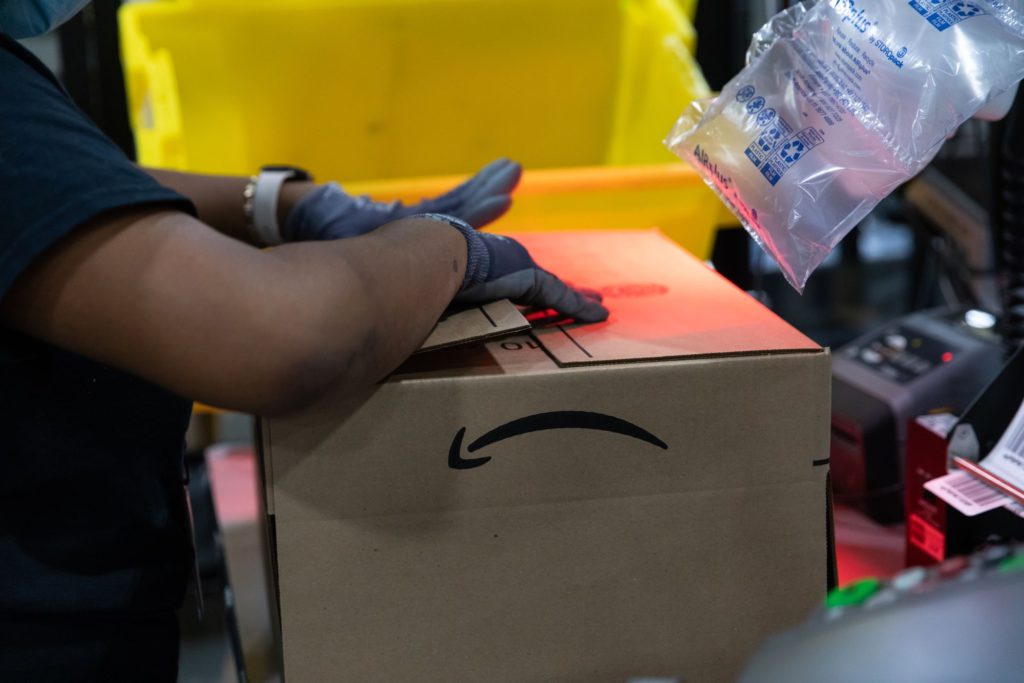
(Bloomberg) — Bargain hunters are expected to find Amazon.com Inc.’s two-day Prime Day sale underwhelming this year, with many sellers minimizing profit-eating discounts in an era of soaring costs.

The annual event, which runs Tuesday and Wednesday, is becoming just another summer clearance sale designed to make room for new items before the busy holiday shopping season. Amazon is doing its best to sustain interest by touting “millions of deals,” including some of the lowest prices ever on its own signature products, such as $17.99 for an Alexa-powered Echo Dot smart speaker and a 50-inch Amazon Fire television for $99.99.

“Amazon knows it needs to step up the discounts on its big landmark products to capture people’s attention,” said Kristin McGrath, a shopping expert at the deal-monitoring site BlackFriday.com. 

Amazon launched Prime Day in 2015 to attract new subscribers who pay $139 a year for shipping discounts, video streaming and other perks. The event helps Amazon lock in shoppers before the holidays and deepen its relationship with existing customers by offering them deals on Amazon gadgets. Prime memberships have stagnated at about 172 million as of June 30, unchanged from six months earlier, according to Consumer Intelligence Research Partners, suggesting a $20 price increase announced in February is turning people off.

This marks the second straight year when merchants — who sell 60% of the products on Amazon’s site — have been stingy with discounts. Prime Day is mostly seen as an opportunity to clear out aging inventory, said Tim Seward, who runs the e-commerce consulting firm ROI Revolution in Raleigh, North Carolina. About 60% of his 160 clients are offering Prime Day deals, but the discounts are moderate, he said.

“Many brands are doing smaller discounts than they did in 2021 due to rising costs,” he said. “It’s still a great way to clean house.”

Shoppers will still show up for Prime Day. Spending on Amazon will reach $7.76 billion in the US and $12.52 billion globally over the two-day event, each up about 17% from a year earlier, according to research firm eMarketer Inc. Consumers grappling with higher gas prices and inflation will flock to Amazon looking for deals, especially on household staples they’ll need anyway, analyst Andrew Lipsman said.

“Consumers still have money and are looking for deals, which should give Prime Day some pop,” Lipsman said.

Amazon is also grappling with amped-up competition from the likes of Walmart Inc. and Target Corp., which host competing sales. Shoppers are accustomed to bouncing from one site to another seeking the best deals on Prime Day, and Amazon’s prominence has faded. Brands once generated about three times as many sales as usual on Prime Day, said Chris Bauserman, chief marketing officer with Palo Alto-based CommerceIQ, which provides e-commerce software to more than 2,200 brands, including Colgate and Whirlpool. This year the Prime Day bump is expected to fall to about double usual sales, he said. 

“It’s still a can’t-miss event,” Bauserman said. “It’s just decelerating.”

A lot of Amazon merchants are sitting out Prime Day to protect their profits, calculating that it’s too expensive to offer deep discounts and then pay even more for advertising on the cluttered site, said Chad Rubin, founder and CEO of Miami-based Profasee, which sells pricing software for online merchants.

“A lot of our customers just aren’t participating,” he said. “They want to protect profits and you can’t do that using the same old playbook of offering big discounts and paying for advertising on Prime Day.”

More stories like this are available on bloomberg.com

©2022 Bloomberg L.P.

Gap CEO Syngal Fired After Failing to Rescue Struggling Retailer

(Bloomberg) — Gap Inc. fell on Tuesday as rising costs and discounts thwarted Sonia Syngal’s turnaround after 2 1/2 years as chief executive officer of the clothing retailer.  

Chairman Bob Martin is taking over immediately as interim CEO, according to a statement late Monday, and the apparel retailer lowered its expectation for second-quarter operating margin percentage to zero to slightly negative. The shares, which fell as much as 8.7% in New York trading, have lost more than half their value so far this year. 

Syngal was hired right before the pandemic, which roiled demand and intensified focus on online shopping amid mandatory store shutdowns. Missteps such as a clumsy implementation of expanded women’s sizes at the company’s Old Navy chain, whose top executive left earlier this year, caused inventory levels to swell just as demand may have crested. 

“Several disappointing catalysts have now hit, the bull case has been eliminated in the near-to-medium term,” Wells Fargo analysts led by Ike Boruchow said in a note.

Back in early 2020, it was Syngal, now 52, who stepped in to replace a CEO who abruptly departed amid operational problems. Predecessor Art Peck left after a scrapped plan to spin off Old Navy and failing to reignite sales growth. Syngal had been the head of Old Navy, which generates more than half of the company’s revenue.

Syngal’s departure further reduces women’s representation at the top of US public companies. There are currently 33 women leading companies in the S&P 500 Index, according to data compiled by Bloomberg. Gap was removed from the index at the start of the year.

Street Wrap: Gap falls on CEO ouster as deep discounts hurt profit

After taking over in March 2020, Syngal immediately had to navigate Covid-19. She oversaw the expedited implementation of curbside pickup and the expansion of e-commerce — moves that investors applauded. 

She was unable to keep up the momentum, however. The company as a whole appears to be struggling to capitalize on rapid changes in apparel trends as offices reopen and consumers move away from comfortable clothes, such as sportswear, in favor of work attire. Gap’s upscale Banana Republic chain was a standout last quarter, but that wasn’t enough to counter weakness at the other divisions. 

Additionally, a deal to produce apparel with Kanye West’s Yeezy brand has failed to generate meaningful results. After announcing the project with fanfare, Gap executives have been mostly quiet on the issue.

Back-to-School Weakness

The company’s missteps are ill-timed as the retail industry gears up for back-to-school season, one of the biggest shopping times of the year. “As a family brand, this has a compound halo effect. When we aren’t delivering for moms, she’s less likely to come to Old Navy for her kids,” Syngal said during the company’s latest earnings call.

Gap, which also operates Athleta in addition to its namesake brand, expects $50 million of air-freight charges and other costs that will offset operating profit in the fiscal second quarter. 

The company sees Old Navy reaching $10 billion in sales by 2023. Old Navy added more plus-size women’s apparel to expand appeal, but the move backfired when its size assortment was imbalanced, with too many of some sizes in stock and not enough of others. That led to cuts in orders for the third quarter. 

The announcement followed a previous reduction in its earnings outlook. The retailer expects to get through its glut of inventory with steep discounts, which will weigh on its results.

“Old Navy was going in the wrong direction and that can’t happen because it’s so critical to the overall business,” said Morningstar analyst David Swartz. “It’s clear that some of the strategies that Syngal herself was a proponent of had failed, like the extended sizes.”

The apparel retailer also hired Horacio “Haio” Barbeito as the new CEO of Old Navy. Barbeito will join Gap after a 26-year career at Walmart Inc., where he most recently served as CEO of the retail giant’s operations in Canada, its largest foreign market except for Mexico. Before that, he led Walmart’s business in Argentina and Chile.

(Updates share trading)

More stories like this are available on bloomberg.com

©2022 Bloomberg L.P.

Amazon’s Cloud Unit Is What’s on Sale This Prime Day

(Bloomberg) — Amazon.com Inc.’s Prime Day may grab headlines, but investors are much more focused on its fast growing cloud-computing and advertising services businesses.

The two-day shopping event, which starts Tuesday, comes as the tech giant’s retail business faces weaker consumer demand amid a looming recession. Bulls, however, say e-commerce headwinds have obscured the still-vibrant trends at cloud computing business Amazon Web Services (AWS) and the advertising services unit. 

“AWS alone could be worth more than Amazon’s entire market cap right now, which means you’re essentially getting the retail business for free,” said Marko Lazarevic, a US investment analyst at Harris Associates. “At this valuation, you’re not taking on much risk buying Amazon for the long-term.”

Shares in the tech giant have slumped 32% this year amid the broader growth-stock selloff and as consumers return to pre-pandemic habits, denting demand for online shopping. Even so, support from non-retail businesses has helped Amazon outperform pure-play e-commerce companies like Etsy Inc., Wayfair Inc., and Shopify Inc., which are all down 60% or more. 

Retail still accounts for more than half of Amazon’s total sales, but the other businesses are increasingly important, with AWS revenue growing 37% in constant currency terms in 2021, to $62.2 billion. The cloud unit, which helps power everything from Netflix videos to robot vacuums, is also the company’s most profitable.

Amid a huge opportunity for cloud computing, some analysts see AWS alone being worth more than Amazon’s $1.14 trillion market capitalization. Cowen estimates AWS has an enterprise value of $1.2 trillion, while Bloomberg Intelligence says AWS sits in the $1.5 trillion to $2 trillion range. Redburn analyst Alex Haissl sees a path toward $3 trillion for the unit.

“Amazon is at least 40% cheaper than it should be, relative to the sum of its parts,” said Eric Clark, a portfolio manager at Accuvest Global Advisors. “With expenses falling and AWS and ads continuing to grow, that’s an environment where the stock can really shine. I’m happy to keep buying on dips, because it has a really great catch-up opportunity.”

Ad services sales jumped almost 58% to more than $30 billion last year, and Bloomberg Intelligence projects revenue could reach $100 billion over the next decade. 

The non-retail businesses will be closely watched when the company reports second-quarter results later this month. AWS revenue is expected to grow nearly 32% and revenue from ad services is projected to climb 19%. That compares with basically flat year-over-year growth for online sales, according to Bloomberg Consensus estimates.

While Amazon may not be immune from an economic downturn, playing the long game might prove profitable. “If there is a recession or a slowdown, that would hurt retail sales, and that could mean a slowdown at Amazon,” Lazarevic said. “However, recessions come and go, but the overall trends at Amazon — whether e-commerce or cloud computing — will pull through.”

Tech Chart of the Day

More than 40% of Nasdaq 100 Index components are trading above their 50-day moving average, a positive signal for short-term momentum. While that’s below a peak of nearly 80% in late March, it’s a rapid turnaround from June, when fewer than 6% of stocks were above the level, the fewest since 2020. Improved technicals are a reason why Oppenheimer recently turned positive on growth stocks, singling out tech as a sector “positioned to lead off a bear market low.” 

Top Tech Stories

  • Microsoft Corp. cut some jobs on Monday as it realigned business groups and roles after the close of its fiscal year on June 30. It said it plans to keep hiring for other roles and finish the current fiscal year with increased headcount.
  • BYD Co. shares sank the most in nearly two years after a stake matching the size of Berkshire Hathaway Inc.’s position in the Chinese electric-car giant appeared in the city’s clearing system, fueling speculation that Warren Buffett’s company may be adjusting its holdings.
  • Twitter Inc.’s lawyers called Elon Musk’s termination of his $44 billion buyout agreement “invalid and wrongful” in a letter to the billionaire’s attorneys, a preliminary step by the social network in the looming legal battle over the deal.
  • US lawmakers are playing politics with national security by delaying the passage of legislation that will liberate billions of dollars for chipmakers to build more manufacturing facilities in the US amid a global shortage, Commerce Secretary Gina Raimondo said.
  • Indian online education provider Byju’s is struggling to close a funding round of $800 million as a global technology rout weighs on valuations.
  • Joffre Capital, a tech-focused buyout firm started by Chinese dealmakers, is seeking financing to fund a potential bid for control of mobile game developer Playtika Holding Corp., people with knowledge of the matter said.
  • Europe’s biggest value-oriented fund recently bought its first technology stock. During a brutal selloff in the first half, semiconductor maker Infineon Technologies presented a rare opportunity for the head of Amundi SA’s equity value fund.

(Updates to market open.)

More stories like this are available on bloomberg.com

©2022 Bloomberg L.P.

Canoo Shares Double on Walmart Order for 4,500 Electric Vans

(Bloomberg) — Canoo Inc. shares doubled in value after the struggling electric-vehicle startup won an order for 4,500 vans from Walmart Inc.

The deal announced in a statement Tuesday is a boon to Canoo, which ended the first quarter with just $105 million in cash. The company recently moved its headquarters to Walmart’s hometown of Bentonville, Arkansas, and warned in May of substantial doubt about its ability to continue as a going concern.

Canoo shares jumped $2.45 to $4.84 at 9:35 a.m. in New York, valuing the company at about $1.2 billion. Its market capitalization is still down from about $4.8 billion in late 2020, when the startup went public by merging with a special purpose acquisition company.

Walmart will be the first to take delivery of vehicles Canoo expects to begin producing in the fourth quarter. The companies said the vans will hit the road next year and support the US retailer’s growing e-commerce business. Walmart will have the option to purchase as many as 10,000 of the vans.

The agreement with Canoo is the latest in a series of moves by Walmart into electric and autonomous vehicles. The retailer announced in January it was reserving 5,000 electric delivery vans from General Motors Co.’s BrightDrop, and it’s been working on making autonomous deliveries with the Silicon Valley startup Gatik since 2019.

Canoo will send some pre-production vehicles to Walmart in the coming weeks to “refine and finalize” a configuration for the Dallas Fort Worth area.

Read more: After SPAC mania, EV Startups face a cash squeeze

The startup has dealt with a raft of executive and staff departures since its SPAC merger, and announced in May that it had lined up as much as $600 million from a private placement, equity purchase agreement and mixed shelf offering. Canoo also was tapped by NASA in April to supply electric vehicles that will ferry astronauts to the launchpad for future Artemis missions.

(Updates with trading in third paragraph)

More stories like this are available on bloomberg.com

©2022 Bloomberg L.P.

Close Bitnami banner
Bitnami
