Bloomberg

Billionaire’s Tech Firm to Buy BAE Fraud-Detection Arm NetReveal

(Bloomberg) — Technology billionaire Romesh Wadhwani’s artificial intelligence software company agreed to buy BAE Systems Plc’s financial crime detection business, NetReveal. 

Terms of the deal weren’t disclosed, but SymphonyAI Chief Executive Officer Sanjay Dhawan said in an interview that it was his company’s biggest to date and would help it sell more software to financial institutions. It’s expected to close this year, he said.

Bloomberg reported in January that UK defense giant BAE, which acquired London-based NetReveal as part of its 2008 purchase of Detica Group Plc, was exploring a sale of the business.

NetReveal develops technology used by firms including banks to prevent fraud and manage risk, and Dhawan said this would bolster SymphonyAI’s existing financial crime tools. The companies compete with firms such as NICE Actimize.

“When the economy turns down, financial crime tends to increase,” Mike Foster, managing director of NetReveal, said in an interview. He added that demand was being driven by new entrants to the financial industry, such as digital payments companies.

SymphonyAI was founded by Wadhwani, who also serves as its chairman.

Founded in 2017 and now led by Dhawan, SymphonyAI will grow its roughly 2,000 staff by about 10% this year and eventually pursue an initial public offering. Dhawan said no firm date has been set but could come in the next couple of years. 

More stories like this are available on bloomberg.com

©2022 Bloomberg L.P.

Three Arrows Founders’ Whereabouts Unknown, Liquidators Say

(Bloomberg) — The founders of bankrupt crypto hedge fund Three Arrows Capital haven’t been cooperating in the firm’s liquidation process and their whereabouts were unknown as of Friday, according to court papers. 

Representatives tapped to liquidate Three Arrows by a British Virgin Islands judge had “not yet received any meaningful cooperation” from Kyle Davies and Zhu Su, lawyers said in US bankruptcy court filings. Advisory firm Teneo is attempting to round up and preserve the assets of the hedge fund. 

A court hearing is set for Tuesday. The liquidators, meanwhile, are trying prevent the potential “dissipation” of the fund’s assets, Russell Crumpler of Teneo said in a sworn declaration.

“Here, that risk is heightened because a substantial portion of the Debtor’s assets are comprised of cash and digital assets, such as cryptocurrencies and non-fungible tokens, that are readily transferable,” lawyers for the liquidators said in court papers.

The founders have provided a spreadsheet with details of the company’s assets to the liquidators, according to a post from Zhu’s verified Twitter account on Tuesday. They will continue working to find details of other assets, but are displeased with the behavior of the liquidators, according to the post. 

Read More: How Ex-High School Classmates Became Among World’s Largest Crypto Holders

Empty Office

Three Arrows, which Zhu and Davies founded after trading at Credit Suisse Group AG, succumbed to the widespread crypto selloff last month. Insolvency proceedings kicked off in the BVI and were followed by a so-called Chapter 15 bankruptcy filing in the US. The fund’s downfall has rippled through the digital asset industry, helping to drive at least one crypto platform that counted Three Arrows as a counterparty into bankruptcy already. 

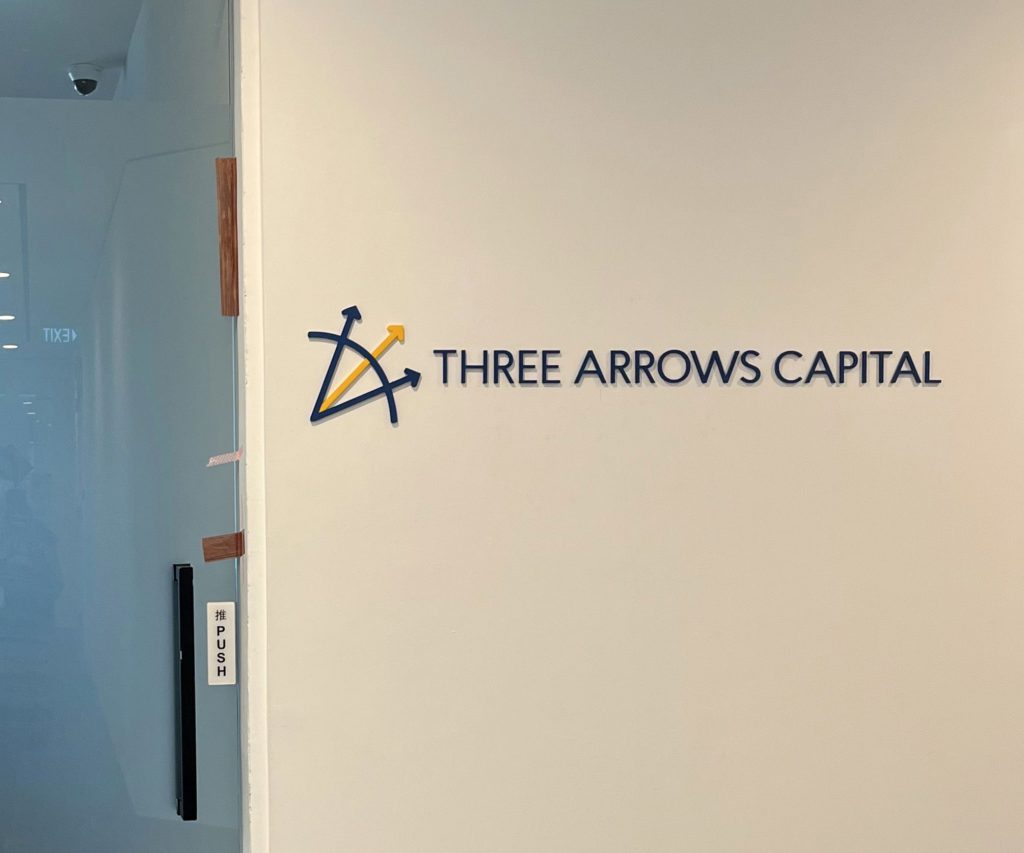
The hedge fund’s liquidators traveled to Three Arrows’ office address in Singapore in late June in an attempt to track down the founders, according to court papers. It appeared dormant: the door was locked, computers were inactive and mail was stuffed under the door. People working in the surrounding offices said they hadn’t seen anyone enter or exit the office recently. 

The liquidators spoke with lawyers for Davies and Zhu via videoconference last week, according to court papers, but did not speak to the founders directly. 

“While persons identifying themselves as “Su Zhu” and “Kyle” were present on the Zoom call, their video was turned off and they were on mute at all times with neither of them speaking despite questions being posed to them directly,” Teneo’s Crumpler said in his court declaration. 

Advocatus Law LLP, the Singapore-based law firm that spoke with Three Arrows’ liquidators on behalf of the fund’s founders, didn’t immediately respond to a request for comment outside of normal business hours on Monday. 

The case is Three Arrows Capital Ltd and Russell Crumpler, 22-10920, U.S. Bankruptcy Court for the Southern District of New York (Manhattan).

(Updates story originally published Monday with details from co-founder’s Tweet beginning in paragraph five.)

More stories like this are available on bloomberg.com

©2022 Bloomberg L.P.

ECB Says Lagarde Was Targeted in Cyber Attack, No Data Stolen

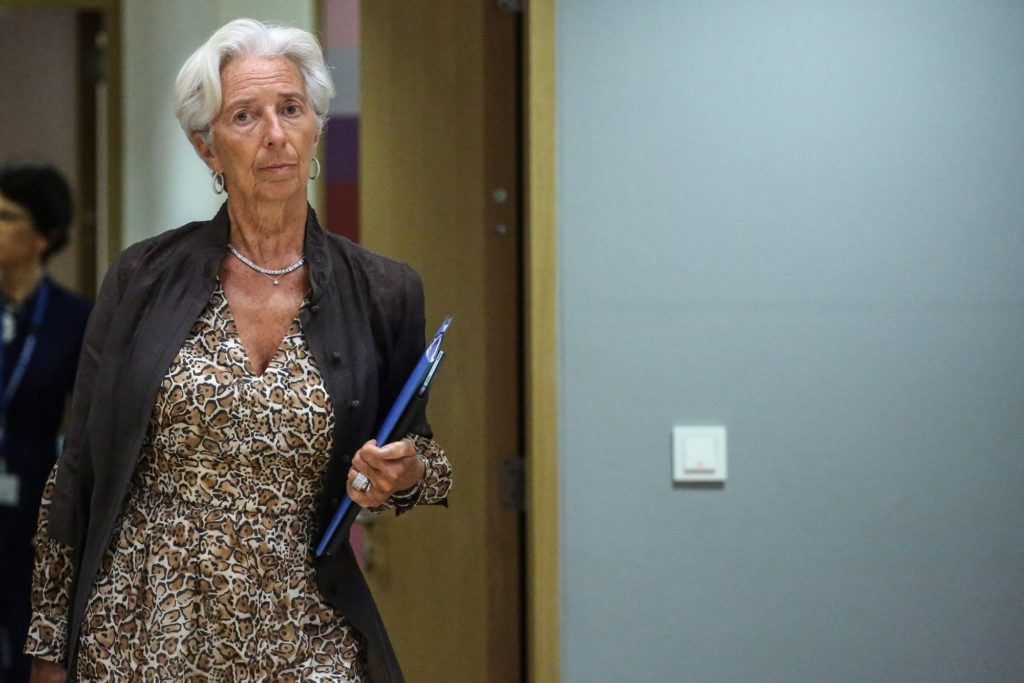
(Bloomberg) — The European Central Bank said President Christine Lagarde was the target of a recent cyber attack that was identified before any data were compromised.

“We can confirm that there was an attempted cyber incident recently involving the president,” the ECB said Tuesday in an emailed statement. “It was identified and halted quickly.”

Earlier, Business Insider reported that Lagarde had received a WhatsApp message from a number used by former German Chancellor Angela Merkel. The scam was uncovered when Lagarde followed up with a phone call to find out if the message was genuine, according to the report.

“We have nothing more to say as an investigation is ongoing,” the ECB said.

More stories like this are available on bloomberg.com

©2022 Bloomberg L.P.

Supermodel Karlie Kloss Brings a Virtual Runway to Roblox

(Bloomberg) — Karlie Kloss is the latest celebrity to jump into the Roblox metaverse.

The supermodel is launching the Fashion Klossette Designer Showcase with five pop-up stores to promote the virtual apparel of Roblox Corp. creators Builder Boy, Lovespun, Reverse_Polarity, RynityRift and Yourius. With 54.1 million daily active users, Roblox is a magnet for brands including Ralph Lauren, Tommy Hilfiger and Gucci. Digital fashion is big business, with Roblox reporting more than 5.8 billion virtual items, both free and paid, being acquired on the platform last year.

“What excites me about these worlds is that you can you can make yourself any size, shape, color and gender,” Kloss said in an interview. “I want to democratize access to the best of fashion without the limitations of one narrow idea of what is beautiful.”

Having worked as a Victoria’s Secret model during a time when fashion was anything but inclusive, she quit in 2015 to attend New York University. It was there she discovered her passion for computer programming and went on to found Kode With Klossy to teach girls and gender-nonconforming kids to code.

“I believe it’s crucial that we control our own destiny,” Kloss said. “You can create anything you can dream up knowing how to code—there’s such power in that.”

Kloss, an investor in startups including Reformation, StockX and Therabody, is married to Josh Kushner of Thrive Capital. But similar to Serena Williams and Paris Hilton, celebrities who also married venture capitalists, Kloss said she became interested in funding founders long before she met her husband.

“I love meeting and supporting entrepreneurs to make meaningful impact in the world,” Kloss said. “I typically get involved at an early stage when the company is at a formative point and try to add value beyond just capital, sometimes collaborating on product design or facilitating connections.”

After a brief stint as host of the Bravo TV series “Project Runway,” Kloss welcomed her first child and has since been busy lining up partners to expand Kode With Klossy. 

A staunch advocate of women’s rights, Kloss took to Instagram to protest the recent US Supreme Court reversal of Roe v. Wade and told Bloomberg News, “I’m a strong believer that safe, legal health care is a human right, and I plan to continue to do anything I can to fight for that.”

More stories like this are available on bloomberg.com

©2022 Bloomberg L.P.

Three Arrows Co-Founder Re-Emerges With Tweet Accusing Liquidators of ‘Baiting’

(Bloomberg) — Zhu Su, the co-founder of bankrupt crypto hedge fund Three Arrows Capital, broke an almost month-long silence with a tweet accusing court-appointed liquidators of “baiting.”

In his first Twitter posting since June 15, Zhu shared a screen shot of what appears to be an email exchange between the fund’s legal counsel at Advocatus Law LLP and an executive in charge of liquidating Three Arrows. 

A phone call to Advocatus’s Singapore office outside of regular business hours went unanswered. 

The tweet came after court filings alleged that representatives tapped by a British Virgin Islands court to liquidate Three Arrows hadn’t gotten “meaningful cooperation” from Zhu and co-founder Kyle Davies. A court hearing in the case is scheduled for Tuesday. 

Russell Crumpler of Teneo, the firm appointed by the BVI court to liquidate Three Arrows, said in a sworn declaration that liquidators are trying prevent the potential “dissipation” of the fund’s assets. 

Read more: Three Arrows Founders’ Whereabouts Unknown, Foiling Liquidators

Three Arrows collapsed last month following a selloff in digital assets triggered by the implosion of algorithmic stablecoin TerraUSD. Insolvency proceedings started in the British Virgin Islands, and were followed by a Chapter 15 bankruptcy filing in the US. The firm’s failure has rippled through through the highly interconnected cryptocurrency market, with one of Three Arrows’ creditors already filing for bankruptcy protection. 

More stories like this are available on bloomberg.com

©2022 Bloomberg L.P.

Sinch Plunge Wipes Out $1.3 Billion After Profit Warning

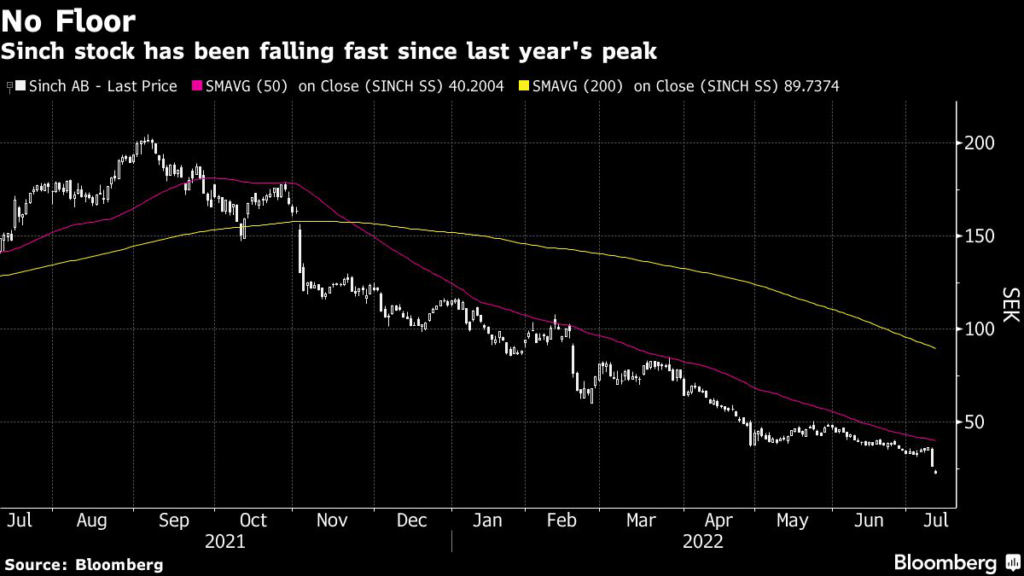
(Bloomberg) — Sinch AB shares plunged for a second day, earlier erasing as much as $1.3 billion of market value, as the Swedish cloud-based platform provider warned that a “reassessment” of certain historical costs will hit second-quarter profit.

The stock fell as much as 25% in Stockholm, extending a 28% drop on Monday which traders had attributed to a tweet on Sinch’s financial statements from an account called Ningi Research. By 2:20 p.m. in Stockholm the shares had staged a partial recovery and were quoted down 7%.

The company said Tuesday that the reassessment of cost of goods sold for past periods will negatively affect second-quarter earnings by 162 million Swedish kronor ($15.3 million). It said it decided to issue a statement in light of “the unusually strong share price movement” on Monday, even though remaining parts of the results have not yet been finalized ahead of their July 21 release.

“Whilst the third-party analysis does not discuss reassessment of cost of goods sold, the analysis claims that revenues for 2021 are overstated, which is something that Sinch strongly opposes,” the company said in the statement.

Ningi Research didn’t respond to a request for comment.

The reassessment “is clearly an operating failure in certain parts of the organization,” Chief Executive Officer Oscar Werner said on a conference call. During the call he also also made promises to shareholders that the company would work to rectify the problem.

Describing Sinch’s statement as a “profit warning,” Svenska Handelsbanken AB analyst Daniel Djurberg said that while uncertainty is high, that should be fully discounted in the stock price by now.

Hedge fund short sellers have been targeting Sinch this year, betting on a drop in the shares. The stock is currently one of the most shorted in Europe, with 20% of the company’s free float out on loan, according to according to IHS Markit data.

(Updates share price, adds CEO comment and shorting data.)

More stories like this are available on bloomberg.com

©2022 Bloomberg L.P.

Tencent Fails to Win Game Approval as Sector Concerns Persist

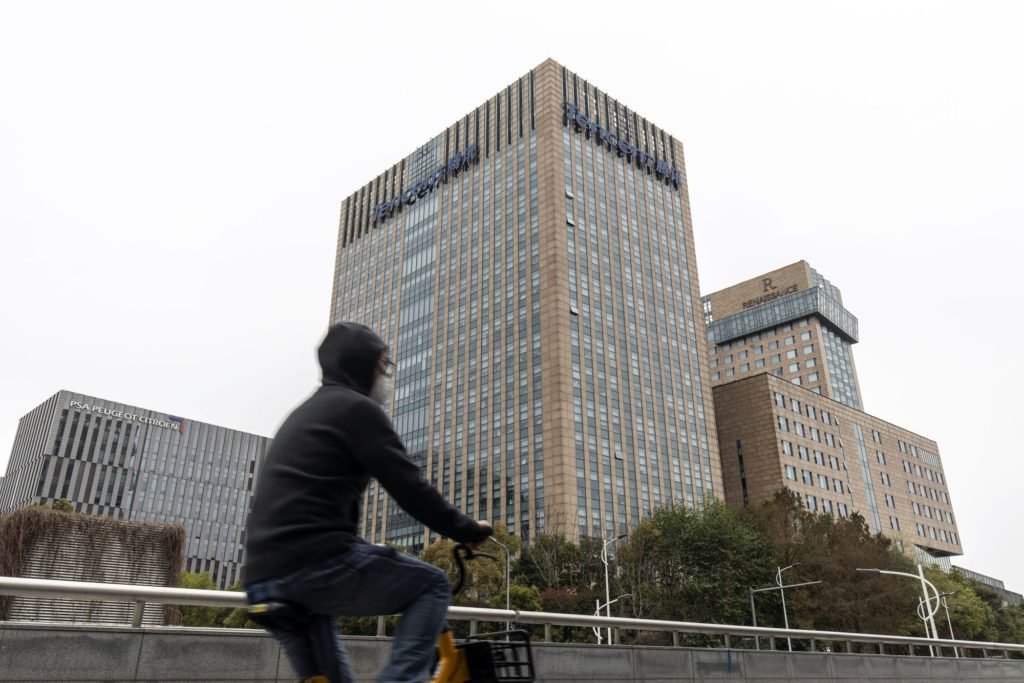
(Bloomberg) — China approved its third batch of new games this year but Tencent Holdings Ltd. again failed to make the list, an absence that could spur speculation about Beijing’s intentions for the world’s largest mobile entertainment arena.

There were no Tencent games among the 67 titles approved by the National Press and Publication Administration, the third batch of licenses granted so far this year. The WeChat operator had already missed out on two previous rounds that started April, when regulators resumed publishing regular lists of approved titles following a months-long suspension. Titles by smaller rival Netease Inc. were also absent.

Beijing’s tech crackdown — which ensnared sectors from e-commerce to fintech and even online education over a tumultuous year — spread to gaming in August, when regulators introduced stringent measures such as capping play time for minors and imposed other requirements aimed at curbing addiction. The media watchdog has since been reviewing new titles to determine whether they meet stricter criteria on content and child protection, slowing rollouts, Bloomberg News has reported.

Read more: China Ends Game Freeze by Approving First Titles Since July

More stories like this are available on bloomberg.com

©2022 Bloomberg L.P.

Online US Inflation Slowed in June But Food Prices Hit New High

(Bloomberg) — The inflation rate for goods purchased online in the US slowed sharply last month, according to the Adobe Digital Price Index, though there was no letup in food prices which rose at the fastest pace on record.

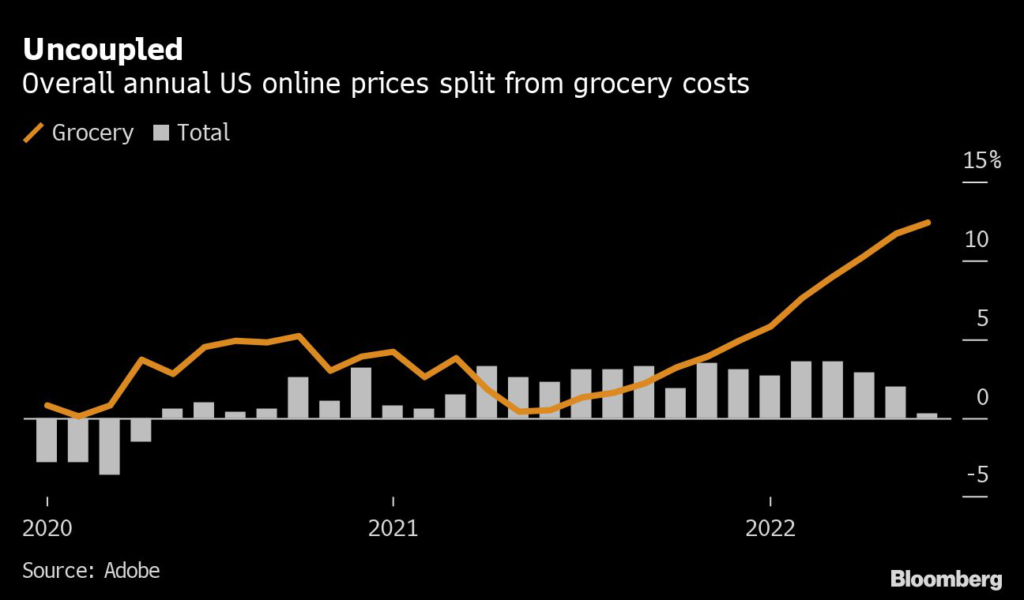
Overall online prices rose just 0.3% in June from a year earlier, Adobe said on Tuesday. That’s down from 2% in May and a record 3.6% in February. Compared with a month earlier, prices fell 1% — the third straight decline on that basis, the longest streak since the pandemic began in early 2020.

Eleven of the 18 components tracked by Adobe, including electronics, clothing and toys, saw prices fall last month, indicating consumers may be pulling back on discretionary spending while retailers offer discounts after piling up inventories. The drop in clothing prices was the sharpest since March 2021. 

Online grocery prices bucked the trend, rising at the fastest annual pace on record in June. Higher food costs are hitting low-income households the hardest, because they spend a disproportionate amount of their budgets on groceries. 

The war in Ukraine has pushed up the costs of basic foods like cereals, as well as fertilizers that are crucial for agriculture. The United Nations has warned of a surge in the number of people worldwide who are at risk of hunger.

More stories like this are available on bloomberg.com

©2022 Bloomberg L.P.

Texas Power Grid Withstands Strain of Blistering Heat Wave

(Bloomberg) — The Texas grid avoided blackouts Monday despite a searing heat wave that depleted electric supplies in America’s second-most populous state.

The Electric Reliability Council of Texas on Monday lifted the call for conservation that it made because of a potential power shortage. The council manages the flow of electricity to more than 26 million customers.

While electrical use hit an unofficial record of 78.3 gigawatts, it came in below earlier estimates, an Ercot spokeswoman said. Residents and businesses appeared to heed the state’s request to limit power use, giving the grid enough of a cushion to avoid more drastic measures.

Power grids around the globe are facing severe tests this summer as climate change drives temperatures to record highs and Russia’s invasion of Ukraine strains fuel supplies. In the US, officials have warned that a vast swath of the nation, from the Great Lakes to the West Coast, is at risk of blackouts. Texas already set at least six records for power demand this year.

Heat will continue to blanket Texas on Tuesday, with Dallas and Fort Worth forecast to hit 104 degrees Fahrenheit (40 degrees Celsius), according to the National Weather Service. The cities likely will see highs above 100 degrees through Thursday. US natural gas futures rose for a second day as the heat wave drove up demand for air conditioning and consumption of the fuel for power plants.

Cryptocurrency miners were among those that answered the call to conserve Monday. Almost all of the major mining operators had scaled back operations, allowing about 1 gigawatt of capacity to flow back to the grid, according to the Texas Blockchain Council. Crypto mining has taken off in Texas in the past year, leading to concerns that the power-intensive operations would tax the state’s energy systems. A gigawatt is enough to power about 200,000 Texas homes.

Texas’s power grid remains under scrutiny more than a year after the system collapsed during a winter storm, leaving much of the state without power for days. More than 240 people died, and the true economic costs topped $50 billion. Officials enacted a raft of reforms following the crisis, but critics warn the system remains vulnerable.

(Updates with Ercot details, US natural gas futures beginning in second paragraph. A previous version of this story corrected the name of trade organization in sixth paragraph.)

More stories like this are available on bloomberg.com

©2022 Bloomberg L.P.

UK Health App Babylon Plans Job Cuts in Bid to Slash Costs

(Bloomberg) — Health tech company Babylon Holdings Ltd. is in talks to cut about 100 jobs across its global business as part of a plan to reduce costs and become profitable, people familiar with the matter said. 

Babylon said on Wednesday it intends to slash costs by $100 million during the third quarter of this year to “accelerate its path to profitability,” but hadn’t specified how it would impact jobs. The company averaged 2,572 employees in 2021, according to a regulatory filing. 

Shares in the company, which connects patients with doctors via an app, rallied after Wednesday’s announcement. Babylon reported an operating loss of $402.5 million for 2021 but grew its annual revenue fourfold to $323 million.

“Like many other responsible organizations at these times of change, we are focusing our resources on activities that most directly serve our mission, and that means some reduction in non-core activities,” Babylon spokeswoman Marnie Maton said in statement responding to Bloomberg. “We are not reducing any patient-facing clinicians in Rwanda, the UK or US.”

The teams affected by the changes have been notified, Maton said, but individuals won’t know if they have been impacted or whether they have been moved into new roles until a consultation period is completed — 45 days, in the UK.

Some employees working for the company in the US have already been given a week’s notice, according to two people familiar with the matter who were not authorized to speak publicly. Those employees were told they could keep their laptops as a gift, said one of the people.

The potential cuts at Babylon could impact about 100 Babylon employees in the UK and US, including from the clinical safety and compliance teams. 

Babylon isn’t alone in trimming costs: Health tech startups including Sensyne and Carbon Health are cutting staff amid economic uncertainty. Sky News first reported on the Sensyne cuts. 

Founded in 2013, Babylon’s app allows patients to schedule a video call with a doctor or other specialist, including physiotherapists, and check symptoms. The company works with the UK’s National Health service to provide mobile consultations to patients as their official primary care provider through its “GP in Hand” service. 

In June 2018, Babylon Chief Executive Ali Parsa showcased a chatbot that he said could diagnose conditions using a probability score based on a patient’s stated symptoms. During the demonstration, which took place on stage at the Royal College of Physicians, Parsa also claimed the company’s AI could beat human doctors in the Membership of the Royal College of General Practitioners exam, the standard test for GPs in the UK.

Medical professionals criticized Babylon’s claims.

“No app or algorithm will be able to do what a GP does,” said Professor Martin Marshall, Vice Chair of The Royal College of General Practitioners in a statement after the June 2018 event.

Babylon has since tempered its offering, positioning itself as an app-based doctor service and automated symptom checker as opposed to a provider of AI-powered medical diagnosis. In order for a company to advertise their products as diagnostic tools they must get regulatory approval, which Babylon has not yet obtained. 

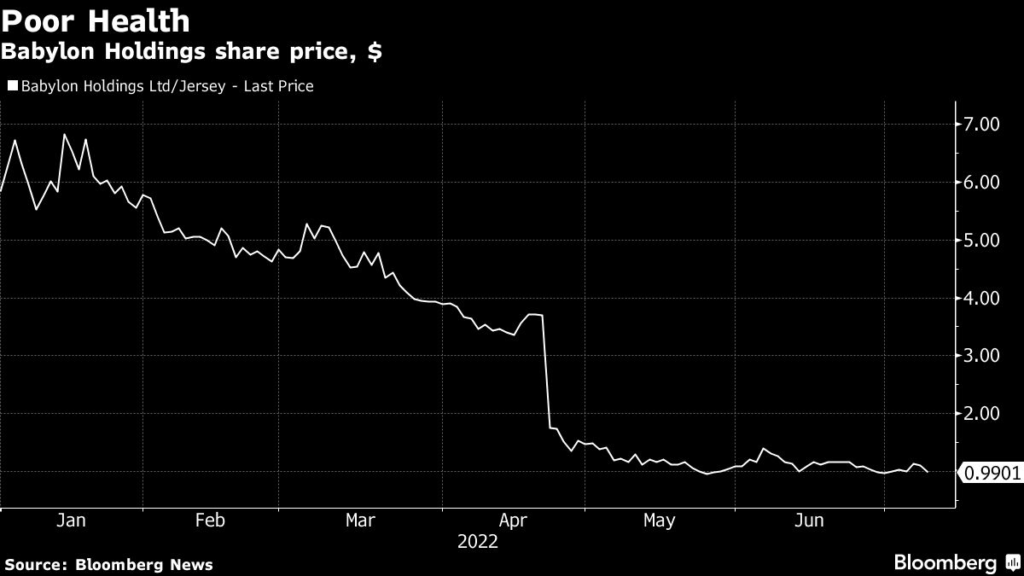
In October 2021, the company went public on the New York Stock Exchange via a merger with Alkuri, a special purpose acquisition company run by former Groupon Inc. executives, with an implied equity value for Babylon of about $4.2 billion. Since then, its market capitalization has fallen more than 90%, giving the company a market value of about $334 million. 

More stories like this are available on bloomberg.com

©2022 Bloomberg L.P.

Close Bitnami banner
Bitnami