
Bloomberg

CEO Turmoil Leaves FTSE a Target for Opportunistic Predators

(Bloomberg) —

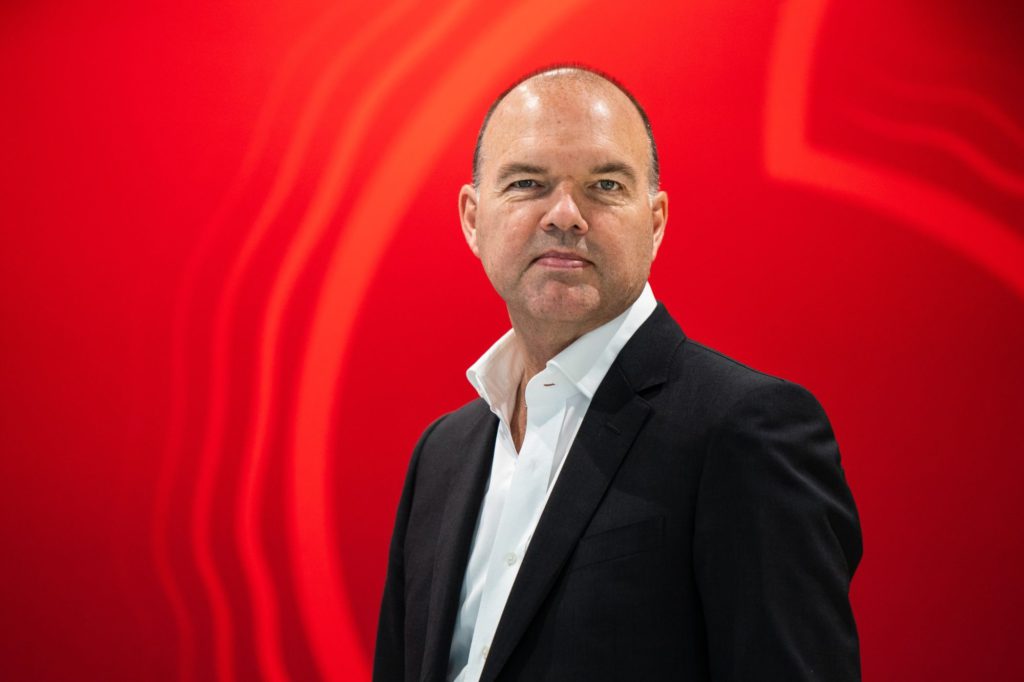
Turmoil at the top of UK Plc — with Vodafone Group, Unilever, Reckitt Benckiser Group and others simultaneously hunting for new chief executive officers — has prompted fears that Britain’s largest companies may become vulnerable to activist investors and opportunistic takeovers.

On Monday, Vodafone’s Nick Read became the 23rd CEO of a company in the FTSE 100 stock index to announce their departure this year, following executive changes at companies including Shell Plc, Rolls-Royce Plc and M&G Plc.  

The high level of boardroom churn has led some investors in the City of London to predict that changes at the top could cripple the ability of companies to press the button on transformational acquisitions, or make them a target. 

Uncertainty around leadership raises questions about companies’ strategic direction and is “always going to make them more vulnerable,” said Ben Ritchie, head of UK and European equities at fund manager Abrdn Plc. “It’s inevitable.” 

AJ Bell, which has been tracking the changes, noted that Read had served only 4.25 years at Vodafone, compared with the FTSE 100 average of 5.8 years. Even before 2023 has begun, Read is the 10th CEO to have announced a departure set for next year, after 12 exits in 2022. The post-2000 average is 12.5 a year, according to AJ Bell. 

Activist Investors

Some exits have been driven by the company, or by activist investors. Read’s departure from Vodafone followed a turbulent year in which the company’s share price fell sharply and management faced criticism from shareholders. A vehicle backed by French billionaire Xavier Niel bought 2.5% of Vodafone, raising the prospect that he would shake up the under-performing telecommunications group.

Unilever CEO Alan Jope announced his departure shortly after the arrival of Nelson Peltz, the owner of New York hedge fund Trian, on its board. Peltz, 80, disclosed a 1.5% stake in the company in May. 

For others, the chief executive has chosen to jump ship, with the company falling victim to the global war for talent. The lure of a US job, with more lucrative pay, has tempted some executives to leave the UK.

Laxman Narasimhan announced his departure from Nurofen maker Reckitt Benckiser in September, jumping ship to US-based coffee-shop chain Starbucks Corp. after just three years in the role. Narasimhan, who was paid £6 million ($7.3 million) including bonuses and share options in 2021, will receive total compensation of as much as $17.5 million at Starbucks.

Others have been tempted away from the public markets by private equity. Earlier this year Rob Hattrell, the former head of EBay Inc.’s European arm, turned down the chief executive role at fashion retailer Asos in favor of a job at private equity firm TDR, the part-owner of Asda. 

UK Valuations

The CEO churn comes at a time when UK company valuations are depressed compared with their peers. Though shares have slumped worldwide since Russia’s invasion of Ukraine, UK boards are increasingly complaining of a conservative investor base that favors stable yield-paying stocks over innovative, faster-growing technology firms.

One FTSE 100 chairman, quoted in a recent report on stewardship by the public relations agency Tulchan, said the UK market “struggles to understand what a tech stock does.” “The bias of the UK investor base means it would probably be better for a tech company to be listed somewhere else,” they said. 

Another chair, quoted in the report, said it was becoming “difficult and more so to recruit CEOs and chairs to London-listed boards.” “It’s not just the pay but also the scrutiny and second-guessing,” they said. “Most CEOs after being CEO to a public company look to go into private roles where there is more freedom to implement and deliberate strategy over a long period of time and where the frustrations are fewer.”

Focusing on dividends and shareholder returns may be the safe option, but eschewing transformational deals and other riskier strategies can open CEOs up to criticism from activist investors who swoop in, seeking faster change.

Sharon Sands, a partner at executive search firm Heidrick & Struggles’ London office, said that market volatility and economic uncertainty may be a factor in the level of chief executive churn. She said it was important to acknowledge that the “weight of the role is heavy.” 

“Expectations of CEOs have broadened and deepened,” Sands said. 

Depressed valuations and the threat of activist pressure have also left boards fighting to prove to shareholders that they are taking action.

Fran Minogue, managing partner of Clarity Search, said there was likely to be more change into the New Year for those companies whose shareholders are looking for growth and “want to be seen by their shareholders to be doing something.”

She said that post-Covid, boards were asking whether employees are “stepping up, is change being driven fast enough, are transformation programs going well?” 

–With assistance from Swetha Gopinath and Loukia Gyftopoulou.

More stories like this are available on bloomberg.com

©2022 Bloomberg L.P.
JPMorgan CEO Jamie Dimon Calls Crypto Tokens ‘Pet Rocks’

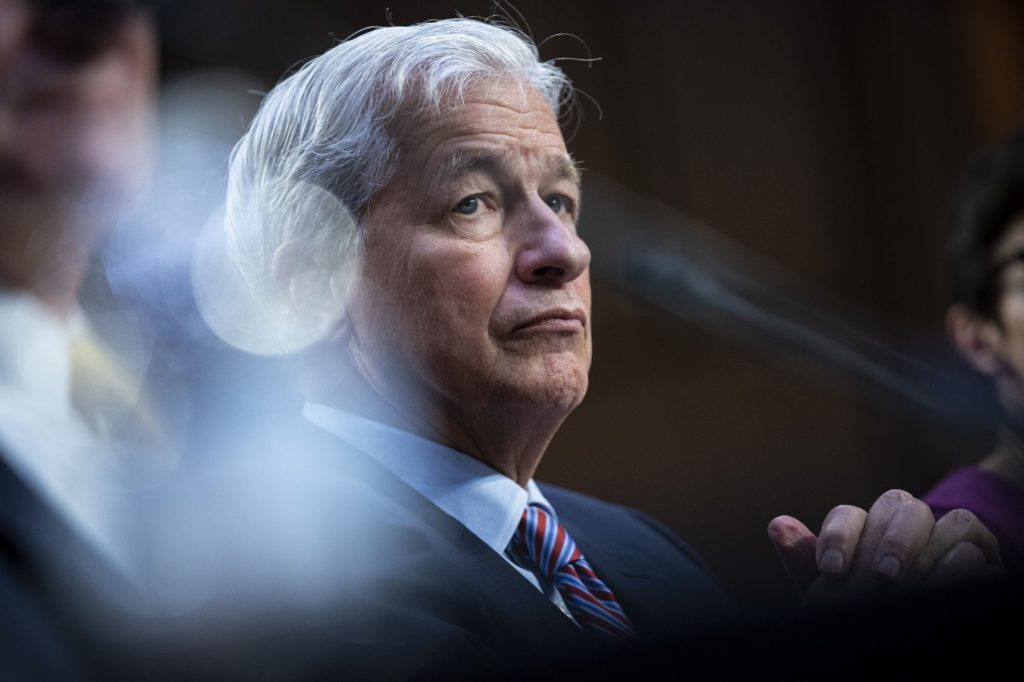
(Bloomberg) — JPMorgan Chase & Co. Chief Executive Officer Jamie Dimon likened crypto tokens to “pet rocks,” continuing his long history of skepticism about the digital assets. 

“Why do we allow this stuff to take place,” Dimon said in an interview with CNBC on Tuesday. He spoke as contagion from the collapse of FTX spreads.

The bank boss told lawmakers in September that cryptocurrencies are “decentralized Ponzi schemes.” Still, he wrote in his annual letter to shareholders that “decentralized finance and blockchain are real, new technologies” and went on to tout his bank’s efforts. 

Dimon has for months been warning of economic headwinds that could push the US and global economies into recession next year. He declined to make a specific prediction, saying in the interview that storm clouds “could be a hurricane, we simply don’t know.” JPMorgan benefited from the Federal Reserve’s rate hikes in the third quarter, reporting its highest quarterly net interest income ever.

–With assistance from Hannah Levitt.

More stories like this are available on bloomberg.com

©2022 Bloomberg L.P.

Israeli Audit Finds Army, Key Infrastructure Vulnerable to Hacks

(Bloomberg) — Israel’s military, tax system and water and transportation networks have inadequate defenses against cyberattacks, according to a report by the state comptroller, which faulted the country esteemed for its cybersecurity prowess for failing to adequately secure some of its own critical infrastructure.

In an audit released Tuesday, and partially redacted for national security reasons, Israeli state comptroller Matanyahu Englman said there were “significant gaps” in the military’s cyberdefenses. He highlighted vulnerabilities in its biometric database that contains hundreds of thousands of dental records, fingerprints and blood samples of current and former Israeli soldiers. 

The army had been ordered to secure the database with high-level cyberdefense measures, but in practice only adopted “mid-level” security, the report said. The armed forces also failed to carry out risk assessments or penetration tests to detect vulnerabilities since the database was established in 2005, he said. 

Cyberattacks are surging in Israel, with weekly attacks on targets in the country climbing to an average of 1,288 per organization so far this year from 811 in 2021, according to research by IT security company Check Point Software Technologies Ltd. Most attacks in the last two years were directed at education and research sites, followed by communications, health care, government and military systems, the Israeli-US cybersecurity firm said. 

Israel is seen as a cybersecurity powerhouse, producing an outsize number of global players, including Check Point and CyberArk Software Ltd. Cyber exports in 2021 rose 61% from the previous year to $11 billion, according to the Israel Export Institute. Data compiled by the Israel National Cyber Directorate in 2021 estimated that 40% of overall private global investment in cybersecurity was sunk into Israeli companies.

The comptroller also criticized the IDF for failing to destroy the biometric data of deceased soldiers, in violation of an order to annually wipe the system of outdated information. He warned of a high risk of identity theft if hackers compromised the database.

“The IDF possesses biometric information of soldiers who died — there is a concern that hackers will use it to impersonate and steal their identities,” he said in a statement accompanying the report.

The state auditor also evaluated the cyberdefense readiness of water companies. The report said cyber threats to Israel’s water and sewage infrastructure have increased in recent years and confirmed two cyberattacks on the industry in 2020 and 2021, without offering details or naming the attackers. In May 2020, the Financial Times and New York Times, citing Israeli and Western intelligence officials, reported that Iran was behind a thwarted cyberattack on Israel’s water facilities a month earlier. Iran denied the allegations.

Englman said that through December 2021, some of the Israeli water companies received “low scores” on cyberdefense.

The state comptroller also cautioned that Israel was not equipped to handle a large-scale cyberattack targeting its public transportation system. There is a “fundamental systematic and functional problem with all that concerns the State of Israel’s readiness against cyber threats in the transportation sector,” he said.

More stories like this are available on bloomberg.com

©2022 Bloomberg L.P.
A Hedge Fund Hit by FTX Collapse Defaults on $36 Million of Debt

(Bloomberg) — Contagion from the messy implosion of Sam Bankman-Fried’s crypto empire is spilling into the world of decentralized finance, after a hedge fund was declared in default on almost $36 million of loans.

Orthogonal Trading said in a tweet on Tuesday that it had been “severely impacted by the collapse of FTX and associated trading activities,” making it unable to repay on a $10 million crypto loan. That prompted the entity that runs the lending pool on DeFi protocol Maple to issue a notice of default for all the fund’s active borrowings. 

The default is the latest example of crypto hedge funds getting roiled by the swift implosion of Sam Bankman-Fried’s FTX in November. FTX was a favored trading venue for institutional crypto investors, and several hedge funds have seen cash trapped on the venue after it filed for bankruptcy. Decentralized finance, where people borrow, lend and trade crypto without a central intermediary, has so far evaded the brunt of the FTX fallout. But Orthogonal Trading’s default hints at just how widely contagion from the demise of FTX and Bankman-Fried’s trading house Alameda Research is spreading. 

Read more: FTX-Trapped Crypto Hedge Funds Want Wall Street-Style Middlemen

Loans arranged on unsecured platforms like Maple don’t require large pools of collateral to support borrowers’ positions in the event of a default, but instead rely on pool managers like M11 to conduct due diligence on borrowers’ financials. Maple said it severed ties with Sydney-based Orthogonal Trading because it misrepresented its financial position to the lending pool, M11 Credit, an allegation M11 also leveled against the hedge fund.

In total, Orthogonal Trading had taken out $31 million of loans in the USDC stablecoin and another $4.9 million denominated in a token called wrapped Ether, according to data from Maple. It now accounts for the majority of M11 Credit’s loans, up from 14% at the start of September. 

“Rather than cooperating with us and disclosing their exposure, they attempted to recover losses through further trading, ultimately losing significant capital,” M11 Credit said in a statement, adding that it had been informed by Orthagonal Trading on Dec. 3 about its inability to repay on the $10 million. Orthogonal Trading didn’t respond to requests for comments.

Orthogonal Credit, a related party which it says operates “structurally separate” from Orthogonal Trading, said in a blog post on Monday that it was “shocked and dismayed” by the event and was unaware of its sister entity’s woes. “We are speechless by the extent of the exposure and liquidity position of Orthogonal Trading’s book of business,” Orthogonal Credit said. 

Orthogonal Credit had originated roughly $850 million in loans over Maple, according to the platform. Fees generated from Orthogonal Credit’s lending pool on Maple will be used to repay Orthogonal Trading’s lenders before the expected closure of the pool in next year’s first quarter, Maple said.

Maple also cut all ties with Orthogonal Credit, according to its statement.  

EXPLAINER: How Serial Meltdowns Are Shaking Crypto’s Foundations

(Adds information on Orthogonal Trading’s loans on M11.)

More stories like this are available on bloomberg.com

©2022 Bloomberg L.P.
Meta’s Oversight Board Criticizes ‘Shortcomings’ in Protection of VIP Accounts

(Bloomberg) — Meta Platforms Inc.’s independent Oversight Board criticized “several shortcomings” in the company’s cross-check program, which moderates the content posted by high-profile users such as former US President Donald Trump.

In a damning report published on Tuesday, the board called for significant changes to be made, including transparency around how the process operates and who qualifies for it, as well as reducing the harm from content shared by people within the program. 

“Such content should not be allowed to remain on the platform accruing views simply because the person who posted it is a business partner or celebrity,” the board said in a blog post following the publication of the report. 

The cross-check program, first revealed by The Wall Street Journal last year, was designed to help Meta avoid a public relations backlash by famous people who mistakenly have their posts taken down for rule violations — something that happens to all users more and more often as the company relies on artificial intelligence for managing content violations. Former Danish Prime Minister Helle Thorning-Schmidt, a board co-chair, has previously criticized Meta in failing to explain how famous people get protection for their content that others don’t.

In a 46-page review, the board said it found the cross-check program, appears “more directly structured to satisfy business concerns,” than to advance the company’s human rights commitments.

The board made 32 recommendations for how Meta could comply with its commitments and address the identified issues, including “radically” increasing transparency around how the cross-check program works and to remove or hide content that is flagged for violations pending a review.

The Oversight Board, which was conceived by and funded by Meta and is comprised of 20 journalists, academics and politicians, began assessing cases last year. Chief Executive Officer Mark Zuckerberg wanted an external body with authority to check Meta’s work, and reverse its content decisions if necessary. Nick Clegg, Meta’s president for global affairs, said in a Twitter post on Tuesday that Meta has agreed to respond to the board within 90 days. 


More stories like this are available on bloomberg.com

©2022 Bloomberg L.P.
Battery Prices Climb For First Time Just as More EVs Hit Market

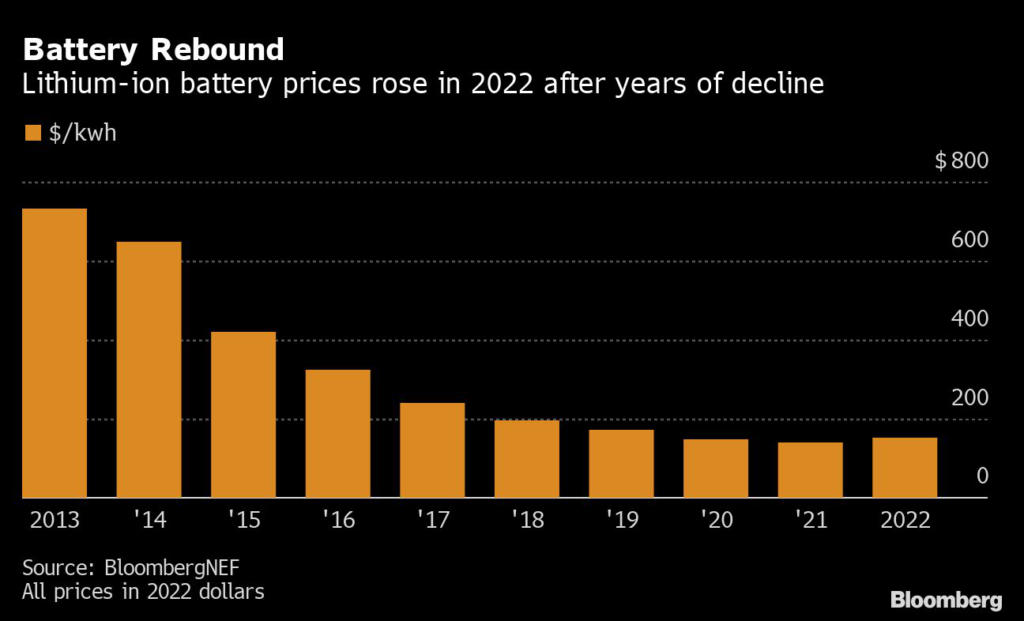
(Bloomberg) — Prices for the batteries that power everything from smartphones to cars rose in 2022 for the first time since research firm BloombergNEF started tracking them — and they won’t likely drop next year.

The global average price for lithium-ion battery packs climbed 7% to $151 per kilowatt-hour, according to BNEF’s annual battery price survey. Never before in the 12 years BNEF has surveyed battery prices have they recorded an annual increase, instead dropping sharply as production grew. But this year’s rising costs for lithium, nickel and the other metals batteries contain have halted that decline and will keep prices around $152/kWh in 2023, BNEF predicts. Not until 2024, when more lithium production is expected to come online, are prices forecast to drop again. 

The $151 figure represents an average price across several industries that use lithium-ion battery packs, including large-scale units being plugged into the electricity grid to prevent blackouts. For electric vehicles, the average pack price was $138/kWh.

The higher prices strike at a delicate moment. Automakers worldwide are rolling out new electric car and truck models aimed at the mass market, not just early adopters, and high battery prices are one of main reasons EVs cost more up-front than comparable gas-burning cars. That EV premium is expected to disappear once battery prices drop below $100/kWh, a milestone BNEF previously forecast would arrive in 2024. Now the research firm forecasts reaching that tipping point in 2026. 


More stories like this are available on bloomberg.com

©2022 Bloomberg L.P.

EV Transition Threatened as Battery Prices Rise for First Time

(Bloomberg) — Prices for the batteries that power everything from smartphones to cars rose in 2022 for the first time since research firm BloombergNEF started tracking them — and they won’t likely drop next year.

The global average price for lithium-ion battery packs climbed 7% to $151 per kilowatt-hour, according to BNEF’s annual battery price survey. Never before in the 12 years BNEF has surveyed battery prices have they recorded an annual increase, instead dropping sharply as production grew. But this year’s rising costs for lithium, nickel and the other metals batteries contain have halted that decline and will keep prices around $152/kWh in 2023, BNEF predicts. Not until 2024, when more lithium production is expected to come online, are prices forecast to drop again. 

The $151 figure represents an average price across several industries that use lithium-ion battery packs, including large-scale units being plugged into the electricity grid to prevent blackouts. For electric vehicles, the average pack price was $138/kWh.

The higher prices strike at a delicate moment. Automakers worldwide are rolling out new electric car and truck models aimed at the mass market, not just early adopters, and high battery prices are one of main reasons EVs cost more up-front than comparable gas-burning cars. That EV premium is expected to disappear once battery prices drop below $100/kWh, a milestone BNEF previously forecast would arrive in 2024. Now the research firm forecasts reaching that tipping point in 2026. 


More stories like this are available on bloomberg.com

©2022 Bloomberg L.P.
Rising Battery Prices Threaten to Derail the Arrival of Affordable EVs

(Bloomberg) —

Falling battery prices have been one of the most consistent trends in the electric vehicle industry for the last decade. Prices dropped from well over $1,000 per kilowatt hour in 2010 to $141 per kWh last year(1). This jump-started one of the biggest shifts in the auto industry in the last century, spurring automakers to plow billions of dollars into EVs.

The trend has ground to a halt this year, with BloombergNEF’s annual lithium-ion battery price survey showing a 7% increase in average pack prices in 2022 in real terms. This is the first increase in the history of the survey.

There are several factors driving the uptick, but the single most important one is rising costs for materials including cobalt, nickel and lithium. While prices for nickel and cobalt have come down in recent months, and lithium may be about to turn, each of these are still higher than they have been in previous years. This is driven by surging battery demand and a lag in how fast new supply can be brought online.

The average battery price would have been even higher if not for the shift to lower-cost lithium iron phosphate (LFP) batteries, which contain no nickel or cobalt. LFP batteries have gained significant market share in the last three years, with BloombergNEF expecting them to account for around 40% of global EV sales this year. Battery manufacturer margins also are lower this year, suggesting they’ve absorbed some of the rising costs of materials and components.

To arrive at the average price, BNEF gathered almost 200 survey data points from buyers and sellers of lithium-ion batteries going into passenger EVs, commercial vehicles, buses and stationary storage applications. The headline figure is a volume-weighted average, so it hides a lot of variation by region and application. The lowest prices recorded were for electric buses and commercial vehicles in China at $131 per kWh. Average pack prices for fully electric passenger vehicles were $138 per kWh.

On a regional basis, pack prices were cheapest in China, at $127 per kWh. Packs in the US and Europe were 24% and 33% higher, respectively.

The big question is what happens next. BloombergNEF’s energy storage team expects prices to remain elevated next year, rising slightly in real terms over 2022 levels. Beyond that, the team is expecting prices to begin falling again in 2024 as more raw material supply comes online, supply chain pressures ease, and next-generation battery technologies and pack designs start to make their way into the vehicle mix.

An oft cited benchmark for when EVs hit price parity with conventional vehicles is $100 per kWh. Based on the updated estimates for the learning rate for batteries from this year’s survey, BNEF predicts that average pack prices should fall below that threshold by 2026. This is two years later than previously expected.

It’s worth noting, though, that $100 per kWh is a nominal figure that’s been around for over a decade and doesn’t fully take into account how the cost of almost everything has increased due to inflation, particularly in the last 18 months. Average new-vehicle transaction prices in the US climbed to more than $48,000 this year, the highest ever. EVs are pulling up transaction prices a bit, but the cost of making a vehicle with an internal combustion engine also is rising.

EV price parity is better thought of as a range than a fixed threshold. At today’s battery prices, some vehicle segments can already go fully electric cost-effectively without subsidies. Premium electric vehicles, for example, arguably are at price parity with internal combustion models already, as are mini city cars in China, where EV options start at just $5,000. For commercial vehicles like buses and delivery vans, where total cost of ownership matters most, parity is also already here or very close depending on the region and usage pattern.

Battery prices do still need to fall further for more of the middle market to go electric this decade. That’s definitely still achievable, but will require much more investment in all areas of the battery supply chain, as well as in R&D and manufacturing process improvements.

BloombergNEF clients can access the full report here.

–With assistance from Evelina Stoikou.

(1) Prices in real 2022 dollars. 2021 survey average in nominal terms was $132 per kWh.

More stories like this are available on bloomberg.com

©2022 Bloomberg L.P.

NRG Energy to Buy Vivint Smart Home for $2.8 Billion in Cash

(Bloomberg) — NRG Energy Inc., which operates power plants and runs a retail electricity businesses, agreed to buy Vivint Smart Home Inc. for $2.8 billion in an all-cash deal, accelerating its strategy to focus more on consumers and home services.

The deal at $12 a share represents a premium of about 33% to Vivint’s closing share price on Dec. 5, according to a statement Tuesday. The total enterprise value of the deal is $5.2 billion, including $2.4 billion of debt. Vivint, based in Provo, Utah, sells smart thermostats, locks, lights and other household devices.   

NRG Energy has been pushing into the retail electricity business, with the latest deal a further step away from running power plants. The Houston-based company, which still operates a fleet of gas, coal and other generating plants totaling 18 gigawatts, agreed to buy Centrica Plc’s Direct Energy unit in a $3.6 billion deal in 2020. 

“Last year at our investor day, we presented our strategic roadmap to becoming the leading provider of essential services for homes and businesses, informed by consumer trends and underpinned by disciplined execution,” said Mauricio Gutierrez, president and chief executive officer of NRG. “The acquisition of Vivint is a transformational step in achieving our vision.”

NRG shares fell as much as 8.8% before the start of regular trading in New York. Vivint surged 32%.

The deal will create a company with an network of about 7.4 million customers across North America, and is in line with NRG Energy’s long-term free cash flow before growth per share growth target, it said. The transaction is expected to close in the first quarter of 2023, and is subject to customary closing conditions.

(Updates with background, comment starting in the third paragraph)

More stories like this are available on bloomberg.com

©2022 Bloomberg L.P.

The 21 Most Indulgent Food and Drink Gifts for Everyone on Your List

(Bloomberg) — Holiday gifting for food lovers is a harder proposition than it seems. The cliched “it’s the thought that counts” doesn’t always apply to someone who is picky about their chocolate, their sparkling wine, their food-scented candles.

At the same time, in this season of high indulgence, nothing screams holidays more than terrific food and drink items, and related gadgets and accessories. Whether you’re trying to impress a serious culinary enthusiast, or spoil someone (yourself), the 21 items below check multiple boxes. They range from a custom-engraved tomahawk steak to a new cookbook replete with photos, highlighting a world’s best restaurant; there’s also a bottle of elegant sake from an expert Champagne maker and a grill for smoking meat from famed pitmaster Aaron Franklin. In short, something for everyone you want to celebrate with — after they’ve opened their gift.

Food

Gucci Panettone

The iconic fashion house collaborated with California-based pastry chef and panettone expert Roy Shvartzapel for the ultimate take on Italian Christmas bread. This one is studded with Amarena cherries, chocolate-hazelnut gianduja and crowned with whole, toasted hazelnuts packed in a holiday-hued Gucci-designed metal tin. $160

Andy’s Orchard Persimmons

The top of the line of Fuyu persimmon producers — consider them the Chateau Petrus of the industry — is Andy’s Orchard in California’s Santa Clara Valley. The farm has amassed a cult following for its exceptionally sweet, oversized fruits. $37 for six to eight fruits

MATER Chocolate

Chefs Virgilio Martínez and Pía León of globally acclaimed Central restaurant in Peru have started producing these silky smooth chocolate bars (MATER is the restaurant’s research and development arm). They’re made from 51% to 100% Peruvian cacao, harvested near the Peruvian city of Cusco this past spring. $50

Pat LaFrieda Engraved Tomahawk Steak

New York’s meat master Pat LaFrieda will custom engrave this 40-ounce, 30-day dry-aged center-cut tomahawk steak. Maybe you’d want one that says “Happy Holidays” or “My Steak” — anything within a 15-character limit. It’s the ultimate host gift. $172

Daphnis and Chloe, The Yellow Set

Celebrating classic Mediterranean flavors, this Athens-based outfit sources highly fragrant organic herbs from tiny farms throughout the Greek islands, like sage from Crete and bay leaves from the Ionian Coast. Cute branding in small glass jars makes these botanicals extra giftable. $94

Flamingo Estate Heritage Extra Virgin Olive Oil

Buttery, floral, with a hint of pepperiness, this California olive oil made from a blend of varietals is pressed from organic and sustainably-grown centuries-plus-old olive trees, is the ultimate condiment to enrich everything from goat cheese to pasta. $39

Blackberry Farm Cheese Club

The aged farmstead cheeses, including a housemade nutty herbed tomme, are just one of the selling points for culinary enthusiasts trekking to Blackberry Farm, the food-focused luxury resort overlooking Tennessee’s Smoky Mountains. Now they can be sampled at home, along with artisan cheeses from producers like California’s Point Reyes Farmstead Cheese Company. $215-$800

Drink 

ONYX Bigface Coffee Set

The Gesha coffee bean varietal is the most expensive and elusive in the world, and these particular beans are not only from one of the most legendary coffee farms, Colombia’s La Palma El Tucán, this is the same coffee that’s won multiple World Coffee Championships. Expect a silky brew with notes of chocolate and raspberry; only 250 bags have been produced and go on sale Dec. 9. $200 for 10 oz.

IWA 5 Sake

This global cuisine-friendly junmai daiginjo sake — a rice wine created by decades-long Dom Perignon cellar master Richard Geoffroy — embraces an experimental blend of three Japanese rice varietals, five yeast strains, and multiple vintages. The result is a rich elixir with notes of almond and pear. $195

Forthave Spirits Mithradates VI

For 2,000 years, Mitrhridatum was marketed as an elixir of long life. The boutique Brooklyn-based distillery Forthave Spirits has reinterpreted this historical recipe as a red wine-based amaro using wine from New York’s Finger Lakes regions, and 34 spices and herbs, including cardamom and mace. $30

Casa Dragones Reposado Mizunara

Inspired by the Japanese practice of ageing whiskey in mizunara wood casks, luxe tequila producer Casa Dragones’ latest expression — and a first for the tequila category — is experimenting with the model. Their reposado tequila is rested for up to six months in Japanese mizunara barrels. This silky smooth sipper tastes of butterscotch and orange blossom. $180

Dom Perignon Rosé 2008

Containing the rosé vintage 2008, the iconic Champagne house created this flashy pink, limited edition bottle’s label in collaboration with musician Lady Gaga. Look for notes of raspberry and rose with the rich bodied bubbly. $450

Moon Juice Cosmic Cocoa

Just in time for the start of winter, the boho Los Angeles-based wellness brand Moon Juice is offering a good-for-you hot chocolate. The heirloom Ecuadorian cacao mix is spiked with immunity-boosting reishi mushroom and stress-busting ashwagandha. $30

NON

Haute restaurants like Brooklyn’s two Michelin star Aska have poured NON — an Australia-born alcohol alternative — as a fancy wine replacement. These delicious bubbly drinks comes in flavors like salted raspberry with chamomile, and caramelized pear plus kombu. $30

Kitchen

Blanc Creatives Pro Bronze Handle Rondeau and Stainless Steel Lid Set

Style meets function with Blanc Creatives’ newest cooking set, a multi-purpose rondeau that’s great for searing, simmering, even oven-roasting, capped with a durable stainless steel lid each piece is handmade at a decades old factory in Pennsylvania. $675

The Noma 2.0 Cookbook

Vegetable, Forest, Ocean the grand new volume from celebrated chef Rene Redzepi, with Mette Soberg and Junichi Takahashi, tells the story of Noma in 200 dishes, from a truffle feather to reindeer heart tartare. The book has recipes for enthusiast cooks, and striking pictures for anyone who wants to armchair travel to the restaurant. $75

Esker Beauty, Calendula Hand Cleanser

Hand soap is not the most obvious of holiday gifts. But this naturally antibacterial hand soap from the chic skincare line Esker, is laced with calendula petals and includes botanicals like palo santo and clove that naturally help scent a kitchen. $52

Double-Level Knife Stand

Decorated French chef Laurent Gras and Japanese woodworker Eiji Tsuji together crafted this handsome hinoki and ebony wood knife stand; rubber strips keep up to six knifes in place on a counter or near a professional work station. $480

D.S. & Durga Lightable Latkes Candle

Whether or not you’re planning to serve potato latkes this year, this Hanukkah-inspired candle uncannily captures the fried pancake aroma with green notes of raw potato mixed with the scent of fresh laundry. $65 

Atelier Saucier Luxxe Set Napkins

With a soft sparkle, these pom-pom edged, reclaimed linen napkins from the Los Angeles-based textile designer add a festive touch to any tabletop and don’t wrinkle after washing. $88 for four

Aaron Franklin Barbecue Pit

Beat the hours-long lines in Austin at famed pitmaster Aaron Franklin’s Franklin Barbecue — arguably the best in the country — by making his legendary smoke-kissed meats at home. Franklin designed these substantial 600-pound, 6-foot-long handmade steel pits. $5,150 

More stories like this are available on bloomberg.com

©2022 Bloomberg L.P.

Close Bitnami banner
Bitnami