Bloomberg

GameStop Launches Its NFT Marketplace Just as NFT Sales Dry Up

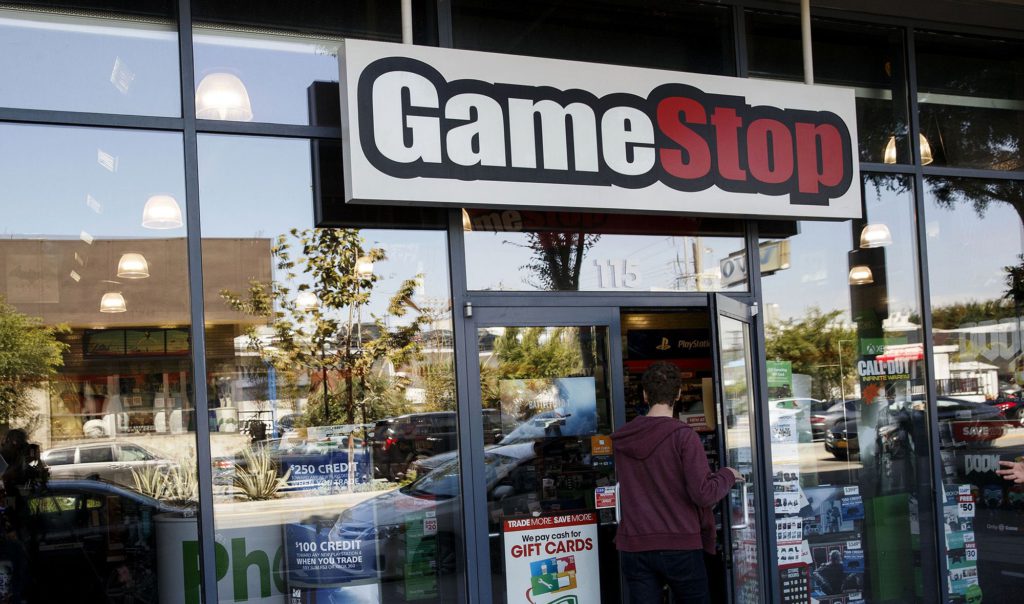
(Bloomberg) — Retailer GameStop Corp. launched its long-awaited marketplace for nonfungible tokens Monday just as sales of such digital artworks dry up amid the crypto industry crash.

The marketplace is part of a push by GameStop Chairman Ryan Cohen to expand its array of digital services and online products in a bid to turn around the struggling video-game retailer.

But the company is following several others that entered the market before the boom in NFT speculation fizzled as the broader crypto markets came under deep pressure. Earlier this year, U.S.’s biggest crypto exchange, Coinbase Global Inc., launched its own NFT marketplace. In June, e-commerce heavyweight eBay Inc. bought NFT marketplace KnownOrigin. 

GameStop is hoping to have an edge by tapping into its existing customer base since gamers are among the NFT industry’s biggest enthusiasts. 

The market for NFTs has taken a turn for the worse. In June, the market for the tokens — such as artworks of bored apes and pudgy penguins — had the first month of under $1 billion in sales since June 2021, according to tracker DappRadar. On the world’s biggest NFT marketplace, OpenSea, sales volume in June fell by more than 70% month over month, according to Dune Analytics.

Last week, GameStop said it fired its chief financial officer and announced job cuts in a bid to turn around the business. 

More stories like this are available on bloomberg.com

©2022 Bloomberg L.P.

Celsius Repays $113 Million of Loans as Crypto Lender Fights Insolvency

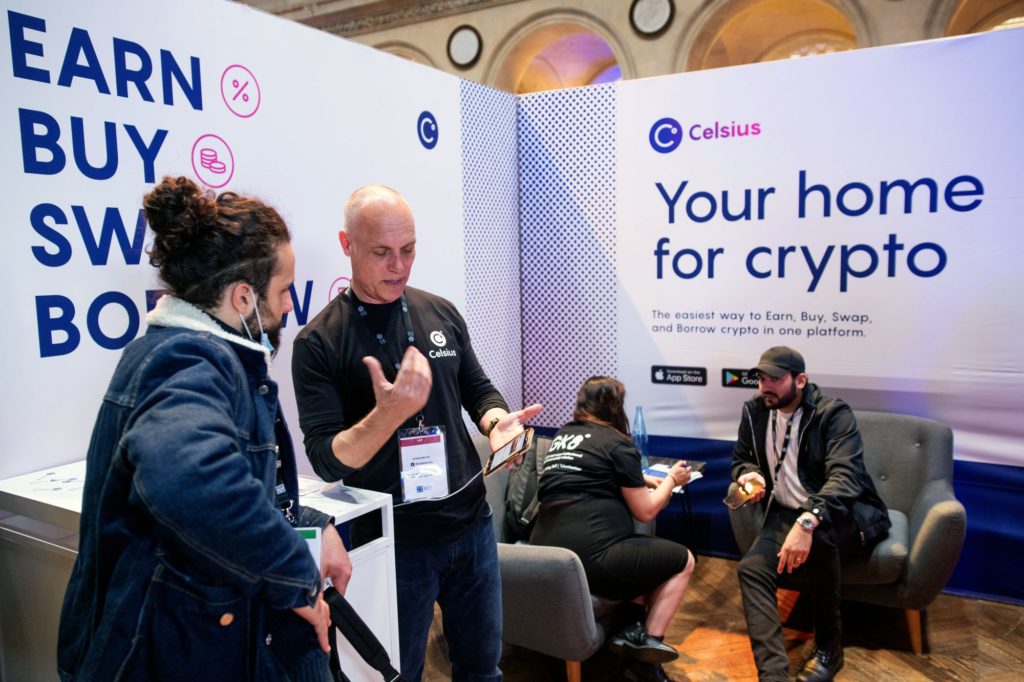
(Bloomberg) — Crypto lender Celsius Network repaid more loans Monday, as the company continues to battle insolvency.

In the past day, Celsius repaid about $78.1 million worth of USDC stablecoin to lending platform Aave, according to tracker Etherscan. It also repaid $35 million worth of stablecoin DAI on platform Compound. 

Amid the recent downturn in cryptocurrency prices, Celsius froze withdrawals in June and more recently started paying off its debts to free up its collateral placed in decentralized-finance applications. Other crypto firms, Voyager Digital Ltd. and Three Arrows Capital, recently filed for bankruptcy. 

Since July 1, digital wallets belonging to Celsius paid back more than $300 million worth of debt to various platforms, including Maker, according to Nansen and Etherscan data.

Celsius still has about $120 million of debt outstanding on Aave and Compound, according to tracker Zapper. On these decentralized lending platforms, collateral gets liquidated automatically in certain circumstances unless it’s repaid.

Celsius’s sources of funding to pay back the loans are unclear. The company didn’t respond to a request for comment. 

Celsius used to promise people who gave it their digital coins more than 18% in interest on their holdings; Celsius, in turn, lent those coins out.

The distressed lender has provided limited guidance since halting withdrawals on June 12. On June 30, the company said it’s exploring options such as “strategic transactions as well as a restructuring of our liabilities.”

More stories like this are available on bloomberg.com

©2022 Bloomberg L.P.

Twitter Shares Sink, With Legal Battle Ahead as Elon Musk Walks Away

(Bloomberg) — Twitter Inc. shares fell Monday after Elon Musk walked away from his $44 billion deal to buy the company, setting the scene for a disruptive legal battle.

The shares closed 11% lower at $32.65, erasing about $3.2 billion in market value, after Musk backed out of an agreement to buy the social-media giant and take it private. Shares in Tesla Inc., the electric carmaker that Musk leads, fell nearly 7%. 

Twitter shares have been trading well below the $54.20-per-share offer Musk made in April. The billionaire alleges that Twitter misrepresented user data, saying the number of spam bots on the platform is much higher than the company has disclosed. The stock has also been falling along with the tech sector amid rising interest rates.

“It’s not a huge surprise to anyone that Musk is trying to abandon the deal,” said Vital Knowledge founder Adam Crisafulli. “The problem, though, is that this whole saga was probably quite disruptive over the last few months, which could weigh on Twitter’s performance not only in the second quarter but third quarter too.”

Read more: Musk Effort to Kill Deal Leaves Twitter With Only Bad Options

With a $1 billion breakup fee on the line, traders are bracing for more chaos as Twitter takes Musk to court. 

Twitter Chairman Bret Taylor said the company will pursue legal action in order to close the transaction “on the price and terms agreed by Mr. Musk.” The company has hired merger-law heavyweight Wachtell, Lipton, Rosen & Katz and aims to file suit early this week, according to people familiar with the company’s plans, who asked not to be identified because the matter is private.

Twitter has denied Musk’s claims, saying bots are less than 5% of the total users, with executives repeating as recently as Thursday that their estimates are accurate.

How Musk’s Twitter Deal Foundered Over ‘Spam Bots’: QuickTake

“They are going to require Musk to do the deal even though he says it is terminated, and they have what I would say is a greater than 50% chance that they will win,” said market strategist Cabot Henderson, who has a focus on merger arbitrage and special situations at JonesTrading. 

“Musk getting away with just paying $1 billion would be a big win for him.”

All eyes will be on the company’s quarterly earnings results expected to be released later this month. For its first-quarter financials, revenue rose to $1.2 billion, missing analysts’ estimates amid in a slowdown in advertising.

“The company is well known but it’s not a great business,” said Kimberly Forrest, founder and chief investment officer of Bokeh Capital Partners. “Wall Street needs companies to show revenue and/or earnings growth. Twitter doesn’t seem to have a plan to grow either at this point.”

(Updates with closing prices throughout.)

More stories like this are available on bloomberg.com

©2022 Bloomberg L.P.

Goldman Lends MercadoLibre $233 Million for Credit Growth

(Bloomberg) — Goldman Sachs Group Inc. has agreed to loan $233 million to Latin American e-commerce giant MercadoLibre Inc.’s fintech arm as the firm plans on expanding its credit offering in two key markets. 

MercadoPago, as the financial-tech business is known, will use $106 million to boost its credit portfolio aimed at individuals and smaller businesses in Brazil, while $127 million is earmarked for Mexico, according to a statement Monday. Last November, Citigroup Inc. loaned the firm $375 million. 

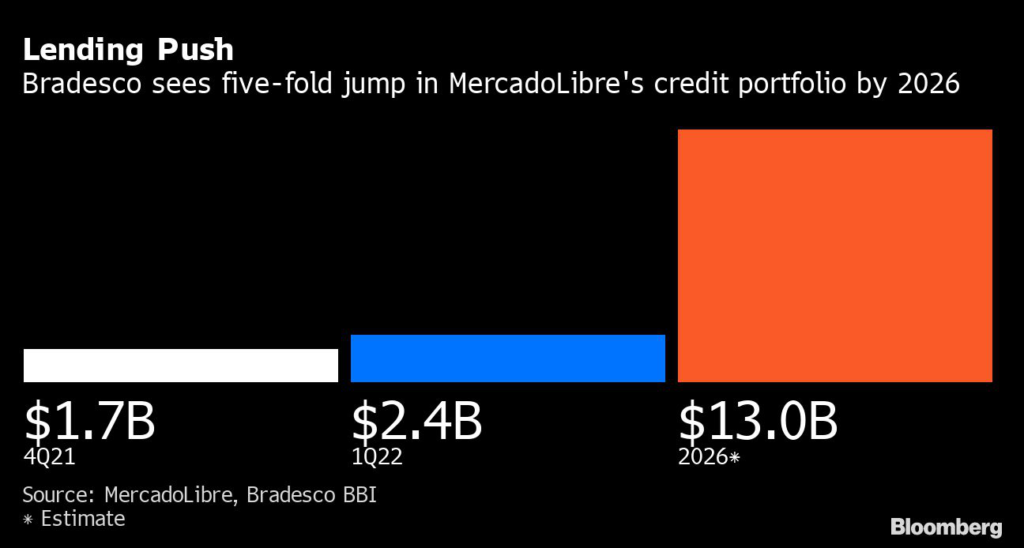
The Buenos Aires-based company started offering credit services in 2016 and saw its credit portfolio grow to over $2.4 billion in the first quarter, up from about $1.7 billion by the end of last year. 

Lending is “a high margin business” that will double its share in MercadoLibre’s total revenue to about 22% in 2024, up from about 11% in 2021, Bradesco BBI analysts led by Richard Cathcart wrote in a report in May. 

Shares of MercadoLibre are down 67% since peaking at the beginning of 2021, joining a global correction in technology names amid higher interest rates. Concern over an increasingly competitive environment in Brazil and challenging comparables after the pandemic-driven boom have also weighed on investor appetite.  

More stories like this are available on bloomberg.com

©2022 Bloomberg L.P.

Rogers Defends Shaw Deal After Network Failure as Stock Falls

(Bloomberg) — Rogers Communications Inc. Chief Executive Officer Tony Staffieri defended his company’s C$20 billion ($15.4 billion) deal to buy Shaw Communications Inc. as a way to improve the reliability of Canada’s communications system after a nationwide network failure left millions without service and drew the ire of the country’s industry minister.

“We very much remain committed to the Shaw transaction. That transaction has always been about expanding our network capabilities, attaining more redundancy and coverage across the nation that can only help in situations like this,” Staffieri said Monday in an interview on BNN Bloomberg Television. 

But the shares of both companies tumbled as investors grow more concerned that the deal could fall apart. Champagne’s department has the final say on approvals for Rogers’ proposed acquisition of Shaw, a major internet and wireless provider based in Canada’s west. 

Shaw dropped as much as 6.6% and was down 4.3% to C$34.67 as of 3:51 p.m. in Toronto. Its shares are now more than 14% below the Rogers takeover offer of C$40.50 a share. Rogers fell 4.6%. 

Staffieri apologized again for the network failure, which began Friday and stretched into the weekend. He is due to meet Industry Minister Francois-Philippe Champagne on Monday afternoon to discuss what happened. 

Champagne blasted the company’s network problem as “unacceptable” and said work was needed to fix reliability issues. The meeting is scheduled to discuss “how important it is to improve the reliability of the networks across Canada,” according to a statement from the minister’s office. Champagne will speak to reporters afterward.

“This is a significant test for the leadership of the Rogers organization,” Robert McFarlane, former chief financial officer of Rogers competitor Telus Corp., said on BNN Bloomberg. “They need to seize the moment. They need to apologize. They need to take concrete actions so it never happens again. And they need to compensate or do actions that engender loyalty.”

The country’s antitrust body, known as the Competition Bureau, has opposed the Shaw deal and Friday’s outage could provide the regulator with more ammunition in its battle to stop the merger.

The “unprecedented” failure “is likely to introduce incremental regulatory risk to the Shaw transaction, heightens investor concerns regarding Rogers’ ability to execute on deal synergies and counters a constructive industry narrative on network performance,” BMO Capital Markets analyst Tim Casey wrote in a note Monday.

Casey estimated Rogers will take a C$70 million hit to revenue and toearnings before interest, taxes, depreciation and amortization in the third quarter because of the outage. He lowered his estimate for revenue and Ebitda by C$150 million this year and next. 

(Updates share prices and other new information)

More stories like this are available on bloomberg.com

©2022 Bloomberg L.P.

Warner Bros. Discovery in Talks With Amazon for New HBO Max Deal

(Bloomberg) — Warner Bros. Discovery Inc. has been in talks with Amazon.com Inc. about restarting a distribution agreement for the online retailer to sell Warner’s HBO Max along with its Prime Video service.

A deal to resell the HBO Max streaming service could come this year, according to several people familiar with the discussions who asked to not be identified because the negotiations are private. The talks could still falter. Warner Bros. Discovery will only cut a deal if Amazon agrees to some additional terms, such as sharing data about viewer behavior.

Spokespeople for Amazon and Warner Bros. Discovery, the parent of HBO, CNN and other channels, declined to comment.

If the two sides came to an agreement it would reverse a move that happened only last year. HBO Max, then owned by AT&T Inc.,  pulled its service off of the Amazon platform, a move that cost the company 5 million subscribers. Warner executives said at the time they wanted to have a direct relationship with the customers. Amazon limited HBO Max’s access to information about viewer habits as well as its ability to promote new programs.

The Warner business merged in April with Discovery Inc. and there’s now a lot of incentive for Chief Executive Officer David Zaslav to get a deal done. Zaslav needs to boost HBO Max’s subscriber base and generate additional revenue to help pay off debt and lift the stock of Warner Bros Discovery, which has fallen about 45% since Discovery completed the merger. 

Customers of Amazon’s Prime Video can buy subscriptions to many streaming services as an add-on and watch the programming from those companies within Prime. Many services, including Starz and Sundance Now, rely on this model, allowing Amazon to handle billing and getting thousands or millions of additional customers in exchange.

Zaslav and his streaming chief, JB Perrette, aren’t as doctrinaire about owning the customer relationship as the previous Warner management. Their other big streaming service, Discovery+, is sold via Amazon channels, and the two companies have been testing a program whereby Amazon shares some customer data with Discovery.

More stories like this are available on bloomberg.com

©2022 Bloomberg L.P.

Traders Sour on Stocks With Megacap Tech Tumbling: Markets Wrap

(Bloomberg) — Stocks slumped, with traders positioning for a hot inflation reading and the start of a key earnings season that may provide clues on whether the economy is headed toward a recession. The dollar climbed.

A rout in megacaps like Tesla Inc. and Apple Inc. weighed heavily on trading. Twitter Inc. sank as Elon Musk walked away from his $44 billion deal to buy the company, setting the scene for a legal battle. The euro edged closer toward parity with the greenback, while 10-year US yields dropped below 3%.

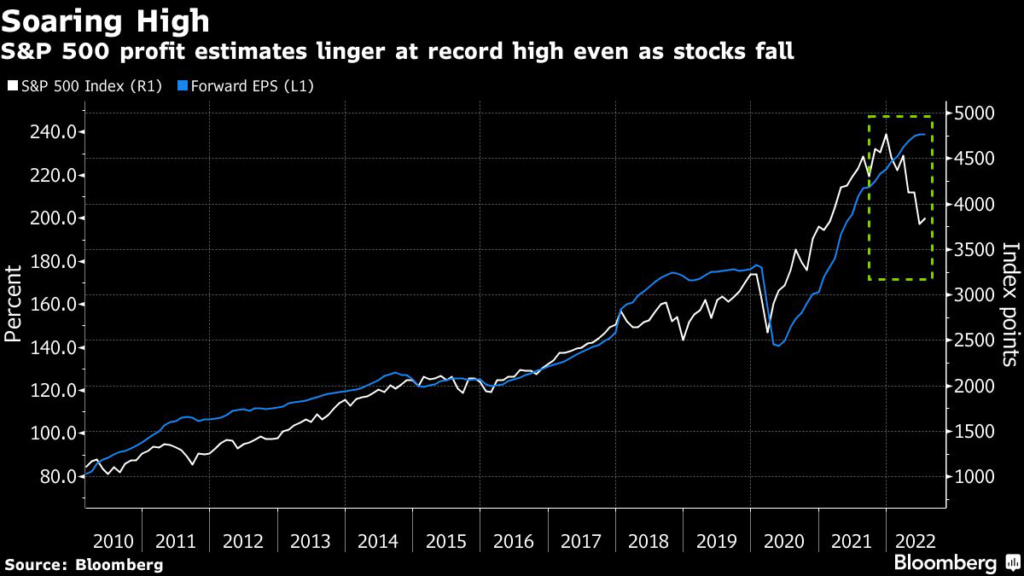
Amid a pervasive confluence of economic challenges, investors are waiting to see if profits are holding up or if companies will cut forecasts significantly. One reason for caution is the dichotomy between two major Wall Street forces. Analysts are betting Corporate America is resilient enough to pass on higher costs to consumers at a time when many strategists aren’t really convinced that’s the case.

“The stock market has NOT already priced in any possible upcoming decline in earnings estimates from this year (or next),” wrote Matt Maley, chief market strategist at Miller Tabak. “Even if earnings estimates stay stable and especially if they decline, the stock market is going to have to fall further before we see an important bottom.”

Maley noted that stocks are trading at valuation levels that are seen as highs — not lows. The current price-to-sales metric, for instance, is at the same level of market tops in 2020, 2018 and at the tech bubble in 2000, he added.

Read: BlackRock Warns Against Dip Buying as High-Volatility Era Dawns

Price pressures, a wave of monetary tightening and a slowing global economy continue to keep investors on the sidelines even after an $18 trillion first-half wipeout in global equities. A US inflation reading on Wednesday is expected to get closer to 9%, buttressing the Federal Reserve’s case for a jumbo July rate increase.

Steep Fed hikes and recession fears have lifted the greenback to the highest levels since March 2020. The dollar surge will be a “massive headwind” for profits at many large US firms and another reason to expect a dimming earnings outlook, wrote Michael Wilson, chief US equity strategist at Morgan Stanley.

Billionaire investor Leon Cooperman said that a stronger dollar is indeed “negative for corporate profits.” In fact, several firms like giants Microsoft Corp., Costco Wholesale Corp. and Salesforce Inc. have also bemoaned the impacts of the US currency’s meteoric ascent.

For Wilson, the S&P 500’s bear market will continue, and he sees fair value at 3,400-3,500 in case of a soft landing and 3,000 in a recession — a 23% downside from Friday’s close.

“A stagflationary stall is as probable as an outright recession,” wrote Lisa Shalett, chief investment officer at Morgan Stanley Wealth Management.

Read: Gross Favors T-Bills Over Stocks, Bonds as Recession Looms Large

Meantime, Citigroup Inc. strategists pointed out that there’s a strong correlation between the Fed’s rate trajectory and earnings growth. They say it’s been common for profits to rise as the Fed tightens its policy and to contract as the central bank switches to easing in response to economic weakness.

That means corporate earnings should remain resilient to surging inflation and slowing growth, paving the way for battered US stocks to rally in the remainder of 2022, they added. The strategists expect the S&P 500 to finish this year at 4,200 — about 7.7% higher from Friday.

As big banks kick off the earnings season this week, traders will be looking for clues about the health of the consumer and spending trends as well as lending to businesses and corporate confidence. Real-estate valuations and lending may also be key for market direction, along with thoughts on the state of capital markets.

Results from the FAANG cohort of megacaps like Facebook owner Meta Platforms Inc. and Google’s parent Alphabet Inc. won’t come out until later this month. But traders are getting ready for heightened volatility as profit cuts by industry analysts have been lagging, leaving room for big surprises and dramatic post-earnings moves.

Elsewhere, Bitcoin fell again — and Wall Street expects the cryptocurrency’s selloff to get a whole lot worse. The token is more likely to tumble to $10,000, cutting its value roughly in half, than it is to rally back to $30,000, according to 60% of the 950 investors who responded to the latest MLIV Pulse survey. The tally also showed that 40% saw it going the other way.

Crude declined amid a renewed increase in China’s virus cases, while a court order allowed the crucial CPC terminal on Russia’s Black Sea coast to stay operational — easing some supply concerns. Chicago corn futures jumped the most in almost a year as US forecasts point to a heat wave during the crop’s key development period. 

Read: Commodity Bull Case Intact After Selloff, Hedge Fund Boss Says

What to watch this week:

  • Earnings due from JPMorgan, Morgan Stanley, Citigroup, Wells Fargo
  • BOE Governor Andrew Bailey discusses the economic landscape, Tuesday
  • Amazon.com Inc. kicks off its Prime Day event, Tuesday
  • South Korea, New Zealand rate decisions, Wednesday
  • US CPI data, Wednesday
  • Federal Reserve Beige Book, Wednesday
  • US PPI, jobless claims, Thursday
  • China GDP, Friday
  • US business inventories, industrial production, University of Michigan consumer sentiment, Empire manufacturing, retail sales, Friday
  • G-20 finance ministers, central bankers meet in Bali, from Friday
  • Atlanta Fed President Raphael Bostic speaks, Friday

Some of the main moves in markets:

Stocks

  • The S&P 500 fell 1.2% as of 3:26 p.m. New York time
  • The Nasdaq 100 fell 2.2%
  • The Dow Jones Industrial Average fell 0.6%
  • The MSCI World index fell 1.4%

Currencies

  • The Bloomberg Dollar Spot Index rose 1%
  • The euro fell 1.3% to $1.0049
  • The British pound fell 1.2% to $1.1887
  • The Japanese yen fell 0.9% to 137.39 per dollar

Bonds

  • The yield on 10-year Treasuries declined nine basis points to 2.99%
  • Germany’s 10-year yield declined 10 basis points to 1.25%
  • Britain’s 10-year yield declined six basis points to 2.18%

Commodities

  • West Texas Intermediate crude fell 1.1% to $103.65 a barrel
  • Gold futures fell 0.6% to $1,732.20 an ounce

More stories like this are available on bloomberg.com

©2022 Bloomberg L.P.

Raimondo Laments National-Security Risk in Logjam on Chips Bill

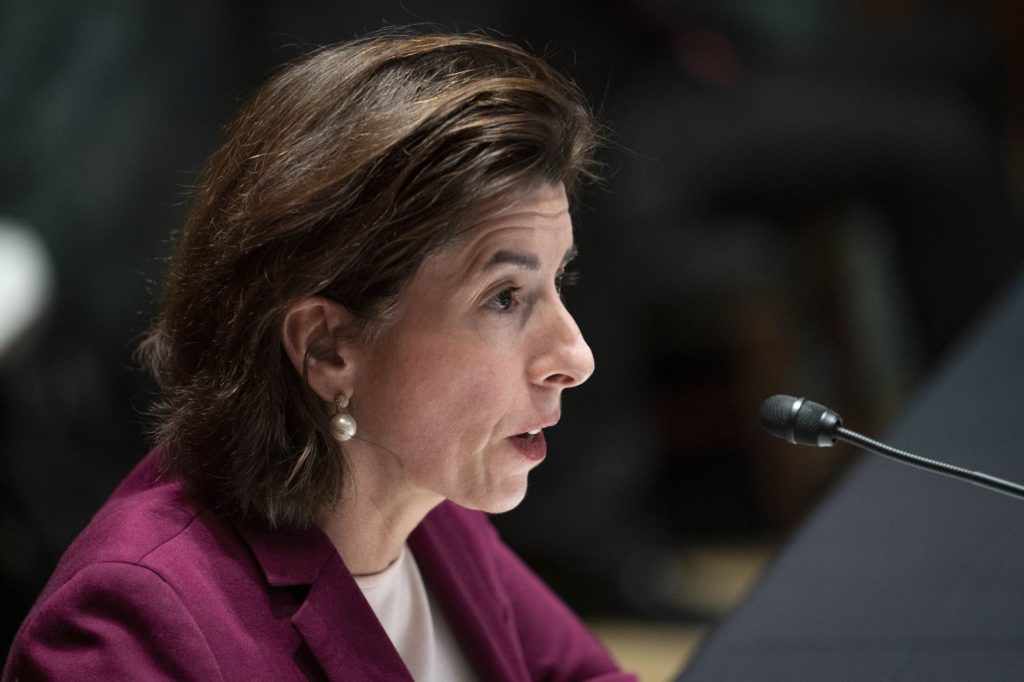
(Bloomberg) — US lawmakers are playing politics with national security by delaying the passage of legislation that will liberate billions of dollars for chipmakers to build more manufacturing facilities in the US amid a global shortage, Commerce Secretary Gina Raimondo said. 

“Yes, it will happen — it’s taking much too long,” Raimondo said in an interview with Guy Johnson and David Westin on Bloomberg Television Monday. “It isn’t right to play politics with national security, that’s what I think is happening.” 

Raimondo said lawmakers have made “huge progress” in the past two weeks.


“Everyone just needs to come back today, get back to work and commit themselves to getting it done in the next few weeks,” she said, referring to lawmakers who have returned to Washington.

The Biden administration has for months sought the passage of the US Innovation and Competition Act that would appropriate $52 billion for domestic semiconductor manufacturing. 

The legislation would provide billions of dollars to boost research and development with an eye toward creating new technologies to help the US stay ahead of a rising China. 

Enactment of the semiconductor incentives is a top priority for the Biden administration as well as manufacturers such as Intel Corp. and companies that are heavy users of chips. While the global semiconductor shortage has eased somewhat, there is still limited production for certain chips used in cars and home appliances. The wrangling over the bill comes as semiconductor stocks took a beating, driven by concerns about demand cooling for chips as the US economy faces recession fears.

In late June, Senate Republican leader Mitch McConnell threatened to scuttle the legislation.

Separately, President Joe Biden’s team has been considering easing some Trump-era tariffs on consumer goods from China for some time amid divisions among his team. Senior US and Chinese officials discussed US economic sanctions and tariffs in recent weeks.

Raimondo said she thinks that Biden will announce a decision on whether to ease some of the tariffs on more than $300 billion of imports from China “very soon.” 

A string of increasingly large Federal Reserve interest-rate increases has supercharged the dollar, with the Bloomberg Dollar Spot Index up 0.9% Monday to the strongest since March 2020. 

Raimondo said she’s unconcerned about the strength of the US currency, she said in response to a question about the potential for American exporters to be hampered by exchange-rate appreciation.

“From where I sit and everything that I see, I am not concerned about the dollar being as strong as it is,” she said, adding that the real US economy is quite strong. “Inflation is our challenge — the Fed is appropriately taking action, the administration is doing all that we can do, and a strong dollar is as it is, which I am not worried about.”

(Updates with Raimondo’s comment on the dollar in penultimate paragraph.)

More stories like this are available on bloomberg.com

©2022 Bloomberg L.P.
Texas Grid Nears Breaking Point as Heat Drives Up Demand

(Bloomberg) — The Texas power grid is facing its biggest test of the year as scorching temperatures threaten to drive demand for electricity beyond the system’s breaking point. 

With electricity consumption projected to climb to an all-time high of almost 80 gigawatts, the state’s grid operator is asking residents and businesses to limit energy usage Monday afternoon. That’s driving up power prices as temperatures climb to more than 100 degrees Fahrenheit (38 Celsius).

Power grids around the globe are facing severe tests this summer as climate change drives temperatures to record highs and Russia’s war in Ukraine has strained fuel supplies. In the US, officials have warned that a vast swath of the nation, from the Great Lakes to the West Coast, is at risk of blackouts. Texas has already set new records for power demand six times this year, most recently on Friday as a heat wave engulfs the state. 

The region is facing “the most serious kind of heat,” with the worst conditions likely to remain across central Texas through Tuesday, according to Andrew Quigley, a National Weather Service meteorologist. Temperatures should drop from being 100 to 110 degrees closer to the upper 90s to low 100s later in the week. “There will be slight improvement, but the operative word there is slight.” 

Also See: Summer Blackout Fears Fuel 300% Jump in Gauge of US Power Profit

The call for conservation lasts from 2 p.m. to 8 p.m. local time, according to the Electric Reliability Council of Texas, the main grid operator. No system-wide outages are expected for now. High demand will be compounded by low wind speeds, which are keeping the state’s massive fleet of turbines at less than 10% of their potential output.

Shortly before 2 p.m. local time, power reserves on the state’s grid dipped to just above 3,000 megawatts, a key threshold that allows officials to take steps to curb demand and boost supply. 

Day-ahead power prices for Monday afternoon were as high as $2,084 a megawatt-hour.

The tightest period Monday will be about 2 p.m. local time, when demand is projected to slightly exceed available generating capacity, according to data from Ercot. Temperatures across Texas, including in Austin, San Antonio, Waco, and Abilene could set records for the date, and Houston could get close with a high of 102 Fahrenheit, according to the US Weather Prediction Center. 

Almost all of the major cryptocurrency mining operations have scaled down operations, allowing about 1 gigawatt of capacity to flow back to the grid, according to the Texas Blockchain Association. Crypto mining has taken off in Texas in the past year, leading to concerns that the power-intensive operations would tax the state’s energy systems. 

Texas’s power grid remains under scrutiny more than a year after the system collapsed during a winter storm, leaving much of the state without power for days. More than 240 people died, and the true economic costs topped $50 billion. Officials enacted a raft of reforms following the crisis, but critics warn the system remains vulnerable.

Ercot and state regulators asked industrial power users to prepare to curtail their usage voluntarily on Monday, especially when prices surge, said Katie Coleman, an attorney for the Texas Association of Manufacturers, who described the communication as typical for summertime events. 

“There have been no directives for any industrials to curtail involuntarily,” she said.

The biggest companies operating in Texas include Exxon Mobil Corp., Tesla Inc., Apple Inc. and American Airlines Group Inc., and two Major League Baseball teams currently playing their seasons. The NASA Johnson Space Center is in Houston.

The fate of Texas’s power grid has significant political implications for Governor Greg Abbott, who is up for reelection this year and has insisted the reforms that he and his fellow Republicans enacted following the deadly winter storm have fixed the system.

Abbott’s Democratic opponent in November’s election, Beto O’Rourke, seized on the alert to criticize the governor over his management of the electricity grid. “The governor of the 9th largest economy on earth — the energy capital of the world — can’t guarantee the power will stay on,” the former congressman from El Paso said in a tweet.

(Updates with reserves falling in the sixth paragraph.)

More stories like this are available on bloomberg.com

©2022 Bloomberg L.P.
Broadcom’s Krause to Become CEO of New Citrix-Tibco Combination

(Bloomberg) — Tom Krause, who stepped down Monday as president of Broadcom Inc.’s software group, is expected to be named chief executive officer of the company being formed via the merger of Citrix Systems Inc. and Tibco Software, according to people familiar with the matter. 

Krause is to become CEO after that deal closes, said the people, who asked to not be identified because the details aren’t public. The transaction is slated to close in the third quarter. 

Representatives for Citrix and Tibco didn’t immediately comment.  

Krause, 44, was one of the chief negotiators in Broadcom’s $61 billion acquisition of cloud-computing company VMware Inc. He joined Broadcom in 2012 and became its chief financial officer in 2016. Since 2020, he’s led the chip firm’s six software divisions.

Elliott Investment Management and Vista Equity Partners agreed to buy Citrix in January for about $13 billion, with plans to merge it with Vista portfolio company Tibco. 

Citrix makes software that workers use to log onto to their corporate programs virtually. Tibco is an enterprise data management firm. The combination will create one of the world’s largest software providers, serving 400,000 customers, according to a statement announcing the merger. 

More stories like this are available on bloomberg.com

©2022 Bloomberg L.P.
Close Bitnami banner
Bitnami