

Bloomberg

Rogers CEO Faces Grilling as Network Woes Cast Deal Shadow

(Bloomberg) — Rogers Communications Inc.’s chief executive officer will face Canada’s industry minister to account for a nationwide network failure that left millions of households and businesses without wireless and internet service. 

Rogers shares fell as much as 2.5% at Monday’s open after Industry Minister Francois-Philippe Champagne’s office said he will meet Rogers CEO Tony Staffieri, along with executives from other major telecoms companies, “to discuss how important it is to improve the reliability of the networks across Canada.”

Champagne’s department has the final call on whether to approve Rogers’ proposed C$20-billion ($15.4 billion) acquisition of Shaw Communications Inc., a major internet and wireless provider based in Canada’s west. The country’s antitrust body, known as the Competition Bureau, has opposed the deal and Friday’s outage could provide the regulator with more ammunition in its battle to stop the merger.

Champagne said the network failure was “unacceptable.” It started Friday morning, stretched into Saturday and affected access to emergency services for some customers as well as bank payment systems including Interac. It even caused postponements of events like The Weeknd’s scheduled concert in Toronto. 

“These services are vitally important for Canadians in their day-to-day life and we expect our telecom industry to meet the highest standards that Canadians rightly deserve,” Champagne said in an emailed statement from his office. 

“If I was working for the Competition Bureau, I would be thinking about ways to quantify the harm that results from an outage like this,” said Benjamin Klass, who researches Canadian telecom policy at Ottawa’s Carleton University and has presented arguments objecting to the deal at hearings.

Klass said Rogers can use a so-called “efficiencies defense” in Canadian merger law to argue that its takeover of Shaw creates a more efficient system with economic benefits for the country, and therefore should be approved. 

Still, Friday’s network collapse demonstrates that there are problems with “over-reliance on these large firms,” Klass said. “In this particular case, more smaller providers would have contained the impact of something like this.”

Hearings on the Shaw transaction are scheduled for the fall and Bay Street analysts now expect Friday’s network outage to be a focus of interest, as well as a source of regulatory risk.

The “unprecedented” failure “is likely to introduce incremental regulatory risk to the Shaw transaction, heightens investor concerns regarding Rogers’ ability to execute on deal synergies and counters a constructive industry narrative on network performance,” BMO Capital Markets analyst Tim Casey wrote in a note Monday.

Similarly, Scotiabank analyst Maher Yaghi wrote Monday that “increased political and regulatory risk is a possibility,” but added that regulators are more likely to heighten oversight of the company than “force a complete overhaul of the competitive landscape.”

Regardless, there are calls for major changes to Canada’s telecom landscape. “The Rogers-Shaw merger should have been a non-starter from the very outset,” University of Ottawa law professor Michael Geist wrote on his widely read public policy blog Sunday, adding the event should be “a wake-up for a government that has been asleep on digital policy.”

Geist wrote that neither the current government nor the telecom regulator, the Canadian Radio-television and Telecommunications Commission, have “shown much inclination to challenge the big telcos.”

Staffieri apologized in a Saturday statement and said the Toronto-based company would compensate customers with a credit, but didn’t quantify the extent of the financial impact on the company.

He also offered an explanation on what happened, blaming the issue on a maintenance update that caused its routers to fail within its core network. The disruption was so wide-ranging that even Canada’s telecom regulator lost phone service on Friday. 

(Adds share move in second paragraph)

More stories like this are available on bloomberg.com

©2022 Bloomberg L.P.
Musk’s About-Face on Twitter Sends Takeover Saga to Delaware

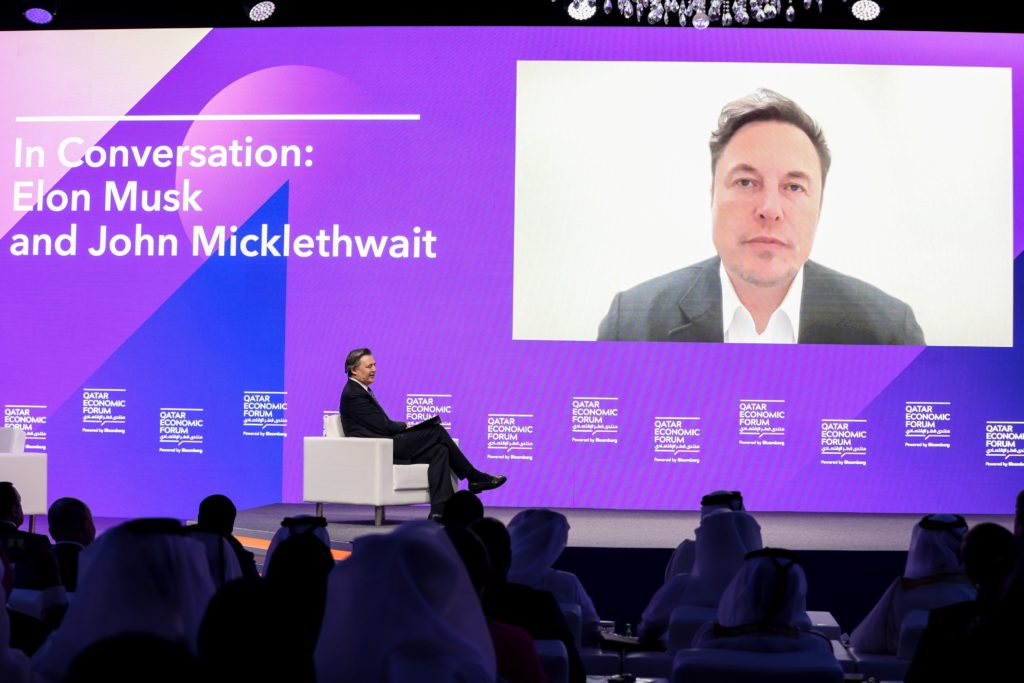
(Bloomberg) — Now that Elon Musk has decided that he doesn’t want to buy Twitter Inc. after all, he can’t just walk away from the $44 billion contract. The billionaire co-founder of Tesla Inc. will need to make his case before a judge in Delaware that Twitter failed to uphold its side of a merger deal reached in April. If history is a guide, his job won’t be easy.

Twitter Chairman Bret Taylor vowed Friday that the social media platform will fight in the Delaware Court of Chancery to compel Musk to follow through on his agreement, and the company has lawyered up in a race to sue. A filing could come as soon as early this week, people familiar with the matter told Bloomberg. 

If the judge rules against Musk, he could be forced to pay Twitter shareholders $54.20 a share, as he said he would in the accord announced April 25. A ruling in his favor would let Musk walk, though he’d probably have to pay a break-up fee, initially set at $1 billion. There’s also the prospect that both sides reach a settlement whereby Musk still makes the acquisition, potentially at a lower price. Twitter shares slid 6.4% to $34.45 as the market opened on Monday in New York.

The judge in this case will zero in closely on the densely worded intricacies of the 73-page purchase agreement, and the court has rarely sided with parties who, like Musk, are attempting to bail on acquisition commitments.

Musk’s rationale centers on automated user accounts known as bots and how Twitter accounts for them. He alleges that the social media platform is teeming with spam bots, disputing Twitter’s contention that they make up less than 5% of total users. Musk said in his Friday filing with the US Securities and Exchange Commission that Twitter’s failure to properly hand over specifics on the number of bots amounts to what’s known as a “company material adverse effect [MAE]” A judge must decide whether such an event has occurred and whether it justifies Musk’s cancellation.

Larry Hamermesh, a University of Pennsylvania law professor who specializes in Delaware corporate law disputes, describes an MAE as an “unexpected, fundamental, permanent” negative development — akin to blowing a hole in the transaction that can’t be fixed.

So far, Delaware courts have found only one case in which a clear MAE emerged — Fresenius SE’s $4.3 billion buyout bid in 2018 for rival drugmaker Akorn Inc. A judge blessed Fresenius’ decision to walk away from the deal after finding Akorn executives hid an array of problems that cast doubt on the validity of data backing up approval for some drugs and profitability of its operations.

Forcing Musk’s Hand

The agreement also gives Twitter officials so-called specific-performance rights, which means that if the judge finds Musk’s complaints about the bots data don’t rise to the level of an MAE, the platform can demand that the judge force Musk to consummate the buyout.

Musk’s decision to sign the deal without doing due diligence could work against him, said Robert Profusek, head of the mergers and acquisitions department at law firm Jones Day. “His lawyers’ argument that you don’t do diligence and test things out later simply isn’t the way things work in big ticket M&A and, if accepted, would put shareholders at risk,” he said in an interview.

Musk is, at least publicly, laughing off the lawsuit in his characteristic meme fashion. He issued a humorous late-night response to Twitter’s plans to sue, posting a collection of images  — on Twitter — of himself laughing with captions recounting his version of events over the past few months. It conveys a lighthearted attitude from the world’s richest man to what has been a complex and expensive deal that’s weighed on Tesla shares and gone through several iterations of provisional funding. Tesla shares were up less than 1% on Monday.

The billionaire may be taking a dismissive approach but Delaware chancery court judges are known for their expertise in interpreting what may look and sound to the layperson as a maze of legal jargon that seeks to delineate both sides’ rights and responsibilities in a merger and acquisition accord.

In the Twitter deal, the platform’s executives are obligated to promptly furnish Musk with “all information concerning the business, properties and personnel of the company and its subsidiaries as may reasonably be requested.” Musk contends management hasn’t met those duties in connection with the details of spam and bot accounts.

Twitter said it has handed over extensive data on its user base. Executives told media Thursday that the company manually reviews thousands of accounts each quarter to determine the 5% spam bot tally, and estimates that the actual number is well below the threshold disclosed in filings. The company uses internal data, such as examining phone numbers or Internet Protocol addresses, the unique set of characters associated with a computer or other device, to help determine whether an account is run by a human.

The agreement also defines a “company material adverse effect,” as “any change, event, effect or circumstance which, individually or in the aggregate, has resulted in or would reasonably be expected to result in a material adverse effect on the business, financial condition or results of operations of the company and its subsidiaries.”

A probable outcome is that the parties reach an out-of-court settlement. Musk’s effort to pull the plug on the deal is probably nothing more than a negotiating ploy, said Charles Elson, a retired University of Delaware professor and former head of the school’s Weinberg Center for Corporate Governance.

“This is not a material adverse change,” Elson said. “That’s just a negotiating position. He knows the Delaware courts are extremely reluctant to find something like that in these deals.”

To press its case, Twitter has hired merger law heavyweight Wachtell, Lipton, Rosen & Katz, according to people familiar with the matter. The social media company aims to file suit early this week, said the people, who declined to be identified because the matter is private. By hiring Wachtell, it gains access to lawyers including Bill Savitt and Leo Strine, who served as Chancellor of the Delaware Chancery Court.

Musk has brought in Quinn Emanuel Urquhart & Sullivan LLP. The firm led his successful defense against a defamation claim in 2019 and is representing him as part of an ongoing shareholder lawsuit over his failed attempt to take Tesla private in 2018.

Twitter Morale Sinks

Whatever the outcome of legal wrangling, the mood among many employees of San Francisco-based Twitter is dour, people at or close to the company have told Bloomberg. Amid the uncertainty surrounding a possible sale, several employees have lamented what they consider a lack of leadership and vision-setting from the top, including Chief Executive Officer Parag Agrawal, said the people, who requested anonymity discussing internal matters. 

For many Twitter staffers, neither of the likely outcomes is palatable. If Twitter prevails in court, the company will be run by an unpredictable and reluctant owner, while still struggling to meet ambitious growth targets. And should Musk succeed in ending the deal, Twitter stock will likely plummet, and a staff already dejected by Musk’s months-long public criticism of the site will suffer another emotional blow.

Several people have left or are planning to leave because they simply don’t want to work for Musk, the people said. For some, the decision to depart was cemented after a June question-and-answer session during which Musk, who showed up late, told employees that only those who were “exceptional” would be allowed to continue working from home. 

(Updates with Musk meme and opening shares.)

More stories like this are available on bloomberg.com

©2022 Bloomberg L.P.

Klarna’s Funding Cuts Value to $6.7 Billion from $46 Billion

(Bloomberg) — Klarna Bank AB’s valuation has been slashed to $6.7 billion in its latest funding round, in a dramatic reversal for one of Europe’s most high-profile startups. 

The buy-now-pay-later giant said it raised $800 million from new and existing investors, according to a statement Monday. Its new valuation is down from the $45.6 billion it achieved in June 2021, with Klarna downgrading its ambitions several times during the latest talks with investors. 

Klarna extends interest-free loans that let consumers spread payments for purchases over multiple installments, instead of all at once. It makes money by charging retailers a small fee on every transaction and from interest on longer-term loans.

However, interest rates for its own debt are rising and Klarna is burning through hundreds of millions of dollars per quarter. It posted an operating loss of 2.54 billion krona ($245 million) in the first quarter, and 6.58 billion krona last year. 

Existing investors who backed the funding round include Sequoia, Bestseller, Silver Lake, and Commonwealth Bank of Australia. New investors included Mubadala Investment Co. and Canada Pension Plan Investment Board.

The lender, which is regulated by the Swedish Financial Supervisory Authority, also recently cut staff in an effort to curb costs. 

A new valuation for Klarna comes as inflation, higher rates and looming recession pressures a raft of startups who have been seen their valuations rise dramatically over recent years. Shares of rival Affirm Holdings Ltd. have tumbled 75% in the past 12 months as investor sentiment on the buy-now, pay-later model has turned negative.

Klarna has 147 million global active users and 400,000 retail partners, including Nike Inc., Ikea, Sephora and Expedia Group Inc, according to its website. The new funds will target its expansion in the US, where the company has about 30 million customers, with volumes more than tripling in a year, Klarna said in the statement. 

“It’s a testament to the strength of Klarna’s business that, during the steepest drop in global stock markets in over fifty years, investors recognized our strong position,” Chief Executive Officer Sebastian Siemiatkowski said in the statement. 

(Additional context throughout.)

More stories like this are available on bloomberg.com

©2022 Bloomberg L.P.
Sequoia’s Vaunted Strategy Feels the Pain of Tech Stock Selloff

(Bloomberg) — Sequoia Capital has long billed itself to founders as a venture firm that often holds onto shares in portfolio companies well after they debut on public markets. The strategy works in boom times, but for now, Sequoia is feeling a pain familiar to many public equity investors.

Sequoia’s portfolio companies that listed in the US last year have lost more than $7.7 billion of market value since their debuts, according to a Bloomberg analysis of public filings. The declines were led by a $4.2 billion drop in the value of the firm’s IPO stake in Brazilian digital bank NU Holdings Ltd.


The declines, which are spread across the firm’s funds, for now amount to paper losses because Sequoia has not sold its shares. That’s in line with its normal strategy, where it typically hangs on to stock well past the initial share sale and the post-IPO lockup period before distributing shares to its own investors. In some instances, Sequoia bolstered its holdings, buying an additional 2.6 million shares in data analytics firm Amplitude Inc. in February this year and an additional 5.5 million shares in software company Freshworks Inc. in March for its growth funds, according to filings.

Nevertheless, the declines are coming at a particularly inconvenient time.

In October Sequoia announced a new structure, the Sequoia Capital Fund, which allows it to invest in and hold public stocks indefinitely, bypassing a basic constraint of venture capital. Roelof Botha, a partner at Sequoia, has said the move was a response to the strong post-IPO performance of some of its portfolio companies, such as Square, now known as Block Inc. 

Assets are moved from individual venture funds into the new structure one by one and at the discretion of the firm’s partners, said two people familiar with the matter who asked not to be named discussing a private matter. Though stock is being transferred rather than sold, it will still have to be marked to market, so the changes will still affect one important number: the original venture fund’s return, the people said. Since the current market is in turmoil compared to the end of last year, partners face a hit to their “carry,” or returns they receive tied to the performance of the original funds. 

“The Sequoia Capital Fund’s long-term focus allows us to deepen our commitment to founders and to seek to generate superior returns for our LPs by capturing the compounding value that comes later in a company’s journey,” a spokeswoman for the Menlo Park, California-based firm said. “This is true regardless of short-term fluctuations.” 

The market downturn means “this is not an ideal time” to be implementing the new structure, said Robert Bartlett, a professor of law at the University of California, Berkeley, specializing in venture capital finance. He stopped short of criticizing the firm. “Sequoia, they write their own rulebook, and they’ve been successful,” he said. “I’m not going to second guess Sequoia.”

Even with the recent declines the investments are largely still profitable for Sequoia because the firm gets in so early.  

For example, it bought the bulk of its stake in robotics company UiPath Inc. in a 2018 financing, paying about $6 a share. Even though UiPath stock fell to $18.19 at the end of the first half, far below its IPO price of $56, Sequoia is still coming out ahead.

Some of the financings were spearheaded by partners based overseas. Teams in China and India led the investments in Full Truck Alliance and Freshworks. Companies included in this article are limited to those for which information on Sequoia’s stakes was available in public filings, so not all post-listing declines are captured.

Sequoia is not the only venture firm that tends to hold onto stakes long after lockup periods expire and that has been affected by the market’s downturn. Filings show Accel, Andreessen Horowitz and Benchmark are among those that have also taken a hit.

Publicly, Sequoia says it’s looking past the impact of the market turmoil on its portfolio companies. Eric Newcomer wrote about some Sequoia declines in a June newsletter.

“Sequoia continues to be long-term bullish on tech,” partner Bill Coughran said at the Global Corporate Venturing & Innovation Summit in Monterey, California, last month. Then, noting he was speaking personally rather than for the firm, he found a bright side to the declines. “I’m actually glad to see some rationality returning to markets.” 

More stories like this are available on bloomberg.com

©2022 Bloomberg L.P.
Broadcom’s Krause Exits After Helping Lead VMWare Deal Talks

(Bloomberg) — Broadcom Inc. is losing one of its most senior executives, dealing a blow to the chipmaker as it attempts to close one of the biggest technology deals in history.    

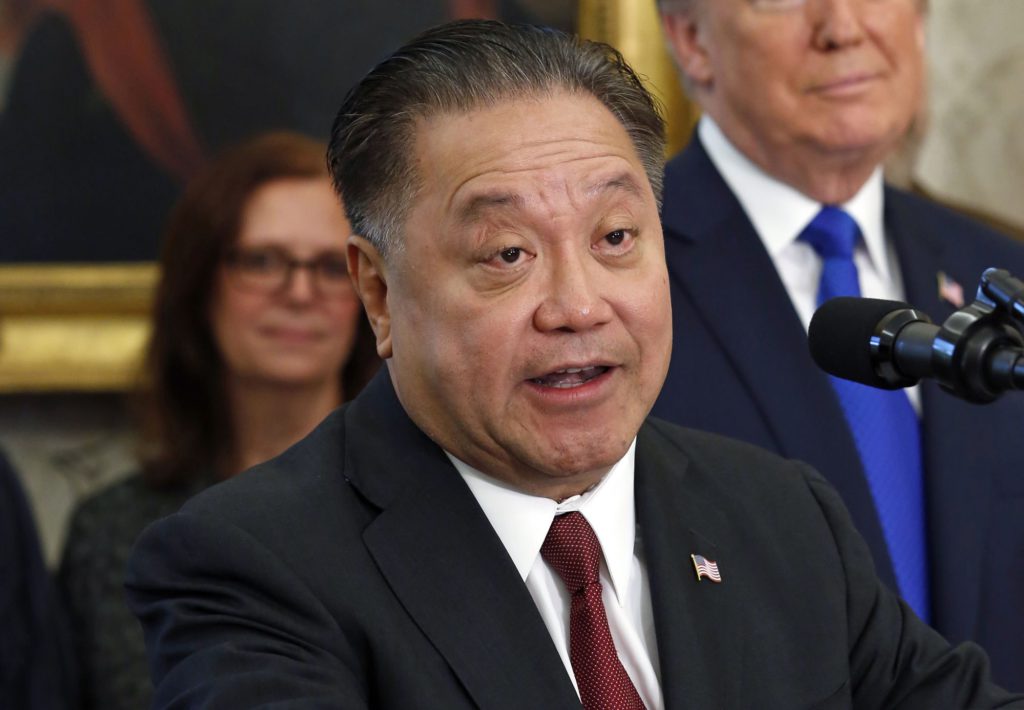
Tom Krause, 44, is resigning as president of the chipmaker’s software group effective July 15 to move to another company, the company said in a regulatory filing Monday. Broadcom didn’t disclose Krause’s new employer beyond saying it’s a privately held enterprise software company. 

Broadcom Chief Executive Officer Hock Tan will assume his responsibilities and the position of president of Broadcom’s software group will be eliminated, the filing said. Charlie Kawwas, chief operating officer, has been named president of the company’s new semiconductor solutions group alongside his current responsibilities. 

Krause joined San Jose, California-based Broadcom in 2012 and became its chief financial officer in 2016. Since 2020, he’s led the chip firm’s six software divisions and was one of the chief negotiators, alongside Tan, in its $61 billion acquisition of cloud-computing company VMware Inc. 

Read more: Broadcom Pined for VMware From Afar Before Making Its Move

In a May interview with Bloomberg News when the VMware deal was announced, Krause said the company offers a reliable source of profitable sales. He added that Broadcom will evaluate where VMware is spending research-and-development funds, as well as some of the newer businesses that the software maker has acquired.

Krause’s departure isn’t the result of any disagreement with the company or management “on any matter relating to the company’s performance, operations, policies, practices or financial statements,” Broadcom said in the statement. 

(Updates with background throughout)

More stories like this are available on bloomberg.com

©2022 Bloomberg L.P.

Adani’s 5G Play Reminds Jefferies of Ambani’s 2010 Telecom Entry

(Bloomberg) — Gautam Adani’s plan to bid for 5G airwaves is possibly a larger telecommunications play by Asia’s richest person, according to analysts at Jefferies Financial Group Inc., who see “uncanny similarities” with fellow billionaire Mukesh Ambani’s low-key, re-entry into telecom in 2010 that eventually created India’s biggest wireless operator.

The Adani Group, which is seeking to build its own digital platform, superapp and data centers, said in a statement Saturday that it’s participating in India’s 5G spectrum auction to provide private network solutions for its various business and will not be entering the consumer mobility space.

However, to achieve that, Adani could have chosen to buy a Captive Non-Public Network permit, which doesn’t allow commercial services and has no entry or license fees. But it chose the more expensive auction route instead, signaling its future ambitions to Jefferies analysts Akshat Agarwal and Ankur Pant. 

“Given that the Adani Group has chosen to buy spectrum through auctions, it may still be able to offer commercial services by applying for a unified access license in the future,” they wrote in a note dated July 10.

Other brokerages are also intrigued by Adani’s game plan. Mumbai-based Motilal Oswal Financial Services Ltd. in a note alluded to an ambitious “consumer bent” within the group, while CLSA wondered why Adani had chosen the auction path. BofA Securities analysts, led by Sachin Salgaonkar, see a business case for a player catering to enterprises only, possibly using millimeter wave technology. 

Reliance Industries Ltd. spooked India’s telecom market in 2010 by acquiring spectrum that wasn’t permitted to be used for voice services initially but a spate of policy changes in the ensuing years, allowed usage and paved the way for the company to eventually topple the incumbents, including Bharti Airtel Ltd.

Telecom stocks in India were mostly lower on Monday. Bharti Airtel fell 5%, its biggest single-day plunge since Sept. 23, 2020 while Reliance Industries erased early losses to rise 1.4%. 

More stories like this are available on bloomberg.com

©2022 Bloomberg L.P.
Bitcoin Is More Likely to Hit $10,000 Than $30,000, Survey Finds

(Bloomberg) — Bitcoin bulls beware: Wall Street expects the cryptocurrency’s crash to get a whole lot worse.

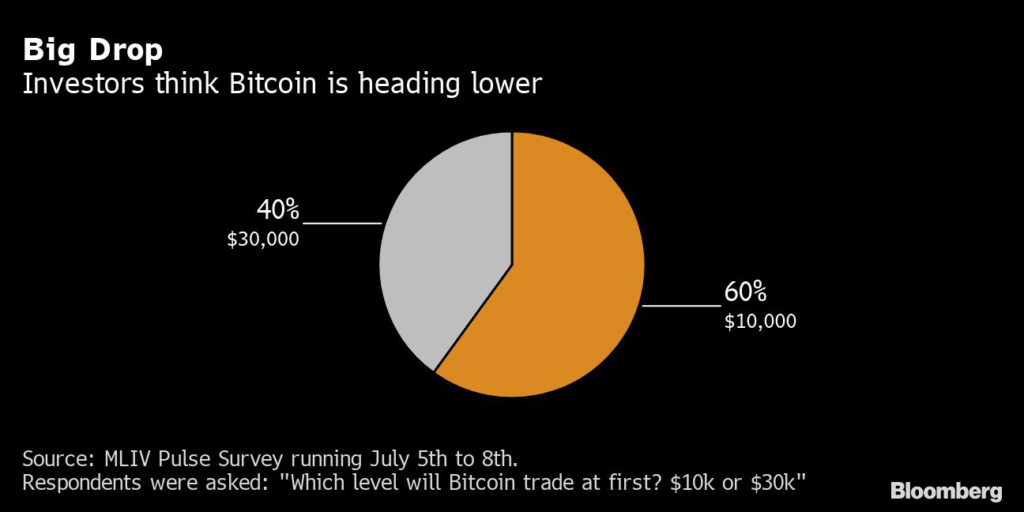
The token is more likely to tumble to $10,000, cutting its value roughly in half, than it is to rally back to $30,000, according to 60% of the 950 investors who responded to the latest MLIV Pulse survey. Forty percent saw it going the other way. Bitcoin fell 2.4% to $20,474 on Monday morning in New York.

The lopsided prediction underscores how bearish investors have become. The crypto industry has been rocked by troubled lenders, collapsed currencies, and an end to the easy money policies of the pandemic that fueled a speculative frenzy in financial markets. 

Some $2 trillion has vanished from the market value of cryptocurrencies since late last year, according to data compiled by CoinGecko. 

Retail investors were more apprehensive about cryptocurrencies than their institutional counterparts, with almost a quarter declaring the asset class to be garbage. Professional investors were more open-minded toward digital assets. 

But overall, this sector remains a polarizing one: while some 28% of the overall respondents expressed strong confidence that cryptocurrencies are the future of finance, 20% said they’re worthless. 

Bitcoin has already lost more than two-thirds of its value since hitting nearly $69,000 in November and hasn’t traded as low as $10,000 since September 2020. 

“It’s very easy to be fearful right now, not only in crypto, but generally in the world,” said Jared Madfes, partner at Tribe Capital, a venture capital firm. He said the expectations for a further drop in Bitcoin reflect “people’s inherent fear in the market.”

The crypto crash is likely to put further pressures on governments to step up regulations of the industry. Such supervision is seen as positive by majority of respondents, since it could improve confidence and lead to broader acceptance among institutional and retail investors.

Government intervention will also probably be welcomed by consumers burned by the collapse of so-called stablecoin TerraUSD and troubled middlemen like Celsius Network and broker Voyager Digital Ltd. 

Central banks are also considering developing their own digital currencies for use in digital payments. 

But neither the recent price drops — nor the potential challenge from central banks — are expected to significantly upend the industry by dethroning the two dominant tokens, Bitcoin and Ether. A majority of respondents anticipate that one of those two will remain a driving force in five years even while a significant share sees central bank digital currencies taking on a key role.

“Bitcoin still is powering large parts of the cryptoverse, while Ethereum is losing its lead,” said Ed Moya, senior market analyst at Oanda Corp., a foreign-exchange broker.

There was a broader consensus about one corner of the market: Nonfungible tokens. NFTs became famous for attracting valuations in the millions of dollars for pictures of monkeys during the height of the crypto boom. But the overwhelming majority of those surveyed consider them to be just art projects or status symbols, with only 9% seeing them as an investment opportunity.

Moreover, those hunting for the next asset-price bubble may do well to look elsewhere, since speculative manias rarely strike the same asset class twice. Ultimately, the next big run-up is expected by most respondents to be entirely unrelated to cryptocurrencies, with NFTs, the next generation of the internet known as web3 and other blockchain developments seen as having low chances of setting off the next frenzy.

“The next financial bubble is always something different than the last bubble, so the majority is absolutely right on this one,” said Matt Maley, chief market strategist at Miller Tabak + Co.

For more markets analysis, see the MLIV blog. For previous surveys, see NI MLIVPULSE. 

More stories like this are available on bloomberg.com

©2022 Bloomberg L.P.
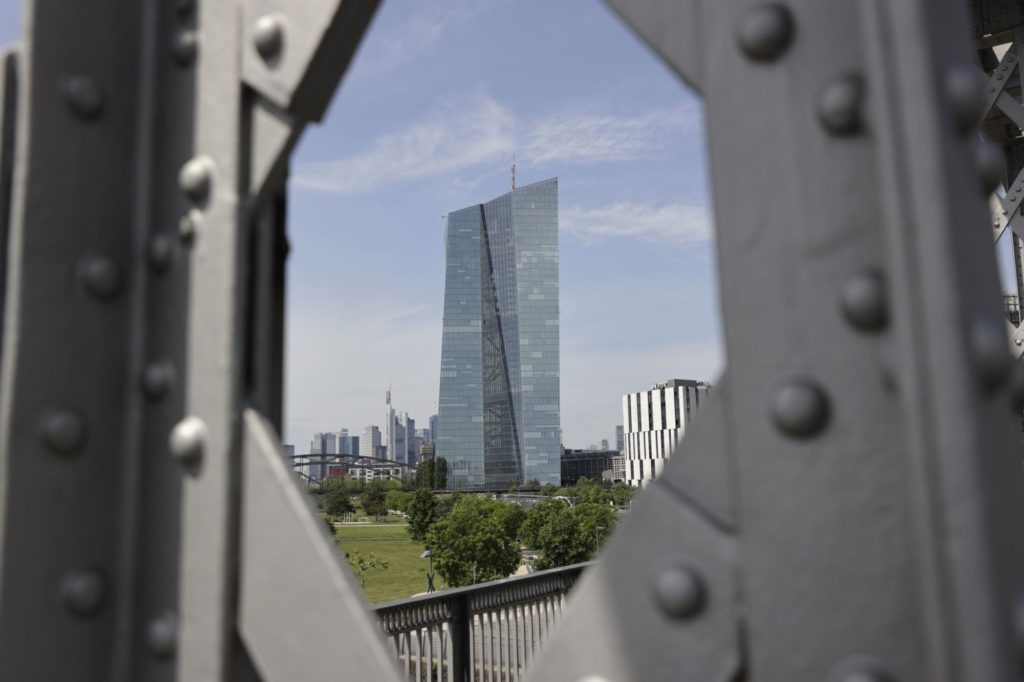
ECB Says Stablecoin Rules Must be Implemented ‘With Urgency’

(Bloomberg) — Stablecoins must “urgently” be brought under increased regulatory oversight before they can become a risk to financial stability, according to the European Central Bank. 

“Financial stability risks from stablecoins are currently still limited in the euro area, but if growth trends continue at their current pace, this may change in the future,” the ECB said in a macroprudential bulletin published Monday. 

The institution said that with some stablecoins already playing critical roles in providing crypto markets with liquidity, there could be significant spillover should a large stablecoin fail. It also warned of “contagion effects” if links between digital assets and the traditional financial system continue to expand.

Read more: Bitcoin Faces Another 50% Drop, Wall Street Says: MLIV Pulse

Stablecoins have come under increasing scrutiny after the meltdown of the TerraUSD token in May, an episode which the ECB said showed that “stablecoins are anything but stable.” Tether, the largest stablecoin, briefly lost its peg to the dollar shortly after TerraUSD collapsed. 

Earlier on Monday, the Financial Stability Board — an international body of regulators, government officials and central bankers — said widely adopted stablecoins must “be held to high regulatory and transparency standards, maintain at all times the reserves that preserve stability of value and meet relevant international standards.” 

Read more in our QuickTake: What Are Stablecoins? Why Did TerraUSD Collapse?

Stablecoins are digital assets designed to hold a steady value, typically pegged to an official currency like the US dollar. A chief concern among policy makers is that the collapse of a major asset-backed stablecoin could trigger fire sales of traditional financial instruments they’re backed by, such as commercial paper. 

More stories like this are available on bloomberg.com

©2022 Bloomberg L.P.

China Lithium Giant Expands in Argentina With $962 Million Deal

(Bloomberg) — Chinese battery-materials giant Ganfeng Lithium Co. is ratcheting up efforts to expand in Argentina, an emerging supply hot-spot for the mineral.

A unit of the lithium supplier plans to purchase 100% of Lithea Inc. for up to $962 million, according to Ganfeng’s filing to the Shenzhen Stock Exchange on Monday. The acquisition is still subject to approval from Chinese authorities.

Lithea is owned by LSC Lithium BV, whose ultimate controlling company is Pluspetrol Resource Corp. BV, and has salt lake assets at Pozuelos and Pastos Grandes to the west of Argentina’s Salta city, the filing said. Its first phase of production is expected to have annual capacity of 30,000 tons of lithium carbonate.

Argentina has the world’s biggest pipeline of lithium projects and 19 million metric tons of resources that haven’t yet been tapped. Chinese and US companies engaged in bidding wars for Argentina’s lithium resources, while Rio Tinto Group and Zijin Mining Group Co. are pouring more than a billion dollars into the country.

Read also: Hunt for Lithium Sparks Frantic Rush Into Argentine Mountains

Lithium, a key ingredient for electric-car batteries, gained nearly 500% in price in the past year, boosting revenue for producers. According to BloombergNEF, prices will still stay elevated in a tight market this year.

Ganfeng has embarked on an acquisition spree spanning Mali to Mexico. The Chinese company already has a stake in the Cauchari-Olaroz project in Argentina’s Jujuy province, which is scheduled for trial production this year and targets annual production of 40,000 tons of lithium carbonate.

More stories like this are available on bloomberg.com

©2022 Bloomberg L.P.

Ex-BofA, Centerview Bankers Raising $101 Million Climate Fund

(Bloomberg) — A pair of former bankers are raising a new venture capital fund to focus on investments in the climate technology sector, highlighting the growing appetite for backing such deals even amid a broader downturn.

Vilnius, Lithuania-based Contrarian Ventures is in talks to raise its second fund capped at 100 million euros ($101 million) and has already held a first closing, according to people familiar with the matter, who asked for anonymity because the news isn’t public. 

The firm is led by managing partner Rokas Peciulaitis, who founded Contrarian at age 26, after previously working as a trader at Bank of America Corp., and general partner Tomas Kemtys who was previously an investment banking associate at Centerview Partners LLC.

A representative for Contrarian declined to comment.

Launched in 2017, Contrarian has so far backed companies such as electric bike maker Zoomo, hydrogen startup H2Pro and solar technology firm PVcase, according to its website. Contrarian aims to invest 1.5 million euros at the earliest stages of a startup’s development while taking a roughly 10% to 15% ownership stake, the people said. 

Funding for startups working on climate and sustainability-related technology has surged amid investor interest, even during a collapse in the value of many technology companies due to rising interest rates and fears of an economic slump. 

Climate tech startups are on track for record funding this year, with first-quarter investment into the sector rising 131% to $15.7 billion, BloombergNEF said in a report. 

More stories like this are available on bloomberg.com

©2022 Bloomberg L.P.

Close Bitnami banner
Bitnami
