Bloomberg

Jump Trading Is All In on Crypto, Despite the Wintry Mix

  • Listen to Bloomberg Crypto on the iHeartRadio App
  • Listen to Bloomberg Crypto on Apple Podcasts
  • Listen to Bloomberg Crypto on Spotify 

(Bloomberg) — Jump Crypto burst onto the scene less than a year ago, with the appointment of a former intern named Kanav Kariya as its founding president. Within a few months, Jump Crypto found itself spending hundreds of millions of dollars bailing out market participants because of a major crypto hack, and having to navigate the collapse of the TerraUSD stablecoin. Undeterred by critics, Kariya believes that the market’s current volatility is the perfect time to double down. In this episode, you’ll hear from Bloomberg reporters Katherine Doherty and Yueqi Yang, who went to Chicago to visit Jump’s headquarters, and hear about what’s next for the firm. 

Follow us on Twitter @crypto, and subscribe to the Bloomberg Crypto Newsletter at https://bloom.bg/cryptonewsletter

More stories like this are available on bloomberg.com

©2022 Bloomberg L.P.

Biden’s Economic Agenda Heads Into Pivotal Month on Capitol Hill

(Bloomberg) — Crunch time has finally arrived for President Joe Biden’s economic agenda as congressional Democrats scramble for a deal on a slimmed-down version of what was once a multi-trillion-dollar overhaul of domestic policy.

The Senate aims to pass the revised package before its summer recess begins Aug. 8, a move that would line up a win for Democrats defending their slim congressional control ahead of November’s midterm elections.

Democrats appear to have learned from last year, when progressives and the White House tried to force holdout Senator Joe Manchin to accept a bill of up to $6 trillion. They later scaled it down to $2.2 trillion, but the moderate West Virginian — whose vote is pivotal in the 50-50 Senate — ended up walking away. 

This time, Senate Majority Leader Chuck Schumer has worked closely with Manchin to reach agreement on prescription drug price cuts and extending Medicare’s solvency. More contentious details on energy spending and tax provisions aren’t finalized between the two senators, but Democrats hope to unveil deals on those this week.

The new bill is expected to raise about $1 trillion in revenue, half of which would be used on new spending and half on cutting the deficit over a 10-year period. 

Fragile Control

To pass the bill by a simple majority using the budget process, all 50 members of the Senate Democratic caucus will need to be present and vote for the legislation. 

But the fragility of the Democrats’ majority was highlighted in late June when Senator Patrick Leahy of Vermont broke his hip. His office says the 82-year-old Democrat will be available to vote as soon as this week, but it’s unclear whether he could withstand the hours-long, late-night voting typical of the budget process.    

Meanwhile, another holdout — Arizona Senator Kyrsten Sinema — hasn’t publicly signed on to the potential plan. 

There’s also no guarantee of passage in the House, where Democrats can afford few defections. Many progressives there could balk at a bill that has shrunk from the $10 trillion social plan they once envisioned. 

How the Biden budget reconciliation bill shakes out will influence what else Congress can accomplish before the midterms. 

Here is the status of the components of the Democratic agenda:

Health Care

The two pieces of the budget bill that Senate Democrats have negotiated so far — drug pricing and raising taxes on the wealthy to extend the solvency of Medicare — have the best prospects for passage in the coming weeks, as long as the Senate’s parliamentarian concludes that they comply with stringent budget rules.

The drug bill would allow Medicare to negotiate the prices of some drugs — generating substantial savings for the government — and cap out-of-pocket costs for seniors at $2,000 per year. The Medicare piece would require so-called pass-through businesses to pay a 3.8% health surcharge on some income. 

Read more: Democrats Plan to Extend Medicare Solvency in New Biden Bill 

Democrats also want to shoehorn into the package an extension of expanded subsidies for Obamacare premiums. That would avoid the cost of some plans tripling in January, when the enlarged subsidies phase out — an issue that would certainly turn off some middle-class voters ahead of the midterms.

Separately, Schumer has decided to hold a vote soon on a bipartisan measure that would cap monthly out-of-pocket insulin costs for those on Medicare and with private health insurance at $35.

Energy Items

The House in November passed a bill with $550 billion in funding for climate-related initiatives. The Senate is looking to pare that back to appease Manchin. On the possible chopping block are direct-pay subsidies to renewable energy firms and expanded tax credits for the purchase of electric vehicles.

The final package is expected to include some kind of fee on methane emissions from oil and gas operations, Democratic Senator Tom Carper of Delaware said. Manchin also continues to press the administration to fast-track permitting for fossil fuels. 

Tax Reform

A 15% corporate minimum tax on so-called book profits is expected to make it into the budget package, but negotiations continue on a 15% global minimum tax and a surtax for high earners.

So far, it’s unclear how Democrats will deal with demands by a key group of House members for lifting the $10,000 cap on the federal deduction for state and local taxes (SALT). That change would benefit voters in high-tax states like New Jersey, New York and California. Democrats including New Jersey’s Josh Gottheimer have said their votes hinge on lifting the SALT cap.

Revenue in the current proposal also comes from expanded funding for tax audits and a 1% tax on stock buybacks. A so-called millionaires surtax, however, is on the verge of being cut from the package.

Read more: Democrats Weigh Paring Biden Tax Hike to Win Over Manchin 

China Competition 

A bipartisan bill aimed at boosting U.S. industrial competitiveness against China and investing in the domestic semiconductor industry is in jeopardy after Senate Minority Leader Mitch McConnell said he would block it because Democrats are now pushing the reconciliation bill to ram through Biden’s economic agenda.

Democrats are exploring options to get around the McConnell blockade, including the House simply passing the version of the China bill that the Senate passed last year. It’s unclear, however, whether there are enough votes.  

Read more: Semiconductor Funding Bill Likely to Survive McConnell Threat

Fiscal 2023 Spending 

The Oct. 1 start of the coming fiscal year is approaching, and Congress is far from completing the necessary annual federal spending bills. The House plans to pass a package of six bills the week of July 18, but it’s almost certain the federal government will require a stopgap continuing resolution come October, since Senate Republicans don’t support the House bills.

The House’s $1.6 trillion top-line spending level is sure to change given bipartisan support for higher military spending in the face of high inflation and the fresh security challenges posed by Russia’s Ukraine invasion. A push by Democrats to allow taxpayer funding for abortions in the wake of the Supreme Court ruling overturning Roe vs. Wade could make talks with the GOP difficult. 

Antitrust Policy

The Senate’s tentative plans for a July vote on a bipartisan antitrust measure risks getting pushed into September or beyond given the focus on the Biden economic agenda. The legislation would bar major online companies from favoring their own service over those of rivals who use their platforms. 

Amazon Inc., Alphabet Inc.’s Google, Apple Inc. and Meta Platforms Inc. — the companies most likely to be affected by proposed legislation — have spent millions of dollars lobbying against it. The bill has support from a wide range of lawmakers, as well as smaller tech companies like Yelp, Match Group and Spotify.  

Read more: Tech Antitrust Bills Vote Slips to July as Negotiations Drag On

Defense Policy 

The House this week will vote on the annual defense authorization bill, which calls for a $37 billion boost to the national security budget above Biden’s request. But appropriators would need to sign off on it in order for the higher level of spending to come into effect.

The Senate Armed Services Committee’s version of the policy bill authorized a $45 billion increase. The Senate likely won’t take up the defense bill until at least September, and it could become a vehicle for elements of the stalled China competition bill.

More stories like this are available on bloomberg.com

©2022 Bloomberg L.P.

Biden’s Economic Plan Hits Crunch Time, Now With Manchin as Ally

(Bloomberg) — Crunch time has finally arrived for President Joe Biden’s economic agenda as congressional Democrats scramble for a deal on a slimmed-down version of what was once a multi-trillion-dollar overhaul of domestic policy.

The Senate aims to pass the revised package before its summer recess begins Aug. 8, a move that would line up a win for Democrats defending their slim congressional control ahead of November’s midterm elections.

Democrats appear to have learned from last year, when progressives and the White House tried to force holdout Senator Joe Manchin to accept a bill of up to $6 trillion. They later scaled it down to $2.2 trillion, but the moderate West Virginian — whose vote is pivotal in the 50-50 Senate — ended up walking away. 

This time, Senate Majority Leader Chuck Schumer has worked closely with Manchin to reach agreement on prescription drug price cuts and extending Medicare’s solvency. More contentious details on energy spending and tax provisions aren’t finalized between the two senators, but Democrats hope to unveil deals on those this week.

The new bill is expected to raise about $1 trillion in revenue, half of which would be used on new spending and half on cutting the deficit over a 10-year period. 

Fragile Control

To pass the bill by a simple majority using the budget process, all 50 members of the Senate Democratic caucus will need to be present and vote for the legislation. 

But the fragility of the Democrats’ majority was highlighted in late June when Senator Patrick Leahy of Vermont broke his hip. His office says the 82-year-old Democrat will be available to vote as soon as this week, but it’s unclear whether he could withstand the hours-long, late-night voting typical of the budget process.    

Meanwhile, another holdout — Arizona Senator Kyrsten Sinema — hasn’t publicly signed on to the potential plan. 

There’s also no guarantee of passage in the House, where Democrats can afford few defections. Many progressives there could balk at a bill that has shrunk from the $10 trillion social plan they once envisioned. 

How the Biden budget reconciliation bill shakes out will influence what else Congress can accomplish before the midterms. 

Here is the status of the components of the Democratic agenda:

Health Care

The two pieces of the budget bill that Senate Democrats have negotiated so far — drug pricing and raising taxes on the wealthy to extend the solvency of Medicare — have the best prospects for passage in the coming weeks, as long as the Senate’s parliamentarian concludes that they comply with stringent budget rules.

The drug bill would allow Medicare to negotiate the prices of some drugs — generating substantial savings for the government — and cap out-of-pocket costs for seniors at $2,000 per year. The Medicare piece would require so-called pass-through businesses to pay a 3.8% health surcharge on some income. 

Read more: Democrats Plan to Extend Medicare Solvency in New Biden Bill 

Democrats also want to shoehorn into the package an extension of expanded subsidies for Obamacare premiums. That would avoid the cost of some plans tripling in January, when the enlarged subsidies phase out — an issue that would certainly turn off some middle-class voters ahead of the midterms.

Separately, Schumer has decided to hold a vote soon on a bipartisan measure that would cap monthly out-of-pocket insulin costs for those on Medicare and with private health insurance at $35.

Energy Items

The House in November passed a bill with $550 billion in funding for climate-related initiatives. The Senate is looking to pare that back to appease Manchin. On the possible chopping block are direct-pay subsidies to renewable energy firms and expanded tax credits for the purchase of electric vehicles.

The final package is expected to include some kind of fee on methane emissions from oil and gas operations, Democratic Senator Tom Carper of Delaware said. Manchin also continues to press the administration to fast-track permitting for fossil fuels. 

Tax Reform

A 15% corporate minimum tax on so-called book profits is expected to make it into the budget package, but negotiations continue on a 15% global minimum tax and a surtax for high earners.

So far, it’s unclear how Democrats will deal with demands by a key group of House members for lifting the $10,000 cap on the federal deduction for state and local taxes (SALT). That change would benefit voters in high-tax states like New Jersey, New York and California. Democrats including New Jersey’s Josh Gottheimer have said their votes hinge on lifting the SALT cap.

Revenue in the current proposal also comes from expanded funding for tax audits and a 1% tax on stock buybacks. A so-called millionaires surtax, however, is on the verge of being cut from the package.

Read more: Democrats Weigh Paring Biden Tax Hike to Win Over Manchin 

China Competition 

A bipartisan bill aimed at boosting U.S. industrial competitiveness against China and investing in the domestic semiconductor industry is in jeopardy after Senate Minority Leader Mitch McConnell said he would block it because Democrats are now pushing the reconciliation bill to ram through Biden’s economic agenda.

Democrats are exploring options to get around the McConnell blockade, including the House simply passing the version of the China bill that the Senate passed last year. It’s unclear, however, whether there are enough votes.  

Read more: Semiconductor Funding Bill Likely to Survive McConnell Threat

Fiscal 2023 Spending 

The Oct. 1 start of the coming fiscal year is approaching, and Congress is far from completing the necessary annual federal spending bills. The House plans to pass a package of six bills the week of July 18, but it’s almost certain the federal government will require a stopgap continuing resolution come October, since Senate Republicans don’t support the House bills.

The House’s $1.6 trillion top-line spending level is sure to change given bipartisan support for higher military spending in the face of high inflation and the fresh security challenges posed by Russia’s Ukraine invasion. A push by Democrats to allow taxpayer funding for abortions in the wake of the Supreme Court ruling overturning Roe vs. Wade could make talks with the GOP difficult. 

Antitrust Policy

The Senate’s tentative plans for a July vote on a bipartisan antitrust measure risks getting pushed into September or beyond given the focus on the Biden economic agenda. The legislation would bar major online companies from favoring their own service over those of rivals who use their platforms. 

Amazon Inc., Alphabet Inc.’s Google, Apple Inc. and Meta Platforms Inc. — the companies most likely to be affected by proposed legislation — have spent millions of dollars lobbying against it. The bill has support from a wide range of lawmakers, as well as smaller tech companies like Yelp, Match Group and Spotify.  

Read more: Tech Antitrust Bills Vote Slips to July as Negotiations Drag On

Defense Policy 

The House this week will vote on the annual defense authorization bill, which calls for a $37 billion boost to the national security budget above Biden’s request. But appropriators would need to sign off on it in order for the higher level of spending to come into effect.

The Senate Armed Services Committee’s version of the policy bill authorized a $45 billion increase. The Senate likely won’t take up the defense bill until at least September, and it could become a vehicle for elements of the stalled China competition bill.

More stories like this are available on bloomberg.com

©2022 Bloomberg L.P.

The Global Tax Revolution for Tech Giants Is Delayed to 2024

(Bloomberg) — A global taxation deal heralded as a “revolution” for the profits of multinational tech firms has run into a thicket of technical difficulties that will delay implementation to 2024 at the earliest.

Work at the Organization for Economic Cooperation and Development on a legal instrument to change tax treaties the world over has proved tougher than foreseen when negotiators initially set next year as a target for the new system to come into force. 

“These are complex and very technical negotiations in relation to some new concepts that fundamentally reform international tax arrangements,” OECD Secretary-General Mathias Cormann said Monday. “We will keep working as quickly as possible to get this work finalized, but we will also take as much time as necessary to get the rules right.”

While Cormann had previously flagged possible delays, the confirmation of a new timetable is another setback for an international agreement aimed at addressing rampant cross-border profit shifting that’s cost governments an estimated $100 billion to $240 billion in tax revenue a year.

There’s more uncertainty too: In the US Congress, the overhaul still lacks the universal support of Democrats and faces concerted Republican opposition.

A failure to implement new rules that would give countries outside the US more rights to tax firms like Amazon.com Inc. and Facebook’s parent Meta Platforms Inc. ultimately risks reigniting a transatlantic trade dispute over digital levies that began during Donald Trump’s presidency. 

European nations and the US had agreed to suspend their tit-for-tat measures so long as OECD’s global accord is implemented by Dec. 31 2023. Canada has also passed legislation that would put in force a national digital tax, retroactive to Jan. 1, if the new global rules aren’t in place by the end of next year.

The Paris-based OECD, which hosts talks on tax between about 140 countries, said it will now present a draft of rules to Group of 20 finance ministers meeting in Indonesia later this week. The aim is to finalize a mechanism to change international treaties by mid-2023, for implementation in 2024.

Members of Congress will be keen for a clearer indication of how the redistribution will affect US tax revenue. The Treasury has so far said the deal will have a negligible net impact. Lawmakers and US-based multinationals will also be looking for clues on how it will affect those companies’ bottom lines.

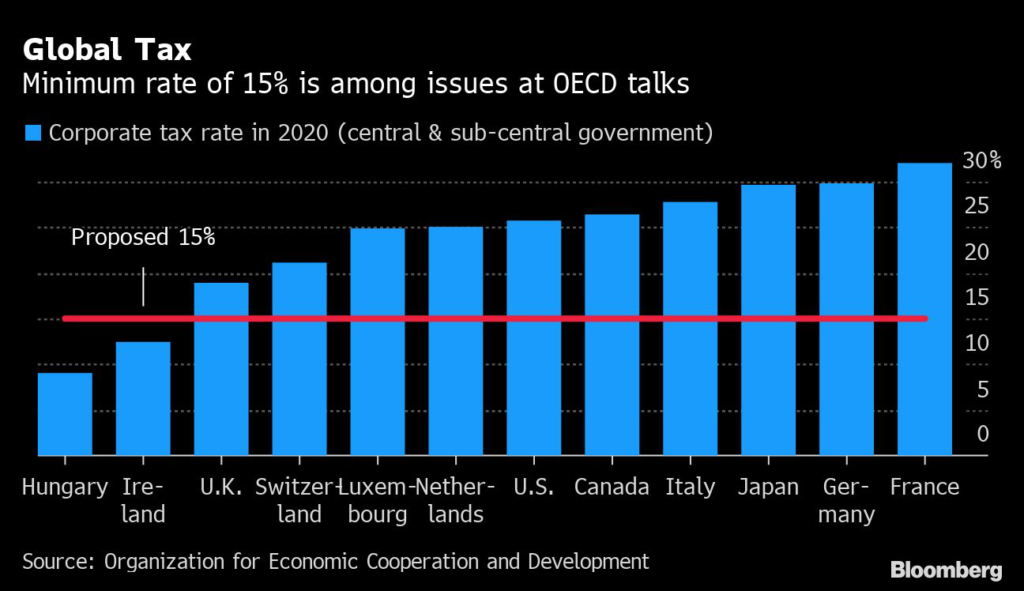
Beyond the part of the global deal relating to where companies are taxed — known as Pillar One — there’s also uncertainty over Pillar Two, which would create a minimum corporate tax. The European Union has failed to secure the required unanimous backing of member-states after Hungary withdrew its support.

Last week, in a sign of the importance of the changes for the US administration, the Treasury Department said it would end a 43-year-old tax treaty with Hungary. Still, the OECD said technical work on the minimum levy is “largely complete” with most major economies having already scheduled implementation plans. 


More stories like this are available on bloomberg.com

©2022 Bloomberg L.P.

Uber Lobbied Politicians, Broke Laws in Global Push: Reports

(Bloomberg) — Uber Technologies Inc. attempted to lobby politicians and flouted laws as part of efforts to expand globally from 2013 to 2017, according to newspaper reports based on leaked documents.

The company allegedly received assistance in its efforts from politicians including French President Emmanuel Macron, reports from outlets including the Guardian and Le Monde said. The so-called “Uber Files” — based on more than 124,000 documents shared with the non-profit International Consortium of Investigative Journalists — cover a period of time when co-founder Travis Kalanick was chief executive officer and detail the lengths to which the company sought to expand into key cities like Paris.

In a statement released shortly after the reports were published, Uber didn’t deny any of the allegations and instead focused on the changes that have been made since Dara Khosrowshahi was named CEO in 2017.   

“There has been no shortage of reporting on Uber’s mistakes prior to 2017,” the San Francisco-based company said in a statement. “Thousands of stories have been published, multiple books have been written — there’s even been a TV series.”

Uber said that Khosrowshahi has transformed the company, making safety a top priority. 

“When we say Uber is a different company today, we mean it literally: 90% of current Uber employees joined after Dara became CEO,” according to the statement.  

Uber’s aggressive tactics as it took on the taxi industry have been reported on for years. Bloomberg News reported in 2018 that the company had deployed a remote system to prevent police from obtaining internal data during raids. 

Uber Used Secret Tool for Keeping the Authorities in the Dark 

The company’s shares fell 2.9% in pre-market trading before exchanges opened in New York on Monday. The stock declined 1.8% on Friday to $22.34 and has dropped 47% this year. 

Macron’s Role

French newspaper Le Monde reported on text messages between Kalanick and Macron while he was finance minister. There were a total of four meetings between the two and a secret “deal” was put in place between Uber executives and French politicians, it said. 

As finance minister, Macron was “naturally brought to exchange with numerous companies engaged in the profound mutation of services that occurred during the years mentioned,” a spokesperson for the Elysee said, adding that he sought “to facilitate by untying certain administrative or regulatory locks.”

According to the documents, Uber withdrew its person-to-person UberPop service in France in 2015 and a few months later, a law making it difficult to become a licensed Uber driver was modified in favor of the ride-hailing company, infuriating taxi drivers.

During anti-Uber protests in Paris and other European cities in 2016, Kalanick had dismissed internal concerns about potential violence against Uber drivers, according to the leaked documents. The company instead sought to use the violent attacks against its drivers at the time to win public sympathy, the reports said.

A spokesperson for Kalanick disputed the allegations in a detailed statement to the Washington Post, one of several news organizations that wrote about the documents.

“Mr. Kalanick never suggested that Uber should take advantage of violence at the expense of driver safety,” according to the statement. “Any accusation that Mr. Kalanick directed, engaged in, or was involved in any of these activities is completely false.” 

(Updates with Uber share price in eighth paragraph)

More stories like this are available on bloomberg.com

©2022 Bloomberg L.P.
Kishida’s Big Win Creates Space to Pursue ‘New Capitalism’

(Bloomberg) — Japanese Prime Minister Fumio Kishida’s strong election victory presents him with a three-year time frame to pursue his own agenda of making capitalism fairer and greener, with no need to quickly change course on economic policy including central bank stimulus.

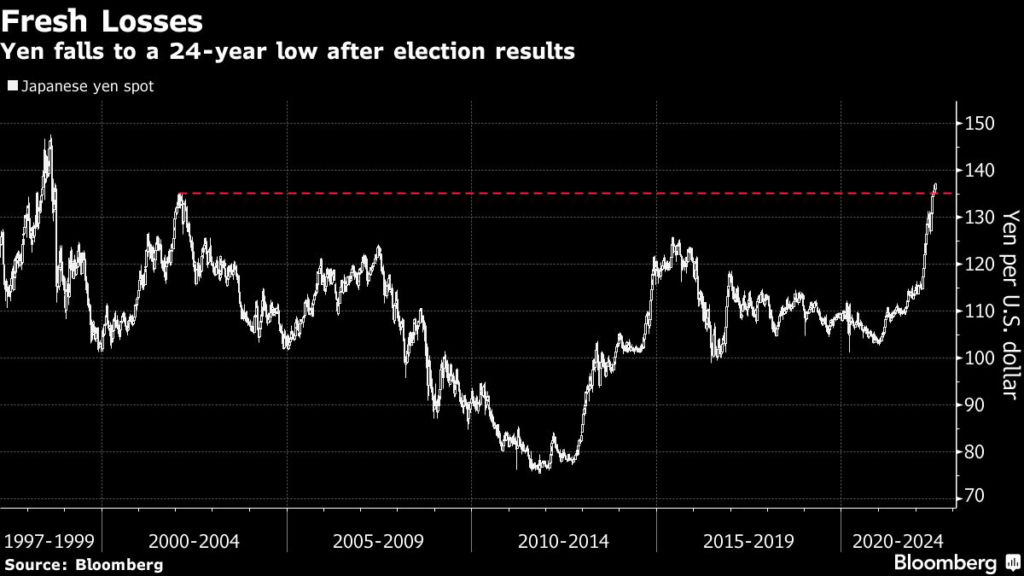
That view was largely backed up by market moves on Monday, with the yen falling to a fresh 24-year low against the dollar as investors appeared to conclude that the easing stance of Bank of Japan Governor Haruhiko Kuroda is set to continue for now.

The next key gauge of whether Kishida intends to move away from policy settings largely based on those of murdered former Prime Minister Shinzo Abe will come when the premier unveils a new aid package to relieve the pain of soaring food and energy prices. 

Legacy of Abenomics to Live Beyond Its Tragically Shot Architect

Already Kishida looks to be buying time on whether he needs to unveil sizeable stimulus for the economy or not.

“The election outcome reflects public support for Prime Minister Fumio Kishida, and makes it clear that rising inflation in Japan isn’t as critical for the public as overseas,” said Juntaro Morimoto, analyst at Sony Financial Group Inc. “It may make it easier for him to maintain current easy monetary policy during Kuroda’s term, a view that lends to yen selling on receding expectations for a policy tweak.”

Kishida said Monday that he wanted to respond swiftly to soaring prices by drawing on 5.5 trillion yen ($40 billion) of reserves already put aside from existing budgets. If it becomes clear that more help for the economy is needed, then he’d have another stimulus package put together with an additional budget, he said.

The scale of the price measures and possible stimulus package will indicate how committed Kishida is to sticking with Abenomics or forging his own path. For now economists and strategists expect that any changes would come at a slow pace, with Kuroda seeing out his term with the current monetary policy framework largely in place and no rush on deciding his replacement. 

“I don’t expect a big spending round to deal with the current inflation even though some ruling party members are calling for it. Kishida will probably stick with his approach of putting a band-aid where inflation hits hard,” said Atsushi Takeda, chief economist at Itochu Research Institute. “Kishida is likely to gradually shift toward restoring fiscal health with the election victory to reflect his own views.”  

An announcement may come as Kishida reshuffles his cabinet, according to analysts.

The government’s existing price relief measures already include fuel subsidies that are reducing gasoline prices by around 20%. Through these steps, the government has essentially enabled the BOJ to continue with rock-bottom interest rate settings that are contributing to yen weakness by easing some of the pain it causes.

The yen was around 136.80 against the dollar late afternoon in Tokyo having reached 137.28 earlier in the day, shortly after Kuroda pledged to add easing if needed. It has sunk over 16% against the greenback this year.

Any changes for monetary policy would likely come after the government has had time to see its measures implemented and digest developments in markets, economists said. While political pressure for change has eased for now, market pressure could resume, with another two large interest rate hikes expected from the Federal Reserve this quarter.

The Big Japan Short Is Back for Hedge Funds Betting Against BOJ

It’s risky to change monetary policy when the economy has yet to recover to its pre-pandemic levels and global economies are facing the growing risks of a recession, according to Goldman Sachs Japan’s chief economist Naohiko Baba and his colleague Yuriko Tanaka.

Kishida has called for a fairer distribution of incomes as a way of making economic growth more sustainable, but his call for higher wage hikes has yet to trigger a major shift in pay gains. His vision of “New Capitalism” still requires fleshing out in more detail but will include more measures to help the economy become greener and reach its emissions goals.

BOJ’s Rock-Bottom Rates Are Crucial for Kishida’s Spending Plans

Investors are more closely watching to see if the premier intends to change the shape of monetary policy. Kishida will pick a new BOJ governor and two deputies when their tenures end in less than a year. 

Like Abe orchestrated a policy accord in 2013 with former BOJ governor Masaaki Shirakawa, Kishida may first overhaul a joint policy statement with the central bank before Kuroda leaves office in April, said Hideo Kumano, executive economist at Dai-Ichi Life Research Institute. 

“I’m not sure if they will change the 2% inflation target, but Kishida can show his own clout by giving more flexibility on the target rather than absolutely defending it,” Kumano said. “If that happens, you can then say Abenomics has switched to Kishidanomics.”

(Updates with Kishida’s comments)

More stories like this are available on bloomberg.com

©2022 Bloomberg L.P.

China Stocks Drop Most in a Month on Covid Flareups, Tech Fines

(Bloomberg) — Chinese stocks had their worst day in about a month as a Covid resurgence, combined with fresh fines for the country’s tech giants, sent investors running for the door. 

The Hang Seng China Enterprises Index, a gauge tracking mainland firms listed in Hong Kong, slumped 3.1%, its biggest loss since mid-June. Tech heavyweights, property developers and electric-vehicle makers were among the biggest drags. 

A slew of bad news hit the Chinese market over the weekend and Monday morning, including regulatory fines on past transactions done by Alibaba Group Holding Ltd. and Tencent Holdings Ltd., a rejection by China Evergrande Group’s bondholders on a proposal to extend debt payment, and a warning by a prominent investor’s wife that a key lithium maker’s stock is overvalued. 

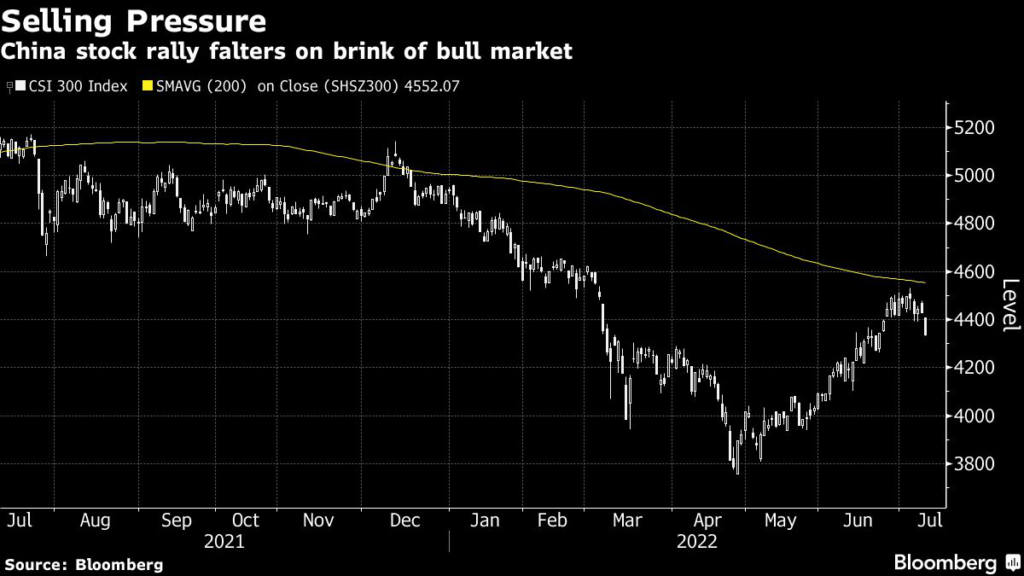
The selloff is a reminder that the nation’s Covid Zero policy and lingering uncertainty toward tech crackdowns remain key risks for investors betting on a sustained rebound in Chinese shares. The Hang Seng China gauge has recorded just one positive session in the last eight after rallying nearly 30% from a March low.  

“There is a strong demand for consolidation or giving up some of the gains this far into the rebound and earnings are providing an excuse to sell for some sectors,” Zhang Jingzhong, director at MX Capital Co. Ltd., said. 

Onshore, the world-beating surge for the benchmark CSI 300 Index is also unwinding, with the measure sliding 1.7% after ending a five-week winning streak. Green-linked stocks were among the worst performers. Tianqi Lithium Corp. plunged by nearly 10% after Ying Ying, wife of once-influential fund manager Xu Xiang, said the lithium producer had reached peak valuations and earnings growth in a social media post over the weekend. 


Investors are getting nervous as the start of the earnings season gives them access to hard data on the impact of lockdowns. A growing Shanghai Covid outbreak and a rare one-week shutdown of Macau casinos are adding to the gloom. A gauge of Hong Kong-listed Macau casinos shed 5.6%. 

“Fears of a resurgence in Covid may give the market a perfect excuse to correct, as people have become more sensitive to upticks in cases after the Shanghai lockdown, which was the biggest blow to confidence since the beginning of the pandemic,” said Jiang Liangqing, fund manager at Zhuhai Greenbamboo Private Fund Management. 

He said the reopening rally is ending here, adding that if cases continue to rise, investors will start questioning whether earnings had bottomed out in the second quarter. 

To be sure, bullish calls have continued to trickle through in the past few days, with investors like PineBridge Investments and Man Group all joining the chorus. Optimists cite economic normalization, cheap valuations and the boost from policy stimulus by Chinese authorities.

READ: Citi Joins Man Group and PineBridge as Bullish on China Stocks

Yet for some, the upward momentum is losing steam. 

Investors need to see more “market-boosting news” for the uptrend to continue, said Zhang at MX Capital. “Funds will leave traditional energy firms as future earnings are seen weakening, while it is increasingly hard for new energy firms to impress, given ultra-high expectations for the sectors.”

(Updates prices throughout, adds quote)

More stories like this are available on bloomberg.com

©2022 Bloomberg L.P.
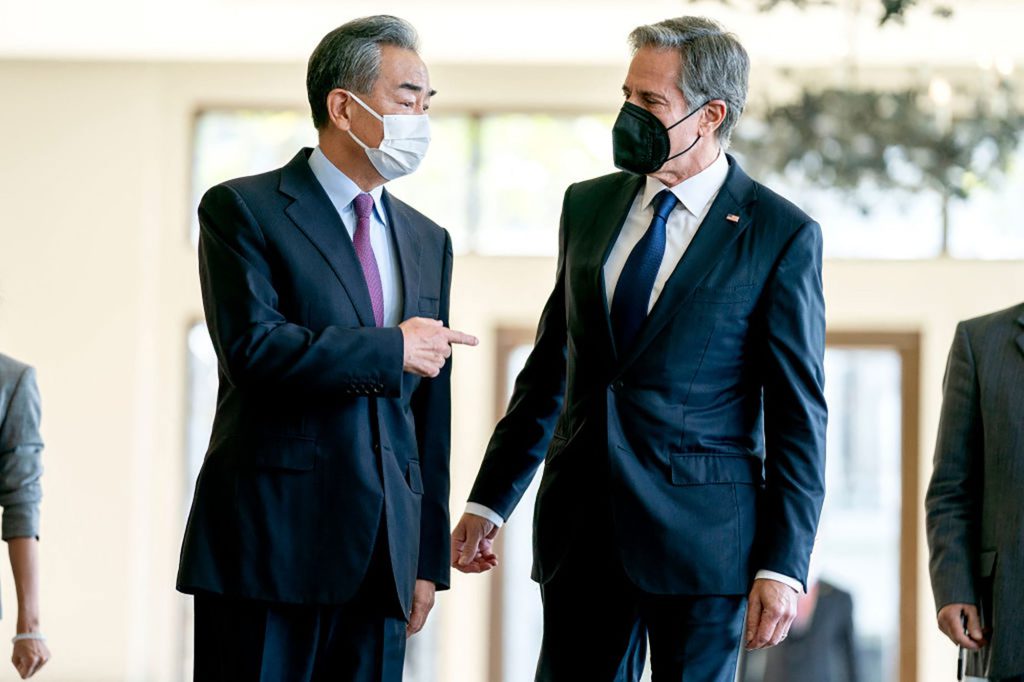
China Lays Out Rules for Managing US Engagement in Asia Pacific

(Bloomberg) — China has handed the US a blueprint for their co-existence in Asia Pacific, as the world’s two largest economies continue to clash in the region on security issues. 

Chinese Foreign Minster Wang Yi said he’d made the proposal to his US counterpart Antony Blinken during their five-hour meeting in Bali over the weekend. Wang expanded on its details while addressing the secretariat of the Association of Southeast Asian Nations in Jakarta on Monday.

“I told the US side very solemnly that our two sides should consider discussing the establishment of rules for positive interactions in APAC and jointly uphold open regionalism,” Wang said. “We look forward to feedback from the US side to the Chinese proposal.”

Wang identified China’s suggested “rules” as being: Support Asean centrality and uphold existing regional cooperation frameworks; respect each others’ legitimate rights and interests in the Asia Pacific; and promote stability while providing “more public goods” to the region.

READ: Biden-Xi Call Likely to Take Place in Coming Weeks, Blinken Says

“If China and the US can have sound interactions in APAC it could help release positive energy and also meet the expectations of all regional countries,” he added, saying achieving all this hinged on the US rising above its “hegemonic mentality.”

The US Embassy in Beijing didn’t respond immediately to an email requesting comment Monday. 

China and the US are increasingly vying for influence in the Indo-Pacific, where Beijing has territorial disputes with Washington’s allies. Chinese officials have also recently asserted the Taiwan Strait isn’t international waters, challenging Washington’s view of international law. In his speech, Wang described the question of democratically ruled Taiwan that the Communist Party considers part of its sovereign territory as “the core of China’s core interests.”

In that environment, President Joe Biden hosted the first Asean leaders summit in Washington its 55-year history in May and shortly after unveiled his Indo-Pacific Economic Framework as the US seeks limit China’s regional clout.  

Wang is currently on an 11-day diplomatic blitz across the key strategic battleground, seeking to assuage regional suspicions of China’s intentions by emphasizing shared economic benefits. Russia’s invasion of Ukraine has stoked fears Beijing could take military action in places like Taiwan. 

As well as the proposal for the US, over the weekend Wang issued four demands to Australia to get relations back on track. That was quickly rejected by Australia, with Prime Minister Anthony Albanese saying the nation “doesn’t respond to demands.”

Most Asian nations have sought to maintain good relations with both countries. Defense Secretary Lloyd Austin told a security forum in Singapore last month that smaller nations should be “free to choose, free to prosper and free to chart their own course.”

Wang hit on this problem, saying many countries in Asean were “under pressure” to take sides. “We should insulate this region from geopolitical calculations, he added, and prevent them from being “used as chess pieces in major power rivalry.”

More stories like this are available on bloomberg.com

©2022 Bloomberg L.P.
Musk Laughs Off Twitter Lawsuit in Characteristic Meme Fashion

(Bloomberg) — Billionaire Elon Musk issued a humorous late-night response to Twitter Inc.’s preparations to sue and force him to complete a $44 billion takeover of the company.

Eschewing any words of his own, the Tesla Inc. and SpaceX chief posted a meme late Sunday featuring images of himself laughing with captions recounting one version of events over the past few months. It conveys a lighthearted attitude from the world’s richest man to what has been a complex and expensive deal that’s weighed on Tesla shares and gone through several iterations of provisional funding.

Read more: Twitter Assembles Legal Team to Sue Musk Over Dropped Takeover

Musk agreed to take Twitter private at a price of $54.20 per share in late April, after his acquiring a significant stake pushed the stock price up. Twitter shares traded at $36.81 on Friday, a third below the takeover deal’s price. Musk has expressed growing discontent about the deal and argued Twitter failed to disclose essential information, such as the specific number of fake and automated accounts on the service.

“The Twitter Board is committed to closing the transaction on the price and terms agreed upon with Mr. Musk and plans to pursue legal action to enforce the merger agreement,” Twitter Chairman Bret Taylor tweeted on Friday.

More stories like this are available on bloomberg.com

©2022 Bloomberg L.P.
Payment Giant Has SWIFT Alternative for Indian Expats

(Bloomberg) — The company that built India’s digital payments backbone plans to make it cheaper and easier for the nation’s 32 million expatriates to bring their money home.

Indians overseas remitted $87 billion last year, the biggest inflow for any country tracked by the World Bank. The remittances market, where it costs $13 on average to send $200 across borders, is ripe for disruption, according to Ritesh Shukla, chief executive officer of NPCI International Payments Ltd.

“We have displaced cash in India to a large extent and are now looking to repeat the success in cross-border corridors,” said Shukla in a recent interview. “Overseas Indians can use our rails to remit money inwards straightway into their bank accounts, and for the markets where Indians travel frequently, we will build acceptance for our instruments.”

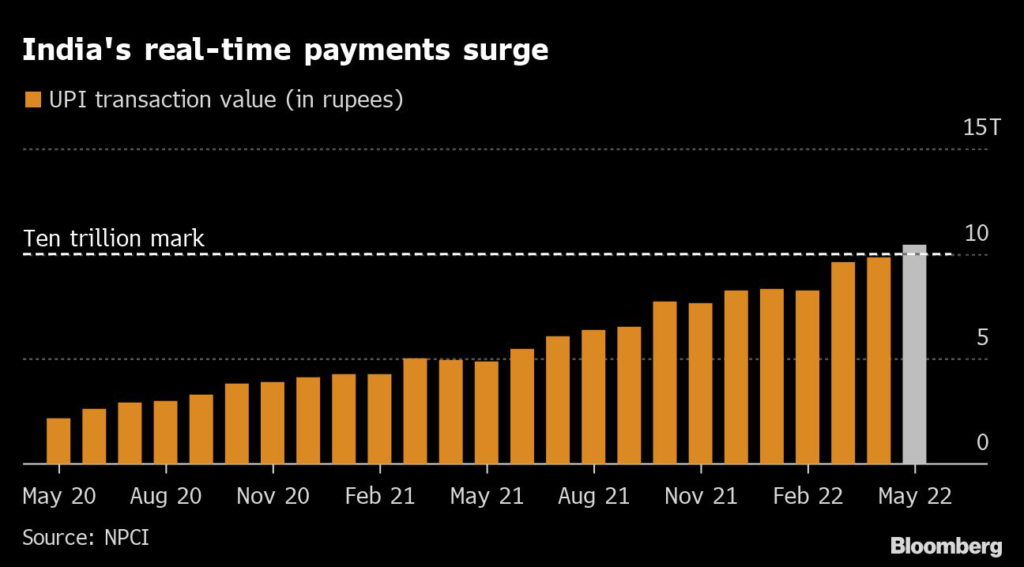
Successful overseas forays by NPCI would give India a home-grown alternative to SWIFT, the Belgium-based cross-border payment system operator, though Shukla stressed that the objective was not to displace existing platforms. About 330 banks and 25 apps — including Alphabet Inc.’s Google Pay and Meta Platform Inc.’s WhatsApp — share NPCI’s unified payment interface, which has helped make instantaneous digital transactions a $3 trillion market in India.


NPCI is in the process of connecting the UPI platform to systems in other countries to replicate its domestic success. It is negotiating collaborations with governments, fintech companies and service providers around the world, aiming to reduce transaction costs and enable more small-ticket transactions, Shukla said. 

Cutting Costs

“This is going to take the payments world by storm,” said Mayank Goyal, CEO of moneyHop, a cross-border banking app that lets users make international remittances through the SWIFT network. The company will seek to integrate UPI rails into the app as it makes cross-border payments easier, Goyal said.

UPI’s linkage with overseas nations will further anchor trade, travel and remittance flows between the countries and lower the cost of cross-border remittances, the Reserve Bank of India said in a report. 

The Reserve Bank of India set up NPCI along with the country’s lenders to make retail payments faster, more accessible, and cost-efficient. A user just needs a virtual payment address to instantly transact with vendors and exchange cash between friends or family members.


(Corrects NPCI’s acronym in fourth and last paragraph.)

More stories like this are available on bloomberg.com

©2022 Bloomberg L.P.

Close Bitnami banner
Bitnami