Bloomberg

Cerebral Changes Severance Terms for Some in 350-Person Layoff

(Bloomberg) — Cerebral Inc., the troubled mental telehealth startup, reversed plans to make soon-to-be-fired workers stay in their jobs for two months in order to qualify for severance, according to people familiar with the cuts. 

The company has been eliminating staff and changing its business model after an investigation by Bloomberg revealed that former workers were concerned the company was overprescribing controlled substances such as Adderall. Cerebral is  under investigation by federal authorities, has parted ways with its founding CEO, and has stopped prescribing some drugs.

When details of the layoffs were announced internally last month, some employees were informed that their last day would be Aug. 31. They were promised four weeks severance pay if they stayed on through that date and met performance goals, according to internal company communications reviewed by Bloomberg and to three Cerebral employees who spoke to Bloomberg on the condition of anonymity.

In addition, some employees were told they would be required to remain actively employed in good standing through Aug. 31, 2022, in order to be eligible for severance. Two employees expressed concern about meeting performance goals that were being tied to the severance agreement. 

An outside spokesperson for Cerebral, Dan Childs, declined to share further information on what workers would have to do to keep their jobs during that period. 

In total, about 350 people will lose their jobs, about 8% of the company’s total workforce, according to two people familiar with the matter.

The layoffs will “simplify our structure, reinvest into our core business, double down on quality, and better align our operating model to best meet the evolving mental health needs of the patients we serve,” Childs said. He declined to comment on the number of jobs cut.

Some employees expressed frustration about the arrangement and wanted to leave sooner. Cerebral then backtracked from its initial plan.

According to a June 29 email describing the changes, certain employees originally set to depart at the end of August were informed that they could leave the company on July 1 with severance. They were given approximately 24 hours to make the decision. 

Childs declined to comment on the reason for the about-face. He said that the company predominantly cut people from support and operations roles, and that no clinicians were laid off. 

On LinkedIn, people who described themselves as Cerebral employees with titles like clinical administrator, recruiter and care coordinator posted that they had lost their jobs. Cerebral uses the title “care coordinator” for customer service liaisons who answer inquiries from patients and help schedule appointments. 

In May, the company told Bloomberg it had planned to hire more care coordinators in the Philippines, but that these employees would not replace the US-based staff. On Friday, Childs said in an email that as part of the restructuring, contract employees would take on the roles of some of the employees who were being let go.

“The restructuring that Cerebral has completed provides for additional contract employees to handle patient coordination and administrative responsibilities,” said Childs. “Cerebral has long been augmenting its staff coordinators with contractors.” He declined to say where the contractors would be located.

Cerebral was founded in 2020 and quickly rose to prominence as the Covid-19 pandemic heightened the demand for online health services. Last year, it  received $300 million in funding from the SoftBank Vision Fund 2, giving it a $4.8 billion valuation at the time. 

More stories like this are available on bloomberg.com

©2022 Bloomberg L.P.

Voyager, Celsius Implosions Spur Expanded Texas, Alabama Investigations

(Bloomberg) — Securities regulators in Texas and Alabama are expanding their investigations into Voyager Digital Ltd. and Celsius Network Ltd. to account for new information arising from the implosions of the two crypto-lending firms. 

The two states are examining if Voyager properly disclosed material information on its loans and the creditworthiness of the borrowers. Texas and Alabama are among a coalition of US states investigating Voyager and Celsius, including a recent freeze on customer withdrawals at both firms, according to Joe Rotunda, director of enforcement at the Texas State Securities Board, and Amanda Senn, chief deputy director at the Alabama Securities Commission. 

“What we’re seeing now is that a lot of these crypto-lending firms may not have fully disclosed what they were doing on the backside with investors’ money, the risks associated with those types of lending practices or even the other types of transactions they are engaging in,” Rotunda said in an interview.

Voyager filed for Chapter 11 bankruptcy protection on Tuesday, just weeks after getting a lifeline from billionaire Sam Bankman-Fried’s Alameda Research, citing market volatility and the collapse of a Three Arrows Capital, the crypto hedge fund it had lent money to. Celsius, which halted user withdrawals in June amid liquidity issues, said last week it’s exploring options such as “strategic transactions as well as a restructuring of our liabilities.”

Regulators have been investigating yield-product offerings at Voyager and Celsius, including whether they are unregistered securities. Voyager lends deposits to third parties and passes on some interest to customers, a dynamic that users agree to when they sign up for the platform. In its bankruptcy filing, Voyager disclosed for the first time a lot of names of its biggest borrowers, including Three Arrows Capital and Alameda Research. 

With the bankruptcy filing, state litigation against Voyager will be stayed, but investigations are still ongoing, Rotunda and Senn said. Voyager said in its bankruptcy-exit plan that it expects customers to be “impaired” by the Chapter 11 process, meaning they won’t be getting back exactly what they’re owed. 

“We are investigating these companies and trying to figure out what happened and why,” Senn said in an interview. “We are making inquiries. It’s still the initial stages, but we have a responsibility on behalf of our investors in our states.”

A Voyager spokesperson declined to comment. Celsius didn’t immediately respond to a request for comment. 

More stories like this are available on bloomberg.com

©2022 Bloomberg L.P.

Musk-Twitter Buyout Fight Poses Question of Who Might Sue First

(Bloomberg) — Elon Musk’s escalating battle over bots with Twitter Inc. may be headed to one place if he tries to follow through on his threats to walk away from his $44 billion takeover offer: Delaware.

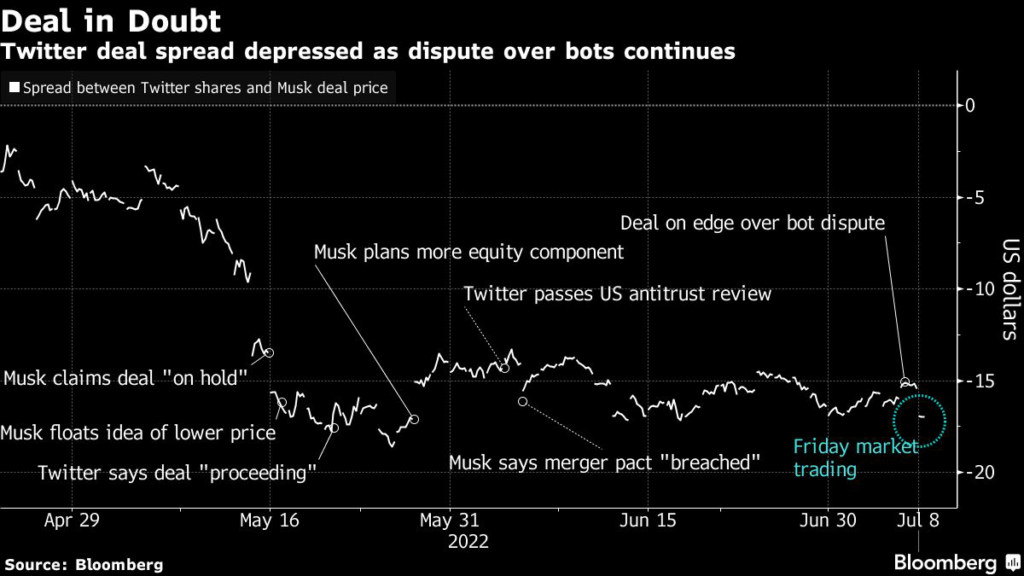
The Tesla Inc. co-founder and world’s richest person has said he’ll blow up his own $54.20-a-share offer over claims Twitter failed to fully disclose how much of the platform’s traffic is driven by spam and fake accounts known as bots.

Twitter, now trading below $40 a share, has countered that it’s providing Musk with that information and he’s obligated to complete the deal reached in April. Vijaya Gadde, Twitter’s top lawyer, told employees in May that the company could take the “pretty rare” step of going to court to enforce it.

A report by the Washington Post Thursday said Musk’s team decided that Twitter’s figures on spam accounts aren’t verifiable and that they’ve stopped engaging in some funding discussions for the deal. Twitter responded that it “has and will continue to cooperatively share information” with Musk “to consummate the transaction in accordance with the terms of the merger agreement.”

Twitter Arb Spread Blows Out on Reports Musk Deal Is ‘In Peril’

If Twitter shareholders follow the board’s recommendation and approve the buyout — probably before the summer is out — Musk refusing to complete the deal would likely be a fast track to court. Musk is slated to speak Saturday at Allen & Co.’s Sun Valley Conference in Idaho and the deal is certain to be the elephant in the room regardless of whether he addresses it directly, especially with Twitter Chief Executive Officer Parag Agrawal also present at the conference.

As with many other high-profile transactions, Twitter and Musk agreed that any legal disputes must be heard by Delaware courts, which are well versed in quickly sorting merger-and-acquisition complexities.

“I would think Twitter would have the biggest incentive to sue first,” said Jill Fisch, a University of Pennsylvania law professor who specializes in Delaware corporate law. “They want Musk to honor his commitment, but he’s more likely to say the deal is off, sue me if you don’t like it.”

But Musk, with a reputation for aggressive unpredictability, could flip that script and beat Twitter to court to put the company on the back foot, said Eric Schiffer, chief investment officer at California-based private equity firm Patriarch Organization. Musk might ask a judge to bless his decision to nix the buyout, said Schiffer, who follows Delaware merger-and-acquisition disputes.

‘Major Problem’

“It wouldn’t surprise me to see Musk move first because he already has identified what he sees is a major problem that could sink the whole thing -– the bots issue,” said Schiffer, whose fund doesn’t own Twitter or Tesla shares. “Then he could negotiate a lower price.”

After all, Musk’s public displeasure with the deal may just be posturing to push the social-media platform’s leaders into cutting the price, Schiffer said. “The valuation is off, given what’s going on in the markets,” he said.

Notably, the contract specifies that Musk can be ordered by a judge to complete the deal rather than merely pay a breakup fee to end the agreement. That’s as long as Twitter upholds its end of the agreement.

Twitter has said in regulatory filings that fewer than 5% of its daily active users qualify as spam or fake accounts. Musk contends such bots make up as much as 20% of the company’s user base. In an interview last month at the Qatar Economic Forum, Musk repeated his stance that the transaction can’t be completed before that issue is cleared up.

While vowing to turn over all the information it has on the bots to Musk, Twitter has said it can’t specifically identify all such accounts.

Determining whether a user account is automated or tended by an actual person can be hard to do, and identifying bots is an industry-wide problem that other companies like Facebook parent Meta Platforms Inc. also deal with. Twitter allows some bot accounts on the service, further complicating the issue. Bots that posted available vaccine appointments, for example, were popular in early 2021.

‘Weasel Out’

Still, a higher proportion of bots than disclosed might give Musk what he needs to justify walking away, said Larry Hamermesh, a University of Pennsylvania corporate law professor. Musk could argue Twitter’s data dump about the bots violates the buyout agreement’s representations and warranties about truthfulness, he said.

“The more robots there turns out to be, the easier it will be for Elon to weasel out of it,” he said.

It’s unlikely anything will be filed by Twitter or Musk until shareholders vote on the offer, Hamermesh said. Twitter is still waiting for the US Securities and Exchange Commission to sign off on protocols for that election. Once investors have their say, “then the flag drops” on the suits, he said.

Any suit by Twitter or Musk over enforcing or voiding the deal will be heard by a Delaware Chancery Court judge. The state is the corporate home to more than half of U.S. public companies, including Twitter, and more than 60% of Fortune 500 firms. There, chancery judges — business law experts — hear cases without juries and can’t award punitive damages.

In recent years, the court has handled high-profile cases over scuttled multibillion-dollar buyouts involving corporate heavyweights such as health insurers Anthem Inc. and Cigna Corp., and popular consumer companies like Tiffany & Co. and LVMH, the French-based parent of the maker of Louis Vuitton bags.

Musk came away pleased from his last visit to Delaware after a chancery judge found he didn’t improperly force an overpriced buyout of renewable-energy provider SolarCity.

Suing Musk

Twitter investors have already fired opening court salvos related to Musk’s offer. In May, a group of Twitter shareholders sued Musk in federal court in California, accusing him of deliberately driving down the platform’s stock price as part of an effort to renegotiate the buyout. The suit seeks class-action status on behalf of all the company’s investors. Musk hasn’t responded to the suit.

Another lawsuit was filed against Twitter last month in Delaware state court by an individual investor with five shares seeking access to internal files about spam accounts. The company hasn’t responded.

Ultimately, Musk will have to clear a high bar to escape the deal based on his bot claims.

Delaware law favors enforcing agreements free of fraud and it’s hard to get a judge to say a deal should be invalidated, said Charles Elson, a retired University of Delaware finance professor and the former head of the school’s Weinberg Center for Corporate Governance.

Rare Case

“You have to show some really troubling stuff to get a judge to agree there has been a material adverse event that justifies canceling a transaction,” Elson said. “There’s only been one case in which that was clearly found.”

That case involved Fresenius SE’s $4.3 billion buyout bid in 2018 for rival drugmaker Akorn Inc. A Delaware judge blessed Fresenius’ decision to walk away from the deal after finding Akorn executives hid an array of problems that cast doubt on the validity of data backing up approval for some drugs and profitability of its operations.

No matter what happens in the legal arena, the jockeying over Twitter has left some deals lawyers marveling over Musk’s chutzpah and predicting he’ll get his price cut.

“Even after Twitter’s statement that it is sticking to its guns, the board might well be tempted to take a haircut in an effort to end what is, I think, perhaps the weirdest major-merger process in the last 50 years, if not ever,” said Robert Profusek, head of the merger-and-acquisition department at the Los Angeles based law firm Jones Day.

More stories like this are available on bloomberg.com

©2022 Bloomberg L.P.

US-China Talks on Delisting Stocks Hinge on Redacted Audits

(Bloomberg) — US and Chinese officials have held calls in the past week to further negotiations aimed at keeping about 200 Chinese stocks from losing their listings on New York exchanges, and redactions in auditors’ documents are a key barrier.

Talks are reaching a critical point as a deadline to resolve the matter closes in. While regulators from the two countries and their staff are continuing to refine a draft agreement  — between the US Public Company Accounting Oversight Board and the China Securities Regulatory Commission and Ministry of Finance — sticking points remain, according to people familiar with the matter. 

The Securities and Exchange Commission, also involved in the negotiations, has long been eyeing some New York-traded firms with parent companies based in China and Hong Kong because the jurisdictions refuse to allow audit inspections by American officials. A deadline of 2024 looms for kicking businesses off the New York Stock Exchange and Nasdaq Stock Market unless China acquiesces, but it could be moved up if US lawmakers pass legislation before the end of the year.  

Progress hinges in part over the scope of redactions in audit work papers of Chinese companies, according to the people familiar. The Holding Foreign Companies Accountable Act requires US officials to be able to have complete access to audit papers in order for companies to avoid being delisted from domestic exchanges.  

Marquee Companies

“PCAOB continues to hold regular conversations with the PRC authorities about multiple outstanding issues as we work to protect investors and meet our mandate under U.S. law,” said Kent Bonham, a spokesperson for the agency. “Any speculation about a final agreement remains premature, and as Chair Erica Williams has said, ‘Time is of the essence.’” 

A spokesman for the SEC declined to comment. China’s Ministry of Finance didn’t respond to a request seeking comment. 

“The media should report objectively and base on the information officially released by the regulatory authorities of both parties, and avoid hearsay,” the China Securities Regulatory Commission said in an emailed response to requests for comment, without addressing specific questions about this story.

Hanging over the negotiations is the prospect that marquee Chinese companies such as JD.com Inc., JinkoSolar Holding Co., Alibaba Group Holding Ltd. or Pinduoduo Inc. could be delisted even sooner. US lawmakers have been seeking to expedite the timeline and delist companies that aren’t in compliance starting in 2023. Separate bills to do so have passed the House and Senate, and are now being negotiated as part of broad China competition legislation.

The bill hit a roadblock after Senate Minority Leader Mitch McConnell last week announced he would hold up the talks for a bipartisan China bill as long as Democrats are working on a party-line tax and spending package. Some lawmakers have signaled a willingness to pursue other avenues to move up the timeline if needed. 

The U.S. and China have been at odds for two decades over the mandate that all companies that trade publicly in America grant access to audit work papers. Since Congress passed a new law in 2020, the PCAOB, which oversees auditors, and the SEC have been laying the groundwork for identifying companies that don’t comply. 

YJ Fischer, director of the SEC’s Office of International Affairs, said in a May 24 speech that the auditing regulator would need to be able to complete its inspections and investigations by early November in order to meet the law’s compliance deadlines before triggering delistings. “Time is quickly running out” for the countries to reach a deal to move forward, she said then. 

The SEC has continued to update in recent weeks a growing list of companies for possible delisting as the negotiations have continued. 

Read more: JD.com, Pinduoduo Added to SEC List for Possible Delisting

Critics say Chinese companies enjoy the trading privileges of a market economy — including access to US stock exchanges — while receiving government support and operating in an opaque system. But regulators in Beijing argue that Chinese national security law prohibits them from turning over audit papers to U.S. regulators.

(Updates with Alibaba in eighth paragraph.)

More stories like this are available on bloomberg.com

©2022 Bloomberg L.P.

STMicro and GlobalFoundries Set to Announce French Chip Factory

(Bloomberg) — GlobalFoundries Inc. and STMicroelectronics NV will announce plans to build a semiconductor factory in France next week with the help of government funds, people familiar with the matter said. 

The announcement will be part of French President Emmanuel Macron’s push to attract foreign investors during a Choose France summit on Monday and a trip to Grenoble on Tuesday, the people said, asking not to be identified because the plans are still private. Bloomberg reported in June that the two companies were in talks about the factory.

A GlobalFoundries spokesperson declined to comment. A representative for STMicro didn’t immediately respond to a request for comment. Macron’s office didn’t immediately respond to a request for comment. 

The project from the two companies will be the second foundry announcement under the European Union’s Chips Act — a 43 billion euro ($43.8 billion) plan to subsidize first-of-a-kind semiconductor production in Europe. The Commission wants to produce 20% of the world’s chips by 2030 to build up domestic production and help alleviate supply chain constraints. 

Read More: Intel Seeks Salvation in This German Town of Boom-to-Bust Cycles

The vast majority of the money to bolster chip production will come from EU countries, which could make billions available in state subsidies. EU countries will also help finance more than 100 smaller chip projects under the Important Projects of Common European Interest program.

In March, Intel Corp. announced plans to build a massive foundry to make cutting-edge chips in Magdeburg, Germany, as well as other investments throughout Europe. Taiwan Semiconductor Manufacturing Company has also been in talks with Germany to build a site in the country.

More stories like this are available on bloomberg.com

©2022 Bloomberg L.P.

Bitcoin Is on Course for Its Biggest Weekly Gain Since March

(Bloomberg) — Bitcoin is on course for its best weekly gain since March, helped by a return of risk appetite in global markets more broadly.

The largest cryptocurrency by market capitalization was up more than 10% for the week so far as of 10:18 a.m. New York time on Friday. It gave up some gains after briefly trading above $22,000, in step with the slump in US equities. The coin is now trading flat at about $21,700.

The S&P 500 and the Nasdaq 100 fell for the first time in five days after the US jobs report showed that employment growth cooled slightly but remained strong, clearing the path for the Federal Reserve to remain aggressive in its fight against inflation. Treasury yields spiked and the two- and 10-year yield curve remained inverted for the fourth day.

“Right now, Bitcoin and most other assets are very much beholden to broader forces imposed on us all by a tough macro environment and a hawkish Federal Reserve,” said Garry Krugljakow, founder of GOGO Protocol, an open-source DeFi protocol for asset management and savings. “There’s too much uncertainty. I will say, however, that Bitcoin has held up rather well in comparison to a lot of other assets. And looking back on this bear market, people will likely remember it as Bitcoin showing its true strength to the world.”

Fed officials have pivoted policy aggressively to confront the hottest inflation in 40 years by raising interest rates by 75 basis points last month, the biggest such move since 1994. And based on the jobs data Friday, some, including Atlanta Fed President Raphael Bostic, believe the committee can move 75 basis points in the next meeting without damaging the economy. 

“The only Bitcoin bottom signal for me is persistent data showing us that inflation is convincingly inflecting down,” Marcus Sotiriou, analyst at GlobalBlock, said. “This should result in the Federal Reserve becoming less aggressive with their monetary policy, and therefore provide confidence that the liquidity crisis in the crypto market is over.”

Bitcoin has tumbled 60% year-to-date as hawkish central banks and a string of high-profile crypto blowups hammered sentiment. Companies whose performance are closely linked to the coin have also taken a beating, prompting a growing list of crypto firms, lenders and hedge funds maimed by the downturn to execute massive layoffs, freeze withdrawals or suspend trading. 

“Risk markets are up across the board” and thus “it’s not surprising that crypto is trading higher,” said Ben McMillan, chief investment officer at IDX Digital Assets. “After a cascade of bad news and large liquidations, many crypto investors are still sitting on the sidelines waiting for the next shoe to drop.”

Other tokens like Ether, Avalanche and Solana have also had a strong run in recent days, helping to take the overall market value of cryptocurrencies back close to $1 trillion, a 1.4% rise in the last 24 hours, according to CoinGecko data.

Still, regulators seem to be concerned of contagion risks brought about by digital assets. Fed Vice Chair Lael Brainard on Friday said even if the recent turmoil in the crypto market does not yet pose a “systemic risk” to the broader financial system, authorities need to close regulatory gaps to protect consumers and ensure stability.

(Updates with latest Bitcoin move in second paragraph. Adds analyst comments.)

More stories like this are available on bloomberg.com

©2022 Bloomberg L.P.
Biden Brags There Are More Private-Sector Jobs Now Than Under Trump

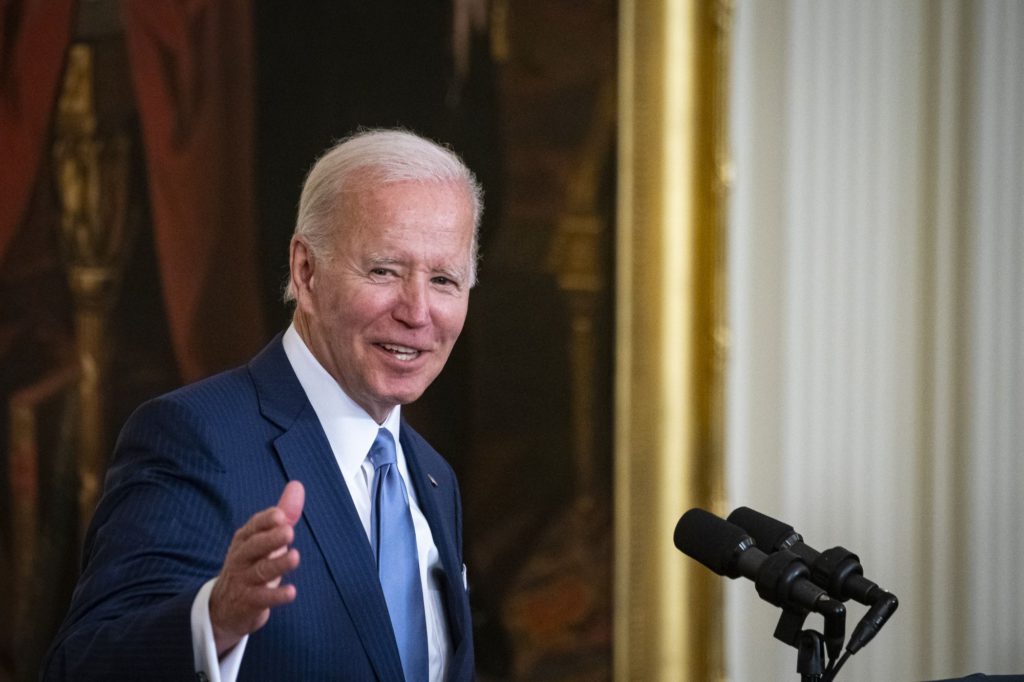
(Bloomberg) — President Joe Biden said Friday’s jobs report showed that “our private sector has recovered all of the jobs lost during the pandemic, and added jobs on top of that” but predicted employment gains would slow in the coming months as the country transitions to “stable growth.”

“We have more Americans working in the private sector today than any day during Donald Trump’s Presidency — more people than any time in our history,” Biden said in a statement, adding that the employment situation left the US “uniquely well positioned to tackle a range of global economic challenges – from global inflation to the economic fallout from Putin’s war” in Ukraine.

Nonfarm payrolls rose 372,000 last month following a revised 384,000 in May, a Labor Department report showed Friday. The unemployment rate was unchanged at 3.6% as the pool of available workers shrank, and wage growth remained firm.

Biden said because of historic job gains, “additional job growth from this strong position will be slower.”

“That is not a bad thing, because our economy should move to stable growth for the years ahead,” he said.

Biden said lawmakers could ensure continued economic growth by passing two of his legislative priorities: an energy and prescription drug bill being crafted by Senate Democrats, and a bipartisan bill that would provide subsidies for semiconductor manufacturers.

More stories like this are available on bloomberg.com

©2022 Bloomberg L.P.
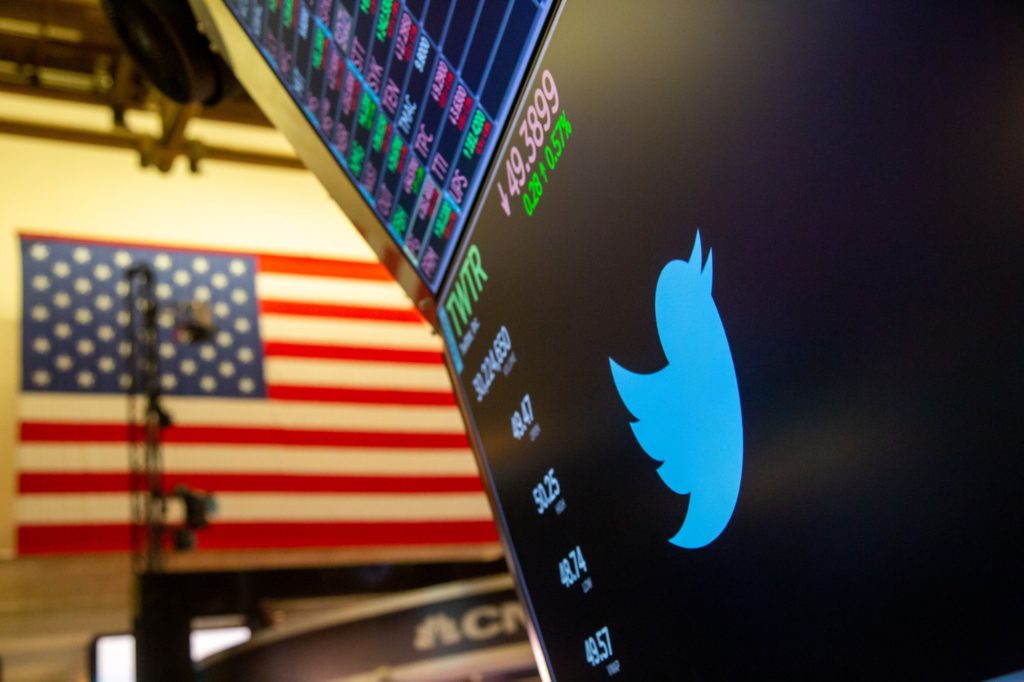
Musk’s Dispute With Twitter Over Bots Continues to Dog Deal

(Bloomberg) — Elon Musk’s proposed acquisition of Twitter Inc. may fall apart over his doubts that the company is accurately reporting the number of spam bots on the service, according to a report, even as company executives reiterated the number is low and tried to better explain how they calculate the figures.

Twitter has repeatedly said that spam bots represent less than 5% of its total user base. Musk, meanwhile, has complained that the number is much higher, and has threatened to walk away from his agreement to buy the company for $44 billion until he gets confirmation about Twitter’s bot percentage. 

Musk’s team has concluded that Twitter can’t verify its figures on the spam accounts and has “stopped engaging” in discussions around funding the deal, the Washington Post reported Thursday, citing people familiar with the matter. This issue has put the acquisition by the Tesla chief executive officer “in serious jeopardy,” the newspaper said, citing the people.

“Twitter has and will continue to cooperatively share information with Mr. Musk to consummate the transaction in accordance with the terms of the merger agreement,” a company spokesperson said in a statement to Bloomberg News after the Post published its story. “We believe this agreement is in the best interest of all shareholders. We intend to close the transaction and enforce the merger agreement at the agreed price and terms.”

Twitter slid 4.4% as the market opened in New York on Friday. The stock had declined 10% this year, closing at $38.79 Thursday.

Earlier Thursday, Twitter executives said in a media briefing that the company manually reviews thousands of accounts each quarter to determine the 5% spam bot number, and estimates that the actual number is well below what’s disclosed in filings. The company also uses internal data to confirm the bot number, including things like IP addresses or phone numbers to determine if an account is run by a human.

Musk has demanded an audit of Twitter’s estimates. Twitter said they have been sharing some data with Musk, and working with his team within the confines of the purchase agreement. An executive declined to comment on what data was being shared with Musk, but said that the company does not share internal data with outsiders due to privacy concerns. 

Twitter previously gave Musk access to the company’s “fire hose” of public tweets, but that data only includes public tweet data, not private account data. 

A Twitter executive cautioned that it wouldn’t be possible for an outsider to accurately estimate the number of bots on the service without that data. The executives asked not to be identified by name.

(Updates shares with market trading.)

More stories like this are available on bloomberg.com

©2022 Bloomberg L.P.

GameStop Tumbles on CFO’s Firing, Reports of Job Cuts

(Bloomberg) — GameStop Corp. shares tumbled Friday after the company fired Chief Financial Officer Mike Recupero and said it’s cutting jobs in a bid to turn around a business buffeted by shifting gaming demands and market malaise. The stock was down 6.9% as the market opened. 

Diana Jajeh, the current chief accounting officer, will replace Recupero, effective immediately, GameStop said Thursday in a securities filing. Recupero isn’t entitled to any severance payments beyond what is outlined in his offer letter from the company, according to the filing.

The struggling video game retailer is making a “number of reductions” to staff, according to a company memo reviewed by Bloomberg and initially reported by Axios. The cuts will be felt across the parent company and Game Informer, an online magazine. 

Ryan Cohen, who joined the board and became chairman last year, has been trying to revive growth at beleaguered GameStop, which has slowed as gamers shifted from buying game discs to digital downloads. During the pandemic, GameStop became emblematic of the so-called meme-stock craze whereby retail traders bid up the price of certain companies, prompted by chatter on Reddit and other social media, rather than business fundamentals.

“After making more than 600 corporate hires in 2021 and the first half of 2022, we have a stronger understanding of our transformation needs,” GameStop Chief Executive Officer Matt Furlong wrote in the memo. “This has positioned us to right-size headcount across several corporate departments.”

The company is also coming to grips with a clash about strategy between recent hires, many from e-commerce giant Amazon.com Inc., and GameStop staffers with a background in brick-and-mortar game sales.

GameStop had recently hired several Amazon employees in an effort to shift its focus from physical storefronts to e-commerce. According to Ars Technica, 90% of new console games are exclusively available through digital downloads. GameStop’s CEO, Chief Growth Officer and the now-departed CFO all came from long runs at Amazon. Cohen, GameStop’s chairman, founded Chewy.com, which dominates the pet e-commerce world.


However, GameStop operated 4,573 stores as of January. (243 fewer than a year earlier). The skills associated with running an e-commerce business don’t easily translate into a brick-and-mortar business, according to a person familiar with the matter, contributing to confusion and uncertainty around the company’s direction. Executives from online sales, for example, are ill-suited to negotiating retail leases and operating stores, this person said. Recupero was fired because he wasn’t hands-on enough and treated GameStop as if it were Amazon, another person with knowledge of the matter said.

“Everyone in the organization must become even more hands-on and embrace a heightened level of accountability for results,” Furlong wrote in the memo.

Another big challenge on the horizon: a push into digital assets. In June, the company launched a digital asset wallet that will allow gamers to store, send and receive cryptocurrencies and nonfungible tokens without leaving their web browser. The wallet will be used in GameStop’s new NFT marketplace, expected to launch in the current quarter. The NFT marketplace would launch during a major downtown in the crypto industry. 

Analysts aren’t fully convinced that the company, which has struggled to transition from a brick-and-mortar game retail store, will become a leader in the NFT market. The recent selloff in cryptocurrencies hasn’t helped the picture for GameStop’s new initiatives.

GameStop shares gained 15% on Thursday to close at $135.12 after the company announced a four-for-one stock split. 

At a South by Southwest panel in March, former Nintendo of America president and former GameStop board member Reggie Fils-Aime highlighted GameStop’s strategic fog: “You can go on the GameStop website. Try and find a strategy. There is no articulated strategy,” Fils-Aime said. “I come from the business perspective that you need to articulate your strategy to all of your key constituents.”

GameStop has suffered from its strategy and supply chain issues. Over the last several years, it has churned through a variety of business concepts with mixed reactions from investors and customers. Under Cohen, the company has been expanding its offerings, improving logistics and making a series of new hires with e-commerce and technology experience. That includes Furlong, who also came from Amazon, where he managed the Australia business, and Nir Patel, who was named chief operating officer. 

(Updates shares.)

More stories like this are available on bloomberg.com

©2022 Bloomberg L.P.
Maker of Bezos’s Superyacht Retracts Request to Dismantle Bridge

(Bloomberg) — A historic Rotterdam bridge that needed to be dismantled for billionaire Jeff Bezos’s new superyacht will be left intact — at least for now.

The company building the world’s largest sailing yacht for the Amazon.com Inc. co-founder informed Rotterdam City Council that it won’t request the dismantling of the lift bridge De Hef, according to two council members.

Vincent Karremans, a deputy mayor for public works and mobility, said Oceanco will “for the time being not request the environmental permit for the removal of the bridge.” Were the Alblasserdam, Netherlands-based company to change its mind, it would have to “initiate and successfully complete a new licensing procedure,” which could take at least eight weeks, a spokesperson for Karremans told Bloomberg.

It’s unclear whether the company scrapped plans to build the 417-foot (127.1 meters) superyacht, code-named Y721, or it is looking for another way to access the sea. 

Oceanco declined to comment, while Amazon didn’t immediately respond to a request for comment. The New York Times earlier reported the builder’s decision not to apply for a permit.

The 95-year-old De Hef is considered an icon of Rotterdam’s industrial heritage as a shipbuilding hub, and news of its partial dismantling has caused a stir among locals.

“This man has earned his money by structurally cutting staff, evading taxes, avoiding regulations and now we have to tear down our beautiful national monument?” Rotterdam politician Stephan Leewis said in February. 

Bezos, 58, is the world’s second-richest person with a $139.9 billion fortune, according to the Bloomberg Billionaires Index.

It’s not the first headache caused by Y721’s tall masts. The enormity of the yacht’s sails will make it unsafe to land a helicopter onboard, so Bezos has commissioned a support yacht equipped with a helipad to trail alongside.

The Y721 marked a golden season for superyacht manufacturers as the pandemic saw personal wealth levels soar and yacht sales to roughly double to 887 in 2021, according to VesselsValue data.

More stories like this are available on bloomberg.com

©2022 Bloomberg L.P.
Close Bitnami banner
Bitnami