Bloomberg

Indian Agency Seizes $59 Million from Chinese Phone Maker Vivo

(Bloomberg) — India’s anti-money laundering agency said on Thursday it seized 4.65 billion rupees ($59 million) in bank accounts and cash as well as gold bars belonging to Chinese smartphone maker Vivo Mobile Communications Co.’s local unit and its related companies.

The agency raided 48 locations and found Vivo remitted 624.76 billion rupees or roughly half of its local sales outside of India, mostly to China, according to a statement from the Enforcement Directorate. 

“These remittances were made in order to disclose huge losses in Indian incorporated companies to avoid payment of taxes in India,” the agency alleged.

A Vivo representative in India didn’t answer calls, text messages or respond to an email seeking comment. 

Vivo’s woes follow a close review by Indian authorities of bigger rival Xiaomi Corp.’s local unit on accusations that it moved money out of the country by falsely claiming it was for patent-fee payments.

New Delhi, which has heightened the scrutiny of Chinese-origin firms since a Himalayan border clash between the two nuclear-armed neighbors in 2020, is probing the local units of ZTE Corp. and Vivo for alleged financial improprieties, Bloomberg News reported previously.

China took note of the raids, with a spokesman for its embassy in India urging the country to enforce the law and provide a fair, just and non-discriminatory environment for Chinese companies operating in India. 

More stories like this are available on bloomberg.com

©2022 Bloomberg L.P.

Flutterwave Denies Impropriety After Kenyan Court Freezes Funds

(Bloomberg) — Flutterwave Inc. denied reports of financial impropriety after Kenya’s High Court froze the startup’s bank accounts holding more than $40 million.

The money, held in 52 multi-currency accounts in three banks, can’t be moved following the order based on an application by the Assets Recovery Agency under anti-money laundering rules. Flutterwave is prohibited from “transacting, withdrawing, transferring” the funds, according to the court document obtained from the court.

“Claims of financial improprieties involving the company in Kenya are entirely false, and we have the records to verify this,” Flutterwave said in a statement posted on its website on Thursday.

The Lagos and San Francisco-based fintech facilitates cross-border transactions in multiple currencies for companies, including Alibaba’s Alipay, Uber Technologies Inc. and several other homegrown businesses. It announced reaching a valuation of $3 billion in February, and B Capital Group and Tiger Global Management have invested in the company.

The orders “shall subsist for a period of 90 days” in accordance with Kenya’s anti-money laundering rules, the court said.

More stories like this are available on bloomberg.com

©2022 Bloomberg L.P.

Volkswagen Breaks Ground on $20 Billion Battery Unit’s First Cell Plant

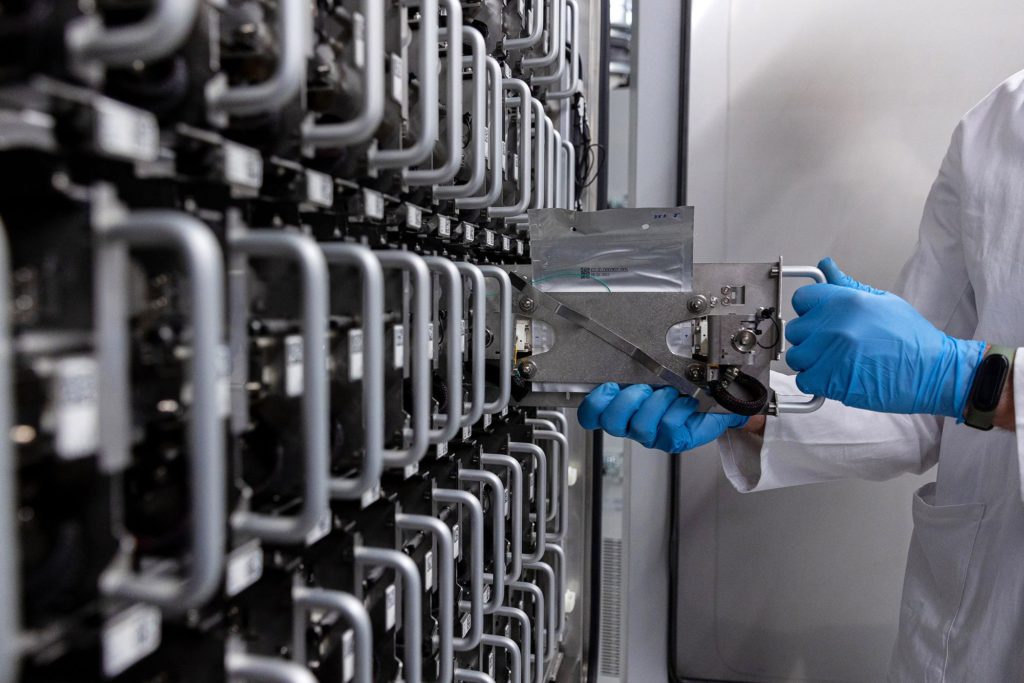
(Bloomberg) — Volkswagen AG broke ground on a new battery plant in Germany on Thursday, saying the factory marks the first step in an effort that will generate more than 20 billion euros ($20.4 billion) in annual revenue by the end of the decade.

The Salzgitter venture is one of six battery plants VW has planned for Europe. PowerCo, the unit formed to oversee the carmaker’s global battery business, is expected to invest more than 20 billion euros in five of the factories by 2030, creating roughly 20,000 jobs in Europe, according to a statement.

Automakers from VW to General Motors Co. are exploring different business models as they race to electrify their lineups and catch Tesla Inc., the world’s top seller of electric vehicles. They’re forging partnerships with battery cell makers and mining companies as they try to secure materials and know-how.

Salzgitter is home to VW’s main motor factory, and last year the carmaker opened an $80 million facility there to research, develop and test EV batteries. Roughly 2 billion euros will be invested in the cell factory by 2026, where production is scheduled to begin in 2025. At full capacity, the plant will be able to produce 40 gigawatt-hours of cells per year, enough for roughly 500,000 EVs, according to the company.

“We hired very seasoned and experienced executives from the battery business,” Chief Executive Officer Herbert Diess said in an interview with Bloomberg Television. “We’re really gearing up to become one of the bigger battery-cell producers.”

VW plans to set up a cell plant in Valencia, Spain, may build another facility in eastern Europe close to its assembly plants, and is scouting for potential sites in the US, the CEO said. VW is open to inviting in more partners to aid the battery push, he added.

PowerCo will be overseen by the VW executives that have been leading the carmaker’s battery efforts: Frank Blome, head of VW’s battery cell and systems, will be the unit’s CEO, while former Apple Inc. executive Soonho Ahn will serve as chief technical officer. The PowerCo team in Salzgitter will oversee activities including procurement, raw-materials processing, battery development and management of the planned plants.

IPO Prospects

VW has indicated it’s open to selling shares in the new business after a period of financing it internally and inviting in strategic partners. Chief Financial Officer Arno Antlitz said last month the unit has been set up in a way to facilitate a potential listing next year or in 2024.

VW’s battery push isn’t without challenges. In the shift to electric cars, manufacturers are facing a complete overhaul of their supply chains with soaring prices for raw materials that threaten to undermine returns.

“Some look with concern at the sheer magnitude of the task that lies ahead of them: can it all end well — for me, for my family, for my region?” German Chancellor Olaf Scholz said during the event in Salzgitter. “That’s why I want to tell you: Yes, it can end well and it will end well, under one condition: that we don’t dwell on the past, but rather take the bull by its horns and aggressively accept the challenge of the new.”

(Updates with CEO comment in sixth paragraph.)

More stories like this are available on bloomberg.com

©2022 Bloomberg L.P.

Volkswagen’s CEO Talks Batteries, Supply Chains and the Porsche 911

(Bloomberg) —

Volkswagen just supercharged its battery push.

On Thursday, the carmaker broke ground on a new cell factory in Salzgitter, Germany, one of five such facilities in Europe under its PowerCo unit.

VW expects the business to generate €20 billion ($20.4 billion) in revenue by the end of this decade and has  indicated it’s open to eventually selling shares in the entity.

Salzgitter is home to VW’s main motor factory, and last year the carmaker opened an $80 million facility there to research, develop and test EV batteries. Roughly $2 billion will be invested in the new cell factory, where production is scheduled to begin in 2025.

Securing enough cells is key for VW if it wants to make good on its goal to overtake Tesla as the world’s leading EV maker. Bloomberg Television’s Matt Miller spoke to Chief Executive Officer Herbert Diess about his company’s battery push. Here’s an excerpt of the interview, edited for length and clarity.

So you broke ground on a new battery factory in Salzgitter. Where else do you want to put factories in Europe?

It’s not yet decided, competition is going on. It’s very likely that we are going to build the next one in Valencia, Spain, and then we have a little bit of time to look for something, maybe in eastern Europe, because we have significant car assembly plants there and we have to supply them. The battery plants should be relatively close to the assembly plants.

What about in the US? I’ve been to the VW plant in Chattanooga, Tennessee. Are you going to build a battery factory nearby?

That’s our plan, actually. We’re looking for sites. We’re just overhauling our US strategy, aiming to grow our US business, entering new segments, doubling up capacities. And, in line, we’re looking for a site for battery manufacturing.

Are you looking for partners on any of those projects, because I know you teamed up with Northvolt for one?

Northvolt, and we have a relatively big stake in Gotion, which is one of the bigger Chinese manufacturers where we have good access to technology. This ramp-up is also new for us. We are very experienced in manufacturing, but battery production is something new, so we need partners. We are invested in some startups and we are looking forward to a joint venture together with Bosch for the machine tools and equipment for those plants, so we’re really gearing up to become one of the bigger battery cell producers.

What are your criteria when you’re looking for a company to partner up with?

Our suppliers are also very openly discussing with us how they can help. We have a big team supporting Northvolt’s ramp up, so we are acquiring the skills we need to become a significant battery supplier.

We started this project already some three, four years ago. This is why we feel now in good shape. We are still open for some more partners because the demand for batteries will be huge because of this transition, also beyond auto.

In what sense, beyond auto?

As renewables are getting more and more share, we need storage capacity. The batteries we are producing could also be used for storage. if we have capacity, we would look at this.

Are you trying to become more self-reliant in each of your regions?

Battery production should be local because it’s heavy weight-lifting. It’s really a lot of material, a significant supply chain. You need a lot of lithium, phosphate, cobalt, nickel, copper foil — huge amounts. It should be close to the battery plants, because if not, transport cost is just too much.

What do think about the idea of moving away from the big, global supply chains after the problems we’ve seen?

If I look back at the supply chain problems, it was not about logistics or regional, it was about Covid, and it could happen 20 kilometers from Wolfsburg, and it could happen 5,000 kilometers away, on another continent.

Everything will get more expensive if we dream of localizing everything, and there are conditions which give some nations an advantage, cost-wise, and we should use that competitive advantage through the world. It’s a dream and it would not improve the world. Everything gets more expensive, and we’re not really getting better.

Wait times for the Porsche 911 are 12 months, 18 months, if I can even get an allocation. I’m looking around at the Ducati shops, they’re all completely sold out. When are we going to get back to normal?

We are ramping up the second half of the year, so delivery times should shorten, and then as we are a little bit cautious about the outlook next year, we can significantly reduce the waiting times, but we are also not really doubling up capacities, because the world will remain unstable. That’s our assumption, so we have to be a bit cautious.

More stories like this are available on bloomberg.com

©2022 Bloomberg L.P.

A Stock Trader’s Guide to Navigating the Chip Industry

(Bloomberg) — It’s getting complicated for investors in semiconductor stocks, with last year’s big chip shortage morphing into an inventory glut for some companies, and others getting caught up in geopolitics.

The Covid-19 pandemic spurred an unprecedented supply crunch, shutting down semiconductor factories while also fueling demand for consumer electronics. Now, some chipmakers are warning of cooling demand for parts used in PCs and smartphones, while carmakers continue to wrestle with a shortfall of certain chips.

Another fly in the ointment is renewed tensions between the US and China over the Asian nation’s burgeoning semiconductor industry, with equipment giant ASML Holding NV caught in the middle.

“Supply constraints are not being felt equally,” said Angelo Zino, senior equity analyst at CFRA Research. “The biggest customers are getting priority (Apple, data center players) while more fragmented industries that are not as relevant to the chip industry (industrials, autos) are being pushed to the backburner.”

The complicated supply situation, higher interest rates and possible recession have all contributed to a chip-stock slump this year. A 37% rout for the Philadelphia Semiconductor Index, or SOX, has wiped out about $1.4 trillion in market value.

Here’s a breakdown of the sector’s supply quandary:

Smartphones, Tablets, Computers 

Consumer electronics look most vulnerable to an oversupply issue, with Micron Technology Inc. cautioning last week of slowing demand for memory chips used in computers and smartphones. The company will cut spending on new plants and equipment to slow output.

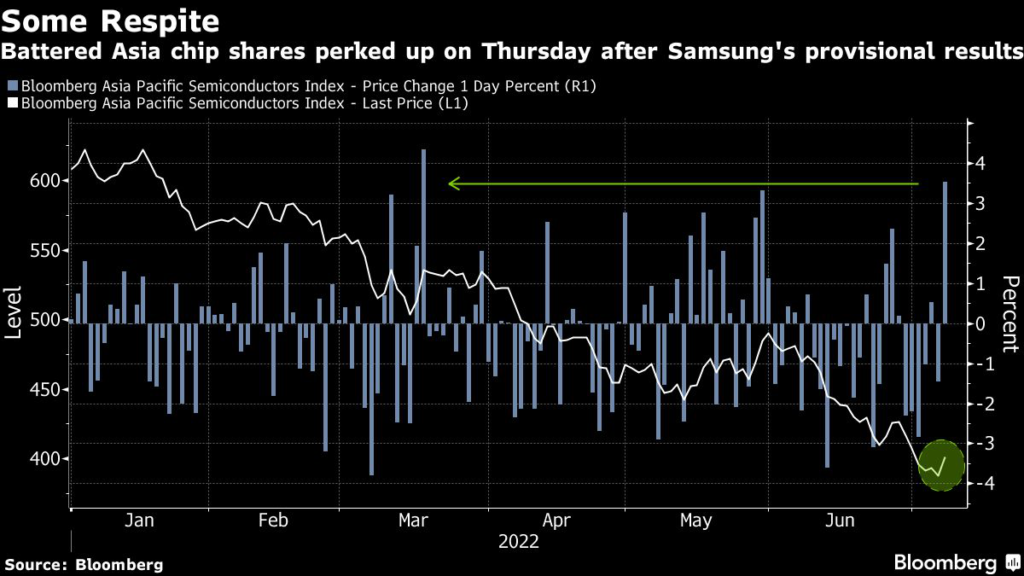
Still, Samsung Electronics Co.’s better-than-expected jump in quarterly revenue is a good sign for consumer demand and sparked a rally for beaten-down Asian chipmakers. All eyes will be on computer processor giant Intel Corp. when it reports later this month. Intel has slumped 28% this year, while Micron is down 38%. 

Production of chips used in premium and mid-tier 5G devices has also outstripped demand, according to Counterpoint Research. Most of these smartphone chipsets, like application processors, system-on-chip chipsets and basebands are made by Qualcomm Inc., Apple Inc., MediaTek Inc. and Samsung. Qualcomm is down 31% this year and MediaTek has tumbled 47%. 

Auto Chips 

Chips used in autos are still recovering from Covid-driven shortages. General Motors Co. said it expects second-quarter results to take a hit due to issues with certain components. Things may be looking up, however, with chip delivery times falling by a day in June.

The bulk of chips used in car production come from NXP Semiconductors NV, Infineon Technologies AG, Renesas Electronics Corp., Texas Instruments Inc. and STMicroelectronics NV. These stocks as down between 16% and 45% this year. 

“Cars are becoming data centers on wheels, and electric vehicles use four times as many chips as regular cars,” said John Barr, portfolio manager at Needham Investment Management. “The auto industry is still short parts, and I think that with growth in EVs, you’ll continue to see strong growth here.”

Data Centers, AI 

Demand for high-powered processors used in data centers has been more resilient than smartphone and tablet chips so far, but is still fragile.

“We don’t know how stable enterprise demand is for data center, or what auto/industrial chip demand looks like,” said Jordan Klein, a managing director and tech analyst at Mizuho Securities. “Those have been strong, and while they could be holding up better, there’s a risk we could see order cuts or demand soften.”

Nvidia Corp., Advanced Micro Devices Inc., Micron and Intel all make data-center chips. Nvidia and AMD have both fallen nearly 50% this year, erasing a combined $409 billion off their market value. 

Graphics processing units (GPUs) for artificial intelligence may hold up better than other areas, according to Needham’s Barr. Meta Platforms Inc. will still require five times as many GPUs for its AI initiatives, despite broader headwinds faced by the company. “The general trend of more AI demand and usage is going to go unabated,” Barr said.

Chip Equipment Makers 

Crucial for all chipmakers is the complex equipment they rely on. That area has gotten harder to navigate this week, after Bloomberg News reported that the US is pushing the Netherlands to ban ASML from selling some of its tools to China. Shares of the Dutch semiconductor-equipment maker have declined 39% this year. 

While analysts generally agreed that a complete stop on ASML exporting all deep ultraviolet lithography systems to China is unlikely, geopolitics “can easily scare investors,” said Degroof analyst Michael Roeg.

Any ban or escalation of tensions could also hurt peers such as Applied Materials Inc., which derives 25-30% of its sales from China, Bloomberg Intelligence said, while a protracted battle between Washington and Beijing over equipment could further disrupt shaky supply chains. 

The next catalyst for the industry is earnings season, where investors will be watching for clues on supply and demand challenges.

Tech Chart of the Day

Asia’s battered chip shares got a reprieve on Thursday after Samsung’s beat sparked hopes that the sector’s rout may have been overdone. A Bloomberg gauge of the group jumped 3.5%, the most in nearly four months, with Samsung and Taiwan Semiconductor Manufacturing Co. contributing the most toward the gain. US peers also rose pre-market.

Top Tech Stories

  • Four Asian chipmakers gained about $30 billion of market value collectively after Samsung’s preliminary results beat, with analysts saying the results came as a relief.
  • Apple Inc. plans its largest smartwatch display to date, a bigger battery and a rugged metal casing as part of the upcoming Apple Watch geared toward extreme sports athletes, people familiar said.
  • Elon Musk loomed large during jury selection in a trial over a fatal accident involving a Tesla even though he has no part in the proceedings.
    • Musk is expected to step up to the podium on the final day of Allen & Co.’s Sun Valley Conference, a role typically reserved for the likes of legendary investors such as Warren Buffett.
  • A former Facebook content screener says he was fired for raising alarms about a new company protocol allowing employees to resurrect data that users deleted.
  • GameStop Corp. announced a four-for-one stock split in the form of a dividend, becoming one of the latest companies to do so as the practice has gained in popularity.

(Adds stock moves throughout.)

More stories like this are available on bloomberg.com

©2022 Bloomberg L.P.

GameStop Announces Four-For-One Stock Split; Shares Rise

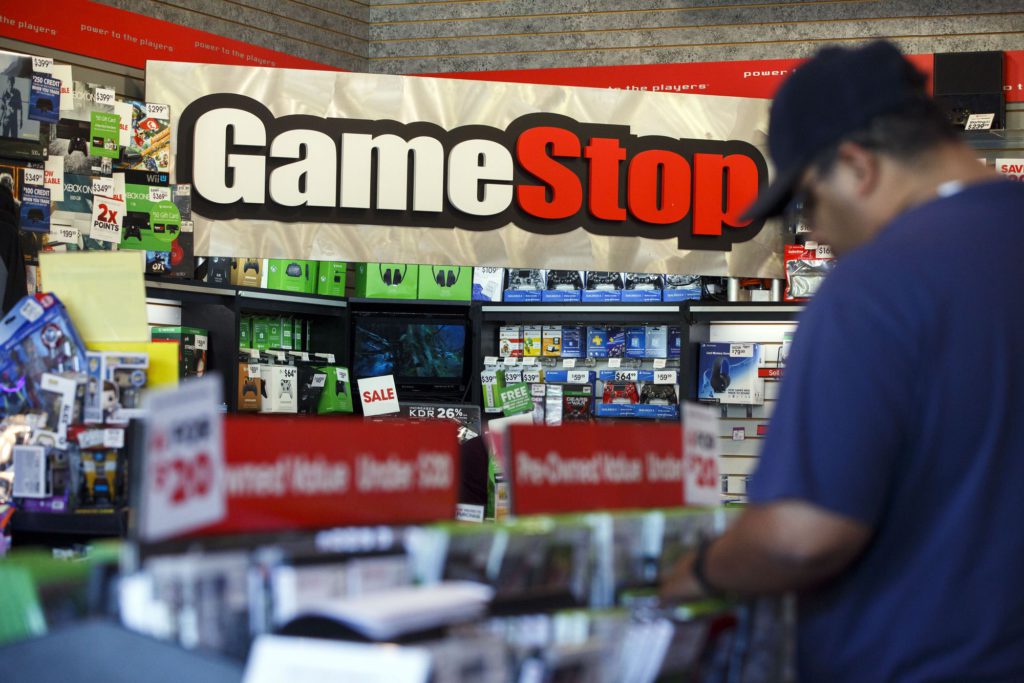
(Bloomberg) — GameStop Corp. shares jumped 10% in the opening minutes of Thursday’s session after announcing a four-for-one stock split in the form of a dividend, becoming one of the latest companies to do so as the practice has gained in popularity.

Share splits had almost disappeared from U.S. stock markets before Apple Inc. and Tesla Inc. revived the practice after splitting their stocks in 2020. Amazon.com Inc. followed suit earlier this year. The moves helped trigger rallies in the companies’ shares as retail investors, who tend to favor stocks with lower price tags, flocked to them. 

GameStop has been beleaguered by questions about its business model and direction. At a time when consumers prefer to purchase video games digitally in online stores, GameStop has experimented with pivots into esports and even crypto. The company became the poster child for so-called meme stocks, seeing volatile swings in the share price over the last year that have had little to do with its business fundamentals. 

GameStop signaled plans to split the stock in March. At the time, the company said the split would “provide flexibility for future corporate needs.”

The dividend will be distributed after the close of trading on July 21, the company said Wednesday in a statement.  

(Updates stock movement throughout.)

More stories like this are available on bloomberg.com

©2022 Bloomberg L.P.

GameStop Shares Surge 10% After Four-for-One Stock Split

(Bloomberg) — GameStop Corp. shares jumped 10% in the opening minutes of Thursday’s session after announcing a four-for-one stock split in the form of a dividend, becoming one of the latest companies to do so as the practice has gained in popularity.

Share splits had almost disappeared from U.S. stock markets before Apple Inc. and Tesla Inc. revived the practice after splitting their stocks in 2020. Amazon.com Inc. followed suit earlier this year. The moves helped trigger rallies in the companies’ shares as retail investors, who tend to favor stocks with lower price tags, flocked to them. 

GameStop has been beleaguered by questions about its business model and direction. At a time when consumers prefer to purchase video games digitally in online stores, GameStop has experimented with pivots into esports and even crypto. The company became the poster child for so-called meme stocks, seeing volatile swings in the share price over the last year that have had little to do with its business fundamentals. 

GameStop signaled plans to split the stock in March. At the time, the company said the split would “provide flexibility for future corporate needs.”

The dividend will be distributed after the close of trading on July 21, the company said Wednesday in a statement.  

(Updates stock movement throughout.)

More stories like this are available on bloomberg.com

©2022 Bloomberg L.P.

YouTube Says Its TikTok Rival Is a Hit With  Musicians

(Bloomberg) — Pop singer JVKE has been posting short clips of himself dancing and clowning around on YouTube’s Shorts video platform for more than a year.

In one, he sings into a soda bottle. In another, he pretends to show what to do if you catch your girlfriend cheating on you. Spoiler alert: It involves writing a new song.

All the screen time is paying off. The singer, who got his start posting clips on TikTok, now has over 1.8 million subscribers on YouTube, more than two-thirds of them added this year. YouTube, a division of Alphabet Inc.’s Google unit, wants more musicians to make short-form videos for its platform.

In data shared exclusively with Bloomberg, the social media site said artists are using Shorts, its TikTok competitor, to rapidly grow their subscribers. In addition to JVKE, others benefiting from the product include singers Madilyn Bailey, Cooper Alan and Emeline, who increased their subscriber counts by 480,000, 290,000 and 150,000, respectively.

“It is a very important opportunity that both the fans and the artists have,” Lyor Cohen, YouTube’s global head of music, said in an interview.

Cohen is excited about the music industry’s opportunity in the short-form space, though he’s also “deeply concerned” some viewers might only watch short-form content without exploring an artist’s deeper, longer-form work, like music videos and interviews. He called short-form videos that don’t link to long-form content “junk food.”

“I think short-form video could help crowdsource and make it easier for kids to find the soundtrack of their youth, but then you have to be prompted, and it has to lead you [to long-form content], so it’s not empty calories, but it leads you to learning and discovering and becoming a fan,” Cohen said.

YouTube introduced Shorts two years ago. It focuses on videos under one minute in length. The opportunity to link to longer videos, and thus generate even more ad revenue is great, however. As of April, Shorts containing content from other longer-form videos, not just music-oriented ones, generated over 100 billion views, YouTube said. The company is targeting “multiformat creators” who make both long- and short-form content.  YouTube is paying record labels and musicians to create Shorts.

Still, a backlash from artists making all this content has begun. Some, including Halsey, have spoken out about the pressure to create viral TikTok moments. Cohen said Shorts would thrive because artists could pick either the long-form or short-form path, or do both.

“We truly trust our artists to guide how they want to express themselves and communicate with their fans,” said Nicki Shamel, vice president of North American digital sales and account management at AWAL, which partners with artists to create and distribute their content.  “And quite honestly, that has to be a personal choice, and something that is authentic to them, but for many artists, short-form content is a low pressure, fun and inspiring way to interact with and communicate to their fans.”

YouTube said in June it reached more than 1.5 billion monthly logged-in Shorts viewers, and, as of April of this year had 30 billion daily views. At the same time, TikTok increased its maximum video length to 10 minutes earlier this year in an effort to become a complete video destination. It started in 2016 at just 15 seconds.

More stories like this are available on bloomberg.com

©2022 Bloomberg L.P.

Tech Giants Brace for Legal Mess of Abortion Data Subpoenas

(Bloomberg) — Technology giants including Apple Inc., Microsoft Corp. and Google, facing questions about whether they’d hand over users’ personal data to authorities pursuing evidence on abortion seekers, are bracing for the multi-state legal quagmire that will govern privacy in a post-Roe world.

From map searches to private messages, a trove of information stored in the companies’ data centers could be used as a digital trail of breadcrumbs linking a patient to the termination of a pregnancy, a procedure being restricted in multiple US states, after the Supreme Court overturned Roe v. Wade. The largest tech companies, which have in the past mounted high-profile legal opposition to law enforcement data requests, have been largely silent about what they’ll do in these cases. Consider a hypothetical online search for abortion pills: A woman in Texas searches for “mifepristone” and buys it from a New York pharmacy. Google may have a record of the web search, and the receipt may land in a Microsoft Outlook inbox. Google is based in California and Microsoft in Washington, but digital records of her queries and her inbox may be stored at Google’s data center in New Albany, Ohio, or Microsoft’s in Des Moines, Iowa. If law enforcement officials in Texas seek evidence from Google or Microsoft, a clash of four different sets of state laws and two companies may ensue. It’s a question that could be replicated across a host of different online services and data sources—and involve information that in many states could incriminate not just patients, but their confidants and health-care providers.

“The world has changed in many fundamental ways since 1972—since the pre-Roe world—but one of the most important ways its changed that’s relevant here is we have a digital surveillance apparatus that didn’t exist before,” said Corynne McSherry, legal director at the Electronic Frontier Foundation, a digital-rights advocacy group based in San Francisco. “It’s going to be very, very messy, and a lot will depend on what companies decide to do in terms of pushback.”

The situation may put technology companies under the most acute pressure over data-sharing practices since the backlash following Edward Snowden’s revelations of big corporations’ cooperation with U.S. government surveillance in 2013. Those disclosures caused some companies, like Microsoft, to issue specific public guarantees to customers about how they would handle government data requests and fight them in certain instances.  Read more: Deadly Abortion Misinformation Rings Alarm Bells for Doctors, TikTokTech companies are already coming under pressure to similarly oppose abortion-related data requests. Still, because abortion views in the US are so polarized, the companies are almost certain to encounter pushback no matter what they decide to do, which may be why they’re staying mostly quiet for now, waiting for specific requests to publicly communicate a broad policy. 

Some are taking early steps to reassure customers. Google on July 1 said it will automatically delete location-tracking records of user visits to sensitive places, including abortion clinics, and will make it easier to delete period logs from its Fitbit app. The Alphabet Inc.-owned search giant also underscored its track record of fighting government requests for information that the company deems inappropriate.“We remain committed to protecting our users against improper government demands for data, and we will continue to oppose demands that are overly broad or otherwise legally objectionable,” the company said in a blog post. Google declined to specify if it would fight abortion-related data requests, and didn’t mention the changing legal landscape at all.

Apple said it builds privacy protections into it products and is particularly careful with software and devices that relate to health care. For example, if a user’s iPhone is locked with a passcode, fingerprint or Face ID, the health and fitness data is encrypted. On the latest version of the operating systems for the company’s watches and phones, if users opt for two-factor authentication, health and activity data can’t be viewed by Apple, including information in the period-tracking features of the health app. Apple also places privacy requirements on developers who sell through its App Store. The company didn’t comment on how it might respond to an abortion-related warrant or subpoena for user data.

Microsoft, which runs large email and chat apps, also declined to say what it will do. So did Meta Platforms Inc., owner of Facebook, Instagram and WhatsApp. Amazon.com Inc., the largest cloud-infrastructure company and owner of health-care services like Amazon Care and Amazon Pharmacy, also declined to comment.

Microsoft and Apple just a few years ago fiercely fought against US government or law enforcement demands that they turn over user data or unlock phones, gaining support from many other tech firms and privacy advocates for their stances. Apple in 2016 refused to unlock the phone of one of the gunmen in a mass shooting in San Bernardino, California, even after it was sued by the FBI. Microsoft took the US Justice Department all the way to the Supreme Court with the company’s refusal to turn over the emails of a suspected drug trafficker that were stored in Ireland.It’s unclear whether the companies will go to battle to protect women and health-care providers facing possible prosecution over abortions. The situation is complicated by the patchwork of state laws on reproductive choice, and an industry in which data isn’t always stored in the state where a patient resides or where a company is based. Patients may have to travel to seek care, or seek pills from elsewhere, and it’s not known which jurisdiction would prevail in a tussle over data. Companies will be facing warrants and subpoenas in both civil and criminal cases. Read more: Anti-Abortion Firms Lure Pregnant Teens Online, Save Their Data

There are also varying state laws protecting the privacy of health-care data specifically, as well as the federal Health Insurance Portability and Accountability Act, or HIPAA. The rules are different based on how a company is classified and what kind of personal information it holds, said Iliana Peters, shareholder at Washington DC law firm Polsinelli. Because health plans and care providers that take insurance from those insurers are covered by HIPAA, it’s probable that the cloud-computing providers that store data for them could be covered, too.

At the same time, a court order that’s signed by a judge or court-ordered warrant could permit a HIPAA entity to provide the data, Peters said, but “the entity could challenge the order if they felt strongly about not disclosing that information.”

Some companies have referred to past statements and policies when asked about how they’d handle personal data requests related to abortion. “We always scrutinize every government request we receive to make sure it is legally valid, no matter which government makes the request,” Meta said in May. “We comply with government requests for user information only where we have a good-faith belief that the law requires us to do so. In addition, we assess whether a request is consistent with internationally recognized standards on human rights.”

Most large technology companies publish regular updates on how many requests they get from courts, governments and law enforcement in the US and other countries. Still, those reports indicate that the companies comply with the vast majority of requests. In its most recent summary, Meta reported it got about 215,000 requests globally for the final six months of 2021, and handed over at least some data in almost 73% of cases. In 70% of cases, the company wasn’t allowed to notify the impacted users. For that same period, Microsoft received 25,182 requests and rejected a quarter of them. Google’s most recent data, for the first half of last year, showed the search company got just over 50,000 requests and gave up some data in 82% of cases.

Tech workers are also pressuring employers to take a stand against sharing data. After Google released its updates on consumer privacy, the labor group Alphabet Workers Union called on the company to take “decisive action” in the face of legal challenges.

States where abortion remains legal have also been taking steps to bolster support for women living in areas with harsher restrictions. Washington Governor Jay Inslee pledged to block hardline anti-abortion jurisdictions from accessing information on who travels to his state for the procedure, and California’s Gavin Newsom signed an order preventing medical records and patient data from being shared by state agencies or departments as part of investigations by states that limit abortion access.

Meanwhile, some cases are testing law enforcement agencies’ right to access users’ search history as a dragnet to find evidence. A 17-year-old charged with setting a deadly fire filed suit in a Denver court challenging police use of something called reverse-keyword searching. A judge’s order had compelled Google to scan its records of all queries for anyone searching for the address of the home set on fire in 2020, NBC News reported. 

“It’s going to be years of litigation before we really have clarity around the question of the data,” EFF’s McSherry said. “And also of course, around whether you can prosecute—whether legitimate prosecution or not—if it’s across state lines.”

More stories like this are available on bloomberg.com

©2022 Bloomberg L.P.

Crypto Miner Will Use Batteries to Ease Strain on Texas Grid

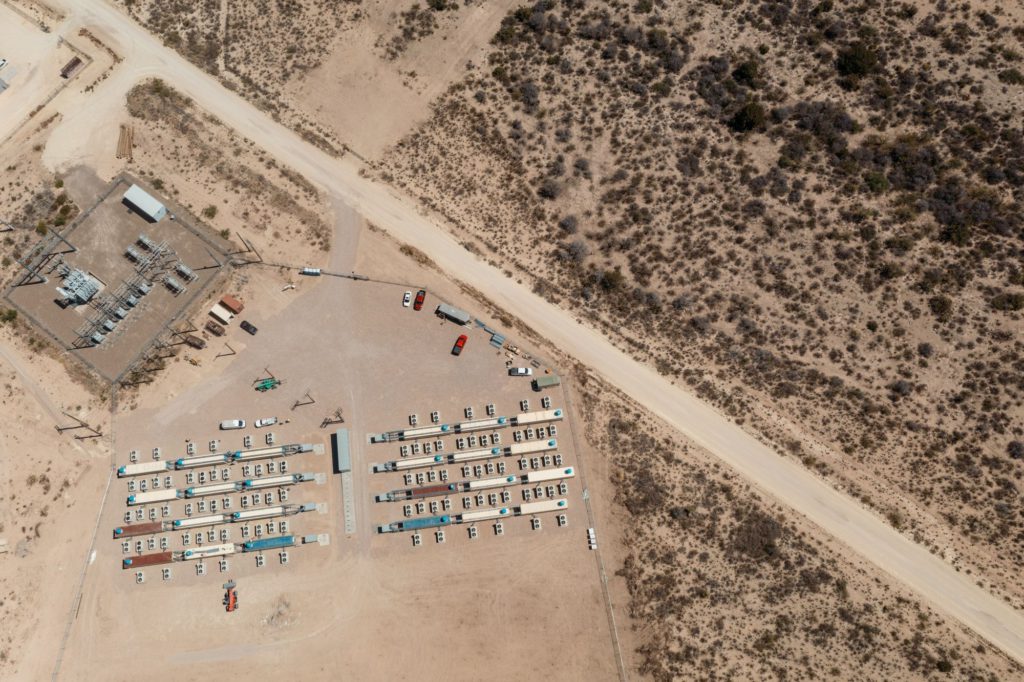
(Bloomberg) — Lancium Inc., which develops cryptocurrency infrastructure, signed a deal with a Texas battery-storage provider that will allow it to continue mining without putting stress on the state’s grid when demand spikes.

A unit of Broad Reach Power LLC will supply power for Lancium’s Fort Stockton 25 megawatt facility in West Texas, according to a statement Thursday.

The deal will enable Lancium to draw power from utility-scale batteries instead of power plants when supplies on the grid are tight. Crypto miners flocking to Texas have been under scrutiny for adding strain to a system that collapsed last year during a deadly winter storm. Miners have promised to scale back operations when the state needs power, but have made few guarantees.

The batteries will be charged largely with wind and solar, allowing Lancium to use more renewables, according to the company, backed by Apollo Global Management and commodity merchant Mercuria Energy.

The first phase of Lancium’s planned facility will be dedicated to crypto miners and eventually will also be home to data centers. CleanSpark Inc. signed an agreement to bring online 200 megawatts of Bitcoin mining capacity at the Lancium facility by spring of 2023 with the option to add another 300 megawatts.

More stories like this are available on bloomberg.com

©2022 Bloomberg L.P.
Close Bitnami banner
Bitnami