
Bloomberg

Luxury Watches Are Still in Short Supply, Top Rolex Dealer Says

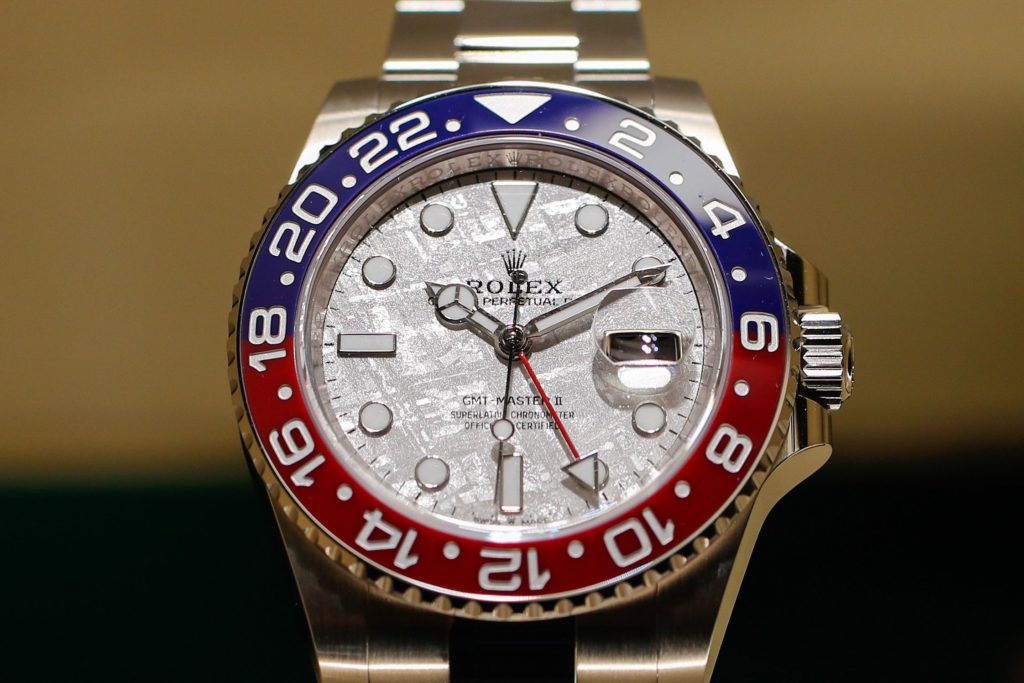
(Bloomberg) — Forget demand worries stirred up by inflation and a slowing economy, a shortage of top-brand timepieces is still the biggest problem for the UK’s largest seller of Rolex watches.

Demand for most Rolex, Audemars Piguet and Patek Philippe watches has long outstripped supply, but now the problem is spreading to other high-end brands, including Zenith, Omega and IWC, said Brian Duffy, chief executive officer of Watches of Switzerland Group Plc.

“A lot of what we are selling we can’t get enough of in the first place,” Duffy said in an interview. “The whole industry is characterized by more demand than supply.” 

Three-quarters of the retailer’s sales, by value, are done through customers getting on waitlists because the timepieces they want aren’t in stock. Watches of Switzerland is still adding more people to waitlists than it’s taking off — leaving the retailer well insulated from an economic slowdown, said Duffy. 

“Even if there is an impact in demand it will be a long time coming before we feel it,” he said. 

Watches of Switzerland is the top retailer of Rolex in the UK and among the biggest in the US, with an estimated 9% market share. Duffy said his stores are struggling to keep Zenith chronographs, IWC pilot watches and Omega’s James Bond Seamaster and Speedmaster models in stock. 

“Omega, we can’t get enough of. All the new products,” Duffy said. 

The CEO said he expects the retailer’s supply of Tudor watches will increase as they are currently under-supplied. 

Read more: Rolex and Patek Philippe Returns Beat Vintage Cars and Bitcoin

Watches of Switzerland’s strategy is to grow its retail presence to give it more clout to commandeer supply from Swiss watchmakers. It grew in-store and online sales by 48% in the U.S. to £428 million ($512 million) in its 2022 fiscal year.

“We could have grown even more if we had more supply,” Duffy said.  

Watch prices have already increased by an average of 4% to 5% this year, and Duffy said he doesn’t expect brands to implement another significant increase in 2022. 

Sales of luxury watches surged during the pandemic as homebound consumers, flush with cash, snapped up Rolexes and other timepieces, sending prices for many secondhand models soaring. Now, secondary market prices for the most sought after Rolex, Audemars Piguet and Patek Philippe watches have started to decline as equities and cryptocurrency valuations tumbled. 

Profit Doubles

The company on Thursday reported pretax profit of £126 million for the 12 months ending May 1, almost double its earnings the previous year.

The record performance was helped by the UK, it’s home market, where revenue soared 36%. Any disruption from the pandemic is now “largely behind us,” the company said.

The retailer reiterated its revenue forecast of £1.45 billion to £1.50 billion for this fiscal year, as well as its outlook for profitability.

More stories like this are available on bloomberg.com

©2022 Bloomberg L.P.

Take Me Out To The Digital Ball Game: NFTs Enter the Field

  • Listen to Bloomberg Crypto on the iHeartRadio App
  • Listen to Bloomberg Crypto on Apple Podcasts
  • Listen to Bloomberg Crypto on Spotify 

(Bloomberg) — Sorare is one of several companies attempting to take the idea of collectibles like baseball cards and bring them into the digital context. In May, Sorare announced a partnership with Major League Baseball in the US. And Serena Williams is a member of their advisory board. Why is Sorare betting big on sports? Do collectibles really need to be on a blockchain? Will baseball players benefit from the deal? On this episode, we’ll talk to Bloomberg reporter Hannah Miller and to Sorare’s CEO Nicola Julia. 

Follow us on Twitter @crypto, and subscribe to the Bloomberg Crypto Newsletter at https://bloom.bg/cryptonewsletter

More stories like this are available on bloomberg.com

©2022 Bloomberg L.P.

‘Van Life’ Goes Electric as RV Makers Race to Lure Millennials

(Bloomberg) — A few weeks ago, at an RV industry showcase in Harper’s Ferry, West Virginia, I test drove an electric motorhome — a concept vehicle made by Winnebago Industries Inc. as it works on developing a commercial e-RV. More like a shuttle van with sleeping accommodations than a traditional motorhome, the concept e-RV can be charged in 45 minutes and can travel up to about 120 miles before needing a recharge.

I hopped into the driver’s seat and racheted it up to accommodate my short legs. Recalling the gray tank of my family’s Chevy Astro van circa 1992, I felt a twinge of anxiety. Then I started driving. It was asoundless, smooth ride.

Iridium debuted the first all-electric motorhome at a German trade show in 2019. Since then, the industry has raced to refine the concept. Camping and RVing, long popular in North America, now make up a $140 billion-a-year business, according to the RV Industry Association. RV makers say they were able to connect with a younger, more diverse demographic after the Covid-19 pandemic shuttered stores and offices in 2020 and everyone headed outside. Over the past two years, the typical first-time buyer of a recreational vehicle was a millennial between the ages of 33 and 41, with an average annual income of roughly $90,000, according to online surveys the group has conducted.

  • Want to lead a more climate-conscious life? Bloomberg Green wants to answer your questions. Take our brief survey and tell us what you’d like to know.

“If you don’t have a history in this lifestyle, it can get super intimidating really fast, and super frustrating,” said Christy Spencer, director of marketing and communication at Keystone RV, whose parent company is THOR Industries Inc. “So as the market has grown and new people are coming, we’ve really doubled down on innovation that makes camping more accessible.”

Thor — one of the top three RV manufacturers in the world, along with Winnebago and Forest River Inc. (which is owned by Berkshire Hathaway Inc.) — also owns Airstream Inc. This year Thor announced two high-voltage, luxury electric RV concepts, the Thor Vision Vehicle and the Airstream eStream. The eStream has an electric motor and can tow itself, so pulling it won’t drain the towing vehicle’s battery.

While the Thor concept vehicles are ready to roll, they aren’t likely to be spotted on the road anytime soon. The company is still refining the technology and user experience, and “doing a lot of advocacy” in Washington for infrastructure to support state-of-the-art electric RVs, said Renee Jones, vice president of marketing at Thor. The motorhome should be available for purchase in 2023 with the trailer following “shortly after,” she said. 

The concept vehicles offer a glimpse into the future of RVing. Imagine you’re headed out for the weekend in your electric car or truck: The electric trailer you’re towing, stocked with a lithium-ion battery pack and solar panels, gives you the freedom to camp somewhere without a power hookup. A water purification system allows you to throw a hose into a lake for water.

Along your route, apps let you navigate with all kinds of helpful information: electric charging stations, RV service centers, and public lands maps. When you arrive at your destination, you use your phone to remotely back up your rig into a sun-dappled space while you sip a beer and enjoy the solitude.

Charging stations for smaller EVs in rural and remote areas are becoming more prevalent but are still not common. In June, Rivian opened three Level 3 DC fast charging sites in Colorado and California, including charges that accommodate vehicles towing trailers, as part of the company’s “adventure network.”

RVs are becoming lighter and more streamlined. They still, however, need a lot of juice, whether it’s gas or from the grid. Electric RVs have charging needs that go beyond those of smaller electric vehicles. People want to able to travel farther distances without having to recharge frequently. They also want to be able to power up electric tow vehicles and RV trailers at the same time, which would require installing special tandem charging equipment at parks and campgrounds.

Current EV infrastructure in the United States “is not geared toward e-RVs,” said Jones from Thor. RV makers say the federal government needs to play catch-up and are lobbying Congress and the Biden administration to invest in and regulate infrastructure for electric RVs.

With the number of visitors to national parks and other federal lands rising, especially in the warmer months — their mostly gas-powered cars often contributing to poor air quality there — administration officials acknowledge the government needs to do more to support the use of electrified transportation on public lands.

“I think it’s a completely fair point to say it shouldn’t just be on the private sector side to figure out how to make this happen,” said Laura Daniel-Davis, principal deputy assistant secretary of land and minerals management at the US Interior Department, during an April EV technology event in Washington sponsored by the Outdoor Recreation Roundtable. Daniel-Davis said the “public lands family” is working with the Transportation Department on a gap analysis related to EV infrastructure on public and tribal lands.

That day in West Virginia, the e-Winnebago felt big as I piloted it, and there was no rear-view mirror, which initially stressed me out. (It did have really big side mirrors.) But I completed a three-point turn with relative ease. My companion complimented me on my handling as we zipped quietly along a country road.

I could get used to this, I thought.

More stories like this are available on bloomberg.com

©2022 Bloomberg L.P.

China’s Cabinet Urges Greater Cybersecurity After Data Leak

(Bloomberg) — China’s cabinet stressed the need to bolster information security, following a huge leak of personal data that could be the largest cyber-attack in the country’s history. 

A State Council meeting led by Premier Li Keqiang emphasized the need “to improve security management provisions, raise protection abilities, protect personal information, privacy and commercial confidentiality in accordance with the law,” according to the official Xinhua News Agency. These measures would allow the public and businesses to “operate with a peace of mind,” the report added. 

Xinhua didn’t directly reference the breach, and other state media agencies have so far been silent about the incident. Earlier this week, unknown hackers claimed to have stolen data on as many as a billion Chinese residents after breaching a Shanghai police database. The purported theft of more than 23 terabytes of information has exposed potential data and security lapses and set the technology industry abuzz.

“The breach has clearly caught the attention of China’s top leadership — and no wonder,” said Kendra Schaefer, a partner at Beijing-based consultancy Trivium China. “It is particularly embarrassing for a government body to be the source of the largest known data breach in China’s history, particularly at a time when data security has become one of China’s top policy priorities.”

Read: Hacker’s Record Theft Claim Exposes Dangers of China Data Trove

Questions remain about how the unknown hackers apparently gained access to the trove run by the Ministry of Public Security’s Shanghai branch, which according to online posts included data detailing user activity from popular Chinese apps, addresses and phone numbers. A seller had asked for 10 Bitcoin, worth around $200,000, in exchange for the data.

“China is long overdue for experiencing a breach of this scale,” said Daron Hartvigsen, managing partner at global advisory firm StoneTurn. “Historically, China is often disregarded as a viable target for criminal cyber-exploitation. Threat actors typically focus on targets likely to cave to ransom and extortion demands. It is not clear if this business model will result in similar financial returns in China.” 

President Xi Jinping has long identified data as key for governing and driving Asia’s largest economy. The meeting on Wednesday also discussed the need to investigate and address activities that abuse information and violate the legitimate rights of individuals and enterprises, according to the report.

(Updates with statement details and expert quote from the second paragraph)

More stories like this are available on bloomberg.com

©2022 Bloomberg L.P.
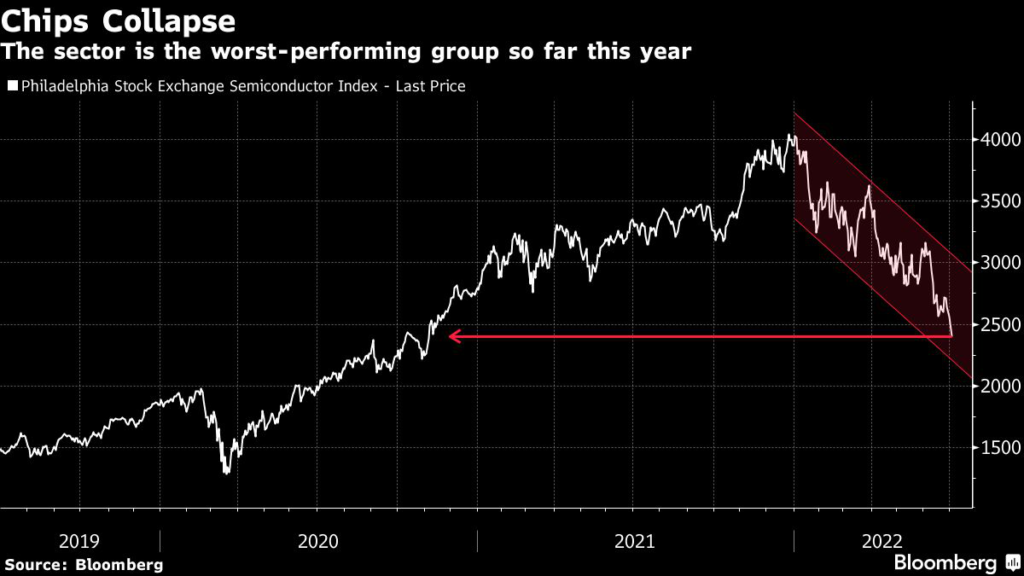
Samsung Sparks $30 Billion Tech Rally After 21% Sales Jump

(Bloomberg) — Samsung Electronics Co. reported a better-than-anticipated 21% jump in revenue, assuaging investors’ worst fears about the impact of weakening consumer demand and soaring materials costs on the $550 billion chip industry.

The results from South Korea’s largest company — among the first major tech firms to report earnings after a pivotal quarter — helped drive a rally in Asian stocks Thursday. While concerns linger about the longer-term impact of a potential global recession, investors seized on Samsung’s top-line expansion as a sign that chip stocks may have been oversold.

Samsung gained 3.2% in Seoul, while fellow memory maker SK Hynix Inc. rose 2%. Taiwan Semiconductor Manufacturing Co. jumped 5% and smaller rival United Microelectronics Corp. surged 7.3% in Taipei. TSMC will report its monthly sales on Friday.

The four Asian chipmakers gained about $30 billion of market value collectively in the morning. Despite that rally, they remain down for the year, reflecting uncertainty about the longer term.

“The results were less bad than expected,” said Song Myung-sup, an analyst at HI Investment & Securities. “There were huge worries and earnings estimates were getting lowered. But the results came within the boundary of expectations.”

We’re Starting to See Clear Signs of Tech Troubles: Tim Culpan

Samsung’s narrow sales beat offset weaker-than-expected operating profit, reflecting margin pressures from rising inflation. Operating profit grew at its slowest pace in more than two years to 14 trillion won ($10.7 billion) in the June quarter, versus the 14.6 trillion won projected. It posted sales of 77 trillion won, helped by a weakening of the Korean won.

“Samsung seemed to manage memory chip shipments in the second quarter pretty well by keeping its inventories and stabilizing prices,” said Greg Roh, head of technology research at HMC Investment & Securities. “Negotiations for chip prices would be heated in the current quarter if demand continues to fall. But the markets are not expecting severe price drops as happened in previous downturns.” 

Read more: Korean Hedge Fund Starts Buying Samsung on Bet Bottom Is Near

Samsung will provide net income and split out divisional performance with its full report at the end of this month. Smartphone shipments in the second quarter might have fallen by more than 10 million units to 63 million compared to the previous three months, according to Eugene Investment & Securities analyst Lee Seung-woo. Sales of TVs and PCs also fell significantly compared to the first quarter as people spent less on pricey IT products.

South Korea’s chip stockpiles jumped more than 50% in May, according to the national statistics office, signaling sluggish consumer demand is directly impacting the memory chip industry. Samsung and compatriot SK Hynix are two of the leading trio of memory makers supplying the world’s data centers and electronics makers. Both have seen their share prices slump by over 20% this year as worries over a potential recession grow.

Samsung warned of an “immense” challenge over its business outlook during its last earnings call as global macro risks like inflation and the Russia-Ukraine war threatened ripple effects. Consumers and enterprise clients are cutting their spending to hunker down before a potential recession, while rising interest rates and costs are directly hitting their disposable income.

South Korea’s Chip Stockpile Jumps Amid Tech Slowdown Concerns

US rival Micron Technology Inc., the third biggest DRAM maker, last week gave a grim outlook for the current quarter with lowered expectations for tech spending.

What Bloomberg Intelligence Says

Samsung’s 2Q preliminary numbers may not be as weak as rival Micron’s poor sales guidance for June-August suggests. But its 3Q sequential profit growth may not be as strong as expected, due to weaker PC and smartphone demand caused by inflation.

— Masahiro Wakasugi, BI analyst 

Click here for the full research

(Updates with analyst comment)

More stories like this are available on bloomberg.com

©2022 Bloomberg L.P.
Twitter Challenges India to Court Over Blocked-Tweets, Suspension Orders 

(Bloomberg) — Twitter Inc. is challenging a series of account-blocking and suspension orders in India, clashing once more with a government that’s sought to rein in US tech giants.

The social network operator has filed a legal petition to overturn as many as 39 blocking orders, arguing they’ve been too broad and arbitrary. The company complied with the orders under protest, but now seeks a ruling from the Karnataka High Court to set them aside, according to a person who has viewed the petition’s content.

Twitter is challenging the Indian government’s content blocking orders for the first time. The San Francisco-based company and the administration of Prime Minister Narendra Modi have repeatedly clashed in recent months as the government seeks to gain greater control over online information censorship.

Twitter argued that account-level blocking is a disproportionate measure and the government didn’t give proper reasons for requests to bar content, which was often political and from public figures. It’s challenging just a sliver of the overall blocking orders it’s received since February 2021, covering more than 1,400 accounts, 175 tweets and one hashtag, according to the person, who asked not to be named as they were not authorized to speak publicly on the matter.

Twitter representatives declined to comment, while technology ministry representatives didn’t immediately respond to an inquiry.

The US company isn’t challenging the laws that give government powers to order content blocking, nor rules that can hold executives at social media operators like Meta Platforms Inc. and Alphabet Inc.’s Google personally liable for failure, and even arrested. But Twitter’s attempt to resist the administration is significant given a history of clashes.

The company started to push back against the government’s directives in May this year when it sought reversal of some of the orders. About a month later, the ministry issued notices asking Twitter officials to appear in person and explain why action shouldn’t be initiated against them, the person said, citing the content of the petition. 

Twitter complied but more notices followed. The government did agree to withdraw its orders for 10 accounts, but sought blocking of another 27 online links. Twitter again acceded, but lodged its complaint on July 5, the person said.

More stories like this are available on bloomberg.com

©2022 Bloomberg L.P.

Telecom Italia Seeks Revamp With Multi-Billion-Euro Spinoff

(Bloomberg) — Telecom Italia SpA is seeking to accelerate a turnaround plan through an asset spinoff plan that would see the former phone monopolist give up control of its most valuable piece, the network.

The company’s board on Wednesday gave a mandate to Chief Executive Officer Pietro Labriola to cede control of its grid and cut the company’s more than 30 billion euros ($31 billion) in gross debt by breaking the phone carrier up into several separate units and looking to attract new partners. 

Telecom Italia said its spun-off landline assets unit, called NetCo, will generate organic earnings before interest, taxes, depreciation and amortization after lease costs of about 2.2 billion euros as of 2025, compared with the 2 billion euros reported last year, according to presentation slides from the phone carrier’s capital markets’ day. 

NetCo’s Ebitda is expected to rise slightly to about 2.7 billion euros as of 2030 while the unit’s sales would remain about stable at around 5.4 billion euros. Up to 11 billion euros of the phone carrier’s debt will be transferred to the NetCo unit.

“NetCo can be the first example in Europe of a fiber network infrastructure and technologies hub available to the whole market and with a widespread presence across the country,” Telecom Italia said in a statement Thursday. The carve-out will take as long as 18 months, the company said.

Labriola has said separating the network is a top priority, and his plan calls for ceding a controlling stake to a group of investors led by state lender Cassa Depositi e Prestiti SpA, KKR & CO. and Macquarie Group Ltd., and then merging it with smaller rival Open Fiber SpA.

Telecom Italia New CEO Ready to Relinquish Control of Network

The plan also calls for all of the company’s commercial services to be spun off into a unit dubbed ServiceCO, which will include a consumer branch and an enterprise operation, as well as the company’s Brazilian unit. 

While the consumer branch’s sales and profit are expected to remain stable through 2026, the unit’s top clients division could almost double its Ebitda to at least 1.7 billion euros as of 2030 from 900 million euros last year. Enterprise unit sales would reach about 5 billion euros from 3 billion euros last year.

The company also said that about 15,000 employees, or almost a third of all staff, would be relocated to NetCo as of 2030.

The valuation of the network, however, remains a sticking point. Though the carrier’s advisers and top investors have been discussing it for the past several weeks, valuation figures continue to range widely, from as little as 20 billion euros to about 30 billion euros, people familiar with the matter have said. 

(Updates with debt in fourth paragraph.)

More stories like this are available on bloomberg.com

©2022 Bloomberg L.P.

Korean Battery-Parts Maker Eyeing IPO Expects 30% Margins by 2025

(Bloomberg) — W-Scope Chungju Plant Co., the South Korean battery-parts maker seeking to raise as much as 1 trillion won ($765 million) in an initial public offering, sees operating margins north of 30% by 2025 on robust demand for electric cars, Chief Executive Officer Won-Kun Choi said.

The company also expects revenue will increase around 40% to about $200 million this year, Choi said in an interview from the company’s headquarters in Chungju earlier this week. Chungju, a city known for its annual martial arts festival, is where W-Scope also has one of its manufacturing facilities.

“We’re all set for production plans for the next five years and we’re in talks with potential partners for new orders,” Choi said.

W-Scope Chungju Plant, which makes the separators used in electric-car batteries, is seeking a stockmarket valuation of least 3 trillion won, Choi said. Proceeds from the IPO will be used to build a new plant in Hungary.

Separators, or thin insulating membranes, physically isolate the anode and the cathode in an electric battery, preventing a short circuit, while allowing ions to circulate between them. A strong membrane that can endure high temperatures is key for battery makers to prevent fires in electric vehicles.

W-Scope Chungju Plant, a unit of Tokyo-listed W-Scope Corp., set an IPO price range between 80,000 won and 100,000 won a share, according to a prospectus submitted to the Korea exchange on Thursday. Trading is expected to begin in mid-August, Choi said.

Two Lessons

Shares of W-Scope in Japan have soared 131% this year, partly on news of its Korean unit’s share sale listing plans, which first emerged in February.

Stock in rival separator maker SK IE Technology Co., however, has slumped 51% since January, a broader indication of worsening investor sentiment toward EV-related companies as the cost of raw materials spikes and the chip shortage drags on, according to Jeon Chang-hyun, analyst at Daishin Securities Co.

W-Scope Chungju Plant’s main customer is Samsung SDI Co., a battery unit of South Korea’s biggest conglomerate Samsung Group. It also supplies to LG Energy Solution Ltd. and Sony Group Corp., Choi said.

The Korean unit reported 185 billion won in sales and 40.4 billion won in operating profit for 2021 for a margin of almost 22%, company filings show. 

Before founding W-Scope with other engineers in 2005 in Japan, Choi spent about a decade at Samsung Electronics Co.’s semiconductor and display division. It was there that he realized the technology for producing membranes could be used for separators for lithium-ion batteries. 

“No investor believed me in South Korea when I told them I wanted to make a battery separator with a membrane,” he said. “That’s why I couldn’t list shares in Korea at the time.” 

Two lessons he learned from Samsung — secure stable supplies for raw materials and meet customer demands. 

“Partnering with Korean suppliers is crucial to keep input costs stable,” Choi said. “Samsung was also good at after service for customers.”

(Updates IPO range in sixth paragraph.)

More stories like this are available on bloomberg.com

©2022 Bloomberg L.P.

Insulting Someone Online Could Mean a Year in Jail in Japan

(Bloomberg) — Cyberbullies in Japan could now face up to a year in prison, as the government cracks down on online abuse following the suicide of a 22-year-old professional wrestler and reality TV star who was hounded on social media. 

New penalties for public abuse as part of a revised law came into effect Thursday, allowing fines of up to 300,000 yen ($2,200) from the previous 10,000 yen and jail sentences of up to 12 months compared with 29 days previously. 

“It’s important to try to stamp out the kind of vicious insults that have sometimes even driven people to die,” Justice Minister Yoshihisa Furukawa told reporters on Tuesday. “The revision to the law doesn’t unjustly limit freedom of expression.”

Japan’s Federation of Bar Associations opposed the change to the law, saying it could threaten justified criticism and freedom of expression. 

The Justice Ministry said in a Q&A on its website that the law would not be used to punish public criticism of politicians. It also said that the stricter measures would not affect its definition of abuse — “showing contempt for someone, without basis in fact, in a way that could come to the notice of unspecified or large numbers of people.”

Hana Kimura, a professional wrestler, died in 2020 after hateful comments were posted on her Twitter account following an incident in which she lost her temper with a fellow cast member on reality show “Terrace House.” At least two people — both men — were referred to prosecutors over the incident, with one of them being fined 9,000 yen after repeatedly urging her to die. 

In another case this year, a man was indicted for online abuse of Takuya Matsunaga, who became a public figure over a court case against an elderly driver who hit and killed his wife and toddler. Court procedures for identifying such anonymous abusers were simplified under a legal change last year, the Mainichi newspaper said. 

(Updates with legal definition of abuse in fifth paragraph.)

More stories like this are available on bloomberg.com

©2022 Bloomberg L.P.

China’s Cabinet Urges Greater Cybersecurity After Mass Data Leak

(Bloomberg) — China’s cabinet stressed the need to bolster information security, following a huge leak of personal data that could be the largest cyber-attack in the country’s history. 

A State Council meeting led by Premier Li Keqiang emphasized the need “to improve security management provisions, raise protection abilities, protect personal information, privacy and commercial confidentiality in accordance with the law,” according to the official Xinhua News Agency. The report didn’t directly reference the hack, and other state media agencies have so far been silent about the incident. 

Earlier this week, unknown hackers claimed to have stolen data on as many as a billion Chinese residents after breaching a Shanghai police database. The purported theft of more than 23 terabytes of information has exposed potential data and security lapses and set the technology industry abuzz.

“China is long overdue for experiencing a breach of this scale,” said Daron Hartvigsen, managing partner at global advisory firm StoneTurn. “Historically, China is often disregarded as a viable target for criminal cyber-exploitation. Threat actors typically focus on targets likely to cave to ransom and extortion demands. It is not clear if this business model will result in similar financial returns in China.” 

Read: Hacker’s Record Theft Claim Exposes Dangers of China Data Trove

Questions remain about how the unknown hackers apparently gained access to the trove run by the Ministry of Public Security’s Shanghai branch, which according to online posts included data detailing user activity from most popular Chinese apps, addresses, and phone numbers. A seller had asked for 10 Bitcoin, worth around $200,000, in exchange for the data.

President Xi Jinping has long identified data as key for governing and driving Asia’s largest economy. The meeting on Wednesday also discussed the need to investigate and address activities that abuse information and violate the legitimate rights of individuals and enterprises, according to the report. 

More stories like this are available on bloomberg.com

©2022 Bloomberg L.P.

Close Bitnami banner
Bitnami