Bloomberg

Insulting Someone Online Could Now Mean a Year in Jail in Japan

(Bloomberg) — Cyberbullies in Japan could now face up to a year in prison, as the government cracks down on online abuse following the suicide of a 22-year-old professional wrestler and reality TV star who was hounded on social media. 

New penalties for public abuse as part of a revised law came into effect Thursday, allowing fines of up to 300,000 yen ($2,200) from the previous 10,000 yen and jail sentences of up to 12 months compared with 29 days previously. 

“It’s important to try to stamp out the kind of vicious insults that have sometimes even driven people to die,” Justice Minister Yoshihisa Furukawa told reporters on Tuesday. “The revision to the law doesn’t unjustly limit freedom of expression.”

Japan’s Federation of Bar Associations opposed the change to the law, saying it could threaten justified criticism and freedom of expression. 

The Justice Ministry said in a Q&A on its website that the law would not be used to punish public criticism of politicians, and that the stricter measures would not affect its definition of abuse.

Hana Kimura, a professional wrestler, died in 2020 after hateful comments were posted on her Twitter account following an incident in which she lost her temper with a fellow cast member on reality show “Terrace House.” At least two people — both men — were referred to prosecutors over the incident, with one of them being fined 9,000 yen after repeatedly urging her to die. 

In another case this year, a man was indicted for online abuse of Takuya Matsunaga, who became a public figure over a court case against an elderly driver who hit and killed his wife and toddler. Court procedures for identifying such anonymous abusers were simplified under a legal change last year, the Mainichi newspaper said. 

More stories like this are available on bloomberg.com

©2022 Bloomberg L.P.

China Property Debt Crisis Is Just Beginning, Charlene Chu Says

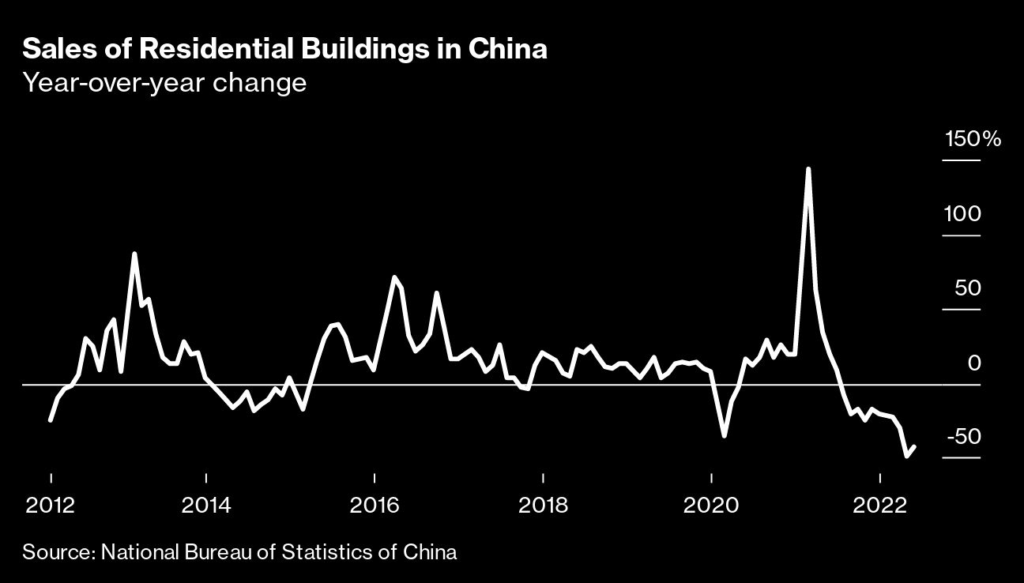
(Bloomberg) — Charlene Chu, famed among China watchers for warning about a debt bubble when at Fitch Ratings, says that pain is only just beginning for credit extended to Chinese property.

In the wake of Beijing’s sweeping crackdown on leverage built up in real estate, China Evergrande Group and others have defaulted on a slew of bonds. Chu, a senior analyst at Autonomous Research, a division of Sanford C. Bernstein & Co., estimated that “we have 30 companies who’ve defaulted with total liabilities of around $1 trillion.”

While banks have the safeguard of collateral for their loans to developers, “where things could start to get a lot more ugly” is if lenders start revaluing that collateral lower, Chu said in a June 15 interview with the One Decision podcast.

“We’re just so early in this process of these defaults happening, and restructurings usually take quite a long time,” said Chu, who was known at Fitch for warning in the early 2010s over debt risks in the shadow banking sector. “We haven’t really gotten to the point of saying, ‘OK, well, what really is going to happen with that building?’”

A bigger risk looms if Chinese individuals start defaulting on property loans — a prospect made more likely by the increase in Chinese unemployment, according to Chu. 

“We’ve got a property sector that is almost dead and barely growing and used to employ huge numbers of people and a lot of downstream industries for furniture and home goods and electronics and appliances,” Chu said. “All of that is getting impacted by this property slowdown, and that’s why I think we’re still early in the game here.”

Chu, who worked at the Federal Reserve Bank of New York earlier in her career, applauded authorities for acting to stem an excessive building campaign by developers. The amount of property being built was out of whack with the nation’s population trends, she said.

“We need to keep in mind the declining demographics in China,” she said. “The working-age population, which is really the property-consuming group, peaked in 2015 at 801 million people and is already down 20 million” since then, she said.

Read More: China’s Property Slump Is a Bigger Threat Than Its Lockdowns

“The authorities are sticking to their guns on it, and I think they are doing the right thing,” Chu said.

More broadly, Chu saw little probability of an outright financial crisis, in part because Chinese banks are “very quietly in the background working off a lot of this bad debt,” including 3.1 trillion yuan ($462 billion) in writeoffs last year.

But with debt continuing to expand across the economy, “it is, I think, one of the structural issues that is weighing on Chinese growth.” Chu concluded that “we are entering an era here where we are going to be looking at low-to-mid single-digit growth in China at best.”

More stories like this are available on bloomberg.com

©2022 Bloomberg L.P.

Samsung Sparks $30 Billion Chipmaker Rally After 21% Sales Jump

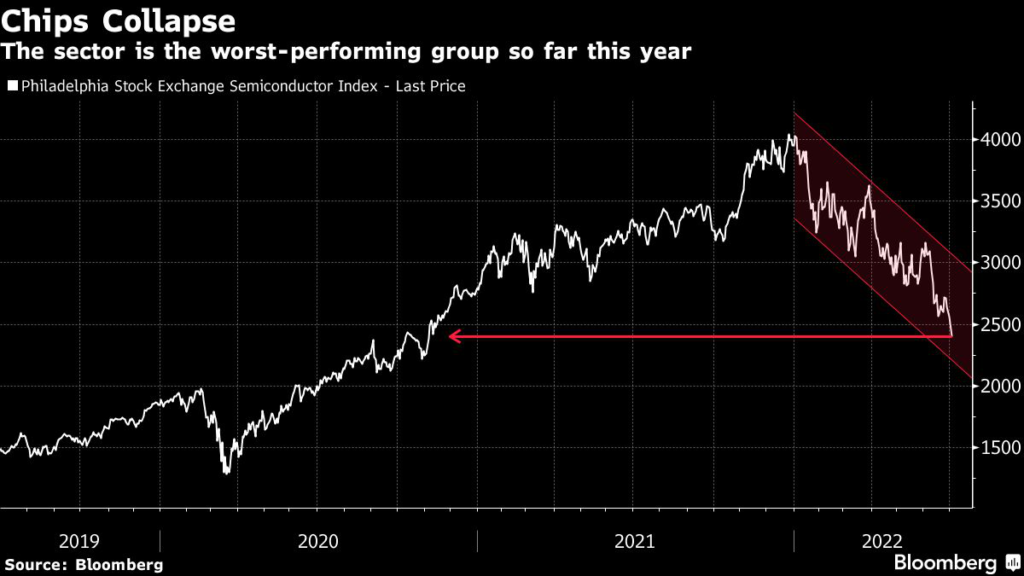
(Bloomberg) — Samsung Electronics Co. reported a better-than-anticipated 21% jump in revenue, assuaging investors’ worst fears about the impact of weakening consumer demand and soaring materials costs on the $550 billion chip industry.

The results from South Korea’s largest company — among the first major tech firms to report earnings after a pivotal quarter — helped drive a rally in Asian stocks Thursday. While concerns linger about the longer-term impact of a potential global recession, investors seized on Samsung’s top-line expansion as a sign that chip stocks may have been oversold.

Samsung gained as much as 3.2% in morning trading in Seoul, while fellow memory maker SK Hynix Inc. rose as much as 3.4%. Taiwan Semiconductor Manufacturing Co. jumped as much as 5.4% and smaller rival United Microelectronics Corp. surged as much as 9% in Taipei.

The four Asian chipmakers gained about $30 billion of market value collectively in the morning. Despite that rally, they remain down for the year, reflecting uncertainty about the longer term.

“The results were less bad than expected,” said Song Myung-sup, an analyst at HI Investment & Securities. “There were huge worries and earnings estimates were getting lowered. But the results came within the boundary of expectations.”

We’re Starting to See Clear Signs of Tech Troubles: Tim Culpan

Samsung’s narrow sales beat offset weaker-than-expected operating profit, reflecting margin pressures from rising inflation. Operating profit growth slowed to its lowest in more than two years, with 14 trillion won ($10.7 billion) for the three months ended June, the company said Thursday in a statement. Analysts had estimated 14.6 trillion won on average.

Sales of 77 trillion won were helped by the South Korean won, which weakened against the US dollar during the period. Samsung will provide net income and split out divisional performance with its full report at the end of this month.

Read more: Korean Hedge Fund Starts Buying Samsung on Bet Bottom Is Near

Samsung’s smartphone shipments in the second quarter might have fallen by more than 10 million units to 63 million compared to the previous three months, according to Eugene Investment & Securities analyst Lee Seung-woo. Sales of TVs and PCs also fell significantly compared to the first quarter as people spent less on pricey IT products.

South Korea’s chip stockpiles jumped more than 50% in May, according to the national statistics office, signaling sluggish consumer demand is directly impacting the memory chip industry. Samsung and compatriot SK Hynix are two of the leading trio of memory makers supplying the world’s data centers and electronics makers. Both have seen their share prices slump by over 20% this year as worries over a potential recession grow.

“Macro uncertainty still lingers globally,” said Nam Dae-jong, an analyst at eBEST Investment & Securities Co. “The Fed’s interest rate hikes have triggered FX fluctuations while raw materials and logistics costs continue to rise. There is also growing uncertainty over demand.”

Samsung warned of an “immense” challenge over its business outlook during its last earnings call as global macro risks like inflation and the Russia-Ukraine war threatened ripple effects. Consumers and enterprise clients are cutting their spending to hunker down before a potential recession, while rising interest rates and costs are directly hitting their disposable income.

South Korea’s Chip Stockpile Jumps Amid Tech Slowdown Concerns

US rival Micron Technology Inc., the third biggest DRAM maker, last week gave a grim outlook for the current quarter with lowered expectations for tech spending.

What Bloomberg Intelligence Says

Samsung’s 2Q preliminary numbers may not be as weak as rival Micron’s poor sales guidance for June-August suggests. But its 3Q sequential profit growth may not be as strong as expected, due to weaker PC and smartphone demand caused by inflation.

— Masahiro Wakasugi, BI analyst 

Click here for the full research

(Updates with industrywide share reaction in fourth paragraph)

More stories like this are available on bloomberg.com

©2022 Bloomberg L.P.

China Is Trying to ‘Ransack’ Western Companies, FBI Head Warns

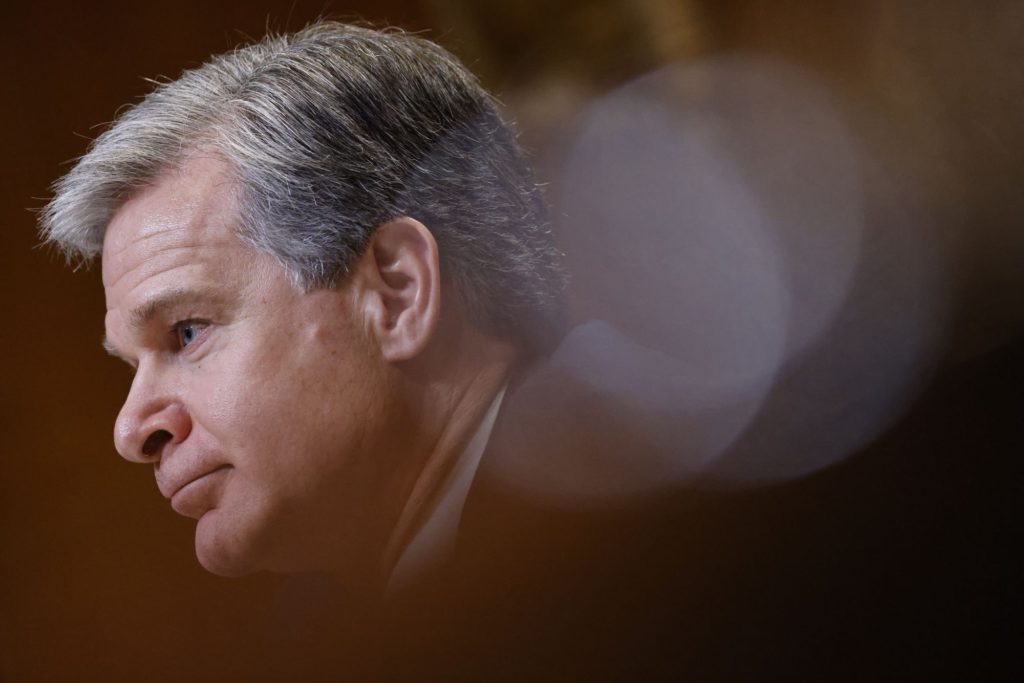
(Bloomberg) — FBI Director Christopher Wray warned Western companies that China aims to “ransack” their intellectual property so it can eventually dominate key industries, escalating a dispute between the world’s two largest economies over hacking.

The Asian nation’s spies were snooping on “companies everywhere from big cities to small towns — from Fortune 100s to start-ups, folks that focus on everything from aviation, to AI, to pharma,” Wray said in remarks to a gathering of business leaders and academics in London. He appeared alongside the head of MI5, Ken McCallum — the first time the heads of the Federal Bureau of Investigation and the UK’s domestic counter-intelligence agency have shared a forum.

China was running a “lavishly resourced hacking program that’s bigger than that of every other major country combined,” Wray said, according to a statement from the US government. The nation “sees cyber as the pathway to cheat and steal on a massive scale,” he added.

Washington and US cybersecurity companies have long alleged that China runs expansive hacking operations. Last year, the US, UK and their allies blamed an attack on the Microsoft Exchange on actors affiliated with the Chinese government, accusing Beijing’s leadership of a broad array of “malicious cyber activities.” The US also charged four Chinese nationals affiliated with the Ministry of State Security with a yearslong drive to get into computer systems of dozens of companies, universities and government entities in the US and abroad.

China denies the accusations, saying it is a victim of cyber snooping and calling the US “empire of hacking.” The Foreign Ministry in Beijing didn’t immediately respond to a request for comment Thursday.

Blacklists, Trade and More U.S.-China Flashpoints: QuickTake

Wray also said that China is “looking for ways to insulate their economy against potential sanctions” after seeing how Russia was punished over its attack on Ukraine. “If China does invade Taiwan, we could see the same thing again, at a much larger scale,” he said.

McCallum urged companies to take steps to protect themselves, saying “a wide range of government and commercial targets” have been hacked.

Over the last year, the UK had shared intelligence with 37 nations to help them defend against such spying, he said, adding that in May “we disrupted a sophisticated threat targeting critical aerospace companies,” without providing more details.

More stories like this are available on bloomberg.com

©2022 Bloomberg L.P.

TSMC Jumps 5% After Samsung Results Spur Sector Rally

(Bloomberg) — Taiwan Semiconductor Manufacturing Co. jumped as much as 5.4% in Taipei on Thursday after chipmaking rival Samsung Electronics Co. reported sales that were better than anticipated.

Samsung’s memory and chip production business appeared to offset waning consumer demand in the three months ended June, suggesting the slowdown for tech manufacturers may be less severe than initially feared. 

Read more: Samsung’s 21% Sales Jump Banishes Worst Fears of Inflation Hit

More stories like this are available on bloomberg.com

©2022 Bloomberg L.P.
China Dusts Off a Familiar Playbook to Deal With Surge in Pork

(Bloomberg) — Sign up for the New Economy Daily newsletter, follow us @economics and subscribe to our podcast.

China is using a well-established playbook to cool pork prices that will be easily recognized by traders in other vital commodities sectors. 

Since commodities inflation became a concern for Beijing over a year ago, markets across energy and metals have periodically drawn official attention, with the price controls imposed on the coal industry in May perhaps the most iron-fisted of the government’s crackdowns.

Among the familiar measures and rhetoric applied this week to pork, planners at the National Development and Reform Commission have said they’ll strengthen oversight of the market in conjunction with the main futures exchange. Their targets include “malicious” speculation, hoarding, price fabrication and gouging. Big producers have been summoned and warned about inflating prices. The government has suggested it could open up its state reserves, a threat to make speculators think twice about taking positions that could quickly turn sour.

The flurry of announcements has pushed hog futures in Dalian off their highs, although prices were rising again on Thursday morning. The question of course is whether the measures will work over the longer term. 

Of its main commodities sectors, China’s pig industry is one of the most self-contained. It buys little from overseas and consumes pretty much all that it produces, although there is a link to international pricing via the cost of imported soybeans and corn for animal feed. After the ravages of African swine fever, which prompted the last spike in prices three years ago, the industry has also become more concentrated in larger farms.

That could all leave Beijing with a freer hand when it comes to determining supply, which may herald a successful intervention. History shows that when the government purchases for its reserves, pork prices will rise — and vice versa, according to a note from Shanghai JC Intelligence Co.

But others think it’s less clear-cut.

“Using the reserves can be pretty effective with regard to moderating food price inflation, especially in specific localities where pork prices might be rising faster than the national trend,” said Even Pay, an analyst at consultancy Trivium China in Beijing.

But whether the measures will ultimately change the direction of the market “really depends on whether the NDRC is right about the price rise being mostly speculative,” she added. “If there’s a real shortage, it will be nearly impossible to work against the market.”

China’s pork shortfall is likely to get worse over the next six months, and rising prices are in fact necessary to encourage a recovery in production, said Rupert Claxton, meat and livestock director at Gira, a consultancy in the UK.

Events Today

(All times Beijing unless shown otherwise.)

  • China’s foreign reserves for June, including gold
  • Antaike’s Nonferrous Metals Market Report Conference in Beijing
  • Chongqing gas exchange hosts industry summit, day 1
  • USDA weekly crop export sales, 08:30 EST

Today’s Chart

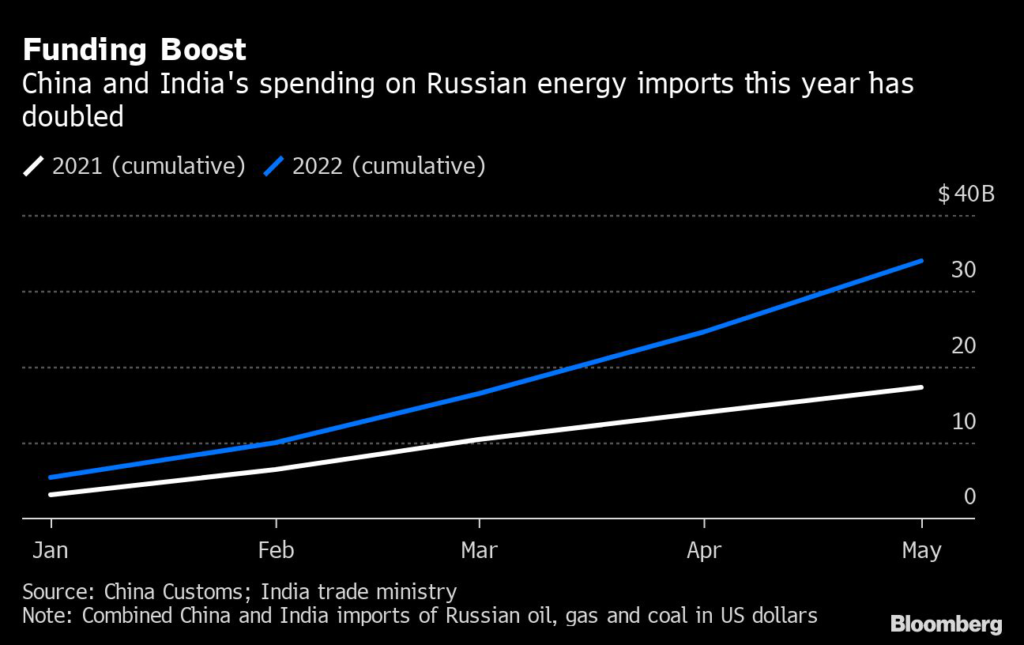
Russia has pocketed $24 billion from selling energy to China and India in just three months after its invasion of Ukraine, showing how higher global prices are limiting efforts by the US and Europe to punish President Vladimir Putin.

On The Wire

  • Tianqi Lithium Is Said to Raise $1.7 Billion in HK Listing
  • Cnooc Offers LNG Spot Cargoes for Aug.-Sept. Reloaded From China
  • Tycoon Whose Bet Broke Nickel Market Walks Away a Billionaire
  • CHINA INSIGHT: Inflation Is a Worry PBOC Doesn’t Have
  • Global Aluminum Market Could Turn in a Supply Surplus in 2023
  • China, India’s Rising Russian Coal Imports Offset Cuts by West
  • Asia Plastic Makers Frustrated by Delay in China Demand Recovery

The Week Ahead

Thursday, July 7 

  • China’s foreign reserves for June, including gold
  • Antaike’s Nonferrous Metals Market Report Conference in Beijing
  • Chongqing gas exchange hosts industry summit, day 1
  • USDA weekly crop export sales, 08:30 EST

Friday, July 8

  • China weekly iron ore port stockpiles
  • Shanghai exchange weekly commodities inventory, ~15:30
  • Fenwei Coal’s weekly online market briefing, 15:30
  • China-Europe Floating Offshore Wind Cooperation Forum in Hainan
  • Chongqing gas exchange hosts industry summit, day 2

Saturday, July 9

  • China to release June aggregate financing & money supply by July 15
  • China’s inflation data for June, 09:30
  • Caixin Summer Summit in Beijing, day 1

Sunday, July 10

  • Caixin Summer Summit in Beijing, day 2

More stories like this are available on bloomberg.com

©2022 Bloomberg L.P.
Musk Fathered Children With Neuralink Employee, Report Says

(Bloomberg) — Billionaire Elon Musk is the father of eight-month-old twins born to a senior executive at his artificial intelligence startup Neuralink, Insider reported, citing a court document.

Musk and the executive asked a Texas judge in April to change the children’s names to reflect both their surnames, Insider said. The request was granted, according to the report.

The two babies would bring Musk’s total known children to nine. He has advocated for increasing the population as part of his vision for colonizing other planets.

Neuralink, a closely held company controlled by Musk, and Musk didn’t immediately respond to emailed inquiries, and Bloomberg couldn’t immediately obtain a copy of the court document.

More stories like this are available on bloomberg.com

©2022 Bloomberg L.P.
Korean Hedge Fund Starts Buying Samsung on Bet Bottom Is Near

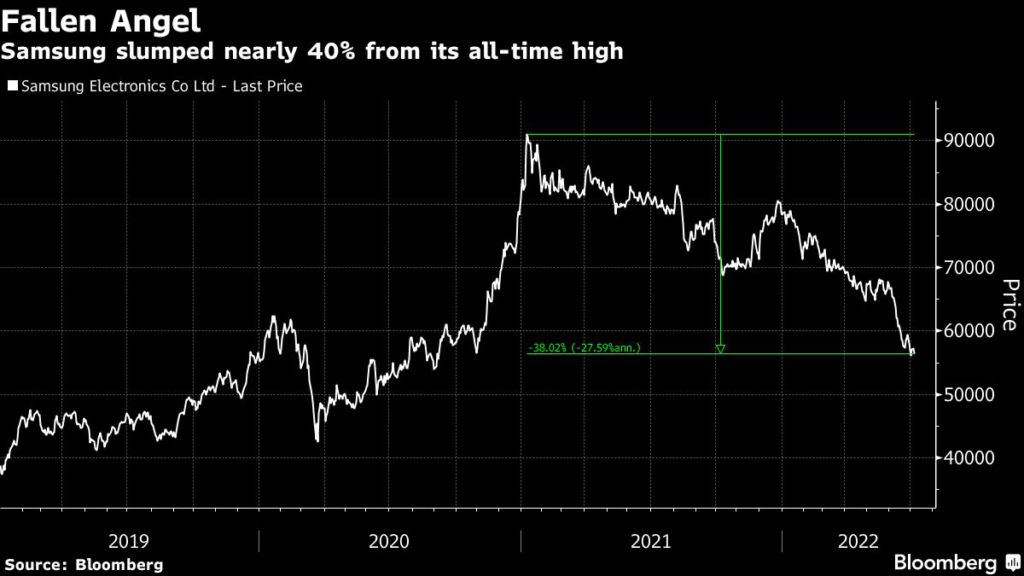
(Bloomberg) — South Korean hedge fund Billionfold Asset Management Inc. said it started buying Samsung Electronics Co. this week on the view the stock’s plunge of almost 40% from a record high is coming to an end.  

Excessive selling has made Samsung shares attractive, An Hyungjin, the chief executive officer of the 170 billion won ($130 million) fund, said in an interview in Seoul on Wednesday.  “We are nearing the bottom,” An said. 

Samsung shares were up as much as 3.2% in morning trading in Seoul Thursday after the company reported a better-than-anticipated 21% jump in revenue, assuaging investors’ worst fears about the impact of weakening consumer demand and soaring materials costs on tech giants.

Read: Samsung’s 21% Sales Jump Banishes Worst Fears of Inflation Hit

Billionfold also began adding NCSoft Corp. this week on expectations its four new titles in the pipeline for next year will improve the company’s outlook, according to An. The game developer is down about 65% from its 2021 peak after the flop of a new title spurred earnings concerns.  

The fund posted a 1% loss during the first six months of this year, An said, outperforming the benchmark Kospi’s 22% slide and Kosdaq’s 27% slump.

Heavy selling by foreign investors triggered the Kospi’s rout in the first half, during which their holdings of Samsung Electronics dropped to a six-year low.

More stories like this are available on bloomberg.com

©2022 Bloomberg L.P.
Meta Plans to Call New Virtual Reality Headset the ‘Quest Pro’

(Bloomberg) — Meta Platforms Inc.’s upcoming high-end headset for virtual and augmented reality will be called the Meta Quest Pro, according to code findings inside the company’s iPhone app for setting up headsets. 

Meta has been touting its new device since last year, using the codename Project Cambria. The company is likely to introduce the official name later this year along with details about the headset’s availability. It will cost more than $1,000, according to a person with knowledge of the matter who asked not to be identified because the details aren’t yet public.

The device is a major priority for Meta, which has recently scaled back other hardware projects such as a smartwatch, and will be a prime competitor to Apple Inc.’s upcoming mixed-reality headset when it goes on sale next year. 

The new Meta headset will have far better graphics processing and power compared with the regular Meta Quest headset. It will also include external high-resolution cameras to simulate AR in color, eye tracking, more storage, new controllers and high-resolution displays for virtual reality.

A Meta spokeswoman declined to comment. Meta typically announces new headsets and related features in October. 

The code string indicating the name of the product, which was found by developer Steve Moser and shared with Bloomberg News, references the pairing of the device to a controller. The code reads: “Pair Meta Quest Pro right controller.”

Meta dominates the virtual reality market, but future rivals like Apple are expected to create more competition. Apple plans to launch its headset with an operating system called realityOS in the coming months. Apple’s device will likely have similar functionality to the Meta Quest Pro, including a high-powered processor, mixed augmented and virtual reality capabilities and applications for 3D communication. 

More stories like this are available on bloomberg.com

©2022 Bloomberg L.P.
Musk Slated to Address Annual Sun Valley Gathering of the Elite

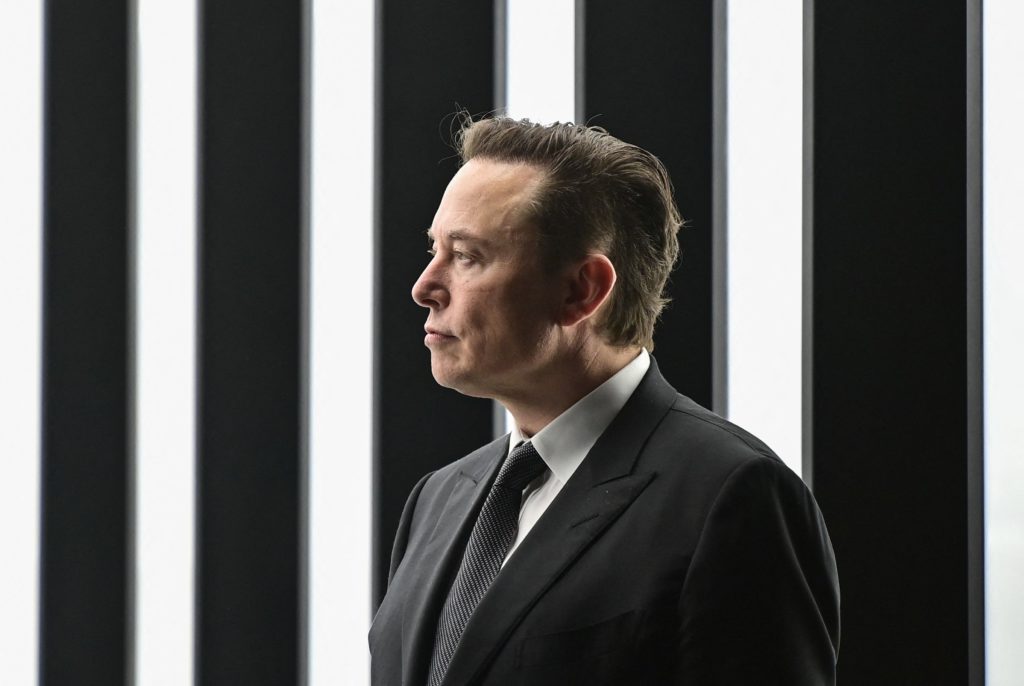
(Bloomberg) — Elon Musk is expected to step up to the podium on the final day of Allen & Co.’s Sun Valley Conference, a role typically reserved for the likes of legendary investors such as Warren Buffett.

The marquee address by the world’s richest person is slated for Saturday, according to people familiar with the matter who asked not to be identified because the agenda isn’t public. 

What the Tesla Inc. and SpaceX chief executive officer plans to say to the technology and media leaders at the annual retreat in Idaho couldn’t be determined.

Musk’s $44 billion deal to buy Twitter Inc. will surely be top of mind for the audience.

Musk has been wrangling with Twitter over his agreement to take over of the social media platform while grappling with Tesla’s sliding market value. Musk has questioned whether Twitter has accurately disclosed the proportion of its user base that is made up of automated bots. Company executives, meanwhile, have said they plan to hold Musk to his agreement.

Twitter Chief Executive Officer Parag Agrawal hasn’t been spotted at the conference yet, but Chief Financial Officer Ned Segal is in attendance.

Musk is expected to arrive in Sun Valley on Thursday, said a person familiar with the matter. A Twitter account which tracks Elon Musk’s jet showed the aircraft touching down in Austin on Tuesday, having departed Hawthorne, California earlier that day.

More stories like this are available on bloomberg.com

©2022 Bloomberg L.P.
Close Bitnami banner
Bitnami