Bloomberg

Crypto Billionaire’s Firm Is All Things to Bankrupt Voyager

(Bloomberg) — The bankruptcy filing by crypto broker Voyager Digital Ltd. provides a road map of the company’s relationships, including borrowers, lenders and investors. 

It turns out Alameda Research, the trading firm co-founded by crypto billionaire Sam Bankman-Fried, is all three. 

As a lender to Voyager, Alameda is owed $75 million under a credit line it offered to the troubled platform last month. But Alameda also owes Voyager $376.8 million on a loan, the filing shows. Alameda is also one of Voyager’s largest shareholders, with a more than 9% stake, according to data compiled by Bloomberg. 

Alameda’s multiple roles exemplify its extensive influence in crypto, and helps explain why Bankman-Fried is such a key player in the industry. Bankman-Fried founded the firm in 2017 to execute crypto arbitrage trades before moving on to run the now-giant crypto exchange FTX. The ties also underscore the interconnected nature of crypto, a feature that has accelerated losses across the industry during the market’s meltdown this year.   

“There is a lot of incestuous activity among crypto-lending firms,” said Aaron Brown, a crypto investor who writes for Bloomberg Opinion. “In traditional finance there is more public disclosure and regulatory oversight of these arrangements. There are mechanisms in place (not always effective) to manage conflicts of interest. But crypto is different.”

The multiple roles played by Alameda point to the extent of “recycled capital” in crypto, which masks the health of institutions in the space, said Adam Levitin, a law professor at Georgetown University. “It is likely to lead to overly large exposures and exacerbates interconnectedness among institutions.”

As Voyager ran into potential liquidity problems stemming from Three Arrows, it secured a credit line worth about $485 million from Alameda in mid-June, of which it has drawn $75 million, the maximum amount allowed in any 30-day period. The lifeline was only a partial solution that couldn’t save Voyager, the filing says. Meanwhile as a borrower, Alameda is still on the hook to repay Voyager despite its bankruptcy proceedings. 

These kinds of relationships can complicate disputes during time of stress. CoinFlex, a crypto exchange, recently accused its own investor and client Roger Ver for failing to pay $47 million in a margin call. Ver denied the claim, and their dispute played out in public on social media. 

Take our survey: MLIV Pulse: What Is the Future for All Things Crypto?

More stories like this are available on bloomberg.com

©2022 Bloomberg L.P.

Bankman-Fried’s Crypto Firm Alameda Is All Things to Voyager

(Bloomberg) — The bankruptcy filing by crypto broker Voyager Digital Ltd. provides a road map of the company’s relationships, including borrowers, lenders and investors. 

It turns out Alameda Research, the trading firm co-founded by crypto billionaire Sam Bankman-Fried, is all three. 

As a lender to Voyager, Alameda is owed $75 million under a credit line it offered to the troubled platform last month. But Alameda also owes Voyager $376.8 million on a loan, the filing shows. Alameda is also one of Voyager’s largest shareholders, with a more than 9% stake, according to data compiled by Bloomberg. 

Alameda’s multiple roles exemplify its extensive influence in crypto, and helps explain why Bankman-Fried is such a key player in the industry. Bankman-Fried founded the firm in 2017 to execute crypto arbitrage trades before moving on to run the now-giant crypto exchange FTX. The ties also underscore the interconnected nature of crypto, a feature that has accelerated losses across the industry during the market’s meltdown this year.   

“There is a lot of incestuous activity among crypto-lending firms,” said Aaron Brown, a crypto investor who writes for Bloomberg Opinion. “In traditional finance there is more public disclosure and regulatory oversight of these arrangements. There are mechanisms in place (not always effective) to manage conflicts of interest. But crypto is different.”

The multiple roles played by Alameda point to the extent of “recycled capital” in crypto, which masks the health of institutions in the space, said Adam Levitin, a law professor at Georgetown University. “It is likely to lead to overly large exposures and exacerbates interconnectedness among institutions.”

As Voyager ran into potential liquidity problems stemming from Three Arrows, it secured a credit line worth about $485 million from Alameda in mid-June, of which it has drawn $75 million, the maximum amount allowed in any 30-day period. The lifeline was only a partial solution that couldn’t save Voyager, the filing says. Meanwhile as a borrower, Alameda is still on the hook to repay Voyager despite its bankruptcy proceedings. 

These kinds of relationships can complicate disputes during time of stress. CoinFlex, a crypto exchange, recently accused its own investor and client Roger Ver for failing to pay $47 million in a margin call. Ver denied the claim, and their dispute played out in public on social media. 

Take our survey: MLIV Pulse: What Is the Future for All Things Crypto?

More stories like this are available on bloomberg.com

©2022 Bloomberg L.P.

UK Spending on Subscriptions Drops 5.7% After Pandemic Lockdowns

(Bloomberg) — Sign up for the New Economy Daily newsletter, follow us @economics and subscribe to our podcast.

British consumers are spending less on subscription services as the cost of living crisis and the end of coronavirus lockdowns make people more cautious about non-essentials.

Barclaycard, which processes a third of the credit and debit card payments in the UK, said revenue for services like entertainment streaming and grooming kits fell 5.7% in May from a year ago.

The figures suggest that the golden age of subscriptions, which took off when consumers were told to stay at home during the pandemic, has given way to concerns about rising inflation and the cost of everyday goods.

“Many consumers are re-evaluating their discretionary spending and cutting back on some products and services they no longer deem essential.” said Kirsty Morris, managing director of Barclaycard Payments.

About 7-in-10 consumers have become more selective about their spending, trimming entertainment, beauty and grooming services. About 36% of those surveyed said they cancelled at least one service to cut fat from their budget. 

Netflix Inc. said last month that it had laid off another 300 employees as the streaming giant seeks to bring costs under control amid uneven subscriber growth. Netflix is retooling its operations after the departure of 200,000 subscribers during the first quarter. 

In spite of this, subscriptions retain their appeal for many people, who cite convenience, flexible payment structures and value as reasons to buy. Most companies that offer subscriptions expect growth in the coming years, Barclaycard said. 

The report said 47% of companies are set to increase their subscription cost while 51% will offer them at a cheaper rate to plug their leaking consumer base. Also, 61% will launch more affordable subscription plans. 

“Retailers adapted quickly during the pandemic,” said Morris. “Those which continue to evolve their subscription offering respond to this new set of challenges will be best placed to benefit from increased consumer loyalty and satisfaction.” 


More stories like this are available on bloomberg.com

©2022 Bloomberg L.P.

Tech Firms Delete Mass Shooters’ Accounts, But it’s Not Enough

(Bloomberg) — Mass shooting events like the one that happened July 4 near Chicago typically set off an-all-too-common chain of procedures at tech companies: unearth the attacker’s online presence, capture possibly incriminating posts and quickly shut their accounts.

As frequent as this protocol has become, the companies are still not fast enough to prevent a dangerous knock-on effect of the violence. Social media users themselves swiftly find, circulate and discuss the shooter’s posts, in some cases creating a glorification and amplification of murder that could inspire other shootings and that the technology industry—for all its engineering might—remains ill-equipped to contain.

The man prosecutors say sprayed bullets into a parade in Highland Park had a sizable online presence that internet companies urgently scrubbed, deactivating nearly a dozen of his profiles, according to a review of his accounts by Bloomberg News. Within 48 hours, companies including YouTube, Discord, Spotify and even PayPal permanently suspended the accounts of the accused gunman, Robert Crimo III, all but removing his trace on the open web. But since the mass shooting, which transformed a holiday celebration into a national tragedy, internet trolls and curious onlookers have passed around archives of Crimo’s accounts and picked apart his postings.

“Bloodthirsty trolls and admirers have their own copies of Crimo’s work, which they will endlessly obsess over and dissect,” said Emerson Brooking, a resident senior fellow for the Atlantic Council who studies digital platforms. Regular people, too, become curious about a shooter’s motivation in the aftermath of an unthinkable tragedy. “Eventually, these trolls are going to try to smuggle his ideas back into the mainstream. Are companies ready for that? Are we?”

On Meta Platforms Inc.’s Facebook, a link from the file-hosting site Mega was liked and shared dozens of times, mostly in private groups, according to data from CrowdTangle, a Meta-owned social media analytics tool. “They try to scrub the shooter from the internet but night watch is in control,” said one user who shared the link in a group with 19,160 members called “Let’s Go Brandon!!!”—a reference to an anti-Biden political meme. On 4chan, the fringe online message board, dozens of anonymous users scrutinized the message behind an apparently self-published book on Amazon by the suspected gunman, since deleted by the company, which contained just a string of meaningless numbers. After the attack, 4chan users flocked to Crimo’s Discord server, NBC reported, including to post memes about the incident. The server was small and mostly inactive days before, according to a Bloomberg review of the chat logs. It was eventually deactivated.

In response to inquiries from Bloomberg, Alphabet Inc.’s YouTube said its trust and safety teams had removed content that violated its community guidelines, and terminated a channel that violated its creator responsibility guidelines. Twitter Inc. said its enforcement teams were proactively removing content that violated its rules, including posts glorifying violence. Mega said it removed the file shared on other sites, because “it was considered that the collection of material relating to the alleged shooter was likely to be used to glorify him and could inspire other similar actions,” according to a statement from Stephen Hall, executive chairman at Mega Limited.

A PayPal “donate” link associated with the suspected gunman, on an archived version of his website, was deactivated after Bloomberg asked the company whether it violated policies. Amazon.com Inc., Discord Inc.  and Meta did not respond to requests for comment, but removed the accounts associated with Crimo on their services. 

Within hours of mass shooting events inspired by extremist views, an online engine begins to churn out propaganda discussing and often honoring the attacker, said Alex Newhouse, deputy director of the Center on Terrorism, Extremism, and Counterterrorism at the Middlebury Institute of International Studies at Monterey. On the chat app Telegram, for example, self-described far-right users have posted Photoshopped images of extremist attackers as “saints” or placed their images on a so-called “mass shooter calendar.” Social media companies on the lookout for manifestos, videos and memes related to the shooter often miss internet craft work-arounds, such as stylized remixes of shooting event footage, that aim to continue sanctifying the events. 

Some of this propaganda is intended to sow chaos and social conflict that, some extremists hope, will create conditions for a new society aligned with their views—a philosophy known as “accelerationism.” Other times, posts apparently valorizing these individuals are not explicitly politically motivated; irreverent internet users on forums such as 4chan use imagery from these tragedies to make edgy jokes.

Crimo’s motivations are less traceable to known extremist groups. In fringe communities such as 4chan and Gab, users exchanged conspiratorial theories, picking apart images of him wearing a Trump flag around his shoulders and a rose tattoo as clues for his ideological affiliation.  The online obsession around shooters plays into what many of them envision as their legacy.

“The entire point for a lot of these people is to become valorized and part of this legacy as warriors in the fight for accelerationism,” Newhouse said. After the white-supremacist Christchurch, New Zealand shooting, footage of the attacker’s self-made livestream proliferated across YouTube, uploaded tens of thousands of times per second, and Facebook, where the shooter was praised in groups with as many as 120,000 followers. On gaming platforms, which can host tens of millions of users daily, images of the alleged attacker’s face spread widely. Over 100 users of the PC video game store Steam changed their icons or names to reference the Christchurch attacker. On the video game platform Roblox, some users created so-called simulations of the attack. 

This social media behavior can inspire copycat crimes. The May Buffalo shooting, which was motivated by racism, hewed closely to the 2019 Christchurch shooting, placing the attacker within a lineage. 

Big tech companies like Meta, Twitter, and YouTube have increased moderation efforts over the last few years in the wake of these tragedies. Gaming and gaming-related platforms have been slower to catch up. It has proven challenging for gaming companies to moderate graphics associated with attackers, such as white-supremacist attacker “Dylan Roof’s bowlcut,” in comparison to photographs or text.

Roblox says it uses a combination of machine learning and trained professionals to moderate “every single image, video and audio file” on the platform, a spokesperson told Bloomberg. Like the gaming chat app Discord, which has struggled to moderate extremist communities on its platform, Roblox employs a team focused on terrorism and violent extremism. Valve, which operates the platform Steam, which has also struggled to moderate extremist content, did not respond to a request for comment.

“Mass shooters count on the online frenzy,” said Melissa Ryan, chief executive officer of Card Strategies, a consulting firm that researches disinformation. “Sadly, at this point, we have more than enough data to establish a pattern. It is part of their game plan for spreading their ideology and getting it in front of a mainstream audience.”

More stories like this are available on bloomberg.com

©2022 Bloomberg L.P.

AT&T Asks Judge to Throw Out SEC Suit Over Disclosures to Analysts

(Bloomberg) — AT&T Inc. and three of its employees asked a judge to throw out a lawsuit by a federal regulator claiming they selectively disclosed nonpublic information about the company’s finances to certain analysts.

At a hearing in Manhattan on Wednesday, they said the data was already public and that investors wouldn’t have considered the revelations important enough to influence their decisions anyway. 

In the suit, filed in March 2021, the US Securities and Exchange Commission accuses the company and employees of disclosing confidential information to more than a dozen analysts during calls in March 2016. The SEC says they did so after learning that first-quarter revenue would be lower than analyst estimates because of a larger-than-expected decline in smartphone sales. 

Read More: AT&T Is Sued by SEC Over Information Disclosed to Analysts

Those disclosures, the SEC claims, violated Regulation FD, which bars companies from giving “material nonpublic information” in private meetings without simultaneously disclosing it to all shareholders. The case is a rare claim that a company violated Reg FD, which was adopted in 2000, long before the rise of social media.

The hearing was over dueling requests for summary judgment, as each party tried to persuade US District Judge Paul Engelmayer to come down on its side without a trial.

Judge Presses SEC

At one point, the judge had sharp words for the SEC, pressing it on why it hadn’t gone after more-senior executives, such as the company’s then chief financial officer.

“For heaven’s sake, why are you not charging the upper-level people?” Engelmayer pressed the regulator. “You are giving the lower-level people a defense.”

Earlier, lawyers for the telecommunications company told Engelmayer that information about a slowdown in smartphone upgrades had already been publicly disclosed. They said John Stephens, then CFO, had revealed it during a presentation at a Deutsche Bank conference earlier that March, before the calls. 

The employees who called the analysts “wanted to make sure they had seen Mr. Stephens’ remarks,” said Richard Krumholz, a lawyer for the company. “They just wanted to make sure they saw it.”

Freezing the Shares

Krumholz also argued that the information that AT&T expected revenue from equipment to drop 15% to 20% from a year earlier was part of a trend. He said it had no effect on the company’s stock price and therefore no impact on investors’ decisions to buy, sell or hold the shares. 

The decline had less than a 5% impact on total revenue, a general threshold for whether a misstatement is considered material to investors, and the market had discounted a $600 million revenue miss the previous quarter, he said. 

The SEC countered that the company’s aim was to stop the share price from moving. The agency alleges the object of the phone calls was to get enough analysts to revise their revenue estimates downward so their consensus projections would fall to the level AT&T would report publicly, allowing it to avoid a third quarterly miss on the metric.

“Their goal was not to have any stock price movement,” said Alexander Vasilescu, an attorney for the SEC. “It doesn’t make sense to look at whether the market reacted after each analyst put out their report. They were afraid of the market information. When they miss revenue consensus, the market reacts.”

‘Walking the Street Down’

The SEC modified its view of permissible venues for disclosure in a 2013 decision not to act against Netflix Inc.’s Reed Hastings, who wrote in a Facebook post that views on his company’s service had exceeded a billion hours for the first time. 

As for the AT&T calls, Vasilescu said, “this type of walking the Street down is one of the main reasons Regulation FD was implemented.” 

The judge asked the SEC why it hadn’t sued Stephens or the head of investor relations, given its allegations that the CFO told the IR department to “work the analysts who still have equipment revenue too high.” A lawyer for the SEC told the judge he wasn’t authorized to comment on the reason.

The judge declined to rule on the summary judgment motions following Wednesday’s arguments. He urged the two sides to come to a resolution.

The case is SEC v. AT&T Inc., 21-cv-1951, US District Court, Southern District of New York (Manhattan).

More stories like this are available on bloomberg.com

©2022 Bloomberg L.P.

China Data Show Economy Shrinking in Challenge to Xi’s Target

(Bloomberg) — Signs are mounting that China’s economy shrank in the second quarter for the first time since 2020, placing the nation’s official statistics under fresh scrutiny as analysts bet the government will avoid acknowledging that slump.

The consensus forecast from economists in a Bloomberg survey is that the government will next week report gross domestic product grew about 1.5% in the second quarter from a year earlier. Yet high-frequency data for June and losses in the previous two months suggest the economy contracted over that period due to the lingering effects of lockdowns in dozens of cities. 

A quarterly drop in GDP, which has only happened once before, underlines China’s slower rebound from coronavirus curbs than in 2020, providing less of a boost to a struggling global economy. Debate about the accuracy of official data will likely persist this year as President Xi Jinping urges officials to strive to meet an ambitious target for annual GDP growth of about 5.5%, while at the same time sticking with a Covid Zero policy that requires tough restrictions wherever virus cases emerge.

“There is no plausible story that GDP growth should be positive in the second quarter,” said Logan Wright, head of China markets research at Rhodium Group. “The downturn in household consumption is very significant within both the official retail sales data and other proxies. And the property sector remains a significant drag.”

The evidence from alternative indicators is overwhelming of an ongoing slump in the economy. Travel data shows passenger trips taken on China’s roads were mostly below last year’s levels into July, according to transport figures analyzed by TS Lombard. The number of domestic flights in the quarter was down 62% from the same period last year, according to data provider Variflight.

The movement of trucks carrying goods between cities, which researchers say are closely correlated with GDP, show weak activity. In the last week of June there were still about 20% fewer trucks on the nations roads compared to a year earlier, according to data from G7 Connect, a digital logistics firm.

In the property market, which accounts for about 20% of GDP, home sales remained in a deep slump in the second quarter, according to data from China Real Estate Information Corp. The figures show the market hit a bottom in May and stopped getting worse, but is nowhere near actual growth.

Car purchases, which make up about 10% of monthly retail sales, fell more than 10% in the quarter, according to Bloomberg calculations based on data from the China Association of Automobile Manufacturers. 

Other independent estimates show an even worse picture than the high-frequency data. Bain & Co. predicts luxury sales in China fell 30%-50% in the second quarter from a year earlier. Nike Inc. reported a 20% fall in revenue from China in the three months ended in May and said it was “cautious” on the country’s recovery.

Despite those signs, Beijing would be reluctant to report a contraction in the economy. In May, Premier Li Keqiang said officials should work to ensure the economy expands over the quarter. 

“Beijing will never announce a second-quarter contraction, Li Keqiang made that very clear,” Leland Miller, chief executive officer at China Beige Book, which polls Chinese companies on activity levels, told Bloomberg TV. “We think that they are going to throw a number in the 2% range out. Its not justified by the data.”

Reporting positive growth in the quarter would go some way to helping China reach its annual growth target, although it remains a tall order. Wang Yiming, an adviser to China’s central bank, said last month that if growth was 1% in the quarter, the economy would need 7.5% expansion in the second half to meet the target, adding that would be “difficult” to achieve.

The bullish story for growth in the second quarter rests largely on industrial production for export and a pick-up in infrastructure investment. 

“While consumption and property have been dragging on growth, we have seen more of a meaningful recovery on the production side,” said Jing Liu, chief economist for Greater China at HSBC Holdings Plc, who is forecasting 1% growth for the quarter. “This is partly on the back of prioritizing resumption of work in key manufacturing sectors even amidst the recent Covid-19 outbreak.” 

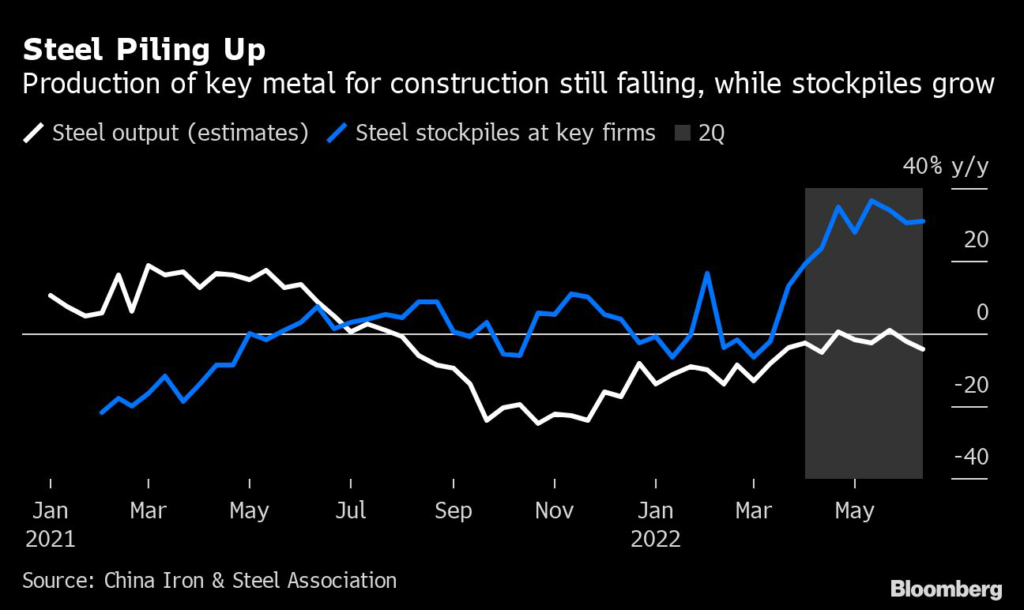
While official data on industrial production turned positive in May, that was largely due to a rebound in the mining sector, especially in coal production. High-frequency indicators for June show production of steel, a key industrial good, fell year-on-year in the first 20 days of the month, according to data from the China Iron & Steel Association. Meanwhile, inventories are at historically high levels, indicating weak construction demand. 


Weaker growth would put pressure on policy makers to deliver more stimulus in the second half of the year, with attention focused on a July meeting of the Politburo, the Communist Party’s top decision-makers. Economists linked to the government have suggested the possible sale of special central government bonds, and the advanced issuance of next year’s bond quota for local governments in order to fund infrastructure spending. 

Some economists openly admit uncertainty about what Beijing will announce. Larry Hu, China economist at Macquarie Group, said his estimate of 1.5% growth in the second quarter is “more guess than estimate.”

“I would not be surprised to see that the year-on-year growth in the second quarter falls to zero or even negative,” he said. “I think policy makers are waiting for the result as well, before they decide how much additional stimulus they have to do in the second half.”

More stories like this are available on bloomberg.com

©2022 Bloomberg L.P.

Asia Plastic Makers Frustrated by Delay in China Demand Recovery

(Bloomberg) — Asian plastic makers have been eagerly anticipating a post-lockdown pick-up in Chinese consumption, but weak consumer demand and high inventories mean it could be a long time coming.

Petrochemicals has been the hardest hit segment of the oil market this year. Covid-19 restrictions in manufacturing giant China decimated demand over April and May, while the invasion of Ukraine upended fuel flows and raised costs for naphtha, a major feedstock.

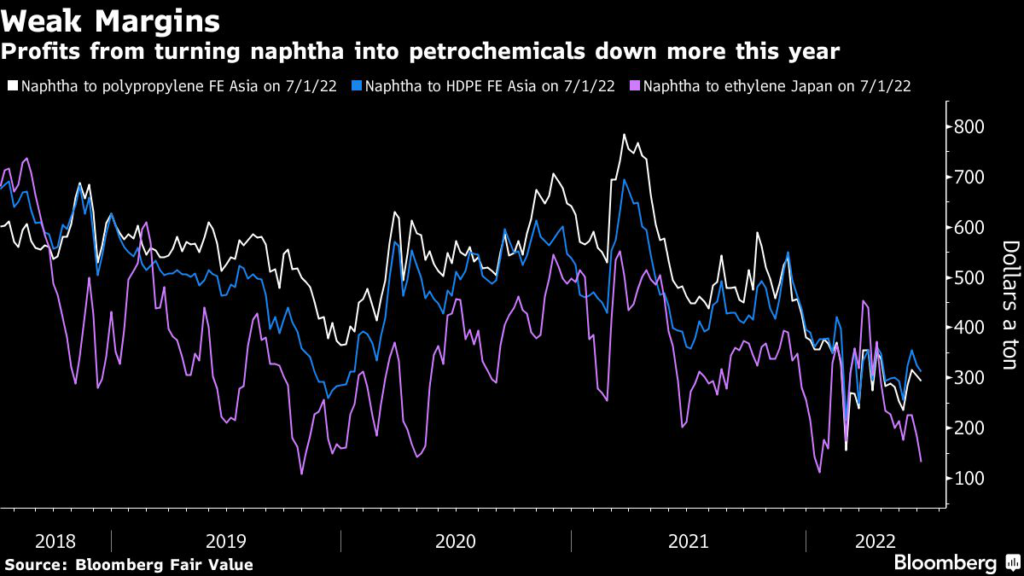
Producers of the building blocks used to make everything from car interiors to packaging and cables have seen margins fall further this year. Profits from turning naphtha into ethylene, a petrochemical that’s the base for many plastic products, have dropped to $133 a ton from above $450 in early April.  


China accounts for about 40% of global petrochemicals demand, according to S&P Global Commodity Insights, so the fortunes of big producers like LG Chem Ltd. and Formosa Petrochemical Corp. are closely tied to what’s happening there. While lockdowns have eased, there are signs that Chinese consumer confidence will take longer to recover amid price gains and a very gradual economic rebound. 

“Durable plastics for domestic white goods and for automotive applications have yet to see a strong demand recovery,” said Larry Tan, vice president for chemical consulting in Asia at S&P Global. Inflationary pressures in China are “causing consumers to be more cautious on spending on bigger-ticket items,” although domestic sentiment is slowly improving, he said.

China’s Consumer Confidence Crisis Will Leave Permanent Scars  

Higher shipping costs and disruptions to supply chains are also complicating the global plastics trade, making it tougher for Asian producers to offset sluggish local demand by exporting to Europe.

Chinese petrochemical plants have increased operating rates over the last few weeks, but they’re still only running at 85% of capacity, compared with 100% normally, according to Kelly Cui, a consultant at Wood Mackenzie Ltd. Stockpiles are also high, she said.

There are some optimistic signs for plastics producers, however. Benchmark North Asian naphtha prices have fallen by around 30% since spiking in early March after the Russian invasion of Ukraine, although are still high on a historical basis. Some of their products — such as xylene, toluene, benzene and MTBE — that can be blended with gasoline are also seeing strong demand.   

And Chinese household spending should also start to improve. Goldman Sachs Group Inc. sees it increasing 4.5% in the second half from a year earlier, compared with a 1.5% contraction last quarter. 

However, Beijing’s Covid Zero policy means the risk of more lockdowns hasn’t gone away, said Wood Mackenzie’s Cui. Consumption is slowly on the mend, but it could take until September, usually the peak-demand period for polyolefins — a key petrochemical segment — to see a firmer turnaround, she said.

More stories like this are available on bloomberg.com

©2022 Bloomberg L.P.

Apple Plans Extreme Sports Watch With Larger Screen, Metal Case

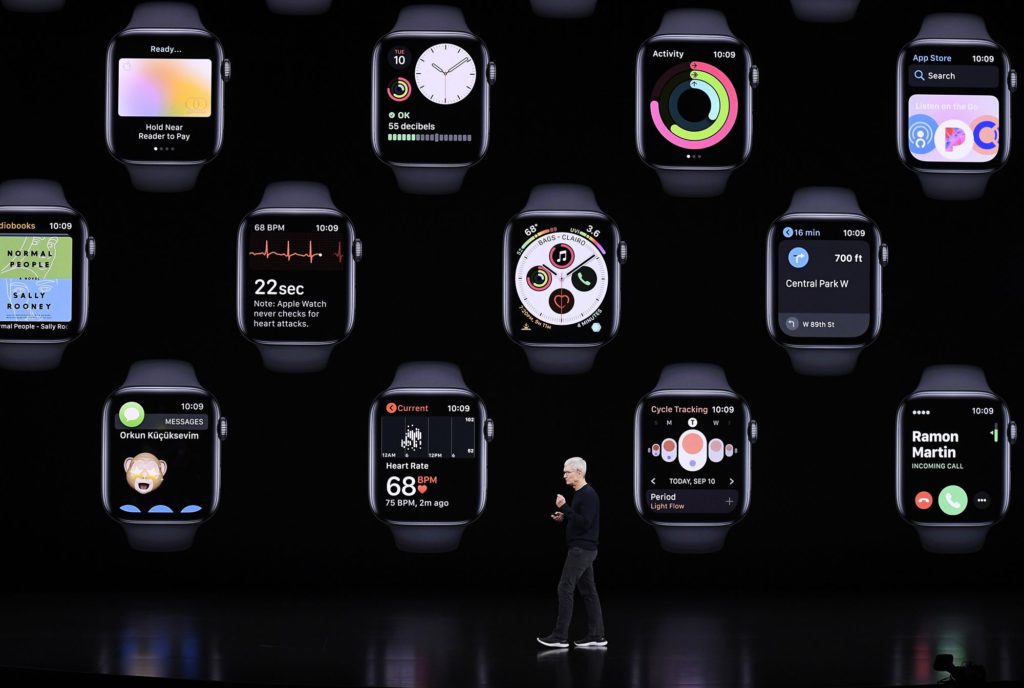
(Bloomberg) — Apple Inc. plans its largest smartwatch display to date, a bigger battery and a rugged metal casing as part of the upcoming Apple Watch geared toward extreme sports athletes, according to people with knowledge of the plans. 

The rugged version of the Apple Watch will get a screen that measures almost 2 inches diagonally, while a new, standard Apple Watch Series 8 will keep the 1.9-inch diagonal screen size of the current Apple Watch Series 7. A planned update to the low-end Apple Watch SE also will retain the current screen size.

The larger display on the extreme sports model, which is planned to be announced later this year with the other two models, will have about 7% more screen area than the largest current Apple Watch. The display will have a resolution of about 410 pixels by 502 pixels and retain the same overall sharpness as the existing models. 

Apple could use the larger screen area to show more fitness metrics or information on watch faces at one time. The company added several new fitness features in watchOS 9, including multisport workouts and improved intensity tracking during exercise routines.

First released in 2015, the Apple Watch has become a key piece of Apple’s hardware lineup. The watch models are included in the wearables, home and accessories division, which generated $38.4 billion — or 10% of the company’s total revenue — in the past fiscal year. But smartwatches and fitness wearables are crowded markets and Apple competes with products from the likes of Google’s Fitbit and Samsung Electronics Co.  

The extreme sports watch will use a strong metal material rather than aluminum, have a more shatter-resistant screen and include a larger battery compared with standard Apple Watches — letting athletes track workouts for longer periods of time, said the people, who asked not to be identified because the watch details haven’t been announced. 

Read more about Apple’s 2022 and 2023 product plans

Like the standard Series 8, the sturdier watch will have the ability to take a user’s body temperature to detect a fever. It will also improve tracking metrics like elevation during hiking workouts and data while swimming.

All of the new Apple Watches will use an S8 processor with similar performance to the S7 chip in the Apple Watch Series 7, which was on par with the S6 in the Apple Watch Series 6 from two years ago. This will mark the first time that the company is retaining the same general performance in the Apple Watch for three generations in a row. 

An Apple spokeswoman declined to comment on the company’s plans. Apple typically announces its new watch models in September alongside new iPhones. The Cupertino, California-based company is planning four new iPhone 14 models for the fall, including new pro versions with faster chips and a 48-megapixel rear camera. 

The display size increase for the rugged model will be the third in the history of the Apple Watch. The company expanded the device’s screen in 2018 with Series 4 and again last year with Series 7. The nearly 2-inch display on the rugged model will make the screen one of the largest offerings from a mainstream smartwatch maker. 

Bloomberg News first reported early last year that Apple was planning to expand the Apple Watch lineup with a rugged version to better compete with offerings from Garmin and others geared toward extreme sports. The higher-end watch is likely to be pricier than the standard stainless steel Apple Watch, which today starts at $699. 

More stories like this are available on bloomberg.com

©2022 Bloomberg L.P.
Crypto Exchange Bitstamp Cancels Plans for ‘Inactivity Fee’

(Bloomberg) — Crypto exchange Bitstamp canceled a planned “inactivity fee,” reversing course just five days after announcing the charges.

The Luxembourg-based company scuttled a plan to start charging non-US users 10 euros ($10.18) a month on accounts that haven’t traded, deposited, withdrawn or staked assets for a year with a total balance of less than 200 euros, a third-party spokesperson confirmed in an email to Bloomberg on Wednesday. 

“We have taken everyone’s concerns onboard and have decided to cancel the Inactivity Fee,” JB Graftieauz, Bitstamp’s chief executive, said in a statement citing customer feedback.

Trading volume dipped below $60 million in the days after the announcement coinciding with a holiday weekend in the US, the exchange’s volume has since rebounded to $170 million in the last 24 hours, according to Coingecko data.

Bitstamp emphasized that it has no exposure to any companies that are currently “under stress.” The company also said that it holds its customers’ fiat and crypto separately from its corporate assets. 

Coinbase Global Inc. and other exchanges have seen investors pulling out their tokens as deposits drop, while smaller players, like Coinflex and Vauld, have paused withdrawals. In response to uncertainty in the market and rising interest rates, risk-averse investors have transferred their holdings to off-line wallets.

Take our survey: MLIV Pulse: What Is the Future for All Things Crypto?

More stories like this are available on bloomberg.com

©2022 Bloomberg L.P.
Crypto Lender Genesis Confirms Exposure to Bankrupt Three Arrows Capital

(Bloomberg) — Genesis, one of the largest cryptocurrency brokerages for institutional investors, confirmed that it was exposed to bankrupt hedge fund Three Arrows Capital and had mitigated its losses. 

Genesis sold collateral and hedged its downside once Three Arrows failed to meet a margin call, Michael Moro, chief executive officer of Genesis, said in a series of tweets Wednesday. The loans to Three Arrows had a weighted average margin requirement of over 80%, he said, without disclosing the total loan amount. 

Digital Currency Group, the parent company of Genesis, assumed some liabilities of Genesis to ensure its continued operation, Moro added. 

The fuller extent of the impact of Three Arrows on the industry is starting to emerge as more crypto lenders and brokers disclose exposure to the fund’s bad debt. Three Arrows Capital is set for liquidation ordered by a British Virgin Islands court, and it has filed for Chapter 15 bankruptcy protection in New York. Blockchain.com and Deribit, a crypto derivatives exchange, were among creditors that sought the liquidation of Three Arrows.

CoinDesk earlier reported that Genesis is subject to potential losses of “hundreds of millions” of dollars, in part due to exposure to Three Arrows and Babel Finance, a Hong Kong-based crypto lender that has halted withdrawals, citing people it didn’t identify.

Genesis declined to comment on the CoinDesk report.  

Take our survey: MLIV Pulse: What Is the Future for All Things Crypto?

More stories like this are available on bloomberg.com

©2022 Bloomberg L.P.
Close Bitnami banner
Bitnami