Bloomberg

China’s Weibo Seeks Up to $1.2 Billion in First Syndicated Loan

(Bloomberg) — Weibo Corp. is seeking an up to $1.2 billion syndicated financing, following other Chinese social media platforms in venturing offshore to raise funds.

The investment-grade rated firm is marketing the deal at an initial size of $900 million and has the option to increase by up to $300 million, according to people familiar with the matter. 

Proceeds from the five-year financing will be used for general corporate purposes and refinancing, including capital expenditures, said the people, who are not authorized to speak publicly. 

Citigroup Inc. and Credit Suisse Group AG are coordinating the syndication and a bank presentation is scheduled for July 11. A representative from the company didn’t immediately respond to a request for comment.

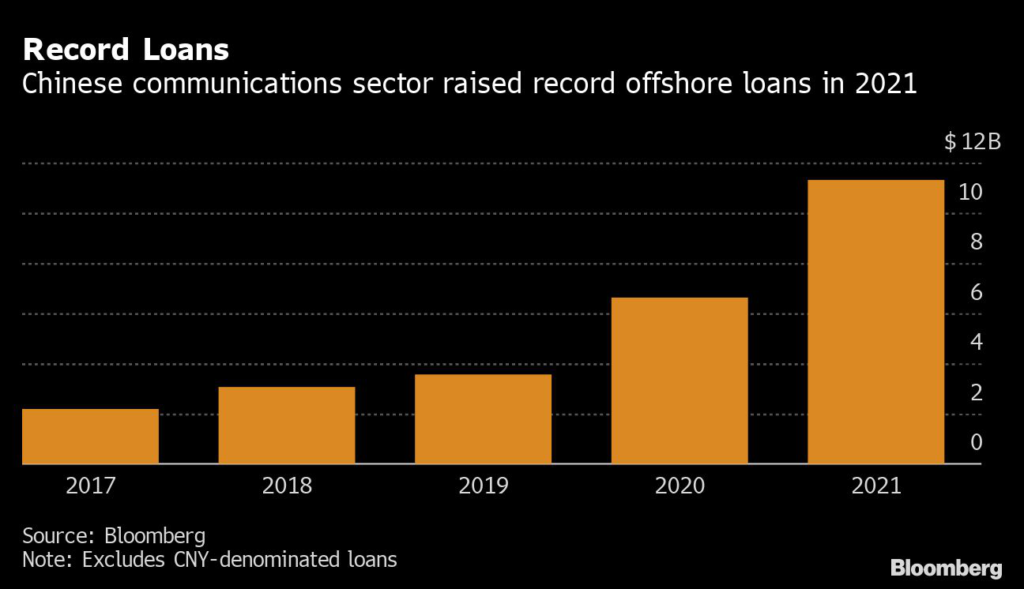
Chinese companies from the communications sector raised a record $11.3 billion of loans offshore in 2021, spurred by the likes of Bytedance and search engine Baidu Inc., according to Bloomberg data. 

How the US Is Targeting Chinese Firms for Delisting: QuickTake


More stories like this are available on bloomberg.com

©2022 Bloomberg L.P.

BlackRock, Crypto ETFs Bleed in Biggest Canada Drop in Years

(Bloomberg) — Canadian exchange-traded funds suffered their biggest monthly outflows since 2013 as investors dumped equity and cryptocurrency funds to escape a brutal selloff.  

In a country that was early to embrace crypto exchange-traded funds, investors have abandoned them quickly. Crypto asset ETFs “faced sudden outsized redemptions” and saw nearly C$700 million ($537 million) in net outflows in June, about 16% of assets under management, National Bank Financial analyst Daniel Straus said in a report.

Equity ETF outflows came primarily from investors selling Canadian and US index funds. Total outflows for all Canada-listed ETFs were C$682 million in June, the first monthly decline in three years.   

RBC iShares, an alliance between Royal of Bank of Canada and BlackRock Inc., was hit with the biggest loss, more than C$1 billion in withdrawals. An iShares fund that tracks Canada’s large-cap S&P/TSX 60 Index was hit with C$719 million in outflows, or about 6% of assets. 

Investors poured C$2.1 billion into fixed income ETFs during the month — despite the terrible performance of bonds so far in 2022 — “perhaps in expectation of a reversal in trend if central banks would be able to orchestrate a ‘soft landing,’ or to make strategic allocations as the yields on bonds finally start to make sense,” Straus said. Inflows into ESG-labeled funds were C$292 million during the month.

Global equities and cryptocurrencies have plunged this year as soaring inflation and tighter monetary policy have triggered deep anxiety about a coming recession. The MSCI World Index has dropped 21% this year and the S&P/TSX Composite Index has fallen more than 11%. 

(Updates with additional detail on ESG ETFs in fifth paragraph. An earlier version corrected the year in the fourth paragraph.)

More stories like this are available on bloomberg.com

©2022 Bloomberg L.P.

UK Probes Microsoft’s $69 Billion Purchase of Activision

(Bloomberg) — The UK antitrust watchdog kicked off an investigation into Microsoft Corp.’s planned purchase of Activision Blizzard Inc. joining other regulators in scrutinizing the $69 billion gaming deal.

The Competition and Markets Authority said Wednesday it will consider whether the deal to combine the technology giant with the maker of the Call of Duty franchise, will harm competition and lead to higher prices or reduced choice. The regulator said it will work with counterparts around the world and set itself an initial deadline of Sept. 1 to decide whether to launch an in-depth investigation.

The CMA has long advocated for a more forceful approach to reviewing deals, particularly by the biggest technology companies. Regulators are likely to look closely at how Microsoft’s ownership of Activision could harm rivals by limiting their access to the company’s biggest games. 

The Federal Trade Commission is also examining the deal, chair Lina Khan told lawmakers in June.

“We have been clear about how we plan to run our gaming business and why we believe the deal will benefit gamers, developers, and the industry,” Lisa Tanzi, Microsoft’s general counsel, said. “We’re committed to answering questions from regulators and ultimately believe a thorough review will help the deal close with broad confidence, and that it will be positive for competition.”

She said the firm expected the deal to close in 2023.

A spokesperson from Activision did not immediately respond.

The FTC’s Activision investigation will focus on the combination of the company’s gaming portfolio with Microsoft’s consoles and hardware systems. Lawmakers have also urged the FTC to closely examine how the proposed deal would impact workers at Activision, who have called for greater accountability at the company in the wake of sexual harassment and discrimination allegations.

Microsoft wants Activision so it can bolster the number of games it can exclusively offer subscribers to its Game Pass subscription service for Xbox consoles. Activision is home to some of the most popular game franchises in the world, including Call of Duty, Candy Crush, Guitar Hero, Skylanders, Destiny, Crash Bandicoot and the Tony Hawk skateboarding titles. The publisher is a major player in mobile gaming, while Microsoft is at best on the sidelines. The deal would address this significantly.

Activision isn’t the only target Microsoft had as part of its Game Pass expansion plan. In 2020, it agreed to acquire ZeniMax Media Inc., home to The Elder Scrolls and Doom publisher Bethesda Softworks, for $7.5 billion. It also owns Mojang, the creator of Minecraft.

(Updates with comment from Microsoft spokesperson in fifth paragraph.)

More stories like this are available on bloomberg.com

©2022 Bloomberg L.P.

Elon Musk Grieved With Crash Victim’s Dad. Now Tesla Faces Him in Court

(Bloomberg) — In 2018, Elon Musk shared the agony of having his infant son die in his arms while consoling a father who lost his teenager to a fiery crash in a Tesla Model S.

Now, Tesla Inc. is trying to undermine James Riley’s claim that it played a role in his son’s death, as the world’s most-valuable automaker faces off in court against a family once known to employees as “VIP customers.”

A week-long jury trial set to begin Wednesday in federal court in Fort Lauderdale, Florida, is the first for the company over a fatal accident involving one of its electric cars.

The case doesn’t feature any claim that Tesla’s technology was defective — unlike other suits blaming the carmaker’s Autopilot driver-assistance feature for fatal wrecks — and the outcome of the trial probably won’t damage the company’s reputation, said Michael Brooks, acting executive director of the Center for Auto Safety, a consumer advocacy group.

Still, the showdown highlights the company’s “aggressive legal strategy” of choosing to litigate disputes rather than settle them, he said.

“It sheds a lot of light on what’s going on in America and how much power do consumers actually have,” Brooks said.

Tesla didn’t respond to a request for comment.

In May 2018, Barrett Riley was driving 116 miles per hour (187 kilometers per hour) on a Fort Lauderdale street when he lost control of the vehicle and careened into the concrete wall of a house. He and his friend sitting in the passenger seat, both 18, were killed after the car was engulfed by flames. A friend riding in the back seat was ejected from the car and survived.

Lawyers for James Riley will argue Tesla was negligent for removing a speed-limiting device two months after his wife had asked the company to install it for Barrett’s safety. The company is poised to counter that while the car was being serviced, its staff was “tricked” by Barrett into removing the limiter — which was programmed to block the car from going faster than 85 mph.

Musk reached out to James Riley shortly after the accident. An email exchange between them contained in court filings showed the billionaire empathizing with the family and recalling the anguish around his own child’s death. 

Read More: Musk’s Sensitive Side Emerges in Emails With Crash Victim’s Dad

Their communication led to Tesla sending out a software update in June 2018 for its speed limit feature that would let drivers set a maximum speed between 50 mph and 90 mph, with language in the owner’s manual saying the feature was overhauled in memory of Barrett Riley.

Two years later, the Riley family sued Tesla. In their original complaint, they claimed that a defect in the Model S battery caused it to explode. Consistent with a medical examiner’s report cited in an investigation by the National Transportation Safety Board, they said Barrett was killed by the fire rather than the impact of the crash. A judge dismissed that claim after the company called into question whether evidence indicated a defect.

Brooks said battery fire issues are rampant in lawsuits against electric-vehicle makers.

“There are lot of cases that come up with battery fires and hopefully this case doesn’t have an effect on those because I would like to see the claims litigated,” he said.

Tesla will try to fend off the negligence claim by showing that Barrett had a dangerous history of speeding — and arguing that his parents failed to restrict his driving. 

Facing objections from the family, Tesla agreed not to show jurors certain videos taken by friends of Barrett’s that documented his speeding — including one captioned “I’M GONNA DIE” that recorded a speed of a 155 mph.

Instead, the company will point to a speeding ticket issued to Barrett for going 112 mph in a 50 mph zone and a spreadsheet displaying the maximum speeds attained by the Model S preceding the accident.

Pretrial hearings offered glimpses of some of the other evidence likely to be presented, including testimony, texts, emails and videos involving the Riley family, Barrett, his friends and Tesla staff.

When Barrett’s March 2018 speeding ticket prompted his mother, Jenny Riley, to ask Tesla to install a speed limiter, a service center representative wrote in an email to colleagues that the Rileys were “VIP customers” who had their sixth Tesla vehicle on order. The representative called the family “huge Tesla advocates” for whom the limiter was a vital safety precaution.

“Fabulous. Thank you,” Jenny Riley said the next day in a text to the representative after the installation was confirmed. “This will save lives,” she wrote, with four exclamation points.

The case is Riley v. Tesla Inc., 20-cv-60517, US District Court, Southern District of Florida (Fort Lauderdale).

More stories like this are available on bloomberg.com

©2022 Bloomberg L.P.

Tax Cuts and Public Sector Pay, Big Calls for New UK Chancellor

(Bloomberg) —

Britain’s new chancellor of the exchequer, Nadhim Zahawi, is facing two big calls as he tries to juggle the conflicting pressures of rising inflation and the cost-of-living crisis.

He has already said he is “determined to do more” on cutting taxes, in an attempt to ease the living standards squeeze on households, boost economic growth and placate fellow Conservatives who fear the party is losing its low-tax reputation. The Bank of England is forecasting two years of stagnation.

Zahawi may flesh out his thoughts next week in a scheduled joint statement on the economy with the prime minister. More immediately, he faces a decision on public-sector pay with the prospect of a series of devastating strikes over the summer if government workers are awarded sub-inflation rises.

The risk the new chancellor faces is that more financial support for households and big pay rises for civil servants will only stoke inflation and drive up debt-interest costs, leaving the government with less money to spend on public services.

Zahawi acknowledged the problem, telling the BBC on Wednesday morning: “The important thing is fiscal discipline — that is what we have got to do because we have got to bear down on the blight of inflation.”

However, in his resignation letter on Tuesday evening, Rishi Sunak suggested that he was quitting as chancellor in part because Prime Minister Boris Johnson was not prepared “to take difficult decisions.”

What Bloomberg Economics Says…

“The appointment of Zahawi looks likely to concide with a shift toward easier fiscal policy in the UK, at least in the near term.” 

Areas that will be top of the new Chancellor’s in-tray include:

  • More cost of living support
  • A strategy on corporate tax
  • Looking at personal taxes

–Dan Hanson, senior UK economist. Click here for the full report. 

The government’s Pay Review Bodies have reported back and are recommending big increases. Departments have been asking for more cash but, under Sunak, the Treasury has been demanding they find the money by cutting staff and making other savings.

Sunak feared that tax cuts and pay rises of close to the current 9.1% inflation rate would only drive inflation higher, rather than boost growth. That would force the BOE to hike interest rates aggressively, making government debt even more expensive to service.

The debt-interest bill this year is already forecast by officials to be almost £90 billion ($107 billion), around twice the defense budget. In reality, it’s likely to be much higher. A quarter of all government bonds is tied to RPI inflation, which is already in double digits and projected to accelerate further.

Sunak hinted in his letter of resignation that the prime minister wanted the near impossible combination of lower taxes, big wage rises, controlled inflation and strong public finances.

“If something is too good to be true, then it’s not true,” he said. “It has become clear to me that our approaches are fundamentally too different.”

As Education Secretary, Zahawi asked for a 9% pay rise for new teachers. He also wanted a 5% increase for senior teachers, above the government’s preferred level of around 3%. The increase for new teachers was budgeted for last October.

He has also signalled his desire for tax cuts. Although Britain is modestly taxed compared with countries such as France, Germany and Italy, increases introduced under Sunak mean the tax burden is on course to reach its highest level since the late 1940s. 

Many Conservatives fear the party is losing its traditional reputation for keeping spending and taxes low, and paying a high price with voters as a result.


For Zahawi, there are a number of options. 

To ease the income squeeze on households, a value-added tax cut on energy bills and fuel prices is one. The policy has been promoted by the opposition Labour Party and looked into by the Treasury. 

Its advocates argue that a VAT cut would reduce inflation mechanically, as VAT is part of the consumer price. A 5% VAT cut on household energy bills would cost about £2 billion, the Resolution Foundation think tank has estimated.

Other options include a reform of business rates, to reduce the cost of doing business. Companies have long wanted reform and the Treasury has had the tax under review for three years.

A reduction in business rates could be partially offset by the introduction of an online sales tax, which has been in design for several years. It could be expensive, though, as business rates raise more than £30 billion a year.

Sunak was planning to reveal next week a replacement for his super-deduction tax relief on investment, which is due to end in March next year when the main tax rate on company profits jumps 6 percentage points to 25%.

Johnson was reported to be considering a full U-turn to leave the corporation tax rate at 19%, which would have cost the exchequer around £12 billion. 

An alternative said to be under consideration is a tapering of the corporation tax rise, combined with a replacement investment tax relief. The plan would see corporation tax reach 25% over a number of years rather than a single shock. Again, doing so would drive public borrowing higher.

Low-tax Tories have also been calling for a payroll tax increase that came into effect in April be reversed. 

The government has partially addressed that issue already by raising the threshold at which national insurance contributions are paid by £2,690 to £12,570 as of today. The move will save taxpayers an average of £330 a year and take low earners out of the net altogether.

More stories like this are available on bloomberg.com

©2022 Bloomberg L.P.

Airbnb Hosts Navigate Legal Maze Amid State Abortion Bans

(Bloomberg) — When the US Supreme Court ruled to end federal protection for abortions last month, many people wanted to find a way to help. Some hosts on Airbnb Inc. offered to open their homes to guests who needed to travel to states that will still allow the procedure, similar to how the vacation-rental company has been generous with a policy to shelter refugees in the past. 

But some of those hosts are realizing that providing a haven for people seeking abortions is much more fraught for everyone involved, from home-owners and guests who could face threats, to the company itself, which could see legal repercussions. 

“There is an assumption that opening your doors to an abortion seeker is going to be a relatively straightforward system,” said Marisa Falcon, the executive director of Apiary for Practical Support, a pro-abortion rights group. “Somebody says, ‘I need a place to stay,’ you give them a place to stay. It’s a lot more complicated than that.” Well-meaning people could implicate those they are trying to help, she said. She is also worried that anti-abortion groups and law enforcement could exploit such posts to put pregnant people directly in harm’s way. 

Many large companies, including Airbnb, Amazon.com Inc., Apple Inc. and Uber Technologies Inc., have pledged to pay travel costs for workers seeking abortions in states where they remain legal. But the legal landscape is so new that it’s not clear whether some companies could still face limits to their ability to provide such benefits. And Texas and Oklahoma go even further with so-called “bounty” clauses that target employers directly. They allow citizens to sue anyone who “aids and abets” an abortion as early as six weeks into a pregnancy, which includes “paying for or reimbursing the costs of an abortion through insurance or otherwise.” The language in Oklahoma’s bill is vague enough that even clinic workers are unsure as to what qualifies as aiding and abetting care.

Law So Broad

Texas’s SB8 law, which took effect last September, “is so broad, it gives so much power to anyone in the country who opposes abortion access to file completely frivolous lawsuits,” said Rupali Sharma, senior counsel and director at the Lawyering Project, a pro-abortion rights legal group. While the language in the law leaves companies and individuals exposed to legal challenges, the most vulnerable are those seeking abortions, as well as providers, abortion funds and practical support organizations.

The Supreme Court ruling, which will lead to abortion becoming illegal in about half of the US states, could also subject San Francisco-based Airbnb to subpoenas for any data it holds on its hosts and guests. Advocacy groups have for years been sounding the alarm about digital privacy when it comes to abortion access. Law enforcement’s focus on search history is common — Google alone received more than 50,000 subpoena and search warrant requests for its data in the first six months of 2021, and data-privacy experts warn that without extra protections, everyone involved in helping someone receive an abortion could be at risk. Google, a unit of Alphabet Inc., recently said it will automatically delete records of user visits to sensitive locations, including abortion clinics.

For all of those reasons, advocates are advising against ad-hoc, if well-meaning solutions and instead encouraging people to support existing pro-abortion rights groups and funds. 

One Virginia-based host quickly updated her Airbnb listing after the Supreme Court ruling to show that she would welcome women who were seeking abortions. “In a time where I feel like I have so little control, this is one thing I do have control over,” the host said, asking not to be identified discussing a sensitive matter. “The whole reason I started hosting was to create safe and welcoming spaces for travelers.” But shortly after, the host took down the language in the listing, instead choosing to make it available through a local non-profit. So far two patients have reserved the listing. 

Another host on Airbnb’s community center said after the Supreme Court ruling that they thought it was an opportunity for Airbnb to “do good,” and hoped that getting an abortion in another state would qualify for Open Homes, the company’s program for sponsoring refugees.

A Moral Stance

Airbnb has in the past taken a public moral stance on other high-profile issues it cares about, such as working with hosts and international aid organizations to provide housing for refugees from Ukraine and Afghanistan. But aside from offering to pay travel costs for its own employees, Airbnb has been largely quiet since the ruling. The company said last September that it “supports the reproductive rights of women,” and that it would defend hosts from a Texas law that would hold anyone liable who assists in helping a woman receive an abortion. The company said it would extend coverage to other states that enacted similar laws and it has also made an unspecified contribution to reproductive health organizations including Planned Parenthood.

Airbnb declined to comment further on the Supreme Court ruling.

One New Mexico-based host who included pro-abortion rights language on their listing received an anonymous threat against the safety of their family. The host subsequently removed the language from the listing but hopes Airbnb partners with a reproductive rights organization to offer help. “I hope that Airbnb collaborates with them in order to make this possible AND safe,” they said.

Apiary’s Falcon said that while she’s  grateful for the outpouring of concern from those looking to help, she recommends plugging in to local organizations instead to see what’s needed. “It is important that we always center the interest and the confidentiality of the abortion seeker and to be thinking about their needs and not our desires,” she said.

More stories like this are available on bloomberg.com

©2022 Bloomberg L.P.

Germans’ Love of Cash Is Dented by Pandemic, Online Shopping

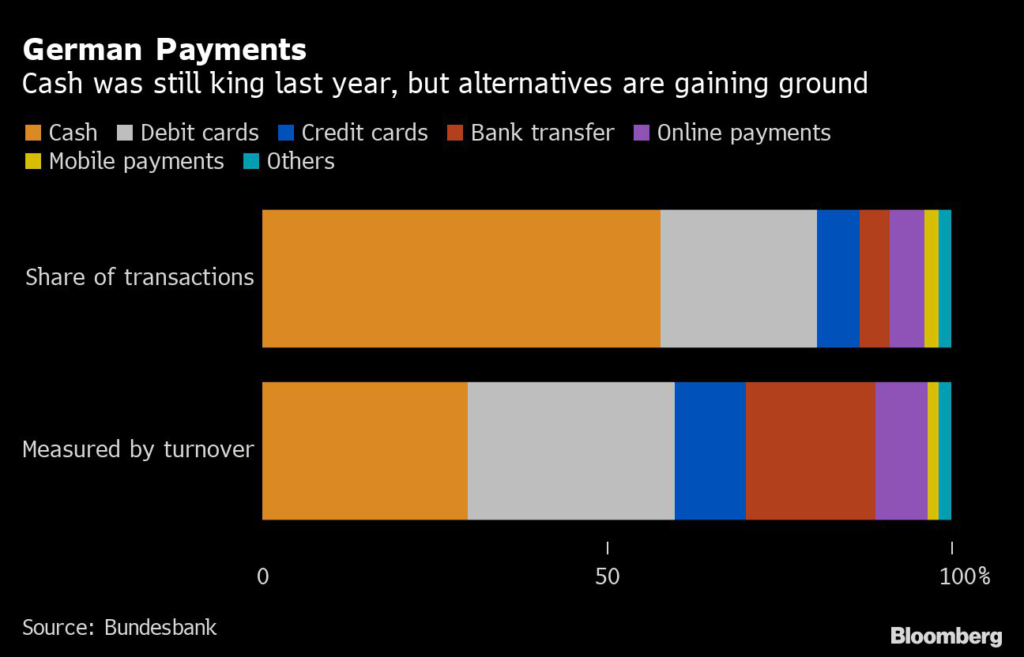
(Bloomberg) — Germans’ use of cash declined last year as the pandemic and the growing popularity of online shopping boosted electronic payments, though it remained the top means of transaction in Europe’s biggest economy. 

Banknotes and coins accounted for almost three-fifths of payments in 2021 — down from 74% in 2017, the Bundesbank said in a study published Wednesday. In monetary terms, the share of cash dropped to 30% from 48% over that period. 

One contributing factor was stricter hygiene during the health crisis, according to the Bundesbank, which said it’s too early to say whether the loosening of Covid-19 restrictions will reverse the trend. 

A smaller one was the rise of crypto assets, with 4% of respondents in the survey — conducted in the second half of 2021 — saying they’d bought or used them to make payments. The overwhelming majority, however, said they purchased the digital assets for investment purposes. 

Mobile payments also gained ground, with 17% of smartphone owners saying they’d already used their device to pay in a store. Overall, though, they still play a minor role.

More stories like this are available on bloomberg.com

©2022 Bloomberg L.P.

Troubled Payments Startup Bolt Reaches Settlement in Customer Suit

(Bloomberg) — Authentic Brands Group, which owns and licenses brands like Forever 21, has settled its lawsuit against Bolt Financial Inc. The agreement ends months of legal wrangling between the troubled payments startup and its largest active customer, which had claimed that Bolt’s technology was faulty. 

ABG was awarded an undisclosed stake in Bolt, the startup said in a statement Wednesday. The companies will continue to work together, with Bolt’s technology powering online checkouts for ABG brands Forever 21 and Lucky Brand. ABG also said it will explore using Bolt’s software for other brands. In the statement, ABG Chairman Jamie Salter called Bolt’s technology “exceptional.”

The agreement marks a dramatic departure from ABG’s stance in its March lawsuit, in which the company accused Bolt of having “utterly failed” to deliver on its promised technological capabilities. ABG also claimed that Bolt overstated the extent of its relationship with ABG portfolio companies in order to entice prospective investors to back the startup at a high valuation.   

Bolt responded to ABG’s complaints by calling the suit a “transparent attempt” to renegotiate terms of the companies agreements in order to acquire a low-priced stake in the startup. As part of the suit, ABG argued that it should be entitled to buy up to 5% of Bolt for a price set early on in the company’s life. After Bolt’s valuation nearly doubled to $11 billion in an investment round earlier this year, ABG’s claim became increasingly valuable. 

Now, as a result of the settlement, ABG will own a “meaningful” share of Bolt, a person with knowledge of the situation told Bloomberg. ABG’s stake will be less than 5%, the person said, but it was not required to pay for the stake.

Representatives for both Bolt and ABG declined to comment on the details of the companies’ agreement or the size of ABG’s stake. 

“The settlement is an amicable solution for both sides,” Bolt Chief Executive Officer Maju Kuruvilla said in an interview.

The resolution of the lawsuit follows months of turmoil at the San Francisco-based startup. Early this year, Bolt co-founder Ryan Breslow, then 27 years old, sent a series of tweets comparing Silicon Valley’s elite to “mob bosses,” angering many in the tech world. Shortly after, Breslow stepped away from the CEO job to become executive chairman of the company. The company had also aimed to raise a new funding round at an even higher valuation, but tabled those plans when investors failed to materialize. 

Kuruvilla, who assumed the helm in January, laid off about 250 people, or one-third of staff, in May—even though the company had raised $355 million months before. “We have cash runway for close to three years,” the CEO said. “The market is tough and we need to be in a position where we can control our own destiny.” 

Kuruvilla said Bolt is now focused on improving its product and targeting specific customers with ready-to-use software, instead of customizing its technology to fit each client. He said that Bolt has signed deals with both Pinterest Inc. and Fanatics Inc., although he declined to provide details on when those companies would start implementing Bolt’s technology. 

More stories like this are available on bloomberg.com

©2022 Bloomberg L.P.

Amazon Faces Fresh Clampdown With German and UK Scrutiny

(Bloomberg) — Amazon.com Inc. became the third US tech giant to be subject to Germany’s tough new antitrust rules targeting the dominance of a handful of powerful digital firms, and will also face a separate probe in the UK.  

Germany’s Federal Cartel Office on Wednesday said more than every second euro in German online retail is being spent on Amazon, making its market position dominant. 

“Amazon is the key player in the field of e-commerce,” said Andreas Mundt, the office’s chief. The decision means “that we can target and prevent potentially anti-competitive behavior by Amazon more effectively than before.”

The UK’s Competition and Markets Authority said Wednesday it’s opening an investigation into whether Amazon is abusing its dominance in its Amazon UK Marketplace. It follows a similar European Commission probe and the CMA said it will work closely with its counterparts in Brussels. 

“Any loss of competition is a loss to consumers and could lead to them paying more for products, being offered lower quality items or having less choice,” said Sarah Cardell, the CMA’s interim CEO. 

The British watchdog, which has shown its willingness to enforce against big tech, will look at how Amazon collects third-party data, its criteria for Prime labeled items, and what products get to be the first choice in the ‘Buy Box.’

Meta Platforms Inc.’s Facebook and Alphabet Inc. and its Google unit are already subject to the tougher regime in Germany. The rules allow Mundt’s office to step in earlier and more effectively when it sees anti-competitive behavior. 

Germany’s antitrust watchdog has often led from the front in Europe even as European Union competition chief Margrethe Vestager opened cases spanning the bloc into Silicon Valley firms. Amazon faces two investigations amid intense global regulatory scrutiny of the online retailer, which could soon be resolved in a settlement.

An Amazon spokesperson said the firm disagrees with the watchdog’s decision and is considering an appeal. An Amazon UK spokesperson said it will work closely with the CMA during their investigation.

“In Germany, we invested 36.5 billion euros from 2010 to 2020, we work closely with the local research community, we now employ over 30,000 people, and we will create another 6,000 new jobs this year,” the spokesperson said.

(Updates with more detail in the sixth paragraph, Amazon comment in the ninth paragraph)

More stories like this are available on bloomberg.com

©2022 Bloomberg L.P.

Texas’s Business Allure Defies Abortion Politics, for Now

(Bloomberg) — If Texas is a test for how socially conservative US states will fare economically in the post-Roe world, then they’ll hold up just fine.

More than a year after passing the country’s most restrictive abortion law, Texas boasts the largest number of Fortune 500 company headquarters of any state. In the latest sign of the Lone Star State’s enduring allure, Chevron Corp. announced plans to relocate workers to Houston just hours after the US Supreme Court struck down Roe v. Wade.

Other southern and Mountain states have been a magnet for Americans in recent years, a trend that accelerated during the pandemic and boosted growth in cities across Florida, Arizona, Idaho and Utah. These states, led by Republican governors, are now all trying to further restrict abortion — if not outright ban it.

“There will no doubt be people who won’t come to Texas or other southern states as a result of these policies, but, by and large, these things are determined by the dollars and cents,” said Brandon Rottinghaus, a political science professor at the University of Houston. “Businesses are getting more or less what they want from Texas — that is low taxes, modest regulation and the freedom to influence their own destiny.”

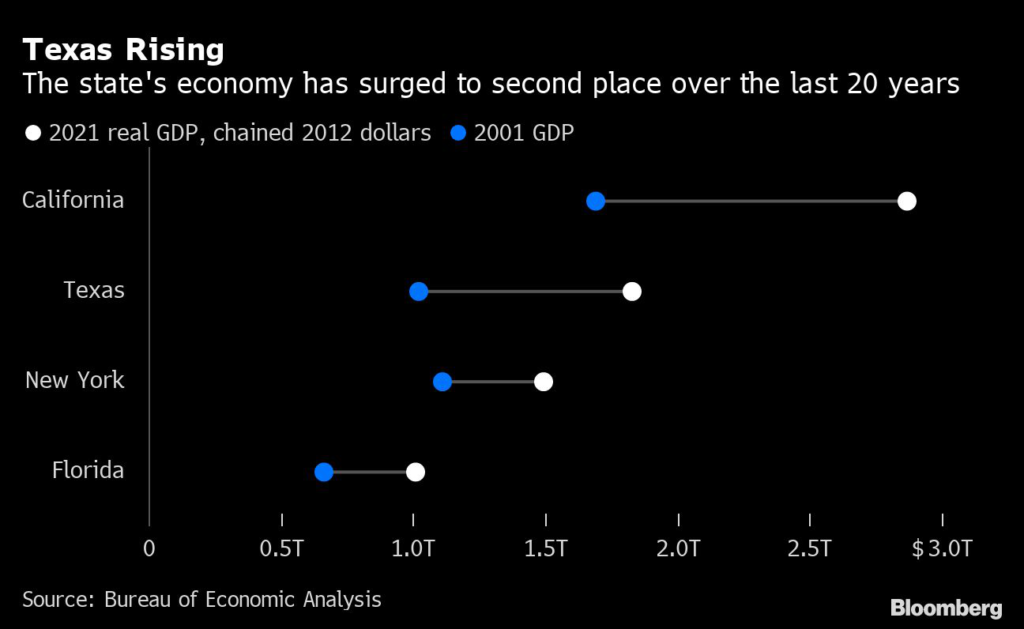
Texas has for decades hung its hat on being a business-friendly state. Its population boom propelled it to the second-biggest economy, after California, and it’s among the fastest-growing in the past 20 years. None of the restrictive laws passed by the state legislature and signed by Republican Governor Greg Abbott are threatening its prosperity in the foreseeable future. 

Even Austin, long a liberal bastion, hasn’t seen a brain drain. 

The economic risk is over the long term. Some state politicians, emboldened by a conservative Supreme Court, are already talking about punishing businesses that fund employees’ out-of-state travel for procedures. Reproductive-rights advocates have warned that in-vitro fertilization treatments could also be targeted. That would slowly chip away at the influx of people and companies willing to move to those places.

For now, low taxes on corporations and plenty of incentives outweigh any concerns about politics, reproductive rights and widening inequalities. 

Texans, whether newcomers or natives, are unlikely to leave. The state is the “stickiest” in the US, retaining more of its population than any other, according to a study by the Dallas Federal Reserve’s Pia Orrenius and Madeline Zavodny of the University of North Florida.

“Very few people leave Texas, largely because of abundant economic opportunities,” the economists wrote, adding that the state has an above-average business formation rate.

A low cost of living and plenty of space don’t hurt, either. Chevron specifically cited lower housing prices in its offer to relocate employees from California, where the median home price is more than double that of Texas. 

Diversified Economy

A relentless focus on growth has helped diversify the state’s economy beyond energy. 

The Metroplex, home to Dallas and Forth Worth, has seen an influx of financial services firms. Houston, once mainly an oil town, is home to the world’s largest children’s and cancer hospitals. Austin, Texas’s capital, has blossomed into a major tech hub — Telsa Inc. and Oracle Corp. are among the latest high-profile arrivals. 

But the fall of Roe may eventually become a deterrent. 

Cutting access to health care may pose challenges to businesses recruiting talent to the state, according to Shea Cuthbertson, president elect of Austin Women in Technology, a nonprofit networking organization. The state laws will add a financial burden on employers offering travel for care — something startups can hardly afford, she said. 

“The bottom line is that restrictive health-care policies significantly hurt people and will have a negative impact on the technology sector in Texas,” Cuthbertson said by email. “Ultimately, this will take away from diversity of thought, innovation, and equity in the workplace.”

The appeal of states like Texas may erode over time, according to Mark Zandi, chief economist at Moody’s Analytics. 

“The overturn of Roe may also result in many smaller, but important, hard-to-see economic consequences,” Zandi said. Colleges in states that ban abortion could see fewer applicants from the rest of the country and world, who tend to be more socially liberal, he said.

Rising Inequality

Economists say bans will disproportionately hurt lower-income groups and minorities.

Professionals working for corporate giants like JPMorgan Chase & Co. or Walt Disney Co. will get travel expenses covered if they need out-of-state abortions — at least until states try to outlaw the practice. But the majority of women living in states with severe restrictions or bans don’t work for companies that provide that benefit — and Medicaid in most states doesn’t cover abortion.

Research shows that women forced to carry a child to term are four times as likely to live below the poverty line even years after the birth. They tend to have lower wages later in life. About 40% of Texas residents are Hispanic and the state has one of the biggest median-income gaps between White and Hispanic residents.

“There will be a negative macroeconomic effect,” said Sarah Miller, assistant professor of business economics and public policy at the University of Michigan’s Ross School of Business.

Miller was among more than 150 economists who submitted an amicus brief to the Supreme Court arguing to uphold Roe v. Wade, saying that access to reproductive care had a positive effect on women’s overall lives.

“This is going to increase inequality — we’re already seeing it,” she said.

More stories like this are available on bloomberg.com

©2022 Bloomberg L.P.

Close Bitnami banner
Bitnami