Bloomberg

Payment Giant Has SWIFT Alternative for 32 Million Indian Expats

(Bloomberg) — The company that built India’s digital payments backbone plans to make it cheaper and easier for the nation’s 32 million expatriates to bring their money home.

Indians overseas remitted $87 billion last year, the biggest inflow for any country tracked by the World Bank. The remittances market, where it costs $13 on average to send $200 across borders, is ripe for disruption, according to Ritesh Shukla, chief executive officer of NPCI International Payments Ltd.

“We have displaced cash in India to a large extent and are now looking to repeat the success in cross-border corridors,” said Shukla. “Overseas Indians can use our rails to remit money inwards straightway into their bank accounts, and for the markets where Indians travel frequently, we will build acceptance for our instruments.”

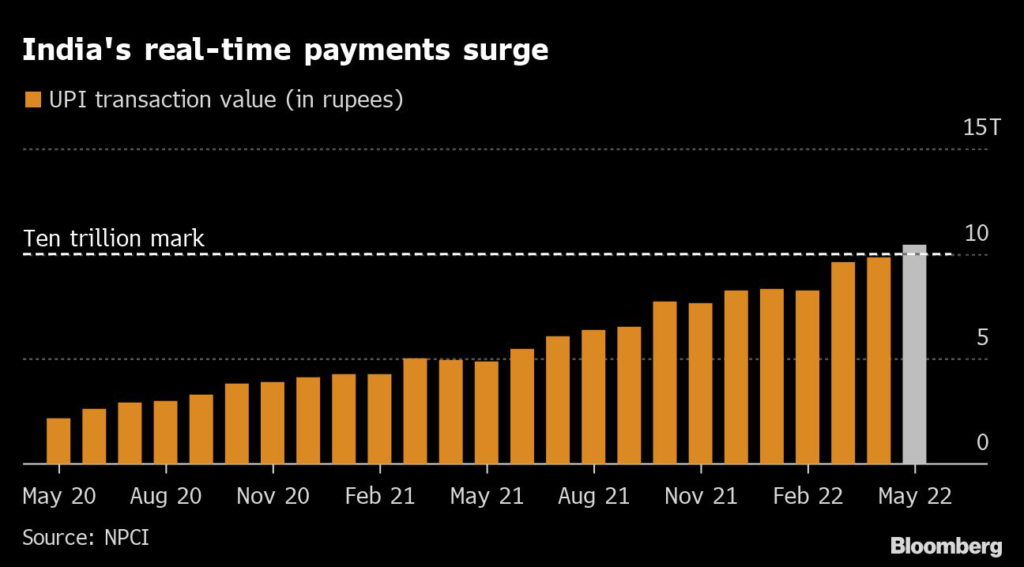
Successful overseas forays by NCPI would give India a home-grown alternative to SWIFT, the Belgium-based cross-border payment system operator, though Shukla stressed that the objective was not to displace existing platforms. About 330 banks and 25 apps — including Alphabet Inc.’s Google Pay and Meta Platform Inc.’s WhatsApp — share NCPI’s unified payment interface, which has helped make instantaneous digital transactions a $3 trillion market in India.


NPCI is in the process of connecting the UPI platform to systems in other countries to replicate its domestic success. It is negotiating collaborations with governments, fintech companies and service providers around the world, aiming to reduce transaction costs and enable more small-ticket transactions, Shukla said. 

Cutting Costs

“This is going to take the payments world by storm,” said Mayank Goyal, CEO of moneyHop, a cross-border banking app that lets users make international remittances through the SWIFT network. The company will seek to integrate UPI rails into the app as it makes cross-border payments easier, Goyal said.

UPI’s linkage with overseas nations will further anchor trade, travel and remittance flows between the countries and lower the cost of cross-border remittances, the Reserve Bank of India said in a report. 

The Reserve Bank of India set up NCPI along with the country’s lenders to make retail payments faster, more accessible, and cost-efficient. A user just needs a virtual payment address to instantly transact with vendors and exchange cash between friends or family members.


More stories like this are available on bloomberg.com

©2022 Bloomberg L.P.

Tesla Workers Seek Court Order to Bar Separation Agreements

(Bloomberg) — Former employees at Tesla Inc. asked a federal judge to stop the electric-car maker from pursuing separation agreements with workers it’s laying off, saying it’s just a way to get them to surrender their legal rights.

Tesla is cutting about 10% of its workforce and has offered a one-time severance payment equal to a week or two of wages and benefits, said two workers who sued the company, claiming it’s failing to comply with the Worker Adjustment and Retraining Notification Act that requires 60 days’ notice of pending layoffs.

“The court should not allow Tesla to short-circuit the WARN Act claims that have been filed in this case by seeking to collect releases of that claim while it is being litigated,” the workers said in a motion filed Tuesday in federal court in Austin, Texas.

The workers also asked the judge to invalidate legal releases that employees who were terminated had already signed.

John Lynch and Daxton Hartsfield, who worked at Tesla’s battery factory near Reno, Nevada, for about five years, were among more than 500 employees at the facility that were let go, according to the lawsuit. Both men said they were terminated effective immediately. 

Tesla Layoffs Violated Law With No Warning to Workers, Suit Says

More stories like this are available on bloomberg.com

©2022 Bloomberg L.P.

China Slams NASA Chief Nelson as Race to the Moon Gets Heated

(Bloomberg) — The competition between the US and China to explore outer space turned prickly after Chinese diplomats blasted the head of NASA and encouraged neighboring countries to support Beijing’s plan for exploring the moon.

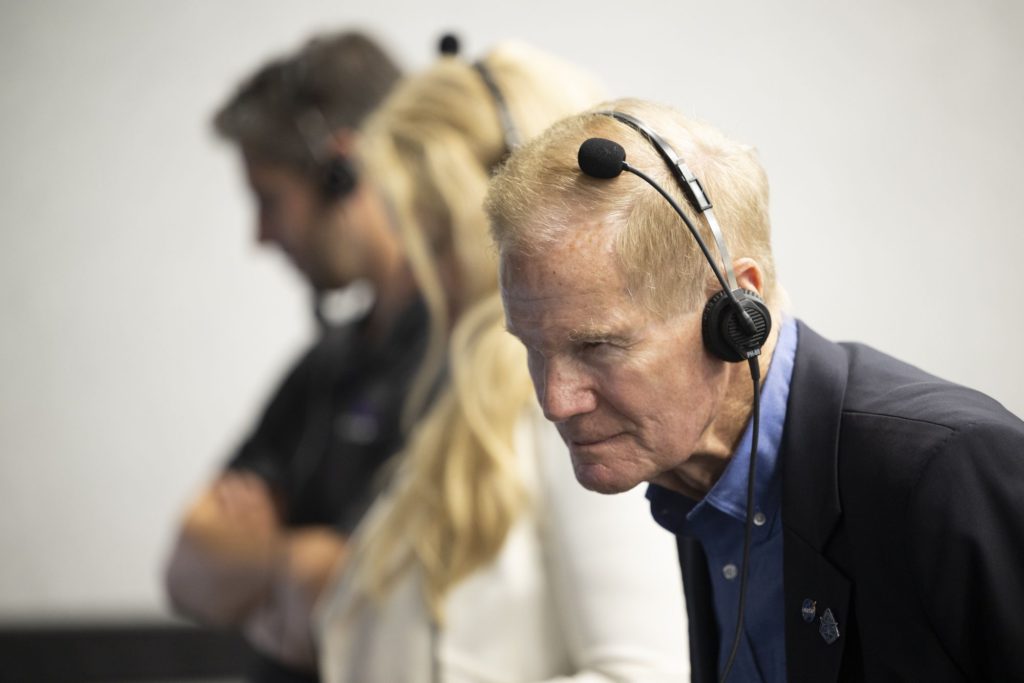
China’s Ministry of Foreign Affairs spokesman Zhao Lijian on Monday accused NASA Administrator Bill Nelson of lying “through his teeth” in response to reported comments in a German tabloid about the space competition between the two countries.

Bild cited Nelson as saying the world should be concerned that China might lay claim to the moon and stop other countries from exploring it. In the interview, he also accused China of stealing technology from other nations and said Beijing was learning how to destroy satellites launched by other countries.

“This is not the first time for the chief of NASA to lie through his teeth and smear China,” Zhao said at the Foreign Ministry’s daily press conference. “In recent years the US openly defined space as a war-fighting domain.”

In response to Zhao’s comments, Nelson said the Chinese space program is run by its military, while the US agency runs a peaceful and open civilian space program with international participation, according to an emailed statement.

During a meeting on Monday with officials from Cambodia, Laos, Myanmar, Thailand and Vietnam, Chinese Foreign Minister Wang Yi called on Southeast Asian nations to join the International Lunar Research Station, a proposed project on or near the moon backed by China and Russia.

Read more: China Confirms It Will Team Up With Russia to Explore the Moon

Beijing has promoted the ILRS as an alternative to the Artemis Accords, a Washington-backed effort launched in 2020 aimed at supporting NASA’s efforts to return astronauts to the moon this decade.

While Beijing and Moscow haven’t gotten other governments to commit to their project, the US is having more success convincing countries to sign the Artemis Accords, principles designed to govern activity on the moon, Mars and beyond.

Signatories include NATO allies such as Canada, Italy and the UK, as well as Brazil, Mexico and Ukraine.

Last month, France became the 20th country to sign on to the Artemis club, joining other recent signatories such as Singapore and Colombia.

China has criticized the accords as a US effort to create a NATO in outer space, most recently in a July 3 opinion piece published in the Communist Party-backed Global Times newspaper.

“In contrast with the US lunar exploration project known as the ‘Artemis Accords,’ which experts believe reveals its ‘exclusive nature for mimicking a space-based NATO,’ China and Russia’s partnership stresses bringing advancement for all, with the vision of building a community with a shared future for mankind,” the article said.

(Updates with NASA comments in 5th paragraph.)

More stories like this are available on bloomberg.com

©2022 Bloomberg L.P.

UK Amendment Puts Onus on Big Tech to Tackle Online Child Abuse

(Bloomberg) — The UK will compel technology companies to find ways to identify and remove child abuse images from their platforms in an amendment to the Online Safety Bill. 

The amendment puts the onus on companies to source or develop methods to comply with regulator Ofcom’s orders or face fines of as much as £18 million ($21.5 million), or 10% of their global annual sales, whichever is higher, the Home Office said. An earlier version of the bill would have only allowed Ofcom to require companies to use existing technology to identify exploitation images. 

Tech companies have pushed back on the proposed legislation, with Meta complaining that it risks giving governments power to snoop on and censor private messages. The UK Home Office has rejected technology companies’ arguments that tools developed to identify child sexual abuse could damage the security of end-to-end encryption. 

“Privacy and security are not mutually exclusive,” UK Home Secretary Priti Patel said, “We need both, and we can have both and that is what this amendment delivers.”

Read More: Meta Says UK Bill Risks Messages Being Surveilled, Censored

The European Union is considering similar legislation, that would demand tech companies scan, detect and report abusive images to law enforcement. Last year, Apple Inc. announced, then halted, plans to detect child abuse imagery in its users’ photo libraries after widespread concern voiced by privacy advocates. 

More stories like this are available on bloomberg.com

©2022 Bloomberg L.P.

Big Tech’s Bounceback Is a Glimmer of Hope After Steep Selloff

(Bloomberg) — US stock futures extended gains after markets closed Tuesday as investors appear to be embracing risk, at least for the start of the week, as markets resume trading in full force following America’s long Independence Day holiday weekend.

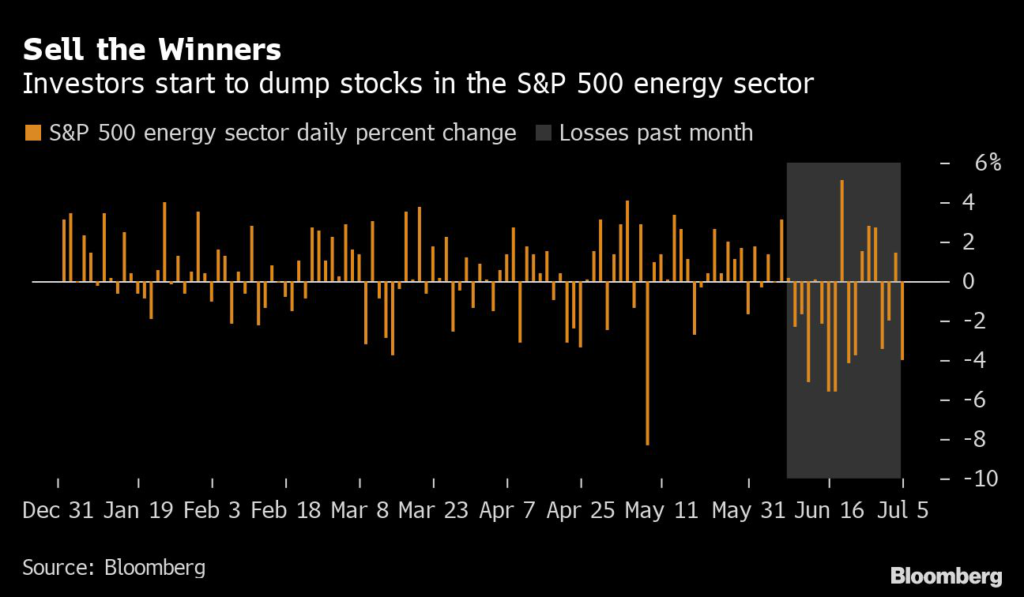
Traders departed from this year’s winning strategy of buying energy stocks after West Texas Intermediate crude tumbled below $100 a barrel for the first time in a month. Instead, they snapped up shares of technology stalwarts and delved into some of the riskiest corners of the market — from Peloton Interactive Inc to Coinbase Global Inc.

Futures contracts tied to the Nasdaq 100 Index were up 1.7% in after-hours trading, holding onto the the tech-heavy benchmark’s comeback in which it erased steep losses after tumbling as much as 1.9% earlier in Tuesday’s session. Tech giants like Apple Inc., Amazon.com Inc. and Google parent Alphabet Inc. led the rally. 

Even with Tuesday’s rally, strategists say it is too early to tell if there’s a durable shift in the stock market’s leadership. But there are hints of that appearing, as the S&P 500’s best-performing sector of 2022 — energy– gets pummeled. The group, which has surged nearly 26% in 2022, sank 4% Tuesday for its worst day in nearly two weeks after oil futures sank. The group has shed 21% in the past month. 

That may be a sign that traders are starting to give up and selling everything, a much-needed process for the market to bottom out as pessimism reaches extremes. Now, traders are looking for more panic selling as sentiment remains bearish.

Retail traders snapped up large-cap technology stocks Tuesday. Tesla Inc., Nvidia Corp., and Advanced Micro Devices Inc. were among the most bought stocks on Fidelity’s platform with buy orders outnumbering those to sell shares.

Individual investors appear to prefer to “hide out in the run-up to any recession” by buying shares of tech giants, like the FAANG stocks and chipmakers Nvidia and AMD, Vanda Research analysts said in a note. The FAANG basket has seen $704 million in retail inflows over the past week through Friday’s close, Vanda data show.

More stories like this are available on bloomberg.com

©2022 Bloomberg L.P.

One Medical Considers Options After Getting Takeover Interest

(Bloomberg) — 1Life Healthcare Inc., the parent of One Medical clinics, is considering options after attracting takeover interest, according to people with knowledge of the matter.

The company, which offers concierge medical care, has drawn preliminary interest from companies including CVS Health Corp., said the people, who asked not to be identified because the information is private. Shares of 1Life closed up 25%, the biggest one-day jump since its initial public offering in 2020. 

Talks with CVS are no longer active but there are other potential suitors weighing the merits of a deal for the San Francisco-based company, the people said. Considerations are at an early stage and there’s no certainty any deal will be reached, they said.

A spokesman for CVS declined to comment. Representatives for One Medical didn’t respond to messages seeking comment.

1Life closed at $10.34 a share Tuesday in New York trading, giving the company a market value of about $2 billion. The stock had fallen 75% in the past year through Friday. 

One Medical offers primary care through a membership-based model. Its customers are charged a subscription fee for access to a roster of physicians and annual membership grants patients 24/7 access to digital health services through its platform.

The company’s considerations come as health insurers are looking to expand their primary-care capacities.

UnitedHealth Group Inc.’s Optum unit has a network of more than 60,000 physicians, about half of them in primary care. Medicare-focused insurer Humana Inc. has expanded primary care clinics as well.

CVS has said it wants to make health care more convenient, personalized and affordable for consumers and last year said it planned to partner with doctors or potentially acquire primary care practices. 

1Life raised $282 million including so-called greenshoe shares in an initial public offering in January 2020. It had about 736,000 members and operated 182 medical offices in 25 markets at the end of 2021, according to its annual report.

(Updates with closing share price in fifth paragraph)

More stories like this are available on bloomberg.com

©2022 Bloomberg L.P.

Crypto Exchange Finds a New Source of Revenue: ‘Inactivity Fee’

(Bloomberg) — Crypto exchange Bitstamp plans to charge a monthly “inactivity fee” for certain users, as the market downturn weighs on trading volume in the industry. 

The charges, at 10 euros ($10.27) per month, will apply to accounts that haven’t traded, deposited, withdrawn or staked assets for a year with a total balance of less than 200 euros, starting Aug. 1, Bitstamp said in a company blog. Users in the US aren’t subject to the charges. 

“Keeping inactive accounts on the books is a cost, and in order for us to continue providing great services to all our customers, we made the hard decision to implement the inactivity fee,” Bitstamp said in the blog. To avoid the charge, users can buy or sell crypto, make a deposit or withdrawal, or enroll in staking services — a way of earning rewards for holding certain cryptocurrencies, it said. 

Crypto exchanges have been looking for ways to lessen their dependence on trading revenue, which tends to fall during prolonged market downturns. Coinbase Global Inc., the largest U.S. crypto exchange, has warned that trading volume in the second quarter will be lower than in the first. FTX US, the cryptocurrency exchange co-founded by Sam Bankman-Fried, recently expanded into equities trading, a way to diversify revenue sources while capturing a broader group of retail investors.

EToro, which offers both stocks and crypto trading, also has an inactivity fee, which applies to users with no login activity for 12 months, according to its website. Users can stop the charges as soon as they log in, it said.

Founded in 2011, Luxembourg-based Bitstamp is one of the oldest active crypto exchanges. Its trading volume in the past 24 hours was more than $173 million, according to data from Coingecko.

More stories like this are available on bloomberg.com

©2022 Bloomberg L.P.

VMware-Broadcom Deal Moves Ahead as Go-Shop Period Ends

(Bloomberg) — Broadcom Inc.’s $61 billion deal for VMware Inc. will move forward after a rival bidder failed to emerge to break up the deal for the cloud-computing company during its so-called “go-shop” period, according to people familiar with the matter. 

VMware, which had 40 days to solicit rival offers, may disclose the outcome of that effort, although its plans haven’t been finalized, said one of the people, who asked to not be identified because the matter isn’t public. VMware had until 11:59 p.m. Pacific time Tuesday to solicit other bids, according to the deal announcement in May. 

Representatives for VMware and Broadcom couldn’t immediately be reached for comment. 

The expiration of the go-shop gets Broadcom past at least one hurdle to the biggest-ever takeover by a semiconductor maker. The clause helped Broadcom secure a merger agreement with the company, a Silicon Valley pioneer that provides virtualization software.  

To move swiftly during takeover negotiations, VMware agreed to forgo speaking with other potential bidders so long as a go-shop was included in the agreement, Bloomberg News reported last month. Go-shops are rare in deals this big. 

Broadcom’s offer had the support of key VMware shareholders Michael Dell and Silver Lake. 

Merger specialists surveyed by Bloomberg News in May said there was a low probability that a higher bid would emerge and expected the deal to take about 12 months to complete, due to the potential for multiple regulatory reviews. 

VMware’s stock has fallen about 8.2% since the deal was announced on May 26, compared with a 3.9% decline in the tech-heavy Nasdaq Composite Index. 

More stories like this are available on bloomberg.com

©2022 Bloomberg L.P.

Ukraine Latest: NATO Begins Expansion Process Amid Turkey Threat

(Bloomberg) — NATO formally signed off on plans to bring Sweden and Finland into the defense alliance, moving a step closer to bolstering its eastern front against Russia following the invasion of Ukraine. 

Turkey joined its allies in signing the accession protocols while renewing its threat to block the expansion if the two Nordic nations don’t extradite people it considers terrorists. The expansion must be ratified by the parliaments of each of the 30 member nations, a process that can take many months. 

“This is an historic day,” said NATO chief Jens Stoltenberg. “Russia has shattered peace in Europe, so it’s important we stand together at this important time.”

(See RSAN on the Bloomberg Terminal for the Russian Sanctions Dashboard.)

Key Developments

  • Natural Gas Soars 700%, Becoming Driving Force in New Cold War
  • Turkey Renews Threat to Veto Sweden and Finland’s NATO Bids
  • Russian Tycoon Potanin to Start Nornickel-Rusal Merger Talks 
  • UniCredit Mulls a Russia Exit That It Can Reverse After War
  • Ukraine Estimates Immediate Funding Needs of Up to $65 Billion
  • WNBA Star Griner Pleads With Biden to Get Her Out of Russia: AP

On the Ground

With Lysychansk under its control, Russia is switching its focus farther west into Donetsk, intensifying shelling of the region, according to Ukrainian officials. Fighting continues on the Bakhmut axis, which has emerged as a new flashpoint. Ukrainian forces repelled a Russian assault close to Slovyansk, the Ukrainian General Staff said, with the city’s mayor urging residents to evacuate as the front line moves closer. Russia fired seven missiles further west toward Dnipropetrovsk overnight, six of which were shot down by Ukrainian forces, Valentyn Reznichenko, the head of the regional government, said on his Telegram account.

(All times CET)

Donetsk Regional Governor Urges Locals to Evacuate (9:10 p.m.)

Regional Governor Pavlo Kyrylenko urged people who remain in the eastern Ukrainian towns of Kramatorsk and Slovyansk to evacuate as Russian attacks intensify. Kyrylenko said in a nationally televised address that the Russian army was firing randomly, targeting local residents and seeking to spread panic.

“People get killed every day in Donetsk region since the beginning of the large-scale invasion,” he said.

Near Kramatorsk, Russian troops shelled civilian infrastructure and conducted a missile attack, the General Staff of the Ukrainian armed forces said on Facebook. The Russian army is seeking to improve its positions near Slovyansk and Donetsk.

Kyrylenko said he hopes as many as 350,000 people remaining in Donetsk province will evacuatie to save lives and allow the Ukrainian army to defend towns.

Kaliningrad Governor Hopes EU Is About to Ease Restrictions (7:30 p.m.)

The governor of Kaliningrad said he’s hopeful the European Union may ease limitations this week on the transit of goods to Russia’s Baltic exclave.

“We’re getting signals through various channels that they’re likely to take this decision this week,” Anton Alikhanov told Rossiya 24 state channel, Interfax reported.

Russia has warned that it will retaliate against EU member state Lithuania for blocking rail transport of goods such as steel in accordance with the bloc’s sanctions measures.

Ruble Falls as Investors Rush to Safety of US Dollar (5:49 p.m.)

The Russian currency plummeted the most in four months, pulling back from a rally that’s confounded traders and politicians alike since the early days of President Vladimir Putin’s war on Ukraine. 

The currency dropped as much as 11% to 62.30 per dollar amid broad strength in the greenback that also saw the euro plunge to a two-decade low. The decline follows Russia’s relaxation of capital controls and its canceling a rule forcing the conversion of export revenues to rubles.

Germany Faces Limited Options If Nord Stream Flows Don’t Return (3:55 p.m.)

A key pipeline delivering Russia’s natural gas to Europe may not return to full capacity after planned maintenance this month, Goldman Sachs Group Inc. said, echoing the concerns of German officials.

Nord Stream 1 is set to shut for work on July 11-21, tightening a market that’s seen prices soar in recent weeks. With Moscow having already slashed flows through the pipe to 40% of capacity, any move to withhold supplies for longer would severely hurt Europe’s efforts to refill stockpiles for winter.

“While we initially assumed a full restoration of NS1 flows following its upcoming maintenance event, we no longer see this as the most probable scenario,” Goldman analysts said in a note. 

Bulgaria Seeks Options to Help Process Ukrainian Grain (3:46 p.m.)

Bulgaria’s state-owned Varna port may hold talks with operators of private port terminals to help find storage and process grain loads from Ukraine, the Transport Ministry said.

The ministry is planning to seek financial aid from the European Commission to build additional grain silos, as existing storage capacity at all terminals in Varna is 150,000 tons.

Turkey Renews Threat to Block NATO Expansion (11:32 a.m.)

Turkey is threatening to veto NATO membership for Sweden and Finland, even as the military alliance formally paved the way for the two Nordic countries to join.

Turkey won’t ratify membership in the North Atlantic Treaty Organization for the applicants if they don’t fulfill their promises to combat terrorism and extradite suspects under a memorandum of understanding reached at an alliance summit in Madrid last week, Foreign Minister Mevlut Cavusoglu said Monday. 

“They have to comply with this document. If they don’t then we won’t allow them to join NATO,” Cavusoglu told NTV television. 

UniCredit Mulls a Russia Exit That It Can Reverse  (10:38 a.m.)

UniCredit SpA is considering selling its Russian unit through a structure that would let the bank repurchase the subsidiary if the geopolitical situation stabilizes, according to people familiar with the matter.

Italy’s second-largest lender is looking at several possible deal arrangements, including one that would give it the option of buying back the unit depending on market and political conditions, said the people, who asked not be identified because the matter isn’t public.

UniCredit already took 1.85 billion euros ($1.9 billion) of charges on its Russia unit and Chief Executive Officer Andrea Orcel is seeking a deal that would limit any further pain whatever the outcome of the war in Ukraine

UN Starts $17 million Project to Aid Ukraine Grain Harvest (9:49 a.m.)

The UN’s food and agriculture arm is working to improve Ukraine’s grain storage capacity and aid supply chains, from harvesting to exports, with a new $17 million project.

The project is funded by Japan and implemented along with Ukraine’s Agriculture Ministry, the Food and Agriculture Organization said in a statement. 

Ukraine is expected to harvest as much as 60 million tons of grain this year, but the available storage is already about 30% full with last year’s grain, which it wasn’t able to export due the conflict. The FAO will provide polyethylene grain sleeves, other modular storage and grain loading and unloading machinery.

Romania’s TTS Opens Danube Route for Ukraine Grain (9:33 a.m.)

Transport Trade Services SA, Romania’s largest logistics company on the Danube, has opened a new water-only transport route to help increase grain exports from Ukraine amid a surge global food prices. 

Romania has already facilitated the export of more than 1 million tons of grain from Ukraine since the Russian invasion in February. The new route “ensures a significant increase of the Ukrainian freight flows, eliminating from the supply chain the berths and storage spaces in the Constanta port,” TTS said in an e-mailed statement. The port, on the Black Sea, has been overwhelmed by a jump in traffic. 

Ukraine to Bring Outspoken Berlin Envoy Home: Bild (9:17 a.m.)

Ukraine’s ambassador to Germany, Andriy Melnyk, is poised to return to Kyiv after eight years in Berlin, according to Bild Zeitung, which cited unidentified sources in the Ukrainian capital. Melnyk has been strident in his criticism of Germany and accused Chancellor Olaf Scholz of taking too long to send heavy weaponry to Ukraine. 

13,000 of Musk’s Starlink Internet Devices in Ukraine (8:22 a.m.)

Elon Musk’s satellite Internet service Starlink has been vital in keeping parts of Ukraine affected by the Russian invasion connected, the country’s minister for digital transformation, Mykhailo Fedorov, said in an interview with Bloomberg TV.

More than 13,000 Starlink devices are operating in Ukraine, including on the front line, and government officials are in daily contact with Musk’s representatives, Fedorov said.

Russian Imports Steady After Initial Sanctions Shock (7:56 a.m.)

Russian imports picked up a bit in May, even from some countries that have joined the US and its allies in imposing sanctions over the Kremlin’s invasion of Ukraine, as the economy showed signs of stabilizing.

Trade flows into Russia remain far below pre-invasion levels, but imports for the five major trading partners were down 29% in May on the year, compared with a 43% drop in April. Bloomberg calculated the figures based on reports from those countries, which account for about half of Russian imports. Russia stopped releasing detailed trade data after the invasion.

Turkey, which hasn’t joined the sanctions, saw exports to Russia jump to the highest since December.

Russian Tycoon Agrees to Nornickel-Rusal Merger Talks (7:25 a.m.)

Billionaire Vladimir Potanin, the biggest investor in MMC Norilsk Nickel PJSC, said he’s ready to discuss merging the mining giant with United Co Rusal International PJSC as sanctions against Russia weigh on both companies.

Potanin has headed Nornickel since striking a 2012 shareholder accord with aluminum producer Rusal, the company’s second-largest investor. A merger would create a “national champion,” the tycoon said in an interview with Russia’s RBC TV channel on Tuesday. Rusal shares jumped as much as 12% in Hong Kong.

Russia Wants to Send Zaporizhzhia Grain to Mideast (5:20 a.m.)

Ukraine’s Russian-occupied Zaporizhzhia region has reached agreements to export grain abroad, mainly to Middle Eastern countries, the head of local occupation authorities Yevgeny Balitsky said, according to Tass. 

Among the buyers he named are Iraq and Saudi Arabia, both US allies. One of the largest contracts of 150,000 tons of grain is with Iran.

Putin’s War Throws EU Vote on ‘Green’ Gas Into Doubt (5:00 a.m.)

The EU Parliament vote is set to take place Wednesday, and was supposed to mark the easy passage of a New Year’s proposal by the European Commission to include gas and nuclear energy in the bloc’s so-called green taxonomy. But Putin’s invasion — and the energy crisis it fanned — has upended that process. 

Just last week, Ukraine’s ambassador to Germany called on lawmakers to reject the Commission’s proposal, warning that it would benefit Russia and perpetuate European reliance on its gas supplies.

Read more: Putin’s War Throws Crucial EU Vote on ‘Green’ Gas Into Doubt


More stories like this are available on bloomberg.com

©2022 Bloomberg L.P.

Big Tech Shadow Lobbying Campaigns Under Fire in EU Parliament

(Bloomberg) — Members of the European Parliament are calling for an investigation into unregistered lobbying from big technology companies and have asked the European Union to suspend any groups that broke transparency rules. 

The European Commission’s Digital Markets Act and Digital Services Act unleashed a “massive lobby” campaign when they were proposed in 2020, which “resorted to covert misleading ways to influence policy makers,” three members of the European Parliament wrote in a letter to President Roberta Metsola on Tuesday, which was seen by Bloomberg. 

The letter — led by Dutch MEP Paul Tang and signed by the DSA’s lead author Christel Schaldemose as well as René Repasi, an MEP who worked on the DMA for the Socialist & Democrats group — alleges that big tech groups have funded various campaigns without disclosing their funding or registering with the EU’s transparency register, a practice known as “shadow lobbying.”

“The work of these shell organizations who impersonate being official representatives of groups of constituents, such as SMEs, while at the same time put forward business interests of their funders, is outrageous and harms a proper balancing of interests,” the three parliamentarians wrote.

The EU must investigate whether any of these efforts were successful, Tang said in an interview with Bloomberg. 

The European Parliament approved the DMA and DSA on Tuesday. The two acts restrict how companies can target ads, ensure fair access to app stores and require major companies to make their messaging platforms work together. While the rules still need the final sign-off from the EU’s 27 member states, they could go into effect as early as spring 2023.

EU Internal Market Commissioner Thierry Breton hailed the new rules as a “historic moment in digital regulation,” and the EU’s competition chief Margrethe Vestager called the acts “strong, ambitious regulation of online platforms.”

Andreas Schwab, the lead author of the DMA, insisted that the heavy and often opaque lobbying from big tech companies did not influence the final outcomes of either text.

Lobbying and shadow lobbying “is something that happens every day on every topic,” Schwab said. The parliament’s “courageous steps show that this is not working.”

More stories like this are available on bloomberg.com

©2022 Bloomberg L.P.
Close Bitnami banner
Bitnami