Bloomberg

Crypto ‘Fear and Greed’ Gauge Improves a Bit After 60% Selloff

(Bloomberg) — If trader sentiment is any guide, cryptocurrencies could snap back or at least stop selling off after one of their worst quarters in history.

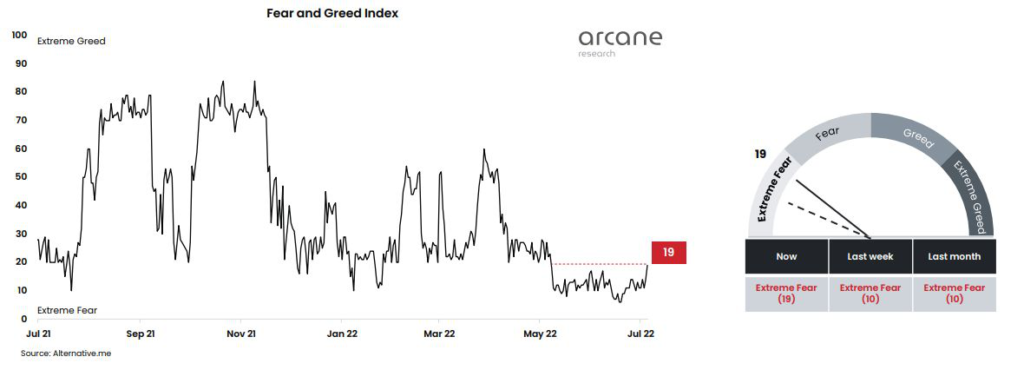
The crypto Fear and Greed Index climbed to 19, marking the highest point in two months, according to Arcane Research. The measure is pushing toward the “fear” area after sitting comfortably in the “extreme fear” level, the firm’s analysts said in a note. 

“The sentiment in the crypto market has been depressed for several months, but we’re seeing a slight improvement this week,” they wrote.

Bitcoin briefly broke above the $20,000 level Tuesday before coming back down. The world’s largest digital token plummeted by almost 60% in the second quarter as hawkish central banks and a string of high-profile crypto blowups hammered sentiment. 

In traditional markets, the Fear and Greed Index measures investor sentiment based on factors including volatility momentum and demand. The crypto version, developed by alternative.me, seeks to establish if traders are too bullish (represented by “greed”) or bearish (“fear”), and takes several other factors like social media trends and Google search terms into consideration. The index ranges from 0 (“extreme fear”) to 100 (“extreme greed”).

Furthermore, the seven-day volatility in Bitcoin hit the lowest level since early April while the 30-day volatility has remained elevated, Arcane Research noted.

Still, the analysts said they wouldn’t be surprised to see a somewhat “uneventful July after a hefty quarter in the crypto market and the summer kicking in.”

For Sylvia Jablonski, chief executive officer at Defiance ETFs, sentiment isn’t necessarily better for markets, with the Federal Reserve determined to boost rates on top of a growing list of crypto firms, lenders and hedge funds maimed by the downturn.

“Most investors feel pretty uncertain about investing in both crypto and markets right now,” Jablonski said by phone. “It’s probably going to be a while before we start to see some recovery.”

More stories like this are available on bloomberg.com

©2022 Bloomberg L.P.

Crypto Mining Giant Dumped Most of Its Bitcoin Holdings in June

(Bloomberg) — Core Scientific Inc., a top crypto miner, sold the bulk of its Bitcoin holdings in June as a steep drop in digital assets squeezes finances for even the leaders of the industry.

Core Scientific sold 7,202 mined coins for $167 million last month, leading to a 79% drop in Bitcoin holdings on its balance sheet, according to the company’s monthly update. The Austin, Texas-based company now holds 1,959 coins. 

Crypto miners are struggling to repay debt and complete large purchase orders of expensive mining machines they made during the bull run several months ago. Operational costs have exceeded mining revenue for some miners as Bitcoin had its worst quarter in more than a decade. High-profile crypto blowups are battering the industry, helping contribute to declines in the world’s biggest cryptocurrency, which fell below $20,000 last month for the first time since 2020.

“Our industry is enduring tremendous stress as capital markets have weakened, interest rates are rising and the economy deals with historic inflation,” said Mike Levitt, Core Scientific’s chief executive officer. 

Founded in 2017, Core Scientific is one of the largest Bitcoin miners in the world with 180,000 servers and nearly 10% of the current computing power that secures the entire Bitcoin blockchain network as of June 30, according to the latest public filing. 

Public mining companies often hold the vast majority of their mined Bitcoin to serve as a proxy in the stock market drawing investors that want to get cryptocurrency exposure while not holding the tokens directly. Some firms believe large Bitcoin holdings will boost their balance sheet in the long run as the token appreciates in value over time.

While Bitcoin-hoarding public miners such as Marathon Digital Holdings Inc. and Hut 8 Mining Corp. have not sold any Bitcoin so far, others have started large sales to keep afloat. Canadian crypto miner Bitfarms Ltd. sold about half of its mined coins in June and used part of the proceeds to pay down a loan while Riot Blockchain Inc. had its first sale earlier this year.

More stories like this are available on bloomberg.com

©2022 Bloomberg L.P.

Crypto Venture Investors Choi, Wang Launch Fund for Web3

(Bloomberg) — A pair of executives from two of the more prominent crypto venture capital firms in Asia are launching a new fund they say is targeted specifically at helping promising web3 projects navigate their way through the current bear-market cycle.

Jason Choi and Darryl Wang, both 27, told Bloomberg the new fund, dubbed Tangent, wouldn’t accept outside capital or charge any management fees. Tangent will work with three to five early-stage crypto projects each quarter using an undisclosed small pool of proprietary capital. A public deck for the fund shows that it provides resources from audit, legal structure, to media and technical support.

“Over the last cycle, we’ve kind of confirmed that web3 and crypto are here to stay,” Wang said in an interview. “In what form it takes or how long it will take to get there is up for debate — but you know, in an extended depressed market, it provides a lot of diamonds in the rough for us to support and hopefully, to push the space forward for the better.”


Choi, most recently at Spartan Capital, is known for popular crypto podcast Blockcrunch. Wang spent two years at DeFiance Capital, a decentralized finance-focused venture fund based in Singapore. 

Tangent is also tapping influential people in decentralized finance to serve as “mentors” at the fund, with the goal of providing support and advice to the selected projects. The first six mentors include anonymous crypto influencer 0xMaki, formerly the main contributor to SushipSwap; Mable Jiang, former partner at Multicoin Capital; and web3 gaming guild Yield Guild Games’ founder Gabby Dizon.

“We have confidence that as people who have come into the space and are actually effectively starting this in the depth of a bear market, we’re here for the long term, we’re here to support founders,” Choi said in an interview.

More stories like this are available on bloomberg.com

©2022 Bloomberg L.P.

Startup Zapper Weighs Raising Funds at Near $1 Billion Value

(Bloomberg) — Zapper is considering options to raise capital, including a stake sale, that could value the South African startup at nearly $1 billion, according to people familiar with the matter. 

The Cape Town-based mobile payments business hired Ernst & Young as advisers on a potential deal, the people said, asking not to be identified because the information is still private. Zapper may also consider a combination with a strategic bidder, they said.

Nothing has been concluded yet and it’s the type of deal that will determine the valuation, the people said.

“Management is excited by future opportunities, underpinned by an innovative technology roadmap,” a Zapper spokesperson said in response to questions about a potential deal. Interested parties place “us in excellent standing for ongoing and future discussions,” the person said, declining to comment further. 

African startups attracted a record $5 billion in fundraising rounds last year as investors backed firms trying to fix the continent’s thorniest problems, such as insufficient banking infrastructure. Fintech companies have expanded rapidly over the past few years, with several attaining “unicorn” status with valuations of more than $1 billion. 

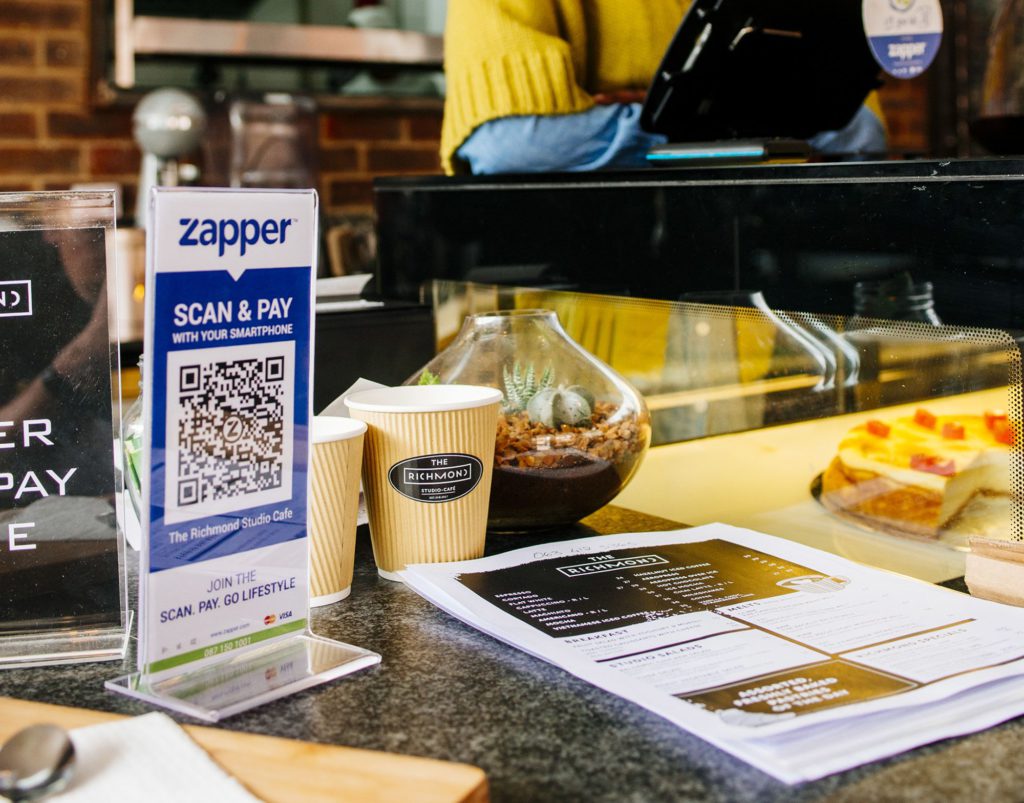
Zapper, started in 2014, operates a mobile payments platform with about 250,000 customers and 65,000 merchants. Its solution enables quick settlements using QR code and URL technology and the use of data insights to award discounts. 

(Updates with comment from sources in third paragraph)

More stories like this are available on bloomberg.com

©2022 Bloomberg L.P.

Former Microsoft Economist Joins DOJ Antitrust Team as Tech Probes Surge

(Bloomberg) — Susan Athey, a Stanford University professor and former chief economist at Microsoft Corp., is joining the Justice Department as its top antitrust economist.

A Justice Department spokeswoman confirmed the hire Tuesday.

Athey, an expert on the economics of internet platforms — particularly search engines and online advertising — joins the Justice Department as it prepares for trial against Alphabet Inc.’s Google and is pursuing an investigation of Apple Inc. and another Google case. 

Because of her previous work, though, Athey is likely to be recused from the Justice Department’s Google and Apple cases, said two people, speaking on condition of anonymity about internal DOJ matters.

Athey consulted for Microsoft for almost a decade, aiding the company’s years-long antitrust fight against Google. More recently, she served as an economic expert for Epic Games Inc. in its antitrust suit against Apple related to the iPhone-maker’s mobile App Store restrictions.

In her work for Microsoft, Athey worked closely with Jonathan Kanter, the assistant attorney general for antitrust, who represented the Windows-maker in its antitrust battles with the DOJ in the early 2000s and later against Google.

A professor at Stanford since 2013, Athey previously taught at Harvard University and Massachusetts Institute of Technology. She resigned last month from the board of directors of Expedia Group Inc., a position she had held since 2015.

Athey didn’t immediately respond to a request for comment Tuesday.

More stories like this are available on bloomberg.com

©2022 Bloomberg L.P.

Mars Stops Supplying Pet Food to Tesco as Fresh Price Row Begins

(Bloomberg) — Mars Inc. has stopped supplying two of its pet food brands to Tesco Plc as the supermarket chain enters a second row over price increases.

Britain’s biggest grocer is already locked in a dispute with Kraft Heinz Co., which has stopped supplying the supermarket with most of its products, including ketchup and baked beans. The disputes show the challenges facing both food manufacturers and grocers as Britain grapples with the worst inflation in four decades.

Tesco said it remained “laser-focused” on keeping food prices affordable at a time when UK households are under strain as energy and fuel bills soar. “We will not pass on unjustifiable price increases to our customers,” a spokesperson said in a statement.

It’s not the first time Tesco has tussled with suppliers over price increases. In 2016, the supermarket stopped some online sales of items made by Unilever Plc after the manufacturer tried to raise prices in a battle dubbed “Marmitegate.”

Mars’ chocolate and confectionery products will remain on shelves as usual, a Tesco spokesperson told Bloomberg. But customers looking to feed their pets with Whiskas or Pedigree are likely to be forced to shop elsewhere.

Mars refused to comment on the circumstances surrounding the supply row, but told customers that they can find Whiskas and Pedigree in other stores. “We want to reassure pet owners that their favorite products are in supply and remain widely available in the UK,” a spokesperson said.

J Sainsbury Plc Chief Executive Officer Simon Roberts said in a media call Tuesday the grocer has a “balanced set of choices” as it works with suppliers to limit costs and to keep products in stock. He warned that rising inflation means pressure on household budgets will intensify this year.

More stories like this are available on bloomberg.com

©2022 Bloomberg L.P.

Shanghai Data Breach Exposes Dangers of China’s Trove

(Bloomberg) — Claims of the largest cyberattack in Chinese history have sparked an open debate about the extent to which Beijing hoovers up personal data and uses private firms to safeguard that trove, a discussion that could have ramifications for the broader technology industry in China.

If verified, the purported theft of 23 terabytes of personal information on as many as a billion Chinese citizens from a Shanghai police database would rank as the country’ largest ever known data breach, if not one of the biggest leaks the world has seen. The allegations that emerged over the weekend have set tech circles buzzing and prompted rare public comment from high-profile industry figures such as Binance co-founder Zhao Changpeng.

Questions remain about how the unknown hackers apparently gained access to the trove run by the Ministry of Public Security’s Shanghai branch, which according to online posts included data detailing user activity from most popular Chinese apps, addresses, and phone numbers. A seller had asked for 10 Bitcoin, worth around $200,000, in exchange for the data. 

Many forensic experts agreed there were significant security lapses. To researchers who have examined the underlying source code and database samples, the breadth of the purported data underscores not only the staggering scale of government data collection in the People’s Republic of China but also the numerous risks in how that information is managed.

“The PRC government is likely in crisis mode right now,” said Dakota Cary, a consultant with the Washington-based Krebs Stamos Group. “It seems obvious to ask why Shanghai MPS needed access to all this data, but this is the exact system of surveillance and detail about individuals that the government wants.” 

Read more: Hackers Claim Theft of Police Info in China’s Largest Data Leak

Chinese President Xi Jinping has long identified data as key for governing and driving the country of 1.4 billion. Beijing is pouring money into digital infrastructure, rolling out new laws and building data centers to position China as a leader in the digital economy. The Shanghai breach may become an embarrassment for Xi as he tries to secure a precedent-breaking third term as president later this year.

“It is necessary to safeguard the country’s data security, protect personal information and business secrets, and promote the efficient circulation and use of data so as to empower the real economy,” Xi stressed in a meeting with a top government body less than two weeks ago, according to a readout from the official Xinhua News Agency.

China has pioneered new forms of near-constant surveillance and mass data collection on its citizens, a nationwide apparatus that has expanded as Beijing tries to track and prevent the spread of virus cases as part of its Covid Zero strategy. A Bloomberg News analysis of a sample published by the alleged hackers reveals information from names, mobile numbers and addresses to education levels, ethnicity — even logs of express deliveries and information from police reports and criminal cases.

Yet official agencies have remained noticeably silent this week even as the debate gained momentum online. Chinese state media have yet to report on the incident. Many — but not all — posts about the leak on Chinese social media have been removed. And the Shanghai authorities have so far not publicly responded.

Representatives for the city’s police and Cyberspace Administration of China, the country’s internet overseer, also haven’t responded to faxed requests for comment. A Foreign Ministry spokesman said only that he was not aware of the report Monday, in an exchange that was left off the official transcript for the agency’s daily briefing.

“There’s no doubt among Chinese citizens that the government does collect their data, but the loss of it to criminals is embarrassing for the government,” Cary added.

That silence has given rise to a number of theories on how the breach took place. Some security researchers who spoke with Bloomberg News said the incident may have occurred after a developer accidentally posted access database keys online, a lapse that wouldn’t seem to fully explain apparent access to an internal police network. 

Others argued it’s more likely a cloud service provider, which hosted backups or synchronization for the police database, was somehow compromised. Alibaba Group Holding Ltd., Tencent Holdings Ltd. and Huawei Technologies Co. are among the country’s biggest external cloud services. Representatives for the three firms didn’t have immediate comment on the episode.

If blame falls on a cloud provider for the breach, it could accelerate a migration by government agencies away from private services, now by far the largest and most popular internet computing platforms. State-backed cloud providers include smaller rivals like Inspur Ltd. or carriers such as China Telecom Corp. 

“There are a lot of breaches all over the world,” said Shawn Chang, founder and CEO of Hong Kong-based security firm HardenedVault. “But the size of this data breach is more rare because China collects more data from public systems.”

Read more: Beijing Crackdown Derails Alibaba’s Bid for Amazon-Size Profit

Chinese officials and companies rarely disclose data breaches affecting domestic services, a lack of transparency that coincides with a new emphasis on cybersecurity from Beijing. Major leaks in the past have included personal information on dozens of Communist Party officials and industry leaders exposed on Twitter Inc. in 2016 and in 2020, when the Twitter-like service Weibo Corp. acknowledged hackers were claiming to sell account information on more than 538 million users.

It’s common to see personal data offered for sale on Chinese cybercriminal forums but the “scale and amount of personal data being offered here is unheard-of,” said Budi Arief, who researches cybercrime at the University of Kent’s Institute for Cyber Security for Society.

A growing demand for privacy among the public as well as concerns around the control of sensitive data for private tech giants have fueled stronger regulations, including China’s passing of a personal information protection law in 2021. Under that legislation, which encompasses data protection and requires storage within Chinese borders, state entities that fail in their duties to protect sensitive information could incur sanctions and vague corrective measures.

But the US and other nations have repeatedly identified China as one of the world’s biggest sources of cybercriminals, which they say infiltrate systems on behalf of domestic agencies in search of valuable data or intellectual property.

If the information exposed in the latest hack is genuine, hundreds of millions risk identity theft or access to their online accounts.

The extent of the fallout now depends on a number of factors, including who’s fingered for the lapse. The public security agencies, which would ordinarily be responsible for investigating and punishing the breach, may not escape blame, said Adam Segal, director of the digital and cyberspace policy program at the Council on Foreign Relations. 

“The Party will likely discipline MPS and local officials internally, without drawing much public attention,” said Cary, of Krebs Stamos Group. “Alternatively, if the government does find that the breach was truly the fault of a private firm that maintained the database, that company will likely be fined or targeted by market regulators for costly inspections.”

More stories like this are available on bloomberg.com

©2022 Bloomberg L.P.

Crypto Lender Vauld in Talks to be Bought After Withdrawals Halt

(Bloomberg) — Crypto lender Vauld is in discussions to be bought by rival Nexo after freezing client withdrawals and hiring advisers for a potential restructuring.  

Nexo is conducting a 60-day due diligence process on Singapore-based Vauld, co-founder Antoni Trenchev said in an interview. Vauld said on Monday that it had suspended withdrawals, trading and deposits on its platform and was in talks with potential investors after facing “financial challenges.” 

Vauld became the latest among several crypto lenders to resort to emergency measures to stay afloat after a $2 trillion digital-asset market rout sapped their finances. The turmoil has produced an opportunity for better-capitalized companies like billionaire Sam Bankman-Fried’s FTX to swoop in and buy assets on the cheap. 

Read more: FTX US Signs Option to Buy BlockFi in Crypto Sector Shakeup 

Vauld pointed to a combination of volatile markets, financial troubles at “key business partners” and a jump in withdrawals since June 12 in its statement announcing the freeze. Trenchev, however, indicated that the company’s own actions might have contributed to its difficulties. 

“It was built out correctly, unfortunately turns out they made some bad investment decisions, but the company as such is interesting as it has a lot of traction in India and South East Asia,” Trenchev said. He declined to elaborate on what those investment decisions were.  

Earlier on Tuesday, Vauld Chief Executive Officer Darshan Bathija tweeted about his company’s potential deal with London-based Nexo. 

Bathija in May told the BusinessLine newspaper in May that he was targeting boosting assets under management to $5 billion from $1 billion. Trenchev said Vauld now has “hundreds of millions” of dollars in AUM, declining to be more specific. 

Nexo in June said it was preparing an offer for assets of Celsius Network Ltd., shortly after Celsius announced a freeze on withdrawals. That offer was open for a week and lapsed after Celsius didn’t want to make a deal, the Block said. Celsius on June 30 said it’s exploring options such as “strategic transactions” as well as restructuring its debt. 

Singapore Crypto Rules

Trenchev said Nexo is in discussions with several other companies about buying their assets, Trenchev said without identifying them. The company in March announced a fund call Nexo Ventures, and earmarked $150 million for investing in “a wide range of early-stage retail and institutional projects.”

“Any investment we make needs to make financial sense,” Trenchev said. “We are not the Federal Reserve where we can print money at will and spend as we see fit.”

The speed of the market meltdown has ensnared crypto lenders large and small — with some, like Vauld, freezing withdrawals just weeks after ensuring customers that their business was sound. On June 16, Bathija said on Vauld’s blog that “Over the last few days, all withdrawals were processed as usual and this will continue to be the case in the future.”

On Monday, Vauld said it hired financial and legal advisers to explore restructuring options, and planned to apply for a moratorium with Singapore courts to “give us some breathing space.”

Regulators are taking note of the crypto industry’s trouble and say they’re moving to bolster guardrails. Hours after Vauld’s announcement on Monday, Singapore’s central bank said it was considering new crypto rules to protect consumers. 

“These may include placing limits on retail participation, and rules on the use of leverage when transacting in cryptocurrencies,” Monetary Authority of Singapore Chairman Tharman Shanmugaratnam said in a written response to a question from parliament.

Read more: Singapore Evaluates More Crypto Safeguards After Blowups (2)

More stories like this are available on bloomberg.com

©2022 Bloomberg L.P.
Canadian Asset Giant Brookfield Pours Record $12 Billion Into European Deals

(Bloomberg) — Brookfield Asset Management Inc. is heading into Europe’s swelling market storm with its checkbook open.

As many of its rivals refrain from committing capital to the region amid an ever-growing list of risk factors, the $725 billion Canadian investment giant is making plans to buy in sectors ranging from clean energy to technology, open new offices and raise fresh money.

“Frankly, we love these kinds of markets,” Anuj Ranjan, who runs business development at Brookfield and leads its private equity arm in Europe and Asia Pacific, said in an interview in London. “The reason we are excited is that this makes the market less competitive.”

At more than $12 billion this year, Brookfield’s spending in Europe has already hit an annual record, data compiled by Bloomberg show, fueled by acquisitions of UK household repairs provider HomeServe Plc, property firms Hibernia REIT Plc and Befimmo SA and slate producer Cupa Group. 

In a further sign of its dealmaking ambitions, the infrastructure specialist also teamed up with Cellnex Telecom SA to pursue a bid for Deutsche Telekom AG’s $20 billion towers unit.

“For our infrastructure and renewables sectors, we expect the back end of the year to be busy,” said Connor Teskey, Brookfield’s head of Europe. “Very busy.”

New Outposts

Brookfield made its first investments in Europe some 20 years ago. Its early bets were in real estate before the 2008 financial crisis saw the net cast wider to capture opportunities in infrastructure, renewable energy, private equity and credit. 

It now manages more than $125 billion in Europe, up from roughly $6 billion a decade ago, according to Teskey, and employs around 300 people in the region. While most are based in London, there are plans to establish operations in Europe’s other main financial hubs.

“We’ve got Iberia covered out of Madrid. We’re now increasingly looking at Germany. No question France is coming shortly after that,” he said. “There is nothing that we see in our business today that suggests that our European expansion would slow down.”

Read more: CEO of $189 Billion Ontario Fund Eyes Private Equity’s Turf

Brookfield has sought growth in turmoil before. In the years following the financial crisis it struck two transformational deals, buying into Australia’s Babcock & Brown Infrastructure Group in 2009 and US mall operator General Growth Properties Inc. the following year. Both helped increase its exposure to key areas like infrastructure and real estate. 

“We are actively looking at transformational opportunities like that in this environment,” Rajan said, adding that technology is one relatively new area of interest for the group — particularly mature software and tech services companies. 

To be sure, Brookfield and other buyers are facing an increasingly challenging market for securing debt financing for big deals. Banks are cutting their exposure to the leveraged loan market for fear of being stuck with debt they can’t sell.

“Capital is available for quality businesses and sponsors,” said Rajan. “It’s like we say, when there’s vacancy in the office market, the Grade A buildings are always occupied.”

Transition Time

A key area of focus for Brookfield is the world’s move toward cleaner forms of energy — a shift that’s been given new impetus by Russia’s war in Ukraine and its impact on the price of fossil fuels. 

In June, it raised $15 billion for a dedicated energy transition fund to be co-led by Teskey and Mark Carney, former governor of the Bank of England. Brookfield already has agreements to spend about $2.5 billion from the fund, including on renewables projects in Germany and the UK. In addition, it’ll look to invest in businesses that want to decarbonize but haven’t either the capital or operational expertize to do so.

“If the world is going to hit its broader net zero goals, you can’t simply get there by building out more of what is perfectly green and clean and pristine,” said Teskey, who also runs Brookfield’s renewable power and transition group.

Brookfield gathered the $15 billion a time when market volatility is cooling the red-hot fundraising environment for private equity firms more broadly. That’s seen investors direct new flows of capital to the industry’s more established names.  

“This should be our biggest year ever for fundraisings,” Teskey said.

Return to Work

As one of the world’s biggest property investors, Brookfield has also been doubling down on the return of workers to their offices after the pandemic. This year’s acquisitions of Belgian real estate investment trust Befimmo and Ireland’s Hibernia followed an agreement to take Germany-based Alstria Office REIT-AG private in 2021. 

In 2020, just as the UK was locking down its city centers to combat the spread of the coronavirus, Brookfield decided to build a big stake in landlord British Land Co. Brookfield’s presence in UK real estate is already well established as the co-owner of Canary Wharf, one of London’s main financial districts. 

“Given our significant office holdings around the world, we felt like there’s a reason why offices exist,” said Brad Hyler, managing partner and head of European real estate at Brookfield. “Particularly the higher quality ones, where we thought people would come back. It was just a matter of time.”

Read more: Blackstone Almost Doubles Its London Staff by Luring Bank Dealmakers

(Updates with detail of Brookfield dealmaking in fourth paragraph.)

More stories like this are available on bloomberg.com

©2022 Bloomberg L.P.

Ford Sales Jump in June on Big Gains for F-Series Pickup Trucks

(Bloomberg) — Ford Motor Co. sales jumped 31.5% in June thanks to big gains from its top-selling pickup-truck line, including the electric F-150 Lightning.

Deliveries of F-Series trucks rose 26.3% from a year ago, Ford said in a statement. The automaker’s gains were in stark contrast to an industrywide slump in June.

The Lightning, in its second month on the market, booked 1,837 sales as Ford’s overall EV sales rose 76.6% from a year ago, making it the second-best seller of plug-in models behind Tesla Inc. That’s despite a 20.6% decline in sales of the Mustang Mach-E last month as Ford stopped delivering the battery-powered SUV due to a recall for a safety defect that can cause the car to lose power while in motion.

For the second quarter, Ford’s overall sales edged up 1.8%, as strong SUV sales overcame a slight decline in truck sales and the continuing collapse of sedan deliveries as it exits that market segment. Ford said it had a 51-day supply of vehicles at the end of June, close to the industry standard of 60 days, as it navigates the lingering semiconductor shortage.

Shares of Ford fell 6% at 10:04 a.m. in New York, as recession fears dragged down auto stocks and the overall market.

“The chip shortages continue to be an industry challenge and remain fluid,” Erich Merkle, Ford’s sales analyst, said in an email. “We are doing our best during these times to get vehicles to our customers as quickly as possible.”

More stories like this are available on bloomberg.com

©2022 Bloomberg L.P.

Close Bitnami banner
Bitnami