

Bloomberg

Chinese Developer Shimao Defaults on $1 Billion Dollar Bond

(Bloomberg) — Chinese developer Shimao Group Holdings Ltd. missed payment on a $1 billion dollar note due Sunday, its first default on a public bond after months of mounting stress. 

Shimao’s delinquency is among the biggest dollar payment failures so far this year in China and the firm has about $5.5 billion in outstanding offshore bonds. The luxury builder’s bonds have priced in deep levels of distress since the beginning of the year, with most notes falling to record lows of below 15 cents on the dollar after the firm missed repayment on a private note. 

Shimao, whose landmark projects include a five-star hotel built into an abandoned quarry, was once considered largely immune to the sweeping crackdown that has engulfed larger peers like China Evergrande Group and Sunac Group Holdings Ltd. The country’s 14th-biggest developer by contracted sales has faced mounting worries about its financial health since late last year, with stress in the industry taking it toll on a widening set on players.

“The contagion has spread from Evergrande to Sunac and now Shimao,” said Kristy Hung, a Bloomberg Intelligence analyst. “That raises our concerns that the extent of the debt crisis is beyond any market watcher’s imagination.”

Shimao also hasn’t made principal payments involving some other offshore debts and has been in discussion with creditors while trying to reach “amicable resolutions,” it said in a Hong Kong exchange filing. If it can’t, “creditors may have the right to demand acceleration of repayment” and take enforcement actions, according to the company. 

There is no grace period for the principal on the firm’s $1 billion dollar bond, according to the note’s offering circular seen by Bloomberg News. The builder is among the largest real-estate debt issuers in China.

Shimao’s announcement of a default rather than an extension plan proposal “shows the company’s weak financial situation to meet its debts payment schedule and the necessity for an overall debt restructuring plan,” said Ting Meng, senior Asia credit strategist at ANZ Bank China. The default was well expected after the firm missed a dollar private bond payment and delayed onshore debt payments, she added.

“Due to market uncertainties over debt refinancing and generally challenging operating and funding conditions, the group experienced negative developments on its credit ratings and the occurrence of principal nonpayments under certain of its offshore indebtedness,” Shimao said in its filing.

The company said in a separate statement it’s sold nearly 20 more property projects to raise money. It also expects to be able to accelerate cash inflow from property sales as the property market shows signs of rebound. New-home sales rose an estimated 31% in June from May in 30 key Chinese cities, according to China Real Estate Information Corp.

Meanwhile, Shimao has appointed Admiralty Harbour Capital Ltd. as its financial adviser and Sidley Austin as its legal adviser to help assess its capital structure, liquidity and options, the builder said in its exchange filing.

Shimao said it hasn’t received any notice of repayment acceleration from its creditors, but has obtained written support from the majority of its dual-currency term loan lenders. The lenders also expressed they don’t intend to take any enforcement action at this stage regarding the financing, according to the filing.

More stories like this are available on bloomberg.com

©2022 Bloomberg L.P.

Japan’s Second Biggest Mobile Carrier Falls After Massive Outage

(Bloomberg) — Japan’s second-largest mobile carrier by subscribers fell the most since March after a nationwide disruption of its services over the weekend. As many as 39 million mobile lines were affected, preventing users from making calls or using data services, until the network was largely restored early on Monday.

KDDI Corp. dropped as much as 3.9%, an unusually large swing for a typically stable stock. Shares slightly recovered since, but still trailed the overall market, with the Topix index up 1.4% as of 9:41 a.m. in Tokyo.

The network disruption began early Saturday and impacted KDDI users nationwide as well as other platforms using the carrier’s network, such as weather services, parcel deliveries and ATMs. Rakuten Mobile, operated by e-commerce company Rakuten Group Inc., said its users were also affected. KDDI said Monday there were still some lingering issues with calls and the company can’t for now estimate when service will be fully restored.

“We deeply regret what happened, as a telecommunications company that should provide a stable service and support social infrastructure,” KDDI President Makoto Takahashi said at a news briefing Sunday, according to local broadcaster NHK. “We’re doing our best on recovery efforts.” 

This isn’t the first time Japan has suffered significant mobile network problems. NTT Docomo Inc. reported an outage in October that disrupted phone and data communications services nationwide. The government told NTT Docomo in November to improve operations following the incident. 

The incident is “very regrettable,” Yasushi Kaneko, minister in charge of Japan’s communications, said at a press conference Sunday. KDDI should take drastic measures to prevent any recurrence, he said.

“This will have a negative impact on share prices in the short term,” Mitsubishi UFJ Morgan Stanley analyst Hideaki Tanaka wrote in a report after the KDDI disruption. “But this is a risk that all major carriers have. I don’t think this will cause major changes to the number of subscribers.”

(Adds comment from KDDI in third paragraph.)

More stories like this are available on bloomberg.com

©2022 Bloomberg L.P.
Sydney Homes Evacuated as Torrential Rain Causes More Flooding

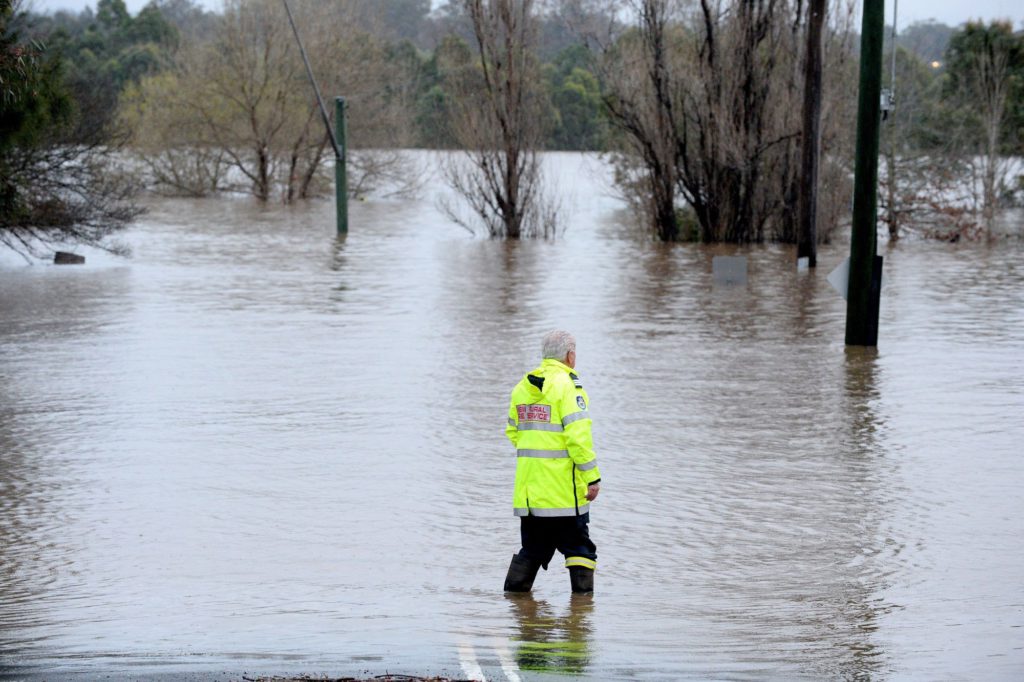
(Bloomberg) — Thousands of people on the outskirts of Sydney were told to leave their homes or prepare to evacuate as days of torrential rain lead to widespread flooding.

With more bad weather on its way, authorities issued dozens of evacuation orders and warnings in Sydney’s southern, western and northern regions. It’s the fourth major flood in New South Wales state in 18 months and the government on Monday warned the latest inundation may be the biggest yet.

“It’s a very worrying situation and could still get worse,” Australian Minister for Emergency Management Murray Watt said on Australian Broadcasting Corp. radio. Some homes that escaped previous floods may be hit this time, he said.

A series of natural disasters in Australia, including bushfires and droughts, has put national climate policy into sharp relief, and a new Labor government vowing tougher action was elected in May. The floods are also triggering fresh debate over where to house a growing population and the cost of insuring homes prone to damage.

Some regions have been swamped with more than 300 millimeters of rain in less than 24 hours, and much of the focus is now on low-lying areas along the Hawkesbury and Nepean rivers, two major arteries that almost encircle metropolitan Sydney.

The Nepean peaked on Sunday, though the Hawkesbury is still rising, threatening communities north of Australia’s biggest city that were flooded just months ago, Watt said. 

Watt said some 6,000 homes are covered by evacuation orders and an additional 12,000 are subject to evacuation warnings. Some 100 defense force troops are on the ground and another 100 have been called up to help, he said.

Areas away from Sydney are also experiencing heavy rain, and the Bureau of Meteorology on Monday issued a severe weather warning for hundreds of kilometers of Australia’s eastern seaboard. The area centers on Sydney but stretches north toward Newcastle, and south beyond Wollongong and Nowra.

Flash flooding is still possible on Monday in Sydney, the Blue Mountains region to the west, Illawarra to the south, and parts of Hunter and the Central Coast to the north, the bureau said. There’s also a risk of landslides, though the rain should clear by late evening, it said.

The stormy weather is stretching a transport system that’s already under pressure from train strikes, a school holiday rush and manpower shortages at airports and airlines.

More stories like this are available on bloomberg.com

©2022 Bloomberg L.P.

British Army Twitter, YouTube Accounts Hacked With Crypto Posts

(Bloomberg) — The British Army’s Twitter and YouTube accounts have been hacked, according to a statement from an Army spokesperson Sunday.

A series of posts promoting non-fungible tokens were retweeted on the Army’s account on Sunday. 

Its YouTube account has been renamed “Ark Invest” and features several videos from a panel hosted by Ark Investment Management LLC last year on Bitcoin. Tesla CEO Elon Musk, investor Cathie Wood and Twitter co-founder Jack Dorsey were speakers on the panel.

The Army spokesperson said in an emailed statement that an investigation into the breach is underway.

“We take information security extremely seriously and are resolving the issue,” the spokesperson said. “Until the investigation is complete it would be inappropriate to comment further.”

Ark Investment didn’t immediately respond to a request for comment.

More stories like this are available on bloomberg.com

©2022 Bloomberg L.P.
Argentine President Weighs New Economy Minister After Shock Exit

(Bloomberg) — Sign up for the New Economy Daily newsletter, follow us @economics and subscribe to our podcast.

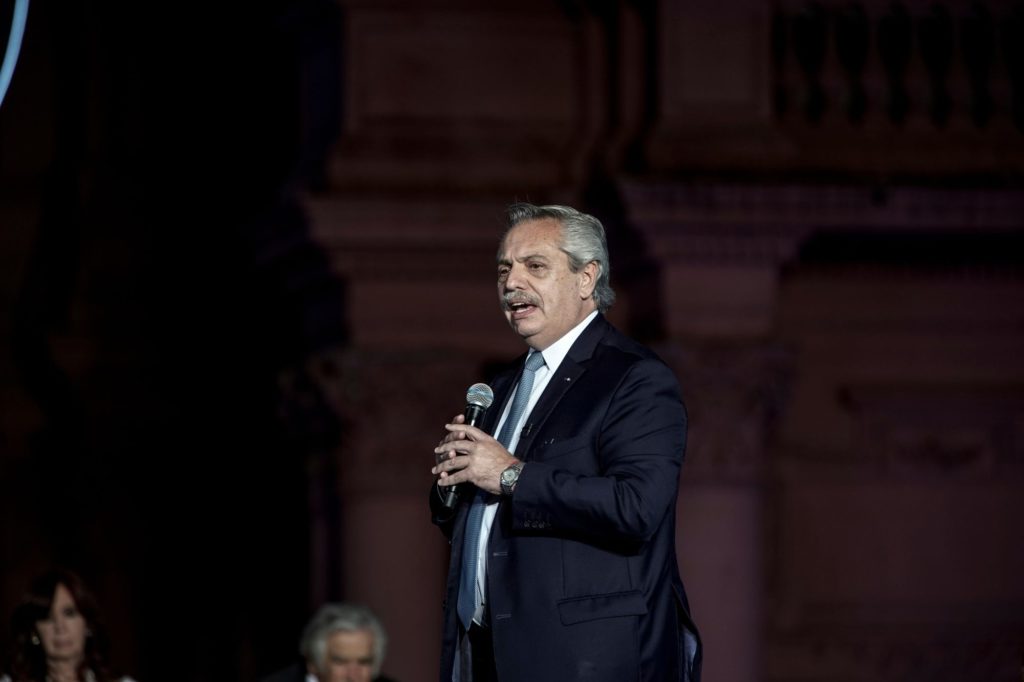
Argentine President Alberto Fernandez is yet to choose his new economic chief almost 24 hours after Martin Guzman’s resignation Saturday, a shock departure that deepens the country’s financial crisis with inflation soaring and the nation’s bonds in distressed territory.

Fernandez met for hours Sunday at his residence in Olivos, outside of the capital, with Lower House Speaker Sergio Massa, who is expected to have a major influence over the decision. Fernandez’s spokeswoman said conversations are ongoing, but didn’t respond to questions about when there’d be an announcement. 

The often predictable, moderate Guzman stunned the nation Saturday afternoon, publishing a seven-page resignation letter on Twitter while Vice President Cristina Fernandez de Kirchner was at a rally event. The timing spoke to a bulging divide within the ruling coalition over the economy’s direction.

His exit further fueled doubts that the government can meet the targets of its $44 billion program with the International Monetary Fund. The program, announced in March, had to be revised in June.

Guzman’s departure “may compromise the relationship with the IMF,” said Alberto Ramos, head of Latin America research at Goldman Sachs Group Inc. “A politically weaker and unpopular presidency would increase the risk that macro policy could turn more heterodox and interventionist.”

READ MORE: Argentines Seek Hedging in Crypto After Economy Minister Resigns

Parallel Market

Argentine leaders like Fernandez often rush to replace economy ministers in a bid to stem the financial chaos. Cryptocurrency markets, the only ones open over the weekend, priced the peso as high as 279 per dollar Saturday night, an 11% jump. 

The official exchange rate — 125 per dollar — is cloaked in currency controls by the central bank. But the growing gap between the official and parallel rates, paired with escalating uncertainty over economic policy, could eventually force the government to devalue the official rate, something Fernandez promised he’d never do.  

Crisis-prone Argentina faces a particularly fragile moment. Inflation over 60% is at its highest level in 30 years, while nearly 40% of Argentines live in poverty. Economists forecast a recession this year. And the central bank has razor thin cash reserves to shield the peso from a currency rout.


More stories like this are available on bloomberg.com

©2022 Bloomberg L.P.
Bezos Slams Biden Over Call for Lowering of Gas Prices

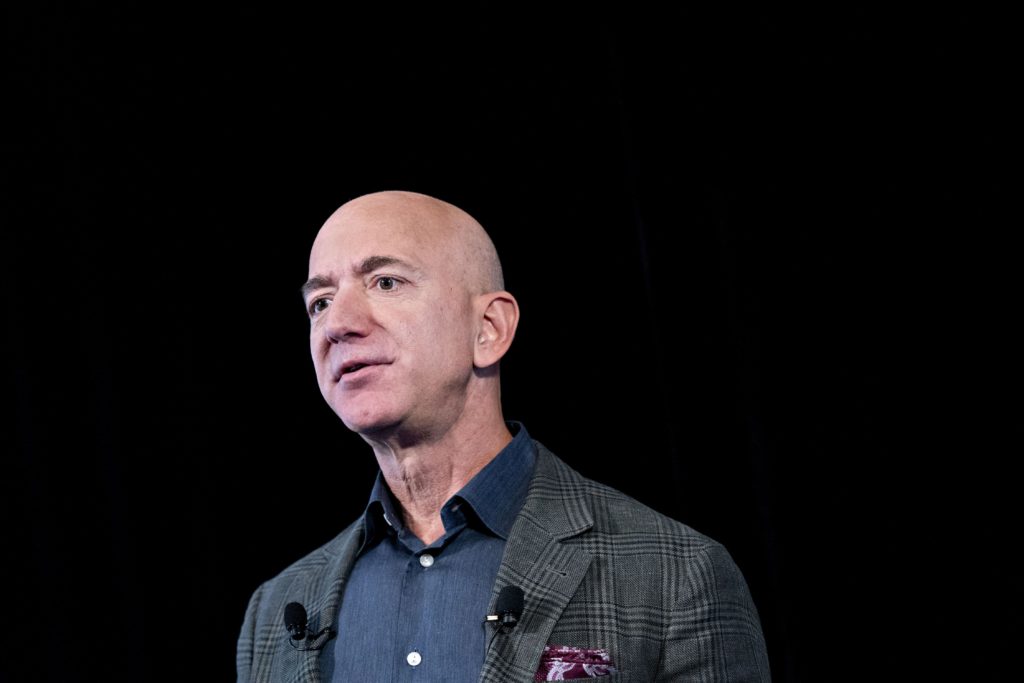
(Bloomberg) — Amazon.com Inc. founder Jeff Bezos criticized a tweet from US President Joe Biden calling for oil executives to reduce gasoline prices. 

Bezos was responding to Biden’s criticism of companies running gas stations and setting prices for consumers. “This is a time of war and global peril,” the president tweeted on Saturday. “Bring down the price you are charging at the pump to reflect the cost you’re paying for the product. And do it now.” 

Bezos tweeted on Saturday night: “Ouch. Inflation is far too important a problem for the White House to keep making statements like this. It’s either straight ahead misdirection or a deep misunderstanding of basic market dynamics.”

The national average for gas was at $4.812 on Sunday, according to AAA, near the record-high of $5.016 set last month.

The White House took again to Twitter on Sunday to push back against Bezos. Press Secretary Karine Jean-Pierre said the elevated prices are ‘not basic market dynamics.’ It’s a market that is failing the American consumer.”

John Kirby, a senior National Security Council spokesman at the White House, said Biden has proposed measures, including at the Group of Seven summit, that could lower US gasoline prices and has freed oil from the Strategic Petroleum Reserve. 

“If everybody cooperates on this we can bring the price down by at least about a dollar a gallon,” Kirby said on “Fox News Sunday.”

Bezos has accused Biden of “misdirection” before. In May, the e-commerce executive hit back a tweet from the president saying inflation could be tamed by making wealthy corporations “pay their fair share.” 

Biden has been criticizing oil and gas firms for making windfall profits. Gas and energy are a leading driver of inflation, posing a major political issue for Democrats with midterm elections only months away.  

(Updates with White House response.)

More stories like this are available on bloomberg.com

©2022 Bloomberg L.P.

Voyager Digital Says It’s Pursuing Strategic Alternatives

(Bloomberg) — Voyager Digital says in a series of tweets that it’s pursuing strategic alternatives and that it’s focused on protecting assets and maximizing value for all customers as quickly as possible. 

The company previously suspended trading, deposits and withdrawals due to difficult market conditions, amid a deepening meltdown in beleaguered cryptocurrency markets.


NOTE: Crypto Broker Voyager Digital Suspends Trading, Withdrawals


To view the source of this information click here

More stories like this are available on bloomberg.com

©2022 Bloomberg L.P.
‘Minions’ Tops Box Office as Families Shake Off Covid Fears

(Bloomberg) — “Minions: The Rise of Gru,” a sequel to the 2015 animated hit from Universal Pictures, topped the North American box office, drawing in family audiences and dethroning the Warner Bros. biopic “Elvis.” 

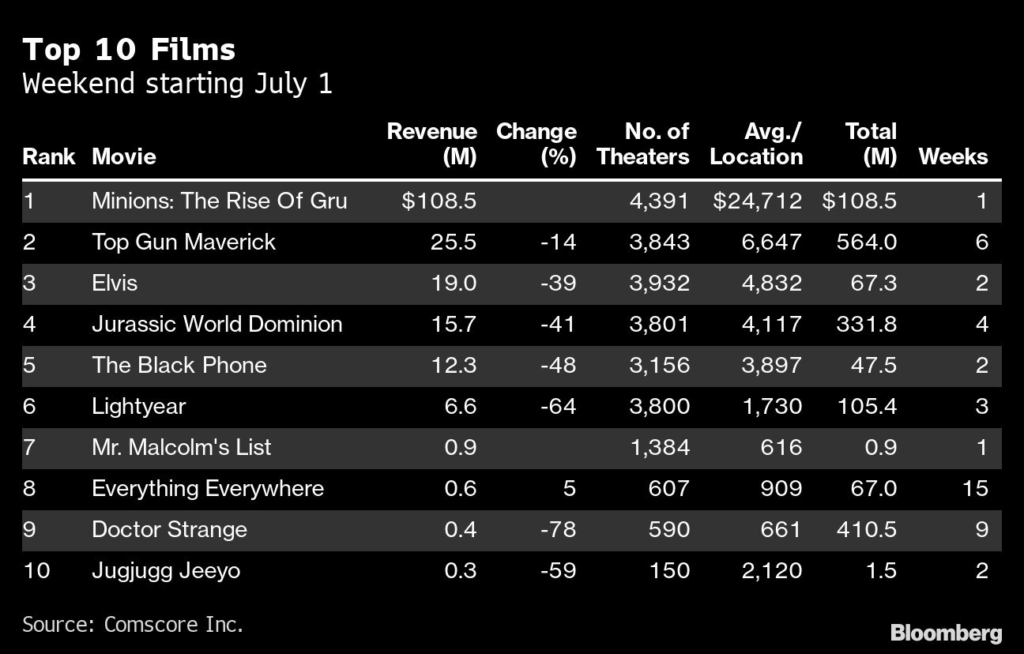
  • The film made $108.5 million in its opening weekend across 4,391 domestic theaters, according to an estimate from Comscore Inc. on Sunday. That far exceeded the Boxoffice Pro forecast of as much as $89 million for the three-day weekend. The studio had estimated it would make $60 million over four days, including the Fourth of July holiday.
  • While the movie beat the first-weekend ticket sales of Walt Disney Co.’s “Lightyear” and Paramount Pictures’s “Sonic the Hedgehog 2,” it fell just short of its predecessor. “Minions” made about $116 million at the US and Canadian box office during its first weekend in July 2015.

Key Insights

  • “Minions: The Rise of Gru,” tells the origin story of Gru, the fictional supervillian voiced by Steve Carell. In this film, he’s an 11-year-old boy plotting to take over the world from his basement. It has a 72% critical approval rating on Rotten Tomatoes, better than the 55% rating of the first “Minions” film. Both movies are spinoffs of Universal’s 2010 film “Despicable Me.”
  • The movie’s performance helped quash concerns that parents worried about Covid-19 aren’t ready to bring their kids back to theaters. Disney and Pixar’s “Lightyear” did far worse than expected when it debuted, and ticket sales have plunged since it premiered in mid-June. It landed in sixth place with $6.6 million over the weekend, Comscore estimated.
  • Disney will likely regain the box office crown next weekend, however. It plans to release the Marvel film “Thor: Love and Thunder,” which could be one of the biggest-selling films of 2022.

Get More

  • See the schedule for upcoming releases.
  • See Boxoffice Pro’s long-range forecast.

More stories like this are available on bloomberg.com

©2022 Bloomberg L.P.
Tether Fails to Calm Jittery Nerves With Short Sellers Circling

(Bloomberg) — Repeated assurances by the backers of Tether, the biggest stablecoin, that the token is backed by ample reserves and working smoothly haven’t been enough to reassure markets. 

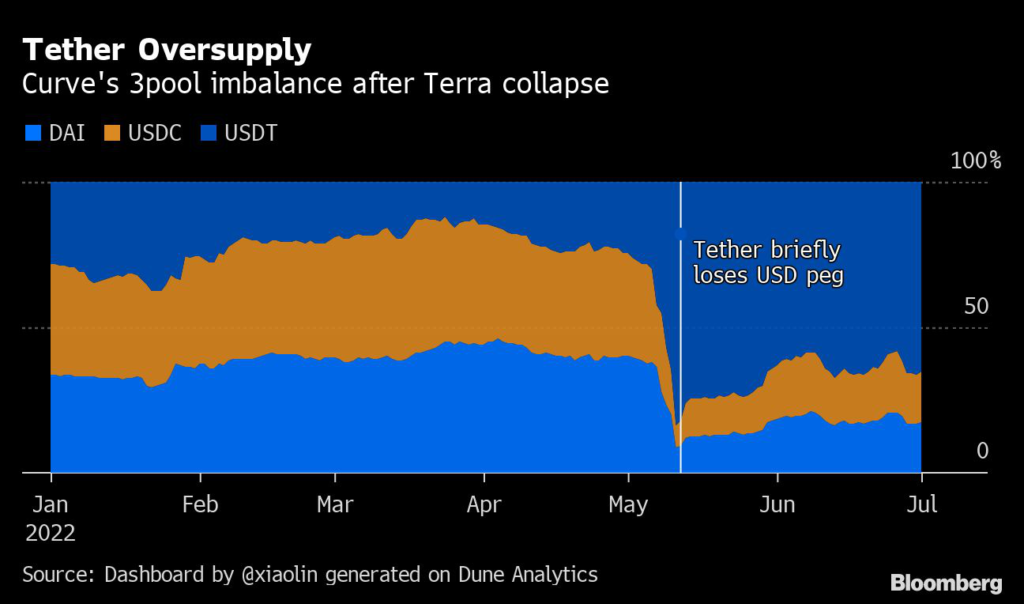
A so-called liquidity pool that allows traders to swap between the three biggest stablecoins still shows an elevated supply of Tether, with the token accounting for 65% of the total as of Friday. That’s an indication that investors remain cautious about holding Tether, said Edul Patel, chief executive of crypto investment platform Mudrex. 

Crypto investors have soured on Tether since the collapse of the TerraUSD stablecoin in early May led to increased scrutiny of the assets it claims to be backed by. Short sellers have boosted bets against Tether in the past month, the Wall Street Journal reported on Monday, citing Leon Marshall, Genesis Global Trading Inc.’s head of institutional sales. 

Tether’s market value dropped by about $600 million this week, bringing declines since just before TerraUSD’s implosion to roughly $17 billion, CoinGecko data show.

“USDT is the most widely held and most accessible stablecoin in the world, so it isn’t a surprise that more people hold USDT and have it available to swap for other assets that they want to use for other purposes,” a Tether spokesperson said in an emailed response to questions from Bloomberg. USDT is the ticker for Tether’s main dollar-based stablecoin. 

On Curve’s 3pool, where traders can swap between Tether, USDC and DAI, Tether’s share of supply stood at 29.9% on May 6, just before TerraUSD started deviating from its peg. That portion jumped as high as 82% on May 12 as the TerraUSD crisis worsened, briefly knocking Tether from its own peg. 

While Tether’s share of supply has since declined, it remains far above pre-TerraUSD crisis levels. And it has reversed some of the decrease after the Journal report.  

The 3pool platform handled about $117 million in trading volume on Friday.  

Tether relies on a reserve of dollars and dollar-equivalent assets to maintain its one-to-one peg with the currency, though the quality of this stockpile has repeatedly been called into question. Tether files quarterly attestations from a Cayman Islands accounting firm on its holdings, which show that it’s been steadily decreasing its exposure to assets like commercial paper in favor of more liquid instruments like Treasury bills.

Bloomberg reported in February that Fir Tree Capital Management was making a substantial short wager on Tether, predicting it could pay off within a year. 

Read more: Shorting Tether Renews Debate Around Most Traded Cryptocurrency

Tether Chief Technology Officer Paolo Ardoino has repeatedly taken to Twitter to reassure markets since TerraUSD cratered. In a 12-part tweet this week, just after the Journal story was published, he said Tether has “never failed a redemption” and has cut its commercial paper holdings by roughly $45 billion, adding: “Tether portfolio is stronger than ever.” 

Since the brief decoupling on May 12, Tether has traded close to its dollar peg. 

More stories like this are available on bloomberg.com

©2022 Bloomberg L.P.

Chinese Developer Shimao Fails to Pay $1 Billion Dollar Bond

(Bloomberg) — Chinese developer Shimao Group Holdings Ltd. said it didn’t pay a $1 billion dollar note that matured Sunday, adding to a record year of offshore-bond delinquencies in the sector.

The luxury builder said in a Hong Kong exchange filing it also hasn’t made principal payments involving some other offshore debts and has been in discussion with creditors while trying to reach “amicable resolutions.” If Shimao can’t, “creditors may have the right to demand acceleration of repayment” and take enforcement actions, according to the company.

The firm has faced mounting worries about its financial health for months, as a sweeping crackdown on China’s real estate industry has triggered a record wave of delinquencies. Shimao, the country’s 14th-biggest developer by contracted sales last year and which also builds commercial properties, last month failed to pay off a private note, a delinquency that heightened concerns about hidden bills at Chinese builders.

“Due to market uncertainties over debt refinancing and generally challenging operating and funding conditions, the group experienced negative developments on its credit ratings and the occurrence of principal nonpayments under certain of its offshore indebtedness,” said Shimao in its filing Sunday.

The company said in a separate statement it’s sold nearly 20 more property projects to raise money. It also expects to be able to accelerate cash inflow from property sales as the property market shows signs of rebound. New-home sales rose an estimated 31% in June from May in 30 key Chinese cities, according to China Real Estate Information Corp.

Meanwhile, Shimao has appointed Admiralty Harbour Capital Ltd. as its financial adviser and Sidley Austin as its legal adviser to help assess its capital structure, liquidity and options, the builder said in its exchange filing.

Shimao said it hasn’t received any notice of repayment acceleration from its creditors, but has obtained written support from the majority of its dual-currency term loan lenders. The lenders also expressed they don’t intend to take any enforcement action at this stage regarding the financing, according to the filing.

The builder is among the largest real-estate debt issuers in China. It has nearly $10 billion of onshore and offshore bonds outstanding, according to data compiled by Bloomberg. 

(Adds Shimao statement in the fifth paragraph.)

More stories like this are available on bloomberg.com

©2022 Bloomberg L.P.

Close Bitnami banner
Bitnami