

Bloomberg

From Remote Coral Reefs to Your Sofa, Citizen Science Spreads Everywhere

(Bloomberg) — Whether diving off a private yacht in a remote latitude or having a quiet night in at home, citizens of the planet are contributing to the scientific study of climate change through extraordinary and also mundane ways. 

Citizen science — which involves crowd-sourcing data for scientific research — got a boost during the early days of coronavirus pandemic lockdowns. As the skies cleared and cities went silent, people started to notice their impact on the world around them. And many of these casual observers — thanks to smartphones and internet access — have found ways to add their findings to scientific work. 

“Once you’re aware of the fragility of the environment, your next logical step is to do as much as you can to contribute to scientific knowledge,” said Jordi Regàs, a 51-year-old diver who, in his free time, contributes to marine research in Barcelona. “I don’t feel that what I’m doing will lead to any radical changes, but I do think that each of us can bring in a small contribution.” 

Citizen science has blurred the boundaries that constrained professional science. Traditionally, scientists organize data-gathering campaigns, go back to their labs, analyze the information and publish their conclusions. But millions of citizen contributions from around the world are widening the scope of the research and making it more precise and consistent.

Regàs, who has logged over 1,700 dives, decided to join Barcelona’s Institut de Ciències del Mar Observadores del Mar program in 2016, almost as soon as it launched. After all, he is president of the Universitat de Barcelona’s Biology Faculty diving club, which counts many of the scientists behind the project as members. 

Now, his pictures of seaweed, soft corals, fish and even marine litter allow scientists at the institute to track the health of the Mediterranean flora and fauna, as well as to get alerts on the presence of invasive species. Amateur divers know the spots inside out and often are emotionally attached to the environment, so they notice changes before anyone else, he said. 

“We’re now hearing about a new type of invasive algae from Asia, so similar to local species that can only be identified by taking a bite off it — apparently it tastes like ginger,” Regàs said. “So if I need to go and chew algae, I guess I’ll do it.”

  • Want to lead a more climate-conscious life? Bloomberg Green wants to answer your questions. Take our brief survey and tell us what you’d like to know.

Data generated by citizens is as reliable as information gathered by professional scientists, according to a paper published in May in Citizen Science: Theory and Practice. The study compared data gathered by amateurs and professionals during a campaign to measure algal coverage on rocky shores in the UK. Still, the paper recommend that when performing complex tasks, citizens should be trained, given clear instructions and the right equipment. 

“Citizen science is a really powerful tool,” said Abigail Scott, a co-author of the study and a researcher at James Cook University in Cairns, Australia. “For it to work, it needs to be really engaging for people, to make them feel like it’s fun and they’re learning something, but also to make sure that the data is useful.”

Serious projects need to have at least one scientist involved. Like all other scientific research, they need to ask clear questions, outline the path to getting the answers and set specific goals. Communicating all of this to participants, as well as making the data publicly available after the study is over, helps with engagement, said Scott.

As an expert on seagrass, Scott helped design the Great Reef Census, a program in which divers are asked to upload 20 random photos of Australia’s Great Barrier Reef. The images allow scientists to assess reef health — including coral bleaching and the presence of coral killers like the crown-of-thorns starfish — from touristic spots to the most remote, which can only be accessed on private yachts and research vessels. During the last campaign, citizens submitted over 40,000 photos of about 300 reefs. 

“That’s why scientists are getting more keen on working with people, it means you can scale up your projects,” she said. “It opens a whole new world of possibilities that wouldn’t even be possible with a small team of scientists.” 

And participation in the quest for knowledge doesn’t require a diving certificate or ability to travel to far-flung areas of the planet. Citizen science platforms like SciStarter in the US or EU-citizen.science in Europe filter projects by location and type of research, with dozens of options for people with all sorts of skills, anywhere in the world.

From the comfort of home, anyone with a smartphone can contribute to Globe at Night, which encourages people to take a picture of the nighttime sky and upload it into an app. More than 52,000 observations over five years have allowed scientists to find dark sky oases — areas undisturbed by outdoor lighting — to study light pollution and its impact on bats’ flight paths. 

While some citizen science projects have been running for over a century, the pandemic in many ways forced non-scientists to see the natural world with a different perspective and inspired new ways for researchers to tap into this interest.

“We had this exceptional silence because there were no airplanes in the sky and no cars on the roads, so people were noticing the birds much more,” said Michael John Gorman, the director of the BIOTOPIA – Naturkundemuseum Bayern, a natural history museum still under construction in Munich, Germany. “At the same time, we were keenly aware of the reduction in bird numbers — only in Germany, 15% of breeding pairs of birds disappeared in the past 12 years.”

In collaboration with scientists from the Max Planck Society, they built Dawn Chorus, an app that allows users to record birds singing an hour before and an hour after dawn. People are encouraged to record from the same place on different days, so the sound bites can be compared against each other. It’s an artistic project with a scientific aim, too, because bird song is an indicator of the ecosystems’ health, Gorman said. For now, ornithologists help identify different types of birds. But the next step is to develop artificial intelligence and machine learning tools.

Other projects have more immediate applications. Launched by researchers at Universitat Autònoma de Barcelona, in Spain, Mosquito Alert asks users to take pictures of mosquitoes in order to detect invasive species and help authorities prevent and plan for outbreaks of tropical diseases like dengue or Zika in Europe, which are expected to increase as the planet warms. The app has recently expanded to other countries including Italy, the Netherlands, Hungary and Austria and has about 14,000 users across Europe.

“It all happened spontaneously – users would complain through the app that mosquitos bothered them, that science was too slow and that no one was helping them,” said Aitana Oltra, a co-founder of the project. “So we got Barcelona’s public health agency involved and now they’re acting on this information”

Also in Barcelona, Floodup gathers user pictures of flood events, which are also forecast to increase in frequency and intensity in the Mediterranean due to climate change. 

“Citizen science is not just about people sending us data, it creates a space for us all to meet,” said Montserrat Llasat-Botija, a researcher at the physics department in Universitat de Barcelona and Floodup manager. “It means us scientists are not isolated in our labs, it allows us to know what people are concerned about, and to design research around that.”

To be sure, not everyone can equally participate in citizen science and that creates some caveats on findings. Many projects require access to technology, the need for a smartphone and an internet connection — meaning contributions tend to come from more affluent areas — and not the ones that will suffer the most from the effects of climate change. 

Ibercivis foundation in the Spanish city of Zaragoza aimed to bridge that gap with the Vigilantes del Aire project. Designed to reach people who don’t usually participate in citizen science, it distributed 10,000 strawberry plants across Spain. Because heavy metals in the air tend to get stuck in vegetation, particularly on the hairy leaves of strawberry plants, people were asked to care for them and to send a couple of leaves by post to scientists in Universidad de Zaragoza after three months. Then, biologists produced a scientific report that offers air pollution data of places where there are no or very few conventional sensors. 

Participants on the project included not only dozens of elders living in aged care homes across the country, but also female inmates at the Albolote Penitentiary Center in Granada, southern Spain. 

“We need to stop thinking about citizens as people who have no idea,” said Francisco Sanz, executive director at Ibercivis. “People are interested and, when given the chance, they can find the evidence that researchers need to really change things.”

More stories like this are available on bloomberg.com

©2022 Bloomberg L.P.

Argentines Seek Hedging in Crypto After Economy Minister Resigns

(Bloomberg) — The cost of buying Tether’s stablecoin USDT with Argentine pesos surged Saturday after Economy Minister Martin Guzman resigned. 

The resignation marked the biggest departure of President Alberto Fernandez’s government after infighting escalated within the ruling coalition. No replacement was immediately named.  

The price of USDT measured in Argentine pesos jumped on major exchanges soon after the minister announced his resignation on Twitter, according to the CryptoYa website, which reports minute-by-minute prices. The coin fetched 257 Argentine pesos on the Binance exchange, up 6.6%. On the Lemon Cash exchange, prices jumped 11% to 279 pesos. 

Crypto is the only market trading in Argentina on Saturday. While volumes are small, the moves could indicate unease, at least among some traders, over the growing rift within the ruling coalition and concern over the government’s ability to tackle rising inflation and other economic challenges.   

Argentina is one of the nine countries with the highest adoption of cryptocurrencies, according to Chainalysis, a site specializing in crypto and blockchain. In a country with recurring currency crises and inflation running around 60% annually, two-thirds of Argentines who invest in crypto say they do so to protect their savings, according to a study by Buenos Aires-based Wunderman Thompson.

More stories like this are available on bloomberg.com

©2022 Bloomberg L.P.
Tesla Deliveries Dipped in Quarter, Snapping Two-Year Streak

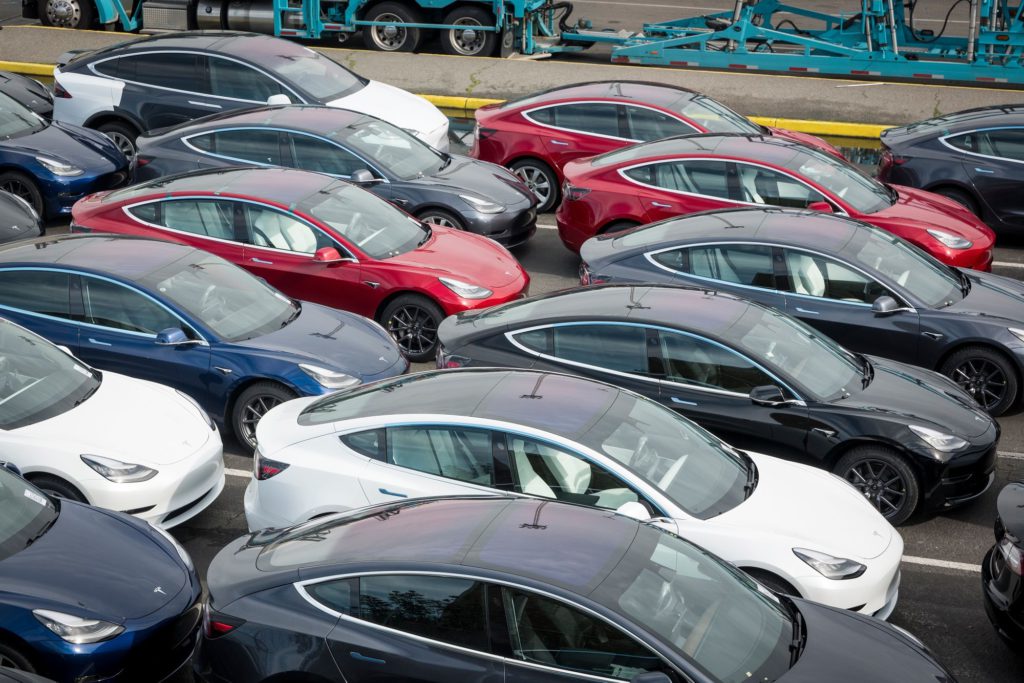
(Bloomberg) — Tesla Inc. delivered 254,695 cars worldwide in the three months to June, snapping a two-year streak of quarter-on-quarter gains, as a Covid-related shutdown at its factory in Shanghai crimped production. 

The results, posted Saturday, missed a forecast of 261,181 vehicle deliveries based on an average of analyst estimates compiled by Bloomberg. That is less than the record 310,048 cars Tesla delivered in the previous three months, but above the 201,250 from the same quarter a year ago.

Tesla faces “ongoing supply chain challenges and factory shutdowns beyond our control,” it said in a statement.   

The delivery data is a closely watched indicator for Tesla since it provides insights into the electric-car maker’s likely financial performance. The figure also is widely seen as a barometer for EV demand generally, since the Austin, Texas-based company has led the market for battery powered vehicles.

‘Very Tough Quarter’

Chief Executive Officer Elon Musk had warned of a “very tough quarter” in an internal memo that was seen by Bloomberg. But the Shanghai shutdown may have made the most recent quarter’s tally something of an outlier. Musk said earlier this year that he expects production in the third and fourth quarters will be “substantially higher” and that Tesla is on track to expand production to more than 1.5 million vehicles this year.

Tesla does not break out global sales by geography, but the US and China have long been its largest markets. The company currently makes the Model S, X, 3 and Y vehicles and has plans to start production of a pickup, semi truck and roadster. 

In the waning days of the quarter, while Musk maintained his Twitter silence, other executives delivered cars to customers, including design chief Franz von Holzhausen. The end of the quarter has often been an all-hands-on-deck situation, with employees from across the company pitching in to help deliver cars in the final hours. 

Tesla will report second-quarter earnings after the market close on July 20, the company said Saturday. The annual meeting of shareholder will be Aug. 4. 

More stories like this are available on bloomberg.com

©2022 Bloomberg L.P.

Turkey’s Galatasaray Eyes Kuwait Airways Sponsorship Deal

(Bloomberg) — Turkish sports club Galatasaray is in talks to get Kuwait Airways as a sponsor. If signed, an agreement would be the first major deal between a Gulf company and Turkish soccer. 

“Talks with Kuwait Airways are yet at an initial phase,” Istanbul-based Galatasaray said in an exchange filing on Saturday. There were discussions about “ways of commercial cooperation between the two parties,” Kuwait Airways said in a Twitter statement a day earlier.

Possibility of a deal was first reported by Fanatik newspaper on Friday, which said a five-year deal that includes stadium-naming rights may be worth about $80 million. Galatasaray didn’t specify any financial details.

Earlier this year, Besiktas sports club signed a jersey and tribune sponsorship deal with the local unit of Bahrain-based cryptocurrency exchange Rain Financial Inc.  

Galatasaray reported a loss of 173.7 million liras ($10.4 million) in the nine-month period ending in February, compared with a loss of 321.3 million liras in the same period a year earlier. Its shares rose 19% in Istanbul trading this year, trailing the 32% gain in the benchmark stock index. 

(Adds Besiktas deal in fourth paragraph)

More stories like this are available on bloomberg.com

©2022 Bloomberg L.P.
MicroStrategy’s Bitcoin Holdings Take a Record $3.4 Billion Hit

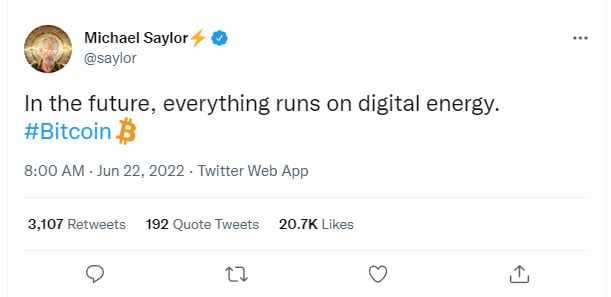
(Bloomberg) — When MicroStrategy Inc. began buying Bitcoin in bulk in the summer of 2020, CEO Michael Saylor said it was because inflation would make cash worthless. The crypto pile he has since accumulated was worth $3.4 billion less at the end of the second quarter than the previous one. 

Technically, the decline is yet another paper loss for the enterprise software maker under US accounting rules until any of the Bitcoin is sold, but there are consequences. MicroStrategy will likely need to take a substantial impairment charge when it reports second-quarter results. And for shareholders, the stock tumbled 66% in the quarter ended Thursday, outpacing Bitcoin’s 59% decline.

Saylor has downplayed any concerns, sticking to the strategy and adding to his stockpile last quarter as Bitcoin experienced its biggest price drop in more than a decade. MicroStrategy noted at the end of June that it would report results as normal later in the coming quarter even though Wall Street regulators typically require companies to flag big losses much earlier. 

MicroStrategy’s Bitcoin stash was worth about $5.9 billion at the end of the first quarter, which means that with Bitcoin finishing around $18,900 on June 30, that same pile — including some small purchases announced at the end of June — was worth about $2.45 billion, or 58% less than just three months ago.     

“To reiterate our strategy, we seek to acquire and hold Bitcoin and long-term,” said Phong Le, MicroStrategy’s president and CFO, on a May 3 conference call. “We view our Bitcoin holdings as long-term holdings and we do not currently plan to engage in sales of Bitcoin.”

Shirish Jajodia, senior director of treasury and investor relations at MicroStrategy, responded to a request for comment by saying that the company has no plans to sell its Bitcoin, and that shareholders support its strategy. MicroStrategy is insulated from near-term swings because of its “robust capital structure,” Jajodia added.

At the height of the crypto market collapse, MicroStrategy bought another 480 Bitcoin worth about $10 million between May 3 and June 28, for about $20,817 each, according to a filing with the US Securities and Exchange Commission Wednesday. 

The Tysons Corner, Virginia-based business holds approximately 129,699 Bitcoin bought at an average price of about $30,665 each, making the aggregate purchase price about $3.98 billion, according to a Form 8-K filed Wednesday.

While a few crypto-centric companies have also added Bitcoin to their balance sheets, the beating that the digital asset and other coins are taking in the current bear market is likely to make any potential entrants think twice before diving in.    

Still, some advocates of digital assets appear to remain unconcerned about the recent price plunge over the long term as well as Saylor’s strategy. 

“If you look at our price target on MicroStrategy, it’s based on the price of Bitcoin reaching $95,000 by the end of 2024,” said Mark Palmer, head of digital assets research at BTIG, who has a buy rating on MicroStrategy, with a target price of $950. “Quite frankly, an awful lot can happen between now and 2024.”

Shares of MicroStrategy ended the second quarter at $164.30. The stock climbed as high as $1,272.94 in February 2021. It traded at $123.92 at the end of July 2020, just before Saylor began to buy Bitcoin.

“There will only be 21 million Bitcoins that are ever mined, because there is a deterministic supply of Bitcoins,” Palmer said. “What that means is the price of Bitcoin is going to be driven by demand as opposed to supply-demand balance.”    

More stories like this are available on bloomberg.com

©2022 Bloomberg L.P.
Social Media Buzz: Wyoming Debate, Musk Meets the Pope

(Bloomberg) — What’s buzzing on social media this morning:

BUZZING TWEETS

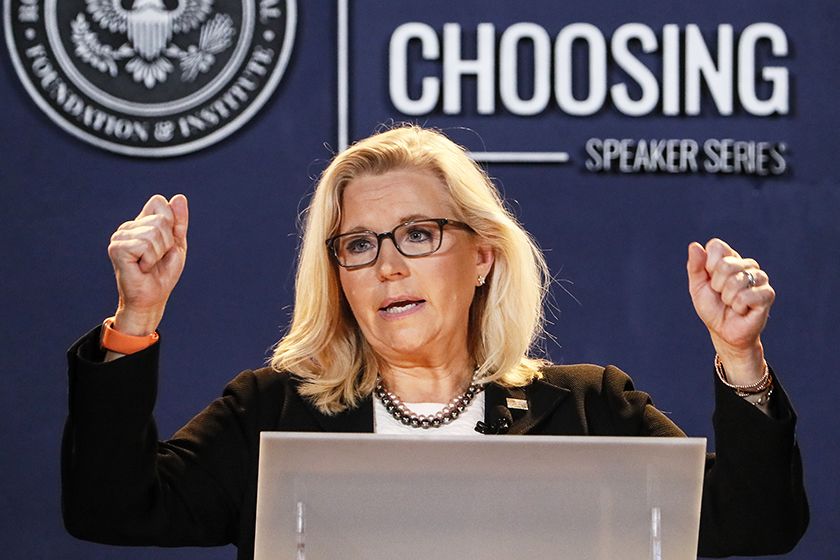
Representative Liz Cheney, one of only two Republicans on the committee investigating the Jan. 6 insurrection, faced off against opponents in a primary debate for Wyoming’s sole Congressional seat. Clips of the debate were widely shared, as her challengers raised conspiracy theories about Covid-19 and vaccines, the war in Ukraine and whether the 2020 presidential election was stolen.

Cheney, trailing in the polls, didn’t back down from her contention that that there are “politicians in this country, beginning with Donald Trump, who have lied to the American people.”

Elon Musk ended an unusual silent streak on Twitter, reemerging to post a photo of himself, his children and Pope Francis. 

BUZZING HEADLINES

Disney has fired actor Hugo Speer from the upcoming reboot of The Full Monty following allegations of “inappropriate conduct.” The 53-year-old was accused of exposing himself to a woman on the production team, the Times of London reported. He has denied the allegations. The Disney+ series comes 25 years after the original film. Speer had been set to again play Guy.

Tropical Storm Colin formed along the South Carolina coast on Saturday, threatening high winds and lashing rains across the Carolinas and Virginia ahead of Monday’s July Fourth holiday, and potentially causing more travel delays. 


More stories like this are available on bloomberg.com

©2022 Bloomberg L.P.
Tesla Receives Recall Order From Germany for Models Y and 3

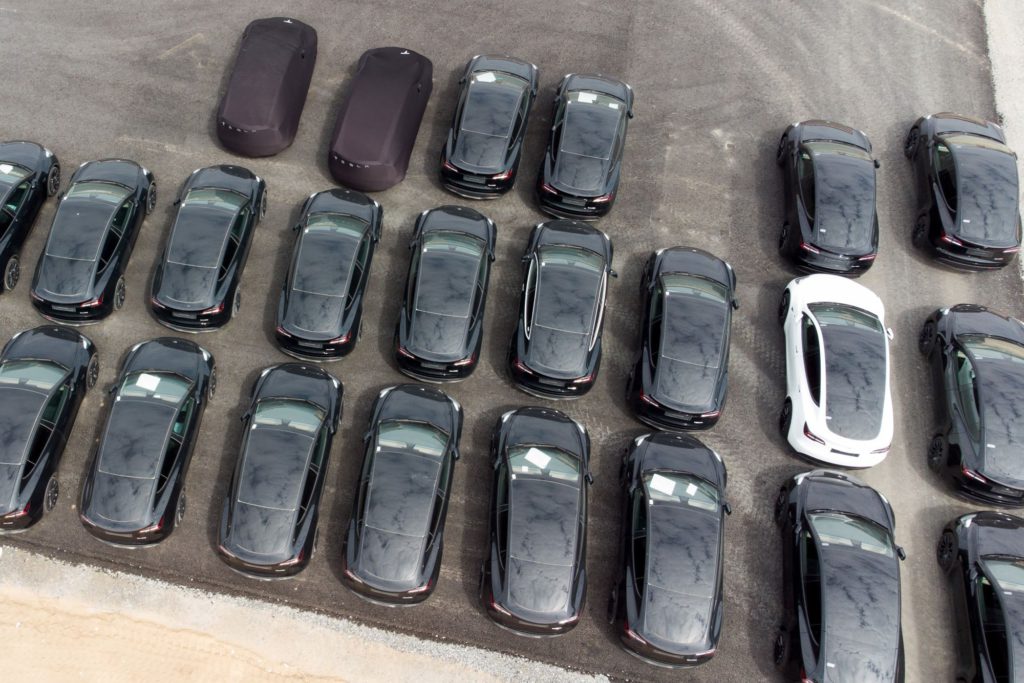
(Bloomberg) — Germany’s automotive regulator has called on Tesla Inc. to issue a recall for its models Y and 3 because of a technical problem in the cars’ emergency system. 

The Federal Motor Transport Authority can only order a recall in Germany, but said on its website that a total of more than 59,000 Teslas would be affected worldwide.

The German agency identified a glitch with the cars’ emergency system, which should automatically call 911 in the US, or the relevant emergency line in other countries, in the event of a serious accident. Affected owners were told to call the manufacturer or drive to an authorized repair shop for a software update.

The notice was published on June 29 and reported by public broadcaster Rundfunk Berlin-Brandenburg on Saturday. The affected cars were produced this year and, according to RBB, include Model Y vehicles built at Tesla’s new factory near Berlin. 

Model Y cars are also produced at the group’s plants in Fremont, California, and near Shanghai. Both factories also build the Model 3.  

Tesla’s quarterly production and delivery figures are due this weekend and are expected to break a multi-quarter streak of record-setting results, due mostly to a prolonged Covid 19-related shutdown and logistical challenges at the Shanghai factory. 

Chief Executive Officer Elon Musk said the company’s new plants in Germany and Texas are losing “billions of dollars” as the electric-vehicle maker tries to ramp up production.

More stories like this are available on bloomberg.com

©2022 Bloomberg L.P.
The Worst Stock Selloff In Half a Century Might Not Be Done Yet

(Bloomberg) — It’s been a chaotic, and costly, time for many investors. But 2022 is only half over and the stocks tale will probably have more twists and turns before the year is up.

Coming off the worst first-half since 1970, US equities now face a triple whammy of sticky inflation, recession risks and the threat to corporate profits from sinking consumer confidence. After just about everyone on Wall Street got their 2022 predictions wrong, investors are now focused on a toxic mix that spells stagflation, as well as more damage to valuations.

“The next 10% will probably be down from here, not up,” said Scott Ladner, chief investment officer at Horizon Investments. “A quick market bottom will need a turn in central bank policy, and we don’t think that’s a possibility in the next few months.”

Indeed, the Federal Reserve is expected to go on hiking rates as it tries to tame inflation, rather than flush the market with cash like it did in 2008 and 2020 — pretty much the rocket fuel for the powerful bull market that’s now come to a halt.

This year is already one of the worst in terms of big daily declines, with the S&P 500 Index falling 2% or more on 14 occasions, putting 2022 in the top 10 list according to data compiled by Bloomberg going back two decades.

Despite that, the CBOE Volatility Index, the so-called fear gauge, is below levels seen in past bear markets, suggesting the market has not yet seen the washout needed to spark a sustainable rally.

Based on the history of past bear markets, the S&P 500 should see some rebound by the end of 2022. In recession years, it’s a different story, with fresh lows to come first.

Michael J. Wilson at Morgan Stanley, one of Wall Street’s most vocal bears, says the S&P 500 needs to drop another 15% to 20% to about 3,000 points for the market to fully reflect the scale of economic contraction. For Peter Garnry, head of equity strategy at Saxo Bank A/S, the bottom is about 35% below January’s record high, implying further declines of about 17%. 

“Companies such as Tesla and Nvidia, and cryptocurrencies, must capitulate before the speculative excesses have been eliminated and a bottom has been reached,” Garnry said. 

Wall Street bulls see a better second half, though it won’t be enough to recoup all of the decline so far. In Europe, strategists in a survey expect the Stoxx 600 to post declines of 4% on the year. It’s currently down about 17%.

Earnings Test

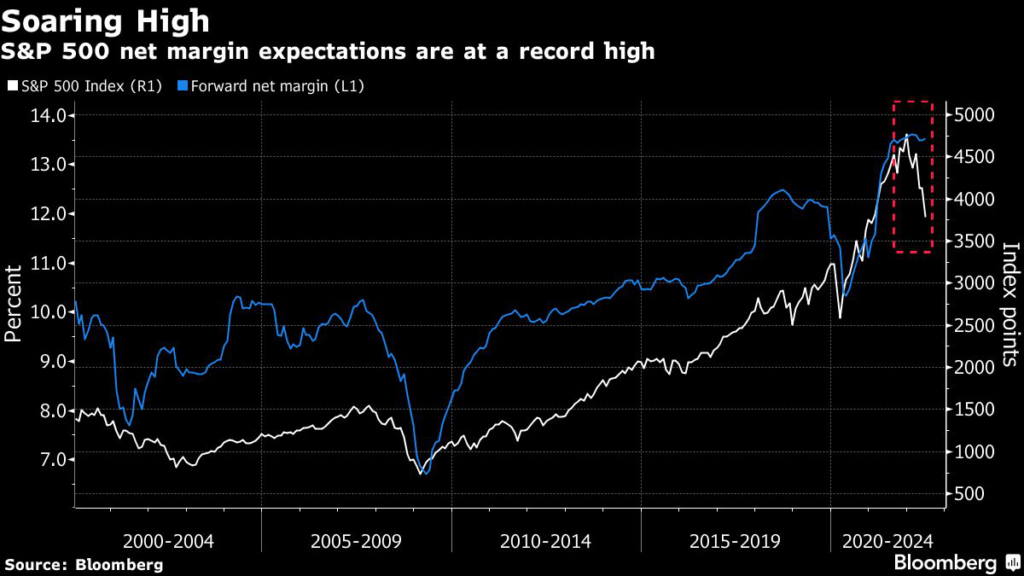
Amid all the gloom, earnings estimates have remained relatively upbeat. That’s going to be tested when US and European companies start reporting second-quarter earnings in two weeks. Demand has so far held up even as consumer mood soured, but there have been signs recently that US spending is softening.

“Spending has been holding up because the gap has been bridged by savings built up during the pandemic,” said Anneka Treon, managing director at Van Lanschot Kempen. “And that is obviously unsustainable.”

There’s plenty of scope for downgrades, with global profit-margin estimates seen as too optimistic. For Goldman Sachs Group Inc. strategists, margins for US companies will likely decline next year, whether or not the economy falls into recession.

In Europe, analysts for Stoxx 600 firms are the most bullish since 2001, according to Bloomberg data. And while a Citigroup Inc. index that tracks the relative number of earnings-per-share upgrades and downgrades shows the biggest US cuts since 2020, the number of European downgrades has only just started outnumbering upgrades.

Germany is among the markets at risk as Russia’s cuts to gas supplies threaten the industrial heart of Europe’s biggest economy. 

Strong earnings expectations have made US and European valuations appear cheaper compared with long-term averages, tempting some investors to buy the dip and fuel short-term rallies. But when compared with bond yields, equities, in Europe at least, don’t look as cheap.

‘Inflation Inflation Inflation’

While the recession worries are on the increase, at the heart of the problem is runaway inflation. It’s continued to rise even as central banks take more aggressive steps, creating a one-two punch that could be a big part of the recession tipping point. Although there are some indications that peak inflation is near, central bankers are pushing on, having been accused of underestimating the threat at the start of the year.

“Inflation is at levels that many people have not experienced before and central banks are hiking rates to levels not seen since before the global financial crisis,” said Caroline Shaw, portfolio manager at Fidelity International. “Policy mistakes are likely and these can have a big impact on markets.”

In emerging markets, too, investors say they need to see the Fed turn less hawkish to ease concerns. That’s despite plunging valuations as stocks posted their worst first-half performance since 1998, when the Asian financial crisis upended markets and Russia defaulted. Hawkish central banks and slower economic growth will particularly pressure the tech-heavy, export-oriented markets of Taiwan and South Korea. Their respective stock benchmarks are among the biggest laggards in the region this year.

“Inflation inflation inflation,” said Ipek Ozkardeskaya, senior analyst at Swissquote. That “will determine whether we will see a U-turn before things get worse or whether the world should brace for deeper darkness through the second half of the year.”

More stories like this are available on bloomberg.com

©2022 Bloomberg L.P.
Ethical Debt Pioneer Says Transparency Will Fuel Market Growth

(Bloomberg) — Five years ago, Roland Mees helped a Dutch health technology firm issue the first loan linking borrowing costs to environmental, social and governance targets. 

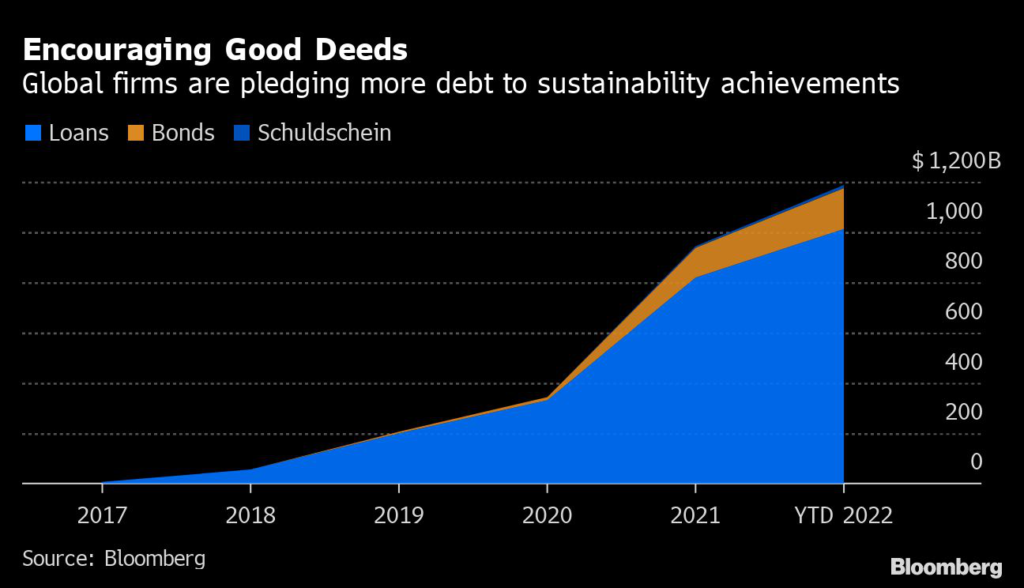
So-called sustainability-linked loans have boomed since then and been adopted by hundreds of companies worldwide in more than $1 trillion worth of debt facilities.

Bloomberg News speaks to the pioneer of the sustainability-linked structure to find out why it’s become so popular and how regulation will boost transparency.

Mees, director of sustainable finance at ING Wholesale Banking, holds a PhD in practical philosophy and ethics. He studied the psychological and motivational difficulties of implementing sustainability practices in his dissertation. 

This interview has been condensed and edited for clarity.

BN: How do you feel about the structure’s popularity? Did you think it would spread to other financial products and have a worldwide adoption?

RM: I was like ‘Woah.’ I could not have imagined the effect. It’s almost a movement that’s bigger than I expected.

BN: Why only now do we see progress in the financial market for sustainability action?

RM: We have known for a very long time that we should act responsibly. We had discussions with clients and colleagues and the main obstacle was, ‘What’s in it for me?’ There is this psychological need to justify why we should act — why is it good for the borrowers or lenders? In addition, we see companies acting as a result of pressure from different stakeholders, of which the regulator is the most significant driver.

BN: How did you overcome that obstacle?

RM: It has two elements. Fortunately, companies which have good ESG ratings generally have better credit ratings, and that’s our economic argument. This economic justification is also good for the banks and their shareholders. Everyone needs a push to the right direction, and this economic justification is the extra motivation. Then, there is the behavioral element. People don’t generally act until there’s a push from authorities or an incentive. 

BN: Were there any rejections?

RM: Not from the first clients we spoke to about this or internally as they understood and liked the concept from the start. However, not all pitches to clients were (and are) successful because the common responses were, ‘We’re not ready yet, or not advanced enough. Maybe not now, maybe later.’ Not all companies have such maturity in sustainability or ESG.

BN: Why link the deals to interest rates?

RM: The discount and premium are nudges, as proven in psychology research that large groups of people will mainly act if they are given some incentives. Behavioral science plays a role here.

BN: So, what’s in it for the banks?

RM: Apart from the fact sustainability is strategically important to ING, sustainable companies are more likely to do better which reduces the credit risks in our own book. Large companies choose their banks, and there’s a lot of competition. However, borrowers increasingly prefer banks to have strong ESG credentials. 

BN: What needs to be done or what improvements do we need to see further growth of the market?

RM: The sustainability-linked label might become regulated in future. Regulation will be helpful for both transparency and moving the market into the direction of meeting the goals of a net-zero society. 

There will be more transparency everyday, as we see in most of the sustainability-linked transactions in the German Schuldschein market for example. We will get there as the market evolves and transparency will be enforced eventually. There will be rules for everyone, at least from the European Union, and even Asia could mirror the EU taxonomy.

It’s also important the market adheres to high quality standards, as we have written about in our position paper on the credibility of the sustainability-linked loan and bond markets. 

BN: Do you feel that goals should include at least one social or governance target?

RM: I definitely think that there should be a mix of E, S, and G targets. If ING is the ESG coordinator or structuring agent, we always propose companies to have at least three KPIs [key performance indicators]. For example, the E factor may not be as material to a law firm, but the S and G would be. KPIs can reflect the most material ESG issues that matter.

We also believe KPIs should be material, science-based and audited by an independent third party.

BN: What about ESG ratings?

RM: ESG rating is not the holy grail, but a useful tool that’s independently verified. In our experience, companies that are not yet advanced in sustainability find it useful and efficient to work with an ESG rating.

BN: What do you see in the future for this financial product?

RM: There will be more and more financial products that have the sustainability-linked feature incorporated in some form. But more importantly, ESG will enter the DNA of business people. It’s urgently required and now is the time to take action. We have to start somewhere. It’s about progress, not about perfection.


More stories like this are available on bloomberg.com

©2022 Bloomberg L.P.

What It’s Like to Try Living Green in China

(Bloomberg) — For the past six years, Yu Yuan has been doing everything she can to live a life that produces no non-degradable waste. She takes her own coffee mug and chopsticks to cafes and restaurants, she buys second-hand clothes and she never orders food deliveries. During the day, she runs a shop in an old Beijing alley that sells housewares. None are single-use plastic and customers don’t get a bag.

“It’s not easy, but it’s not impossible, because every Chinese person used to have a low-carbon lifestyle when the country was less developed,” said Yu, 30. “I will find ways to make it happen.”

China set a goal two years ago to reach peak emissions before 2030 and zero them out by 2060, and one of the 10 key missions of the government’s official roadmap to meet those targets is a “green lifestyle for all people.” Designed to raise people’s awareness of their personal carbon footprints, it encourages the promotion of low-emission products, better labeling and more climate education. In practice, though, it’s not easy for Chinese consumers to make informed choices about what they buy, because the country lags behind places like Europe in requiring and policing product information.

“China should build a legal system to promote green-product certification and make sure the system has strong legal support,” said Wang Jianming, a professor at Zhejiang University of Finance and Economics. 

  • Want to lead a more climate-conscious life? Bloomberg Green wants to answer your questions. Take our brief survey and tell us what you’d like to know.

Take shopping for example. The sector in China has moved online fast, making low-carbon purchases harder. Last year, the online share of retail sales was projected to be more than half the total in the country, up from just 20% in 2016. In the US it’s about 15% and even less in Western Europe. All those delivered goods generated 9.4 million tons of packaging in China in 2018, according to Greenpeace, and the amount could rise by 2025 to 41 million tons, equivalent to Japan’s total annual waste.

Every year, China’s leading e-commerce platforms, including Taobao.com and JD.com, promote their green efforts, exhorting sellers to use more recyclable packaging and less plastic tape. Yet the pace of expansion of the industry is overwhelming and while there’s no penalty for over-packing, sellers risk losing money if poorly protected goods are damaged during transit.

On Meituan and Ele.me, China’s biggest online food ordering platforms, customers now can book a “green order” by opting for no disposable cutlery. Yet even this small concession sometimes fails, with some restaurants just adding the plastic utensils anyway.

Ellery Li, a project advisor at Beijing-based China Youth Climate Action Network, says this is one example of where individual action can bring change.

“It’s a common debate — how much do personal choices really make a difference on climate,” said Li. “Yes, changing grand settings like the energy infrastructure is most important, but individual-level actions and awareness are also a kind of voting that can push companies to change.”

He said since the food-ordering apps added the ability for customers to complain if restaurants put cutlery in green orders, he has noticed more outlets are paying attention.

Unfortunately for environmentally conscious consumers in China, it’s not easy to find information about the carbon footprint of most products. China launched a green product verification system in 2016, but it only covers 19 categories so far. The standards are unclear and oversight is poor, making it hard for customers to check whether the companies’ emissions claims are true.

In a 2021 survey in China, 72% of respondents said they try to buy from environmentally friendly companies, but 41% found the lack of available green options the biggest barrier. Another poll showed that about two thirds of people found it hard to tell if a product is really as low-carbon as companies claim. 

Online markets are making efforts to change. Alibaba’s Tmall.com in April added a green label for some energy-efficient home appliances, providing information on emissions for some air conditioners, washing machines and other products, with the promise to add more. Alibaba, which has promised to cut 1.5 gigatons of emissions by 2035 from its entire supply chain, said digital platforms can play “a pivotal role in transitioning to the low-carbon circular economy.”

But for individuals like Yu, the changes are too slow. She feels her best option is simply to buy less. Her wardrobe now has no more than 50 items. She stopped buying bottled water six years ago. She estimates she produced less than 0.5kg of non-degradable waste in the past six months. 

Yu’s shop, The Bulk House, attracts a mix of customers, from young hipsters to older shoppers who lives as much as an hour away. At the entrance, Yu posted her story together with six hand-written cards that repeat the maxim of Franco-American environmental activist Bea Johnson: “Refuse, Reduce, Reuse, Repair, Recycle, Rot.”

 “There are many temptations for people to buy more, so my lifestyle is a bit like swimming against the tide,” said Yu. “But I am ok with that. Progress can only happen if everyone does a bit.” 

More stories like this are available on bloomberg.com

©2022 Bloomberg L.P.

Close Bitnami banner
Bitnami
