
Bloomberg

More Than Just a Resume: Women Are Using LinkedIn to Share Their Abortion Stories

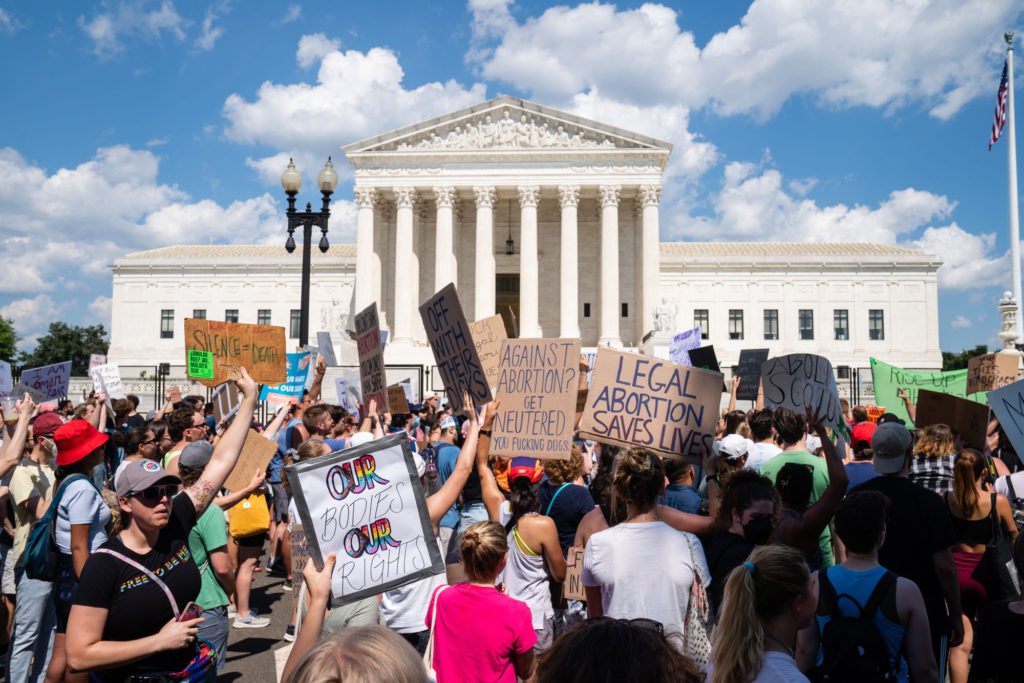
(Bloomberg) — After the Supreme Court’s decision overturning Roe v. Wade and ending the constitutional right to abortion, some have decided to share their stories publicly — on LinkedIn.

The platform is largely a public-facing resume — a place to record work experiences and put forth the most polished personas to potential employers — with the added bonus of creating connections among people in the same field. Now, some LinkedIn users are sharing abortion stories on the platform, and, by extension, with their bosses, employees, coworkers, friends and family.  A few of these posts have taken off, garnering tens of thousands of likes and countless comments. 

“That women are willing to use this platform to tell this particular story — that is groundbreaking,” said Kabrina Chang, professor of business law and ethics at Boston University’s Questrom School of Business. Other social media sites are places designed for people to share personal things like photos of their pets or what they had for dinner last night. “But LinkedIn people go to for one reason, and one reason only: Employment. Whether it’s to network, whether it’s to find a job, whether it’s to hire people, whether it’s to learn professional skills,” she said. 

The choice is, for many, an intentional one that isn’t without risk. The posts also come as privacy has emerged as one of the top concerns around companies reimbursing their employees to travel for an abortion.

“People have been fired and disciplined for things that they post on social media. This is a platform where not just your current employer, but potential employers will go to look for you,” Chang said. “That takes a tremendous amount of courage to do.”

Like the #MeToo movement that paved the way before it, it can be jarring to see such private details and raw emotions shared in such a public fashion. The posts personalize a widely cited statistic: One in four women will have an abortion by the age of 45. 

For Linda Kim, the decision to share her experience was monumental both because she’s kept it secret for over 20 years and also because, as a psychiatrist, part of her professional training is to be highly judicious with self-disclosure, she said in an interview.

Kim’s post has more than 140,000 likes on LinkedIn and over 3,500 comments. “It speaks to this desire for not feeling alone, for someone to say it out loud,” she said. “Other women have made this decision — another professional woman, another doctor.” Part of why it resonated may be that it helps break down some of the myths around someone who might need abortion as being young and irresponsible, she said.

Many of the messages Kim received privately are from people who are grateful she shared her story, as they didn’t feel they could.

She chose to share on LinkedIn as a way to convey that this issue can’t be compartmentalized at work. “I work mainly with professional men and women in my practice, and these are the issues that come up in their workplaces,” she said. “From depression and stress to family and IVF journeys and menopause, and all of that that comes with us in the workplace — we just have never been permitted to talk about it at work.”

Madison Butler took to LinkedIn the day the Supreme Court’s decision was announced. Her post laid out that abortion is health care and a human right. Butler said in an interview she felt a responsibility to be open about her experience since she has a platform and job security that many don’t.

“The reason I talk about my abortion here specifically is because I wouldn’t have been able to have the career I do without it,” Butler said.

As a human resource professional, one of her main goals is to show company leaders that people can’t simply shut the rest of their lives off when they’re at work. “Whether it’s Roe v. Wade, or Covid, or George Floyd, we’re just conditioned to think that I have to just smile and type and send my emails,” said Butler, a chief people officer for an Austin-based startup. “Unfortunately, that’s not how life works.” 

Some in leadership positions posted knowing the weight their disclosures could carry for their employees. At companies that have pledged to support workers who need to travel to access care, sharing an experience could make the difference for someone overcoming fears around sharing something so personal and stigmatized, said Chang, the Boston University Professor. 

For Aliisa Rosenthal, head of sales at OpenAI, the appeal of sharing stories on LinkedIn is that it’s one of the few social media platforms where you see content from people beyond those you follow. She wanted to reach people in her mostly male network who may not be exposed to stories about the serious medical risks that come with pregnancy on their own Facebook or Instagram feeds. 

“I am thrilled at the number of views and the conversations it has created,” Rosenthal said. “I hope that many men have had their bubbles rocked a bit.”

Still, not everyone is happy to see the posts. Many commenters argue the content isn’t appropriate for LinkedIn and would be better suited for a platform like Facebook, where personal stories — and partisan outrage — are the local currency. But for professionals like Kim, the psychiatrist, the posts represent a step toward acknowledging that humanity can’t easily be tucked away from nine to five.

“A lot of comments are like, why are you bringing this up on LinkedIn? This is a professional social media site, take it to Facebook or TikTok,” Kim said. “But actually, that’s the whole point — you’re missing the point.”

More stories like this are available on bloomberg.com

©2022 Bloomberg L.P.
El Salvador Buys More Bitcoin Despite 57% Loss and Debt Woes

(Bloomberg) — El Salvador’s President Nayib Bukele is doubling down on his bet on cryptocurrencies, despite a brutal selloff in the market over the past months. 

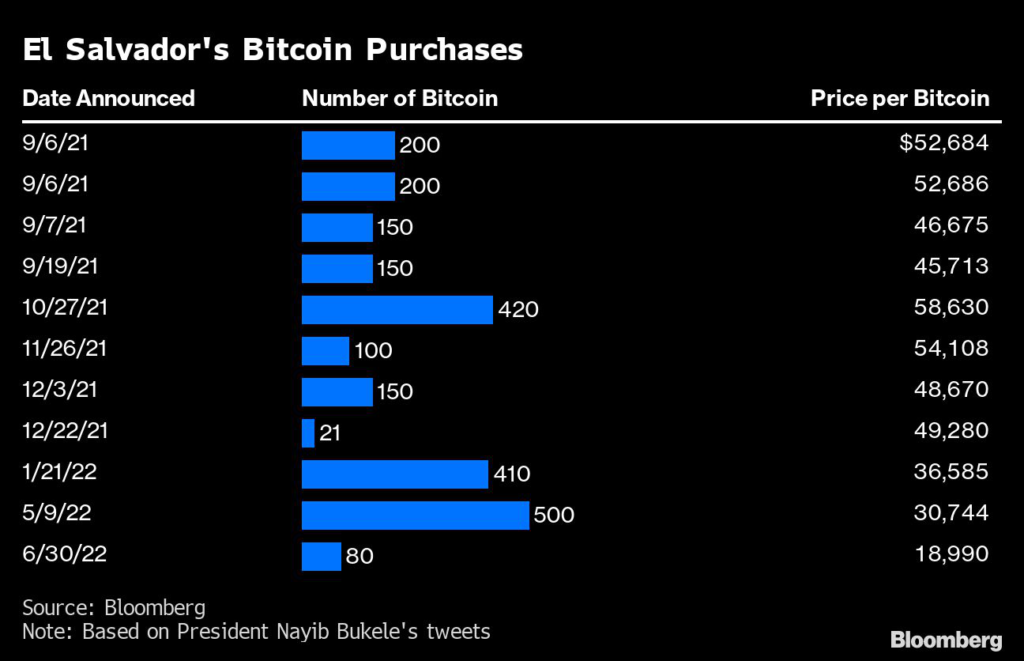
The government bought 80 Bitcoins on Thursday at the cost of $19,000 each, according to a tweet from Bukele. That brings the total amount the nation spent buying Bitcoin since it was approved as legal tender last year to $106.3 million, according to calculations by Bloomberg based on Bukele’s tweets. These holdings are now worth about $45.8 million, implying a 57% loss. 

Bitcoin has tumbled 63% since Bukele’s first purchase in early September of last year. The government doesn’t publish data on its cryptocurrency holdings. 

“It’s clear President Bukele’s bullishness is not diminished by Bitcoin’s near 60% year-to-date decline,” John Roque, technical analyst at 22V Research wrote in a note. “It won’t surprise us if he’s still bullish when bitcoin trades at our target of $10,000.”

El Salvador’s gamble on Bitcoin is exacerbating a debt crisis in the financially troubled country, which has been struggling to deal with wide fiscal deficits as an $800 million bond comes due in January. The average spread of the Central American nation’s dollar debt over US Treasuries widened about 10 percentage points to 27.04 points in the second quarter, according to JPMorgan indexes, the most in Latin America.

Concern over El Salvador’s ability to get the funding it needs to roll over looming debts pushed S&P Global Ratings to downgrade the nation to CCC+ this month, a move that put it on par with Ukraine and Argentina. Most of the nation’s dollar bonds now trade at around 35 cents on the dollar, deep in distressed territory.

(Updates value of El Salvador’s Bitcoin holdings in second paragraph, adds analyst comment in fourth paragraph.)

More stories like this are available on bloomberg.com

©2022 Bloomberg L.P.

EU Pledges $1.4 Billion in Climate Funding to Nigeria

(Bloomberg) — The European Union and development finance institutions will provide Nigeria with 1.3 billion euros ($1.4 billion) in funding aimed at cutting its reliance on oil. 

The funds for agriculture, climate and digital projects will help Africa’s largest oil producer, “achieve low carbon, resource efficient and climate resilient development, creating jobs for youth and economic growth,” Samuela Isopi, EU ambassador to Nigeria and the Economic Community of West African States, said at a conference in Lagos. 

Nigeria, Africa’s largest economy, is encouraging investments in agriculture and technology-based infrastructure to reduce its dependence on oil and accelerate growth. While crude contributes about 7% to the country’s gross domestic product, it accounts for nearly all foreign-exchange earnings and more than half of government revenue.

Read: Price Spike May Impoverish 15 Million Nigerians, World Bank Says

The funding will support 60 projects through to 2027, Isopi said in an interview. They include a fish farm in the southwestern Ogun State and a waste-to-energy initiative in the southern Cross River state, according to a document emailed by the EU. 


More stories like this are available on bloomberg.com

©2022 Bloomberg L.P.
TikTok Tells US Senators It’s Working on Data-Sharing Practices

(Bloomberg) — Video app TikTok Inc., in a letter to nine US senators who accused it of monitoring US citizens, said it is working to meet concerns over its data-sharing practices.

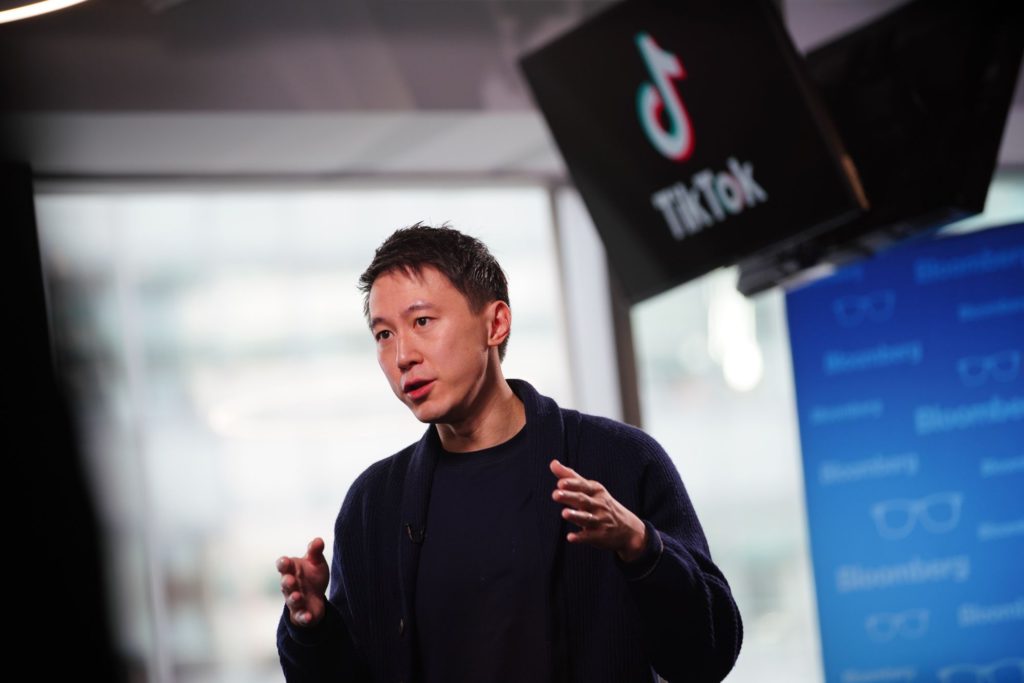
The Chinese-owned app aims “to strengthen data security around US user data,” TikTok Chief Executive Officer Shou Zi Chew said in the June 30 letter obtained by Bloomberg News. The process involves work with Oracle Corp. and Booz Allen Hamilton Holding Corp., Chew said.

Republican Senator Marsha Blackburn of Tennessee said Friday that the letter demonstrates why TikTok executives need to testify before lawmakers and explain its relationship to the ruling Chinese Communist Party, or CCP. 

“TikTok’s response confirms our fears about the CCP’s influence in the company were well founded,” Blackburn told Bloomberg. “The Chinese-run company should have come clean from the start, but it attempted to shroud its work in secrecy. Americans need to know if they are on TikTok, Communist China has their information.” 

Several senators, all Republicans, in a June 27 letter cited a report in Buzzfeed News that said TikTok’s US consumer data was accessed by company engineers in China. The lawmakers said in the letter that TikTok and its parent ByteDance Ltd. “are using their access to a treasure trove of US consumer data to surveil Americans.” The New York Times reported earlier on TikTok’s response.

The senators’ letter and pressure from a Republican member of the Federal Communications Commission “increase TikTok’s US political exposure,” Paul Gallant, an analyst with Cowen & Co., said in a note Friday.

A settlement with US authorities “is more likely than an outright ban,” Gallant said. “But we raise the chances of an eventual ban from 10% to 35%.”

Former President Donald Trump tried to ban the app and force ByteDance to sell TikTok’s US business over what he claimed were security risks. The action was challenged in court and President Joe Biden revoked Trump’s ban in June of 2021 and replaced it with his own executive order. 

In the US, TikTok has been installed 321.6 million times, according to SensorTower, which analyzes app growth.

More stories like this are available on bloomberg.com

©2022 Bloomberg L.P.
El-Erian Says Receding Liquidity Is Biggest Risk to Markets

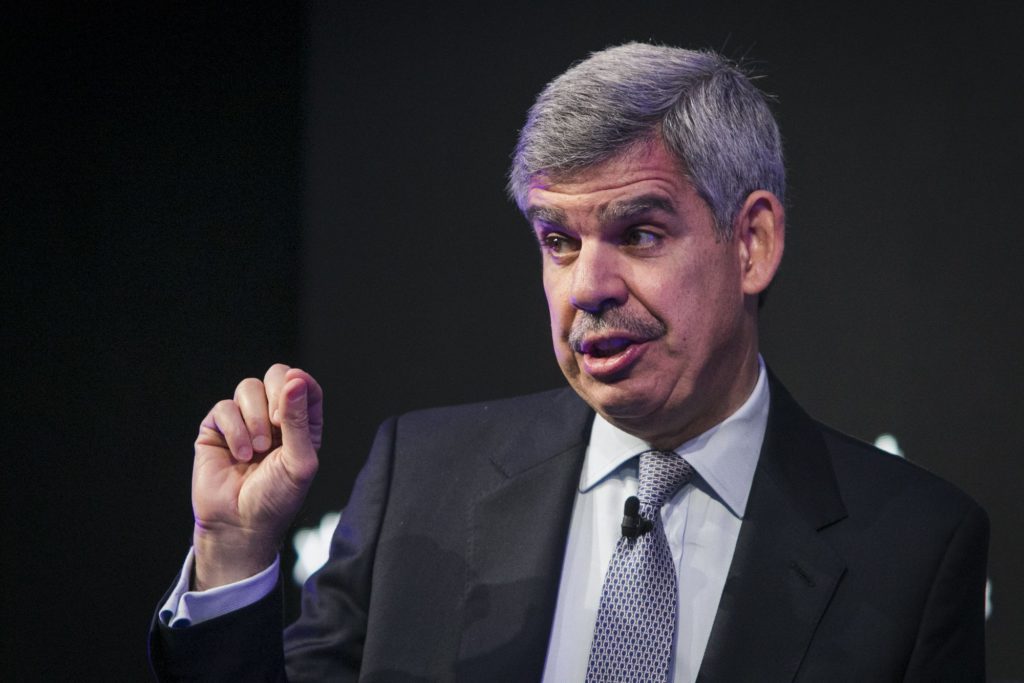
(Bloomberg) — Markets influencer Mohamed El-Erian says the potential evaporation of liquidity is a big risk to global markets and economies amid signs that capital is becoming more expensive and difficult to acquire.

“The one risk I’m really worried about is liquidity risk,” El-Erian told Bloomberg Television’s The Open on Friday. “We’re starting to see markets locked out of funding. Issuance in June was very low. Companies either were unwilling or unable to refinance themselves.”

The US high-yield bond market, for example, in June saw yields and spreads jump to a two-year high in the biggest monthly loss since the onset of the pandemic in March 2020. Volatility and the rising cost of debt kept borrowers away from the market.

Junk-bond issuance dropped to $25 billion in the last quarter, the lowest second-quarter supply since at least 2006, according to data compiled by Bloomberg. June volume was $10 billion, the slowest for the month since 2010, the data show.

“We need to look at issuance and make sure that that doesn’t freeze up,” El-Erian said.

The Federal Reserve has raised interest rates three times in 2022 and promises further increases to arrest the hottest inflation since the 1980s. El-Erian, the chair of Gramercy Fund Management and chief economic adviser at Allianz SE, says that the central bank likely will stick to its plan, slowing the economy, raising the possibility of a recession and presenting “difficulties companies may face in getting new capital.”

Financial assets worldwide have been pummeled this year as central banks tighten policy to deal with rising prices on goods and services. El-Erian, who is also president of Queens College, Cambridge and a Bloomberg Opinion columnist, sees a “sequential move” in markets from inflation/interest-rate risk earlier this year, to credit risk more recently to possible liquidity risk going forward.

 “On my radar screens are three sets of potential — I want to stress, potential — liquidity strain,” he said. “One is in peripheral markets that somehow contaminate the main markets. So far crypto hasn’t, so far EM hasn’t. The second part of risk is simply the inability to raise funding at any cost. We’ve seen high yield go through this but high yield is less important than if it migrates up the quality ladder.”

The closely followed bond-market strategist pointed to one other risk, “which I’m surprised people aren’t talking about.”

“We would have expected major rebalancing flows by now to help equities” after a bad second quarter, El Erian said, and wondered whether markets “are being upset by outflows? Or is it that investors are less willing to rebalance in favor of risk assets?”

More stories like this are available on bloomberg.com

©2022 Bloomberg L.P.
GM Sees Profit Down on Inventory Woes, Reaffirms ’22 Outlook

(Bloomberg) — General Motors Co. expects second-quarter sales and profit to take a hit due to supply-chain problems, but the automaker said it can make up for delayed production later this year and reaffirmed its full-year guidance. 

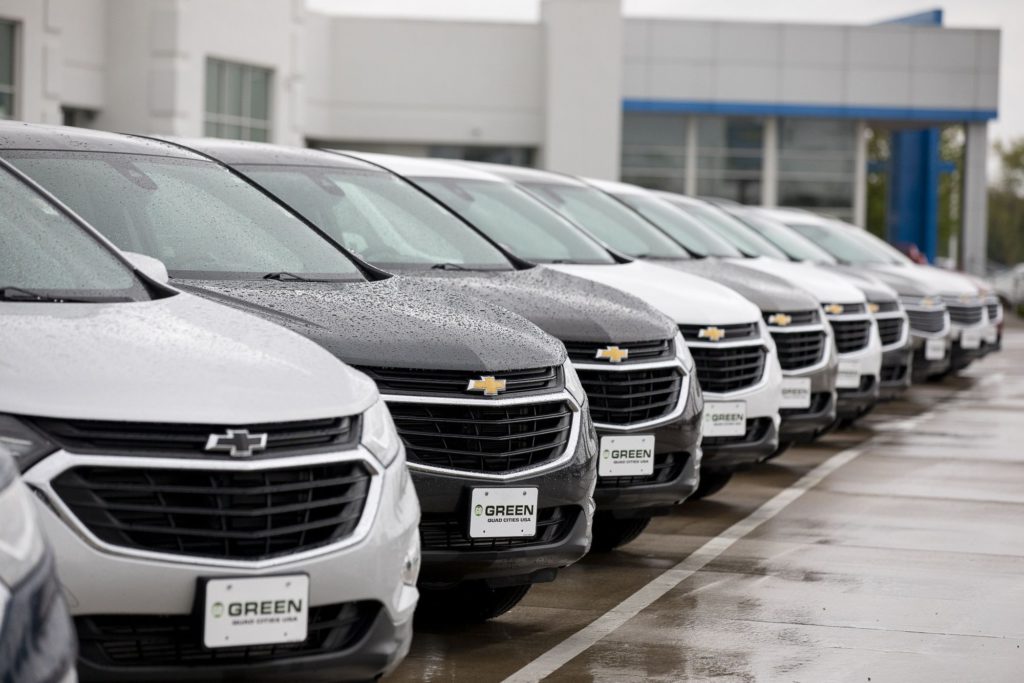
GM had 95,000 vehicles in inventory as of June 30 — most of them built in June — that can’t be sold until certain semiconductors arrive to finish assembly, according to a Friday securities filing. The carmaker expects to finish building those vehicles by the end of the year, allowing the company to keep its full-year guidance. 

The semiconductor shortage has eased, but carmakers continue to wrestle with the availability of certain chips. The shortfall has forced GM and others to either cut production at times or start assembling vehicles without some chips and finish them when supplies arrive.  

GM said second-quarter sales fell 15% due to production and supply issues. As big a drop as that is, it’s a sign of improvement from the second half of last year when supply-chain problems caused a sales shortfall of more than 40%.

Detroit-based GM said second-quarter profit will come in between $1.6 billion and $1.9 billion; the average of analysts’ estimates is $2.4 billion. 

Despite the hit to quarterly sales, GM is sticking to its expectations of 2022 net income between $9.6 billion and $11.2 billion, adjusted operating profit of $13 billion to $15 billion and adjusted earnings of $5.76 to $6.76 a share. 

Easing Shortage

The second-quarter results are a sign that domestic automakers are starting to get a handle on the chip shortage, said Michelle Krebs, analyst with Cox Automotive. GM was able to temper the sales decline by building more heavy-duty pickup trucks, which helps commercial customers, and more of the Chevy Equinox, which sells to middle-income buyers.

The company expects its market share to be up 1 percentage point in the quarter to 16.3%. GM will likely retake the lead in US sales from Toyota Motor Corp., Cox said this week.

“We think they’ll beat Toyota,” Krebs said. “Their supply was a lot better. Ford got hit by the shortage first, then GM. Now the Asians are getting hit.”

GM’s top-selling Chevrolet brand had 41 days of inventory in mid-June, Krebs said. Ford, which reports sales on July 5, had the same amount, while the industry average is 28 days. Toyota has just 17 days supply, she said.

Inventory remains tight relative to historic levels, and some automakers are boosting production. In the U.S., the industry is carrying just over 1 million vehicles. This time in 2020, carmakers had 2.5 million units in stock, Cox said.

Automakers have kept profits up by charging more for vehicles during this period of scarcity. The average new car now costs more than $46,000, a record.

GM shares were temporarily halted in pre-market trading before the results were released. The were down fractionally to $31.57 at 10:44 a.m. in New York. 

(Updates with analyst’s commentary starting in the seventh paragraph.)

More stories like this are available on bloomberg.com

©2022 Bloomberg L.P.
Meditation App Headspace Relieved Stress for Everyone but Its Own Employees, Say Former Staff

(Bloomberg) — Before the pandemic relegated most meetings to video conference, employees at the mental wellness app Headspace gathered each morning at 10 a.m. for a guided meditation led by the company’s co-founder, a charismatic Brit and former monk. They sat on wooden benches in Headspace’s airy, sun-drenched office in Santa Monica, California, taking deep, calming breaths.

But the rest of the workday at Headspace was often less Zen. While the company’s raison d’etre was to promote mental health and well-being, many staffers described working intense hours, skipping family functions to meet deadlines and a high rate of turnover. In interviews with more than 20 people who worked at the startup from before the pandemic through earlier this year, employees depict an intense and sometimes grueling work environment.

“I absolutely had to go to therapy,” said one former staffer, who like other people who talked to Bloomberg, spoke on condition of anonymity in order to preserve their future job prospects. Three other people also said they started seeing psychiatrists to help process the stress of working at the company.

Headspace was founded with a mission “to improve the health and happiness of the world.” But startups with lofty goals can often find themselves in awkward positions when they reconcile those values with actually making money. At Headspace, new recruits were sold the idea of a gentler, more mindful workplace, only to find that the company demanded the same grinding schedules they heard about at other startups. “This is the downside of monetizing meditation,” said Diana Winston, director of mindfulness education at the Mindful Awareness Research Center at the University of California, Los Angeles. “It’s not like we’re going to stop the forces of capitalism.”

The company is now called Headspace Health after a merger with wellness app Ginger completed late last year — going from about 300 employees before the merger to 1,100 today. The startups were valued at $3 billion combined at the time of the deal. “Our employees are central to our mission and integral to our success,” Headspace Health said, disputing the characterization of its culture as unusually demanding. “At Headspace Health we remain focused on living out our mission and values, and best serving all of our stakeholders—most importantly, our own employees.” 

Simon Perry, a former human resources executive at Headspace, said that the company’s mission was part of what drove employees to work hard. It was challenging to log off at the end of the work day, knowing that Headspace’s app was helping users who may be going through difficult times, he said. “I had a real hope and heart for growing a business through the lens of our mindful practices,” Perry said. He said he pushed himself, and his team, to ensure they were still finding work-life balance, but “in any startup, it is challenging.”

Today, as the economy reels and venture capitalists scale back investments, funding for digital health companies dropped 36% in the first quarter of this year compared to the previous quarter, according to the research firm CB Insights. Globally, average weekly downloads of the Headspace app in 2022 fell by almost half from highs in 2020, the year the pandemic began and the US saw a divisive presidential election that strained Americans’ mental reserves. But there are still plenty of people looking for some peace through meditation: Headspace has been downloaded more than 2.5 million this year alone, according to Data.ai.

Headspace got its start in 2010, founded by Rich Pierson, who worked in the advertising industry, and Andy Puddicombe, the former Buddhist monk with a degree in circus arts. Its programming walks users through meditations and other calming exercises. Headspace was one of the first tech companies to become popular for melding wellness and an iPhone app, promising the ability to be more mindful, calm and present. 

Within the company, however, there was no mistaking that Headspace was first and foremost a business operating in a competitive market, even in the early days, employees say. In 2017, the startup gathered staff for the unveiling of a wall mural emblazoned with new corporate slogans, according to one person who was present. The person recalled that “kindness” had dropped off the official list of values. The new ones were “courageous heart,” “curious mind” and, notably, “selfless drive.” Asked for comment, Headspace Health said that after the merger it updated its corporate values, which now include seeking out diverse perspectives and acting with integrity. 

During the pandemic, demand for Headspace’s services surged, with millions of people downloading the app, Data.ai numbers show. The company’s monthly bookings shot up by an average of 14% to 18% in 2021, according to documents viewed by Bloomberg.

At the same time, workplace demands at Headspace went into overdrive, former employees said. Working from home, some people described sitting through back-to-back Zoom meetings for 12 or more hours. One person remembers crying along with colleagues over video conference more than once at the end of the day because they hadn’t had time to eat lunch or use the bathroom.

To be able to fit in a meal during marathon meetings, another former employee developed a new habit that wasn’t necessary in other jobs before or since. Over the weekends, this person would prepare small lunch containers—brown rice, chicken and vegetables apportioned for every single workday—an attempt to eat healthy to compensate for a lack of physical activity during days of as many as 20 calls. The person said they would briefly turn off their camera during meetings to scarf down the meal.

The company did make some efforts to lessen the stress, including scheduled meditation breaks, no-meeting Fridays and “Mind Days” — a Friday off every other week. However, because the actual workload didn’t change, many employees simply worked through the days off, two people said. 

During the Black Lives Matter protests, as many companies grappled with issues of diversity, worries over inclusion at Headspace came to the fore. The topic of diversity at the startup was the subject of a tearful meeting in 2018, said one person who was there. Some employees felt the app had been slow to add diverse teachers—it had relied on Puddicombe’s voice alone for years—and hadn’t included a woman until 2019. In 2020, more than 100 workers, or about a third of Headspace’s workforce, signed a petition calling for increased representation at the company and on the app.

Soon after, Headspace announced that John Legend would be its chief music officer and debuted a partnership with comedian Kevin Hart’s production company. And as it added more teachers outside of Puddicombe, the company improved representation on its app: In a statement provided to Bloomberg, Headspace Health said 60% of teachers in its app identify as female and 40% identify as non-White. The company also recently elevated Wizdom Powell, its diversity chief and a Black woman, to an executive role. In the statement, Headspace Health said, “As we grow and scale our business, we continue to build a diverse culture where our employees feel included and empowered to show up fully as themselves and do their best work.”

In recent years, Headspace has seen significant management turnover. One former staffer described having five bosses in two years because of turnover and reorganizations. Another person said they had eight bosses in three years. The company got a new chief executive officer in early 2021, only to see that person replaced by the end of the year after the merger. The upheaval took a toll: Some employees described spending time on projects only to have them abruptly cancelled, partly because people kept leaving. One initiative, set to launch on a Monday at 8 a.m., was shut down the night before, one person said. Another person said they worked nights and weekends with teammates for more than three months on a project that was ultimately canned.

Employees took to the anonymous company rating service Glassdoor to air their grievances. One person posted a review titled: “WORKING HERE WILL GIVE YOU ANXIETY!!!” For some time, Perry, the human resources executive, responded to negative reviews, including this one. He seemed to acknowledge there was room for Headspace to improve. The company was working on communication and decision-making processes “in the hope that we can support better ways of working here,” he wrote.

Responding to a comment that Headspace was “not how it seems from the outside,” Perry wrote, “With any scaling startup, we need to constantly remind ourselves of the importance of keeping a work-life balance.” Perry left Headspace in April.

Last summer, Headspace announced the merger with Ginger, a startup that offers mental health coaches who respond over text message. As of the month after the deal closed, attrition at Headspace was 25% for the year, according to documents viewed by Bloomberg. That’s higher than the sub-20% attrition rate for tech companies in 2021 reported in a survey by the investment firm Iconiq Growth. Headspace’s goal at the time was attrition of 15%. Ginger’s attrition rate was 8% before the merger and went up to 12% around the time of the combination, according to the documents. 

Headspace Health said in a statement that turnover at the now-combined company is down to 10% and that any merger will bring change and transition. “We are not immune to the same pressures that other companies feel at this time,” Headspace Health said. “It’s why we continue to add additional benefits and programs” for staff. 

Today, some former Headspace employees say they no longer use the app—instead of being calming, it’s now triggering. One ex-employee, who described starting the day at 6:30 in the morning and ending it well into the night, said they often missed children’s performances and doctors’ appointments. When they left the company their family rejoiced. Since then, now at a new job, this person said they talked to a therapist about how to set boundaries between work and life. So far, they said their mental health has improved.

More stories like this are available on bloomberg.com

©2022 Bloomberg L.P.
US Manufacturing Growth Weakens to Two-Year Low as Orders Slump

(Bloomberg) — A measure of US manufacturing activity weakened in June to a two-year low as new orders contracted, restrained by lingering supply constraints and some softening in demand.

The Institute for Supply Management’s gauge decreased to 53 last month from 56.1 in May, according to data released Friday. Readings above 50 indicate expansion. The figure was weaker than most economists’ estimates in a Bloomberg survey, which had a median projection of 54.5.

The group’s index of new orders dropped nearly 6 points to 49.2, the poorest result since May 2020, when the economy was digging its way out of the pandemic-induced recession. Shrinking orders come as consumer spending slows under the weight of inflation and inventories pile up.

The ISM gauge of manufacturer inventories ticked up to 56, near the highest reading since 2010.

Timothy Fiore, chair of ISM’s Manufacturing Business Survey Committee, said that manufacturing growth was “held back by supply chain constraints,” with respondents noting that and pricing were their biggest concerns.

Fifteen manufacturing industries reported growth in June, led by apparel, textiles, printing and computer and electronic products.

Stocks erased gains after the release, while Treasuries extended their advance and the dollar strengthened.

The results are consistent with several regional Federal Reserve bank surveys that show a clear pullback in June factory activity. Gauges of manufacturing in Texas and in the Fed districts of Philadelphia and Richmond dropped to the lowest levels since May 2020.

Select ISM Industry Comments

“Backlog is high, but incoming orders slowing this month.” – Computer & Electronic Products

“New orders have stabilized and not increased.” – Chemical Products

“Our suppliers are experiencing a softening of orders. We are still running at the same high level we did throughout 2021 and in early 2022.” – Machinery

“Business is still steady. Some customers are pushing orders out because they have too much inventory.” – Fabricated Metals

“We are hearing from customers that their inventories are high, and sales are coming down. We expect orders to decline on the coming months until inventories are leveled properly against demand.” – Apparel

“Orders and production continue to be strong, but material availability is holding us back. Cannot run enough hours to eat into the backlog.” – Electrical Equipment & Appliances

“Supply seems to be settling to some degree, but what it is settling into remains in question.” – Primary Metals

Data on Thursday showed US inflation-adjusted consumer spending fell in May for the first time this year, reflecting a drop in outlays for goods.

In a sign that supply chains and capacity constraints appear to be easing, ISM’s measures of delivery times and backlogs both declined in June to the lowest levels since 2020. Meanwhile, the purchasing managers group’s production index climbed to a four-month high.

And for a third straight month, a gauge of price paid by producers declined, suggesting costs of raw materials are starting to ease. However, the index remains elevated and concerns about high petroleum prices linger.

The ISM’s employment index fell to the lowest since August 2020, suggesting firms are struggling to find workers.

(Adds graphic)

More stories like this are available on bloomberg.com

©2022 Bloomberg L.P.
Larry Summers Says Risk of 2022 Recession Climbing, May Damp Inflation

(Bloomberg) — Former Treasury Secretary Lawrence Summers said that there’s an increasing risk the looming recession he’s anticipated will start sooner, in 2022, and that inflation may cool as a result.

“The risks of a 2022 recession are significantly higher than I would have judged six or nine weeks ago,” Summers told Bloomberg Television’s “Wall Street Week” with David Westin. “If the economy did go into recession in the next six to nine months, then you’d probably see a reduction in inflationary pressures.”

Data this week showed that consumers have been scaling back their purchases after enduring an ever-increasing climb in inflation over the past year. That’s seen economists mark down their estimates for the economy, with some cautioning that it’s possible gross domestic product might register a second straight drop for the second quarter.

Read More: Economists Sour on US Outlook After Spending Stumbles

The scenario of an economic downturn caused by a “self-fulfilling process coming out of the high inflation and reductions in people’s incomes” is looking more likely now, said Summers, a Harvard University professor and paid contributor to Bloomberg Television.

There’s perhaps a 50-50 chance — “maybe it’s a bit less than that” — that GDP shrank in both the first and second quarters of this year, Summers said. That would meet the textbook definition of a recession.

Summers has for months predicted that inflation — which has been running at over 8%, the fastest in four decades — would only come back down toward the Federal Reserve’s 2% target with an economic downturn. That could be caused either by Fed interest-rate hikes or by a weakening in the economy, he’s said.

If the US does enter a recession, that would likely prompt policy makers to moderate their tightening, Summers said.

“You’d see the Fed probably feel that it had to push rates up less” than if strong growth and pressure on wages continued, he said.

An increasing number of retailers, along with semiconductor firms, have been reporting declining demand and a build-up in inventories, Summers noted. That will lead to sales and to reduced production, he added. 

Read More: Micron’s Warning on Cooling Demand Weighs on Global Chip Stocks

The former Treasury chief also indicated that, despite talk of deglobalization and the price pressures that such a trend may cause, he’s confident that central banks will ultimately get inflation rates back to their target.

The idea that “it’s not going to be possible for central banks to achieve low inflation and meet their inflation targets — that would not be an idea that I would subscribe to. It may be more difficult, it may require them to be resolute, but I don’t think they’re going to be unable to meet their inflation targets,” he said.

More stories like this are available on bloomberg.com

©2022 Bloomberg L.P.
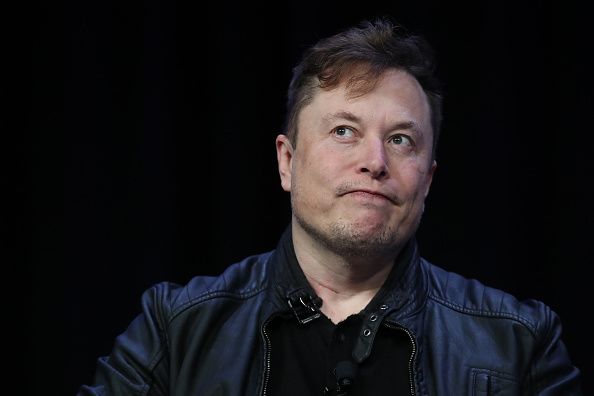
Richest Billionaires Lose $1.4 Trillion in Worst Half Ever

(Bloomberg) — Elon Musk’s fortune plunged almost $62 billion. Jeff Bezos saw his wealth tumble by about $63 billion. Mark Zuckerberg’s net worth was slashed by more than half.

All told, the world’s 500 richest people lost $1.4 trillion in the first half of 2022, a dizzying decline that marks the steepest six-month drop ever for the global billionaire class.

It’s a sharp departure from the previous two years, when the fortunes of the ultra-rich swelled as governments and central banks unleashed unprecedented stimulus measures in the wake of the Covid-19 pandemic, juicing the value of everything from tech companies to cryptocurrencies.

With policy makers now raising interest rates to combat elevated inflation, some of the highest-flying shares — and the billionaires who own them — are losing altitude fast. Tesla Inc. had its worst quarter ever in the three months through June, while Amazon.com Inc. plummeted by the most since the dot-com bubble burst.

Though the losses are piling up for the world’s richest people, it only represents a modest move toward narrowing wealth inequality. Musk, Tesla’s co-founder, still has the biggest fortune on the planet, at $208.5 billion, while Amazon’s Bezos is second with a $129.6 billion net worth, according to the Bloomberg Billionaires Index.

Bernard Arnault, France’s richest person, ranks third with a $128.7 billion fortune, followed by Bill Gates with $114.8 billion, according to the Bloomberg index. They’re the only four that are worth more than $100 billion — at the start of the year, 10 people worldwide exceeded that amount, including Zuckerberg, who is now 17th on the wealth list with $60 billion.

Changpeng Zhao, the crypto pioneer who debuted on the Bloomberg Billionaires Index in January with an estimated fortune of $96 billion, has seen his wealth tumble by almost $80 billion this year amid the turmoil in digital assets.

Contrarian Impulse

Still, the billionaire class has amassed so much wealth in recent years that not only can the vast majority withstand the worst first half since 1970 for the S&P 500 Index, but they’re likely looking for bargains, said Thorne Perkin, president of Papamarkou Wellner Asset Management.

“Often their mindset is a bit more contrarian,” Perkin said. “A lot of our clients look for opportunities when there’s trouble in the streets.”

That held true in the first half of the year in some of the most distressed corners of the global financial markets.

Vladimir Potanin, Russia’s wealthiest man with a $35.2 billion fortune, acquired Societe Generale SA’s entire position in Rosbank PJSC earlier this year amid the fallout from Vladimir Putin’s invasion of Ukraine. He also bought out sanctioned Russian mogul Oleg Tinkov’s stake in a digital bank for a fraction of what it was once worth. 

Sam Bankman-Fried, chief executive officer of crypto exchange FTX, bought a 7.6% stake in Robinhood Markets Inc. in early May after the app-based brokerage’s share price tumbled 77% from its hotly anticipated initial public offering last July. The 30-year-old billionaire has also been acting as a lender of last resort for some troubled crypto companies.

The most high-profile buyout of all belonged to Musk, who reached a $44 billion deal to buy Twitter Inc. He offered to pay $54.20 a share; the social-media company’s stock traded at $37.44 at 10:25 a.m. in New York.

The world’s richest man said in an interview with Bloomberg News Editor-in-Chief John Micklethwait last month that there are “a few unresolved matters” before the transaction can be completed.

“There’s a limit to what I can say publicly,” he said. “It is somewhat of a sensitive matter.”

(Updates with Changpeng Zhao’s wealth decline in seventh paragraph.)

More stories like this are available on bloomberg.com

©2022 Bloomberg L.P.

Close Bitnami banner
Bitnami
