Bloomberg

GM Sees Profit Dipping on Inventory Woes, Reaffirms Outlook

(Bloomberg) — General Motors Co. expects second-quarter sales and profit to take a hit due to supply chain problems, but the automaker said it can make up for delayed production later this year and reaffirmed its full-year guidance. 

GM had 95,000 vehicles in inventory as of June 30 — most of them built in June — that can’t be sold until certain semiconductors arrive to finish assembly, according to a Friday securities filing. The carmaker expects to finish building those vehicles by the end of the year, which will keep its full-year guidance intact. 

The semiconductor shortage has eased, but carmakers continue to wrestle with availability for certain chips. The shortfall has forced GM and others to either cut production at times or start vehicles without some chips and finish them when supplies arrive.  

GM said second-quarter sales fell 15% due to production and supply issues. As big a drop as that is, it’s a sign of improvement when compared to the second half of last year when supply chain problems caused a sales shortfall of more than 40%.

The company said it expects market share to have risen 1 percentage point in the quarter to 16.3%. GM will likely retake the lead in US sales from rival Toyota Motor Corp., researcher Cox Automotive said this week.

Detroit-based GM said second-quarter profit will come in between $1.6 billion and $1.9 billion; the average of analysts’ estimates is $2.4 billion. 

Despite the hit to quarterly sales, GM is sticking to its expectations of 2022 net income between $9.6 billion and $11.2 billion, adjusted operating profit of $13 billion to $15 billion and adjusted earnings of $5.76 to $6.76 a share. 

The shares were temporarily halted in pre-market trading before the news was released. The shares rose as much as 3.5% at the New York open. 


More stories like this are available on bloomberg.com

©2022 Bloomberg L.P.

Micron’s Warning on Cooling Demand Weighs on Global Chip Stocks

(Bloomberg) — Global semiconductor stocks were under pressure on Friday after Micron Technology Inc.’s profit warning that flagged demand was cooling for chips used in computers and smartphones.

The largest US maker of memory semiconductors said it is moving swiftly to stave off a chip glut. That’s a big reversal in trend in an industry that suffered from a crunch since 2020, when the pandemic created a combination of high demand and supply-chain bottle necks hurting production of everything from home appliances to cars.

Fears of an impending global recession and rising levels of inflation are forcing consumers and businesses to rein in spending. Worldwide PC shipments are on pace to decline 9.5% in 2022, according to research firm Gartner Inc.

“The second half of the year is off to a rather inauspicious start following downbeat commentary from Micron, which had negative implications for smartphones, data centres and overall demand for consumer discretionary goods,” said Jim Dixon, a senior equity sales trader at Mirabaud Securities. “The disappointing guidance might be the prelude to an ‘earnings recession’.”

Adding to woes was a Digitimes Asia report that the world’s largest contract chipmaker, Taiwan Semiconductor Manufacturing Co., has seen its major clients cut their chip orders for the rest of 2022.

The Bloomberg Asia Pacific Semiconductors Index fell for a third day to its lowest since July 2020. TSMC and South Korean memory-chip giant SK Hynix Inc. both dropped more than 3.5%.

In Europe, chip tool makers including ASML Holding NV slid as much as 4.9% before paring losses. Chipmakers from Infineon Technologies AG to STMicroelectronics NV also fell, sending the Stoxx 600 Tech Index down for a fourth day.

Micron forecast fourth-quarter sales of about $7.2 billion, well below the analyst estimate of $9.14 billion. The grim outlook shone the light on two key markets for Micron’s memory chips: computers and smartphones.

The revenue guidance miss of about $2 billion “was attributed to weakness in both mobile and PCs as well as demand and supply issues in China,” Piper Sandler analyst Harsh Kumar wrote in a note, where he slashed his price target to a Street low. “The company is taking immediate action to reduce supply growth and planning for reduced levels of bit supply growth in 2023.”  

Shares of Micron fell as much as 4.7% on Friday, while fellow chipmakers like Nvidia Corp., Qualcomm Inc., Intel Corp. and Advanced Micro Devices Inc. also traded lower. 

(Updates stock moves throughout.)

More stories like this are available on bloomberg.com

©2022 Bloomberg L.P.

China Tech Rally Sends Insiders Rushing for Exits: Tech Watch

(Bloomberg) — No one would have predicted it a few months ago, but Chinese technology stocks now are a rare pocket of strength in global markets. A wave of selling by corporate insiders is calling into question how far the rally can go. 

JD.com Inc. insiders were net sellers of shares in May and June, the first back-to-back selling since November, Bloomberg-compiled data show. The major backer of Tencent Holdings Ltd. said this week it will further cut its stake, while SenseTime Group Inc. nosedived after cornerstone investors offloaded shares at the first opportunity since the artificial intelligence giant’s initial public offering in December.

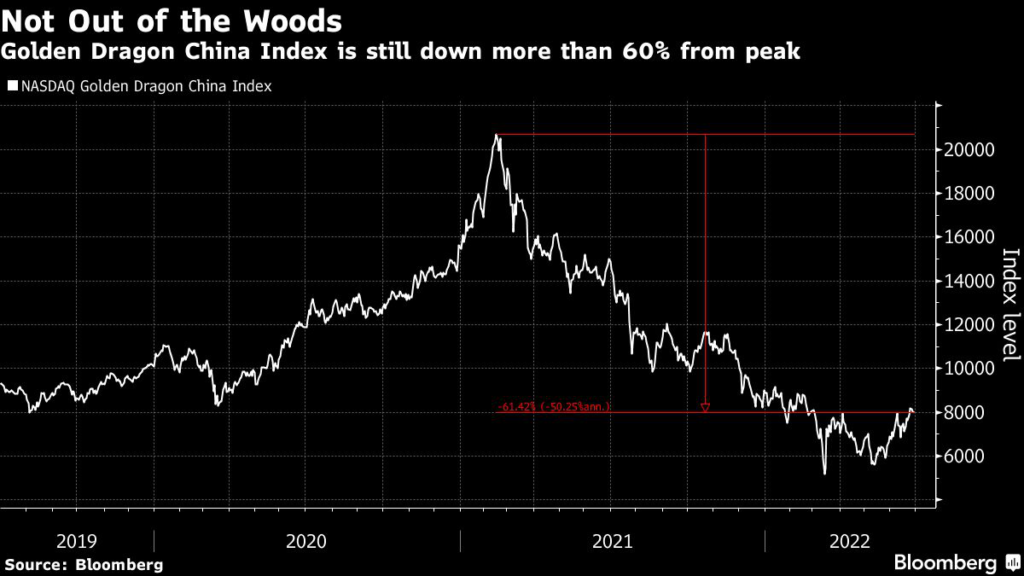
The divestitures add to the pressure on Chinese tech stocks after they staged a strong comeback from a multiyear trough thanks to a softening regulatory stance and an easing of Covid-19 restrictions. The Nasdaq Golden Dragon China Index of U.S.-listed companies this week is on track to post its first weekly decline since mid-May. 

While insider selling isn’t always a bad sign, it’s closely watched as a barometer of shifts in the attitudes of presumably well-informed investors. 

Insider selling “could be an overhang for some of the stocks in the near term and will affect sentiment,” said Jasmine Duan, investment strategist at RBC Wealth Management. 

To be sure, a growing chorus of Wall Street banks and investors is turning more sanguine on China’s tech sector. China is the best place to buy in the sector right now because valuations in the US remain too high, the global head of asset allocation research at Invesco Ltd. said this week.

Yet some industry insiders have been painting a more downbeat picture, warning that the enormous growth rates of the past two decades aren’t coming back. The Golden Dragon gauge is still about 60% below its 2021 record even after the recent surge.

The regulatory uncertainty clouding China tech “hasn’t gone away, while valuations have clearly become very cheap, perhaps for a good reason,” said Sid Choraria, a portfolio manager at SC Asia.

To counter the negative impact of insider selling, some companies have also stepped up share buybacks. In the two days following major shareholder Prosus NV’s announcement of the planned stake sale, Tencent bought back 1.66 million shares, according to stock exchange filings.

Tech Chart of the Day

Alibaba Group Holding Ltd., the biggest company in the Golden Dragon index, has surged 46% since the benchmark bottomed in March. The rally ran out of steam in June, though, as the shares bumped into the 200-day moving average. The e-commerce giant’s US-listed shares are up 1% on Friday.   

Top Tech Stories

  • Micron Technology Inc. gave a surprisingly downbeat forecast for the current quarter after demand for phones and computers weakened, but vowed to move aggressively to stave off a glut of semiconductors.
  • The Apple Inc. lawyer who was once responsible for enforcing the company’s insider trading policy admitted he used his access to draft SEC filings to personally profit.
  • Elon Musk’s SpaceX won permission from US regulators to offers its Starlink broadband-from-space service to users in vehicles, vessels and aircraft.
  • Oracle Corp., one of the largest US tech employers, has strengthened worker benefits for abortion access while remaining publicly silent on the issue.
    • Amazon.com Inc., AT&T Inc., and Walt Disney Co. have said that they will help cover travel costs for employees who need care that isn’t available where they live. At the same time, state campaign-finance records show that the companies or company affiliates have financially supported leaders who are trying to reduce access to abortions.
  • Apple raised the prices of its iPhones and iPads in Japan in an uncommon move to account for the yen’s precipitous drop in value this year.
  • Google reached an agreement with US developers that will let consumers subscribe to services outside the company’s Play Store, marking the latest shift for an app-store economy that it dominates alongside Apple Inc.
  • Uber Technologies Inc. said it received 3,824 reports of sexual assault and misconduct across five categories on its ride-hailing app in 2019 and 2020, reflecting a 38% decline in the rate of such reports since its first safety report published two and a half years ago.

(Updates stock moves in last paragraph.)

More stories like this are available on bloomberg.com

©2022 Bloomberg L.P.

Morrison-Led Group to Buy FiberLight for About $1 Billion

(Bloomberg) — A consortium led by HRL Morrison & Co. said it agreed to acquire US fiber infrastructure provider FiberLight, marking the firm’s first North American digital-infrastructure bet.

Superannuation fund Australian Retirement Trust and a client of UBS Asset Management are part of the consortium that agreed to buy FiberLight from Thermo Companies, the companies said in a statement Thursday. California State Teachers’ Retirement System is the UBS client, and the transaction values FiberLight at about $1 billion including debt, according to people with knowledge of the matter, who asked to not be identified because the financial details are private. 

Morrison plans to accelerate the expansion of Atlanta, Georgia-based FiberLight’s network, which currently comprises 18,000 route miles of fiber infrastructure, which services states including Texas, Virginia and Florida. 

“The US needs to build significantly more fiber to service areas which do not have high-speed access,” Perry Offutt, Morrison’s head of North America, said in an interview, adding that FiberLight has opportunities to grow organically or through acquisitions. “We can consolidate a pretty fragmented industry,” Offutt added.

Morrison is an ideal partner given a “shared belief that fiber infrastructure is the key to bridging the digital divide and rapid expansion required to meet the extraordinary long-term demand,” FiberLight Chief Executive Officer Christopher Rabii said in an emailed statement. 

Representatives for Morrison and UBS Asset Management declined to comment on the financial details of the deal. A Calstrs representative declined to comment and a Thermo representative wasn’t immediately available to comment.

Morrison, which opened a New York office last year and had over $17 billion in assets under management as of March 31, has made two other North American bets: Longroad Energy and Clearvision Ventures. Outside the region, the firm is a long-time digital infrastructure investor, having backed companies including Fore Freedom, Canberra Data Centre, Vodafone New Zealand and Amplitel Towers. Earlier this year, the firm teamed up with Brookfield Infrastructure Partners to acquire Australian fiber company Uniti Group Ltd. 

Digital infrastructure has been an area of focus for many investment firms, pension funds and sovereign wealth funds, in part due to the perceived stability of cash flows amid buoyant demand. 

(Updates with comment from Calstrs representative in 6th paragraph.)

More stories like this are available on bloomberg.com

©2022 Bloomberg L.P.

CFTC Sues Over Alleged $1.7 Billion Fraud Involving Bitcoin

(Bloomberg) — The main US derivatives regulator is the latest authority to seek penalties from a Bitcoin trader that’s been accused by South African officials of operating a massive crypto Ponzi scheme. 

The Commodity Futures Trading Commission said Thursday that Mirror Trading International Proprietary Ltd. and its leader Cornelius Johannes Steynberg between March 2018 and 2021 bilked at least 23,000 Americans out of Bitcoin investments that were worth $1.7 billion at the time. 

Chavonnes Cooper, one of the liquidators appointed for Mirror Trading, said they were reviewing the CFTC lawsuit. Steynberg couldn’t be reached for comment.

Mirror Trading operated as “an international fraudulent multilevel marketing scheme” that collected money from people to invest in an unregistered commodity pool, the CFTC said in complaint filing in federal court in Texas. 

The CFTC, which is seeking restitution for investors and a range of penalties, is the latest government agency to take legal action against Mirror Trading and Steynberg. According to the regulator, Steynberg is a fugitive from South African law enforcement and was detained in Brazil. 

According to the CFTC, Steynberg told participants and prospective investors that the company had an artificial intelligence bot and a team to trade and earn high profits for the pool’s account. But the company misappropriated almost 29,000-plus Bitcoin it received from participants, according to the CFTC. In fact, the agency’s complaint says the firm deposited just over 1,800 Bitcoin for trading and lost around a third of them. There also was no bot, the regulator said.  

(Updates with comment from Mirror Trading liquidator in third paragraph.)

More stories like this are available on bloomberg.com

©2022 Bloomberg L.P.

Richest Billionaires Lose $1.4 Trillion in Worst Half-Year Ever

(Bloomberg) — Elon Musk’s fortune plunged almost $62 billion. Jeff Bezos saw his wealth tumble by about $63 billion. Mark Zuckerberg’s net worth was slashed by more than half.

All told, the world’s 500 richest people lost $1.4 trillion in the first half of 2022, a dizzying decline that marks the steepest six-month drop ever for the global billionaire class.

It’s a sharp departure from the previous two years, when the fortunes of the ultra-rich swelled as governments and central banks unleashed unprecedented stimulus measures in the wake of the Covid-19 pandemic, juicing the value of everything from tech companies to cryptocurrencies.

With policy makers now raising interest rates to combat elevated inflation, some of the highest-flying shares — and the billionaires who own them — are losing altitude fast. Tesla Inc. had its worst quarter ever in the three months through June, while Amazon.com Inc. plummeted by the most since the dot-com bubble burst.

Though the losses are piling up for the world’s richest people, it only represents a modest move toward narrowing wealth inequality. Musk, Tesla’s co-founder, still has the biggest fortune on the planet, at $208.5 billion, while Amazon’s Bezos is second with a $129.6 billion net worth, according to the Bloomberg Billionaires Index.

Bernard Arnault, France’s richest person, ranks third with a $128.7 billion fortune, followed by Bill Gates with $114.8 billion, according to the Bloomberg index. They’re the only four that are worth more than $100 billion — at the start of the year, 10 people worldwide exceeded that amount, including Zuckerberg, who is now 17th on the wealth list with $60 billion.

Contrarian Impulse

Still, the billionaire class has amassed so much wealth in recent years that not only can the vast majority withstand the worst first half since 1970 for the S&P 500 Index, but they’re likely looking for bargains, said Thorne Perkin, president of Papamarkou Wellner Asset Management.

“Often their mindset is a bit more contrarian,” Perkin said. “A lot of our clients look for opportunities when there’s trouble in the streets.”

That held true in the first half of the year in some of the most distressed corners of the global financial markets.

Vladimir Potanin, Russia’s wealthiest man with a $35.2 billion fortune, acquired Societe Generale SA’s entire position in Rosbank PJSC earlier this year amid the fallout from Vladimir Putin’s invasion of Ukraine. He also bought out sanctioned Russian mogul Oleg Tinkov’s stake in a digital bank for a fraction of what it was once worth. 

Sam Bankman-Fried, chief executive officer of crypto exchange FTX, bought a 7.6% stake in Robinhood Markets Inc. in early May after the app-based brokerage’s share price tumbled 77% from its hotly anticipated initial public offering last July. The 30-year-old billionaire has also been acting as a lender of last resort for some troubled crypto companies.

The most high-profile buyout of all belonged to Musk, who reached a $44 billion deal to buy Twitter Inc. He offered to pay $54.20 a share; the social-media company’s stock closed Thursday at $37.39.

The world’s richest man said in an interview with Bloomberg News Editor-in-Chief John Micklethwait last month that there are “a few unresolved matters” before the transaction can be completed.

“There’s a limit to what I can say publicly,” he said. “It is somewhat of a sensitive matter.”

More stories like this are available on bloomberg.com

©2022 Bloomberg L.P.

Meta Slashes Plans to Hire Engineers by at Least 30% Amid Downturn, Reuters Says

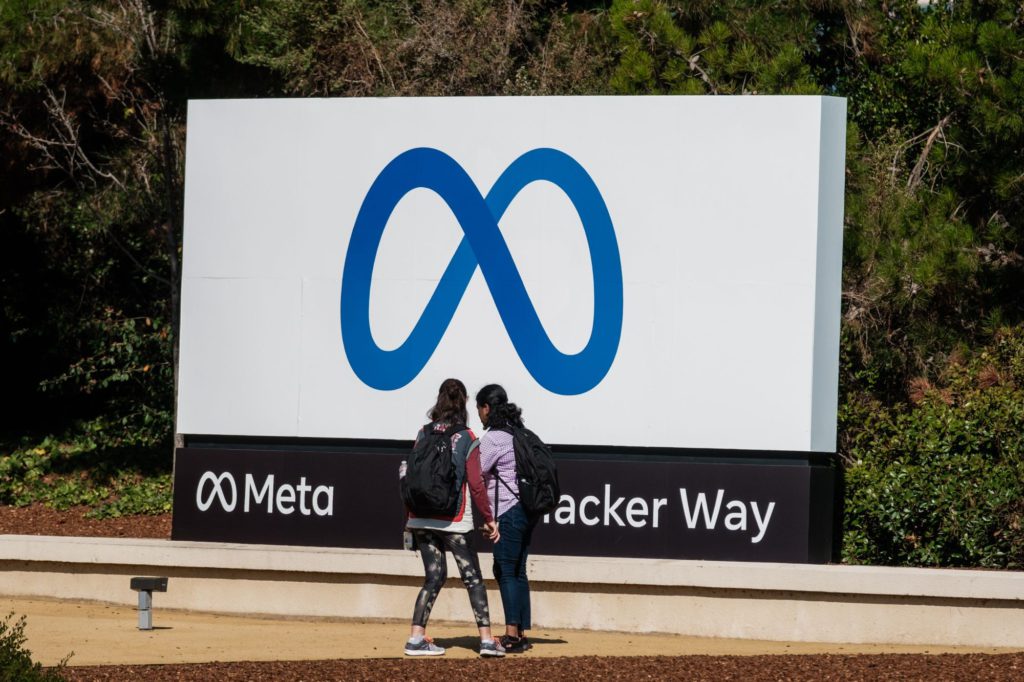
(Bloomberg) — Meta Platforms Inc. is slashing its hiring goals for engineers by at least 30% this year and warned all staff to brace for a severe economic downturn.

Chief Executive Officer Mark Zuckerberg told employees on Thursday that he’s anticipating “one of the worst downturns that we’ve seen in recent history,” according to an audio recording of the weekly Q&A session, obtained by Reuters.

Meta warned in May that it was slowing or pausing hiring for some mid- to senior-level positions. Zuckerberg was more precise in his address on Thursday, saying the company reduced its target for hiring engineers to about 6,000 to 7,000, down from an initial plan to hire about 10,000 new engineers, according to Reuters.

The company, which had more than 77,800 employees at the end of March, is also leaving certain positions unfilled and “turning up the heat” on performance management to weed out staffers unable to meet more aggressive goals, Reuters reported.

“Realistically, there are probably a bunch of people at the company who shouldn’t be here,” Zuckerberg said at the meeting.

“Part of my hope by raising expectations and having more aggressive goals, and just kind of turning up the heat a little bit, is that I think some of you might decide that this place isn’t for you, and that self-selection is OK with me,” he said.

The move follows a generally upbeat earnings report in the first quarter, but the company warned that the war in Ukraine was weighing on sales. Meta said at the time that it would be reining in its spending plans for the year in light of a weaker revenue outlook.

The pullback in hiring goals marks a reversal from rapid staffing growth in recent years. Meta Chief Financial Officer Dave Wehner had said in February that the company expected “accelerated headcount” to be the biggest contributor to expense growth in 2022, and the company added more than 5,800 new hires in the first quarter. But Meta’s revision to its spending budget is affecting hiring plans along with a broader economic slowdown and pressure to its ad business from data privacy measures. 

In a memo to staff that appeared on the company’s internal discussion forum before the meeting, Chief Product Officer Chris Cox said the company must “prioritize more ruthlessly” and “operate leaner, meaner, better executing teams,” Reuters reported. 

“I have to underscore that we are in serious times here and the headwinds are fierce. We need to execute flawlessly in an environment of slower growth, where teams should not expect vast influxes of new engineers and budgets,” Cox wrote.

Meta shares were down about 1% in early trading on Friday. They have tumbled 52% this year.


More stories like this are available on bloomberg.com

©2022 Bloomberg L.P.

Auto Workers Hold Lots of Cards Even If US Heads for Recession

(Bloomberg) —

General Motors skirted a strike this week that could have affected production of some of its most profitable vehicles. Details of the agreement with about 700 subsystem workers, who deliver parts to the assembly line, aren’t yet public and still have to be ratified. But the close call and tough talks offer a glimpse of what could be coming next year, when GM, Ford and Stellantis negotiate new four-year contracts for their roughly 150,000 US employees represented by the United Auto Workers.

While companies from Amazon to Apple have been raising wages in a tight labor market to attract workers and fend off unionization, the three Detroit-area automakers have been somewhat insulated from wage inflation, at least at the low end of the pay scale. This is a result of their having locked in labor costs with their last contracts in 2019.

As widespread price increases erode wages, this could be a recipe for “a tough negotiation and potentially a strike” next year, Joe Spak, RBC Capital Markets’ auto analyst, wrote in a May report.

But what about recession risk — could that lead union workers to think twice? Well, the semiconductor shortage that’s stymied auto production and drained dealer lots to about a third of their normal inventory suggest that, even if we’re headed for a recession, there’s lots of restocking to do and pent-up demand to meet. Automakers also are going to have a hard time pleading poverty when they’re commanding record vehicle prices and making big profits.

“Typically, we would be heavy stock, high incentives, increasing incentives to try to move vehicles, large inventories. We don’t have that today,” John Lawler, Ford’s chief financial officer, said at a Deutsche Bank conference last month. “It’s a completely different environment heading into what could be a potential recession than anything I’ve seen in the past.”

Another factor to consider: automakers have committed billions to launch a barrage of new electric models and build battery assembly plants in the US, and they’re not going to drop those long-term investments. Remember, when Elon Musk reportedly wrote that he had a “super bad feeling” about the economy, President Biden touted Ford’s then just-announced plan to hire 6,000 new union workers to staff its plants.

  • Do you own an electric car? US residents, Bloomberg Green wants to learn more about your experience with EVs. Take our brief survey.

Getting someone to work in an auto plant can be a hard sell. It’s dirty, it’s hell on your body, and the hours can be brutal. The compensation for those sacrifices has traditionally been reflected in union contracts: a living wage, generous health-care plans and retirement benefits, and ideally enough money left over for a summer cottage along the Great Lakes.

But since 2007, when the UAW conceded to a two-tier wage system to help Detroit compete with foreign carmakers, not every UAW employee has been able to have that dream. It was arguably the sticking point in the 2019 strike at GM and continues to be an issue.

Stellantis’s starting temp wage is $15.78, Ford’s is $16.67, and GM’s is between $15 and $16. If you’re just looking at base pay — which, significantly, does not include things like health-care benefits, vacation days and profit-sharing checks — it seems comparable to Amazon’s $18 average hourly wage for new US hires (though that varies by region). Apple just raised retail wages to $22 from $20 to fend off unionization campaigns.

In what looked like a proactive attempt to address these labor dynamics, Ford said last month it would voluntarily upgrade 3,000 temps to full-time employment, on top of hiring another 6,200 in Michigan, Missouri and Ohio to build more electric Mustangs, mid-size pickups and commercial vans. A Ford spokeswoman said the company wants to attract, retain and motivate workers and reward them appropriately.

Volkswagen, which is in the midst of adding 1,000 new people to its Chattanooga, Tennessee plant, has given workers a 10% raise and paid new hires $3,000 signing bonuses. The company now starts people off at $21.10, or $22.60 if you take a night shift, with another 8% bump for showing up regularly. It’s also hiring temp workers at $19.72 an hour, a spokeswoman said. Employees top out at $33 an hour, a smidge above the current top wage in the UAW contract (VW fended off a unionization campaign in Chattanooga three years ago).

Johann De Nysschen, the chief operating officer of Volkswagen of America, told me once VW can get someone in the door, it has an advantage over employers like Amazon, which has a warehouse across the street from the plant. The automaker offers upward mobility and a long-term career path.

But some people just don’t want a factory job.

At Stellantis’s new Jeep plant in Detroit, the use of temp workers is surging, partly because there’s so much absenteeism. People are calling in sick with Covid or simply needing a break from irregular shifts and long work weeks, one union rep told me. Another called the company’s truck plant in Sterling Heights, Michigan, “a revolving door.”

Stellantis held several hiring halls in June to help staff the assembly lines at its SUV plants in the Motor City. I went to one of them and met Tamika Robinson, who was sitting in her car waiting for a friend. Both her mother and brother work at Ford, but Robinson isn’t interested in an auto job — she works as a health care analyst and an at-home caretaker.

“Ford and Chrysler used to be where you wanted to work, because they were paying great amounts of money for the work they were asking people to do,” she said. “But now, to pay people $17 to $18, it’s below the cost of living. And you mandate overtime for people so they can’t enjoy their families.”

Her friend, Mario Byrd, a laborer who’s coming off a stint building pods for Amazon warehouses, was more positive. He was enticed by Stellantis’s profit-sharing plan.

“My cousin’s been here for five years. Before, he didn’t have a car, he didn’t have anything, and he has it all now — because he goes to work every day,” Byrd said. “It’s an incentive to get a piece of the big pie.”

More stories like this are available on bloomberg.com

©2022 Bloomberg L.P.

UK Seeks Science Collaboration Further Afield After EU Freeze

(Bloomberg) — The UK is rattling off a series of international science agreements with a message to the European Union: if you don’t want our money, we’ll do deals elsewhere. 

Prime Minister Boris Johnson signed a memorandum of understanding with his New Zealand counterpart, Jacinda Ardern, on Friday, aimed at easing UK access to the Pacific nation’s quantum and agricultural technology. The UK has already negotiated similar agreements with Israel, Switzerland and Canada — as well as EU member Sweden, and is hoping to seal more with Japan, Singapore, South Korea and certain US states.

The drive comes as the government seeks to diversify the country’s scientific collaboration after the UK was frozen out of the EU’s £80 billion ($96 billion) Horizon research program because of tensions stemming from Britain’s plan to override the part of the Brexit deal governing Northern Ireland. The majority of the UK’s international science budget — around £15 billion — is usually spent helping to fund Horizon.

“With the EU blocking us we are signaling loud and clear to the rest of the world that our international science budget is ring-fenced,” science minister George Freeman said in an interview on Friday. “If the EU don’t want the £15 billion we had earmarked we will do more beyond the EU, with other countries.”

More stories like this are available on bloomberg.com

©2022 Bloomberg L.P.

Revolut’s Storonsky Says It Has Enough Funding for Two Years

(Bloomberg) — The boss of Revolut Ltd. said his fintech startup has enough funding for at least two more years and would not be looking to raise money, as venture capital dries up across the technology industry.

Nikolay Storonsky, the 37-year-old chief executive officer, said the London-based company is now profitable and “aggressively expanding” in Latin America, India and the Philippines while looking to the Middle East. 

The CEO’s comments in an onstage interview with Bloomberg News at TheCityUK’s annual conference in London suggest Revolut can avoid the pitfalls of raising money during a downturn. Valuations for startups are expected to fall as they gather fresh funds, reversing several years of soaring growth, with Sweden’s Klarna Bank AB reportedly considering raising money at a lower valuation. Lenders see tech companies looking to take on debt rather than endure a so-called “down round” of capital raising. 

Storonsky said Revolut was in an different place as it has a more diversified model than its Swedish competitor — even joking that he “now can probably buy” Klarna at its latest reported price. Though he ruled out taking Revolut public in the next two years, given the turbulent market conditions, he still sees the UK as an option for an eventual initial public offering. 

Read More: Revolut CEO Would Like to Buy Klarna. He’ll Battle It Instead

Revolut, which was valued at $33 billion in a funding round last July, continues to view the UK as its most important market, generating about a quarter of its revenue, Storonsky said.  

Revolut’s rise has been rapid. It launched in 2015 as a prepaid card offering cheap foreign-exchange fees, with Storonsky — a former derivatives trader at Credit Suisse Group AG and Lehman Brothers — handing out freebies at railway stations. Now it has more than 18 million customers and is venturing into buy now, pay later products.

Grey Zones

While Storonsky would still choose London as the place to build his company, he said he’d prefer regulation there to have fewer “grey zones” where “people don’t know what to do.” During the interview, the Russian-born CEO joked saying that regulators across the world have all been “very friendly so far”, but also said he  hopes the U.K. Financial Conduct Authority will give the final green light to Revolut’s full banking license “as soon as possible,” following a process that’s already taken a year and a half.

“I would look into making regulation less principle driven and more rules driven,” he said, citing Singapore as a good example of the rules being crystal clear.  

Read More: Revolut’s Frustrated Billionaire Is Forced to Wait in Line

Although cryptocurrency trading is a key revenue contributor for Revolut, Storonsky said his own experiments in the space are limited. “Sometimes I play, but purely for testing products,” he said. Demand from retail investors is “great” and traditional banks are missing out, he added. 

“Decentralized finance allows every single person to access to a lot of instruments that you don’t have in real life,” said Storonsky. “Another question is whether you need them or not, but there is a lot of innovation going on. I do believe in technology, I do believe in the industry.” 

When the outbreak of Covid-19 dampened customers’ general spending, “there was a lot of trading in stocks and in crypto,” he added. This year, “with the crypto winter this revenue line dropped a lot” yet other services such as payments, subscriptions and business accounts “grew a lot,” he said.

Storonsky also confirmed Revolut had “solved simply” any issues after Russia’s invasion of Ukraine by closing offices in both countries, with staff relocating to Dubai and London. 

(Adds more details on Revolut crypto business from ninth paragraph.)

More stories like this are available on bloomberg.com

©2022 Bloomberg L.P.

Close Bitnami banner
Bitnami