

Bloomberg

Dubai Is the Newest Hedge Fund Hotspot

(Bloomberg) — After attracting crypto firms, property investors and Russian billionaires, Dubai is drawing a new crowd: hedge fund managers. 

Izzy Englander’s Millennium Management has grown its staff in the Dubai International Financial Centre to about 30 since securing a license in 2020. Michael Gelband’s ExodusPoint Capital Management, one of the largest multi-strategy hedge funds in the world, registered in the DIFC in June, according to a filing. 

All Blue Capital ditched its London headquarters to base itself in the city, where it now has almost half its global staff. Michael Platt’s private investment firm BlueCrest Capital Management is also expanding in the emirate, with former Citadel money manager Chris Wheeler among those hired.

They are part of a growing clutch of firms choosing to expand in the sun-splashed business hub. Brexit has spurred many funds to seek new bases outside the City of London, while some traders have fled Hong Kong’s strict Covid restrictions. And with living costs soaring around the world, Dubai’s tax-free welcome mat has seldom looked so appealing.

“We are in a unique situation where the classic financial centers are disintegrating,” said Tom Kirchmaier, professor at the Centre for Economic Performance at the London School of Economics. “Living in Dubai — that’s now come down to personal preferences with low taxes, good infrastructure and low regulation.”

For fund managers making the move, the city offers a fertile ground of high net worth individuals and institutional investors. The United Arab Emirates is set to attract a net inflow of 4,000 millionaires this year, the most of any country globally, according to consultancy Henley & Partners. 

Higher oil prices are another draw. Crude above $100 a barrel is buoying Gulf economies and markets, prompting the region’s sovereign wealth funds to invest the windfall at home and abroad.

Incentives

“It’s not a coincidence that you have a lot of asset managers and hedge funds and other institutional investors that actually moved or set up offices in the region here,” Arshad Ghafur, Bank of America’s president for the Middle East and North Africa, said at DIFC Fintech Week. “That’s to really capitalize on what’s happening here.”

Dubai’s current effort to attract financiers isn’t its first. Private bank Mirabaud in 2008 predicted a regional hedge fund boom that failed to materialize after the financial crisis took its toll on the industry and a series of scandals damaged the UAE’s regulatory reputation.  

Some hedge funds have come and gone. Argent Financial Group received a license to operate in the DIFC in 2006 but withdrew three years later. D.E. Shaw set up in the emirate in 2009 but has since left. 

The latest push includes a fresh slate of inducements. The Dubai International Financial Centre is offering reduced licensing fees and capital requirements for hedge funds domiciling a domestic fund. Firms within the center manage around $450 billion worth of assets, according to DIFC Authority CEO Arif Amiri. A team from the business hub recently completed a roadshow in San Francisco and New York to attract more firms.

“In our recent US roadshow, we engaged with some of the largest hedge funds in the world,’’ Amiri said. “The pandemic broke the conceptual relationship between `what’ you do and `where’ you do it. Once this occurred, cities like Dubai became exceptionally competitive globally.’’

The incentives appear to be having an impact even as other cities, including Paris, also try to lure traders. Millennium, which has about $55 billion assets under management, is actively looking to further grow its presence in Dubai, according to people with knowledge of the matter. It has hired Dean Cooper from UBS Group AG, who will move to Dubai from London as the firm expands its emerging markets operations there, people familiar with the matter have said.BlueCrest, which runs Platt’s wealth and that of his partners, is expanding to have 10 people, including at least three portfolio managers, according to people with knowledge of the matter. The firm plans to open an office in the financial district and trade imminently, said the people, who asked not to be identified because the details are private. 

London-based Carrhae Capital, an equity hedge fund, is in the process of opening an office in Dubai and currently seeking regulatory approvals, according to a person with knowledge of the matter. The firm, which manages about $800 million, will be moving two investment professionals to the city and the decision is primarily driven by the time zone advantage the firm will get for its emerging markets focused research and trading, the person added.

Representatives for Millennium, ExodusPoint, BlueCrest and Carrhae declined to comment. 

Foreign Talent 

Dubai in recent months has been taking steps to attract foreign talent just as rigid Covid-19 rules and the increasing influence of mainland China lessens the appeal of Hong Kong, which has lost thousands of professionals to other centers.

“It makes sense with lockdowns in Asia that financial centers like Dubai are becoming a destination for hedge funds,” said Whitney Baker, the New York-based founder of Totem Macro and former head of emerging markets at Bridgewater Associates.

The Hong Kong Investment Funds Association, which represents firms with more than $52 trillion in assets under management, last month called for the city to scrap quarantine rules for travelers and open up to the rest of the world to restore its status as an international financial center. 

Stricter visa requirements, hiring restrictions and other bureaucratic road blocks are also limiting Singapore’s appeal to money managers. The country has also made it harder for rich foreigners to create family offices, raising the minimum bar for local assets under management and other conditions to get key tax concessions. 

International Scrutiny

While favorable immigration policies and regulation makes it easy for firms to set up business in the city, they also come with risks. 

Dubai is coming under increasing international scrutiny for its struggles in combating money laundering. The global financial crimes watchdog, the Financial Action Task Force, in March placed the UAE on its gray list. The Gulf state has also emerged as a preferred destination for Russia’s wealthy even as other jurisdictions increasingly sanction and shun them.

Read more about Dubai’s Russian Diaspora

The money managers also continue to arrive. 

Matt Novak, managing partner of All Blue Capital, a global investment firm overseeing about $5.7 billion, moved his firm’s headquarters to Dubai from London in March and expects to have almost 30 members of its roughly 80-person team based in the city by the end of the year.

“The Dubai government was very clever in its approach to Covid,” he said. “They made it easy for us to conduct business and bring over staff. It’s no wonder they attracted us and many of the industry’s juggernauts.”

More stories like this are available on bloomberg.com

©2022 Bloomberg L.P.
Bitcoin Rally Falters as Inflation Fears Weigh on Crypto Assets

(Bloomberg) — Bitcoin, fresh off its biggest-ever monthly decline, whipsawed traders with wild swings on Friday as digital assets struggle to regain their footing.   

The largest token rallied as much as 11.3% in Asia on Friday, briefly closing in on the $21,000 level. Bitcoin then quickly gave up most of those gains, trading around $19,400 at 11:30 a.m. in London. June’s 41% drop was the steepest in Bloomberg data going back to 2010. 

Bitcoin’s gyrations underscore the uncertainty looming over cryptocurrencies as investors struggle to assess how far central banks will go to tame rampant inflation. Adding to the confusion, major crypto players ranging from hedge fund Three Arrows Capital to lender Celsius Network have been thrown into disarray by the market selloff, raising the prospect of further contagion. 

Euro-area inflation accelerated to a fresh record in June, with consumer prices jumping a faster-than-expected 8.6% from a year earlier. Inflation numbers for the zone have outpaced economists’ forecasts for 11 of the past 12 months.   

Bitcoin “could be vulnerable to one more ugly plunge that could have many traders fearing a fall towards the $10,000 area” if the turmoil on Wall Street continues in the third quarter, Edward Moya, senior market analyst at Oanda Corp., wrote in a note. The token last traded at those levels in mid-2020. 

The risks aren’t deterring El Salvador, whose President Nayib Bukele said on Twitter that the nation had again bought the dip, this time adding 80 Bitcoins at a price of $19,000 each.

Earlier this week, Michael Saylor’s Bitcoin-backed tech firm MicroStrategy Inc. said in a filing it had purchased another 480 coins worth about $10 million at the height of the crypto swoon.

Bitcoin has been gyrating around the $20,000 mark after crashing below $18,000 on June 18. The lack of direction is reminiscent of how the coin traded in the wake of the TerraUSD stablecoin collapse in early May, when it clung close to $30,000 for weeks before plunging again. 


More stories like this are available on bloomberg.com

©2022 Bloomberg L.P.

Amazon to Boost Football Coverage in UK With UEFA Deal

(Bloomberg) — Amazon.com Inc. has secured rights to broadcast Europe’s top football tournament in the UK for the first time, in a significant step for the tech giant as it pushes deeper into sports. 

US-based Amazon will exclusively offer top UEFA Champions League matches on Tuesday nights for three years from the 2024/25 season, it said in a statement Friday that confirmed an earlier Bloomberg News report. 

BT Sport, which most recently held the UCL rights exclusively, will pay roughly £305 million ($368 million) a year to retain the majority of coverage, as well as all games in two other UEFA tournaments, the Europa League and Europa Conference League, it said in a separate statement. The British Broadcasting Corp., meanwhile, said it has bought the rights to show some UCL highlights for the first time.

In total, UEFA has sold the UK media rights at a 20% premium to the previous cycle, according to a person familiar with the matter, who asked not to be identified discussing confidential information. That’s up from Enders Analysis estimates of 1.4 billion euros ($1.5 billion), indicating the new package could be worth around 1.7 billion euros. 

The deal is a fresh sign that Amazon remains ready to bid for some of the most expensive sports rights to boost demand for its Prime Video platform, having recently opted to pull out of the hotly-contested race to stream Indian Premier League cricket matches. It already broadcasts UCL games in Italy and Germany, as well as live matches from the English Premier League and France’s biggest football competition. 

“This shows that Amazon has found that their dip into the water for some Premier League game rights has been financially beneficial for them,” said Christina Philippou, a principal lecturer at the University of Portsmouth who specializes in football finance.

In recent years, Amazon has also filmed behind-the-scenes documentaries at top UK football teams, including Manchester City FC, Tottenham Hotspur FC and Arsenal FC, as a way to attract football fans to Prime. Amazon’s UCL fixtures will always feature an English team during the competition’s group stages and, assuming one qualifies, in every round through to the semi-finals.

“Since 2018, we’ve seen millions of Prime members in the UK enjoy live sport on Prime Video, and it’s that passion and energy that has led us to this exciting next step,” Alex Green, managing director of Prime Video Sport Europe, said in Friday’s statement. 

For BT, the UCL deal secures key rights for the future of its pay-TV unit as a joint venture with US media giant Warner Bros Discovery Inc., a deal which is awaiting UK regulatory approval.

The UCL last year faced the threat of a rival breakaway Super League backed by some of Europe’s biggest football teams. The Super League plan collapsed in a matter of days following fierce backlash from fans and politicians. UEFA subsequently revamped the UCL by increasing the number of teams and matches in a bid to make it a more competitive tournament and prove to clubs that it can generate higher revenue for them.

More stories like this are available on bloomberg.com

©2022 Bloomberg L.P.
Hot Inflation Is Keeping European Bond Funds on the Sideline

(Bloomberg) — After a bruising first half of record-shattering losses, European bond market investors broadly agree that the worst may be over. Few, however, say now’s a good time to jump back in.

Concerns over inflation and the region’s growth prospects are muddying the picture, giving many pause. While Invesco says it’s time to start edging back into the market, Carmignac reckons it’s too soon. AllianceBernstein is hesitant, even with rates looking much more appealing after years of wafer-thin returns. 

“Yields are now back to levels where people will start allocating to fixed income again,” said Vivek Bommi, head of European fixed income at AllianceBernstein, which manages assets of $735 billion. But the firm is awaiting further inflation data before it starts buying in size. “A better entry point will be later in the year,” he added. 

Bommi commented ahead of the latest inflation numbers published Friday, which reached a fresh record of 8.6%, surpassing expectations. European bonds fell, sending the yield on 10-year German debt 5 basis points higher to 1.38%. 

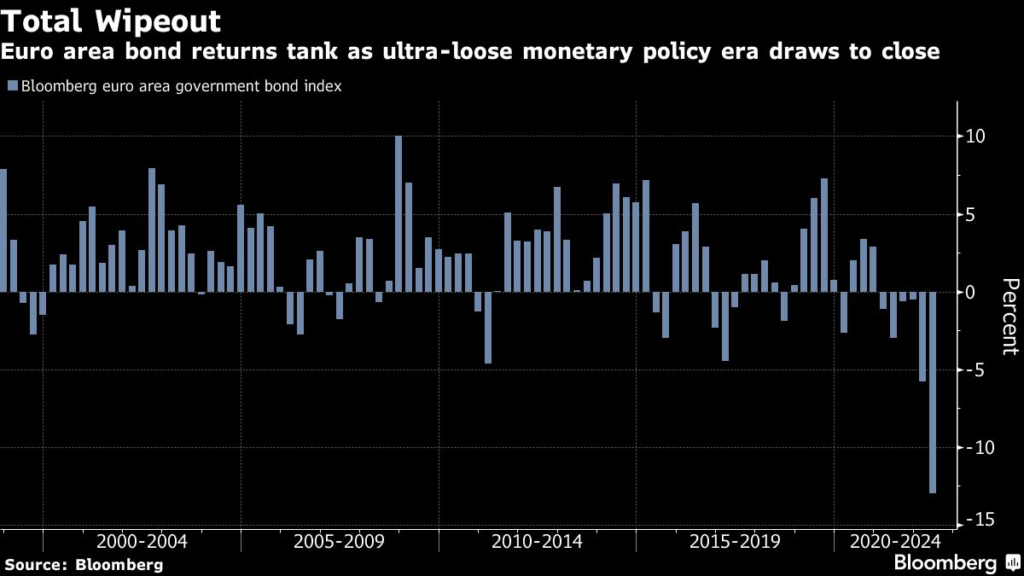
The caution is not surprising after the first-half rout left investors in European bonds nursing losses of 13%, by far the worst start to a year on record, according to a Bloomberg index tracking euro area government bonds. More than 870 billion euros ($911 billion) were wiped off the value of the index this year. 

The outlook is murkier in Europe than in other regions partly because the European Central Bank has yet to raise rates to tackle record inflation, while several countries are well into their hiking cycles. A lack of clarity on the scale of the rate increases is likely to continue to weigh on the region’s bonds, which plummeted after the ECB signaled plans to pivot away from its long-standing ultra-loose monetary policy. Volatility, as measured by swaptions, also surged and is close to its highest since the global financial crisis. 

The market will “struggle to find an equilibrium” until the ECB starts to deliver hikes and there’s “more clarity around terminal rate expectations,” said Steve Ryder, a sovereign portfolio manager at Aviva Investors.

While euro area bond yields have eased since ECB President Christine Lagarde quelled a nascent Italian bond crisis in June with a pledge to counter market speculation, many investors are reluctant to start buying in case policy makers take a tougher stance than expected to tackle the inflation shock that’s engulfing the region.

Some, like Carmignac fund manager Guillaume Rigeade, see yields continuing to rise — although not to the same extent as before. Rigeade sees further increases in inflation through the fall, after readings for France and Spain this week hit new highs and a miss in Germany was attributed to government intervention. 

“We think it’s extremely optimistic to think that the ECB can kill inflation in a year,” he said. Rigeade reckons the drop in inflation expectations, as measured by breakevens and forwards, is premature and has positioned his fund to take advantage of that.

A market-based gauge of inflation expectations has slipped to around 2%, in line with the ECB’s long term target, down from around 2.5% in May. 

Twists and Turns

That said, the year’s brutal bond-market selloff has been fizzling amid expectations of a looming slowdown in the economy. Ten-year German rates for example have dropped below 1.4% after surging to 1.9% in mid-June, the highest since 2014. Yields on equivalent Italian notes have also subsided after soaring past 4%, easing once the ECB promised a new tool to mitigate undue panic in government bond markets.

Further details on that instrument, still scarce for now, are expected alongside the ECB’s July 21 policy decision when it’s all but certain to raise rates by a quarter-point to minus 0.25%, the first increase in more than a decade. But some are worried the tool won’t be enough to prevent the widening of Italy’s spread over German debt again.

READ MORE: Investors Are Clinging to the Prospect of Another ECB Rescue

“We are not convinced that its plans for a new tool will be sufficient to contain a widening of spreads, given the weaker fundamentals affecting credit broadly,” Societe Generale strategists wrote in a recent note. They see Italian bonds trading as much as 300 basis points over German equivalents by year-end, compared to about 190 basis points currently. 

Borrowing costs of core countries could also come under renewed pressure. In a bear case scenario, where Brent prices rise to $150 a barrel, 10-year German yields could hit 2.75% by year-end, more than double current levels, according to Morgan Stanley strategists. That contrasts to their base case of about 2%.

Indeed, facing persistent uncertainty over the inflation outlook and the ECB’s response, the next few months are set to remain tricky for investors. Aviva’s Ryder is ready to go overweight government bonds — but just not yet. He did, however, sound a note of optimism. 

“After unprecedented losses in the first and second quarters, we do believe the bulk of the negative returns are behind us,” he said. 

(Updates with Friday’s inflation data, bond moves in fourth paragraph.)

More stories like this are available on bloomberg.com

©2022 Bloomberg L.P.

Robot Trucks on Texas Highways Herald Era of Driverless Big Rigs

(Bloomberg) — After lumbering through a gravel parking lot like a big blue bull, one of Aurora Innovation Inc.’s self-driving truck prototypes took a wide right turn onto a frontage road near Dallas. The steering wheel spun through the half-clasped hands of its human operator, whose touch may not be needed much longer.

Fittingly for Texas, these Peterbilts are adorned with a sensor display above the windshield that looks much like a set of longhorns. This was the beginning of a 28-mile jaunt up and down Interstate 45 toward Houston in a truck with a computer for a brain, and cameras, radar and lidar sensors for eyes, capturing objects more than 400 meters (437 yards) out in all directions.

The stakes for test drives like this one are incredibly high for the future of freight. If Aurora and other self-driving startups, including Alphabet Inc.’s Waymo, can convince customers and the public that large trucks can be automated safely, the potential efficiency gains are massive. The technology would help ease an unprecedented driver shortage, especially for long hauls that keep truckers away from home for weeks. More importantly, $150,000 big rigs that carry cargo will be able to roll around the clock, dramatically boosting utilization.

Aurora has designed and configured the hardware and software it will use to launch a service toward the end of next year in which roughly 20 trucks will ply highways without a human on board. “We’re now in the phase where we are doing the final refinements and the validation system-wide,” Sterling Anderson, the company’s co-founder and chief product officer, said in an interview just south of Dallas.

Aurora is starting in the Lone Star state for a few reasons. Texas is the US’s largest truck freight market and has long, sometimes very boring, stretches of freeway. Its interstate highway network boasts almost a third more miles than second-ranked California.

Texas also has some quirks that are helping teach Aurora’s system how to deal with unexpected scenarios. One is the incessant building and repairing of roads, resulting in 3,100 construction sites statewide, including 40 or so on Aurora’s route between Fort Worth and El Paso, Anderson said. There’s also the Texas U-turn, the horseshoe-shaped turnabouts at underpasses below major highways in cities and rural areas alike.

“Any Texas U-turn is going be a slightly different situation on account of who’s around you and what they’re doing,” said Anderson, the former head of Tesla Inc.’s Autopilot. “It’s tricky from humans, too.”

It took about a month for Aurora’s sensors and software to master the Texas U-turn, which allows vehicles to reverse course on a highway without hitting a stoplight. The maneuver requires the autonomous truck to yield to traffic coming at it from multiple sides and part of the methodical learning Aurora’s computer does with each test run.

So far, it’s working. Human operators who sit with hands poised to grab the wheel aren’t having to preemptively disengage the self-driving system as often for situations it’s not yet been trained to handle. The ability to navigate through constructions sites has improved dramatically, Anderson said. Aurora, whose other co-founder Chris Urmson used to lead Google’s self-driving program, declined to offer detailed metrics. Unlike California, Texas doesn’t require companies to publicly report the number of times their human test drivers disengage the autonomous-driving systems they’re testing on roadways.

The potential savings arising from commercialization of this technology has attracted customers including FedEx Corp. and trucker Werner Enterprises Inc. Aurora’s marquee investors include  Toyota Motor Corp., Amazon.com Inc. and Uber Technologies Inc., which sold its driverless business to Aurora in 2020.

Safety will be paramount to Aurora’s success. Although there are more than 4,500 fatal accidents involving large trucks and buses each year in the US, with most caused by human error, any such incident with a driverless vehicle would be a major setback to the autonomous technology. In 2018, an Uber self-driving prototype vehicle  hit and killed a pedestrian in Tempe, Arizona. The company suspended road testing for months and was rebuked by the National Transportation Safety Board.

For all the risk, the productivity gains from safely moving freight with autonomous trucks would reverberate across the shipping industry. The technology would unleash a “complete transformation of the logistics landscape,” said Steve Viscelli, a University of Pennsylvania sociologist who studies trucking and labor markets and is on Aurora’s advisory board.

Trucks are limited to moving as much as drivers can, which is oftenlimited to eight hours a day or less. In an industry shaped by Sam Walton’s innovation of locating Walmart Inc. stores no farther from a distribution center than a truck driver could reach roundtrip in a day, the range of autonomous trucks may affect a company’s decisions on locating distribution centers and how many it needs, Viscelli said.

Autonomous trucks also could alleviate problems such as drivers sitting around waiting to be loaded or unloaded, or hunting for a place to park. These issues — along with being away from home for long stretches — make it difficult to hire and retain long-haul truckers.

“We get a much more efficient trucking industry,” Viscelli said. “What’s really going to change is that greater asset utilization.”

During the test run near Dallas, the truck’s computer recognized a truck parked on the shoulder of the highway. The driverless rig would normally change lanes to give space for the stopped vehicle, but the system detected a pickup coming up fast on the left impeding Aurora’s truck from changing lanes. The autonomous rig instead slowed down as required by law, then sped up after the shoulder cleared.

On the way back to the Aurora terminal, the Peterbilt came to a halt at a busy four-way stop. The truck waited for one vehicle to proceed, then lurched forward to claim its turn to go. When no other vehicle moved, the truck made its turn, the steering wheel spinning by itself, and headed up the road.

More stories like this are available on bloomberg.com

©2022 Bloomberg L.P.

War’s No Excuse for Kenya Food Crisis, Says Presidential Hopeful

(Bloomberg) — Kenya’s Deputy President William Ruto dismissed comments by his boss that Russia’s invasion of Ukraine is partly to blame for higher living costs, vowing to boost farming if he wins the presidency in August.

Ruto pledged to invest at least 500 billion shillings ($4.2 billion) in agriculture and small businesses over five years. That investment would include providing animal feed and seeds to boost yields. Farming stood out in Ruto’s manifesto as a significant part of his so-called Bottom-Up economic model — where he seeks to channel government resources to sectors that can create the most jobs.

The answer to addressing the “cost of living is increasing agricultural productivity, period. This whole story about Ukraine and all this is a lost cause,” Ruto said at a rally at the Kasarani Stadium in the capital, Nairobi.

The country with East Africa’s largest economy will hold a general election on Aug. 9 to vote for a new president, governors and lawmakers. Ruto’s main rival, former Prime Minister Raila Odinga, is slightly ahead in the most-recent opinion polls.

Ruto’s remarks on Russia’s invasion of Ukraine come weeks after President Uhuru Kenyatta blamed the rising cost of living on factors including those he said are out of his control like the war — prices of everything from gasoline to fertilizer, corn and milk have surged. Kenyatta fell out with his deputy and is backing Odinga to replace him.

“If we had not withdrawn the fertilizer subsidy” and “stuck to the plan on food security,” Ruto said, “we wouldn’t be in the crisis we are in today.”

Ruto, 55, pledged to also boost investment in housing, health care, manufacturing, services and information and communication technology. He spent almost two hours explaining a plan he said followed town-hall meetings in the country’s 47 counties and consultations with groups of farmers, women, health care workers, youths and business people.

Ruto said his administration will ramp up the production of key commodities, including milk, edible oils and rice. To do this, he plans to provide capital at competitive rates to farmers. If voted in, he said his government will expand Kenya’s agricultural extension services.

“Our agricultural productivity has not matched our population growth,” Ruto said. “We are spending 360 billion shillings to import food and food items.”

Whoever wins the election will have the task of steering an economy projected to slow this year, a growing debt burden, inflation that’s breached the upper limit of the central bank’s target range and high unemployment. Odinga vowed to tackle the load of commercial loans under a plan that involves potentially restructuring public debt, a declaration that contributed to the price of the country’s eurobonds plunging this week. 

Ruto also said that the country is “in a debt hole” and debt-servicing costs are the single largest expenditure item in the recurrent budget. “If you find yourself in a hole stop digging,” Ruto said without giving details on how he will address government liabilities.

Odinga leads Ruto 39% to 35% among likely voters, Nairobi-based pollster Tifa Research said in May, the first time the opposition leader edged ahead of the deputy president.

Other manifesto highlights:

  • The deputy president pledged to provide 50 billion shillings each year as credit to small businesses at competitive rates.
  • Ruto promised to allocate half of his cabinet ministerial positions to women to promote gender parity across the government.
  • His government will increase the supply of new housing to 250,000 units per year. He pledged to grow the number of mortgages to 1 million from 30,000 currently.
  • He pledged to reform the health care system to deliver universal coverage.
  • Ruto plans to direct 40 billion shillings to ensure broadband connectivity throughout the country in five years. He also plans to commit about 2.5 billion shillings each year to back technology startups.
  • He will seek 200 billion shillings by securitization of a fuel levy, and spend it on completing roads under construction and upgrading others in rural and urban areas.

“This plan is rigorously appraised and finance-able within the resources constraint that we face,” Ruto said. 

(Updates with comments from Ruto in ninth paragraph)

More stories like this are available on bloomberg.com

©2022 Bloomberg L.P.
India Excludes Gift Cards, Reward Points from Crypto Tax

(Bloomberg) — India said offerings like online gift cards and coupons won’t be counted as virtual digital assets, dispelling concerns that they face the same steep taxation as cryptocurrencies.  

The government in February announced plans to tax any income from cryptocurrency assets at a flat 30% rate. It defined virtual digital assets vaguely at the time, leading to confusion about whether items like online gaming coupons, website subscriptions and reward points would also be taxed, said Amit Maheshwari, managing partner at Ashok Maheshwary & Associates. 

“With this clarification now, this ambiguity has been addressed and they do not have to bear the tax burden of 30% which will also create certainty in this space,” Maheshwari adds.

The government has also clarified that tangible asset-backed non-fungible tokens will be excluded from the definition of VDAs.

More stories like this are available on bloomberg.com

©2022 Bloomberg L.P.
Grayscale Got Its Answer on a Bitcoin ETF. And Didn’t Like It

  • Listen to Bloomberg Crypto on the iHeartRadio App
  • Listen to Bloomberg Crypto on Apple Podcasts
  • Listen to Bloomberg Crypto on Spotify 

(Bloomberg) — One of the most closely-watched fights in crypto might sound a little obscure, but it’s really important. It pits a company called Grayscale Investments against the US Securities and Exchange Commission, a crucial regulator. And it involves so-called exchange traded funds, an extremely popular type of investment vehicle, and Bitcoin, the largest and most liquid cryptocurrency.  Grayscale had been lobbying regulators to allow it to convert one of its existing crypto products into an exchange traded fund, or ETF.

This week, the SEC rejected their petition. Grayscale has been very clear that they’re preparing for a fight and intend to take the fight to court, and they’ve geared up accordingly. They hired Donald Verrilli, a top White House lawyer during the Obama administration. Bloomberg reporter Katie Greifeld joins this episode to examine why this fight is so important to crypto.

Follow us on Twitter @crypto, and subscribe to the Bloomberg Crypto Newsletter at https://bloom.bg/cryptonewsletter

More stories like this are available on bloomberg.com

©2022 Bloomberg L.P.
Three Arrows Crypto Fund CEO Wants to Sell Singapore Mansion

(Bloomberg) — The co-founder of beleaguered crypto hedge fund Three Arrows Capital is seeking to sell one of his luxury homes in Singapore as the company faces liquidation. 

Chief Executive Officer Zhu Su has been trying to offload at least one of his so-called good-class bungalows in the past couple of weeks, according to people with knowledge of the matter. 

The sale plans mark a turnaround from last year, when Zhu tweeted that he was “thinking about buying all the good-class bungalows in Singapore” to turn them into parks and regenerative farming sites.

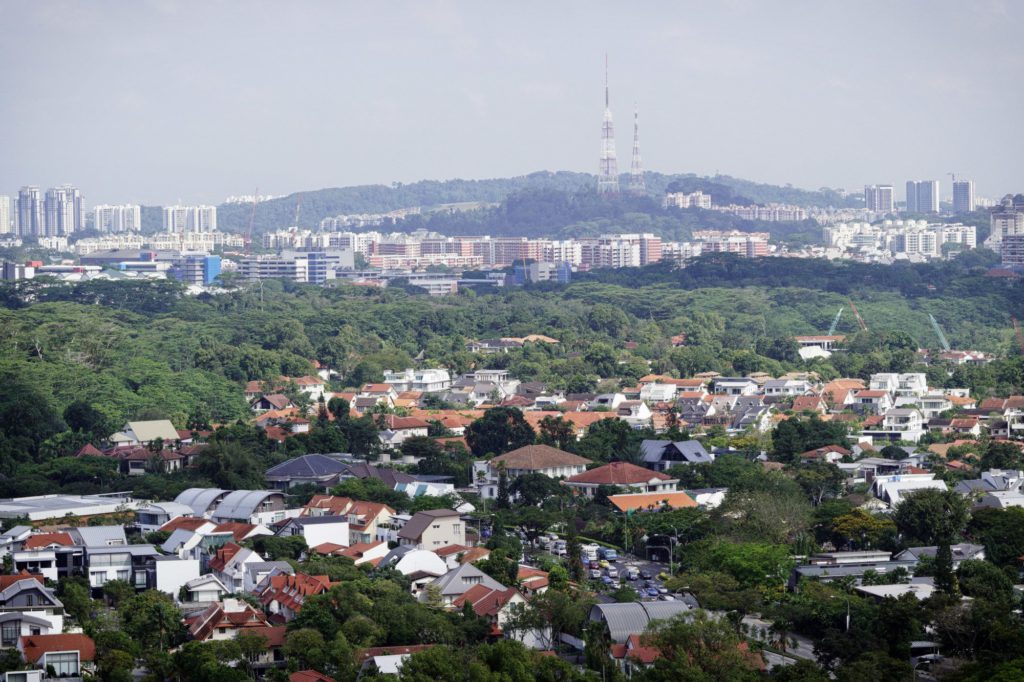
Zhu, who is in his mid-30s, and his wife, Tao Yaqiong Evelyn, purchased the two-story, six-bedroom home in the upscale Yarwood neighborhood late last year for S$48.8 million ($35 million) under a trust, public records show. In Singapore, a good-class bungalow is the local equivalent of a mansion. 

Zhu didn’t immediately respond to emails seeking comment.

Zhu’s official address is listed at Balmoral Road, an exclusive estate that’s a five-minute drive to Singapore’s famous Orchard Road shopping belt. The couple also owns at least one other good-class bungalow at Dalvey Road, which was purchased under Tao’s name, according to public records. 

The sale plans coincide with the stunning downfall of Three Arrows, one of the world’s largest crypto hedge funds, which in March had an estimated $10 billion in assets under management. This week, a British Virgin Islands court ordered the company — founded by Zhu and former Credit Suisse Group AG trader Kyle Davies — to liquidate after failing to repay creditors. 

Singapore’s central bank on Thursday reprimanded the company for providing false information and exceeding the maximum amount of money it was allowed to manage. It’s also looking into whether there were more breaches by the firm of its rules.

The Yarwood house, sitting on at least 15,000 square feet (1,400 square meters) of land behind a metal gate on a leafy street, is going through some renovation work, according to observations made during a visit by Bloomberg. A new two-story house with a basement, attic and swimming pool is being built on the Dalvey site and construction is expected to be completed next year.

(Updates with description of properties in last paragraph)

More stories like this are available on bloomberg.com

©2022 Bloomberg L.P.
NYSE Pitches US Listings to Gulf Tech Firms Amid Global Selloff

(Bloomberg) — Sign up for our Middle East newsletter and follow us @middleeast for news on the region.

The New York Stock Exchange is trying to lure Middle Eastern technology companies to list in the US, promising access to a broader investor base and deeper capital markets, even amid heightened volatility that’s scuppered listings worldwide.

“We have spoken to some companies in the region,” NYSE’s head of international capital markets Alexandre Ibrahim said, without naming the firms. “They could come here without a capital raise or conduct an initial public offering in the capital markets,” he said. “There are a lot of unicorns in the Middle East already.”

Regional tech startups include SoftBank Group Corp.-backed cloud kitchen startup Kitopi — a unicorn — as well as e-commerce firm Noon, used-car marketplace SellAnyCar.com and online baby shop Mumzworld.

The US has long been the destination of choice for tech startups globally, which flocked to its liquid markets and high valuations. But the Middle East is now in the midst of an IPO boom — one of the lone bright spots in an otherwise gloomy market for new share sales — as governments list state assets to fund a transition away from a fossil fuel economy.

Read More: Wall Street Organizes Field Trips to Red-Hot Gulf IPO Market

New York still offers companies, particularly those in the tech sector, access to an investor base that understands them well, Ibrahim said. However, Gulf firms that have chosen to list in the US so far have fared poorly.

Dubai-based voice-chat startup Yalla Group Ltd. two years ago became the first tech unicorn from the United Arab Emirates to go public in the US. Its market value initially rose to close to $6 billion before tumbling to below $600 million, as the company came under the scrutiny of short sellers.

Other Middle Eastern companies that opted for a different route to New York haven’t fared much better. 

Spotify Technology SA rival Anghami went public on the Nasdaq in February after its merger with a special purpose acquisition company and has since slumped more than 50% amid a broader rout in the SPAC industry. Ride-sharing firm Swvl Holdings Corp., which followed Anghami a few months later after being acquired by a blank-check firm, is down more than 30%.  

Ibrahim said the performance of the two companies shouldn’t deter others, given the gloomy market environment overall. “It doesn’t have to do with the product itself,” he said, referring to SPACs. 

More stories like this are available on bloomberg.com

©2022 Bloomberg L.P.

Close Bitnami banner
Bitnami
