
Bloomberg

White House Plans to Remain in Twitter’s ‘Rougher Neighborhood’

(Bloomberg) — The White House will continue to use Twitter Inc. to communicate with voters as long as it remains a “viable platform,” White House chief of staff Ron Klain said Monday.

“I think there’s no doubt that Twitter is a rougher neighborhood than it was a month ago,” Klain said at the Wall Street Journal’s CEO Summit.

The White House, however, has an obligation to “to try to communicate where we can, how we can, and reach as many people as we can,” Klain continued. “And Twitter remains a very powerful platform for doing that. It’s a good way to get our position and message out to lots of people who we wouldn’t reach otherwise.”

Klain’s remarks were the strongest indication yet that the White House would remain on Twitter despite policies implemented under new owner Elon Musk, who has rolled back content moderation policies and proposed charging users for verification checkmarks.

Musk on Friday also released emails about the blocking of news stories critical of the president’s son, Hunter Biden before the 2020 election — a move the White House described as a “distraction” from the rise of hate speech on the platform. 

“Look what is happening, frankly it’s not healthy, it won’t do anything to help a single American improve their lives,” White House Press Secretary Karine Jean-Pierre said Monday. “We see it as an interesting coincidence, and it’s a distraction.”

Musk touted the publication of what writer Matt Taibbi said were executives’ emails, in which they debated the controversial decision to restrict access in October 2020 to a New York Post article that contained allegations about Hunter Biden. The billionaire Twitter owner has accused the company’s previous leadership team of opposing free speech, while claiming he has championed it. 

Jean-Pierre said the document trove was “full of old news” and pointed out that it was released at the same time the social network is “facing very real and very serious questions about the rising volume of anger, hate and antisemitism on their platform, and how they’re letting it happen.” 

Researchers have found that slurs against Black Americans have appeared more than twice as often on Twitter under Musk’s stewardship as they did previously and antisemitic posts have increased more than 61%, according to a New York Times report. 

The rapper Kanye West, who now goes by Ye, was suspended from Twitter last week after he posted an image of a swastika inside a Star of David. Musk said the tweet violated Twitter’s policy against inciting violence. Ye had been allowed back on the site after it restricted his account in October in response to another antisemitic tweet. 

Twitter, which no longer has a communications team, didn’t respond to a request sent to a general press email.

–With assistance from Akayla Gardner.

More stories like this are available on bloomberg.com

©2022 Bloomberg L.P.

World Cup Interest Is so High in Japan That a Top Streaming Site Can’t Cope

(Bloomberg) — CyberAgent Inc.’s Abema TV had to restrict access to Japan’s World Cup game early Tuesday morning local time, as runaway demand pushed the streaming service to its limits.

Viewers of the Japan-Croatia match were advised halfway through the contest that access for new streamers would be restricted in order to ensure a stable service.

Abema holds the Japan streaming rights to the Qatar tournament, and the national team’s unexpected progress out of the group stage triggered a wave of interest and support. The youth-oriented streaming network showed more than 23 million viewers during the latest knockout-stage match, surpassing the previous high set on Friday after Japan’s game against Spain, which was broadcast at 4 a.m. locally. 

CyberAgent surged 4% on the news Friday, which augured well for its investment in the loss-making service. Shares fell 0.5% on Monday.

“CyberAgent’s stock is rising on expectations that Abema will see its revenue from ads increase over the long-term,” said Hideki Yasuda, an analyst at Toyo Securities. 

Tokyo-based CyberAgent is better known for its portfolio of video games, such as Uma Musume, which helped drive the stock to a record high amid the pandemic. It may have spent as much as 20 billion yen ($150 million) on securing the World Cup streaming rights for Abema, according to Jefferies analyst Hiroko Sato. Its broadcasts also feature former national footballer Keisuke Honda as a commentator. The service can be watched on phones, PCs and connected TVs. Japanese fans also have the option to watch via a regular broadcast on Fuji TV.

Though overwhelmingly popular, the Abema live streams are free to watch and analysts question how much of the current surge the company will be able to convert into paying users. Abema registered more than 17 million viewers on Friday, CyberAgent said. CyberAgent has added extra servers to handle World Cup demand and anticipates making a loss on the tournament, a spokesperson said.

“I expect most viewers who installed the app for the soccer games will delete it after the tournament’s over and return to other TV and streaming services, such as Netflix and YouTube,” Yasuda said.

–With assistance from Yuji Okada.

(Updates with new high set during Croatia game)

More stories like this are available on bloomberg.com

©2022 Bloomberg L.P.

Intel Says It’s on Course to Regain Chip Production Leadership

(Bloomberg) — Intel Corp. is hitting all the targets it has set on a path to regain leadership in semiconductor manufacturing, according to the executive responsible for the effort. 

“We’re completely on track,” Intel Vice President Ann Kelleher, the head of technology development, said Monday in a press briefing in San Francisco. “We do quarterly milestones, and according to those milestones we’re ahead or on track.” 

Intel Chief Executive Officer Pat Gelsinger has vowed to regain leadership in production technology, formerly one of the foundations of the company’s decades of dominance in the $580 billion industry. Kelleher’s team is trying to make up for the chipmaker’s delay in delivering a manufacturing technique that arrived five years later than originally promised. The group is accelerating the effort to introduce new processes at an unprecedented pace.  

If Gelsinger’s plan succeeds, Intel stands to reverse market share losses to rivals such as Advanced Micro Devices Inc. and Nvidia Corp. Better production will also allow Intel to attract customers for the CEO’s attempt to take on Taiwan Semiconductor Manufacturing Co. and Samsung Electronics Co. in the growing business of contract manufacturing — making semiconductors for other chip companies.

Kelleher said Intel is taking a far more pragmatic approach than in the past, building in contingency plans to make sure there are no more major delays. It’s also relying more on equipment vendors for help, rather than trying to do all of the work itself, she said. 

“Intel in the past had high walls in terms of not sharing,” said Kelleher, who has been with the Santa Clara, California-based company for more than 30 years. “We don’t need to lead in everything.”

Intel is trying to improve its manufacturing capabilities as it struggles with declining revenue and a steep drop in demand for personal computers, which generate more than half its sales. In October, the company said actions including headcount reductions and slower spending on new plants will result in savings of $3 billion next year, with annual cuts swelling to much as $10 billion by the end of 2025.

Manufacturing chips with better production — with improvements designated in smaller numbers of nanometers, or billionths of a meter — makes factories more efficient and improves the ability of the electronic components to store and process data in a more efficient way. 

Intel is currently mass producing 7-nanometer chips. It is ready to start manufacturing 4-nanometer semiconductors and will be ready to move to 3 nanometers in the second half of 2023, Kelleher said. Originally a measure of the main part of a transistor, the nanometer term is now more loosely applied to signify how advanced companies are relative to their rivals.

Kelleher, who worked her way through Intel’s ranks after starting in its factories, has a prosaic view of the marketing terminology used to compare technology capabilities across the industry. 

“Seven measures nothing, we might as well call it ‘George,’” she said.

While terms like 7 nanometer may have little relevance to the actual world of chip production these days, Kelleher is committed to restoring Intel’s luster. She said her budget is secure and won’t be affected by the company’s cost cuts. 

Currently TSMC and Samsung are widely credited with having overtaken Intel in production technology. The Taiwanese company pioneered the business of making chips for others, and both companies are now central to the global supply chain. That includes making components for companies including Apple Inc., Qualcomm Inc. and Amazon.com Inc., as well as direct Intel rivals such as AMD and Nvidia.

More stories like this are available on bloomberg.com

©2022 Bloomberg L.P.

US, EU to Address Differences on EV Subsidies That Could Threaten a Trade War

(Bloomberg) — European Union and US officials committed in principle to resolving a dispute over electric-vehicle incentives that threatens to spark a trade war, without Washington making specific concessions and time running short.

The Inflation Reduction Act, which the EU says provides unfair subsidies to US manufacturers and threatens to undermine the transatlantic relationship, has caused alarm in European capitals that only eased during French President Emmanuel Macron’s visit with US President Joe Biden last week.

US officials continued the charm offensive with representatives from the European Commission on Monday at the third Trade and Technology Council meeting in College Park, Maryland, north of Washington. 

Secretary of State Antony Blinken said the US heard the concerns of its “European friends about certain specific aspects of the legislation,” and set up a taskforce with the EU. “We are continuing to give momentum to that conversation and to working through the differences, as President Biden said we would do.”

Executive Vice President Valdis Dombrovskis said that he was leaving the meeting “more optimistic than when we arrived” but stressed urgency. 

“We don’t have long — the IRA is due to be implemented next January,” he said. “We need to see results still this year.”

US Concessions

It could be difficult for the US to find a way of placating Europe, as the IRA has already passed. EU officials are pushing for the US to provide exceptions to European countries similar to what Canada and Mexico have.

The most likely route to try to accommodate EU concerns would be for the US Treasury Department to issue a waiver allowing European vehicles to qualify, said William Reinsch, who served as undersecretary of commerce for export administration in the Clinton administration.

While such an interpretation of the law would be unlikely to hold up in court in the face of lawsuits from groups that favor a stricter interpretation, that process could take years to play out, providing an interim solution, said Reinsch, now a senior adviser at the Center for Strategic and International Studies in Washington. 

“I don’t think they have as much flexibility as the president implied” to satisfy European demands, Reinsch said.

Subsidy Spats

In Europe, more politicians are calling for a regional response that would rival the IRA — a move that risks shifting the fight over industrial subsidies from the US to within the bloc. In a speech over the weekend, commission President Ursula von der Leyen pushed to re-examine state-aid rules and create a European fund to invest in clean tech.

While backed by key countries like France, these ideas are controversial for fiscally conservative EU countries and even within the commission. German Finance Minister Christian Lindner said the EU must be more agile, and there is “room for improvement” on state aid, but called for more debate on other aspects of von der Leyen’s proposal, especially the creation of a European sovereignty fund.

“If that means a kind of rebranding of existing tools, I’m open to discussion,” Lindner said. But if it means issuing new common European debt, “then I think this would not be an improvement of our competitiveness or stability — it would be a threat.”

Executive Vice President Margrethe Vestager also stressed that the EU will not change state aid rules in the EU treaties. She pointed to the EU’s Chips Act that allowed governments to subsidize the production of semiconductors; however, this was highly controversial among members of the commission.

Future Work

Blinken added that there will be further work between the EU and US on telecom infrastructure, while another EU official at the TTC meeting said there would be more talks about 5G and 6G research.

But there are also other disagreements between the two. US officials mentioned the need for European countries to align on semiconductor export controls at the TTC, according to a commission official.

The Biden administration implemented sweeping controls in October meant to cut off China’s access to advanced semiconductors, and has been pressuring the Netherlands to follow suit by cutting off more sales from Dutch chip-equipment maker ASML Holding NV to China. Officials again raised the issue of chip exports at Monday’s meeting.

ASML already does not sell its most advanced EUV equipment to China after pressure from the Trump administration. The Dutch government has been vocalizing resistance to US pressure.

Commerce Secretary Gina Raimondo said the EU and US didn’t talk about ASML explicitly at the TTC but discussed export controls and have aligned sharing information on semiconductor shortages and subsidies.

In passing, US officials also mentioned upcoming changes to the EU’s cloud cybersecurity certification, which could make it harder for US tech giants like Amazon.com Inc. and Microsoft Corp. to win government cloud contracts.

More stories like this are available on bloomberg.com

©2022 Bloomberg L.P.

Apple’s Anti-Union Tactics in Atlanta Were Illegal, US Officials Say

(Bloomberg) — US labor board prosecutors have determined that Apple Inc. violated federal law by interrogating and coercing employees in Atlanta, the latest legal salvo over the company’s response to organizing efforts.

The National Labor Relations Board’s Atlanta regional director also concluded that Apple held mandatory anti-union meetings during which management made coercive statements and will issue a complaint if the company doesn’t settle, the agency’s press secretary, Kayla Blado, said Monday.

Apple, based in Cupertino, California, didn’t immediately respond to a request for comment.

The Communications Workers of America petitioned for a unionization election at the Atlanta store earlier this year, but in May withdrew its petition the week before the planned vote, citing alleged misconduct by the company.

“Apple executives think the rules don’t apply to them,” the group said in a statement Monday. “Holding an illegal forced captive audience meeting is not only union-busting, but an example of psychological warfare. We commend the NLRB for recognizing captive audience meetings for exactly what they are: a direct violation of labor rights.”

Apple, the world’s most valuable company, has been facing an unprecedented wave of organizing at its retail stores this year. Staff at a Maryland location voted in June to unionize with the International Association of Machinists, and their counterparts in Oklahoma City opted in October to join the CWA.

Organizers suffered a setback last month in St. Louis, where IAM withdrew a unionization petition the week after filing it, blaming the company’s behavior. Some employees at the location later complained about the process, saying they felt the election was rushed. But workers at dozens more of Apple’s roughly 270 US stores have been discussing unionization, according to employees.

An NLRB regional director in New York issued a complaint against Apple in September, accusing the company of interrogating staff at a World Trade Center store and discriminating against union supporters in enforcing a no-soliciting policy. Apple said following that complaint that it disagreed with the allegations.

While the NLRB has previously held that companies can require employees to attend anti-union meetings, the agency’s current general counsel, Jennifer Abruzzo, views such “captive audience” gatherings as inherently coercive and illegal. Her office is pursuing cases that could change the precedent, including at Amazon.com Inc. and Starbucks Corp., both of which have denied wrongdoing.

Complaints issued by NLRB regional directors are considered by the agency’s judges, whose rulings can be appealed to the board’s members in Washington, and from there can go to federal court. The agency can require remedies, such as posting of notices and reversals of policies or punishments, but it has no authority to impose punitive damages on companies.

–With assistance from Mark Gurman.

(Updates with CWA’s statement in fifth paragraph.)

More stories like this are available on bloomberg.com

©2022 Bloomberg L.P.
North Carolina Attack Shows US Power Grid Is ‘Extremely Vulnerable’

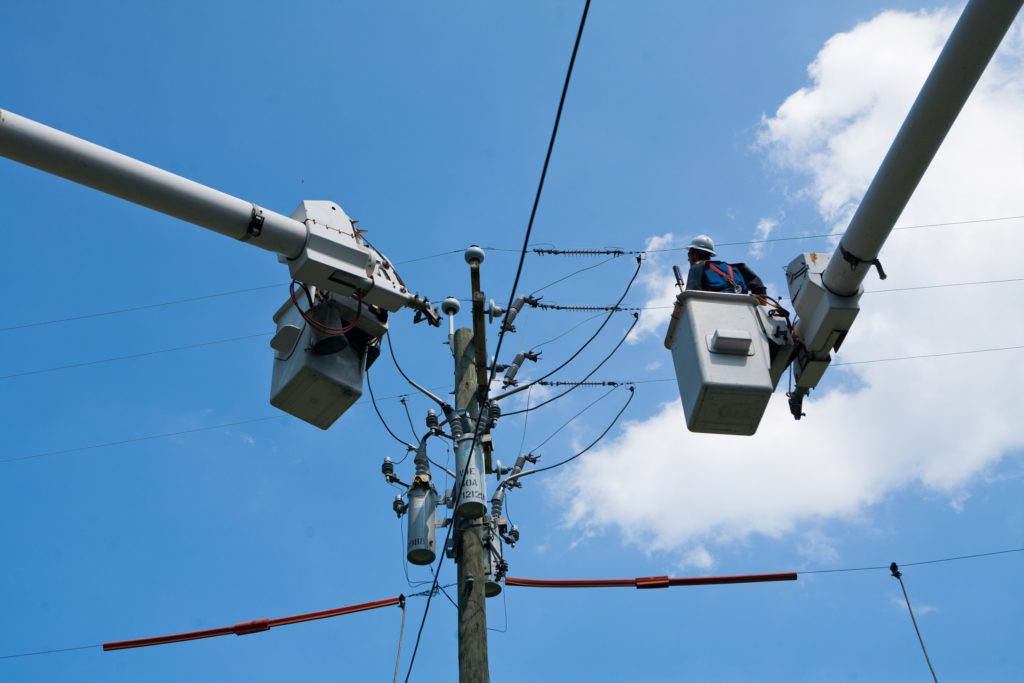
(Bloomberg) — The attacks that left two electrical substations in North Carolina riddled with gunfire and knocked out power to 45,000 homes and businesses underscores the fragility of US grids, experts said Monday.

The FBI is investigating the assault that extensively damaged the two facilities, about 10 miles (16 kilometers) apart in a largely rural area of the state east of Charlotte. Authorities realized the equipment had been hit around 7 p.m. Saturday after outages began spreading across the region, officials said. 

“From this incident, it appears that the electrical grid continues to be extremely vulnerable,” said Jon Wellinghoff, chief executive officer of GridPolicy Consulting Inc. and former chairman of the Federal Energy Regulator Commission.

While power grids are regular targets of cyber attacks, major physical assaults on the systems are rare. The incident in North Carolina underscores how when successful, such strikes can have widespread consequences. Duke Energy Corp., which owns the equipment, warned some customers could be without power for days.

“The damage is beyond repair in some areas,” Jason Hollifield, a general manager for Duke Energy, said in a statement. “That leaves us with no option but to replace large pieces of equipment.”

About 38,000 homes and businesses in the area remained without power Monday afternoon, Duke said in its statement, as evening temperature were forecast to dip to 44 degrees Fahrenheit (6.6 degrees Celsius). More than 60% of North Carolina households depend on electricity for heat, according US Energy Information Administration.

Earlier in the day, Duke online outage map showed a lower number of customers without power. Duke said services may not be completely restored until Thursday.

The Moore County sheriff, Ronnie Fields, said the attack was not random.

“It was targeted,” Fields said. “I call them cowards.” A county-wide 9 p.m. curfew was implemented to protect citizens and businesses. 

The Biden administration is watching the North Carolina investigation and monitoring the situation closely, National Security Council spokesman John Kirby said Monday. “I think the President would be the first to admit that there’s a lot of work left to be done when it comes to infrastructure security,” he said.

There have been nine physical attacks on the US electrical grid so far this year, along with 60 acts of vandalism, according to the Department of Energy data. The agency, which reported slightly lower numbers for the previous three years, defines physical attacks as those that disrupt grid operations or have intent to harm US national security.

In February, three men pleaded guilty to planning to attack substations in different US regions to incite civil unrest. In 2016, about 13,000 customers lost power when gunfire damaged a Utah substation. And a California substation was damaged by gunfire in 2013, forcing the state grid operator to call for conservation in the area.

There are several reforms that would protect the grid, said M. Granger Morgan, an engineering professor at Carnegie Mellon University. First, install walls or visual barriers so gunmen can’t aim directly at transformers and circuit breakers. And second, create a coherent national strategy to protect the grid instead of leaving the task to state regulators. 

“We have substations sitting out in the open all across the country,” said Morgan. “We’re still very vulnerable.”

–With assistance from Ari Natter, Will Wade, Justin Sink and Naureen S. Malik.

(Story updates with latest outage numbers and Department of Energy data.)

More stories like this are available on bloomberg.com

©2022 Bloomberg L.P.
Microsoft’s ZeniMax Studios Organizes to Form Labor Union

(Bloomberg) — About 300 workers at Microsoft Corp.’s ZeniMax Studios, known for popular video games Skyrim and Fallout, have begun organizing to form a union in what would be the first at the software giant in the US. 

Quality assurance employees at Maryland-based ZeniMax will be represented by the Communications Workers of America. 

The labor movement is gaining steam in the gaming industry, and the ZeniMax action follows the creation of unions at two studios owned by Activision Blizzard Inc., which Microsoft is in the process of acquiring for $69 billion. Microsoft has pledged to remain neutral in the union negotiations.

The ZeniMax union is far larger than past efforts at Activision studios at Blizzard Albany in New York and Raven Software in Wisconsin, encompassing workers across several states who test the games for bugs and ensure they work properly. Quality assurance workers have been among the first to unionize in the games industry over low pay and poor working conditions. Microsoft acquired ZeniMax for $7.5 billion in 2020. The game giant includes Elder Scrolls-publisher Bethesda Softworks, Doom creator Id Software, Arkane Studios and several other developers.

“We are glad to support ZeniMax quality assurance workers as they join the growing video game labor movement in the US,” said CWA President Christopher Shelton, in a statement. “These workers are making history, joining the wave of game and tech workers at Activision, Alphabet, and dozens of other companies who have organized with CODE-CWA to build a better workplace.”  

Although Activision Blizzard has fought against its workers’ unionization efforts, Microsoft vice chairman and President Brad Smith wrote a blog post in June recognizing that “the workplace is changing.” Smith said the company is “committed to creative and collaborative approaches with unions when employees wish to exercise their rights and Microsoft is presented with a specific unionization proposal.” 

Prior to the recent unionization efforts in video games, Microsoft, like most large tech companies, had been viewed as a barren and somewhat hostile environment for organizing. The company largely crossed swords with unions via its large workforce of contract and temporary workers. In the late 1990s, the Washington Alliance of Technology Workers participated in a class action lawsuit of temporary workers seeking Microsoft benefits, winning a settlement from the company. The union then tried, mostly unsuccessfully, to gain members from the company’s contract workforce and full-time employees. In 2016, a group of Microsoft temporary workers signed a union contract with the outside staffing firm that employed them. 

In a statement on Monday, a Microsoft spokesperson said that “the recent organizing efforts of ZeniMax employees, and Microsoft and ZeniMax’s neutrality toward this, are an example of our labor principles in action. We remain committed to providing employees with an opportunity to freely and fairly make choices about their workplace representation.”

Microsoft’s purchase of Activision is under antitrust review by the Federal Trade Commission and the agency’s chair, Lina Khan, has told lawmakers that as part of that process she is specifically looking at how the deal might impact workers. Khan said the FTC is also focusing on whether certain types of contracts, such as non-compete clauses that bar workers from switching jobs within an industry or non-disclosure agreements, violate antitrust or consumer protection laws. 

(Updates with FTC review in final paragraph.)

More stories like this are available on bloomberg.com

©2022 Bloomberg L.P.
Twitter’s Janitors Are on Strike at Its San Francisco Headquarters

(Bloomberg) — Janitors who clean Twitter’s headquarters in San Francisco are on strike ahead of their union contract ending.

Members of the SEIU Local 87, a custodians union in California, began their strike at 6 a.m. in San Francisco today, according to a statement from the California Labor Federation. The union says its contract with the social media company’s janitorial contractor ends on Dec. 9. Organizers claim Twitter’s new contractor has refused to rehire existing workers, which is required by San Francisco law.

The janitors are picketing to protest management’s refusal to fairly negotiate, Elizabeth Strater, the communications director for the Federation, a coalition of the state’s unions, said in a statement.

“Twitter doesn’t seem to understand how important it is to keep a clean house and respect the people who take out the trash,” she said.

San Francisco law mandates new contractors for security and janitorial services hire existing workers for at least 90 days after the transition from one contract to the next. Workers who are not hired for this time period can seek back pay and benefits for whatever portion of the transition period they were not employed.

A representative for Twitter didn’t immediately respond to request for comment. The majority of Twitter’s communications team was fired after Elon Musk’s acquired the company last month.

–With assistance from Josh Eidelson.

More stories like this are available on bloomberg.com

©2022 Bloomberg L.P.
Apple Store Employees Chide Union in Rare Display of Pushback

(Bloomberg) — Apple Inc. retail employees pushed back on unionization efforts at a location in St. Louis, with staffers saying they don’t want to be represented by the International Association of Machinists & Aerospace Workers, a labor group that recently attempted to organize the store. 

According to a petition that workers are filing with the National Labor Relations Board, 66 of the store’s 90 employees — nearly three-quarters — have rejected the IAM, saying they “do not want to join the union and do not support the union in any manner.” The group of employees said they started collecting signatures opposing the union on Nov. 22. At the time, the IAM had been working to unionize the St. Louis Galleria store, but dropped its bid for a vote the following day. 

When it canceled plans to push for a union election, the IAM blamed “anti-union practices and increased hostility toward workers.” But in a statement Monday, employees said the group “preemptively” scrapped the effort after learning of the petition against the union. 

“The reality is much simpler: The majority of employees at this Apple Store do not wish to work with the IAM,” the employees said in Monday’s statement. “The majority of workers at the St. Louis Galleria Apple Store do not believe a union is required at this time, nor do they wish to work with the IAM in the future.”

The labor movement has made inroads at Apple this year, with stores agreeing to unionize in Oklahoma City and Towson, Maryland. But it’s also faced setbacks. And the St. Louis experience — with a rare public rebuke of the union by employees — underscores the challenges of winning over workers at the world’s most valuable company.  

According to the petition set to be filed with the NLRB, the majority of store employees oppose union representation and said that any of previously signed union cards are “null and void.” 

An Apple spokesman declined to comment. The IAM said there had been a “sufficient showing of interest” to file for a union election in St. Louis and that an Apple retail employee reported “management intimidation” during the campaign, leading the group to file an unfair labor practice complaint.

“All working people have the right to pursue their own destiny — whether they would like union representation or not,” the group said.

According to the employees’ statement, workers said they didn’t feel “the union would provide anything complementary to Apple’s culture and existing benefits” and that some felt misled after initially giving support to the group, according to the statement. The union’s organizers at the store said the IAM ignored requests to delay the vote and rushed the process.

The signers of the petition claim they opposed the union “without intimidation from management.” Some retail employees at other stores have complained of heavy-handed tactics by Apple, saying that managers held meetings decrying labor efforts. Apple also recently withheld some new benefits from its unionized stores, a move that drew criticism from organizers. 

Despite the latest setback, employees at several of Apple’s about 270 locations continue to consider unionizing, according to workers. 

(Updated with response from Machinists union in seventh paragraph.)

More stories like this are available on bloomberg.com

©2022 Bloomberg L.P.

Bankrupt Crypto Lender Celsius Wins Approval Give Out Bonuses to Stem Exodus

(Bloomberg) — Bankrupt cryptocurrency lender Celsius Network LLC won court approval to give out bonuses totaling as much as $2.8 million to workers in a bid to keep them from quitting. 

The payments will go to non-executive employees helping Celsius keep the lights on while the company works to exit bankruptcy, according to a plan approved by US Bankruptcy Judge Martin Glenn on Monday. Celsius needs to file a restructuring plan by Feb. 15, according to an arrangement also approved in court on Monday. 

Read more: Celsius Network Is Losing Its Minds: Bloomberg Crypto

Celsius employees have quit in droves since the company entered bankruptcy in July, a lawyer for the crypto lender said in court. About 170 Celsius employees remain, down from about 370 at the outset of the Chapter 11 proceedings.

“We’re getting really down to the nub of what we need to continue to function,” Ross Kwasteniet of Kirkland & Ellis said in the hearing. 

Most of the so-called retention payments will be no more than $75,000, according to court papers. Salaries for those eligible for the bonuses range from as low as $25,000 to a high as $425,000. 

Glenn had earlier rejected the bonuses, saying Celsius didn’t provide enough public information about the payments. Celsius amended its request with more details following that ruling. 

The bankruptcy is Celsius Network LLC, 22-10964, US Bankruptcy Court for the Southern District of New York (Manhattan).

More stories like this are available on bloomberg.com

©2022 Bloomberg L.P.

Close Bitnami banner
Bitnami
