

Bloomberg

Coupa Holder HMI Says Firm Should Fetch $95 a Share in Sale

(Bloomberg) — A top shareholder in Coupa Software Inc. said the software company should fetch at least $95 a share in a sale after getting interest from at least one potential buyer. 

HMI Capital Management said in a letter to the company’s board on Monday that Coupa is an excellent business with a great management team. HMI Capital, which owns a 4.8% stake in Coupa, said it wouldn’t support any transaction unless it was at the right price and followed a proper sales process. It said it may be a difficult time to realize the full value of the business in the current market. 

“Timing is everything when it comes to successful M&A, and the standalone option simply may make more sense right now than a transaction, and certainly makes more sense than a deal at the wrong price,” HMI Capital partner RK Mahendran said in the letter reviewed by Bloomberg News.

Vista Equity Partners is exploring a potential acquisition of Coupa, people familiar with the matter said last month. A representative for Coupa wasn’t immediately available for comment.

HMI Capital, which said it has never written a public letter to a company before, believes that Coupa is undervalued and that it would reject any offer that failed to capture its potential upside. Shares of the San Mateo, California-based company fell 3.1% to $62.70 Monday in New York trading, giving it a market value of about $4.8 billion.

‘Depressed Level’

“Our worry is that now is a difficult time to realize the full value of Coupa’s long-term potential as a market-leader, given that Coupa’s share price is currently trading at a significantly depressed level and there are near-term sector-wide challenges in the software industry,” Mahendran said.  

Coupa’s shares have fallen about 63% from a year ago amid a broader selloff in the technology sector. HMI Capital said that, based on other transactions in the sector, Coupa should yield more than $95 a share in a sale. 

Coupa provides so-called business-spend management software, which helps companies track and manage the purchasing of goods and services. Customers have included Nestle SA and Groupon Inc., according to its website. 

Last week, another Coupa shareholder, Meritage Group, said in a regulatory filing it had conveyed its own views on what it would believed would be a fair price for the company without disclosing additional details. 

“The future for Coupa is an exciting one, and any sale price or process that fails to appropriately value Coupa’s long-term potential at the expense of seeking to rush into a deal would not be tolerated by HMI,” Mahendran said. 

(Updates share price in fifth paragraph)

More stories like this are available on bloomberg.com

©2022 Bloomberg L.P.

Texas’s Crypto Mining Boom Is Starting to Look More Like a Bust

(Bloomberg) — The digital gold rush in Texas is losing its luster as Bitcoin miners grapple with financial woes, leaving behind what some fear will be a wasteland of unfinished sites and abandoned equipment. 

In an effort to become a haven for crypto mining, Texas has aggressively lured miners with cheap power and favorable regulations, prompting many to take out billions in loans to buy pricey machines and build out infrastructure. 

However, soaring energy costs, a sharp decline in Bitcoin prices and more competition have compressed profit margins and made it difficult for miners to repay debt. Some are on the verge of bankruptcy.

“There are just tons of assets everywhere, it’s like a mess.” said Mason Jappa, chief executive at Austin, Texas-based crypto-mining service firm Blockware Solutions. “I got messages about transformers, switch gears, and mobile data centers and containers for mining, they are just sitting there.” 

There are a lot of losers if the Bitcoin mining industry goes bust. For one, local authorities provided incentives such as tax abatements that reached into the tens of millions of dollars. The power generation planned that the region sorely needs to avoid another energy crisis may not materialize. Some developers made hefty investments to build out Bitcoin mining facilities. The average cost to have one-megawatt capacity of mining infrastructure is currently around $300,000 in the state, the high end of the range, according to Jappa. 

Iris Energy said last month it would assess how much and when they will build out facilities beyond the initial 20-megawatt construction on their Childress site. The firm planned to have 600-megawatt of capacity at the site. Iris pulled mining rigs from two sites after defaulting on $108 million in loans. It continues to own the land and other physical assets at the two sites, the company said Monday.

Argo Blockchain initially planned to complete its 800-megawatt mining farm at Dickens County earlier this year but the miner has experienced a liquidity crunch. It warned in October that if new financing isn’t secured, it would need to “curtail or cease operations.” Core Scientific warned of potential bankruptcy after announcing its plan to build facilities with 200-megawatt of capacity near Dallas. 

The companies represent the largest participants in Texas’ crypto-mining industry out of a dozen crypto-mining firms with plans to build facilities. They are projected to produce as much as 7-gigawatt of power demand from Texas’ grid, with 3 gigawatt coming in 2023, based on announcements and US Securities and Exchange Commission filings. 

It will take several years for Lancium, which has two sites with over 1-gigawatt of capacity in Taylor and Pecos Counties, to fill the facilities, a spokesperson said. In addition to miners, the firm expects to host different applications such as high-performance computing. 

Riot Blockchain, Argo, Compute North and Core Scientific, Genesis Digital Assets and Bitdeer did not respond to requests for comment. 

“A lot of the supply chain issues that were strong during the Covid times are not necessarily a bottleneck factor anymore.” said Matthew Kimmell, digital asset analyst at CoinShares. “What may be a limitation is just their cash on hand.”

Energy costs for miners have been high throughout the year due to Russia’s invasion of Ukraine and heat waves across Texas in the summer. The Federal Reserve’s tightening of monetary policy and implosions of major crypto firms sent Bitcoin prices down more than 60% this year.   

After China banned crypto miners last year, Texas sought to fill the gap as a way to add fuel to the state’s fast-growing economy. But because mining hinges on power consumption, the wave of new demand threatens to stress a grid still trying to recover from failures during an extreme winter storm in February 2021 that left millions in the dark for days and more than 200 people dead. 

Governor Greg Abbott has touted mining as a way to aid the grid because machines can be quickly ramped down during periods of stress and ramped up to soak up excess wind and solar generation that would otherwise be wasted. The ability to reliably swing output from such large amounts of demand would be a boon, however the rules that would require miners to act a certain way under certain market conditions are still being debated. Critics are concerned that existing practices will enable crypto miners to dodge costs tied to upgrade the grid to accommodate all their demand to consumers. 

Abbott’s office did not respond to requests for comment. 

Texas has about 1.5 gigawatts of crypto mining capacity, mainly Bitcoin, operating with about 37 gigawatts vying to connect to the state grid as of Oct. 20, according to the most recent data available from the Electric Reliability Council of Texas. That queue has more than doubled in six months. 

While the queue indicates growing power demand from miners earlier this year, the amount may be inflated. Power brokers and mining companies could have filed multiple applications for the same mining site as those applications do not require deposits. 

Some applications may not even come through because those with little experience in Bitcoin mining are likely to abandon their plans, said Ethan Vera, chief operations officer at crypto-mining services firm Luxor Technologies. 

(Adds comment from Iris Energy in the sixth paragraph.)

More stories like this are available on bloomberg.com

©2022 Bloomberg L.P.
Slack’s Butterfield to Leave Salesforce in Exodus of Leaders

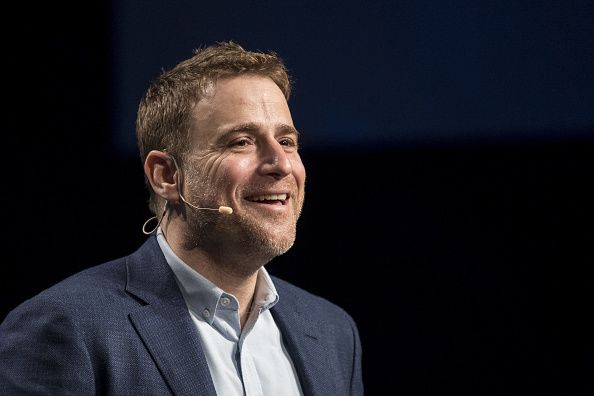
(Bloomberg) — Stewart Butterfield, chief executive officer of Salesforce Inc.’s Slack, is leaving after less than two years, another blow to the software giant that has been roiled by an executive exodus in recent weeks.

Two other veteran Slack executives also will depart, the company said Monday, shaking up the division that Salesforce purchased in July 2021 for more than $27 billion in its largest acquisition.  

Butterfield’s resignation follows the news last week that Salesforce co-CEO Bret Taylor would step down from the post at the end of next month. Butterfield, who was seen as a possible successor to Taylor, also will exit in January, the company said. Both men were credited as lead negotiators in the deal announced in December 2020 that brought the business communications platform into Salesforce.

In a memo to staff, Butterfield said his departure is unrelated to Taylor’s. “Planning has been in the works for several months,” Butterfield wrote. “Weird timing!” Slack Chief Product Officer Tamar Yehoshua and Senior Vice President Jonathan Prince will also leave the company, Butterfield wrote. 

Butterfield “is an incredible leader who created an amazing, beloved company in Slack,” a Salesforce spokesperson said. “He has helped lead the successful integration of Slack into Salesforce.” Salesforce, the top maker of customer relations management software, declined to comment on the departures of Yehoshua and Prince. Insider earlier reported Butterfield’s exit.

Lidiane Jones will succeed Butterfield as CEO at Slack, the spokesperson said. Jones most recently served as executive vice president of Salesforce’s experience cloud, commerce cloud and marketing cloud units and worked for Sonos Inc. and Microsoft Corp. before joining Salesforce in 2019. Butterfield was “instrumental in choosing” her as the next CEO, the spokesperson said. 

In his memo, Butterfield praised Jones, writing that she “has a deep respect for our approach to product, our customer obsession, and our unique culture” at Slack, and has “enormous credibility inside of Salesforce.”

Butterfield’s exit “is a risk for the company, given other high-profile executive departures in the past few months,” Anurag Rana, a senior analyst at Bloomberg Intelligence, wrote in a note. “This could put additional pressure on CEO and founder Marc Benioff to assure investors that the company still has a deep bench of leaders that can revive organic growth, which has seen steady decline in the past few quarters.”

The stock fell 7.4% to $133.93 in New York — its lowest closing price since March 2020. The shares have tumbled 47% this year.

Salesforce is struggling with slowing growth and increasing pressure from investors to improve profit. The company last week projected revenue would increase 8% to 10% in the current period — which would be the smallest year-over-year gain since Salesforce went public in 2004.

Salesforce also has been working to further integrate other large acquisitions, Mulesoft and Tableau, into a cohesive platform of services. Tableau, which Salesforce bought in 2019 for $15 billion, has seen a similar thinning of executive ranks recently. On Friday, Mark Nelson, the CEO of the unit, announced he would exit the company, about a year and a half after Adam Selipsky, who ran Tableau at the time of the Salesforce’s purchase, departed to lead Amazon.com Inc’s cloud-computing division. Tableau Chief Marketing Officer Jackie Yeaney and Chief Data Officer Wendy Turner-Williams also left in recent months, according to their LinkedIn biographies.

Butterfield, 49, who is a co-founder of Slack, said his time at the company since it started more than 13 years ago has been “a long and wild run,” and, unlike Taylor, he isn’t leaving to return to his entrepreneurial roots.

“Though it may sound hackneyed, I actually am going to spend more time with my family,” he wrote in his memo. “We have a new baby coming in January. Can I tell you something? I fantasize about gardening. So, I’m going to work on some personal projects, focus on health, and try to learn as many new things as I can.”

(Updates with closing share price in the ninth paragraph.)

More stories like this are available on bloomberg.com

©2022 Bloomberg L.P.

Crypto Pressure Ratchets Up as FTC Probes Several Firms Over Ads

(Bloomberg) — The US Federal Trade Commission is probing several crypto firms over allegations their advertisements were deceptive or misleading, the agency said Monday. 

“We are investigating several firms for possible misconduct concerning digital assets,” FTC spokeswoman Juliana Gruenwald Henderson said in a statement to Bloomberg News. She declined to offer further details on the confidential probes.

The consumer protection agency enforces laws that require truth in advertising, including rules that individuals disclose when they have been paid for endorsements or reviews.

The Securities and Exchange Commission also has regulations for the disclosures that individuals touting securities must make. 

The agency used these rules to crack down on celebrity endorsements in the crypto space — most notably with a recent enforcement action against Kim Kardashian. The reality TV star didn’t admit or deny the SEC’s allegations that she illegally promoted a crypto token on her Instagram account without proper disclosure, but she agreed to pay $1.26 million to settle the issue.

Investors have sued cryptocurrency exchange FTX for false advertising, among other claims, after the implosion of the company owned by Sam Bankman-Fried. The customers, who deposited funds into yield-bearing accounts with FTX entities, allege they were misled by celebrity endorsements from the likes of Tom Brady and Stephen Curry, and weren’t aware their accounts were “unregistered securities.” 

Cryptocurrency firms have poured money into advertising in an effort to build brand awareness with consumers. Coinbase Global Inc., FTX and Crypto.com all released high-profile advertisements during the National Football League’s championship game this year, many featuring celebrities like actor Matt Damon and sports stars LeBron James and Shaquille O’Neal.

In March, UK regulators sent warnings to more than 50 companies over misleading crypto advertisements. Months earlier, the UK’s advertising authority found that ads by Coinbase and Kraken, two popular crypto exchanges, were misleading. The Arsenal Football Club Plc was also dinged for misleading fans about crypto tokens.

More stories like this are available on bloomberg.com

©2022 Bloomberg L.P.
Binance Sees 30% Surge in Trading Activity on FTX Implosion

(Bloomberg) — Digital-asset exchange Binance Holdings Ltd. saw a substantial boost in trading activity as Sam Bankman-Fried’s FTX crypto empire collapsed in November.

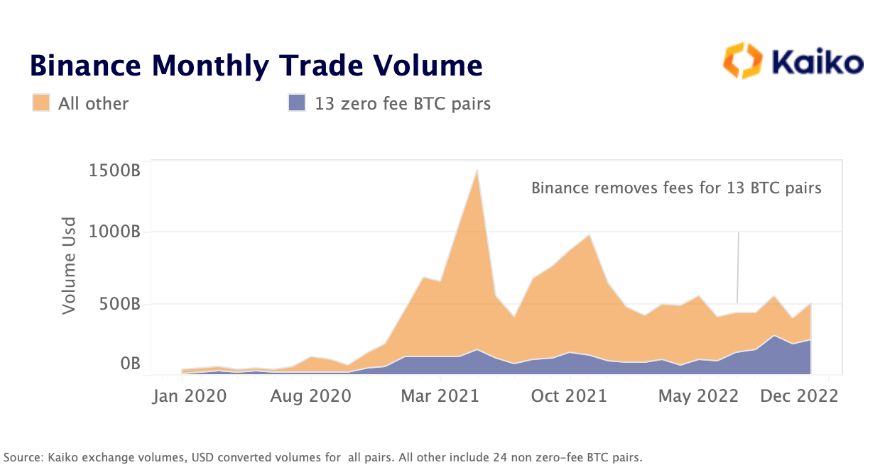
Trading activity on the largest crypto exchange jumped by 30% last month, when FTX had a liquidity crunch that eventually led to its bankruptcy and wrecked havoc on the crypto market. The catalyst for the collapse was Binance Chief Executive Officer Changpeng “CZ” Zhao’s Nov. 6 announcement that the exchange was selling its holdings of FTT because the native token of FTX was too risky. FTX had operated the second-largest spot and derivatives exchanges.

“Monthly trade volume jumped by 23% to $705 billion for the largest exchanges in November, bolstered by FTX-related volatility.” researcher Kaiko noted in a Dec. 5 newsletter. “The increase was mainly driven by Binance.”  

The Bloomberg Galaxy Crypto Index tumbled about 18% in November. The index is down about 67% this year.

Users seeking to pull their funds from FTX sparked the contagion spreading across the crypto industry. Genesis Global Trading warned of bankruptcy if it could not raise enough funding. The difficulties at Genesis prompted crypto exchange Gemini to halt redemptions from its Earn product. Binance disclosed its assets and wallet addresses where the exchange stores the customers’ funds in an attempt to improve transparency. 

“Binance may benefit, despite not having an official headquarters, because it has projected an image of strength through the crisis with the best liquidity of any centralized exchange,” according to the newsletter.

The fall of FTX can also benefit US-regulated exchanges such as Coinbase and Kraken, which have gone through significant layoffs. Trading volume from the exchanges were on the rise in November as well, while activity on smaller exchanges fell, given the higher volume from users and institutions who have become wary of off-shore exchanges, according to the newsletter. 

More stories like this are available on bloomberg.com

©2022 Bloomberg L.P.

MercadoLibre Files Complaint Against Apple in Brazil, Mexico

(Bloomberg) — Latin American e-commerce and fintech firm MercadoLibre Inc. has filed a complaint with antitrust regulators in its largest markets of Brazil and Mexico against Apple Inc., claiming that the US tech firm has broken anticompetitive practices.

MercadoLibre alleges that Apple is violating anti-competitive practices by prohibiting third-parties from distributing digital goods on iOS apps, Head of Antitrust Paolo Benedetti said in an interview. In addition to hurting developers, that policy also leads to higher prices due to the large commissions that Apple charges, he said. 

The Buenos Aires-based company has submitted a complaint that claims that Apple limits the emergence of distributors of digital goods and services and restricts the distribution of content within its platforms. It adds that the company forces developers to use Apple’s payment processor, which leads to an “undue increase in costs” and limits companies’ distribution channels.

The Apple press office did not immediately reply to an emailed request for comment. 

The complaint adds to a series of antitrust cases around the world. Apple usually requires developers to use its own payment system, which helps it ensure a commission for apps on its platform. That tight control over app payments has attracted lawsuits and antitrust scrutiny, often focusing on Apple’s refusal to allow developers to steer users to other payment methods. 

“We’re going a step further from what other agencies had said by questioning Apple’s monopoly to distribute third-party digital content,” Benedetti said. “We’re a marketplace for physical goods, but we’re also interested in becoming a marketplace for digital goods.”

Read More: Why App Store Fees Are Drawing Fire Worldwide: QuickTake 

The Buenos Aires-based company operates in 18 countries across Latin America and has expanded into financial technology in recent years, with fintech revenues becoming the fastest-growing portion of the company. Among the digital services the company could offer without the existing limitations are e-books, video streaming, audio streaming, video games, subscriptions, or even apps, Benedetti said. 

For example, MercadoLibre currently offers subscriptions to Disney+ and HBO to Android users in its loyalty program, but it does not currently do so to iOS users. 

MercadoLibre shares fell 6.7% in New York trading while Apple’s shares were down 1.2%. That compares with a 2.2% decline for the broader Nasdaq. 

In June, the Dutch consumer protection regulator ruled that the tech firm will have to allow alternative payment methods in dating apps. The company, alongside Google’s parent company Alphabet Inc., also faces an in-depth probe from Britain’s antitrust watchdog after a study concluded they have the power to “exercise a stranglehold” over operating systems, app stores and web browsers on mobile devices.

In the US, the company also faces a probe from the Justice Department after Epic, the maker of the popular Fortnite game, asked the Ninth US Circuit Court of Appeals to find that Apple’s online marketplace policies are anticompetitive. 

MercadoLibre’s complaint was filed before Mexico’s Federal Telecommunications Institute (IFT) and Federal Economic Competition Commission (COFECE), and Brazil’s Administrative Council for Economic Defense (CADE). The process initiated through these organizations could take about two to two years and a half to be resolved. 


–With assistance from Vinícius Andrade.

(Updates with additional comments, background.)

More stories like this are available on bloomberg.com

©2022 Bloomberg L.P.

Iranian Hackers Targeted Activists and Journalists, Groups Say

(Bloomberg) — Iranian government-backed hackers targeted nearly two dozen high-profile activists, journalists, diplomats and others in recent months as part of an ongoing espionage effort, two human-rights groups said Monday.

In three cases, hackers gained access to the victims’ emails, contacts and other data, according to Human Rights Watch and Amnesty International, which published the analysis. The hackers also attempted a Google Takeout, which allows users to download their complete Google account including messages, cloud storage and other sensitive information. 

Iran’s Ministry of Foreign Affairs didn’t respond to calls asking for comment during the late evening Monday in Tehran.

In recent months, the human-rights organizations contacted 18 of the individuals who were targeted. Researchers found that most received the same WhatsApp message that directed victims to fake login pages, where hackers tried to steal their usernames, passwords and authentication codes. Victims included an unnamed correspondent for a US newspaper and a women’s-rights activist, the groups said.

The hackers’ efforts come amid widespread protests in Iran following the September death of Mahsa Amini, who was detained by the morality police for allegedly violating Iran’s strict dress code. Iranian authorities have tried to suppress demonstrations with force. The victims of the cyber-espionage weren’t named.

“Iran’s state-backed hackers are aggressively using sophisticated social engineering and credential-harvesting tactics to access sensitive information and contacts held by Middle East-focused researchers and civil society groups,” Abir Ghattas, information security director at Human Rights Watch, said in the report.

The intelligence-gathering efforts were conducted by the Iranian-backed group APT42, researchers said. Mandiant Inc., which detailed the group’s operations in September, believes that APT42 operates on behalf of Iran’s Islamic Revolutionary Guard Corps.

In the report, Human Rights Watch criticized Alphabet Inc.’s Google, saying the company didn’t do enough to safeguard its users’ data. Google didn’t immediately respond to a request for comment. 

–With assistance from Golnar Motevalli.

More stories like this are available on bloomberg.com

©2022 Bloomberg L.P.

Crypto Lender Nexo to Exit US Market After Facing Regulatory Scrutiny

(Bloomberg) — Crypto lender Nexo Inc. is phrasing out its products and services in the US market after facing cease-and-desist orders from multiple states over its interest-earning products. 

“Our decision comes after more than 18 months of good-faith dialogue with US state and federal regulators which has come to a dead end,” Nexo said in a statement on Monday. “Although regulators initially encouraged our cooperation and a sustainable path forward appeared viable, the events of recent weeks and months and the subsequent change in regulators’ behavior point to the opposite,” it said. 

The company will continue processing withdrawals in real-time as it plans for an “orderly exit” from the US, it said. Nexo has over 5 million users across 200 jurisdictions worldwide, its website shows. It currently has total customer liabilities of $2.6 billion, and its assets are in excess of the liabilities, according to its real-time attestation. 

Formed in 2018, Nexo Inc. is a Cayman Islands corporation and Nexo Financial LLC is a Delaware limited liability company with its principal place of business in London, according to state regulators. 

In September, regulators from eight US states — California, Kentucky, Maryland, New York, Oklahoma, South Carolina, Vermont, and Washington — said Nexo was offering interest-earning accounts without registering the investment products as securities. The states filed cease and desist orders against Nexo, whose yield accounts were marketed and used by retail investors.

In today’s announcement, Nexo said it has removed clients from New York and Vermont and will suspend its Earn product in eight additional states starting tomorrow.  

Crypto lenders are at the heart of the industry’s sharp downfall this year, with Celsius Network Ltd, Voyager Digital Ltd, and BlockFi all filing for bankruptcy. In October, Nexo co-founders Antoni Trenchev and Kalin Metodiev rebuffed speculation that the firm was headed for bankruptcy, reiterating it had “no exposure to the Terra and Luna debacle” and did not lend to the bankrupt crypto hedge fund Three Arrows Capital. 

Nexo has also said it had “$0 net exposure” to the FTX exchange and its related Alameda trading outfit on Nov. 8, or three days before FTX sought bankruptcy protection. It added it “had a small loan to Alameda (

(Adds users, assets and liabilities figures in paragraph 3 and 4)

More stories like this are available on bloomberg.com

©2022 Bloomberg L.P.

Celsius Judge Will Rule on Whether Lender Owns Customer Crypto

(Bloomberg) — A federal judge will soon decide whether depositors at Celsius Network LLC gave up ownership of their cryptocurrencies in exchange for interest payments, a key legal issue that could echo through other crypto bankruptcies. 

Celsius has asked for US Bankruptcy Judge Martin Glenn’s permission to sell $18 million of crypto on its balance sheet to keep paying its bills while it works on a way to repay creditors. But the coins in question came from Celsius users, who put the assets into interest-bearing accounts prior to the company’s Chapter 11 bankruptcy in July.

That means Glenn must decide whether the crypto in the company’s interest-bearing accounts belongs to Celsius or to its depositors. While hearing arguments in court Monday, Glenn said the issue is critical to the outcome of the bankruptcy — it will help potential bidders, for example, understand what exactly they’re purchasing. 

“I am going to go ahead and decide who it belongs to,” Glenn said in the hearing. “The real issue is, how we can cut this enormous administrative expense and get to the goal line, to the exit?” 

Given Celsius’s mounting legal bills, he has to rule on the issue soon or “there will be a corpse left,” he said.

Glenn said he likely won’t rule on the matter until at least next week.

Advisers for Celsius argued that customers signed over ownership of coins placed in interest-bearing accounts when they agreed to company’s terms of service. But some creditors — and a group of US state attorneys general — argued Monday that the terms of service were ambiguous, and pointed out that they changed over time. 

The bankruptcy is Celsius Network LLC, 22-10964, US Bankruptcy Court for the Southern District of New York (Manhattan).

More stories like this are available on bloomberg.com

©2022 Bloomberg L.P.

Microsoft Is Raising Price of New Xbox Games to $70 Starting Next Year

(Bloomberg) — Microsoft Corp. is raising the price of new Xbox games to $70 from $60 starting in 2023, following other big gaming rivals from Ubisoft Entertainment SA to Sony Group Corp. and Take-Two Interactive Software Inc.

The $10 bump, which was earlier reported by IGN, will affect next-generation games including Starfield, Redfall and Forza Motorsport, the company said in a statement. “This price reflects the content, scale, and technical complexity of these titles,” a spokesperson said. The games will be available as part of Microsoft’s subscription service, Game Pass, for $9.99 a month on Windows and Xbox consoles. 

Many top games remained at a $60 price point for nearly two decades. In 2020, when Sony and Microsoft released their latest consoles, executives debated increasing the price in line with factors including the ballooning cost to develop games and inflation. 

Microsoft said the company was holding off on the increase until after the holidays, “so families can enjoy the gift of gaming.” 

More stories like this are available on bloomberg.com

©2022 Bloomberg L.P.

Close Bitnami banner
Bitnami
