

Bloomberg

Lithuania Faces ‘Intense’ Cyber Attack Amid Russia Standoff

(Bloomberg) — Lithuania’s defense chief said the Baltic nation has come under an unprecedented cyber attack this week after the government announced it would start blocking the transit of sanctioned goods to the Russian exclave of Kaliningrad.

“This cyber war has been ongoing non-stop for many years,” Defense Minister Arvydas Anusauskas told LRT radio on Wednesday. “But this scale and intensity, which is perhaps not yet the highest but medium, is taking place for the first time.” 

The ministry pointed to the Russian hacker group Killnet as the source of a wave of so-called distributed denial-of-service attacks against state institutions and businesses in the nation of 2.8 million. Anusauskas said the group, which he said has ties with the Russian government, had taken responsibility and called on others to join the campaign. 

The Kremlin, which has repeatedly denied that it conducts such campaigns, had no immediate response to the Lithuanian cyber attack. 

Killnet has been blamed for similar DDoS attacks, which attempt to overload systems by flooding the target with superfluous requests from multiple sources, on institutions in other NATO countries. 

Lithuania may need some technical assistance from its NATO allies should the situation worse, Foreign Minister Gabrielius Landsbergis said. 

“We’ve informed the allies, not officially, just informally given information about where we are,” Landsbergis said in an interview in Madrid.” “But still we’re coping with the pressure.”

Russian President Vladimir Putin’s government has said it will retaliate against the EU member state for blocking rail transport of goods such as steel in accordance with the bloc’s sanction measures. Lithuania has accused the Kremlin of waging a propaganda campaign over the issue, saying the restrictions tied to EU measures that came into force this month involve only 1% of total transit.


Lithuania has been able to successfully fend off the attacks, the ministry said. The cyber assault is likely to continue over the coming days, particularly in the communications, energy and finance sectors, the authorities said, warning of an increased risk of ransomware and defacement attacks. 

(Updates with the foreign minister’s comments from 6th paragraph.)

More stories like this are available on bloomberg.com

©2022 Bloomberg L.P.

Flows of Ether Offshoot Reveal Terra’s Ripple Effect on Crypto

(Bloomberg) — The contagion that spread from the implosion of the Terra cryptocurrency ecosystem to Celsius Network and Three Arrows Capital bears similarities to the 2008 global financial crisis. 

A new report by blockchain data analytics firm Nansen found that the impact of the collapse of Terra’s algorithmic stablecoin TerraUSD in May can be determined by tracking stETH, a token that became a popular collateral asset for lending and borrowing in decentralized finance. 

It’s a ripple effect similar to what happened during the Great Recession, when the financial system fell into turmoil as hedge funds and investment banks were forced to unwind leverage and sell assets as Wall Street rushed to shore up its capital positions. 

Celsius and Three Arrows were major holders of stETH, which represents staked Ether on the Ethereum blockchain, according to the report released on Wednesday. Three Arrows was reported to have been ordered this week to liquidate. 

“3AC/Celsius is like Bear Stearns/Lehman,” said Tarun Chitra, chief executive officer of crypto risk-modeling platform Gauntlet Network, comparing the two crypto companies to the investment banks that collapsed during the 2008 financial crisis. 

While Nansen’s analysis shows that Celsius and Three Arrows were not the top sellers of stETH initially, as the overall crypto market crashed both entities and potentially others became forced sellers of stETH tokens, which were already relatively illiquid on their main trading venue Curve Finance. 

Celsius and Three Arrows did not reply to a request for comment for this story.

Before Terra’s meltdown in May, stETH was turned into bETH, or bonded Ether, on the Terra blockchain to earn rewards paid in TerraUSD. And as TerraUSD started to fail to keep its peg to the US dollar, many depositors of bETH turned it back to stETH and then traded that for traditional Ether, according to Nansen’s report. 

“Due to the market condition after a collapse of a top ecosystem, people were de-risking by selling stETH into Ether,” said Daniel Khoo, analyst at Nansen. The selloff led to the worsened discount of stETH’s price to Ether’s.

An Unwinding

As a version of Ether, the second-largest cryptocurrency, stETH was launched by decentralized app Lido Finance in late 2020 as a solution to Ether staking, which is a way for investors to lock up the tokens and earn rewards ahead of Ethereum’s Merge, an upgrade to the network.

Read more: Token at the Center of Crypto Storm Becomes Arbitrage Target

Nansen’s report said many entities used stETH as collateral on DeFi lending project Aave to borrow more Ether and then stake it with Lido in exchange for even more stETH — which increased the risk of liquidations in the recent market turmoil.

“As the market situation got worse and the entities holding [stETH] having internal problems, such as insolvency, many institutions unwinded their leverage positions and also withdrew their liquidity,” Khoo said. 

Chitra said prior to the crypto downturn, stETH traded in lockstep with Ether because it can be redeemed 1-to-1 for that token sometime after the Merge, which is expected to take place in the second half of this year. 

The Nansen analysis also highlighted the opaqueness of centralized players.

Between June 8 and 9, digital wallets labeled as belonging to Celsius withdrew a total of 50,000 stETH from Aave that eventually made it to crypto exchange FTX. The large amount of stETH likely was sold through an over-the-counter deal, according to Nansen. The crypto lender announced the pause of all withdrawals, swap and transfer activities on its platform on June 12. 

“Often, users of such platforms are not aware of where their funds ultimately end up and, in some cases, have no control over their funds in case something goes wrong, see many platform pausing withdrawals, for instance,” Nansen wrote in the report.

More stories like this are available on bloomberg.com

©2022 Bloomberg L.P.

Amazon Plans to Share Cashierless Store Data With Brands and Advertisers

(Bloomberg) — Amazon.com Inc. created its cashierless technology to speed up a trip to the grocery or convenience store. Now it wants to use the tracking system to help brands and advertisers figure out how to sell more stuff.

In a blog post Wednesday, the Seattle-based company announced plans to start sharing data collected by its shopper-tracking cameras and sensors. Among other insights, Amazon would tell brands how many people ended up buying an item plucked from a shelf, how many put it back and how many purchased the product later on Amazon.com. The initiative, called Store Analytics, essentially brings the data-mining attributes of e-commerce to physical stores.

Amazon’s “Just Walk Out” technology, introduced in 2018 after years of internal development, is installed in more than 50 Amazon retail stores, including Amazon Go convenience stores and Amazon Fresh grocery stores. The network of overhead cameras and shelf sensors automatically registers what a shopper selects and bills them on the way out. 

If brands find the data useful, the initiative could help Amazon recoup the massive costs associated with developing and operating the technology. People working on the project, and at rival companies building cashierless systems, have long speculated that data on what items people consider, and how shoppers navigate stores, could be lucrative. Retail analysts tend to consider cashierless shopping a technological marvel but not yet a widespread commercial hit. 

Amazon didn’t include pricing details, and a company spokesperson declined to share them. “Brands will have access to details on how their products are discovered, considered, and purchased in applicable stores to help them inform decisions related to selection, promotions, and ad campaigns,” according to the blog. 

The program could renew privacy concerns with Amazon’s cashierless system. In the post and accompanying explainer, the company said individual shopper data would not be shared and used the phrase “aggregated and anonymized” 10 times. Video and images of shoppers will not be sent to brands, Amazon said, and individual shoppers can choose not to include their data in Store Analytics. 

More stories like this are available on bloomberg.com

©2022 Bloomberg L.P.

Credit Suisse Nabs Truist’s Wolfgram for Tech Investment Banking

(Bloomberg) — Credit Suisse Group AG hired Rick Wolfgram as a managing director within its technology investment-banking group.

Wolfgram, who’s based in San Francisco, will report to Brian Gudofsky, the Swiss lender’s global head of technology investment banking, according to a memo to staff seen by Bloomberg News. A spokesman confirmed the memo’s contents, declining to comment further. 

Wolfgram was most recently a managing director at Truist Financial Corp., where he led internet and digital media investment banking. He’s worked on transactions including initial public offerings for Coursera Inc., DoubleVerify Holdings Inc., NerdWallet Inc., Udemy Inc. and Snap Inc., as well as a high-yield offering for Cars.com Inc., Gudofsky said in his memo. Wolfgram joined Truist in 2012 after working at ThinkEquity. 

Earlier this month, David Miller, Credit Suisse’s global head of investment banking and capital markets, said the Zurich-based firm plans to hire roughly 40 managing directors as part of its broader effort to rebuild. 

More stories like this are available on bloomberg.com

©2022 Bloomberg L.P.

Pokemon Go Creator Niantic Cancels Four Projects, Cuts 8% of Staff

(Bloomberg) — Gaming company Niantic Inc., which has struggled to find another big hit following its 2016 game Pokémon Go, canceled four projects and will cut about 85 to 90 jobs. 

In an email to staff reviewed by Bloomberg, Niantic Chief Executive Officer John Hanke wrote that the company was “facing a time of economic turmoil” and had already been “reducing costs in a variety of areas.” But Hanke said Niantic needs to “further streamline our operations in order to best position the company to weather any economic storms that may lie ahead.” 

The canceled projects include Heavy Metal, a Transformers game that Niantic announced last year, and Hamlet, a collaboration between Niantic and Punchdrunk, the theatrical company behind the popular interactive play Sleep No More. The other two projects were called Blue Sky and Snowball.

San Francisco-based Niantic, founded in 2010, is best known for making augmented-reality-style games that blend digital interfaces with real images as captured by players’ cameras. In 2016 the company released Pokémon Go, which became a cultural phenomenon, with more than one billion downloads and revenue of more than $1 billion per year, according to Sensor Tower estimates.

But Niantic has been unable to replicate that success. In 2019 it launched Harry Potter: Wizards Unite, which failed to find an audience and shut down earlier this year. Games based on the board game Catan and the Nintendo series Pikmin were also unsuccessful.

“We recently decided to stop production on some projects and reduce our workforce by about 8% to focus on our key priorities,” a spokesperson said. “We are grateful for the contributions of those leaving Niantic and we are supporting them through this difficult transition.”

On Tuesday, Niantic announced that it’s partnering with the National Basketball Association for a game called NBA All-World, where “players can find, challenge, and compete against today’s NBA ballers in their neighborhoods.” The Niantic spokesperson said the company will continue to work on that game, Pokémon Go and several others.

More stories like this are available on bloomberg.com

©2022 Bloomberg L.P.

Activision to Buy Studio, Aiding Warcraft Game, VentureBeat Says

(Bloomberg) — Activision Blizzard Inc. subsidiary Blizzard Entertainment plans to acquire the studio Proletariat Inc. and bring on 100 of its workers, according to a report in VentureBeat. Those employees are expected to work on Blizzard’s online role-playing game World of Warcraft.

“We are putting players at the forefront of everything we do, and we are working hard to both meet and exceed their expectations,” Blizzard President Mike Ybarra told VentureBeat. “Proletariat is a perfect fit for supporting Blizzard’s mission in bringing high-quality content to our players more often.”

One of the most recognized games, World of Warcraft has been popular since its initial debut in 2004. But Blizzard has come under criticism for the long periods between releases. In April, it announced the game’s upcoming Dragonflight expansion, which doesn’t yet have a release date.

Blizzard Entertainment, also known for popular franchises Overwatch and Diablo, rarely acquires studios. The company brought on two studios over a decade ago, and last year, merged with Activision studio Vicarious Visions. 

Proletariat’s latest game was a wizard-themed battle royale called Spellbreak, which received positive reviews after its 2020 debut. On Tuesday, Proletariat, which is based in Boston, announced it would discontinue the game after 2023.

“A big part of caring for our teams is making sure we have the resources to produce experiences our communities will love while giving our teams space to explore even more creative opportunities within their projects,” Ybarra said in the VentureBeat report. 

Activision Blizzard, which itself is in the process of being acquired by Microsoft Corp., and Proletariat did not immediately respond to requests for comment on Wednesday.

More stories like this are available on bloomberg.com

©2022 Bloomberg L.P.
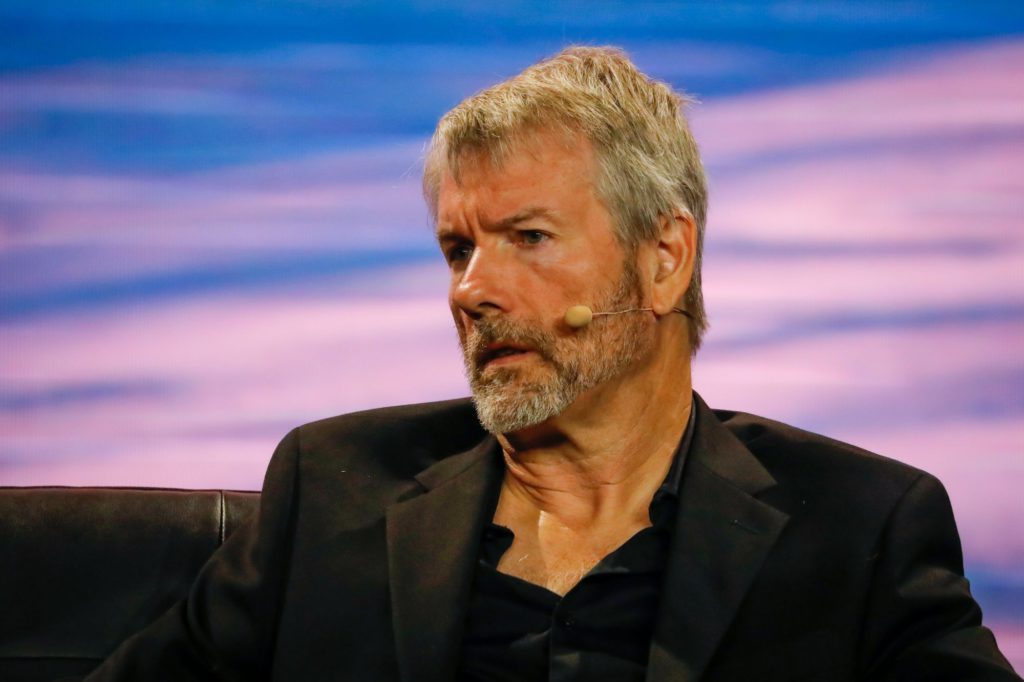
MicroStrategy Buys $10 Million Bitcoin in Middle of Crypto’s Big Chill

(Bloomberg) — Michael Saylor’s Bitcoin-backed tech firm MicroStrategy Inc. bought another 480 coins worth about $10 million at the height of the crypto market collapse. 

The firm purchased the coins between May 3 and June 28 for about $20,817 each, according to paperwork filed with the US Securities and Exchange Commission Wednesday. 

Bitcoin was trading close to $38,000 on May 3, hovering at about $20,000 from June 14 until June 28, implying the bulk of MicroStrategy’s purchases would have taken place over these last two weeks.

The acquisition represents MicroStrategy’s smallest Bitcoin buy in over a year. Its most recent purchase was nearly 90 days ago, on April 5, representing the longest stretch between purchases since the company embarked on its Bitcoin buying strategy. It has made nearly two dozen acquisitions over the last two years. 

As of June 28, the company holds about 129,699 Bitcoin bought for about $3.98 billion, or $30,664 per coin, according to the filing. 

The Tysons Corner, Virginia-based enterprise software maker is expected to reveal a significant financial hit when it releases its second quarter 10-Q this summer, given its enormous exposure to the bellweather token, which has more than halved in value this year. 

Still, CEO Saylor is bullish on the future of Bitcoin and said the firm is well-positioned for when the markets turn around, in a July 17 interview with Bloomberg. He has also been a consistent Bitcoin advocate on his Twitter account.

Meanwhile, companies like Block Inc. (formerly Square) and Tesla Inc. that have invested in Bitcoin also face potential losses this quarter, while the recent selloffs in Bitcoin and its peers could deter others from investing in the digital-asset space.

Bitcoin slipped a little more than 1% to 20,021 as of 12:10 p.m. in New York Wednesday, while MicroStrategy shares fell about 3%.

More stories like this are available on bloomberg.com

©2022 Bloomberg L.P.

Coinbase Renews Overseas Expansion Plan After Cutting US Staff

(Bloomberg) — Coinbase Global Inc. is turning abroad to fuel growth in new users and revenue, reviving an international push after laying off more than 1,000 of its predominantly US workforce.

The San Francisco-based cryptocurrency exchange is focused on building up its presence in Europe and is in the process of registering in markets including Italy, Spain, France and the Netherlands, Nana Murugesan, Coinbase’s vice president of business development and international, said in an interview from London. 

Already registered in the UK, Ireland and Germany, the company recently hired its first employee in Switzerland, he added. 

“In all these markets our intention is to have retail and institutional products,” Murugesan said. “It’s almost like an existential priority for us to make sure that we are able to realize our mission by accelerating our expansion efforts.”

Murugesan said the company is open to acquisitions that will accelerate its overseas expansion, especially with valuations plunging across the sector. The current crisis has wiped about $2 trillion from the total crypto market, pushing several companies toward insolvency.

Read more Crypto’s $2 Trillion Shakeout Portends Lehman Moment

While Coinbase cut 18% of its global staff in June, those cuts were focused on the US and amounted to just 7% in the company’s primary European offices of London and Dublin. Rivals including Gemini Trust, BlockFi Inc. and Crypto.com also announced cuts this month.

Shares in Coinbase have slumped almost 20% this week after Goldman Sachs Group Inc. downgraded the firm’s stock to a sell rating, predicting that Coinbase’s revenue could drop dramatically in the second half of this year.

Coinbase previously made a concerted push overseas in 2015, also a difficult time for crypto markets. Murugesan said the goal is eventually for the company’s international segment to dominate its business.

“It should be significant — majority probably — of our business,” he said. “This is what our goal would be, but exactly when do we get there, all of that, there’s a lot of dependencies.”

More stories like this are available on bloomberg.com

©2022 Bloomberg L.P.

Crypto Hedge Fund Three Arrows Set for Court-Ordered Liquidation

(Bloomberg) —

A British Virgin Islands court ordered the liquidation of Three Arrows Capital, the crypto hedge fund that bet big on everything from Bitcoin to the ill-fated Luna tokens and then succumbed to a $2 trillion wipeout of the digital-asset markets. 

The court, which made the order on Monday, has appointed two partners at consulting and advisory firm Teneo to handle the liquidation, according to a person familiar with the matter, who declined to be identified because the information is confidential. 

Teneo will oversee talks with potential buyers that may be interested in Three Arrows’s remaining holdings, such as tokens or equity stakes in crypto startups, the person added. A website will be set up to locate creditors and determine who is owed what. Three Arrows has invested in a range of decentralized finance platforms such as Aave and dYdX, as well as crypto infrastructure firms such as StarkWare, according to its website. It’s not immediately clear what or how much of these holdings will be subject to a sale. 

The court order brings down the curtain on one of crypto’s most famous hedge funds, founded by Zhu Su and Kyle Davies, former Credit Suisse traders, at the kitchen table of their apartment in 2012. Their fortune rose along with the crypto market bull run, and Three Arrows’ assets under management were estimated to be about $10 billion in March, according to blockchain analytics firm Nansen. In April, Zhu said the fund is planning to move its headquarters to Dubai from Singapore. 

Three Arrows has become emblematic of the industry’s excesses during last year’s bull run, when firms built up the leverage that hobbled them as the market turned. This month, a cryptic tweet from Zhu hinted at Three Arrows’s reversal of fortune and growing plight, setting off a market spasm.

The fund’s liquidity crunch is among a series of crises that rippled through the battered crypto sector during this year’s downturn, including the implosion of the TerraUSD stablecoin and liquidity issues at lenders Celsius Network and Babel Finance. Three Arrows’s woes have hit firms such as crypto broker Voyager Digital Ltd., which this week said it issued a notice of default to Three Arrows after failing to get repayment on a loan worth roughly $675 million. Earlier, crypto lender BlockFi and prime brokerage Genesis said they had to liquidate one of their large counterparties recently, without naming the counterparty. 

Read More: Crypto’s $2 Trillion Shakeout Portends Lehman Moment

Three Arrows’ fund is incorporated in the British Virgin Islands. The Commercial Court there orders a company to be liquidated if it is regarded as insolvent because it cannot pay its debts. Companies can also voluntarily liquidate, though that’s less common.  

Sky News reported on the liquidation order earlier. 

(Adds background details throughout)

More stories like this are available on bloomberg.com

©2022 Bloomberg L.P.

Snap Debuts Paid Service Snapchat+ With Exclusive Features

(Bloomberg) — Snap Inc. is launching a paid version of the widely used social media platform offering “exclusive” and “experimental” features.

For $3.99 a month, the subscription, called Snapchat+, will offer a unique experience to “some of the most passionate members of our community,” the company said in a statement on Wednesday. The company didn’t offer other details about the plan.

Snapchat, which benefitted from a surge in usage during the pandemic, has since had a tumultuous few months. In May, the company cut its revenue and profit forecasts and said it would slow hiring, sending its shares plummeting 43%. The Santa Monica, California-based company began testing a subscription service earlier in June. 

Other social media companies have also been turning to subscription models as a way to diversify their revenue streams away from advertising. Twitter Inc. has the Blue subscription, which grants ad-free access for $2.99 a month. Messaging app Telegram also rolled out its Premium subscription this month, giving users extra features for $4.99 a month.

Snapchat+ will be available in a handful of countries including US, UK, Germany and United Arab Emirates.

More stories like this are available on bloomberg.com

©2022 Bloomberg L.P.

Close Bitnami banner
Bitnami
