Bloomberg

Former Uber Security Chief Must Face Driver Fraud Charges

(Bloomberg) — Uber Technologies Inc.’s former security chief must face criminal charges that he defrauded drivers in an alleged coverup of a massive data hack at the ride-hailing company six years ago.

U.S. District Judge William H. Orrick’s decision keeps Joe Sullivan’s trial on track for September after prosecutors late last year added fraud charges to the case.

Sullivan was originally charged in 2020 with obstructing an investigation and concealing the 2016 theft of personal data of 50 million customers and 7 million drivers. He still faces those two counts.

Prosecutors “adequately stated that obtaining money from Uber drivers, in the form of service fees, was an object of Sullivan’s alleged scheme,” Orrick wrote in Tuesday’s ruling. “There may have been other objects of the alleged scheme,” the judge wrote, adding that the revised indictment including the wire fraud charges “sufficiently asserts that this was one.”

Orrick said at a June 2 hearing that while he might be blocked under the law from throwing out the fraud charges, he also had misgivings about the legitimacy of the counts — and the government’s case more broadly.

Read More: Uber’s Troubled Past Haunts Criminal Case of Ex-Security Chief

Assistant U.S. Attorney Frederick Dawson argued that by concealing the hack from drivers, Sullivan was attempting to prevent them from defecting to competitors’ platforms and “keep the money flowing” to Uber. Sullivan also kept the hack secret due to his own ego, because he didn’t want to admit the failure on his watch, Dawson said.

The motive “seems implausible,” Orrick said at the June hearing. The judge was also critical of Dawson’s claim that Uber’s obligation to disclose the hack was necessarily “intertwined” with Sullivan’s, such that Sullivan caused Uber to violate its duty to report the breach.

Orrick said he was dubious about the government’s plan to prosecute only Sullivan at the September trial knowing that he will point a finger at “an empty chair defendant” — the company.

Uber cooperated with the government’s investigation and isn’t a named defendant in the case.

Sullivan was fired soon after Dara Khosrowshahi joined Uber in 2017 as chief executive officer and set out to remake Uber’s scandal-ridden reputation. Sullivan argues he was scapegoated. He argues Khosrowshahi jettisoned him in an effort to close a $9 billion investment deal with SoftBank Group Corp. 

Sullivan, a former federal prosecutor and longtime Silicon Valley fixture who previously headed security for Facebook, faces as long as 20 years in prison if convicted of the most serious charges against him — though his sentence would likely be far less.

His lawyer, John Cline, argued in a court filing that the fraud charges are an attempt by prosecutors to dress-up an otherwise “unappealing” case into a “full-fledged fraud case with sympathetic victims.”

Cline declined to comment on Tuesday’s ruling.

The case is U.S. v. Sullivan, 20-cr-00337, U.S. District Court, Northern District of California (San Francisco).

(Updates with excerpt of judge’s ruling in fourth paragraph)

More stories like this are available on bloomberg.com

©2022 Bloomberg L.P.

Top Brazil Fund Sees Bleak Outlook No Matter Who Wins Vote

(Bloomberg) — One of Brazil’s most revered investors is bracing for a longer period of high inflation and elevated interest rates as leading presidential candidates double down on increasing public expenditures, jeopardizing the country’s fiscal outlook.

“Almost every single Brazilian presidential election held since the country’s redemocratization was binary,” Luis Stuhlberger, chief executive officer and chief investment officer at Verde Asset Management said at an event Tuesday. “This time around, investors consider them to be both bad candidates — each in their own way.”

Bankers Cringe at Both Choices in Brazil’s October Election

Former president Luiz Inacio Lula da Silva, who leads all polls for the October vote, has been calling for more public spending and a potential review of economic reforms undertaken by Michel Temer’s government even as his aides say the left-wing leader will not toss fiscal responsibility out the window. His opponent, President Jair Bolsonaro, has yet to convince investors that his administration’s recent spending splurge is only temporary as he seeks to boost approval ratings before the election. 

“Brazil’s spending cap rule became public enemy number one for both Bolsonaro and Lula — and that’s a serious problem,” Stuhlberger said about the rule that limits the growth of government expenditures. “We know that inflation and rates will be higher if the winner comes up with policies aiming at boosting spending — even if that doesn’t appear in the first year.”

Odds of reforms moving forward from 2023 on are low, according to Verde’s chief economist Daniel Leichsenring. “The outlook is bleak,” he said at the same event. “Now the debate is: what’s the magnitude of the setback factored in?”

In the meantime, Verde has been keeping about 18% of its portfolio invested in Brazilian stocks, betting that most of the bad news is already priced in. 

Brazil Election Trade Is Too Murky for $5.7 Billion Hedge Fund

Brazil’s Ibovespa trades at about 6.1 times forward earnings, well below its 10-year average of 11.6 times, battered by the prospect of a faster US interest-rate hike as well as fiscal and election worries at home. The central bank’s sharp monetary tightening — bringing the Selic rate to 13.25% from 2% in less than 16 months — had locals rotating away from equity and hedge funds and returning to fixed-income assets. 

“We’re long Brazilian stocks simply because they’re quite cheap,” Verde’s portfolio manager Luiz Parreiras said at the same event. “We’ve been trying to invest in companies that we judge to be big winners regardless of any macro or political scenario.”

Utility Equatorial Energia SA, pulp maker Suzano SA, car-rental firm Localiza Rent a Car SA, cash-and-carry chain Assai and health-care operator Hapvida are among the fund’s favored local stocks. Banks are also “super cheap” and the fund resumed investments in the sector, according to Parreiras. 

Verde, which has Credit Suisse Group AG as a minority holder and oversees over 40 billion reais ($7.6 billion), also has bets on oil and gold, and likes miner Vale SA’s perpetual bonds. 

The asset manager’s flagship fund has posted a return of more than 19,900% in local currency terms since its 1997 inception. It’s up 8.3% this year, trailing a basket of peers but beating the CDI benchmark rated used by the industry by more than three percentage points. 

Here are Verde’s views on other topics:

  • Parreiras on global stocks: “There was a certain exaggeration with growth stocks, which was adjusted. It’s not a walk in the park, but the valuation of US stocks is attractive. That doesn’t mean prices can’t get even more attractive.”
    • “Historically, there’s a bottom in the US market when: 1) the Fed alters its monetary policy or 2) when there’s a cyclical rebound in the economy. It seems the Fed will take longer to change its policy amid a sticky inflation, but we’ll monitor a potential economic low”
  • Stuhlberger on crypto: “I built a position in the Hashdex Nasdaq Crypto Index ETF, surfing a two-, three-month trend, but sold it when prices were up. The crypto debate ends up reflecting the search for safe havens”
  • Leichsenring on Brazil election: “Our models point to a high probability of Lula being elected, although by a small margin”
  • Parreiras on Petrobras: “We prefer to be long oil prices rather than being long Petrobras given the election challenges”

(Updates with the fund’s year-to-date performance, additional comments starting in 10th paragraph)

More stories like this are available on bloomberg.com

©2022 Bloomberg L.P.

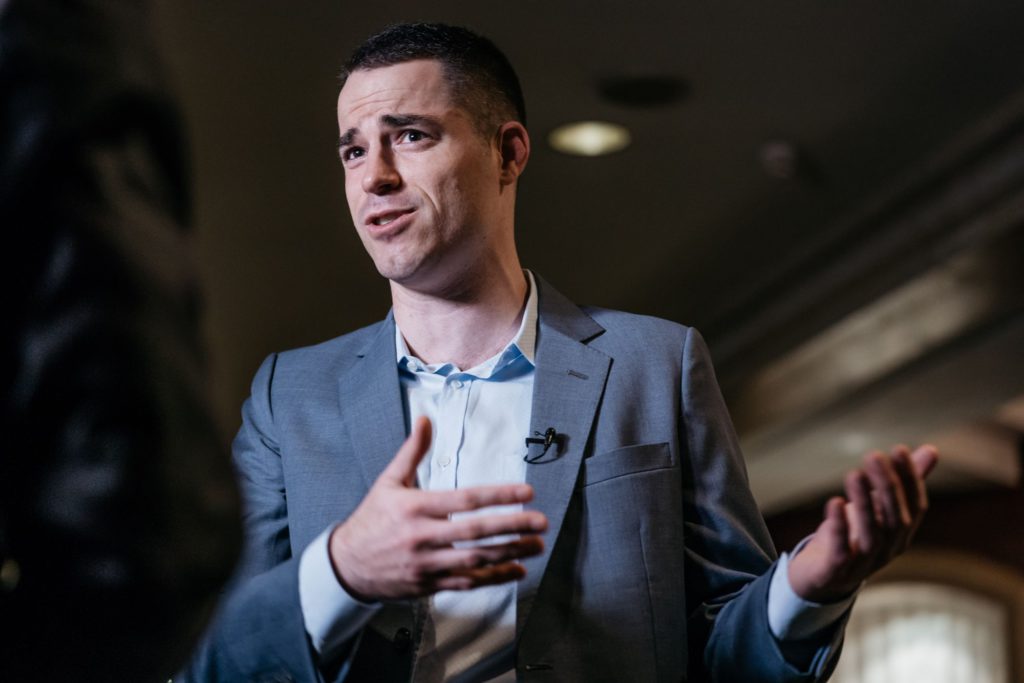
‘Bitcoin Jesus’ Roger Ver Spars With Crypto Exchange CoinFlex Over Margin Call

(Bloomberg) — A public dispute between a longtime crypto investor and a digital-asset exchange is the latest in a series of mini-crises that have rocked crypto markets in recent weeks. 

CoinFlex, a crypto exchange, on Tuesday named Roger Ver as the counterparty who failed to pay $47 million of stablecoin in a margin call. CoinFlex had previously disclosed a liquidity issue that led to the exchange pausing withdrawals. CoinFlex CEO Mark Lamb said in a tweet that the company served Ver, who is an investor in the exchange and was an early promoter of Bitcoin, with a notice of default. 

“I have no debt to CoinFlex,” Ver told Bloomberg in an emailed statement. Later, he tweeted that “some rumors have been spreading that I have defaulted on a debt to a counter-party,” without naming CoinFlex specifically. Ver said the rumors weren’t true, instead saying the counterparty owed him “a substantial sum of money, and I am currently seeking the return of my funds.” Lamb in turn responded on Twitter, saying Ver’s tweet is factually incorrect and CoinFlex owes him no funds.

A broad-based selloff in digital assets and the collapse of high-profile tokens have caused ripple effects across the industry. Major lenders Celsius Network and Babel Finance have frozen withdrawals, and Three Arrows Capital, a crypto hedge fund, is also facing liquidity troubles that have rattled investors. 

Read More: Crypto’s $2 Trillion Shakeout Portends Lehman Moment

CoinFlex on Monday announced a plan to make up the shortfall triggered by the default by issuing a new token that will offer a 20% annual return. The resumption of withdrawals, targeted for June 30, will depend on the level of demand for the new tokens. 

Ver earned the nickname “Bitcoin Jesus” for proselyting about the world’s largest cryptocurrency in its early days. He has invested in several Bitcoin-related startups, and has become one of the most vocal advocates of Bitcoin Cash. He is co-founder and investor at Blockchain.com, a crypto wallet and an exchange which recently raised a round of funding. In a YouTube video last year with Lamb, Ver discussed the yield earning opportunities at CoinFlex. 

Founded in 2019, CoinFlex is a smaller crypto exchange focusing on derivatives trading, with less than $200 million in total value locked, according to its website. 

In a previous update, CoinFlex said while it would typically liquidate any negative equity account, the client at issue had a non-liquidation recourse account. No other accounts are in negative equity, it added. 

More stories like this are available on bloomberg.com

©2022 Bloomberg L.P.

Accused ‘NetWalker’ Ransomware Hacker Agrees to Plead Guilty

(Bloomberg) — A former Canadian government employee has agreed to plead guilty in the US to charges that he worked for a ransomware gang that researchers say has reaped almost $50 million in illegal payments during the past two years. 

Sebastien Vachon-Desjardins has agreed to plead guilty to hacking-related charges, according to court documents filed Tuesday in federal court in Tampa. He was accused of working as part of a digital extortion group known as NetWalker. 

The ransomware gang has targeted US hospitals, law enforcement organizations, schools, colleges and universities, according to the FBI. The blockchain-analysis firm Chainalysis Inc. has determined that victims have paid $46 million in extortion fees to the NetWalker hackers since 2020. NetWalker has been among the most active ransomware gangs since it emerged two years ago, researchers determined, and the group has been particularly focused on health-care providers during the Covid-19 pandemic. 

The US Justice Department announced in March that Vachon-Desjardins, of Gatineau, Quebec, had been extradited to Florida from Canada. The US government also seized the equivalent of $28 million in Bitcoin from Vachon-Desjardins at the time he was extradited. 

The NetWalker gang offers ransomware-as-a-service, meaning it leases its malware to “affiliates” for a cut of the illegal proceeds. Vachon-Desjardins was described by the DOJ as an affiliate and accused of converting Bitcoin stolen from ransomware victims into Canadian currency. But the full extent of his alleged involvement in cyberattacks isn’t immediately clear.

The defendant previously worked for the department of Public Services and Procurement Canada, an agency that works on real estate for the federal government, according to CBC News. 

The case represents a rare example of an alleged ransomware hacker facing charges in a US courtroom. While many suspected hackers operate from Russia – outside the reach of US law enforcement – authorities say Vachon-Desjardins conducted much of his illicit activity from Canada. 

In his plea deal, the defendant also agreed to cooperate with US prosecutors as part of any connected investigations. 

Vachon-Desjardins faces as many as 40 years in prison under the terms of the agreement. The deal is subject to a court’s approval. 

An attorney for the defendant didn’t immediately respond to a request for comment Tuesday. 

The case is U.S. v. Vachon-Desjardins, 20-cr-00366, U.S. District Court, Middle District of Florida.

More stories like this are available on bloomberg.com

©2022 Bloomberg L.P.

CVS, Rite Aid Ration Contraceptive Pills as Demand Surges

(Bloomberg) — CVS Health Corp. and Rite Aid Corp. pharmacies are limiting purchases of emergency contraceptive pills as demand for the medication surged following the US Supreme Court decision that struck down the constitutional right to abortion.

CVS is temporarily limiting purchases to three pills per customer to ensure equitable access and consistent supply on store shelves, a spokesperson said Monday. The pharmacy chain has ample supply of the emergency contraceptives Plan B and Aftera,both online and in store, the spokesperson said. Rite Aid is also limiting purchases of Plan B to three per customer due to increased demand, a spokesperson for the company said.  

The court’s decision allowing individual states to ban abortion stands to have a strong and long-lasting impact on many dimensions of health care. Insurers and clinicians are already planning for pregnant people to cross state lines to seek procedures, leaving employers, insurers and advocacy groups to grapple with the costs and logistics. 

Many Walmart products have online purchase limits in place, a spokesperson for the company said in an email, without specifying whether emergency contraception pill purchases are limited. These limits may change during times of fluctuating demand, the spokesperson said.

Some chains haven’t put limits on the medications. Walgreens Boots Alliance Inc. hasn’t taken such steps, a spokesperson said. News of the limits on purchases was reported earlier by the Wall Street Journal.  

Kelso & Co. and Juggernaut Capital Partners, which bought Plan B One-Step from Teva Pharmaceutical Industries Ltd. in 2017, didn’t respond to a request for comment. The two firms operate a company called Foundation Consumer Healthcare that manages the product.

Last week’s historic ruling is likely to make abortions largely illegal in half the country and further polarize a deeply divided nation. Twenty-six states either will or are likely to ban almost all abortions, according to the Guttmacher Institute, a research organization that backs abortion rights. Thirteen have so-called trigger laws designed to automatically outlaw abortion when Roe was overturned.

Many people have already been preparing for what activists have described as a public-health emergency. Last month, when a draft of the Supreme Court opinion was leaked, online searches surged for over-the-counter emergency contraceptive medication, while increasing numbers made appointments to get intrauterine devices that provide long-term birth control. 

Before the Supreme Court’s ruling, Plan B was not in high demand on Amazon.com Inc. It was roughly the 10,000th most-searched item, according to e-commerce industry researcher Marketplace Pulse, which analyzes data from Amazon. On June 24, the day of the abortion-rights decision, it ranked within the online retailer’s top 100 search results. Amazon did not immediately respond to request for comment. 


(Updates with statement from Walmart in fourth paragraph. An earlier version corrected the description of pills in headline)

More stories like this are available on bloomberg.com

©2022 Bloomberg L.P.

Billionaire Robert Brockman Faces February 2023 Trial in Record Tax-Evasion Case

(Bloomberg) — The judge overseeing billionaire Robert Brockman’s tax-evasion case, the largest against an individual in US history, tentatively set his trial date for Feb. 23, 2023. 

Brockman, 81, is suffering from dementia and undergoing home hospice care, according to his lawyers. He appeared slack-jawed and in bed during a court hearing held by video on Tuesday, the first proceeding in the case since US District Judge George C. Hanks Jr. ruled May 24 that he was competent to stand trial in Houston. 

The judge had previously rejected claims that Brockman, a software entrepreneur and the former chief executive officer of Reynolds & Reynolds, is unable to aid in his defense. But on Tuesday, Hanks suggested Brockman could renew his incompetency claim. Hanks asked about his current condition. 

“He’s not doing well,” Brockman attorney Jason Varnado said. “He goes between a wheelchair and his bed, and he’s largely bedridden. It’s very difficult to communicate with Mr. Brockman. He’s in very poor shape, physically and mentally.”

Hanks said: “If there’s anything that comes up between now and February, please keep me in the loop.” 

The judge said he would likely sign an order later this week setting the trial date, subject to filings by the lawyers on the submission of expert reports in the case.

More stories like this are available on bloomberg.com

©2022 Bloomberg L.P.

US Sails Seized Russian Yacht to California From Fiji

(Bloomberg) — After a stopover in Hawaii, the $325 million superyacht that’s tied to Russian billionaire Suleiman Kerimov and that was seized by US authorities in Fiji has sailed into a port in Southern California.

The Amadea, a luxurious megayacht that’s nearly as long as a football field and features a helipad, docked in San Diego Monday morning local time, according to vessel data compiled by Bloomberg. It had spent a few days in Honolulu after the US hired a new crew and sailed the superyacht out of Fiji on June 7, flying the American flag after winning a legal battle.

The stop in San Diego caps a more than 13,000-nautical-mile odyssey for the vessel as it attempted to find a safe haven, with US agents from multiple government agencies pursuing it. The seizure is a huge win for the US as it looks to punish titans close to President Vladimir Putin by going after their megayachts, villas and other assets.

With the ship now in US hands, authorities from that nation will bear the responsibility for its maintenance, which the FBI has estimated will cost between $25 million to $30 million annually, according to court documents seen by Bloomberg. The Amadea will remain in Southern California, according to a Department of Justice representative. 

  • Follow the Amadea’s journey here.

President Joe Biden has pushed for legislation that’s been passed by lawmakers in the House of Representatives that would allow the US to seize yachts like the Amadea and other assets of sanctioned Russians, liquidate them and use those funds to benefit Ukraine. The European Union is considering similar measures.

Still, there may be risks for buyers of seized yachts, according to Benjamin Maltby, a partner who specializes in superyacht law at London-based Keystone Law.

“Buyers need to be aware that certain countries may not necessarily recognize the seizure and transfer of ownership,” said Maltby. “Clearly, the risk is higher for countries that are at odds politically with the West — and these are unlikely to be countries one would wish to cruise to — but it’s something potential buyers should keep in mind.”

Legal Fights

Some maritime analysts say the legal battles are likely far from over. In Fiji, the registered owner, Millemarin Investments Ltd., has contended the vessel isn’t owned by Kerimov as the US alleges but another Russian tycoon — Eduard Khudainatov, the former chairman and CEO of Russian oil and gas giant Rosneft Oil Co. Khudainatov doesn’t appear to be on any sanctions lists. Counsel for Millemarin didn’t respond to requests for comment, nor did Kerimov and his representatives.

Legal challenges over ownership need to be hammered out in the US courts, Fiji authorities and its courts said. Deep-pocketed tycoons have filed appeals before to fight asset seizures. The US and other governments will likely face rounds of court tussles when they move to sell the more than one dozen yachts worth over $2.25 billion that have been seized as part of the push to target oligarchs, spurred by Russia’s invasion of Ukraine in late February.

The US alleges that Khudainatov is “being used as a clean, unsanctioned owner” to conceal the Amadea’s true owner. Kerimov is a Russian gold billionaire who was first sanctioned by Washington in 2018, Bloomberg reported last month.

Shell Companies

The US says layers of offshore shell companies were created to conceal that Kerimov is actually the beneficial owner, with crew members giving code names for the sanctioned billionaire and his family members, according to a US affidavit reported earlier by Bloomberg. Kerimov, a member of Russia’s upper house of parliament, was also sanctioned by the UK and the EU in March for his close ties to Putin.

While Kerimov and his supporters will likely continue to pursue legal action to prevent the US from making good on its efforts to use asset forfeiture proceedings to enforce sanctions, many of the biggest challenges have already been overcome, Ian Ralby, chief executive of I.R. Consilium, a maritime law and security consultancy, said.

“Now that the Amadea is the continental US, dispensing of it should be able to occur in the same manner in which the US dispenses of the proceeds of crime on a regular basis,” he said. “The main challenge, if it is put up for public sale, will be finding a buyer willing to take the risk of becoming a Russian target. Then again, if you can afford that yacht, you can probably afford that risk.”

Kerimov is worth around $13.4 billion, according to the Bloomberg Billionaires Index. His family formerly held almost half of Polyus, the biggest gold producer in Russia. He beat money-laundering charges in France in 2018.

13,000 Mile Odyssey

The Amadea, which features a mosaic-tiled pool and lobster tank, has now logged more than 13,000 nautical miles since the Feb. 24 invasion of Ukraine — more than any vessel connected to sanctioned Russian tycoons, according to Spire Global Inc., a data and analytics firm that uses satellite technology to track maritime activity.

  • Want to interact with a tracker of yachts tied to sanctioned Russians? You can here.

It arrived in Fiji’s Lautoka port on April 12 after an 18-day journey that took it from the Caribbean to Mexico, data compiled by Bloomberg show. Fiji detained the superyacht the following week after the US government requested mutual legal assistance.

On May 3, Fiji’s High Court gave the green light for US and local authorities to seize the vessel, but a series of legal challenges from the registered owner ensued. The US has devoted considerable resources to obtaining the yacht, sending officials to Fiji from the US Marshals Service, the Federal Bureau of Investigation and the US Coast Guard, according to court filings.

The Amadea is among more than a dozen multimillion dollar Russian tycoon-linked megayachts rounded up by Western governments.

Germany has impounded Russian billionaire Alisher Usmanov’s superyacht Dilbar, valued at as much as $750 million. Italian authorities arrested a 530 million euro ($560 million) vessel owned billionaire Andrey Melnichenko, while Spain seized Viktor Vekselberg’s $90 million Tango as well as the $600 million Crescent believed to belong to Igor Sechin, head of Moscow-based Rosneft.

The Amadea’s seizure shows Russian tycoons are running out of places to park their floating palaces. Fearful of having their yachts impounded, owners have sent them to a small number of locales still considered friendly — allowing the vessels to dock or hang around unbothered — including Dubai in the United Arab Emirates, Turkey and the Maldives.

(Updates with Department of Justice comment in fourth paragraph.)

More stories like this are available on bloomberg.com

©2022 Bloomberg L.P.

Microsoft’s $22 Billion Combat Goggles Get Crucial Field Test With US Army Forces

(Bloomberg) — US Army forces have completed intensive testing of Microsoft Corp.’s new multifunction goggle — and the results may determine whether Congress rejects most of the $424.2 million proposed in next year’s defense budget to continue buying them.

Over three weeks ending June 18, 70 Army infantry wore the devices during three 72-hours scenarios involving movement toward an enemy, an attack and a defensive mission, according to Jessica Maxwell, a spokeswoman for the Defense Department’s testing office. The results are projected to be released in September, she said.

Microsoft aims to develop a “heads-up display” for U.S. ground forces, similar to those for fighter pilots. The Integrated Visual Augmentation System, or IVAS, would let commanders project information onto a visor in front of a soldier’s face and would include features such as night vision. It’s a customized version of the company’s HoloLens goggles. The Army has projected spending as much as $21.9 billion on the devices, spares and support services over a decade if all options are exercised.

Although the results of this month’s testing won’t come until late in the annual congressional budget process, they are likely to shape final negotiations among lawmakers, some of whom have signaled they aren’t ready to commit to buying the goggles.

This month, the House Defense Appropriations subcommittee adopted a draft budget that would cut all but $24.2 million of the Pentagon’s $424.2 million procurement request for the fiscal year that begins Oct. 1. The panel’s report cited “questions still outstanding regarding the production viability” of the goggles. Its Senate counterpart expressed similar skepticism in the current year’s defense legislation.

Army Secretary Christine Wormuth last month expressed confidence that the combat testing this month wouldn’t disclose any major issues.

More stories like this are available on bloomberg.com

©2022 Bloomberg L.P.

Russian Industry Faces Code Crisis as IT Providers Pull Out

(Bloomberg) — Russia’s reliance on foreign software to run its factories, farms and oil fields is turning into one of the biggest headaches for domestic industry as more IT providers pull out of the market in response to President Vladimir Putin’s invasion of Ukraine. 

International sanctions and tensions over the war have forced industrial manufacturers from Siemens AG to SMS Group GmbH to wind down operations in what was once one of their biggest markets. Their computer programs might be missed more than their machines.

Sourcing software for computer-aided design and manufacturing is turning into a major issue that will be a drag on development, according to Elena Semenovskaya, a Russia-focused analyst at IDC. 

“Russian analogues in this area are much weaker and the need is high,” Semenovskaya said. “But for now the approach is to rely on piracy and outdated copies, which is a dead-end and not sustainable.”

Foreign software is often baked directly into industrial machinery and controls high-precision processes. Equipment makers closely guard their intellectual property and in many cases don’t give clients access to the codes used to run their plants, Sergey Dunaev, the chief information officer of Severstal PJSC, said in an interview. 

In steelmaking, which can require accuracy within a few hundredths of a millimeter for high-value products, even small deviations can render output worthless, according to Dunaev. 

While the Russian economy, helped by high commodities prices, has fared better than most forecasts since the war began, it is facing a period of structural adjustments pushing it into recession. Steel production nationwide is down 25% to 30% since the invasion, Severstal’s owner, Alexey Mordashov, said this month. 

‘Suboptimal’ Alternatives

The Russian government has emphasized import substitution since many industries were hit by an earlier wave of US and European sanctions after the 2014 annexation of Crimea, but its ambitions failed to take into account how modern facilities rely on programming. 

The steel industry alone invested about 3.2 trillion rubles ($59 billion) in the last two decades to rebuild capacity after its post-Soviet decline, according to the Russian Steel Association. Much of that was spent on equipment supplied by foreign companies like Siemens, SMS Group and Danieli & C. Officine Meccaniche SpA to increase the sector’s efficiency.  

“All industries are facing the same problems,” Dunaev said. “Many processes in modern units are controlled by software.”

The exodus is a challenge for the nation’s oil and gas industry, where domestic software accounts for only 5% to 10% of industry-specific tools and is often “suboptimal,” according to First Deputy Energy Minister Pavel Sorokin.

The situation is made worse with the depletion of Russia’s traditional oil deposits, forcing producers to tap hard-to-recover reserves that require more complicated equipment and programs if the country wants to maintain output at current levels. 

“Super-sophisticated software for seismic, for modeling layers, drilling and hydraulic fracturing won’t be needed if we won’t have equipment for all those processes,” Sorokin said earlier this month at the St. Petersburg International Economic Forum.

The share of imported equipment in Russian oil and gas has fallen to 40% as of April, compared with about 60% in 2014, according to the head of B1 Energy Center, Olga Beloglazova, who cited estimates from the country’s trade ministry.

Imported MES

Even local food production, where Russia made strides in domestic farming in recent years, is facing challenges. Meat processing facilities at Ros Agro Plc, one of the country’s biggest agricultural holdings, rely on imported manufacturing execution systems, or MES. 

“We are critically dependent on European companies in terms of MES, and we do not yet know what to do if something happens,” Maxim Basov, chairman of Ros Agro Plc, said at the St. Petersburg forum. 

If software crashes lead to equipment failure, plants could require replacement parts that are difficult to source and increasingly expensive, Severstal’s Dunaev said. To avoid such delays, he proposed industry players cooperate to create a database of spare components that can be shared as necessary. 

It’s not just industry that’s affected. SAP SE  updates and services for Russian companies, leaving businesses and government services that rely on its software potentially vulnerable to security breaches and viruses. Microsoft Corp. is scaling down its business in Russia.

Russia’s ambitions for a 5G mobile network have also been upended by the war, raising fears the economy will lose its competitiveness as it struggles to maintain existing services while other countries upgrade their infrastructure. 

New systems won’t appear overnight. It took nearly a decade and around $100 million to create Russia’s domestic alternative to Microsoft Office, according to Dmitry Komissarov, the developer of MyOffice. 

“It is necessary to take a look at inventory and determine what solutions are missing, and then start developing them,” Komissarov said.  

(Updates with analyst comment in 14th paragraph. A previous version corrected the description of Microsoft’s Russia plans.)

More stories like this are available on bloomberg.com

©2022 Bloomberg L.P.

Citadel Securities’ Business Head Nazarali Leaves for Joint Crypto Venture With Virtu

(Bloomberg) — Citadel Securities’ global head of business development, Jamil Nazarali, is leaving to head a joint venture the firm is building that’s intended to increase investors’ access to cryptocurrency. 

Nazarali, 54, was named chief executive officer of the platform the company is creating with Virtu Financial Inc., Charles Schwab Corp. and Fidelity Digital Assets, according to an internal memo seen by Bloomberg. He starts next week and will transfer his current responsibilities to Chief Operating Officer Matt Culek, Citadel Securities said in the memo. 

Citadel Securities is investing in and developing the crypto product with help from several market makers and brokerage firms, Bloomberg reported earlier this month. Sequoia Capital and Paradigm, venture capital firms with extensive interests in crypto and backers of Citadel Securities itself, are also partners on the project. 

“Under Jamil’s leadership, this new marketplace will bring together the best of what is new in crypto with what has been proven to create better outcomes in traditional markets,” Chief Executive Officer Peng Zhao said in the Tuesday memo.  

A representative for Citadel Securities declined to comment.  

The company is moving deeper in digital assets even amid industry staff cuts and a plunge in prices that’s being called a “crypto winter.” But Wall Street and many investors have been growing more comfortable with crypto in recent years, prompting firms such as Citadel Securities to embrace the asset class.

Still, the firm says it’s remaining cautious. There are “challenges and risks involved in participating in today’s crypto markets as a result of regulatory uncertainty, conflicts of interest, inconsistent asset safekeeping and poor vetting of counterparties,” Zhao said in the memo. 

Its partner on the project, Virtu, also sees a need to enter the space. “I don’t have a view on crypto, and frankly I don’t need one,” Virtu CEO Doug Cifu said at an event hosted by Piper Sandler this month. “There is an intense demand, especially from retail.”

Larger, institutional investors have a desire to enter into crypto in a more meaningful way, but there are still regulatory issues and concerns with the existing ecosystem, said Cifu. “Institutions should feel good about what they’re doing and have confidence in the marketplace,” he said.

Best Practices

The new venture will work with other industry leaders and regulators to establish best practices that address security constraints and other concerns that are keeping certain investors away from crypto, Zhao wrote in the memo. Investors in digital assets typically use exchanges such as FTX Trading Ltd., Coinbase Global Inc. or brokerage apps such as Robinhood Markets Inc. 

Nazarali, one of Citadel Securities’ most senior and longstanding employees, was previously head of Citadel Execution Services and an adviser to the firm. Later, as global head of business development, Nazarali managed relationships with exchanges and other key business partners. He previously led electronic trading at Knight Capital Group.

Citadel Securities has grown from a small group built alongside Ken Griffin’s multibillion-dollar hedge fund into a global trading behemoth. Today it’s a market maker in equities, options, Treasuries and ETF trading that rakes in billions a year. The new venture is its first entry into cryptocurrencies, which it previously shied away from. 

Read More: Citadel Securities Opens Up After Record $7 Billion Windfall

(Updates with comments from Virtu’s CEO in eighth and ninth paragraphs.)

More stories like this are available on bloomberg.com

©2022 Bloomberg L.P.
Close Bitnami banner
Bitnami