Bloomberg

Amtrak Train Strikes Dump Truck, Killing at Least Three People

(Bloomberg) — An Amtrak train with 255 people onboard collided with a dump truck Monday afternoon in Missouri, killing at least three people when multiple cars ran off the tracks.

The deaths were confirmed by an official with the Missouri State Highway Patrol. Amtrak said in an initial statement that there were “early reports of injuries.”

The train was traveling to Chicago from Los Angeles when it hit the truck at 1:42 p.m. at a public crossing near Mendon, Missouri, Amtrak said. The collision resulted in the derailment of eight cars and two locomotives.

There were 243 passengers and 12 crew members on the train, Amtrak said.

Photos and video posted online by users who said they were onboard showed cars on their side, with people standing atop and beside the train.

Local authorities are assisting customers, Amtrak said. The rail service activated its incident response team and has deployed emergency personnel.

The derailment follows an accident involving an Amtrak train that collided with a car in California on Sunday, resulting in three deaths, according to multiple local media reports. Another Amtrak train derailed in Montana last year.

More stories like this are available on bloomberg.com

©2022 Bloomberg L.P.

Crypto Exchange CoinFlex to Issue Tokens After Withdrawal Freeze

(Bloomberg) — Cryptocurrency exchange CoinFlex plans to raise funds by issuing a new token that will offer a 20% annual return, in an effort to resume withdrawals after a client failed to repay a $47 million debt. 

The platform said it will start to issue $47 million of what it calls “Recovery Value USD” tokens on Tuesday. The resumption of withdrawals, targeted for June 30, will depend on the level of demand for the new tokens. 

“We’ve spoken to a significant amount of private investors such that we think that at least half of the issuance is going to be subscribed for,” Mark Lamb, chief executive officer of CoinFlex, told Bloomberg News in New York on Monday. 

The token sale is eligible only to non-US, sophisticated investors, according to the statement. Founded in 2019, CoinFlex is a smaller crypto exchange focusing on derivatives trading. The exchange’s investors include Roger Ver, one of the most vocal Bitcoin Cash advocates.

CoinFlex paused withdrawals last Thursday after an unnamed counterparty, a high-net-worth individual with “substantial shareholdings in several unicorn private companies and a large portfolio” experienced liquidity issues and failed to repay debt.


Lamb declined to name the counterparty, though he added CoinFlex believes this liability represents only a “small fraction” of the counterparty’s overall private company assets. 

The pause comes amid liquidity problems and contagion throughout the industry. Major lenders Celsius Network and Babel Finance have frozen withdrawals, and Three Arrows Capital, a crypto hedge fund, is also facing liquidity troubles that rattled investors. 

CoinFlex has said the counterparty at issue isn’t Three Arrows Capital or any lending firm. While it would typically liquidate any negative equity account, the user had a non-liquidation recourse account, according to CoinFlex. No other accounts are in negative equity, it added. 

In addition, CoinFlex said it is also creating a new model for transparency around margins after the restoration of withdrawals. The values of every account’s future positions will be made publicly available via an external auditing firm, attested to every hour. They plan to release information on the collateral held.

More stories like this are available on bloomberg.com

©2022 Bloomberg L.P.

Hong Kong’s Handover Generation Is Caught in China’s Whirlwind

(Bloomberg) — How does Hong Kong look to people born in the year of the handover — for whom the city has always been under Chinese sovereignty?

Some feel their fate is tied to Hong Kong’s, while others feel like bystanders as Beijing tightens its grip. Many plan to leave sooner or later. We spoke to six 24- and 25-year-olds about the Hong Kong they grew up in, and the one they expect to exist in another 25 years. 

The returning professional

“I feel helpless witnessing the changes that Hong Kong has been through,” said Keanne Lee. “At the same time, I want to keep a glimpse of hope alive that the city won’t lose its uniqueness.”

Lee studied at a Hong Kong school where lessons are taught in English, then went to university in the UK. She returned to her home city after graduation, where she’s now a marketing executive for an e-commerce company. She has no plans to move abroad permanently in the near future.

The growing pressure on school pupils to learn Mandarin is one of the biggest signs of change she’s witnessed. The Chinese government wants 85% of citizens to speak the national language by 2025, which critics fear will erode regional languages like Cantonese. “I don’t think Hong Kong can escape the fate” of becoming “more culturally homogeneous,” Lee said.

She believes mainland China’s rapid development, especially in technology, makes some people proud of their motherland. By comparison, she feels Hong Kong’s progress since 1997 has been relatively limited.

But she worries that closer ties with the mainland would make Hong Kong “just another city in China” and that the former British colony risks losing its status as an international financial gateway.

“Hong Kong is unique because of its sophisticated blend of East and West culture. When there wasn’t such a strong sense of nationalism, our perspectives were less narrow,” Lee said. “We had greater inclusiveness toward all sorts of culture.”

The former politician

Herman Yiu was elected in Hong Kong’s district council election in 2019 — the city’s first election after months of violent protests. Pro-democracy candidates like Yiu won most of the available seats, but many quit or were removed from office as Beijing’s campaign for greater control of the city quashed political opposition. 

Yiu served a three-month prison sentence for unauthorized assembly and was released in October. 

“No one ever thought becoming a politician could be such a dangerous thing in Hong Kong,” Yiu said. Most of his politician friends are either in jail or in exile, he added. “It’s really sad.”

How China’s National Security Law Changed Hong Kong

Still, Yiu plans to stay in Hong Kong for now. “My family is definitely one of the concerns. I don’t think they would be able to live in a foreign country,” he said, adding “I still want to contribute to the community, to Hong Kong.”

He feels that Hong Kongers who were born in 1997 “are special. Every milestone in our lives is linked to some important event in Hong Kong. It’s like our fate is tied to Hong Kong’s. That’s why it’s even harder for me to give up on Hong Kong,” he said.

As for the next 25 years, “no one has a crystal ball,” he said. “But one thing is for sure, those who are willing to follow China’s playbook will get to stay. A new Hong Kong is already in the making.”

The investment bank analyst

Mr Cheng’s parents moved to Hong Kong from mainland China when he was a child in search of opportunities in the city. Twenty years later, he still sees the former British colony as a place full of potential.

“Many people are emigrating because they think what’s happening around us has touched their bottom line, but so far it’s fine for me,” said Cheng, who now works at a European investment bank as an analyst. He didn’t give his full name for fear of losing his job. 

He doesn’t plan to leave Hong Kong permanently, but might look for a job in mainland China in future.

“If you want to make a lot of money, working in the mainland might be a better option, where costs are lower,” he said, adding that he wouldn’t do that until “I’ve achieved mid-level roles.”

Emigrating would mean “I won’t be able to do what I’m doing or stay in the financial industry,” he said. “The things I’d have to analyze would be different.” He added that changing careers would lower his standard of living.

Cheng sees Hong Kong as “a stable place.” He’s confident it will maintain its status as an international financial center for decades to come.

“Even if China pushes Shanghai and Shenzhen to replace Hong Kong as a financial hub, foreign capital won’t be putting all their money in the mainland if China’s market isn’t fully open,” he said.

The international school graduate

“Ten years to 25 years, that’s really hard to say,” said Ryan Cheung when asked if he will remain in Hong Kong. “If you say, you know, five to 10 years — possibly.”

He was born in Hong Kong and went to an international school there, but he’s also lived in Shanghai and in Waterloo, Canada, where he went to university before returning to his home town in 2020. His experiences opened his mind to how different life could be in different environments, he said, and he views Hong Kong as a temporary base. He currently works part-time for a non-government organization and as a rock-climbing instructor.

The city’s “high-stress” environment and the lack of diverse job opportunities are among the reasons he wants to leave.

“Even getting your first job in Hong Kong can be extremely difficult,” Cheung said. Employers in the city “don’t value what individuals think, and success at the job depends on whether you are able to follow and obey orders without question.”

He feels it’s increasingly difficult for young people to climb the career ladder. “A lot of opportunities are no longer available to us,” he said, adding that opportunities in his field — environmental science — are especially scarce in a city obsessed with finance and real estate.

“I was fortunate enough to have studied in an international school,” he said, “where one could explore different ways of thinking and learning in an environment where individual thoughts and opinions are valued.” Overseas opportunities may be more limited for people whose education centered on academic performance and gave them less freedom to pursue their interests, Cheung added.

The activist

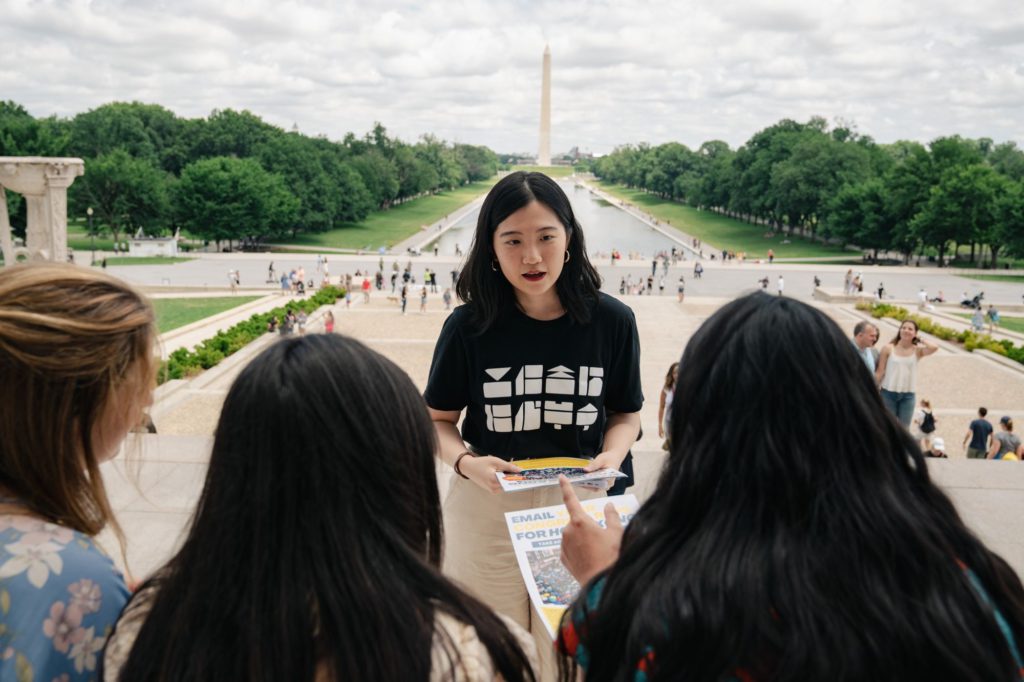
Anna Kwok hopes she will return to Hong Kong, the city where she grew up, eventually. But as an activist she is too worried about getting arrested under the National Security Law to go there now. “Every single morning, I wake up and then I realize I’m not at home and I cannot go home,” she said. “I better do something to make sure that I can get home one day.”

She is currently living in Washington, D.C., where she works as a strategy and campaign director for the Hong Kong Democracy Council, a US-based advocacy group founded during the 2019 demonstrations. Kwok was studying at New York University when the protests erupted, but participated in Hong Kong’s social movement from a distance.

She used social media and online forums to bring attention to petitions, sent protective riot gear to protesters back in Hong Kong and helped crowdfund a newspaper advertising campaign to raise international awareness of the pro-democracy movement. She’s now seeking asylum in the US.

“You can see that an overwhelming majority of Hong Kongers who are of my age and my generation really want democracy,” she said. Kwok sees 1997 as “the beginning of an end.” She fears Hong Kong will “descend into chaos” without a change of political direction — “a city without freedom, without democracy, and also without the trust of the people.”

The future emigrant

Kelvin Yim was born four days after Hong Kong’s handover to China, making him ineligible — just — for a British National (Overseas) passport. “It would definitely have been a bonus if I could have had a BNO,” he said. However, with countries including the US, Canada and Australia making it easier for people from Hong Kong to apply for residence, he doesn’t see it as a big disadvantage.

Yim, who works as a programmer at a Chinese bank, plans to leave Hong Kong for good in a few years’ time.

“You begin to feel that no matter how hard you work, you can’t live comfortably in this place,” he said. “Money is more important than anything else here.”

He says that even though he might face discrimination as an immigrant, “being in Hong Kong makes me feel just as exploited.”

He’d ideally like to find an employer to sponsor his move. But if the UK government allows people born after July 1, 1997 to apply for the BNO visa, he’ll consider that route too.

“The majority of people are discouraged from emigrating because of money, but I think the advantage of going on your own and being young is that you can be really frugal,” Yim said. “Even if I eat cup noodles every day, I don’t think it’s a problem.”

“The most important thing is to have the courage to go,” he added.

Yim expects Hong Kong to be very different in another 25 years. “The communication tools we use might be different, Internet or TV content might have changed, and the language might not be the same,” he said. “Cantonese might no longer be the primary language.”

— Interviews by Olivia Tam, Shawna Kwan, John Cheng and Josie Wong. 

More stories like this are available on bloomberg.com

©2022 Bloomberg L.P.

Sony’s Next Big Thing in Tech Is Helping Honda Take On Tesla

(Bloomberg) — In early 2020, Sony Group Corp. Chief Executive Officer Kenichiro Yoshida took the stage at the Consumer Electronics Show in Las Vegas — the tech industry’s main annual event — and announced a once-in-a-decade pivot: the Japanese electronics maker was joining the electric vehicle race.

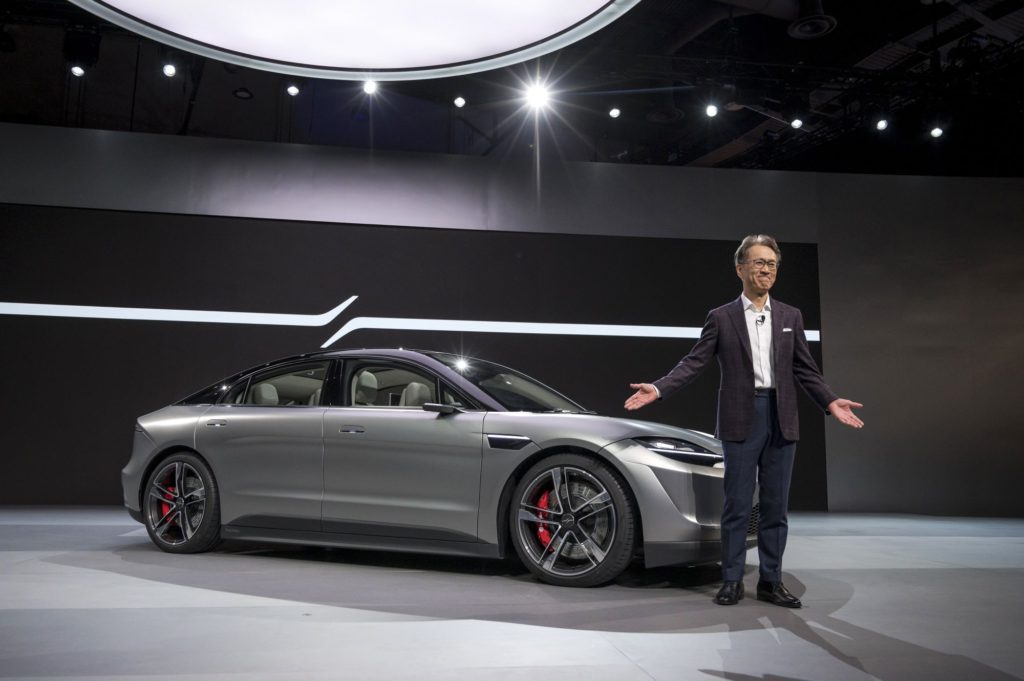
As Yoshida wrapped up his 30-minute presentation, the lights on stage dimmed and a glowing grille emerged from the shadows. The CEO raised his hands as a sleek, Sony-branded car rolled onto the stage. Like mobile phones during the past decade, “the next megatrend will be mobility,” Sony’s chief declared. 

With Yoshida’s pronouncement, the 76-year-old Japanese company joined a growing roster of technology giants plotting their foray into the automobile industry. As vehicles become electric, autonomous, gadget-stocked and web-connected, the movement is luring a wide array of new players — most notoriously Apple Inc. with its secretive Apple Car — all betting they have the technologies necessary to disrupt the $3 trillion market.

While Big Tech’s jostling has largely been downplayed by many incumbent carmakers, the push by Yoshida, 62, gained him an unlikely fan back in Japan: Toshihiro Mibe, who at the time was running research and development at Honda Motor Co.

Of all Japan’s carmakers, Honda had thrown itself most aggressively into EVs, targeting a full phase-out of combustion-engine vehicle sales by 2040. From early on, Honda saw potential for collaboration with Sony with its consumer electronics, autonomous driving sensors and software as a way to differentiate new models and add value to the low-margin business of making cars.

Behind the scenes, Mibe had spent years courting Sony’s top management, seeking to sell them on his vision of the companies’ potential synergies, people familiar with the executive’s approach said. When Mibe, 60, became Honda’s CEO last year, those overtures took on new weight. After a number of meetings between individuals ranging from the companies’ top executives to engineers, plans for a joint venture began to solidify around the end of 2021, said the people, who asked not to be identified because the details aren’t public. 

That culminated in the two unveiling plans to create a new company to develop and sell next-generation EVs. Two iconic companies, symbols of Japan’s economic recovery from the ruins of war, were joining forces.

“Companies from completely different industries have different cultures and sources of value,” Mibe said, speaking about Honda’s partnership with Sony in an interview in April. “There was this idea that we could create a chemical reaction together. This was a fascinating concept, and I met with President Yoshida and said, ‘let’s do this.’”

For Honda, Mibe’s approach makes sense. Over the past few years, Tesla Inc., with its autonomous driving features and ability to improve car performance via over-the-air updates much like an iPhone, has highlighted the knowledge gap when it comes to the software powering the next generation of cars. 

Read more: Big Tech Wants Drivers’ Eyes on Screens Instead of on the Road

Sony envisions the cars will be connected to the cloud and equipped with in-house sensors that will eventually enable level-four autonomous driving. At that stage, cars don’t require human interaction in most circumstances, thereby freeing up drivers to game, potentially, or view Sony content. Honda confirmed these technologies are under consideration for future joint-venture models, the first of which are due for release in 2025.

For Sony, partnering with Honda gives it access to supply chains, production know-how and vehicle-sales expertise. Automaker operations are held to stringent safety standards and they need to be responsible for the whole lifecycle of their vehicles, from maintenance to eventual scrapping.

While the process of forming Big Tech-automaker partnerships might prove challenging, the model is “essential” to keeping pace with the rapid evolution of cars, said Olaf Sakkers, co-founder of RedBlue Capital, an early-stage investor in mobility startups. 

“There’s a clear target — Tesla — compared with which everyone is falling behind,” Sakkers said. Sony and Honda’s alliance shows that “companies are having to realize what their core competencies are and where they need technology and partners,” he said. Not only is there likely to be more consolidation within the automotive industry itself going forward, but “the partnership model is going to be seen more and more.”

That doesn’t mean it will be easy. Apple has searched far and wide for an ally to help it develop and produce its car, but talks with the likes of Hyundai Motor Co. and Ferrari NV have stalled, likely because they’re wary of becoming an assembler for a product that could end up cannibalizing their business. Most tech-auto tie-ups so far have avoided Honda and Sony-style 50-50 partnerships.

Operational differences could also jeopardize longer-term collaboration, including the relatively slow and meticulous pace of development in the auto industry, according to Bloomberg Intelligence analyst Tatsuo Yoshida.

While Sony has its hand in a sprawling range of businesses from gaming to movies and music, Honda’s fate is tied firmly to the appeal of its EVs, Yoshida said. That means it’d bear the brunt of losses if the partnership were to end after its initial 2025 vehicle release. “The real question is what comes after,” Yoshida said.

Yet Honda chose Sony from several potential electronics company candidates, and Sony had also been looking for a manufacturing partner. The companies say they selected each other for a reason.

During a joint briefing in March, Yoshida and Mibe said their common culture of wanting to “challenge the next big thing,” would help bridge the divide between their industries. As evidence of this, Sony’s CEO alluded to the companies’ historic ties dating back to their founders, Soichiro Honda and Masaru Ibuka.

Honda and Ibuka famously developed a close friendship while building their businesses. The two met for the first time in the mid-1950s, when Honda visited Sony headquarters and asked co-founder Ibuka whether the semiconductors used in transistor radios could also be used to switch engines on and off — a radical idea at the time. The companies tested out the idea, but ultimately didn’t move forward, Ibuka wrote in a 1990s book he authored about Honda’s founder.

Nevertheless, Ibuka recalls that their willingness to try new things continued to draw the two leaders together through the years. In their respective businesses, Honda and Sony “put primacy on making attempts,” Ibuka wrote, “which meant that failure came frequently.”

“Success and failure are two sides of the same paper,” Ibuka wrote, referring to the famous line from Honda’s founder. “With everyone so bent on not failing, that’s why cases of success are so rare.”

More stories like this are available on bloomberg.com

©2022 Bloomberg L.P.
Coinbase Sinks as Goldman Downgrades to Sell After 75% Rout

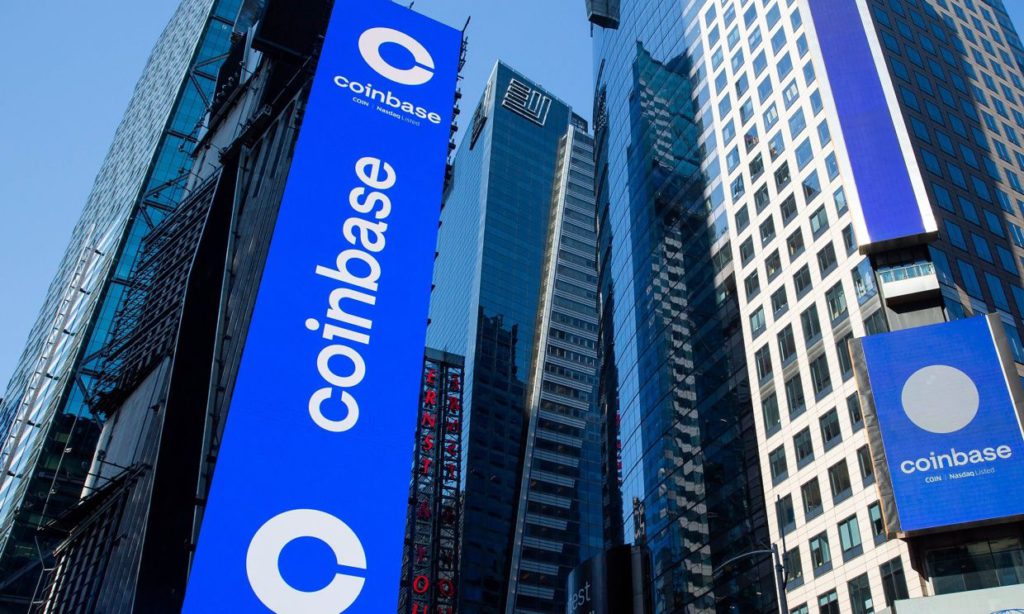
(Bloomberg) — Goldman Sachs Group Inc. analysts downgraded Coinbase Global Inc. to a sell rating as the crypto winter continues to take its toll on the struggling digital currency exchange.

Shares of the firm slumped 11% to $55.96 on Monday, extending their decline this year to 78% as Bitcoin trades at less than half its value from just six months ago. Goldman analyst William Nance cited the “continued downdraft in crypto prices” and the broader drop in activity levels across the industry. Coinbase had fallen 75% this year prior to the downgrade.

“We believe Coinbase will need to make substantial reductions in its cost base in order to stem the resulting cash burn as retail trading activity dries up,” Nance wrote in a note on Monday.

Coinbase quickly became the equities market poster child for the boom in digital currency prices last year with the largest US cryptocurrency exchange seeing its value surge above $75 billion as Bitcoin hit a record high. Since then, the company has been dogged by a laundry list of issues including declining revenues and trading volumes as the broader crypto market endures one of its worst selloffs in history. Goldman Sachs was one of the Wall Street banks that advised Coinbase on its direct listing in April 2021. 

As of Monday’s close, the company was valued at about $12.4 billion. Coinbase has 20 buy ratings, 6 holds and 5 sell recommendations, according to data compiled by Bloomberg. The average analyst share-price target sits at about $117, its lowest level on record, but more than 100% above where it currently trades.

Equity investors aren’t the only ones souring on Coinbase. The firm’s bonds have also come under pressure, with its senior unsecured bonds maturing in 2031 among the biggest decliners in the US high-yield market on Monday.

Read more: Crypto Stocks Show Why They’re Among the Riskiest of Risk Assets

Increased competition from other firms has also weighed on the crypto exchange. Earlier this month, Binance.US revealed that it would be offering zero-fee trading for Bitcoin and said it had plans to also eliminate fees on other tokens in the future. Coinbase also announced this month that it would be laying off 18% of its workforce as it attempts to reel in operating expenses that ballooned to a record $1.7 billion in the first quarter.

Read this next: A $2 Trillion Free-Fall Rattles Crypto to the Core

“Coinbase faces a difficult choice between shareholder dilution and significant reductions in effective employee compensation, which could impact talent retention,” Nance said.

(Updates share price moves throughout.)

More stories like this are available on bloomberg.com

©2022 Bloomberg L.P.
Bankman-Fried’s FTX Is Seeking a Path to Buy Robinhood

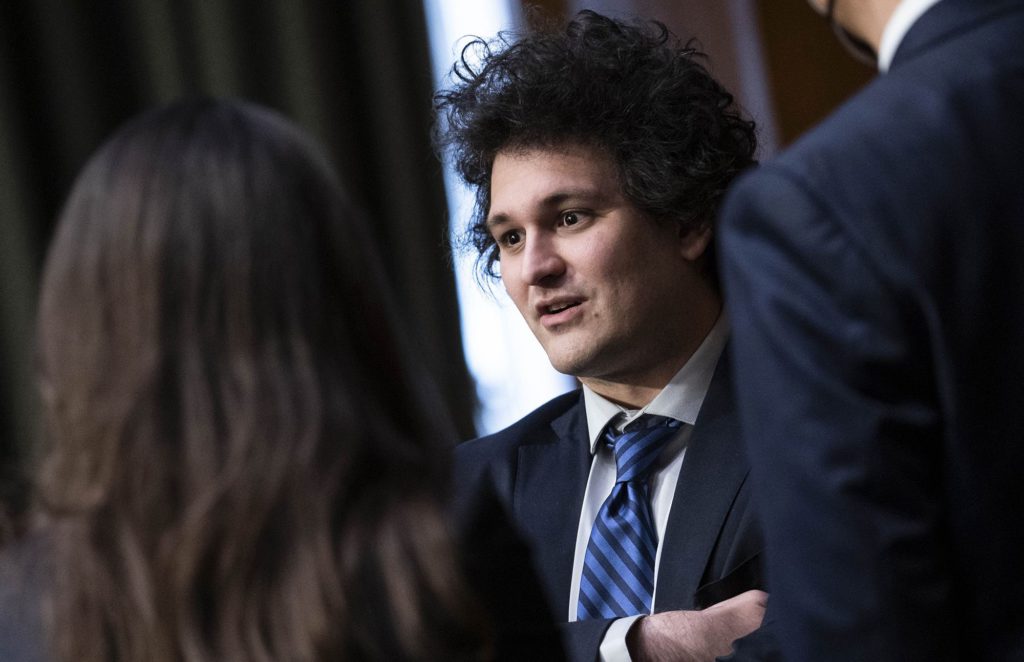
(Bloomberg) — Sam Bankman-Fried’s FTX crypto exchange is exploring whether it might be able to acquire Robinhood Markets Inc., according to people with knowledge of the matter.

FTX is deliberating internally how to buy the app-based brokerage, one of the people said, asking not to be identified because the matter isn’t public. Robinhood hasn’t received a formal takeover approach from FTX, another person said. No final decision has been made and FTX could opt against pursuing a deal, the people said.

“We are excited about Robinhood’s business prospects and potential ways we could partner with them,” Bankman-Fried said Monday in an emailed statement. “That being said, there are no active M&A conversations with Robinhood.”

A spokesman for Menlo Park, California-based Robinhood declined to comment.

Robinhood’s co-founders, Chief Executive Officer Vlad Tenev and Chief Creative Officer Baiju Bhatt, control more than 50% of Robinhood’s voting power, according to a regulatory filing. In May, Bankman-Fried disclosed that a company he controls, Emergent Fidelity Technologies, bought a 7.6% stake in Robinhood. He paid about about $648 million for the shares.

Read more: Robinhood Surges After Sam Bankman-Fried Reports 7.6% Stake

Robinhood has lost about three-quarters of its value since the firm’s initial public offering last July. The stock surged following Bloomberg’s report, triggering a trading pause, and gained 14% to close Monday at $9.12. That lifted Robinhood’s market capitalization to almost $8 billion.

A deal would combine two companies that vaulted to prominence during a pandemic-fueled trading boom, only to struggle with sharp declines this year in equity and crypto markets. It would also mark the end of a period of dramatic transformation for Robinhood, a popular trading platform among fledgling investors, with 22.8 million accounts.

The brokerage popularized commission-free trading for people with modest account balances who piled into financial markets during the early days of Covid-19. Investor enthusiasm for meme stocks such as GameStop Corp. and digital tokens including Dogecoin fueled its ascent.

Read more: Robinhood’s Stock Is Now Worth Less Than Its Cash on Hand

Robinhood has struggled to maintain that momentum since the IPO, with active users and revenue plummeting. FTX, meanwhile, has been on the hunt for deals. It acquired Embed Financial Technologies earlier this month, giving one of the world’s biggest crypto exchanges a foothold in US stock trading and clearing. FTX announced it was beginning to roll out its own US equity-trading platform in May.

Read this next: A 30-Year-Old Crypto Billionaire Wants to Give His Fortune Away

Bankman-Fried is one of the richest people in crypto, worth almost $10 billion, according to the Bloomberg Billionaires Index.

(Updates with approximate cost of Bankman-Fried’s initial Robinhood stake in fifth paragraph, closing share price in sixth.)

More stories like this are available on bloomberg.com

©2022 Bloomberg L.P.
Sri Lanka Is Put on Virtual Lockdown as Fuel Supplies Are Halted

(Bloomberg) — Sri Lankan citizens were put on a virtual lockdown amid a crippling sovereign debt crisis that’s left the South Asian nation with no fresh fuel supplies.

The island nation’s cabinet of ministers Monday decided to limit distribution of fuel to essential services until July 10, spokesman Bandula Gunawardena said in a televised statement, adding that inter provincial public transport would likely come to a halt.

“Port, health services, food transport will be provided petrol and diesel while all other sectors are requested to stay at home and provide services online in this difficult time,” Gunawardena said. “Our country is facing an unprecedented state of finance and foreign exchange crisis.”

Sri Lankan Prime Minister Ranil Wickremesinghe warned last week of a complete collapse and said that the island nation is unable to purchase fuel, even for cash, as shortages of essentials and electricity worsen. Local authorities are in talks with the International Monetary Fund as well as bilateral creditors such as India and China for fresh funds to pay for imports after it defaulted on its dollar bonds earlier this year and saw foreign reserves dwindle. 

Sri Lanka plans to allow foreign companies to distribute fuel in a bid to ease crippling shortages that have paralyzed most economic activity, Energy Minister Kanchana Wijesekera said Sunday.

The government had already closed public schools and asked civil servants to work from home to curtail transport, leaving many roads in and around the capital, Colombo, deserted over the past days, even as thousands of vehicles lined up in queues stretching for kilometers waiting for filling stations to be replenished.

The government is sending its envoys to Qatar and Russia this week to secure fresh supplies and is hoping for the approval from India of a $500 million credit line for fuel imports.

More stories like this are available on bloomberg.com

©2022 Bloomberg L.P.
‘Top Gun: Maverick’ Is Tom Cruise’s Highest-Grossing Film, Passing $1 Billion at Box Office

(Bloomberg) — “Top Gun: Maverick” passed $1 billion in global ticket sales, according to Paramount Pictures, becoming the highest-grossing film ever for actor Tom Cruise and marking the best year for the studio since 2014.

The film has grossed more than $520 million in North America and more than $486 million internationally, Paramount said Monday in an email. It’s the biggest movie for the studio, part of Paramount Global, since “Transformers: Age of Extinction” in 2014.

The picture, co-produced and co-financed with Skydance Media, was the only major release to exceed expectations last weekend, according to Bloomberg Intelligence, which predicts consumer spending may slow amid soaring inflation. That’s despite a packed and diverse slate of upcoming theatrical releases.

Through the weekend, North American ticket sales for all movies have more than tripled to $3.6 billion in 2022 from a year earlier. Revenue remains about a third below 2019 levels, according to Bloomberg Intelligence.

More stories like this are available on bloomberg.com

©2022 Bloomberg L.P.
Grayscale Bitcoin Trust Lines Up Jane Street, Virtu in ETF Bid

(Bloomberg) — Grayscale Investment LLC has recruited a couple of heavyweight partners to help with a bid to convert its Bitcoin trust into an exchange-traded fund.

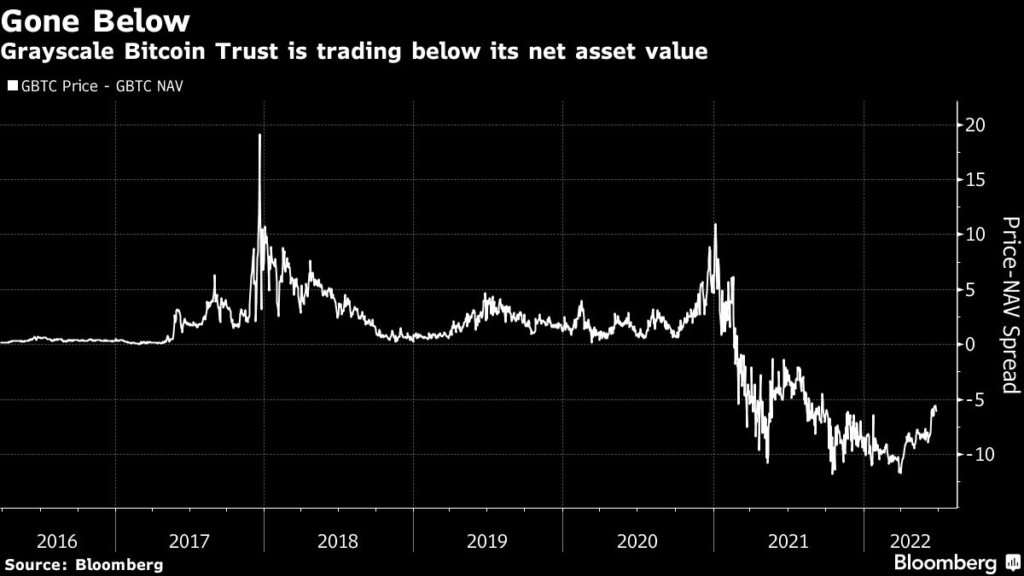
The firm has filed with the US Securities and Exchange Commission for its Grayscale Bitcoin Trust, ticker GBTC, to become an ETF. The trust, which has a market cap of about $13.6 billion and a premium of negative 32% to the price of Bitcoin, has enlisted Jane Street and Virtu as authorized participants if it does become an ETF. APs are specialized traders that have the right to create and redeem shares of an ETF, which is done to help keep the price close to its net asset value. 

“This announcement from Virtu and Jane Street should really be digested as validation that the market has matured to the place where you have institutional players standing ready to support such an ETF,” said Michael Sonnenshein, chief executive of Grayscale Investment. 

A decision by the SEC on the Grayscale application if expected in early July.

GBTC has been in the spotlight recently because of its connection to hedge fund Three Arrows Capital, which has been the subject of heavy speculation about its financial health amid a broader crypto downturn and the Terra/Luna ecosystem meltdown. Sonnenshein said recently that he hasn’t been in touch with Three Arrows, which owned more than 5% of GBTC as of a filing for December 2020.

More stories like this are available on bloomberg.com

©2022 Bloomberg L.P.
Siemens to Buy Buildings Software Firm Brightly for $1.6 Billion

(Bloomberg) — Siemens AG will buy US firm Brightly Software for $1.58 billion to add digital services for buildings and infrastructure as the German company continues its transformation into a software provider. 

Brightly, owned by private equity firm Clearlake Capital Group LP since 2019, will bolster Siemens’ growth targets for digital and software revenue, Siemens said Monday. The Cary, North Carolina-based company expects revenue of $180 million this year.

“Brightly will enable us to leapfrog to the next level of performance for buildings,” Matthias Rebellius, head of Siemens’ Smart Infrastructure unit, said in a statement. “The acquisition will speed up our target of becoming a leading software company also in infrastructure and support our vision of creating fully autonomous buildings.” 

The industrial-manufacturing giant is focusing on higher-margin, software-driven product lines to help drive returns, and has been divesting non-core businesses as part of that process. Earlier this year, the company agreed to sell the mail and parcel part of its logistics wing to for 1.15 billion euros.

Buildings and infrastructure management software helps provide data on energy usage and CO2 emissions, as well as servicing of air conditioning parts and remote maintenance possibilities. Siemens already offers such services in the U.S. focused on factories and premises, according to a spokesman. 

Brightly’s customers include schools and buildings used for health care, and the acquisition will help Siemens grow its footprint. The deal price includes an unspecified performance component.

The deal is expected to close in the calender year 2022, pending regulatory approval. Siemens expects synergies of an expected mid-triple-digit million net present value from the deal according to the statement.

More stories like this are available on bloomberg.com

©2022 Bloomberg L.P.

Close Bitnami banner
Bitnami