Bloomberg

Tencent Backer Prosus to Cut $134 Billion Stake to Buy Stock

(Bloomberg) — Prosus NV is planning to sell more of its $134 billion stake in Chinese internet giant Tencent Holdings Ltd. to finance a buyback program, reversing a pledge to hold onto the full shareholding.

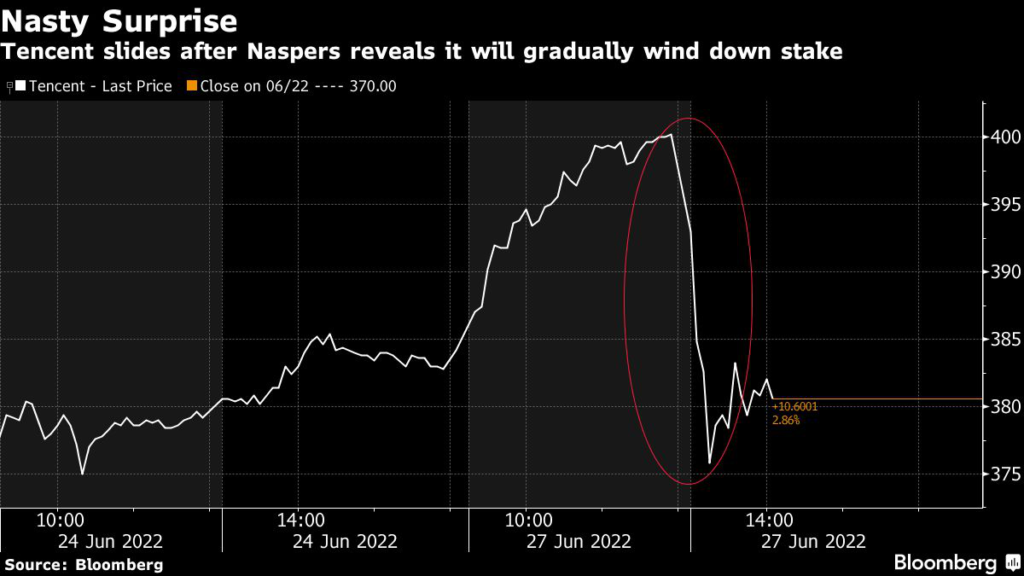
Tencent declined in Hong Kong on Monday as investors pondered the extent to which Prosus, the Chinese company’s biggest shareholder, will unload its stock. The shares fell as much as 2.5% and traded 1.6% lower at the close.

“We will keep selling Tencent shares to buy back our own, it’s open-ended and an unlimited program,”, Chief Executive Officer Bob Van Dijk said in an interview. Disposals will be in relatively small chunks working out at about 3% to 5% of daily trading volumes, he said.

The move represents a change of heart by Dutch e-commerce giant Prosus — majority owned by South Africa’s Naspers Ltd. — which said after its last sale in April 2021 it wouldn’t offload more shares for three years. The company, spun off from Naspers in 2019, owns the 29% stake after its parent became an early Tencent investor more than two decades ago, bagging a multi-billion dollar return in one of the most profitable early bets in tech investment history.


Prosus shares soared 18% as of 1 p.m. in Amsterdam, the most since March, while Naspers gained 24% in Johannesburg.

Less Than Zero

Prosus’s value increased to 120 billion euros ($127 billion) after the share jump, narrowing a long-standing discount to the $134 billion Tencent stake. The discrepancy means the market values the rest of the company’s assets, which include food delivery, travel bookings and online education sites across the world, at less than zero. This state of affairs has become “unacceptable,” Prosus said, having worked for years to convince the market it’s under-appreciating the company.

Prosus is “finally accepting that this is the best — and perhaps only — way to close the 30%-plus discount,” Bloomberg Intelligence analyst John Davies said in a note. “The announcement of the plan may quickly reduce the gap. Other value-creation efforts are likely to take longer, simply due to the investment horizons.”

The business reduced the full-year operating loss to $859 million in the year through March from more than $1 billion, though core headline earnings per shares — Prosus’s preferred measure of analyzing its finances — declined.  

Read more: China’s Traumatized Tech Insiders Signal Danger for Market Rally

Prosus disclosed the Tencent shares plan on the same day as it reported the sale of almost $4 billion of stock in e-commerce giant JD.com Inc., received from Tencent as a special dividend. JD.com gained 6.2%.

The twin deals revive concerns around the long-term viability of holding shares in Chinese internet firms, which are only just emerging from more than a year of unprecedented scrutiny from Beijing. While Prosus’s investment remains wildly in the money, they are selling after Tencent shed roughly half its value since a 2021 peak, hammered by the government’s campaign to curb the power of its largest internet corporations.

Naspers and Prosus expressed “full confidence” in Tencent, according to a statement. The firms will manage the sale of stock in an orderly fashion.

Read more: Tencent-Backer Prosus Unloads Nearly $4 Billion of JD.com Stock

Prosus aims to focus on increasing the value of non-Tencent assets, Van Dijk said, while retaining exposure to the Chinese company. The group is also looking for buyers for Russian classified ads business Avito following the sanctions imposed on the country after the invasion of Ukraine. 

Investors are considering whether to pile back into Chinese internet stocks after a selloff that began in 2021, at one point wiping out more than $1 trillion of market value. Some analysts believe Beijing has turned more supportive of the crucial industry, but Nasper’s announcement may temper that somewhat.

Tencent said in a separate statement it supported its shareholders’ decision and expects limited impact on the Chinese social giant itself.

(Updates with Prosus comment above ‘Shrinking Discount’ chart)

More stories like this are available on bloomberg.com

©2022 Bloomberg L.P.

Global Chip Hub Taiwan to Raise Power Rates on Pricey Fuel

(Bloomberg) — Taiwan’s industrial sector, including the world’s largest contract chipmaker, will be hit with the island’s first power price increase in four years as the state-owned utility grapples with soaring fuel costs.

About 22,000 large industrial users will pay 15% more for high voltage and ultra-high voltage electricity, the Ministry of Economic Affairs said in a press release. A small number of homes that consume large amounts of electricity will also face a 9% hike on a portion of their usage, the ministry said. The adjustments will take effect July 1.

Taiwan relies on imported coal and natural gas for most of its power, and the price of both fuels has soared this year after Russia’s invasion of Ukraine upended global trade flows. At the same time, electricity use in Taiwan has hit new records in recent days amid hot weather and a strong industrial rebound after the pandemic. 

State-owned Taiwan Power Co. is expected to pay an extra 300 billion Taiwan dollars ($10 billion) this year for fuel imports, the ministry said. 

The island’s large industrial users include Taiwan Semiconductor Manufacturing Co., the most advanced maker of chips for everything from smartphones to automobiles, which said earlier this month it expects revenue to grow about 30% in 2022. 

TSMC’s longterm goal is to use 100% renewable energy, and it “actively implements energy- saving and carbon reduction” measures, spokeswoman Nina Kao said in a text. She added the price hike will not affect the company’s longterm financial goals.

The residential increases will only be applied to power in excess of 1,000 kilowatt-hours a month, meaning about 97% of homes will face no increase, the ministry said. The industrial rate hikes won’t affect cinemas, gyms, department stores or businesses in the agriculture, food and catering sectors. 

(Updates with TSMC comment in paragraph 6)

More stories like this are available on bloomberg.com

©2022 Bloomberg L.P.

UK Investigates Wise CEO Kaarmann After Tax Breach

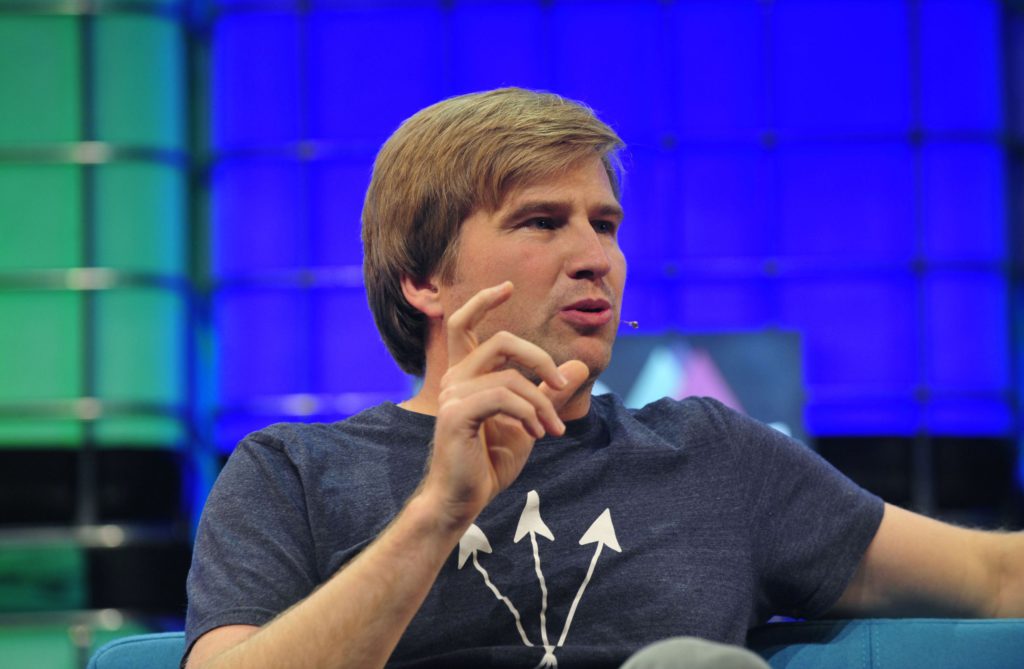
(Bloomberg) — Wise Plc said the Financial Conduct Authority has commenced an investigation into Chief Executive Officer Kristo Kaarmann almost a year after he was fined by HMRC for deliberately defaulting on his taxes.

The UK regulator is examining the “regulatory obligations and standards to which Kaarmann is subject,” according to a statement Monday. The executive intends to cooperate fully with the FCA in its investigation.

Wise shares were down 1.4% as of 11:21 a.m. in London, having earlier fallen as much as 5.3%.

Last year, Kaarmann was found to have either deliberately provided inaccurate documents, deliberately failed to comply with an obligation to notify HM Revenue and Customs about his circumstances or committed wrongdoing in relation to VAT or excise for the tax year ending April 2018, according to a listing of deliberate tax defaulters.

Wise’s board “will cooperate fully with the FCA as and when they require, while continuing to support Kristo in his role as CEO,” chair David Wells said in the statement.

The fintech conducted an investigation with an external legal counsel after Kaarmann’s name was included on HMRC’s list of individuals and businesses receiving penalties for a deliberate default regarding their tax affairs. After the investigation concluded in the last quarter of 2021, the board shared details of its findings, assessment and actions with the FCA, according to the statement.

The FCA declined to comment. Wise said in the statement it will provide an update when appropriate but for now “does not intend to make any further comment given the ongoing regulatory investigation.”

(Adds further detail of Wise response to final paragraph. An earlier version of the story corrected the spelling of the CEO’s name in the headline.)

More stories like this are available on bloomberg.com

©2022 Bloomberg L.P.

Booming Nashville Is Being Transformed by Luxury Tourism

(Bloomberg) — Stand atop any of Nashville’s rooftop bars at sunset and you’ll find a gleaming new skyline composed largely of … hotels.

There’s the 25-floor Grand Hyatt anchoring a new mega-development called Nashville Yards; a 21-story Luxury Collection property called The Joseph; a JW Marriott with 533 rooms over 810,000 square feet and 33 floors; and the Thompson, which casts shadows over the low-rise Gulch neighborhood. All are new constructions, most since 2020. And they don’t include smaller-size openings with outsize personalities, like the megawatt Soho House or the Graduate Hotel, which is right by famed hot-chicken joint Hattie B’s and brims with Southern charm.    

In a sign of how fast things are moving, it cost $191 million to develop the W, in a mirrored tower whose 346 hotel rooms are partially cantilevered over a 26,000-square-foot retail complex. Only five months after it opened in October 2021, it sold to new ownership—for $328.7 million, or $950,000 per room.

Practically every luxury brand is swooping in: Over the next three years, Nashville is expecting an influx of five-star hotel brands that include 1Hotel, Edition, Conrad, and Ritz-Carlton, plus a full renovation of the city’s grand dame, The Hermitage, which first opened in 1910. Perhaps most luxurious will be a Four Seasons, slated to open late this summer in a 40-story tower with 235 hotel rooms and 144 residences, all with panoramic floor-to-ceiling windows and access to a seventh-floor pool deck that could have been transplanted from Beverly Hills.

Dean Stratouly, who co-developed the Four Seasons as president and chief executive officer of hospitality-investment firm Congress Group, calls Nashville a better version of Austin in terms of its economic outlook. “We first started looking in Nashville around 2016, and I was astounded by what was percolating,” he recalls, pointing to the city’s welcoming tax-base structure, a state government that is aggressive about attracting businesses, and fast-growing infrastructure. Those are among the same reasons that major corporations, including Amazon and Oracle, have recently opened large offices and headquarters here, partially fueling a wave of migration among urban white-collar workers from both coasts. 

But for hospitality investors, there are ultra-rare draw cards in addition to all that. Notably, Nashville is within a four-hour flight radius of nearly every major city in the US, including Los Angeles and New York. Data from hotel industry analysts STR shows that Nashville has been among the five best-performing urban markets throughout the pandemic, consistently posting gains to both occupancy rates and average daily prices that have helped buoy numbers nationwide.

And while bachelorette parties make up an outsize share of the city’s tourism reputation, they account only for 1% of tourism revenues; corporate travel, which offers steady business in normal times, represents 40%, giving the city staying power with a wide variety of audiences. Add in the record number of people driving through Tennessee to get to the Great Smoky Mountains, and Nashville is expecting to see more visitors in 2022 than it did in 2019, despite the remaining uncertainty around meetings and conventions.

“Nashville’s [Davidson County] annual hotel revenue in 2022 is projected to be 187% higher than it was 10 years ago,” says Butch Spyridon, president and CEO of the Nashville Convention and Visitors Corporation, who believes there are no signs yet that the momentum is slowing.

The Pivot That Paid Off

Spyridon says Nashville’s growth can be traced back to 2004, when the city shortened its nickname from Music City USA to Music City and started to build a narrative for itself that didn’t rely entirely on country music and Americana. 

But the campaign wasn’t just about a streamlined moniker. It earmarked $623 million for the construction of Music City Center, a 2.1 million-square-foot convention center that opened in 2013, and where Nashville has since hosted events from the NHL All-Star Game to the 2019 NFL Draft.

Those events, in turn, have brought a steady stream of visitors to fill the city’s fast-growing number of hotel rooms. “We had 4,200 new hotel rooms open during the pandemic, and another 3,100 are under construction to further strengthen our market,” says Spyridon. In early June, the return of the Country Music Awards saw nearly every hotel at full capacity. “We’ve been on a 12-year roll of positive momentum.”

Of course not all metrics tell the same story; while room counts grew amid the pandemic, the city saw declines in 2020 as did every other destination. Still, the figures for Nashville and Tennessee were not as dire as in other parts of the country.

And unlike most markets, where the influx of new inventory causes rates to dip, Nashville has seen the opposite. “In the first four months of 2022, Nashville city hotel revenue was up by 10.5% compared to the same time in 2019,” Spyridon continues. Business travel has yet to come back fully, but he says projections for the full 2022 calendar year show that “Nashville will sell 900,000 more rooms than in 2019, yielding a 20% increase in hotel revenues.”

Expanding the City Limits

Until recently, most of Nashville’s high-rise development was housed within a roughly one-mile stretch of downtown. Among those pushing the boundaries as of late is Soho House, which opened in February in the formerly warehouse-filled Wedgewood Houston neighborhood, five minutes south of downtown on the other side of I-40. Although the area still has an industrial look, it’s been embraced by local businesses—chic coffee shops, art galleries, vintage stores—and an expansive Live Nation base, bringing in a full-time, professional workforce.

Ben Weprin, who holds more than $1.3 billion in Nashville real estate—including the aforementioned location of his own fast-growing brand, Graduate Hotels—was among those who saw Wedgewood’s potential before it was cool. He bought the May Hosier Sock Factory building, in 2015, and immediately flagged it to his friend and Soho House CEO Nick Jones. In 2014, Jones thought Nashville had potential, but it was too early in the city’s evolution for him to pull the trigger. More recently, it was an easy sell.

Now the 97,000-square-foot, four-story Soho House contains 47 hotel rooms, along with a Cecconi’s restaurant, two stages for live performances, and a 74-foot-long outdoor pool. The vibe is low-key but stylish: Even in the middle of the week, it’s busy with people lunching and lounging with laptops, all looking freshly plucked from the brand’s West Hollywood or Brooklyn locations.

This fall in Franklin, 25 minutes south of the city, another property called Southall will open with 62 rooms and 16 cottages set on a working farm—a closer, more affordable, but still plush competitor to perpetually booked-up Blackberry Farm, which is three hours east.

“With Nashville booming nearby, I saw an opportunity,” says Southall’s owner, the former securities trader Paul Mishkin. “We initially toyed with the idea of a B&B, but as we talked to more and more people who lived in the area for years, we were strongly encouraged to go bigger—and that we did!” he says.

The Next Act

As at Southall, most of Nashville’s latest luxury hotels are playing into the city’s newfound reputation as a fancy food hub—not its country music heritage. Jean-Georges Vongerichten has a pair of stunning restaurants at the Hermitage, James Beard award winner Sean Brock has a spot at the Grand Hyatt, and Tony Mantuano (of Chicago’s famed Spiaggia) moved full-time to Music City to run the ambitious, pasta-centric Yolan at the Joseph.

Where boldface chefs thrive, luxury brands follow: Even Kering has said it’s eyeing Nashville for expansion, specifically for its Gucci and Balenciaga stores.

That makes Nashville much more than Music City—and raises the question of how much luxury Tennessee’s capital will be able to support before its identity blurs. Already, the incredible population boom sustained in 2020 has abated, with the city recording a population decline in recent months; according to US Census Bureau data, Nashville lost 11,000 residents in 2021 following a decade of continuous growth.

But the city is looking beyond American work-from-anywhere types. In early June, it announced a six-year, $1.4 billion airport enhancement plan, focusing on the infrastructure that’ll be needed to draw more transatlantic and long-haul flights. In other words, Music City is already charting its next act—on a more international stage.

More stories like this are available on bloomberg.com

©2022 Bloomberg L.P.

Honda’s Safer Scooter Could Help Ease Congestion, Cut Emissions

(Bloomberg) —

Are electric scooters a crucial technology for combating urban congestion and climate change?

Or are the two-and-three-wheeled vehicles a blight on the urban landscape — better known for their tendency to cause accidents, break down and be abandoned, eventually ending up strewn across parks and sidewalks in a sort of “scootergeddon” scenario, as some call it.

That’s what I was asking myself when, at a venue outside Tokyo a few weeks ago, I tested a new e-scooter developed by a Honda venture.

The idea behind micro-mobility options such as electric bikes and scooters is for city dwellers to use them in place of cars to travel short distances. Hopping on an electric bike or scooter to commute to work, for example, reduces traffic congestion and cuts back on fumes.

Indeed, choosing a micro-mobility option over a car for just one trip a day reduces an average urban dweller’s carbon footprint by half a ton over the span of a year, according to a University of Oxford study.

Those benefits have generated a lot of hype around the future of e-scooters — and their manufacturers. Though its shares have taken a beating over the past six months, US-based scooter startup Bird was one of the fastest startups ever to reach a $1 billion valuation.

At the same time, micro-mobility options on the streets today have their fair share of issues. For one, some of them are flimsy. A 2018 study found the average lifespan of a Bird scooter on the streets of Louisville, Kentucky, was less than a month (Bird disputes the finding.)

And scooter-related accidents and injuries are common. Unstable designs, coupled with unpredictable street conditions and inexperienced riders, make the lightweight vehicles hard to maneuver. One study showed e-scooters sport an injury rate 175 to 200 times that of overall vehicle travel.

That’s where Honda’s Striemo venture comes in.

Carved out of Honda’s business-creation program, the startup has developed an e-scooter that’s hyper-focused on safety. The three-wheeler, which can get about 30 kilometers per charge, is fitted with a self-balancing mechanism developed by a long-time Honda engineer.

I can attest that Striemo’s scooter felt much steadier than others I’ve ridden. At Honda’s research center, I was able to steer through some tight cones and steep drop-offs without wiping out in front of the assembled body of Tokyo’s auto journalists.

Yotaro Mori, Striemo’s co-founder and CEO, said he was inspired to create the scooter after unsatisfactory experiences testing out similar products overseas.

“I thought with my tools and background I could create something better,” Mori said at the test event. Before founding Striemo, Mori was an engineer at Honda, where he spent more than a decade working on motorcycle research and development.

Mori said that he spent years of after-work hours designing a three-wheeler concept, tinkering with a system that stabilizes the vehicle by measuring its center of gravity to one-tenth of a millimeter.

Today, Striemo is taking orders for around 300 scooters that will initially be released to consumers in Japan. Mori aims to build from there —expanding into Europe in 2023 and then targeting a global rollout.

For now, there are bullish forecasts for the future of electric micro-mobility. McKinsey expects the market to reach $500 billion by 2030, and BloombergNEF sees potential for modal shifts to help hasten the world’s push to achieve on-road carbon neutrality.

Whether or not electric bikes, trikes, scooters and mopeds will live up to those expectations is still unclear. But as it begins to spread globally, Striemo and its safety-oriented invention could be a piece of that puzzle.

More stories like this are available on bloomberg.com

©2022 Bloomberg L.P.
BMW-Backed Northvolt Advances on $12 Billion Battery IPO Plan

(Bloomberg) — Sweden’s Northvolt AB, whose customers include BMW AG and Volkswagen AG, is planning to go public within the next two years as battery demand for electric vehicles booms.

The firm is “well positioned” for an initial public offering, founder and Chairman Carl-Erik Lagercrantz said in an interview. The venture, which has been valued at around $12 billion after raising some $6.5 billion through debt and equity, is part of a trio of green technology startups spearheaded by Lagercrantz and private equity veteran Harald Mix.

“We have commitments in relation to deliveries from our customers — that plays a major role in a market that is more difficult,” Lagercrantz said. A listing during the next two years is a “reasonable” expectation even as the company has “no need from a funding perspective.”

Lagercrantz, 57, initiated the push in 2016 to establish a battery industry in northern Sweden. Northvolt’s access to renewable power and smaller CO2 footprint is key in differentiating the company from Asian giants like China’s Contemporary Amperex Technology, Japan’s Panasonic, and LG Chem from South Korea.

In May, the company became the first European firm to start commercial shipments to an automaker from the Northvolt Ett plant in Skelleftea. While Ett is still scaling up, the manufacturer is also planning a new plant in Gothenburg to supply Volvo Car AB and Polestar. A third factory in northern Germany dubbed “Northvolt Drei” is scheduled for 2025. This is set to boost Northvolt’s overall battery-cell manufacturing to over 170 gigawatt-hours, among the biggest in Europe. 

Lagercrantz and Mix are also founders and investors in H2 Green Steel, which plans to make fossil-free steel, and Polarium Energy Solutions AB — two startups aiming for a stock market listing in the “not too distant future.” 

Polarium, an energy-storage developer that counts major telecommunications firms such as Vodafone Group Plc and Verizon Communications Inc. among its client roster, will most likely be the first of the three to list, Lagercrantz said.

“Polarium is a company with good profitability and fantastic growth in an area that has such strong macro trends,” he said. “If conditions are right, next year the company will be on the stock exchange.”

Read More: Sweden’s Polarium Rides Battery Boom to Reach Unicorn Valuation

For H2 Green Steel an IPO is a few years away, he said. But when production has reached scale, the public market will be a “very good place” to raise capital, as it’s “very capex-heavy, just like Northvolt.”

H2 Green Steel has said it’s looking to raise in the range of $3 billion to $4 billion through a combination of equity and green project financing for its operations in the northern part of Sweden. It has so far secured $105 million, Lagercrantz said.

More stories like this are available on bloomberg.com

©2022 Bloomberg L.P.

Crypto Exchanges Hunker Down as Woes Pile Up in India

(Bloomberg) — India’s largest digital assets exchanges are bracing for a drawn-out crypto winter — one with some unwelcome local twists. 

With token prices plummeting, customers unable to transfer money to their accounts and a dreaded transaction tax on cryptocurrencies just around the corner, exchanges like Binance-backed WazirX have put expansion plans on the back burner. 

“We have cut down all our non-critical costs,” said Rajagopal Menon, WazirX’s vice president. “We are hiring only critical hires, we aren’t spending money at all. It’s literally crypto winter here,” he said, using industry jargon for an extended bear market. 

WazirX isn’t alone. Rival exchanges Unocoin and BuyUcoin are also responding to vanishing trading volumes in a market that just last year ranked second in the world for crypto adoption. 

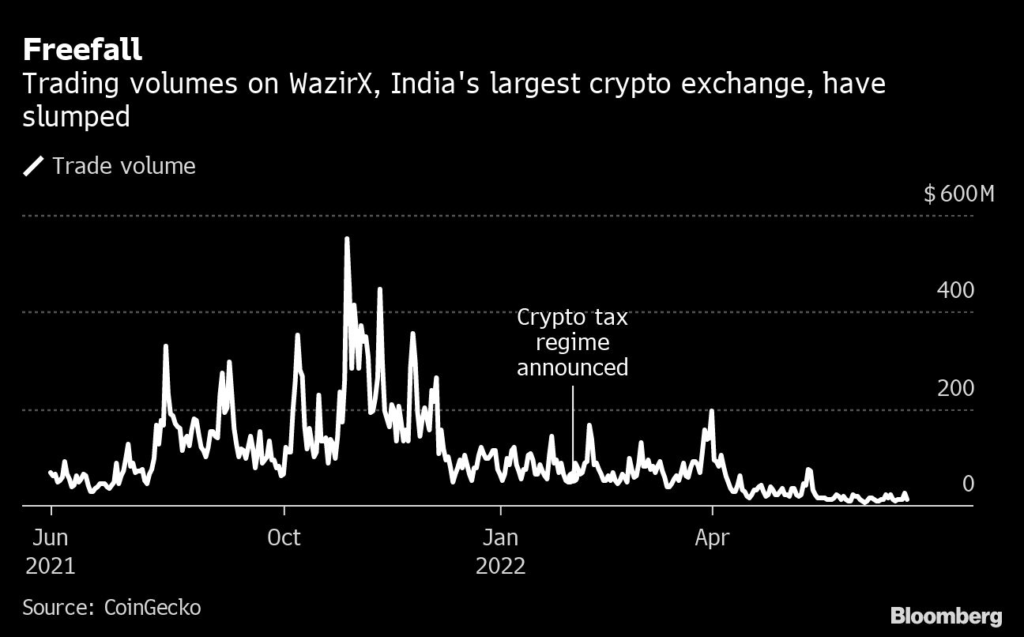
That a crypto marketplace should be in cost-cutting mode is hardly a surprise — Coinbase Global Inc. and Crypto.com have announced layoffs in the last two weeks alone — but Indian exchanges face the added burden of a new tax system that executives fear will wipe out what little trading is left. WazirX’s daily volume has slumped about 95% since October, data from CoinGecko shows. 

On July 1, a tax deductible at source of 1% on all digital-asset transfers above a certain size takes effect despite industry warnings that it will sap liquidity. That’s on top of an existing 30% rate on income from such assets plus a proposed value-added tax increase that’s making its way through the bureaucracy. 

The government also doesn’t permit offsetting of trading losses on cryptocurrencies, treating them differently from stocks and bonds. 

Adding to the pain, crypto exchanges have been largely cut off from the regular banking system since mid-April. That’s when India’s ubiquitous United Payments Interface was made unavailable to them without explanation, prompting some banks and payment gateways to also cut off service, which in turn meant traders couldn’t top up their accounts with cash. 

It’s a remarkable turnaround from last year, when India was one of the world’s hottest crypto markets. The country’s cryptocurrency market expanded more than 600% in the 12 months through June 2021, according to researcher Chainalysis, which used a metric that estimates the total amount of crypto received in a country. 

Crypto exchanges took out full-page ads in newspapers and signed up Bollywood stars to promote their offerings to one of the world’s youngest populations. Coinbase-backed CoinDCX became the official title sponsor of a cricket series between India and Sri Lanka.

“Last year that was the golden age,” said Menon. “We went from six programmers to 50 in seven months.” WazirX has only added “a few developers and some critical senior people” since that hiring spurt, he said. 

Influencer Spending

Not everyone is hitting the brakes. CoinDCX, which raised $135 million in April from funds including Pantera Capital, isn’t planning to cut costs, Vinay Tiwari, its senior vice president for finance, said in an interview. 

That makes it an outlier among exchanges. 

BuyUcoin, a small bourse with 45 employees, is only hiring developers and engineers, Chief Executive Officer Shivam Thakral said. It’s also cutting spending on things like partnerships with social media influencers and eschewing mass advertising, according to Thakral. BuyUcoin’s trading volume has fallen about 80% since peaking last year, he said.  

“All companies are being cautious when it comes to expenses now, same with us as well,” Sathvik Vishwanath, CEO of crypto exchange Unocoin, told Bloomberg. “We continue to hire for key positions but are not hiring for redundancy.”  

Vishwanath said he’ll assess the impact of the transaction tax, known by the acronym TDS, before making any major decisions on strategy. The industry body he’s a member of unsuccessfully lobbied the government for a reduction in the TDS, he said.  

With no immediate relief in sight, existing employees at WazirX may have to shoulder more work. 

“If someone leaves the company, earlier replacement was near instant,” Menon said. “Now, we are checking if someone can double up for that position.”

(Corrects spelling of Rajagopal Menon’s name in story originally published June 26.)

More stories like this are available on bloomberg.com

©2022 Bloomberg L.P.
Despite Crypto’s Considerable Volatility, Venture Capital Wants In

  • Listen to Bloomberg Crypto on the iHeartRadio App
  • Listen to Bloomberg Crypto on Apple Podcasts
  • Listen to Bloomberg Crypto on Spotify 

(Bloomberg) — California’s Silicon Valley is both a place and a philosophy. It’s hailed as *the* place for US tech startups to get funding and attract talent. VCs, or venture capitalists, are integral to this mythology.  These are the people who provide the private capital – billions of dollars worth – so tech startups can chase the next big thing. Despite the volatile crypto market, some of those VCs are still betting big on the potential of the blockchain.

Bloomberg reporter Hannah Miller joins this episode for a look at how crypto is influencing VC—and vice versa.


More stories like this are available on bloomberg.com

©2022 Bloomberg L.P.

US Resuscitates Bid at G-7 to Counter China’s Belt and Road

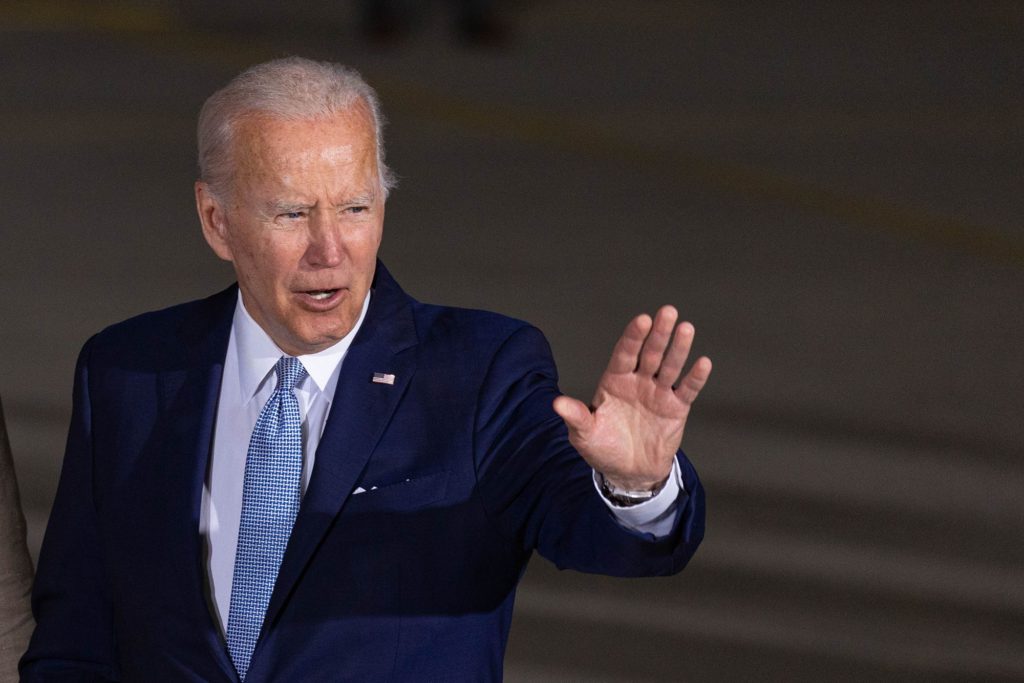
(Bloomberg) — President Joe Biden rebooted his effort to counter China’s flagship trade-and-infrastructure initiative after an earlier campaign faltered, enlisting the support of Group of Seven leaders at their summit in Germany.

The Build Back Better World initiative, named after Biden’s domestic spending and climate agenda, struggled to get off the ground because not enough G-7 partners contributed financially when it was unveiled a year ago, according to people familiar with its lack of progress. European officials cited the Biden administration’s inability to get its own ambitious economic legislation through Congress.

“When democracies demonstrate what we can do — all that we have to offer — I have no doubt that we’ll win that competition every time,” Biden said during an event on the sidelines of the summit. 


The measure has been re-branded the “Partnership for Global Infrastructure and Investment” and the US is calling on leaders to agree to fund the launch of projects in middle- and low income countries to the tune of $600 billion over the next five years. It will consist mostly of private sector investments, with some funding from the US Development Finance Corporation and Export-Import Bank and other commitments from foreign governments. 

The US would contribute $200 billion in total though it’s unclear what the split would be between private and public sector funding, and how the government plans to convince companies to take part. 

There is the potential for the same challenges to crop up under the initiative’s latest incarnation, in part as the G-7 prioritizes other issues such as taming inflation and dealing with the fallout of Russia’s invasion of Ukraine. 

“Russia’s invasion of Ukraine in early 2022 and the uncertain economic recovery from COVID-19 threaten to undermine progress,” Chatham House said in a June 24 research paper. “Changing priorities among donor nations, driven by events in Ukraine, risk a further shift in development policy towards bilateralism and fragmentation within the G7 and with recipient nations.”

Expectations have already been tempered. While it’s pitched as a direct alternative to President Xi Jinping’s Belt and Road program, the US official noted it would be unrealistic to compare the two dollar-for-dollar. Each partner country wants to put its own branding on the partnership, but all would operate under the PGII umbrella.

The Biden team’s view is that countries around the world are waking up to the reality the BRI didn’t achieve outcomes for them and that they’re receptive to a US-led alternative. Russia’s actions in Ukraine also serve as a warning for countries worried about being overly indebted to others with the resultant geopolitical risks, the US official said.

Chinese Foreign Ministry spokesman Zhao Lijian said his country welcomed any initiative that promoted global infrastructure at a regular press briefing in Beijing on Monday. “We believe there’s no such thing as relevant initiatives countering or replacing each other,” he added. “What we oppose are moves to advance geopolitical calculations and smear the BRI in the name of promoting infrastructure development.”

China has sought to reinvent its trillion-dollar initiative during the pandemic, which has disrupted global supply chains and closed international borders. That’s led to a shift away from large-scale projects toward ones designed to make Beijing more competitive in other priority sectors, including through its so-called Digital Silk Road. Belt and Road projects valued at $13.66 billion were announced last year, down from about $80 billion in 2020 and nearly $200 billion the previous year, according to data by Refinitiv.

Among the G-7-backed projects announced Sunday are $2 billion in solar projects in Angola, a $600 million contract to build a submarine telecommunications cable that will connect Singapore to France through Egypt and the Horn of Africa and $14 million to support a design study for Romania’s deployment of a small modular reactor plant.

One of the four planks is information and communication technology along with health, climate and gender equality. That includes, for example, offering alternatives to Chinese telecom giant Huawei Technologies Co for the deployment of 5G networks and building childcare centers.

The official said the US will also focus on investing in projects that help supply chain security by making the US and other allies less reliant on China. Amos Hochstein, one of Biden’s key energy advisers, has been leading the US approach and scoping out new projects over the past few months.

(Updates with Chinese Foreign Ministry comment.)

More stories like this are available on bloomberg.com

©2022 Bloomberg L.P.

Pakistan Ride-Sharing Startup Bykea Raises Funds to Fuel Growth

(Bloomberg) — Pakistani ride-sharing and delivery startup Bykea raised $10 million from its existing backers to tap rising demand for online services in the South Asian country.

Bykea, which focuses on two-wheeler rides, said in a statement Monday it plans to use the funds to extend its services, which include food and e-commerce deliveries, as well as cash pick-up. The company’s investors include Prosus Ventures, MEVP, Sarmayacar, Tharros, and Ithaca Capital.

With 1.7 million active monthly users and more than 60,000 driver partners, Bykea offers services in Karachi, Lahore and Islamabad. It’s among an emerging crop of Pakistani startups attracting attention from global venture investors as mobile services gain popularity in the country of more than 200 million people.

“We see an enormous opportunity to serve the middle class by offering easy, affordable, and convenient transport and logistics solutions,” Bykea Executive Chairman Jonas Eichhorst said in the statement.

More stories like this are available on bloomberg.com

©2022 Bloomberg L.P.
Close Bitnami banner
Bitnami