
Bloomberg

ECB’s Pivot Toward Rate Hikes Feeds Fears of New Bond Crisis

(Bloomberg) — Sign up for the New Economy Daily newsletter, follow us @economics and subscribe to our podcast.

European Central Bank policy makers gather on a Portuguese hillside on Monday with the sinking feeling that their rush to tackle the inflation shock they failed to forecast risks both a recession and echoes of the euro area’s sovereign debt crisis.

As President Christine Lagarde and colleagues meet in the resort of Sintra for their version of the Federal Reserve’s Jackson Hole conference, they face competing tasks: Cool the fastest consumer-price growth in the euro’s history without delivering an economic downturn or sparking a 2012-style spike in borrowing costs in Italy, the region’s third-largest economy, and other vulnerable states.

Markets are already sounding an alert on what may lie ahead. Italian government bond yields jumped past 4% this month for the first time since 2014 as investors took fright at the ECB’s plan to raise interest rates in July for the first time in a decade.

With that hike locked in, and another set to follow in September, officials are racing to deliver on their promise of a tool to deploy if yields do surge.

“The ECB is in great difficulty,” said Charles Goodhart, a former Bank of England policy maker. “They can’t normalize very rapidly — loading increases in interest rates up front — without dealing with the fragmentation issue.”

Inflation now sits four times above the ECB’s 2% target and Lagarde offered a sense of the recent soul-searching last week, telling European lawmakers that officials “misjudged certain factors that had a major impact on inflation.” 

The hesitation to lift rates as the Fed and others did was a matter of credibility tied to earlier guidance that’s since become outdated, she said.

While the ECB is now on the brink of reversing subzero rates, the turnaround is being tested by the worst selloff in years in the bonds of indebted euro-area governments. With the bank’s large-scale asset purchases ending Friday, policy makers are trying to design a backstop to help tame yields as their push to normalize monetary policy shifts up a gear.

Italy’s 10-year yield premium over its German counterpart — seen as a gauge of risk in the region — hovered below 200 basis points at 9:27 a.m. in London, having surged to a two-year high above 244 basis points earlier this month.

Retreat in Portugal

The Sintra forum, which starts this evening, was traditionally intended as a laid-back event to allow policy makers and academics to mull the bigger picture. Market turmoil has often been lurking nearby, however — most recently during the Covid-19 crisis.

This week’s retreat will be the first attended in person by Lagarde since she became ECB president in late 2019 and will feature discussions on globalization, labor markets and digital currencies. But central bankers will face more pressing questions on how they intend to preserve the euro area’s integrity while halting inflation.

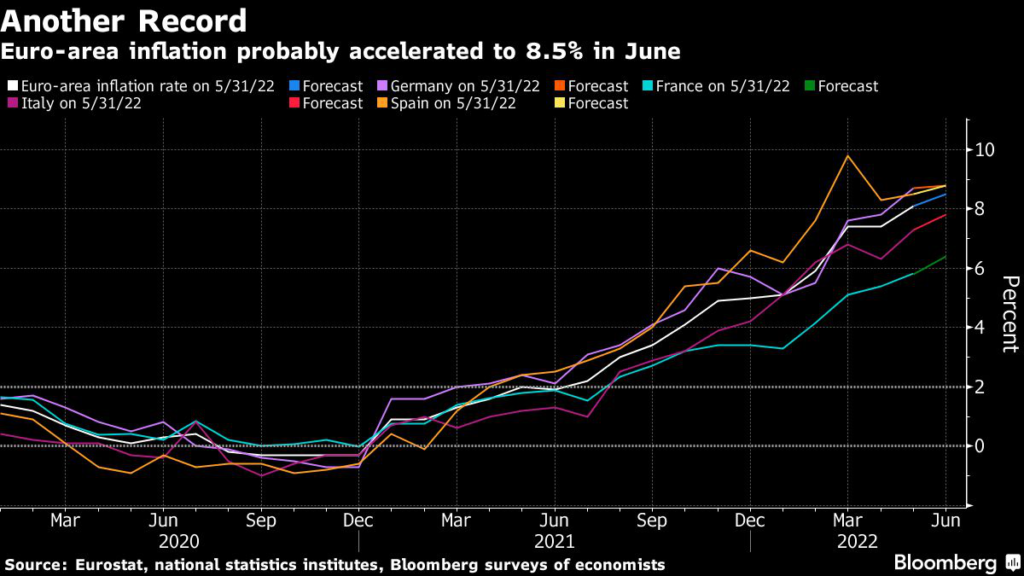
On Friday, two days after their meeting concludes, data is expected to show consumer prices in the 19-member bloc hit a fresh all-time high in June. Economics predict it will reach 8.5%.

For those worried about another bond crisis, there are reasons to hope one can be avoided: Average interest rates on debt are lower than a decade ago and the average maturity of what is owed is longer with the ECB holding a lot of the outstanding bonds, according to economists at Barclays Plc. 

What Bloomberg Economics Says…

“Surging inflation is causing central banks to tighten policy harder and faster. These price pressures are also building in the euro area, prompting the European Central Bank to set out a road map for withdrawing stimulus, starting in July.”

Still, there are other sources of discomfort at the ECB. Officials will also encounter growing skepticism among the upper echelons of their profession that soaring prices can be contained without severe damage to the economy. Manufacturing output is already declining for the first time in two years.

That poses the risk that they end up over-tightening as their predecessors in 2008 and 2011 are still accused of doing. 

Fed Chair Jerome Powell — who’ll also attend the event — gave his most explicit acknowledgment yet of the danger of a downturn last week, saying that outcome is possible and that achieving a soft landing is “very challenging.”

For the euro area, the immediate economic risks are possibly even higher than in the US given some lie outside the influence of monetary policy. The spillover from Russia’s invasion of Ukraine has hammered manufacturers, while predictions of a recession in Germany are growing as the Kremlin limits energy supplies.

Commerzbank economist Joerg Kraemer — who expects a US recession next year and, for now, growth of less than 1% in the euro zone — says the ECB will probably react “sensitively” if the outlook deteriorates.

“Hanging over all our forecasts like a sword of Damocles is the possibility that Putin will permanently and completely turn off the gas tap,” he said Friday in a report to clients.

(Updates with markets in ninth paragraph)

More stories like this are available on bloomberg.com

©2022 Bloomberg L.P.

Bruised Bitcoin Due Relief After Crypto Wipeout, Charts Show

(Bloomberg) —

The wipeout in Bitcoin may have run its course, a range of technical indicators suggest.

Momentum measures and insights from options bets signal ebbing selling pressure and a possible trading range of $20,000 to $25,000 — though the usual caveats apply about the mercurial nature of cryptocurrencies.

The largest digital token has slumped about 70% from a November record and was little changed at $21,343 as of 8:38 a.m. Monday in London. It slid below $18,000 earlier this month before retaking the closely watched $20,000 level.

Tightening monetary policy, withering speculative ardor and collapsing digital-asset projects have spurred a broad crypto rout in 2022. But the mood in global markets is turning less dour on tentative hopes that the price pressures driving interest-rate hikes may be cresting.

Read more: Miner Capitulation Means Bitcoin Bottom Is Near: CryptoQuant

The lessons of Bitcoin’s past swoons suggest it’s in the vicinity of its bear-market low, according to Glassnode. This “bear market is now firmly within historical norms and magnitude,” the blockchain analytics firm wrote in a note.

Capitulation

A widely followed DeMark technical indicator known as TD Sequential suggests much of the Bitcoin selloff is behind us. The study uses a method of counting applied to chart patterns to try to anticipate when a market trend has run its course. Bitcoin has printed the maximum 13 downside count, which proponents of the study would argue presages a reversal. DeMark studies in the past have identified shifts in Bitcoin’s prevailing trend.

Unusual Selloff

Another popular charting method is the so-called linear regression channel. This technique seeks to identify statistically unusual deviations from a line that best fits a series of Bitcoin prices. In the analysis here, Bitcoin plunged to three standard deviations below an upward sloping regression line starting at December 2018 lows — that’s statistically relatively rare and some analysts would argue the selloff has therefore reached a nadir.

Relative Strength

A momentum indicator known as the relative strength index suggests Bitcoin’s selloff is due a pause. The index on a weekly basis has fallen into the “oversold” region below 30 and is around the lowest levels in data compiled by Bloomberg going back to 2010. The last time the gauge flashed “oversold” in 2018, the token went onto stage a strong rally.

Options Hints

Options contracts provide hints about Bitcoin’s next trading range. Significant numbers of outstanding contracts expiring end-September are at strikes of $25,000 and $20,000, data from crypto derivatives platform Deribit show. There are roughly 9,000 outstanding contracts at each of those levels. On one view, this relatively elevated so-called open interest at $25,000 and $20,000 suggests traders see the former as a Bitcoin ceiling and the latter as a floor.

Read this next: A $2 Trillion Free-Fall Rattles Crypto to the Core

More stories like this are available on bloomberg.com

©2022 Bloomberg L.P.
Tencent Backer Prosus to Cut $134 Billion Stake to Fund Buyback

(Bloomberg) — Prosus NV is planning to sell more of its $134 billion stake in Chinese internet giant Tencent Holdings Ltd. to finance a buyback program, reversing a pledge to hold onto the full shareholding.

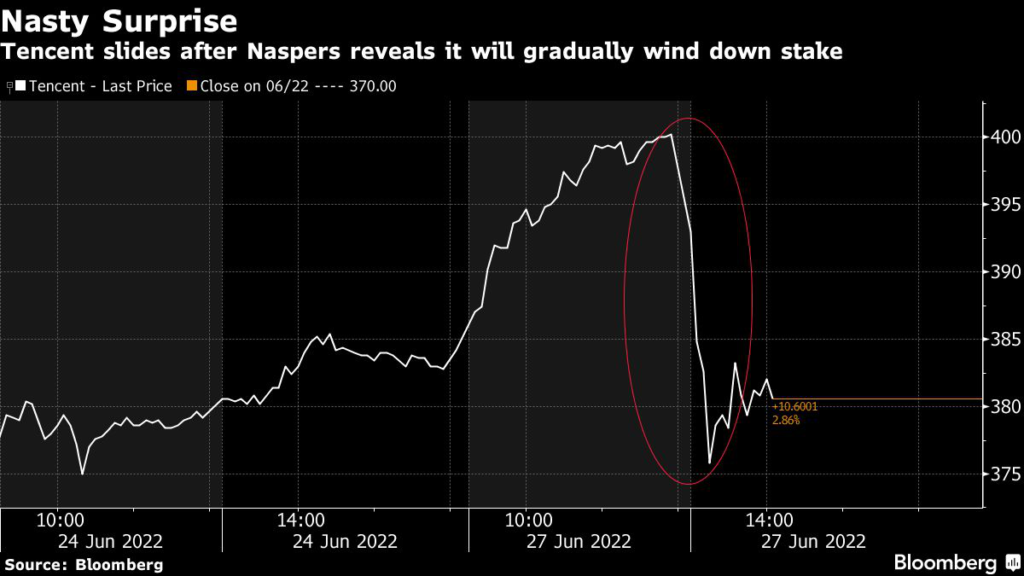
Tencent erased earlier gains in Hong Kong on Monday as investors pondered the extent to which Prosus, the Chinese company’s biggest shareholder, will unload its stock. The shares fell as much as 2.5% and traded 1.8% lower as of 3:20 p.m. local time.

“We will keep selling Tencent shares to buy back our own shares, it’s open-ended and an unlimited program,” Prosus Chief Executive Officer Bob Van Dijk said in an interview. “It’s actually a small part of Tencent daily traded volumes — it should be maximum between 3 to 5%.”

The move represents a change of heart by Dutch e-commerce giant Prosus — majority owned by South Africa’s Naspers Ltd. — which said after its last sale in April 2021 it wouldn’t offload more shares for three years. The company, spun off from Naspers in 2019, owns the 29% stake after its parent became an early Tencent investor more than two decades ago, bagging a multi-billion dollar return in one of the most profitable early bets in tech investment history. 

Prosus shares soared 12% in early trade in Amsterdam, the most since March, while Naspers gained as much as 16% in Johannesburg.

Less Than Zero

Prosus is valued at 117 billion euros ($123 billion) even after the share jump, compared with the $134 billion Tencent stake. This means the market values the rest of the company’s assets, which include food delivery, travel bookings and online education sites across the world, at less than zero. This state of affairs has become “unacceptable,” the company said.

Prosus disclosed the plan on the same day as it reported the sale of almost $4 billion of stock in e-commerce giant JD.com Inc., received from Tencent as a special dividend.

The twin deals revive concerns around the long-term viability of holding shares in Chinese internet firms, which are only just emerging from more than a year of unprecedented scrutiny from Beijing. While Prosus’s investment remains wildly in the money, they are selling after Tencent shed roughly half its value since a 2021 peak, hammered by the government’s campaign to curb the power of its largest internet corporations.

Prosus said it will manage the sale of Tencent stock in an orderly fashion.

Read more: China’s Traumatized Tech Insiders Signal Danger for Market Rally

Prosus aims to focus on increasing the value of non-Tencent assets, Van Dijk said, while retaining exposure to the Chinese company. The group is also looking for buyers for Russian classified ads business Avito following the sanctions imposed on the country after the invasion of Ukraine. 

Investors are considering whether to pile back into Chinese internet stocks after a selloff that began in 2021, at one point wiping out more than $1 trillion of market value. Some analysts believe Beijing has turned more supportive of the crucial industry, but Nasper’s announcement may temper that somewhat.

Tencent said in a separate statement it supported its shareholders’ decision and expects limited impact on the Chinese social giant itself.

“People are concerned about the upcoming selling pressure on the stock especially after it rebounded to nearly HK$400 recently,” Steven Leung, executive director at UOB Kay Hian, said by phone. “It has clouded the share outlook in the near term for sure.”

Read more: Tencent-Backer Prosus Unloads Nearly $4 Billion of JD.com Stock

(Updates stake values from the start.)

More stories like this are available on bloomberg.com

©2022 Bloomberg L.P.
Ex-Banker Sees Rising Cost of Living as Key Thai Election Issue

(Bloomberg) — With less than a year to go for the Thai general elections, a new political party led by a former investment banker is pushing the high cost of living and other ills plaguing the economy as key poll issues in its bid to emerge as a political force.  

Korn Chatikavanij, a former chairman of JPMorgan Chase & Co.’s Thai unit and finance minister, is positioning his two-year old Kla Party as better-equipped than coup maker-turned-premier Prayuth Chan-Ocha’s coalition and other mainstream parties to tackle economic issues.  

“From the start we made it clear that we’ll focus on economic issues and the cost of living,” Korn, 58, said in an interview. “We don’t see many parties with the economic ideas, or with an economic team that the public is identifying with.” 

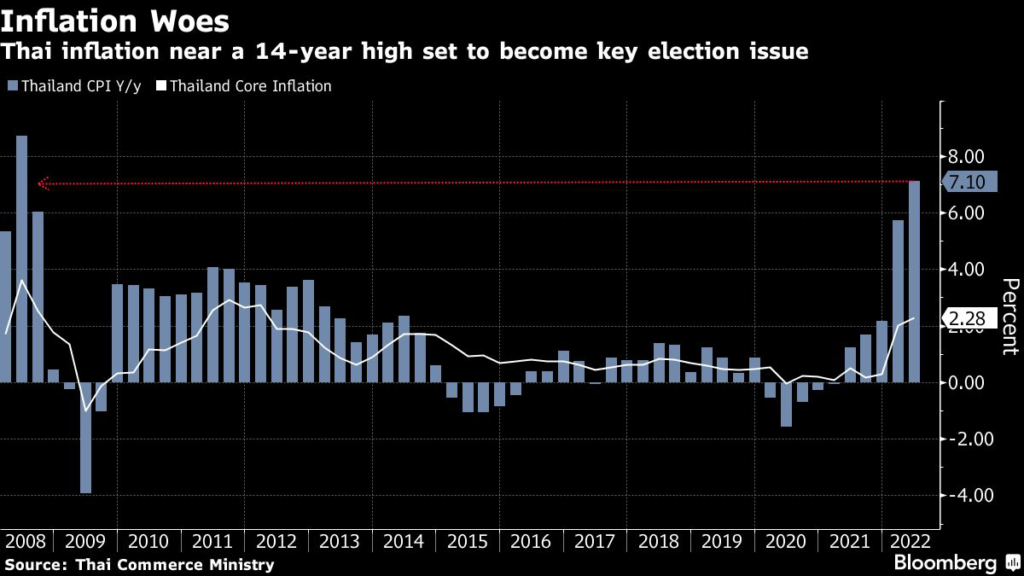
With Prayuth’s government struggling to tackle the highest inflation in almost 14 years amid growing public frustration about rising fuel prices, Korn hit headlines recently with a proposal for a windfall tax on profit of refiners to bankroll an energy subsidy program. He’s also called for an urgent rate hike to stem a decline in the baht that’s threatening to further fuel inflation. 

That’s helped Korn, who was the finance minister between 2008 and 2011, to be ranked as a prime ministerial choice above deputy prime ministers Jurin Laksanawisit and Anutin Charnvirakul, who also head bigger parties.

Korn, who also founded the Thai Fintech Association and a startup focused on helping tackle household debt, is pitching for measures to boost new sources of income and return the country to a current account surplus. He wants gambling legalized to tax the industry and attract foreign investment and spending.

Although Kla Party is focused on the right “pocketbook issues,” it will be an uphill battle to compete with other Thai parties with greater brand recognition and well-established provincial networks, said Jay Harriman, a senior director at strategic adviser consultancy BowerGroupAsia. 

“For sure voters are going to be concerned about the economy, but they might want to go for parties that they think have a fair chance of winning, leaving Kla’s smart policies on the drawing board,” he said. 

Korn is targeting 25 members in the 500-member house of representatives by putting up 100 candidates in areas where he deemed vote-buying by political parties will have the least sway. Korn said electoral rules are stacked in favor of larger parties and that may prompt smaller and medium-sized parties to potentially merge. 

“We’re confident that we’ll be able to win enough votes to be a part of the next parliament,” Korn said.

More stories like this are available on bloomberg.com

©2022 Bloomberg L.P.

Tencent-Backer Prosus Unloads Nearly $4 Billion of JD.com Stock

(Bloomberg) — An arm of South African internet giant Naspers Ltd. sold almost $4 billion worth of stock in JD.com Inc. that it got as dividends from investee Tencent, saying the e-commerce firm didn’t fit with its broader strategy.

Naspers subsidiary Prosus NV sold more than 131.8 million shares in JD it got from Tencent Holdings Ltd., about a 4% stake in the online retailer, Prosus said in a statement. “JD.com does not form part of the group’s core strategic focus,” it said in a filing Monday.

Tencent, China’s largest social media company, said in December it planned to distribute its stock in JD.com as dividends to shareholders,  a surprise retreat from the e-commerce firm after Beijing moved in 2021 to curtail the power of tech monopolies. The stock was worth about $16 billion at the time.

Prosus completed the sale June 24, netting aggregate proceeds of about $3.67 billion.

Read more: Tencent Hands Out $16 Billion of JD Stock in Crackdown-Led Shift

More stories like this are available on bloomberg.com

©2022 Bloomberg L.P.

Global Chip Hub Taiwan to Raise Power Prices as Fuel Costs Soar

(Bloomberg) — Taiwan’s industrial sector, including the world’s largest contract chipmaker, will be hit with the island’s first power price increase in four years as the state-owned utility grapples with soaring fuel costs.

Taiwan Power Co. has proposed increasing electricity costs by at least 8% for industrial users, the Taipei-based Commercial Times reported, without saying where it got the information. The Ministry of Economic Affairs is set to hold a meeting Monday to review electricity rates.

Taiwan relies on imported coal and natural gas for most of its power, and the price of both fuels has soared this year after Russia’s invasion of Ukraine upended global trade flows. At the same time, electricity use in Taiwan has hit new records in recent days amid hot weather and a strong industrial rebound after the pandemic. 

The island’s large industrial users include Taiwan Semiconductor Manufacturing Co., the most advanced maker of chips for everything from smartphones to automobiles, which said earlier this month it expects revenue to grow about 30% in 2022. TSMC did not immediately respond to a request seeking comment.

In addition to increasing rates for industrial users, Taipower has also suggested raising prices for large residential consumers in a move that will leave about 97% of the island’s homes unaffected, according to the Commercial Times. 

More stories like this are available on bloomberg.com

©2022 Bloomberg L.P.
Ether Recovery Helps Crypto Revisit $1 Trillion Market Cap Level

(Bloomberg) — Ether and Bitcoin reached their highest levels in 10 days on Sunday as the market showed some signs of stabilization.

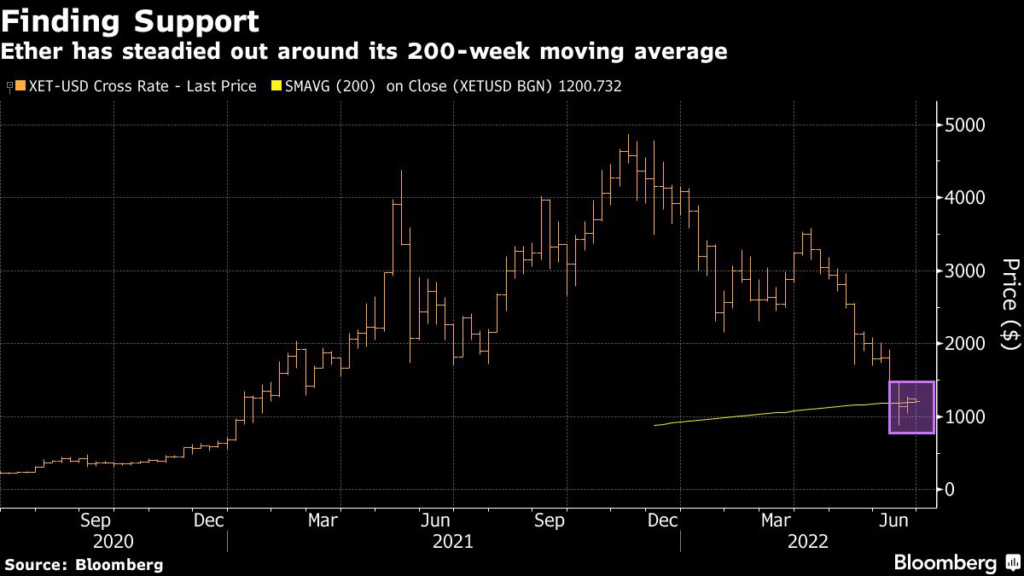
The No. 2 cryptocurrency advanced as much as 5.8% to $1,279.06 on Sunday before pulling back on Monday morning Asia time. The rally comes after the token dropped as low as $880.70 on June 18. It appears to have found support around its 200-week moving average, which currently sits near $1,200. 

No. 1 Bitcoin topped out on Sunday at $21,860, after having fallen as low as $17,742.83 on June 19. Overall crypto market capitalization retook the $1 trillion level on Saturday, according to data from CoinGecko, though it was sitting a bit below that as of 9.20 a.m. Singapore time on Monday.

Ether “is leading the way following sizable short liquidations,” Fundstrat said of the crypto rally in a note Friday. Data from CoinGlass show there were about $60 million of short liquidations in Ether on Friday, the most in five days.

Cryptocurrencies have suffered this year amid Federal Reserve rate hikes and stubbornly high inflation. Ether is still down more than 60% this year, even after rallying from its extreme lows.

A major options expiration on Friday had been watched as a potential source of volatility. However, “short risk cleared surprisingly efficiently” for Ether amid “perhaps unexpected stability,” Genesis Trading’s Ainsley To, Gordon Grant and Noelle Acheson wrote in a note.

More stories like this are available on bloomberg.com

©2022 Bloomberg L.P.

New Zealand Says It’s Set to ‘Star’ in NASA’s Return to the Moon

(Bloomberg) — New Zealand is trumpeting its role in a plan to return humans to the Moon, saying it is set to star in NASA’s Capstone mission that will test the orbit for a lunar space station.

Rocket Lab has announced it will launch a satellite from Mahia, New Zealand, to test the lunar orbit for Gateway, a planned Moon-orbiting outpost that will provide astronauts with access to the lunar surface. Separately, New Zealand’s government said Monday it has signed an agreement with NASA to conduct new research to track spacecraft approaching and orbiting the Moon.

“The New Zealand space sector is set to star in NASA’s Capstone Moon mission,” said Andrew Johnson, manager of the New Zealand Space Agency. Launching into lunar orbit from New Zealand is “a significant milestone,” while the new research “will be increasingly important as more countries and private actors send spacecraft to the Moon,” he said.

NASA’s Artemis Program plans to return humans to the lunar surface as early as 2025, renewing human exploration of the Moon and progressing toward the exploration of Mars. It plans to land the first woman and first person of color on the Moon and explore more of the lunar surface than ever before.

Rocket Lab said it could launch the CubeSat satellite as soon as Tuesday, with the launch window open through July 27.  

The announcement comes the day after NASA launched the first of three sounding rockets from a facility in Australia’s Northern Territory, the first time the space agency has used a commercial launchpad outside of the US in its more than 50-year history.

The three rocket launches will take place between June 26 and July 12 from the Arnhem Space Centre, a site which is privately-owned and run by Equatorial Launch Australia.

“Space is really going through a renaissance,” Enrico Palermo, the head of the Australian Space Agency, told Bloomberg Television Monday. “We’ve seen entities like SpaceX rapidly drop the cost of getting technology to space. The barriers to do stuff in space are so, so much lower.”

New Zealand’s agreement with NASA will see a University of Canterbury-led research team, which includes contributors from the University of Auckland and the University of New South Wales in Australia, attempt to track spacecraft from observatories in Tekapo and Canberra. 

The scientists intend to validate their observations and algorithms to predict spacecraft trajectories enroute to the Moon and within their lunar orbits against NASA’s Capstone mission data.

(Updates with Australia’s rocket launch in sixth paragraph)

More stories like this are available on bloomberg.com

©2022 Bloomberg L.P.
Ether Finds Support Around 200-Week Average

(Bloomberg) — Ether, the second-biggest cryptocurrency, has steadied out around its 200-week moving average. The token rallied from a low of $880.70 on June 19 to as high as $1,279.06 on Sunday, though has since fallen back to around $1,200 — which is where the 200-WMA sits. Cryptocurrencies have struggled amid Federal Reserve rate hikes and inflation. The tokens are off their worst levels from a week ago and have shown signs of stabilization since then.

More stories like this are available on bloomberg.com

©2022 Bloomberg L.P.

India’s Top Carmaker Bets on Hybrids Over EVs in Clean Shift

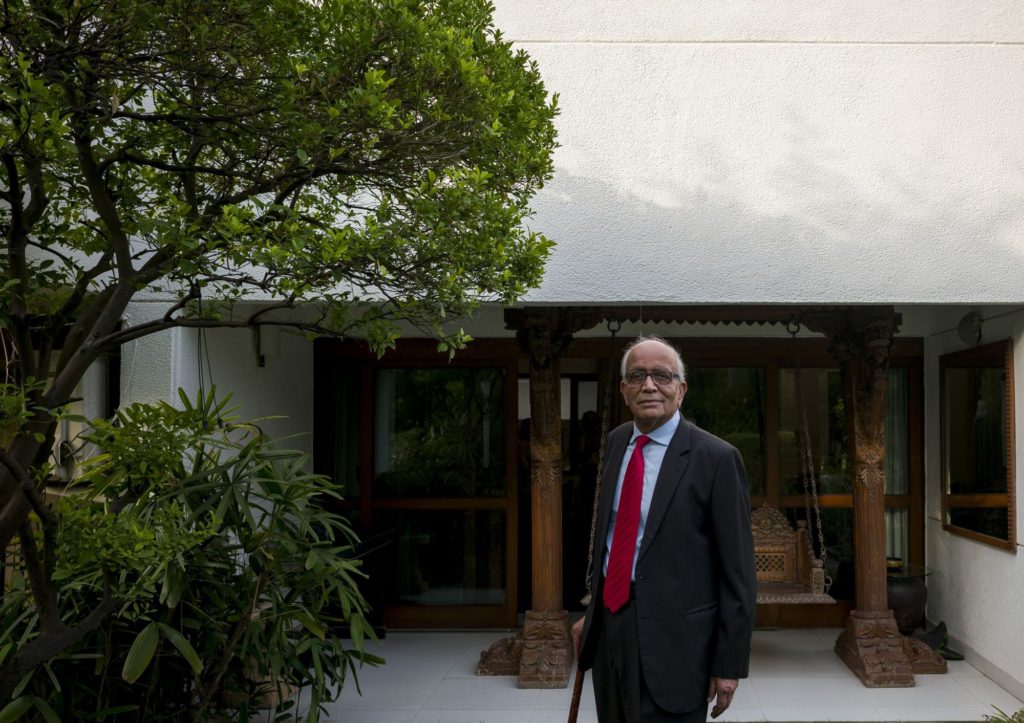
(Bloomberg) — Maruti Suzuki India Ltd., the automaker that sells every other car on the nation’s roads, believes electric vehicles aren’t the answer to reducing carbon emissions in the world’s third-biggest releaser of greenhouse gases — at least not in the immediate future.

India’s largest automaker reckons that vehicles powered by hybrid technology, natural gas and biofuels present a better path toward a cleaner future than electric cars considering the nation generates about 75% of its electricity from dirty coal, Chairman R.C. Bhargava said in an interview. 

“Talking about electric cars without looking at the greenness of the electricity generated in the country is an inadequate approach to this problem,” Bhargava said in an interview from his home in Delhi last week. “Until the time we have a cleaner grid power, it’s necessary to use all the available technologies like compressed natural gas, ethanol, hybrid and biogas, which will help reduce the carbon footprint and not push any one technology.”

Those views put Bhargava at odds somewhat with several of the world’s largest car manufacturers, including No. 2 player Volkswagen AG, which is forecast to unseat Tesla Inc. as the leading maker of electric cars as soon as 2024. Toyota Motor Corp., which sells the most cars globally, is putting a lot of money into electrifying its line up too but believes in hybrid technology as a logical interim step while the industry builds out stable battery supply chains.

Read more: How Supply Chain Snags Could Put the Brakes on the EV Revolution

India’s shift to electric vehicles is also much slower than other major markets like China and the US even though Prime Minister Narendra Modi has committed to making the South Asian nation a net-zero carbon emitting one by 2070. Arthur D. Little estimates by 2030, electric passenger cars will make up only about 5% of total EV sales. More progress on the two- and three-wheeler front will bring the automobile battery-powered total to about one-third.

Charging EVs with clean energy and reducing dependence on coal is difficult in India, the world’s second-most populous country with some 1.4 billion people. The nation was forced to import millions of tons of coal after electricity demand soared amid scorching summer temperatures and rising industrial activity after the pandemic.

Maruti plans to launch its first hybrid car under a partnership between its parent Suzuki Motor Corp. and Toyota within 12 months, Bhargava said. Hybrid cars are also a better alternative than EVs given India lacks adequate charging infrastructure, he said. 

Maruti will additionally move “aggressively” into cars that run on compressed natural gas because they’re cleaner than petrol or diesel models and cheaper than EVs, making them a viable option for low-income consumers who want to upgrade from a two-wheeler, he said. Although compressed natural gas is a fossil fuel, it’s one of the cleanest burning in terms of emissions.

As the availability of chips improves, Maruti expects to sell 600,000 compressed natural gas cars in the year ending March 2023 versus 230,000 units the previous fiscal year. Maruti currently has nine compressed natural gas models and is planning to introduce more such variants.

Using biofuels to power passenger cars is another alternative, however the investment to make it commercially viable is lacking, Bhargava said.

There are problems with biofuels also, with their prolonged use in cars potentially extremely harmful to the planet’s limited farmland.

India currently blends gasoline with 10% ethanol, which is largely derived from sugarcane, while roughly two-fifths of America’s corn and soybean crops end up burned in engines. Indonesia’s expected consumption of 10 billion liters of biodiesel this year will use up almost a quarter of its palm oil crop.

But India does have a big advantage when it comes to generating biogas, considering it has the largest cattle population in the world and the chief raw material for biogas is cattle dung, Bhargava said.

Maruti is working with the government and oil companies to boost the production of biogas, he said, adding that the government should give incentives for its production and create vendor development projects to improve the collection, transport and storage of dung from villages.

Developing cleaner alternatives will mean Maruti and its suppliers will have to bolster their engineering capabilities, Bhargava said. Maruti plans to hire more engineers, he said, declining to specify the percentage of manpower expansion.

“EVs are not going to be a large part of car sales, irrespective of what other manufacturers are saying or planning,” Bhargava said. “The ability to get green transportation is going to take time in India because of the nature of our electricity generation.”

More stories like this are available on bloomberg.com

©2022 Bloomberg L.P.

Close Bitnami banner
Bitnami