Bloomberg

Amazon Hits Beach in Cannes After Revealing $31 Billion Ad Sales

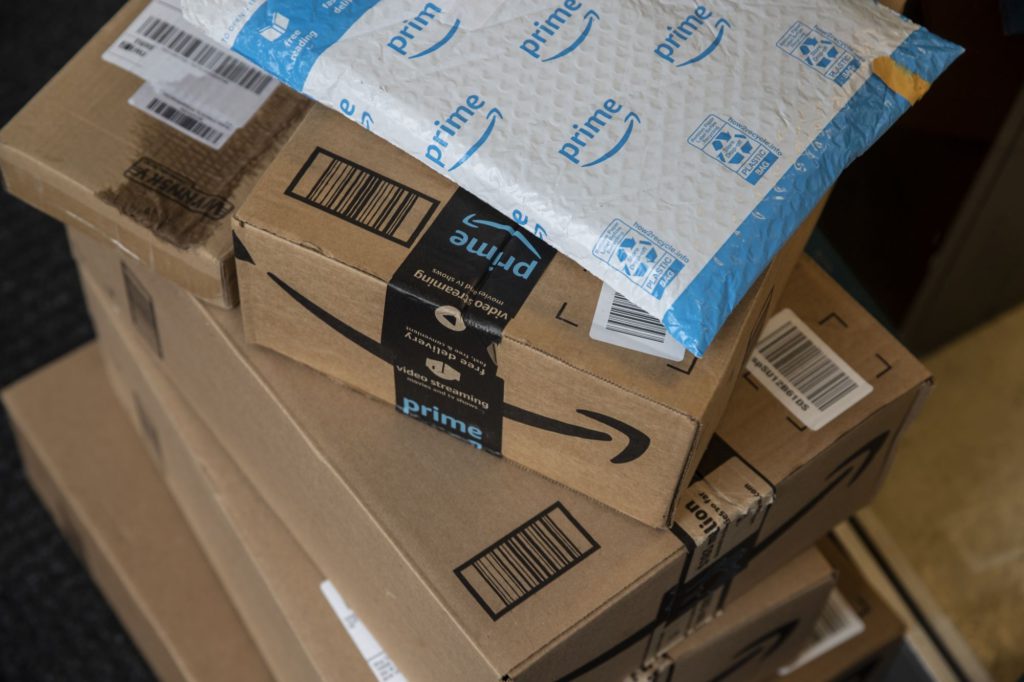
(Bloomberg) — After a two-year hiatus, the advertising industry’s biggest conference has returned with a new heavyweight: Amazon.com Inc.

The e-commerce giant has taken over a portion of the beach front at the annual Cannes Lions show with the “Amazon Port,” its biggest showing at the conference yet and a sign of the growing significance of industry relationships to its business. 

Just off the main drag of La Croisette, Cannes’ beach is where tech companies like Google and Spotify show off, with sun loungers and drinks during the day and DJs and dancing at night to lure potential customers to learn about ad offerings and build relationships.

In February, Amazon unveiled revenue from its ad business for the first time, revealing that it generated more than $31 billion in net sales last year. That’s more than doubled since 2019, and places the company’s advertising business behind Alphabet Inc. and Meta Platforms Inc. 

The ad spending disclosure was a “WTF moment” for the industry, said Michael Kassan, chief executive officer of advisory and consulting firm MediaLink. “It’s never been a duopoly, it’s been a three-party circus.” 

At the Amazon Port, guests can sip iced coffees from an espresso bar in the morning or drink blueberry “emojito” cocktails themed after its Twitch game streaming platform in the evening. They’ve invited speakers including writer and professor Roxane Gay, who hosted a panel on storytelling. On Wednesday night, LCD Soundsystem put on a show that capped a day-long schedule including Tai Chi and panels on sustainability and creative marketing.

The event on the French Riviera marks a step-change for the company. Just five years ago, when Amazon’s ad business was still described as “nascent,” the company drew attention for renting a suite at the Carlton Hotel. 

Look Out Google and Facebook. Amazon’s Little Ad Business Is Growing Fast

“I’ve been meeting with Amazon at Cannes for many years,” said Mark Read, the chief executive officer of WPP Plc, the largest ad agency. “They’ve got a bigger presence here than previous occasions, but I think that reflects the size of their advertising.” 

An Amazon representative declined to make executives available for interview.

Still, the beachfront parties, free swag and liquid-nitrogen ice cream bely concerns about the industry’s future. A hoped-for rebound from Covid-19 lockdowns is being clouded by a worsening economic outlook. 

A profit warning from Snap Inc. in May sent social media and advertising stocks plunging amid worries that a deteriorating global economy would hurt advertising sales.

Advertising sales for Amazon come from different channels including sponsored ads, display and video. The company has also branched out into brand advertising, working with the Walt Disney Co. and Pixar to develop a campaign for the “Lightyear” movie. This week, it rolled out Amazon Marketing Stream, a new product meant to deliver improved advertising analytics. 

“They are already famous,” said Luca Moura Trincanato, a copywriter at David, an agency that’s part of WPP, who was visiting the Amazon site Wednesday. “This is just a complement to prove how much they are into the advertising world.”

More stories like this are available on bloomberg.com

©2022 Bloomberg L.P.

Amazon Parties With LCD Soundsystem in Cannes After Ad Boom

(Bloomberg) — After a two-year hiatus, the advertising industry’s biggest conference has returned with a new heavyweight: Amazon.com Inc.

The e-commerce giant has taken over a portion of the beach front at the annual Cannes Lions show with the “Amazon Port,” its biggest showing at the conference yet and a sign of the growing significance of industry relationships to its business. 

Just off the main drag of La Croisette, Cannes’ beach is where tech companies like Google and Spotify show off, with sun loungers and drinks during the day and DJs and dancing at night to lure potential customers to learn about ad offerings and build relationships.

In February, Amazon unveiled revenue from its ad business for the first time, revealing that it generated more than $31 billion in net sales last year. That’s more than doubled since 2019, and places the company’s advertising business behind Alphabet Inc. and Meta Platforms Inc. 

The ad spending disclosure was a “WTF moment” for the industry, said Michael Kassan, chief executive officer of advisory and consulting firm MediaLink. “It’s never been a duopoly, it’s been a three-party circus.” 

At the Amazon Port, guests can sip iced coffees from an espresso bar in the morning or drink blueberry “emojito” cocktails themed after its Twitch game streaming platform in the evening. They’ve invited speakers including writer and professor Roxane Gay, who hosted a panel on storytelling. On Wednesday night, LCD Soundsystem put on a show that capped a day-long schedule including Tai Chi and panels on sustainability and creative marketing.

The event on the French Riviera marks a step-change for the company. Just five years ago, when Amazon’s ad business was still described as “nascent,” the company drew attention for renting a suite at the Carlton Hotel. 

Look Out Google and Facebook. Amazon’s Little Ad Business Is Growing Fast

“I’ve been meeting with Amazon at Cannes for many years,” said Mark Read, the chief executive officer of WPP Plc, the largest ad agency. “They’ve got a bigger presence here than previous occasions, but I think that reflects the size of their advertising.” 

An Amazon representative declined to make executives available for interview.

Still, the beachfront parties, free swag and liquid-nitrogen ice cream bely concerns about the industry’s future. A hoped-for rebound from Covid-19 lockdowns is being clouded by a worsening economic outlook. 

A profit warning from Snap Inc. in May sent social media and advertising stocks plunging amid worries that a deteriorating global economy would hurt advertising sales.

Advertising sales for Amazon come from different channels including sponsored ads, display and video. The company has also branched out into brand advertising, working with the Walt Disney Co. and Pixar to develop a campaign for the “Lightyear” movie. This week, it rolled out Amazon Marketing Stream, a new product meant to deliver improved advertising analytics. 

“They are already famous,” said Luca Moura Trincanato, a copywriter at David, an agency that’s part of WPP, who was visiting the Amazon site Wednesday. “This is just a complement to prove how much they are into the advertising world.”

More stories like this are available on bloomberg.com

©2022 Bloomberg L.P.

China’s Tech Giants Lost Their Swagger and May Never Get It Back

(Bloomberg) — On trading floors in New York and Hong Kong, the brightening mood toward Chinese technology companies is unmistakable: With stocks like Alibaba Group Holding Ltd. and Tencent Holdings Ltd. surging from multi-year lows, talk of a new bull market is growing louder.

Yet speak to executives, entrepreneurs and venture capital investors intimately involved in China’s tech sector and a more downbeat picture emerges. Interviews with more than a dozen industry players suggest the outlook is still far from rosy, despite signs that the Communist Party’s crackdown on big tech is softening at the edges.

These insiders describe an ongoing sense of paranoia and paralysis, along with an unsettling realization that the sky-high growth rates of the past two decades are likely never coming back.

Alibaba and Tencent are expected to deliver single-digit revenue growth in 2022, a letdown after years of rip-roaring expansion. One prominent startup founder said he’d pass on money from those companies because of the attention it would attract. Another said his company is proceeding on the assumption that it’s only a matter of time before officials double down again.

A third Beijing-based entrepreneur recently sold his stake in a tech unicorn and said he’s reluctant to start a new venture until there’s more clarity on what the government will allow.

“China’s tech crackdown has happened. There is no comeback from that,” the entrepreneur said, asking to remain anonymous for fear of retribution. “The regulatory pressure on Chinese tech companies may have hit the brakes for now, given the sluggish economy, but it’s unthinkable that regulators in the country would loosen their grip on platform companies ever again.”

Read more: China Weighs Reviving Jack Ma’s Ant IPO as Crackdown Eases

On the face of it, China’s $1 trillion internet industry is finally emerging from a brutal reckoning. Jack Ma’s embattled Ant Group Co. is poised to revive a long-derailed initial public offering. Scores of new video games were recently greenlit for app stores. And after a sweeping data security probe, Beijing may soon let ride-sharing company Didi Global Inc. off with a mere fine.

During conference calls over the past few weeks, top executives proclaimed a new era in which they could once again focus on building products and delivering profits. Take Koolearn Technology Holding Ltd., an online education operator that was nearly wiped out last summer when the government banned for-profit tutoring companies. After its push into e-commerce went viral on social media, the company’s shares doubled during a single day of frenzied trading on June 13.Alibaba has jumped 60% from its March low in Hong Kong, though the stock still trades at about half its peak valuation in 2020 — a sign that investors aren’t yet pricing in a return to pre-crackdown boom times. The Nasdaq Golden Dragon China Index of US-listed shares has rallied 52% from this year’s low, leaving the gauge about 60% below its peak.

Beijing has “gradually begun to release some policy signals,” Xin Lijun, retail chief of e-commerce giant JD.com Inc., told Bloomberg Television. But “a return to the past days of ‘riding the horse without holding the reins’ is not very likely.”

Read more: Tencent, Alibaba Look Like Utilities After $1 Trillion Drubbin

Still, startup heads have cautioned investors against getting too comfortable. After regulators scrapped Ant’s IPO plans in 2020, sending shock-waves across global capital markets, the change in temperature was unmistakable. Startups shunned money from big investors. Industry leaders grew nervous about consolidating power. Billionaires like Ma went into hiding.

Beijing has a long tradition of clamping down ahead of important events. This year’s upcoming party congress — when Xi Jinping is expected to win an unprecedented third term — is about as significant as it gets. Some worry that the government is merely loosening the leash temporarily to spare an economy devastated by coronavirus curbs and high global inflation.

“I do feel that there is starting to be some signs of regulatory easing, and truthfully over the last few years, we did see some of this ‘barbaric growth,’” said Guo Changchen, founder of Keeko Robot Technology, a Xiamen-based artificial intelligence education startup. “As long as there are regulations and those regulations are clear, then we can work on our development within this system.”

Read more about the Big Tech crackdown:

  • China Weighs Reviving Jack Ma’s Ant IPO as Crackdown Eases
  • Top Tech Dealmaker Warns China’s VC Winter Is Far From Over
  • China Is Leading the Global Contraction in Venture Capital Deals
  • Tencent Billionaire Airs Frustration During China’s Slowdown

Founders say a maze of government regulations introduced in 2021 have made their lives difficult. The rules govern everything from the platform economy to what kinds of entertainment are permissible on social media. Scrutiny over practically every facet of the industry has led to a chilling effect. US money, which vanished during the clampdown, shows no sign of returning. JPMorgan was among the Wall Street institutions that — for a time — called China “uninvestable.”

Putting aside this year’s stock rally, China is still weathering a decline in venture capital investments, despite once being touted as a primary rival to Silicon Valley. The value of deals in the country fell roughly 40% from a year ago to $34 billion in the first five months of 2022, according to data from the research firm Preqin. Meanwhile, venture capital and private equity funds raised $6.2 billion, a fall of more than 90% compared to the first five months of last year.

Even apparent beneficiaries of China’s easing of rules face a rocky climb. Although regulators greenlit Baidu Inc. to release new games starting from April, the company has shelved its game development and publishing arms and downsized staff, according to a person familiar with the matter. That means one planned game — “The Advancing Rabbit” — will likely never get released.

Of the 105 gaming firms that obtained new licenses since April, at least 11 are no longer operating normally, according to a Bloomberg News analysis of company records available on registry tracker Qichacha. Some studios dissolved their companies. Others took down their websites or re-purposed them for things like job and rental listings.

Creative choices are still heavily policed. In February, Shanghai outfit Lilith Games canceled a new mobile game after deciding its anime-style graphics were unlikely to get past regulators, according to a person familiar with the matter. Chinese censors have a low tolerance for what they consider lewd imagery — such as the more sexualized or explicit iconography popular in Japanese anime.

“The licensing hiatus has triggered layoffs and streamlining among game developers across the board,” says Jesse Sun, a headhunter with Shanghai-based consultancy Gamehunter. “It’s a dead-end for many small and medium-sized studios.”

Why China Keeps on Targeting Its Technology Giants: QuickTake

Even in a best-case scenario, China’s once-swaggering tech titans are now effectively utilities eking out single-digit growth. Many are afraid to pursue moonshots in an age of knee-jerk regulation. 

Ant is unlikely to ever again pull off history’s largest IPO. Didi has dialed back its overseas expansion. And Tencent and Alibaba say they’ll focus on safer, familiar bets like social media and online commerce while gradually ceding the lead in yet-to-be disrupted arenas like fintech.

The founder of a farming startup said he recently asked an investor whether his money counted as “disorderly expansion of capital.” Without spelling out its scope, President Xi has used the term to explain why regulatory oversight of tech moguls is necessary.

“That investor couldn’t answer,” the founder recalled. “In fact, no one knows the answer.”

(Adds details on stock performance in ninth paragraph)

More stories like this are available on bloomberg.com

©2022 Bloomberg L.P.

SoftBank’s Son Says Still Deciding Where to List Chip Giant Arm

(Bloomberg) — SoftBank Group Corp. hasn’t made a final decision on where to debut chip subsidiary Arm Ltd. though the Nasdaq remained the most likely venue for an initial public offering, Chairman Masayoshi Son said.

The Japanese investment giant is still considering its options and is in talks with bankers and lawyers to float Arm in the US and the UK, Son told shareholders Friday.

SoftBank is weighing the listing of some of its stake in the British chip designer on the London Stock Exchange, switching from an earlier plan to only use the US market, Bloomberg News has reported.

Arm, which SoftBank acquired in 2016, is based in Cambridge, England. Arm was one of the UK’s most important technology companies before the purchase and still has the majority of its operations there. An IPO that would list only in the US would be a blow to the UK government and capital market. 

For more on Masayoshi Son Speaks at SoftBank Annual Shareholder Meeting, click here for our TOPLive blog.

More stories like this are available on bloomberg.com

©2022 Bloomberg L.P.
Zendesk Nears Agreement With Group Led by H&F, Permira

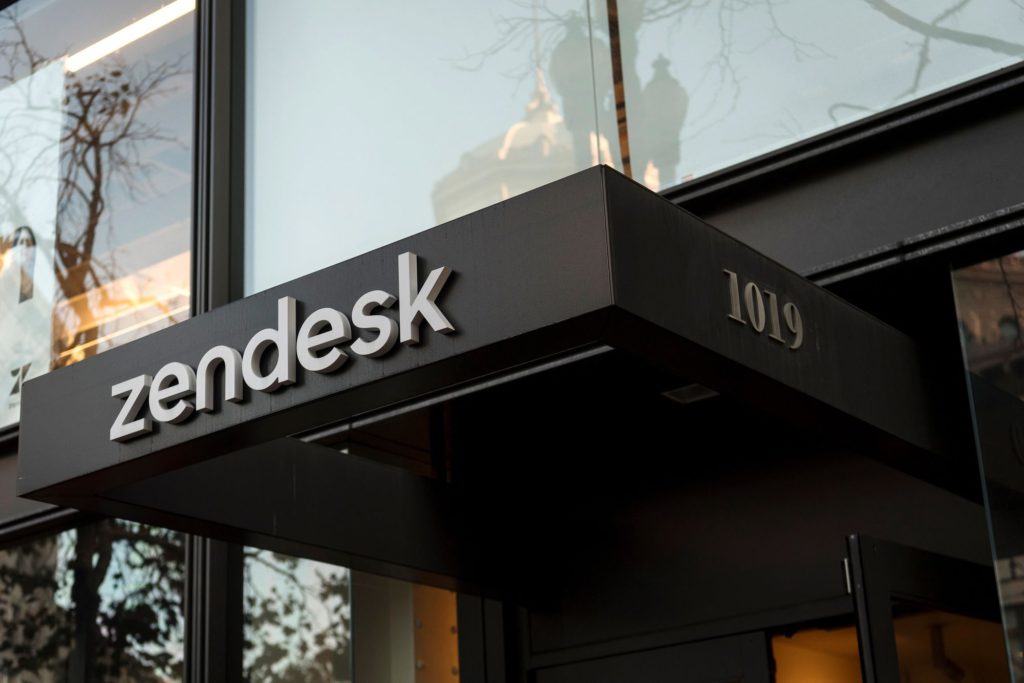
(Bloomberg) — Software maker Zendesk Inc. is close to reaching a deal to be acquired by a group of buyout firms led by Hellman & Friedman and Permira, said a person familiar with the matter.

An agreement could be announced as soon as Friday, said the person, who asked not to be identified because the information was private. The talks come after Zendesk said earlier this month that it would remain independent after failing to find a potential buyer.

A final agreement hasn’t been reached and might not happen, the person said.

Representatives for Zendesk, Hellman & Friedman and Permira declined to comment. The Wall Street Journal reported earlier that Zendesk was close to an agreement.

Zendesk’s shares jumped as much as 52% in extended trading after the Journal’s report. The stock closed Thursday at $57.95 in regular trading in New York, giving the company a market value of $7.1 billion.

The San Francisco-based company said June 9 that it would no longer seek to sell itself after a strategic review that reached out to 16 potential strategic partners and 10 financial sponsors. Ultimately, “no actionable proposals were submitted,” Zendesk said in a statement, and final bidders cited “adverse market conditions and financing difficulties at the end of the process.”

In February, Zendesk received an unsolicited takeover offer from buyout firms that valued the company at $127 to $132 a share. Those firms including Hellman & Friedman, Advent International and Permira, Bloomberg reported. That offer came a few weeks before Zendesk dropped its effort to buy SurveyMonkey’s parent, Momentive Global Inc., saying it failed to garner the necessary support from its shareholders to go through with the acquisition.

Zendesk had agreed to buy Momentive in October in an all-stock transaction valued at roughly $4 billion at the time. The transaction was met with a dramatic sell-off in both companies as investors balked at the tie-up. Zendesk shareholder Janus Henderson Group Plc came out against the acquisition and Jana Partners, an activist investor, also urged shareholders to reject the deal. 

Zendesk, which makes customer service software, had said it would gain from Momentive’s market research products. The shares have declined 51% since the deal was announced Oct. 28.

More stories like this are available on bloomberg.com

©2022 Bloomberg L.P.
Coinbase Rolls Out First Crypto Derivative Amid Slump in Tokens

(Bloomberg) — Coinbase Global Inc. will launch its first crypto derivative product on Monday in the midst of the current crypto winter.

Each nano Bitcoin futures contracts (BIT) will represent 1/100th of the token, the biggest US cryptocurrency exchange said in a statement Thursday. The contracts will be accessible for trading only via multiple third-party retail brokers and clearing firms including ABN AMRO and Wedbush. 

Coinbase is tapping into the derivatives space after announcing earlier this month it will lay off 18% of its workforce amid worsening market conditions. Futures and options — which let investors hedge their bets by agreeing to buy or sell coins on a certain day at a certain price — have long been a glaring hole in its product portfolio. The bulk of Coinbase’s sales comes from spot trading, which has dropped precipitously this year. 

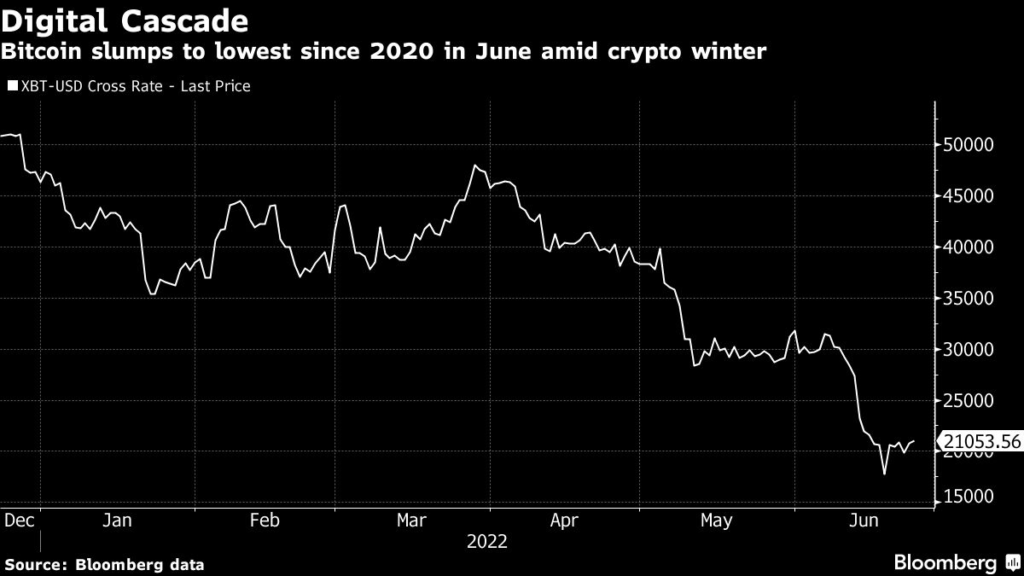
Coin prices have been falling since bellwether Bitcoin hit its all-time high in November, and fell sharply in the last few weeks, due to liquidity issues at lender Celsius Network, hedge fund Three Arrows Capital and related fallout at other funds and apps. Bitcoin is down 29% in the last month, per tracker CoinMarketCap. Coinbase’s shares are down almost 77% so far this year, according to Bloomberg data.

“At 1/100th of the size of a Bitcoin, it requires less upfront capital than traditional futures products and creates a real opportunity for significant expansion of retail participation in US regulated crypto futures markets,” Boris Ilyevsky, head of Coinbase Derivatives Exchange, said in the statement. 

The futures will be launched via Coinbase Derivatives Exchange, the result of the recently acquisition of futures exchange FairX, the company said. Coinbase Financial Markets is still awaiting for approval for its license to operate a futures commission merchant to offer futures directly to clients. 

More stories like this are available on bloomberg.com

©2022 Bloomberg L.P.

Revolut Rolls Out Pay Later in Ireland to Rival Klarna, Afterpay

(Bloomberg) — Revolut Ltd. has picked Ireland as the first market to launch its buy now, pay later product that will see it go head to head with the likes of Klarna and other fintechs in the rapidly growing area of lending. 

The digital bank plans to roll out its “Pay later” offering across Europe, adding Poland and Romania later this year, Revolut said in a statement Friday seen by Bloomberg News. In its first market of Ireland, 1.9 million adults have a Revolut account. Analysts believe the BNPL market in Europe is set to grow to £680 billion ($831 billion) over the next five years. 

Revolut, which is seeking to become a superapp offering a range of financial products, will allow customers to spread payments over three installments with qualifying customers given a credit limit of 499 euros ($524). 

Revolut will assess customers’ creditworthiness before transactions using open banking data they have granted access to, rather than at the point of sale, to ensure users are not getting into unmanageable debt. There will be a 1.65% fee per purchase. 

Joe Heneghan, Chief Executive Officer of Revolut Europe, said its offering would encourage people to pay off their credit within two months, “rather than calling on overdrafts and credit cards which don’t carry the same emphasis on quickly paying back the amount borrowed.” Revolut will not allow customers to use the new product to buy cryptocurrencies or stocks within its app or to withdraw cash. 

Attention to BNPL lending is heating up as more consumers turn to the unregulated form of credit. The UK government announced on Monday that it would tighten regulation of the sector amid growing concern some users don’t fully understand the product.

More stories like this are available on bloomberg.com

©2022 Bloomberg L.P.
Axie-Infinity Developer to Reimburse Hack Victims, Restart Ronin

(Bloomberg) — Sky Mavis Inc., the developer of the play-to-earn Axie Infinity video game that lost more than $620 million during a March hack, said it expects on June 28 to reimburse users and reopen the software bridge breached in the attack. 

Hackers stole 173,600 Ether and 25.5 million USDC tokens from the bridge known as Ronin, which let users swap between different blockchain’s coins. Overall, the tokens are now valued at about $216.5 million in the wake of the tumble in cryptocurrency prices since the attack took place.

Users can withdrawal one Ether for each one they held in March once the bridge reopens, a spokeswoman for Sky Mavis said in a statement. The 56,000 Ether tokens missing from the Axie Infinity-related DAO, or decentralized autonomous organization’s treasury, will remain uncollateralized. 

Sky Mavis pledged in March to  reimburse online participants who lost funds. The firm raised $150 million in a funding round led by crypto exchange Binance in April. At the time, the firm said it planned to use the money and Sky Mavis’s and Axie Infinity’s own resources to reimburse Ronin bridge users.

More stories like this are available on bloomberg.com

©2022 Bloomberg L.P.
Ken Griffin’s Citadel Move Is ‘Punch in the Gut’ for Chicago

(Bloomberg) — Chicago has suffered a series of corporate departures recently, but Ken Griffin leaving the city might sting the most. 

The hedge fund billionaire said Thursday that he’s moving the home base of Citadel, the financial behemoth he founded in Chicago more than three decades ago, to Miami. Griffin hinted for months that he might make the move, citing the crime rate and political frustrations with leadership in Illinois. 

The announcement comes less than two months after Boeing Co. said it plans to move its headquarters from the city to Arlington, Virginia, and Caterpillar Inc.’s decision to move its top corporate brass from the city’s suburbs to the Dallas-Forth Worth area in Texas.  

Chicago, long considered a global financial center, is home to the oldest futures exchange and operates all the nation’s option-contracts clearing. While the moves by Boeing and Caterpillar certainly weren’t welcome, Citadel’s shift may burn a bit: The firm has grown to become a symbol of the city’s might in the financial industry.

“There’s no way to dress this up as anything but a punch in the gut for Chicago’s economic development reputation,” said Laurence Msall, president of the Civic Federation, a government watchdog group that counts Griffin among its trustees. “The entire company isn’t moving right away, but it is a terrible warning.”

The nation’s third-most populous city has seen a 34% rise in crime this year, with cases of thefts up 65%, according to year-to-date data on the Chicago Police Department’s website. Chicago’s Magnificent Mile and State Street shopping districts, along with many restaurants in the downtown Loop, have yet to fully recover from the pandemic. Even the National Football League’s Bears franchise is considering an exit to the suburbs. 

Griffin, the richest man in the state with a net worth of more than $28 billion, has repeatedly voiced his concerns about the surge in crime throughout the pandemic in Chicago. He’s also regularly expressed frustrations with the operations and policies of the state under Democratic Governor J.B. Pritzker, a billionaire Democrat seeking re-election in November, as well as voters’ lack of trust in government.

“Citadel leadership has been signaling for some time an enhanced presence in Florida, and while this announcement is not surprising, it is still disappointing,” Cesar Rodriguez, a spokesman for Mayor Lori Lightfoot, said in a statement. “We know Citadel will maintain a significant presence in Chicago and their story would not be possible without the great strengths of our city.”

Citadel employs more than 1,000 people in Chicago and said it expects a few hundreds to be based in Miami next year.

Chicago’s economic base is deep, and so far even with high profile names seeking homes in other cities, the volume of departures hasn’t reached a concerning level for employment or tax revenue generation, according to Michael Rinaldi, an analyst for Fitch Ratings.

“It does not signal any immediate ramifications for the city’s credit profile,” Rinaldi said. Fitch has assigned a BBB- rating with a stable outlook to the city largely given its underfunded pensions and others liabilities. Fitch’s rating for the city is one notch above junk.

Griffin contributed more than $50 million to successfully defeat a ballot measure in November 2020 that would have shifted Illinois’s tax structure from a flat rate to a graduated scale and increased levies on higher income. He’s put in about that much into the campaign for Richard Irvin, the mayor of the state’s second-largest city who hopes to win the Republican gubernatorial primary on Tuesday and make Pritzker a one-term governor in November. 

Some recent local polls, however, have shown Irvin lagging behind in a crowded field of Republicans competing for the party nomination.

The governor doesn’t see Citadel’s move as a blow to the city. Kellogg Co. said Tuesday that it will split into three independent companies and that its snack unit will have corporate headquarters in Chicago.


“Countless companies are choosing Illinois as their home, as we continue to lead the nation in corporate relocations and had a record number of business start-ups in the past year,” Emily Bittner, Pritzker’s spokeswoman, said in an email. “We will continue to welcome those businesses — including Kellogg, which just this week announced it is moving its largest headquarters to Illinois — and support emerging industries that are already creating good jobs and investing billions in Illinois, like data centers, electric vehicles and quantum computing.”

Still, Citadel’s move and others like it should be a wake up call for policy makers in the city and state, said Todd Maisch, president of the Illinois Chamber of Commerce. While the vast majority of companies likely will stay put, departures of headquarters including Citadel will at the very least spur small- to medium-sized companies to question why they are based in this city or state, he said.

“If policy-makers think that conversation isn’t going to take place in those board rooms, they are fooling themselves,” he said.

(Updates with comments from Fitch starting in ninth paragraph and chamber starting in penultimate paragraph.)

More stories like this are available on bloomberg.com

©2022 Bloomberg L.P.

Crypto’s Liquidity Troubles Are Spreading to Other Platforms

(Bloomberg) — A broad-based selloff in digital assets and the collapse of high-profile tokens TerraUSD and Luna have caused ripple effects across the crypto industry. 

A wave of liquidations triggered fear of contagion risks. Major lenders Celsius Network and Babel Finance have frozen withdrawals, and Three Arrows Capital, a major crypto hedge fund, is facing liquidity troubles that rattled investors. 

Total market value of cryptocurrencies, which topped $3 trillion in November, has dropped to $957 billion, according to data from CoinGecko. 

Below are the latest developments from the crypto fallout. 

Crypto Yield Firm CoinFlex Pauses Withdrawals

Crypto physical futures exchange CoinFlex said it paused all withdrawals on its platform, citing “extreme market conditions” last week and “continued uncertainty involving a counterparty,” without disclosing the name. The firm said that the counterparty isn’t Three Arrows Capital or any lending firm. 

Founded in 2019, CoinFlex is a smaller crypto exchange focusing on derivatives trading. CoinGecko shows that it currently supports 34 crypto pairs for derivatives. The exchange’s investors include Roger Ver, one of the most vocal Bitcoin Cash advocates.

CoinFlex provided an estimated time for withdrawals of June 30. A company representative didn’t immediately respond to requests for comment. 

Voyager Digital Sets Limits on Withdrawals

Crypto brokerage and exchange Voyager Digital Ltd. is limiting customer withdrawals from its platform to $10,000 and to 20 transactions during a 24-hour period. 

The New York-based firm, which secured credit lines of $485 million in the past week from Alameda Research to shore up protection for customer assets, announced the limits on its website. This week, it disclosed exposure of about $660 million in loans to the troubled crypto hedge fund Three Arrows Capital, sending shares plunging as analysts raised the prospect of further damage. 

Voyager shares trading in Toronto have plunged 95% this year. 

Crypto Lender Nexo Taps Citigroup for M&As

Nexo, a crypto lender that has positioned itself as immune to the storms shaking decentralized finance, said it had hired Citigroup Inc. to advise on potential acquisitions.

The lender said it was seeking “best-in-class advice” from the bank, including on “liquidity restructuring deals,” according to a blog post dated June 22. 

Nexo has made an unsolicited offer to acquire assets of its competitor Celsius, which has frozen investor withdrawals. The offer “didn’t come to fruition,” a Nexo spokesperson said in an email. Citigroup declined to comment. 

More stories like this are available on bloomberg.com

©2022 Bloomberg L.P.

Close Bitnami banner
Bitnami